

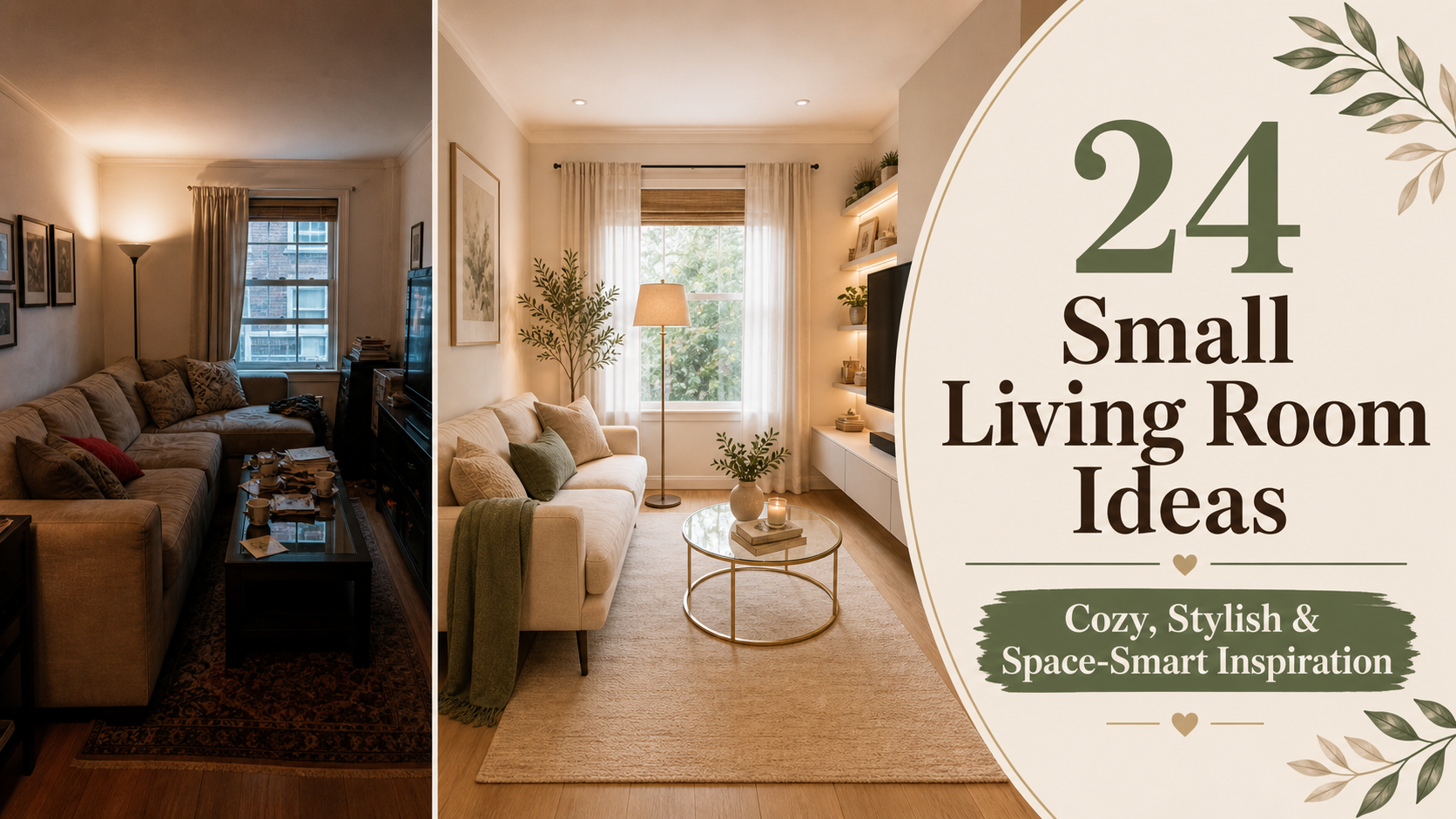
I remember standing in the middle of my 160-square-foot living room thinking: “There has to be a better way.” The couch was too big. The TV stand ate half the wall. And every time I tried to rearrange things, I’d end up right back where I started, frustrated, cramped, and convinced the room was unfixable.
Turns out, the room wasn’t the problem. I was solving it wrong.
After researching dozens of real small-space layouts, testing ideas in my own apartment, and digging into what interior designers actually recommend, not the vague Pinterest nonsense, I found 24 specific, actionable ideas that genuinely transform how a small living room looks and functions. No knocking down walls. No major renovations. Just smarter decisions about what goes in, what comes out, and where everything sits.
What Are Small Living Room Ideas to Maximize Every Inch? “Small living room ideas to maximize every inch” refers to design strategies, furniture selection, spatial layout, storage solutions, and visual tricks that make compact living rooms feel larger, more functional, and more intentional. The goal isn’t to add more stuff. It’s to make everything you have work twice as hard.
1. Float Your Furniture Away From the Walls
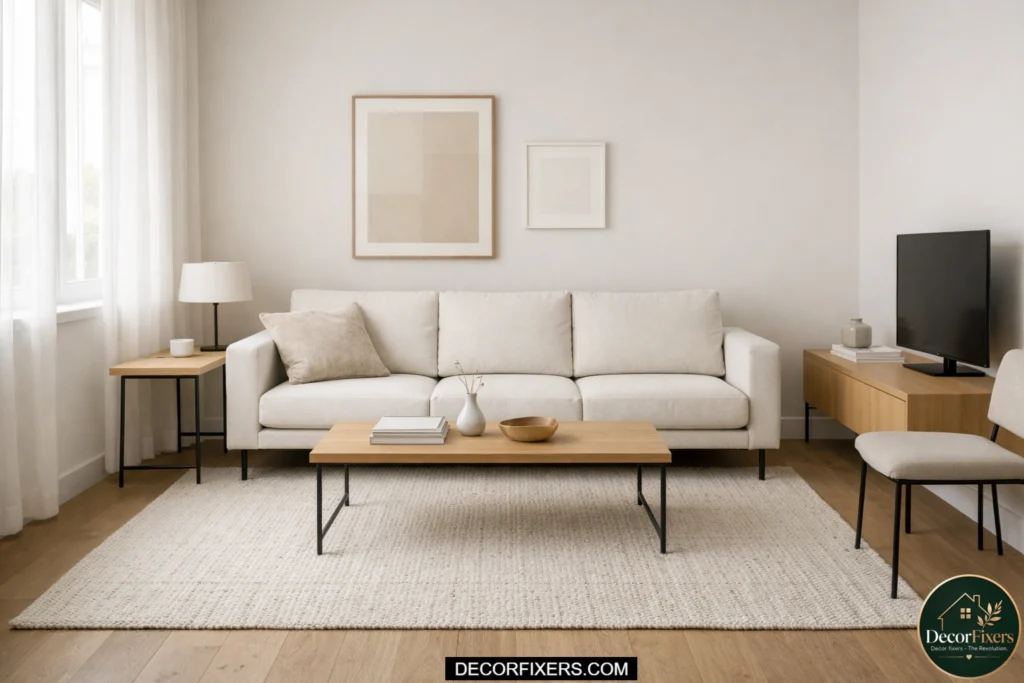
I know it sounds backwards. Every instinct says push the sofa back and create space in the middle. But floating furniture 3–6 inches from the wall actually makes the room feel more spacious because it creates visual breathing room all the way around each piece.
The eye reads that gap as “open space” even though you haven’t added any square footage. Designers call this the float rule, and it’s one of the fastest free changes you can make today. Pair it with a rug that anchors the float zone, and the room suddenly looks intentional instead of cramped.
2. Create Zones with a Single Large Rug
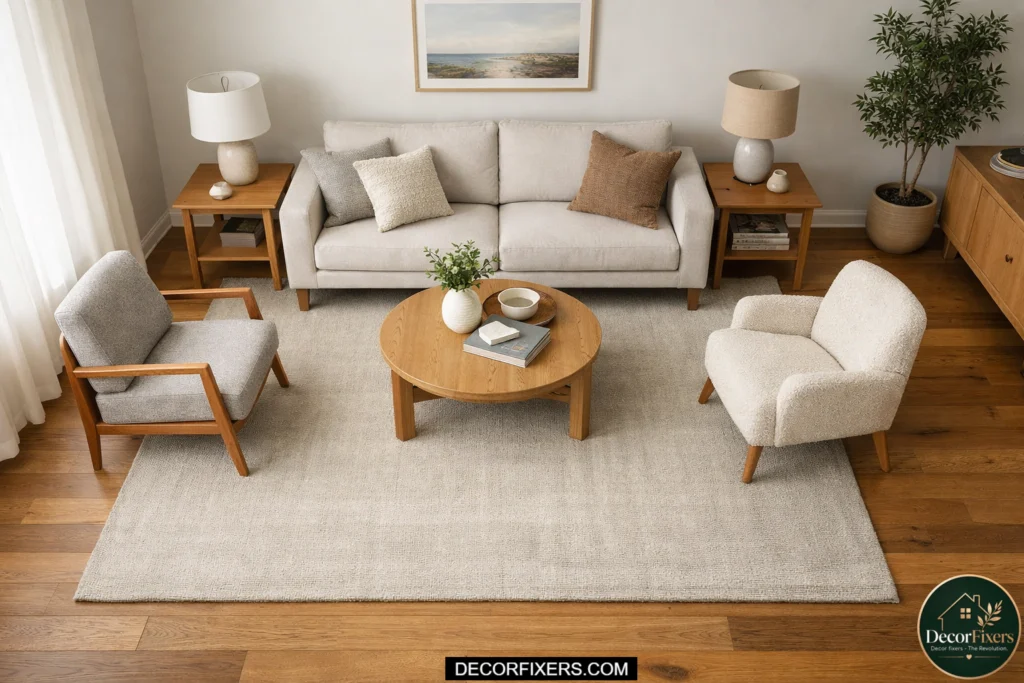
In a small living room, one large rug defines the room better than two small ones. The most common mistake I see is a rug that’s too small; it makes furniture look like it’s floating on a vast sea of floor, which shrinks the space visually. For a room under 200 sq ft, a 5×8 or 6×9 rug is usually the right size.
If your sofa has only two front legs on the rug, you’ve got the proportions right. This single change transforms a scattered arrangement into a clearly defined “living zone,” which matters especially if your living room shares space with a dining area or home office.
3. Keep at Least 30 Inches of Walking Space
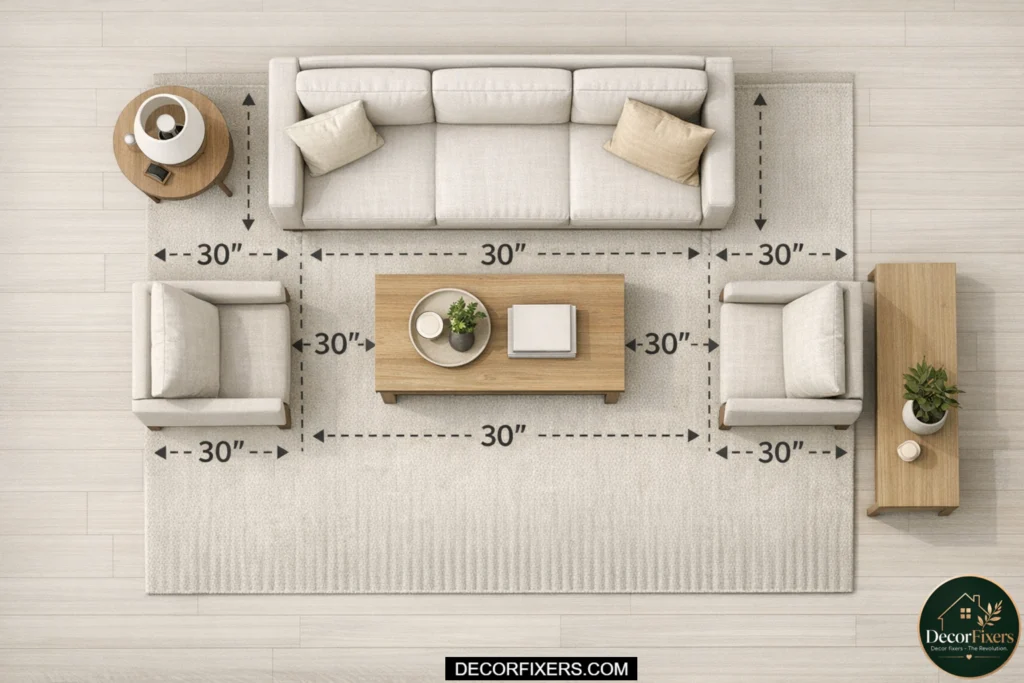
Furniture arrangement that blocks pathways is the number one reason small rooms feel suffocating. Before you commit to any layout, measure 30 inches between pieces; that’s the minimum for comfortable traffic flow. In rooms under 180 sq ft, this often means choosing a loveseat instead of a full sofa, or skipping the oversized coffee table entirely in favor of a smaller nesting set. This sounds restrictive. In practice, it’s liberating, the room opens up immediately, and you stop bumping into things every time you move around.
4. Angle One Piece for Visual Dynamism
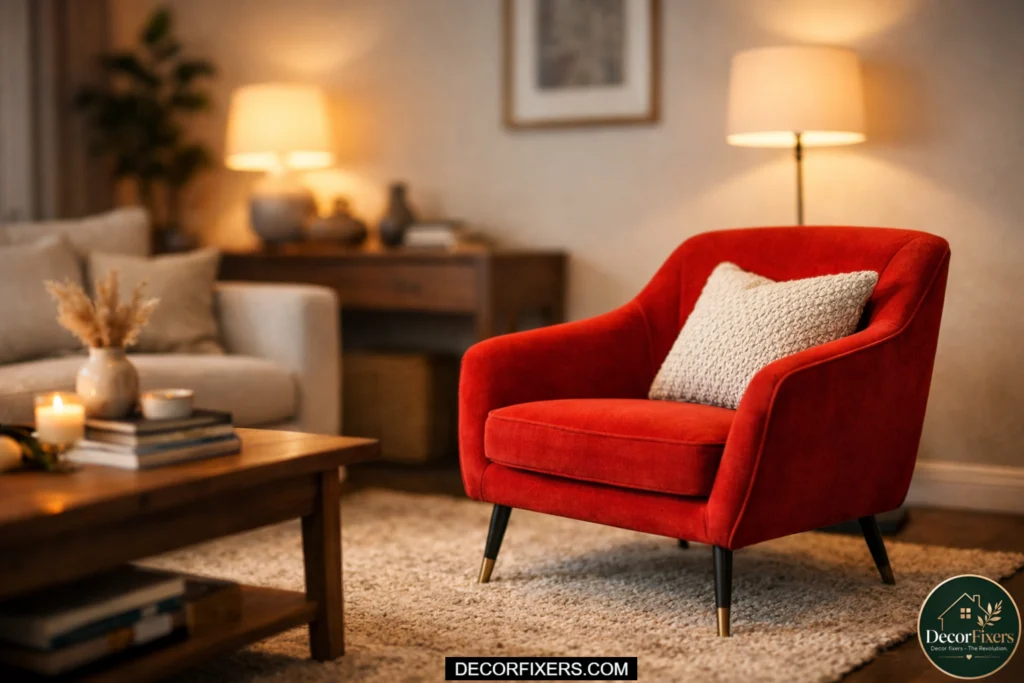
Placing every piece of furniture perfectly parallel to your walls is the default. It’s also what makes a small room look like a waiting room. Try angling one chair or accent table at 45 degrees in a corner.
It breaks the grid pattern, adds depth, and creates a conversation point that draws the eye around the room rather than to the walls. Small change, big difference. I’ve seen this single trick transform a room from “staged” to “lived-in and stylish.” Just don’t angle more than one piece, or the room starts to feel chaotic.
5. Use a Daybed or Sleeper Sofa for Dual-Purpose Living
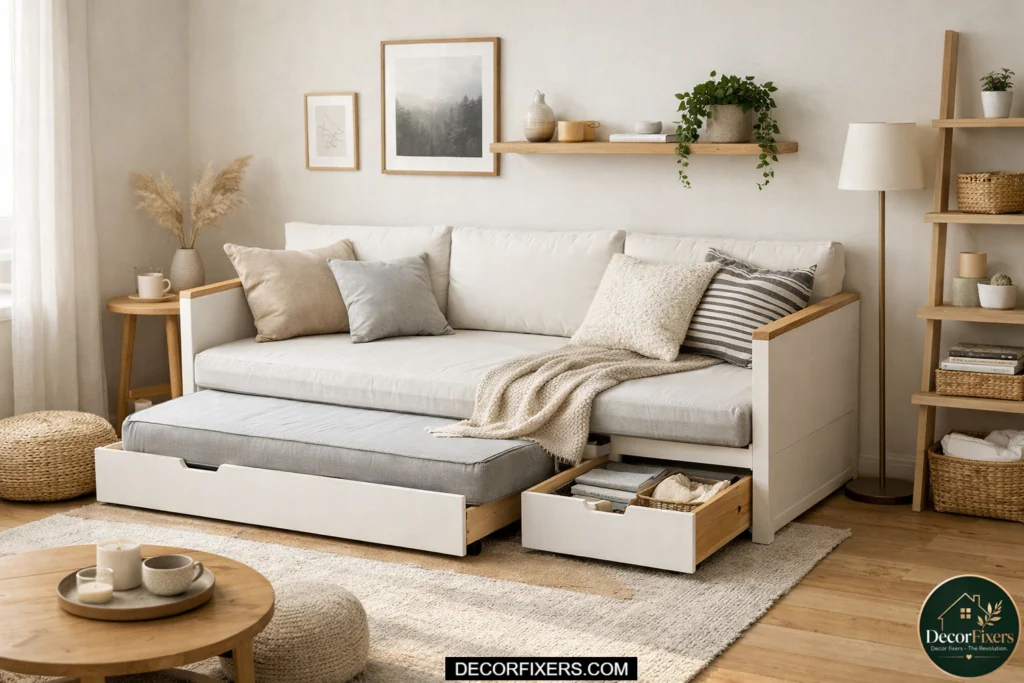
If your living room occasionally needs to function as a guest room, or you work from home and need the flexibility, a quality sleeper sofa or daybed is worth every penny.
The IKEA HEMNES daybed (around $500–600) is a real-world favorite for small apartments: it functions as a sofa by day, single or double bed by night, and includes under-frame storage drawers. This is the zoning trick most articles skip entirely. Treating your living room as a multi-function space means designing for it intentionally, not apologizing for the constraints.
6. Map Your Layout on Paper Before Moving Anything
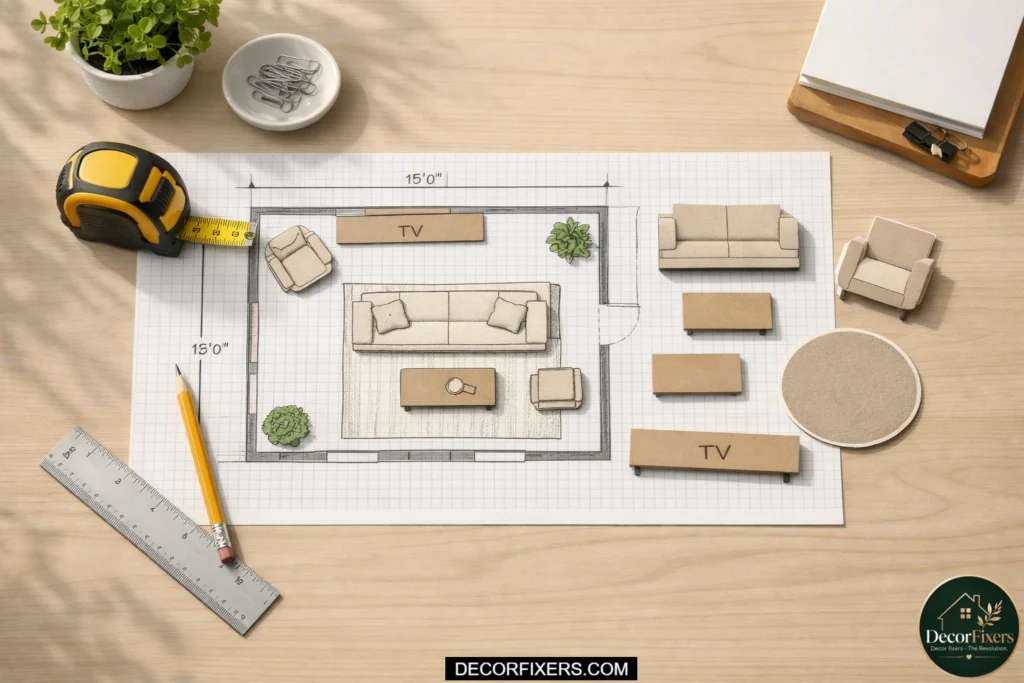
This sounds obvious. Almost nobody does it. Grab a tape measure and sketch your room to scale on graph paper (1 square = 1 foot) before touching a single piece of furniture. Mark doors, windows, and outlets.
Then cut paper shapes to represent your furniture and move those around instead of your actual sofa. I wasted three weekends rearranging furniture in my old apartment before a designer friend told me to do this first. It takes 20 minutes and saves hours of back pain.
7. Right-Size Your Sofa, Always
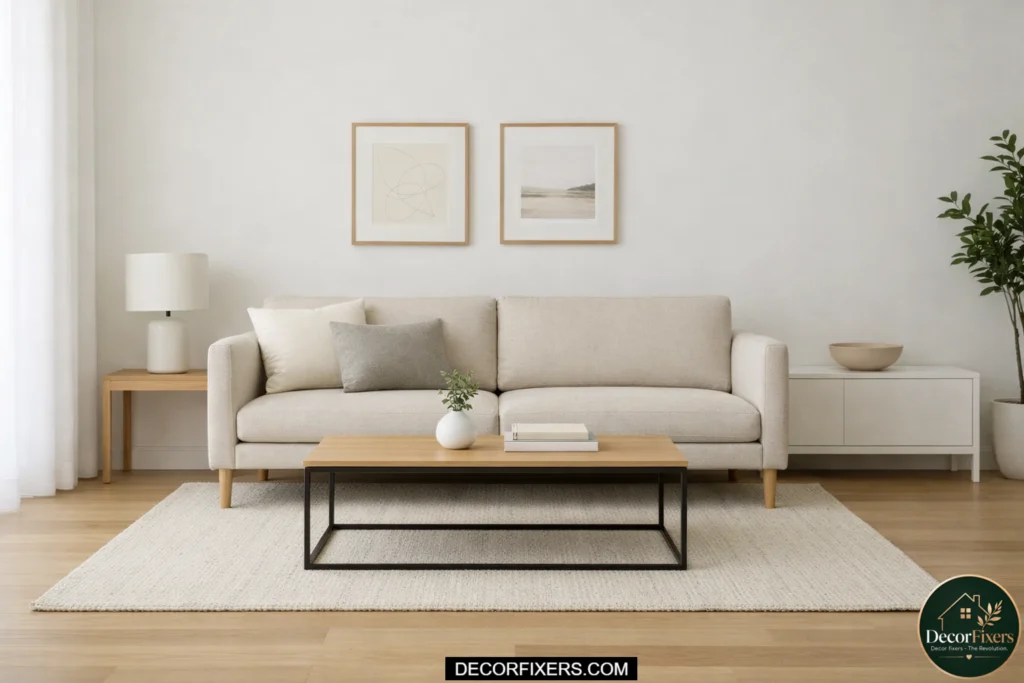
The sofa is usually the biggest space-killer in a small living room. If your sofa is longer than 84 inches in a room under 200 sq ft, it’s likely too big. A loveseat (60–70 inches) or a compact 3-seater under 80 inches with a tight back and slim profile is almost always the right call.
Look for sofas with legs; pieces that sit directly on the floor make a room look heavier and lower. West Elm’s Vale sofa and Article’s Sven are both well-regarded options that balance scale and style without overwhelming a compact space. Legs = air = space.
8. Choose a Glass or Acrylic Coffee Table
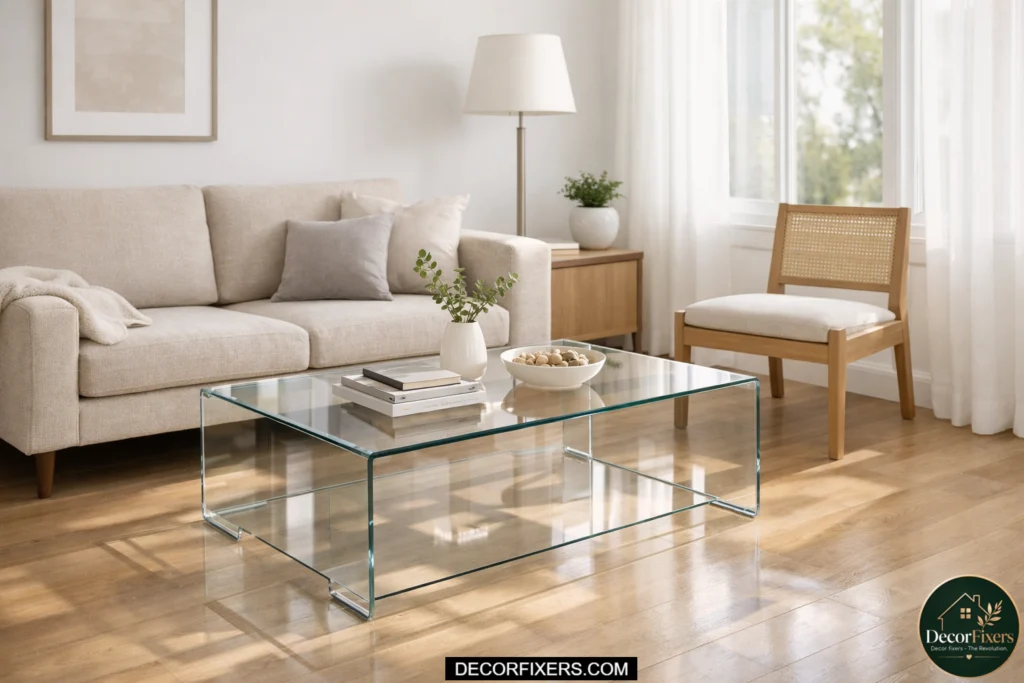
Solid wood and upholstered coffee tables are visually heavy. A glass or acrylic coffee table takes up zero visual real estate, your eye passes right through it, and “reads” it as open floor. CB2’s Peekaboo acrylic coffee table is a go-to recommendation for exactly this reason.
It functions like a regular table but doesn’t eat the center of your room. If you prefer warmth over minimalism, a nesting table set (two or three small tables that slide together) gives you the same flexibility; spread them out when guests arrive, tuck them under the sofa when you don’t need them.
9. Invest in an Ottoman With Hidden Storage
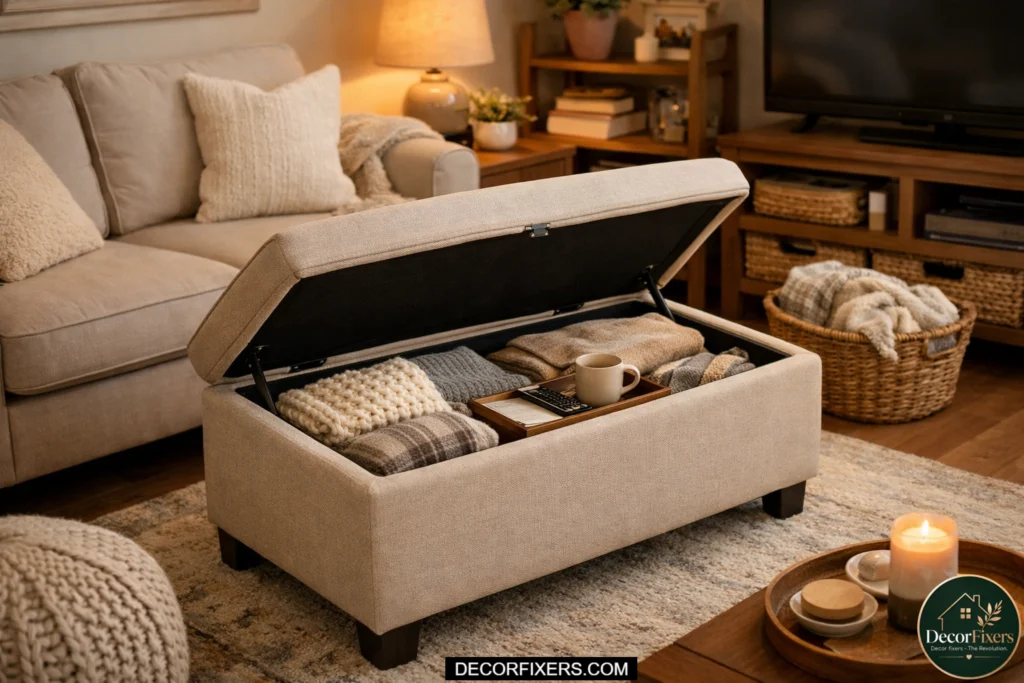
I’d argue this is the single most efficient piece of furniture you can add to a small living room. A storage ottoman replaces your coffee table, adds seating, and hides blankets, remotes, and games, all in one footprint. IKEA’s KNODD or HEMNES storage ottomans are solid budget options.
If you want something more elevated, West Elm’s Tillary ottoman comes with replaceable cushion tops and generous internal storage.
Quick note: measure the height before buying, it should sit at roughly the same level as your sofa cushions for comfortable use as a footrest or secondary seat.
10. Go Vertical With Tall, Narrow Bookshelves
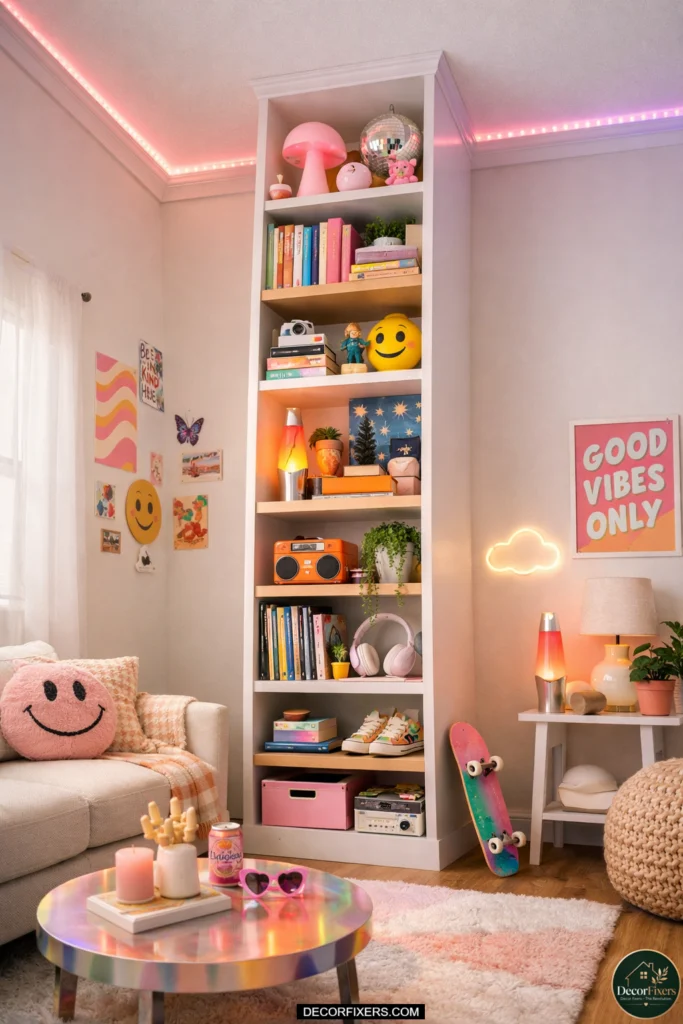
Floor-to-ceiling or near-ceiling bookshelves pull the eye upward, making the room feel taller. This is one of the most underused tricks in small space design. A narrow bookshelf (12–14 inches deep) takes almost no floor footprint.
IKEA’s KALLAX in a 4×4 configuration, combined with a ladder shelf beside it for vertical display, creates a full storage wall that feels intentional and styled, not crammed. The key: keep the upper shelves lighter and more decorative; put heavier storage items at eye level and below.
11. Replace a Bulky TV Stand With a Wall-Mounted TV
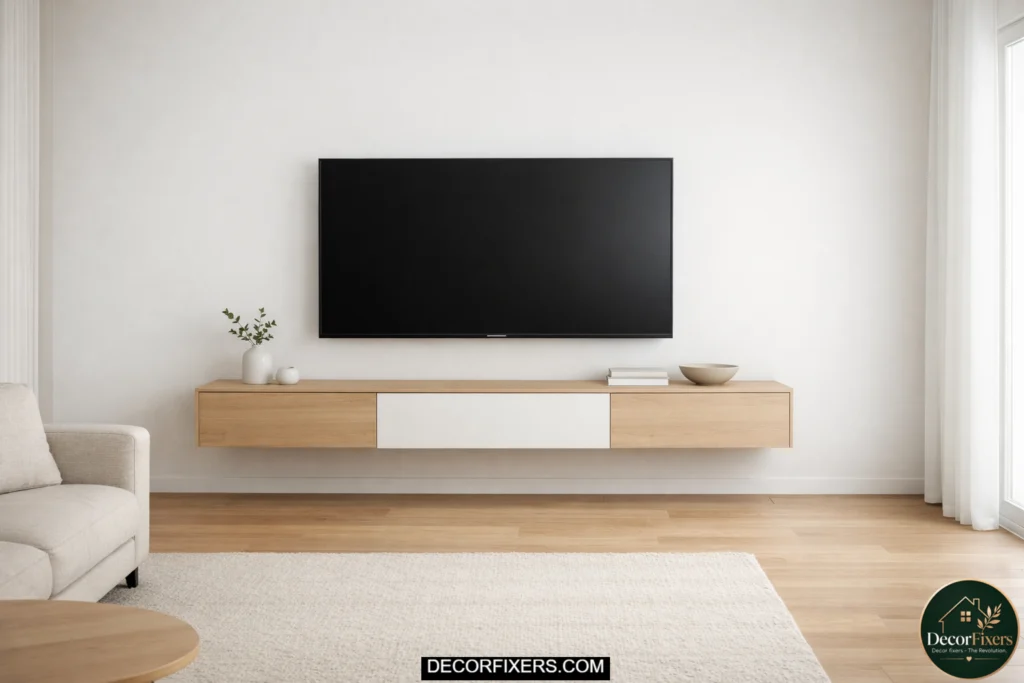
Wall-mounting your TV frees up 12–18 inches of floor depth, which is a massive gain in a small room. That recovered strip of floor can become a low media console with storage drawers, a row of plants, or just open visual space that makes the room feel less stuffed. A 65-inch TV mounted at the right eye height (center of screen at 42–48 inches from floor) also improves viewing comfort.
If your landlord won’t allow wall mounting, a slim TV console that sits only 14–16 inches deep is the next best option.
12. Use Furniture With Exposed Legs Consistently
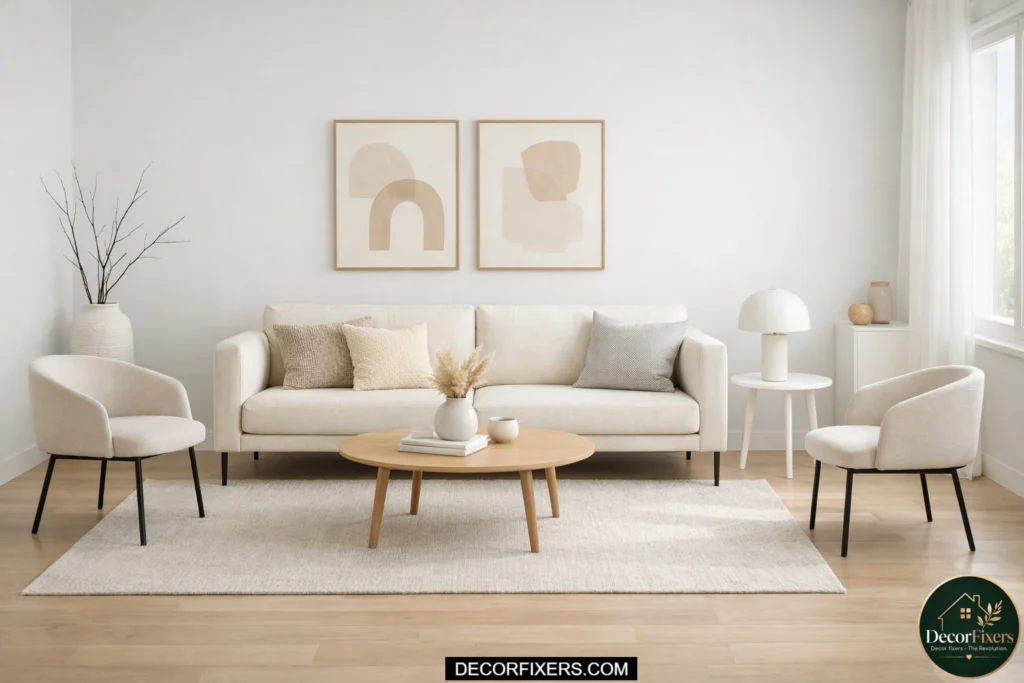
This is one of those rules I’d push back if a reader challenged me; some designers do prefer furniture that sits directly on the ground for a grounded, cozy aesthetic. But for maximizing the visual spaciousness of a small living room, exposed legs win almost every time.
They create sightlines across the floor, making the room read as larger. The visual trick is simple: when your eye can see under a piece of furniture, it registers that under-space as part of the room’s open square footage. Even 4-inch legs on a sofa make a measurable perceptual difference.
What furniture works best in a small living room? Multifunctional pieces win in small spaces. According to interior designers, the best choices are: compact sofas under 80 inches with exposed legs, ottomans with hidden storage, glass or acrylic coffee tables, and wall-mounted shelving. Each piece should serve at least two purposes: function + storage, or function + visual spaciousness.
Quick Comparison:
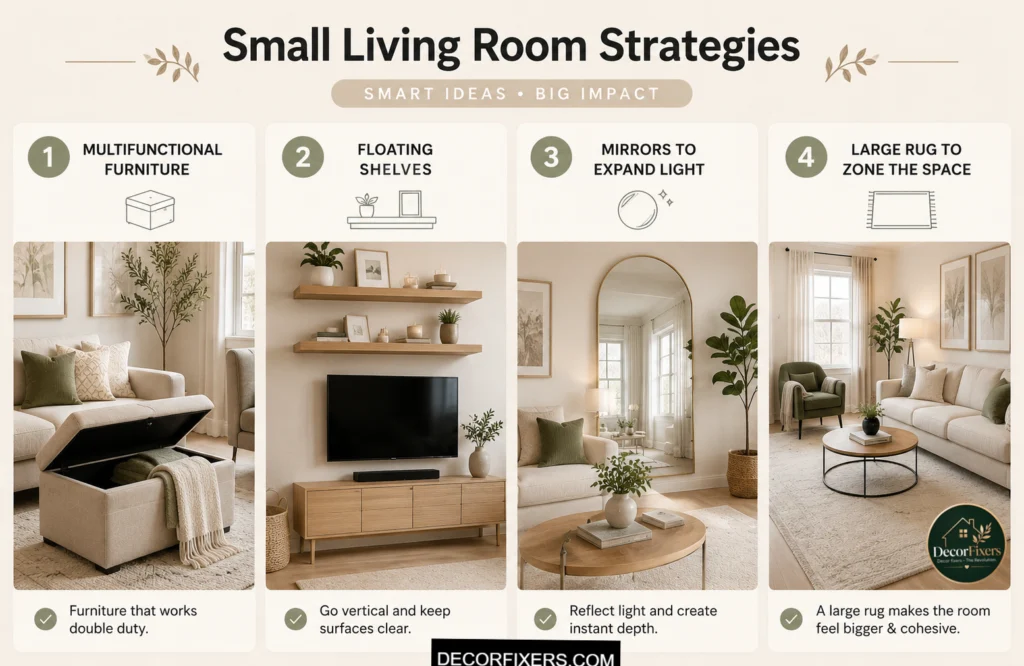
| Strategy | Best For | Key Benefit | Limitation |
| Multifunctional furniture | Rooms under 180 sq ft | Doubles storage + seating | Higher upfront cost |
| Floating wall shelves | Renters, small budgets | Frees up floor space entirely | Weight limit per shelf |
| Light + mirror combo | Dark, narrow rooms | Instantly enlarges the space visually | Doesn’t add real sq ft |
| Zone dividing (rugs) | Studio / open-plan | Defines space without walls | Needs a large rug investment |
| Built-in storage bench | Entryway-adjacent rooms | Hidden storage + seating in one | Requires DIY or installation |
13. Install Floating Wall Shelves at 72+ Inches High
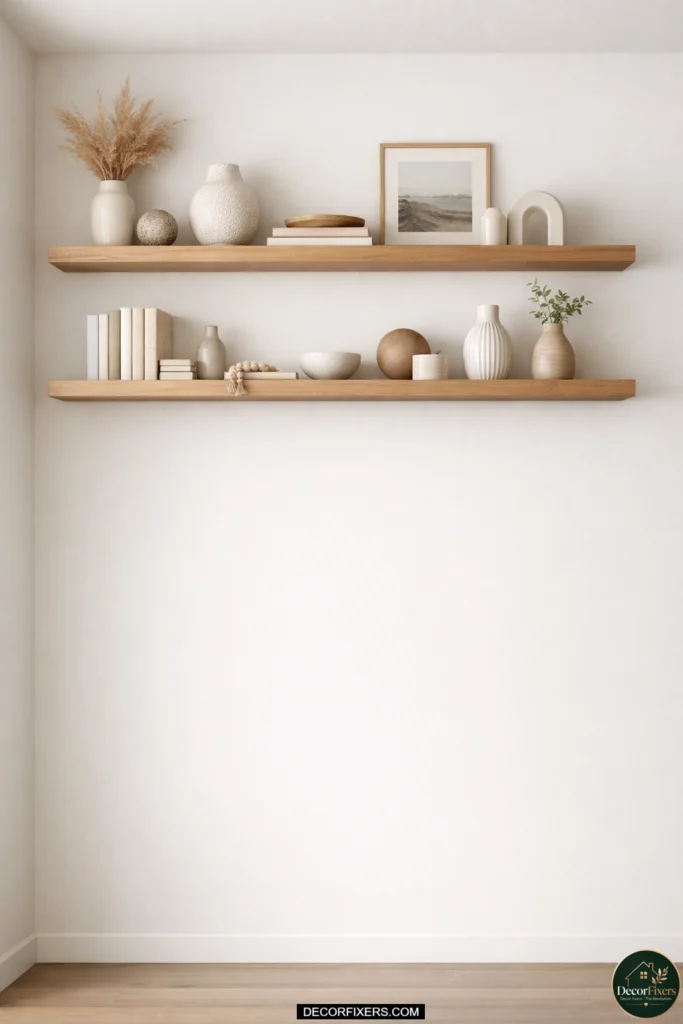
Most people install shelves at eye level, around 60–66 inches. That’s a missed opportunity. Installing shelves at 72 to 84 inches high uses the wall space above eye level that would otherwise be blank, and it draws the eye upward, increasing the perception of ceiling height. Use this high zone for books, baskets, or decorative items you don’t access daily.
The IKEA LACK shelf is about as affordable as it gets ($20–30) and holds up fine for books and decor. For heavier loads, look at metal floating shelf brackets rated for 50+ lbs per bracket.
14. Use the Space Behind and Under Your Sofa
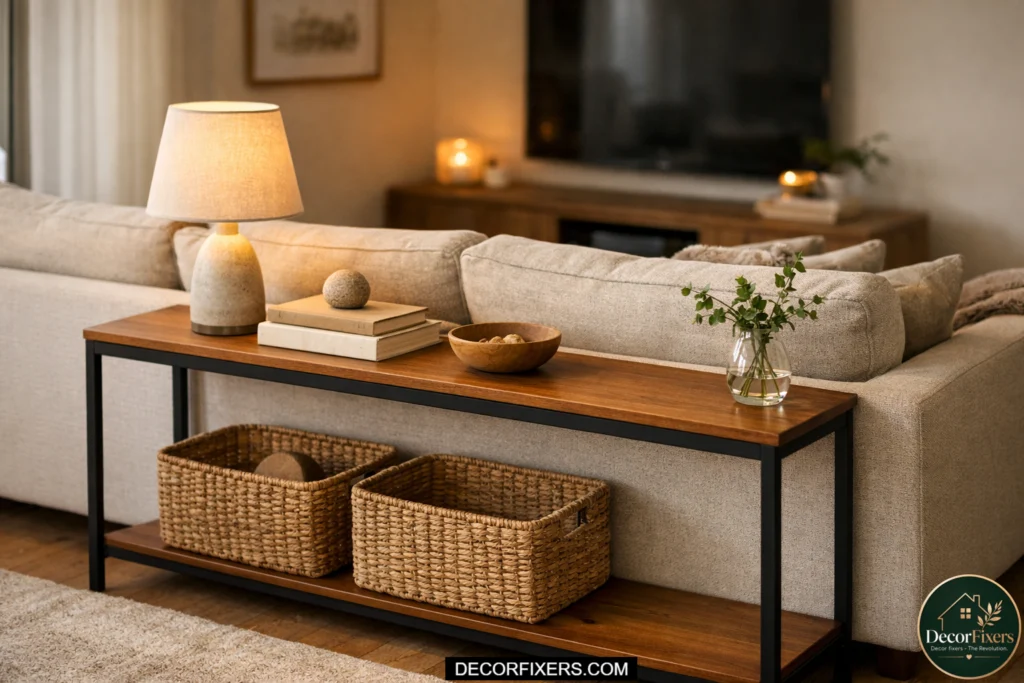
The 12–16 inches behind your sofa and the 4–8 inches under it are almost always wasted. A narrow console table behind the sofa (sometimes called a sofa table) adds a surface for lamps, plants, and books without any additional floor footprint.
Under the sofa, flat storage boxes or vacuum-seal bags hold extra bedding, off-season clothes, or games. Or maybe I should say it this way: treating every inch of dead space as potential storage is the mindset shift that changes everything in a small room.
15. Put Storage Everywhere You Sit
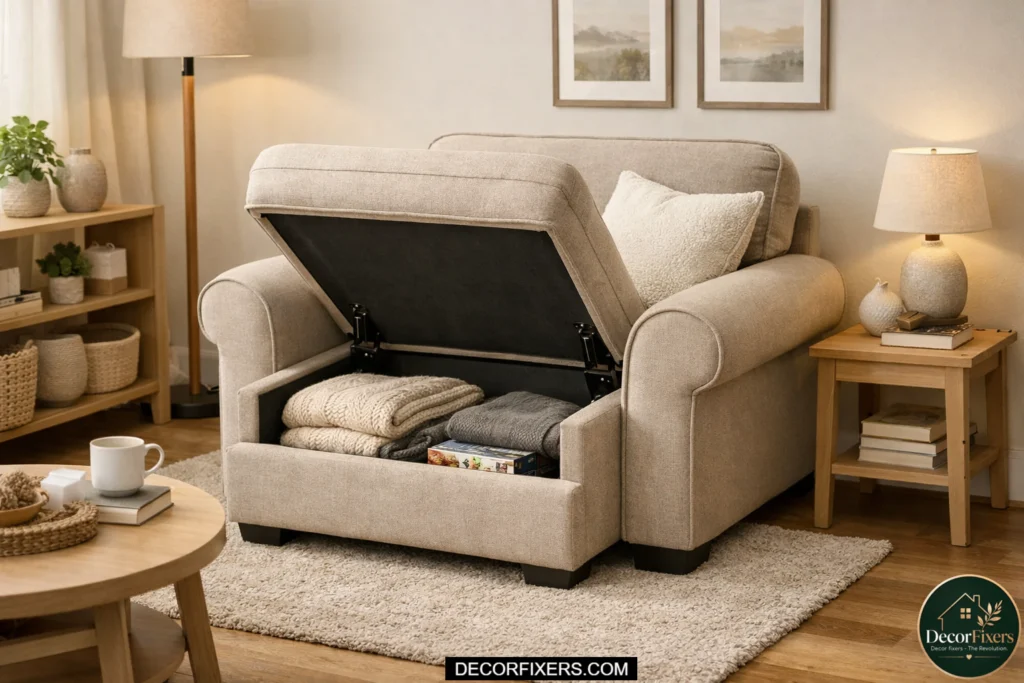
Every seat in a small living room should offer hidden storage if possible. Storage ottomans we’ve covered. But also look for: sofas with built-in side storage compartments, armchairs with built-in pockets, and side tables with drawers or shelves underneath.
The less visual clutter sitting out in the open, the more spacious the room feels, and the more functional it becomes. The goal isn’t minimalism for aesthetics. It’s an organized functionality that doesn’t require a separate storage room.
16. Build a ‘Command Wall’ for Clutter That Usually Lands on Surfaces
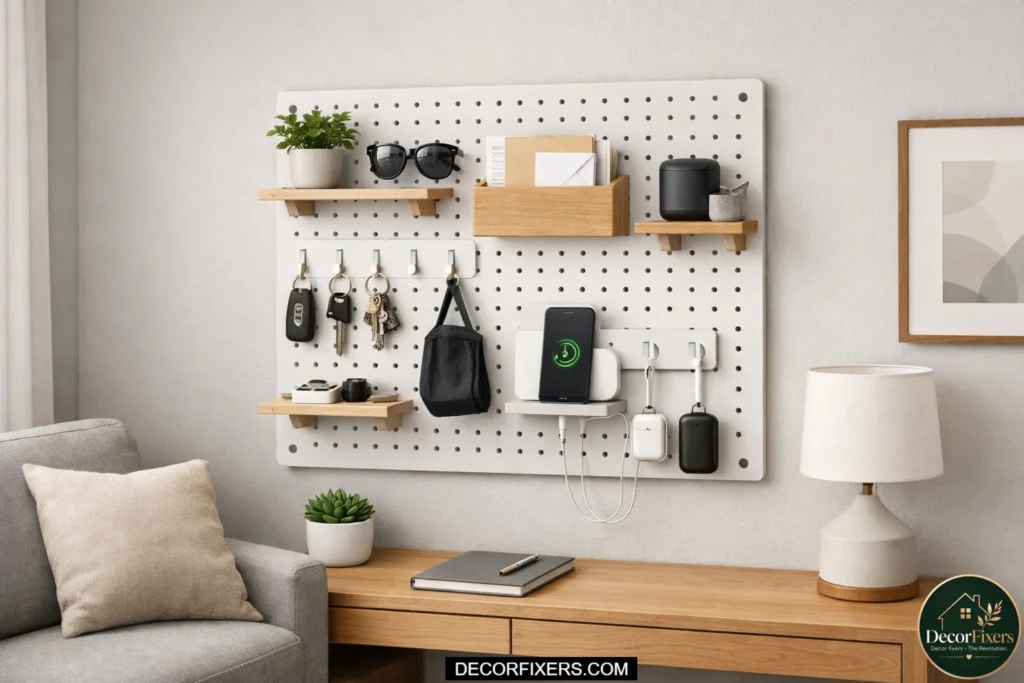
Remotes, keys, mail, chargers, they all accumulate on coffee tables and consoles, making a small room look perpetually messy. A wall-mounted organization panel (hooks, a small shelf, a charging strip) near the entry point of the room catches this clutter before it spreads. IKEA’s SKADIS pegboard is a flexible system that mounts to the wall and can hold basically everything.
I set one up in my own place, and the coffee table stayed clear for the first time in years. It sounds minor. It’s genuinely transformative.
17. Use Baskets as Decorative Storage
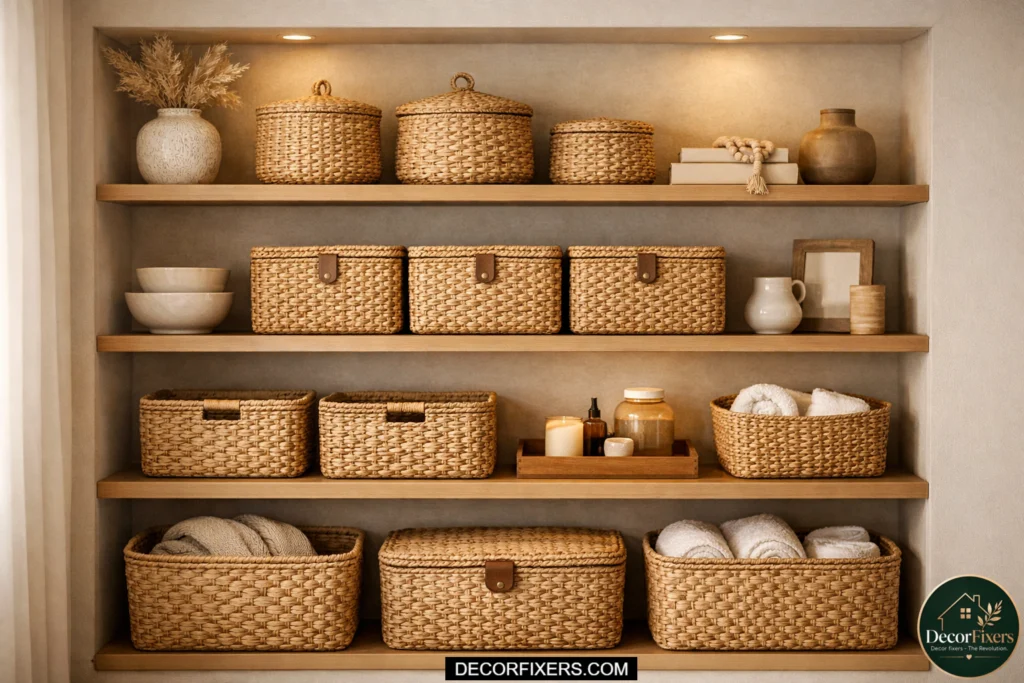
Baskets sitting on open shelves serve double duty: they add texture and warmth while hiding the items inside. A row of matching woven baskets on a bookshelf looks intentionally styled. Inside each basket might be a tangle of cables, extra cushion covers, or a pile of magazines; nobody knows.
FERM LIVING makes beautiful baskets (though pricey), but affordable alternatives from H&M Home and World Market work just as well aesthetically. Keep to one material, all woven, all canvas, all wooden, for a cohesive look.
18. Add a Mirrored Accent Cabinet or Console
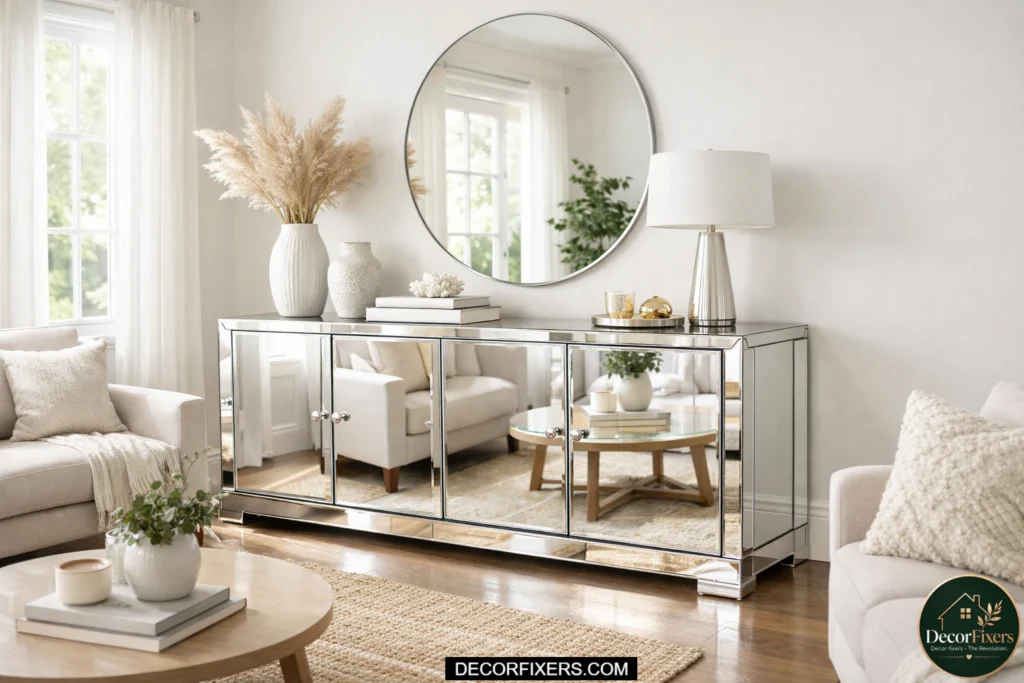
A mirrored console or sideboard solves three problems at once: it adds storage, it reflects light to brighten the room, and it visually doubles the apparent size of the space. This isn’t the same as hanging a decorative mirror on a blank wall (though that’s also effective).
A mirrored cabinet gives you functional storage for blankets, magazines, or media equipment while doing the optical illusion work of a large mirror. IKEA doesn’t do great mirrored consoles, but CB2 and Wayfair both carry solid options in the $150–350 range.
19. Layer Your Lighting, Never Rely on One Overhead Light
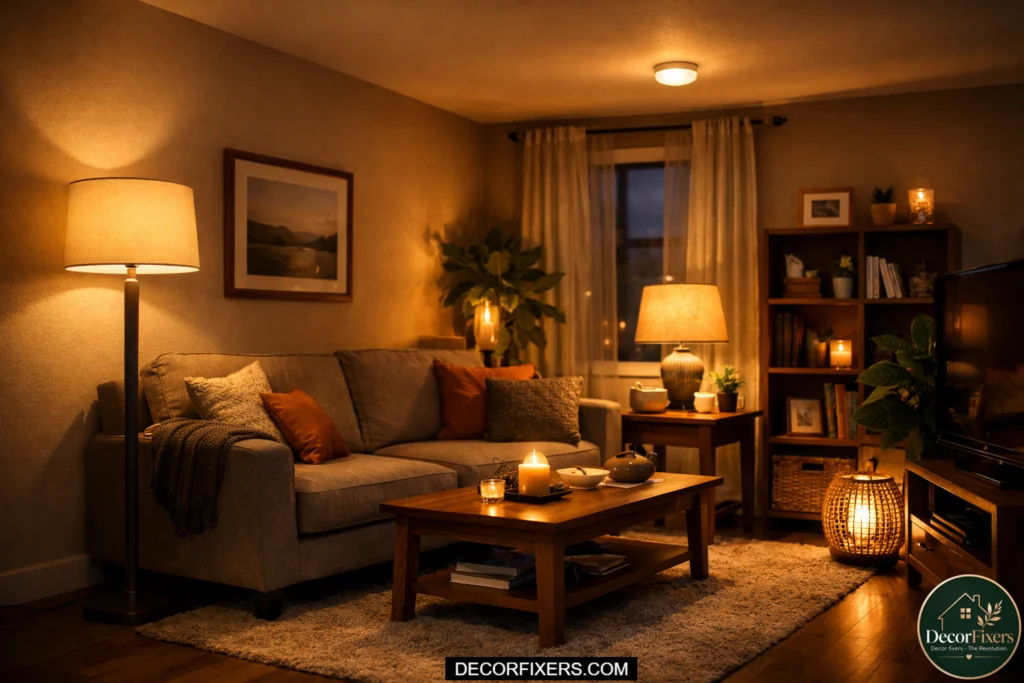
A single overhead light in a small room creates flat, harsh light that makes walls look closer and spaces look smaller. Layered lighting, overhead, floor lamp, and accent, creates depth that makes the room feel larger. Place a floor lamp in a corner to bounce light toward the ceiling.
Add a warm table lamp on a side table or console. Use smart bulbs set to warm white (2700K–3000K) for the evening. The number of light sources, not the brightness, is what changes how spacious a room feels after dark.
20. Paint the Ceiling Slightly Lighter Than the Walls
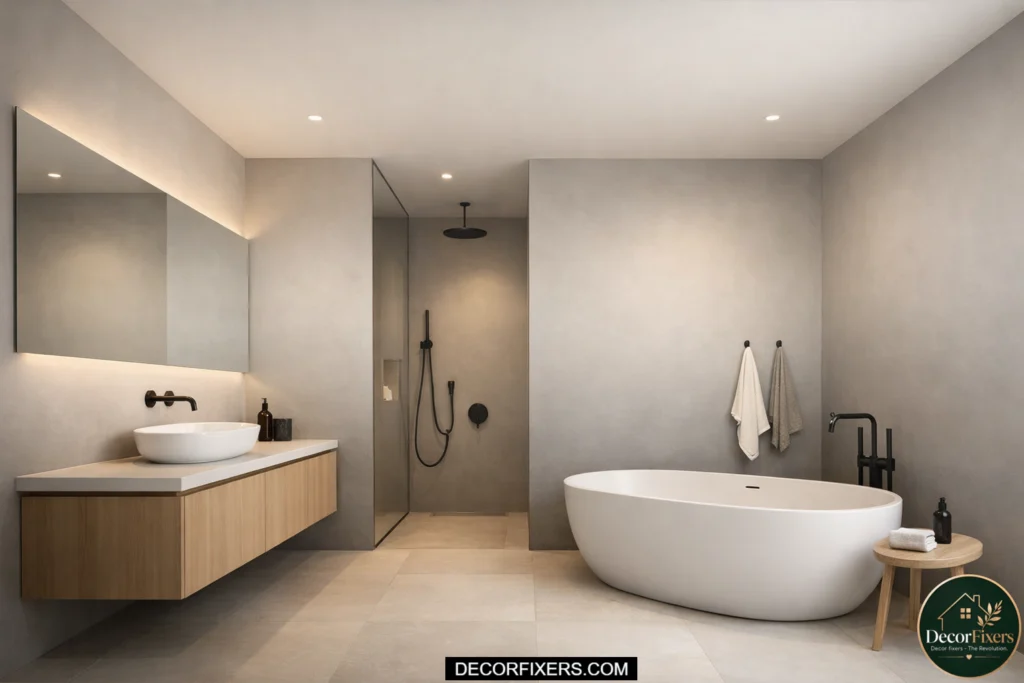
Most rooms get white ceilings as a default. That’s fine. But if you want to actively push the ceiling higher visually, paint it one shade lighter than your wall color, not white, but a lighter version of the same hue.
If your walls are soft sage green, paint the ceiling a very pale sage tint. The gradient of color draws the eye upward without creating a jarring contrast. This is a counterintuitive move that most design articles skip. The science: your eye naturally follows tonal gradients upward, reading the lighter top as “further away.”
21. Use a Large Mirror Opposite the Main Light Source
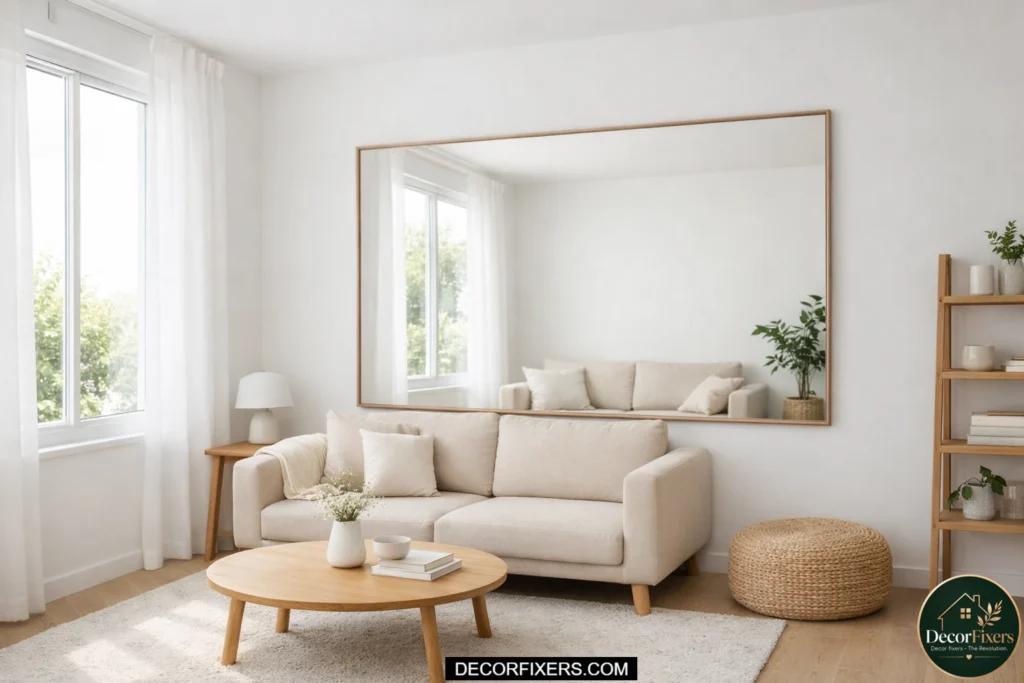
Strategic placement matters more than the mirror itself. A large mirror hung opposite a window reflects natural light across the room, doubling the apparent brightness and making the space feel almost twice as wide. Lean a full-length mirror against a wall rather than hanging it; it takes up zero wall fixing points (great for renters) and adds casual, lived-in style.
The one mistake I see constantly: hanging a small mirror where a large one would do. In a small room, the mirror should be at least 24 inches wide, ideally 36+.
22. Stick to a Two-Tone or Tonal Color Palette
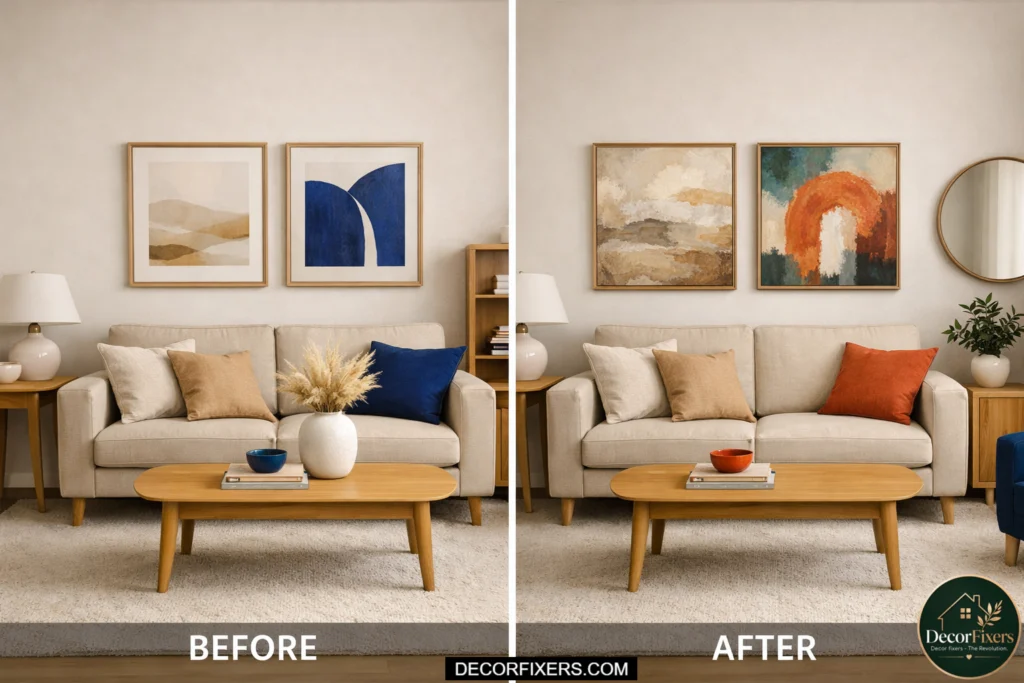
More than three colors in a small living room creates visual noise that makes the space feel smaller. Two tones, one base, one accent, plus white or off-white for contrast, is the ceiling. This doesn’t mean boring. It means cohesive. A room with warm sand walls, cognac leather seating, and white shelving reads as sophisticated and spacious.
A room with olive walls, a blue sofa, orange cushions, and a yellow rug reads as chaotic regardless of quality. Look, if you’re in a situation where you love color and don’t want to give it up, that’s valid. Just ensure your accent color appears in exactly three places.
23. Use Curtains That Mount at the Ceiling, Not Above the Window
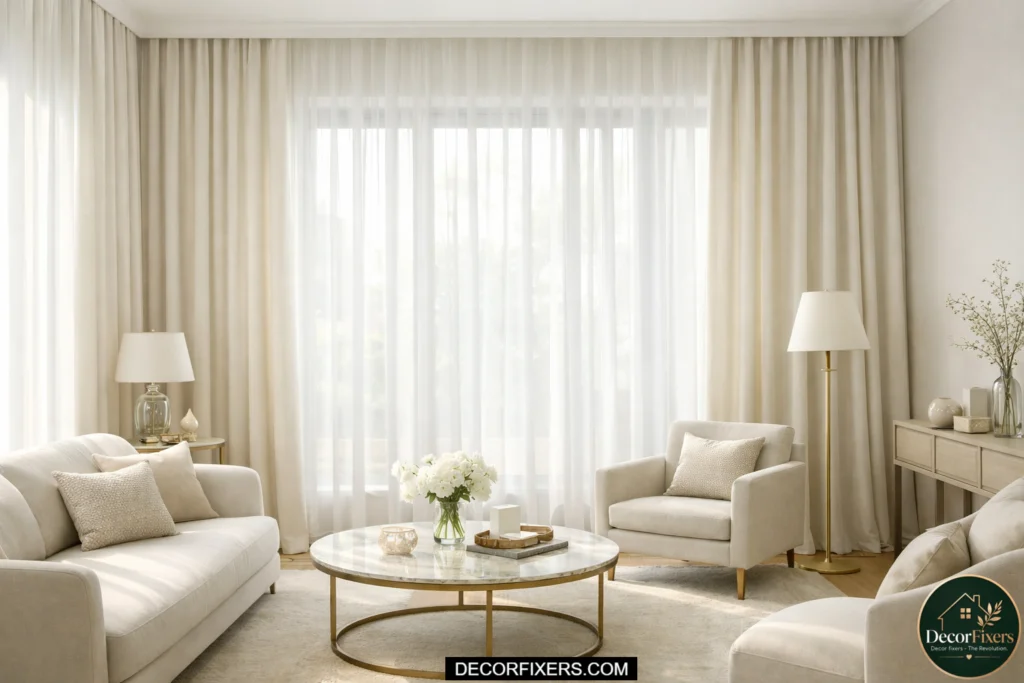
The height at which you hang curtains changes everything. Most people hang curtain rods a few inches above the window frame. Hang them at ceiling height instead, even if the window sits much lower, and the room reads as dramatically taller. Use floor-length panels so the fabric runs all the way to the floor.
This single change is consistently rated as the highest-impact visual trick in small rooms. The fabric adds softness, height, and a sense of luxury that makes a compact room feel more expensive than it is.
24. Add One Oversized Statement Art Piece
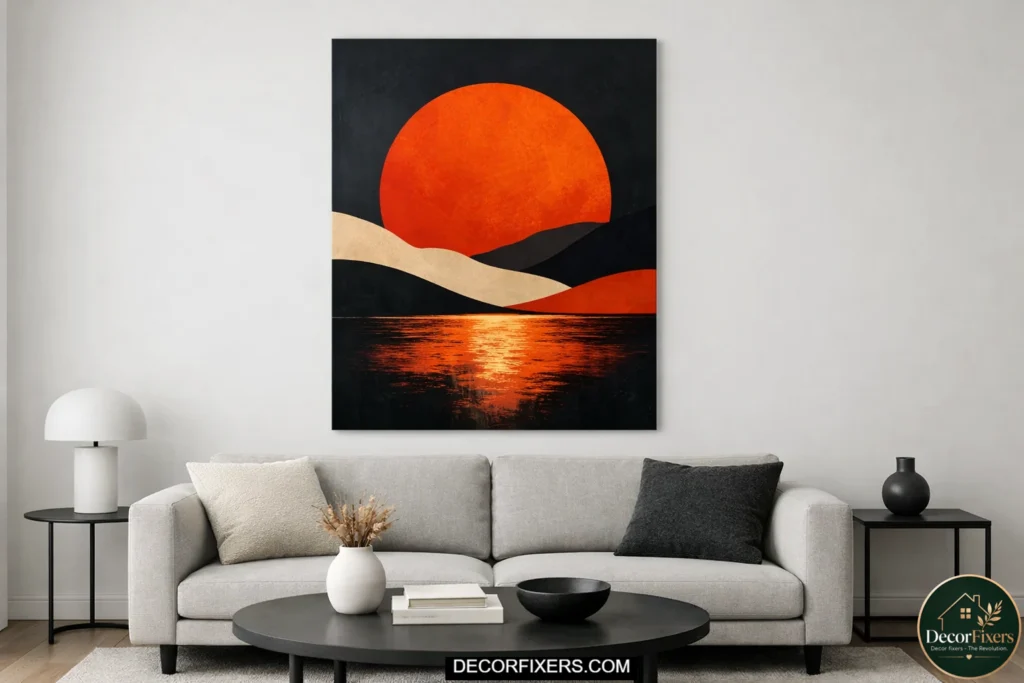
This is the idea most people resist: “Won’t big art make a small room feel more crowded?” No. One large piece of art (at least 24×36 inches) anchors the room and prevents the wall from feeling like it’s closing in.
It draws the eye to one focal point instead of letting the gaze scatter across a collage of small frames. Gallery walls are charming in large rooms; in small ones, they create visual noise. Lean the art rather than hanging it if you want a more casual, layered look. One strong piece. That’s all you need.
Conclusion:
I started this guide with a 160-square-foot room and no idea how to make it work. What I eventually learned is that small living rooms don’t need more space; they need more intention.
Every one of these 24 ideas is based on the same principle: make every inch earn its place. Whether that means floating your sofa, swapping a solid coffee table for a glass one, or finally hanging those curtains at ceiling height instead of above the window frame, each change is small individually and transformative collectively.
You don’t need to do all 24 at once. Pick the three that resonate most with your current frustration. Try them. Then layer in more. The room won’t look the same in a month, and you’ll finally stop dreading walking into it.
Some experts argue that small rooms require minimalist, all-white aesthetics to feel open. That’s valid for some people. But if you’re someone who needs warmth and character in your home, the ideas in this guide, especially the zoning, layering, and dual-function furniture approaches, prove you can have both function and personality without compromising on space.
To maximize a small living room in 5 steps: 1. Map your room on paper and plan the layout before moving anything. 2. Float furniture 3–6 inches away from walls and maintain 30-inch pathways. 3. Replace bulky pieces with multifunctional furniture (storage ottoman, sleeper sofa). 4. Install floating shelves at 72+ inches to maximize vertical storage. 5. Layer lighting and use ceiling-height curtains to visually expand the space.
This guide works best for standalone living rooms under 300 sq ft. It does not address open-plan combined kitchen/living layouts or rooms requiring full structural changes. For shared or combined spaces, consult a space planning professional.
FAQs:
Q: What’s the best furniture arrangement for a small living room?
A: Float furniture slightly away from walls, keep at least 30 inches of walking space, and use one large rug to define the seating zone. Avoid pushing every piece against the perimeter; it compresses the space.
Q: How do I make a small living room look bigger without renovating?
A: Use light wall colors, hang curtains at ceiling height, mount your TV on the wall, and choose a glass or acrylic coffee table. These four changes alone can make a room feel 30–40% more open.
Q: Should I use a sectional or a sofa in a small living room?
A: A compact loveseat or sofa under 80 inches is usually better than a sectional in rooms under 200 sq ft. If you need a sectional, look for a chaise-style rather than an L-shape; it takes up less corner space.
Q: Why does my small living room always look cluttered?
A: Visible surfaces accumulate clutter fast. Add storage ottomans, wall-mounted organizers, and baskets on shelves to hide everyday items. When surfaces are clear, the room reads as twice as large.
Q: When should I hire a professional for a small living room redesign?
A: If your room serves triple duty, living, sleeping, and working, a professional space planner or interior designer can help you zone the room efficiently. For single-use rooms, these 24 ideas are fully DIY-friendly.

Creator of DecorFixers, sharing practical home and interior ideas focused on real-life usability, simple design improvements, and budget-friendly solutions.
3 thoughts on “24 Small Living Room Ideas That Maximize Your Space (Tricks That Work)”