

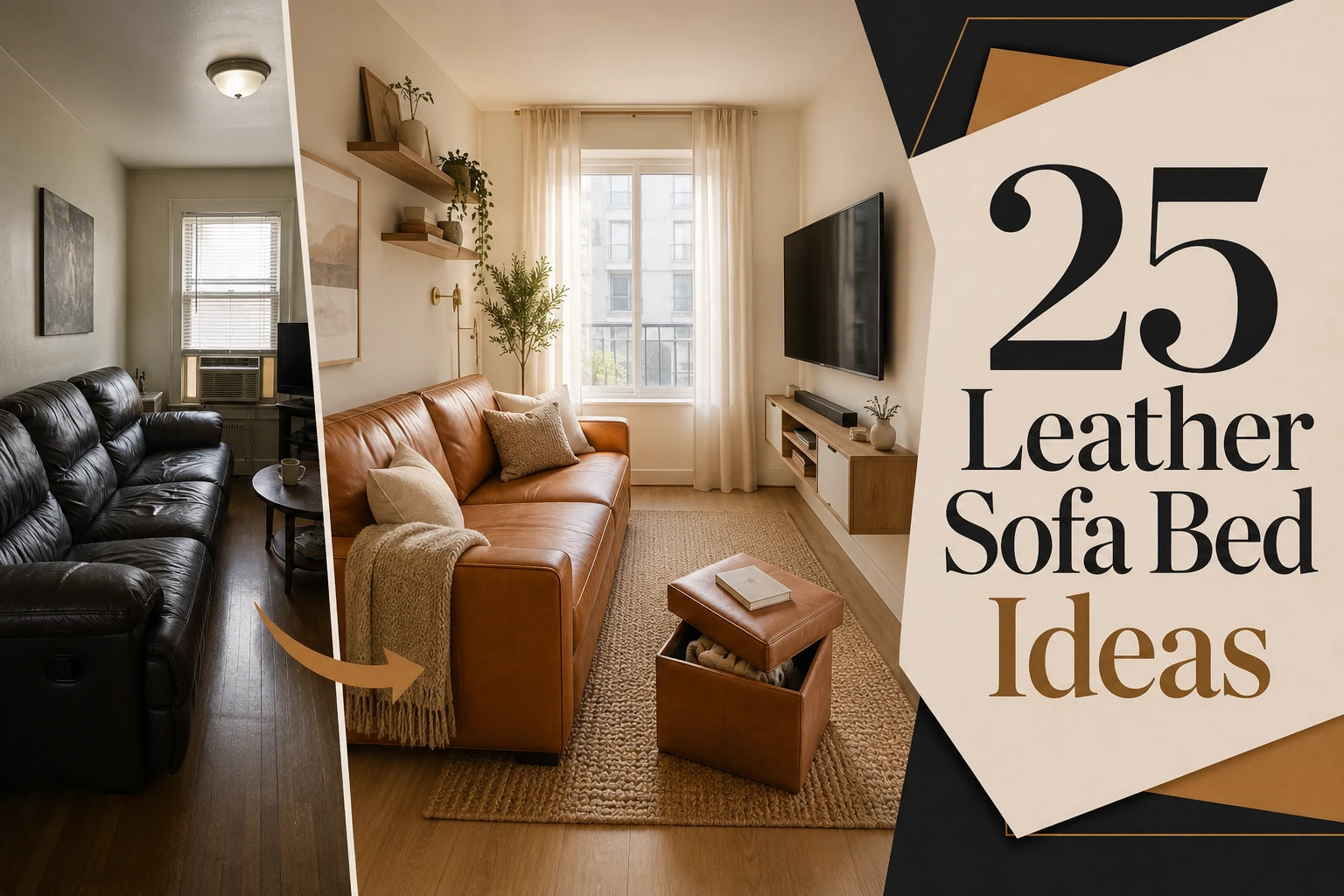
I almost bought the wrong sofa bed twice.
The first time, I fell for a gorgeous dark brown pull-out that looked stunning in the showroom. Got home, measured the room after delivery, and realized I’d need to shove my coffee table into the kitchen every time a guest stayed over.
The second time, I ordered a “compact” faux leather piece online and received something that felt like sitting on a laminated cardboard box.
You’re probably here because you’re somewhere between those two mistakes. You want leather, and that’s smart.
It’s polished, it’s easy to wipe clean, and it doesn’t scream “temporary furniture.” But you’re working with a small living room, maybe under 400 square feet, and you’re not sure which style won’t swallow the space or cheapen it.
This guide covers 25 real, tested leather sofa bed ideas specifically for small living rooms, with placement logic, mechanism breakdowns, and product callouts you can actually act on. No vague “choose a neutral color” advice.
It’s people buying leather sofa beds that are too deep, too wide, or have the wrong mechanism for their floor plan. That’s exactly what the 25 ideas below fix.
Let’s get into it.
1. The Click-Clack in a Studio Under 300 Sq Ft
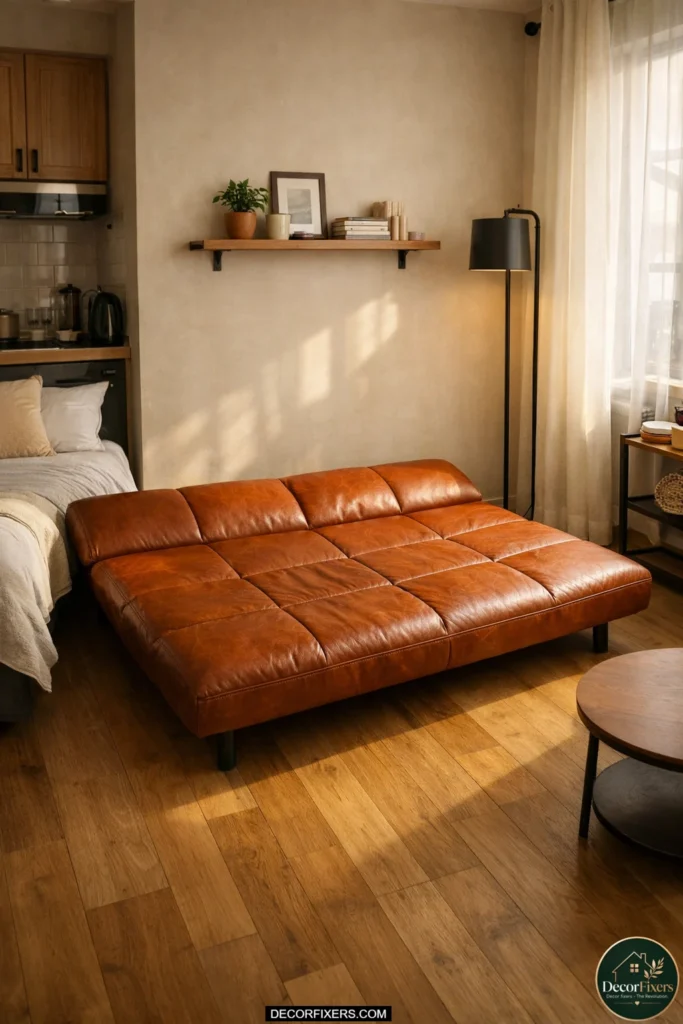
If your studio apartment is under 300 square feet, the click-clack mechanism is your most space-friendly choice.
It works by simply pushing the backrest flat; there is no frame to slide out, no extra floor clearance needed. Models in faux leather, like several options in the IKEA lineup, typically come in at 70–74 inches wide, which fits even a narrow wall.
The trade-off: the sleeping surface sits higher than a pull-out because you’re lying directly on the seat cushion, which is firmer than a dedicated mattress. Fine for a guest once a month; not ideal for nightly use.
2. The Pull-Out Leather Sleeper for Frequent Hosts
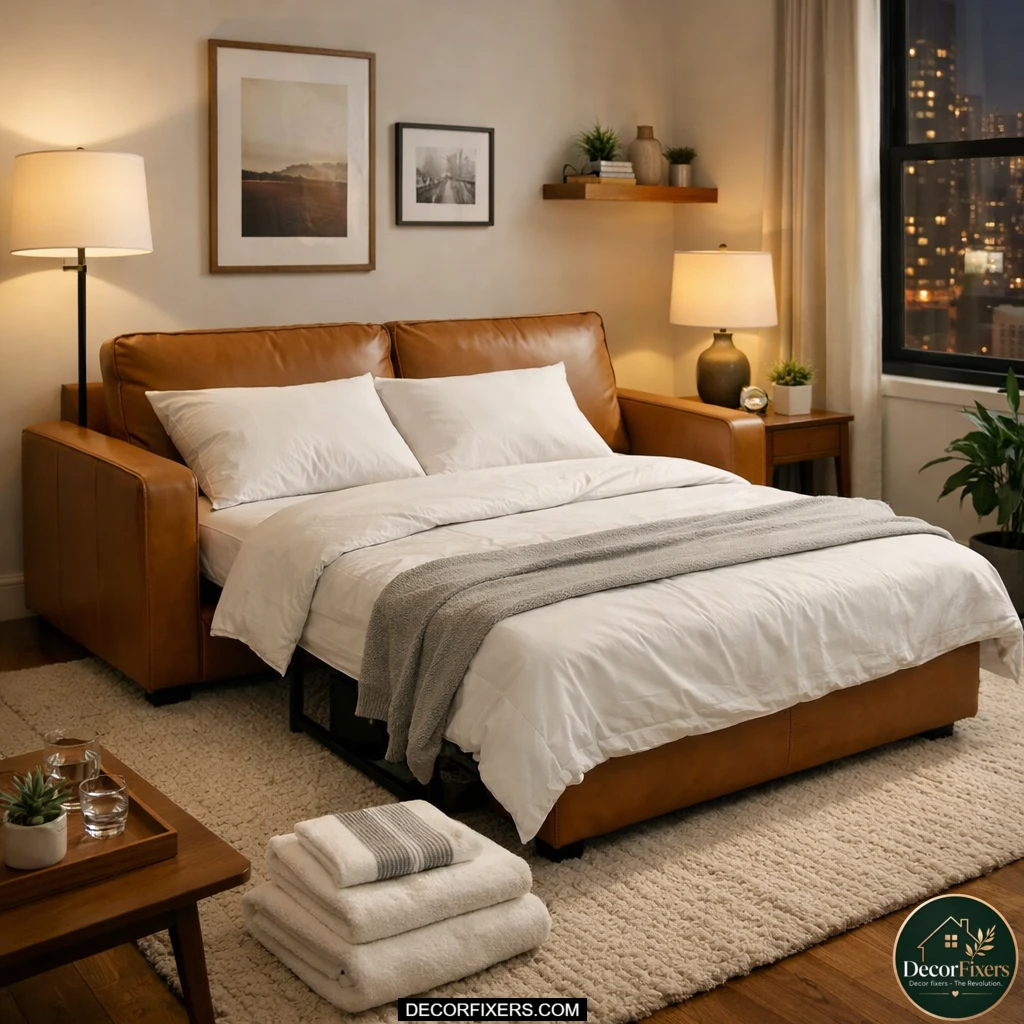
A pull-out hides a full or queen mattress under the cushions. When guests stay regularly, this is worth the extra width. The Article Ceni Leather Sleeper Sofa is a mid-range pick with a slim-arm design, around 84 inches total, but its seat depth is shallow enough that it doesn’t project far into the room when closed.
You’ll need roughly 40–45 inches of clear floor in front of it to open fully. Measure that distance before buying. Most people don’t, and that’s where layouts fall apart.
3. The Futon-Fold Faux Leather for Budget Renters
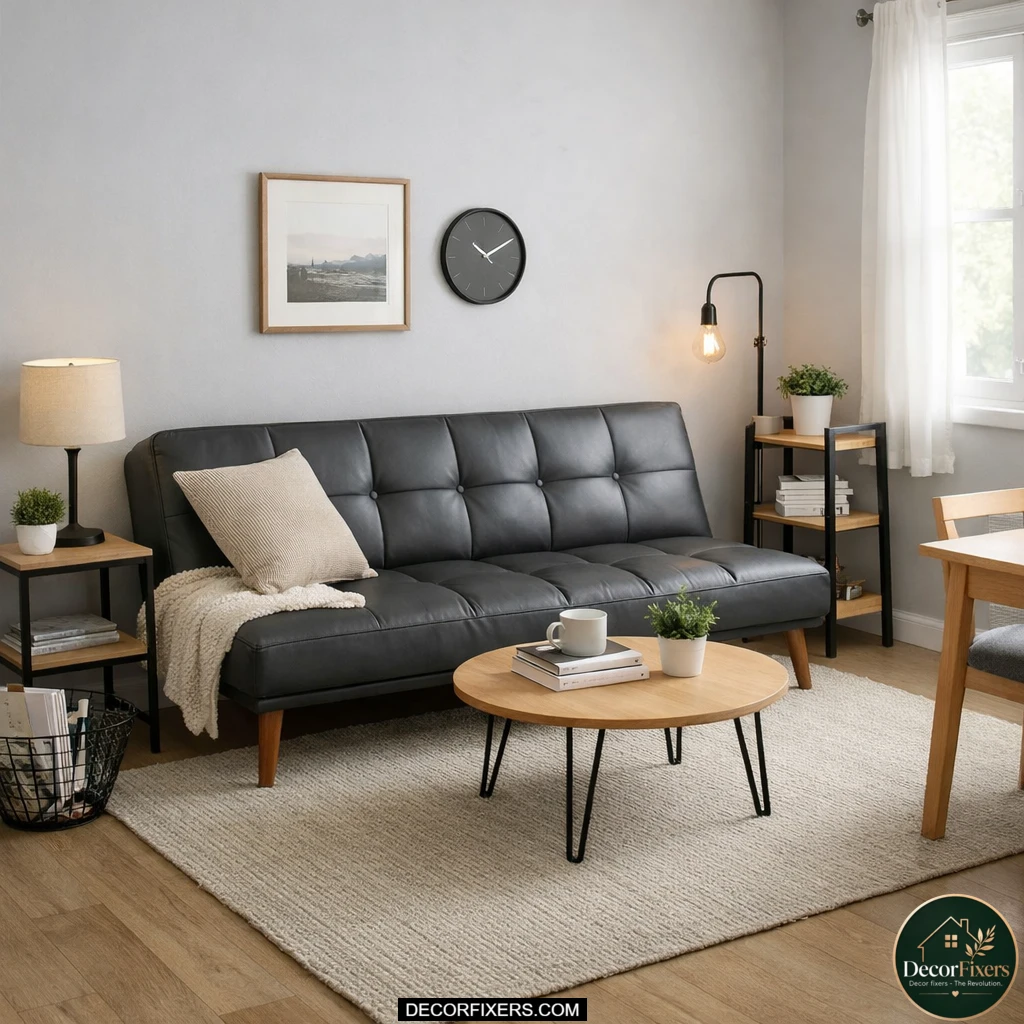
A futon-fold mechanism lays the entire back section flat forward. It’s the lightest option mechanically, often the most affordable, and easiest to move when you change apartments.
Faux leather in a charcoal or saddle brown reads as intentional rather than temporary; the key is choosing a frame with visible legs (not a floor-skimming base), which makes the piece look less like dorm furniture.
Under $500 options exist. They’re not forever furniture, but for a two-year lease, they’re exactly right.
4. The Modular Leather Sleeper for Awkward Floor Plans
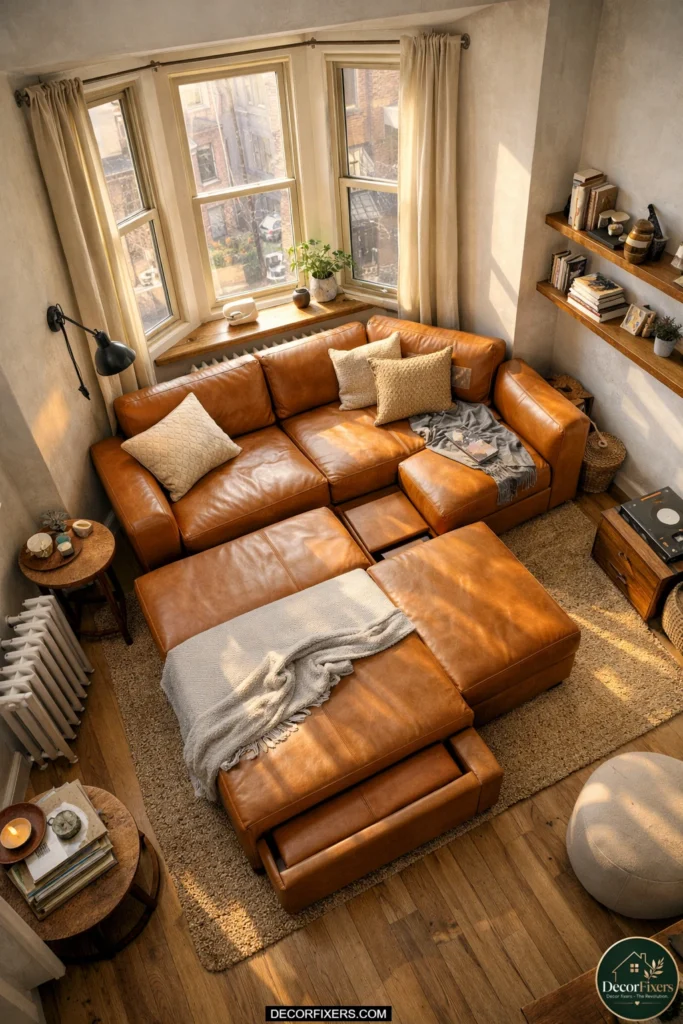
Rooms that are oddly shaped, bay windows on one wall, a radiator cutting into another, a doorway on the third, make standard sofa placement nearly impossible. The Burrow Nomad Leather Sofa Bed solves this.
Its modular design lets you reconfigure the arm positions and chaise side even after delivery. You’re not locked into a fixed 90-inch rectangle. For studios with one usable wall that’s only 76 inches wide, this kind of flexibility isn’t a luxury; it’s the reason the furniture works at all.
5. The Loveseat Leather Sleeper for Rooms Under 150 Sq Ft
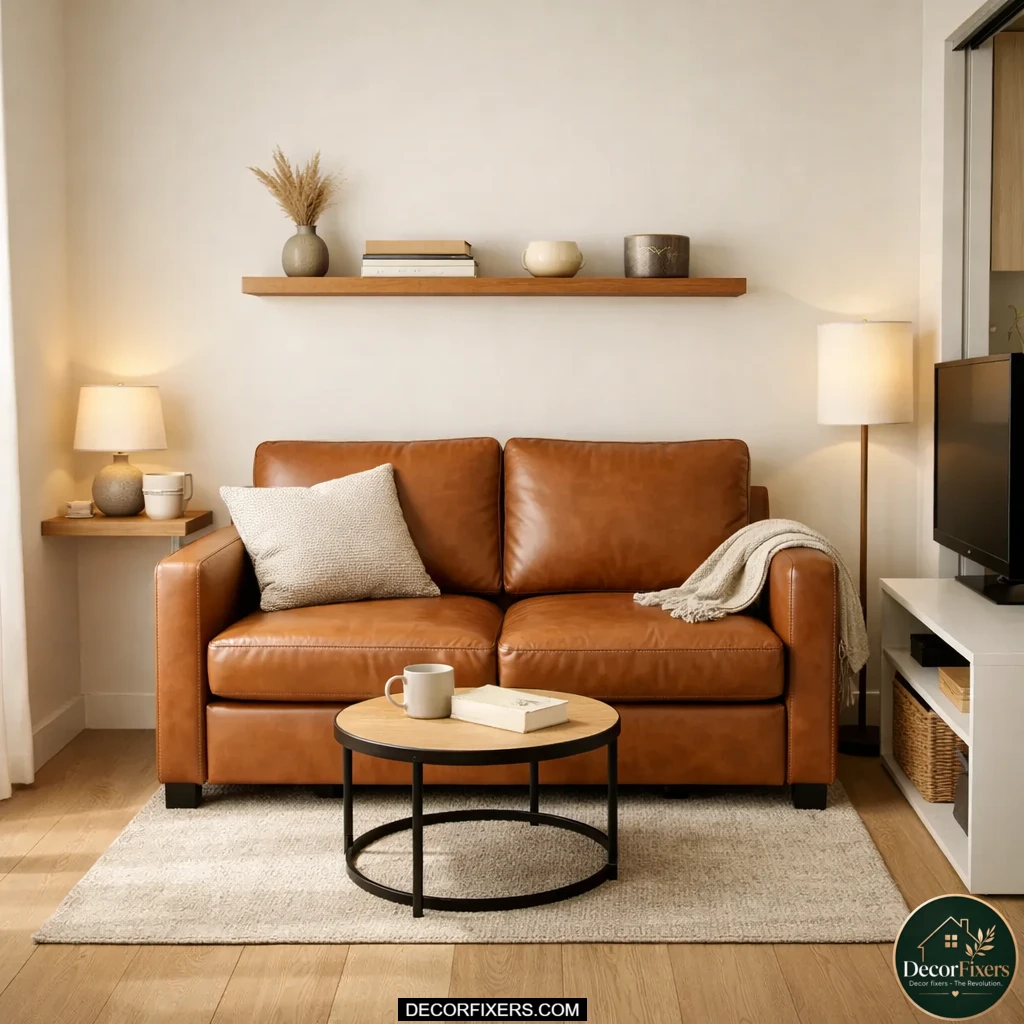
A full-size sofa bed in a 10 × 14-foot room is usually a mistake. A loveseat sleeper, typically 54–60 inches wide, gives you seating for two and a single sleeping surface without eating up the entire wall.
Pair it with a floating shelf rather than a side table, and the floor stays clear. This is genuinely one of the most underrated approaches in small-space design.
Quick Comparison:
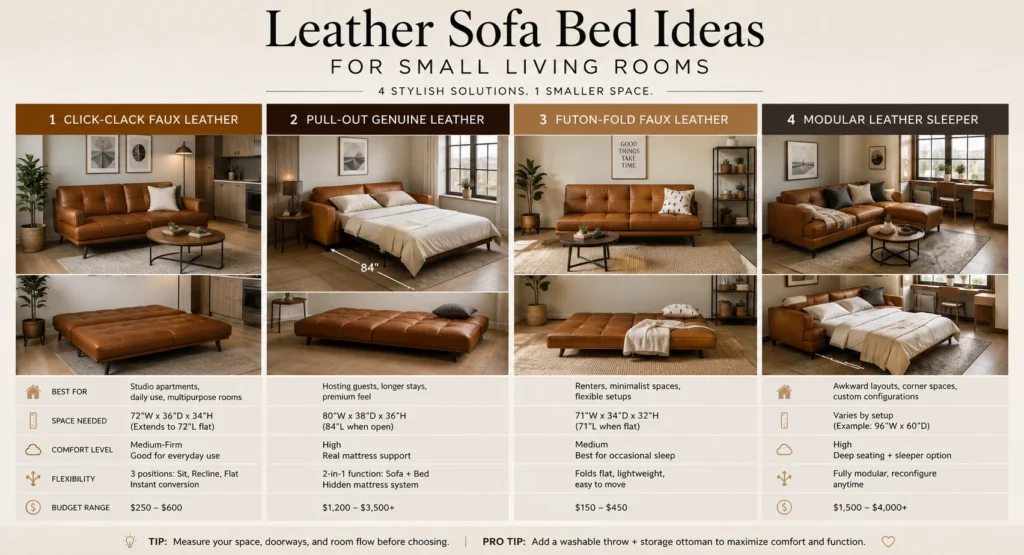
| Option | Best For | Key Benefit | Limitation |
| Click-Clack Faux Leather | Studios under 300 sq ft | No tools needed; folds flat instantly | Thinner mattress; less lumbar support |
| Pull-Out Genuine Leather | Frequent guests, longer stays | Full/queen mattress; premium feel | Needs 40–45″ clearance to open |
| Futon-Fold Faux Leather | Budget renters, first apartments | Lightest weight; easiest to move | Can look casual; less polished |
| Modular Leather Sleeper | Awkward or L-shaped rooms | Reconfigurable; grows with your space | Higher price point; complex setup |
| Loveseat Leather Sleeper | Rooms under 150 sq ft | Smallest footprint; easy to style | Sleeps one comfortably |
Table: Mechanism types vs. key criteria for rooms under 400 sq ft
6. Float It Off the Wall, The Counter-Intuitive Move
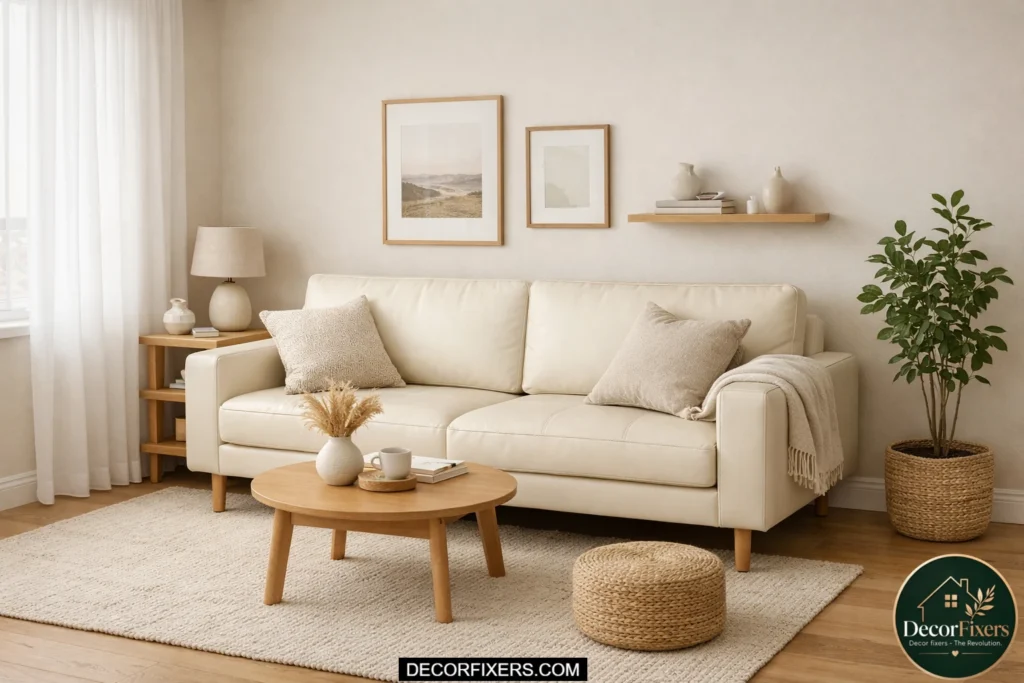
Placing your leather sofa bed directly against the wall feels logical in a small room. It’s also frequently wrong. Floating the sofa 6–8 inches from the wall creates a visual breathing zone that paradoxically makes the room feel larger.
Interior designers call it perimeter illusion: when furniture hugs every wall, the eye reads the room as furniture-heavy. Float it slightly, and the room reads as having more open floor. Works best with lighter faux leather tones, cream, light cognac, or warm grey.
Why Leather Sofa Beds Make Sense for Small Spaces (The Case Before the Ideas)
Leather specifically earns its place in small rooms for three reasons: it doesn’t pill or flatten the way fabric does over time (which means it keeps looking intentional longer), a wipe-down surface handles the reality of tight spaces where spills happen often, and its reflective quality, especially lighter tones, bounces light rather than absorbing it.
Here’s the thing: the problem isn’t leather being too heavy.
7. Corner Placement With an L-Configuration
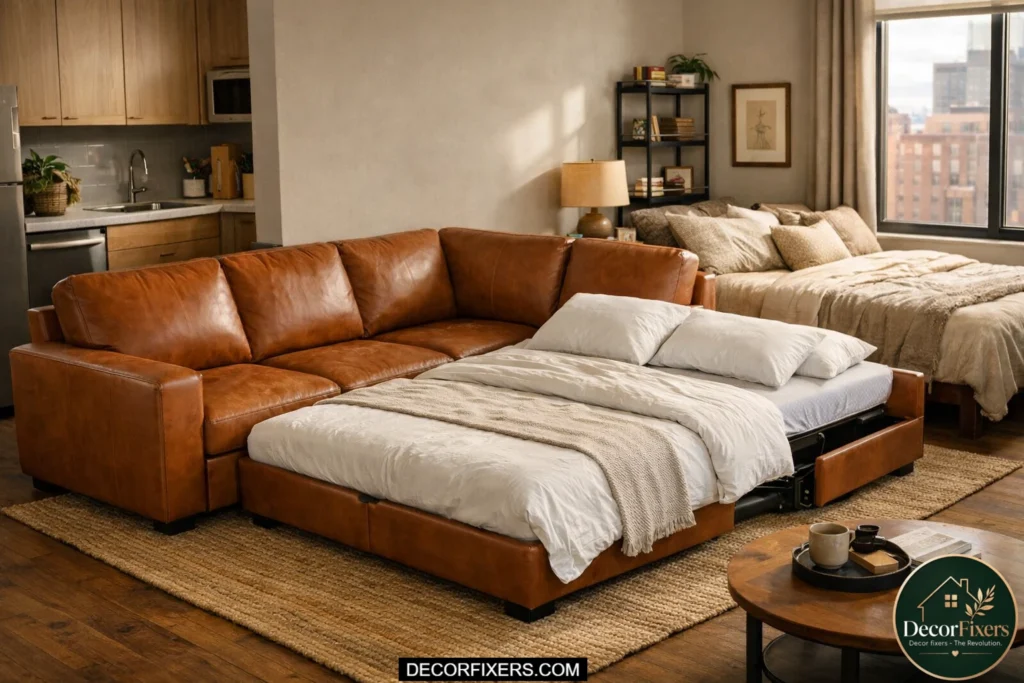
An L-shaped or sectional leather sleeper tucked into a corner uses the most “dead” space in any room, the corner itself, while keeping the center floor open. Leave at least 18 inches of walkway on both arms.
The bonus: a corner placement naturally zone-divides a studio into “living” and “sleeping/working” areas without requiring walls or curtains. Use a small jute rug under the sofa to anchor the zone visually.
8. The Diagonal Placement in a Square Room
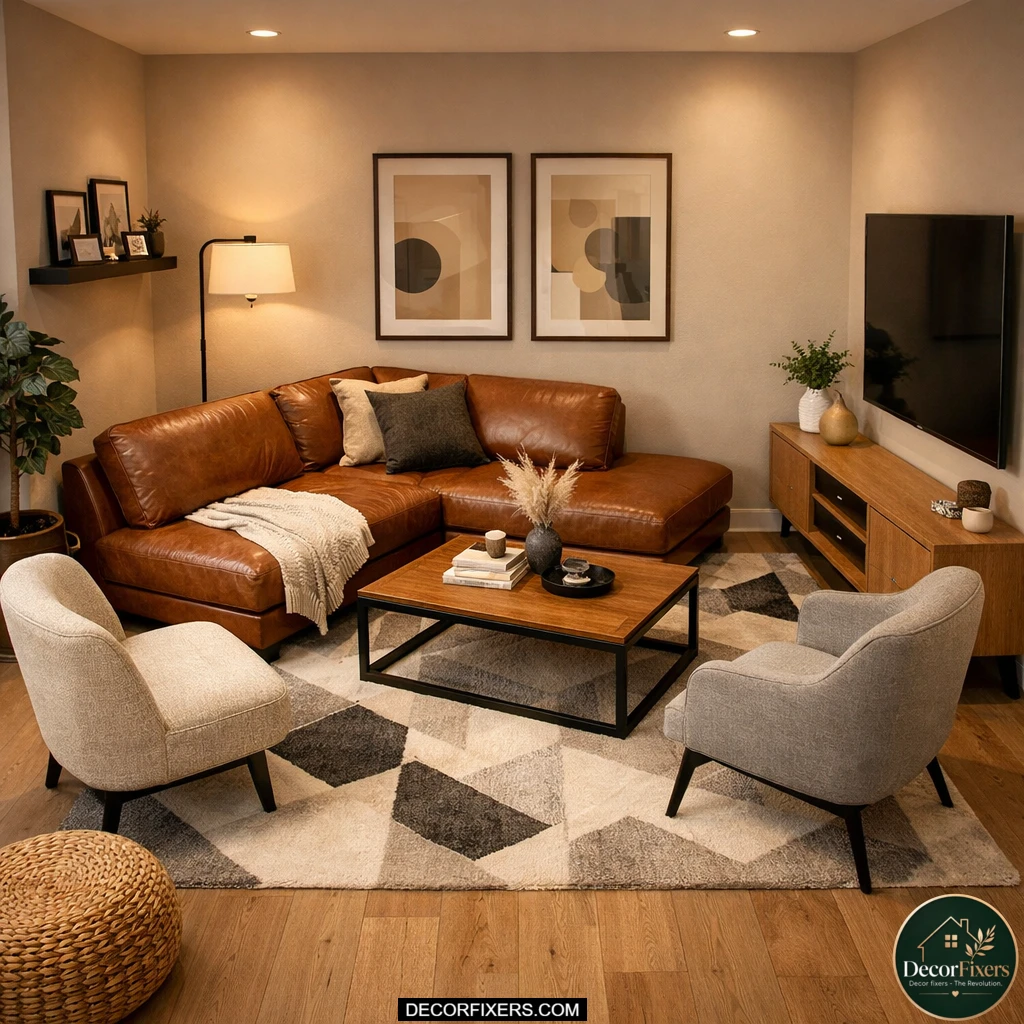
Square rooms often feel more cramped than rectangular ones because the eye doesn’t know where to travel. Placing your sofa bed at a 45-degree angle to one corner breaks the rigid grid and creates a conversational triangle with two accent chairs.
It works especially well in rooms where a TV is wall-mounted at eye level; the diagonal sofa naturally points toward the screen. Not every small-room guide mentions this because it looks bold on a floor plan. But it genuinely works.
9. Window-Adjacent Placement for Natural Light Bounce
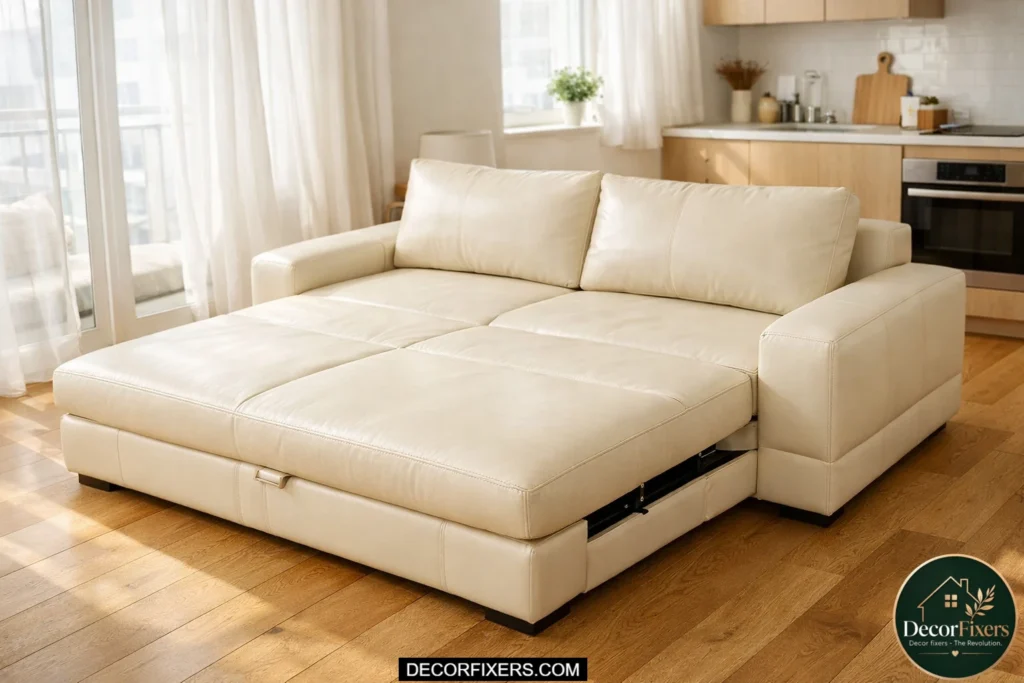
A light-colored leather sofa bed positioned near, but not blocking, a window reflects daylight into the room throughout the day. In a 180-square-foot studio, that light bounce can halve the number of lamps you need and make the ceiling feel taller.
Keep the sofa parallel to the window wall rather than in front of it, so the mechanism can still open without obstruction. Cream, sand, or pale caramel leather tones amplify this effect the most.
10. Wall-Hugging Pull-Out With a Drop-Leaf Coffee Table
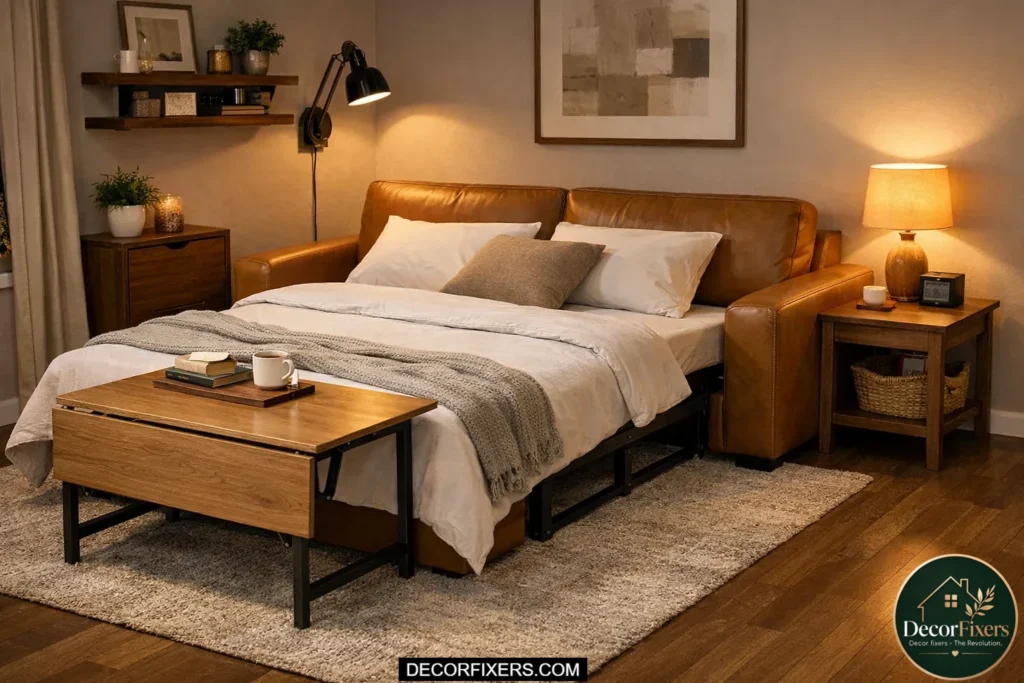
For pull-out sleepers that need clearance to open, a drop-leaf coffee table is the practical partner. During the day, it serves as a full surface; when the guest bed comes out, fold it down and slide it to the side in under 30 seconds. This pairing turns a potential layout conflict into a smooth system.
The leather sofa bed handles the sleeping; the drop-leaf handles the floor space math. I’ve seen conflicting advice on this; some sources say nesting ottomans work better. My read: Ottomans are great for storage, but drop-leaf tables win for functionality.
Are leather sofa beds good for small living rooms?
Yes. Leather sofa beds work well in small living rooms when you choose the right size and mechanism. A click-clack or futon-fold model under 75 inches wide keeps the footprint manageable.
Faux-leather options from brands like IKEA FRIHETEN start at around $599 and fit rooms as small as 12 × 12 ft when placed against a wall. The key factor is leaving 40–45 inches of clear floor space in front of the sofa for the mechanism to open without rearranging other furniture.
11. Cognac Leather in an All-Neutral Room
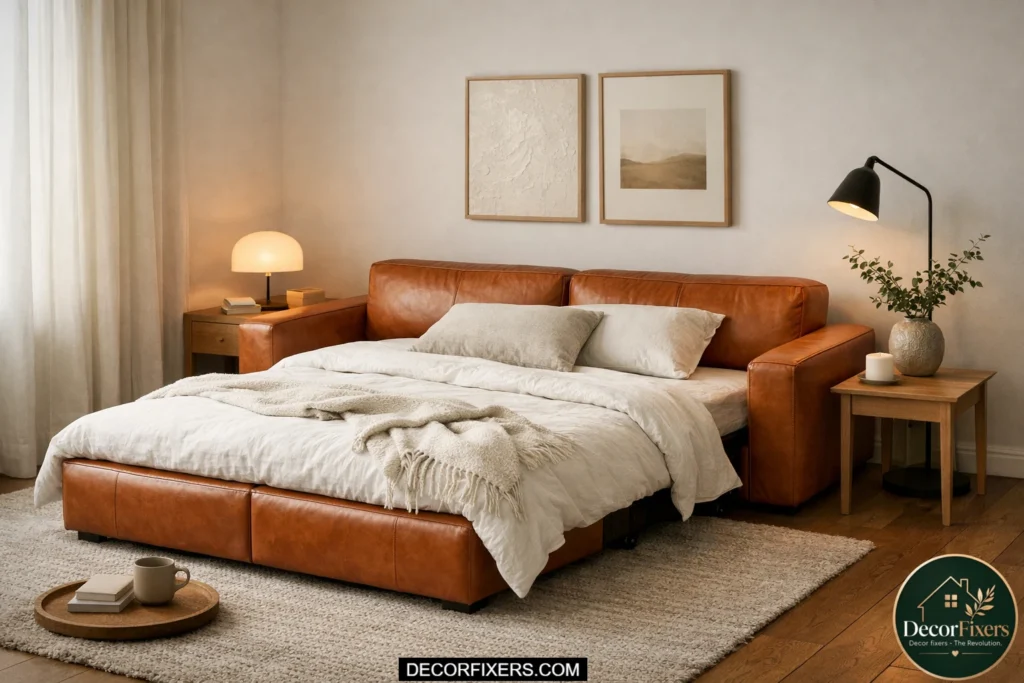
Cognac or warm amber leather is the single most versatile color for a small living room sofa bed.
It reads warm without darkening the space, pairs with white walls, light wood floors, and grey textiles without any effort, and, unlike black, doesn’t visually shrink the room. The leather’s natural variation in tone adds texture that makes a tight space feel curated rather than cramped. It’s a popular choice for a reason.
12. Matte Black Faux Leather for a Minimal Aesthetic
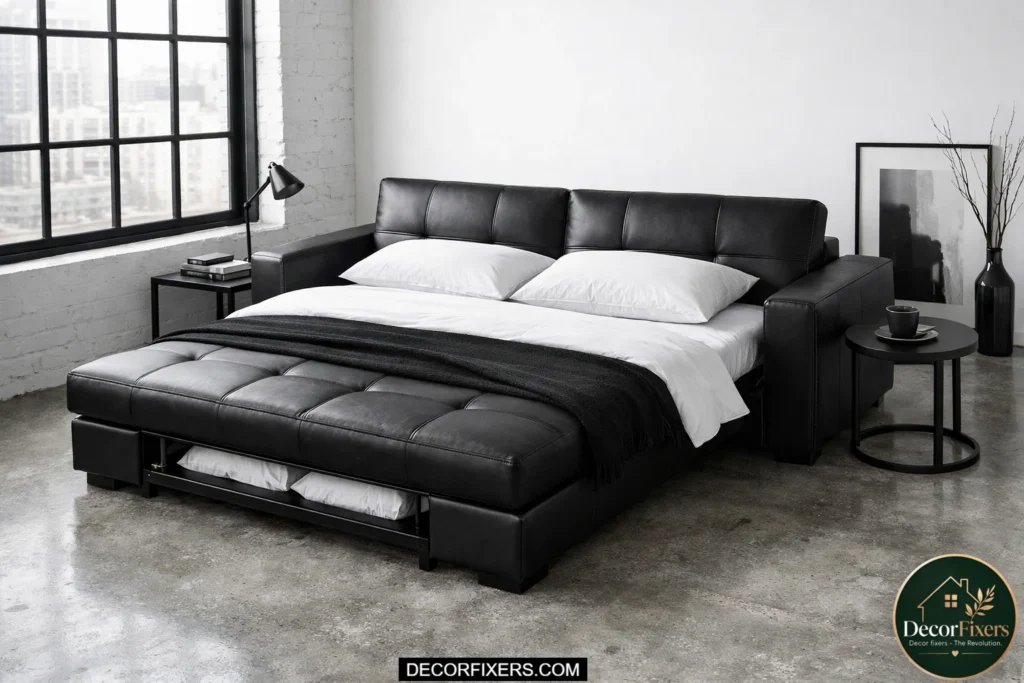
Black leather is high-risk, high-reward in a small room. Done right, paired with white walls, exposed concrete floors, and minimal accessories, a matte black faux leather sofa bed looks like a deliberate design decision, not a furniture showroom mistake. Done wrong, it darkens every corner.
The rule: if your room gets strong natural light from at least one large window, black leather works. Under 150 sq ft with a north-facing window? Choose cognac or grey instead.
What is a leather sofa bed for a small living room?
A leather sofa bed for a small living room is a dual-function piece of furniture upholstered in genuine or faux leather that serves as a sofa during the day and converts into a sleeping surface at night.
Unlike standard sleeper sofas, small-space versions typically measure under 80 inches wide and use one of three mechanisms, pull-out, click-clack, or futon-fold, to avoid requiring extra clearance space.
13. Cream Faux Leather for Maximum Light and Airiness
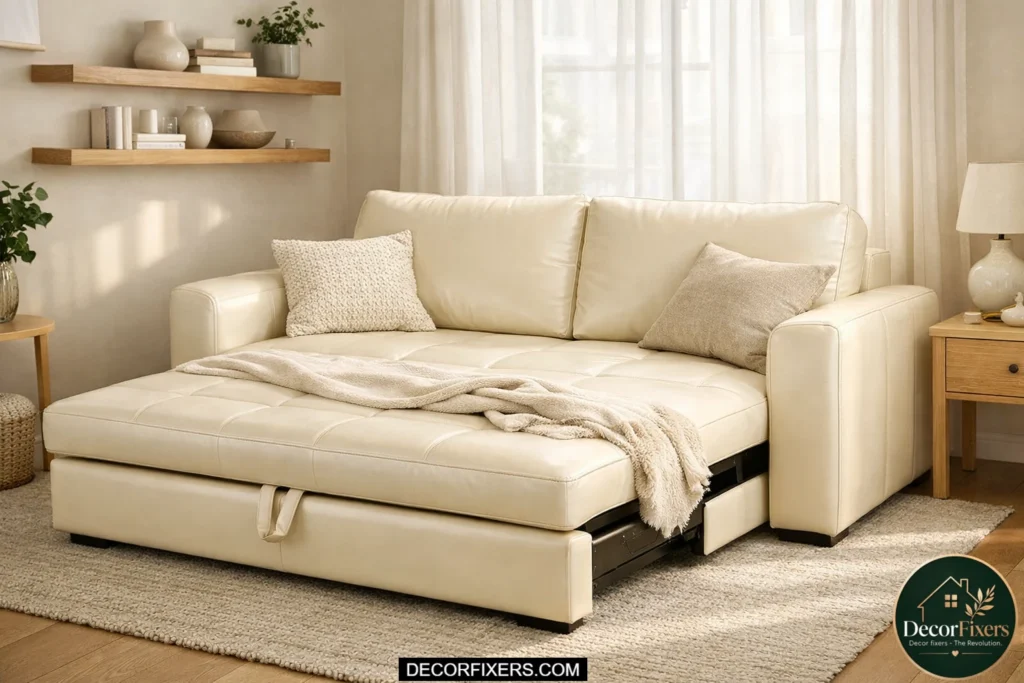
Cream-colored faux leather is the safest light amplifier in a compact space. It reflects ambient light, makes ceiling height feel greater, and pairs with almost any accent color you’ll add later. The concern most people raise, cleaning, is actually the faux leather advantage: PU surfaces wipe clean with a damp cloth in seconds.
A genuine leather cream sofa needs conditioning every few months and is genuinely harder to maintain. For renters under 35 who are living their first apartment life, faux leather cream hits all the practical marks.
14. Two-Tone Leather: Light Seat, Dark Back
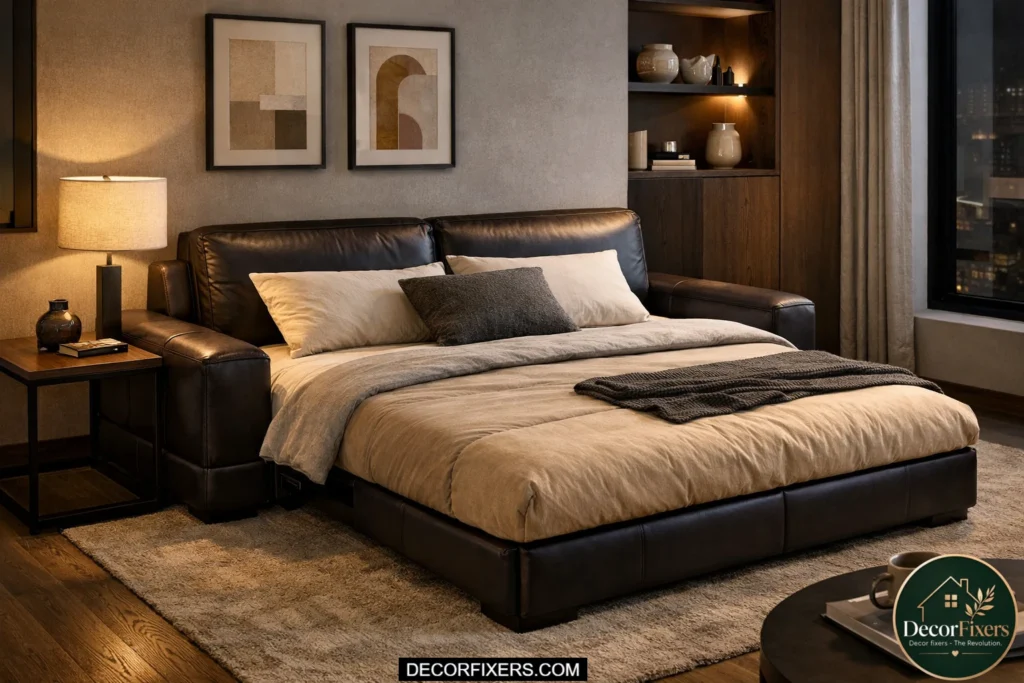
A leather sofa bed with a lighter seat cushion color and a darker back panel adds depth to a flat, small room without adding visual bulk. The light seat draws the eye forward and brightens the seating zone; the darker back panel recedes and gives the piece a grounded, architectural quality.
This two-tone approach is becoming more common in mid-range pieces and costs the same as a single-tone model. Look for it in the tan-and-espresso or cream-and-walnut combinations.
15. Distressed Leather for Character in a Minimal Space
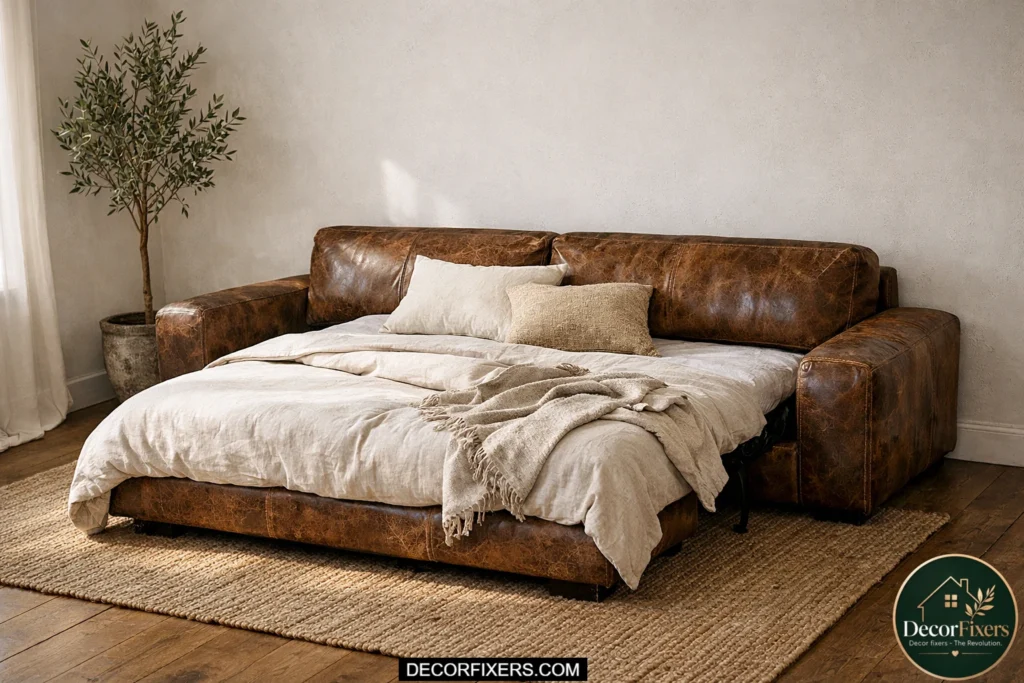
Faux distressed leather, with intentional wear patterns built into the material, adds visual texture that single-color smooth leather can’t replicate. In a tiny room where you can’t layer too many accessories, a distressed leather sofa bed does the decorative heavy lifting on its own.
Pair it with one plant, one decent rug, and bare white walls. That’s a complete, considered room. You don’t need more.
16. Use Solid-Color Linen Throw Pillows, Three Maximum
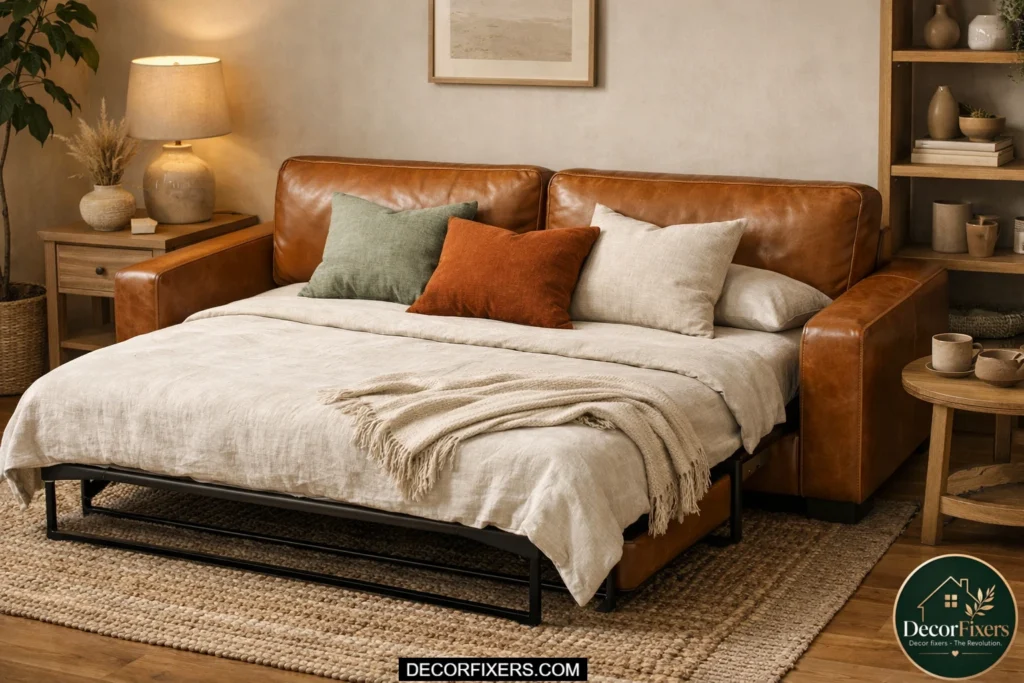
The fastest way to make a leather sofa bed look like permanent furniture is pillow selection. Three solid-color linen or cotton pillows in a complementary palette, say, sage, rust, and ivory on a cognac sofa, signal that this is a styled living room, not a spare room.
Avoid patterned or overstuffed pillows, which emphasize the sofa’s bulk rather than softening it. Three is the visual limit for a sofa bed in a small room; four starts to look like a storage problem.
17. Add a Chunky Knit Throw Draped Over One Arm
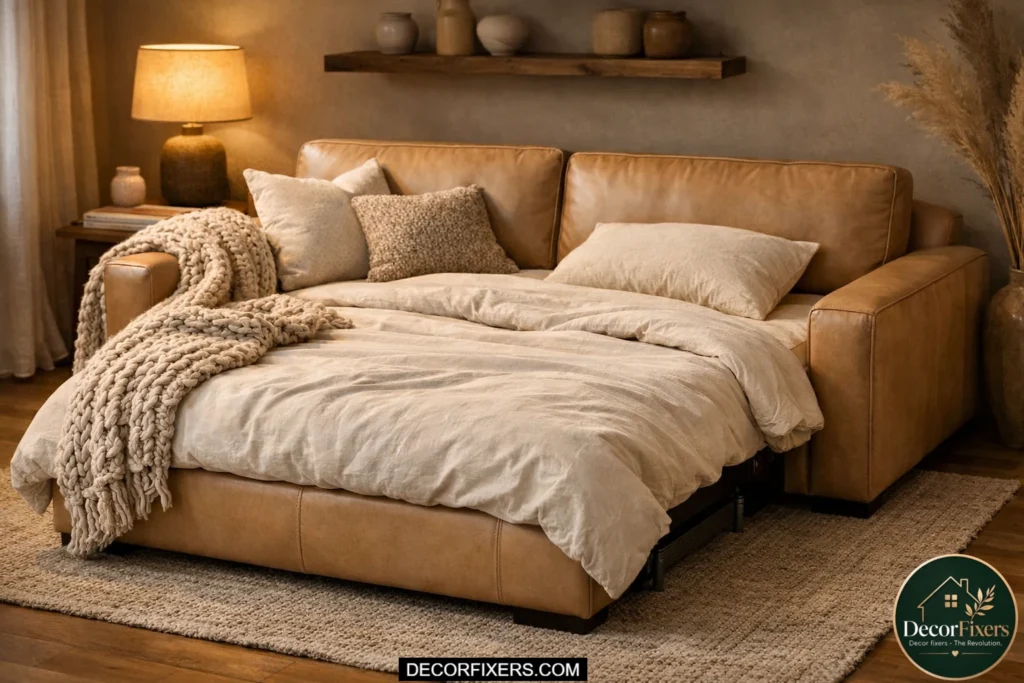
A throw draped casually over one arm adds the textile softness that leather inherently lacks. This isn’t decorative fluff; it’s a genuine design principle. Leather reads as cold and corporate without a soft counterpoint. The throw provides that.
Keep it chunky and loosely draped, not folded and centered, which looks staged. A neutral, cream, oatmeal, or taupe works with every leather color without visual competition.
18. Mount the TV at Eye Level to Draw Eyes Up and Away
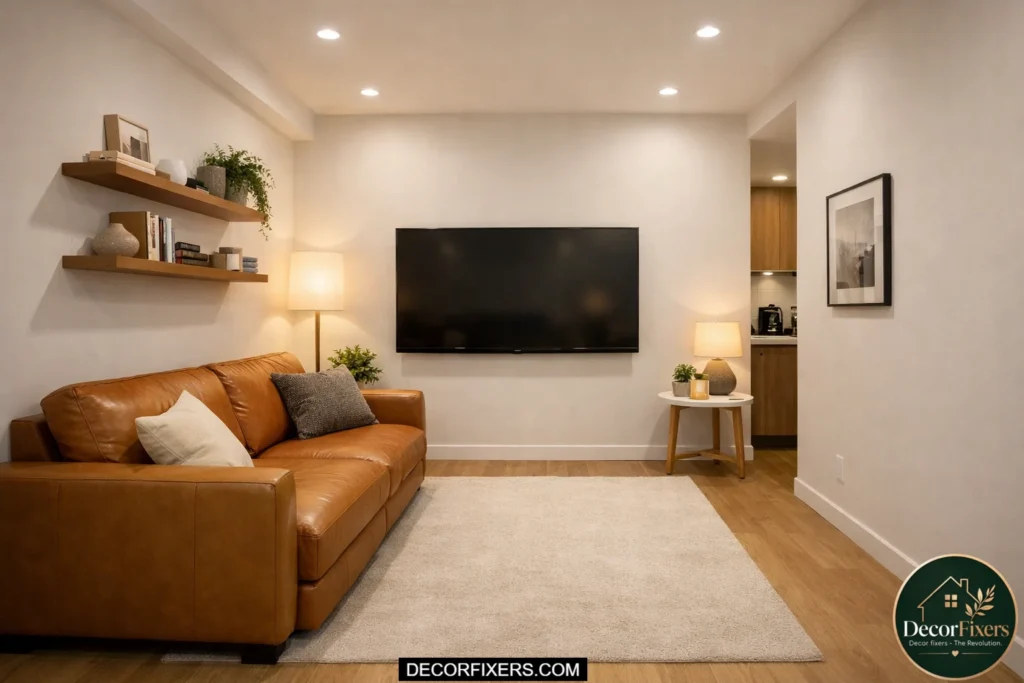
In a small living room, a floor-standing TV unit competes with the sofa bed for floor space and visual attention. A wall-mounted screen at seated eye level, approximately 42 inches from floor to screen center, draws the gaze upward and forward, making the room feel taller.
This also creates natural visual flow from sofa to screen that doesn’t require a coffee table in between, giving you a clear opening zone for the pull-out mechanism on guest nights.
19. Low-Profile Coffee Table or Ottoman, Not Both
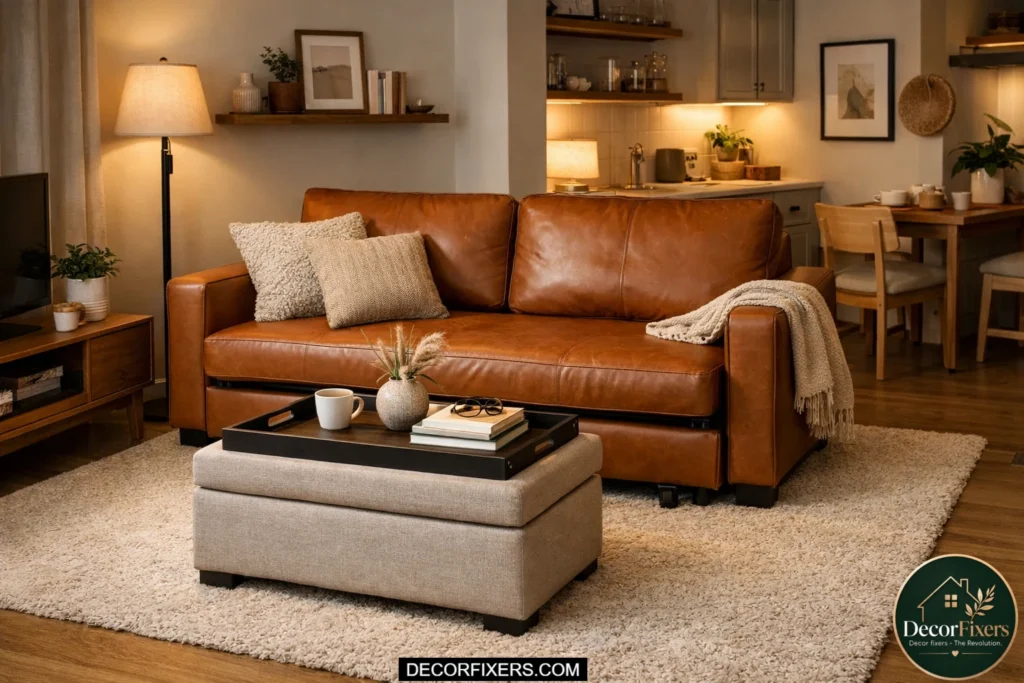
A leather sofa bed in a compact room needs one anchor piece in front of it: either a low-profile coffee table or a storage ottoman, never both.
The ottoman doubles as a landing surface for drinks and a storage container for guest linens, which makes it objectively more useful than a solid coffee table in a tight space.
Choose one with a tray top if you prefer a flat surface for remotes and glasses. Keep it under 18 inches tall so it doesn’t interrupt the sightline across the room.
20. Use a Light-Colored Area Rug to Define the Living Zone
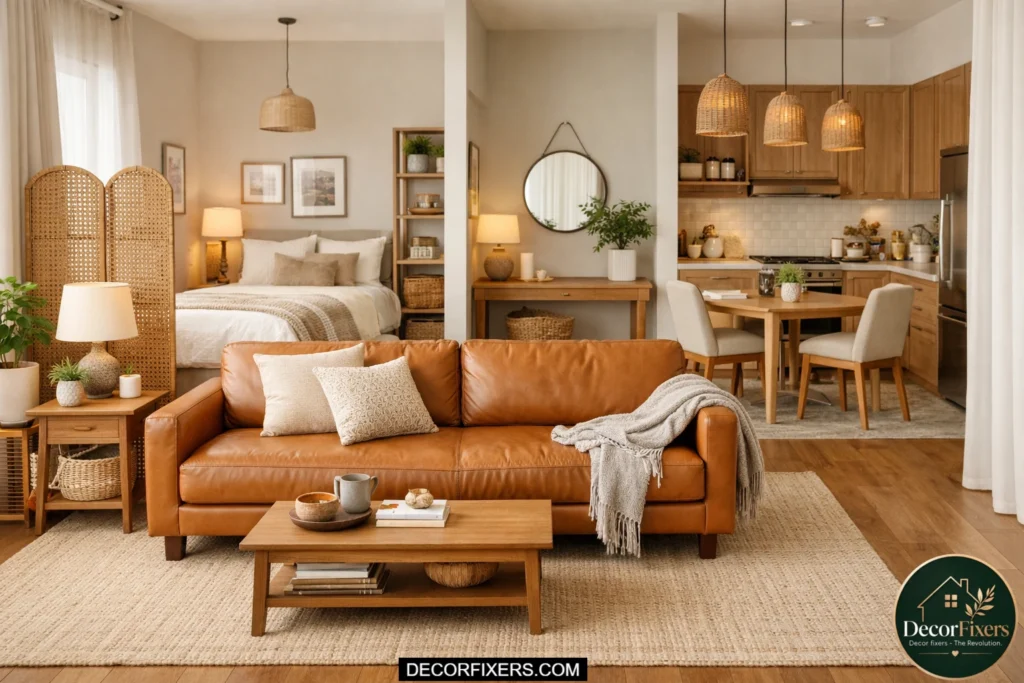
In a studio or open-plan apartment where the living, sleeping, and eating zones blur, a rug under the leather sofa bed defines the living area as a separate zone without adding walls or furniture dividers.
Choose a rug that extends at least 18 inches in front of the sofa and 12 inches on each side. A natural-fiber rug, jute, sisal, or a light wool, contrasts cleanly with leather and avoids the “matching set” look that makes small rooms feel like showrooms.
21. IKEA FRIHETEN: The Entry Point for Faux Leather Sofa Beds
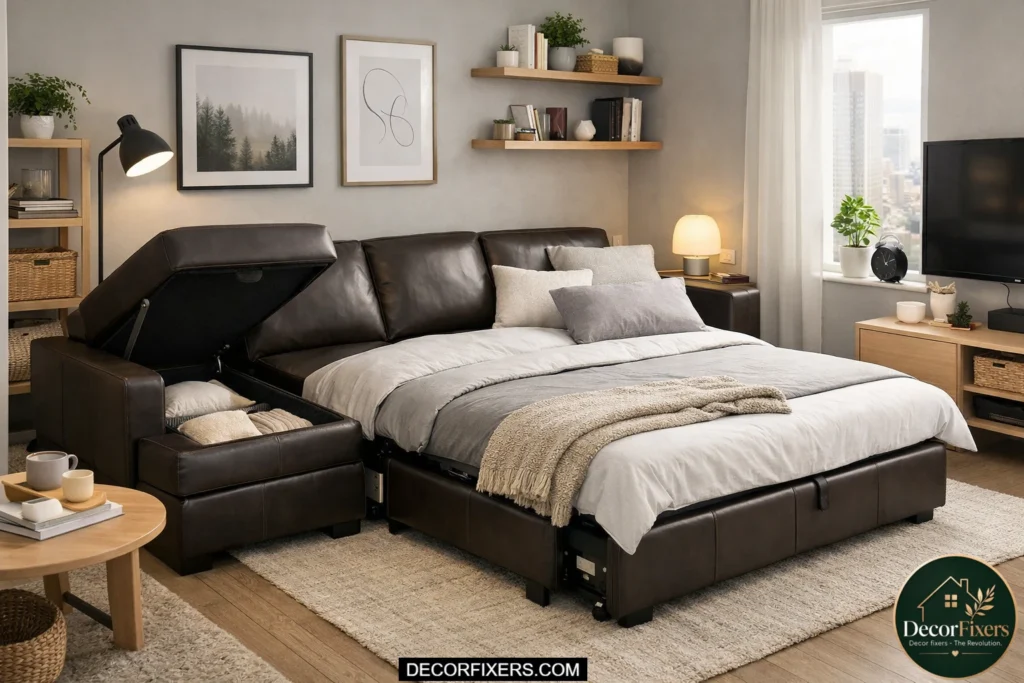
The IKEA FRIHETEN is the most widely discussed faux leather sofa bed in the small-space market, and for good reason. At around $599–$699, it offers a pull-out double bed, a corner chaise that reverses sides to suit your layout, and a hidden storage compartment under the seat for linens.
Its dimensions, 90.5″ in corner configuration, are too large for rooms under 150 sq ft but fit a 12 × 14-foot room with careful placement. The faux leather option wipes clean easily, which matters in a studio where the sofa does everything. It’s not a forever piece, but it’s the most practical entry point in its price range.
22. Article Ceni: Mid-Range Genuine Leather With a Slim Profile
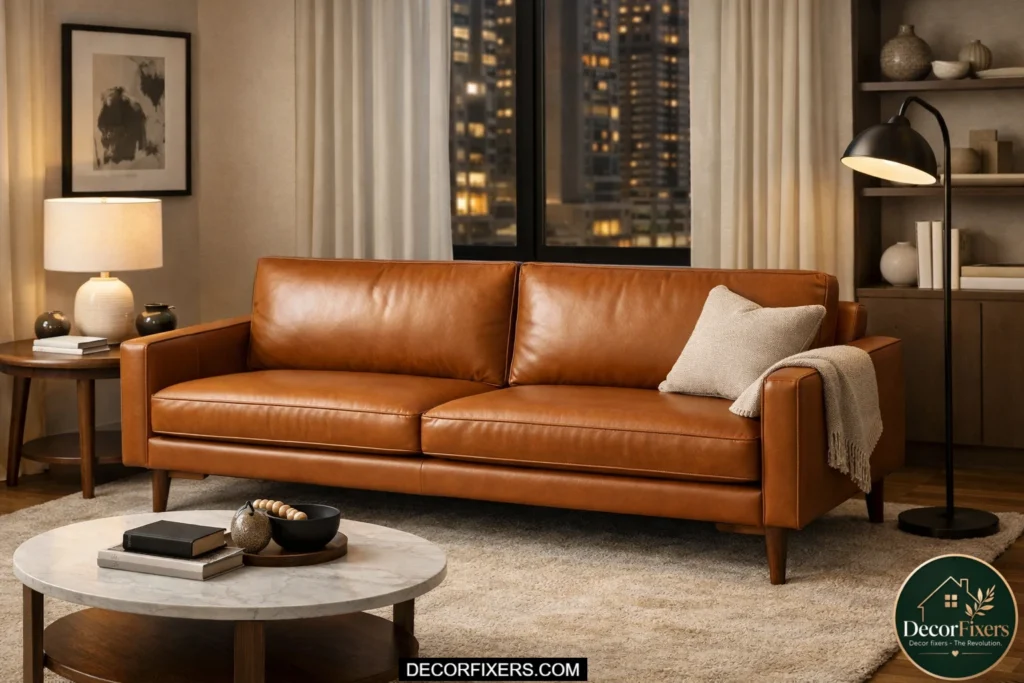
The Article Ceni Leather Sleeper Sofa sits in the $1,500–$2,000 range and earns its price with a slim-arm design that keeps the overall footprint under most sectional options.
It’s made with top-grain leather on seating surfaces and matched leather elsewhere, a common and acceptable approach. The pull-out mechanism is smooth, and the seat height is low enough to feel like a sofa rather than a converted hospital cot. For someone who hosts guests 3–4 times per year and wants a piece that lasts a decade, this is where the budget conversation starts getting real.
23. Burrow Nomad: Modular Leather for Renters Who Move
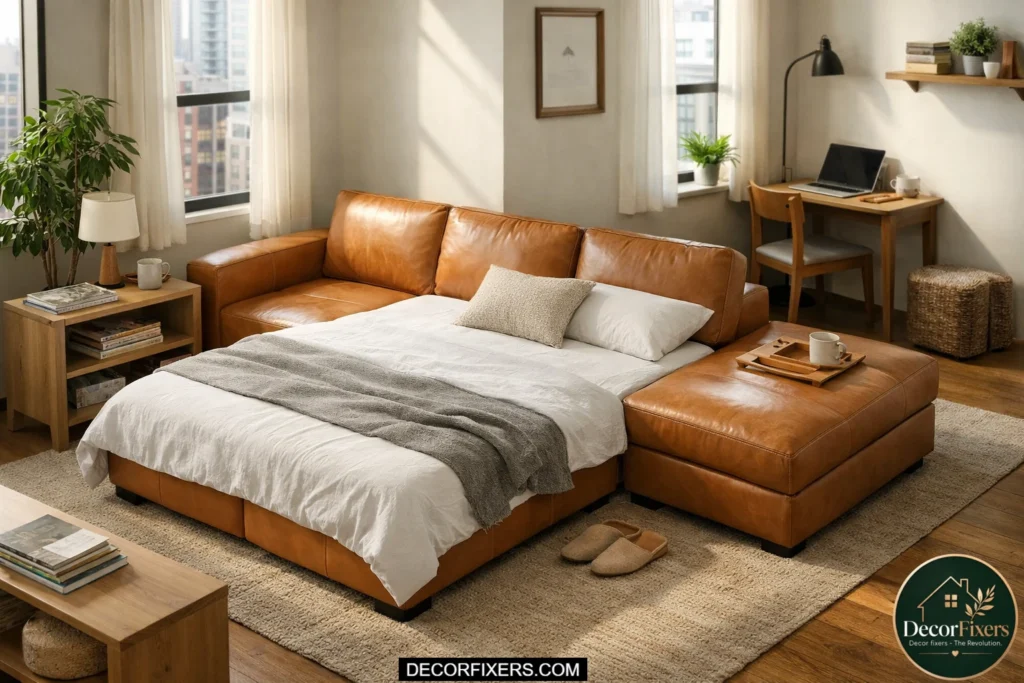
The Burrow Nomad Leather Sofa Bed is designed to be disassembled and reassembled without tools, relevant if you move every two to three years and can’t face another Tetris session with a mover’s truck.
Its modular pieces ship in manageable boxes, and you configure arms and chaise to position yourself. The leather quality is solid for its tier.
Where it stands apart is adaptability: an awkward first apartment layout becomes a livable second apartment layout with the same sofa. You’re buying furniture that travels with you, not furniture that fits one specific room.
24. The Hidden Storage Chaise Leather Sleeper
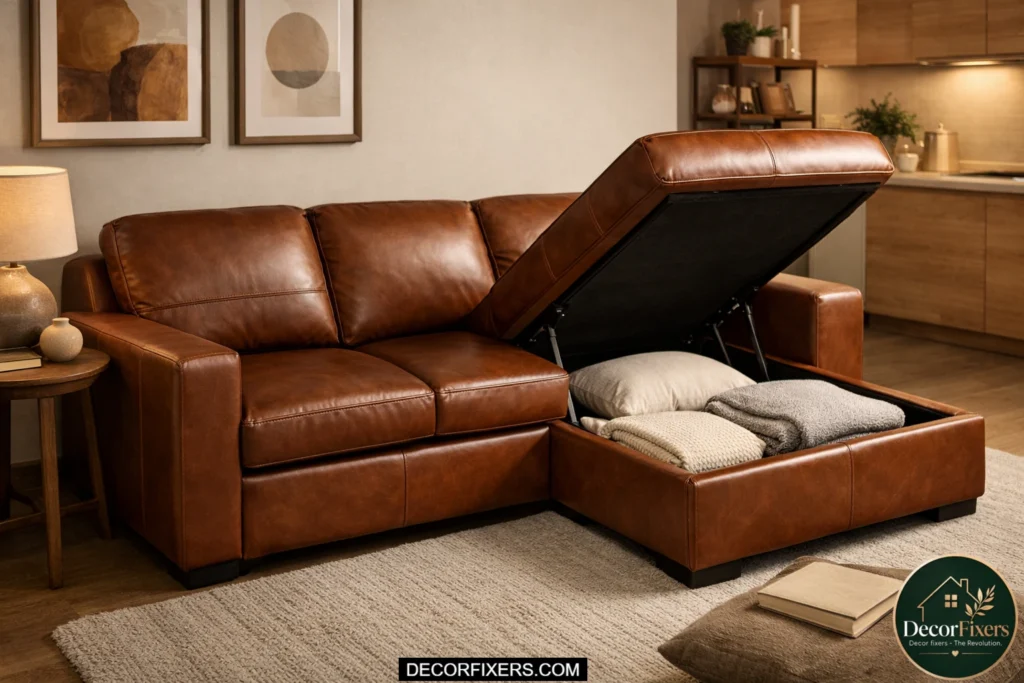
What most guides skip is that the best small-room leather sofa beds aren’t just about the sleeping surface; they’re about eliminating auxiliary storage furniture.
A leather sleeper with a chaise that lifts to reveal storage (for bed linens, pillows, and seasonal items) removes the need for a separate blanket box or under-bed bins.
That’s two pieces of furniture becoming one. In a 200-square-foot studio, every eliminated piece multiplies the feel of open floor. Look for chaise-storage models specifically; not all sleeper sofas have it.
25. The Armless Leather Sofa Bed Against a Galley Wall
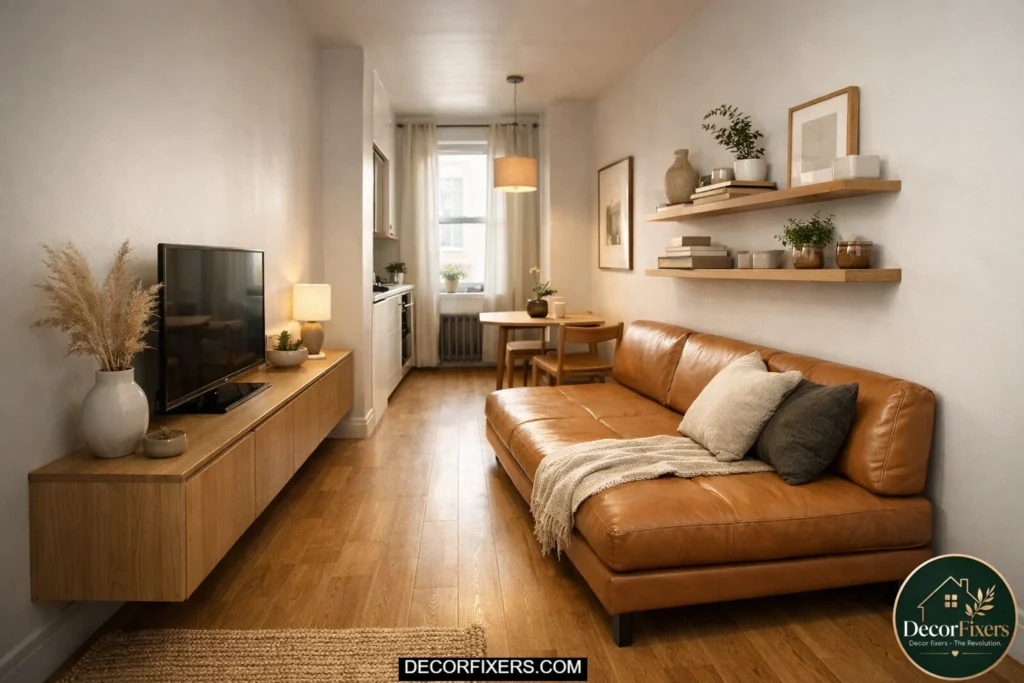
An armless leather sofa bed shaves 6–8 inches off both ends compared to a standard-arm model. In a narrow living room, the galley-style layouts common in older apartment buildings, those inches are the difference between a workable layout and a permanent shuffle.
Place the armless piece against the long wall and flank it with wall-mounted floating shelves at arm height rather than floor-standing side tables.
The shelves hold lamps, plants, and objects; the floor stays entirely clear. This is one of the cleanest, most functional configurations I’ve seen work consistently in rooms under 180 square feet.
How to Choose the Right Leather Sofa Bed for a Small Living Room
Step-by-step selection guide:
- Measure your wall space first, note the exact width and the distance to the nearest doorway or window edge.
- Decide on a mechanism, click-clack for studios under 300 sq ft; pull-out for frequent guests; futon-fold for maximum budget flexibility.
- Choose leather type, faux (PU) for easy cleaning and lower cost; genuine top-grain for longevity of 10–15 years.
- Confirm clearance, pull-outs need 40–45 inches in front; click-clacks need only 12–15 inches.
- Pick your color last, based on your wall color and light conditions, not the trend.
Or maybe I should say it this way: the order most people use (style → size → mechanism) is exactly backwards. Start with the mechanism, then the size it implies, then the leather type your budget allows, and style last. That sequence has never failed anyone who’s tried it.
Faux Leather vs. Genuine Leather Sofa Bed: What Actually Matters in a Small Space
Faux leather vs. genuine leather for a small-room sofa bed: Faux leather is better suited for renters, budget-conscious buyers, and humid or warm climates because it’s easier to clean, more affordable, and doesn’t crack when temperature-conditioned poorly.
Genuine leather works better when you plan to stay in the space 5+ years and want material that ages into a patina rather than peeling. The key difference is long-term durability: genuine leather lasts 10–20 years; faux leather typically lasts 5–10 years with proper care.
Some experts argue that genuine leather is always the better investment. That’s valid for someone buying a sofa for a forever home. But if you’re a renter who moves every two years, buying $2,000 genuine leather for a space you’ll vacate is genuinely wasteful, and there’s no shame in the faux leather pick.
Quick note: bonded leather is neither. It’s a mix of leather straps and polyurethane pressed together; it looks like genuine leather initially and peels within 2–3 years. Avoid it entirely. If a sofa lists “100% bonded leather” as a selling point, that’s a red flag, not a feature.
CONCLUSION:
Look, if you’re in a 200-square-foot studio trying to make this work, here’s what actually makes the decision simple: start with mechanism, not style. A pull-out that can’t open because your room is 12 feet wide is a beautiful piece of furniture that doesn’t function. A click-clack in faux cognac leather that your guests actually sleep comfortably on is the right piece, full stop.
I’ve sat on both sides of this purchase and regretted both rushed decisions. The 25 ideas in this guide aren’t theoretical; they come from the patterns that show up again and again in small living rooms that work: mechanisms matched to floor plans, leather colors matched to light conditions, styling choices that disguise the guest-bed function without hiding the furniture.
For most people reading this, the IKEA FRIHETEN in faux leather is the right starting point if the budget is under $800. The Article Ceni is the upgrade once you’re staying in a space long enough to justify the investment. And the Burrow Nomad is the answer for anyone who moves regularly and is tired of starting over.
Measure your wall. Pick your mechanism. Then pick your leather. In that order.
This guide covers sofa beds for living rooms under 400 sq ft. It does not address large family rooms, commercial spaces, or sofa beds used as primary nightly beds; those require different frame and mattress specifications.
What type of leather is best for a sofa bed in a small apartment?
For small apartments, PU (polyurethane) faux leather is the most practical choice. It resists spills without conditioning, comes in the widest range of colors, and costs 40–60% less than genuine leather. Top-grain genuine leather is the best long-term investment if the budget allows, as it lasts 10–20 years and develops character with use. Avoid bonded leather; it peels within a few years, regardless of price point.
FAQs:
Q: What’s the best size leather sofa bed for a small living room?
A: For rooms under 250 sq ft, look for sofa beds between 60 and 80 inches wide. A loveseat sleeper (54–60″) works for rooms under 150 sq ft. Standard pull-outs run 84–90″, which fits a 12 × 14 room if placed against the longest wall with 40″ clearance in front.
Q: How do I keep a leather sofa bed from making my small room look cramped?
A: Choose raised legs over a platform base; visible floor space makes the room feel larger. Stick to light or mid-tone leather colors. Float the sofa 6 inches from the wall rather than pressing it flush. And limit surrounding furniture to one low coffee table or ottoman, not both.
Q: Should I buy genuine leather or faux leather for a studio apartment?
A: Faux leather (PU) is the practical pick for most studio apartment renters. It’s easier to clean, lighter to move, and 40–60% cheaper. Genuine leather is worth the investment only if you’re staying in the space for 5+ years and want material that improves with age.
Q: Why does my leather sofa bed look cheap even though I spent decent money?
A: The most common culprit is bonded leather, which peels quickly and looks budget-quality within a year. The second issue is scale; a sofa that’s too large for the room reads as cheap because it overwhelms the space. Check whether your sofa is genuine PU leather or bonded, and confirm that the width is proportional to your wall.
Q: When should I choose a click-clack over a pull-out leather sofa bed?
A: Choose click-clack if you have under 300 sq ft and don’t have 40 inches of floor clearance in front of your sofa. Click-clack converts instantly with no mattress to unfold. Choose pull-out when guests stay more than one night, and comfort matters more than speed of conversion.

Creator of DecorFixers, sharing practical home and interior ideas focused on real-life usability, simple design improvements, and budget-friendly solutions.