

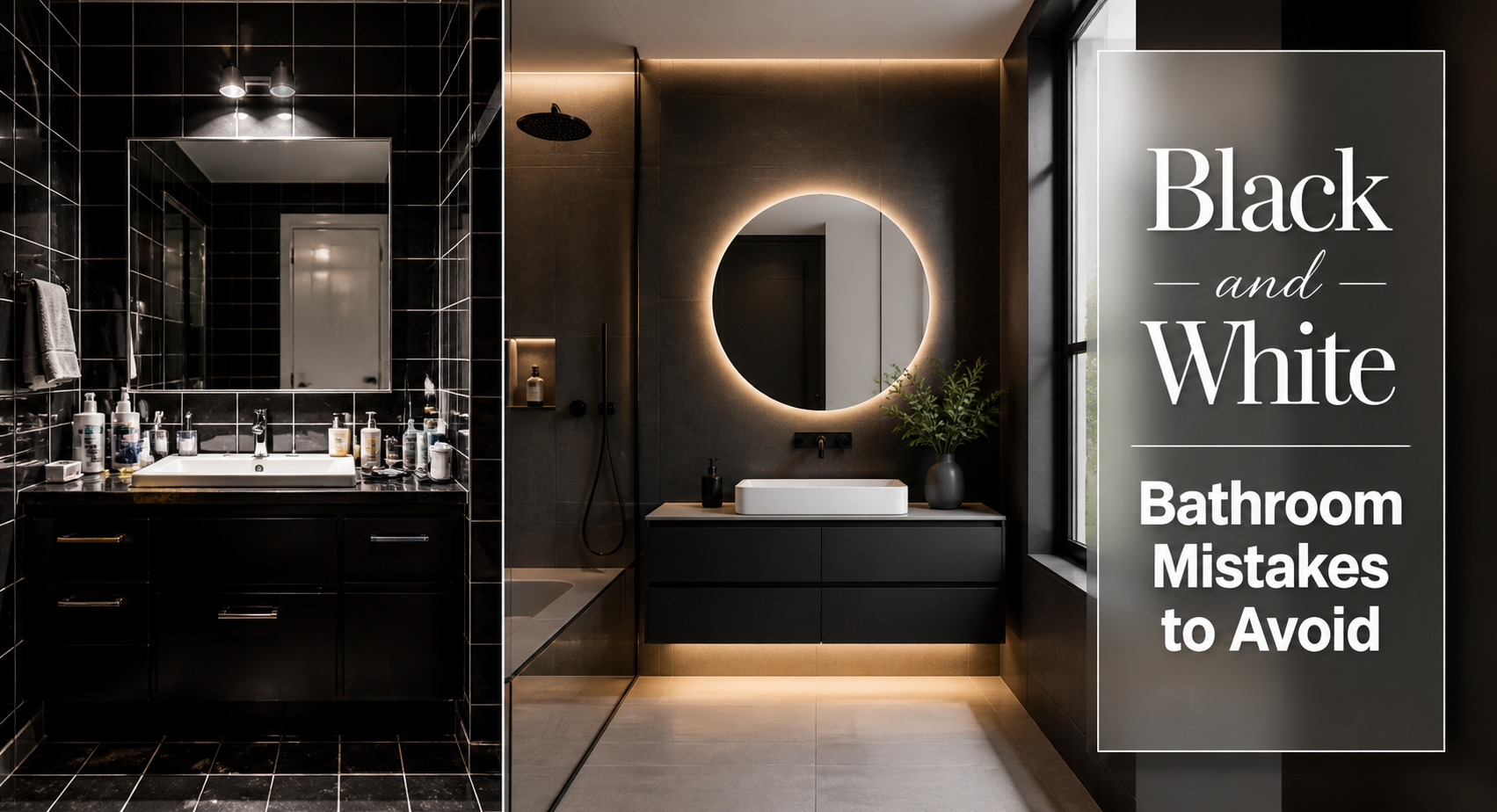
The most common black and white bathroom mistakes include wrong grout color, using glossy black tiles in small rooms, ignoring lighting temperature, mismatching hardware finishes, and going monochrome without any texture variation. Each one makes an otherwise elegant palette look cheap, or worse, like a hospital corridor.
Avoid the 18 black and white bathroom mistakes designers flag most: wrong grout, glossy tiles in small rooms, bad lighting, mismatched hardware.
| What are ‘black and white bathroom mistakes’? Black and white bathroom mistakes are design and material errors that turn a timeless monochrome palette into a space that looks sterile, dated, or visually chaotic. These include poor grout choices, mismatched finish temperatures, wrong tile sheens, and neglecting texture, all of which undermine the contrast that makes B&W bathrooms work. |
According to the NKBA 2024 Bath Trends Report, 43% of industry professionals now identify all-white bathrooms as an outgoing trend, while matte black fixtures have become the number-one faucet finish choice at 51%.
That shift tells you something: black and white bathrooms aren’t dying; they’re being done wrong. The gap between a stunning B&W space and a cold, clinical one is almost always execution, not concept.
Here are all 18 mistakes, what causes them, and exactly how to fix each one.
1: Using All-White With Zero Texture
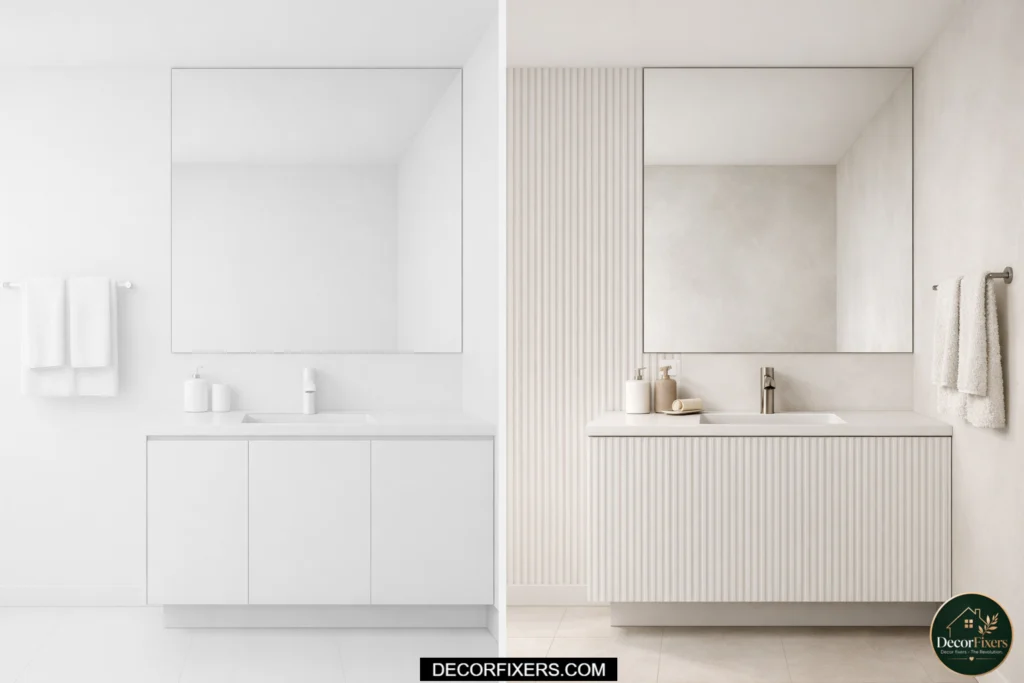
White is not a neutral decision in a bathroom. It’s a bold one, and an unforgiving one.
Flat, matte white on every surface creates what designers call a “clinical void”, a room that reads as empty rather than clean. The fix isn’t adding color. It’s adding depth. Fluted wall panels, textured plaster, bouclé towels, and a ribbed vanity front, these break the monotony without touching the palette.
A 2026 survey by Fix found that 75% of interior design professionals confirmed warm, earthy textures have replaced the flat, cool-neutral look. The principle applies directly to B&W: the palette stays, but the surfaces must have life.
2: Choosing White Grout on Dark Tiles
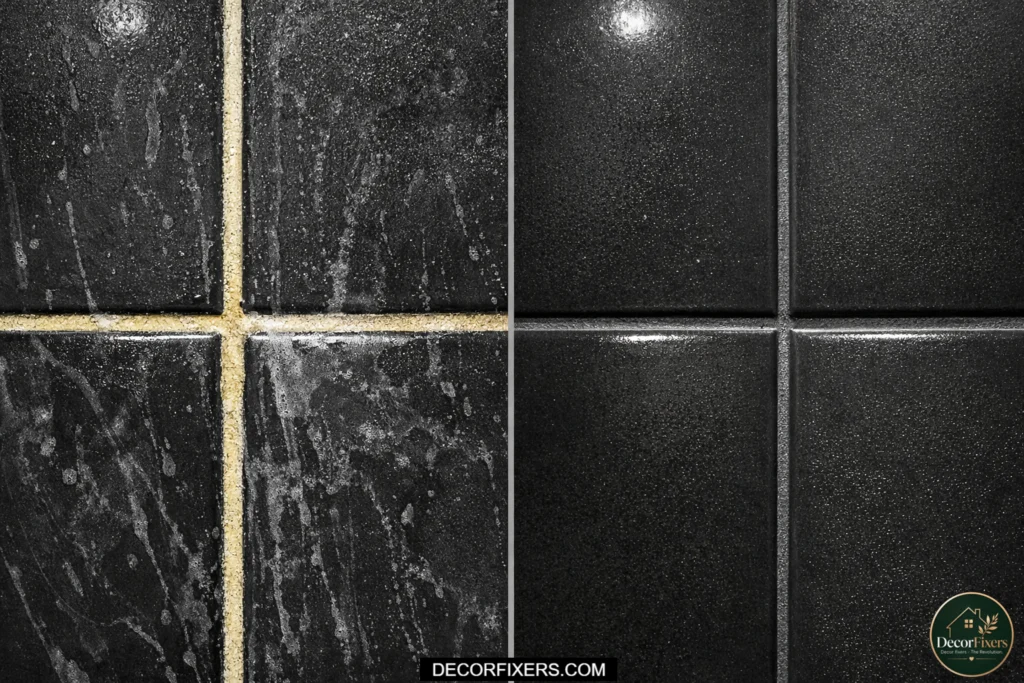
This one mistake will cost you more cleaning hours than any other decision in this room.
White grout on black or charcoal tiles is a maintenance nightmare. Hard water deposits, soap film, and mineral staining turn those bright lines grey-yellow within months, and no grout cleaner fully reverses it. The visual effect also kills the tile’s drama: instead of bold black slabs, you see a grid of white lines.
The solution: use dark grey, charcoal, or unsanded black grout on dark tiles. On white tiles, a warm grey grout (not stark white) adds definition without looking dirty. Schluter Systems and brands like Mapei Ultra color Plus FA offer pre-mixed grey grout in multiple tones.
3: Glossy Black Tiles in a Small Bathroom
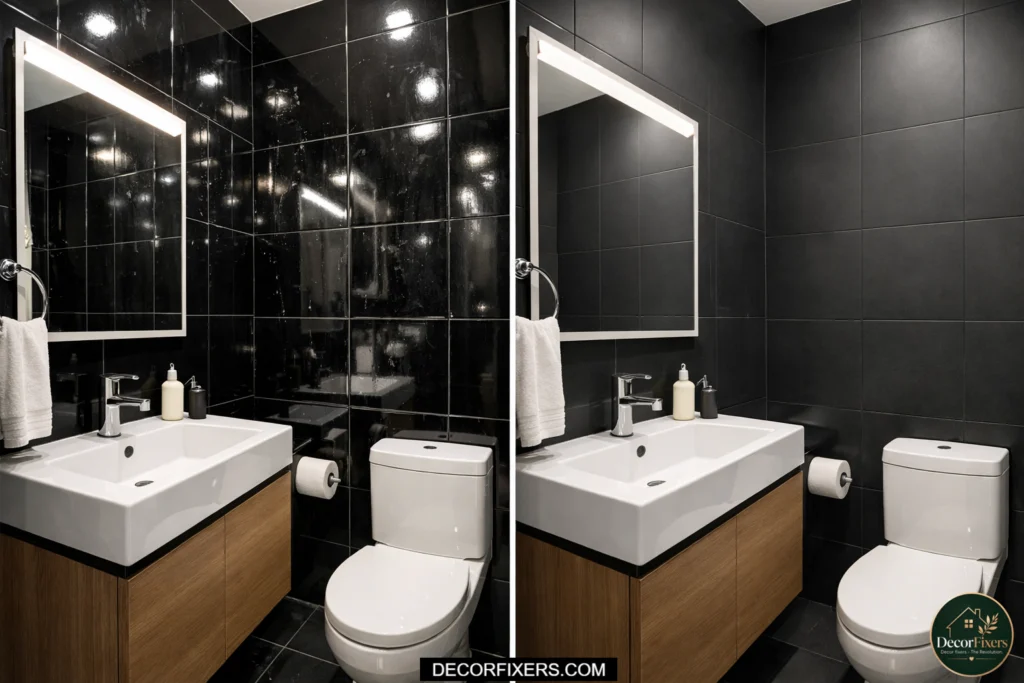
Reflection is not your friend here. It’s your enemy.
Glossy black tiles absorb light on some angles and reflect it harshly on others, creating an optical compression that makes small bathrooms feel claustrophobic. Every water splash and fingerprint becomes visible under overhead lighting. Interior designers consistently flag this as the B&W mistake they see most in renovation regret photos.
Quick Comparison:
| Option | Best For | Key Benefit | Limitation |
| Matte Black Tile | Small bathrooms | No glare, hides watermarks | Shows dust; needs frequent wiping |
| Glossy Black Tile | Feature walls only | Dramatic, high-impact look | Shrinks space visually; shows every smudge |
| White Subway Tile | Showers, full walls | Classic, enlarges space | White grout stains fast; use grey grout |
| Black & White Pattern Tile | Floors, accent walls | High impact, timeless | Can feel busy if used on all surfaces |
| Large-Format B&W Slab | Modern, open bathrooms | Fewer grout lines, luxurious | Expensive; harder to cut around fixtures |
The rule: use matte or honed black tile on floors and walls in any bathroom under 60 sq ft. Reserve gloss for a single feature wall, and only if natural light hits it.
4: Mixing Warm and Cool Whites
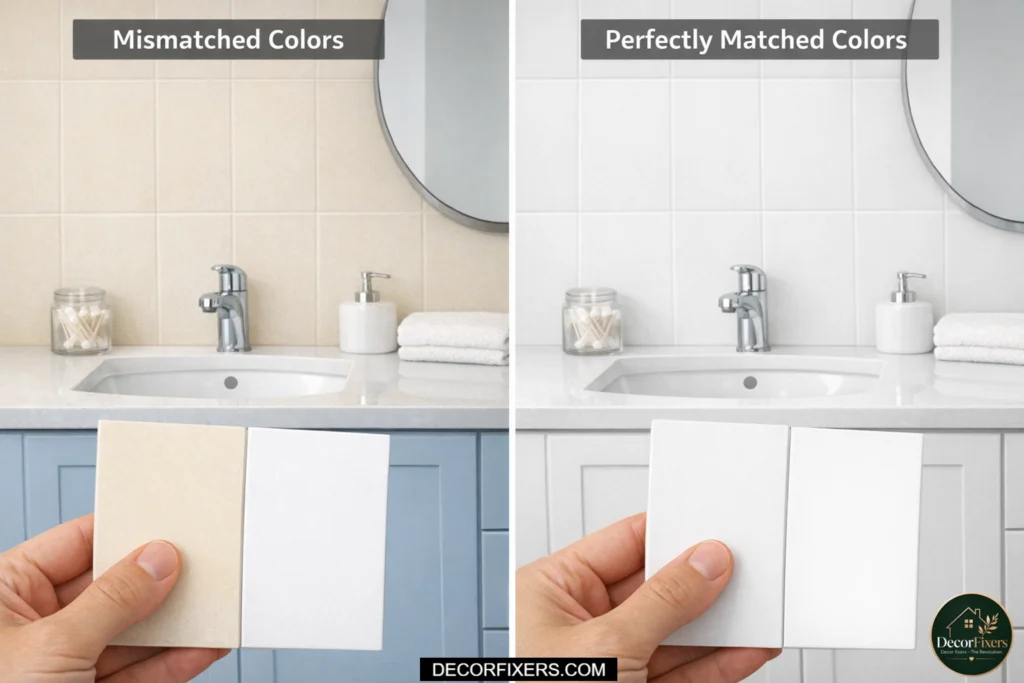
Not all white is the same white. This is where most B&W bathrooms quietly fall apart.
A warm white (ivory, cream) wall tile next to a cool white (blue-white) vanity creates an undertone clash that looks like a mistake even when you can’t name exactly what’s wrong. It reads as ‘cheap’ to the eye, even when the individual pieces are expensive. Before buying anything, hold samples together under both natural daylight and your bathroom’s artificial light; these look completely different.
Or maybe I should say it this way: the samples that look perfect in the tile showroom under halogen lighting will look completely different under your bathroom’s 4000K LEDs. Always test in situ.
| Expert note: What most guides skip is the undertone check. Warm whites contain yellow or pink; cool whites contain blue or green. Use a grey or true black element as the ‘bridge’ between them; it neutralizes undertone conflict. |
5: Wrong Lighting Temperature for a Monochrome Palette
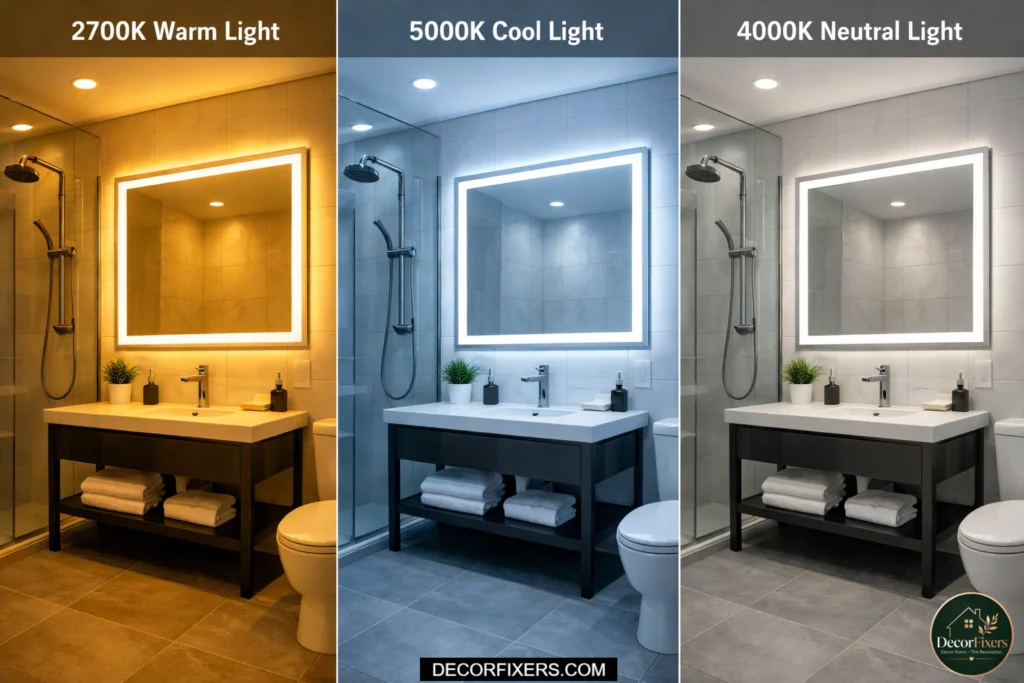
Black and white bathrooms are highly sensitive to light temperature in a way-colored bathrooms aren’t.
At 2700K (warm/yellow) light, white surfaces look creamy and black tiles look warm; the overall feel is cozy but muddy. At 5000K+ (cool/daylight), everything reads crisp and high-contrast, but it tips into clinical. The sweet spot for B&W is 3500K–4000K, neutral white light that preserves contrast without sterility. Pair it with a backlit mirror for face-level task lighting, and you’ve solved the mirror shadow problem, too.
6: Ignoring Scale, Tiny Tiles Everywhere
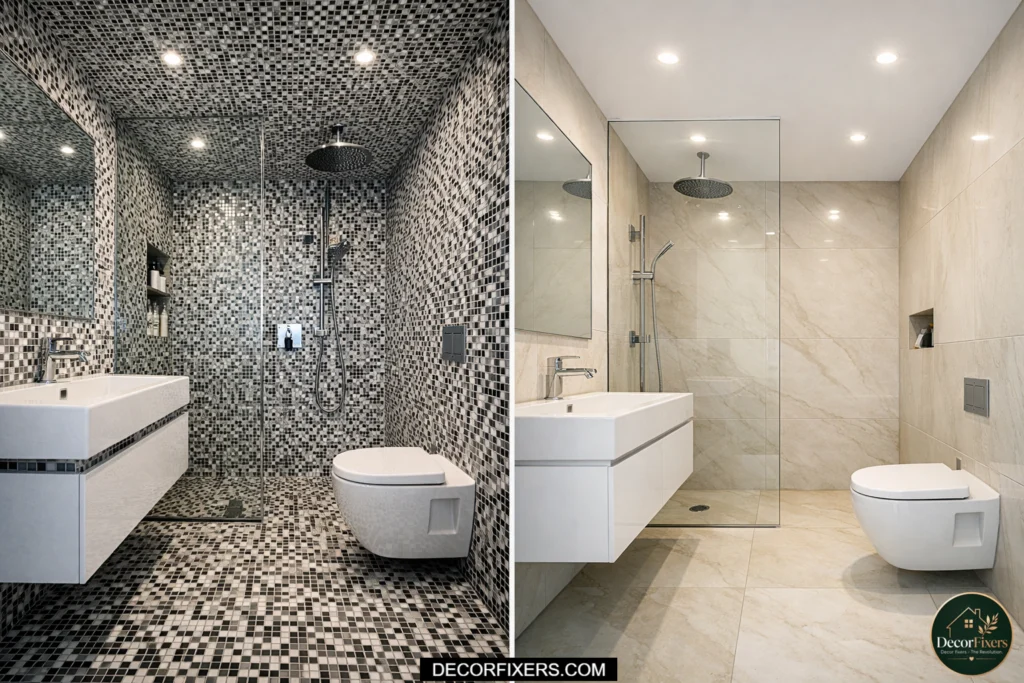
Small tiles don’t make small rooms feel bigger. They make them feel busier.
The penny-tile-on-every-surface trend is over, and for good reason. In a black and white palette, a high-frequency pattern creates visual noise that exhausts the eye. More grout lines also mean more maintenance. Large-format tiles (600mm x 1200mm or bigger) extend the sight lines, reduce grout, and let the B&W contrast do its job cleanly.
Reserve small mosaic or encaustic pattern tiles for one accent surface only, a niche back wall, or a floor inset. Anchor the rest with large slabs.
7: Mismatching Hardware Finishes
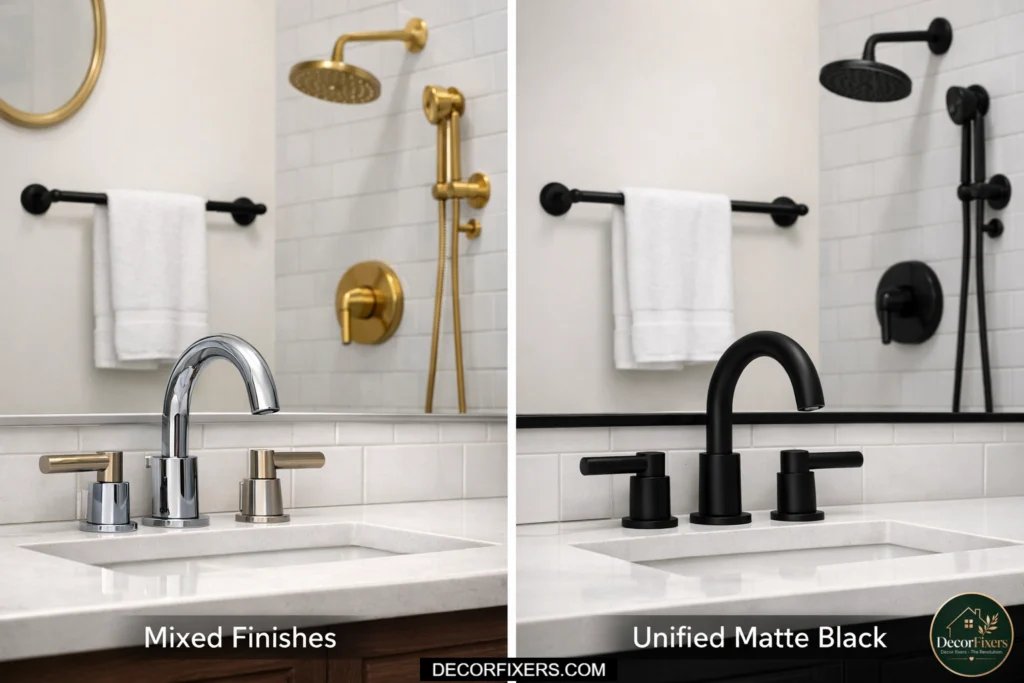
This is the B&W equivalent of mixing fonts, immediately visible to anyone who knows what they’re looking at, even if they can’t articulate it.
Using polished chrome taps, a matte black towel rail, brushed nickel cabinet handles, and a brass showerhead in the same room creates finish chaos. In a monochrome palette, hardware is one of the few places to introduce personality, which means it needs a single, deliberate finish direction. KOHLER’s matte black range (including the Purist and Composed collections) is a strong anchor choice: it reads as contemporary, ties to the black palette element, and hides watermarks far better than chrome.
Rule: Pick one finish. Use it on every piece of hardware. Introduce a second metallic only if it’s present in at least three places, it looks forgotten, not curated.
8: Too Much Black, The Tunnel Effect
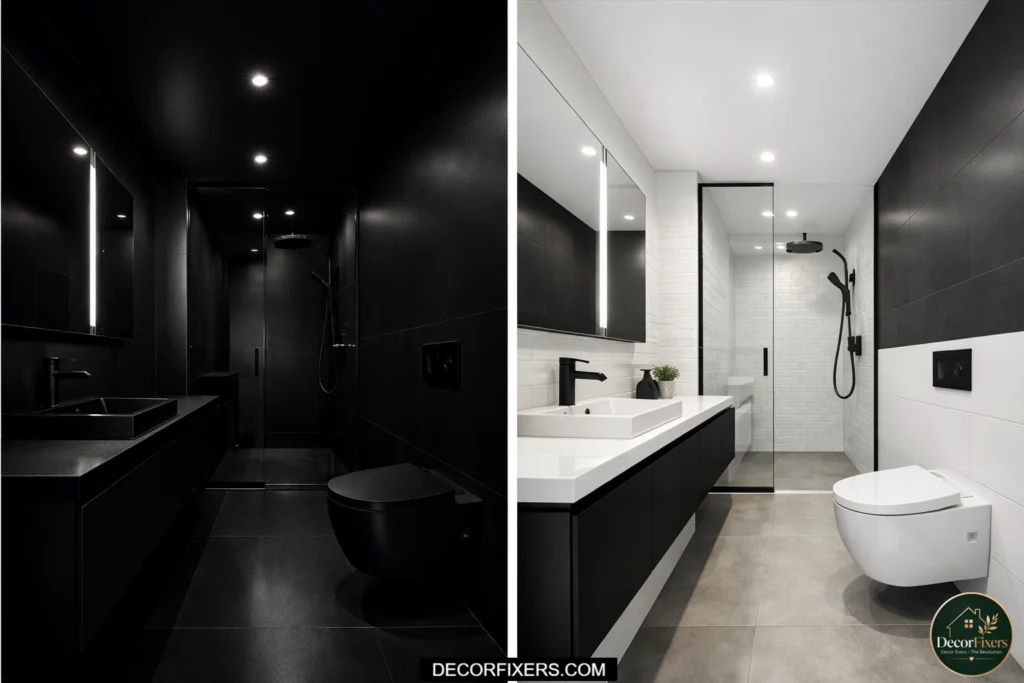
Black is a receding color. Use it on too many surfaces, and the room physically closes in.
This is especially lethal on ceilings. A black ceiling in a white bathroom can work beautifully in a large, well-lit room; it creates drama without dominating the floor plan. In a standard bathroom under 50 sq ft? It kills the room. The same goes for full black wall coverage on all four sides. The ratio to aim for is roughly 30% black to 70% white in a small space, adjusting toward 50/50 only if the room has strong natural light or height.
Look, if you’re working with a windowless bathroom under 40 sq ft, here’s what actually works: matte black accents only. One black wall maximum. White on the ceiling, always.
9: No Middle Tone or Bridge Element
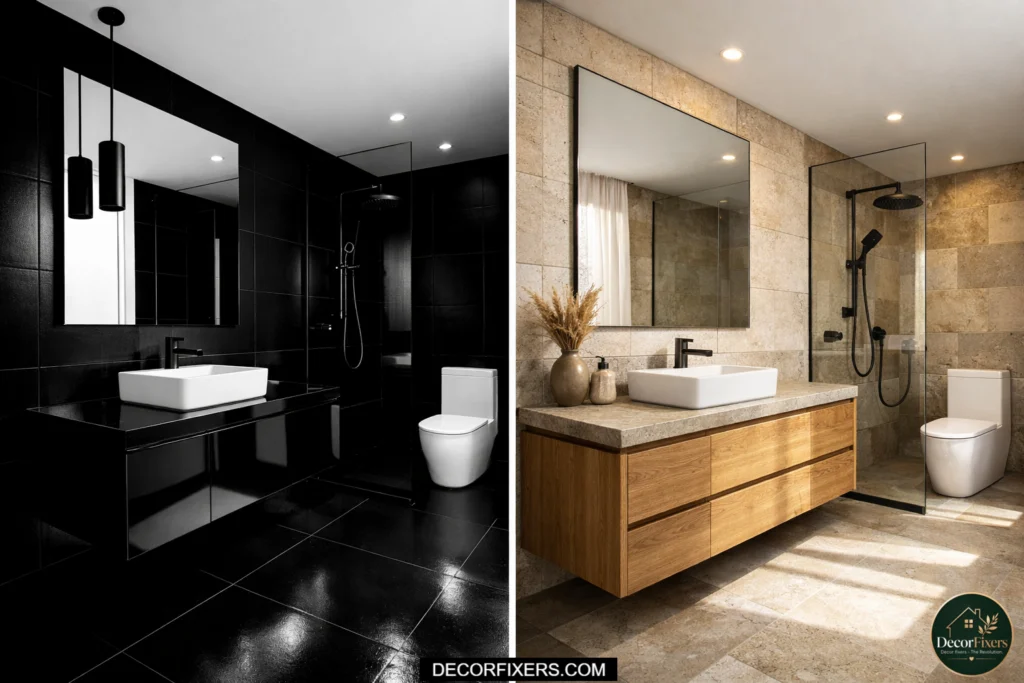
Pure black and pure white create maximum contrast. That’s the appeal, and it’s also a trap. Without a bridge element, the contrast becomes fatiguing. Real rooms aren’t printed in CMYK.
The fix is a third neutral tone: warm grey stone, natural oak wood vanity, aged brass hardware, a linen-textured bath mat, raw concrete basin. This middle tone absorbs the harshness and signals to the eye that the room is finished, not unfinished. I’ve seen conflicting data on this; some designers argue the bridge element should be warm, others say it should be cool. My read: match it to your light temperature. Warm-lit bathroom? Warm bridge (wood, brass). Cool-lit space? Cool bridge (concrete, steel).
10: Patterned Tiles on Every Surface
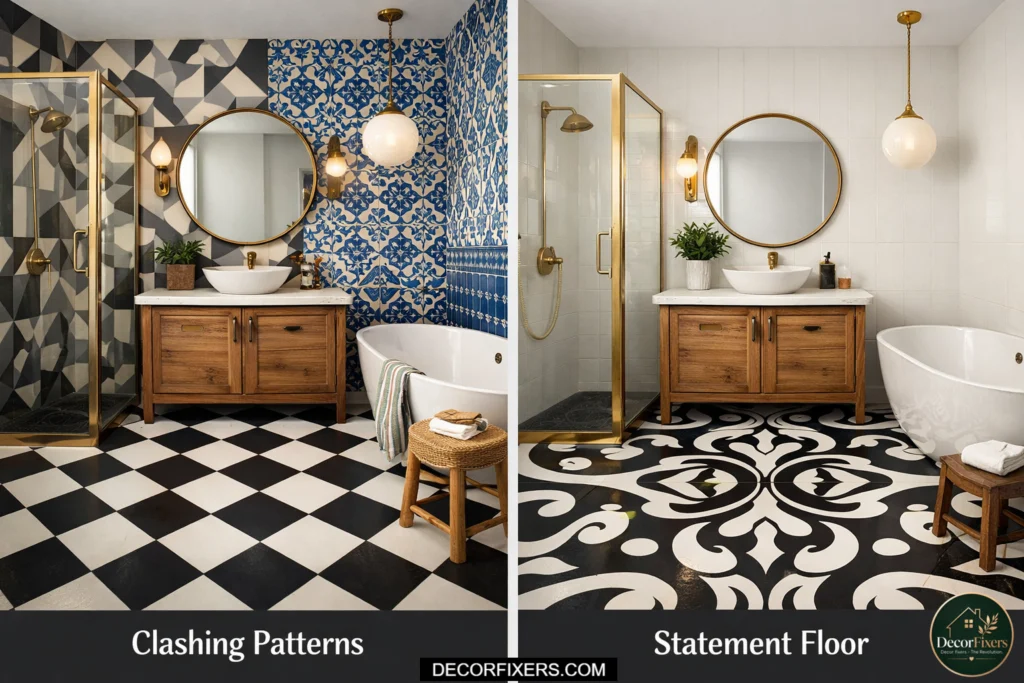
Pattern is a seasoning, not a base ingredient.
Checkerboard floors, geometric feature walls, and encaustic cement tiles all work in isolation. Combine two or more B&W patterns in the same room, and they compete for dominance. The visual result is busy rather than bold.
Apply the one-pattern rule: choose your statement surface (usually the floor or one wall) and keep everything else plain. This is where the Porcelanosa approach to large-format single-surface patterning works well: one dramatic floor tile, solid slab walls, calm vanity front. The pattern sings because it has space to breathe.
11: Skipping Waterproofing Behind Dark Tiles
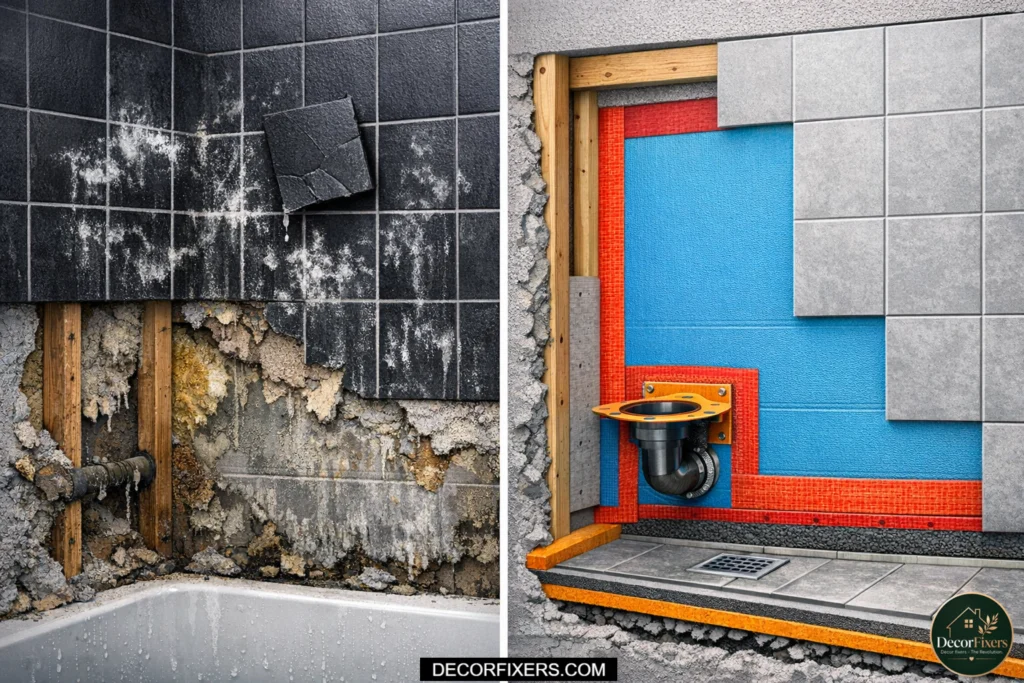
This isn’t a B&W-specific issue, but it becomes more expensive in B&W bathrooms because dark tile repairs are almost impossible to disguise.
Water that seeps behind tiles through hairline grout cracks will, over time, cause efflorescence (white mineral deposits blooming through grout lines) and loosen the tile bed. On black or charcoal tiles, these white mineral blooms are immediately visible and look like mound even when they aren’t. The only fix is a full strip-out.
Require a full tanking membrane (Schluter Kurdi or equivalent) behind all wet-zone tiles, not just the shower floor. This is non-negotiable.
12: Relying on Overhead Lighting Alone
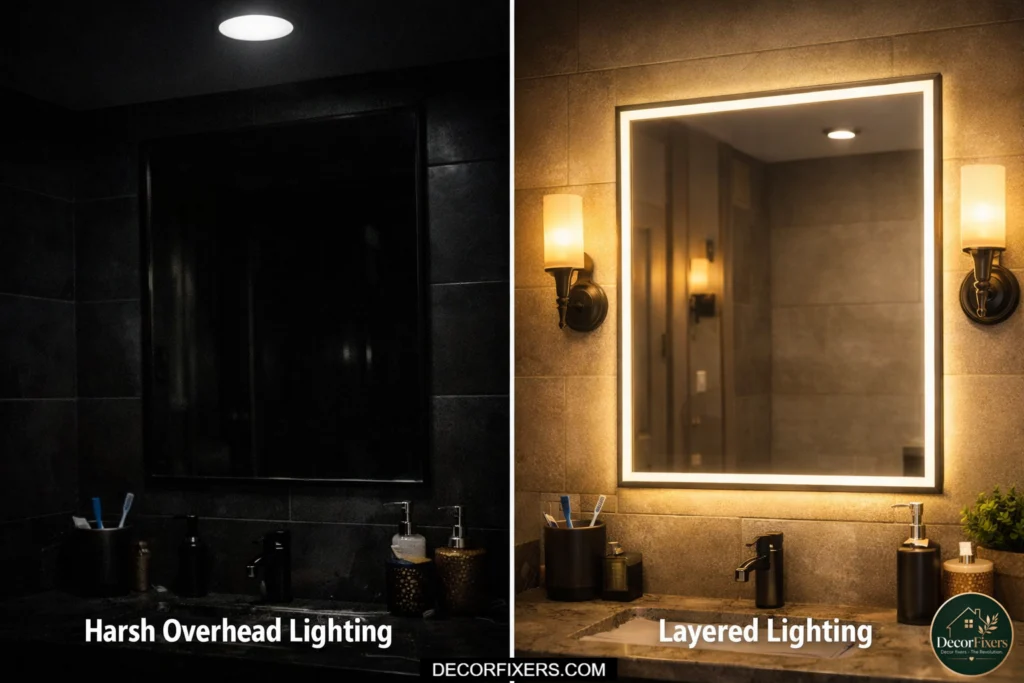
Single overhead lighting in a B&W bathroom is a design death sentence.
Overhead-only light casts downward shadows on the face at mirrors, makes matte black surfaces look muddy, and flattens the contrast that makes the palette work. Layered lighting is mandatory, not optional, in a monochrome space:
- Task light: LED strips or sconces flanking the mirror at face height
- Ambient light: a central pendant or recessed downlights at a 3500K–4000K temperature
- Accent light: under-vanity LED strips, or inside shower niches, to reveal texture and depth
Backlit mirrors (like the KOHLER Verdura or any IP44-rated LED mirror) solve the task-lighting problem in one fitting and add the critical mid-layer in the lighting stack.
13: No Storage Plan, The Clutter Problem
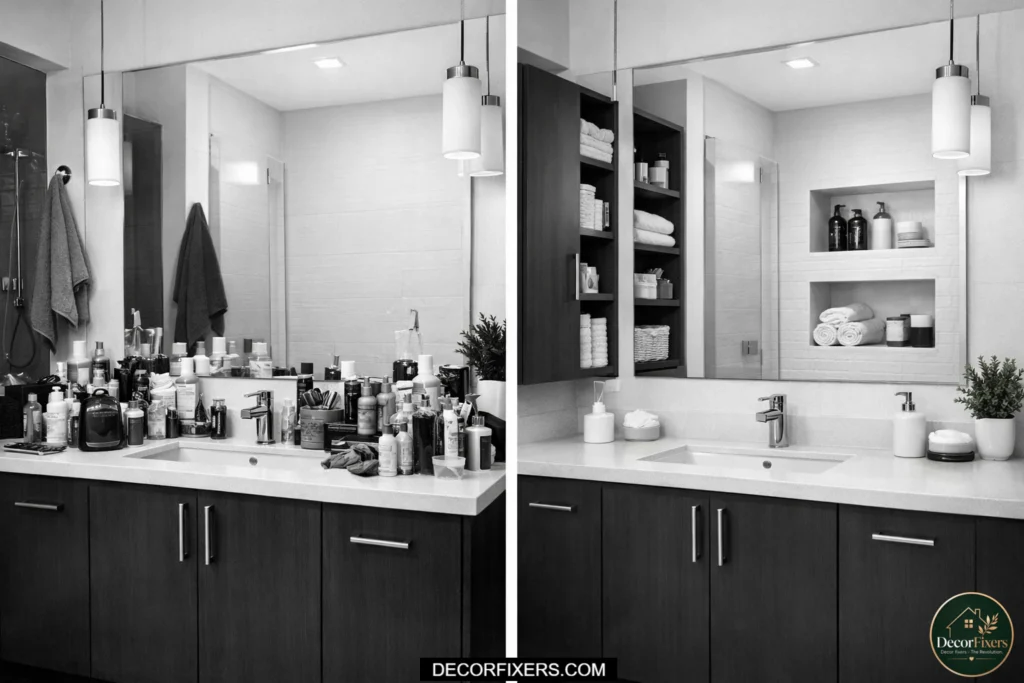
A black and white bathroom looks phenomenal in the photo and terrible in real life if you haven’t solved storage.
Visible clutter, shampoo bottles, cleaning products, spare rolls, reads ten times louder in a monochrome space than in a colored one, because every colored object becomes a visual shout in a black and white room. The fix is to plan storage before you finalize the layout:
- Recessed niches built into shower walls during framing, not retrofitted chrome caddies
- Wall-hung vanity with full-depth drawers, not a pedestal sink
- Mirrored cabinet recessed flush into the wall, not a surface-mounted box
Anyway, the cleanest-looking B&W bathrooms you’ll find on Houzz or Pinterest all share one thing: zero visible products.
14: Choosing the Wrong Tile Finish for Wet Floors
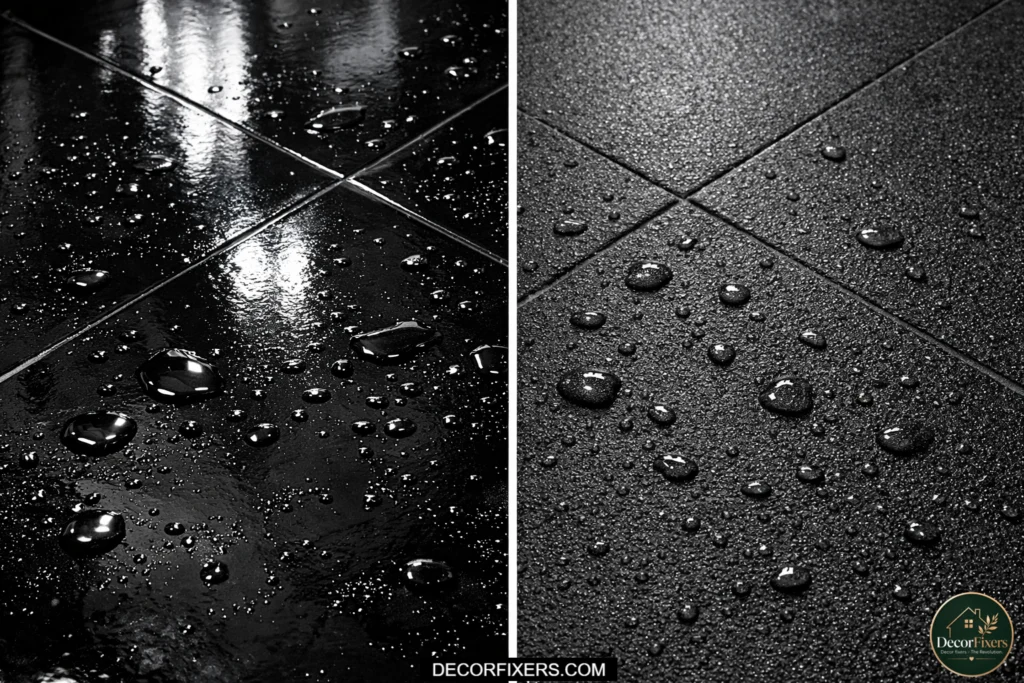
Glossy tiles look stunning in photos. On a wet bathroom floor, they become a slip hazard, and in a B&W space where floors are often dark, a fall on black tile is a serious incident.
For floors, especially in shower wet zones, always specify a minimum R10 slip-resistance rating (R11 if there are elderly household members). This rules out most polished stones and high-gloss porcelain for floor use. Matte black or textured black floor tiles can still look exceptional; they simply need to meet the anti-slip standard. Ask your tile supplier for the slip rating before ordering.
15: Ignoring the Ceiling, The Forgotten Fifth Wall
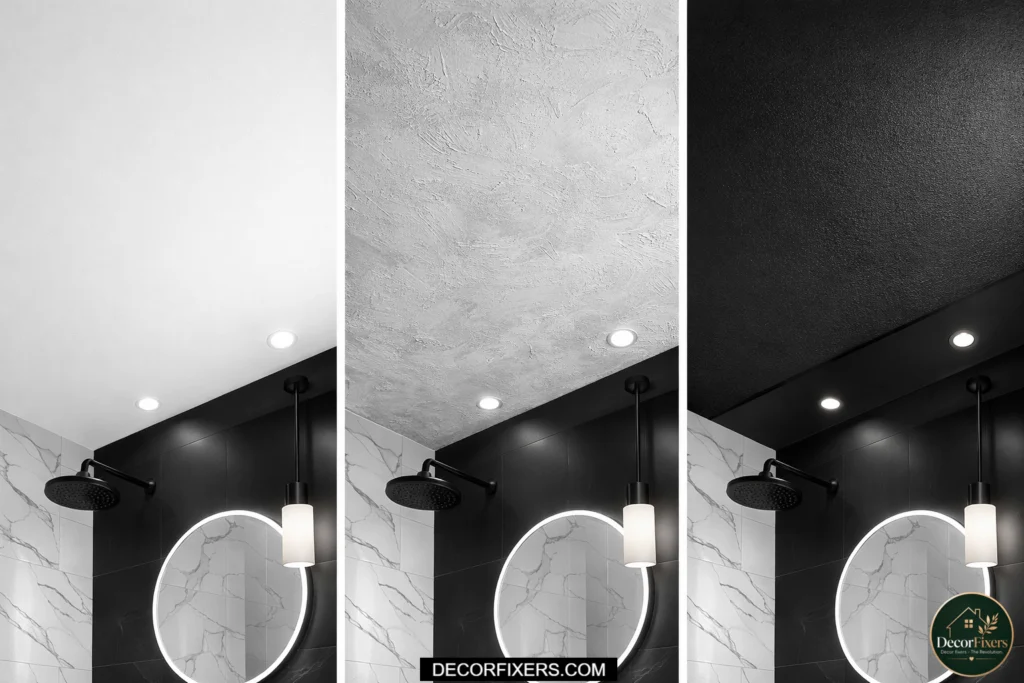
Most bathroom renovation guides don’t mention the ceiling. That’s why so many bathrooms look unfinished from above.
In a black and white bathroom, the ceiling choice either completes or kills the design. Options:
- White ceiling with white walls: safe, enlarging, but can feel flat
- White ceiling with black lower walls: creates a ‘dado’ effect, visually lowers the room if not handled carefully
- Black ceiling with white walls: dramatic and works well in taller rooms, adds intimacy without reducing floor area
- Architectural plaster or textured white ceiling: adds interest without committing to a dark color
Quick note: if your ceiling has imperfections, do not paint it black; every bump and variation will show. White hides imperfections; black exposes everyone.
16: All-White Acrylic Fittings That Yellow
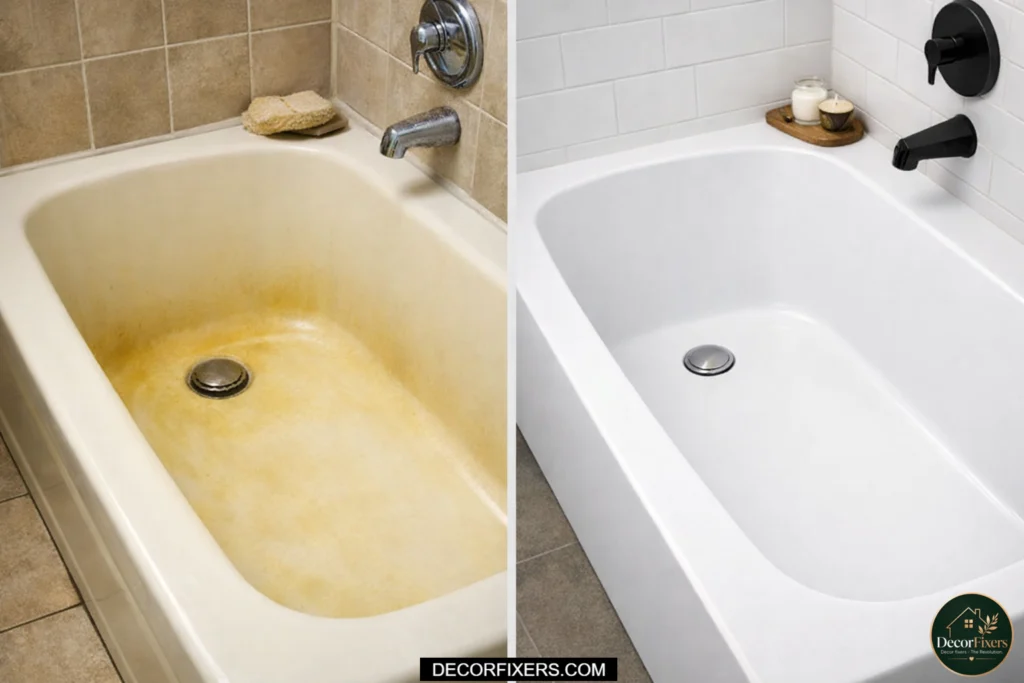
Acrylic baths and shower trays in a crisp white will yellow within 3–5 years under UV exposure and cleaning chemical contact. In a B&W bathroom, that yellowing stands out brutally against white tiles that haven’t aged.
Specify cast resin, steel-enamel, or stone-composite for baths and basins. These ages without discoloring. For shower trays, solid surface materials, or tiled wet room floors outperform acrylic over any 10-year horizon.
Some experts argue acrylic is acceptable if you seal it annually. That’s valid for a budget install. But if you’re investing in premium tile and hardware, acrylic fittings become the weak point in as little as three years.
17: Buying Cheap Chrome Instead of Quality Matte Black Hardware
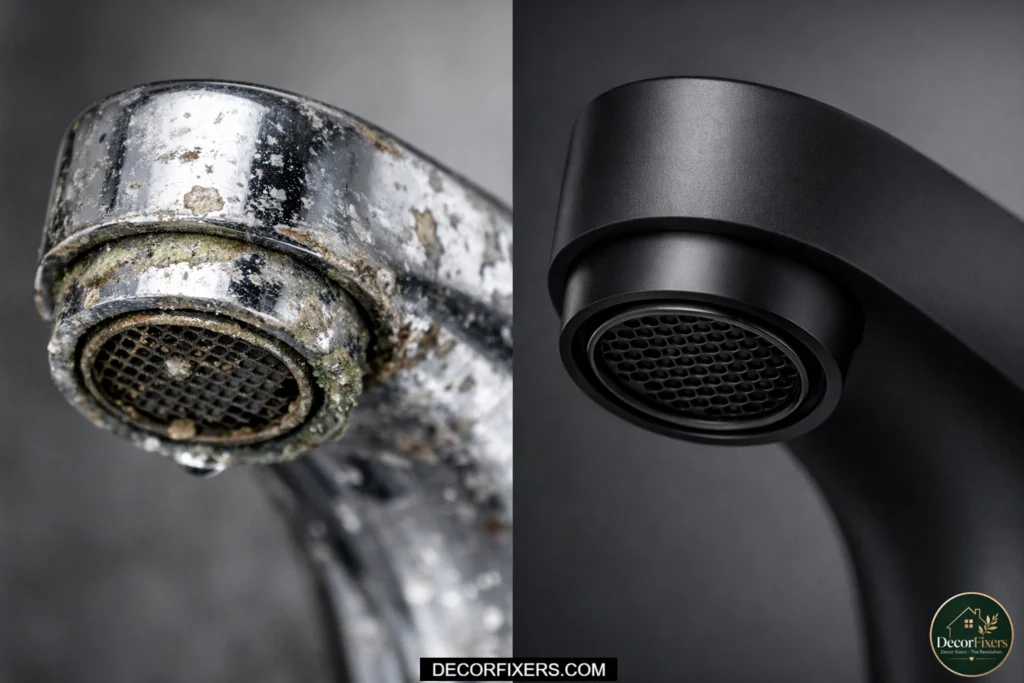
Low-cost hardware is where most B&W budgets collapse visually.
Budget chrome taps and towel rails from discount retailers use thin plating over zinc alloy that corrodes and tarnishes in hard water areas within 18–24 months. In a black and white bathroom, tarnished hardware looks dingy against crisp tile, and the stark palette makes the deterioration more visible, not less.
Matte black solid brass hardware (KOHLER Purist, Cross water Union, or Vado Cameo matte black) costs significantly more upfront but is warranted for 5–10 years and shows no visible ageing under normal use. It also ties directly to the black element in your palette, giving the room a cohesive, intentional quality that chrome cannot replicate.
18: Treating Black and White as ‘Safe’, and Playing It Boring
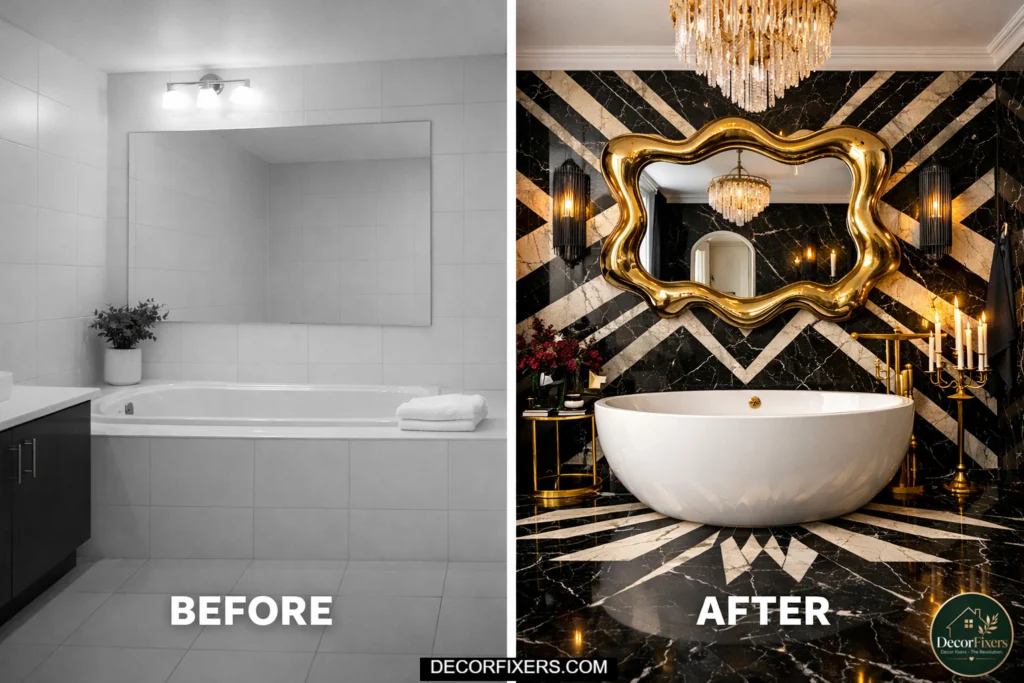
Here’s the thing: black and white is a bold choice that gets executed timidly.
Homeowners choose the palette because it feels safe, can’t go wrong with black and white, right? Then they tile every surface the same way, buy a bog-standard white vanity, fit chrome taps, and end up with a bathroom that looks like a budget hotel. The palette is only as good as the decisions within it.
The bathrooms that stop your mid-scroll on Instagram are B&W rooms that took risks within the palette: a dramatic chevron floor tile, a statement wall-hung basin with visible plumbing, a bold arched mirror, or a freestanding stone bath against a black wall. These are all still black and white, but they have a point of view.
According to the NKBA’s 2024 Bath Trends Report, more than 70% of homeowners are willing to take design risks in the bathroom, more than in any other room. The people reading this article are among them. Use that willingness. One brave decision, executed well, is worth more than ten safe ones.
Must Read: 28 Modern Minimalist Bathroom Closet Organization Ideas
Conclusion:
Black and white bathrooms don’t fail because of the color palette; they fail because of decisions.
After going through these 18 mistakes, one pattern becomes obvious: the difference between a high-end, editorial bathroom and one that feels cheap or dated comes down to execution details. Grout color, lighting temperature, tile finish, and material quality aren’t small choices in a monochrome space, they are the design.
What most homeowners get wrong is treating black and white as “safe.” It’s not. It’s actually one of the most demanding palettes because it removes distractions. Every flaw becomes visible. Every mismatch stands out. Every shortcut shows.
But that’s also why it works so well when done right.
If you get the fundamentals right, balanced black-to-white ratio, correct grout selection, matte finishes where needed, consistent hardware, and layered lighting, you don’t just avoid mistakes. You create a bathroom that feels intentional, timeless, and expensive without relying on trends.
Before you finalize anything, slow down at the decision points that matter most:
- Test materials under your actual lighting
- Choose finishes once, not multiple times
- Prioritize texture over adding more elements
- Design storage before aesthetics
Because fixing a wrong tile, grout, or lighting decision after installation is not an adjustment — it’s a full redo.
A well-executed black and white bathroom doesn’t need more.
It just needs fewer mistakes.
Why Do Black and White Bathrooms Look Cheap?
| Direct Answer: Black and white bathrooms look cheap primarily because of four decisions: wrong grout color (white grout on dark tile that stains immediately), low-quality chrome hardware that tarnishes within two years, glossy black tiles used in small spaces that create an oppressive feel, and flat all-white surfaces with zero texture. According to the Fix 2026 Bathroom Design Trends Report, 75% of design professionals confirm that flat cool-neutral bathrooms are being replaced by textured, layered alternatives, even within the same color palette. |
What Is the Best Grout Color for a Black and White Bathroom?
| Direct Answer: The best grout color for a black and white bathroom depends on the tile. For dark tiles (black, charcoal, slate), use dark grey or charcoal grout; white grout stains quickly and breaks the visual mass of the tile. For white tiles, a warm grey grout adds definition without looking dirty. Matching grout to tile color (especially on floors) visually extends the surface and reduces the ‘grid’ effect. |
Should I Use Matte or Gloss Tiles in a Black and White Bathroom?
| Direct Answer: Use matte tiles in small bathrooms and for floor surfaces; they hide water marks, reduce glare, and meet slip-resistance requirements. Reserve gloss tiles for a single feature wall in larger bathrooms where you want high drama. In a B&W palette, matte black tiles read as sophisticated and contemporary; gloss black tiles in confined spaces feel oppressive and show every fingerprint. |
FAQs:
Q: What’s the best tile layout for a black and white bathroom?
A: Large-format tiles (600x1200mm or bigger) on walls and a single statement patterned floor tile. Keep pattern to one surface only, checkerboard floor or geometric wall, not both.
Q: How do I keep a black and white bathroom from looking like a hospital?
A: Add texture, fluted panels, a stone basin, and ribbed towels. Include a warm wood or concrete bridge element. Use 3500K–4000K neutral lighting, not cool white. Vary surface finishes: matte tile, brushed metal, natural material.
Q: Should I use black or white grout in my bathroom?
A: Dark grey or charcoal grout on dark tiles. Warm grey grout on white tiles. Avoid white grout on any surface that gets heavy moisture; it will stain within months and is nearly impossible to restore.
Q: Why does my black and white bathroom look dated?
A: Most likely causes: all-white acrylic fittings that have yellowed, chrome hardware that has tarnished, or an outdated checkerboard tile pattern used wall-to-wall. Update hardware to matte black, replace acrylic with stone composite, and limit pattern to one surface.
Q: When should I hire a designer for a black and white bathroom?
A: When you’re unsure how to balance the black-to-white ratio for your room size, or when your layout involves moving plumbing. A design consultation (typically $150–$300 for 2 hours) will cost less than correcting a tile mistake after installation.

Creator of DecorFixers, sharing practical home and interior ideas focused on real-life usability, simple design improvements, and budget-friendly solutions.