

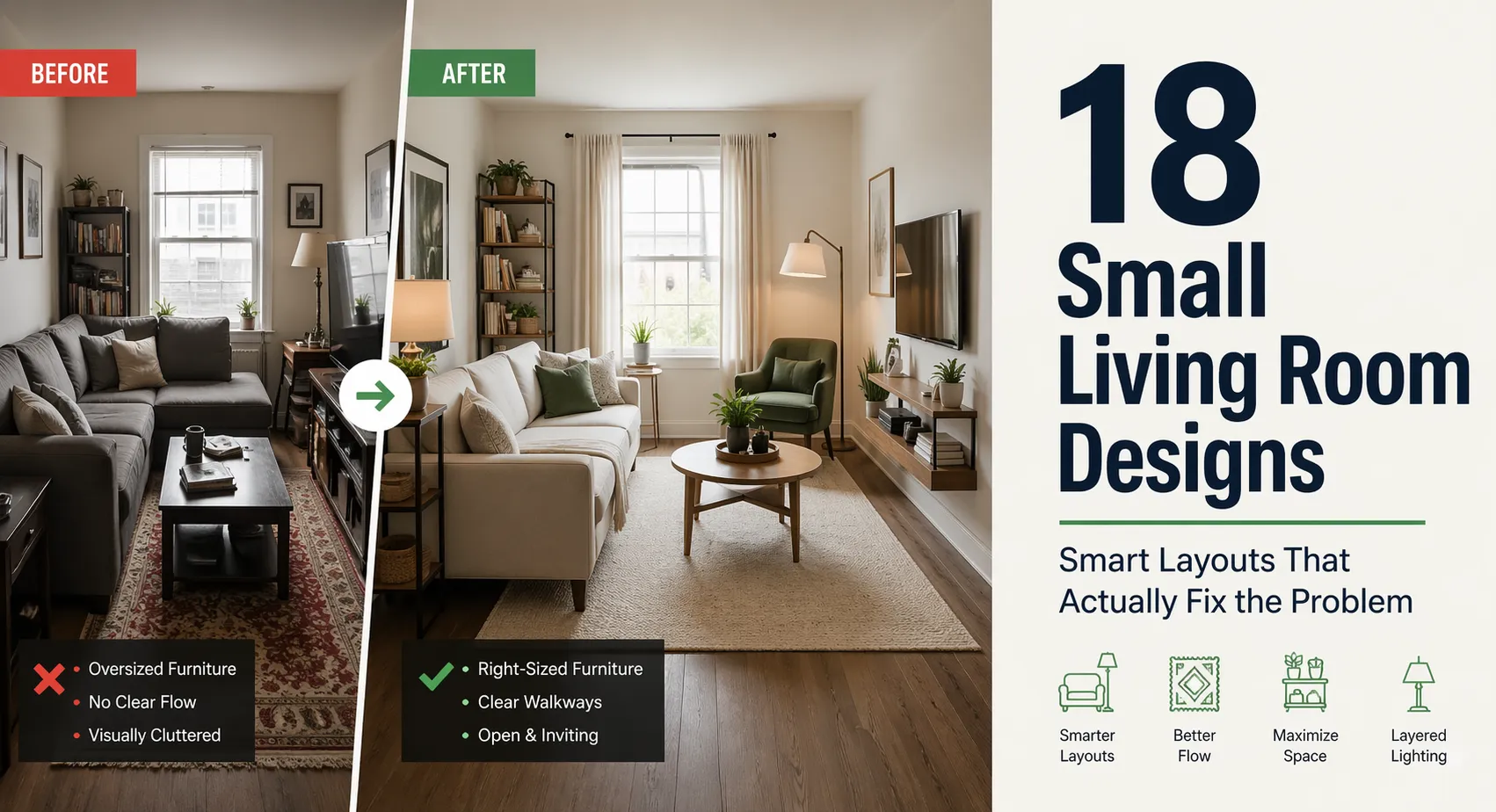
This guide covers dedicated living rooms in apartments and condos ranging from 100 to 250 sq ft. It does NOT address open-concept studios where sleeping, dining, and living share an undivided floor, which requires an entirely separate zoning approach.
Living room designs for small spaces are decisions about spatial proportion, furniture scale, and visual hierarchy, not just style choices. The goal is to control how the brain reads the room in the first half-second: does it register “cramped” or “considered”? That one perception gap is what separates a small room that works from one that perpetually feels wrong, regardless of how many times you rearrange it.
Why Small Living Rooms Feel Cluttered Even When They’re Clean
The size of your living room isn’t usually the problem. The furniture-to-room ratio is.
The most common mistake renters make is pushing all furniture against the walls. It feels logical, clear the middle, open up the floor. But what it actually does is create a hollow ring of furniture around space, which reads as a waiting room, not a living room. The room loses any sense of intimacy or intentionality.
Here’s the thing: your brain isn’t measuring the room. It’s reading cues about whether the space was designed for humans or just arranged to avoid decisions.
Float your sofa away from the wall
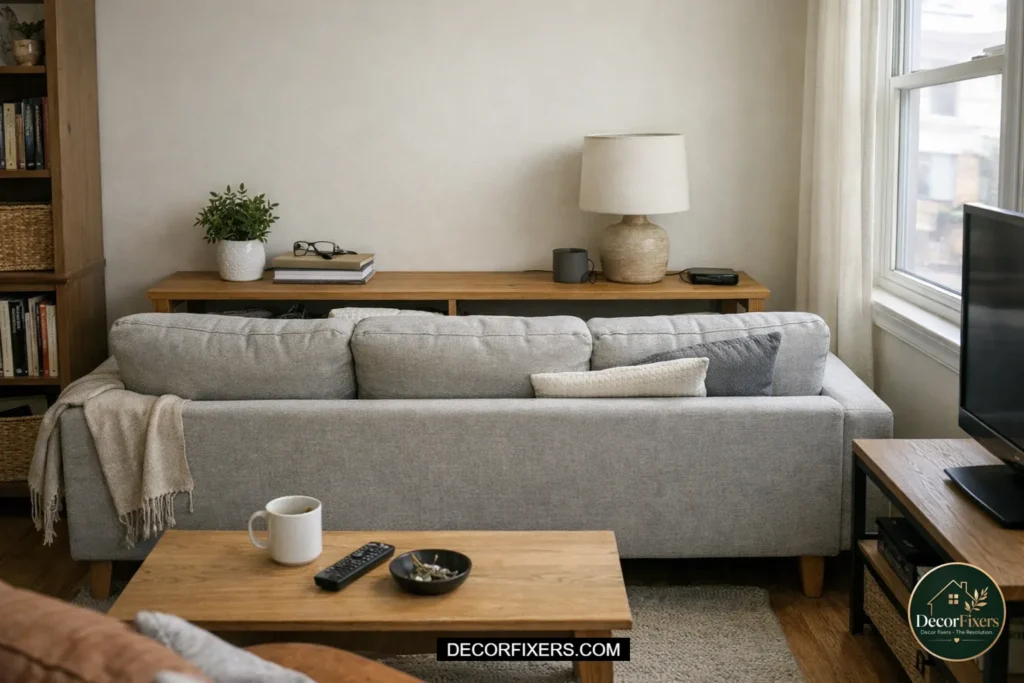
Pull it 6–12 inches out. This single move does more for small-room perception than any color choice. It creates a defined zone and signals intentional design rather than furniture-by-default placement.
Apply the two-thirds sofa rule
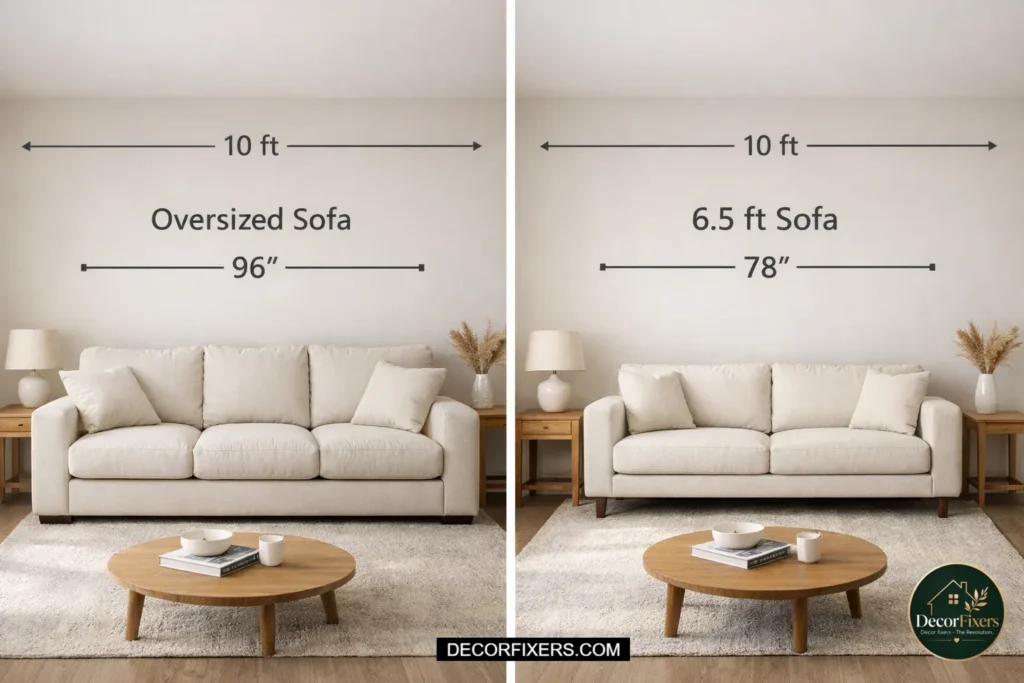
Your sofa should not exceed two-thirds of the length of the wall it faces. On a 10-foot wall, that’s a 6.5-foot maximum. This ratio keeps the room from feeling furniture-dominated the moment someone walks in.
Define zones with rugs, not walls
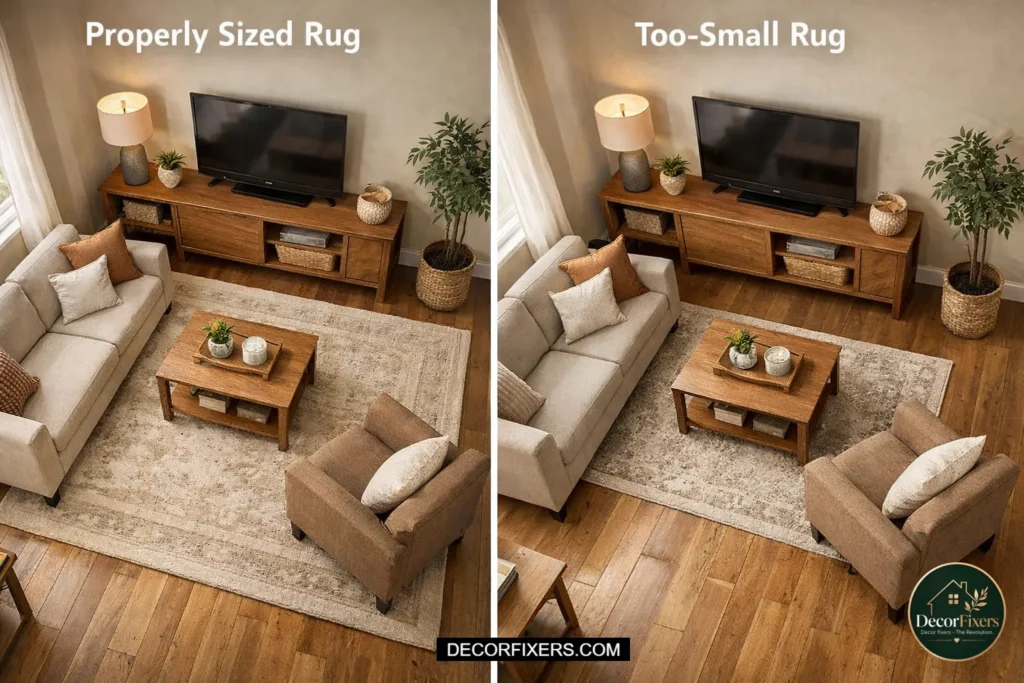
In rooms that double as workspaces or dining areas, a rug anchors the living zone without requiring physical separation. The rug tells the brain where the “room” begins and ends. Choose one large enough so that all front furniture legs rest on it. A common sizing mistake is buying one or two sizes too small, which emphasizes how little floor space exists rather than organizing it.
To set up a properly scaled small living room layout, follow these steps:
- Measure your room length and width in feet.
- Multiply room length by 0.67; that’s your maximum sofa length.
- Mark a 36-inch walkway clearance around all primary paths.
- Place your rug first, then arrange furniture around it.
- Float the sofa 6–12 inches from the wall before finalizing the position.
- Confirm 18-inch clearance between sofa and coffee table.
Angle one chair, not the whole room
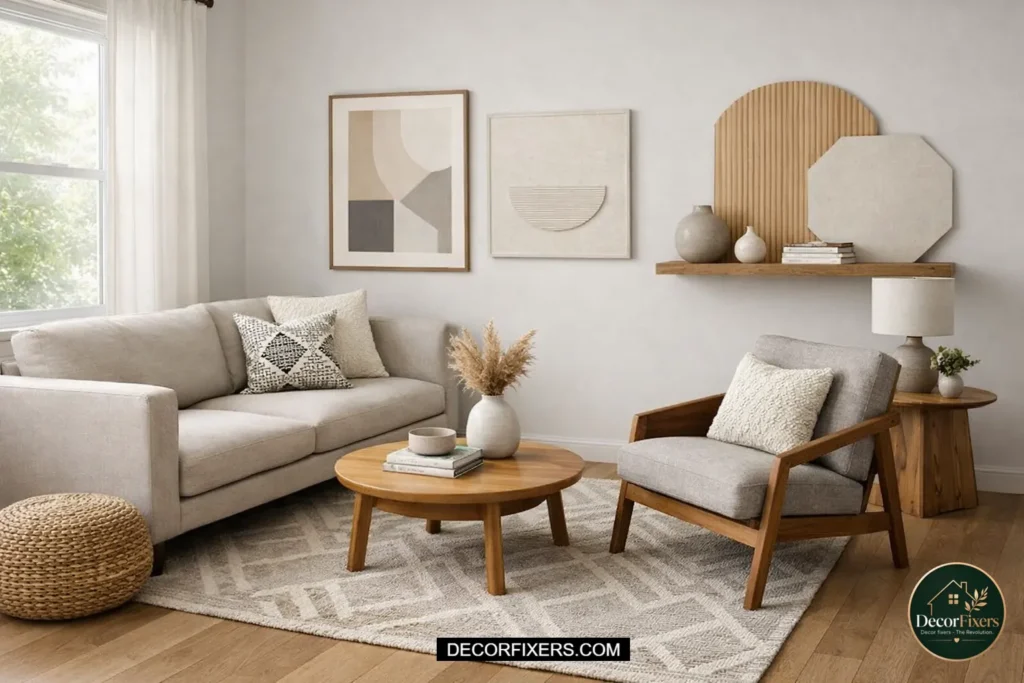
Placing an accent chair at a 30–45-degree angle to the sofa breaks the grid feel that makes small rooms look staged. It also creates a natural conversation orientation without taking additional floor space.
Protect your primary sightline
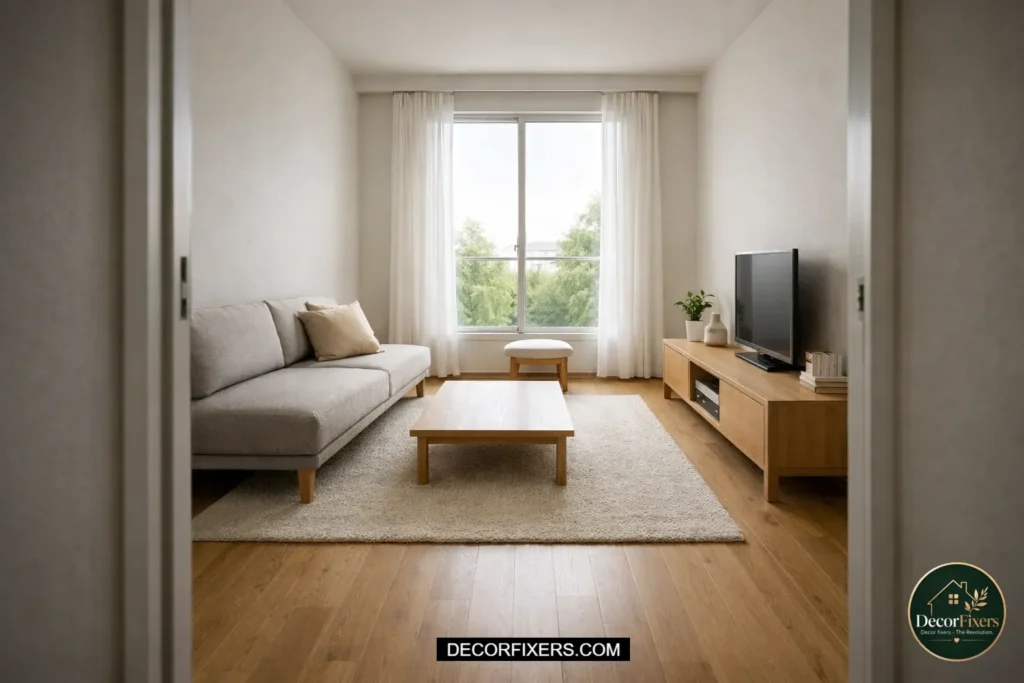
When you walk into the room, your eyes immediately scan to the farthest visible point. If a bulky chair, a tall bookshelf, or an oversized coffee table blocks that line, the room reads as smaller before you’ve consciously registered it. Keep the visual path from the entrance to the farthest wall as clear as possible.
Use your corners deliberately
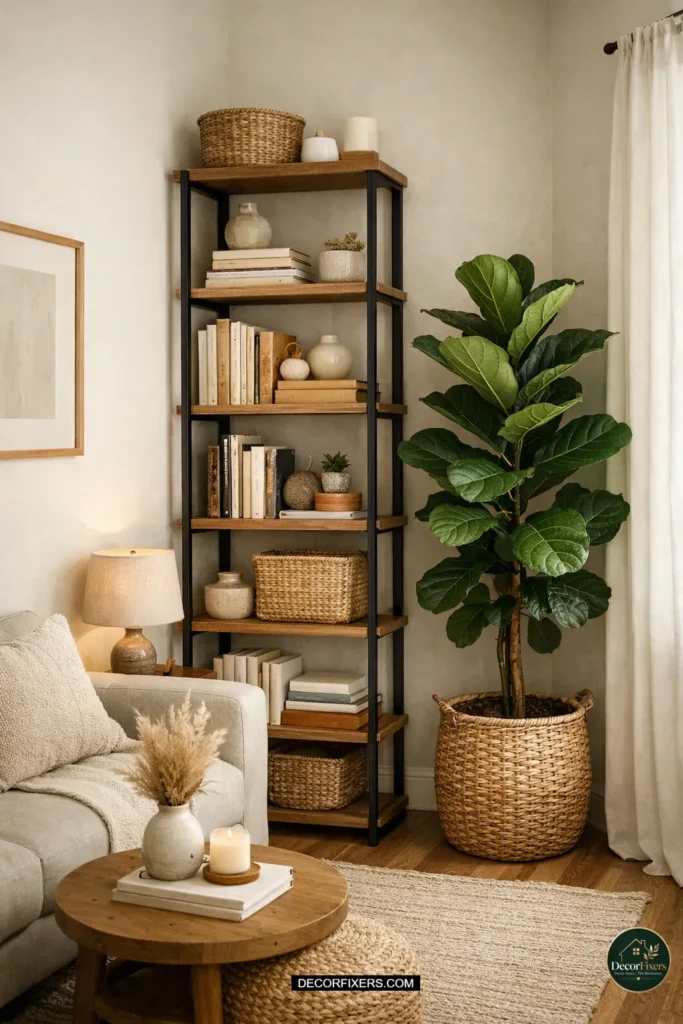
Empty corners are wasted volume. A tall, narrow bookshelf, a floor lamp, or a potted plant in a corner draws the eye upward and fills visual dead space without occupying the walkway area. Corners are often the only “free” square footage in a small room.
Replace a sectional with a sofa under 72 inches
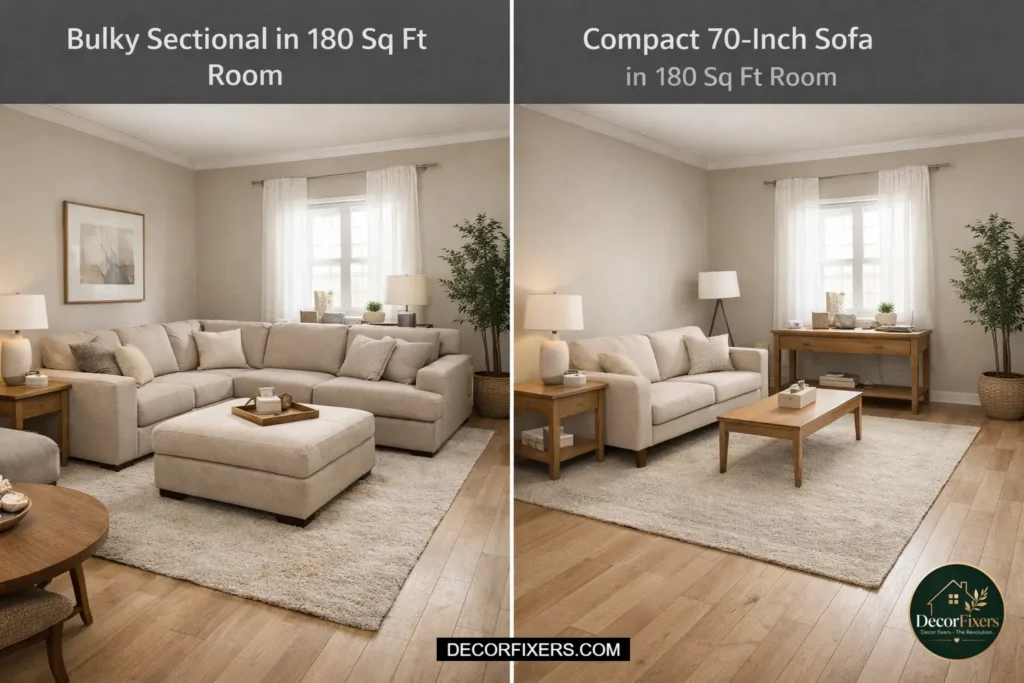
This is the opinion readers push back on most, and the one I’ll defend most firmly. A sectional in a room under 200 sq ft doesn’t just take up floor space; it eliminates sightlines, blocks pathways, and visually dominates every surface it’s near. Renters who’ve switched from an oversized sectional to an apartment-scale sofa consistently report the room feeling immediately more livable, not just more spacious. The sectional may be more comfortable for movie nights. The smaller sofa makes the room usable every other hour of the day.
Choose a round or oval coffee table
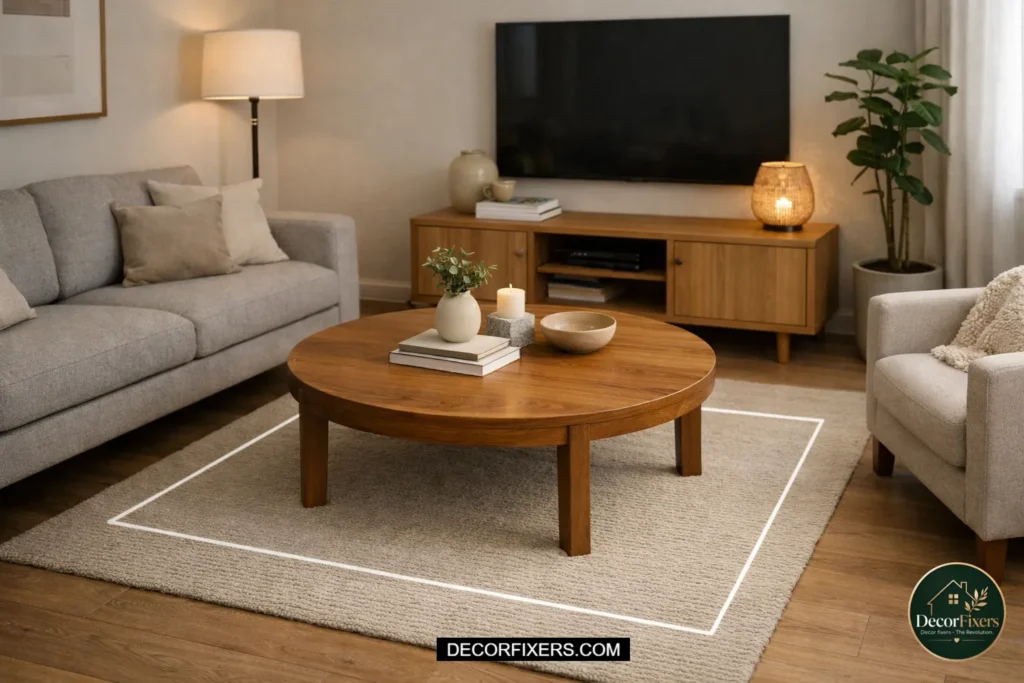
Sharp corners on coffee tables in tight spaces create both physical and visual hazards. Round tables allow easier movement, read as less aggressive in the sightline, and pair better with most sofa silhouettes in rooms under 180 sq ft.
Use an ottoman as your third seat
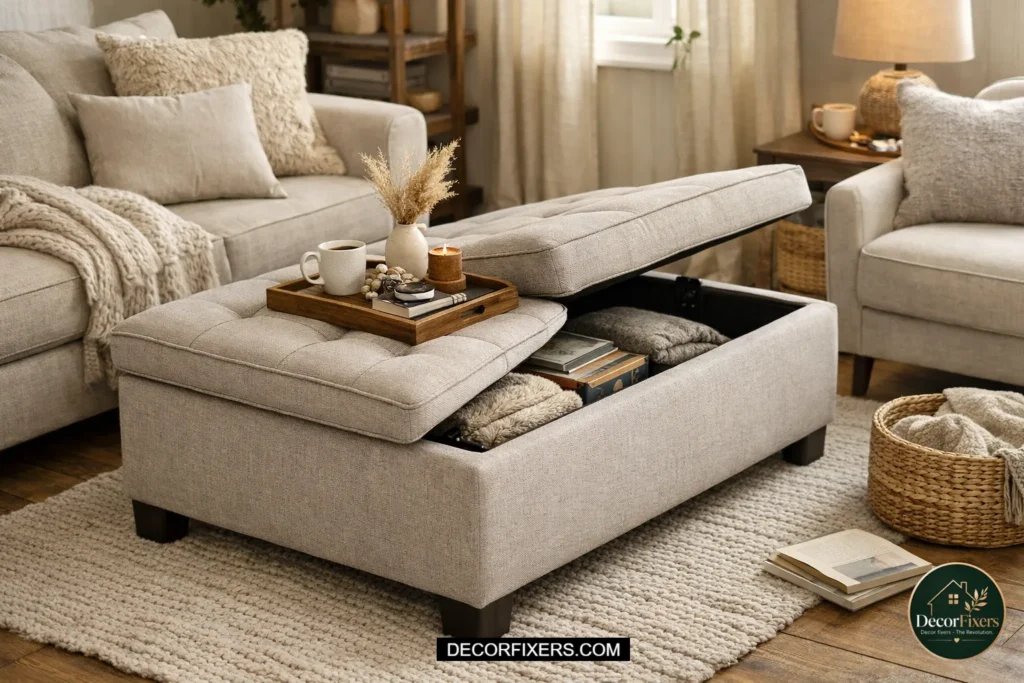
A large storage ottoman serves as a coffee table, footrest, and guest seat simultaneously. In rooms where a second armchair won’t fit without blocking the walkway, this is the most space-efficient seating solution available.
Quick Comparison: Seating Options for Small Living Rooms
| Option | Best For | Key Benefit | Limitation |
| Sofa under 72.” | Primary seating, daily lounging | Anchors the room without dominating | Limited guest capacity |
| Two armchairs | Flexible layouts, entertaining | Easy to rearrange; feels airy | Less comfortable for solo lounging |
| Sofa + accent chair | Balance of both needs | Variety + extra seat | Requires careful placement to avoid clutter |
| Storage ottoman | Rooms under 150 sq ft | Three functions, one footprint | Not suitable as main seating |
| Loveseat | Studio conversions | Compact, leaves more floor open | Can feel cramped as the only sofa |
Choose furniture with exposed legs
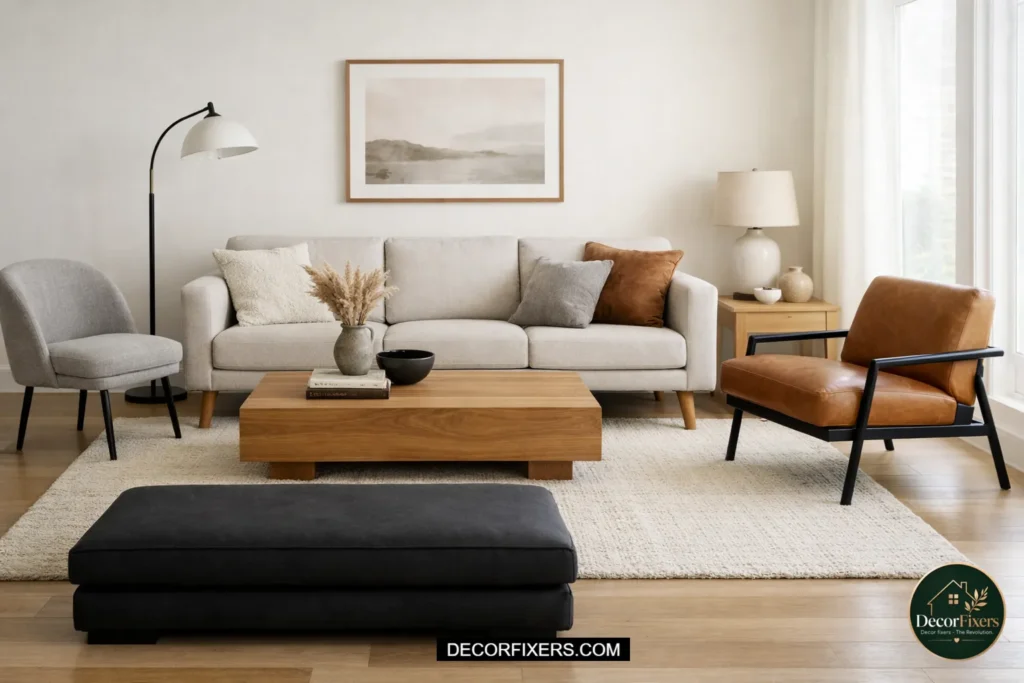
Sofas and chairs with visible legs allow light to pass beneath them, which increases the perceived floor area. Pieces that sit directly on the floor visually “sink” into the room and make it feel heavier. This is a subtle difference that accumulates across multiple pieces.
Go vertical with storage
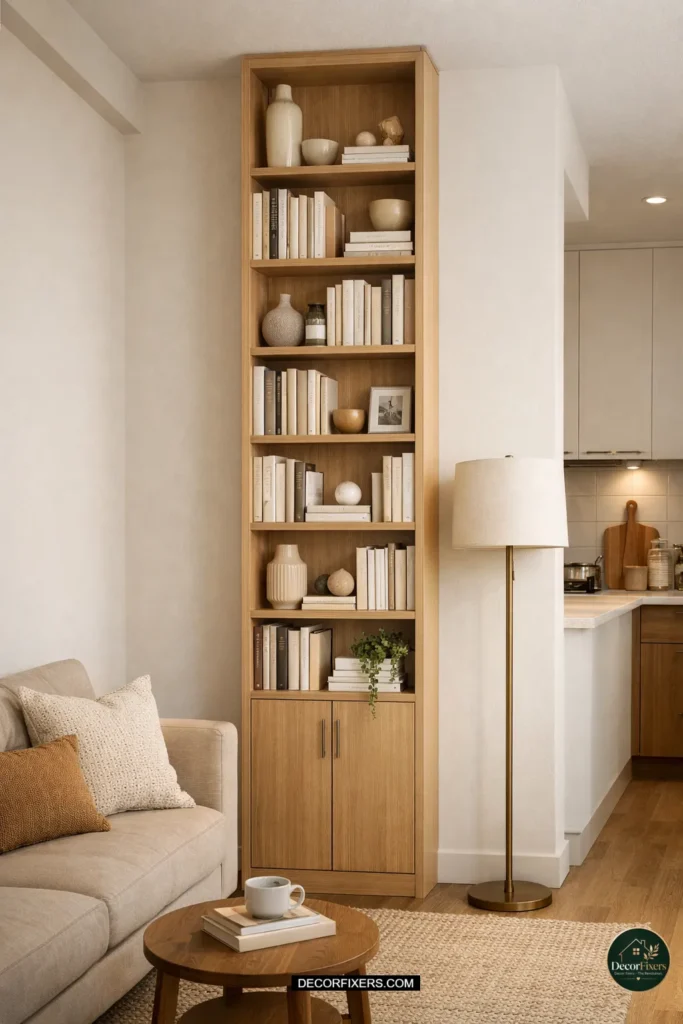
Tall, narrow bookshelves draw the eye upward and utilize wall space that would otherwise be wasted. In a 150 sq ft living room, a 72-inch-tall shelf uses roughly 3 sq ft of floor space to provide storage that a low media console would need triple the footprint to match.
I’ve seen conflicting guidance on wall color in small spaces; some designers insist all-white walls are always the answer, while others cite perceptual research showing that a single warm accent wall can make a room read as deeper because it gives the eye a destination.
My read: light, warm neutrals (think warm white, soft linen, or greige) work best for the dominant walls, but the size perception payoff comes more from lighting than from paint.
Layer your lighting, always
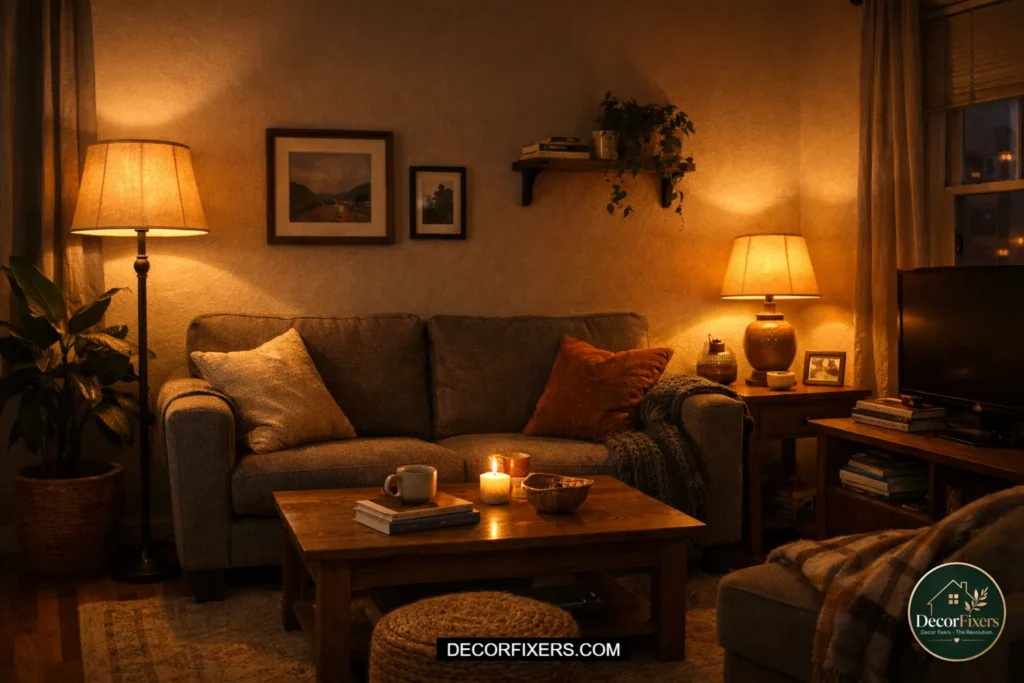
Most renters use one overhead light. That flattens a room entirely, eliminating shadow and depth, which makes spaces feel smaller. Adding a floor lamp, a table lamp, and ideally under-shelf or LED strip lighting creates multiple light sources at different heights. Three sources, different heights. That’s the formula.
Hang curtains near the ceiling
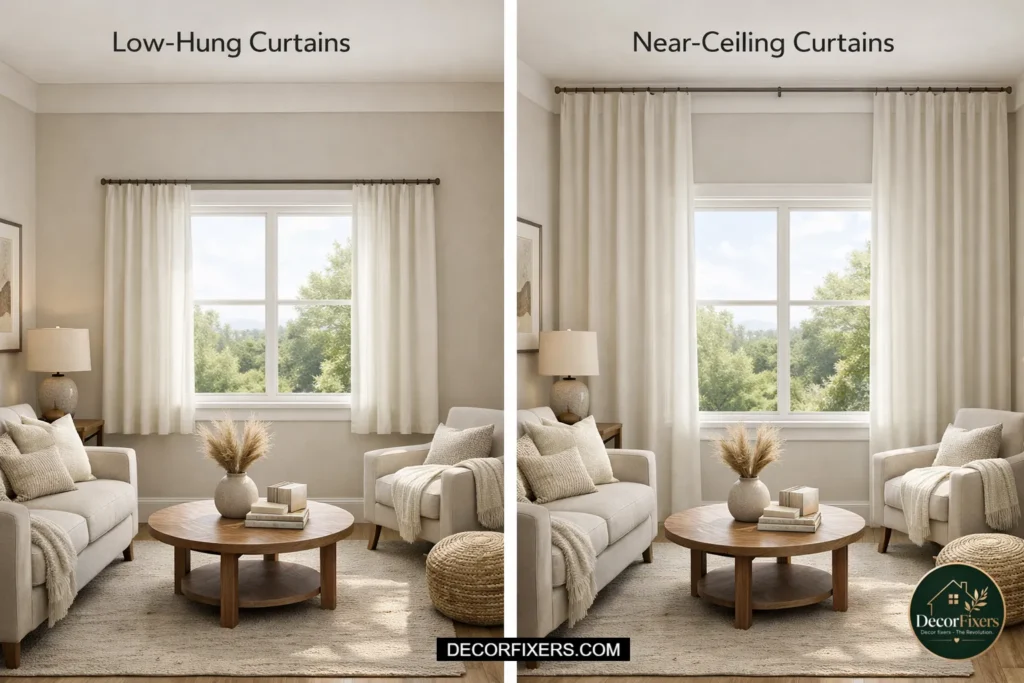
Mount your curtain rod 4 inches below the ceiling, regardless of where the window frame sits. Floor-to-ceiling curtain panels add perceived height that no paint color can replicate. This is one of the cheapest, highest-impact moves in small-space design.
Place mirrors opposite windows, only
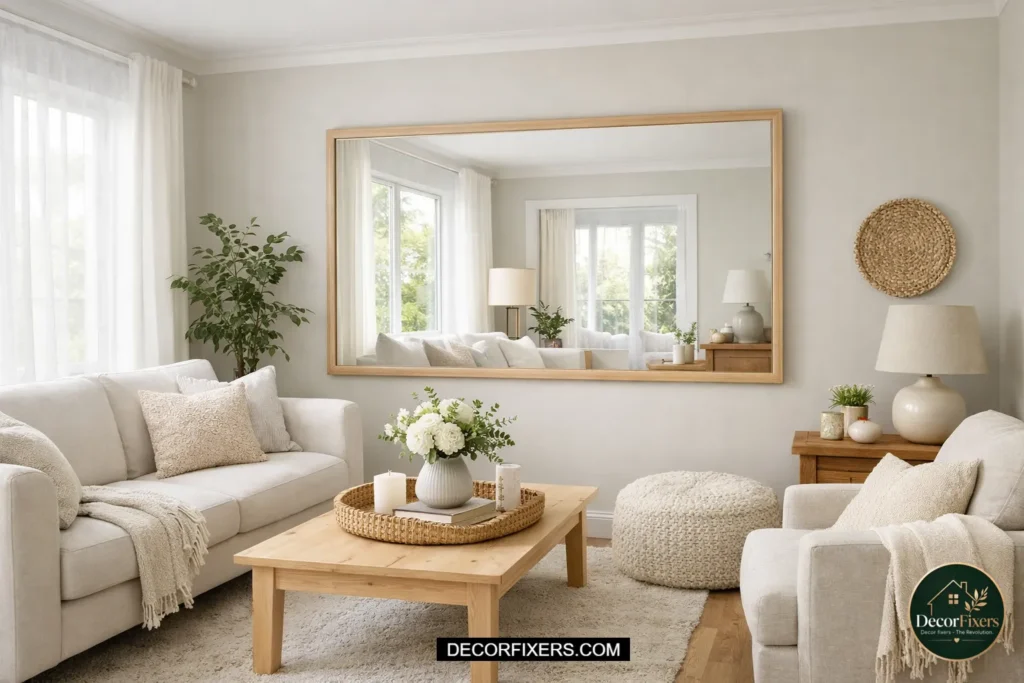
Mirrors increase perceived space when they reflect natural light and extend sightlines. A mirror placed randomly on a side wall that reflects only the back of your sofa adds nothing. Opposite a window: high impact. Anywhere else: usually visual noise.
Reduce the number of distinct colors
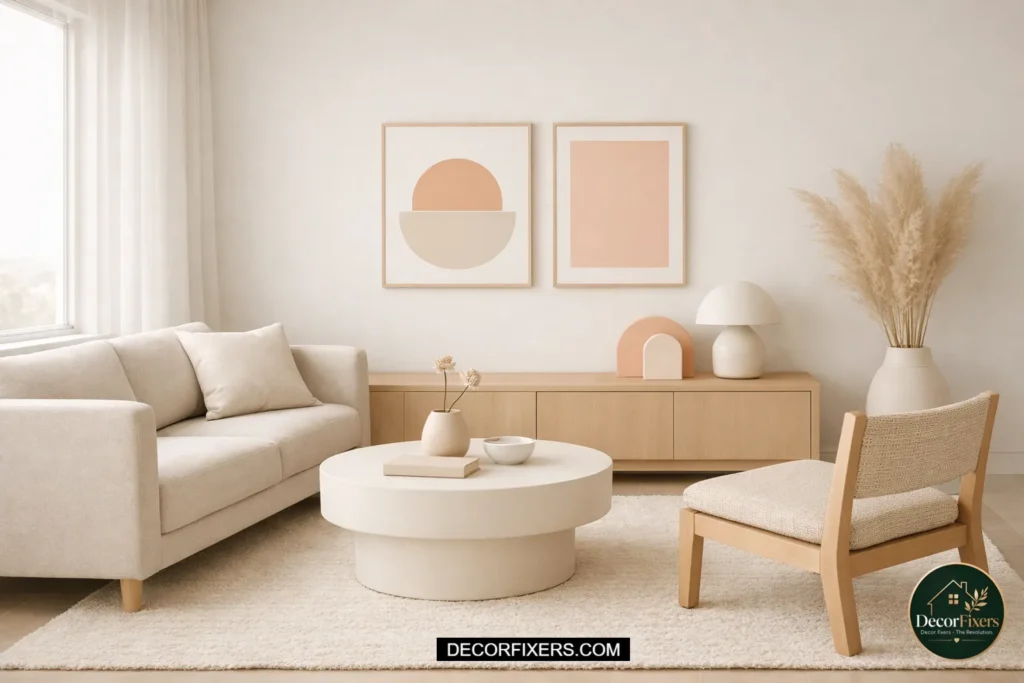
More than three distinct colors in a small living room creates visual fragmentation. Stick to a dominant neutral, one accent color, and one texture variation. The room reads as more coherent, which the brain interprets as more spacious.
Replace your coffee table with a storage-lid version
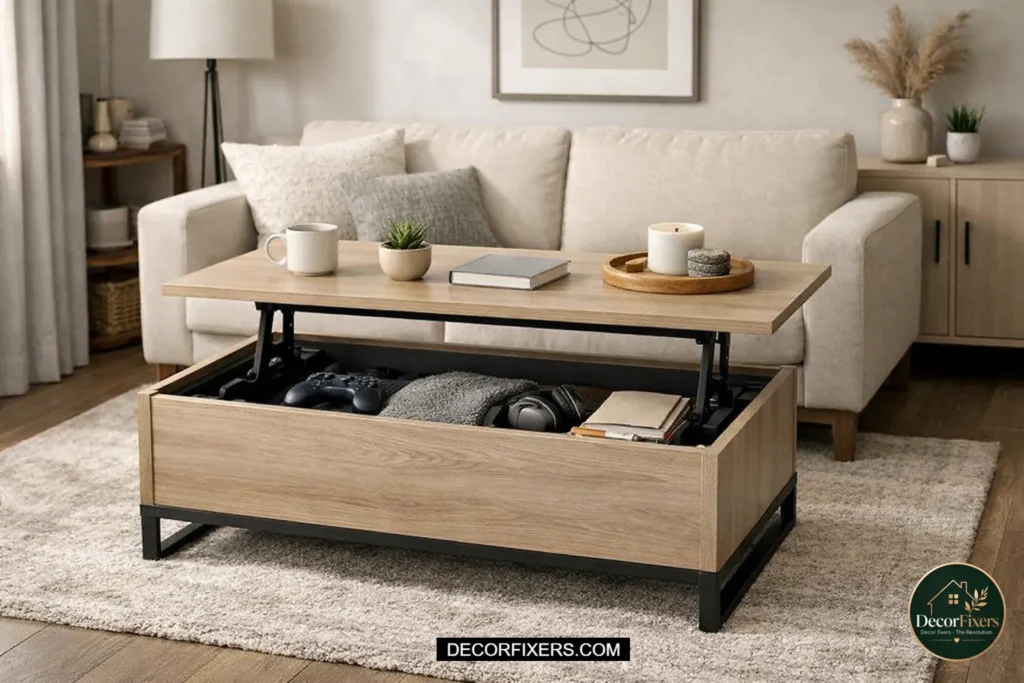
Standard coffee tables in small rooms offer surface area and nothing else. A storage ottoman or lidded coffee table provides the same surface functionality while concealing throws, remotes, chargers, and all the small items that accumulate and read as clutter.
Use the space behind your sofa
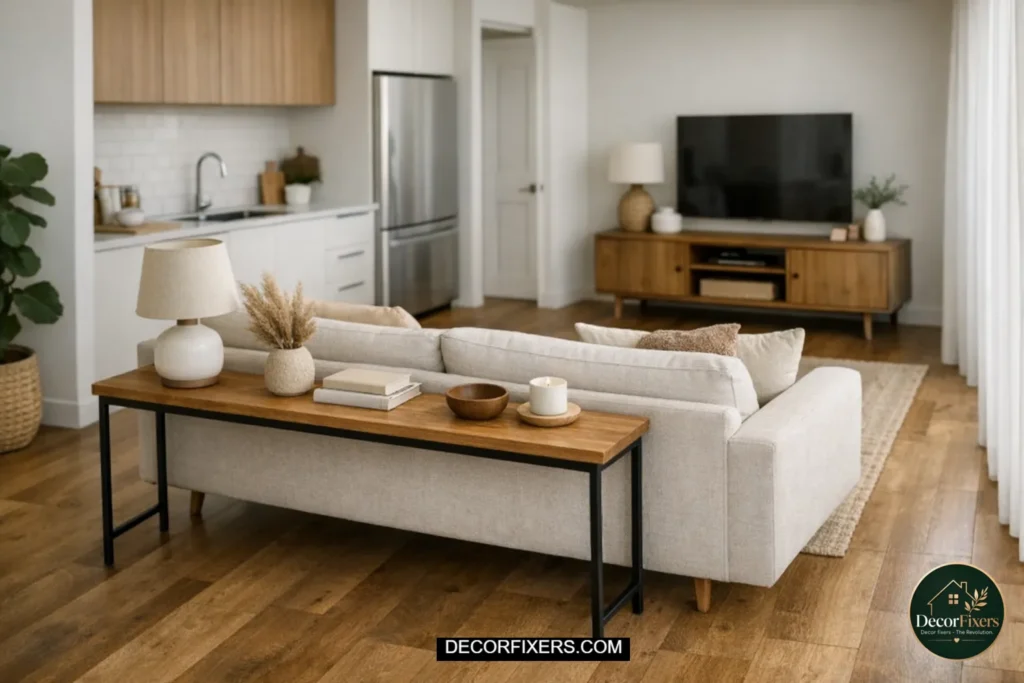
A narrow console table (10–12 inches deep) placed directly behind the sofa creates a secondary surface for a lamp, books, or a trailing plant, without touching the walkway. This is especially useful when the sofa floats away from the wall per Idea 1.
Mount your TV on the wall
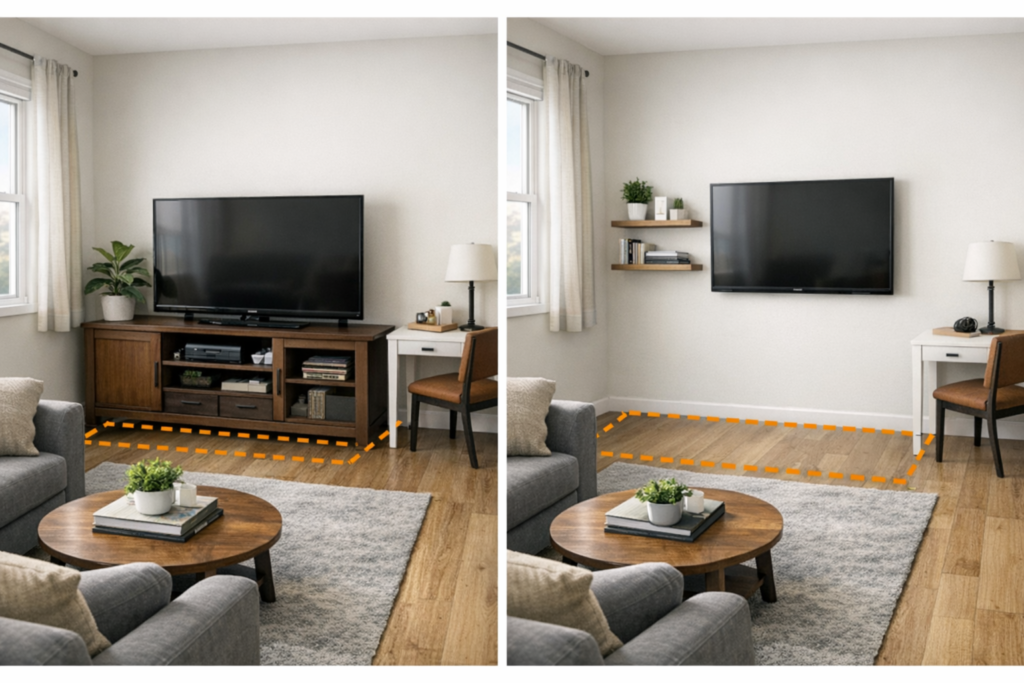
A TV on a stand consumes floor space and usually requires a media console beneath it, which consumes more. Wall-mounting the TV and replacing the console with floating wall shelves frees 8–12 sq ft of floor, which in a 150 sq ft room is roughly 7% of the total floor area.
Quick note: mounting requires finding studs and a drill. If you’re renting and can’t drill, a low-profile floor stand that eliminates the need for a separate console achieves a similar effect.
READ MORE: 20 Apartment Living Room Ideas That Actually Work in Small Modern Spaces
The Pre-Purchase Checklist (Use This Before Buying Anything)
Redesigning a small living room without a measurement plan is how you end up with a sectional on Facebook Marketplace and a $180 return shipping fee.
Before purchasing any furniture:
- Measure room length × width, and ceiling height
- Calculate maximum sofa length (room length × 0.67)
- Map your 36-inch walkway paths in your planning app
- Decide whether the room needs one zone or two (living + work/dining)
- Confirm rug size; all front legs of seating pieces must reach it
- Check that your primary sightline from the entrance stays clear
- That’s the whole process.
Or maybe I should say it this way: the process isn’t about having good taste. It’s about having the right numbers before you open your wallet.
This guide works best for dedicated living rooms in apartments or condos between 100 and 250 sq ft. It won’t solve open-plan studio challenges where the living, dining, and sleeping areas share undivided floor space; that layout problem requires a different spatial strategy entirely.
CONCLUSION:
Small living rooms don’t fail because they are small. They fail because most layouts ignore scale, flow, and visual priority, then blame the square footage later.
If you strip away the design noise, the solution is consistent across every point in this guide: control proportion, protect movement paths, and reduce visual conflict. A properly scaled sofa, a correctly sized rug, and clear walking space will outperform expensive décor every single time. Everything else, lighting layers, vertical storage, mirrors, and curtain height, is just reinforcement of those fundamentals.
The uncomfortable truth is that most “small space problems” come from oversized furniture and emotional buying decisions, not a lack of ideas. If your room still feels overcrowded after applying even half of these strategies, the issue isn’t design inspiration anymore; it’s that something in the room still doesn’t belong.
Treat your living room like a system, not a collection of items. When every piece earns its footprint, the space stops feeling restricted and starts feeling deliberate.
Q&A:
Q: What’s the best layout for a small living room?
A: Float your sofa 6–12 inches from the wall, anchor with a rug sized so all front legs rest on it, and keep 36 inches of walkway clearance. Avoid pushing furniture against every wall.
Q: How do I make a small living room look bigger?
A: Layer lighting with at least three sources at different heights, hang curtains near the ceiling, place a mirror opposite a window, and use light warm neutrals on the walls.
Q: Should I get a sofa or two armchairs for a small living room?
A: A sofa under 72 inches works better for daily lounging. Two armchairs suit flexible entertaining. A sofa plus one accent chair balances both needs for most rooms between 150–200 sq ft.
Q: Why does my small living room always feel cluttered?
A: Usually a scale problem, either the sofa is too large for the wall it’s on, or the rug is too small. Size up the rug and check that your sofa doesn’t exceed two-thirds of the facing wall.
Q: When should I use a storage ottoman instead of a coffee table?
A: When your room is under 150 sq ft, when you need occasional extra seating, or when surface clutter is a recurring problem. A lidded storage ottoman serves three functions for the same footprint.

Welcome to DecroFixers! I’m Mujahid Ali
5 thoughts on “18 Living Room Designs for Small Spaces – Fixes That Actually Help”