

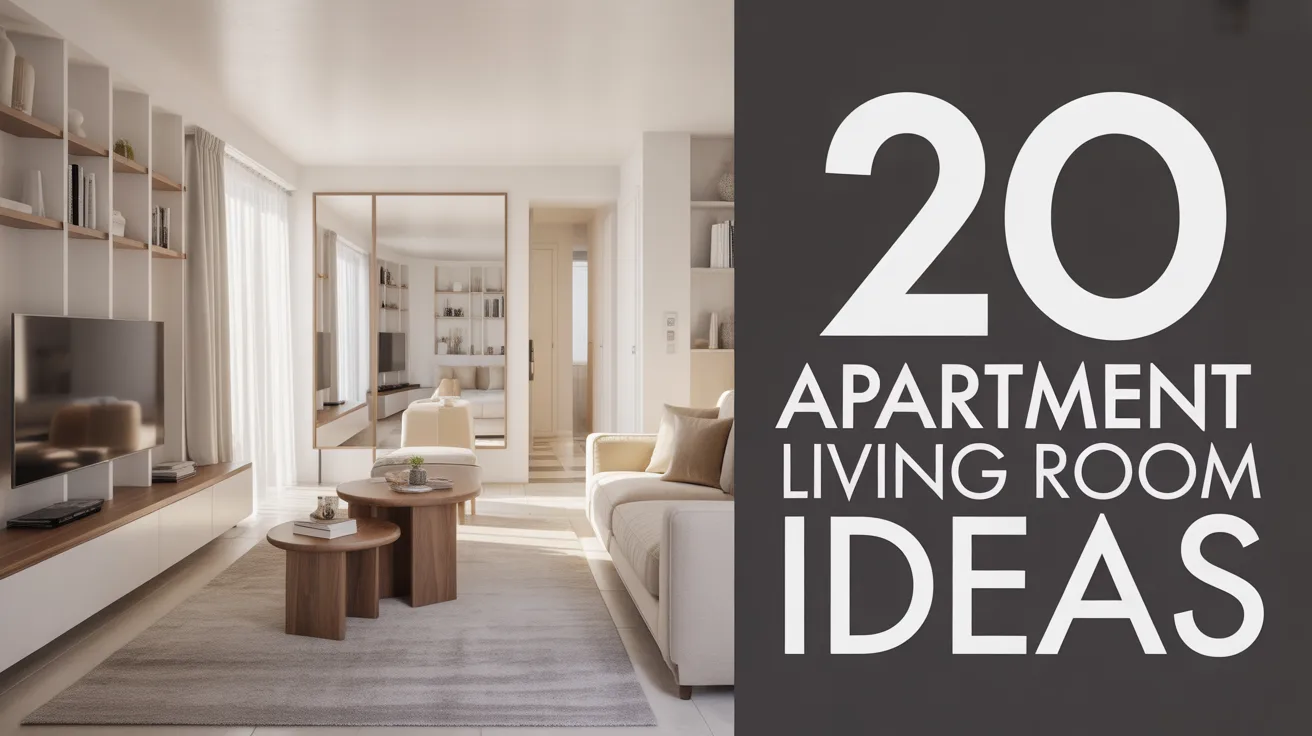
Scope note: This guide covers renter-friendly strategies for living rooms between 250–700 sq ft. It does NOT address open-plan condos, owned homes where structural changes are possible, or rooms that share a kitchen with no visual break.
Most small apartment living room guidance is useless for one specific reason: it never tells you what actually fits. You’re staring at a gorgeous Pinterest image of a floating sofa and a rattan coffee table, and zero mention of the room being 14 feet wide.
This guide gives you 20 specific, size-matched strategies, with real furniture dimensions, product names, and layout logic, so you can stop guessing and start making decisions that actually stick.
Apartment living room ideas for compact modern spaces refer to design and layout strategies that maximize function, visual openness, and style in living rooms typically under 600 sq ft. These approaches prioritize multi-use furniture, vertical space, and sightline management over traditional room-filling arrangements.
What Size Rules Should Govern Your Small Living Room?
Making a small living room feel larger starts with a counterintuitive measurement rule. Most designers recommend keeping your primary sofa under 84 inches wide if your room is 12 feet across or less; anything bigger visually seals off the space. The 18-inch approval rule also applies here: pathways between furniture should never drop below 18 inches, or the room feels like a maze, regardless of how minimal your decor is.
Quick Comparison, Furniture Approaches by Room Size
| Furniture Approach | Best For | Key Benefit | Limitation |
| Floating furniture layout | Rooms 10–14 ft wide | Creates depth + visual flow | Needs 18″ clear pathways |
| Corner sofa arrangement | Under 400 sq ft | Opens the center of the room | Limited guest seating |
| Wall-mounted media unit | Any size apartment | Reclaims floor space entirely | Requires stud-mounting |
| Compact sectional (modular) | 400–600 sq ft | Seats more, stores more | Must check exact dimensions |
| Multi-use ottoman + coffee table | Studios under 350 sq ft | Hidden storage + surface | Less stable for heavy loads |
Here they are, organized by the design principle they solve, not just aesthetic category.
Float your sofa, even slightly
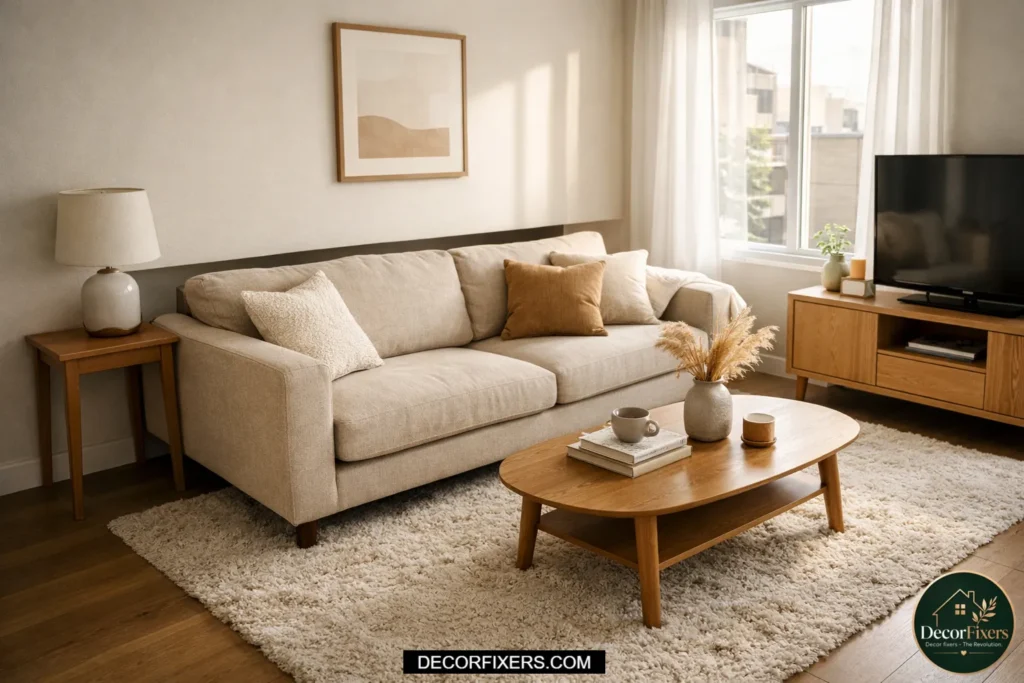
Pulling your sofa 6–10 inches from the wall creates visual depth without forfeiting square footage. Users who’ve tried wall-hugging furniture often report the room still feels smaller than expected, because everything outward actually flattens the space, not opens it.
Use your corner
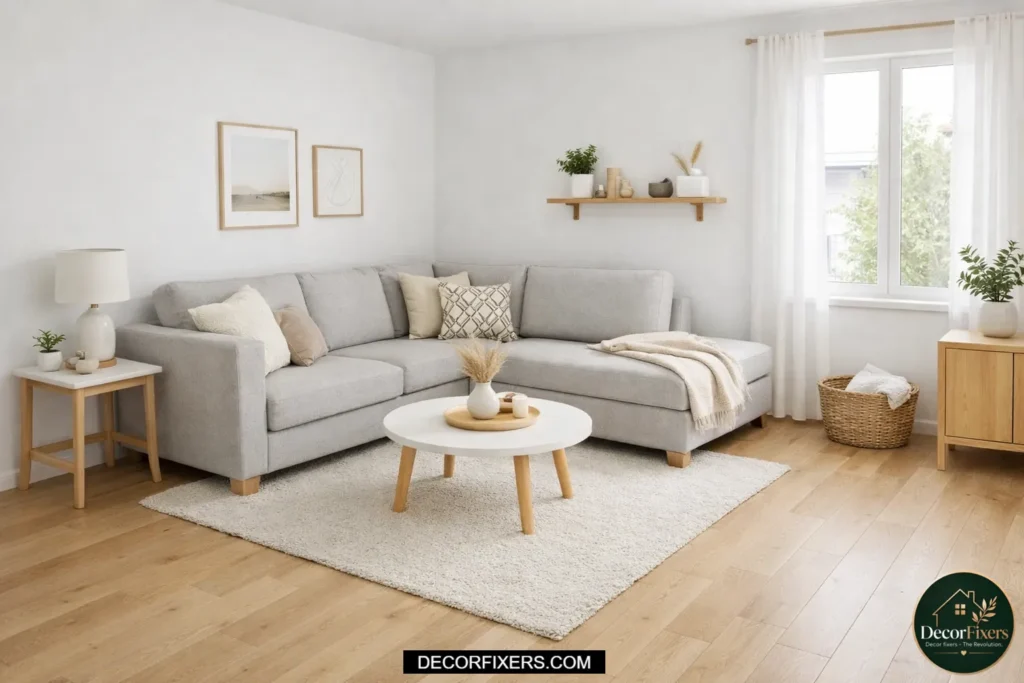
A small L-shaped or corner sofa designed for compact footprints, like Article’s Sven 2-piece sectional (79″ x 58″), fits neatly into corners while seating four people and leaving the center of the room open. It’s one of the highest-rated compact sofas on the market right now for exactly this use case.
Create zones with rugs, not walls
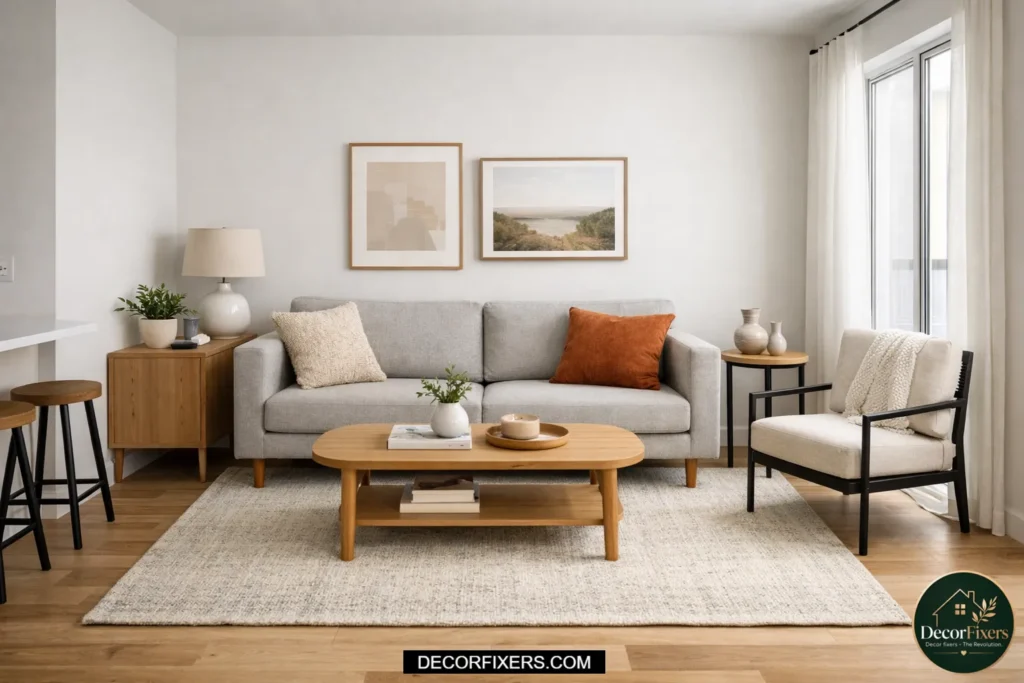
A 5×8 rug clearly defines a seating zone in a room under 400 sq ft; go up to 8×10 if your room is 500+ sq ft. The rug should sit under the front two legs of the sofa at a minimum, never float in the center with all fixtures around it.
Remove one piece of furniture entirely
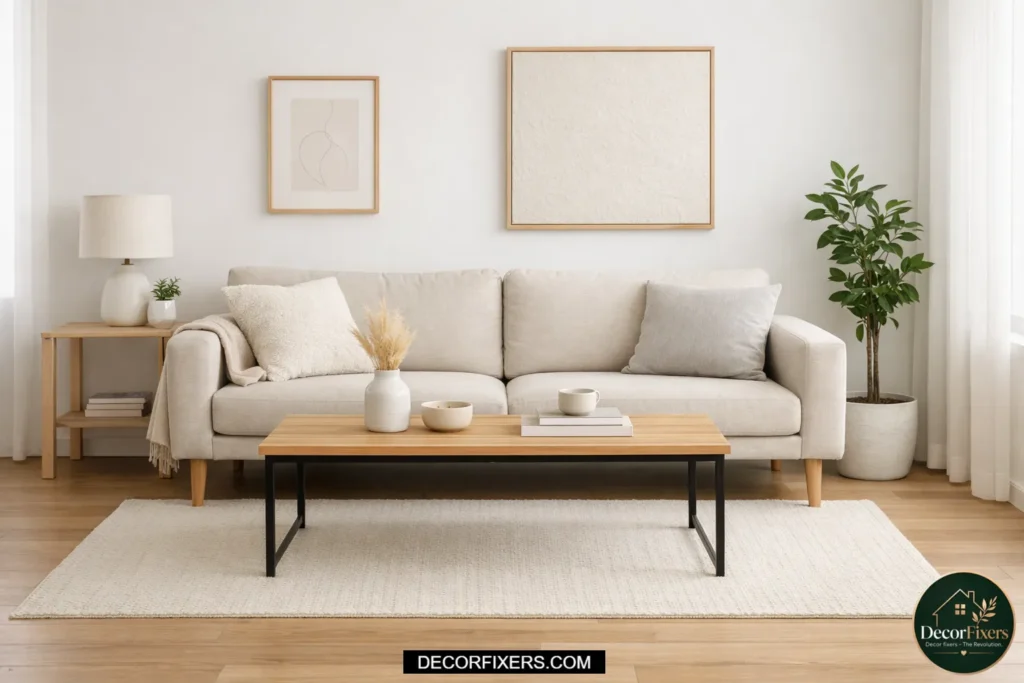
This is the hardest one to accept. But in rooms under 450 sq ft, a second accent chair often does more damage than good; it blocks sightlines, creates tight pavements, and adds visual weight without adding usable seating. Pull it. See what happens.
Use a loveseat instead of a full sofa
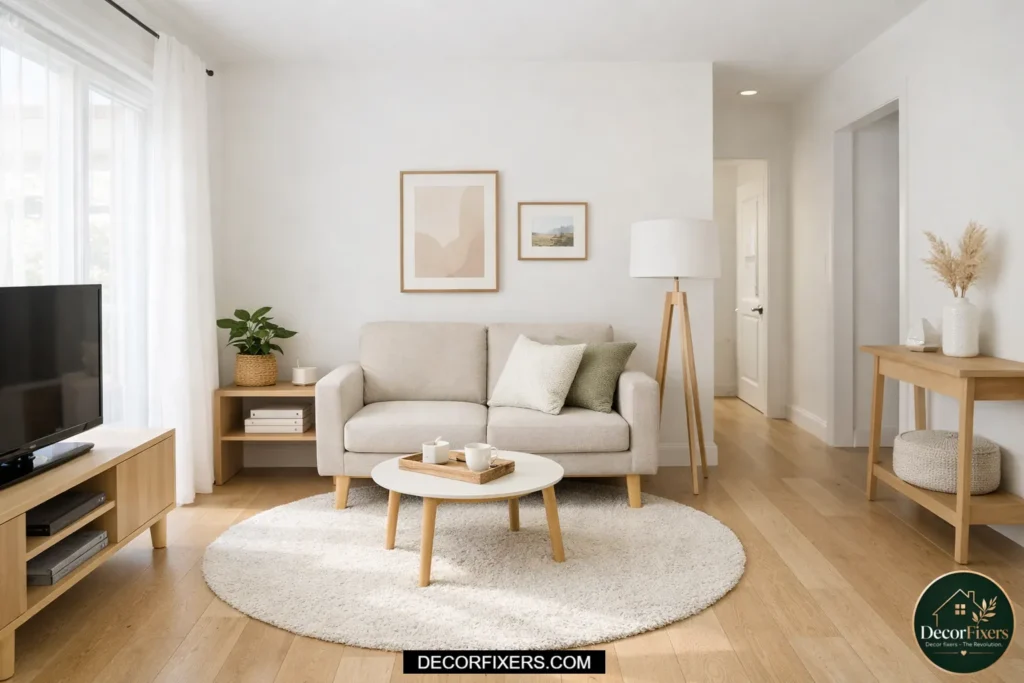
A standard 3-seat sofa runs 85–90 inches. A loveseat typically comes in at 52–60 inches. In rooms under 12 feet wide, that 30-inch difference changes everything about how the room feels and flows. You’re not declining, you’re right-sizing.
Angle your furniture deliberately
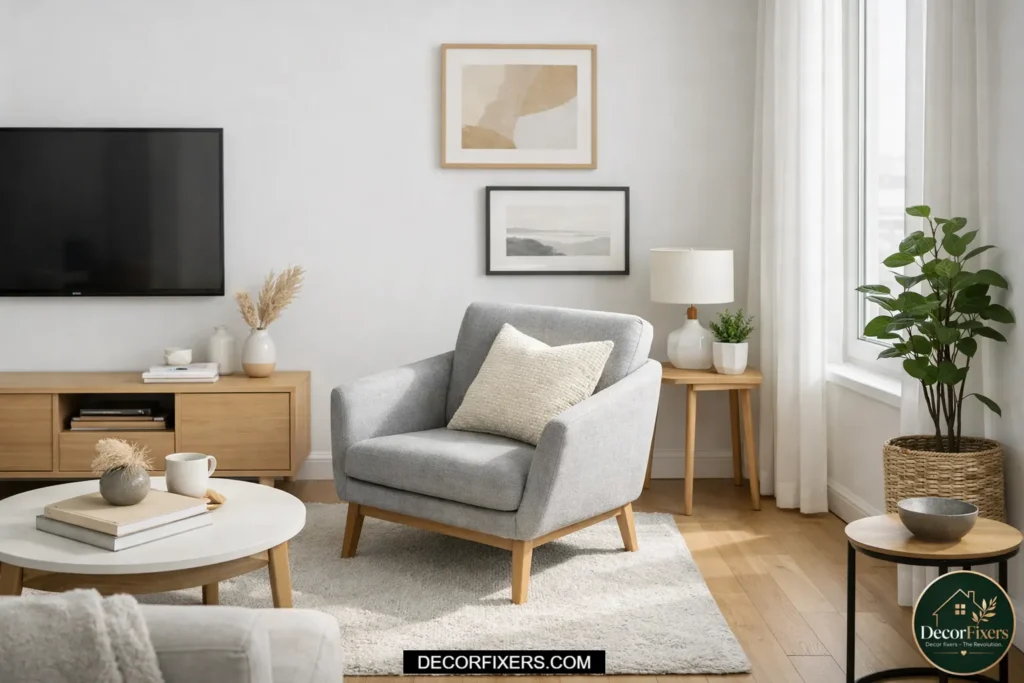
Placing a chair or small table at a 45-degree angle to the wall breaks the rigid grid of small-room furniture arrangement and makes the layout read as designed rather than defaulted to. Use sparingly, one angled piece per room.
KALLAX as a room anchor
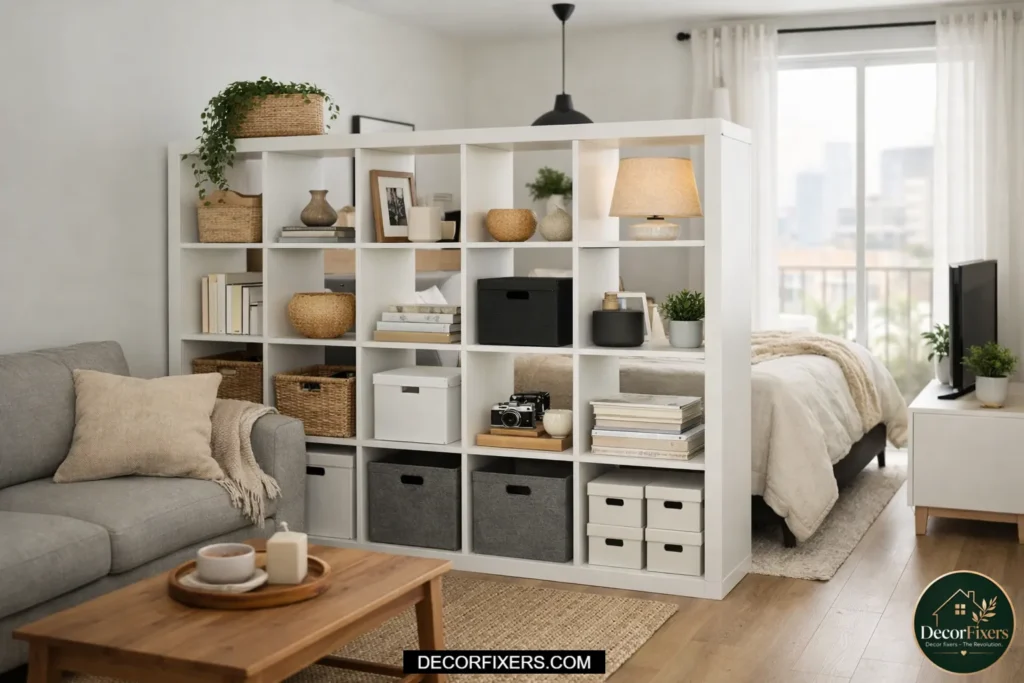
IKEA’s KALLAX shelving system (4×4 unit: 57″ x 57″) works as both a room divider and a media console in a compact living room. Pair it with cube storage inserts for unseen storage and open shelves for display. At under $200, it’s one of the highest value-per-square-inch storage investments available.
Go wall-mounted for media
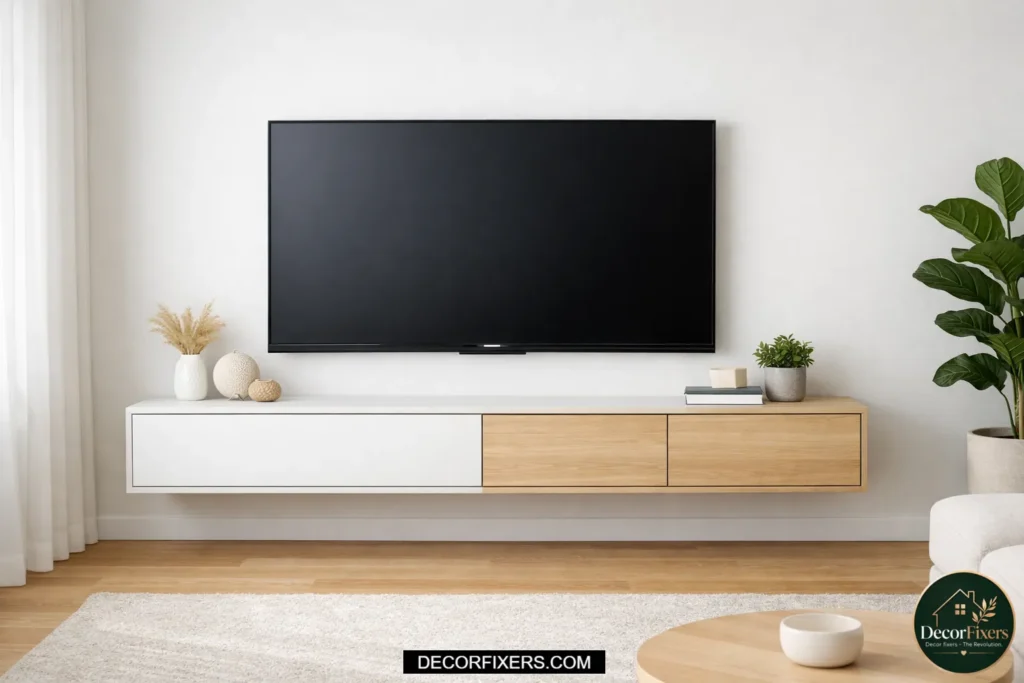
West Elm’s Anton Media Console is wall-mounted, extends only 15 inches from the wall, and eliminates the bulky entertainment center. The freed floor space, typically 4–6 sq ft, reads as significantly greater than it sounds in person.
Ottoman as a triple-duty piece
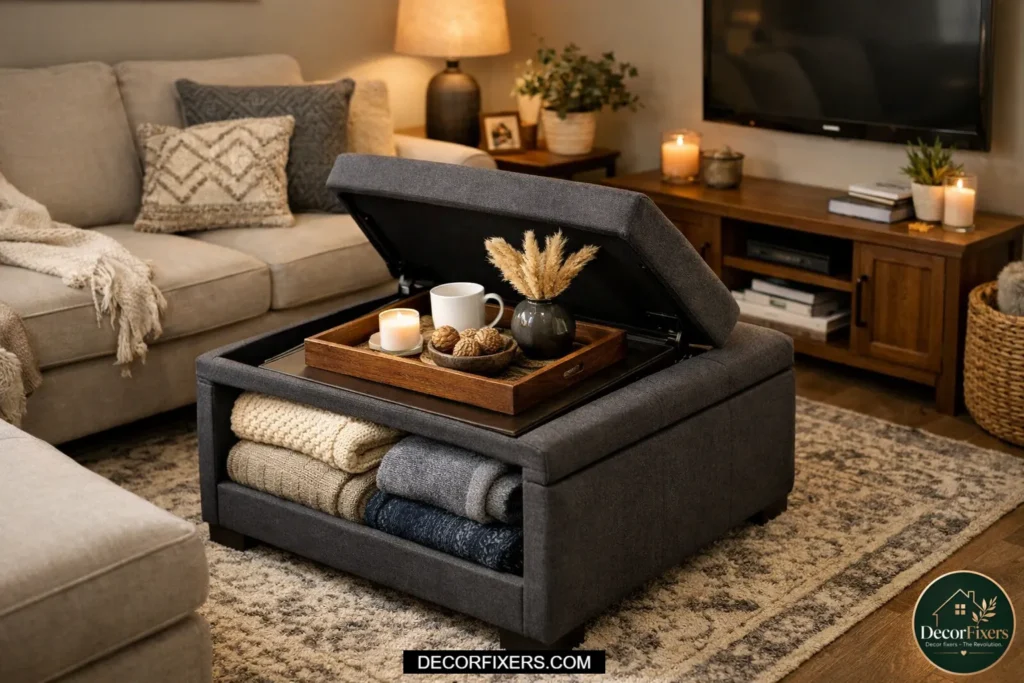
A storage ottoman that opens for blanket storage, functions as a coffee table with a tray, and doubles as extra seating hits three jobs in one footprint. Look for choices under 40 inches in diameter for rooms under 500 sq ft.
HEMNES daybed as a sofa substitute
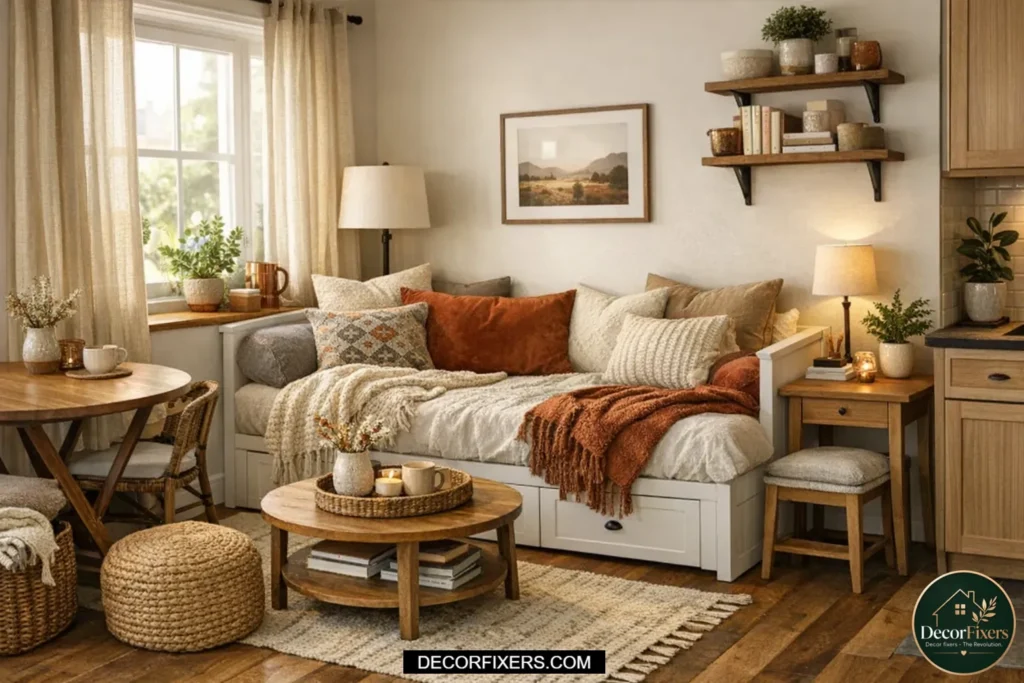
In studios where the living room is the bedroom, IKEA’s HEMNES daybed (with two pull-out drawers) functions as a sofa by day and a bed by night while storing bedding privately. Styled with throw pillows, it reads as intentional rather than makeshift.
Vertical storage above eye level
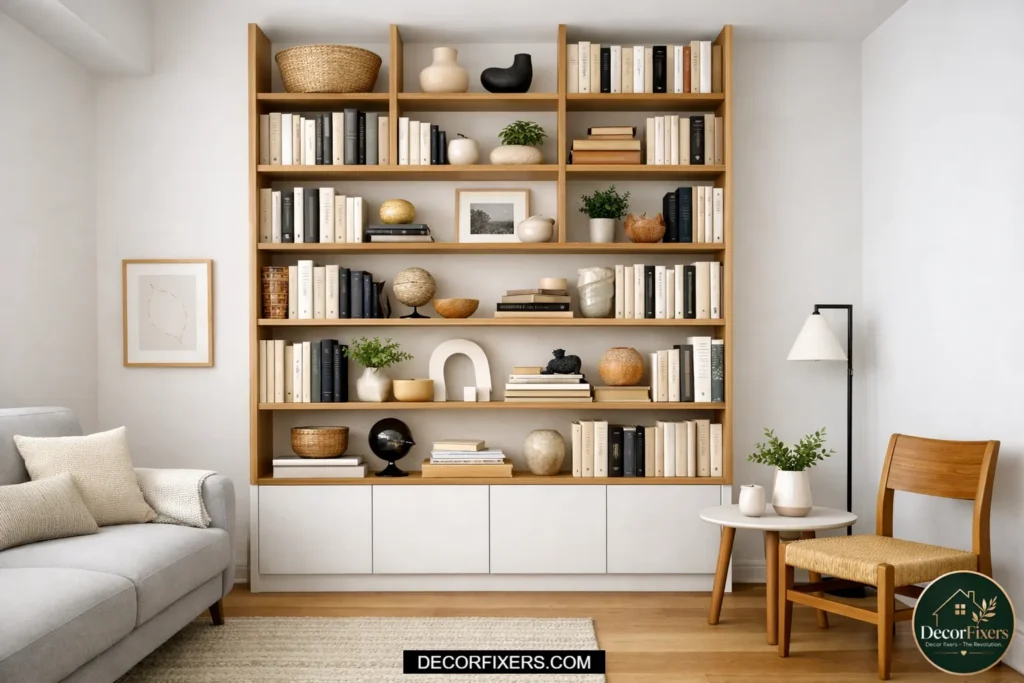
Most people stop shelving at 6 feet. In a compact apartment, shelving that runs to 8–9 feet draws the eye upward, which makes ceilings feel taller, and improves wall real estate that most renters leave empty.
Light walls are not optional below 400 sq ft
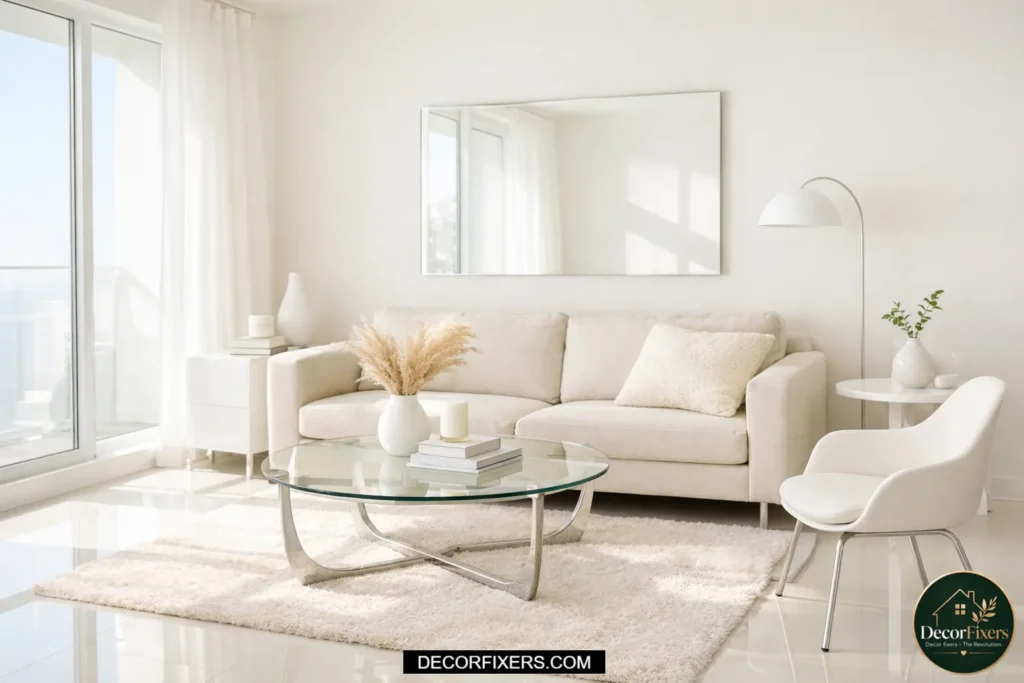
Some interior designers argue that dark accent walls add drama in small rooms. That’s valid, but only when your room gets strong natural light. If you’re working with a north-facing apartment or a single window, a dark wall will make a 350-sq-ft room feel like a box. Warm whites and soft creams reflect light and visually expand the space.
One strategic mirror, placed opposite your light source
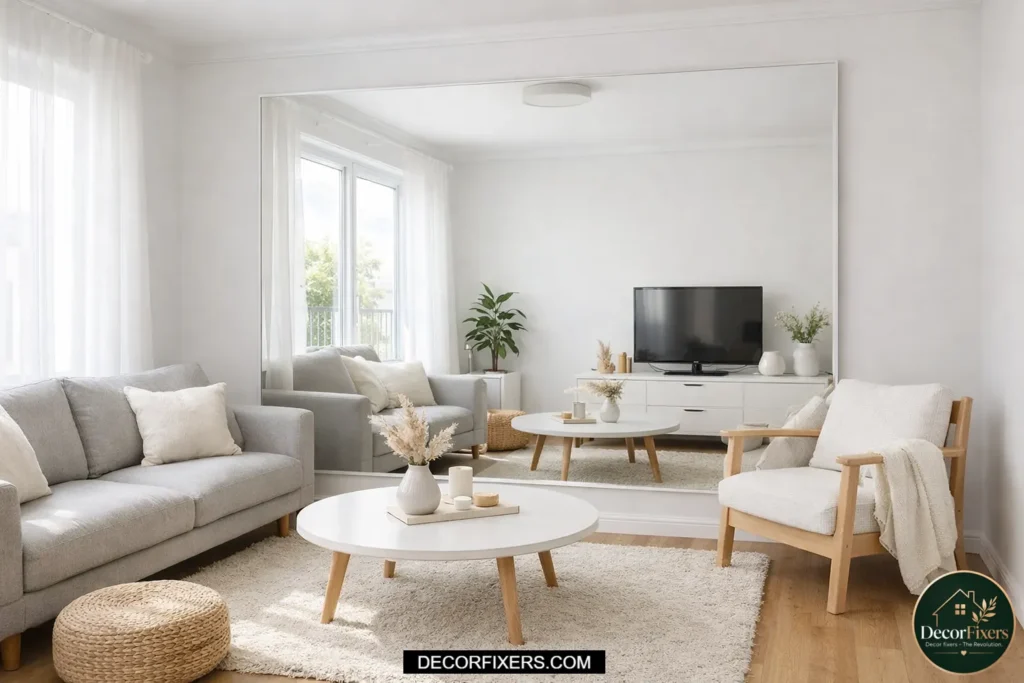
A single large mirror (at least 24″ x 36″) placed opposite your main window can effectively double the perceived depth of the room. Don’t place mirrors opposite clutter; they’ll just amplify it.
Eliminate overhead-only lighting
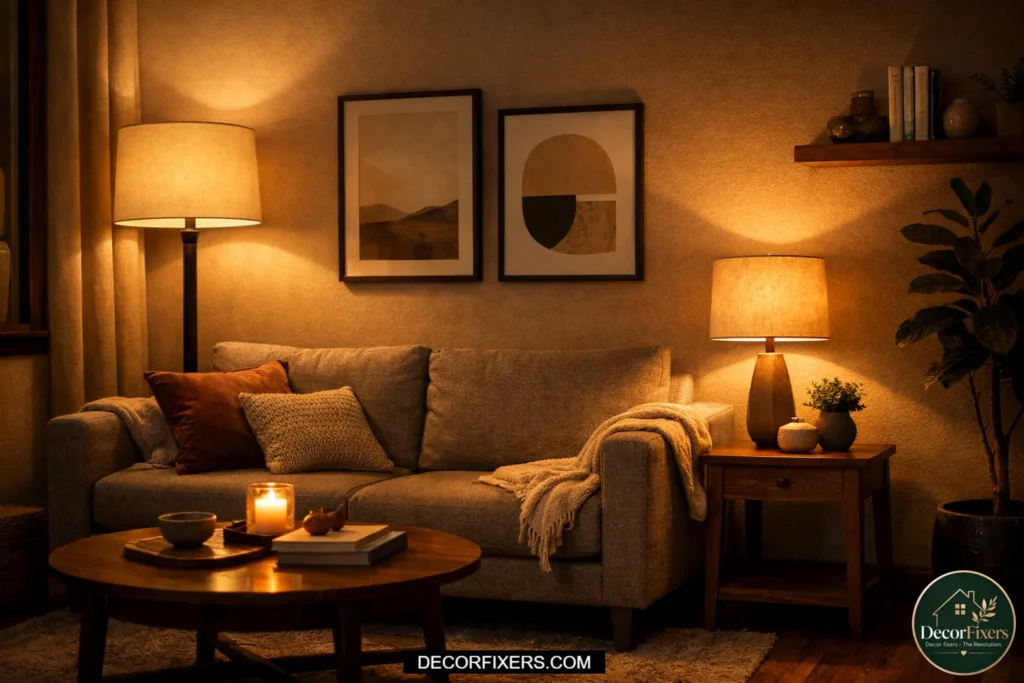
A single overhead light in a small room flattens everything and creates harsh shadows. Layering a floor lamp (behind or beside the sofa) with a table lamp on a side table or shelf creates depth and warmth that makes the room feel larger and more intentional.
Keep your color palette to three tones
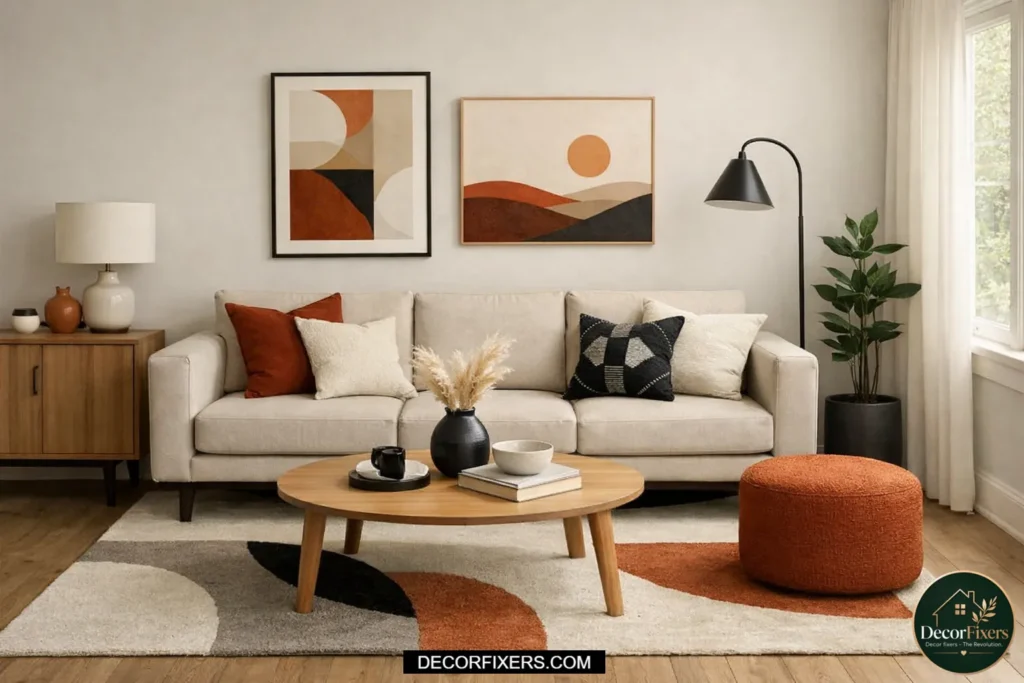
A 60-30-10 rule works well here: 60% dominant color (walls, large sofa), 30% secondary (rug, curtains), 10% accent (throw pillows, art). Breaking this in a small room creates visual chaos that reads as cramped rather than communicative.
Floor-to-ceiling curtains make the room taller
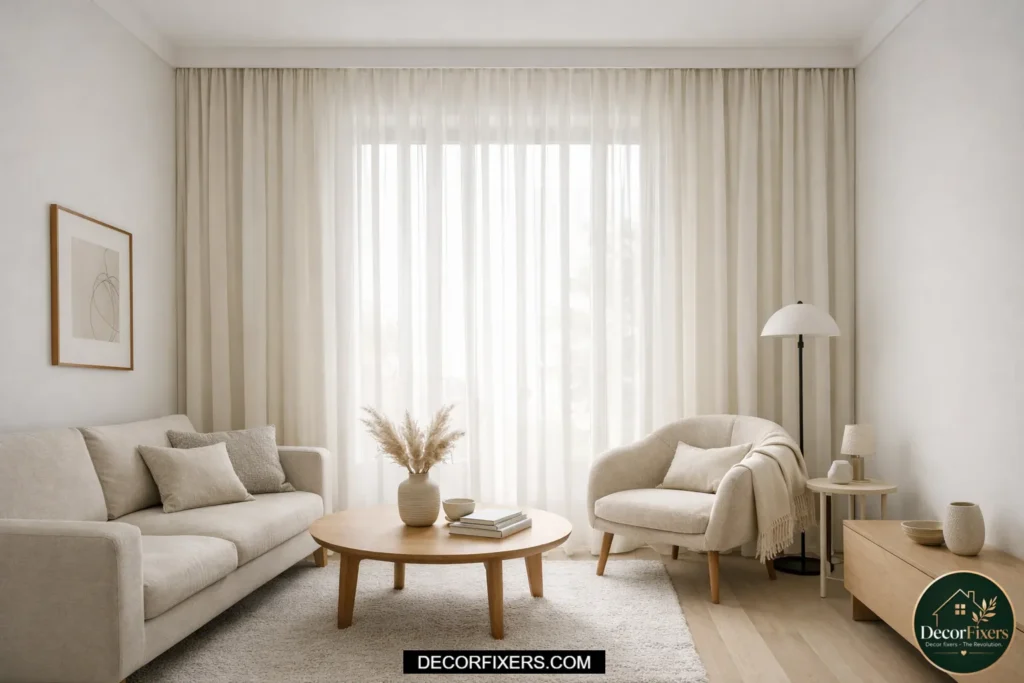
Mount curtain rods as close to the ceiling as possible, even if your window doesn’t extend that high. The eye follows the curtain line upward, which raises the seeming ceiling height by several inches.
Command strips are underrated for gallery walls
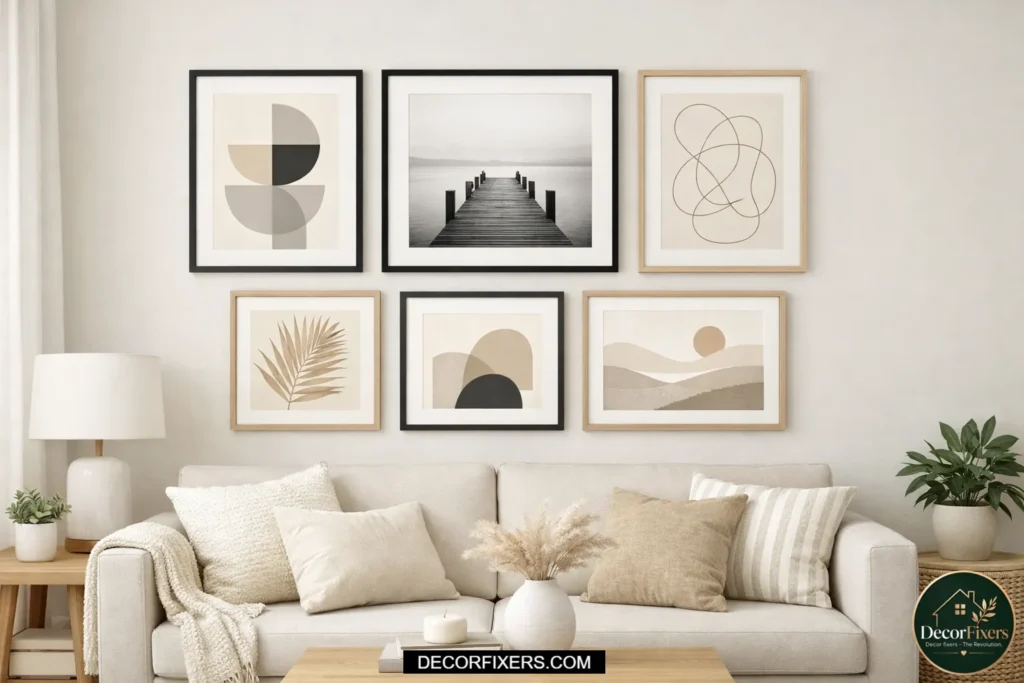
3M Command strips hold up to 16 lbs per strip with zero wall damage, enough for most framed prints. A gallery wall in a small living room adds character without taking up floor space, and strips out cleanly at move-out.
Furniture legs matter more than you think
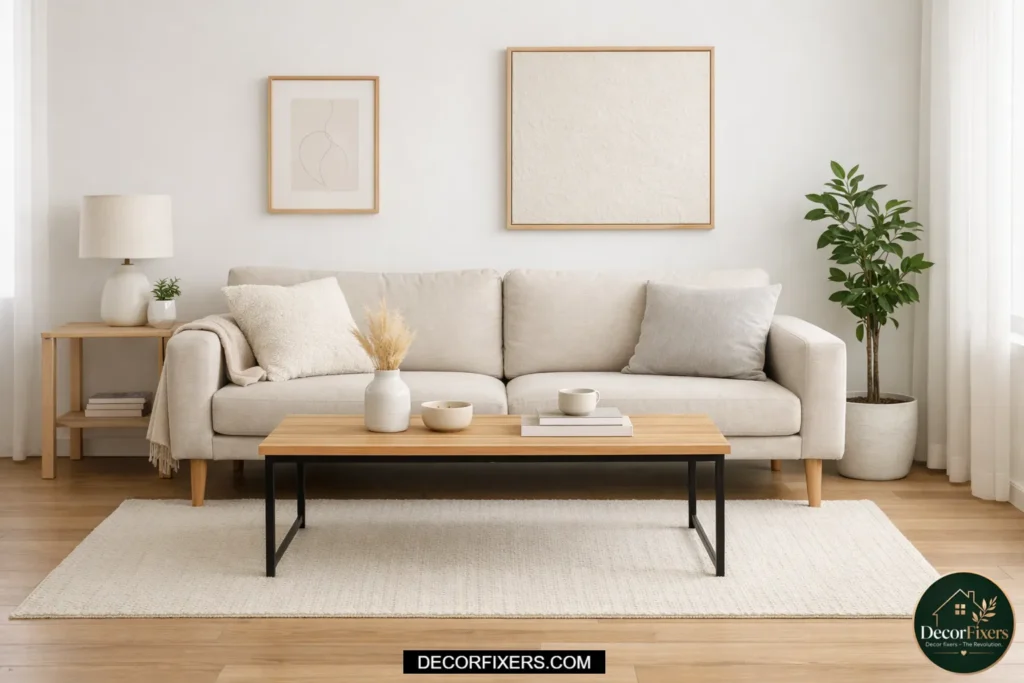
Sofas, coffee tables, and chairs with uncovered tapered or hairpin legs allow light to pass underneath the piece, which makes the floor feel more open and the furniture feel lighter. Low-profile, skirted furniture creates a heavy, grounded effect that shrinks small rooms.
Swap your coffee table for a nesting set
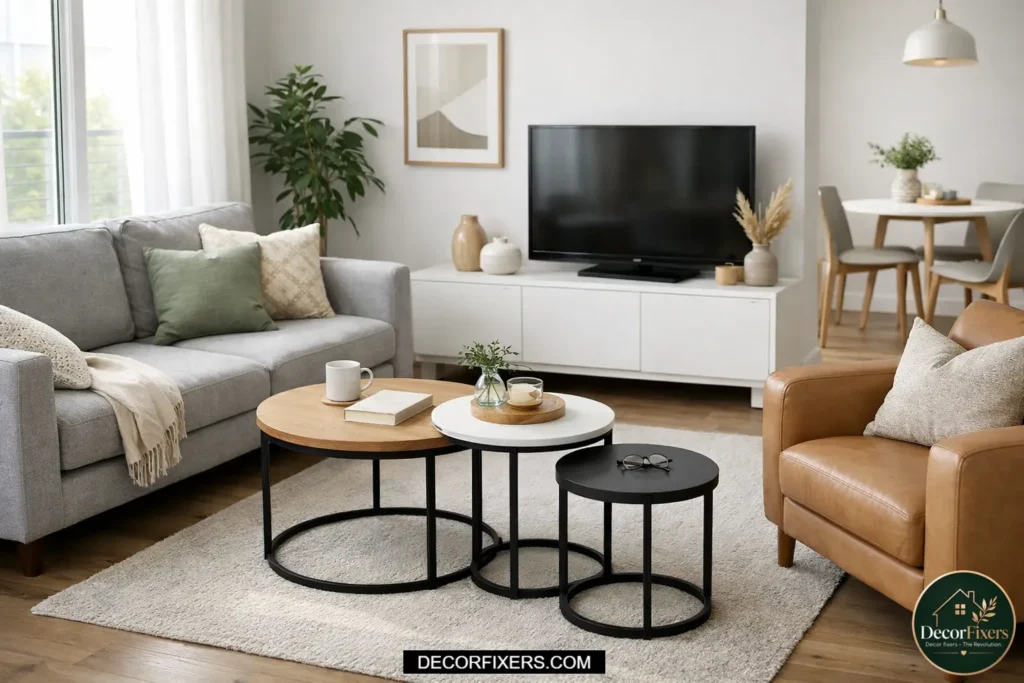
A pair of nesting tables takes up a third of the floor space of a standard coffee table, slides apart when you need two surfaces, and tucks together when you need the walking room. For rooms under 350 sq ft, this is almost always the cleverer move.
Or maybe I should say it this way.
Décor that earns its place
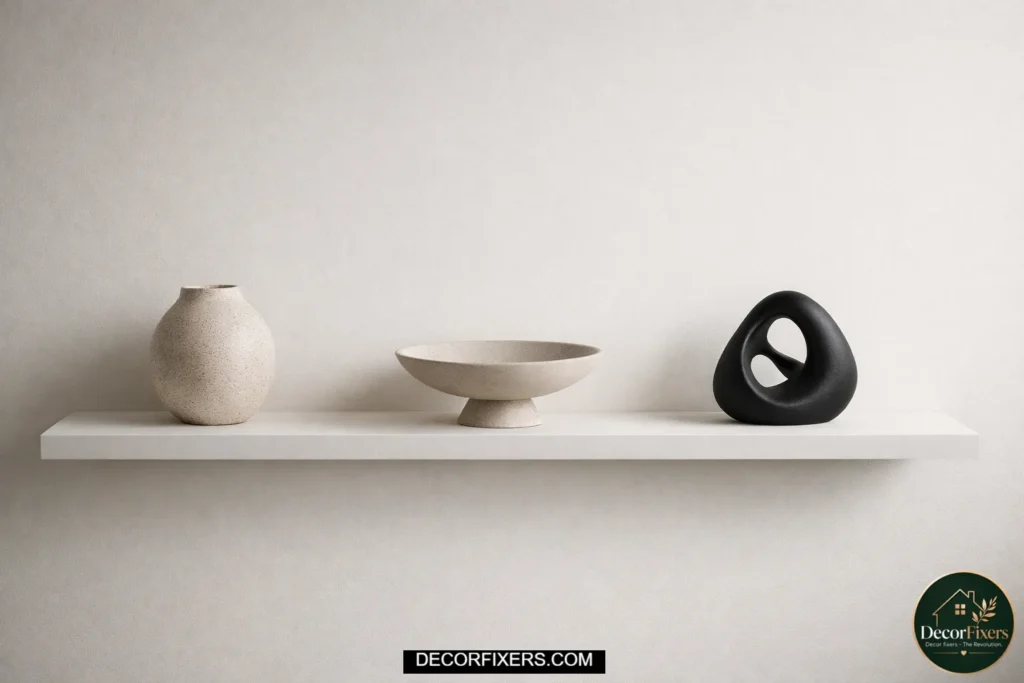
In small spaces, every decorative item competes for visual attention. A shelf with 12 random objects feels cluttered; a shelf with 3 intentional objects feels curated. The rule isn’t minimalism for minimalism’s sake; it’s that each item should have a visual resolve, not just exist.
READ MORE: 25 Living Room Wall Decor Ideas
How to Make a Compact Living Room Feel Bigger: Step-by-Step
How-To: To make a compact apartment living room feel bigger,
follow these steps:
1. Measure your room and sofa, keep sofas under 84″ wide for rooms under 12 ft across.
2. Float furniture 6–10 inches from walls to create visual depth.
3. Add a mirror opposite your primary light source.
4. Mount your TV or media unit to the wall to reclaim floor space.
5. Layer lighting with a floor lamp and table lamp, and remove overhead-only reliance.
6. Define zones with a correctly sized rug (5×8 for under 400 sq ft).
What Most Guides Get Wrong, And What’s Still Debated
I’ve seen conflicting advice on the sectional question; some designers say compact sectionals are always a mistake in rooms under 500 sq ft, while others (and most renter forums) say the right sectional is better than a sofa-plus-chairs combo at that size. My read: it depends entirely on the sofa’s footprint, not the category. A 79″ modular sectional can outperform a 90″ standard sofa in a small room. Measure both before you rule anything out.
Here’s the thing: what most guides skip is the cognitive load of visual clutter in small spaces. It’s not just about square footage; it’s about how many objects compete for your attention when you enter the room. A 400 sq ft living room with 6 pieces of intentional furniture can feel more spacious than a 600 sq ft room crammed with 14 pieces, even if the math says otherwise.
Look, if you’re in a lease where you can’t paint, can’t mount anything, and you’re working with under 350 sq ft, here’s what actually works: freestanding KALLAX, nesting tables, a correctly sized rug, and curtains hung from a tension rod near the ceiling. That combination alone will transform the room without touching a single wall.
CONCLUSION:
Most small living room advice fails because it focuses on aesthetics before limitations. This guide flipped that. You’re not designing for a catalog; you’re designing for a fixed width, limited clearance, and real daily movement. Once you accept that, better decisions get calmer.
A small apartment living room doesn’t need more furniture; it needs better choices. A correctly sized sofa, clear 18-inch pathways, and fewer but smarter pieces will outperform any “styled” setup that ignores scale. The difference between overcrowded and comfortable is rarely square footage; it’s layout discipline and visual control.
If there’s one readymade, it’s this: stop trying to fit ideas into your room and start fitting your room with intention. Measure first, remove what doesn’t earn its place, and prioritize functions that support how you actually live.
FAQs:
Q: What’s the best sofa size for a small apartment living room?
A: For rooms under 12 ft wide, keep your sofa under 84 inches. A loveseat (52–60″) works better in rooms under 400 sq ft. Article’s Sven compact sectional (79″ x 58″) is a strong option for slightly larger spaces.
Q: How do I make my apartment’s living room look bigger without renovating?
A: Float your sofa 6–10 inches from the wall, add one large mirror opposite your window, mount your TV, swap to furniture with exposed legs, and use a correctly sized area rug. No painting or drilling required.
Q: Should I use a sectional in a small apartment?
A: Yes, if it’s designed for compact spaces. A modular sectional under 80 inches (like Article’s Sven) can actually outperform a larger standard sofa. The key is to measure your clearance paths, keeping at least 18 inches between pieces.
Q: Why does my small living room still feel cramped after decorating?
A: Usually one of three culprits: furniture pushed flat against all walls (creates a racetrack effect), a rug that’s too small, or too many pieces competing visually. Remove one item and check the difference before buying anything new.
Q: When should I use vertical storage instead of floor storage?
A: Always in rooms under 500 sq ft. Floor storage consumes your walkable square footage. Vertical shelving, from 6 feet to ceiling height, uses dead wall space, draws the eye up, and keeps your floor visually open.

Creator of DecorFixers, sharing practical home and interior ideas focused on real-life usability, simple design improvements, and budget-friendly solutions.
6 thoughts on “20 Apartment Living Room Ideas That Actually Work in Small Modern Spaces”