

Struggling with a compact living room that feels confined and chaotic? You’re in good company. Millions of homeowners and renters face the same challenge every day. The good news is that small living room design is less about square footage and far more about plan. These 22 ideas are tried, tested, and interior-designer-approved. I will help you reclaim your space, boost comfort, and create a room that honestly feels like home.
Maximize Vertical Space with Floating Shelves in Your Small Living Room
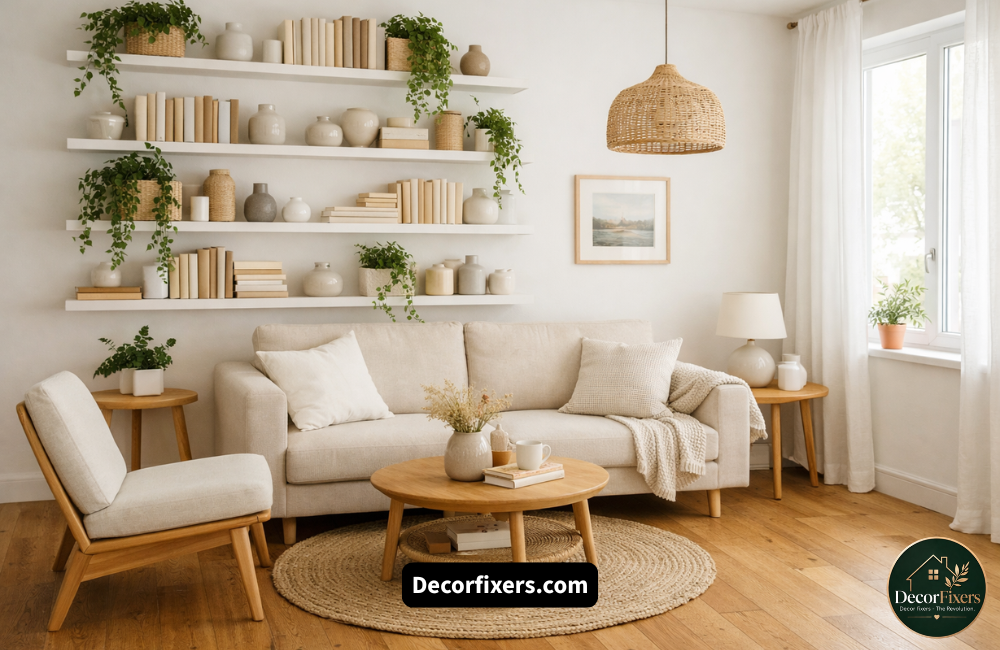
Most people stare at the floor when they feel a room is too small. But small living room design move can you make? Lookup. Wall space is free, ample, and wildly underused. Connecting floating shelves or a tall, slim bookcase draws the eye upward along the vertical axis, which tricks your brain into observing the room as taller and more expansive than it really is.
Interior designers consistently recommend this approach for apartments and compact homes. Choose shelves in a finish that matches or closely complements your wall color; this creates a seamless visual flow rather than a heavy, cluttered look. Style them with a thoughtful mix of books, trailing houseplants, small ceramic ware, and one or two framed prints. Leave intentional gaps between items. Negative space on a shelf signals calm, curated confidence, not an incomplete job.
Why a Neutral Color Palette Makes Your Small Living Room Look Bigger
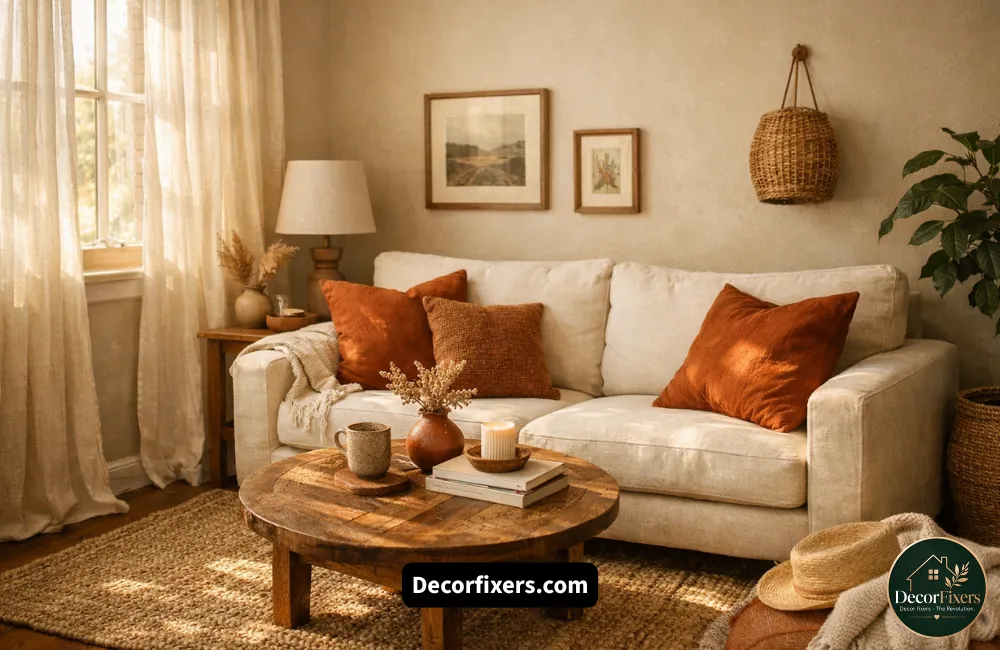
Color is one of the most powerful emotional tools in interior design, and in a compact room, it works overtime. Neutral paint colors like warm white, soft greige, pale taupe, or dusty sage reflect both natural and artificial light across every surface. The result? Walls visually recede, the ceiling feels higher, and the whole room breathes more easily.
This isn’t about playing it safe. A well-executed neutral palette is genuinely sophisticated. Paint your ceiling the same tone as your walls, and the room loses its visual “lid,” creating a continuous, airy envelope. Then layer in personality through textile color, a terracotta cushion, a sage throw, and a rust-toned rug. These pops of color read as intentional accents rather than design noise. You get character without visual weight. That balance is the secret to a stylish small living room that always photographs well and feels wonderful to live in.
Best Multifunctional Furniture Ideas for Small Living Rooms
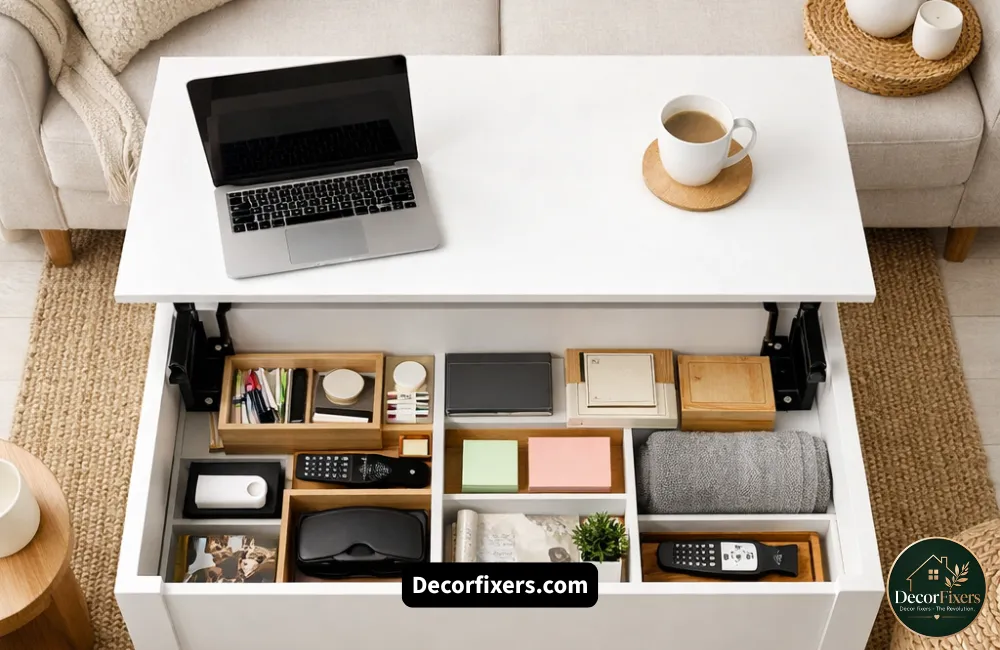
In a tight living room, furniture that does one job is a luxury you cannot afford. Multifunctional furniture is the cornerstone of every well-designed compact space. Think of it this way: if a piece can’t pull double or triple duty, it probably doesn’t belong in the room.
A lift-top coffee table stores blankets inside and transforms into a working desk. An upholstered storage ottoman replaces a separate coffee table, footrest, and blanket box simultaneously. A sofa bed turns your living room into a fully functioning guest room without a dedicated spare bedroom. These aren’t compromise pieces; today’s space-saving furniture market offers genuinely stylish, well-made options at every price point. Seek out pieces with concealed compartments, built-in charging ports, and modular configurations. The furniture should adapt to your life, not the other way around.
- Lift-top coffee table with interior storage
- Ottoman that doubles as seating and a side table
- Sofa bed for overnight guests
- Nesting tables that tuck away completely
- Bench with a hidden compartment at the room entry
How to Use Mirrors Strategically to Open Up a Compact Living Space
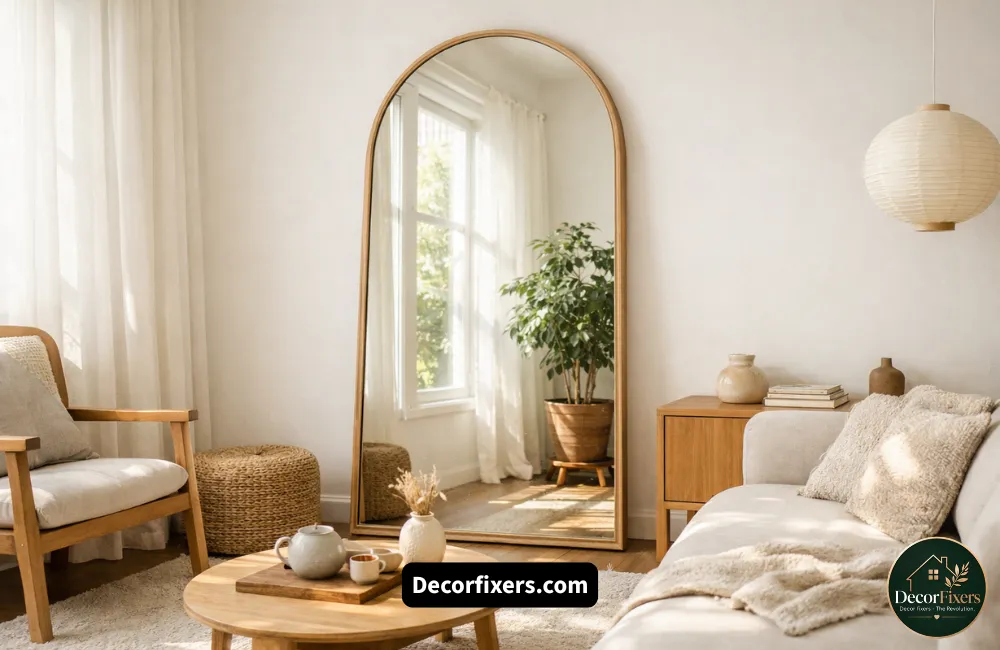
Mirrors are the closest thing interior design has to genuine magic. Place a large mirror directly opposite your main window and watch what happens: natural light bounces back across the whole room, brightness doubles, and the space suddenly feels twice as deep. This is basic physics applied beautifully to small living room decor.
Go bold with mirror sizing. A floor leaning oversized mirror in a simple frame costs far less than a renovation and delivers a comparable visual impact. Alternatively, group a cluster of smaller decorative mirrors at varying heights on one wall for an eclectic, gallery-like effect. Mirrored furniture, a side table, a console, or a cabinet front, multiplies the effect without feeling excessive. The key rule: never place a mirror where it reflects clutter. It should reflect light, greenery, or an attractive part of the room. What the mirror sees is what the room becomes.
Choose the Right Sofa for a Small Living Room: Size, Style, and Shape
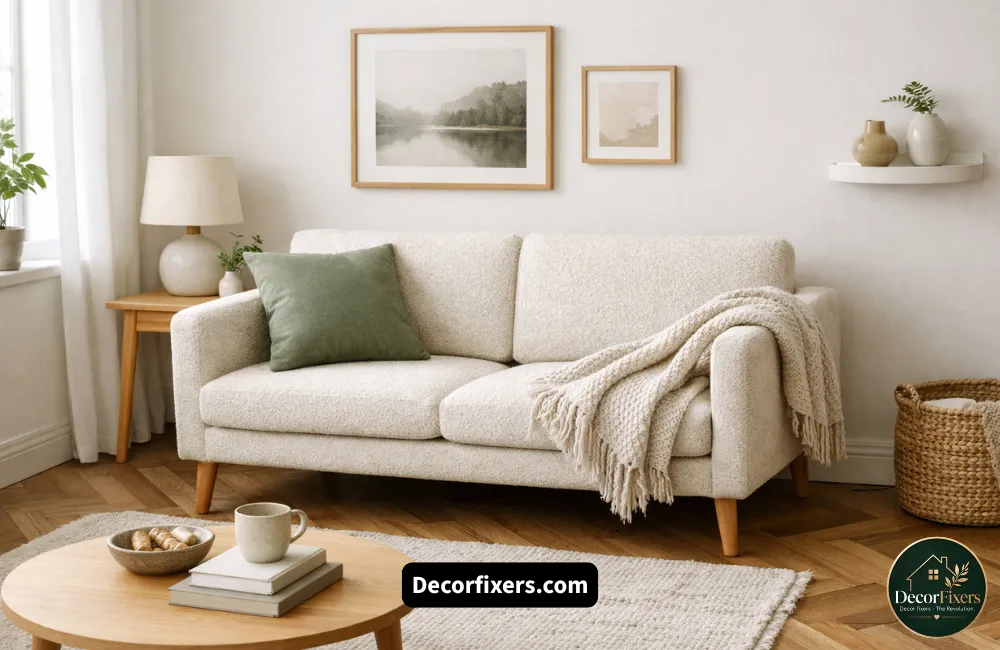
Your sofa is the anchor of your living room. Choose poorly and the whole room suffers. In a compact space, a chunky, high-backed sectional is the design equivalent of parking a truck in a studio apartment, technically possible, practically miserable. Instead, look for a low-profile sofa with slender arms, clean lines, and legs that lift it off the floor.
Those legs matter more than you might expect. A sofa with exposed legs allows light to travel underneath, visually lightening the piece and making the room feel less dense. Choose upholstery in a light neutral, oatmeal, ivory, pale sage, or dusty blue to keep the visual weight low. Two-seater and apartment-sized sofas are specifically designed for smaller footprints without sacrificing comfort. Measure your room carefully before buying: the sofa should leave at least 18 inches of clearance on either side and in front for comfortable movement. A well-designed sofa for a small living room makes the space feel considered, not constrained.
Area Rugs That Define Zones and Make Small Living Rooms Feel Larger
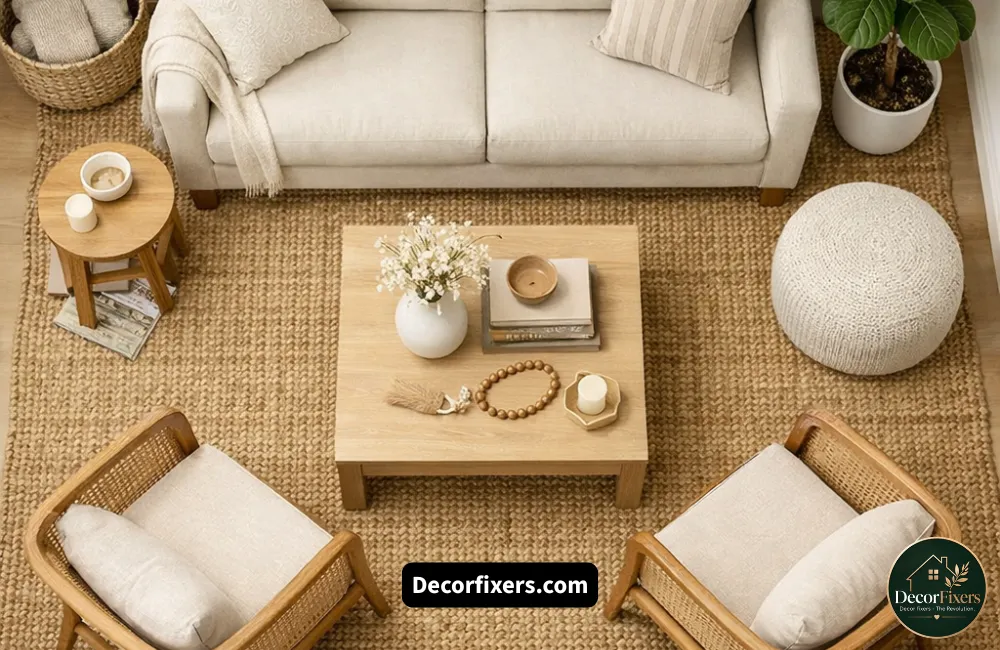
A rug does something a piece of furniture never can: it defines territory without adding visual bulk. In a small living room layout, an area rug creates an invisible boundary that says: ” This is the seating zone. That definition makes the room feel organized, purposeful, and, crucially, larger, because your eye now reads distinct areas rather than one undifferentiated space.
The most common mistake? Going too small. A rug that floats in the middle of a seating arrangement with furniture legs hanging off it looks awkward and actually shrinks the perceived room size. Go larger. Ideally, the front legs of your sofa and armchairs should all rest on the rug. This anchors the arrangement and unifies it visually. For multi-use compressed rooms, try layering a large flat-weave base rug with a smaller, textured rug on top, which adds depth and warmth without adding furniture. Natural fiber rugs like jute and sisal work especially well in small rooms because their texture reads as organic rather than heavy.
Open Shelving vs Closed Cabinets: What Works Best in a Small Living Room
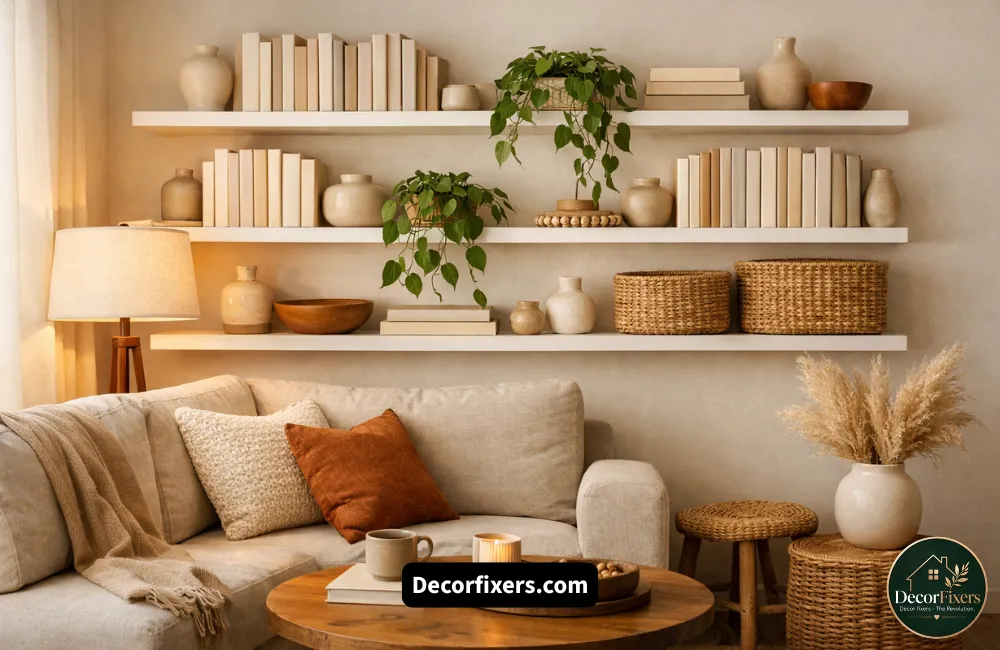
Closed cabinetry, while tidy on paper, can feel visually oppressive in a tight room. Solid doors create walls within walls; they interrupt sightlines and make the room feel compartmentalized and smaller. Open shelving, by contrast, keeps your eye moving freely across the space, which reads as openness even when the room is genuinely compact.
The trade-off is curation. Open shelves require intentional styling; what’s on display is what defines the room’s personality. Group books spine-out in tonal arrangements. Limit decorative objects to odd-number groupings of three or five. Include at least one plant per shelf unit. The result looks curated and calm rather than cluttered. If you’re truly committed to open shelving but worry about mess, use matching baskets or boxes on lower shelves for concealed storage within an open framework. You get the best of both worlds: visual lightness up top, hidden practicality below. That combination is ideal for small living room storage.
Smart Hidden Storage Solutions That Keep Small Living Rooms Clutter-Free
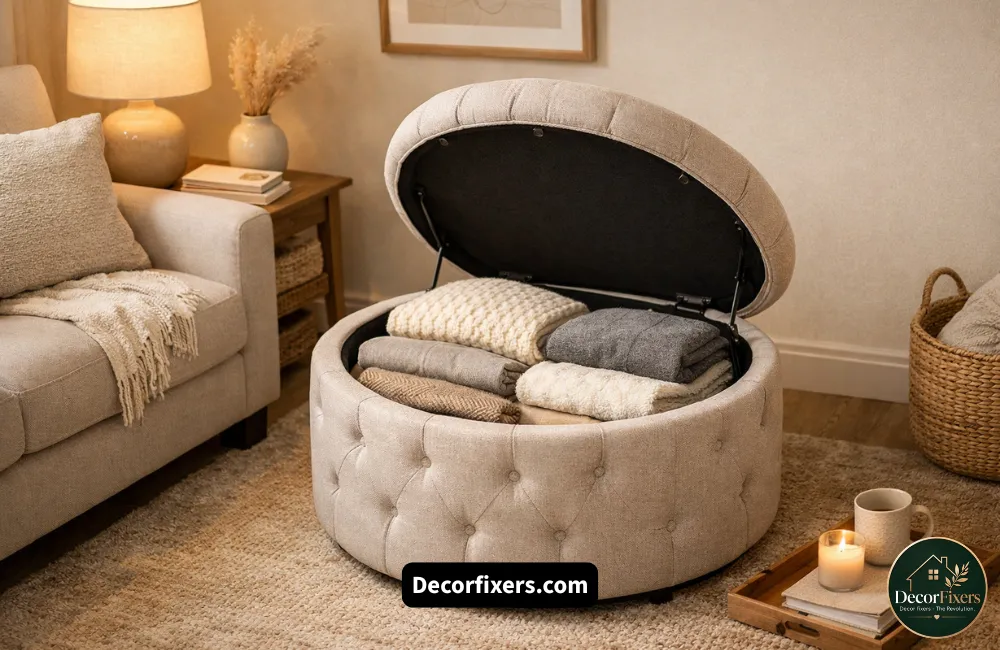
Clutter is the number one enemy of a small living room. And clutter doesn’t just look bad, it actively makes rooms feel smaller by giving the eye too many places to land. The solution isn’t less stuff. It’s smarter storage. Hidden storage solutions let you own what you need without displaying what you don’t.
Start with your largest surfaces. A coffee table with a lift-top compartment can swallow remote controls, magazines, chargers, and small blankets, everything that normally ends up scattered across the room. Storage ottomans are equally powerful: they serve as footrests, extra seating, and fully concealed storage simultaneously. Wall-mounted cabinets installed above eye level keep the floor zone clear and move storage into the upper portion of the room, where it has less visual impact. Even the space beneath your sofa is fair game, slim rolling drawers designed for under-bed storage work perfectly under deep-frame sofas. Clear floors, clear surfaces, clear mind. That is the mantra of a small space living room done well.
Built-In Furniture Ideas That Transform Every Inch of a Small Living Room
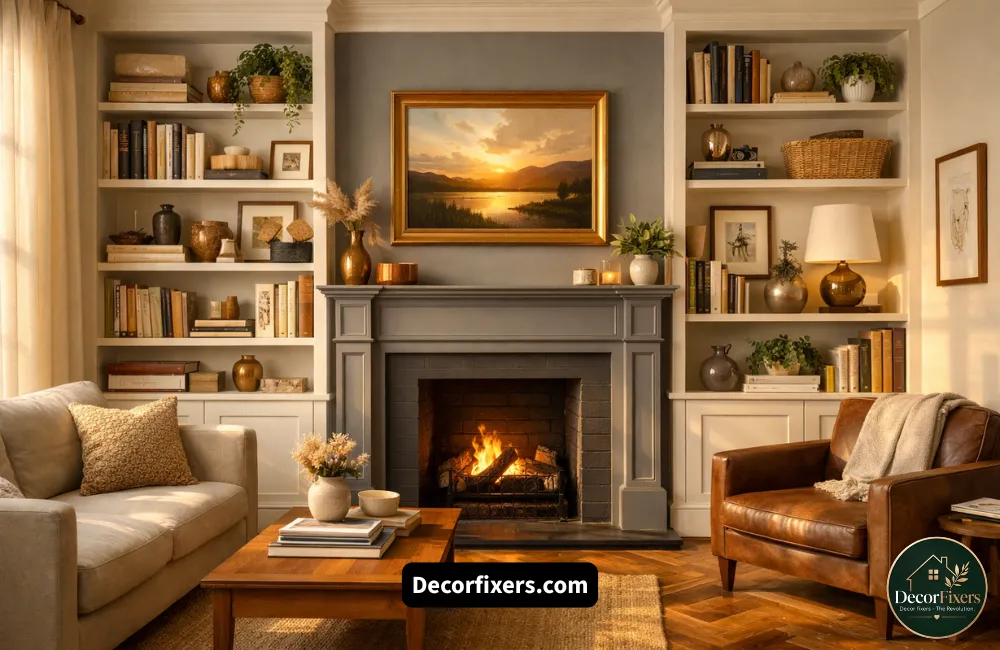
Off-the-shelf furniture is designed for average rooms. Your room is specific, it has its own quirky dimensions, odd alcoves, and awkward corners. Built-in furniture is designed for your room, and that specificity is where its power lies. A built-in unit wastes nothing: no gaps beside the radiator, no furniture that’s two centimeters too wide, no shelf that doesn’t quite reach the ceiling.
A popular and highly effective approach is flanking a chimney breast or TV wall with floor-to-ceiling built-in shelving on both sides. This uses the most awkward corners of a living room, the recesses beside a chimney breast, and turns them into the most useful. Built-in window seats with deep storage drawers below are another excellent investment: they transform a bay window into a beloved reading perch while hiding seasonal items, board games, or spare linens underneath. Yes, built-ins cost more upfront than freestanding alternatives. But they add measurable property value, eliminate the storage problem permanently, and make a small room look genuinely bespoke.
Lightweight and Modular Furniture That Adapts to Any Small Living Room Layout
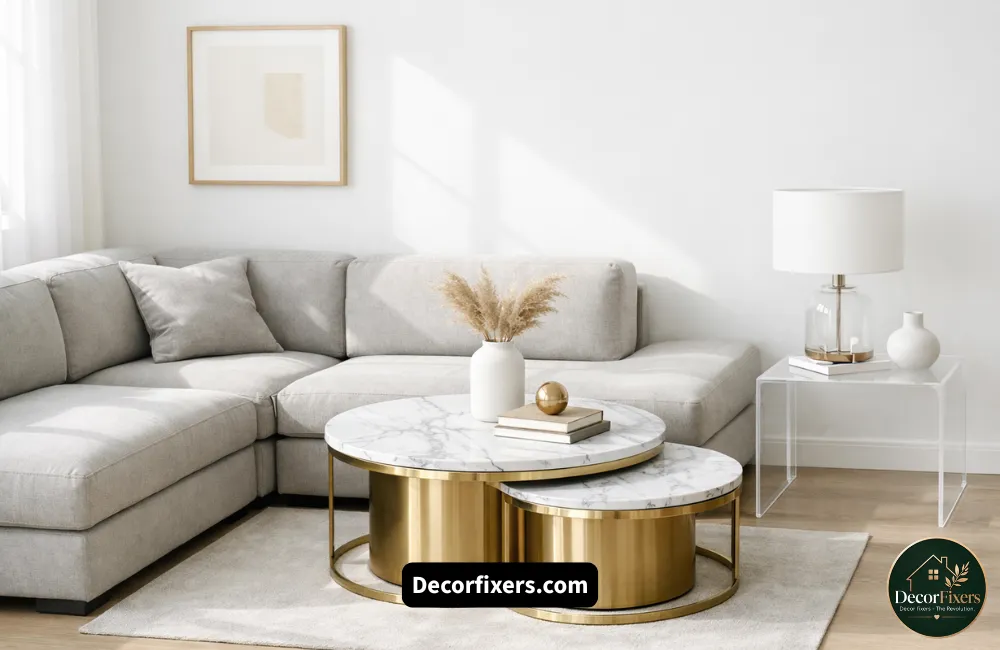
Life in a compact home requires furniture that keeps up. Some evenings call for a dinner party configuration. Other mornings demand a clear floor for yoga. Weekends might mean a movie setup with extra seating for guests. Modular furniture handles all of this without requiring a new room or a new sofa.
Nesting tables are one of the smartest investments you can make in a small living room. They stack neatly beside a sofa when not needed and fan out in seconds to provide multiple surface levels for entertaining. Foldable dining chairs hang on wall hooks or tuck into a cupboard between uses. Acrylic side tables are practically invisible; they provide the function of a side table without adding visual bulk. Modular sofa configurations can be rearranged seasonally or reconfigured entirely when you move. Lightweight furniture is also easier to clean around and beneath, which keeps the room looking fresher with far less effort. Adaptability, in a small living room, is worth more than almost any fixed design feature.
Vertical Gardens: The Surprisingly Effective Way to Refresh a Small Living Room
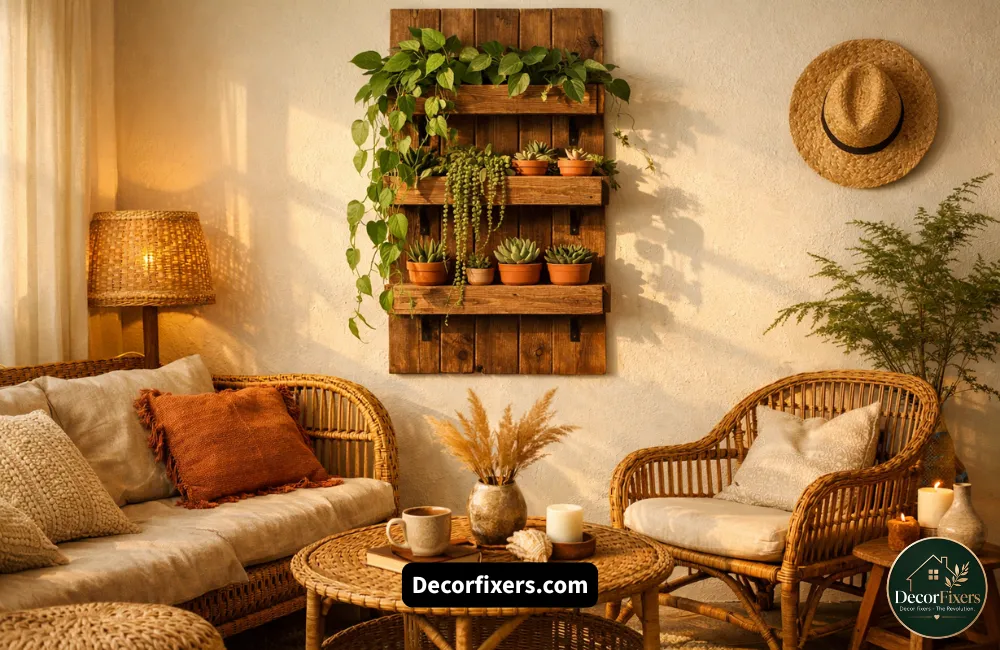
Floor plants are wonderful, but in a small living room, every inch of floor counts. A large fiddle-leaf fig or a cluster of potted plants can quickly dominate a compact space, making it feel like a jungle rather than a living room. The solution is elegantly simple: grow upward instead of outward. Vertical garden installations, wall-mounted planters, and climbing plant systems use your wall surface, which costs you nothing in floor area, to bring nature into the room in an impactful, space-conscious way.
Wall-mounted pocket planters work beautifully with trailing species like pothos, string-of-pearls, or devil’s ivy. These low-maintenance varieties cascade downward from wall hooks, creating a living curtain of greenery that adds texture, movement, and genuine visual softness. Beyond aesthetics, indoor plants measurably improve air quality by filtering common household pollutants. A vertical garden also functions as a natural acoustic absorber, useful in hard-surfaced urban apartments where sound tends to bounce. It’s the rare design choice that looks beautiful, benefits your health, and costs almost nothing to maintain.
Folding Tables and Flexible Surfaces That Work Hard in Compact Living Rooms
A folding table is one of those additions that sounds utilitarian but quietly transforms daily life in a small home. When it’s open, it’s a dining table, a work desk, a crafting surface, or a games table. When it’s closed, it’s essentially invisible, folded flat against the wall or stored in a slim cupboard. That flexibility is extraordinarily valuable in a room that must serve multiple purposes throughout the day.
Wall-mounted fold-down tables are the gold standard of small living room furniture for multi-use rooms. They install directly onto the wall at your preferred working height and fold completely flat when not in use. Pair one with two or three stackable stools stored beneath it, and you have a complete dining or workspace that appears only when needed. For less permanent solutions, a quality folding table in wood or bamboo can move between rooms, serve as overflow counter space during dinner parties, or function as a temporary home office when remote-working demands it. Every surface in a small room should earn its keep. A good folding table earns its daily.
How to Set Up a Compact Entertainment Center in a Small Living Room
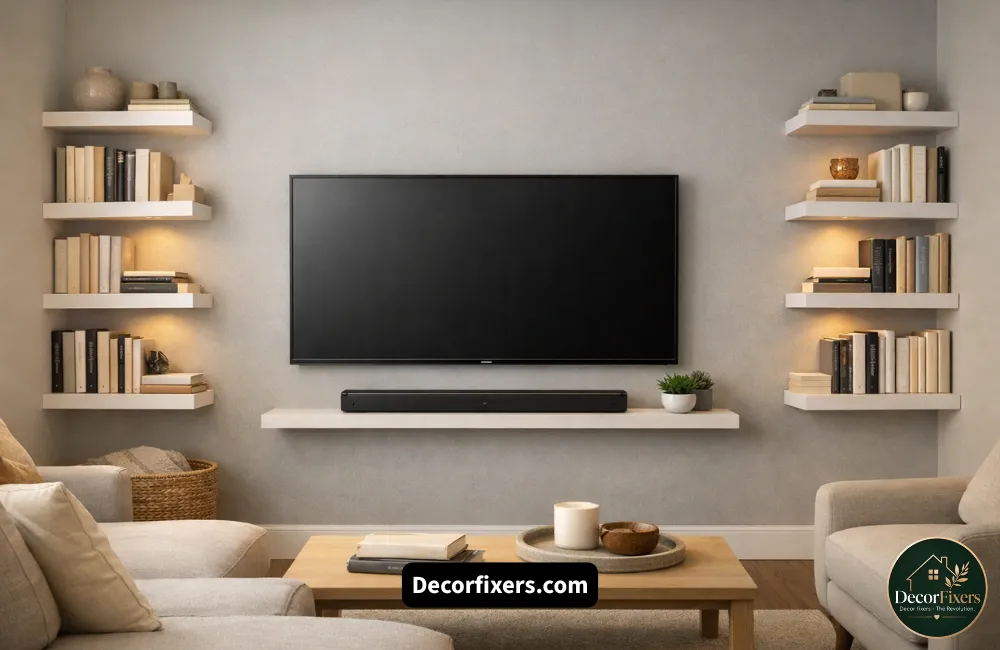
A freestanding TV unit in a small living room is a floor-space thief. It occupies valuable real estate at ground level, collects dust underneath, and rarely makes the best use of the wall behind it. The smarter approach, and the one interior designers consistently recommend for compact rooms, is to wall-mount your television and pair it with minimal floating media storage.
When your TV is wall-mounted at eye level from your sofa, the floor beneath it becomes completely clear. Add a single slim floating shelf below for your streaming device, soundbar, and a couple of small decorative objects. Flank the TV with shallow floating shelves on either side for books, plants, and media accessories. This creates a balanced, considered focal wall that looks purposefully designed rather than assembled from whatever was available. Cable management is worth the extra effort; exposed cables undo the clean aesthetic immediately. Use cable raceways or run cables inside the wall if possible. A tidy TV wall for small living rooms is one of the most impactful upgrades you can make in an afternoon.
Wall-Mounted Lighting Ideas That Free Up Floor Space in Small Living Rooms
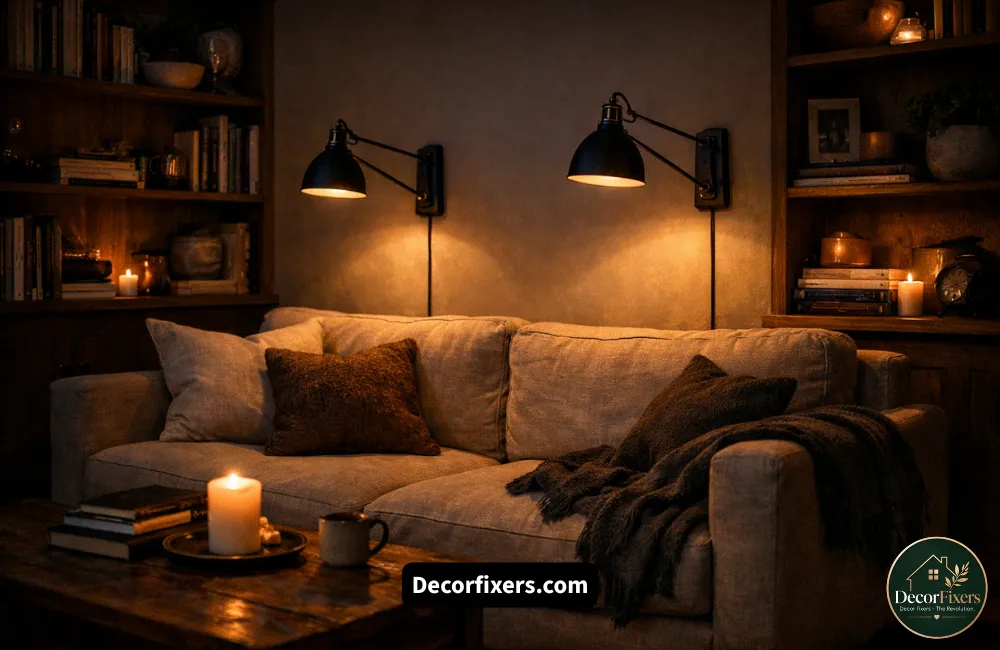
Floor lamps are comfortable and familiar, but in a small living room, every lamp base is furniture competing with your feet. Swing-arm wall sconces and plug-in wall lights provide the same ambient warmth, the same directional task lighting, and the same cozy evening atmosphere as a floor lamp, without touching the floor once.
Layered lighting is the professional interior designer’s most reliable tool for making any room feel larger and more sophisticated. The principle is simple: use three distinct light sources at three different heights. Overhead lighting provides ambient illumination. Wall-mounted sconces at eye level add warmth and character. Low tabletop lamps or LED strip lighting behind shelving units create depth at the third, lower level. This layered approach means you can dial the mood of the room up or down by switching different combinations on and off, essential in a space that must serve as a lounge, workspace, and entertaining area at different times of day. Good lighting costs very little compared to new furniture but changes a room more profoundly than almost any other single element.
How to Create a Cozy Reading Nook Inside a Small Living Room
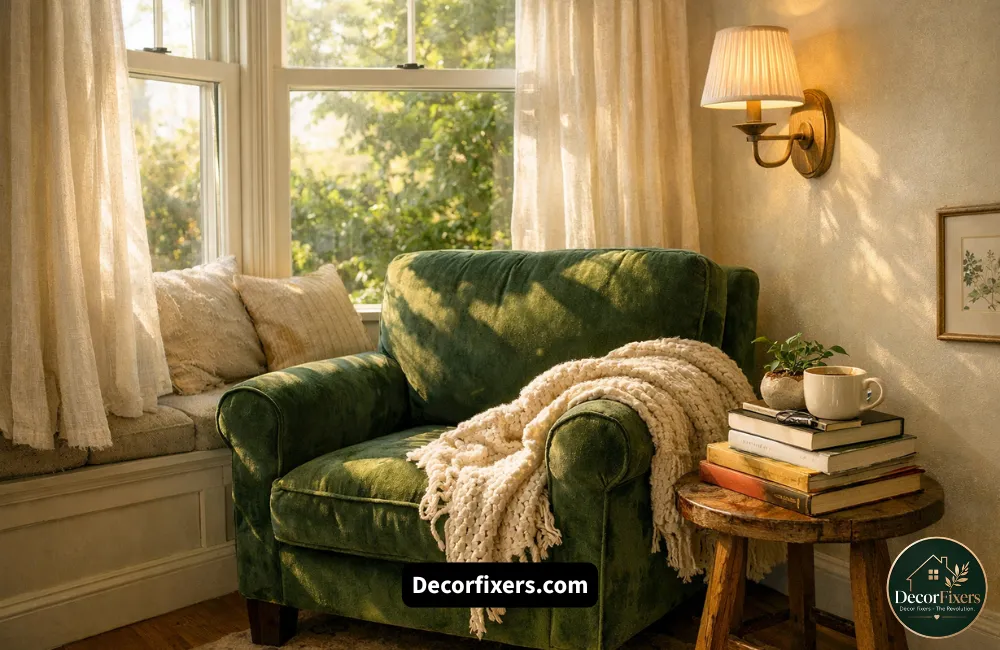
Small rooms have one genuine advantage over large ones: the potential for real, enveloping coziness. A grand open-plan living room can feel cold and impersonal. A compact room, designed considerately, wraps around you. Lean into that. A reading nook takes a corner that’s often wasted and transforms it into the most intentional, inviting spot in the entire home.
The recipe is straightforward. Find the quietest corner, ideally near a window for natural light. Place a compact armchair or a deep, cushioned window seat. Add a wall-mounted sconce or a slim arc lamp at reading height. Layer a textured throw blanket over the arm and two or three cushions in complementary tones. A small round side table beside it holds a cup of tea and the current book. That’s it. The whole setup requires perhaps four square feet of floor space and creates a destination within the room, a place that draws people in and makes them want to stay. Reading nooks also photographically divide the room into zones, making the overall space feel more layered and larger than its actual dimensions.
Curtain Ideas That Add Height, Warmth, and Drama to Small Living Rooms
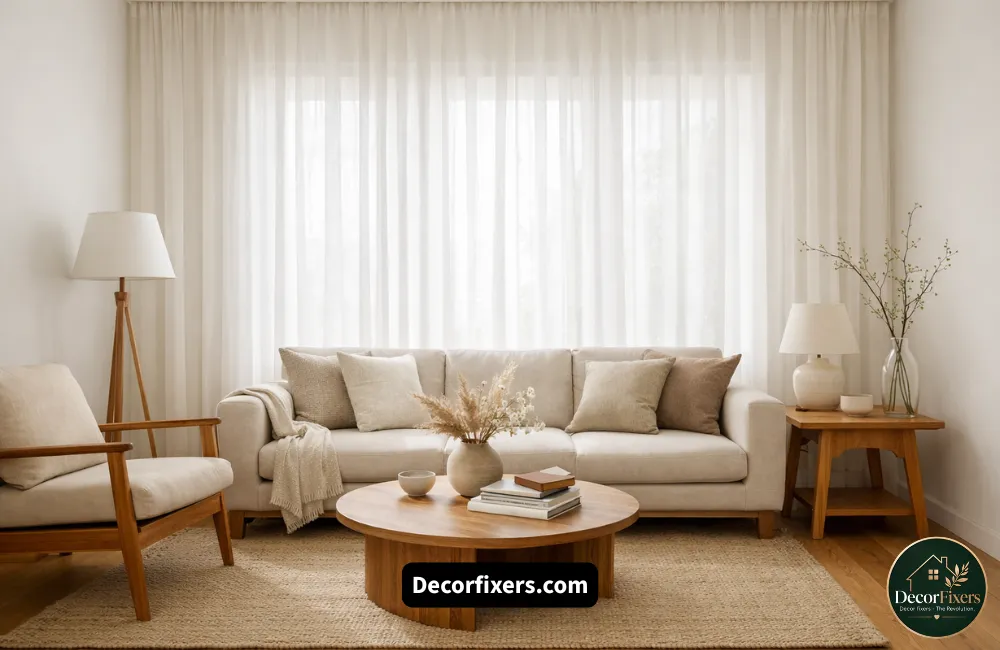
Curtains are among the most underestimated design tools in a small living room. Most people hang them at window height, which is exactly the wrong approach. A curtain rod installed at window level draws a horizontal line across the wall, and horizontal lines make rooms feel lower and smaller. Instead, mount your rod as close to the ceiling as possible and let the fabric fall all the way to the floor.
This simple repositioning creates a dramatic vertical line that adds apparent height to any room. Sheer or semi-sheer fabrics in warm white, oat, or pale linen diffuse natural light beautifully; they soften the room without blocking the brightness that compact spaces desperately need. Heavy, dark curtains do the opposite and should generally be avoided in small rooms unless blackout sleep is a priority. For an elevated look, choose curtains that are slightly wider than your window. When drawn open, the excess fabric sits neatly on the wall beside the window, making the window itself look substantially grander. Floor-to-ceiling curtains are one of the highest-impact, lowest-cost upgrades available for all small living room decor.
Gallery Wall Ideas That Add Personality to a Small Living Room Without Clutter
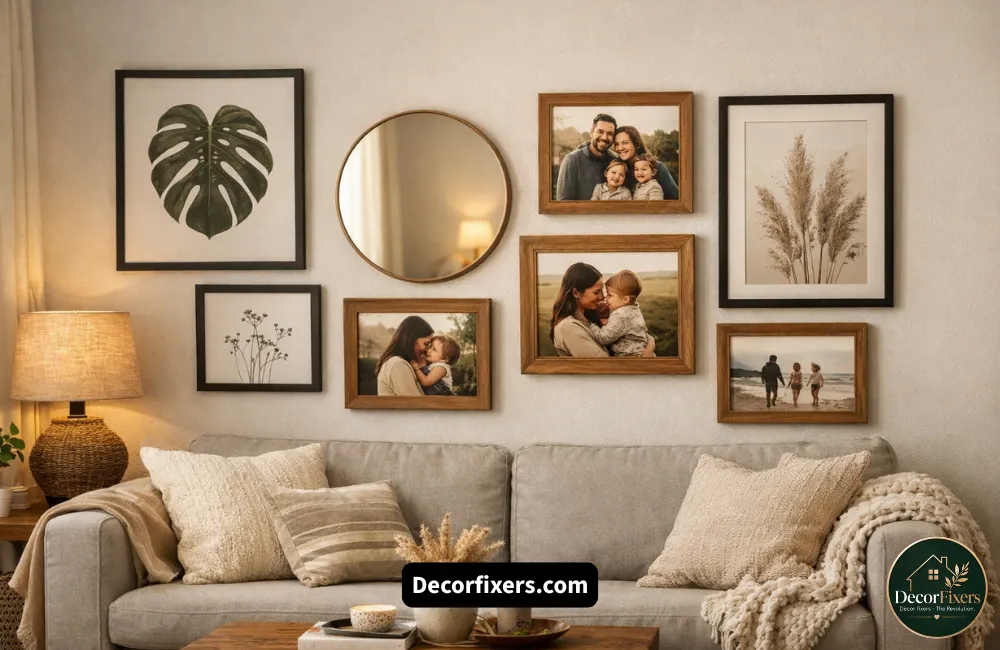
A bare wall in a small living room is a missed opportunity. But filling it with random artwork in mismatched frames creates visual noise that makes the room feel busier and more cramped. A properly designed gallery wall threads the needle perfectly: it adds personality, depth, and warmth to a blank surface while keeping the floor and every other surface completely clear.
The key to a gallery wall that works is planning before you commit to nails. Lay every piece on the floor first and arrange them until the composition feels balanced. Mixing sizes, orientations, and frame finishes creates organic variety, while a consistent mat color or frame tone holds everything together. Photographs, abstract prints, small mirrors, pressed botanicals, and even small textile pieces all work beautifully together. Keep the arrangement within a defined rectangular boundary on the wall; a gallery that sprawls too loosely loses cohesion and reads as scattered. A well-executed gallery wall becomes a genuine focal point, which is valuable in a compact room because it gives the eye a destination and stops it from registering the room’s boundaries.
The One Statement Piece Every Small Living Room Needs, and How to Choose It
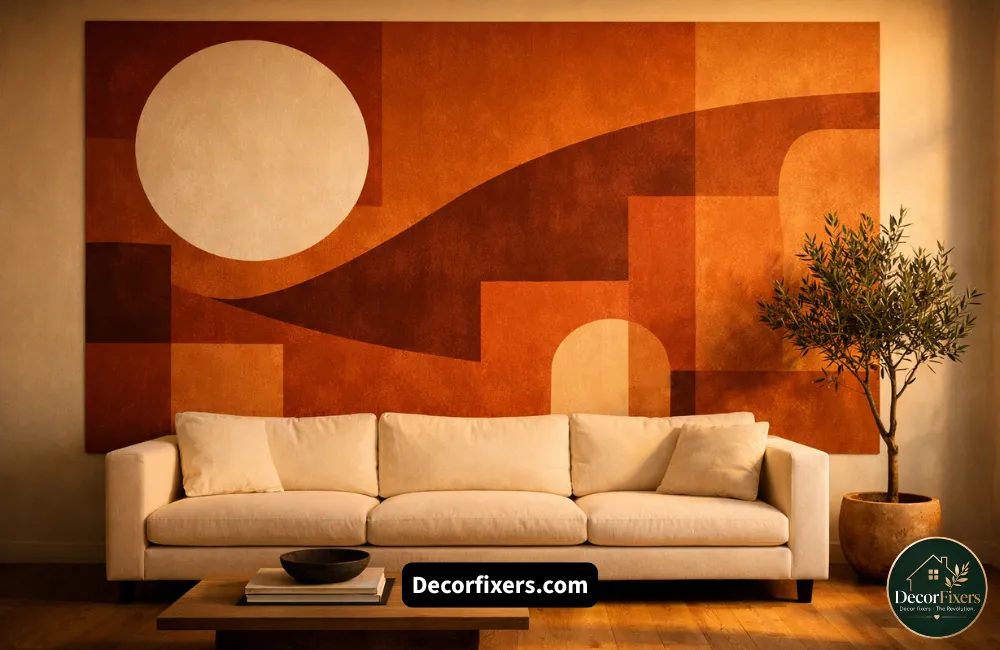
Restraint governs smart small-room design, but not entirely. One deliberate exception to the “keep it simple” rule is not just acceptable, it’s essential. A single statement piece gives a compact living room its identity. Without one, a well-designed small room can feel pleasant but forgettable. With one, it becomes memorable and distinctly yours.
What counts as a statement piece? It’s anything that commands attention and starts a conversation. An oversized abstract canvas that fills an entire wall. A sculptural coffee table in marble or rattan with genuine design character. A dramatic pendant light fixture that becomes the visual centerpiece of the room. A deep jewel-toned velvet sofa in a sea of neutrals. The point is contrast; the statement piece works because everything around it is quieter. Choose the one thing you genuinely love most, spend your budget there, and let everything else support it. One extraordinary element surrounded by considered simplicity consistently outperforms a room full of individually interesting pieces competing with each other for attention.
Keep Your Floors Clear to Make Any Small Living Room Feel Instantly Spacious
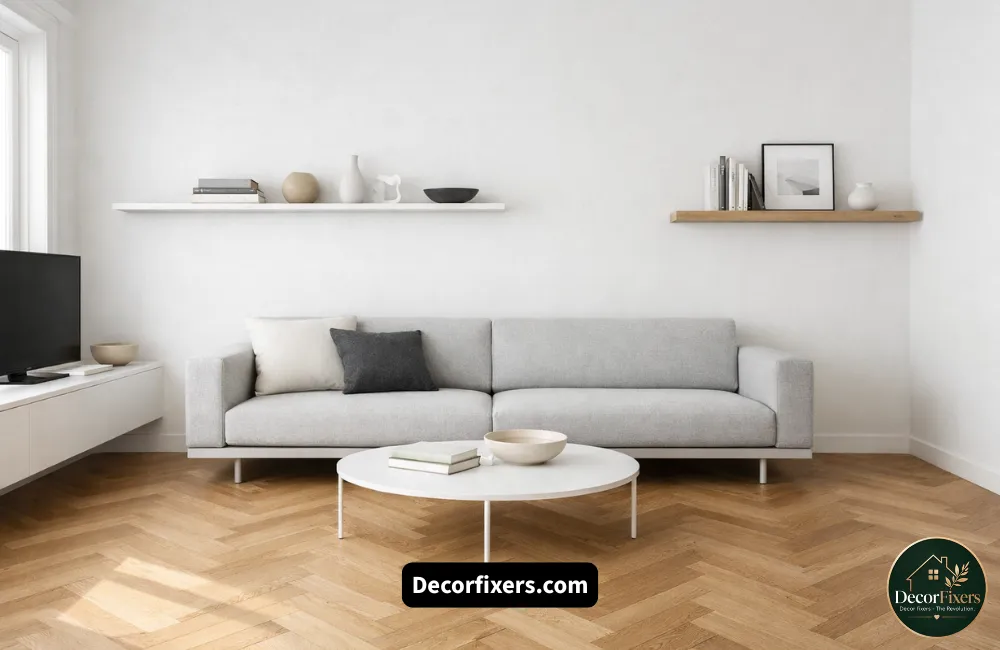
This might be the most counterintuitive idea on this list, and the most impactful. When you look at a small living room and feel it’s cramped, your instinct might be to rearrange the furniture or paint the walls. But often, the single most effective change you can make is simply clearing the floor. Visible floor space, even a modest strip of it around the edges of your furniture, signals openness to the brain. A cluttered floor signals confinement, regardless of actual room size.
Move everything that doesn’t need to be on the floor off the floor. Wall-mount your shelves. Use storage furniture to hide what was previously sitting in piles. Remove the second or third side table that isn’t genuinely earning its place. Swap a floor lamp for a wall sconce. Roll up and store the extra pouffe. Each removal creates a ripple effect, suddenly there’s more breathing room, more light reaching the floor, more sense of movement through the space. A clear floor is the most reliable marker of a well-designed small living room. It costs nothing and changes everything.
Use Glass and Reflective Surfaces for an Open Look in a Small Living Room
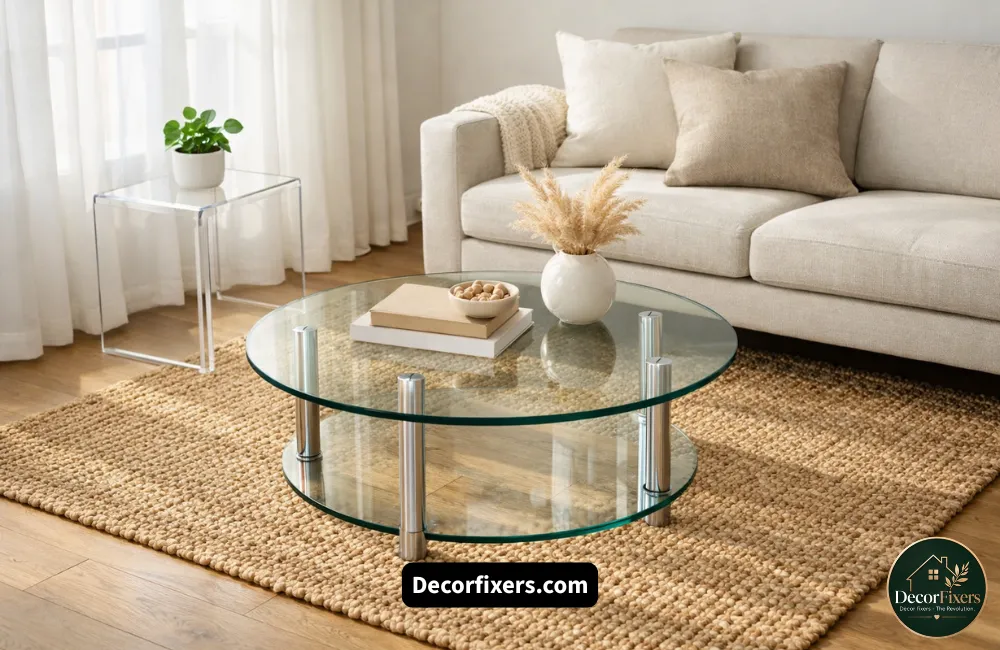
Solid furniture has visual weight. Every opaque surface your eye lands on registers as mass, and mass makes rooms feel smaller and denser. Glass and acrylic furniture work on a completely different principle: it provides all the physical function of solid furniture while allowing light and sightlines to pass straight through it. The result is furniture that takes up space on your floor plan without occupying it visually.
A glass-topped coffee table over a jute rug lets you see the rug, and the floor, beneath it, which reads as uninterrupted floor space rather than covered territory. An acrylic side table beside your sofa is practically invisible, letting the sofa and surrounding decor read cleanly without a solid object interrupting the composition. Mirrored cabinet fronts double the perceived depth of a wall. These materials work especially beautifully when combined with natural textures, glass alongside linen, acrylic beside warm wood, mirror against brick. The contrast between transparent and tactile creates visual richness without adding heaviness. Use reflective surfaces in a small living room wherever a solid piece would otherwise interrupt the flow of light and space.
Pull Furniture Away from Walls for Better Flow in a Small Living Room
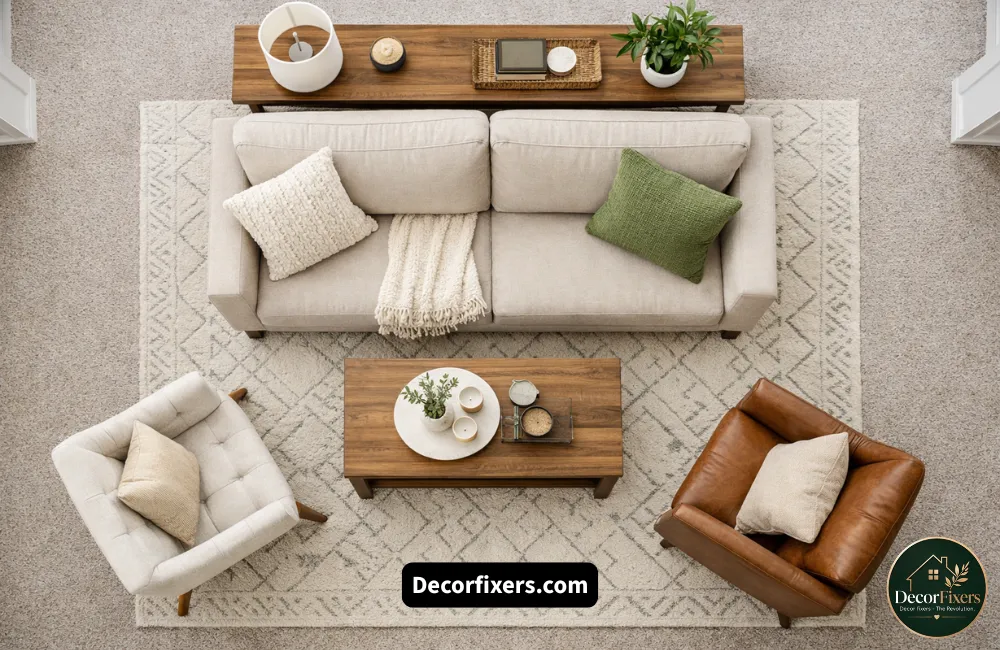
It feels logical to push all furniture flush against the walls in a small room, more central floor space, right? In practice, this approach almost always backfires. Furniture lined up around the perimeter of a room creates a waiting-room feeling: stiff, disconnected, and oddly formal. Paradoxically, it also makes the room feel smaller, because the central void reads as emptiness rather than space.
The professional approach is to pull furniture inward, just slightly. Move the sofa a few inches from the wall behind it. Angle an armchair rather than squaring it rigidly to the room’s geometry. Allow the seating arrangement to form a cohesive cluster in the center of the room, with clear pathways running around its edges. This creates intimacy within the seating zone and movement flow around it. The gap behind the sofa, even just six inches, can be used cleverly: a slim console table placed there serves as both a practical surface and a visual anchor that stops the sofa from floating aimlessly. Furniture arrangement in small living rooms matters far more than most people realize. The right layout makes a room feel larger; the wrong one shrinks it regardless of its actual dimensions.
Budget-Friendly Small Living Room Design Ideas That Look Genuinely Expensive
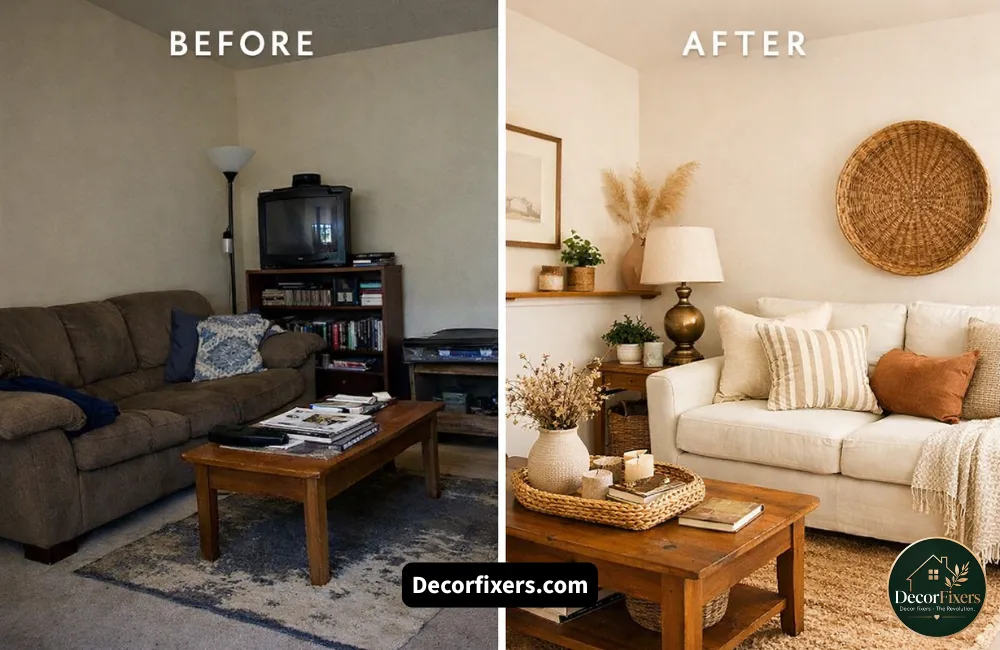
Transforming a small living room doesn’t require a full renovation budget. Some of the most effective small living room upgrades cost very little but deliver disproportionately large results. Knowing which changes give you the most visual return per pound or dollar spent is the difference between a room that looks expensive and one that merely costs a lot.
Repainting is consistently the highest-return investment in interior design; a single tin of quality paint in the right neutral can completely reframe a room for under thirty dollars. Replacing dated hardware on existing furniture (drawer pulls, cabinet handles, shelf brackets) updates the look without replacing the pieces themselves. Swapping a cheap polyester rug for a natural jute or wool rug transforms the tactile quality of the full room instantly. Rearranging your existing furniture costs nothing and sometimes solves problems that expensive new pieces couldn’t. Finally, editing ruthlessly, removing items that aren’t earning their visual or practical place, is always free and always improves the room. A great small living room design is about decision-making, not spending. The right decisions, made confidently, produce rooms that consistently outperform their budgets.
CONCOLUSION:
Designing a small living room well is one of the most rewarding challenges in interior design. Every decision matters more, every good choice amplifies, and every unnecessary piece removed makes the room breathe a little better. Start with two or three of these ideas, perhaps the curtain height, the sofa choice, or the floor-clearing discipline, and build outward from there. The goal was never to disguise a small room. Its design is so thoughtfully that its size simply stops mattering.
All recommendations reflect current interior design best practices. Always measure your specific room before purchasing furniture and consult a qualified interior designer for bespoke advice tailored to your space.
FAQs:
Q1: What colors work best for small living rooms?
Light, unbiased colors like white, soft gray, and light brown make small living rooms feel larger and more open. Pale blues and greens also add wisdom without closing in the space. Avoid dark, heavy abilities on all four walls; instead, use them as a single pronunciation wall to add character while keeping the room casual.
Q2: How can I make a small living room look bigger?
Use mirrors persistently to reflect light and create the illusion of depth. Choose multi-functional furniture like storage ottomans and sofa beds. Keep floors as visible as possible with raised-leg furniture. Stick to a consistent color palette and avoid clutter. Vertical shelving draws the eye rising, making ceilings feel higher and the room more open.
Q3: What type of sofa is best for a small living room?
A compact loveseat, apartment-size sofa, or a sectional with a chaise that fits snugly into a corner works best. Avoid huge, bulky sofas that dominate the room. Choose sofas with exposed legs to create visual living room. Light-colored material or sleek, slim-profile designs help sustain an open, uncluttered feel in tight spaces.
Q4: Should I use a rug in a small living room?
Yes, a well-chosen rug actually defines and anchors the seating area, making the space feel deliberate and designed. Choose a rug large enough so all furniture legs can sit on or near it. Light-colored or low-pattern mats keep things open, while a bold pattern can add behavior without taking up visual wall space.
Q5: Can I still have storage in a tiny living room?
Absolutely. opt for built-in shelving, wall-mounted units, and furniture with hidden storage like couches, coffee tables with drawers, or sofas with under-seat sections. Floating shelves free up floor space while keeping items organized. The key is to store smartly; every piece of furniture should serve at least two purposes in a small living room.

Welcome to DecroFixers! I’m Mujahid Ali
6 thoughts on “22 Small Living Room Design Ideas That Truly Work”