


I almost painted my bedroom white. Again.
I’d been staring at the same Pinterest boards for weeks, all those stunning, moody bedrooms draped in deep charcoal and forest green, and every time I got close to committing, I chickened out. What if it feels like a dungeon? What if the room gets smaller? What if I hate it in the morning light?
I’ve spent time studying what separates the scroll-stopping dark bedroom transformations. This article is the result. Whether you’re renting and can’t repaint, working with a small room, or just terrified of committing to something bold, there’s an idea here that’ll work for your actual situation.
What Are Dark Bedroom Design Ideas? Dark bedroom design ideas refer to interior styling approaches that use deep, saturated tones, charcoal, navy, forest green, black, and burgundy as the dominant color in a bedroom. Rather than avoiding darkness, these designs lean into it through layered lighting, rich textures, and strategic contrast, creating rooms that feel intimate, cozy, and sophisticated.
Can a dark bedroom actually look good? Yes, and the data backs it up. According to Pinterest trend data reported by Apartment Therapy, searches for “romantic dark bedroom ideas” rose 100% and “moody bedrooms” rose 90% year-on-year, proving this isn’t a passing phase. The shift is driven by a desire for bedrooms that feel like genuine retreats, not just white rooms you sleep in.
1. Charcoal Walls with Warm Brass Accents, the “Safe Dark” That Works Every Time
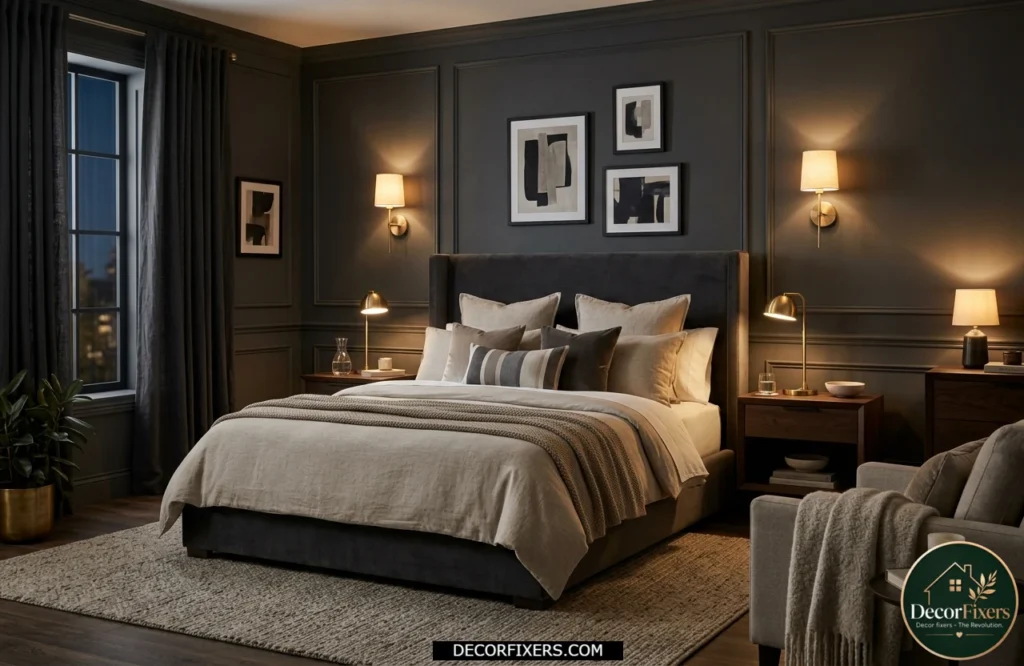
Charcoal is the entry point. It’s dark enough to feel intentional, forgiving enough that a beginner won’t regret it.
The secret is what you pair it with. Brass hardware, think drawer pulls, pendant shades, or a simple floor lamp, pulls warm gold tones out of a cool grey wall and stops the room from feeling sterile. Pair with oatmeal-colored linen bedding to keep the contrast soft rather than stark.
Paint picks: Farrow & Ball’s “Down Pipe” or Benjamin Moore’s “Iron Mountain” are both designer-loved options with excellent depth and coverage, even in one coat.
2. Navy Blue Bedroom, Rich, Hotel-Like Luxury Without the Cold Feel
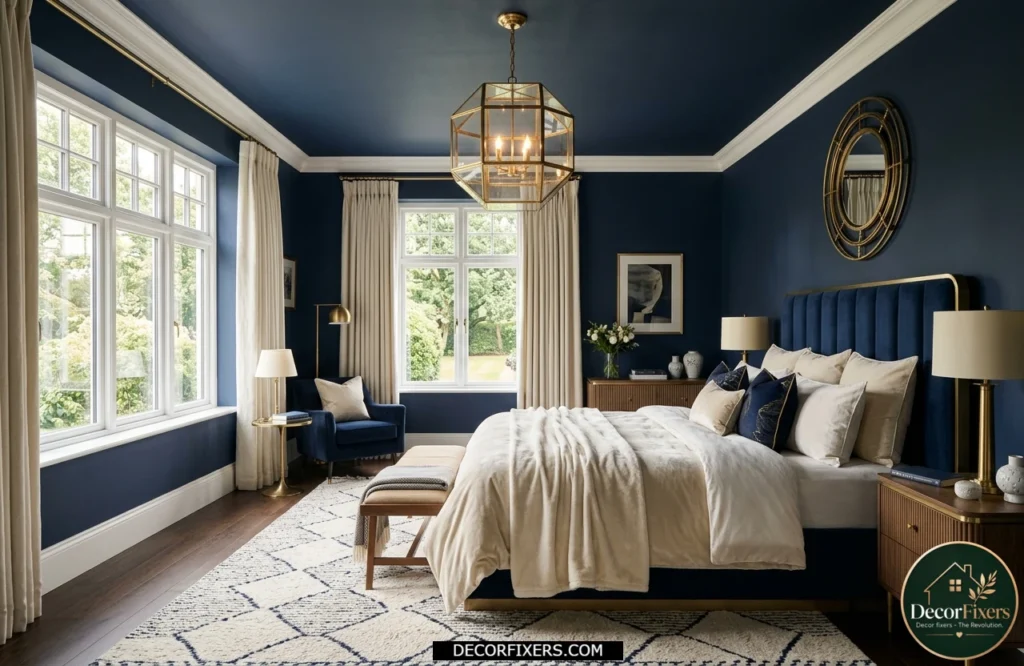
Navy blue hits different. It carries the drama of black but with enough warmth to stay inviting.
The move most people miss: keep the ceiling white. A white ceiling in a navy room makes the walls feel intentional rather than accidental, and it reflects enough light to preserve the room’s visual height. Layer in cream or ivory textiles on the bed; velvet works especially well, and the room starts to feel more boutique hotel than budget rental.
This style works in both small and large bedrooms. In smaller spaces, it actually creates a cocooning effect that makes the room feel purposefully intimate rather than cramped.
3. Forest Green Dark Bedroom, the Moody Style That Earthy-Toned Lovers Will Obsess Over
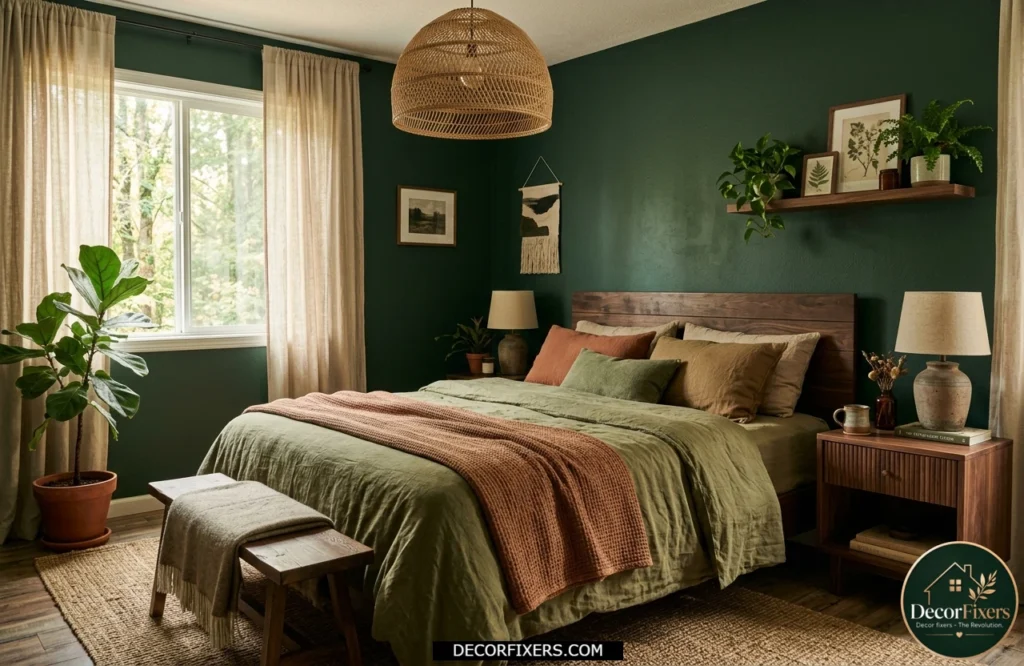
Forest green is having its moment, and unlike some trends, this one has real staying power.
What makes deep green work so well in a bedroom is that it carries associations most of us find calming: forests, shadow, nature. It’s dark without feeling gothic. Pair it with natural materials, a rattan pendant, a walnut bedside table, raw linen sheets, and the room lands somewhere between earthy sanctuary and moody retreat.
Renters, take note: green is one of the easiest dark tones to test with peel-and-stick wallpaper panels or a temporary accent wall before committing to paint.
4. All-Black Bedroom Design, How to Pull It Off Without It Feeling Like a Lair
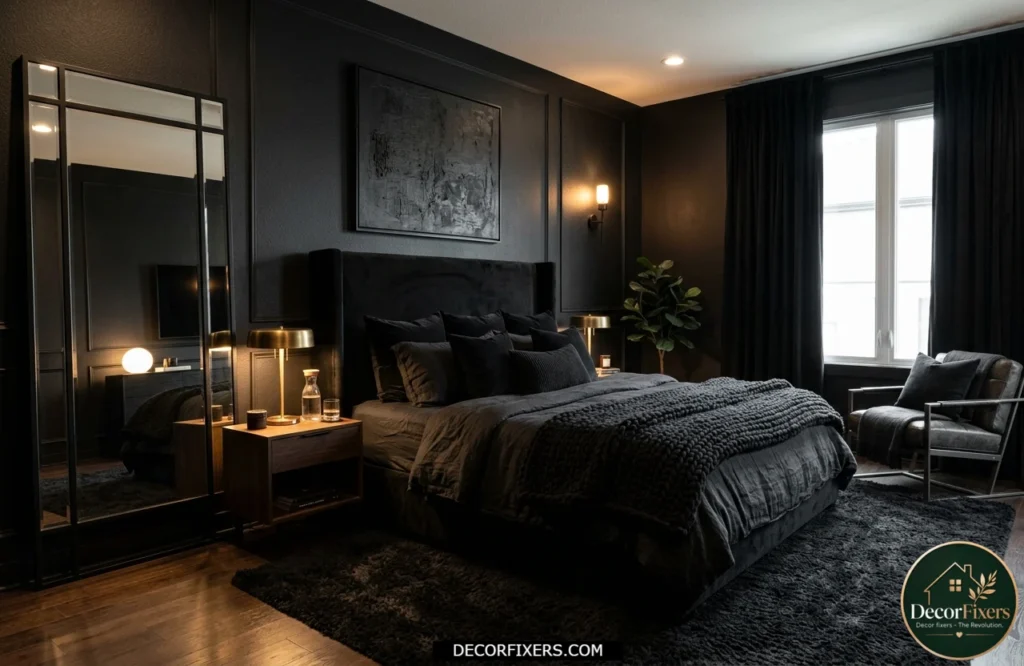
This is the one everyone wants, but nobody commits to. Here’s why it works when done right.
The trick to avoiding the “lair” effect is texture, texture, texture. When everything in a room is matte black, it reads flat and depressing. But when you layer a matte black wall with a velvet headboard, a chunky knit throw, a sculptural pendant in a contrasting metal finish, and a plush rug, each surface catches and plays with light differently, and the room comes alive.
How to Style an All-Black Bedroom Without It Feeling Dark:
- Paint walls in matte black, satin, or eggshell finishes that reflect too much light and look cheap
- Add a minimum of three different textures (velvet, linen, chunky knit)
- Use warm-toned bulbs (2700K–3000K); cool white light kills the mood completely
- Place one oversized mirror to double perceived depth and reflect light
- Keep the ceiling white or very light grey to preserve visual height
Farrow & Ball’s “Pitch Black” and “Railings” are both industry-standard choices; they have enough pigment depth to avoid looking like a cheap black paint job in any light.
5. Dark Bedroom with Exposed Brick, Raw, Industrial, and Unmistakably Cool
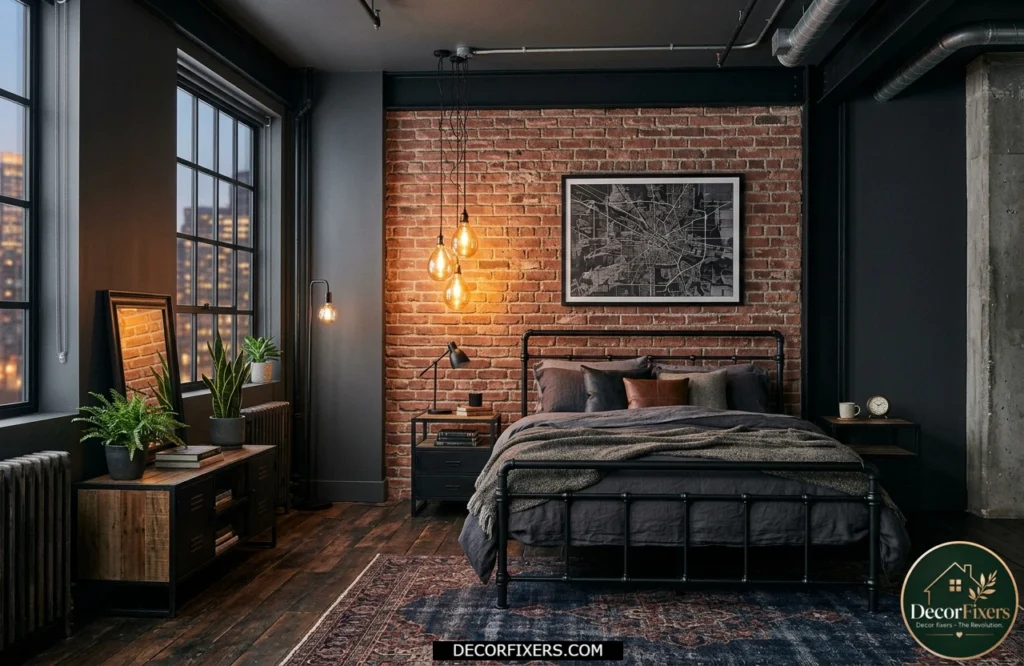
Exposed brick brings something no paint can replicate: genuine texture and history.
If you’ve got it, use it. Paint the remaining walls in a deep charcoal or warm gunmetal to let the brick stand as a focal accent wall. Industrial-style Edison bulb pendants flanking the bed complete the look. What you get is something that feels collected and lived-in rather than staged, the exact quality that makes dark bedrooms actually compelling to spend time in.
6. Dark Bedroom with Velvet Headboard, One Upgrade That Changes Everything
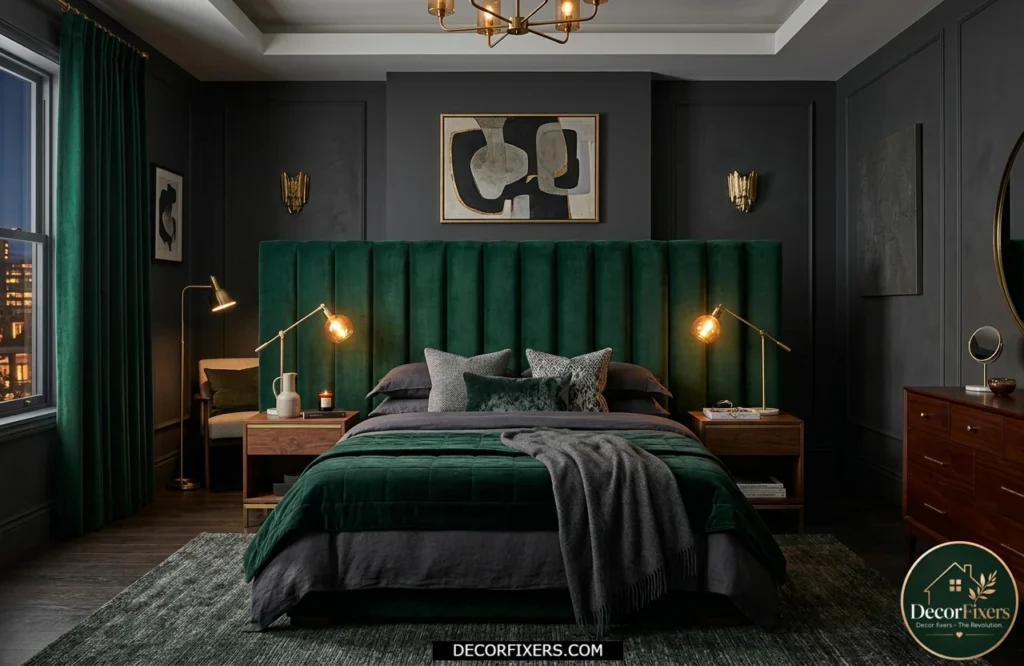
A velvet headboard is the single highest-impact change you can make to a dark bedroom. Full stop.
Here’s the thing: most people focus on wall color and forget that the bed is the visual anchor of the entire room. A deep emerald, midnight blue, or dusty plum velvet headboard against a dark wall creates a tonal layering effect that designers charge a lot of money to achieve. It’s one piece, one decision, and it does most of the heavy lifting.
IKEA’s UPPLAND series offers some of the best value-for-quality velvet headboards available at accessible price points. If you’re willing to spend more, look for frame-and-headboard combinations from Article or West Elm.
7. Layered Lighting in Dark Bedrooms, the One Thing Every Guide Gets Wrong
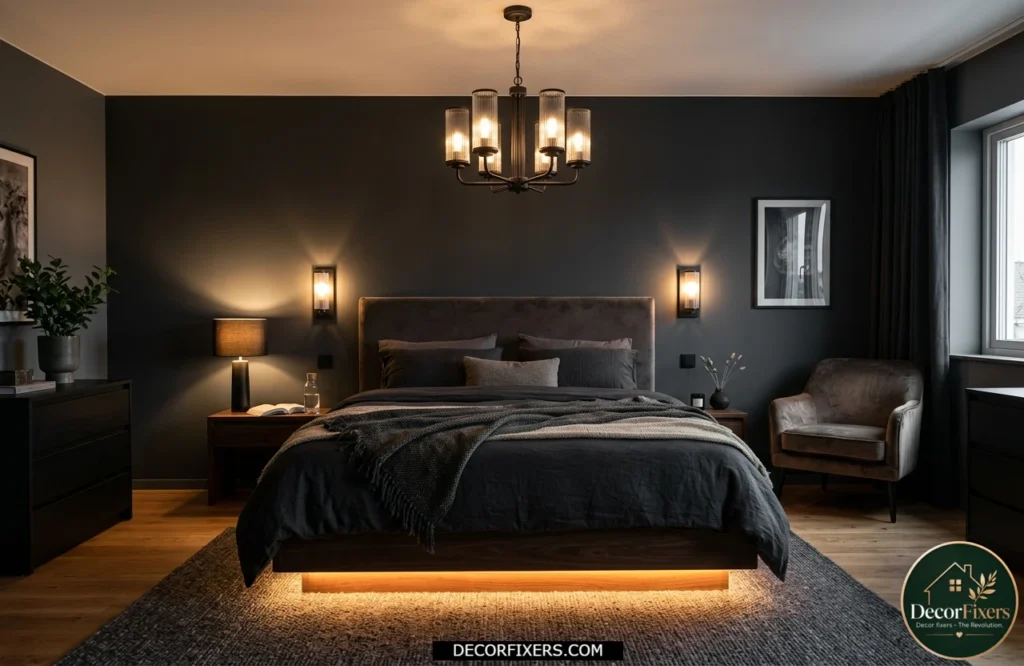
Most articles tell you to pick a dark wall color and call it a day. Lighting is the actual make-or-break factor, and almost no one covers it properly.
A single overhead light in a dark bedroom creates harsh shadows and makes the space feel like a waiting room. What you need is three distinct light layers:
- Ambient (overhead): a dimmable ceiling pendant or recessed lights on a dimmer switch
- Task (bedside): wall sconces or bedside table lamps at eye level, NOT pointing upward
- Accent: LED strip lighting under the bed frame, inside a wardrobe, or behind a headboard shelf
Layered lighting is one of the defining elements of truly Cozy Bedroom Ideas, helping transform a bedroom into a relaxing retreat that feels welcoming from morning through evening.
Bulb temperature matters more than brightness. 2700K–3000K (warm white) is non-negotiable in a dark bedroom. Cool white bulbs (4000K+) will strip every ounce of atmosphere out of the room, no matter how good your wall color is.
8. Dark Moody Bedroom with Botanical Prints, Where Jungle Meets Gothic
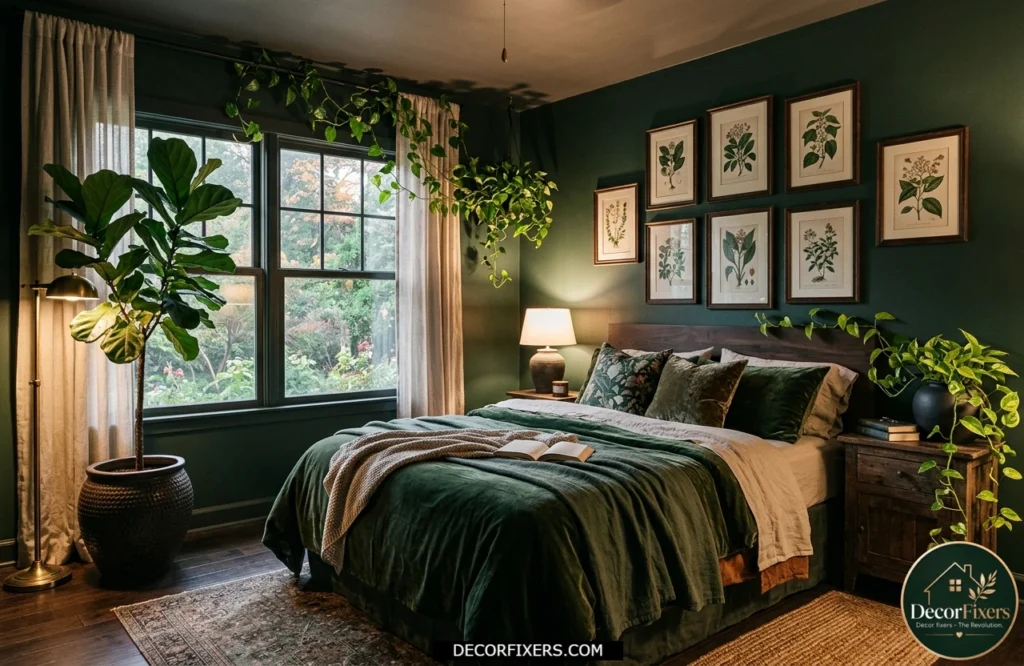
Dark and nature-forward isn’t a contradiction. It’s one of the most interesting combinations in modern interior design.
Choose a deep teal or hunter green base, then layer in botanical prints, oversized framed leaf prints, trailing pothos on a high shelf, or even a large fiddle leaf fig in a dark ceramic pot. The result sits somewhere between a Victorian greenhouse and a boutique hotel room, and it works remarkably well in bedrooms that receive indirect natural light.
Low-light plants like snake plants, ZZ plants, or pothos are your best options here; they thrive in exactly the conditions a dark bedroom provides.
9. Dark Bedroom Color Drenching, Paint Everything, Including the Ceiling
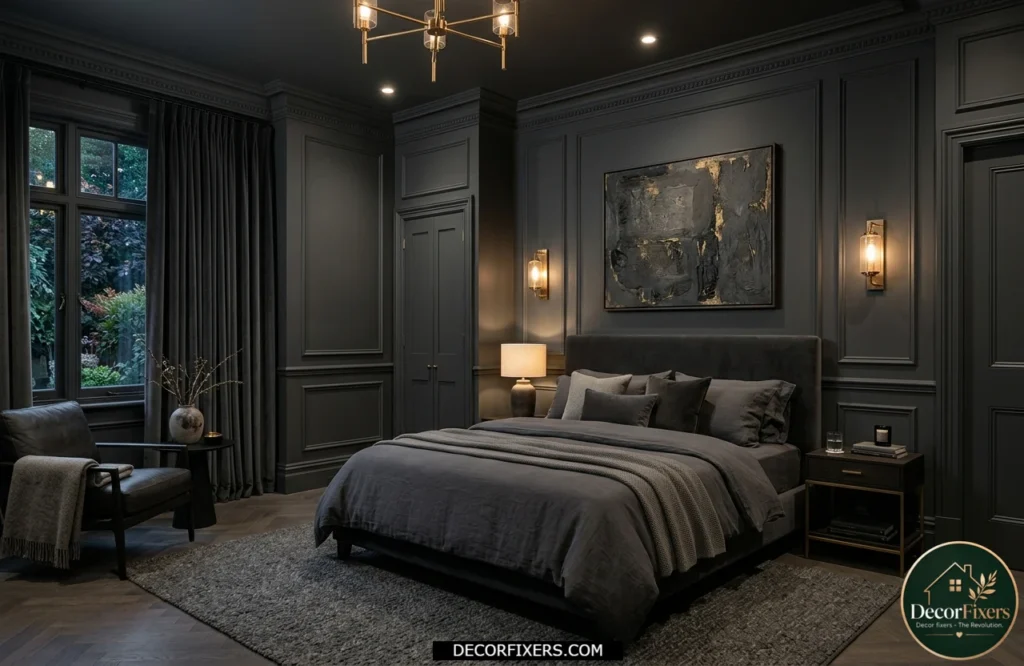
Color drenching is exactly what it sounds like: one color, applied to walls, trim, baseboards, and ceiling.
This is the technique professional designers use to make small rooms feel intentional rather than cramped. When all surfaces share the same tone, the eye stops reading the room as a small box and starts reading it as a cocoon. It blurs the boundaries. It makes a 10ft × 10ft bedroom feel curated rather than tight.
Or maybe I should say it this way: the reason a tiny dark bedroom looks intentional in design magazines isn’t the room size, it’s the commitment. Color drenching is a commitment made physical.
10. Dark Bedroom with Textured Wallpaper, When Paint Isn’t Enough
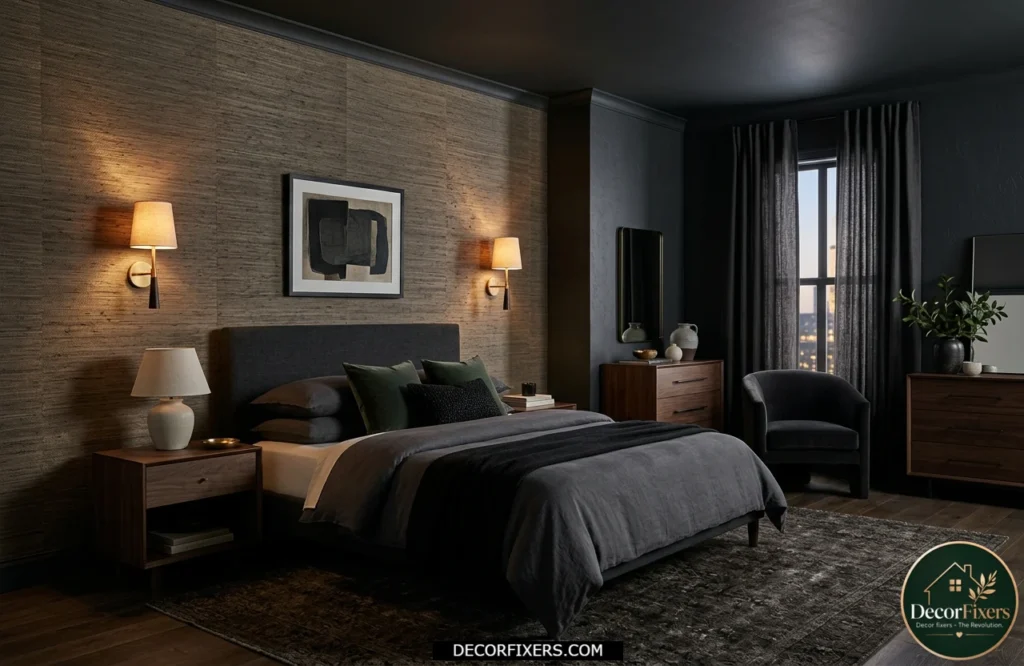
Textured wallpaper does something flat paint cannot: it adds a physical dimension that changes the way light behaves in a room.
Grasscloth, faux-suede, or ribbed panel wallpapers in deep tones are particularly effective. As light from a wall sconce or bedside lamp rakes across the surface, the texture creates micro-shadows that give the wall genuine depth and interest. It’s the difference between a room that looks designed and one that looks decorated.
11. Dark Bedroom with Wood Accents, How to Keep It Warm, Not Gloomy
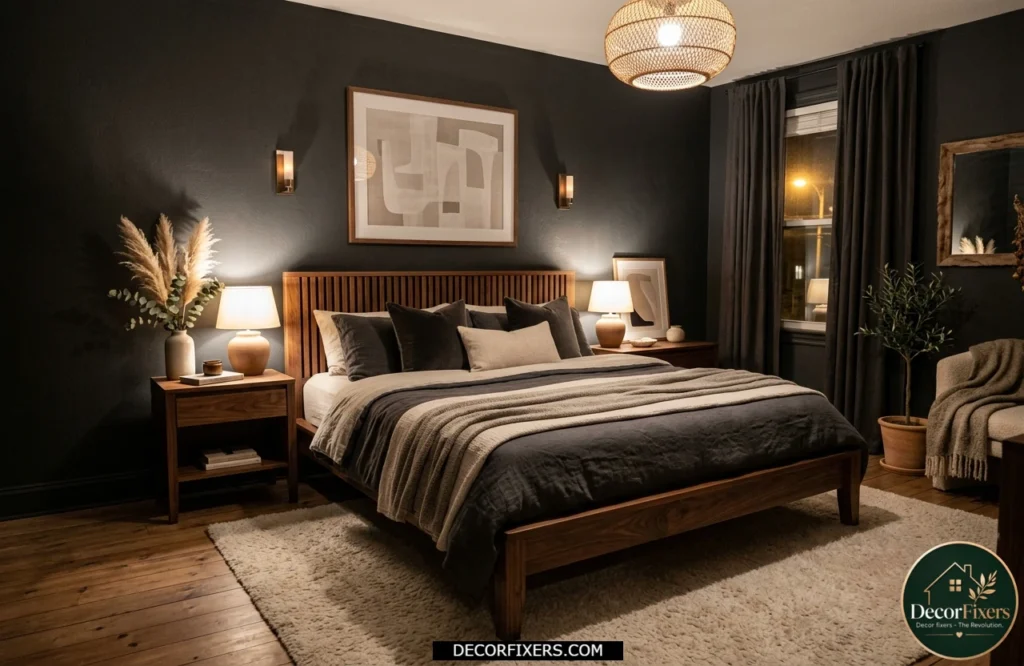
Wood is the antidote to a dark bedroom that’s veering into cold or oppressive territory.
The rule I’ve seen designers use consistently: pick one dominant wood tone and echo it in at least three places, a bed frame, a bedside table, and one smaller accessory like a tray or lamp base. This creates enough visual rhythm to feel cohesive without looking like a showroom. Walnut is the most designer-approved choice for dark rooms because its warm reddish-brown tones create beautiful contrast against charcoal, navy, and black.
Natural wood finishes pair beautifully with many Warm Bedroom Ideas, adding visual warmth and balance that prevents darker colour schemes from feeling overly dramatic or cold.
12. Dark Bedroom with Mirrors, Making Small Rooms Feel Larger
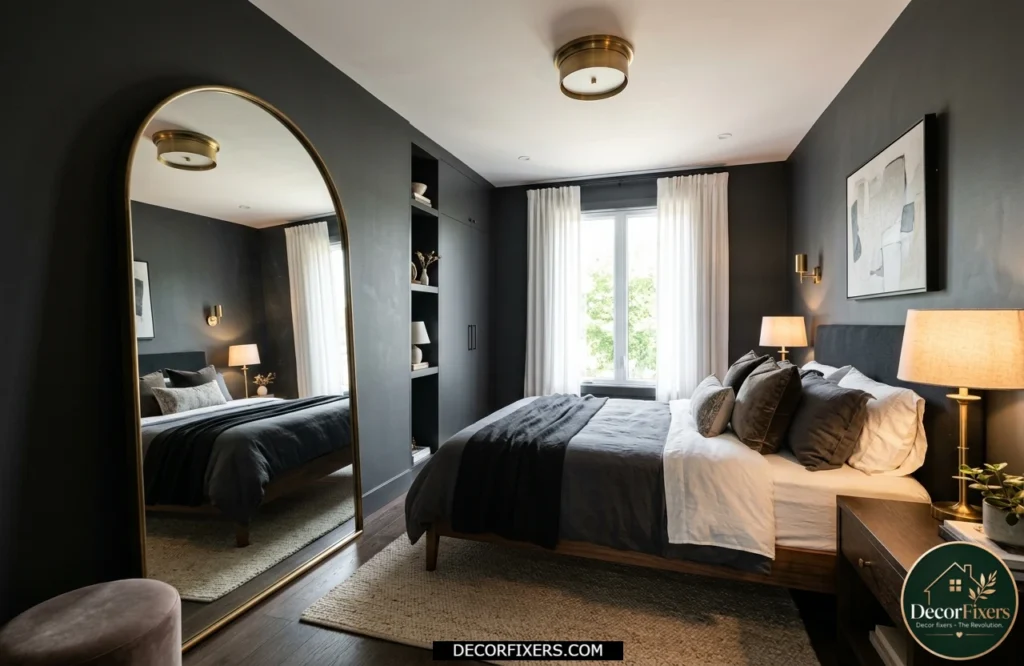
Look, if you’re in a small dark bedroom and you’re terrified, it’ll feel like a shoebox. This is what actually works.
One large mirror, positioned to reflect either a window or a light source, can visually double a room’s perceived depth. The keyword is large; a cluster of small decorative mirrors does nothing for space. A single oversized arched or rectangular mirror leaned against the wall opposite the main window is the designer’s go-to for this exact problem.
It also adds a practical element: in a dark room, a large mirror bounces ambient light into corners that pendant lights and sconces struggle to reach.
13. Dark Burgundy Bedroom, Most Romantic Color Trend
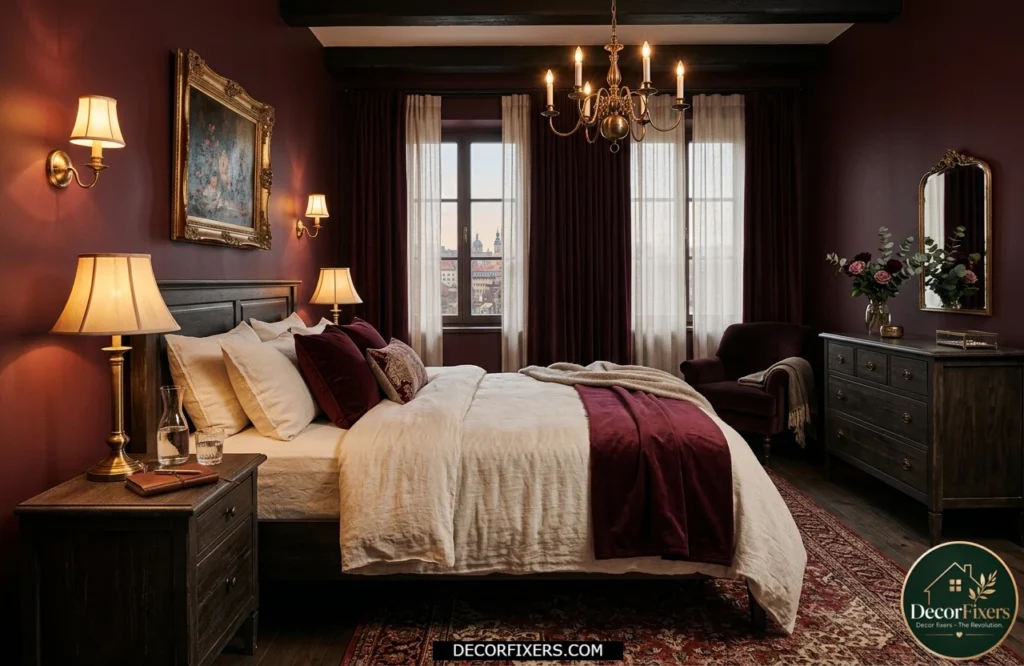
Burgundy is officially the breakout color of this design moment, and in a bedroom, it’s devastating in the best way.
According to Ideal Home, Pinterest searches for “burgundy bedroom” were up 70% in a single year. The appeal is obvious: it’s warm, romantic, and unlike navy or charcoal, it doesn’t risk reading as corporate or masculine. If you are drawn to richer palettes but want something softer than deep burgundy, exploring Warm Bedroom Color Ideas can help you discover inviting shades that create a comfortable and elegant atmosphere year-round.
14. Dark Academia Bedroom, Moody, Bookish, and Surprisingly Livable
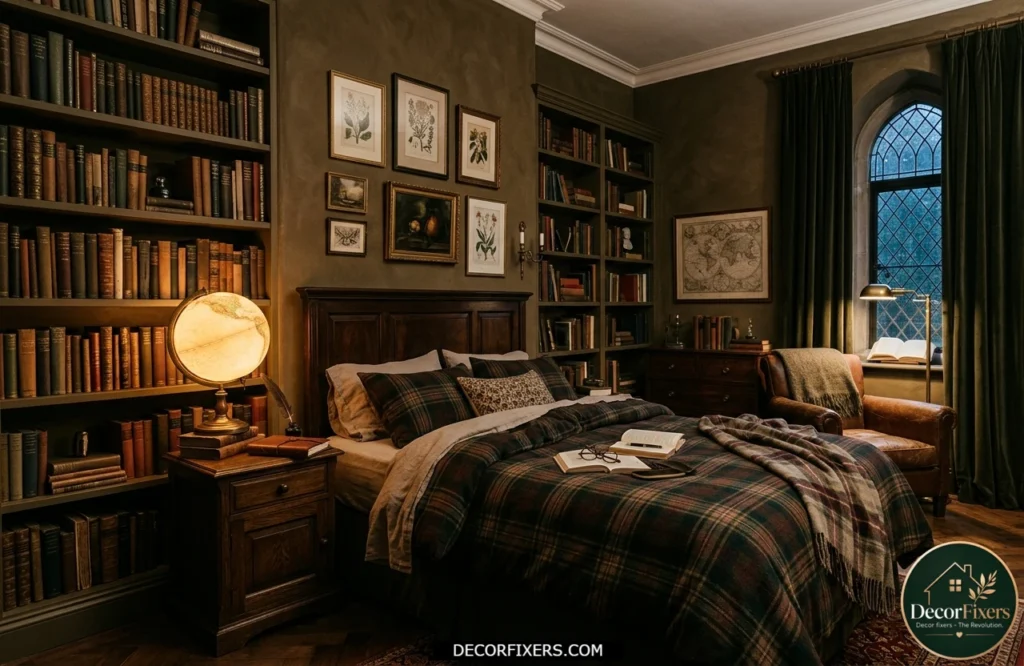
Dark academia is a full aesthetic, not just a color palette, and the bedroom is where it lives best.
Think deep olive or warm brown walls, built-in or floating bookshelves stacked with actual books, an antique-style globe desk lamp, and plaid or houndstooth textiles. The vibe is somewhere between a university library reading room and a Victorian study, and it is remarkably cozy to actually live in. The Dreams Bedroom Trend Index (2025) reports dark academia as one of the consistently growing search categories, up 6.6% year-on-year with no signs of slowing.
15. Dark Bedroom on a Budget, Big Impact Without Big Spending
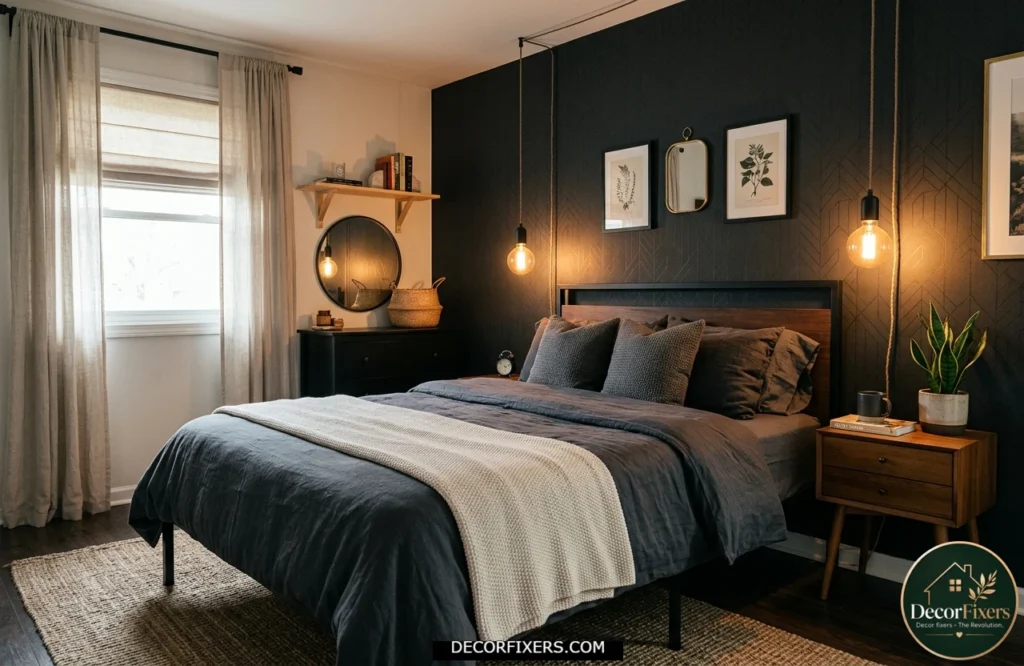
The most common reason people don’t try a dark bedroom isn’t fear. It’s a budget.
Here’s the most effective low-cost sequence I’ve found: start with new bedding in a deep tone (dusty plum or charcoal linen), then add warm-toned Edison bulbs to existing lamps, then pick one wall and either paint it or use a peel-and-stick dark wallpaper panel. This three-step sequence costs under £100 / $120 in most cases and produces a noticeably transformed room, without a single piece of new furniture. Only after testing this should you consider committing to full paint or larger purchases.
What’s the most affordable way to get a dark bedroom look? Start with textiles and lighting before touching the walls. Swap in darker pillow covers, a deep-toned throw, and warm-temperature bulbs (2700K). This low-cost test costs almost nothing and tells you whether you actually like living in a darker space before you commit to painting or wallpapering.
Quick Comparison: Dark Bedroom Styles at a Glance
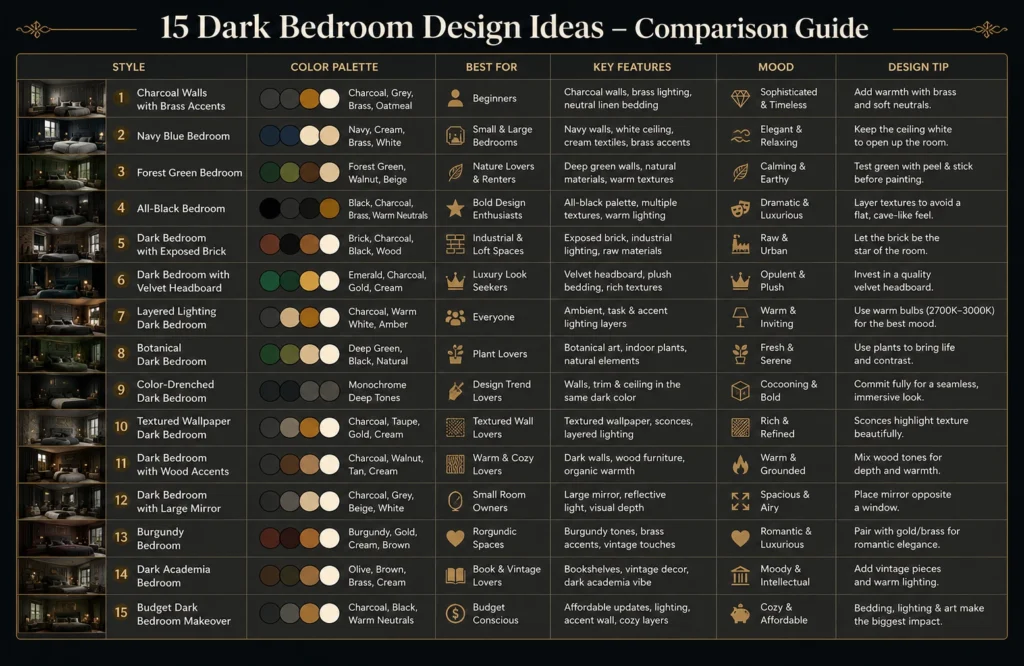
Use this table to find the right dark bedroom style for your specific room and situation.
| Style | Best For | Key Benefit | Limitation |
| Charcoal Minimalist | Small bedrooms | Feels spacious & sharp | Can feel cold without warm textiles |
| Navy Glam | Large master bedrooms | Rich, hotel-like luxury | Needs bright accent lighting |
| Forest Green Earthy | Nature-lovers & renters | Calming, timeless appeal | Clashes with cool-toned furniture |
| Moody Black | Bold, dramatic aesthetic | Maximum drama & depth | Hardest to balance, needs texture |
| Dark Burgundy | Romantic or vintage rooms | Warm, intimate atmosphere | Can overwhelm small spaces |
Is a Dark Bedroom Actually Bad for Sleep?
Some interior designers argue that dark bedrooms make morning waking harder, since the absence of light cues disrupts your body’s natural cortisol response to sunrise. That’s a valid concern, particularly for people with early-morning schedules or those who already struggle to get up.
But here’s the counter: most modern dark bedrooms use blackout curtains anyway, which means even a white bedroom is functionally “dark” at night. And smart bulbs like Philips Hue can be programmed to gradually brighten in the morning, simulating a sunrise regardless of wall color. The darkness-and-bad-sleep connection is real but entirely solvable with a fifteen-dollar smart bulb.
I’ve seen conflicting views on this; some sleep researchers emphasize the color temperature of lighting over wall color entirely, while others focus on natural light access. My read is that wall color matters far less than your actual window setup and your morning light routine.
CONCLUSION:
I’ve talked to enough people who’ve spent three years looking at dark bedroom inspiration boards and zero minutes actually doing it.
The room you keep scrolling past? Someone made it with the same square footage, the same rental restrictions, and probably a smaller budget than yours. The difference is that they stopped overthinking the wall color and started thinking about light sources, texture, and contrast.
This guide works best for people willing to test before they commit. Start with the bedding and the bulbs. See how you feel waking up in a room that’s a little darker, a little more intentional. Then, if you’re ready, go dark. All the way.
This guide covers residential bedrooms across a range of budgets and sizes. It does NOT address how to fix structural light problems (like north-facing rooms with single small windows), which requires a separate approach.
FAQs:
Q: What’s the best dark color for a bedroom?
A: Charcoal grey is the safest starting point; it’s dark enough to feel dramatic but easier to light and accessorize than pure black. Navy blue and forest green are runners-up for beginners wanting color over neutral drama.
Q: How do I make a dark bedroom feel bigger?
A: Use one large mirror opposite a window, keep the ceiling white or light, and layer lighting at multiple heights. Color drenching one wall rather than all four also helps a small room feel intentional rather than crowded.
Q: Should I use dark or light bedding in a dark bedroom?
A: Contrast wins. Light or cream bedding against dark walls creates visual relief and stops the room from feeling flat. Velvet or linen textures in ivory, oatmeal, or pale gold work especially well.
Q: Why does my dark bedroom feel cold and unwelcoming?
A: Almost always a lighting problem. Switch to warm-toned bulbs (2700K–3000K), add a bedside lamp or sconce you didn’t have before, and make sure you’re not relying on a single overhead light as your only source.
Q: When should I hire a designer for a dark bedroom?
A: If you’re planning to replace flooring, install built-in joinery, or commit to a full room repaint and furniture overhaul, a consultation with an interior designer is worth the cost. For smaller changes, paint, lighting, and textiles, DIY with a clear plan is entirely achievable.

Creator of DecorFixers, sharing practical home and interior ideas focused on real-life usability, simple design improvements, and budget-friendly solutions.
1 thought on “15 Dark Bedroom Design Ideas: Moody, Cozy & Luxurious Styles That Actually Work”