

I remember standing in the doorway of my first apartment bedroom, tape measure in hand, and actually laughing. Not the happy kind. The room was 10 by 11 feet. A bed, a nightstand, and a sad little dresser, and there was barely room to turn around. It looked nothing like the warm, layered spaces I kept saving on Pinterest. It looked like a storage unit I was legally allowed to sleep in.
Here’s the thing: that room became the coziest space I’ve ever lived in. Not because I gutted it or spent a fortune. But because I finally stopped trying to fight the size and started designing with it.
If your bedroom feels cold, cluttered, or just completely soulless right now, this guide is written for exactly that moment. These 17 cozy bedroom ideas for small rooms are practical, budget-friendly, and designed for real, oddly shaped, “where does this even go” kind of spaces.
| Cozy bedroom ideas for small rooms refer to design strategies, lighting, texture, layout, and color that transform a compact sleeping space into a warm, restful retreat without requiring structural changes or a large budget. The goal is to make a room feel intentional, intimate, and lived-in rather than cramped. |
1. Switch to Warm-Toned Bulbs, The Fastest Cozy Upgrade
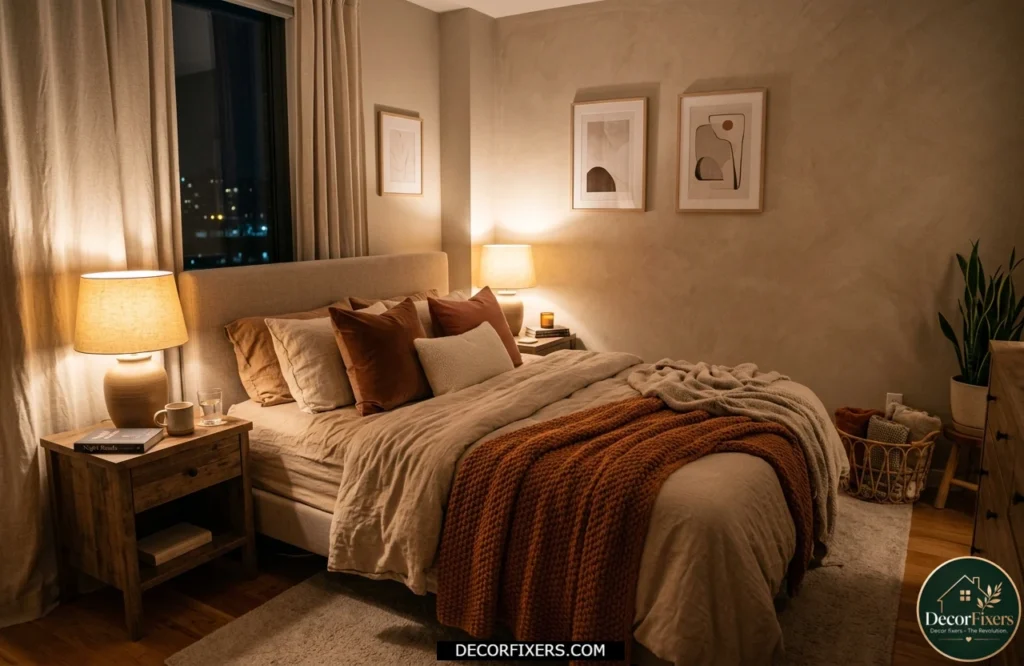
Bad lighting is the number one reason bedrooms feel institutional. Cool white bulbs (5000K+) are designed for offices and kitchens. In a bedroom, they kill every warm feeling in the room.
Swap every bulb to 2700K–3000K warm white. Philips Hue White bulbs cost around $15 each and can be dimmed via app, no rewiring. Place one on each side of the bed, not just overhead. Two small lamps flanking the bed, warm bulbs, dimmed low at 9 pm: that’s the entire mood shift.
Bad lighting is the number one reason bedrooms feel institutional, and this is exactly where Warm Bedroom Ideas start to matter.
2. Layer Your Bedding with Texture, Not Just Color
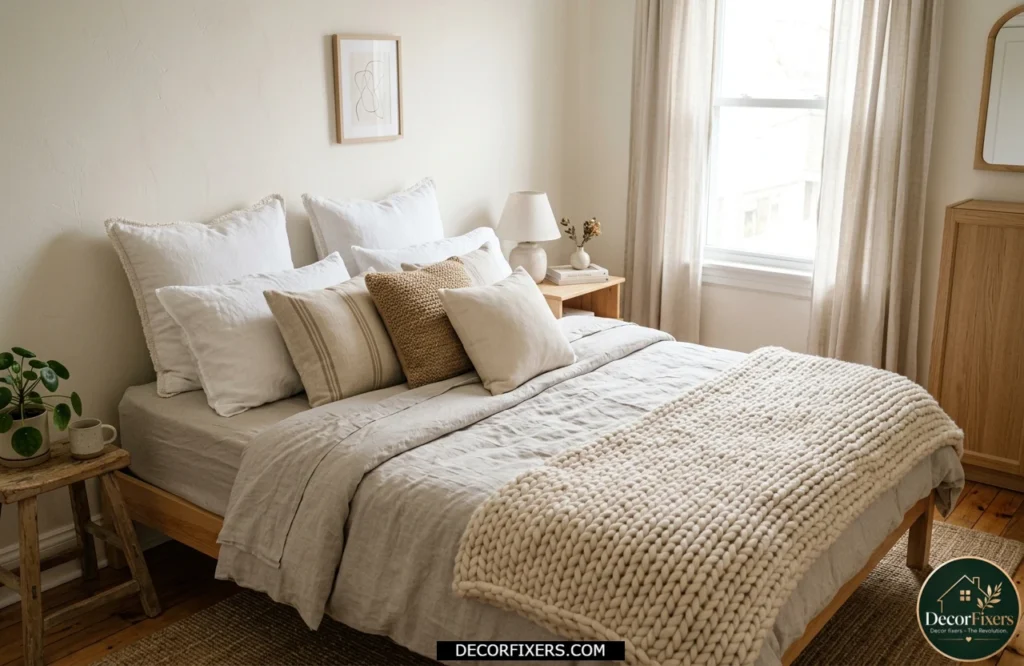
A flat duvet and two standard pillows look fine in a catalog. In a small room where the bed is 70% of what you see, it looks lifeless. Texture is what reads as cozy, and it costs almost nothing to add.
A flat duvet and basic setup don’t create a true Cozy Luxe Retreat Upgrades experience in a small room.
Start with a linen or cotton duvet cover (Parachute Home and Amazon Basics both do well here, Parachute for quality, Amazon Basics for budget). Layer a chunky knit throw draped diagonally across the foot. Add two Euro pillows behind your regular pillows. That’s three layers, three textures, and the bed becomes a focal point instead of just a place to sleep.
3. Use a Storage Bed Frame to Eliminate Hidden Clutter
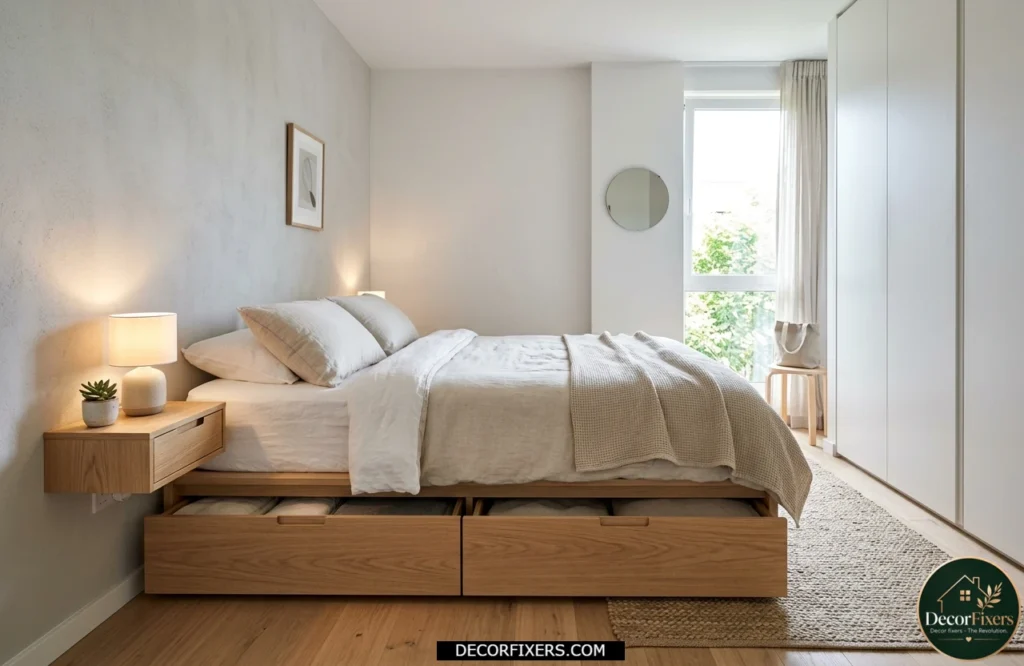
Under-bed clutter is invisible until you crouch down and see the graveyard of boxes, bags, and forgotten things you shoved there. That mess radiates into how the whole room feels, even when you can’t directly see it.
The IKEA HEMNES bed frame with storage drawers (around $400–$500) turns that dead zone into organized, accessible storage. If you’re renting and can’t bring in a new frame, flat vacuum storage bags under a platform bed accomplish 80% of the same effect. Clear the space under the bed first. You’ll feel it immediately.
4. Hang Curtains High and Wide, Even If You Have a Small Window
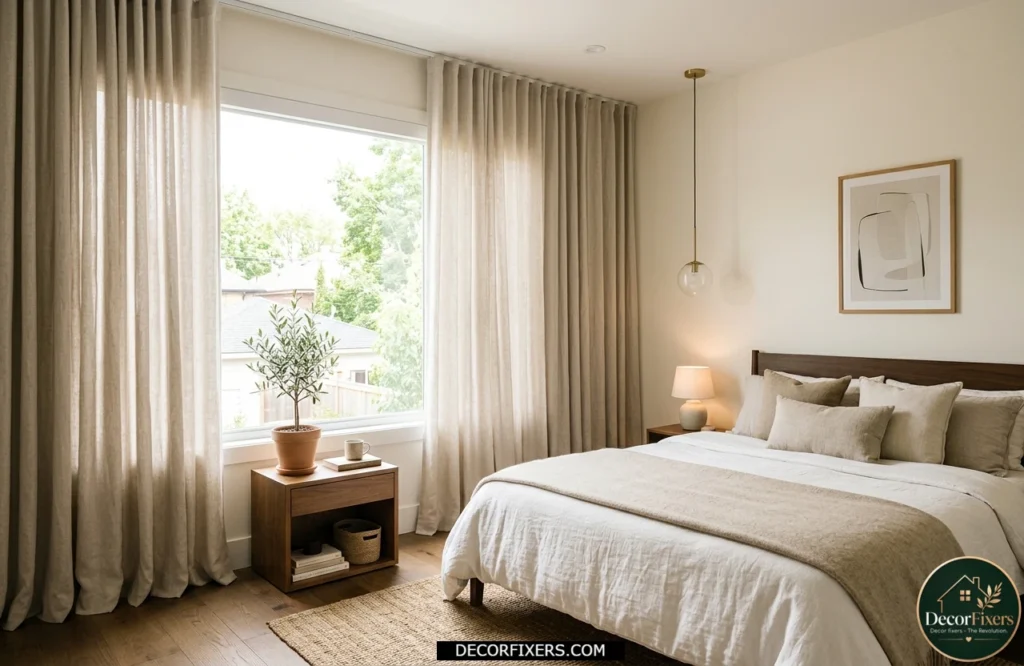
This is the single most underused trick in small bedroom design. Most people hang curtain rods right above the window frame. Wrong move.
Mount the rod 4–6 inches below the ceiling and extend it 10–12 inches on each side of the window. Use floor-length curtains. The visual result: your ceiling looks higher, your window looks larger, and the room feels like it has real architectural detail. Total cost: one curtain rod and a pair of panels from IKEA. Under $60. Enormous visual payoff.
5. Paint One Wall a Deep, Warm Color
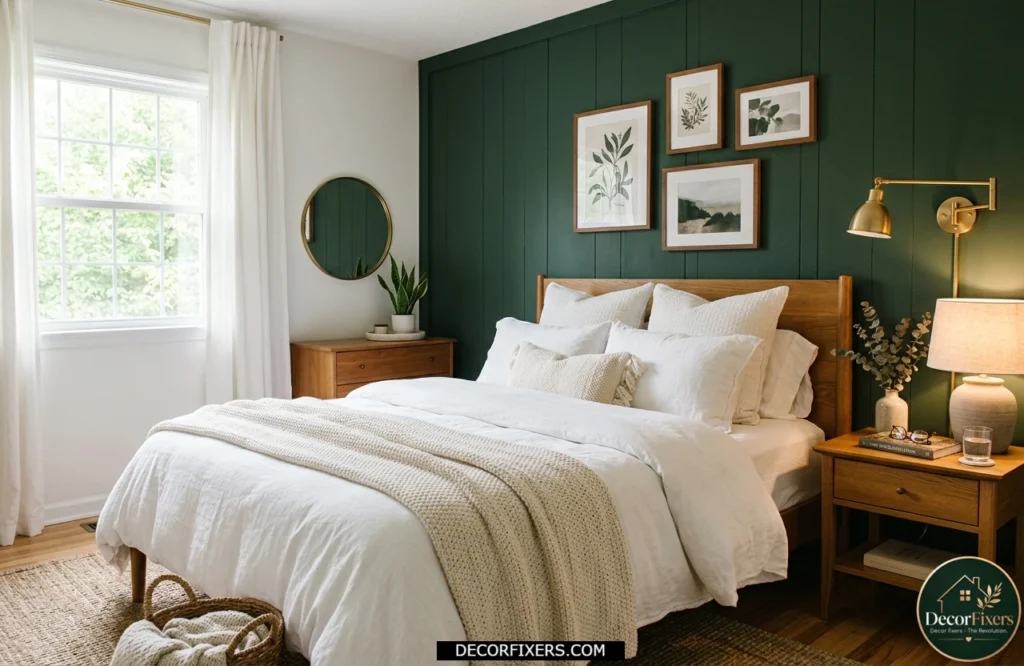
Some interior designers argue that small rooms should always go light. That’s valid for rooms that get strong natural light. But if your bedroom faces north or gets limited sun, a dark wall won’t make it darker; it’ll make it feel intentional.
Try a warm terracotta, deep forest green, or moody navy on the wall behind your bed. These tones create a sense of depth that white can’t achieve. Pair it with white trim and light bedding to prevent the space from feeling heavy. The contrast is what makes it work.
Why Small Bedrooms Feel So Uncomfortable (And What Actually Fixes It)
Small bedrooms don’t feel bad because they’re small. They feel bad because most people decorate them the wrong way, with oversized furniture, overhead-only lighting, and zero layering. The fix isn’t more space. It’s smarter decisions.
Most people assume you need light, neutral walls to make a small room feel bigger. The data, and plenty of designer experience, say otherwise. A deep, warm color on all four walls can actually make a tiny room feel intentional and enveloping rather than accidentally small.
Or maybe I should say it this way: cozy and spacious aren’t the same goal, and chasing spaciousness in a 100 sq ft room is the wrong game.
6. Add a Small Area Rug to Define the Sleeping Zone
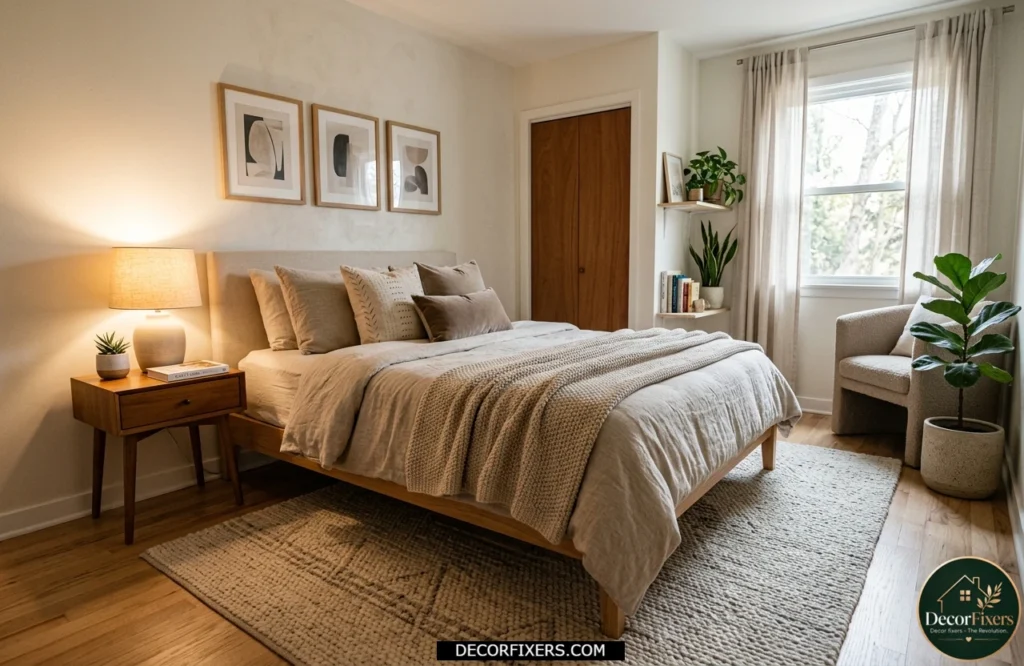
Bare floors in a small bedroom look unfinished and cold, literally and visually. A rug anchors the space, adds softness underfoot, and signals that this area is meant to be lived in.
You don’t need a large rug. A 5×7 or even 4×6, placed so it sits under the bottom two-thirds of the bed, is enough. Go for something with texture, a flatweave jute, a low-pile wool, or a faux-fur accent. Avoid busy patterns in tight spaces. The rug should ground the room, not compete with it.
7. Mount Your Nightstand on the Wall to Free Up Floor Space
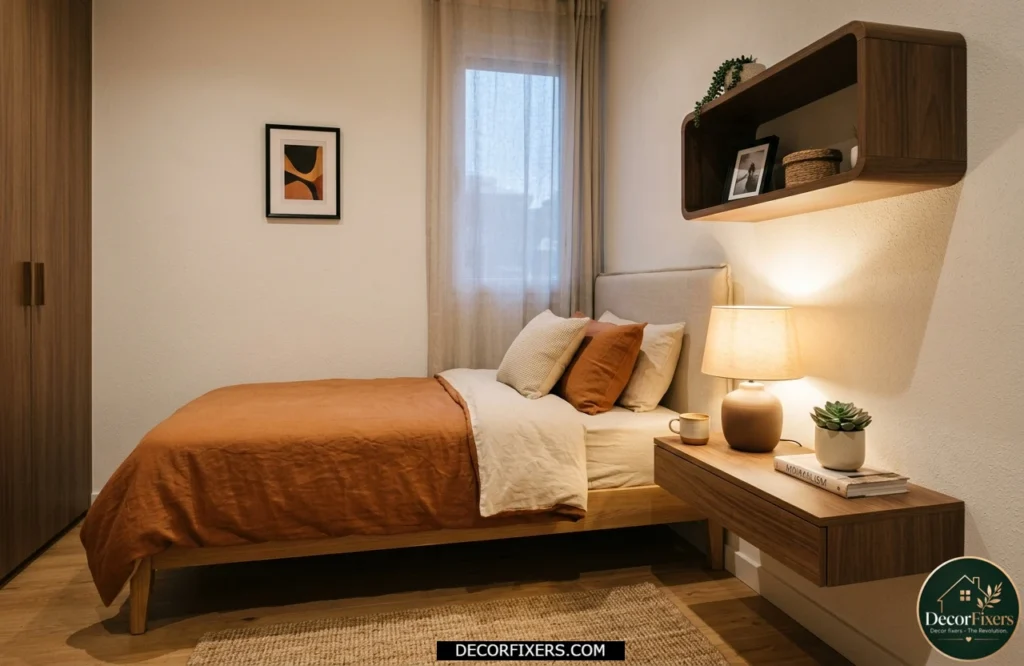
Bedside tables eat floor space that small bedrooms can’t spare. Wall-mounted shelves do the same job with zero footprint.
A simple floating shelf (IKEA LACK shelf, under $15) mounted at mattress height holds a lamp, a book, a glass of water, and your phone. That’s everything a nightstand does. Multiply that across both sides of the bed, and you’ve reclaimed 4–6 square feet of floor. In a 100 sq ft room, that’s significant.
Quick Comparison: Best Cozy Upgrades by Budget
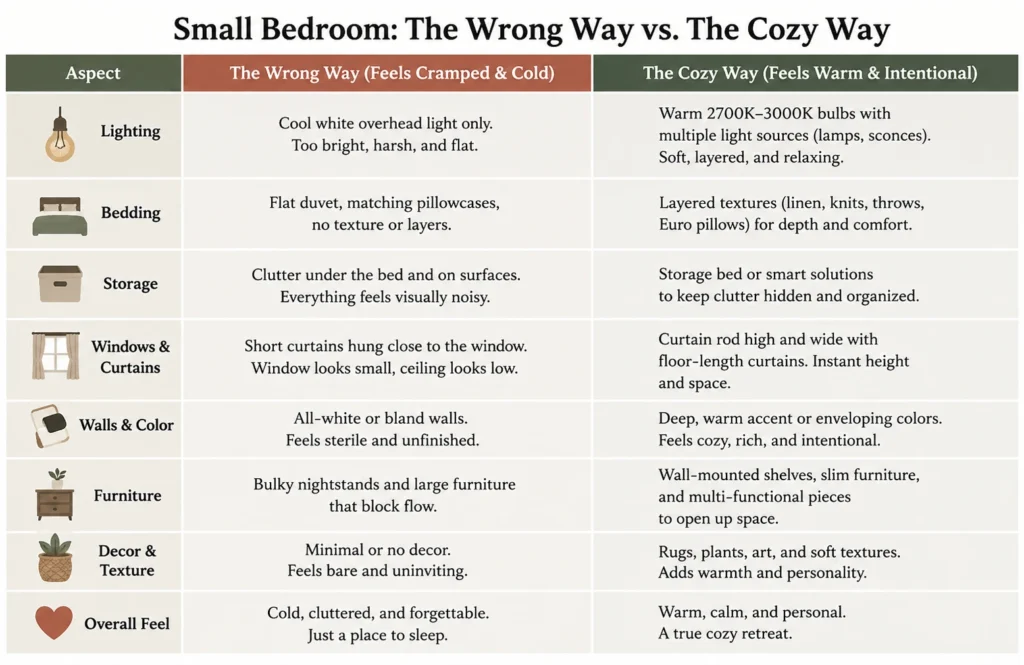
| Option | Best For | Key Benefit | Limitation |
| Warm LED bulbs (2700K) | Instant ambiance upgrade | No wiring needed, ~$15 | Doesn’t add storage |
| Storage bed frame | Rooms under 120 sq ft | Hides clutter completely | Higher upfront cost ($200+) |
| Floor-to-ceiling curtains | Low ceilings | Makes the room feel taller | Requires wall drilling |
| Peel-and-stick wallpaper | Renters | No permanent damage | Looks less premium up close |
| Chunky knit throw | Any size room | Instant texture and warmth | Collects pet hair easily |
8. Use Mirrors Strategically, Not Just for Size
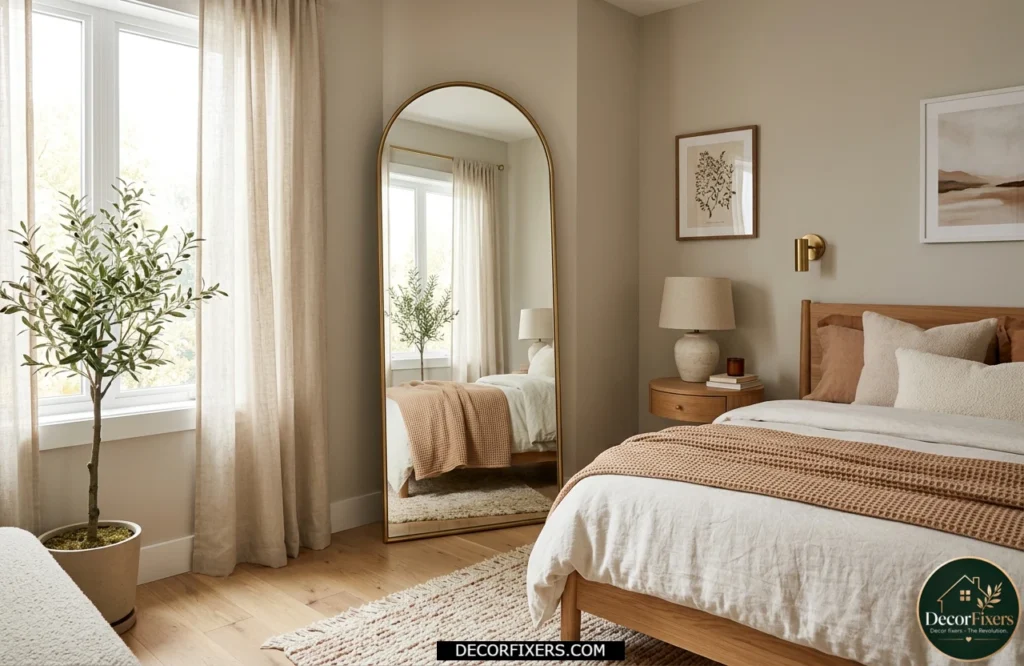
Mirrors in small bedrooms aren’t just a size trick. When placed correctly, they reflect warm lamp light into the room and create the feeling of a second light source.
If you want real Cozy Bedroom Aesthetic Ideas, you don’t start with decor—you start by limiting your color palette.
Place a full-length mirror on the wall adjacent to a window, not opposite the bed, which creates an uncomfortable visual. Or lean a large mirror against the wall for a casual, editorial look that doesn’t require drilling. Avoid mirrored furniture, which reads as dated and can make a room feel like a disco rather than a sanctuary.
9. Introduce Plants, Even One Is Enough
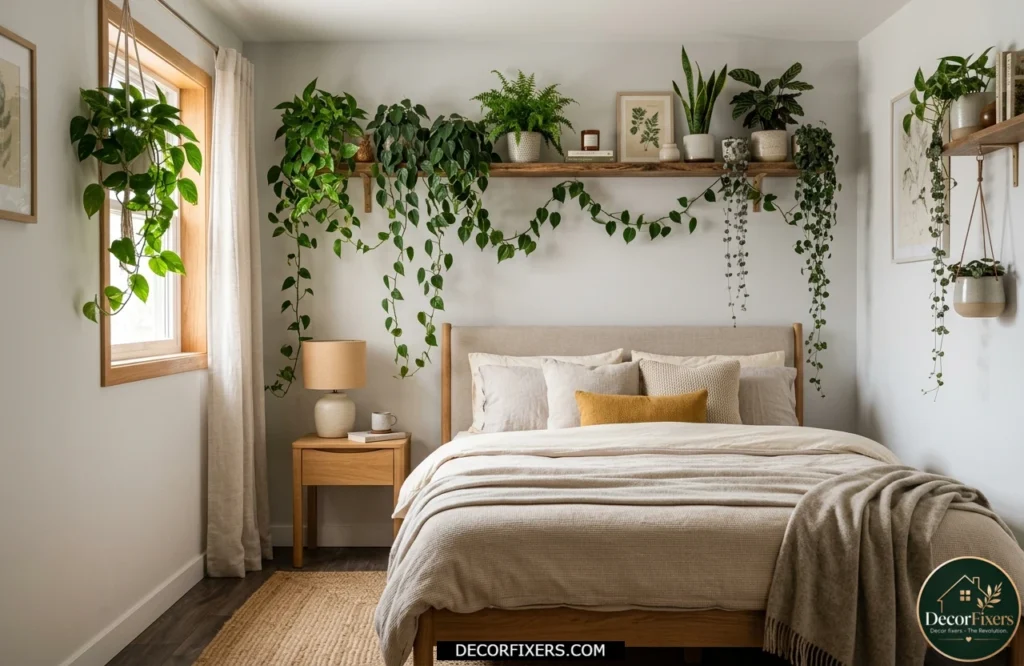
Plants do two things in a small bedroom: they signal life, and they soften hard edges. A room with one trailing pathos on a shelf or a small fiddle leaf in the corner immediately feels less institutional.
If you don’t get enough natural light for live plants, high-quality faux plants (not the cheap plastic ones, look for fabric or preserved moss versions) achieve the same visual effect. No maintenance, no soil, no mess. For small spaces, trailing plants work especially well, such as pathos, string of pearls, or heartleaf philodendron, which spill over shelf edges and add movement without taking up floor space.
10. Create a Reading Nook with a Corner Chair and Lamp
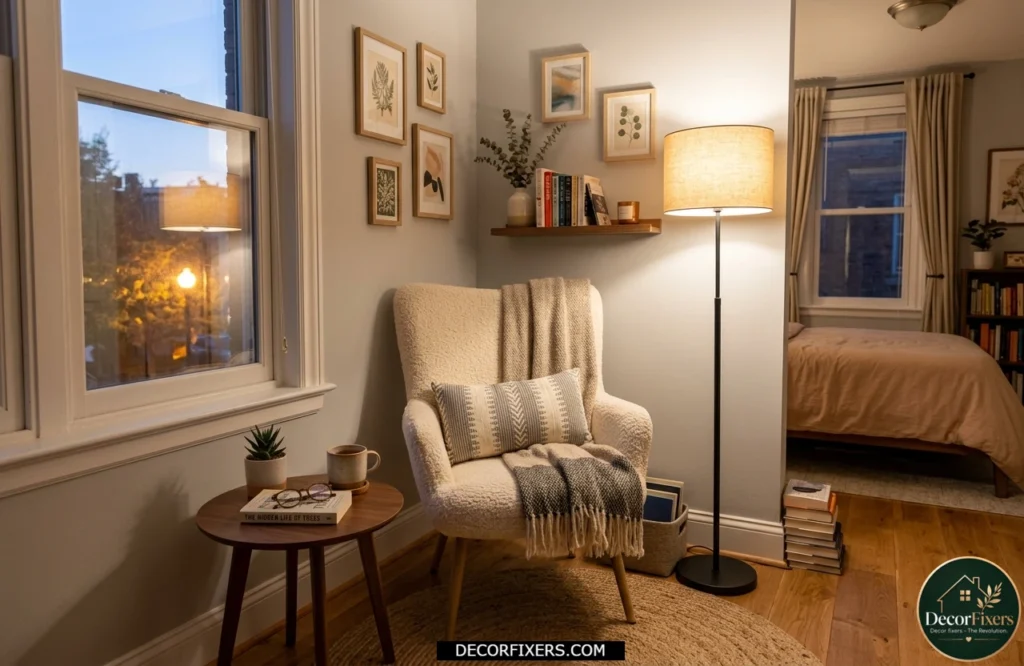
Look, if you’re working with a 10×12 room and think there’s no room for anything extra, here’s what actually works: one small accent chair in a corner, one floor lamp behind it, one throw draped over the arm.
That’s a reading nook. It takes up maybe 16 square feet, and it transforms the room from “a place with a bed” into “a room with zones.” Zoning is what separates a bedroom that feels like a retreat from one that feels like a crash pad. Even if you never sit in that chair, its presence implies intentional design.
| How to Make a Small Bedroom Cozy in 5 Steps 1. Switch all bulbs to 2700K warm white and add table lamps on both sides of the bed. 2. Layer the bed with a duvet, Euro pillows, and a chunky throw in different textures. 3. Hang curtains from ceiling height, 10–12 inches wider than the window on each side. 4. Add a small area rug under the lower half of the bed to anchor the space. 5. Mount one floating shelf as a nightstand and clear all surfaces of non-essential items. |
11. Try Peel-and-Stick Wallpaper on One Wall
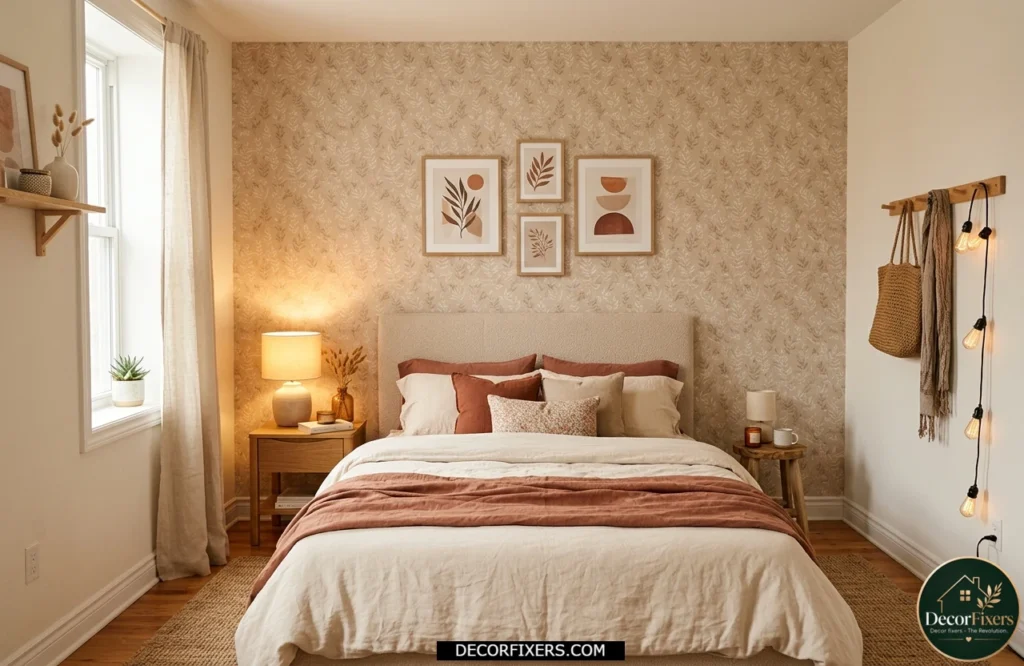
Renters: this one is for you. Peel-and-stick wallpaper has gotten dramatically better in quality over the past few years, and it leaves no damage on removal.
A single accent wall behind the bed, with a subtle linen texture, a warm geometric, or a soft floral, creates the illusion of intentional interior design without a designer’s budget. Brands like Chasing Paper and Tempaper offer options from $3–$8 per square foot. A standard bedroom accent wall (approximately 40 sq ft) runs $120–$320. Far cheaper than painting, and reversible.
12. Use Vertical Space with Tall Shelving
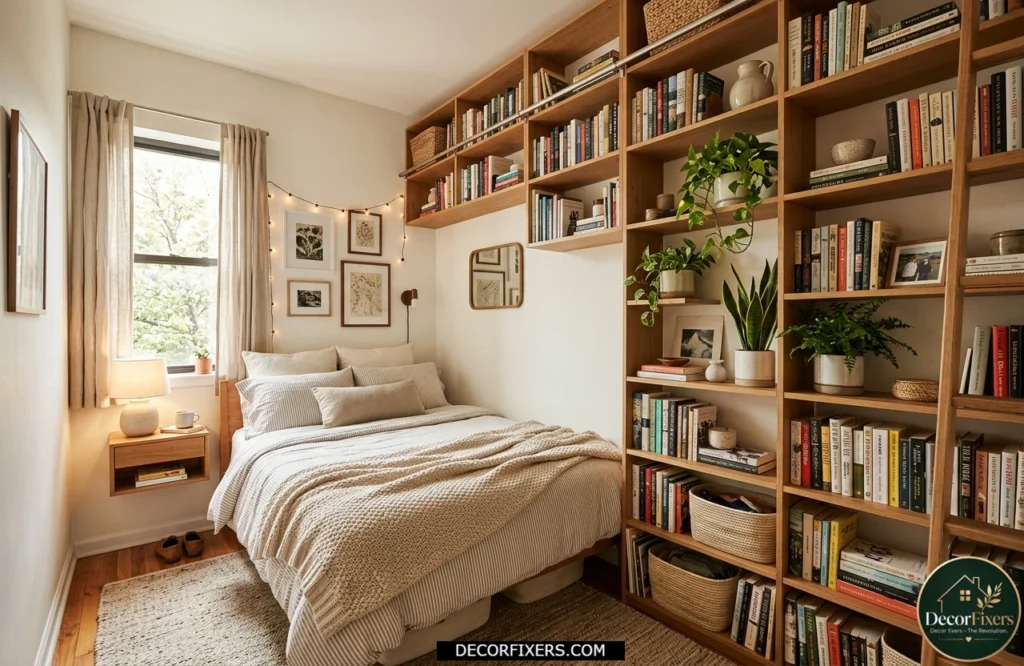
Most small bedrooms waste the top 3 feet of wall space entirely. Tall shelving, floor-to-ceiling, or at least shelf units that reach above eye level, draws the gaze upward, which makes ceilings feel higher.
IKEA KALLAX units stack well and can be configured in multiple ways. Fill upper shelves with items you look at, not items you use daily, books, plants, and a few objects that mean something. Lower shelves hold the practical stuff. When shelving goes vertical, it stores more while taking up the same floor footprint. That’s the whole game in a small room.
13. Keep the Color Palette to Three Tones Maximum
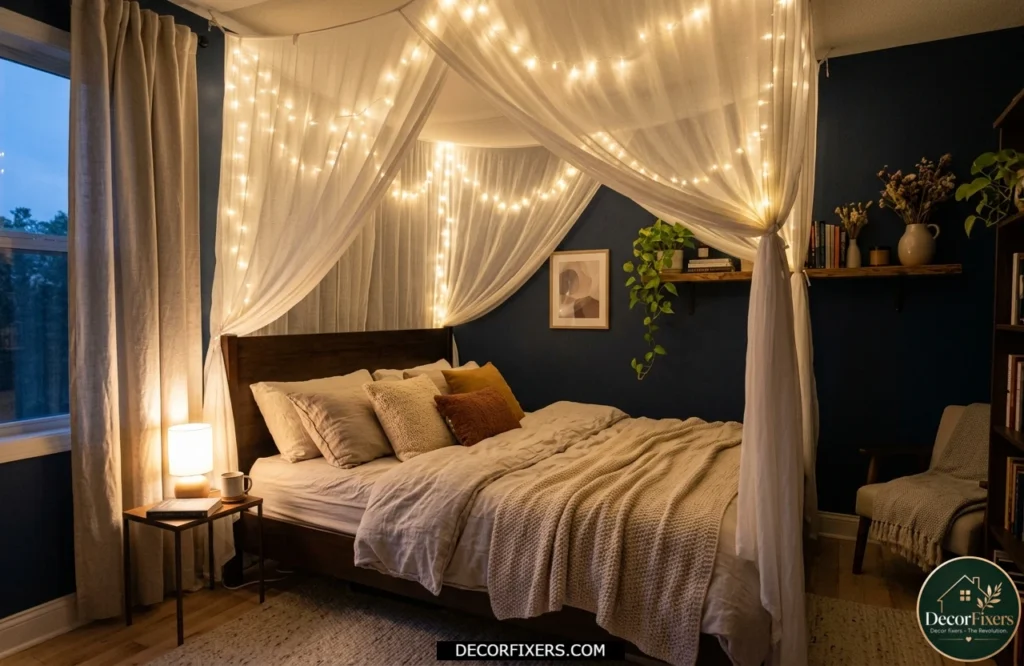
Visual clutter makes small spaces feel smaller. And the most common source of visual clutter isn’t stuff; it’s too many competing colors.
Pick one anchor color (your wall or bedding), one neutral (white, cream, or linen), and one accent (a warm wood tone, terracotta, dusty sage, something pulled from nature). Three tones. Everything in the room fits within this. Suddenly, the space reads as curated rather than chaotic, even if nothing physically changed.
14. Add String Lights or a Canopy for Soft Overhead Warmth
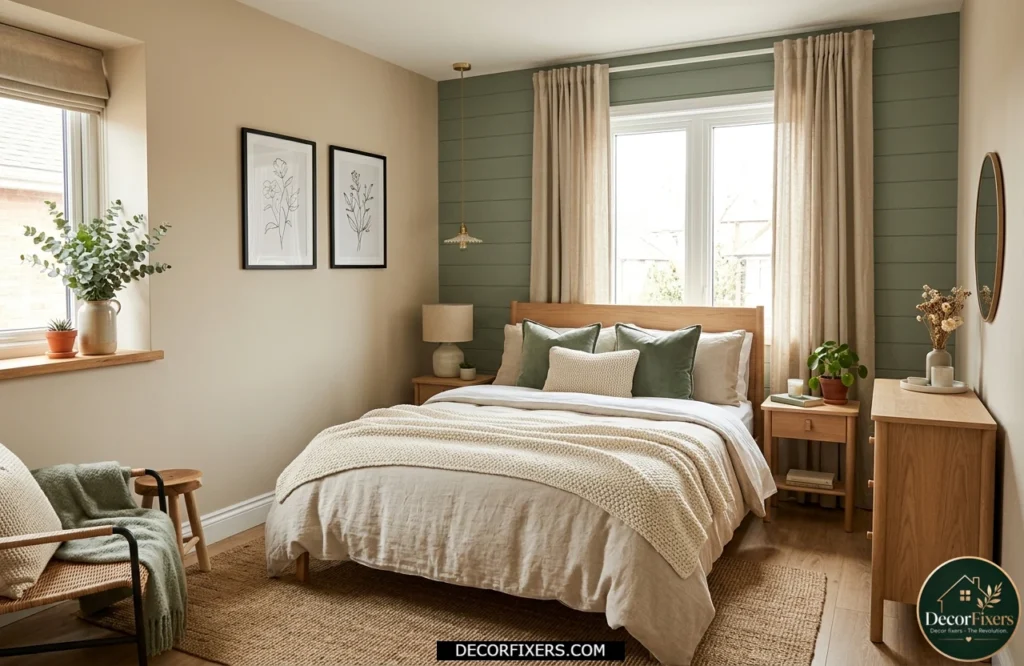
Overhead ceiling lights are usually the worst option for a cozy bedroom. They’re bright, flat, and directionless. String lights are the opposite.
Drape warm-white string lights along a curtain rod above the bed, or arrange them loosely across the ceiling in a canopy pattern using removable adhesive hooks. Pair with your 2700K lamps, and you have a layered lighting setup that looks warm from 7 pm onward. Cost: $15–$30 for a good set. Effect: completely disproportionate to the price.
15. Declutter Ruthlessly, Only Keep What Has a Dedicated Spot
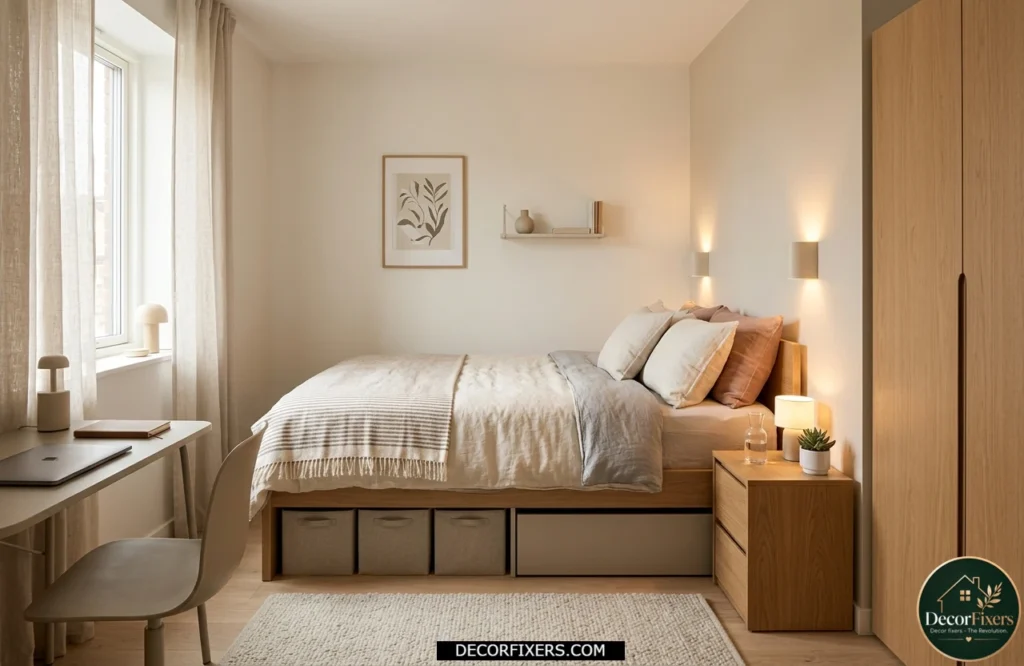
No amount of styling saves a cluttered room. This isn’t a cleaning lecture; it’s a spatial reality.
In a 100–150 sq ft room, every visible item demands visual attention. Objects without a home drift to surfaces, floors, and chair backs. The rule: if it doesn’t have an assigned spot, it doesn’t belong in the bedroom. This means getting storage sorted first (see ideas #3 and #12), then evaluating what stays. Users who’ve done this consistently report that the room feels “twice as big” without any actual furniture change.
16. Use Scent to Make the Room Feel Like a Retreat
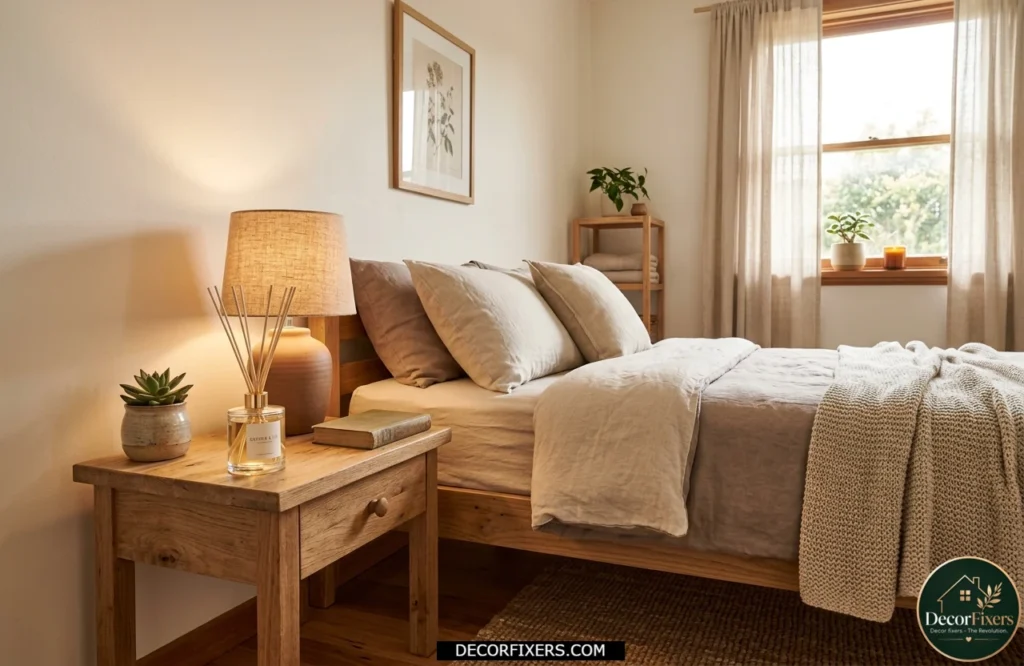
Cozy isn’t just visual. Scent is one of the strongest emotional triggers for comfort and relaxation, and it’s almost always left out of bedroom design advice.
A reed diffuser (no flame, no supervision needed) with a warm scent, cedarwood, vanilla, sandalwood, and amber, works 24 hours. Alternatively, an unscented humidifier with a few drops of essential oil achieves the same effect while improving air quality in dry climates. This is the layer that costs under $20 and gets noticed immediately by anyone who walks in.
17. Address Awkward Room Shapes, Not Just Square Footage
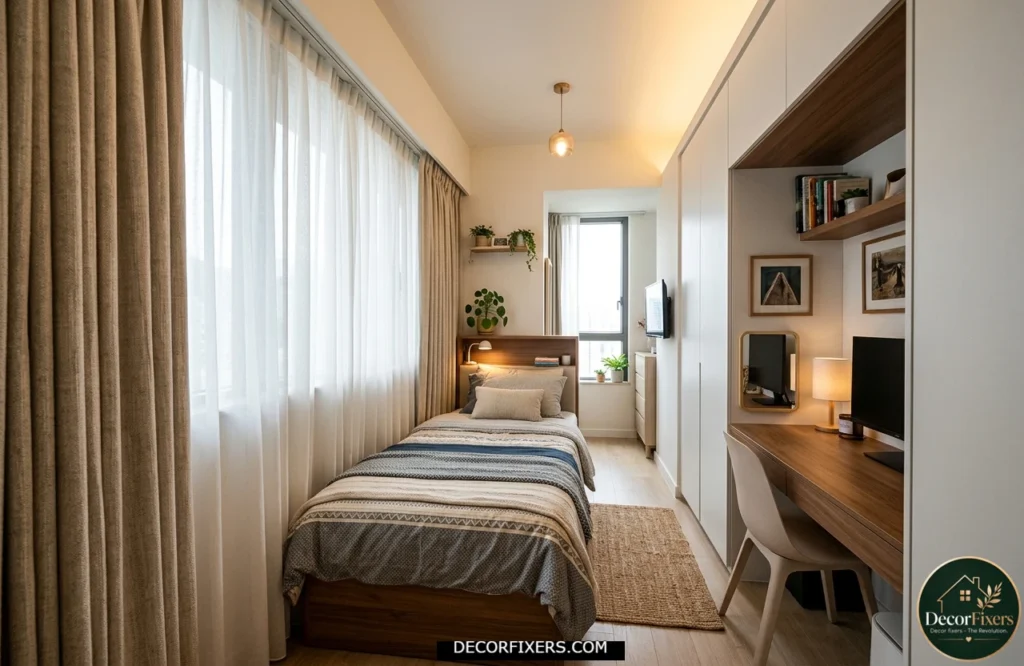
Narrow rooms. Rooms with a door that swings into the center. Rooms with a window on the wrong wall. Most cozy bedroom guides ignore these, and it’s where most real bedrooms fall apart.
For narrow rooms (under 8 feet wide): place the bed lengthwise along the longest wall, not the short wall. It frees walking space and makes the room feel less like a hallway. For low ceilings: use low-profile bed frames, mount art high, and use vertical stripes in any textile. For off-center windows: treat them as a feature. Hang a full curtain that spans the whole wall, not just the window. This visually centers the window and makes the asymmetry intentional.
CONCLUSION:
I won’t pretend every small bedroom can look like an Architectural Digest feature. Some rooms are just difficult, odd proportions, bad light, landlord-beige paint you can’t touch. But in every one of those rooms, there’s a version that feels warm, calm, and genuinely yours.
The ideas above aren’t theory. They’re the kind of small, stackable changes that, when you do three or four of them together, shift a room from tolerable to actually good. Warm bulbs. Layered bedding. Curtains hung at the ceiling. A rug that grounds the space. A cleared surface that finally stays clear.
Start with whatever you can do this week. Not all 17. One. Then another. That’s how the room changes, not all at once, but in layers, exactly the way cozy works.
FAQs:
Q: What’s the best way to make a small bedroom feel cozy on a budget?
A: Start with warm light bulbs (2700K), layered bedding with a chunky throw, and floor-length curtains hung from ceiling height. These three changes cost under $100 combined and create the biggest visual shift in a small bedroom.
Q: How do I make a small bedroom look bigger and cozier at the same time?
A: Use a warm neutral palette with one deeper accent tone, mount floating shelves instead of bulky nightstands, and add a full-length mirror beside, not opposite, the window. Bigger and cozier aren’t always the same goal; prioritize cozy, and the room naturally feels more intentional.
Q: Should I use dark or light colors in a small bedroom?
A: Light colors work well for rooms with strong natural light. For north-facing or low-light rooms, a deep warm tone, terracotta, forest green, or navy can make a tiny space feel intentional and cozy rather than accidentally small. It depends on your light, not your square footage.
Q: How do I add storage to a small bedroom without making it feel cluttered?
A: Go vertical. Tall shelving units, wall-mounted floating shelves, and storage beds with built-in drawers add capacity without consuming floor space. The IKEA HEMNES storage bed and KALLAX shelf unit are two well-proven options under $500 combined.
Q: When should I consider professional interior design help for a small bedroom?
A: If the room has structural constraints, an awkward load-bearing wall, no natural light, an unusable layout, a one-hour paid consultation with an interior designer is worth $150–$250. For most renters, the ideas above are more than enough without professional help.

Creator of DecorFixers, sharing practical home and interior ideas focused on real-life usability, simple design improvements, and budget-friendly solutions.
1 thought on “17 Cozy Bedroom Ideas for Small Rooms: Ideas That Actually Work”