


You’ve tried the baskets. You’ve rearranged the sofa twice. You’ve started a declutter, stalled on a box of mystery cables, and the living room still looks the same.
Here’s the thing: the problem isn’t the clutter itself, it’s that there’s nowhere designed to absorb it. A thoughtful storage system doesn’t just hide mess; it makes tidying a two-minute habit instead of a weekend project.
This guide skips the vague advice you’ve already read and goes straight to 20 specific, tested solutions, with renter-safe alternatives, product names, and honest notes on what each solution can and can’t do.
The most effective small living room storage ideas combine hidden compartments with vertical wall space. The biggest mistake in compact rooms is treating storage as an afterthought rather than a structural decision. Furniture with built-in storage, floor-to-ceiling shelving, and closed cabinets consistently outperform decorative baskets as a long-term clutter solution.
1: Storage Ottoman as the Room’s Anchor
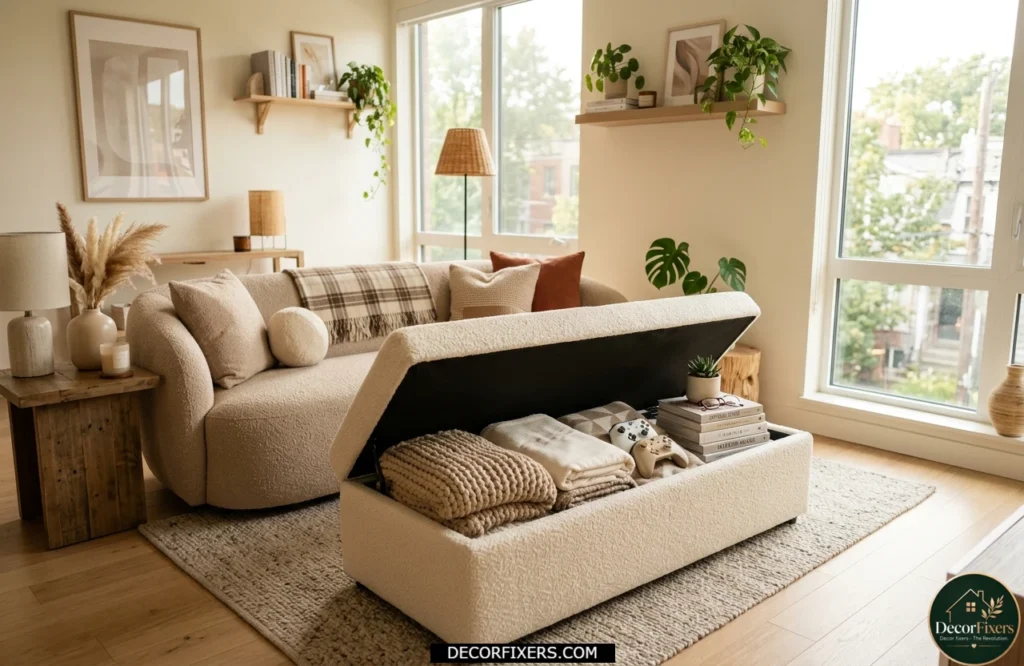
A storage ottoman does three jobs at once: seating, a footrest, and a hidden cabinet. The West Elm Terrace Storage Ottoman (~$349) is a well-built example with a hinged top rated for adult sitting weight. Choose a cube design over a round one, square lids open fully, and give you proper access.
Dedicate it to one category only. Blankets, or kids’ toys, or gaming controllers. Mixed ottomans become junk drawers within two weeks.
| What Are Small Living Room Storage Ideas? Small living room storage ideas are furniture arrangements, wall-mounted systems, and multi-function pieces that maximise a compact lounge’s storage capacity without sacrificing floor space or visual calm. The goal is to hide frequently used items — remotes, blankets, books, chargers — so surfaces stay clear, and the room feels larger than it is. |
2: Lift-Top Coffee Table
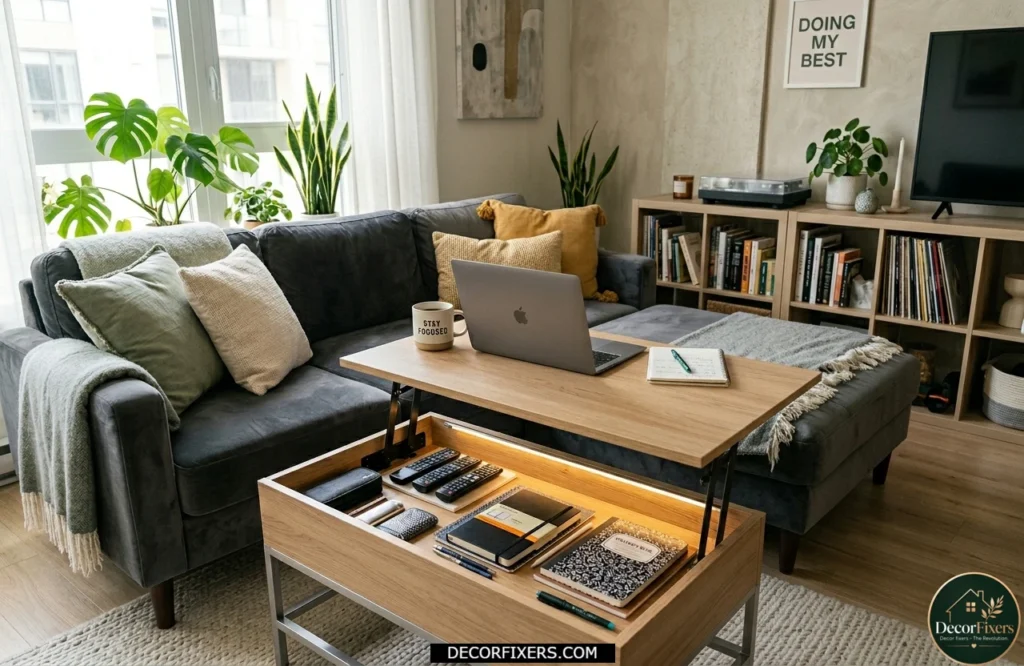
The lift mechanism brings the work surface up to laptop height, and the compartment below holds a full set of remote controls, a lap desk, or a board game. IKEA LIFTARYD (~$179) is the budget option; Article Arca ($499) suits a more polished aesthetic. Measure the swing radius of the lifting arm before you buy, as it needs 18 inches of clearance in front of the sofa.
3: Media Console With Closed Cabinets (Not Open Shelves)
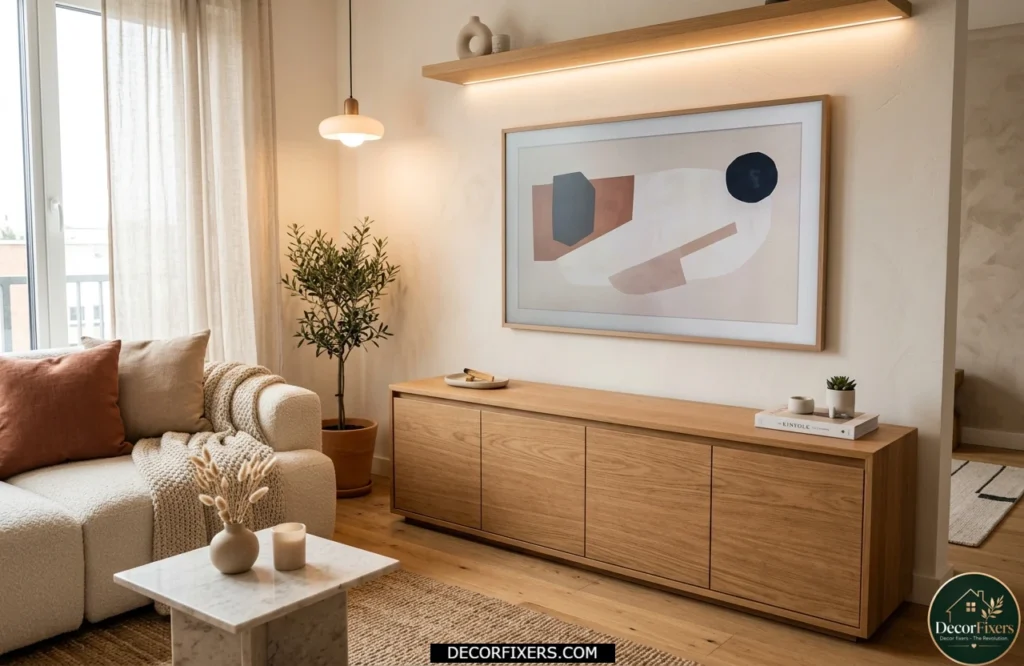
Open TV units are storage theatres. They look organized for three days, then every surface accumulates. A closed-door media console, even an inexpensive one, resets in seconds because there’s only one instruction: close the door.
The IKEA BESTA system is the most flexible option in this category. You can configure it from $150 upwards, choosing door styles, widths, and leg heights. It’s modular, so the same unit can move with you to the next flat.
Quick Comparison:
The most effective small living room storage ideas combine hidden compartments with vertical wall space. Furniture with built-in storage, floor-to-ceiling shelving, and closed cabinets consistently outperform decorative baskets as a long-term clutter solution.
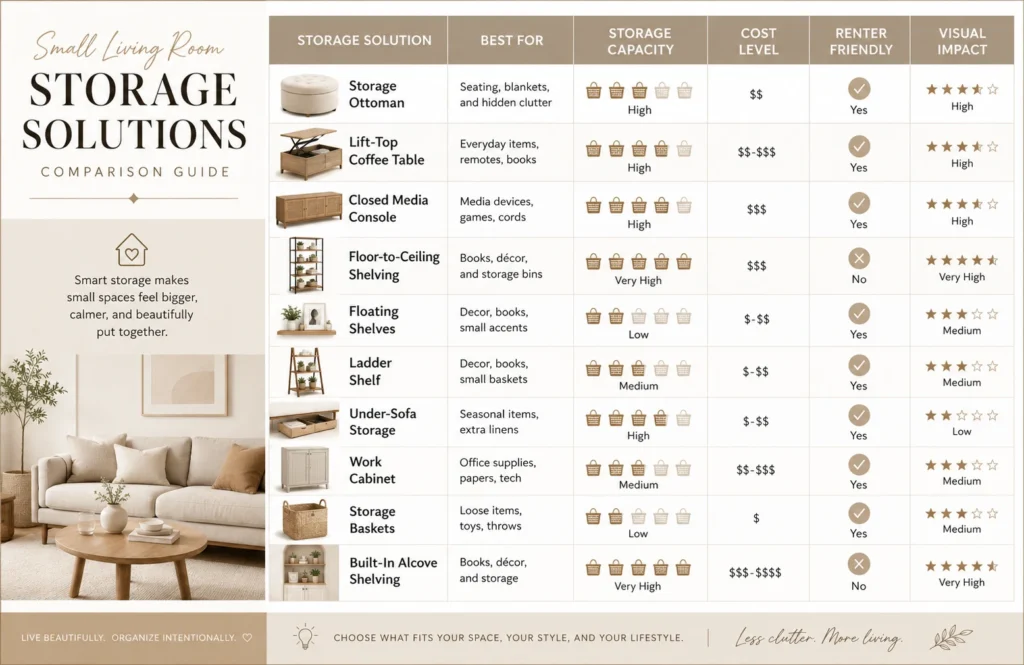
| Storage Solution | Best For | Key Benefit | Limitation |
| Storage Ottoman | Renters, small spaces | Zero drilling, instant seating | Limited to soft goods or small items |
| Lift-Top Coffee Table | WFH / multi-use rooms | Work surface + hidden storage | Needs 18″ clearance to open |
| IKEA BESTA Console | Media + general storage | Modular, closed-door system | Heavy; requires wall-anchor |
| KALLAX Shelving Unit | Books, baskets, display | Mix open + basket-closed zones | Open shelves need regular editing |
| Tall Slim Bookcase | Vertical space maximisers | Pulls eye upward, hides books | Needs a wall anchor for safety |
4: Floor-to-Ceiling Shelving
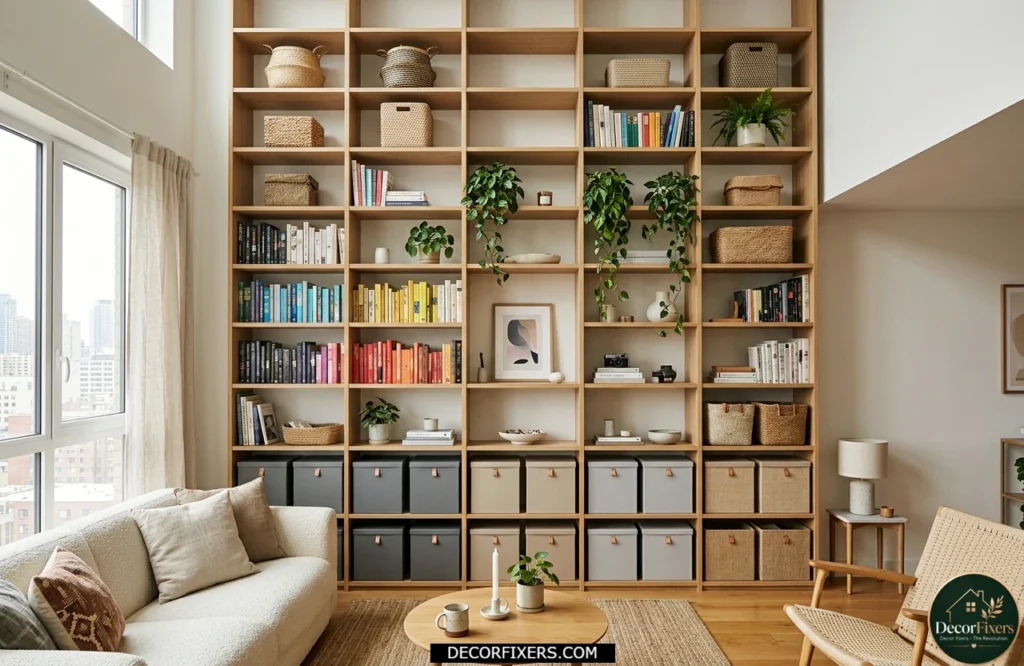
A built-in or modular unit that runs from floor to ceiling does two things simultaneously: creates massive storage volume and draws the eye upward, making the ceiling feel higher.
This approach works particularly well in homes inspired by Scandinavian Living Room Ideas, where vertical storage, clean lines, and uncluttered styling help compact spaces feel brighter and more spacious.
String Furniture’s modular wall system is the designer choice (~$800+). The IKEA KALLAX 4×4 (~$189) gets you there on a budget with the bonus of accepting KALLAX insert boxes (~$10–$15 each) that convert open cubbies into closed, basket-style compartments.
5: Floating Shelves Above the Sofa
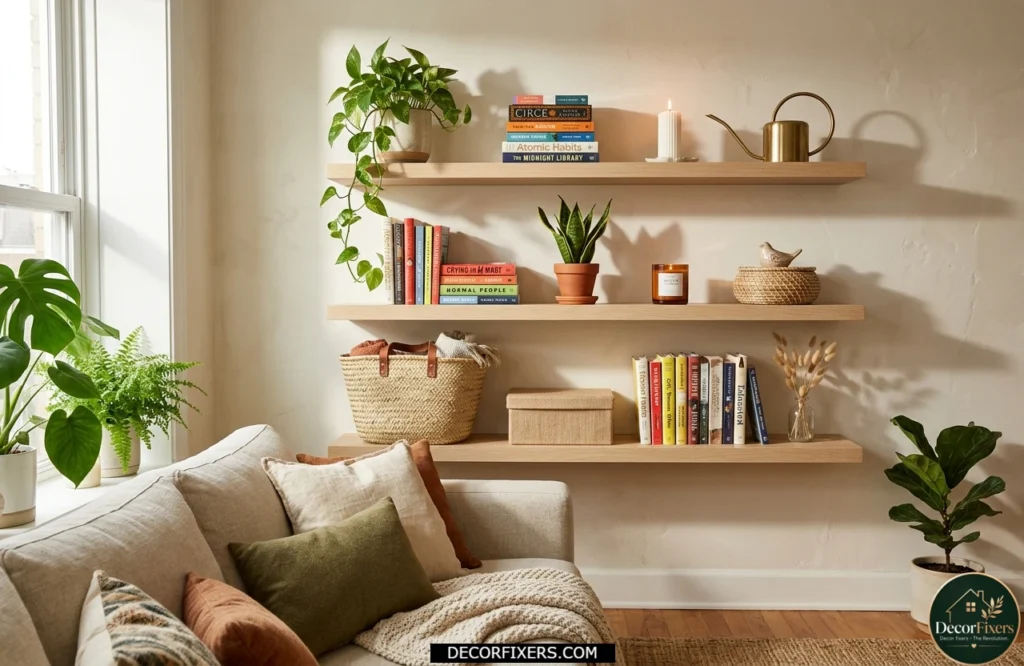
The wall above a sofa is one of the last truly free surfaces in a small living room. A pair of floating shelves installed at 70–75 inches from the floor holds books, small plants, and lidded boxes with zero floor footprint.
For renters: IKEA LACK shelves with the supplied fixings rated to 22 lbs. each work with standard drywall anchors, no studs required for lightweight loads. Spackle the holes when you leave.
Multi-use living rooms, spaces that double as a home office, kids’ zone, or guest room, need category-specific hidden storage, not open display. According to String Furniture’s design team, the most overlooked storage real estate in a small room is the vertical wall space above furniture, which typically goes unused from roughly 60 inches up to the ceiling. That zone alone can absorb several hundred liters of storage capacity without touching the floor plan.
6: Wall-Mounted Media Storage (Floating TV + Hidden Cable Runs)
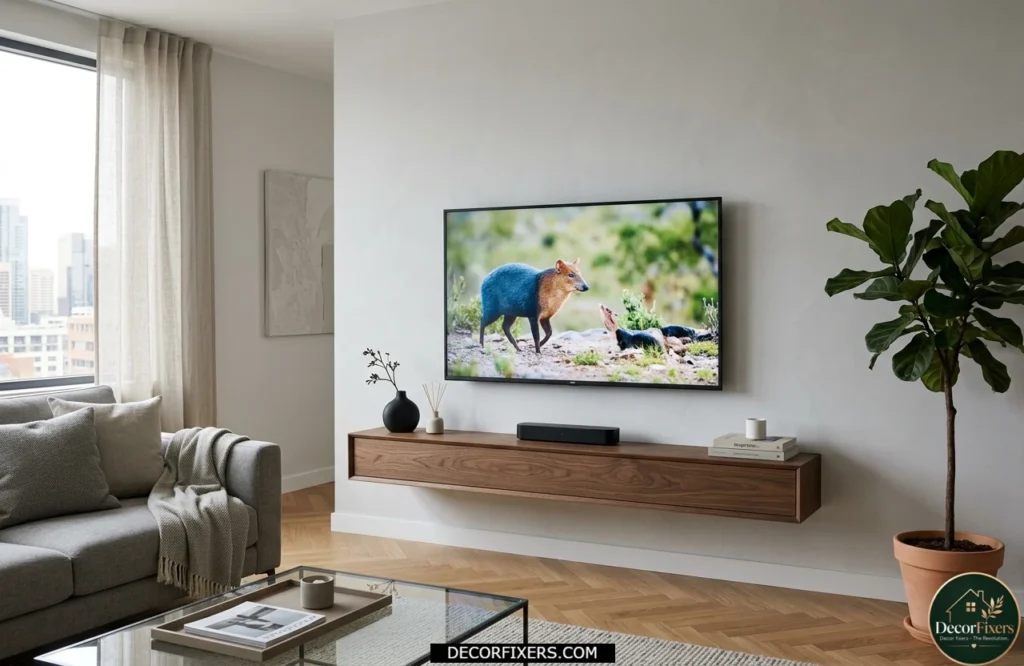
Wall-mounting the TV is the single highest-ROI move in a small living room. It clears the entire surface of the media console (or removes the need for one), and a recessed cable conduit makes the wall look intentional rather than improvised. Most rental leases permit TV mounts if you patch on exit.
I’ve seen conflicting advice on this; some sources say tension rods and adhesive strips aren’t worth it for heavy loads; others recommend them freely. My read is this: adhesive solutions work reliably up to 5 lbs. per anchor, which covers most hooks, small shelves, and light frames. Anything heavier needs a proper wall fix.
7: Freestanding Ladder Shelf
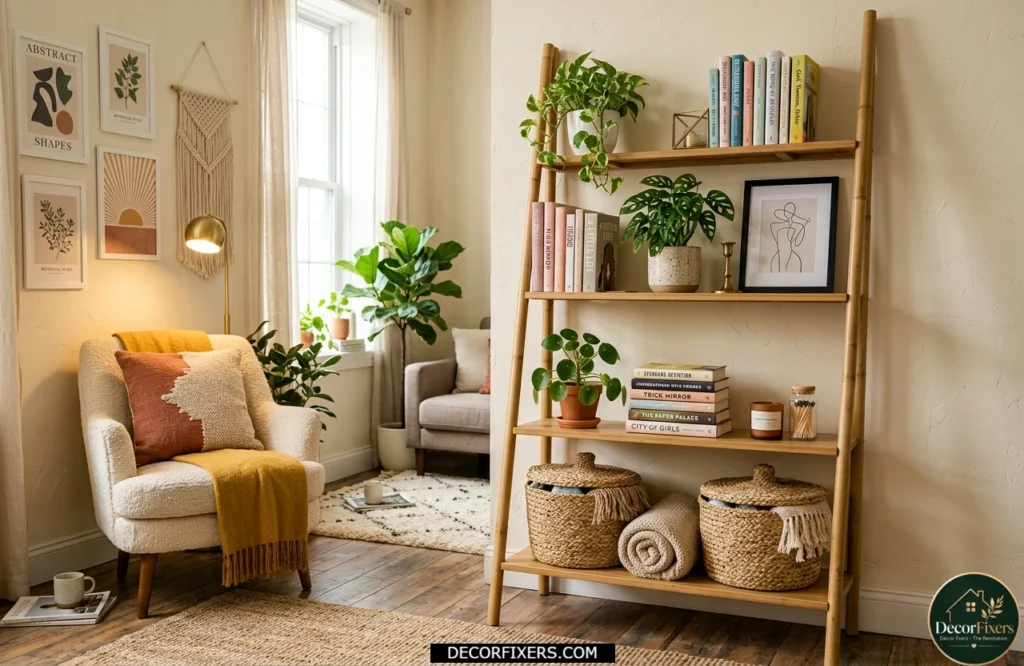
A ladder shelf leans against the wall with zero fixings, holds 40–60 lbs. across its rungs, and moves in an afternoon. The Nathan James Theo (~$80–$120) and Wayfair’s Belleza range are reliable mid-market choices. Style the bottom two rungs with lidded wicker baskets; they hide everyday clutter while the upper rungs display curated items.
8: Over-the-Sofa Freestanding Shelf Tower
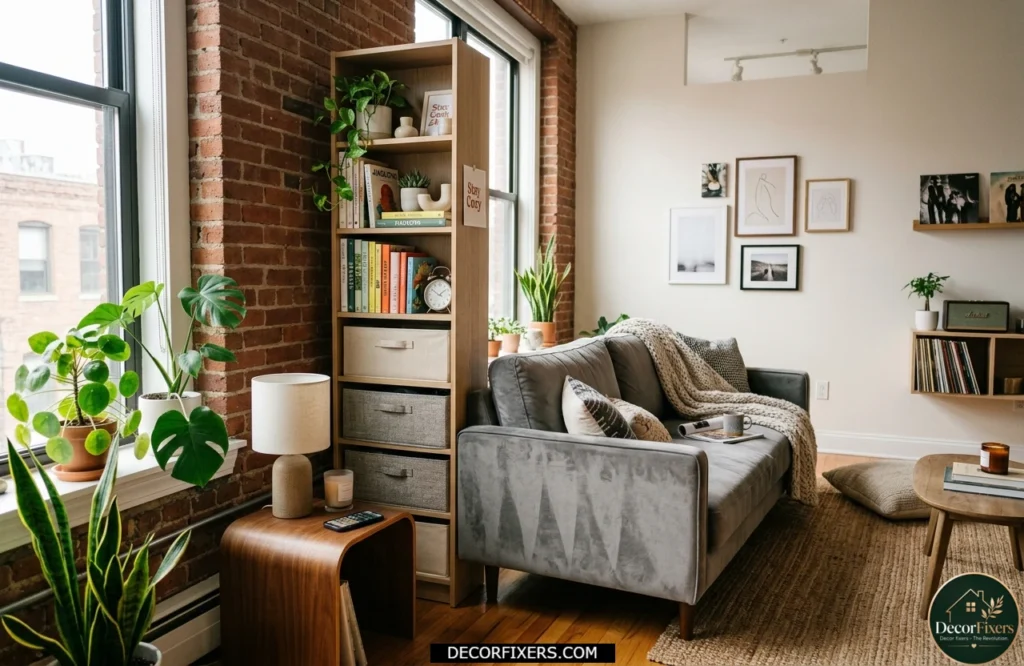
A narrow freestanding unit, specifically designed to sit behind a sofa, creates a floating-shelf aesthetic with zero wall contact.
Similar solutions frequently appear in Small Living Room Design Ideas because they add storage without increasing visual bulk, making the room feel functional while preserving valuable floor space.
Under 12 inches deep is the target, so it doesn’t encroach on circulation space.
9: Command Strip Hooks in a Hidden Corridor
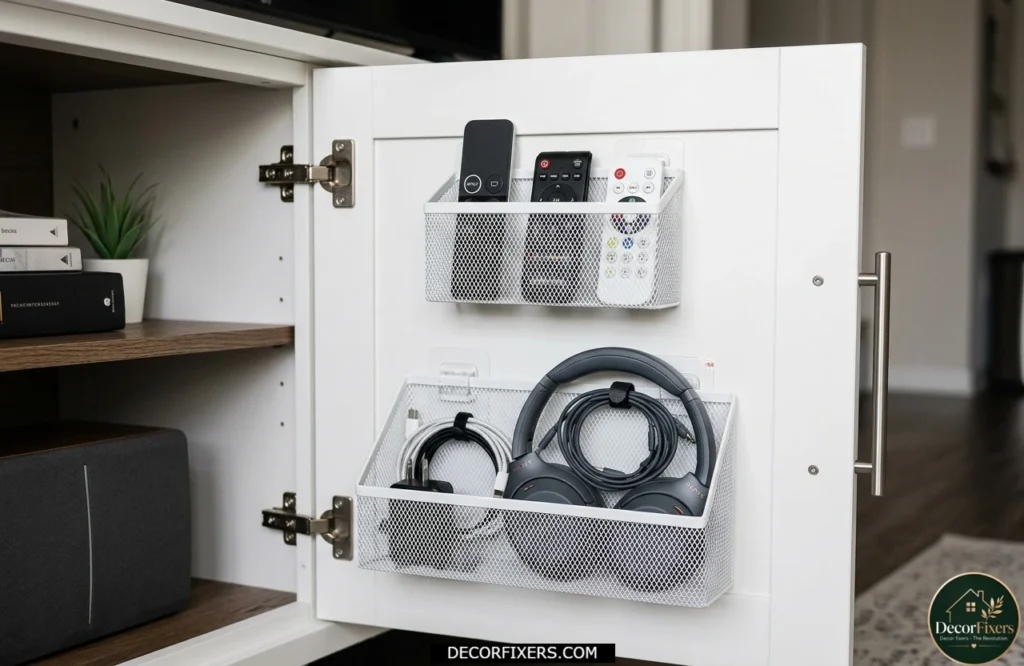
The inside of a cabinet door, the back of the sofa wall, or the narrow strip beside a window frame, these are drill-free surfaces that accept 3M Command Large Strips (~$10 for 4 pairs) rated to 16 lbs. Use them to mount small baskets for remotes, charging cables, or kids’ headphones.
10: Under-Sofa Storage Drawers
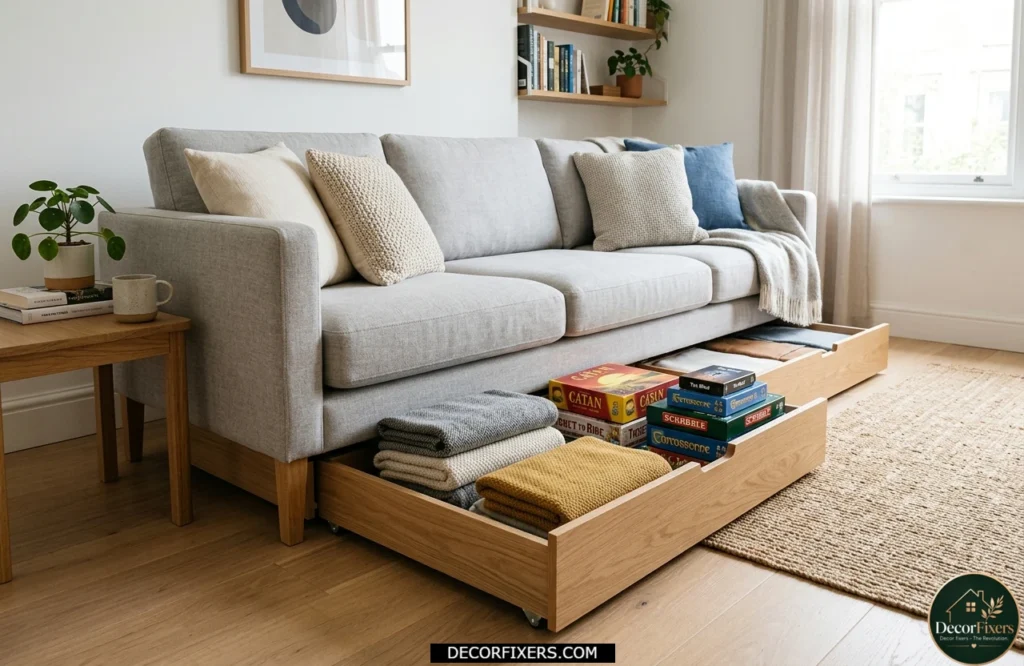
Most sofas sit 7–9 inches off the floor, enough space for flat, roll-out storage drawers. IKEA SKUBB flat storage cases and third-party under-bed rolling bins both fit. Dedicate this zone to seasonal items: spare cushion covers, board games, extra blankets.
This is the section most competing guides skip. A living room that also functions as a home office, a play zone, or a guest space needs category-specific storage, not just ‘more baskets’.
| How To Hide Work-From-Home Clutter in a Living Room To conceal a WFH setup in a small living room: 1. Use a closed-door media console or armoire as a ‘work cabinet’, laptop, charger, papers go in; doors close at 5 pm. 2. Run cables into a lidded cable box or clip them behind a shelf strip. 3. Store a compact printer in a rolling cart that tucks under the shelf when not in use. 4. Label one ottoman or drawer exclusively for work supplies so they never migrate to the sofa. |
11: The ‘Work Cabinet’ Close-at-5 pm System
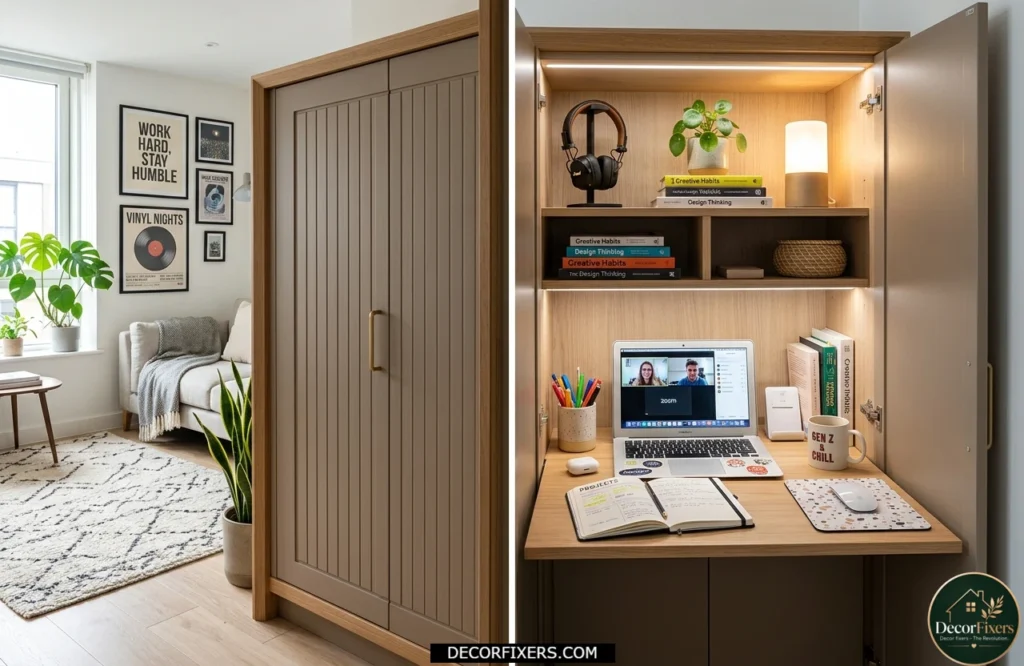
An armoire, a closed BESTA unit, or even a repurposed sideboard becomes a dedicated work zone. Laptop, notebook, charger, headphones, all live inside. At the end of the workday, it closes. The room becomes a living room again. It takes approximately 45 seconds.
12: Rolling Kitchen Cart as Hidden WFH Station
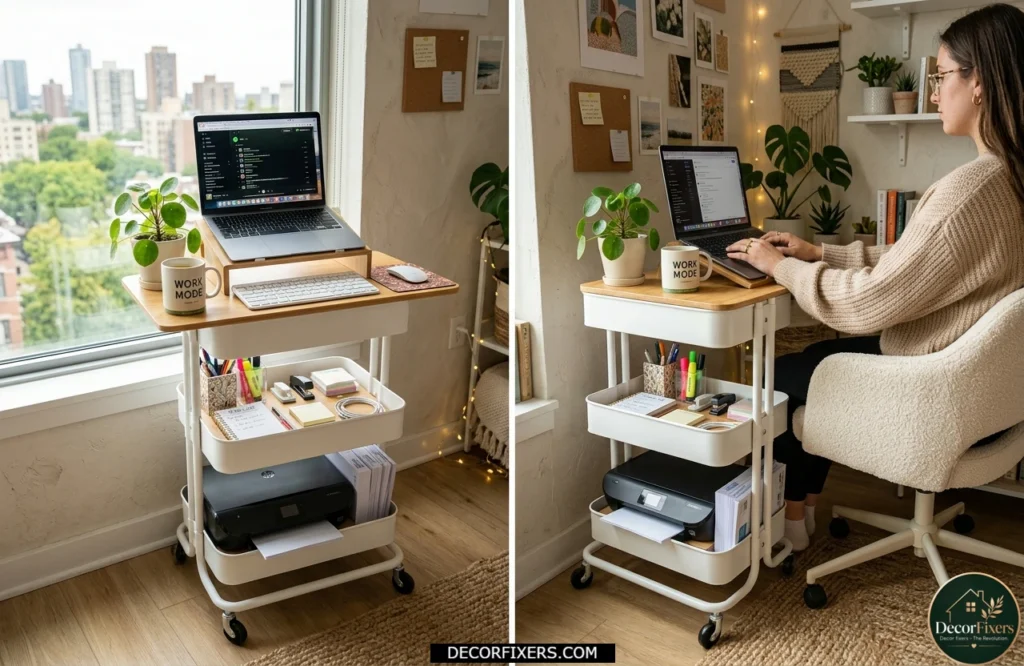
A compact rolling cart (~$60–$120) with a drop-leaf top can hold a laptop on top and store office supplies and a small printer on the shelves below. Roll it to your working position; roll it into a corner or closet when done. This is one of the most flexible and most underused solutions in small-space design.
13: Toy Storage That Looks Like Furniture
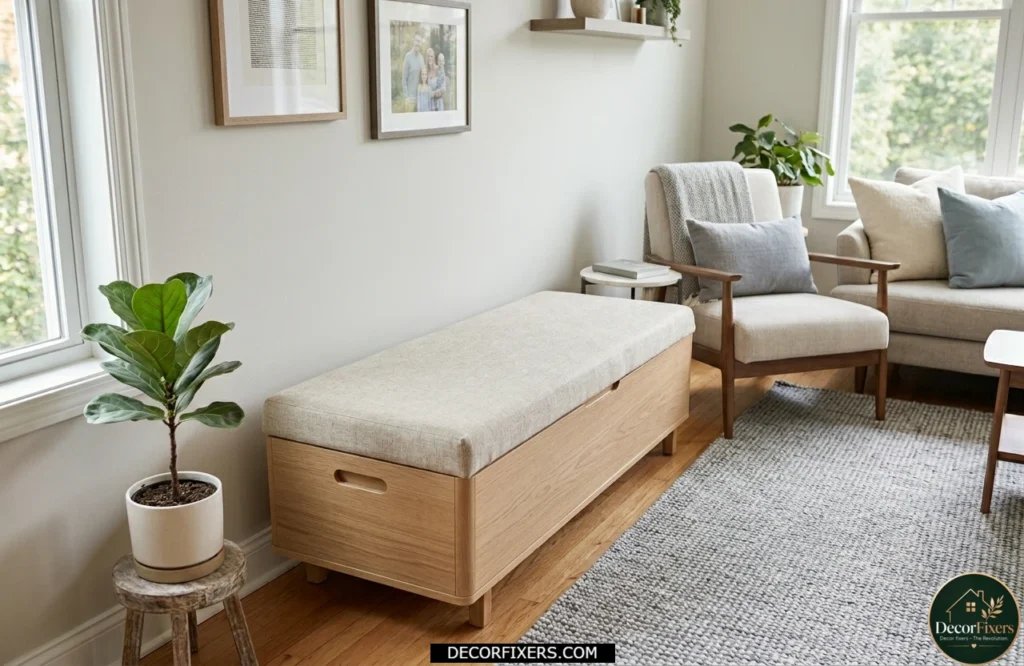
Users who’ve tried open toy bins report that kids ignore them, and parents end up managing them. The more successful pattern is closed, labelled storage at child height, cube ottomans, low benches with hinged lids, or KALLAX units with fabric insert boxes that kids can open themselves. One category per box. The ‘dump and close’ habit is much more sustainable than a sorting system.
14: Guest Bedding Storage
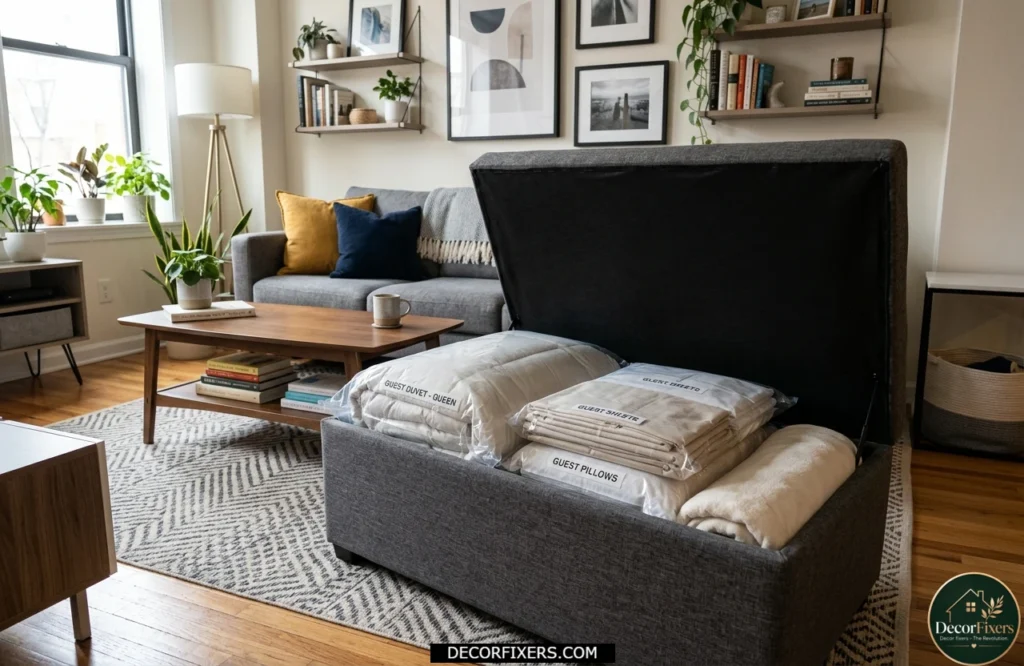
The biggest guest-room problem in a living room is where to keep the spare duvet. A large storage ottoman solves it entirely: a queen duvet, two pillowcases, and a flat sheet compress into a 60-litre capacity ottoman with room to spare. IKEA SALSKÄR bags (~$5 each) compress bedding to about a third of its folded volume inside the ottoman.
Some experts argue that you need to remove items before you organize them. That’s valid for a full declutter project. But if you’re dealing with a room, you actually live in, with people who use it daily, the more realistic approach is to contain first, edit later. A consistent storage system makes the editing process obvious over time: you’ll quickly see what never leaves the basket.
15: Matching Baskets and Bins (The Visual Reset Trick)
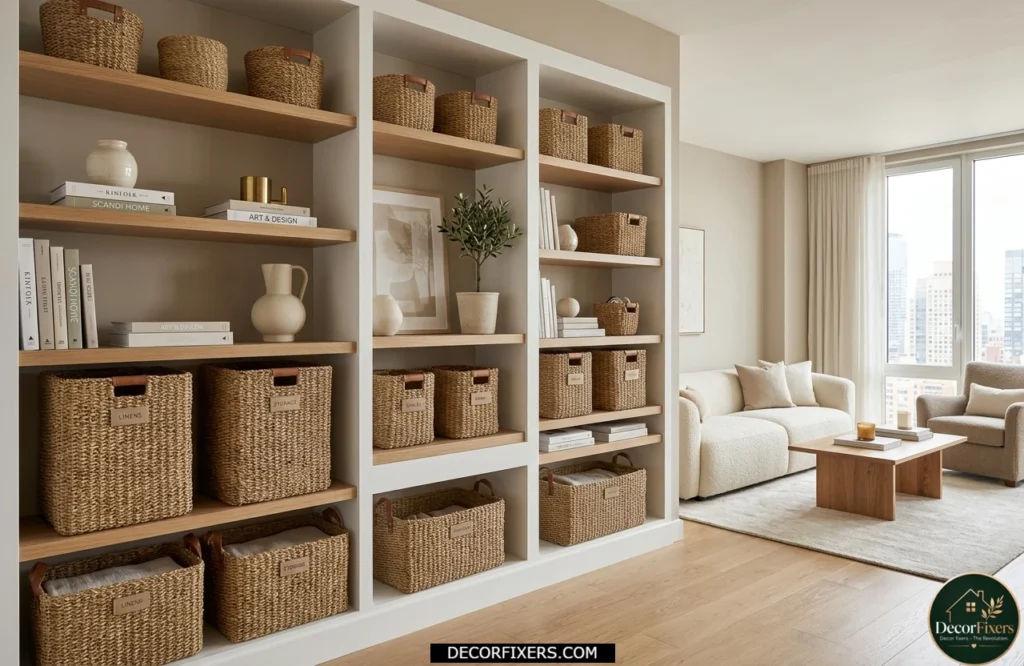
Mismatched containers look cluttered even when they’re empty. Switching to a single style and color of basket across every open surface, seagrass, rattan, or matte fabric, creates instant visual coherence. The Container Store’s Seagrass Handled Bins and IKEA BULLIG boxes both work at scale without breaking the budget.
16: Closed-Back Bookcase as a Room Divider
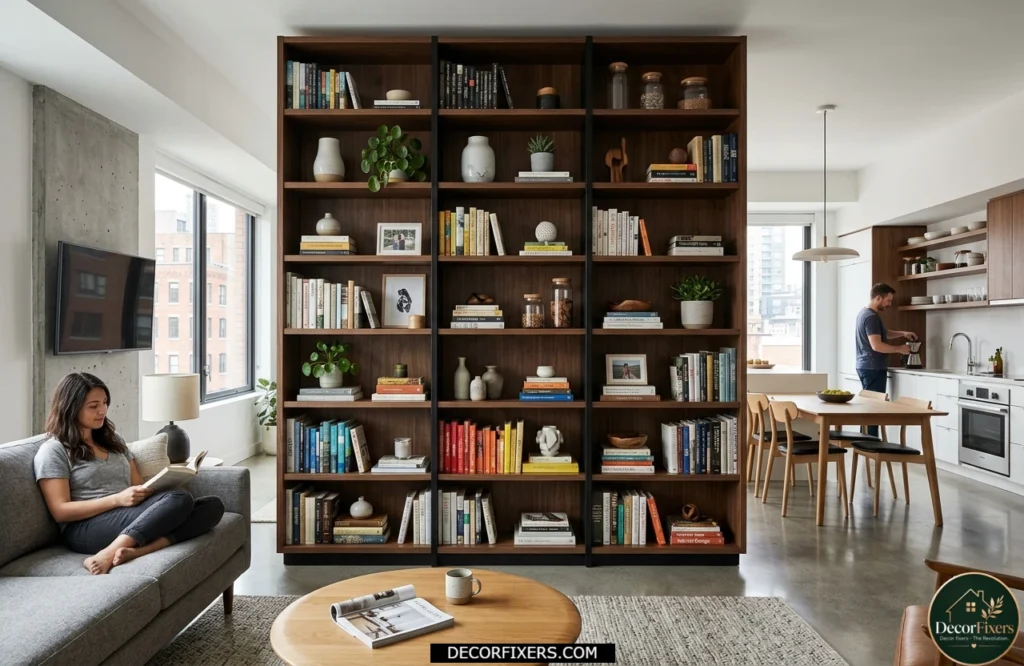
A tall, closed-back bookcase positioned perpendicular to a wall creates a visual zone boundary in an open-plan room while adding substantial hidden storage.
This is one of the most effective strategies featured in Apartment Living Room Ideas, where defining separate living, working, and entertaining zones is often essential in open-plan layouts.
Books face inward; the back panel faces the ‘other zone’. It’s a room divider and storage unit simultaneously.
17: Windowsill Storage Tray
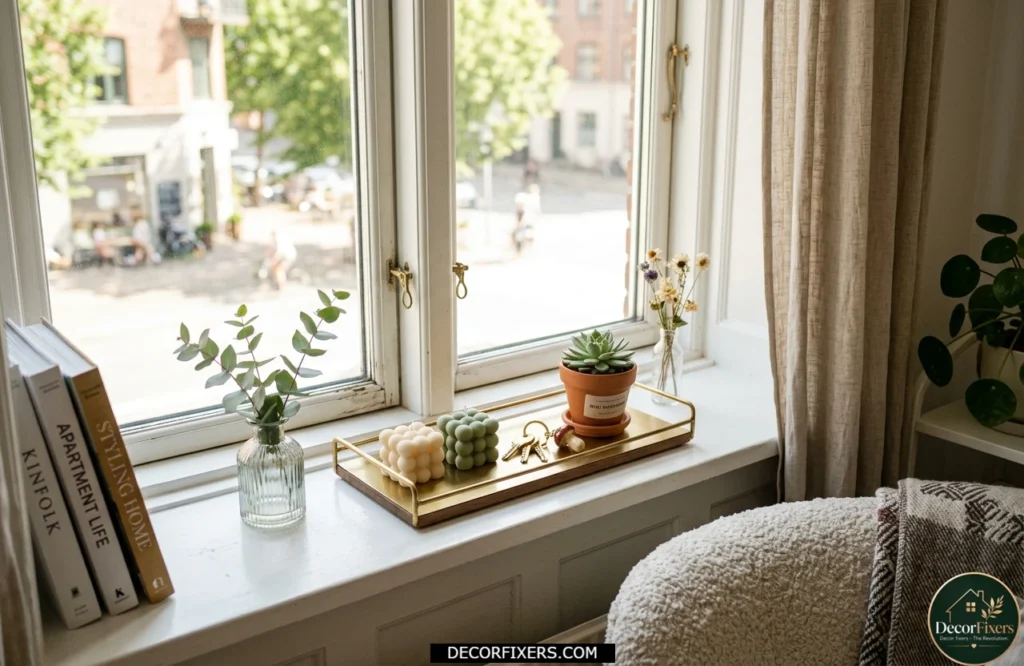
Quick note: the windowsill is technically ‘dead zone’ storage, as professional organizers at APDO describe it, a surface people use informally but never design for. A slim tray or long rectangular basket on the sill organizes small items (plants, candles, keys) and stops the surface from becoming a dumping ground. Keep the tray to one-third of the sill depth so light still comes through.
18: Cable and Charger Concealment
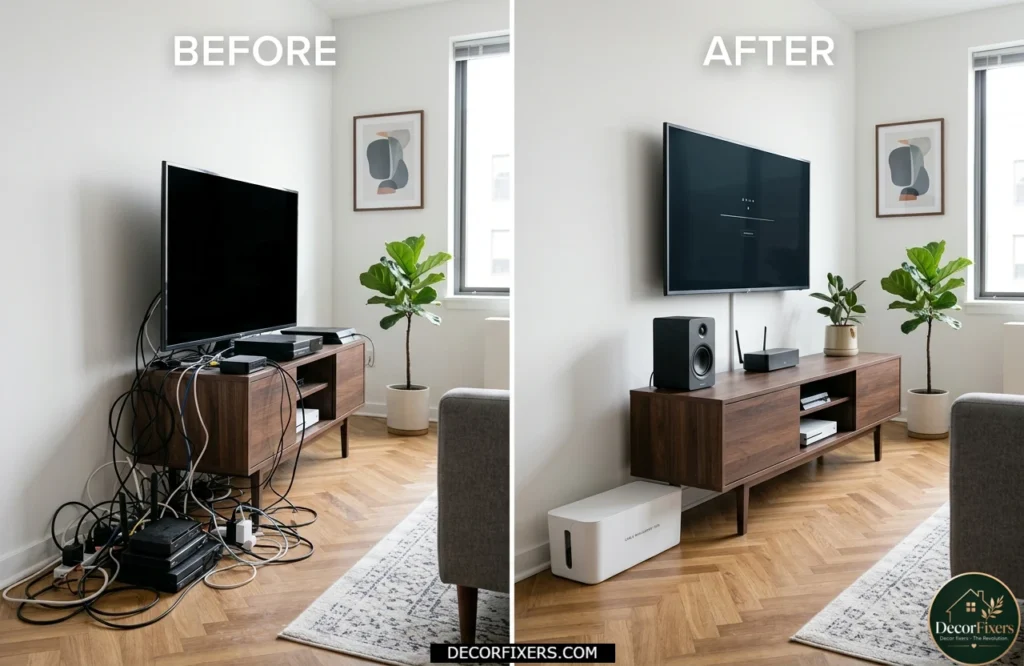
Exposed cables are one of the biggest contributors to visual clutter in modern living rooms. A cable management box (~$15–$30), a lidded container that sits on the shelf or floor and hides a power strip and all attached chargers, eliminates 80% of the visual noise in one step. IKEA LÄTTAD and Blue lounge Cable Box are both clean-looking options.
19: Fireplace Alcove Built-In
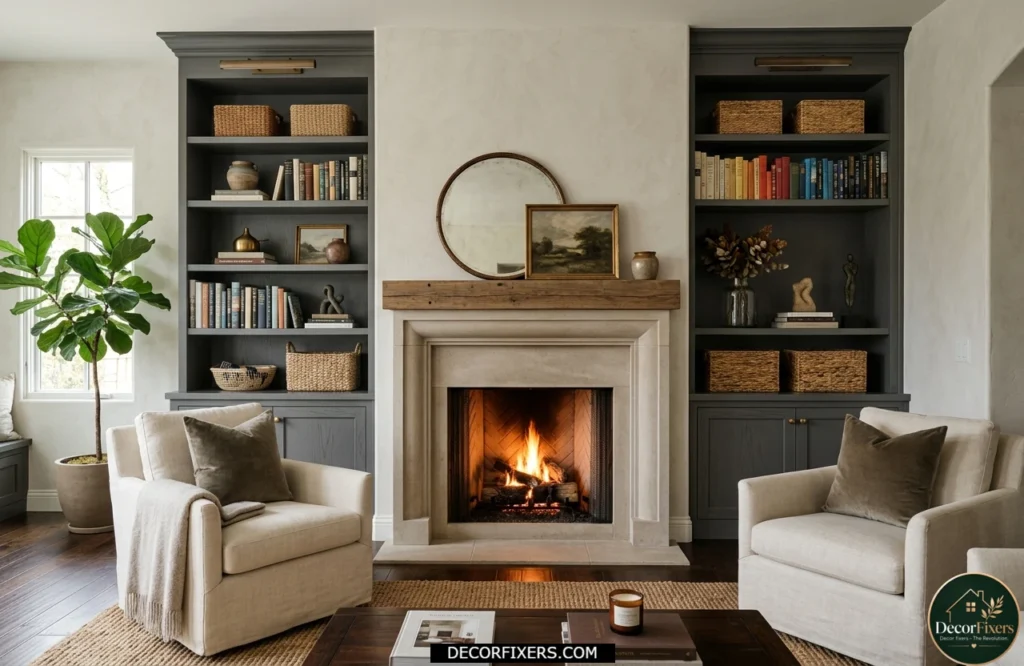
If your room has a chimney breast or recessed alcove, this is the most valuable storage space you’re probably ignoring. A pair of custom or flat-pack alcove shelving units flanking the fireplace (or TV) converts dead wall recesses into deep, structured storage. The IKEA BILLY bookcase fits most UK and US standard alcove widths with a 12-inch trim adjustment.
20: The ‘One-In-One-Out’ Basket Rule
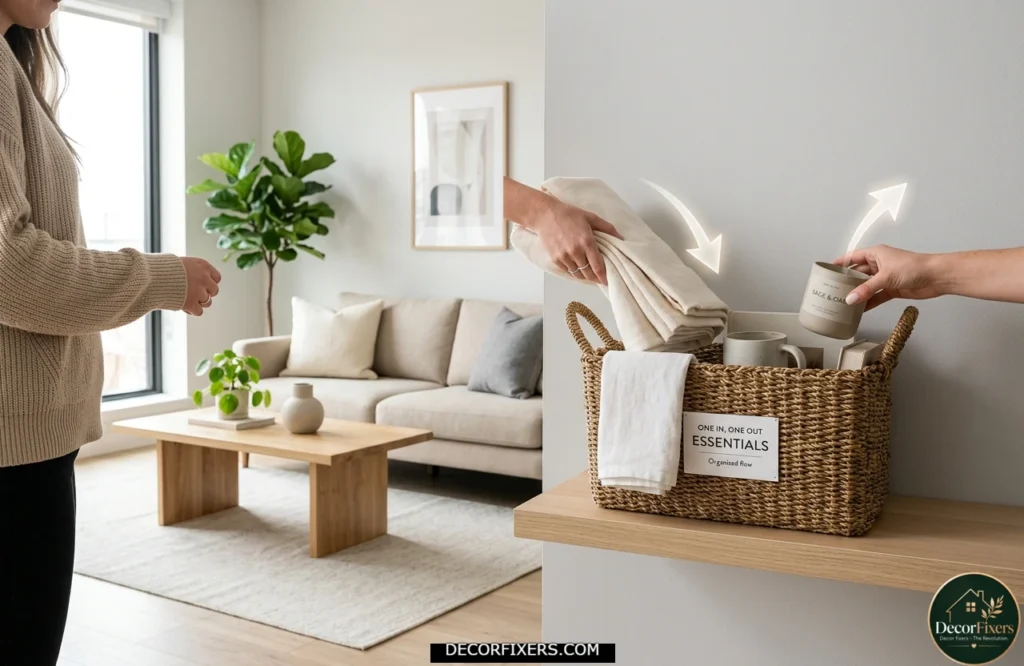
This isn’t furniture, it’s the maintenance system that makes everything else work. Every storage category gets one basket or bin. When it’s full, something leaves before something new comes in. Users who’ve implemented this report say it takes about six weeks to become automatic. It’s the system underneath the system.
| Storage Ottoman vs. Lift-Top Coffee Table: Which Is Better? Storage Ottoman vs. Lift-Top Coffee Table: an ottoman is better suited for soft goods (blankets, cushions, toys) and doubles as extra seating, making it ideal for smaller rooms with guests. A lift-top coffee table works better when you need a work surface and storage in one, particularly for WFH setups. The key difference is function: seating-plus-storage vs. workspace-plus-storage. |
CONCLUSION:
Twenty sounds like a lot. In practice, most small living rooms are transformed by three or four well-chosen changes: a closed media unit, a storage ottoman, consistent baskets, and a vertical shelving unit on one wall.
This guide covers multi-use living rooms, renters, and budget-conscious shoppers. It does not address integrated, bespoke joinery or structural modifications, which require a separate brief and a carpenter.
The counter-intuitive insight worth leaving with: more storage containers don’t reduce clutter; a storage system does. The baskets you already own will work fine once every item in the room has a designated place to go.
FAQs:
Q: What’s the best storage for a really small living room?
A: Multi-function furniture is your best starting point: a storage ottoman, a lift-top coffee table, or a closed media console. Pair these with floor-to-ceiling shelving on one wall, and you’ve created the foundation of a full storage system.
Q: How do I hide clutter in my living room without buying new furniture?
A: Start with matching baskets in a single color across all your open surfaces. This creates visual coherence instantly. Add cable concealment boxes and dedicate each basket to one category only; the discipline of labelling drives 80% of the long-term benefit.
Q: Should I use open shelves or closed cabinets in a small living room?
A: A 70/30 split works best: 70% closed storage for everyday items, 30% open shelving for curated display pieces. Open-only shelves amplify clutter; closed-only storage can feel heavy. Mix both for balance.
Q: Why does my living room always look cluttered even after I tidy it?
A: Because tidying moves clutter around rather than storing it. The fix is assigning a permanent, dedicated home to every object category, remotes, chargers, and blankets, so putting things away takes under 10 seconds per item.
Q: When should I use a storage ottoman instead of a coffee table?
A: Choose an ottoman when you need extra seating for guests, or when soft goods (blankets, spare pillows) are your primary clutter problem. Choose a coffee table with storage when you need a firm work surface or frequently use the table for meals or tasks.

Creator of DecorFixers, sharing practical home and interior ideas focused on real-life usability, simple design improvements, and budget-friendly solutions.