

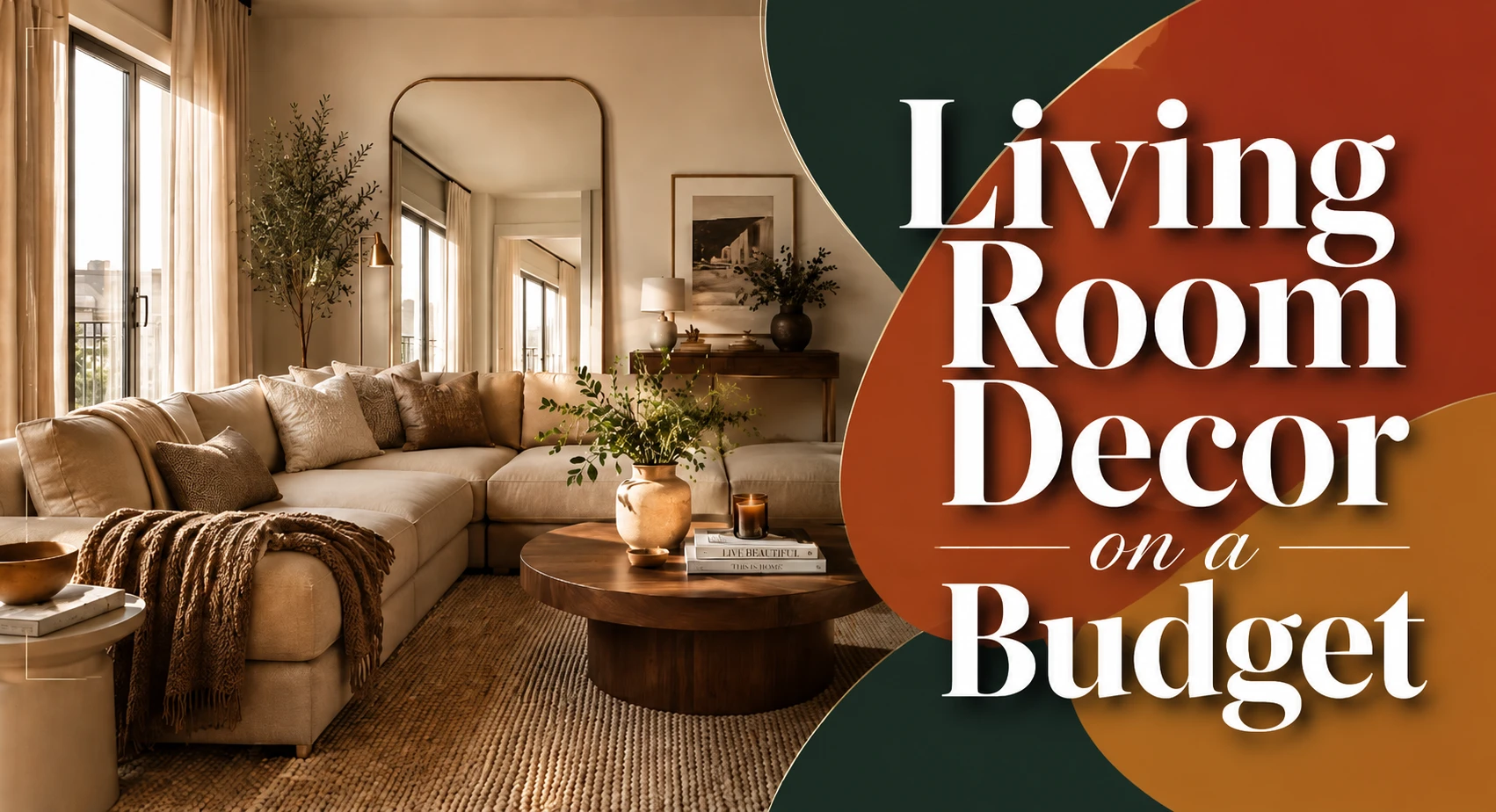
I remember standing in my living room one evening, scrolling through Instagram, watching perfectly styled spaces slide past my thumb, and then looking up at my own living room. Same beige sofa I’d had for three years. A sad little rug that didn’t reach the coffee table legs. A blank wall that had been “temporary” for two years. It felt defeated.
I wasn’t broke. I just didn’t know where to start or how to spend what I had. Every guide I found wanted me to buy a new sofa, repaint the walls, or hire a decorator. None of that was happening.
Here’s the thing: most living room transformations that look expensive cost almost nothing. What they cost is attention, knowing which changes actually move the needle and which ones just add clutter.
This guide is different. I’m giving you 25 specific, actionable living room ideas, organized by what costs the least, what works for renters, and what actually makes your space look designed, not just decorated. No fake DIY projects that require a garage full of tools. Real moves. Real results.
| What Is Budget Living Room Decor? Living room decor on a budget refers to intentional design upgrades, using lighting, textiles, layout changes, and thrifted or affordable pieces, that refresh a space without major renovation or high spending. The goal is maximum visual impact through strategic, low-cost choices rather than full furniture replacement. |
The living rooms that look professionally designed almost always share three things: a clear color story, the right rug size, and layered lighting. None of those requires spending thousands. They require knowing what you’re doing.
1. Rearrange Your Furniture, It’s Free, and It Works
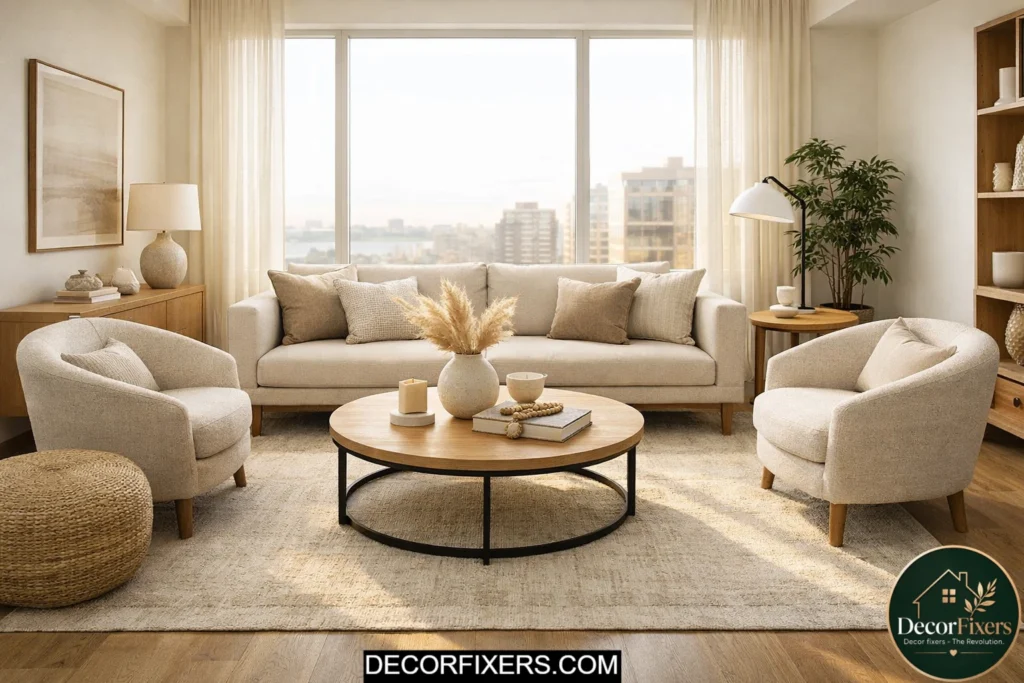
Most people arrange furniture against the walls. Pull your sofa 12–18 inches away. It instantly makes the room feel larger and more intentional, like a designer placed it there deliberately.
This single change costs nothing. People who’ve done it often say it’s the first time the room actually felt ‘finished.’ The psychology is simple: floating furniture creates zones, and zones feel designed.
2. Declutter First, Seriously, Before Anything Else
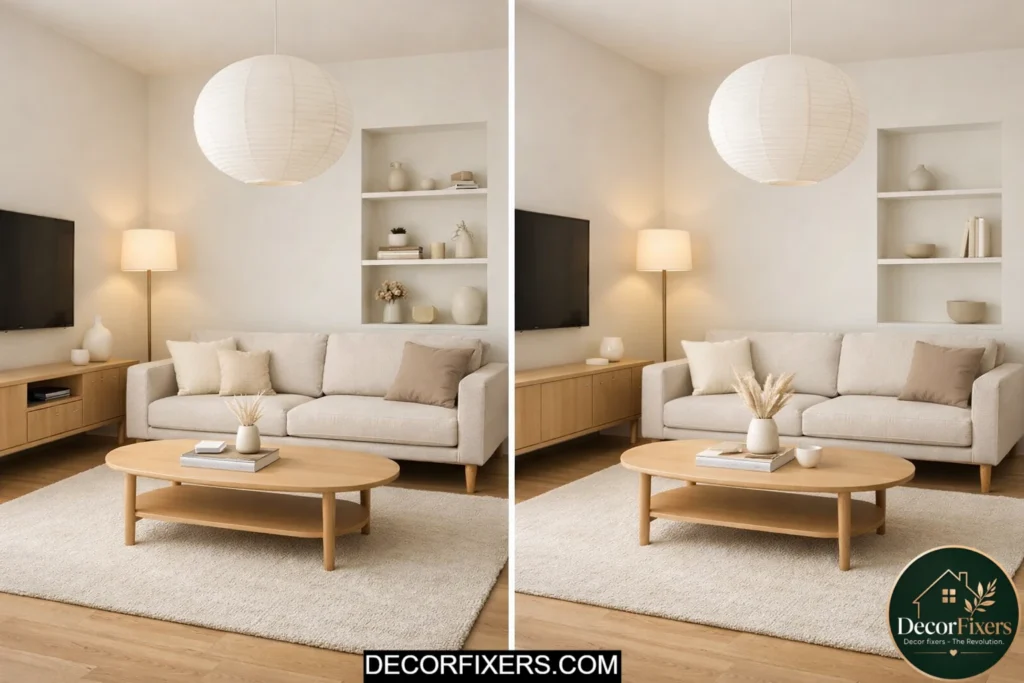
A styled living room with 20% fewer objects always looks more expensive than a cluttered room with new decor on top of old clutter. Removing things is design, not defeat.
Pick up every decorative object in the living room. Put half of them in a box. Live with what’s left for a week. You’ll find the room breathes, and suddenly looks intentional without spending a cent.
3. Swap the Bulbs, Warm Light Changes Everything
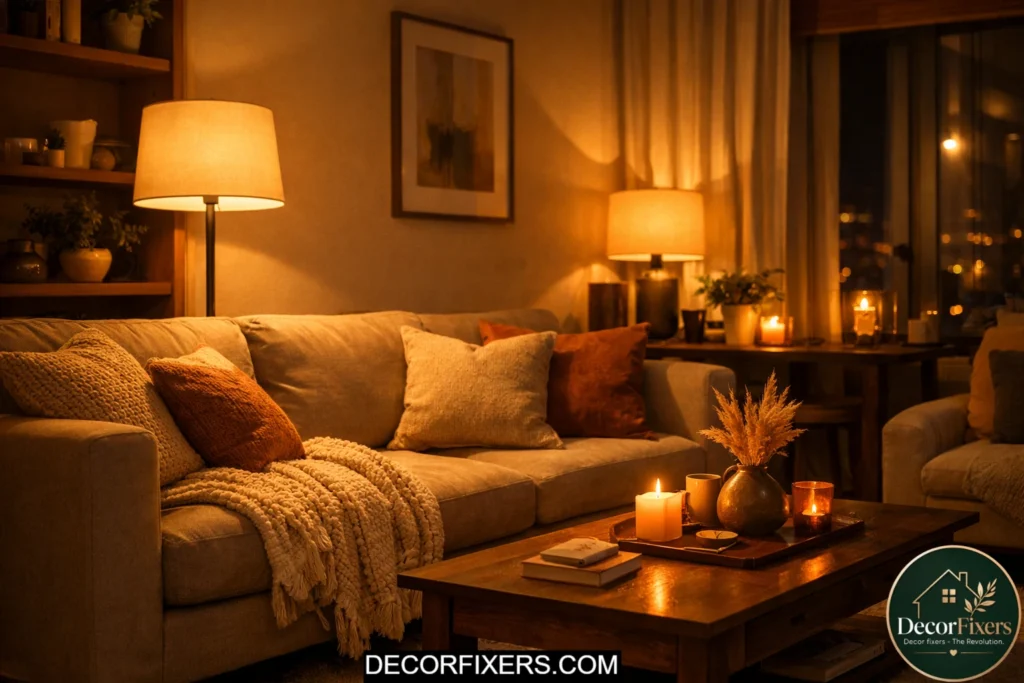
Lighting sets the emotional tone of a living room more than almost any furniture piece. Swap harsh white overhead bulbs for soft 2700K warm LED bulbs. The difference is immediate and genuinely startling.
A pack of four warm LED bulbs runs about $8–$12. That’s the cheapest per-impact purchase in this entire list. Don’t skip it.
4. Layer Your Lighting Instead of Relying on One Overhead
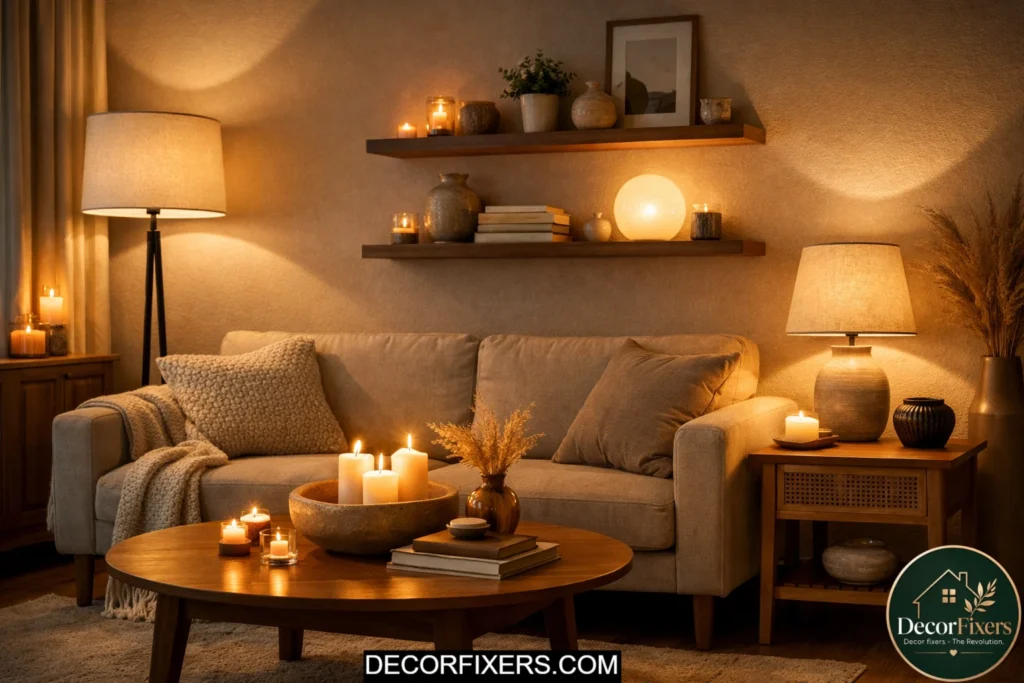
One ceiling light = flat, office-like feel. Three light sources at different heights = warmth, depth, and a room that feels intentional. Add a floor lamp, a table lamp, and a low candle grouping.
You don’t need expensive fixtures. An IKEA RANARP floor lamp runs under $50 and looks dramatically better than a single overhead. Or maybe I should say it this way, it’s less about the lamp and more about where you place the light.
If you prefer a cleaner Nordic-inspired aesthetic, similar to what you see in Scandinavian Living Room Ideas, layering lighting at different heights helps achieve that soft, balanced atmosphere without adding visual clutter.
5. Get the Rug Size Right, The Most Common and Costly Mistake
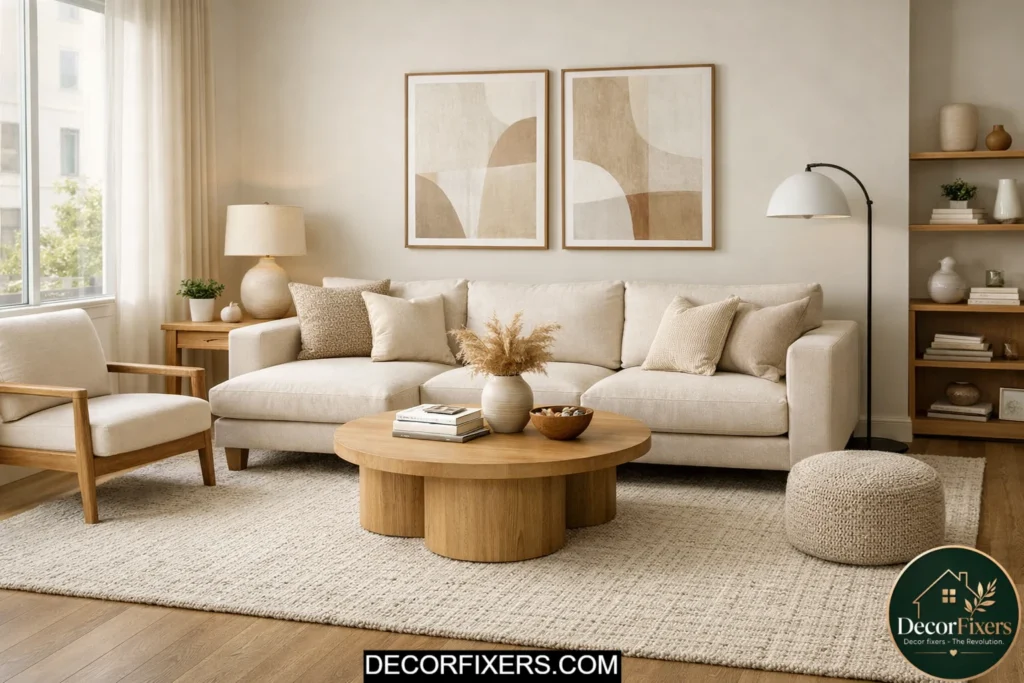
A small rug floating under a coffee table makes a living room look incomplete and cheap. The fix: choose a rug large enough for at least the front legs of your sofa to rest on. For most living rooms, that means an 8×10 or larger.
Affordable area rugs from Ruggable, Amazon, or even Facebook Marketplace are better than they’ve ever been. A well-sized rug anchors the whole seating area and is the single highest-ROI purchase in this guide.
6. Create a Gallery Wall Using Free Printables
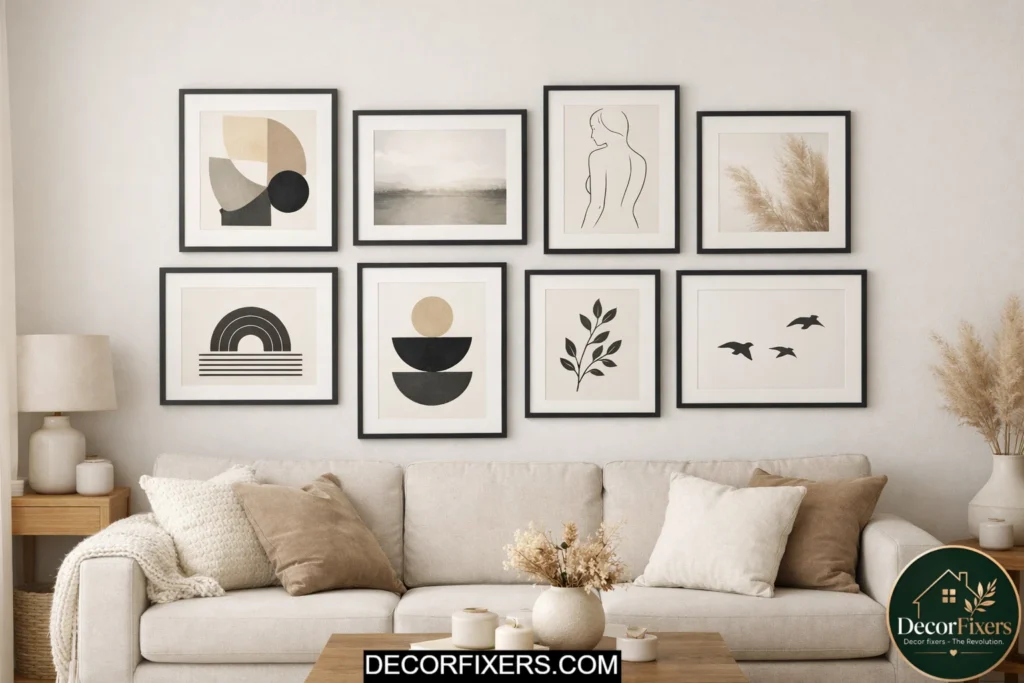
You don’t need to buy art. Free printable art sites like Unsplash, Canva, or Creative Fabrica have thousands of high-resolution images you can print at home or at a local print shop for $2–$5 each.
Frame them in matching black or white frames from IKEA’s RIBBA line ($4–$10 each). A grid of five matching frames looks deliberately curated. Mix frame sizes for a more collected, lived-in feel.
7. Shop Facebook Marketplace Before Buying Anything New
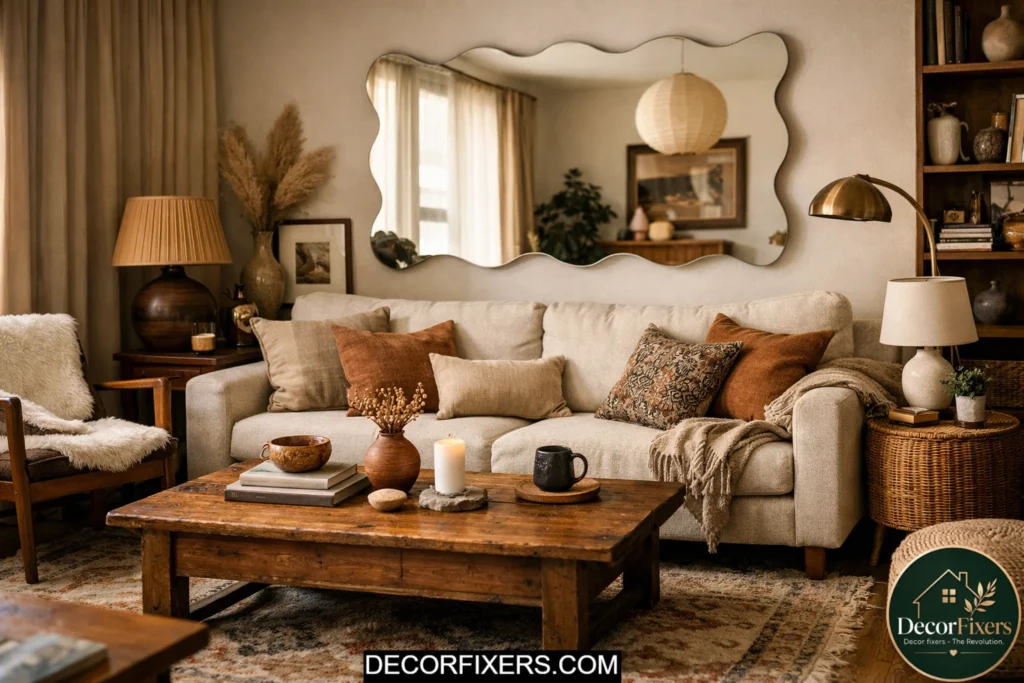
Before buying a single new piece, spend 20 minutes on Facebook Marketplace. Search your area for sofas, side tables, lamps, and mirrors. People price these things aggressively when they’re moving.
I’ve seen CB2 side tables for $15, West Elm mirrors for $30, and solid wood coffee tables for $20. The inventory changes daily. Set a saved search and check back. This is where budget rooms get their character pieces.
8. Add Throw Pillows, But Do It With a System
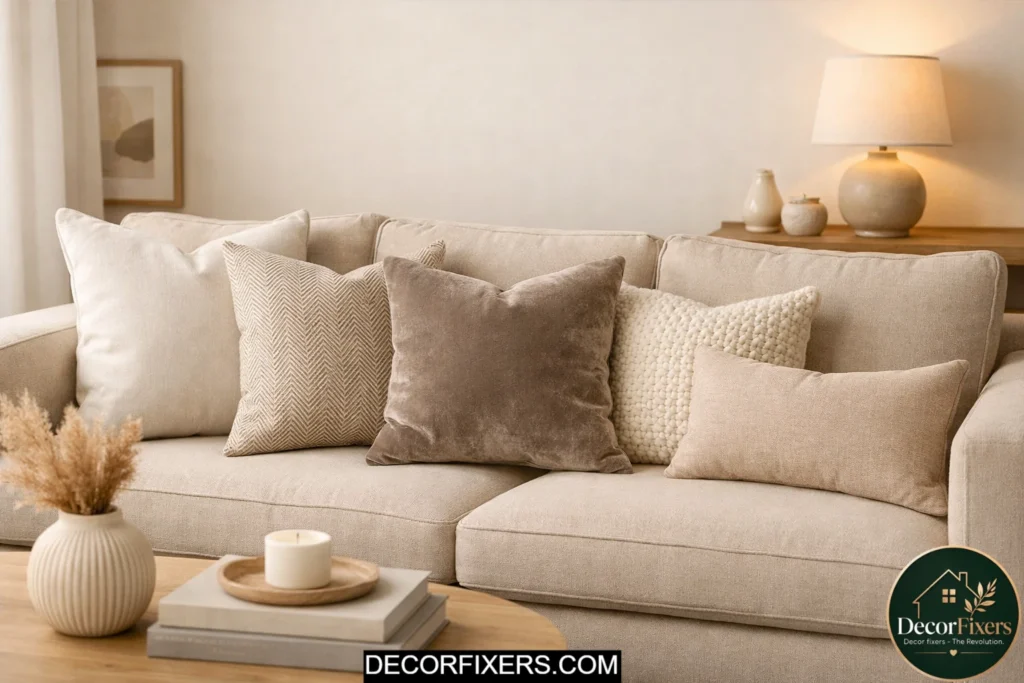
Random pillows look random. A simple system: pick one solid neutral, one pattern that contains that neutral, and one texture (velvet, knit, or linen). Three pillows, done.
Target’s Threshold line and Amazon Basics both carry pillow covers under $12. Buy covers, not pillow inserts with covers; you can swap covers seasonally without buying new inserts every time.
This technique is especially effective in compact spaces often discussed in Small Living Room Design, where maximizing light and perceived space is more important than adding additional furniture.
9. Add a Throw Blanket, The Easiest Cozy Signal
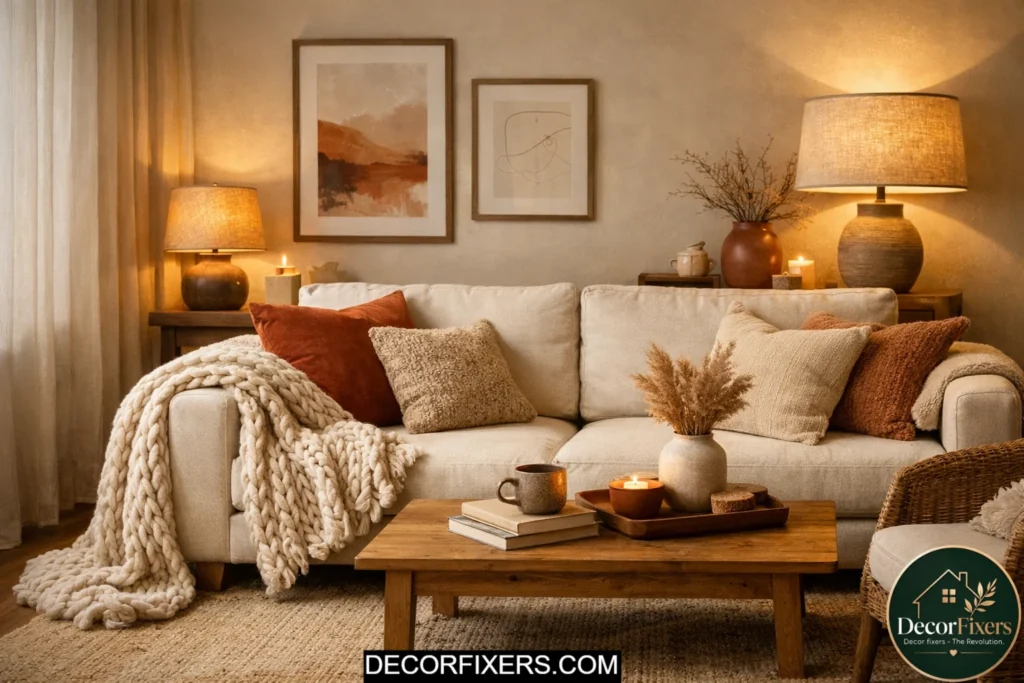
Draped over one arm of the sofa or folded over the back of a chair, a throw blanket signals ‘someone actually lives here, and they’re comfortable.’ It softens hard lines and adds texture instantly.
Look for chunky knit or waffle-weave throws in neutrals (cream, terracotta, sage). Under $25 at most mass retailers. This is one of those details that makes visitors comment on how cozy the room feels.
10. Use Curtains to Add Height, Even if Your Ceilings Aren’t High
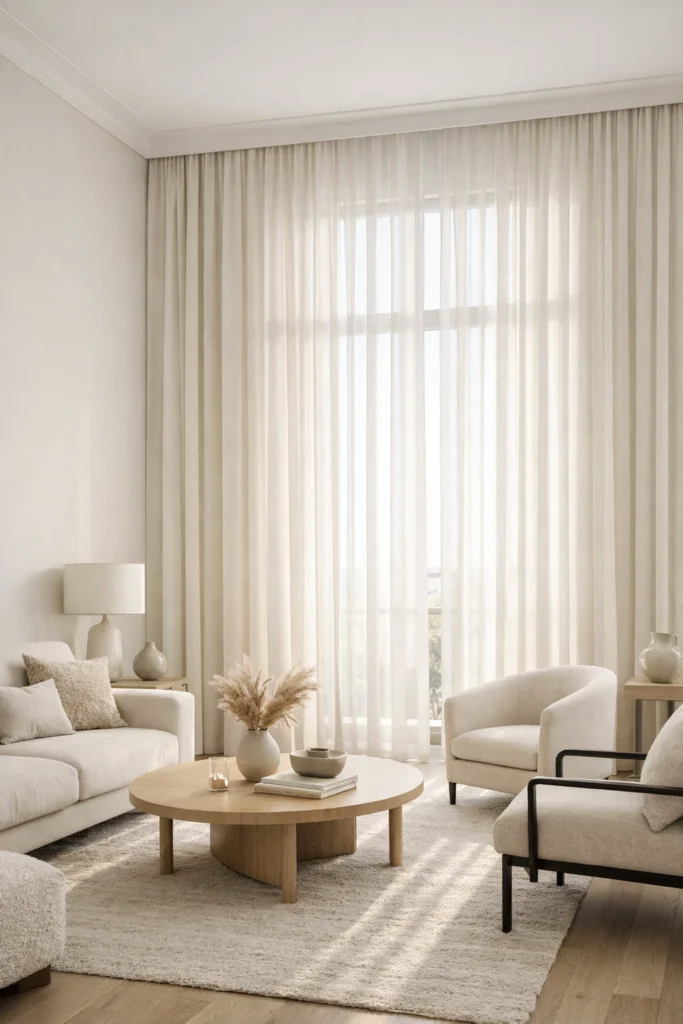
Hang curtain rods as close to the ceiling as possible, then let curtains fall to the floor. Even an 8-foot ceiling looks taller. This is a decorator trick that costs almost nothing to execute.
For renters: tension rod curtains exist. Command strip hooks work for lightweight panels. IKEA LENDA curtains run around $20 per panel, and hung ceiling-to-floor, they look like custom drapes from across the room.
11. Add One Large Mirror to Reflect Light and Space
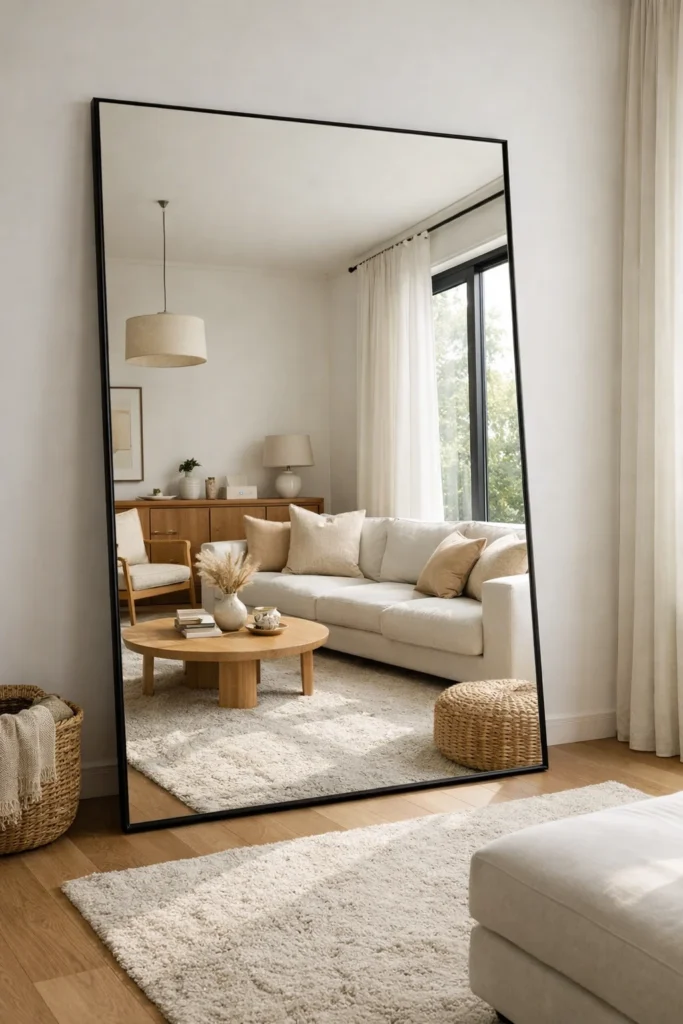
A large mirror on a wall opposite a window doubles your natural light and makes the room feel twice as wide. This is not a design opinion; it’s physics.
Look for oversized mirrors at HomeGoods, TJ Maxx, or (again) Facebook Marketplace. Lean it against the wall if you don’t want to drill. Leaning is a legitimate design choice, not laziness.
12. Bring In One Plant, Just One
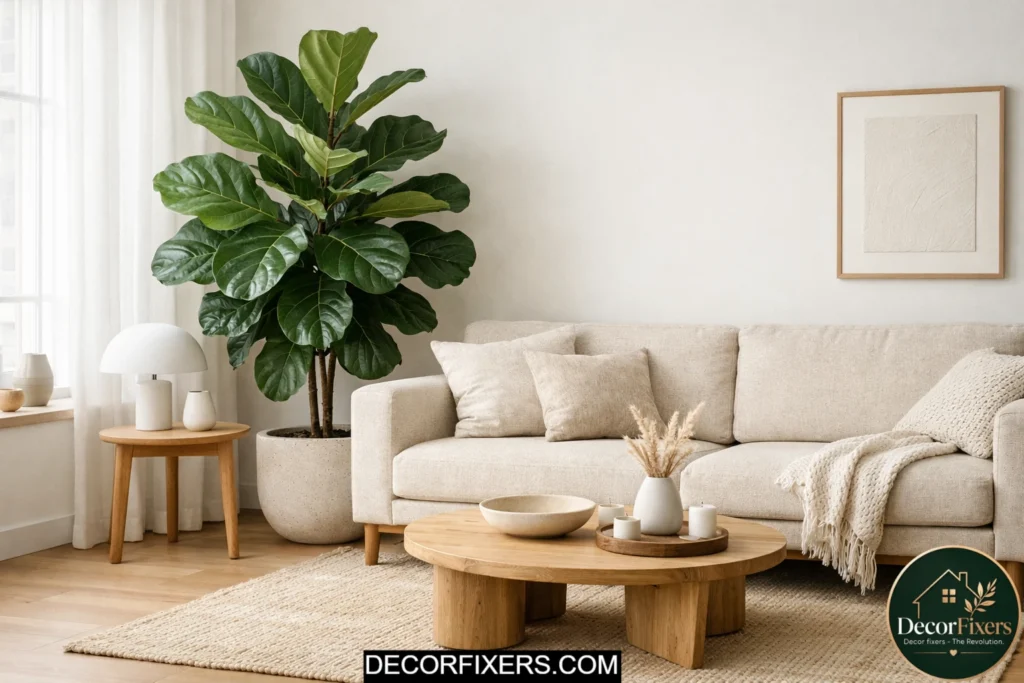
A single large plant, a fiddle leaf fig, a monstera, a snake plant, does more for a room than fifteen small plants scattered around. It creates a focal point, adds organic texture, and signals life.
Indoor plants as décor grew 18% in popularity in 2023 alone (Statista, 2024). Low-maintenance varieties like pothos and snake plants survive nearly any light condition and run $10–$25 at most garden centers. Start there.
13. Style Your Coffee Table in Threes
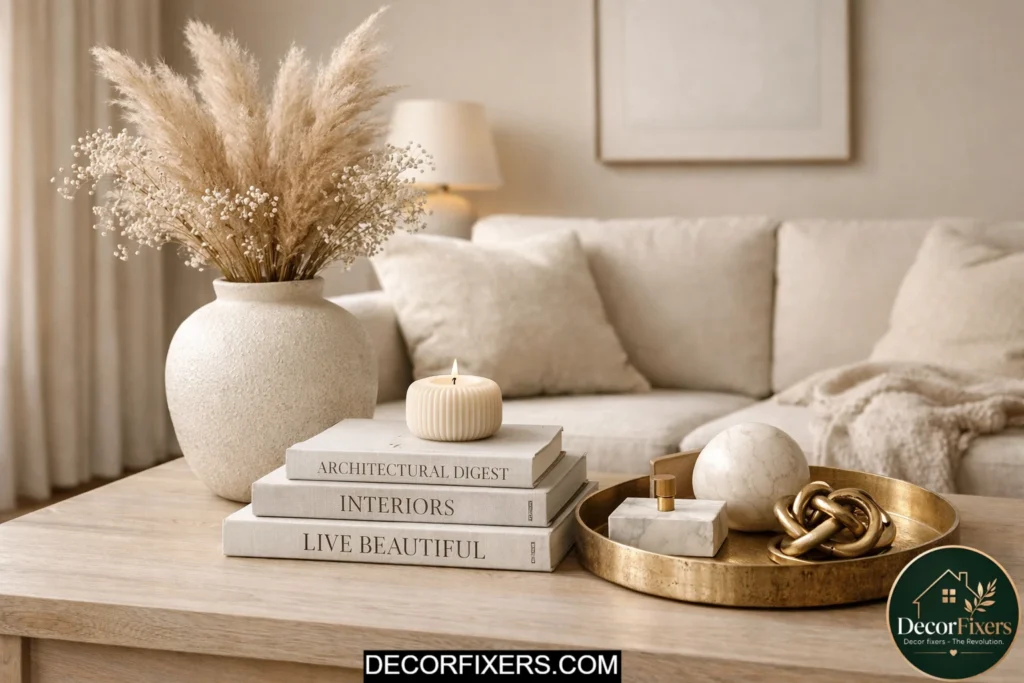
Designers use the rule of three: a tall object, a medium object, and something flat. A stack of books + a small vase + a decorative tray. Odd numbers look balanced. Two objects look placed. Three look styled.
The objects don’t need to be expensive. Dollar Tree candles in a thrifted tray. A stack of coffee table books from the library sale pile. A plant cutting in a mason jar. The arrangement matters more than the items.
14. Use Peel-and-Stick Wallpaper on One Accent Wall
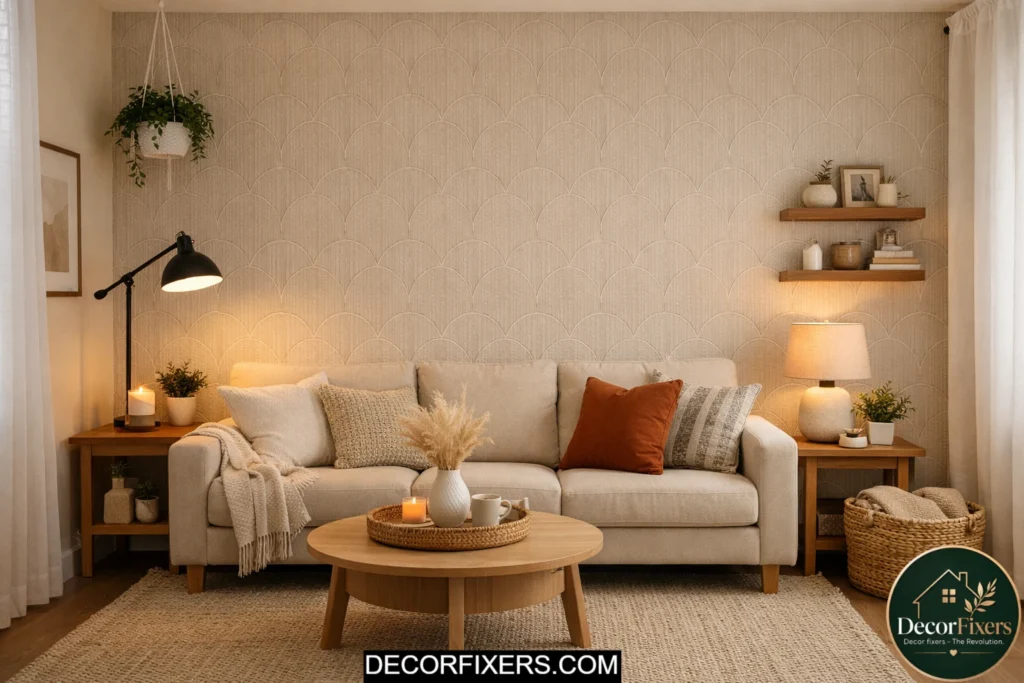
Renters: this is your answer to the ‘I can’t paint’ problem. Peel-and-stick wallpaper is removable, doesn’t damage most walls when removed properly, and creates genuine drama in a room.
Look: some landlords don’t love this. Quick note: always test a small strip first and keep the original rolls in case you need to patch. Brands like Chasing Paper and RoomMates have options from $30–$60 for a full accent wall’s worth of panels.
This approach is widely used in Apartment Living Room Ideas, particularly for renters who want visual impact without permanent changes or lease restrictions.
15. Restyle Your Bookshelves, It Takes 20 Minutes
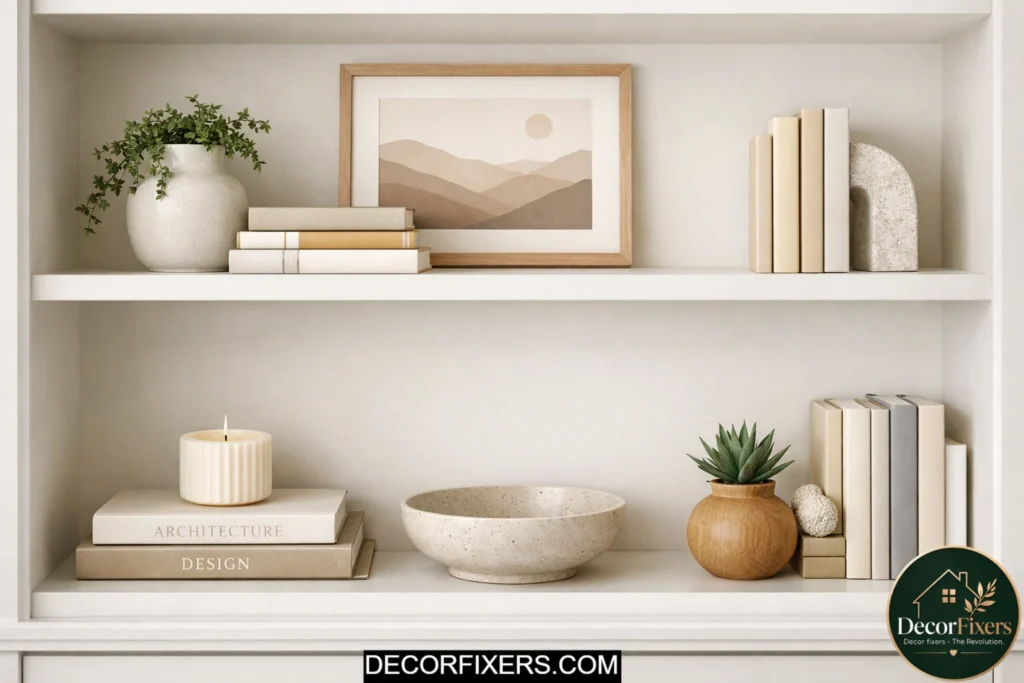
A messy bookshelf makes the whole room look chaotic. A styled bookshelf makes you look like you have a decorator. The difference is simple: remove half the books, alternate vertical and horizontal stacking, and add one or two non-book objects per shelf.
Use small plants, a candle, a framed photo, or a small sculpture. The space isn’t wasted; it’s breathing room. Negative space in design always reads as intentional.
16. Paint the Inside of Your Bookshelves
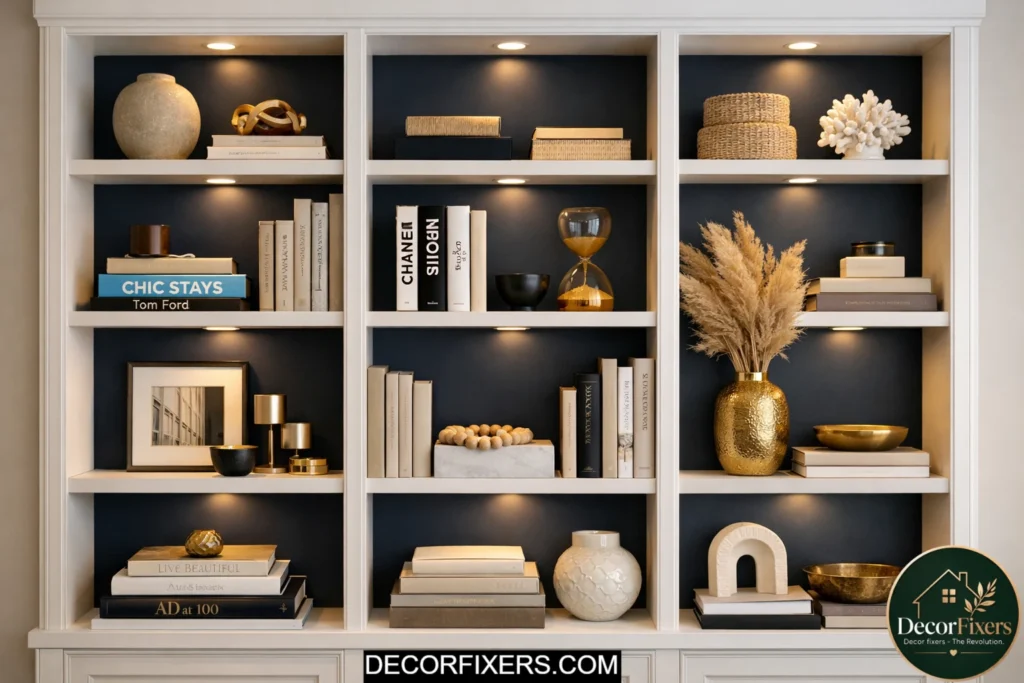
If you own your space or have a landlord who allows touch-up painting, painting the inside back panel of a bookshelf in a contrasting or complementary color is a high-impact move for the price of a sample pot of paint (~$5–$8).
Deep navy blue, forest green, or terracotta behind white shelving looks genuinely designer. It frames everything on the shelf and gives the whole wall dimension.
17. Upgrade One Switch Plate Cover, Seriously
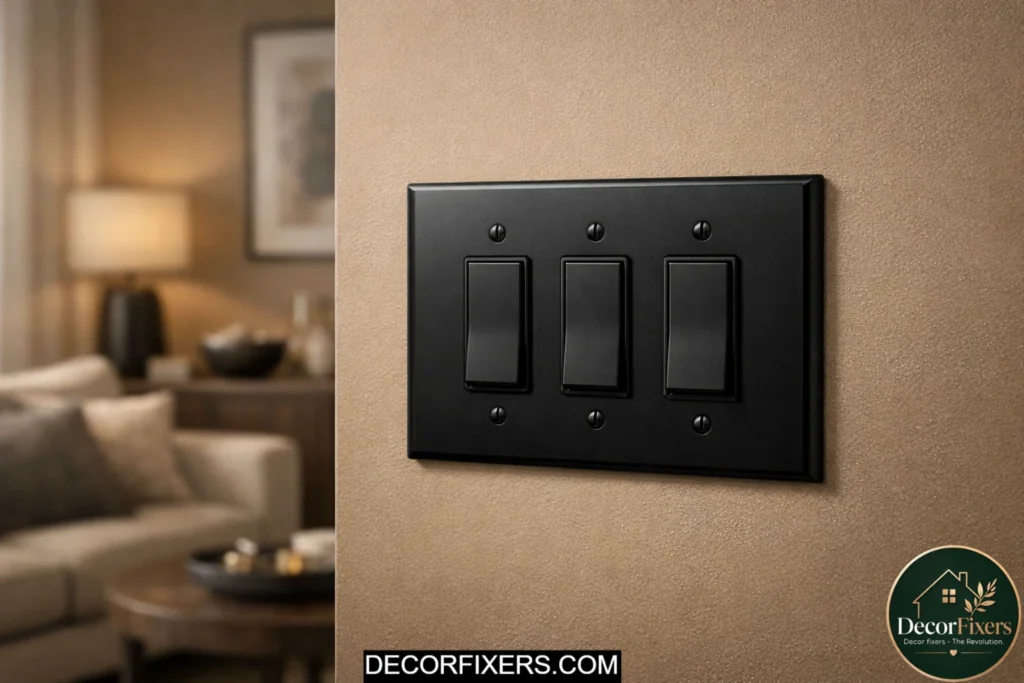
This sounds absurd. It isn’t. Brushed gold, matte black, or aged brass switch plate covers replace plastic beige ones in about 60 seconds with a screwdriver and cost $3–$8 each.
It’s the kind of detail that nobody consciously notices, but every designer knows makes a room look finished versus unfinished. Cheap, fast, irreversible improvement.
18. Add a Tray to Define a Surface
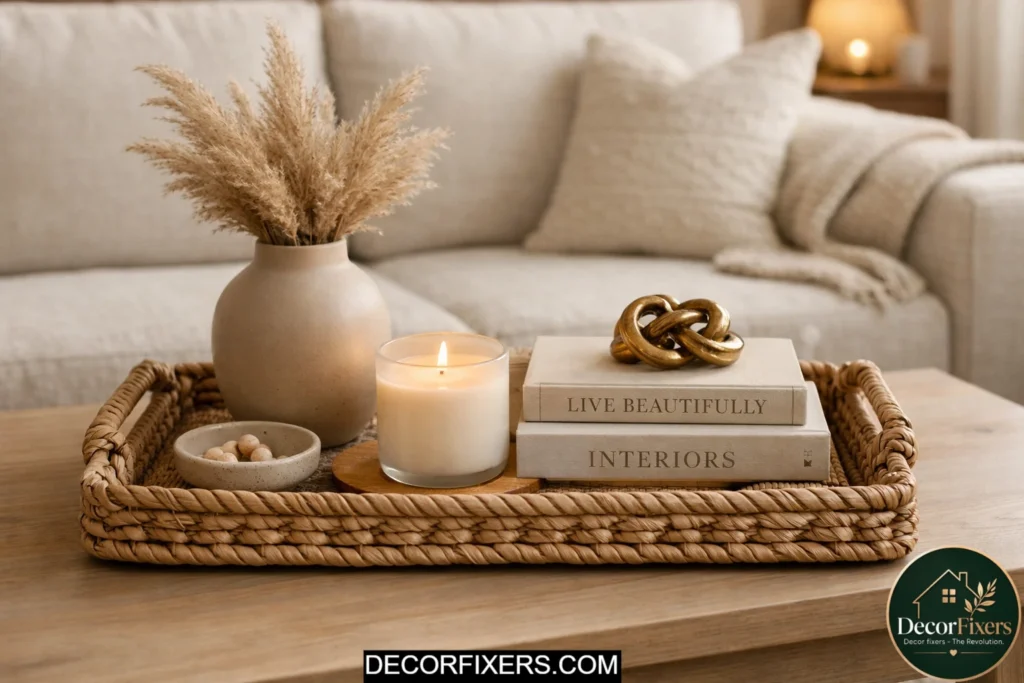
A decorative tray on an ottoman, coffee table, or side table instantly turns a flat surface into a defined vignette. It corrals objects, creates intentionality, and makes the room look organized even when it isn’t.
Wicker, bamboo, lacquered wood, or marble-look acrylic trays are under $20 at most home stores. Target’s Studio McGee line has several that look far more expensive than their $15 price tag.
19. Swap Your Hardware
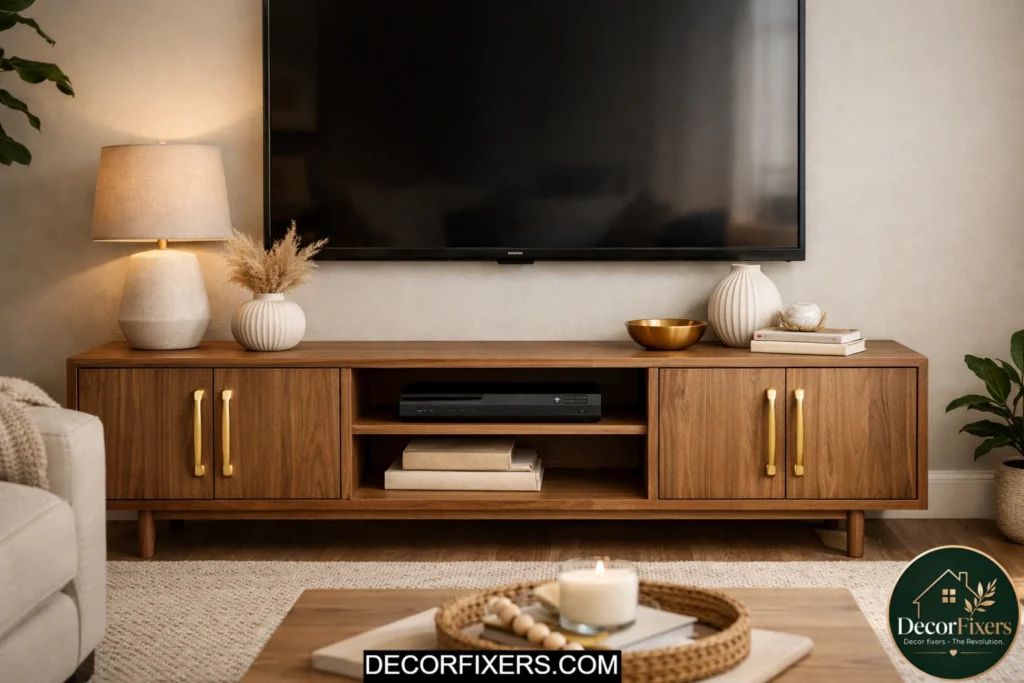
If your TV console, sideboard, or any storage piece has outdated or builder-grade hardware, swap the pulls and knobs. This costs $15–$40 total for most pieces and looks like a full furniture upgrade.
Matte black, brushed brass, and aged nickel are the three finishes that read as current in 2026. Match your hardware to one other metal in the room, a lamp base, a frame, for a cohesive look.
| Featured Snippet: How to Decorate a Living Room on a Budget (Step-by-Step) 1. Declutter and rearrange furniture before buying anything new. 2. Fix your lighting, swap bulbs, and add a second light source. 3. Get the rug size right (front sofa legs on the rug). 4. Add texture with throw pillows and a blanket using the 3-item rule. 5. Hang curtains ceiling-to-floor to add perceived height. 6. Style surfaces in threes: tall + medium + flat. |
20. Use Removable Command Strips to Hang Art Properly
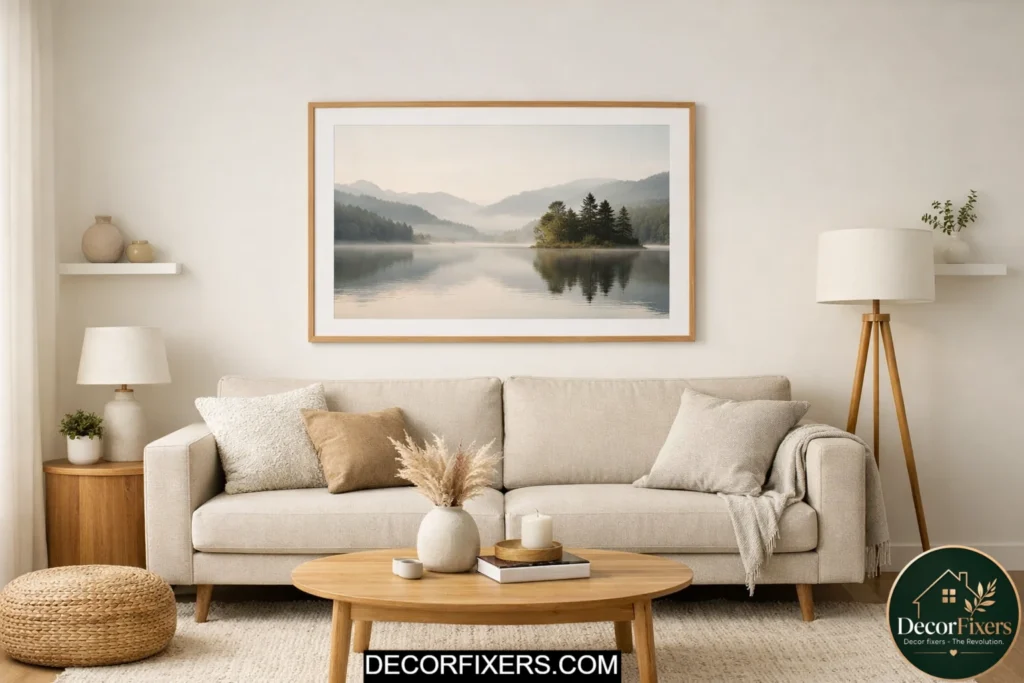
Floating art (too high, too small, not centered) kills the look of a room. Hang pieces so the center of the artwork sits at 57–60 inches from the floor, which is eye level, the industry standard.
For renters, 3M Command strips and Velcro picture-hanging strips hold up to 16 lbs without damaging walls. No nails, no patching, no deposit risk. Stack multiple strips for heavier pieces.
21. Add Scent as a Design Element
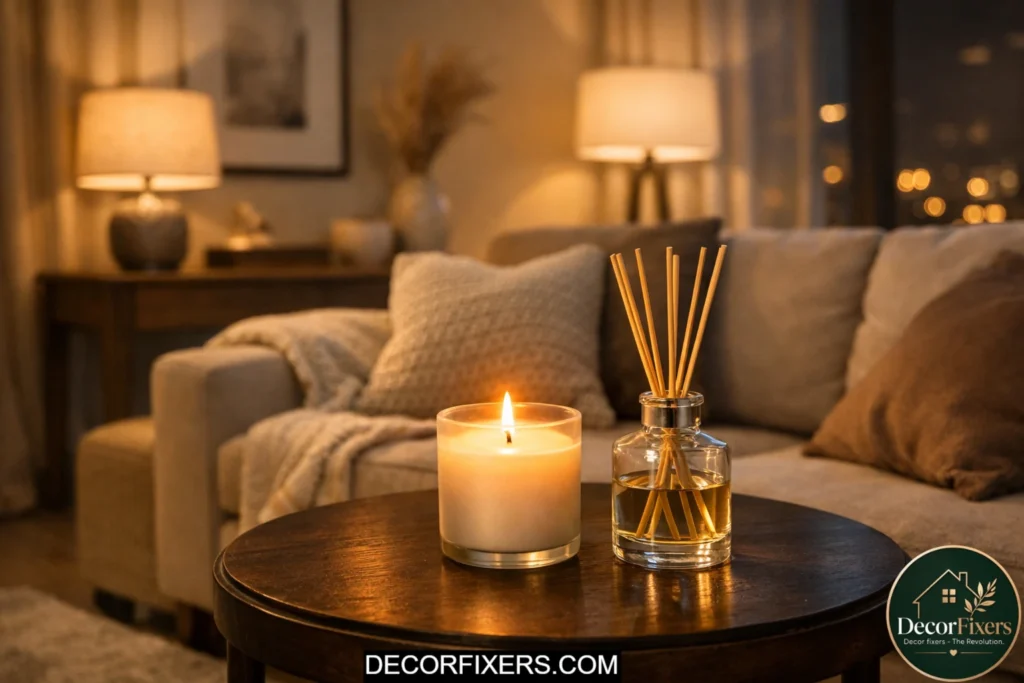
A beautifully designed room that smells stale feels wrong. A neutral room that smells warm and inviting feels designed. Scent is an often-overlooked layer of interior atmosphere.
A single soy candle, a reed diffuser, or an essential oil diffuser in a warm note, cedar, vanilla, sandalwood, changes how the room feels to everyone who enters. Under $15. High impact. Underrated.
22. Build a Budget Gallery Ledge with IKEA MOSSLANDA
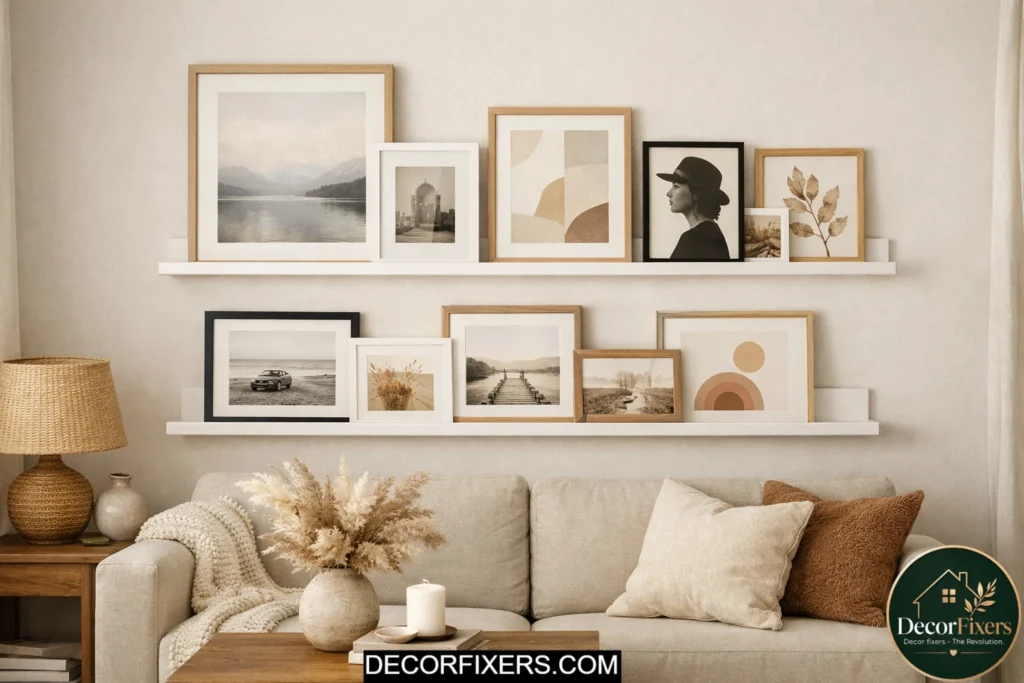
IKEA’s MOSSLANDA picture ledge is $10 and lets you swap art, photos, and prints without putting new holes in the wall every time you change your mind. It’s especially useful for renters or anyone who changes their decor seasonally.
Stack two ledges at different heights for a full gallery wall effect. It looks curated, it’s completely flexible, and the only hardware involved is two screws per ledge.
23. Use Books as Décor, Not Just Storage

Coffee table books are a legitimate design element. A stack of two or three large books on a coffee table, styled with a small object on top, signals taste and personality. Libraries sell them for $1–$2 at used book sales.
Don’t display books you’d never actually open; it reads false. But a real architecture book, a photography collection, or a travel book you love? That’s authentic decor. Guests pick them up. Conversations start.
24. Make One Room-Scale Statement Instead of Many Small Ones
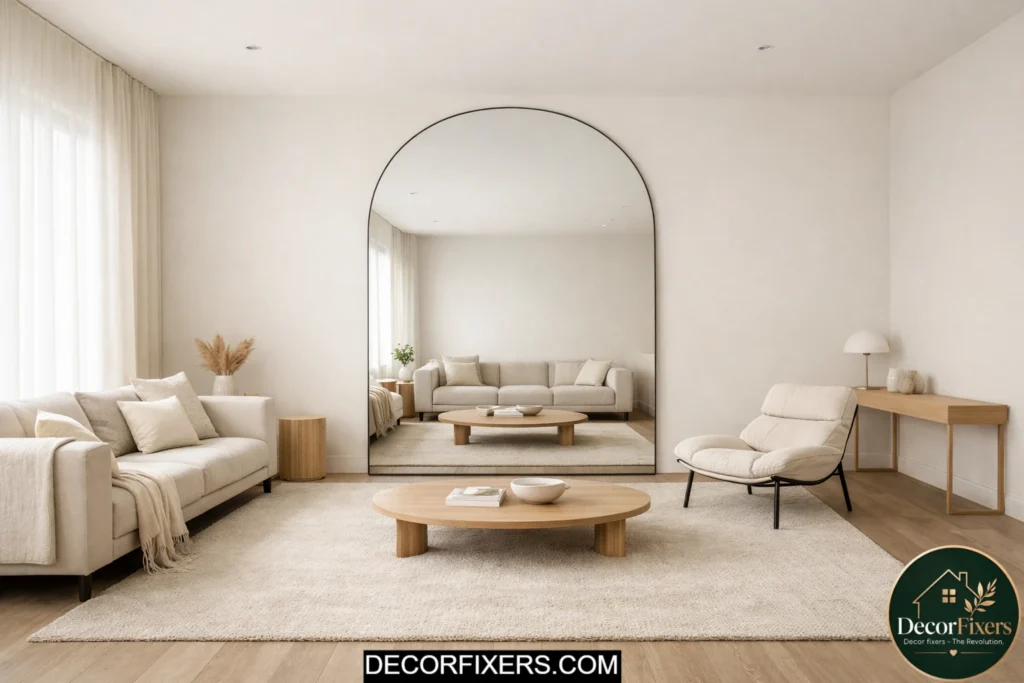
Look, if you’re in a situation where you have $100 to spend on the whole room, here’s what actually works: spend all of it on one large, room-scale statement piece, a big mirror, an oversized rug, or a floor lamp, rather than spreading it across ten small accessories.
Most cheap-looking rooms are cheap because they have too many small things competing for attention. One dominant visual anchor makes everything around it look more intentional by comparison.
25. Add Warm Metals to Tie the Room Together
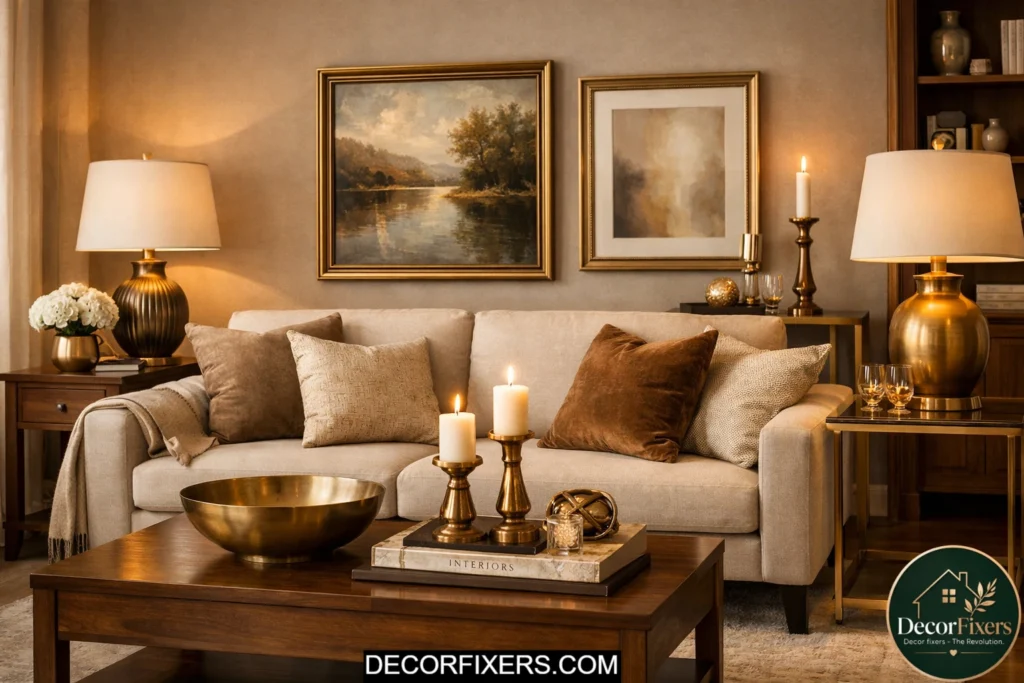
Warm metals, such as brushed gold, aged brass, and bronze, are the current neutral of interior design. It bridges wood tones, complements fabric textures, and makes rooms look collected rather than random.
You don’t need new furniture. Add it through: a lamp base, a small tray, candle holders, or picture frames. Three to four small warm metal touches distributed around the room create cohesion. Under $40 total from any home goods store.
Quick Comparison: Best Budget Decor Approaches by Situation
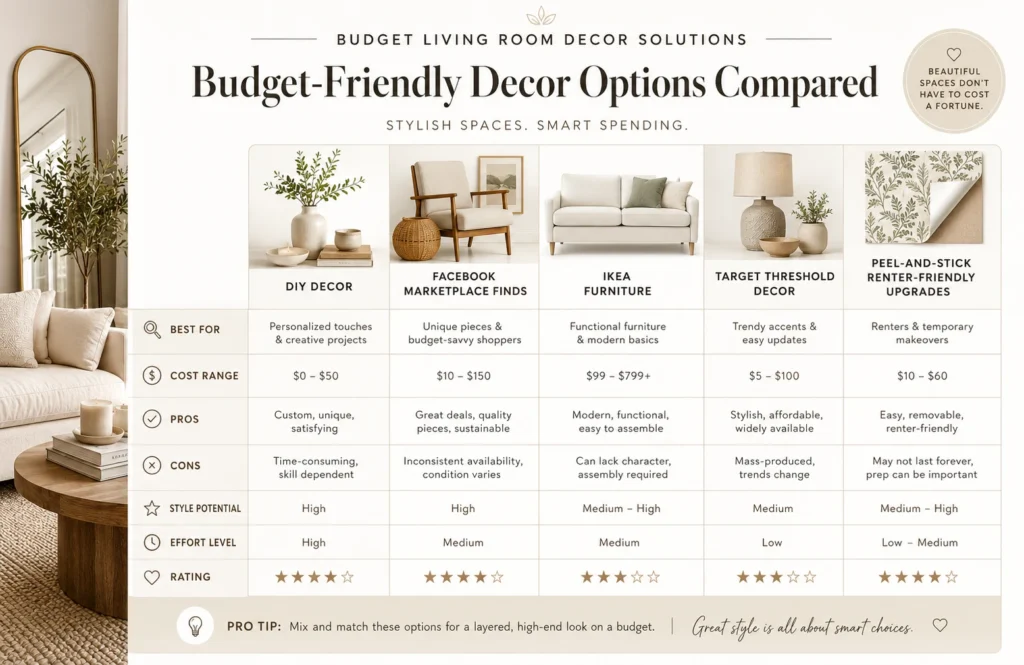
| Option | Best For | Key Benefit | Limitation |
| DIY / Upcycle | Renters & creatives | Zero cost, fully personal | Takes time and skill |
| Thrift / Facebook Marketplace | Anyone on a tight budget | Designer finds for $5–$30 | Inconsistent availability |
| IKEA KALLAX / LACK series | First-time decorators | Clean lines, modular, affordable | Common look; needs styling |
| Target Threshold / Studio McGee | Style-conscious shoppers | Trend-forward under $50/piece | Not all items hold up long-term |
| Peel-and-stick solutions (wallpaper, tiles) | Renters | Renter-safe, removable | Can bubble in humidity |
What Most Budget Decor Guides Completely Miss: The Renter Problem
Here’s the honest gap I’ve seen in almost every competitor article on this topic: they assume you own your space.
Paint the accent wall. Install floating shelves. Change the light fixtures. Great advice, if your landlord allows it. Most renters cannot do any of those things without violating their lease.
So here’s the renter-specific list of ideas from this guide you can use without asking permission: peel-and-stick wallpaper (test first), Command strip art hanging, tension rod curtains, removable hardware, IKEA ledges with minimal screws, and all styling, lighting, and textile changes. That’s 15+ ideas that require zero landlord approval.
I’ve seen conflicting advice on this; some sources say Command strips always leave residue, others say they’re completely safe on painted drywall. My read: they’re safe on most standard painted surfaces if you remove them per the instructions (pull at a 45-degree angle, slowly). Test on a hidden area first.
Real Budget Breakdowns: $100 / $300 / $500
Under $100
Warm LED bulbs ($10) + oversized throw blanket ($20) + three matching throw pillow covers ($30) + Command strip art strips ($8) + small plant ($15) = $83 total. Your room will look visibly better. Guaranteed.
Under $300
Add to the above: a properly sized area rug from Ruggable or Amazon ($100–$150) + ceiling-height curtains from IKEA ($40) + a floor lamp ($45) = $268 total. This combination, rug, curtains, layered light, is what most designed rooms are built on.
Under $500
Add to the $300 list: a large mirror from HomeGoods or Facebook Marketplace ($60–$100) + five gallery wall frames ($30) + three warm metal accents ($40) = roughly $450. At this level, the room looks genuinely intentional. Not budget. Designed.
Conclusion:
The rooms I’ve seen transform the most dramatically were rarely the ones with the biggest budgets. They were the ones where someone made five or six confident, intentional decisions and then stopped adding things.
That’s the actual secret. Not a specific product. Not a trending paint color. Just knowing which moves make the biggest difference, and doing those first, before spending another dollar on small accessories that won’t move the needle.
Start with the free changes: rearrange, declutter, and fix the lighting. Then tackle the big three: rug size, curtain height, and layered light. After that, every dollar you spend will land harder because the foundation is right.
FAQs:
| Q: What’s the best way to start decorating a living room on a budget? A: Start with decluttering and rearranging; it costs nothing and usually delivers the biggest immediate change. Then fix your lighting and rug size before buying anything new. |
| Q: How do I make my living room look expensive without spending much? A: Focus on three things: a large, properly sized rug, layered lighting instead of one overhead source, and ceiling-height curtains. These three changes read as ‘expensive’ to almost every eye. |
| Q: Should I buy cheap furniture or save up for better pieces? A: Save for the sofa and rug, they’re daily-use pieces where quality matters. Save on everything decorative: pillows, frames, throws, and accessories. These are interchangeable and don’t need to last decades. |
| Q: Why does my living room always look cluttered, no matter what I do? A: Usually, because there are too many objects at the same scale. Remove half of what’s on your surfaces, group what remains in odd numbers (threes), and add at least one large anchor piece, a mirror, plant, or rug, to give the eye a place to land. |
| Q: When should I hire an interior designer vs. do it myself? A: DIY works well up to roughly $1,500 in changes when you follow basic design principles. For full room overhauls, open-plan spaces, or structural decisions (built-ins, permanent fixtures), a one-hour paid consultation with a designer ($100–$150) pays for itself. |

Creator of DecorFixers, sharing practical home and interior ideas focused on real-life usability, simple design improvements, and budget-friendly solutions.
3 thoughts on “25 Budget Living Room Decor Ideas: That Look Seriously Expensive”