

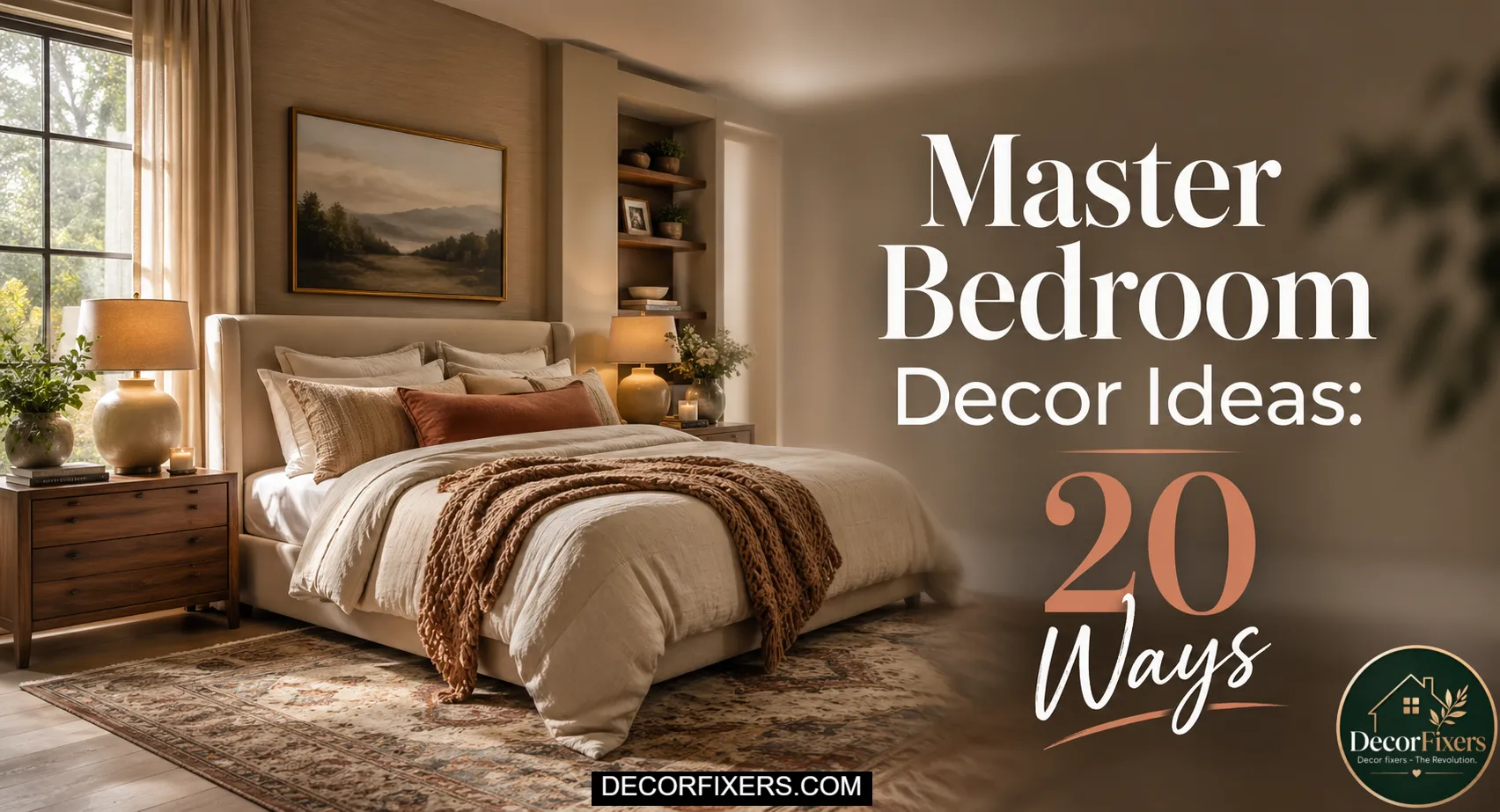
Your bedroom works. It has a bed, a nightstand, and maybe a rug. But it doesn’t feel the way you wanted it to, and that gap between functional and genuinely beautiful is exactly what this guide closes.
| What is a cozy luxe master bedroom? A cozy luxe master bedroom is a personal sleeping space that combines warmth and softness (cozy) with intentional, high-quality styling (luxe), without requiring expensive renovations. The goal is a layered,hotel-inspired retreat built from texture, light, and thoughtful arrangement rather than a big budget. |
The gap between a flat bedroom and one that feels like a retreat almost always comes down to three things: texture layering, light temperature, and visual anchoring. This guide covers all three, practically, at real-world price points.
This guide covers what actually moves the needle: the changes that make a room feel expensive without being expensive. It does not address structural renovations, complete furniture replacement, or rooms under 100 sq ft, where different rules apply.
Every idea in this article plugs into one of those three layers. That’s what makes them work together, not just individually.
1. Build a linen duvet as your foundation
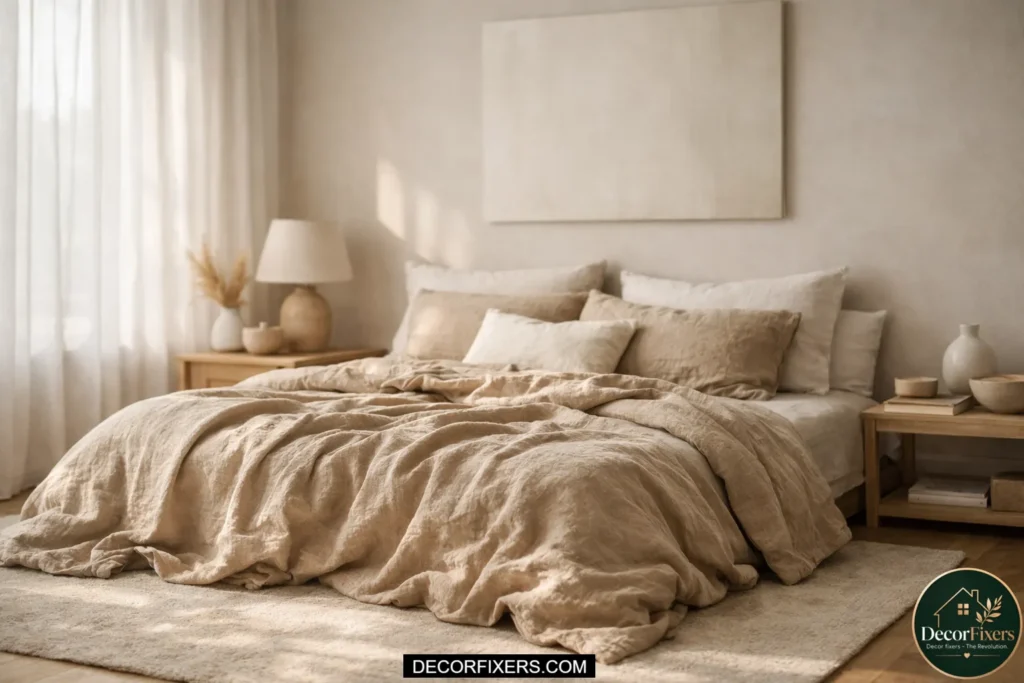
Linen reads as effortlessly luxurious and gets softer with washing. Brands like Parachute Home make linen duvet covers at accessible price points. Start with a warm white or oat tone; every other color you add will layer over it naturally.
2. Use the ‘European sham stack
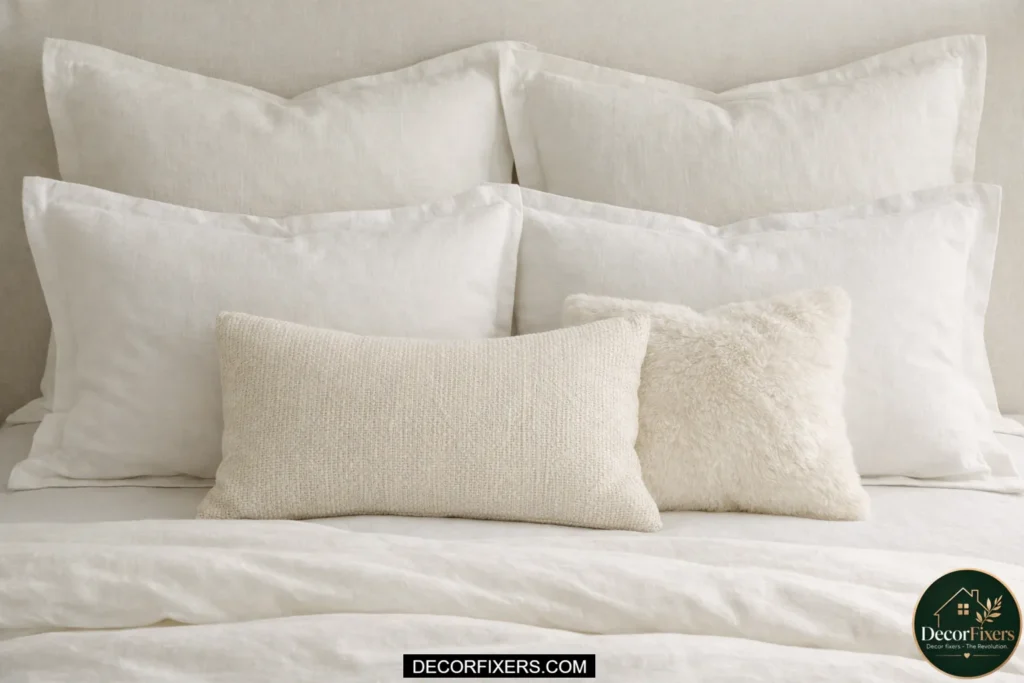
Place two standard pillows flat, two Euro shams behind them, and one or two decorative pillows in front. This is the specific arrangement hotels use. It’s not about quantity; it’s about the visual depth created by the height gradient.
3. Add one chunky knit or waffle-weave throw
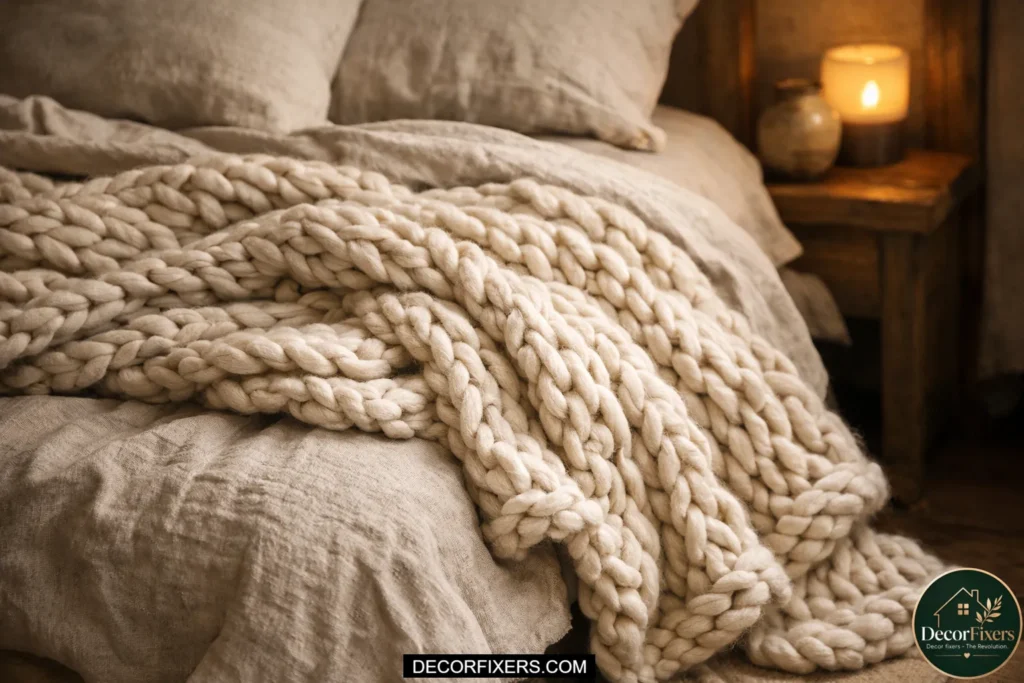
Drape it casually across the foot of the bed or folded over one corner. The texture contrast against smooth linen is what makes the bed look styled rather than merely made.
4. Don’t match your pillowcases perfectly.
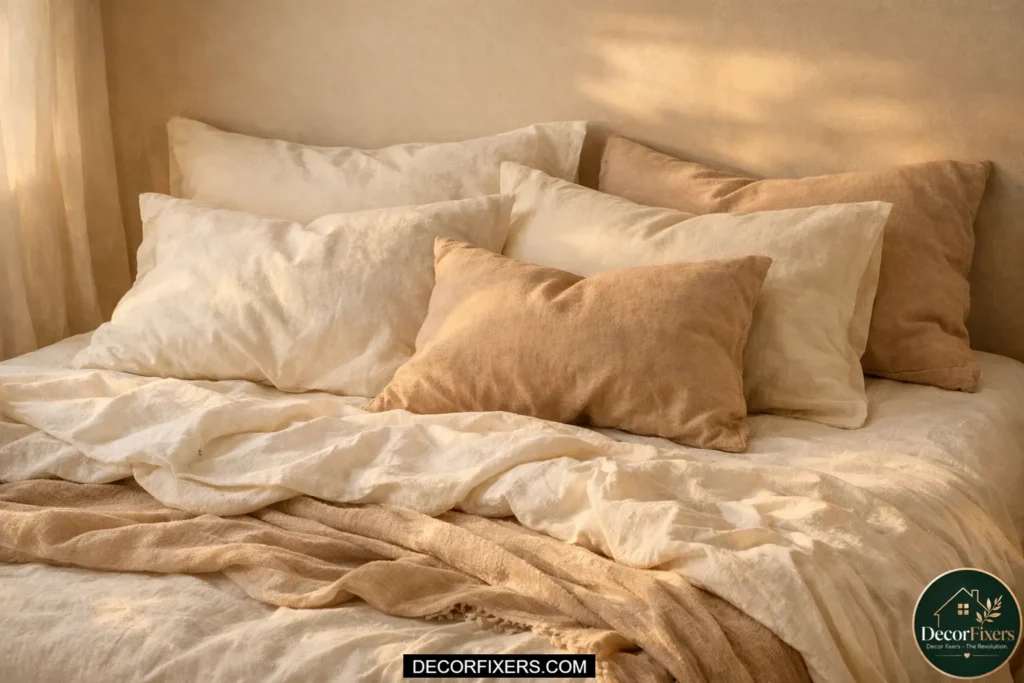
Mix two shades within the same tone family, a slightly warmer ivory against a cooler white, for example. Exact matching reads as budget hotel. Tonal variation reads as intentional.
5. Upgrade your pillowcase fabric, not your pillows
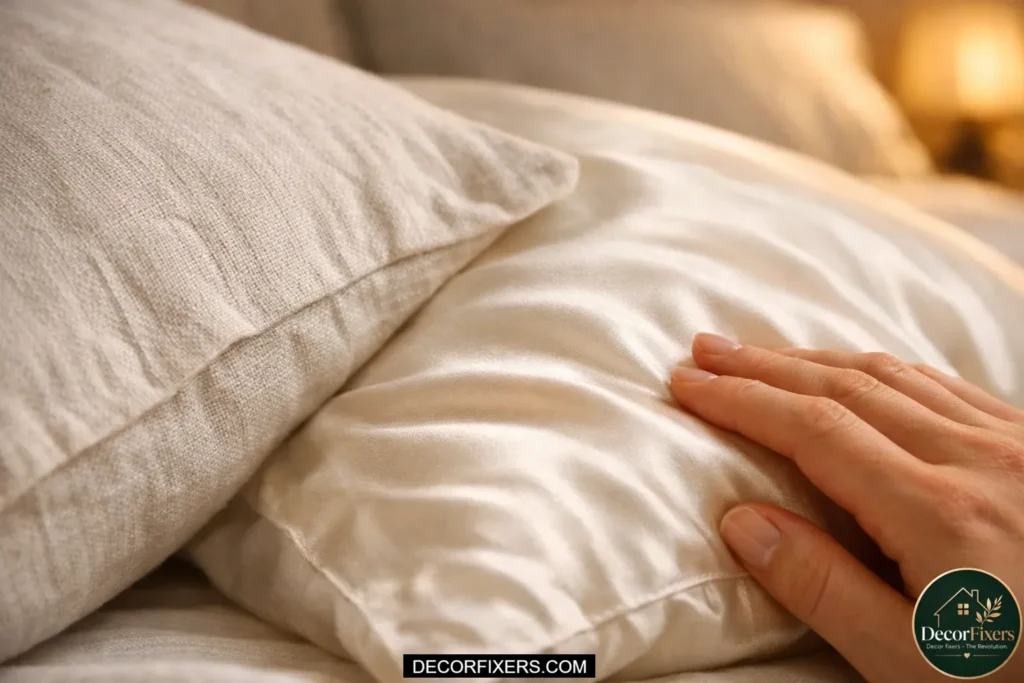
The tactile experience of getting into bed matters enormously to how the room feels. A 300–400-thread-count sateen or washed linen case costs less than a decorative pillow and creates more sensory impact.
6. Use bedding to control color
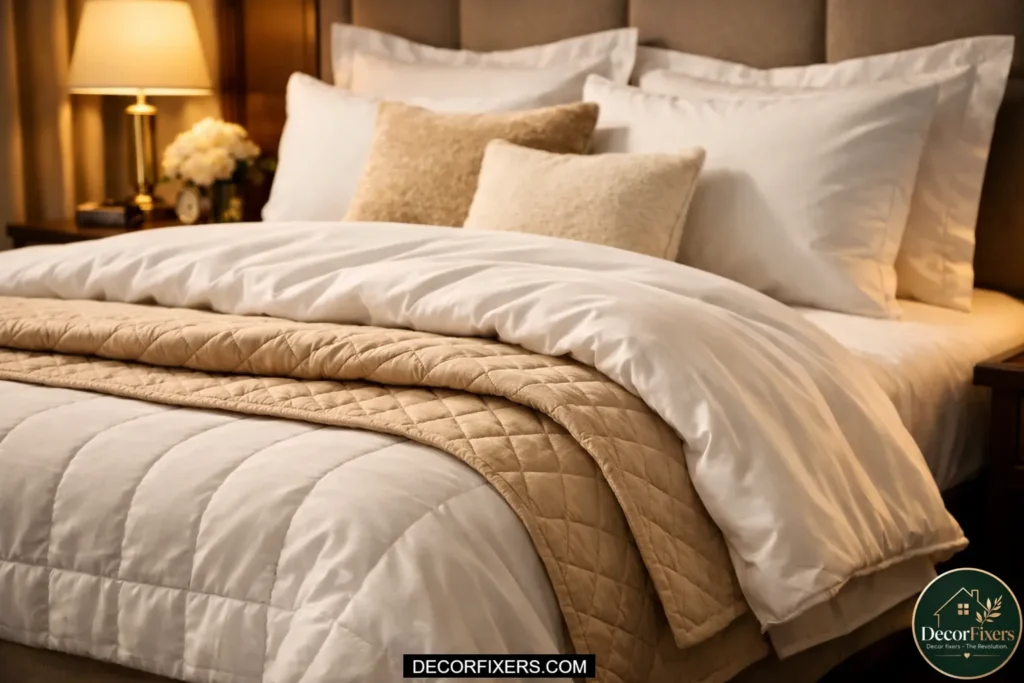
If you want warmth, dusty rose, terracotta, or sage, introduce it through a throw or decorative pillow, not through paint. Soft furnishings are reversible; walls aren’t.
7. Layer a lightweight quilt under your duvet
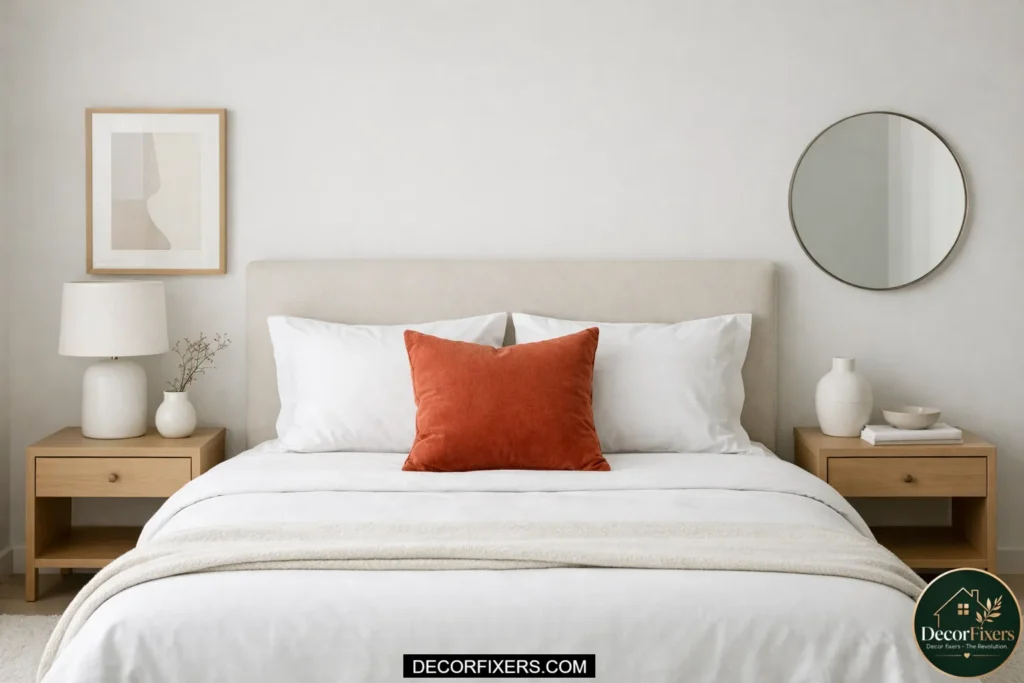
Pull it slightly out at the foot so both layers are visible. This technique, common in high-end hotel styling, adds visual richness without extra weight or cost.
Look, if you’ve already bought throw pillows that didn’t pull the room together, it’s likely a scale or tonal issue, not a taste issue. Pillows that are too small (under 20″) or too matched in color will always look staged rather than luxe.
8. Replace your overhead light with a dimmable bulb
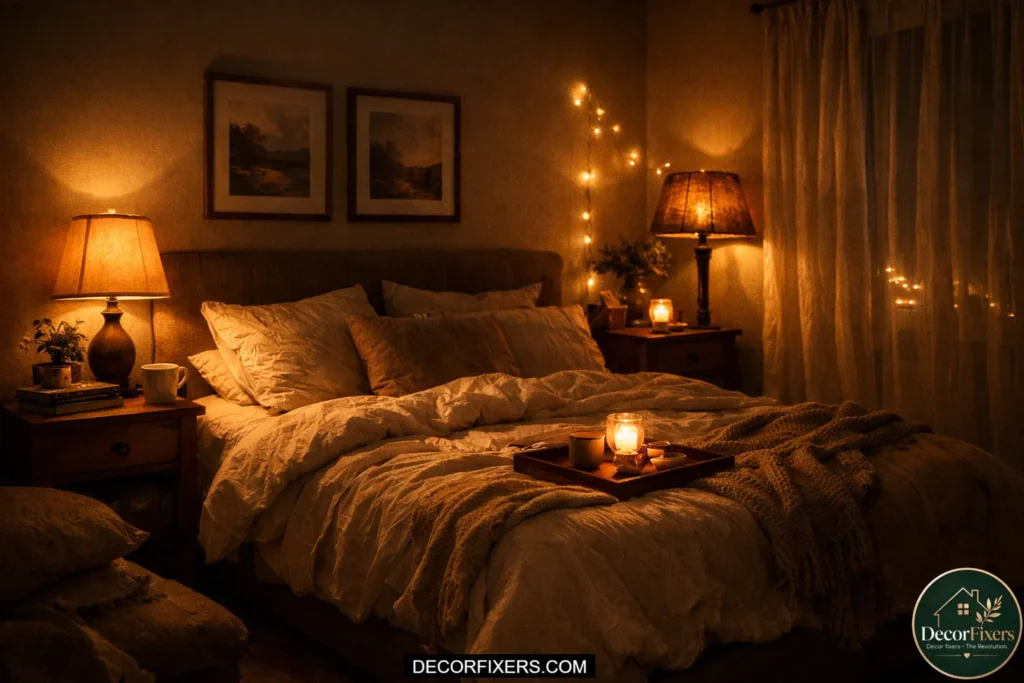
This single change costs under $10. A harsh overhead light at full brightness is the fastest way to destroy a room’s atmosphere. Warm bulbs (2700–3000K) at 40–60% brightness transform the same furniture into a different room.
The Cozy-Luxe Framework: Three Layers That Change Everything
Before listing specific ideas, understand the framework. Every effective bedroom makeover, at any budget, works by stacking these three layers:
| How-To: Apply the Cozy-Luxe Framework 1. Set your base palette, choose warm neutrals (ivory, taupe, sand) or cool ones (grey, slate, stone). Don’t mix families. 2. Add tactile contrast, layer at least three different textures: linen, knit, velvet, rattan, wood, or ceramic. 3. Layer your light, combine one overhead source, one bedside source, and one ambient or accent source. |
9. Add bedside table lamps with warm-toned shades
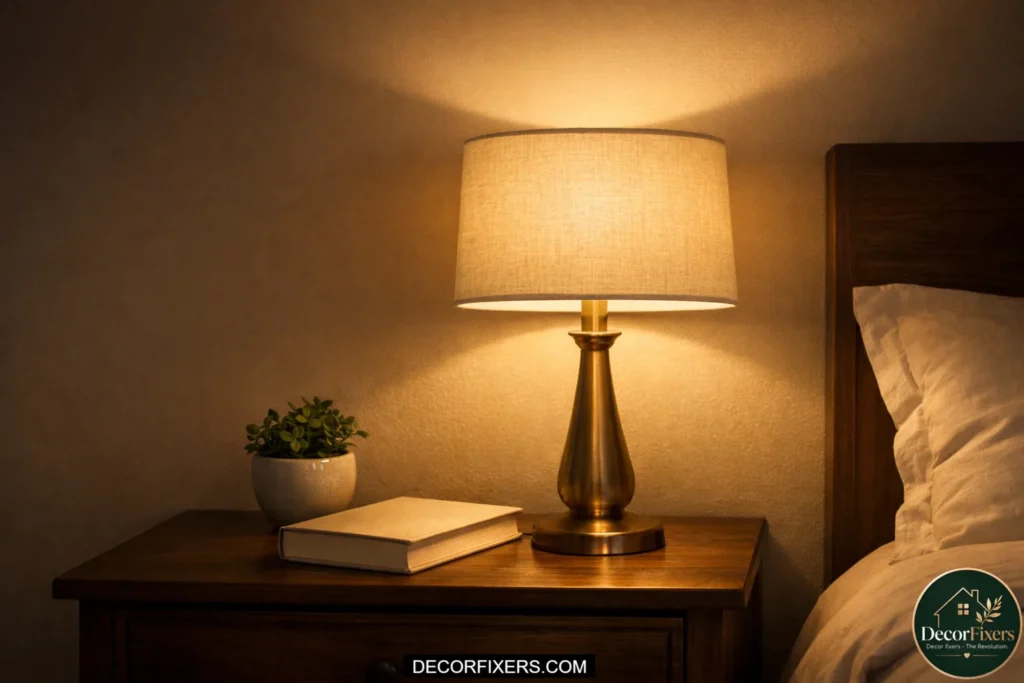
Fabric or linen shades diffuse light softly. Avoid glass or metallic shades that create glare. The lamp doesn’t need to be expensive; the shade and bulb temperature do the work.
10. Use a floor lamp in an empty corner
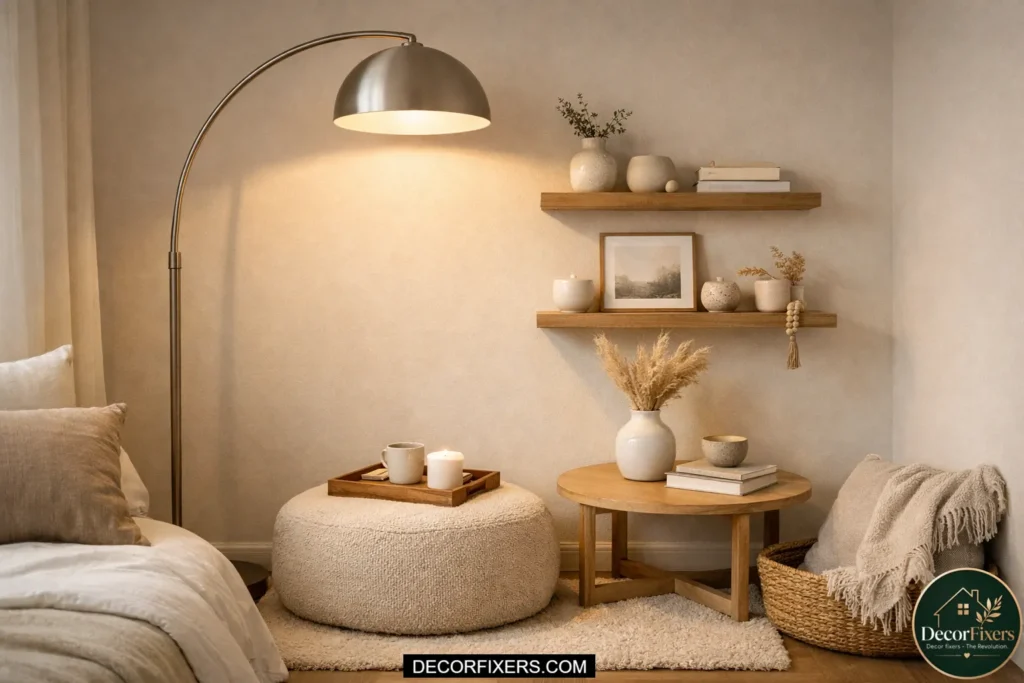
Dead corners make rooms feel unfinished. An arched floor lamp with a warm white bulb fills vertical space, adds a light source, and creates depth, all for the cost of a single lamp.
11. Add under-bed or shelf LED strip lighting
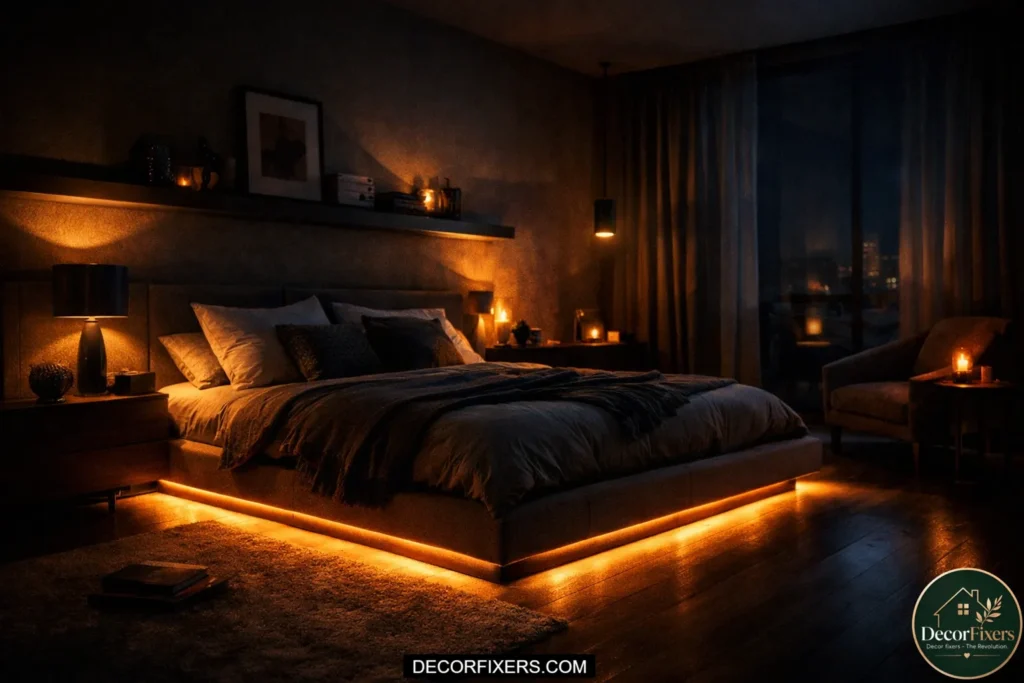
Ambient light at low levels creates a sense of warmth and dimension that overhead light can’t replicate. Warm white LED strips placed under a bed frame or behind a floating shelf cost very little and change the mood entirely.
12. Candles count as a light layer
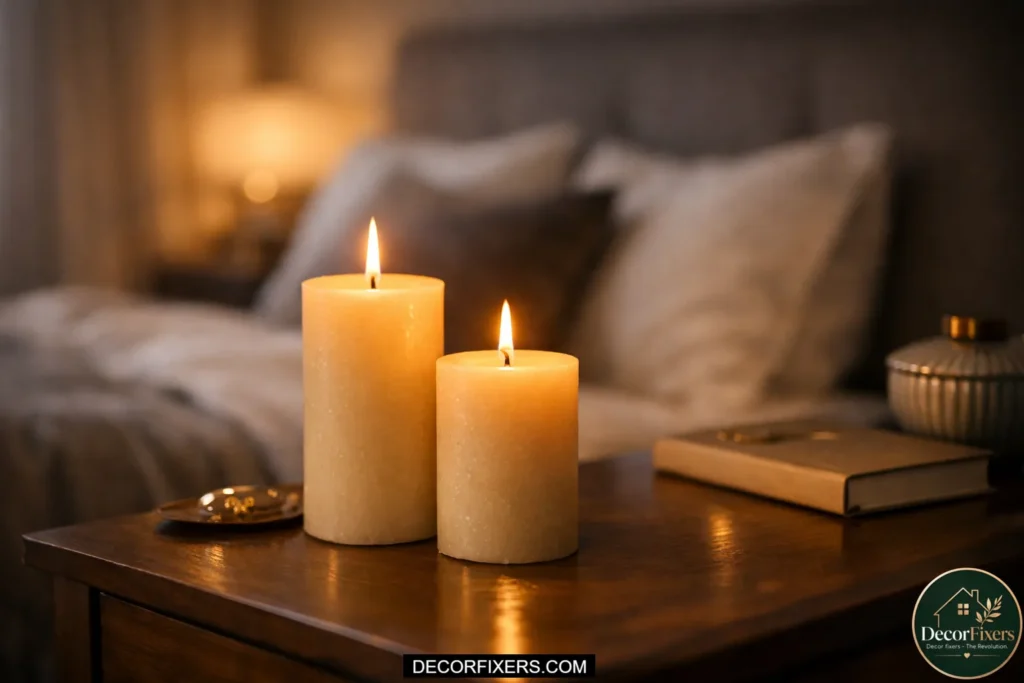
Real or flickering LED candles on a dresser or nightstand introduce the most intimate light temperature possible. Two matching pillar candles in neutral tones are a quiet-luxury staple.
13. Add a rug, even in a small space
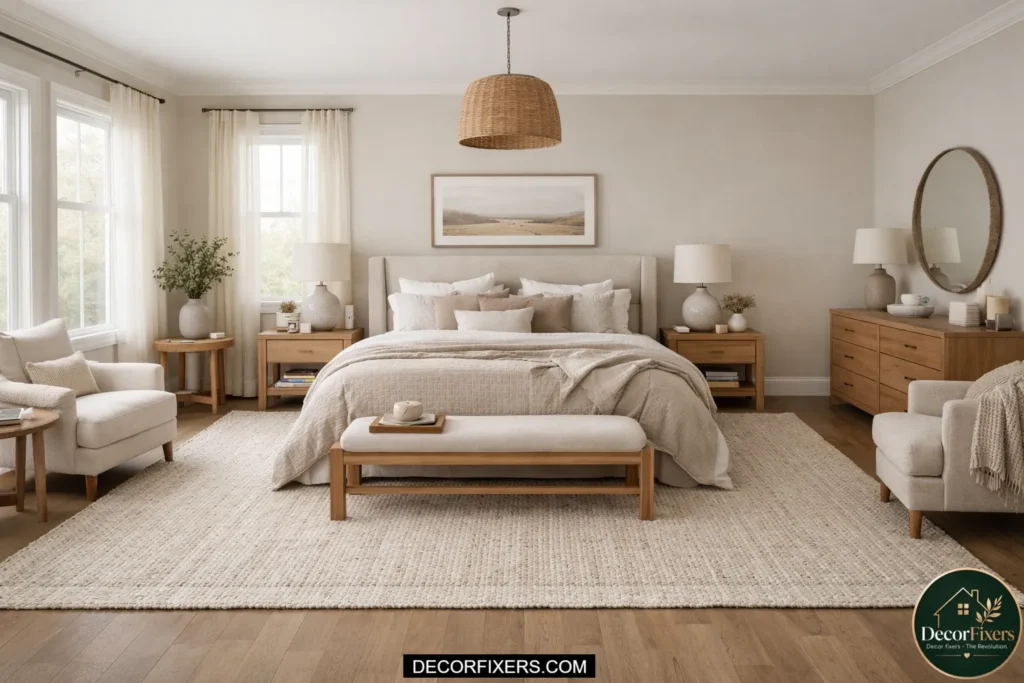
A rug is the single most effective visual anchor in a bedroom. It defines the sleeping zone, adds warmth underfoot, and, crucially, makes the furniture feel like it belongs together rather than floating. Size up: a rug that’s too small is worse than no rug.
14. Use a statement headboard as the room’s focal point
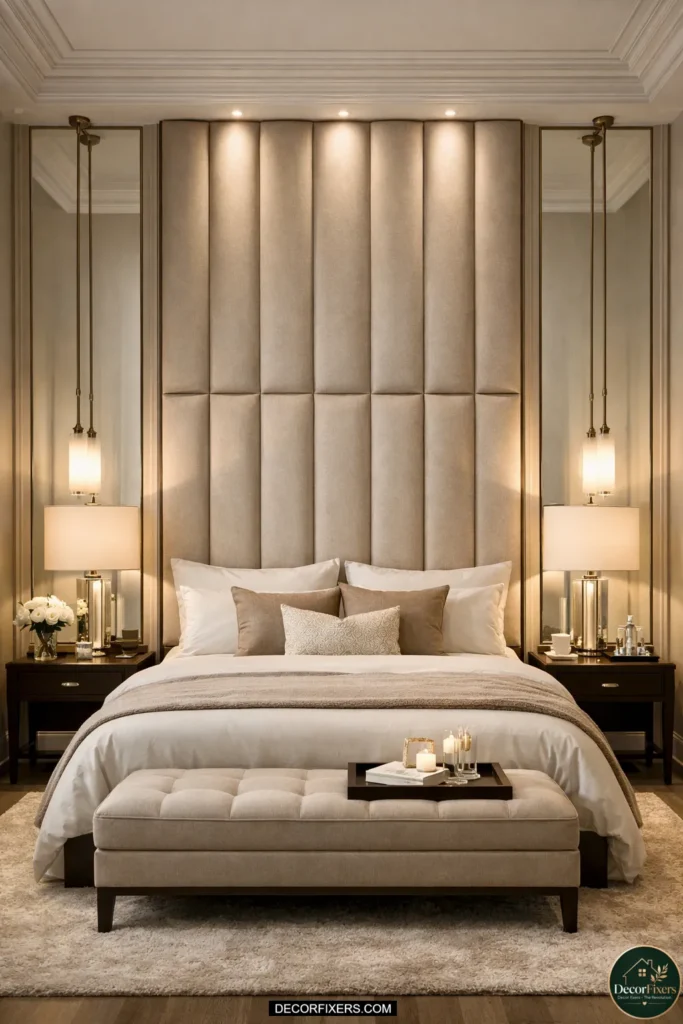
It doesn’t need to be expensive. A tall,fabric-covered or upholstered headboard draws the eye and gives the room a clear center. Anthropologie carries distinctive headboard options at mid-range prices; DIY headboard kits are also widely available for under $80.
15. Add natural texture through one wooden element
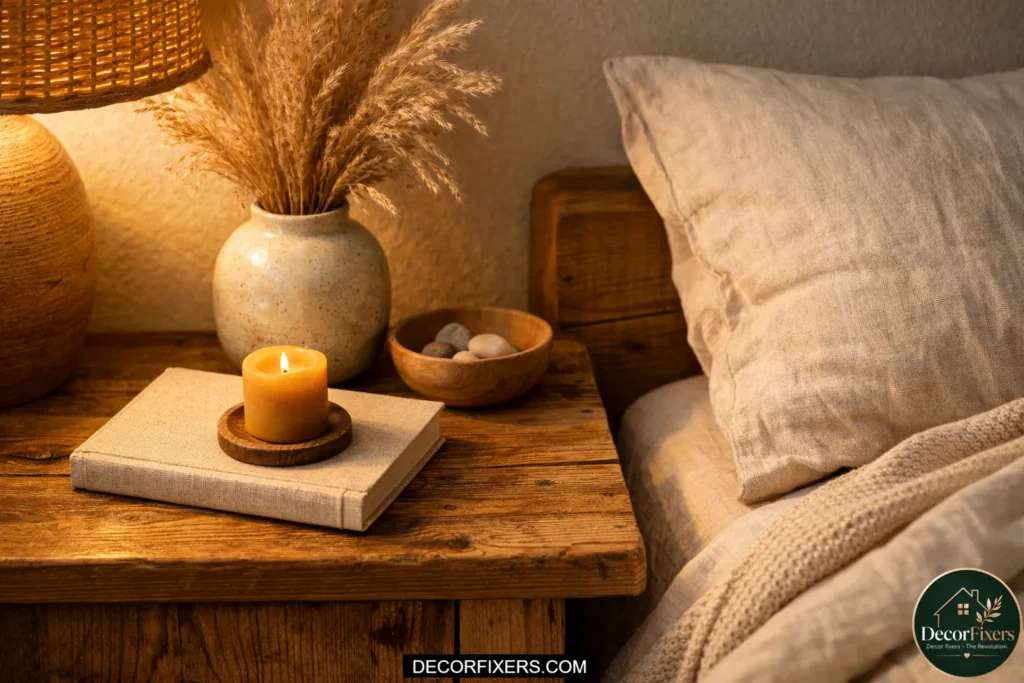
A wooden nightstand, a rattan pendant shade, a driftwood tray, or any single natural material introduces the organic warmth that distinguishes cozy spaces from cold ones. You need only one.
16. Hang curtains high and wide
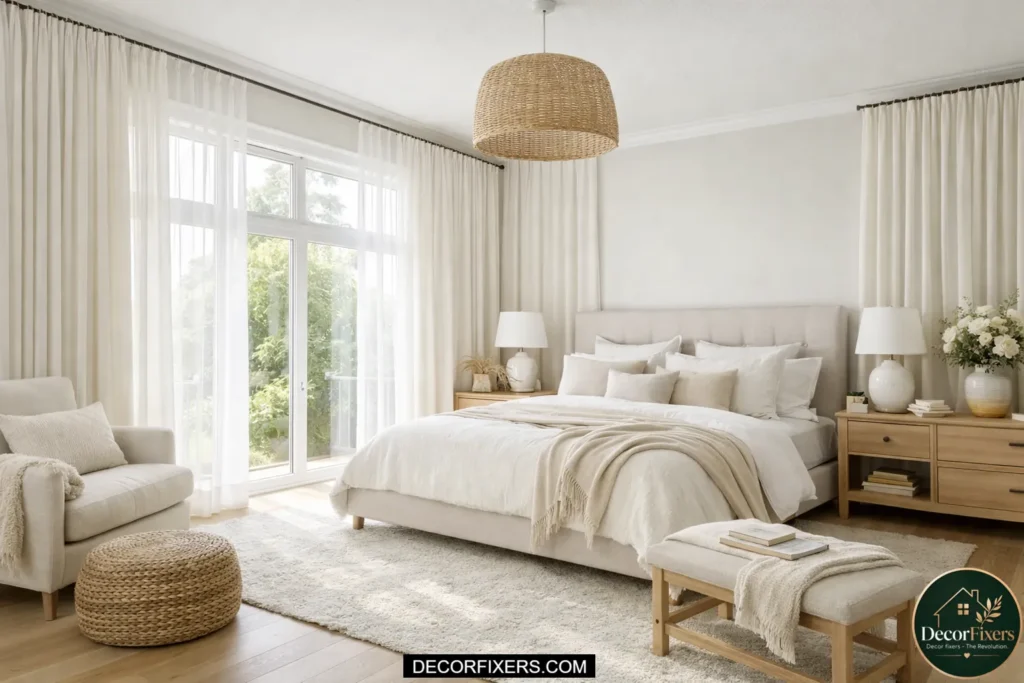
Mount curtain rods 4–6 inches above the window frame and extend them 8–12 inches beyond each side. This makes windows look larger, ceilings look taller, and the room feel more expensive, using only curtain hardware and floor-length panels.
17. Create a micro reading nook
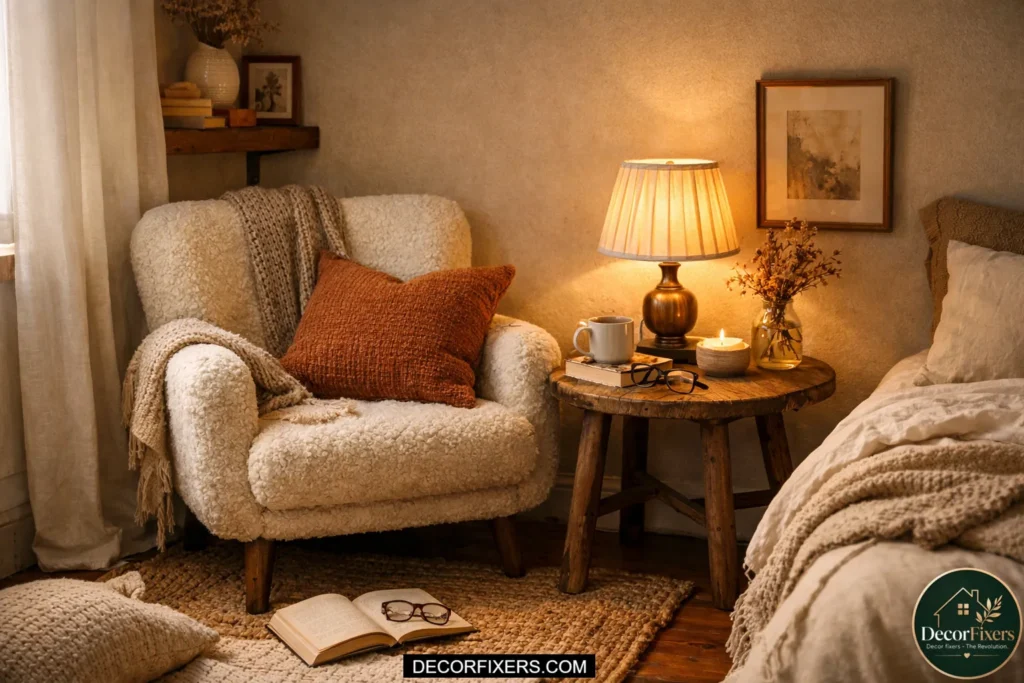
A single armchair in a corner, a small side table, and a lamp are all it takes. This zone signals that the bedroom is a retreat, a space for rest and pleasure, not just sleep. Even in a smaller master bedroom, a chair in a corner changes how the room reads entirely.
18. Add art at the right scale
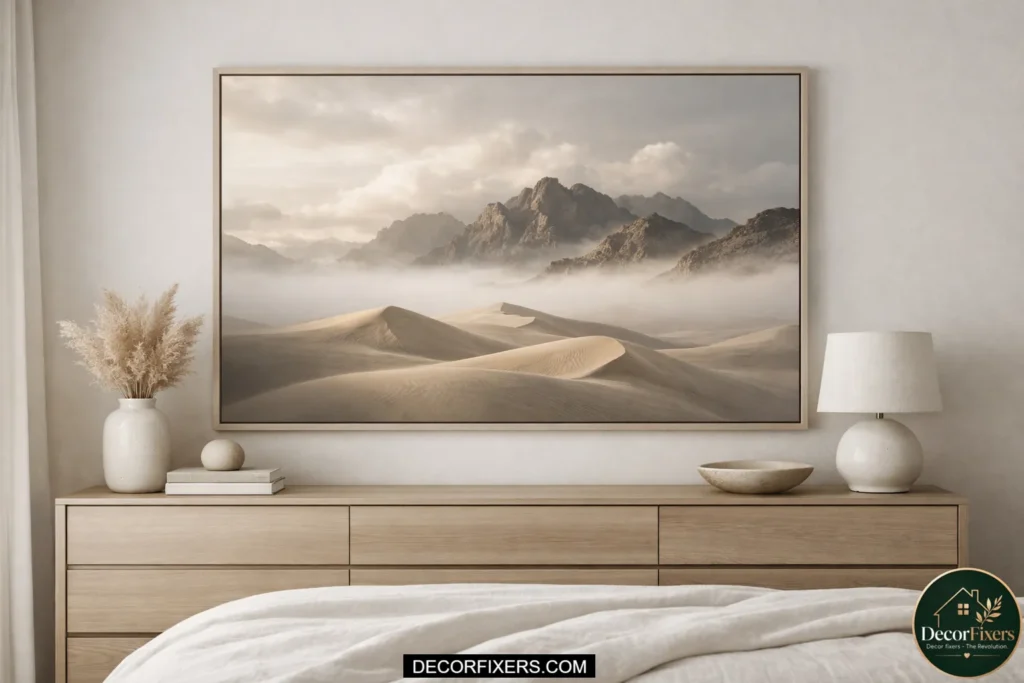
Oversized is almost always better than undersized. A large canvas or print (at least 24″x36″ for a typical bedroom wall) above a dresser or on an accent wall creates the sense of a designed space. Budget framing from IKEA works; the scale and the subject matter, more than the frame.
19. Edit ruthlessly
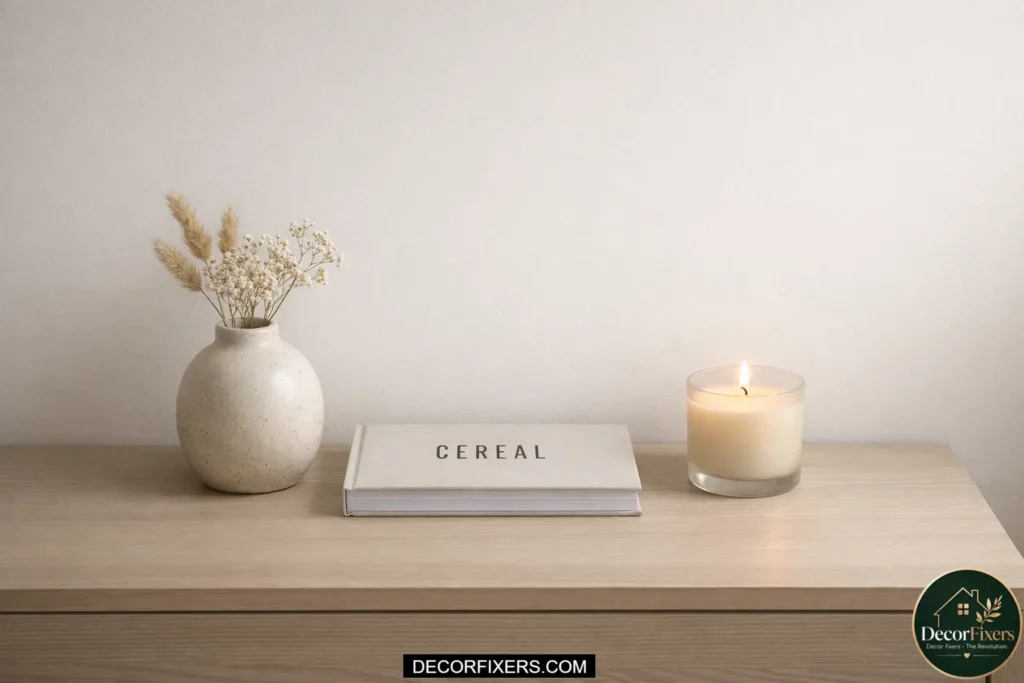
Quiet luxury is edited, not minimalist. Remove items that don’t serve a visual or functional purpose. A surface with three thoughtfully placed objects always looks more expensive than the same surface covered with many things. This costs nothing.
ALSO READ: Small Bedroom Ideas: 30 Ways to Transform Your Space with Style
20. Replicate the RH look without the RH price
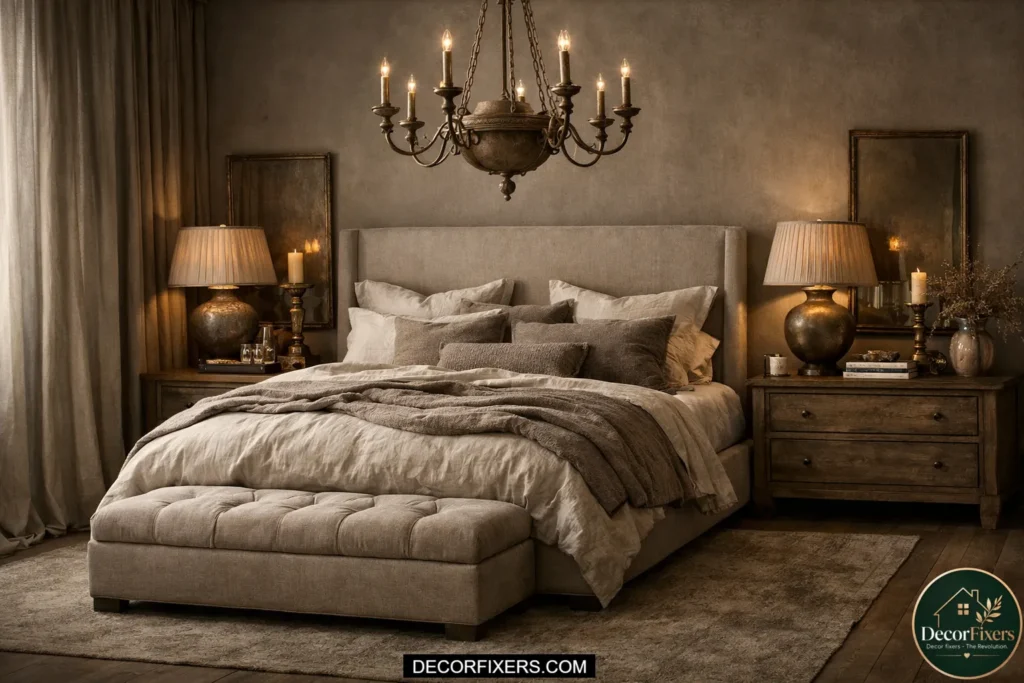
Restoration Hardware has built a design language around greige tones, Belgian linen, aged brass, and oversized upholstery. Every single element of that look can be approximated: linen from Parachute, aged brass hardware from Amazon or IKEA, neutral textured throws from any homeware store. The look is a formula, and formulas can be replicated.
Quick Comparison: Which Upgrade Has the Highest Impact?
Use this to decide where to start when the budget is limited:
| Option | Best For | Key Benefit | Limitation |
| Layered Bedding | Instant cozy upgrade | No tools, no holes in the wall | Needs regular fluffing |
| Statement Headboard | Anchoring the room visually | Transforms the bed into a focal point | Harder to swap later |
| Warm Ambient Lighting | Mood & relaxation | Works in any size room | Needs lamp purchase |
| Textured Rug | Warmth + visual grounding | Makes space feel intentional | Can look busy if overdone |
| Gallery Wall / Art | Personality & character | Budget-friendly, fully custom | Time-consuming to hang |
| Warm Lighting vs. Neutral Lighting in Bedrooms Warm lighting (2700–3000K) is better suited for master bedrooms because it promotes relaxation and creates the cozy,hotel-like atmosphere most people are seeking. Neutral or cool lighting (4000K+) works better in task areas like vanities or reading zones. The key difference is emotional effect: warm light signals rest; cool light signals alertness. |
What Most Bedroom Decor Guides Skip, And Why It Matters
I’ve seen conflicting guidance across popular bedroom decor content; some sources emphasize furniture investment as the only path to a luxe result, while others focus entirely on color trends without addressing the structural logic underneath. My read: the furniture-first approach misses the majority of the impact, which comes from light temperature, texture layering, and proportion, none of which require a $2,000 bed frame.
Most guides also don’t address the sequencing question: what order should changes happen in?
Here’s a practical answer based on impact-per-dollar:
- Start with lighting temperature (dimmable warm bulbs). Immediate,near-zero cost.
- Fix bedding layering. Medium cost, highest visible impact.
- Add a rug if you don’t have one. High impact, medium cost.
- Introduce a textile (curtains, throw) in your chosen accent color.
- Edit surfaces, remove clutter before buying anything new.
- Add a single piece of art at scale. This finishes the room.
Some experts argue that a complete furniture refresh is the only way to achieve a truly luxurious bedroom. That’s valid for spaces with fundamentally mismatched or worn furniture. But if your furniture is structurally sound and roughly cohesive in tone, the above sequence will change how your bedroom looks and feels more than a new bed frame would.
The Simplest Way to Start
Pick one layer. Just one.
If your room feels dark and flat, start with lighting. If it feels cold and clinical, start with a linen duvet cover and a throw. If it feels like furniture floating in space, start with a rug that’s actually large enough.
The cozy-luxe bedroom isn’t a single purchase. It’s a system built gradually, one intentional layer at a time. And the first layer you add, done right, will change how you feel about the room immediately.
Quick note: This guide covers cosmetic and soft-furnishing upgrades. It does not address mold remediation, structural wall changes, HVAC-linked humidity problems, or rooms with serious layout constraints; those require professional input before any décor decisions make sense.
CONCLUSION:
After working through countless bedroom upgrades over the years, one thing is consistently clear to me: the rooms that feel the most expensive are rarely the ones with the highest budgets. They’re the ones where every element works together.
If your bedroom still feels off, don’t rush to replace furniture. Start with the fundamentals you’ve seen here, fix your lighting temperature, layer your bedding properly, and introduce texture before adding anything new. I’ve seen small, intentional changes completely transform how a space feels without touching the layout.
Personally, I always begin with lighting and bedding. Those two alone can shift a room from flat to inviting almost instantly. From there, adding a rug, adjusting scale, and editing unnecessary items brings everything into alignment.
The goal isn’t perfection or copying a showroom. It’s creating a space that feels calm, cohesive, and personal every time you walk into it. When you focus on the system instead of random upgrades, the results stop looking accidental and start feeling designed.
Build it layer by layer. That’s where the real transformation happens.
FAQs:
| Q: What’s the best way to make a master bedroom feel luxurious on a low budget? A: Focus on lighting first, swap bulbs to warm-toned dimmers under $10 each. Then layer your bedding with a linen duvet cover and one textured throw. These two changes deliver the most visible impact at the lowest cost. |
| Q: How do I make my bedroom feel cozy without making it look cluttered? A: Texture creates coziness without clutter. Layer two to three fabric types (linen, knit, velvet) on your bed, add one warm light source, and edit your surfaces to three objects maximum. Cozy and clean aren’t opposites. |
| Q: Should I use dark or light colors in a master bedroom? A: Light, warm neutrals work in most master bedrooms because they reflect light and feel serene. Dark tones can work beautifully as an accent, on one wall, or through deep-toned textiles, but a fully dark room requires strong natural light to avoid feeling heavy. |
| Q: Why does my bedroom look cheap even after decorating? A: Usually, it’s a scale or mixing issue. Pillows that are too small, a rug that’s too small for the bed, or fixtures at wildly different warmth levels all break the sense of cohesion. Check the scale and light temperature first before buying anything new. |
| Q: When should I hire an interior designer instead of doing this myself? A: If your space has structural issues (awkward layout, poor natural light, mismatched architectural features), a designer session, even one hour, can be worth it. For cosmetic upgrades like bedding, lighting, and accessories, this guide gives you the same framework designers use. |

Creator of DecorFixers, sharing practical home and interior ideas focused on real-life usability, simple design improvements, and budget-friendly solutions.
3 thoughts on “Master Bedroom Decor Ideas: 20 Cozy Luxe Retreat Upgrades”