

Living room wall decor refers to any visual or tactile element applied to walls, art, panels, mirrors, wallpaper, shelves, or lighting, to make a living space feel finished, personal, and intentional. Unlike furniture, it shapes how a room feels before anyone sits down.
The walls are where most living rooms fail. Not because of bad taste, but because of indecision.
What Makes a Living Room Wall Decor Idea Actually Work?
Most guides skip this part. They hand you 40 photos and leave you wondering why nothing looks right when you try it yourself.
Here’s the thing: wall decor works when it fits three things simultaneously: your wall size, your light source, and your commitment level. A stunning gallery wall in a north-facing rental apartment with renter-beige walls is going to look flat and sad. The idea wasn’t wrong. The match was wrong.
What most people have tried before landing here: pinning endlessly on Pinterest, buying one piece that looked off-scale on the actual wall, watching room makeover videos shot in 1,200 sq ft apartments with natural light flooding in from three sides. None of that translates to the actual 14-foot wall behind your sofa at 6 pm under warm overhead light.
Or maybe I should say it this way, the problem isn’t inspiration. You have too much of it. The problem is a decision framework.
The Quick Decision Framework: Which Idea Fits Your Wall?
Before you scroll through 25 ideas, spend 90 seconds here. It’ll save you three bad purchases.
Quick Comparison:
| Option | Best For | Key Benefit | Limitation |
| Gallery Wall | Medium walls, renters | Flexible, buildable over time | Requires planning and level hanging |
| Oversized Single Art | Large walls, minimalists | Instant impact, easy to execute | Expensive if quality print; hard to scale down |
| Peel-and-Stick Wallpaper | Renters, bold personalities | No wall damage, removable | Pattern repeat can be tricky to align |
| Floating Shelves + Objects | Small walls, collectors | Functional + decorative | Requires wall anchors, not always renter-safe |
| Panel Molding / Wainscoting | Homeowners, traditional style | Architectural depth, timeless | Permanent; requires some DIY skill |
Look, if you’re renting and terrified of losing your deposit, the entire top half of this list still works for you. Peel-and-stick, adhesive strips (3M Command strips hold up to 16 lbs each), leaning art, and tension rod curtain walls are all damage-free. The options aren’t fewer. They’re just different.
1. Build a Gallery Wall (The Right Way)
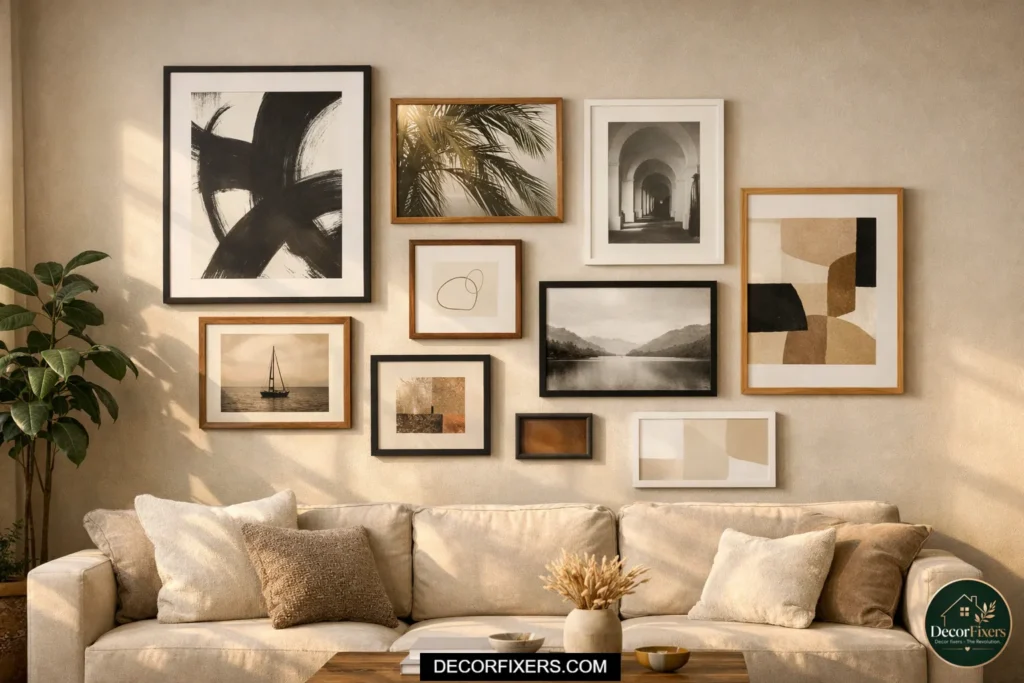
Start with the largest piece. Place it slightly left or right of center, not dead center, and build outward. Mix one horizontal piece, one vertical, and one square for visual rhythm.
Users who’ve attempted gallery walls most commonly report the same mistake: they hang pieces one at a time without a plan. Lay everything on the floor first. Photograph it. Then transfer to the wall.
IKEA’s RIBBA and BJÖRKSTA frames are the industry standard for gallery walls on a budget. RIBBA comes in 13 sizes. BJÖRKSTA in three oversized formats. Both have predictable mat depths, which makes mixing them look intentional rather than accidental.
Quick note: if you have a rental, use 3M Command Picture Hanging Strips (medium = 12 lbs, large = 16 lbs) instead of nails. They genuinely work and come off cleanly.
2. Go Oversized. One Piece. Done.
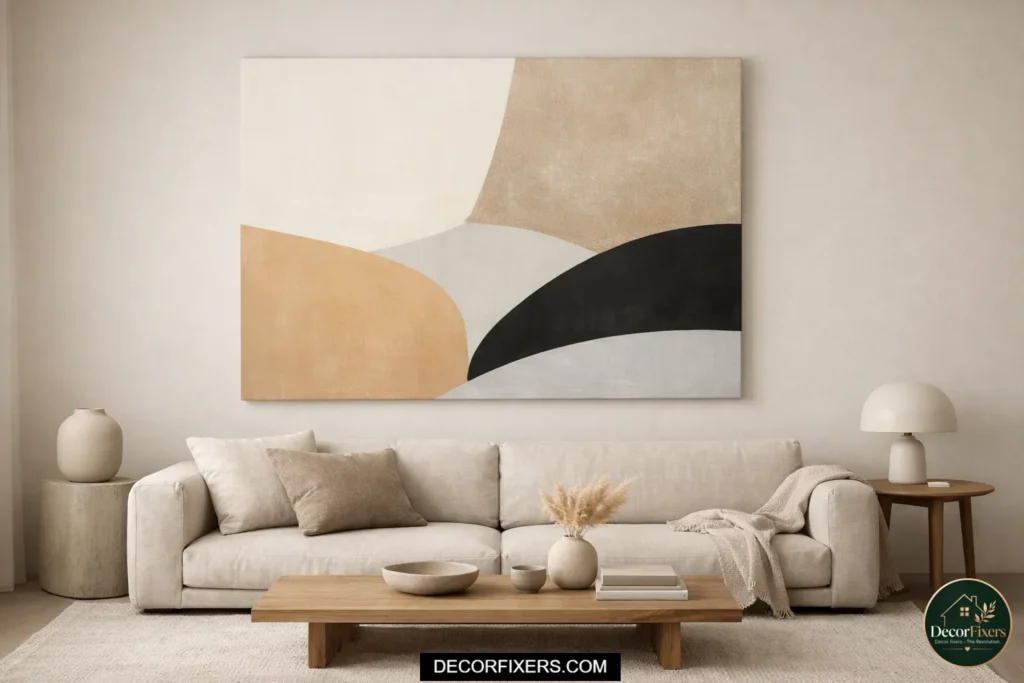
A single large print, 36″×48″ or larger, above a sofa does more work than five small ones fighting for attention.
Minted offers a free “View in Your Room” AR preview that lets you see exactly how a print looks on your specific wall before buying. That feature alone has prevented more bad purchases than any return policy.
The print doesn’t have to be expensive.
3. Paint an Accent Wall
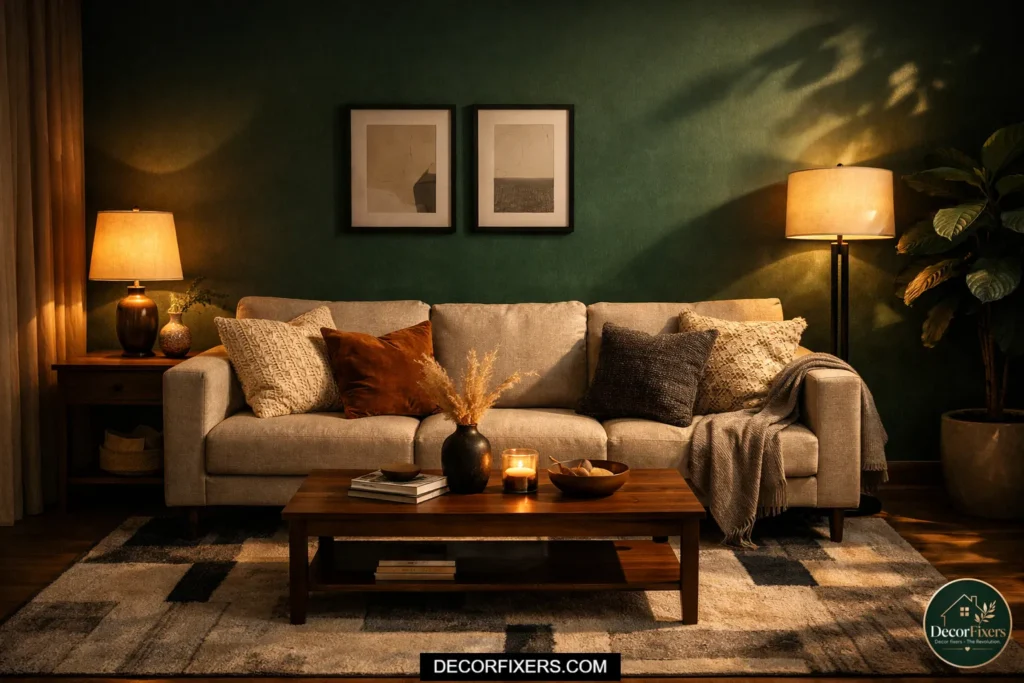
One wall. One color. Don’t overthink it.
The wall behind the sofa or the fireplace wall is almost always the right choice. Deep greens (particularly forest green and sage), warm terracotta, and inky navy blue are the colors interior designers were recommending most heavily through 2025 and into 2026, especially as alternatives to the all-white palette that’s fading fast.
Don’t paint an accent wall a color you don’t own yet. Pick the paint after you know your sofa and rug colors.
4. Apply Peel-and-Stick Wallpaper on One Wall
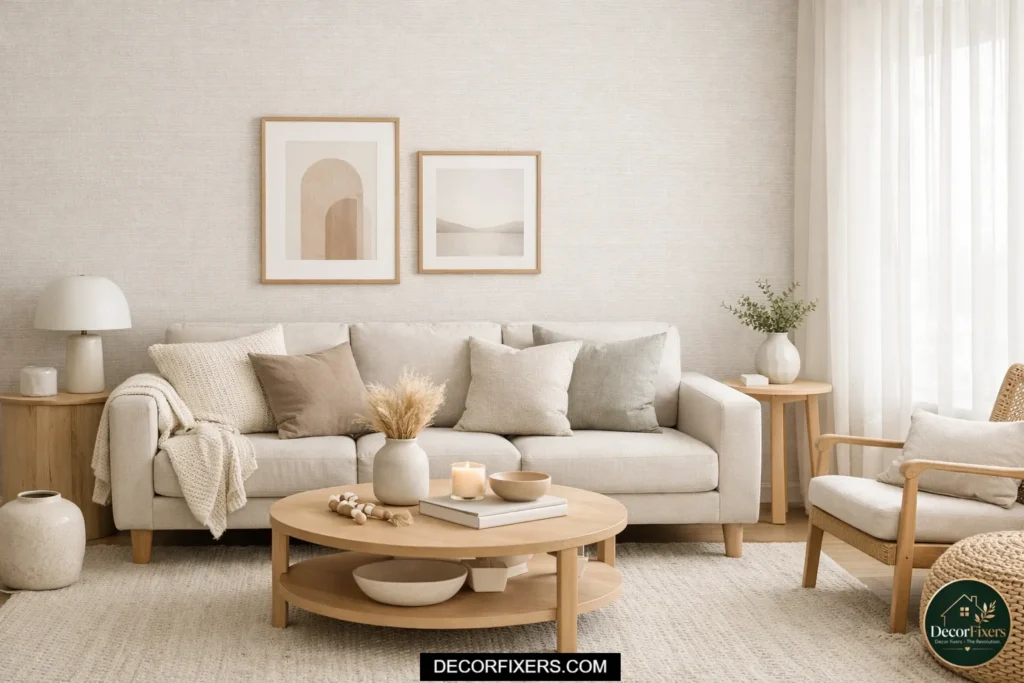
This one gets unfairly dismissed as a “budget hack.” It isn’t.
Textured peel-and-stick wallpaper, grasscloth finish, raised geometric patterns, linen-look, reads as premium in photos and in person when installed carefully. The key is prep: clean the wall with isopropyl alcohol, let it dry 24 hours, and overlap seams by 1mm rather than butting them edge-to-edge.
Brands like Chasing Paper and Tempaper are the category leaders. Prices run $35–$95 per roll, depending on pattern complexity.
5. Install a Picture Light Above Art
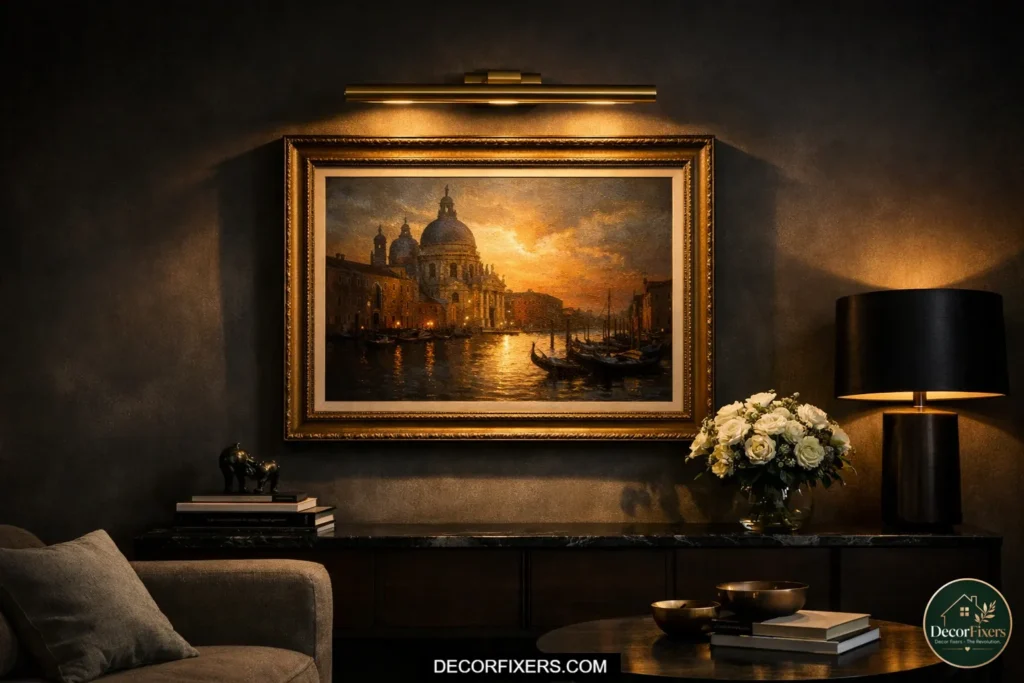
This is the trick designers use in rooms that feel “editorial”, like a magazine shot rather than a home photo.
A picture light above, even a mid-budget print, gives it weight and permanence. The Cocoweb Weston LED picture light ($89–$145 depending on length) is the most commonly recommended in this category, running on a plug-in cord that tucks behind frames invisibly.
Real feel, not real renovation.
6. Hang a Large Mirror
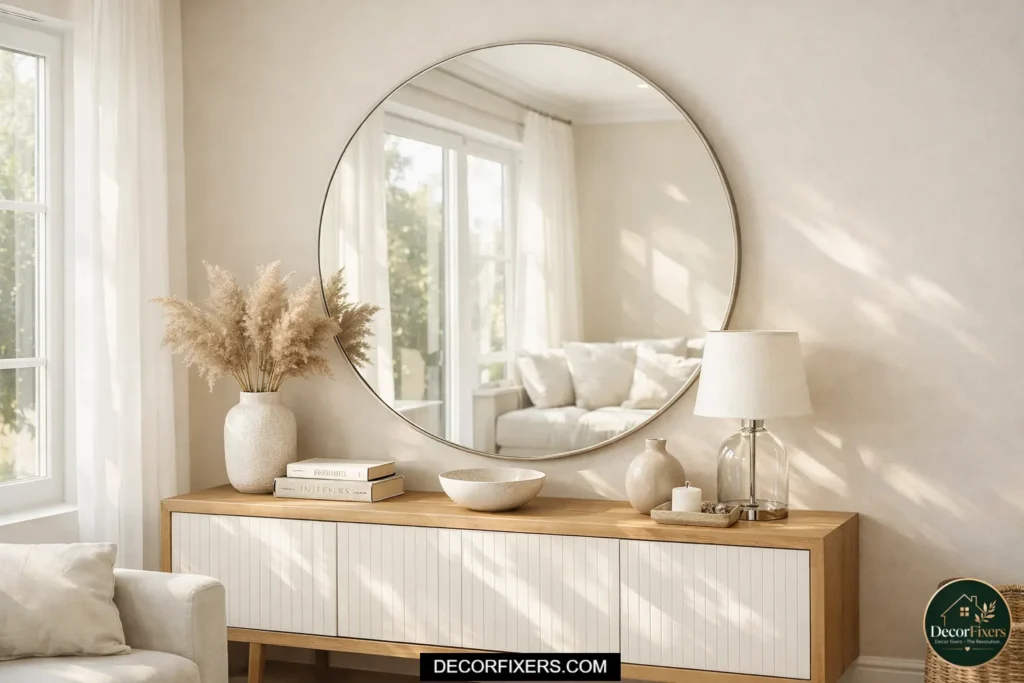
Mirrors do two things simultaneously: they expand a room visually and act as statement decor. For small living rooms, a mirror is frequently a better choice than art.
The styling rule: hang a mirror so its center sits at eye level (57–60 inches from the floor for most people). Don’t hang it so it reflects a ceiling or a blank wall; position it to reflect a window or a light source.
7. Lean Art Instead of Hanging It
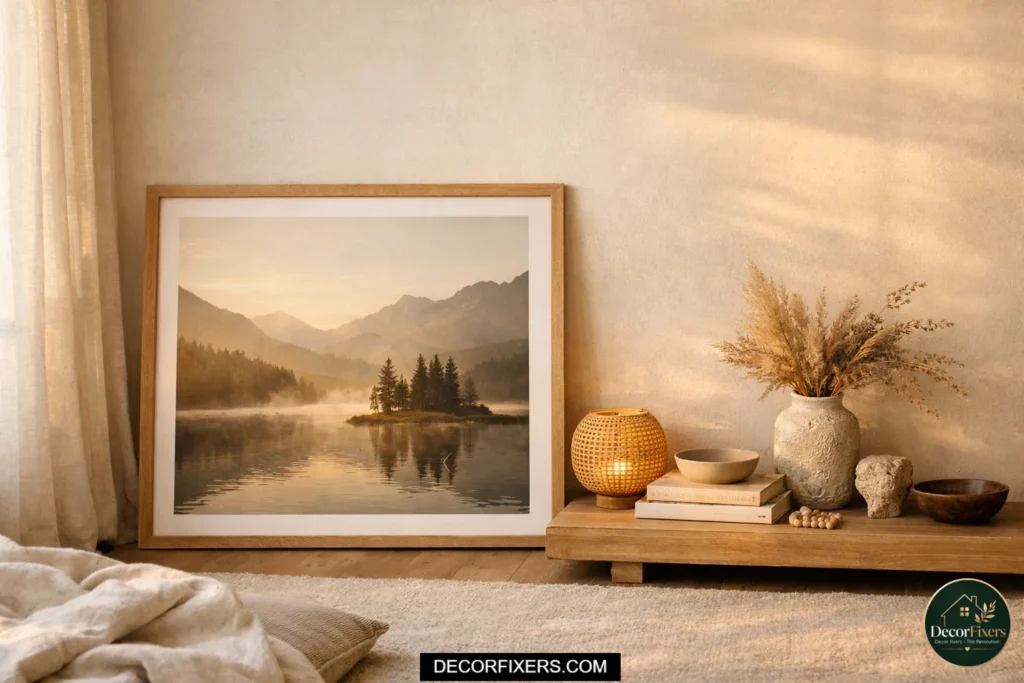
Art doesn’t have to hang. Leaning a large canvas or framed print against the wall, on the floor, on a console, or on a shelf is a legitimate design choice, not a provisional one.
It’s also renter-safe, infinitely adjustable, and looks deliberately casual in the best way.
8. Create a Floating Shelf Vignette
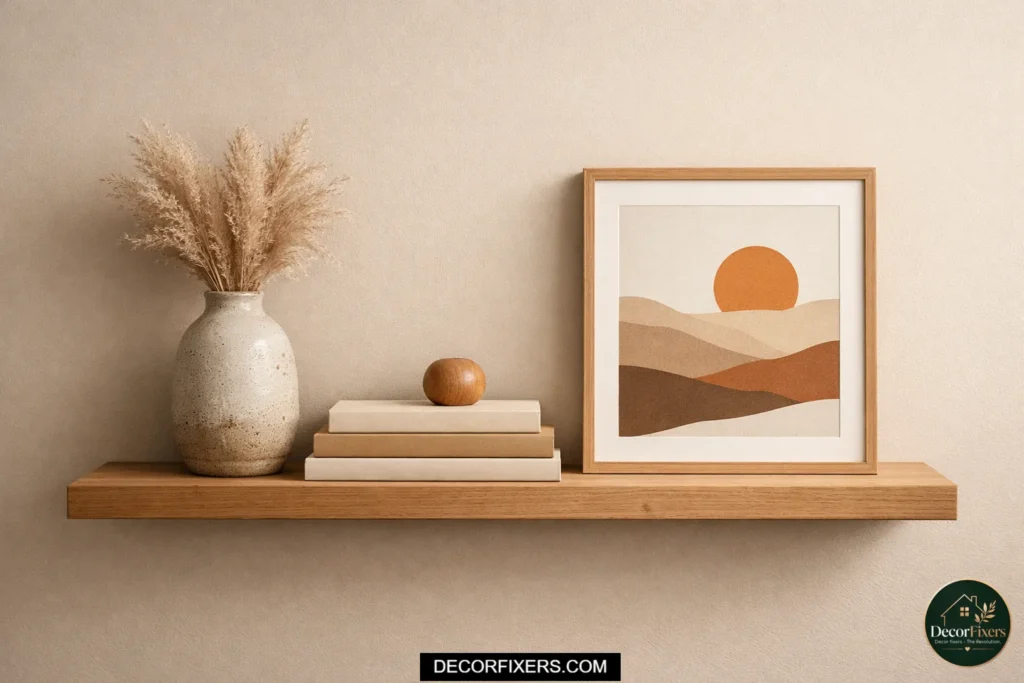
Three items on a floating shelf: one tall object, one textured object, one flat (a small framed print or a plate). That’s it. That’s the formula.
Don’t crowd the shelf. Space on either end is part of the arrangement.
9. Try Faux Brick or Stone Panel
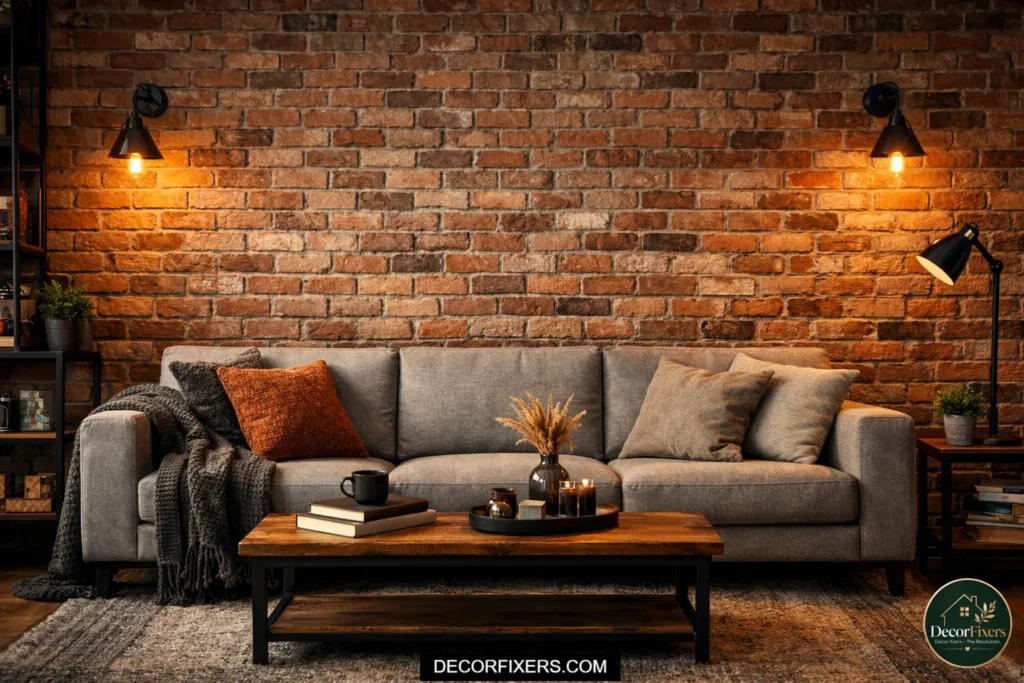
Peel-and-stick faux brick panels, available from vendors like NovaBrik and Stone Selex, deliver the exposed-brick look at a fraction of the cost and zero demolition. In a well-lit room with warm bulbs, they’re genuinely convincing.
This works best on a single feature wall, not all four.
10. Add Wainscoting or Board-and-Batten
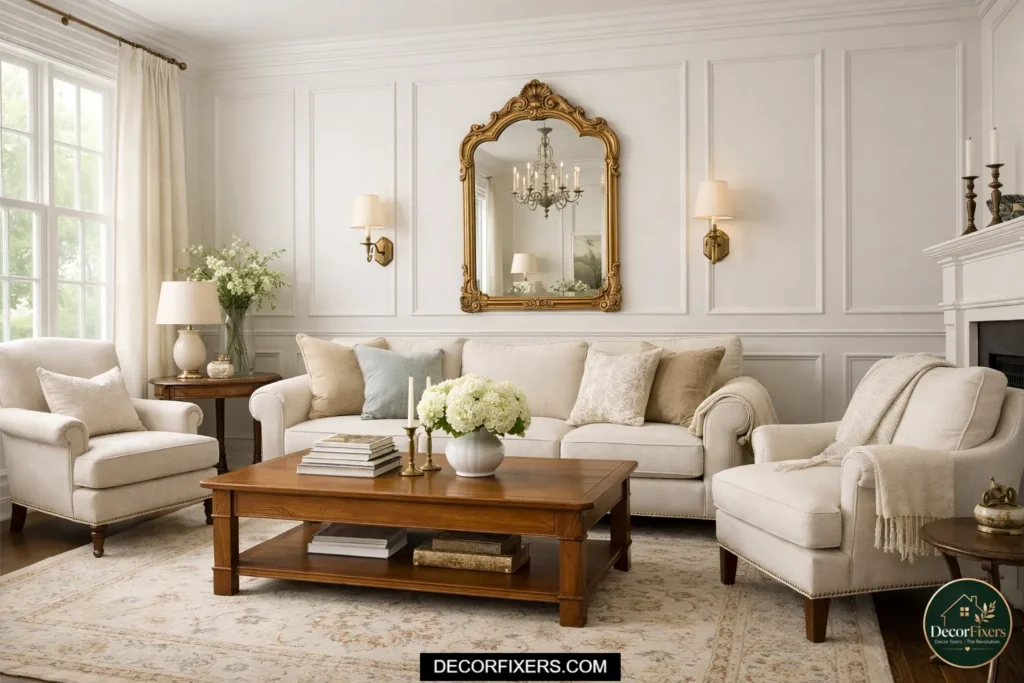
This is the homeowner’s answer to making a room feel architecturally interesting without any art at all. Board-and-batten, vertical or horizontal planks applied directly over drywall, adds dimension, texture, and visual height.
It’s permanent. It’s not for renters. But for homeowners who’ve tried everything else, it’s transformative.
Some designers argue this trend has peaked and that simpler feature walls are the smarter move in 2026. That’s valid for ultra-contemporary spaces. But in transitional and traditional interiors, wainscoting still reads as timeless rather than trend-driven, and there’s a meaningful difference.
11. Install a Statement Tapestry or Textile
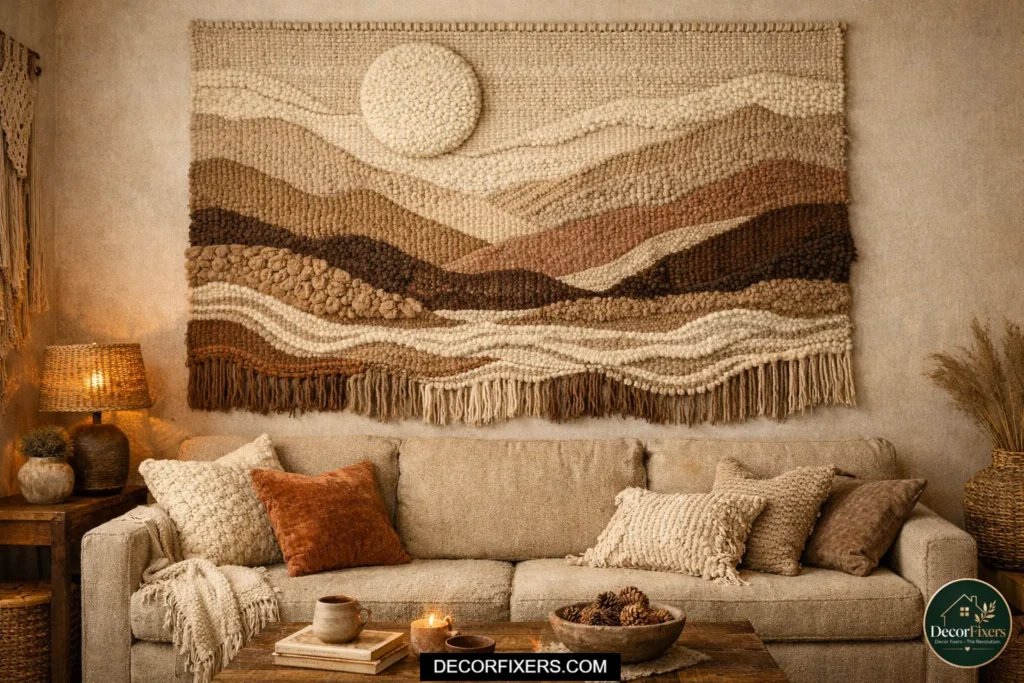
Fabric on walls. It sounds unconventional, but a large woven tapestry, especially in neutral tones with texture variation, acts as both art and acoustic softening.
Brands like Urban Outfitters and Anthropologie have made this mainstream since 2022. The result is warm, organic, and distinctly not corporate.
12. Use Curtains as Wall Decor
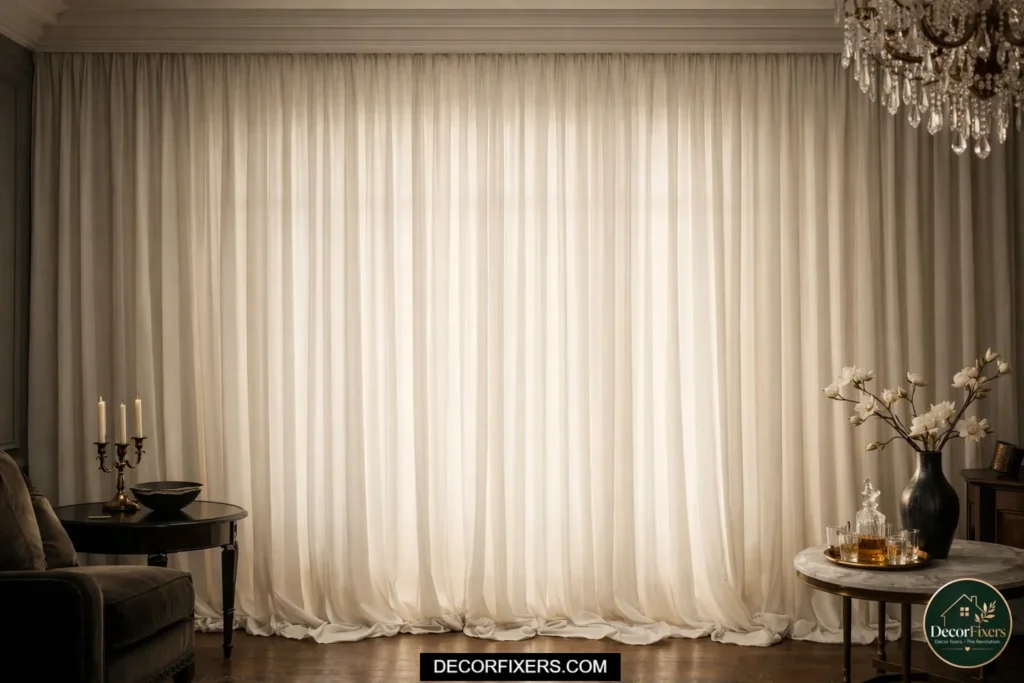
Floor-to-ceiling curtain panels flanking a window, or even a blank wall, add softness, height, and color in one move. Use a tension rod across the full width of the wall, hang panels at ceiling height, and let them puddle 1–2 inches on the floor.
No holes. Maximum drama.
13. Display a Plate Collection
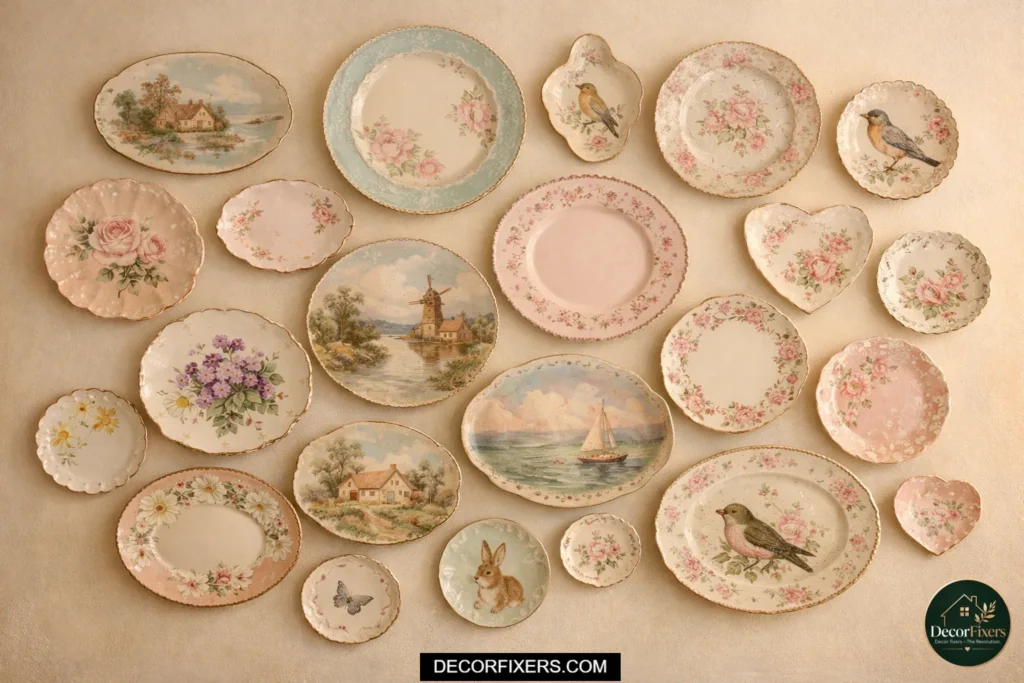
Vintage ceramic plates arranged in an asymmetric cluster look collected and personal. This is one of the few wall decor approaches that actually gets better as it grows; you add one plate at a time over the years.
Adhesive plate hangers (invisible from the front) make this renter-safe.
14. Try a Color Block Wall Treatment
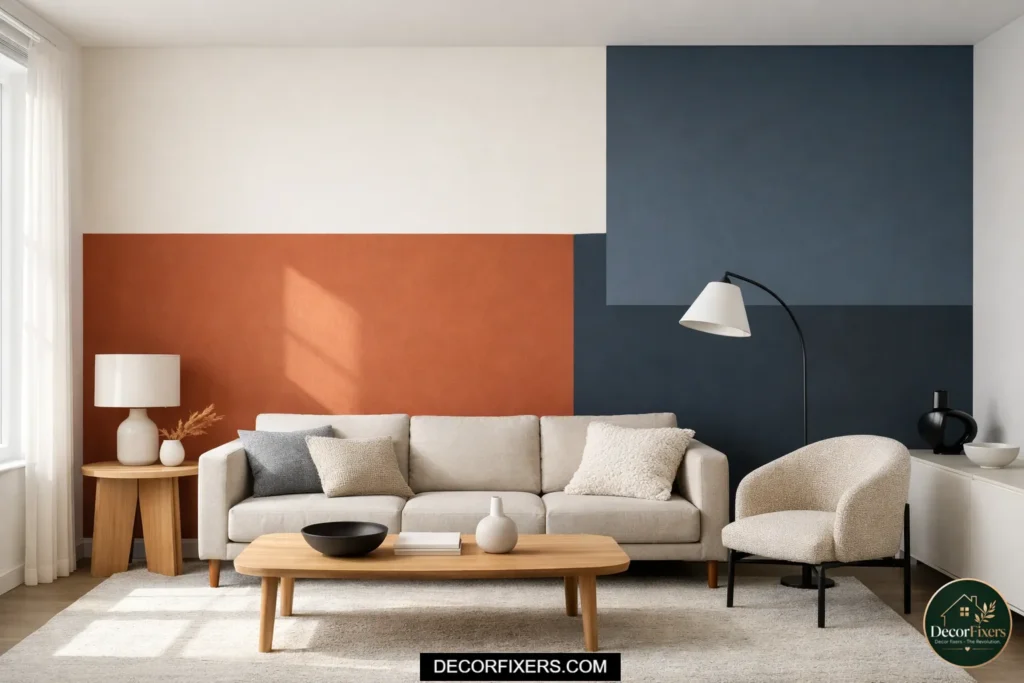
Two paint colors, with a clean horizontal or diagonal line between them. No art needed.
This works especially well in rooms where the furniture is neutral. The wall becomes the decor.
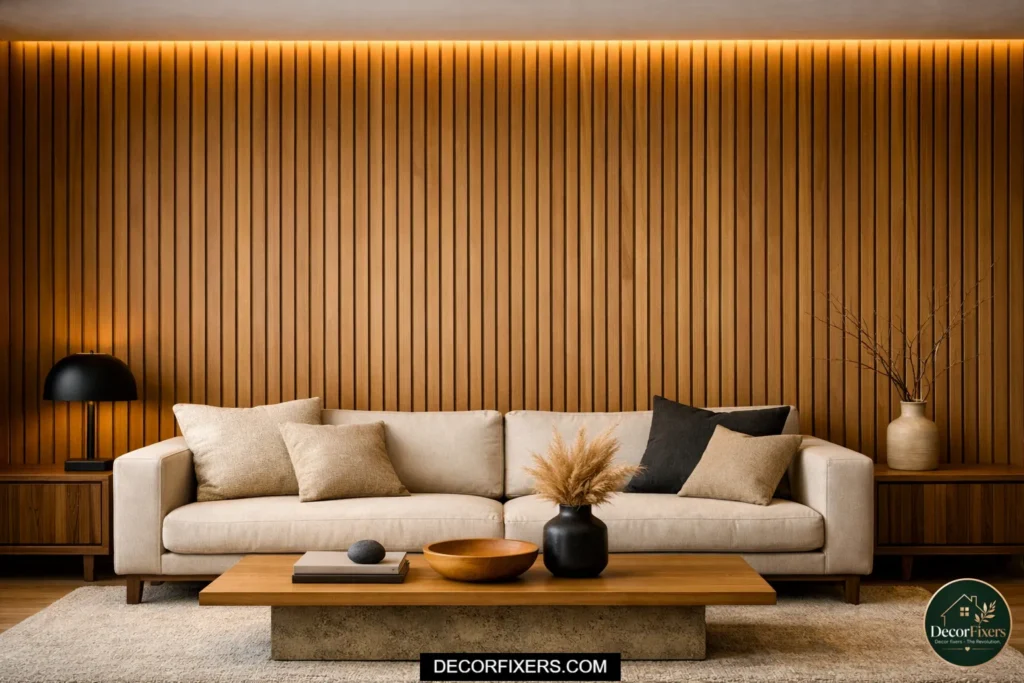
15. Mount a Wooden Slat Panel
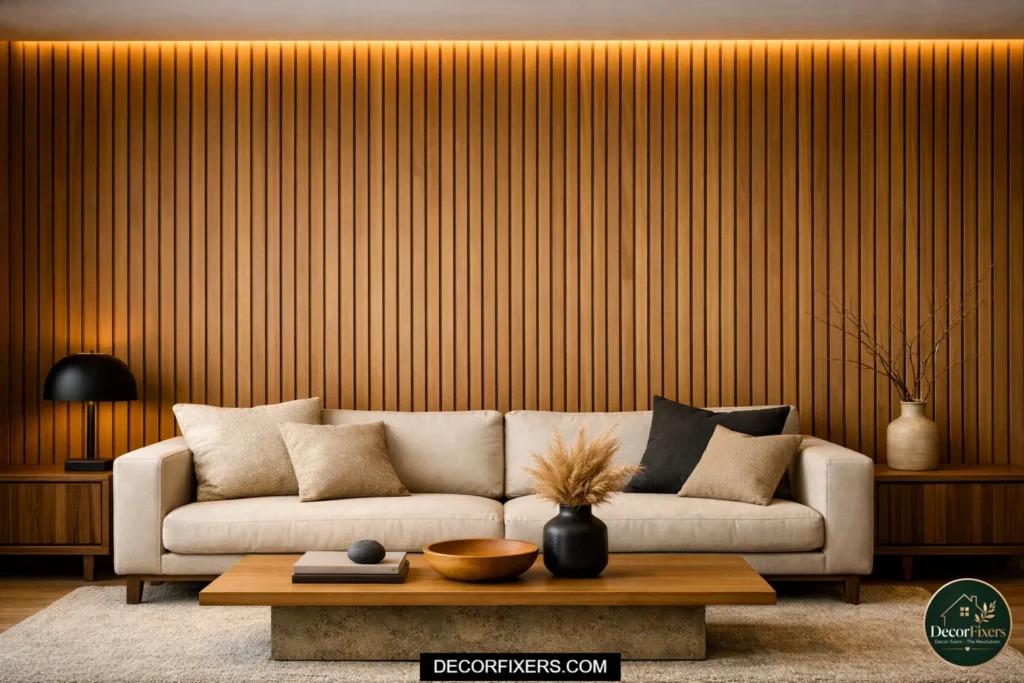
Vertical wood slat panels, either real wood or composite, are having a strong moment in 2025–2026. They add texture and depth without any art at all. Behind a TV or sofa, they make the wall feel architectural.
16. Add Candle Sconces
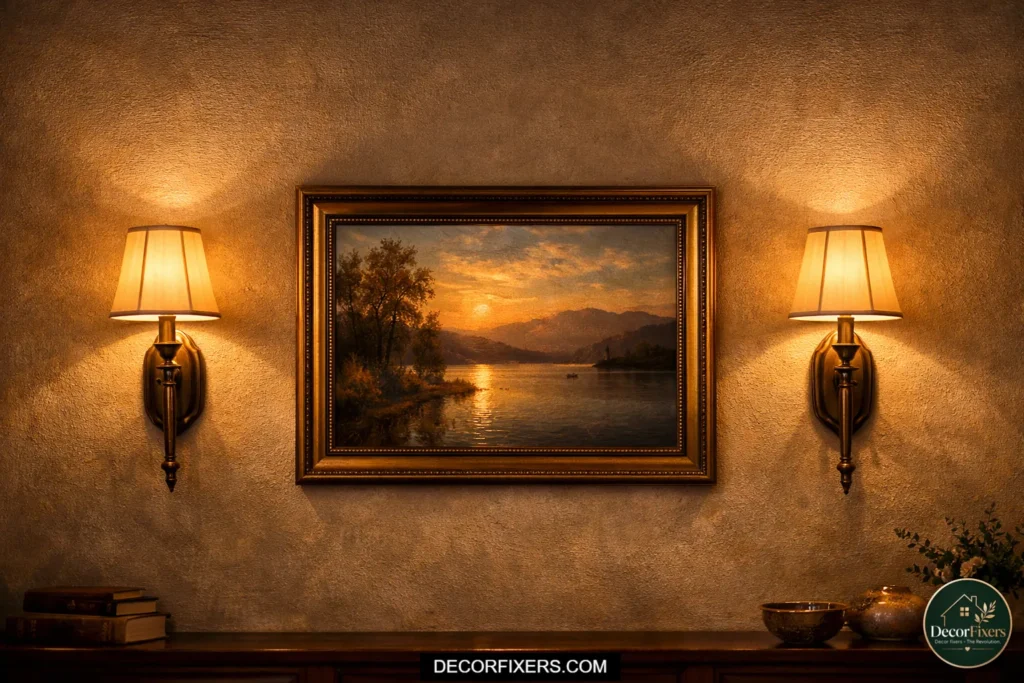
Wall sconces in matte black, brass, or brushed nickel double as functional lighting and decorative elements. Pair two on either side of art or a mirror for a symmetry that reads as intentional design.
Battery-operated LED sconces make this renter-safe with no wiring required.
17. Hang a Macramé Wall Hanging
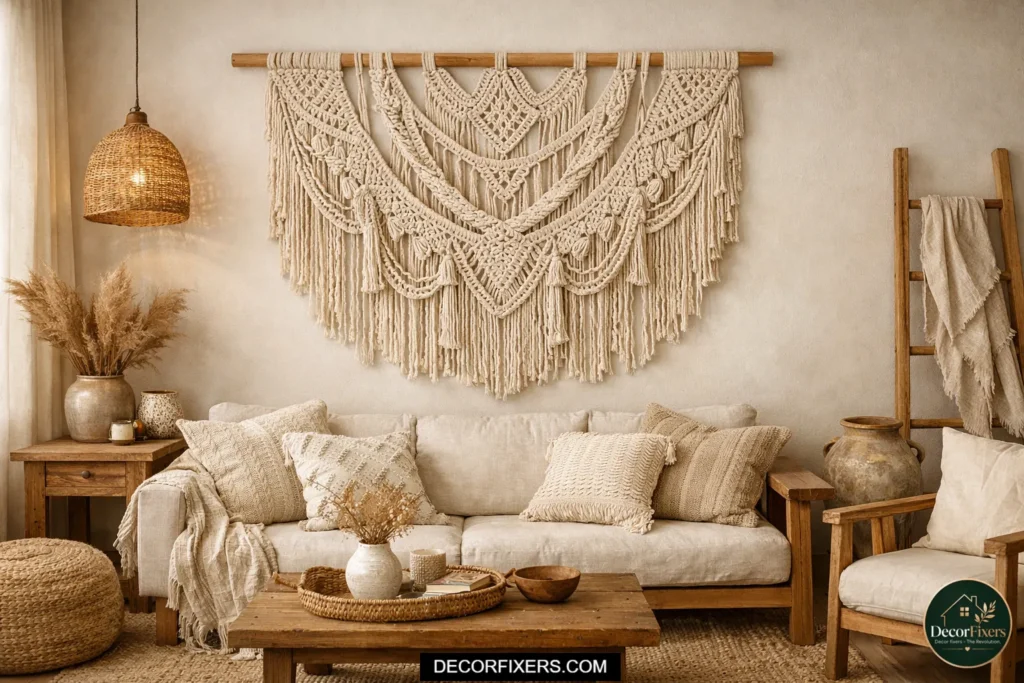
Macramé peaked around 2018 and has been declared dead twice since then. It’s still here. Done well, on a large scale, in natural, undyed cotton, in a room with wood tones and linen, it works.
Don’t hang a small macramé in a large room. The scale kills it.
18. Stack Two Pieces of Art
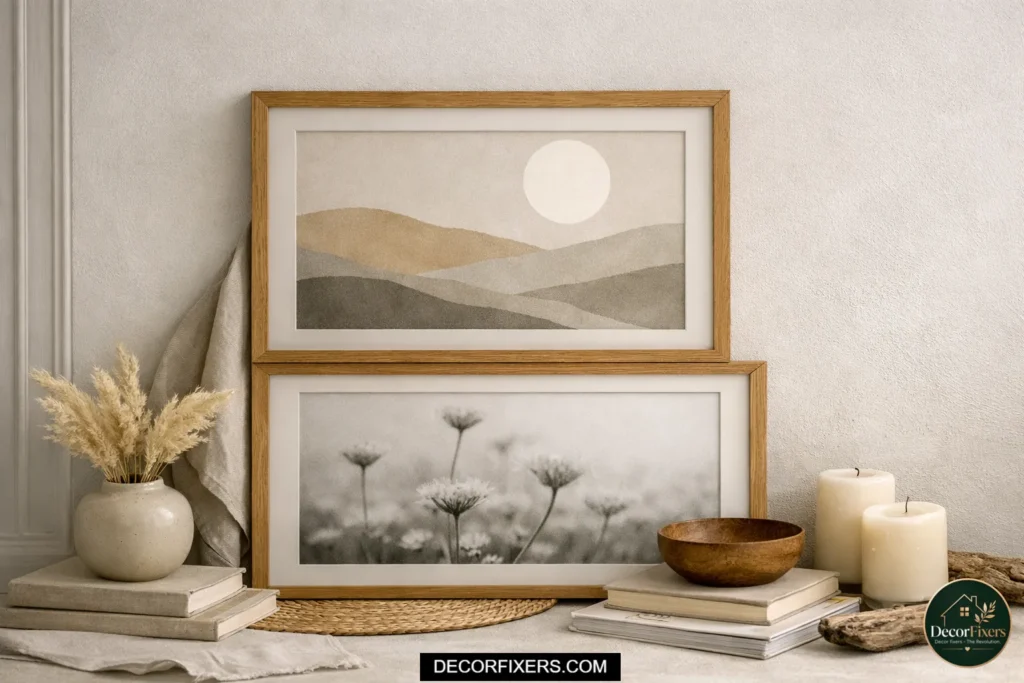
Instead of hanging one piece, stack two vertically, a larger piece on the bottom, a smaller one resting on top, leaning against it, or hung slightly above. The effect is relaxed and layered.
This works especially well in corners or on narrow walls that won’t accommodate a gallery wall.
19. Create a Photo Wall with Family Images
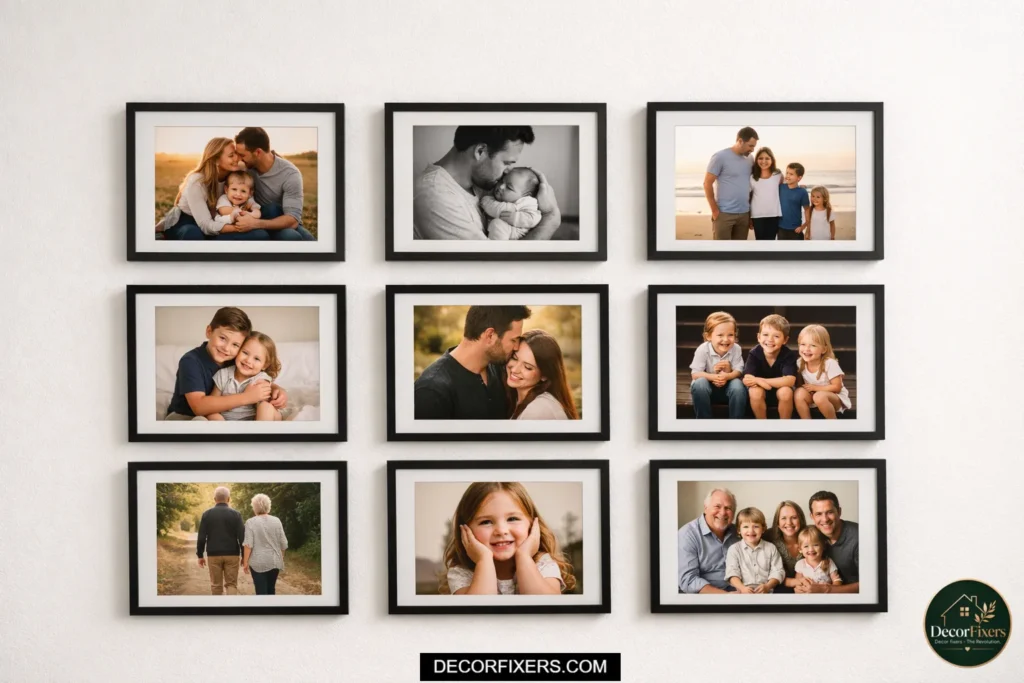
The gallery wall, but personal. One grid of the same-size frames in black or white, six or nine, evenly spaced, with your own photos printed at matching scale.
Artifact Uprising and Artifact Prints (from Minted) are the quality standard for printed photo reproductions.
20. Paint a Mural
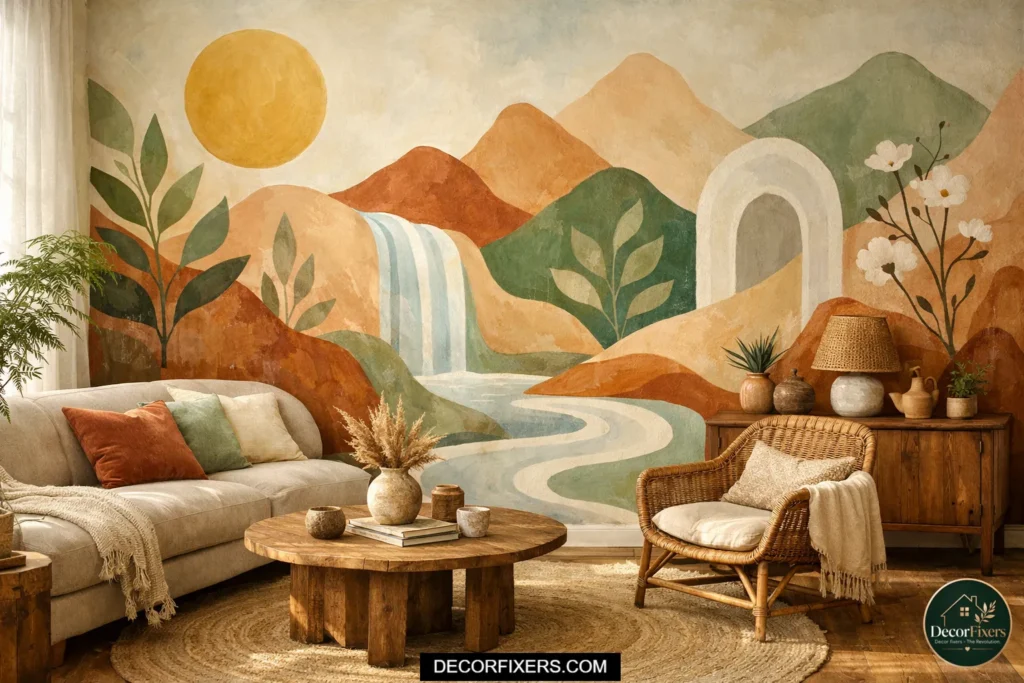
Custom murals are no longer only for boutique hotels. A local muralist can transform a single wall for $300–$2,000, depending on size and complexity. Digital stenciling has dropped both price and execution time significantly.
For renters: wallpaper murals (one large printed panel) deliver the same effect, peel off cleanly, and cost $80–$250 for a full wall.
21. Install Architectural Molding
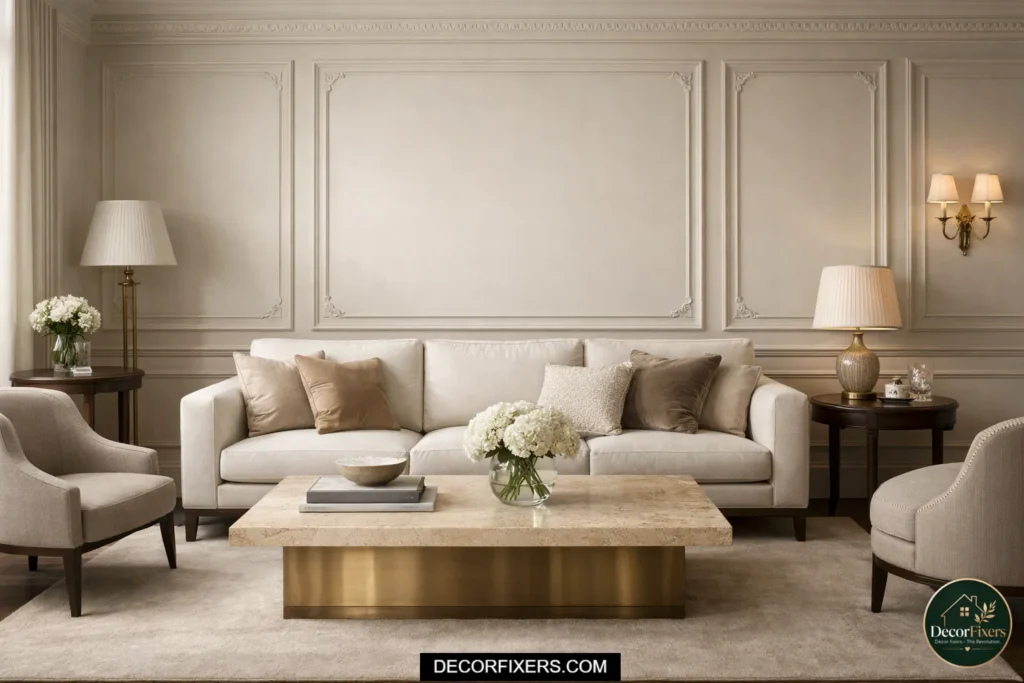
Crown molding, picture rail molding, or decorative wall panels add dimension and make a room feel older and more considered than it is.
This is the homeowner’s version of “wall decor”; the room does the decorating through its own bones.
22. Mount a Large Map or Blueprint Print
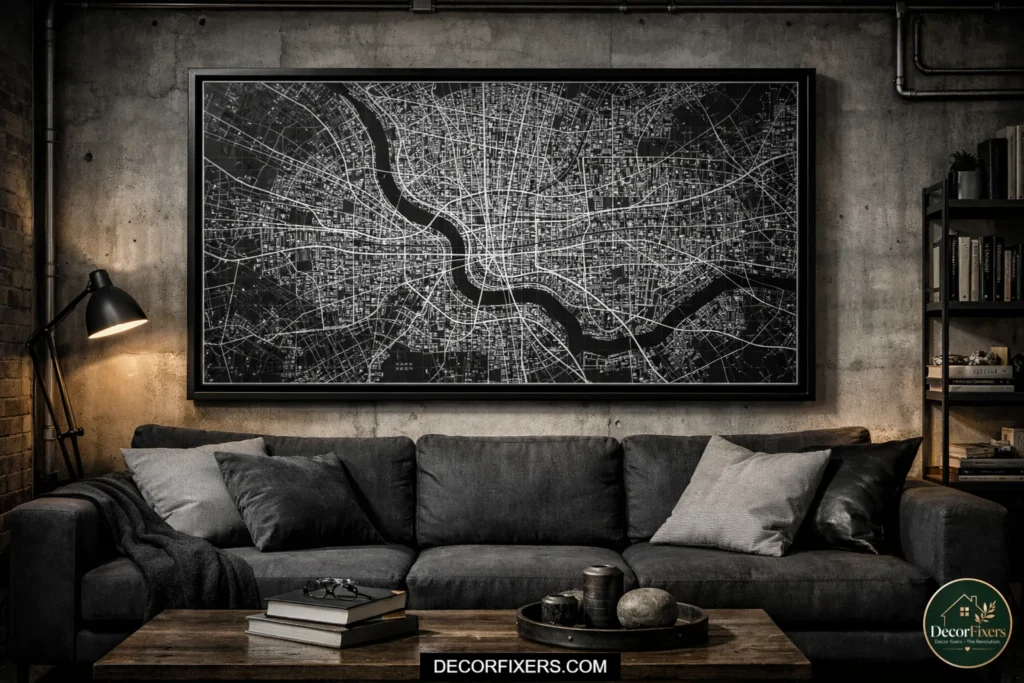
An oversized architectural blueprint, city map, or topographic print in a simple frame reads as both art and a conversation piece. This is particularly effective in rooms with an industrial or masculine design direction.
23. Use Pegboards as Decorative Storage
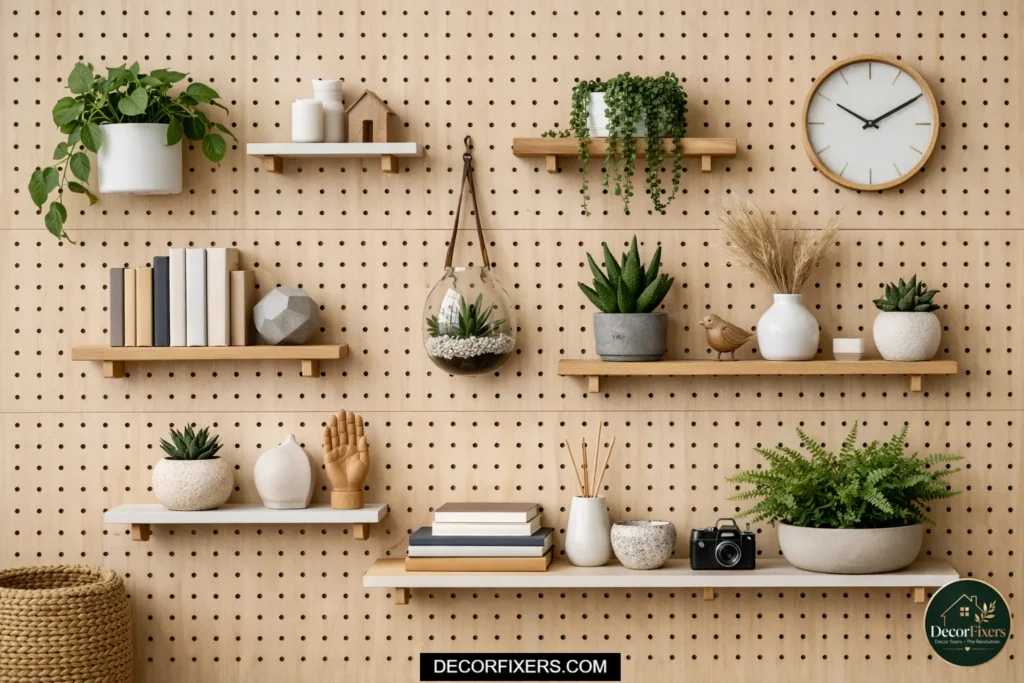
A painted pegboard, especially in white, black, or a bold accent color, mounted on a living room wall, bridges function and decor. Books, small plants, objects, and framed prints can all coexist on a well-styled pegboard.
IKEA’s SKADIS is the most flexible system on the market. Adhesive mounting option available.
24. Hang Plants on the Wall
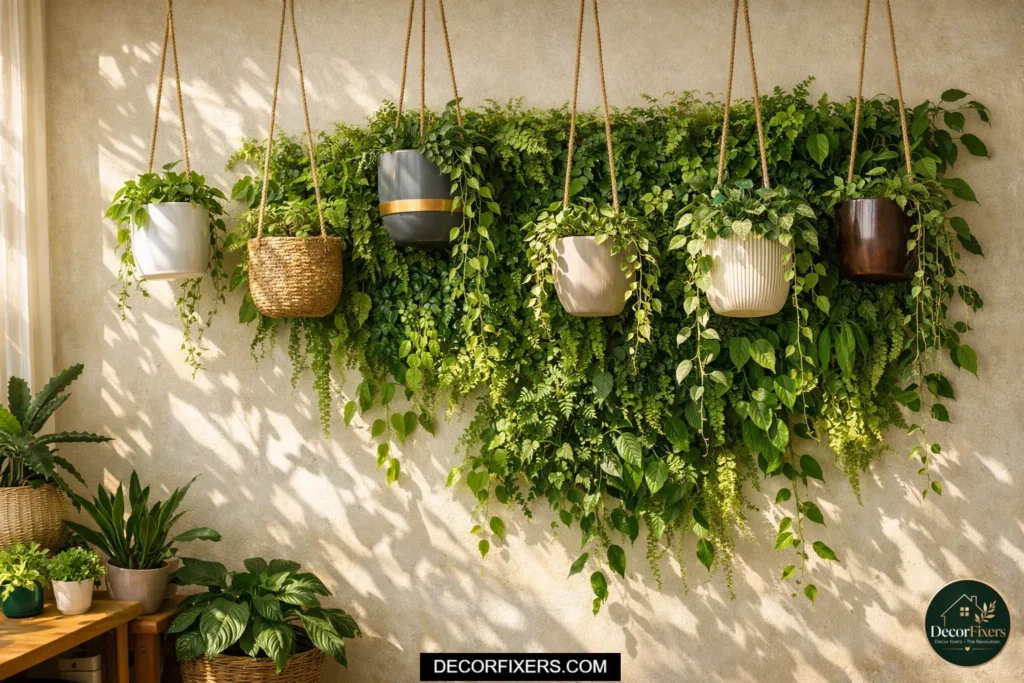
Mounted planters, ceramic pocket planters, hanging macramé plant holders, or modular plant wall systems bring organic texture to walls. Trailing plants (pothos, string of pearls, philodendron) grow into the decor over time.
This works better than it sounds. Far better.
25. Do Nothing, and Do It Intentionally
A completely blank wall, painted in a considered color, with well-chosen furniture pulled slightly away from it, is a valid design choice.
Not every wall needs to say something. Some rooms breathe better when the walls are quiet.
READ MORE: Scandinavian Living Room Ideas
To decorate living room walls as a renter, follow these steps:
- Assess your lease; most allow small nail holes. Verify before assuming
- Use 3M Command strips for art under 16 lbs (medium or large strips)
- Use adhesive-backed plate hangers for ceramic decor
- Use tension rods (spring-loaded, no drilling) for full-wall curtain treatments
- Use peel-and-stick wallpaper cleaned with isopropyl alcohol beforehand
- Lean large art against the wall on console tables or directly on the floor
Every idea on the list above has a renter-safe execution. None of these requires sacrificing style for a security deposit.
CONCLUSION:
Living room wall decor isn’t about copying ideas; it’s about choosing what fits your space. The key is matching decor to three things: wall size, lighting, and how everlasting you want the change to be. Most mistakes happen from an unfortunate scale, too many ideas, or ignoring real-life conditions like dim lighting or rental limits. As an alternative to dashing inspiration, use a simple framework: pick one strong direction (like oversized art, a gallery wall, or shelves) and implement it properly. Renters still have plenty of stylish, damage-free options. Finally, good wall decor feels intentional; sometimes, even a blank wall works if everything else in the room is carefully chosen.
FAQs:
Q: What’s the best living room wall decor for renters?
A: Peel-and-stick wallpaper, 3M Command strip gallery walls, leaning art on consoles, and tension rod curtain walls are all deposit-safe and genuinely stylish. None requires drilling.
Q: How do I decorate a large blank wall in my living room?
A: Use one oversized art print (36″×48″ minimum), a gallery wall covering the full width, or a combination of shelving and art. Scale matters; small art on a big wall makes both look worse.
Q: Should I use real nails or Command strips for wall art?
A: Command strips work for most art under 16 lbs. For heavier pieces, framed mirrors, and large canvases, use proper wall anchors. Strips fail slowly and unpredictably with excessive weight.
Q: Why does my gallery wall look messy even though I followed a tutorial?
A: Usually a frame size problem. Too many frames of the same size at equal spacing read as rigid. Mix at least three different sizes and vary the gaps slightly, 2″ to 4″ between frames.
Q: When should I hire an interior designer for wall decor?
A: If you’ve tried three approaches and none feel right, or if you’re decorating a room over 400 sq ft where scale decisions genuinely compound, a one-hour consultation ($75–$200) pays for itself in avoided mistakes.

Welcome to DecroFixers! I’m Mujahid Ali
5 thoughts on “25 Living Room Wall Decor Ideas: Styles That Actually Work”