You’ve got forty-seven kitchen photos saved on Pinterest. You’ve watched renovation walkthroughs on YouTube until midnight. You’ve walked through the IKEA kitchen display floor twice, touched every cabinet door, and left more confused than when you walked in.
I’ve been writing about home design long enough to know that most cabinet style guides fail you not because they’re wrong, but because they stop at the picture. They’ll show you a gorgeous two-tone kitchen and give you a caption that says “modern farmhouse.” That’s it. No guidance on whether it works in a galley kitchen. No honest estimate of what it costs. No warning that some finishes scratch in six months.
This guide covers all 20 modern kitchen cabinet styles, with their best use cases, realistic price context, and the honest trade-offs. It does not address commercial kitchen design or rental-property renovations, which have different constraints entirely.
What are modern kitchen cabinet ideas? Modern kitchen cabinet ideas refer to design styles, finishes, and configurations that balance current aesthetic trends with long-term functionality. They range from sleek flat-panel slab doors to warmly textured wood-grain and two-tone finishes; each suited to a different kitchen size, budget, and lifestyle.
1. Flat-Panel Slab Cabinets: The Backbone of True Minimalism
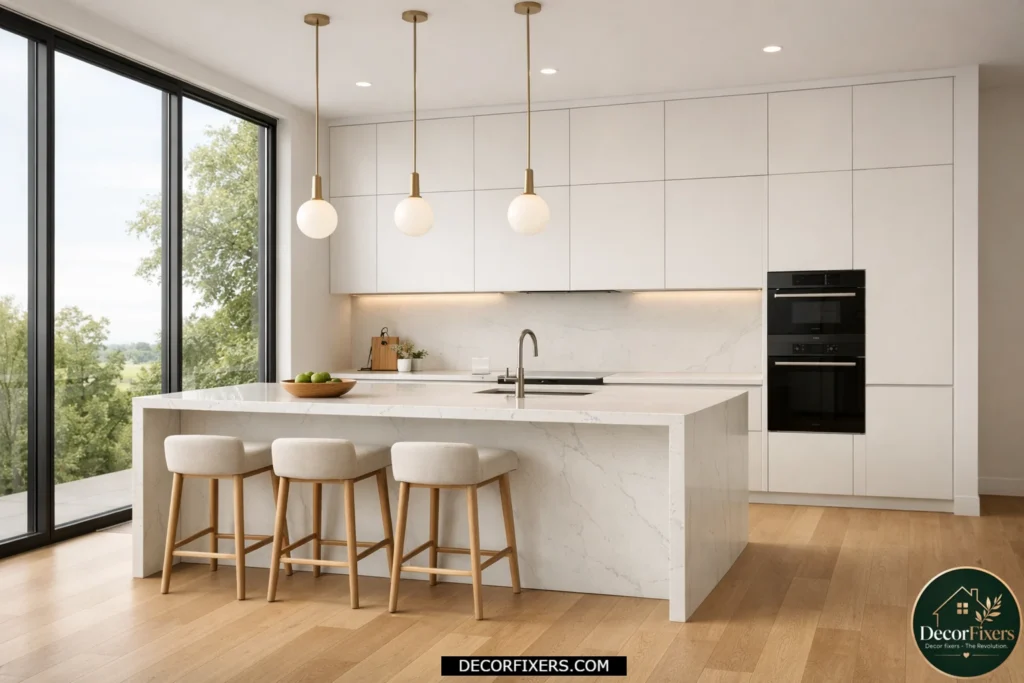
Flat-panel slab doors have no frame, no groove, no ornamentation. Just one clean, uninterrupted surface, and that restraint is the whole point.
They work best in small-to-medium kitchens because a smooth, handle-free surface reads as ‘less stuff,’ which tricks the eye into perceiving more space. Pair with integrated appliances and you’ve got a kitchen that looks twice its square footage. Cost range: $150–$350 per linear foot installed, depending on material.
Flat-panel cabinets create a clean foundation, but thoughtful styling completes the space. Browse our Kitchen Decor Ideas for simple ways to add warmth, texture, and personality.
2. Slim Shaker; The Classic That Finally Grew Up
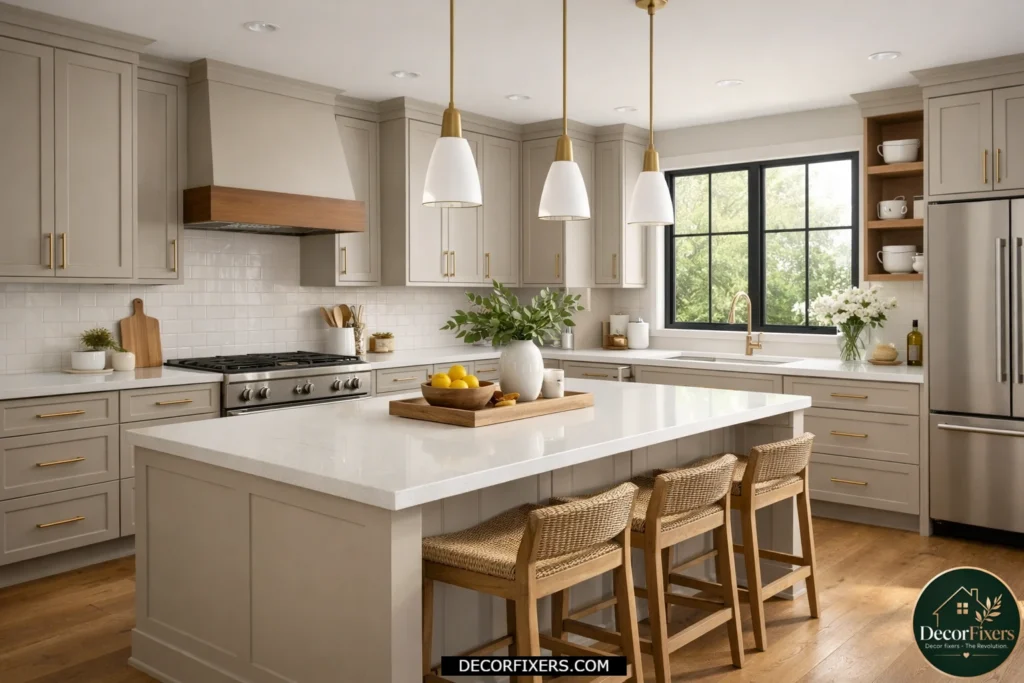
Classic shaker cabinets built their reputation on a recessed centre panel surrounded by a flat frame. Slim shaker simply slims that frame to about half an inch, retaining the warmth while losing the visual weight.
If you’re worried about choosing something that dates quickly, the Slim Shaker is the safest bet in this entire list. It sits in a sweet spot between traditional and modern that almost no kitchen style rejects. Best hardware pairing: matte black or brushed brass pulls; both elevate it out of builder-grade territory immediately.
3. Two-Tone Painted Cabinets: One Decision That Does Heavy Lifting
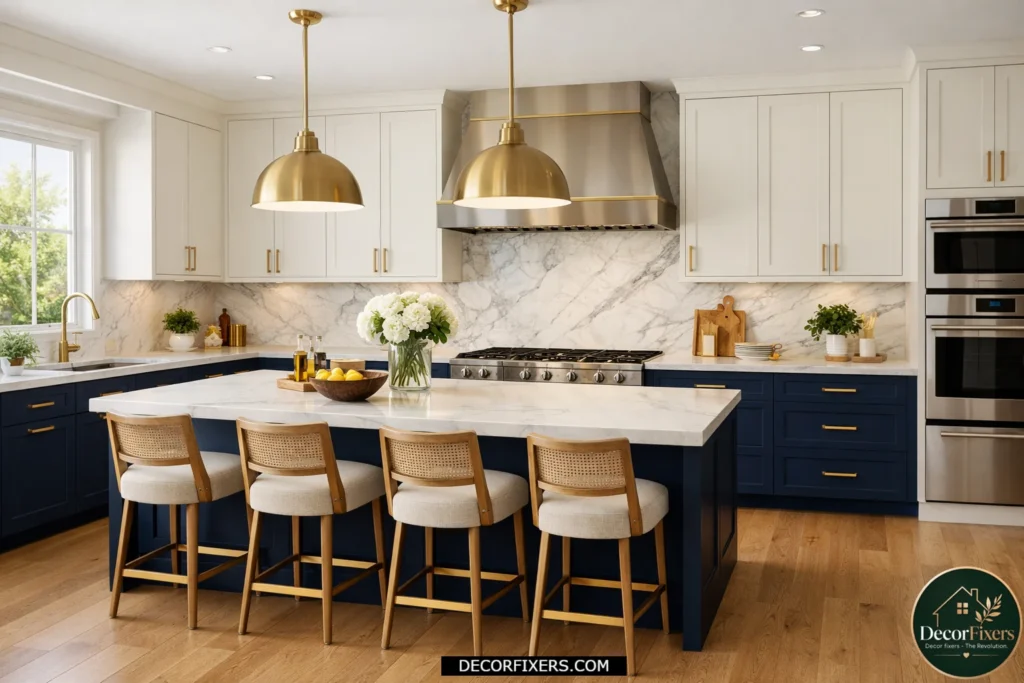
Two-tone means upper and lower cabinets in contrasting colors; typically, a light neutral on top and a deeper anchor color on the base units, or a contrasting island. It’s not a new idea; mid-century kitchens did this decades ago.
What makes it work in 2025 is restraint. The combination that gets it wrong pairs two bright colors. The one that gets it right pairs a warm greige or off-white upper with a deep navy, forest green, or charcoal lower. Cost impact is low; it’s paint and labor, not new cabinetry.
4. Natural Wood Grain: The Trend That’s Actually a Permanent Return
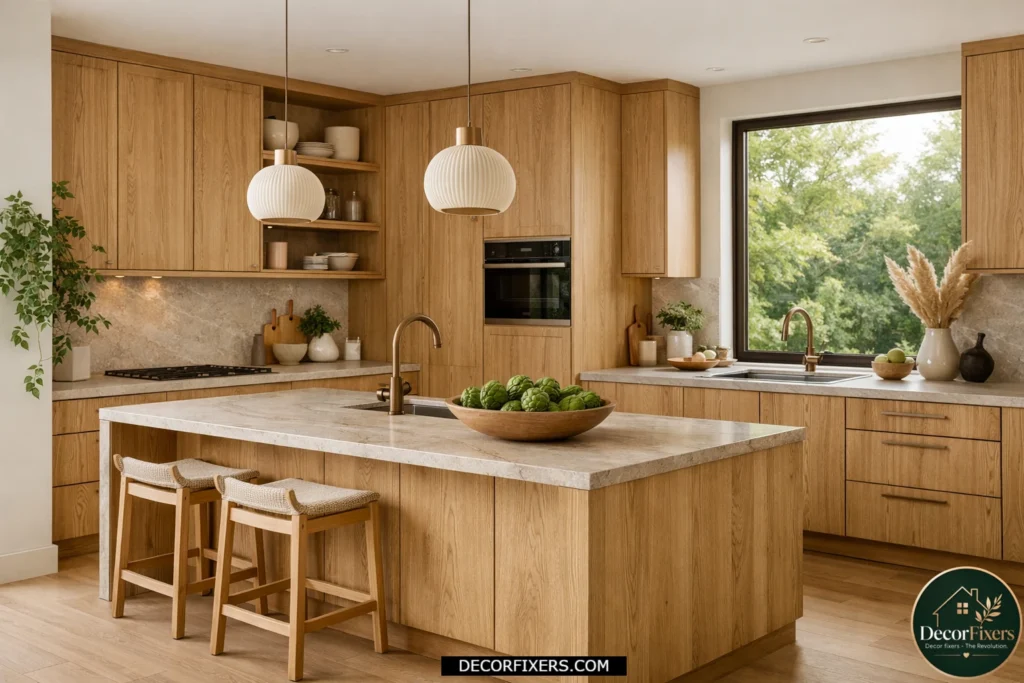
The mass rush to paint over wood cabinets that happened between 2010 and 2020 is officially over. Warm wood grain, white oak, walnut, and lighter European beech are back at the center of kitchen design.
Or maybe I should say it this way: it never really left among designers. It just took the rest of the market a decade to catch up. White oak in particular reads as both modern and timeless; no other finish achieves that combination as naturally. Sensitive to humidity; seal properly, and it’ll outlast everything else in this list.
5. High-Gloss Lacquer; Maximum Drama, Maximum Maintenance
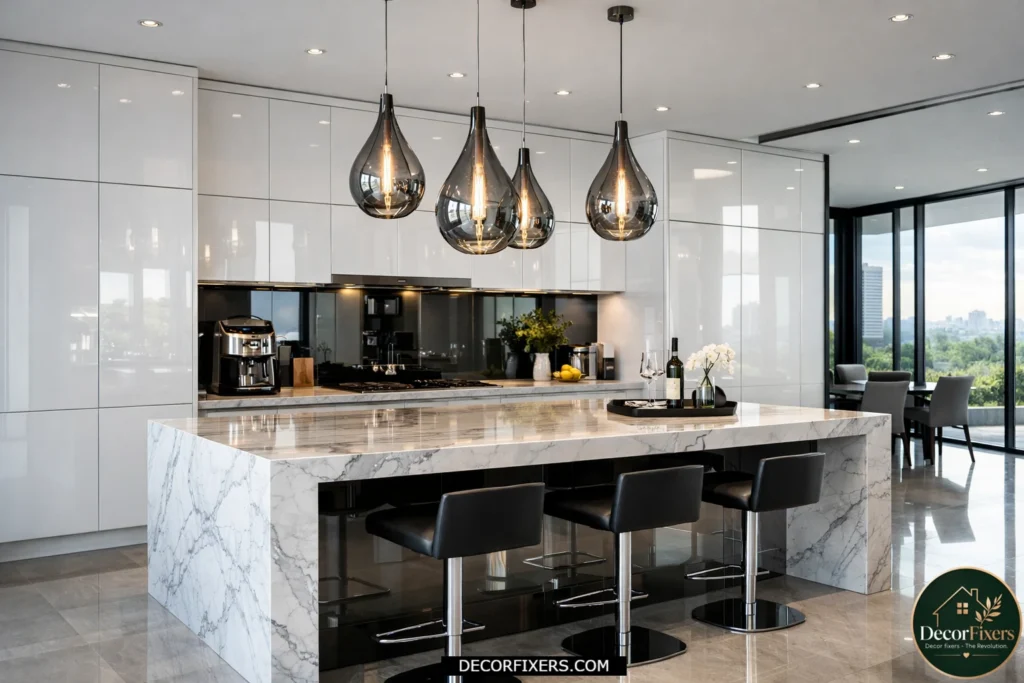
High-gloss lacquer reflects light so well that it visually doubles the size of a room. In a smaller kitchen with limited natural light, this is its entire argument, and it’s a compelling one.
I’ve seen conflicting data on gloss durability; some sources rate it highly, others note it shows wear within two to three years in a working kitchen. My read is this: in low-traffic showpiece kitchens or open-plan spaces where the kitchen is seen more than cooked in, gloss works beautifully. In a family kitchen where breakfast happens at speed every morning, matte finishes will serve you better long-term.
Why Your Cabinet Choice Matters More Than Anything Else in the Kitchen
Cabinet surfaces cover more visual real estate in a kitchen than any other element; more than countertops, appliances, or flooring combined. Get them right and everything else falls into place. Choose wrong, and you’ll repaint, reface, or live with mild regret every morning.
Most people come into a renovation with an aesthetic mood: ‘I want something clean and calm,’ but no vocabulary for the specific cabinet style that delivers it. That’s what this guide is built to fix.
6. Forest Green Painted Cabinets; Bold Without Being Reckless
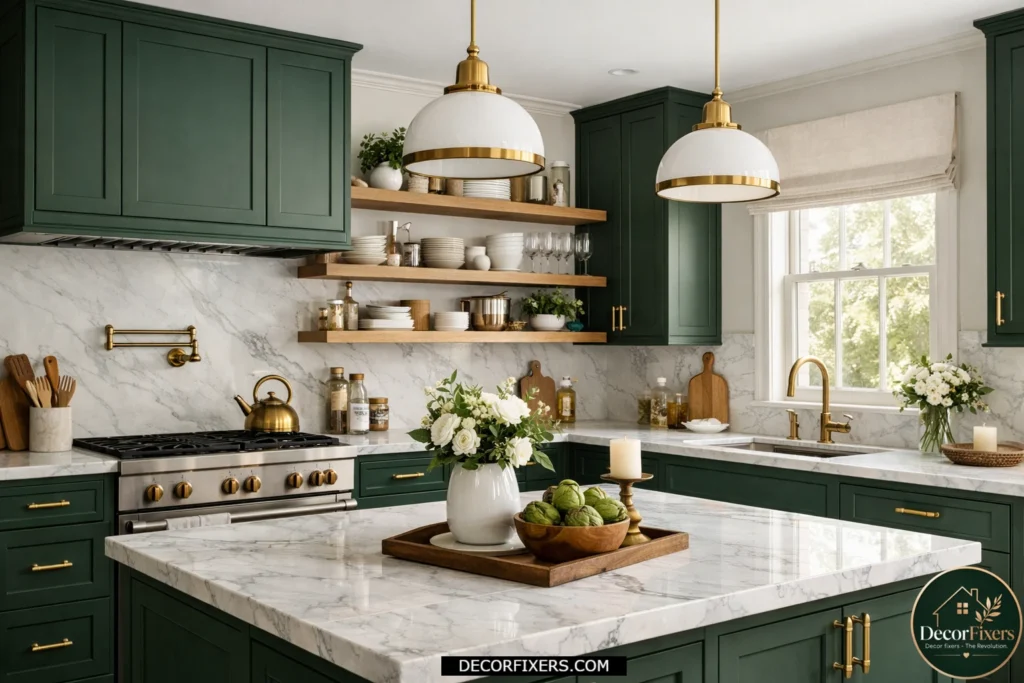
Forest green has taken over from navy blue as the go-to bold cabinet color. Sherwin-Williams shades like Forest Green and Pewter Green appear in almost every 2026 designer recommendation worth reading.
The reason it works is nature-adjacency; green reads as grounded and calm even in deep, saturated tones. It pairs well with warm wood accents, brass hardware, and white or cream countertops. Best for: medium to large kitchens where it doesn’t feel cave-like. In very small kitchens, use it only on a single run of base units or the island.
7. Handleless Push-to-Open Cabinets; The Clean Kitchen
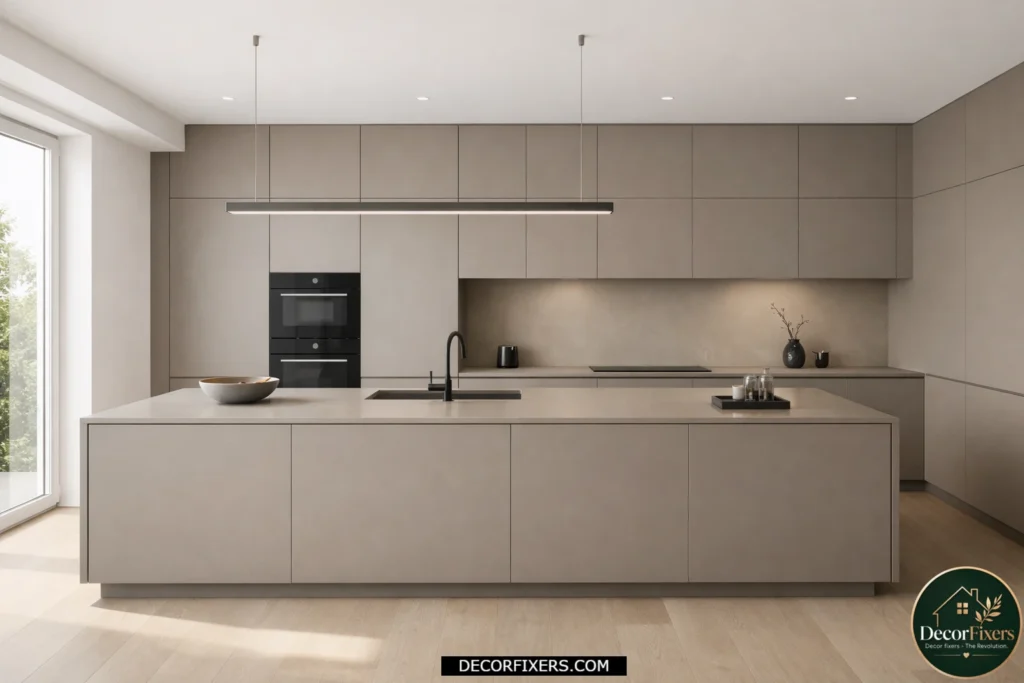
No hardware means no visual interruption. Push-to-open mechanisms, a small spring latch inside the cabinet, let you open doors with a gentle push, keeping the exterior surface completely unmarked.
This style works brilliantly in open-plan living spaces where the kitchen is always visible. There’s nothing to snag a jumper on. There’s no hardware to polish. The honest trade-off: the mechanisms wear out and need replacing every five to eight years in a frequently used kitchen. Budget for occasional maintenance.
8. Fluted and Reeded Cabinet Doors; Texture as the Feature
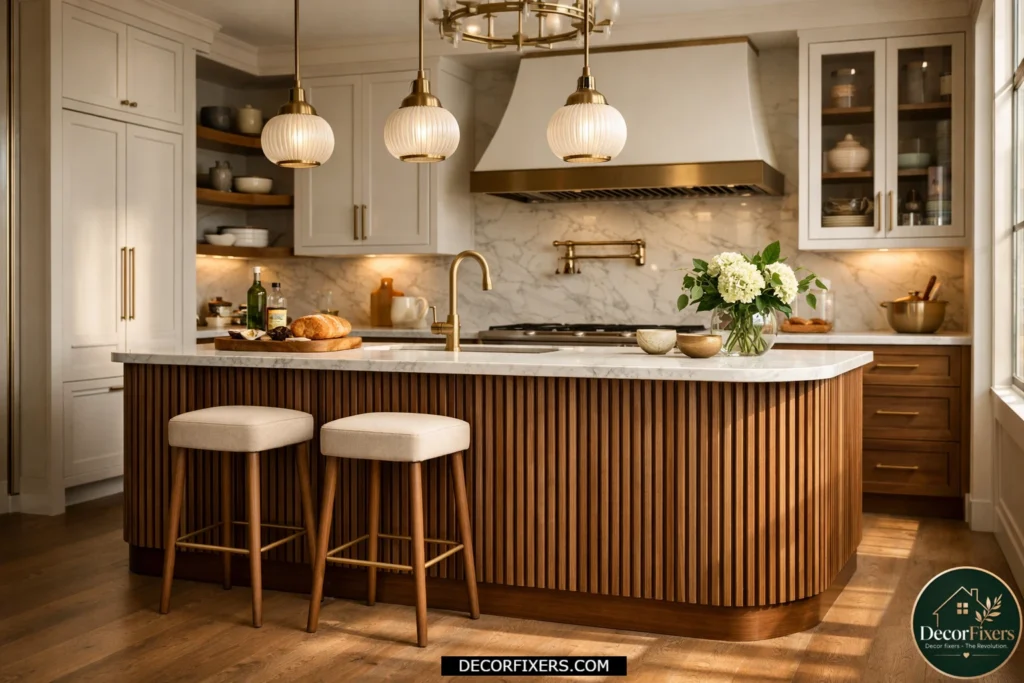
Fluted doors carry vertical grooves that run the full height of the cabinet front, and the effect is extraordinary. They introduce depth and craftsmanship to a surface that would otherwise be completely flat.
Most designers use fluted panels selectively rather than throughout: an island, a built-in hutch, or a range hood cover. That restraint is correct. Used everywhere, they become overwhelming. Used as one intentional accent, they elevate an entire kitchen’s perceived value with a relatively small surface area.
9. Slate Blue and Steel Blue Painted Cabinets; The Quiet Alternative to Green
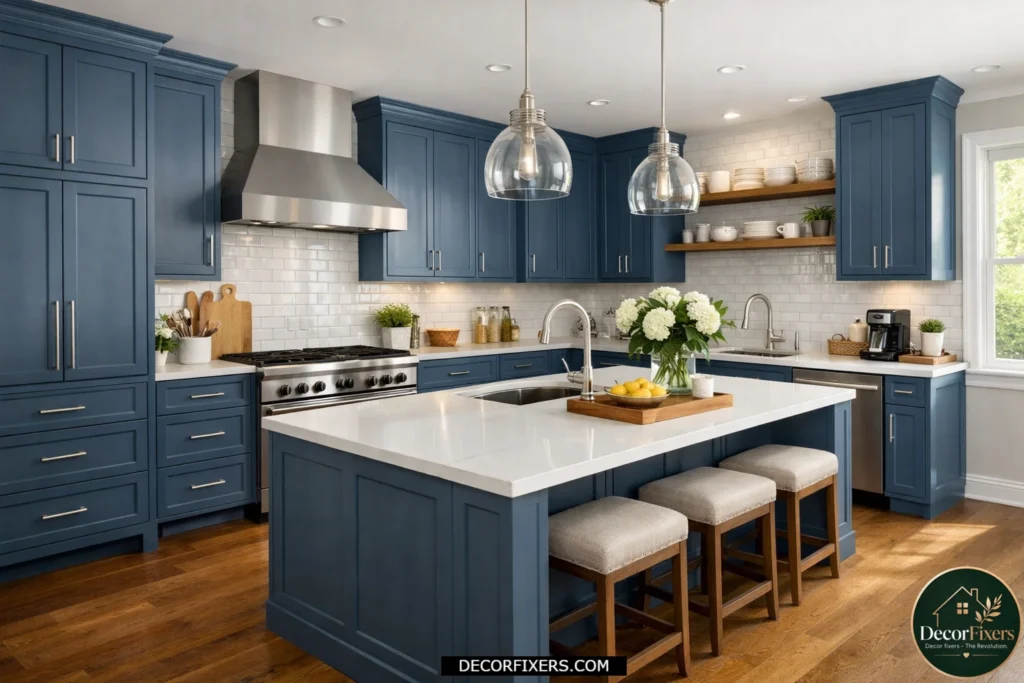
If forest green feels too committed, blue offers all the same personality without quite the same visual weight. Slate blue and steel blue sit in a grey-adjacent zone that reads almost as neutral in certain lighting conditions.
They work in both traditional and contemporary kitchen settings, which makes them rare in the color bold-cabinet category; most strong colors lock you into one style. Pair with brushed nickel or chrome hardware rather than brass for a cooler, more contemporary result. Warm lighting at night brings out the blue beautifully.
10. Warm Greige and Putty Painted Cabinets; The Sophisticated Neutral
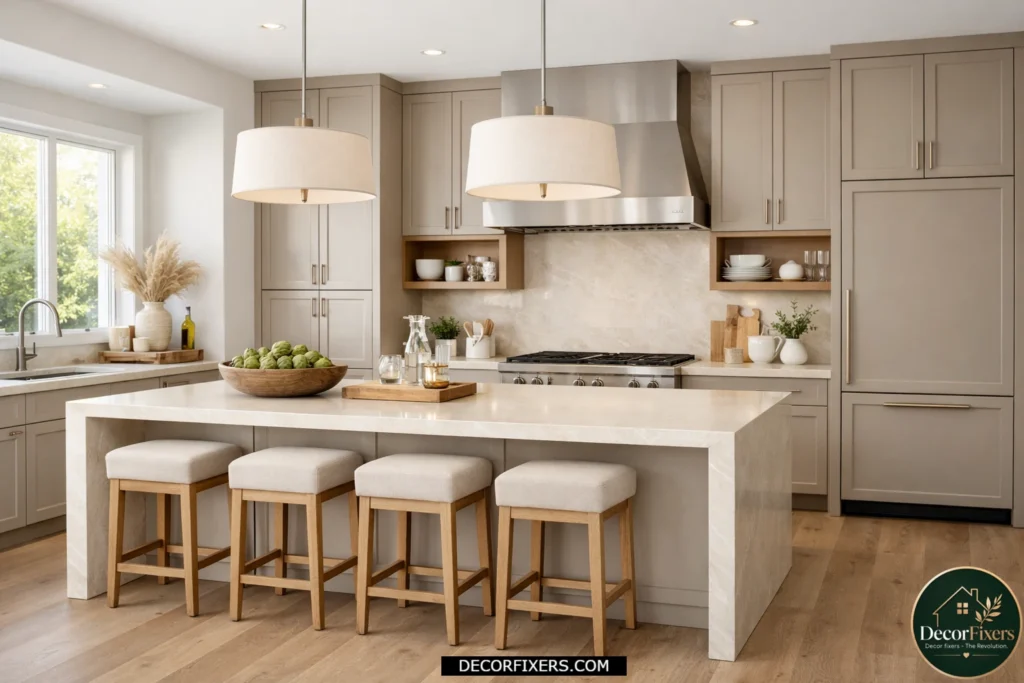
White kitchens became a cliché. Greige, a blend of grey and beige, replaced them with something warmer and less stark. In 2025, the direction is moving further into warm putty and linen tones that sit closer to beige than grey.
These shades work in virtually every kitchen size and style. They’re the safest choice for a homeowner who wants their kitchen to photograph well and feel welcoming without committing to a statement color. IKEA’s SEKTION system in Alstad matte white or Hagey white approximates this territory well at a fraction of custom cabinet pricing.
Quick Comparison: Most-Searched Modern Cabinet Styles
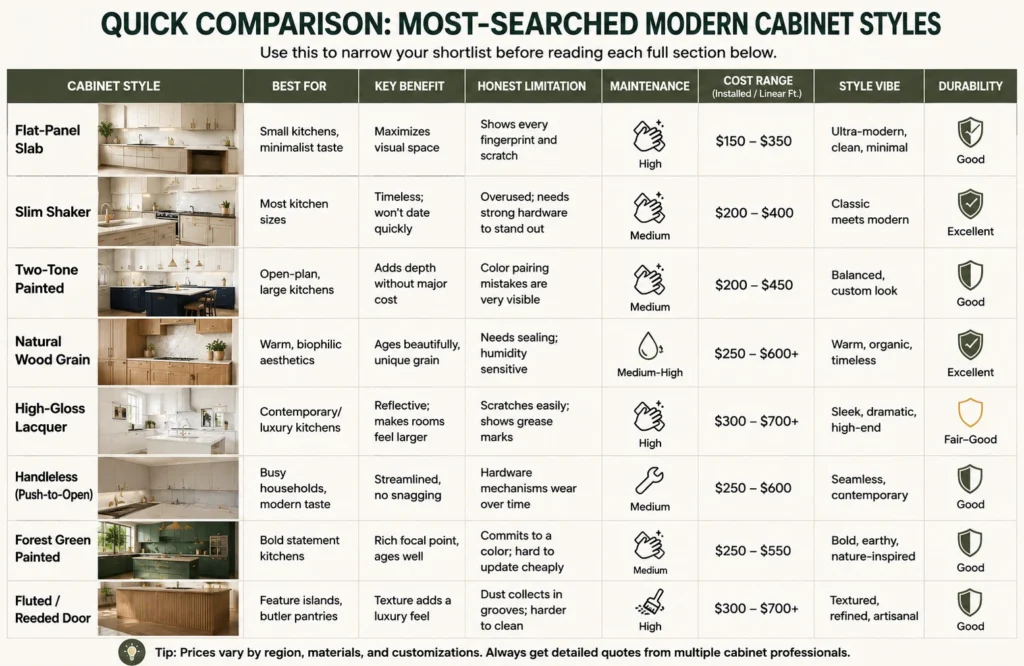
Use this to narrow your shortlist before reading each full section below.
| Cabinet Style | Best For | Key Benefit | Honest Limitation |
| Flat-Panel Slab | Small kitchens, minimalist taste | Maximizes visual space | Shows every fingerprint and scratch |
| Slim Shaker | Most kitchen sizes | Timeless; won’t date quickly | Overused; needs strong hardware to stand out |
| Two-Tone Painted | Open-plan, large kitchens | Adds depth without major cost | Color pairing mistakes are very visible |
| Natural Wood Grain | Warm, biophilic aesthetics | Ages beautifully, unique grain | Needs sealing; humidity sensitive |
| High-Gloss Lacquer | Contemporary/luxury kitchens | Reflective; makes rooms feel larger | Scratches easily; shows grease marks |
| Handleless Push-to-Open | Busy households, modern taste | Streamlined, no snagging | Hardware mechanisms wear over time |
| Forest Green Painted | Bold statement kitchens | Rich focal point, ages well | Commits to a color; hard to update cheaply |
| Fluted/Reeded Door | Feature islands, butler pantries | Texture adds a luxury feel | Dust collects in grooves; harder to clean |
11. Inset Cabinet Doors: The Mark of True Custom Craftsmanship
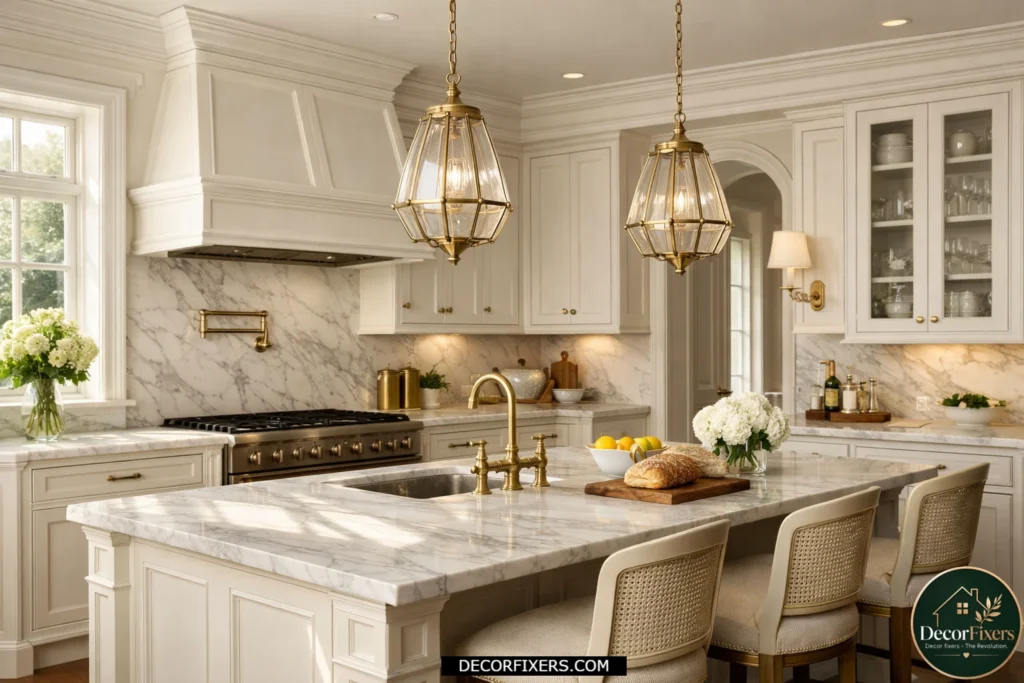
Most cabinets you’ll see are overlay; the door sits in front of the cabinet frame. Inset cabinets sit flush within the frame, like a door inside a doorframe. The precision required is significantly higher.
The result is a kitchen that looks deliberately crafted rather than assembled from stock parts. Cost premium: 25–40% above equivalent overlay cabinets. That premium is real and worth acknowledging before you fall in love with the look. For large kitchens where this style anchors the room, the investment is usually justified.
12. Mixed-Material Cabinets; Wood Base, Painted Uppers
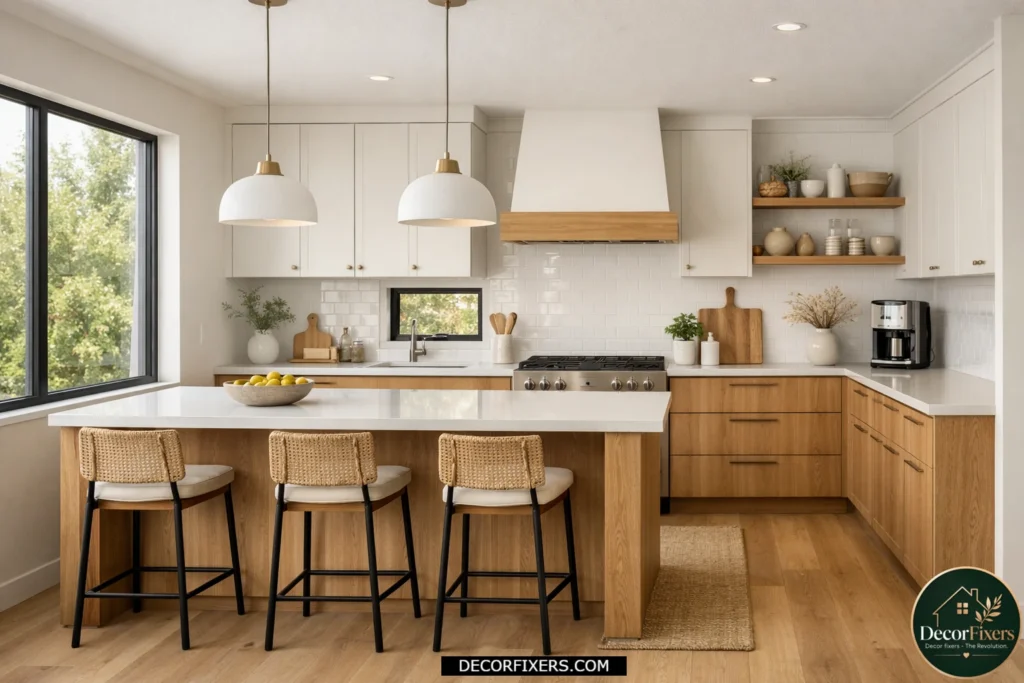
This might be the most versatile approach in the entire list. Stained or natural wood base cabinets with painted upper cabinets create contrast, depth, and warmth, without ever looking like you’ve tried too hard.
The visual logic is sound: heavier, earthier materials sit closer to the floor where they feel grounded, while lighter painted uppers keep the upper half of the kitchen feeling open. Works in almost any kitchen size. The combination of oak lowers and off-white uppers is the most requested version we see in 2025 kitchen renovation briefs.
13. Open Shelving with Closed Cabinet Base; The Edit-What-You-Show Approach
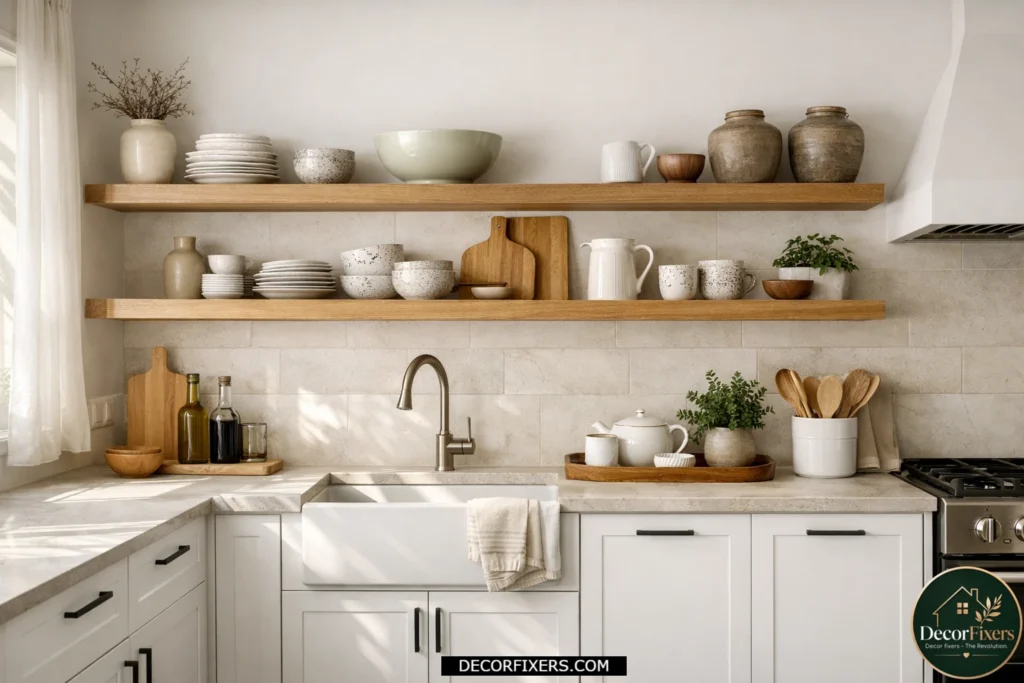
Open shelving above closed base cabinets gives you a kitchen that feels curated and airy, but only if you’re disciplined about what stays on those shelves. Every day, mismatched mugs and stacked takeaway containers will destroy the look within a week.
The discipline required is the same as that of any good storage system. If you’ve already thought about how to organize your home storage systematically, you’ll already know that the real skill is deciding what stays visible and what gets hidden. For anyone tackling wall-to-wall organization thinking, our guide to Small Closet Shelving Organization Ideas covers the exact principles that apply here: edit ruthlessly, group by use, and build in breathing room. Best for: kitchens with attractive, consistent dishware and homeowners willing to maintain the display.
14. Glass-Front Cabinets; For the Kitchen That Wants a Dining Room Feel
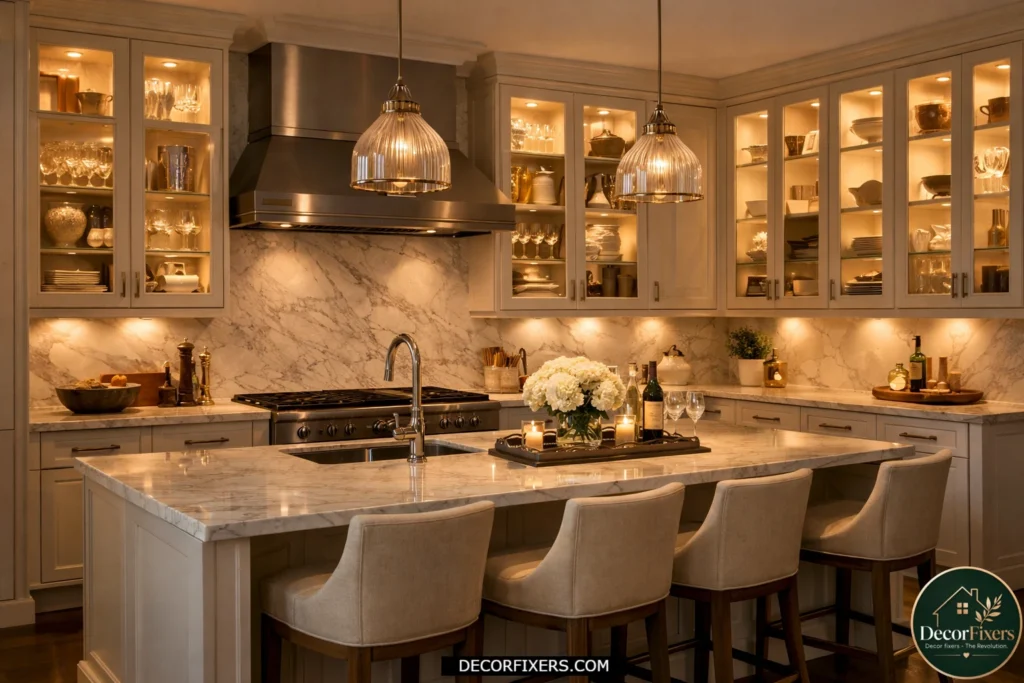
Glass-front cabinet doors, whether clear, reeded, or seeded glass, bring a lighter, more formal quality to a kitchen. They’re borrowed from traditional English and French design, and they translate surprisingly well into modern contexts.
Clear glass demands beautiful interior organization. Reeded or seeded glass is more forgiving; it lets light through while blurring the contents. Best combined with interior cabinet lighting, which transforms these panels from functional storage into display features at night.
15. Matte Black Cabinets; The Kitchen That Commits
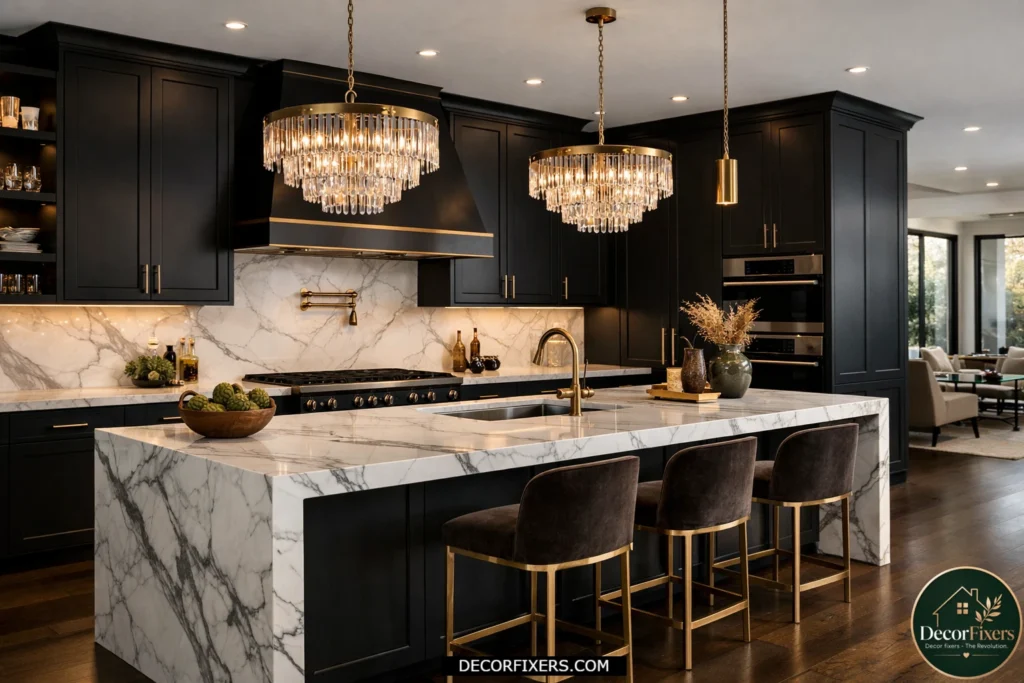
Matte black is the kitchen cabinet choice that says you know exactly what you want. It works in two completely different contexts: high-contrast contemporary kitchens with white walls and marble countertops, and moody, atmospheric spaces with warm lighting and brass fixtures.
What it does not work in: small kitchens with limited natural light, where it will make the space feel smaller and heavier. This is a large kitchen, confident-design-decision material. It also shows dust and water splashes more than any other color on this list; factor that into your cleaning routine.
16. Chalk-Painted and Milk Paint Finishes; Character Over Perfection
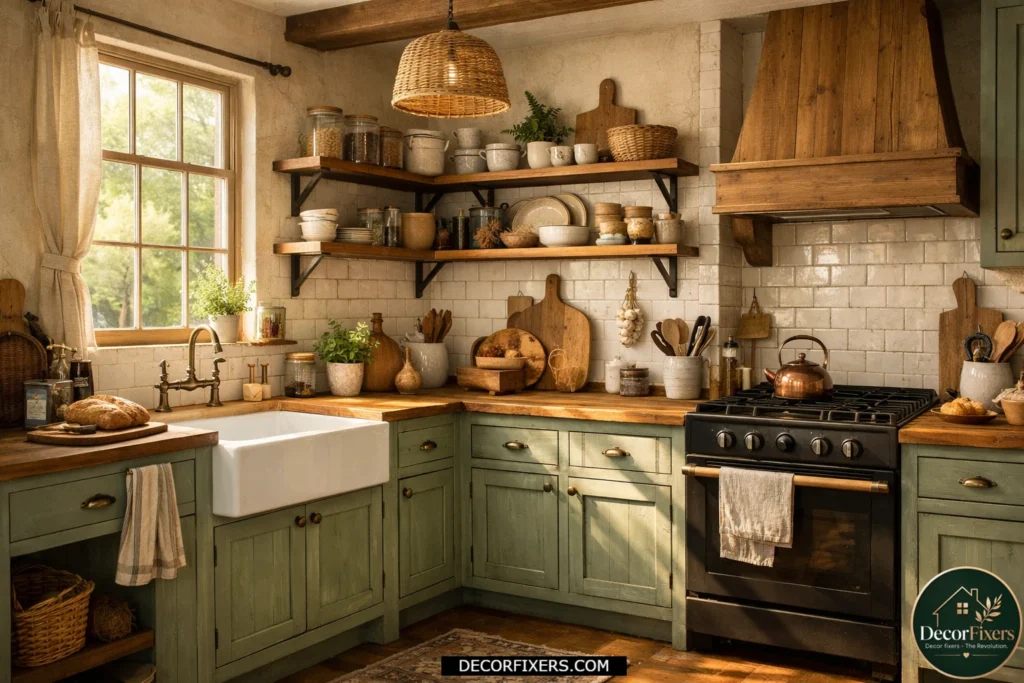
Chalk and milk paint finishes produce a slightly uneven, lived-in surface quality that no spray-applied factory finish can replicate. That imperfection is the entire value proposition; it signals handcrafted, age, and authenticity.
They’re applied on-site by specialist painters and age interestingly rather than just wearing. Scuffs become part of the story rather than defects. Cost: lower than factory spray-finished cabinets, but highly dependent on the painter’s skill. A bad application is immediately obvious. Source recommendations carefully.
17. Vertical Grain and Quarter-Sawn Wood; The Wood Nerd’s Choice
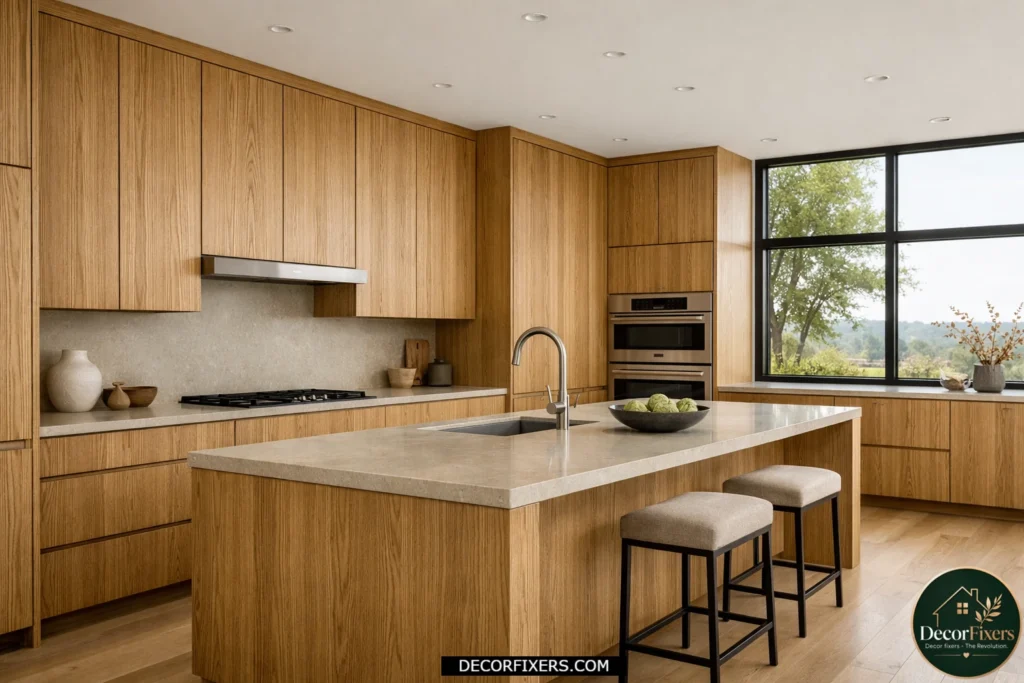
Most wood cabinets you’ll see show a flat-grain surface; that familiar wavy pattern. Quarter-sawn and rift-sawn cuts expose the wood’s medullary rays, producing a tight, straight vertical grain that’s visually quieter and dimensionally more stable.
It’s a detail almost nobody notices consciously, but everybody notices the result: these cabinets look expensive without looking loud. White oak quarter-sawn is the version most commonly specified by architects who want natural wood without visual noise. Premium pricing applies; typically, 30–50% above flat-cut equivalent.
18. Reclaimed Wood and Sustainable Finishes; For the Kitchen Built to Last
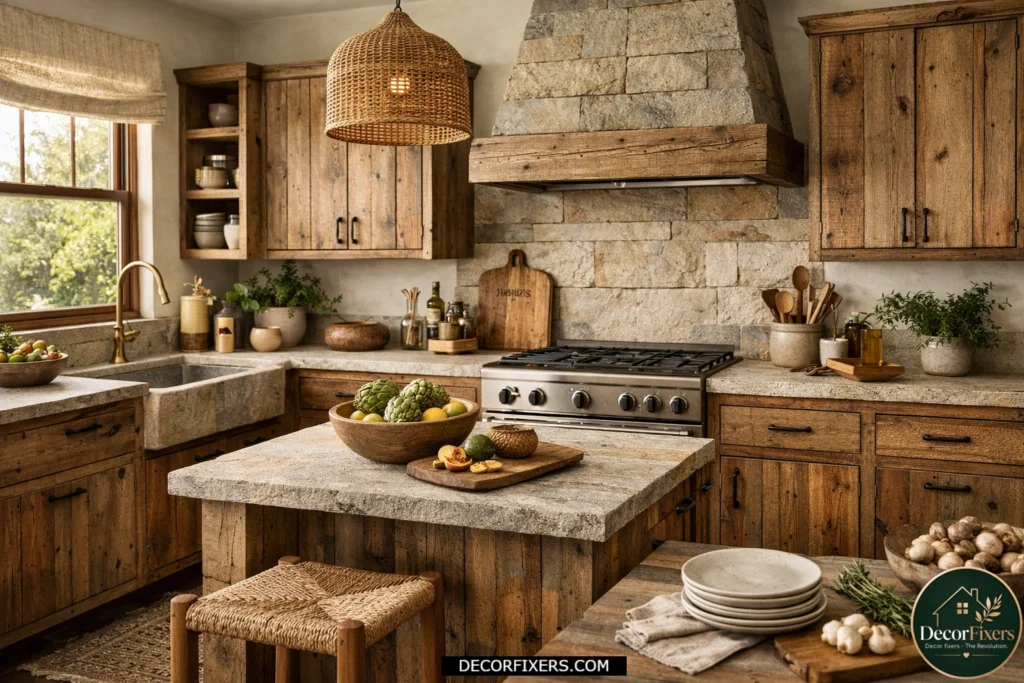
Sustainability in kitchen cabinetry moved from trend to expectation between 2023 and 2025. Reclaimed wood, FSC-certified timber, and water-based lacquer finishes are now standard offerings from most mid-to-high-end cabinet manufacturers.
Reclaimed wood specifically brings something no new material can: a surface that already has a history. No two panels are identical. The look is warm, imperfect, and deeply personal. Best suited to kitchen/dining hybrid spaces and farmhouse aesthetics. Requires proper treatment and sealing; raw reclaimed timber has no place near a sink or hob without preparation.
19. Concealed Kitchen Cabinets and Appliance Garages; The Kitchen That Disappears
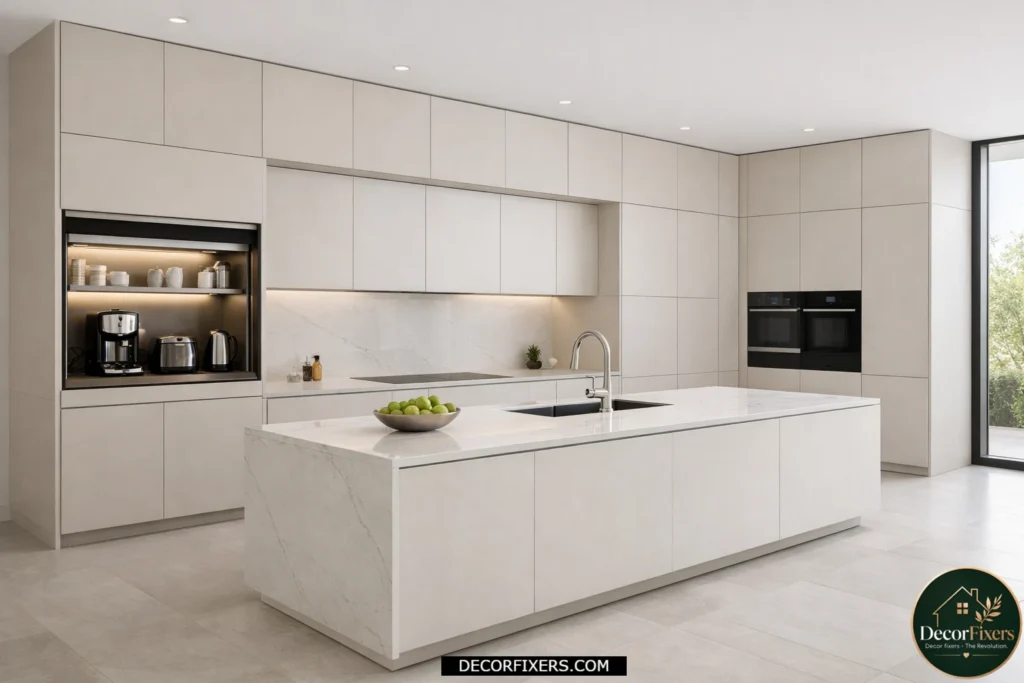
This is the style that architects and high-end designers have been building quietly for years. The concept: every appliance, every bin, every piece of electrical equipment lives behind a cabinet door or panel. The kitchen, when not in use, looks like a wall.
This streamlined approach works especially well in open layouts. See our Budget Open Plan Kitchen Ideas for affordable ways to achieve a cohesive, clutter-free look.
20. Painted-to-Match-the-Wall Upper Cabinets; The Trick That Makes Kitchens Feel Bigger
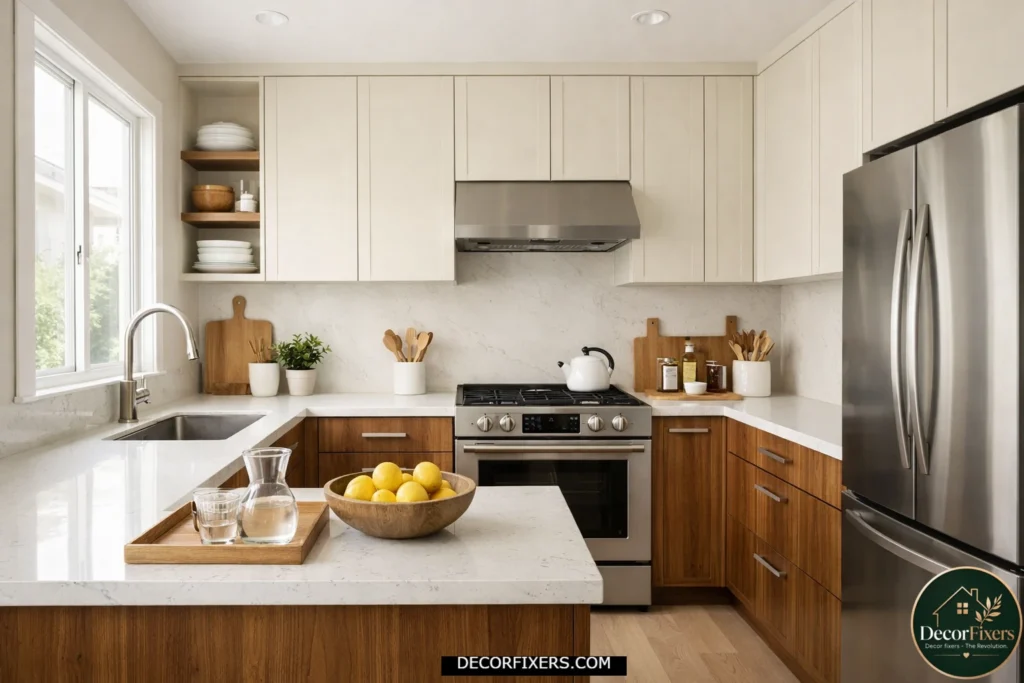
This one is underused and surprisingly effective. Painting upper cabinet doors the same color as the wall behind them makes them visually dissolve; the wall reads as continuous, the kitchen feels larger, and all the visual interest drops to the lower cabinets and countertop, where it belongs.
Look, if you’re in a small kitchen and you’ve tried everything else, here’s what actually works: same-color uppers, contrasting lowers, and a strong countertop material. That combination photographs well, functions perfectly, and consistently makes small kitchens feel at least a third bigger than they are. No additional cost over standard painted uppers; just a different paint swatch.
How to choose a modern kitchen cabinet style in 5 steps:
1. Measure your kitchen; small (under 100 sq ft) or large changes which styles are suitable.
2. Define your priority: timeless vs. on-trend, low-maintenance vs. high-design.
3. Shortlist two finishes; one safe, one bold. Order sample doors before committing.
4. Choose hardware last; it will either elevate or undermine your cabinet choice.
5. Set a realistic budget; include installation, not just the cabinet unit cost.
CONCLUSION:
The most expensive kitchen mistake I’ve watched people make is not choosing the wrong style; it’s choosing a style they saw in a magazine and loved, without ever asking whether it suited their life. A matte black handleless kitchen looks extraordinary in photographs. At 7 am on a Tuesday, wiping water marks off for the third time that morning, it feels like a different decision.
The cabinet style you’ll live happily with for ten years is the one that balances how you want the kitchen to look with how you actually use it. A slim shaker in a warm neutral with good hardware is the honest answer for most households. Everything else on this list is for the specific circumstances where it earns its place.
Some experts argue that chasing trends in kitchen design is always a mistake; that only truly timeless choices are worth making. That’s valid for the structure and layout. But for color and finish, which can be updated at reasonable cost, there’s genuine value in choosing something that feels current and makes you happy every day.
Pick the style that fits your kitchen, your life, and your budget. Then stop scrolling.
FAQs:
Q: What’s the best modern kitchen cabinet style for a small kitchen?
A: Flat-panel slab or handleless push-to-open cabinets in a light, matte finish. Both minimize visual clutter. Painting upper cabinets, the same color as the wall amplifies the effect. Avoid high-gloss in very small kitchens; it reflects rather than recedes.
Q: How do I choose between two-tone and natural wood cabinets?
A: Two-tone gives you a bold personality at a lower cost; it’s mostly paint. Natural wood gives you warmth and uniqueness that no painted surface replicates. If you’re working to a budget, two-tone delivers more impact per pound/dollar. If you’re investing for the long term, wood ages better.
Q: Should I go with shaker or flat-panel cabinets in 2025?
A: Slim shaker if you want timeless versatility. Flat-panel if you want strict minimalism. The key difference: the shaker shows fewer fingerprints and dust, flat-panel reads as more contemporary. Both are correct choices; it comes down to whether you want your kitchen to feel warm or clean.
Q: Why does my kitchen still look dated even with new cabinets?
A: Usually the hardware. Builder-grade chrome knobs undermine even well-chosen cabinet styles. Swapping hardware to matte black, brushed brass, or brushed nickel is the single highest return-on-investment update in any kitchen; it costs very little, changes everything.
Q: When should I consider reclaimed or sustainable cabinet materials?
A: When authenticity and character matter more than uniformity. Reclaimed wood doesn’t suit kitchens where a flawless, magazine-clean aesthetic is the goal. It suits kitchen/living hybrid spaces, farmhouse styles, and homeowners who want a kitchen with genuine warmth rather than designed warmth.
Creator of DecorFixers, sharing practical home and interior ideas focused on real-life usability, simple design improvements, and budget-friendly solutions.