


“This guide covers decor-first upgrades for existing kitchens, rented or owned. It does NOT address structural changes like moving walls, rewiring, or replumbing.”
Kitchen decor ideas to upgrade your space are low-cost, low-commitment changes, like swapping cabinet hardware, adding open shelving, or installing peel-and-stick backsplash, that refresh a kitchen’s look without structural renovation. Most can be reversed, making them ideal for renters and budget-conscious homeowners.
Why Your Kitchen Feels Stuck (And What the Data Actually Says)
Here’s the thing: most kitchens don’t need a $60,000 remodel. They need a coherent point of view.
Some experts argue that you can’t meaningfully change a kitchen without replacing cabinets. That’s valid when the cabinets are structurally damaged or the layout is genuinely broken. But if you’re dealing with cosmetically tired but structurally fine cabinetry, paint, and new hardware will outperform replacement in terms of ROI almost every time.
Swap every cabinet knob and pull
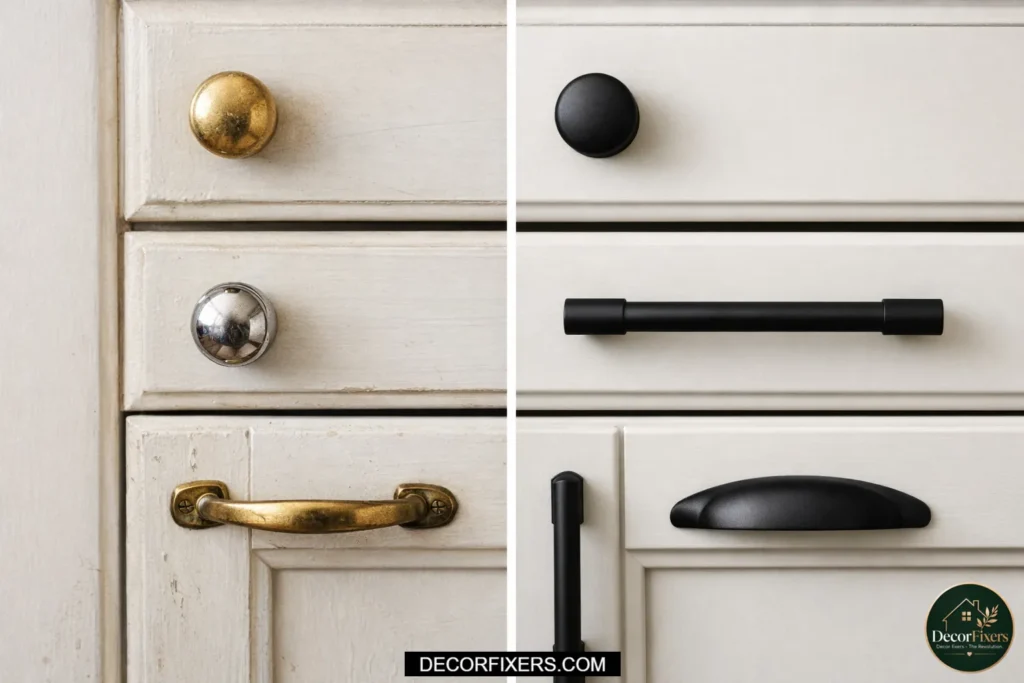
This is the fastest upgrade in the room. One finish, brushed brass, matte black, or unlacquered brass, used consistently across every door and drawer, creates immediate cohesion. Rejuvenation Hardware offers designer-grade pulls starting at $8 each; IKEA’s ENERYDA line runs about $3. Don’t mix metals here.
Cost range: $30–$120, depending on cabinet count.
Add peel-and-stick backsplash tile
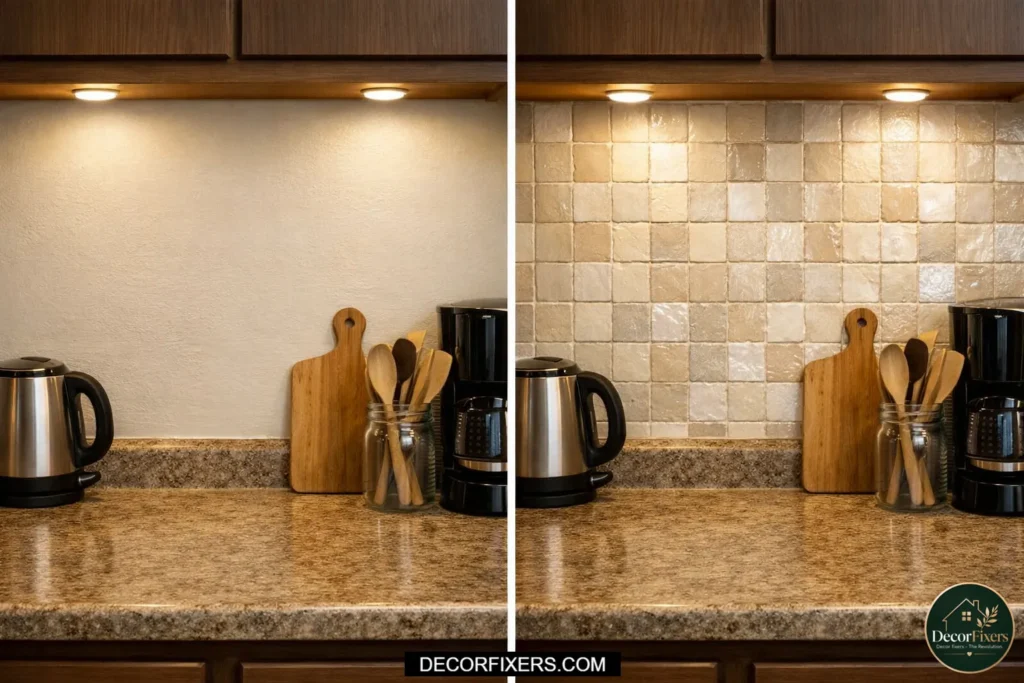
Spoonflower and brands like Tempaper and Chasing Paper offer removable, renter-safe backsplash sheets that mimic zellige, subway tile, or terracotta. They come off cleanly. They work.
I’ve seen conflicting data on longevity; some sources say 2–3 years before edges lift, others report 5+ with proper surface prep. My read: clean the wall with isopropyl alcohol before application, and they’ll last the length of most leases without issue.
Cost range: $40–$90 for a standard backsplash area.
Paint the lower cabinets only
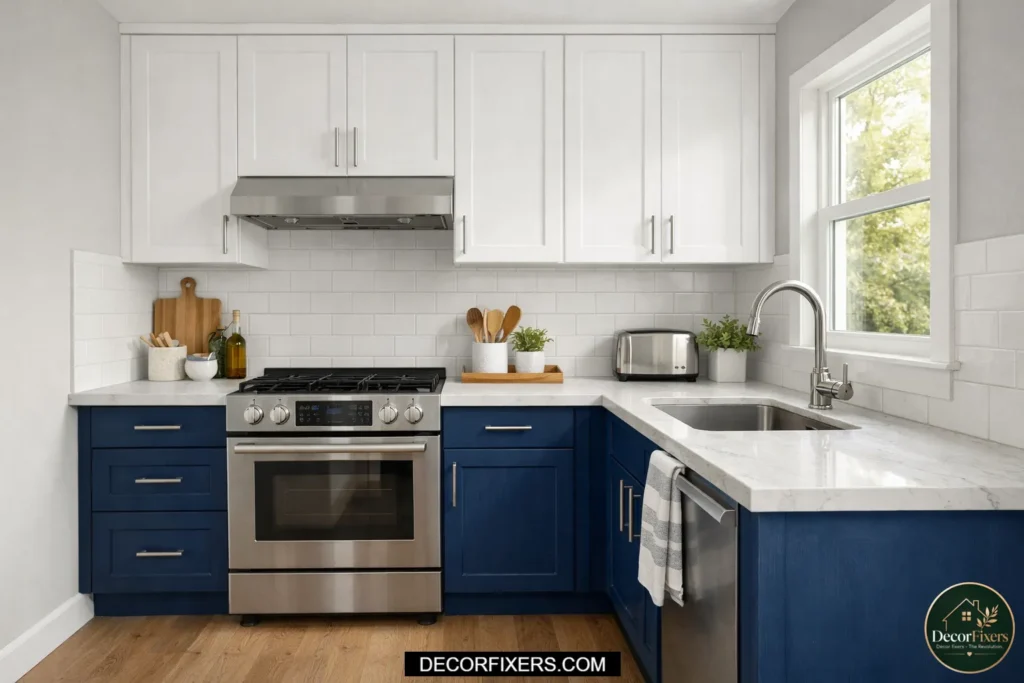
Full cabinet painting is a weekend commitment. Lower-only is an afternoon. Paint the lowers a moody color, deep navy, warm sage, or charcoal, and leave the uppers white or cream. This is the two-tone look designers charge $800/hour to recommend. Benjamin Moore’s Newburyport Blue HC-155 or Farrow & Ball’s Mizzle are worth the premium for finish quality.
Cost range: $60–$100, including primer and hardware-safe enamel.
Install open shelving on one wall.
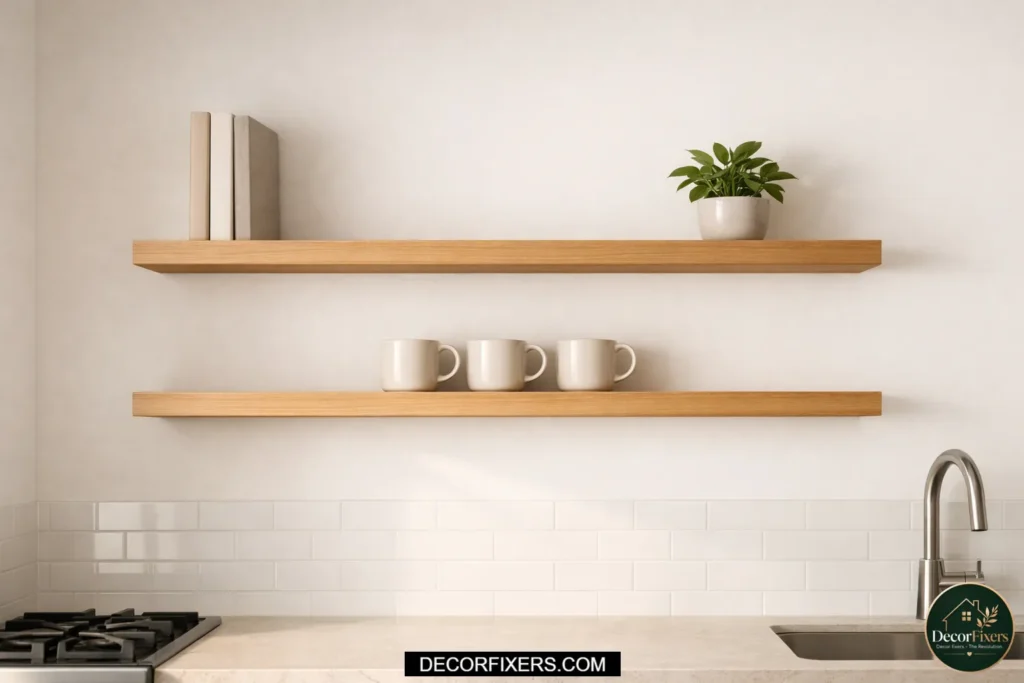
Remove two upper cabinet doors (or leave them off if you’re renting and they were already awkward). Add a bracket shelf, IKEA EKBY, or a floating ledge shelf, and style it intentionally. Key word: intentionally. Three matching mugs, two cookbooks spine-out, and one small plant. Not a yard sale.
Cost range: $25–$80 per shelf, including brackets.
Replace the faucet
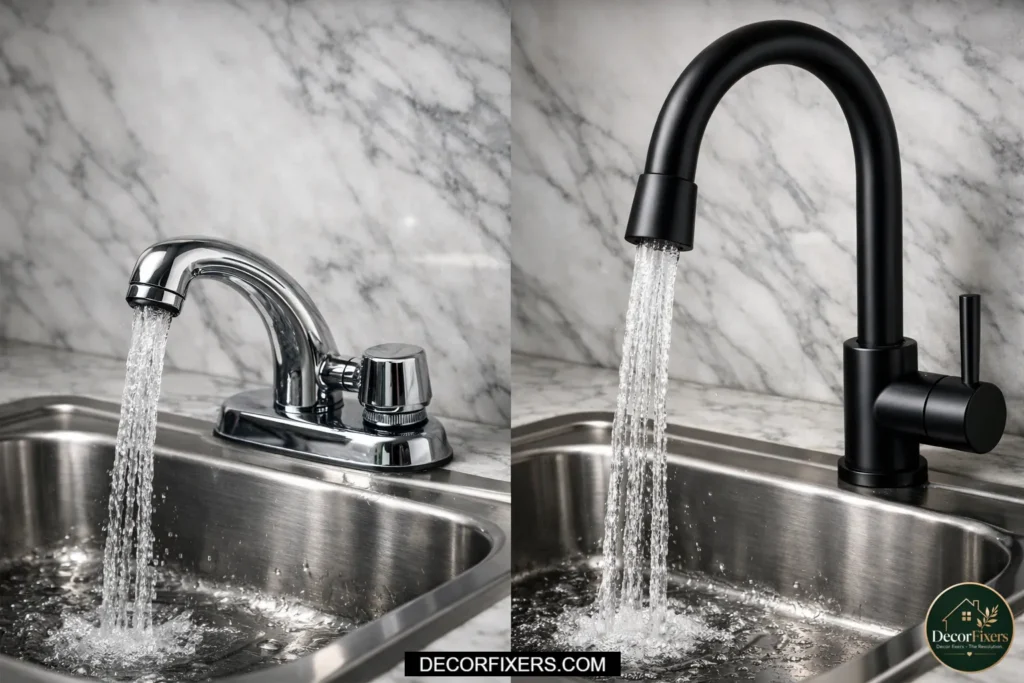
It’s one fixture, but it sits at eye level and gets touched 40 times a day. An arched or gooseneck faucet in matte black or brushed nickel costs $80–$200 and takes 45 minutes with basic tools. This one move ages a kitchen by a decade, in reverse.
Cost range: $80–$220.
Add under-cabinet lighting
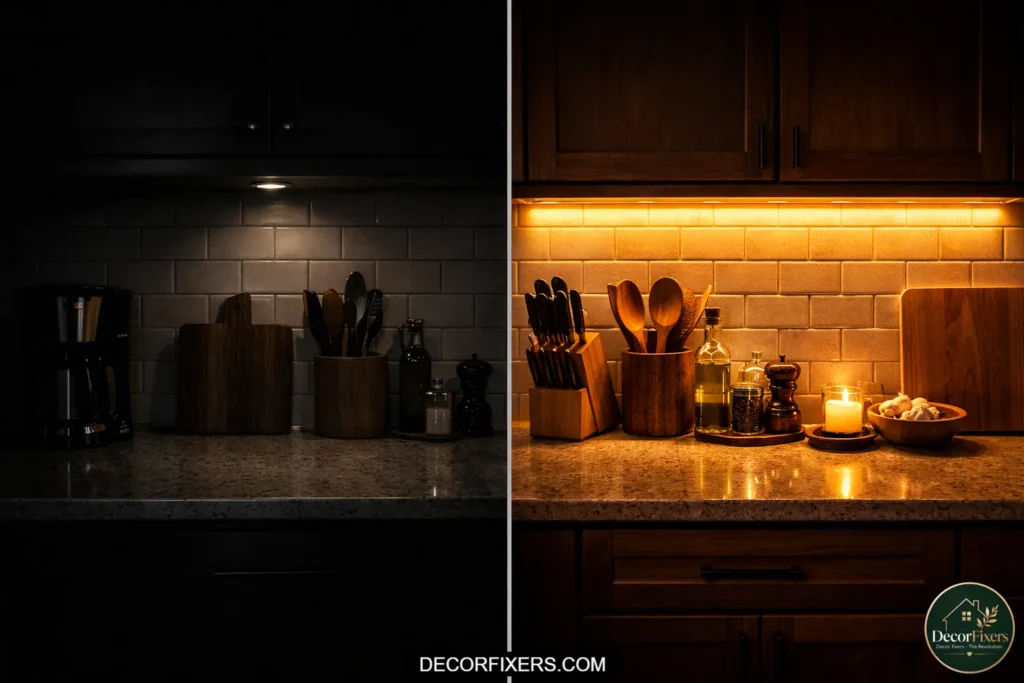
Strip LED lights under upper cabinets cost $30 for basic plug-in versions and $80–$150 for hardwired. The effect at night is dramatic. The 2024 Interior Designers Institute survey found that 80% of designers agreed that ambient kitchen lighting should layer multiple sources, and under-cabinet light is the easiest layer to add.
Cost range: $30–$150.
Refinish or replace the light fixture
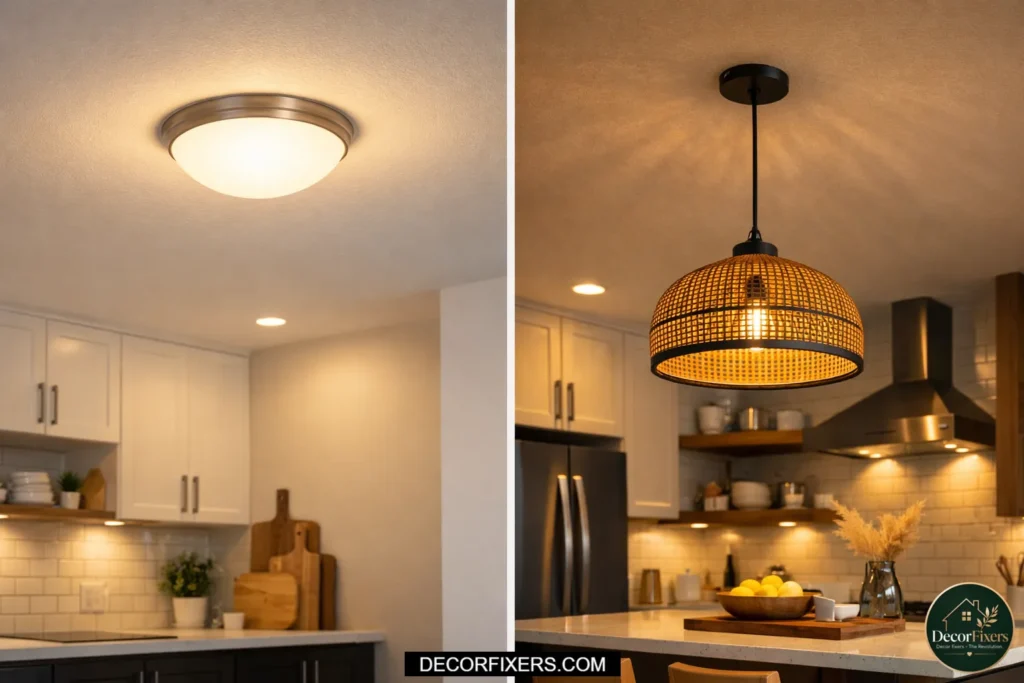
Builder-grade flush-mount lights are the beige of kitchen design. A statement pendant, even a $60 rattan or metal drum shade from Amazon or West Elm, changes the room’s atmosphere. If you’re renting, most fixtures are swappable with landlord permission, and a basic swap doesn’t require an electrician.
Cost range: $45–$200.
Style the countertop with negative space
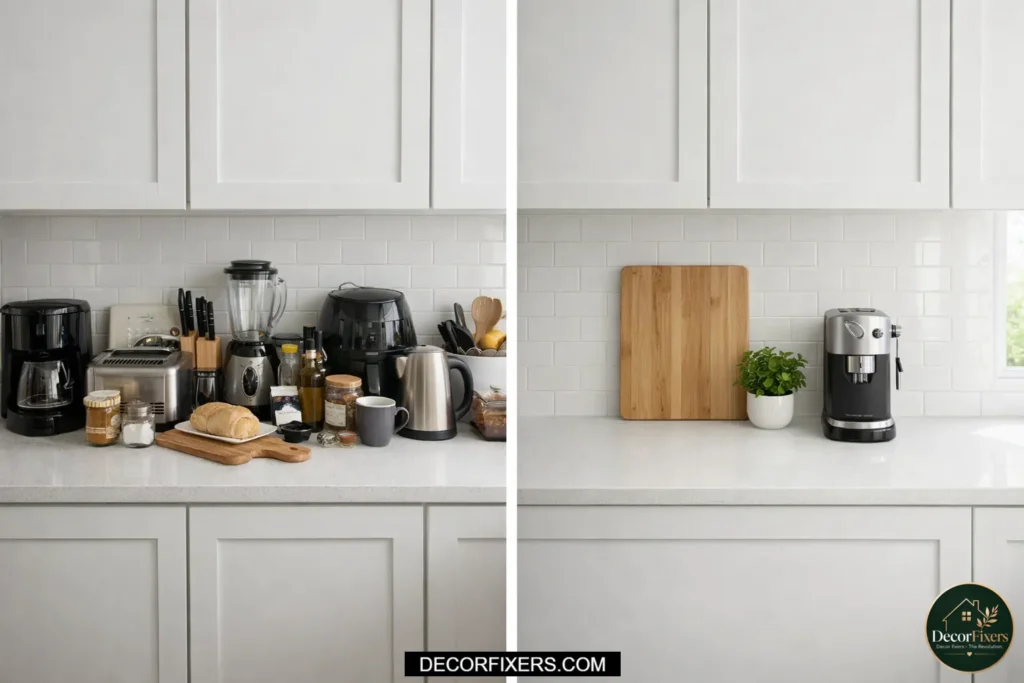
This is a free upgrade that most people resist. Clear everything off the counter except three intentional items: a wooden cutting board propped against the backsplash, a single small plant, and your most-used small appliance. Negative space reads as bigger, cleaner, and more expensive than anything you could buy.
Cost: $0.
Add a kitchen runner rug
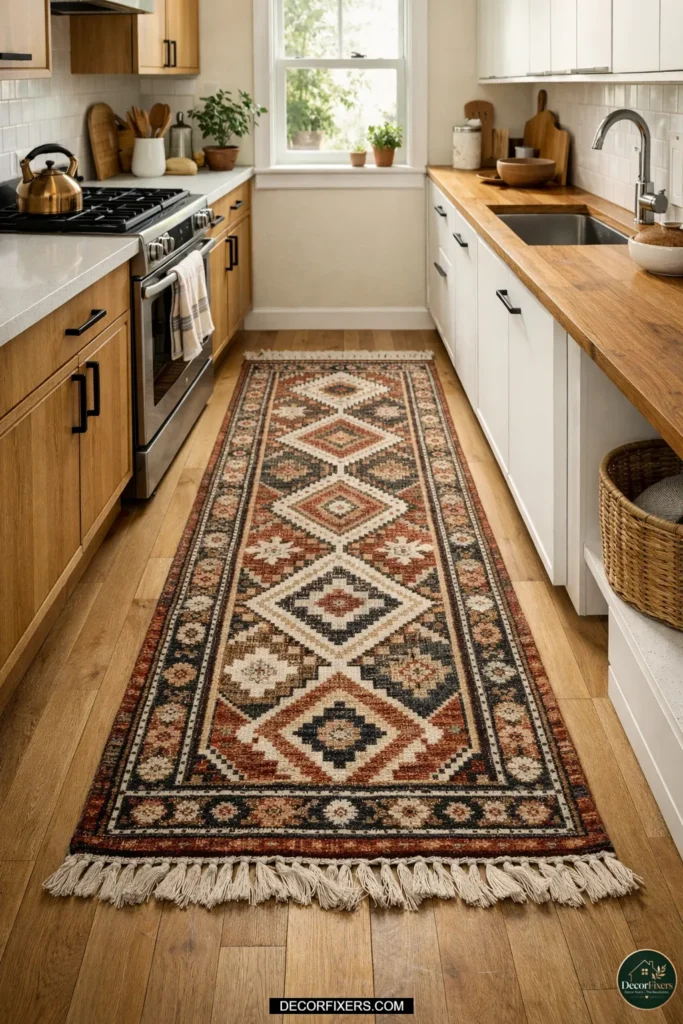
Rugs are underused in kitchens. A striped or solid washable runner (Ruggable makes machine-washable options) defines the cooking zone and adds warmth. Choose one with at least one color already present in the kitchen, grout, cabinet color, or a dish towel shade.
Cost range: $60–$180.
Decant pantry staples
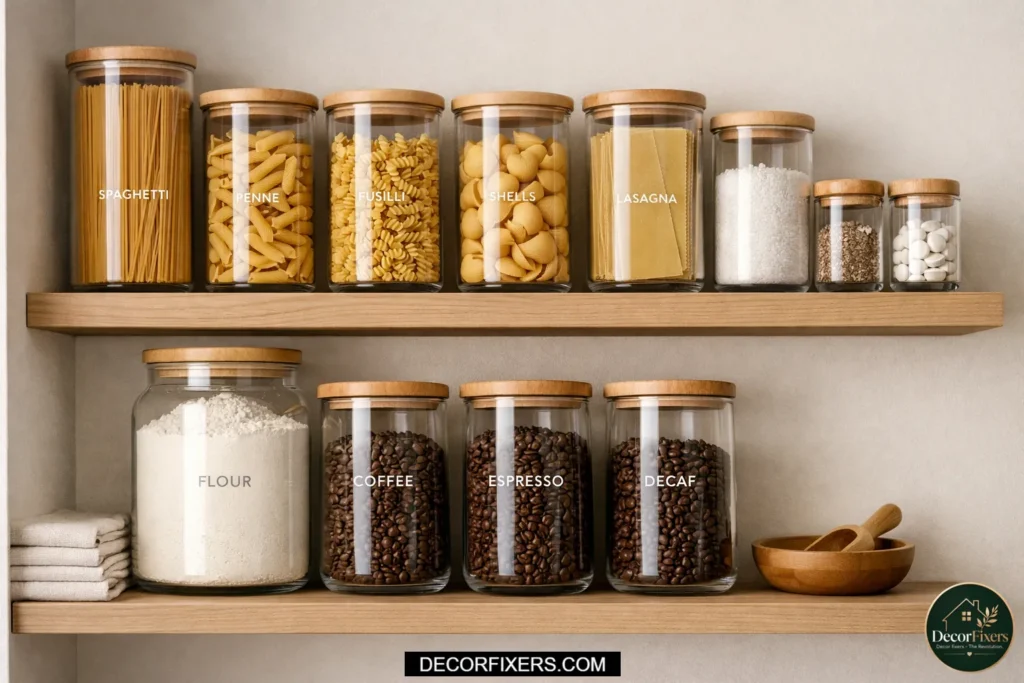
Glass jars for flour, sugar, pasta, and coffee beans add visual consistency. OXO POP containers or simple hinged-lid canning jars from IKEA work equally well. Label them simply with black marker on white tape if you want the apothecary look without spending on label makers.
Cost range: $40–$100 for a starter set.
Upgrading a kitchen without renovating means targeting the elements with the highest visual-to-cost ratio first: hardware, lighting, and backsplash. According to the 2026 Kitchen Trends Study, full backsplash coverage rose to 67% of renovations, reflecting how dominant this surface is in kitchen perception. Renter-safe peel-and-stick versions replicate the effect at under $100.
Paint the ceiling
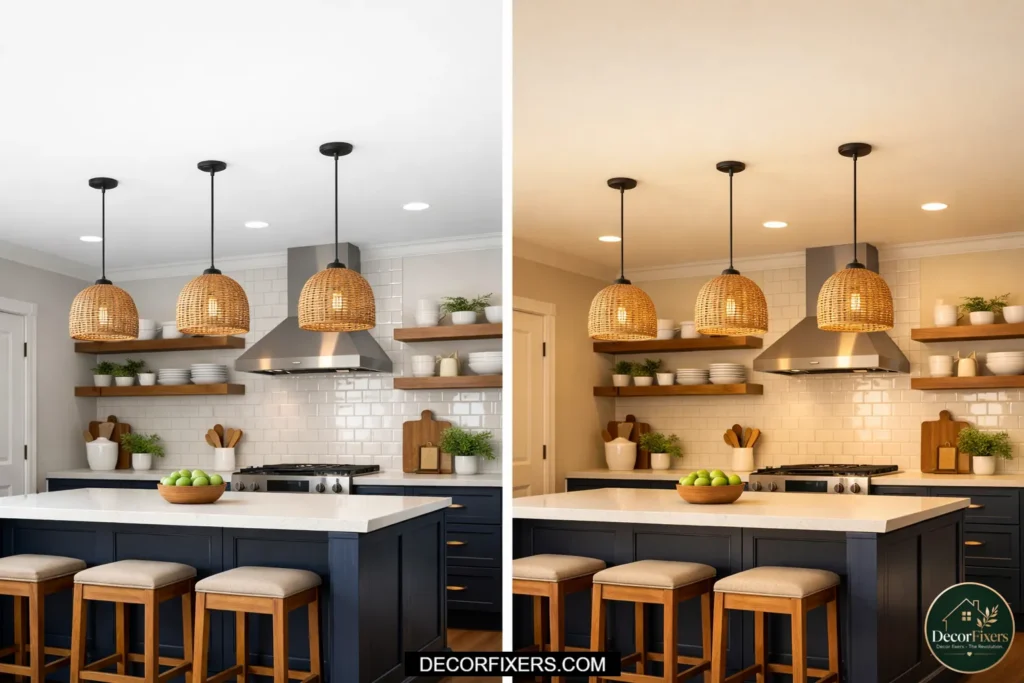
Almost no one does this. A kitchen ceiling painted a warm off-white (not brilliant white) makes overhead lighting softer, and the room feels taller. If the kitchen connects to a dining area, painting both ceilings the same color visually merges the zones.
Cost range: $40–$80 in paint.
Tile the backsplash properly
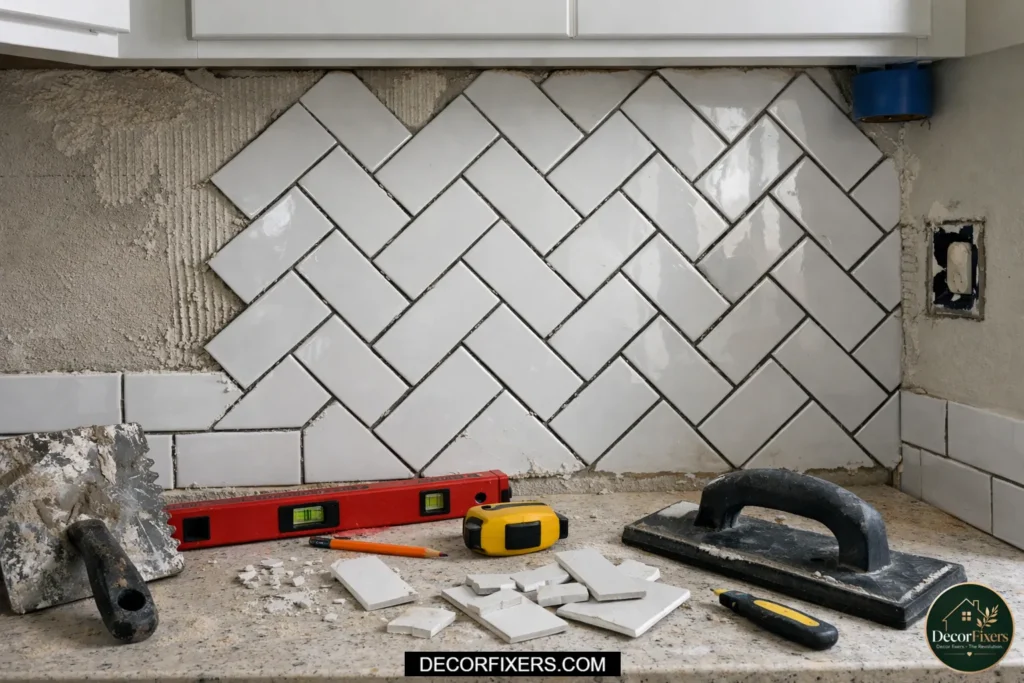
If you own the home, a real tile backsplash is a weekend project with a $150–$400 material budget. Subway tile in a brick or herringbone pattern holds value. Zellige-style handmade tiles (available through Fireclay Tile and Cle Tile) are the current designer obsession—imperfect, glossy, and expensive-looking even when they’re not.
Cost range: $150–$500, including adhesive and grout.
Add a kitchen island on wheels
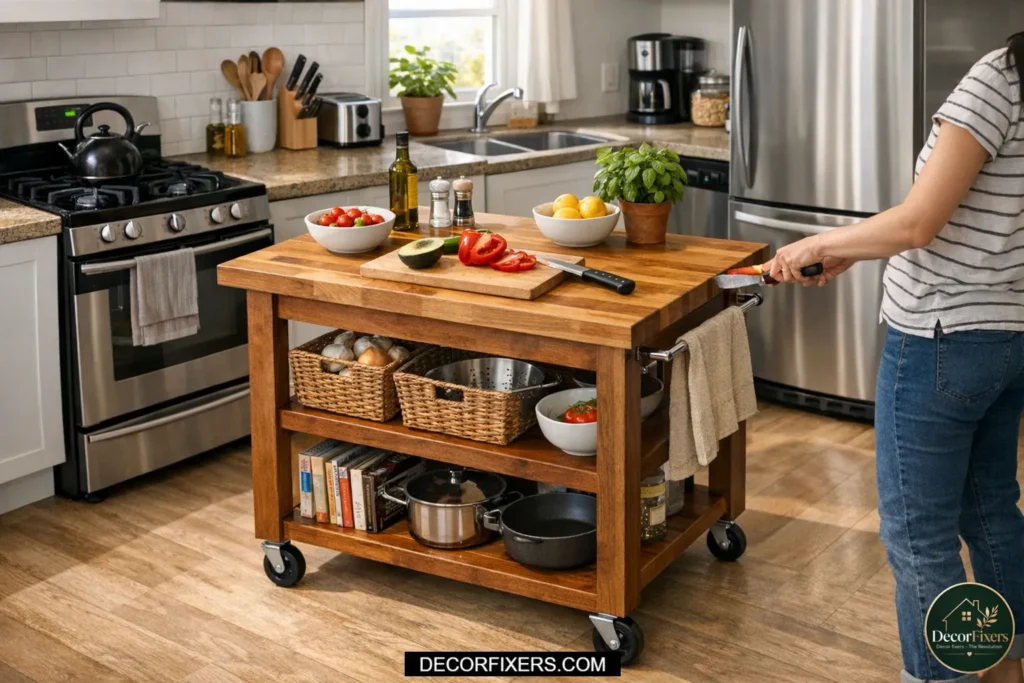
A butcher block rolling island from IKEA (the VADHOLMA) or a comparable option adds prep space, storage, and a design anchor for under $300. It defines the kitchen zone in open-plan apartments. Roll it out when needed. It’s also a legitimate piece of furniture, not a cheap fix.
Cost range: $150–$350.
Install IKEA SEKTION cabinets on one wall
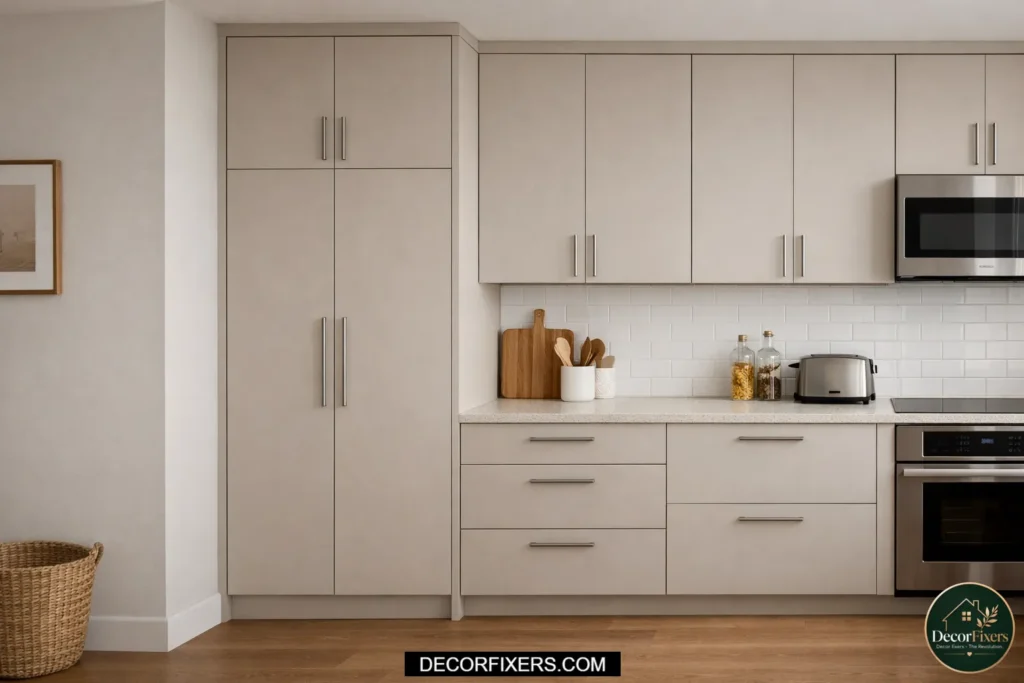
Or just one column. IKEA’s SEKTION system is modular and cheap enough that adding a pantry column or two extra upper cabinets where there were none costs $200–$600. This is the most structural item on this list, but it requires no demolition and no contractor in most cases.
Cost range: $200–$600 installed DIY.
Replace the countertop on a small section
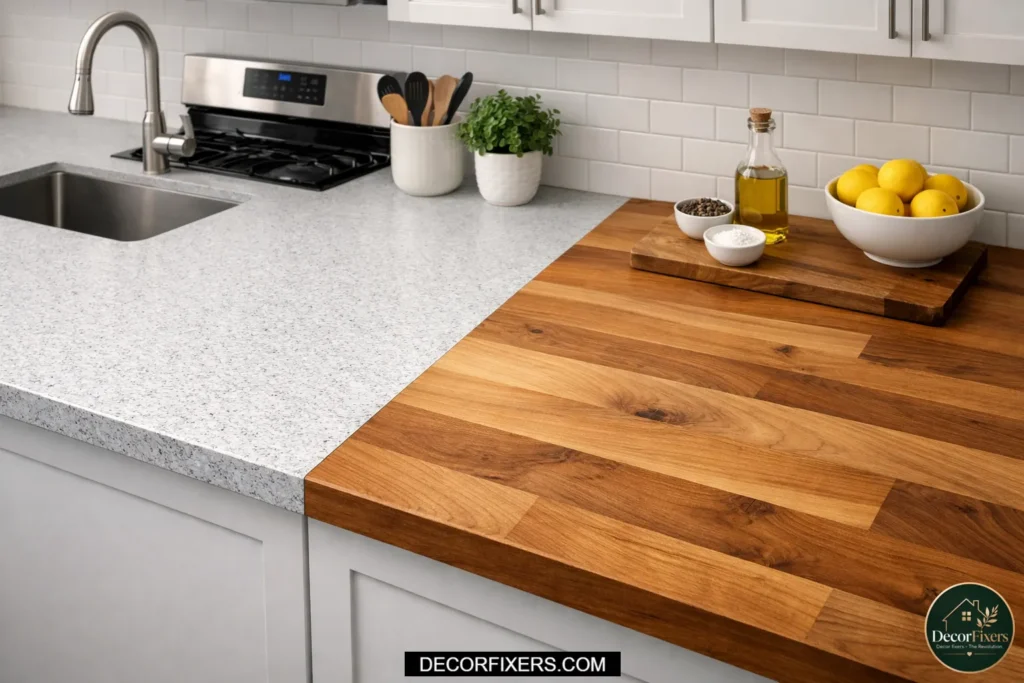
If the entire countertop is original 1990s laminate, you don’t have to replace it all. Replace the island or the peninsula section only. Butcher block is $80–$120 for a 6-foot section and cuts with a circular saw. It’s warm, it’s trendy, and it contrasts well with the surrounding laminate rather than clashing with it.
Cost range: $80–$200 for a partial replacement.
Quick Comparison:
| Option | Best For | Key Benefit | Limitation |
| Peel-and-stick tile | Renters, budget updates | Zero damage, removable | Edges may lift over time |
| Real ceramic subway tile | Homeowners, lasting update | Durable, adds resale value | Requires grout, more labor |
| Zellige handmade tile | Design-forward, permanent | Unique texture, premium look | Expensive ($15–$40/sq ft) |
| Peel-and-stick wallpaper | Accent wall behind the range | Pattern-rich, fast | Not heat-resistant near flame |
Hang something on the walls
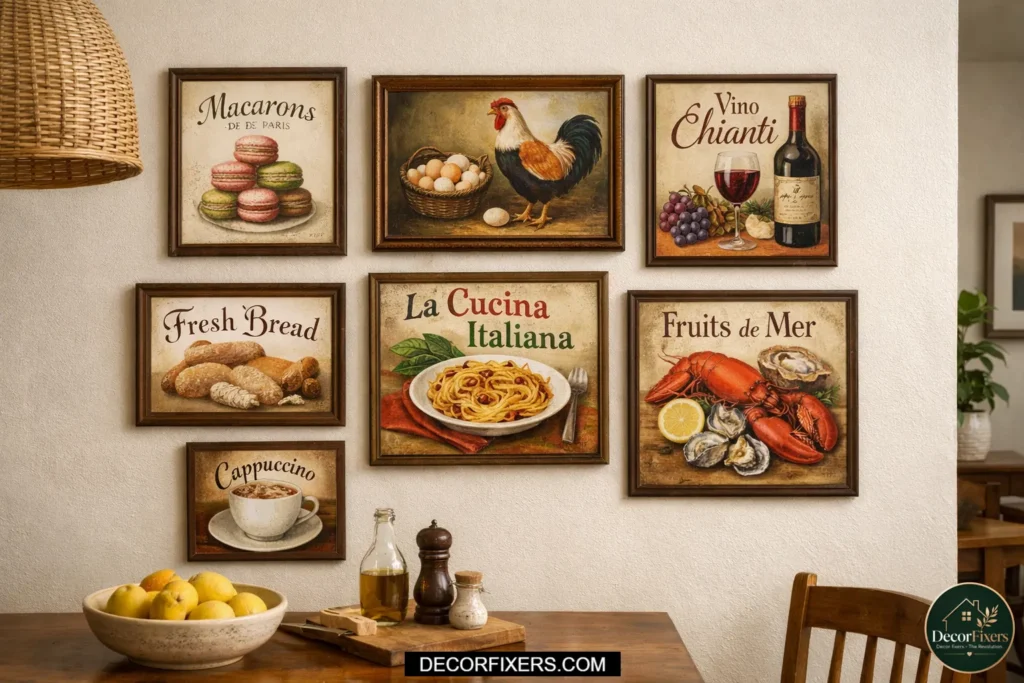
Kitchens are the least-decorated room in most homes. A framed vintage food print, a chalkboard panel, or a small gallery wall near the dining table makes the kitchen feel like a room rather than an appliance storage zone.
Cost range: $0 (print + thrifted frame) to $150.
Bring in one live plant
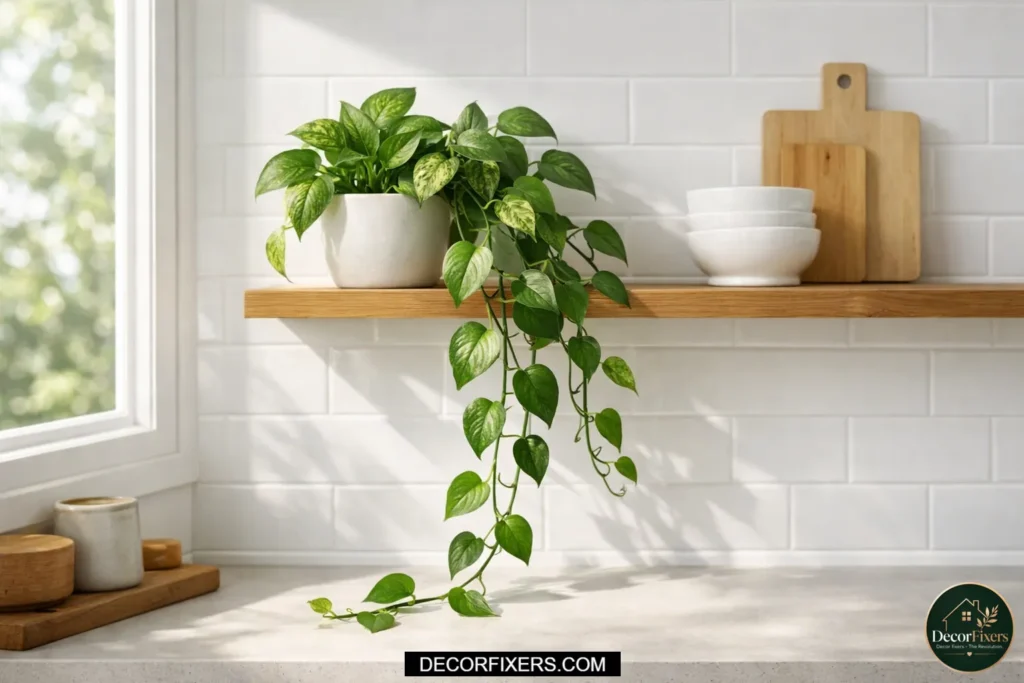
One. Not a shelf of them. A pothos in a trailing position above the upper cabinets or a small rosemary plant on the windowsill reads as intentional. Three plants that haven’t been watered read as neglect.
Cost range: $8–$25.
Upgrade dish towels and a matching hand soap
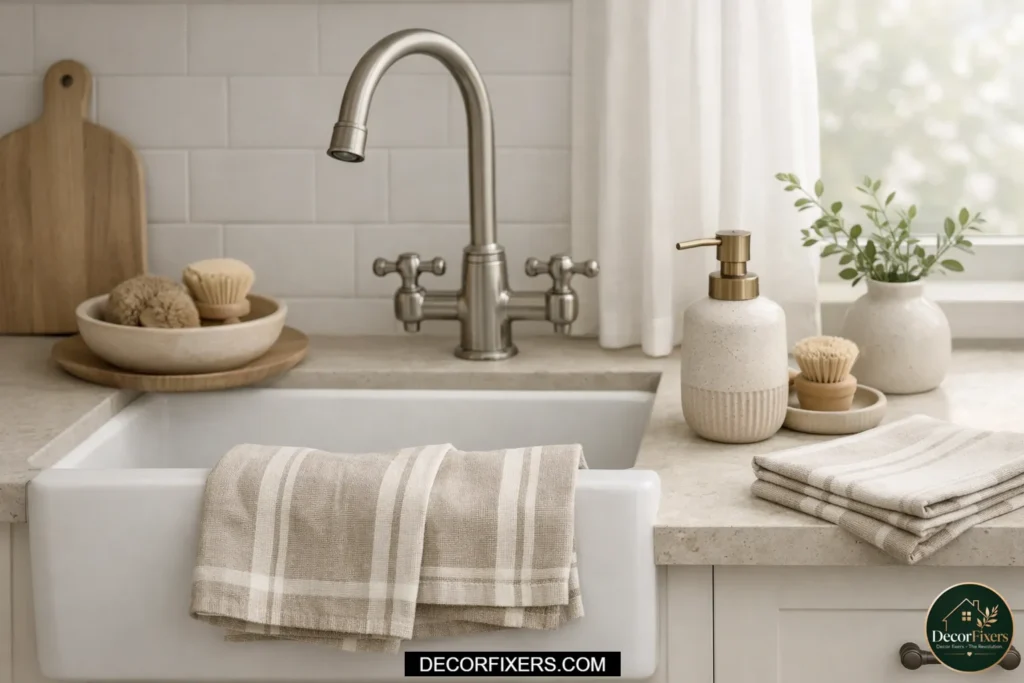
This sounds trivial. It isn’t. Matching linen dish towels in one color family—sage, terracotta, or cream—draped over an oven handle contribute to the visual language of the whole room. The hand soap dispenser should be ceramic or matte glass, not translucent plastic.
Cost range: $20–$50.
Add a magnetic knife strip
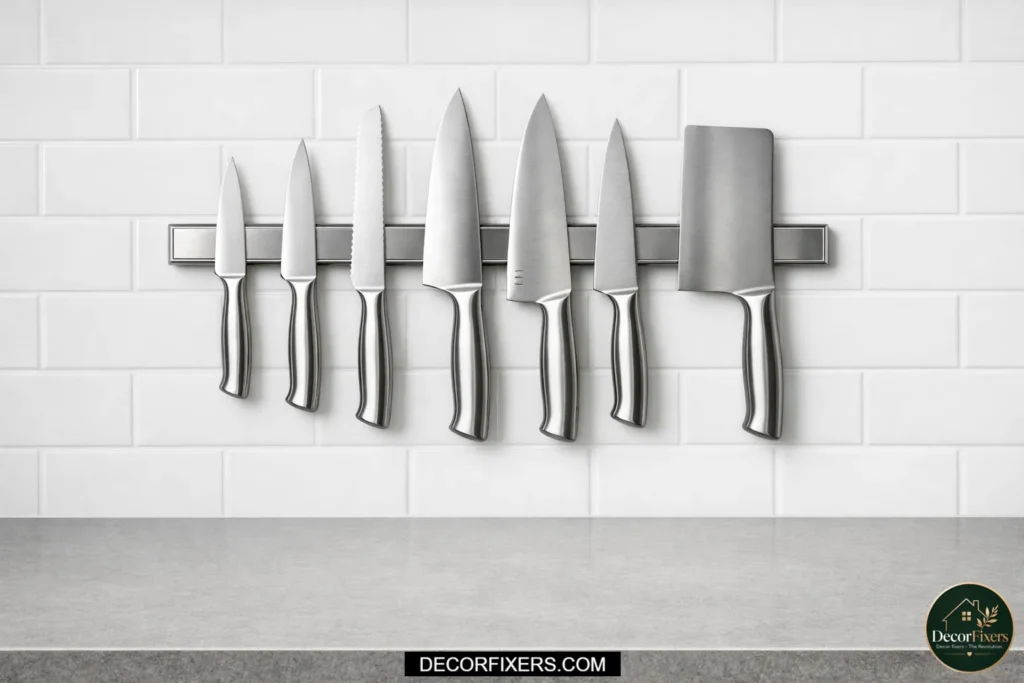
This removes the knife block from the counter (immediate negative-space win), keeps blades accessible, and looks genuinely designed. Mount it on the backsplash or a side cabinet panel. IKEA’s KUNGSFORS strip is $15.
Cost range: $15–$40.
Paint or replace the kitchen door
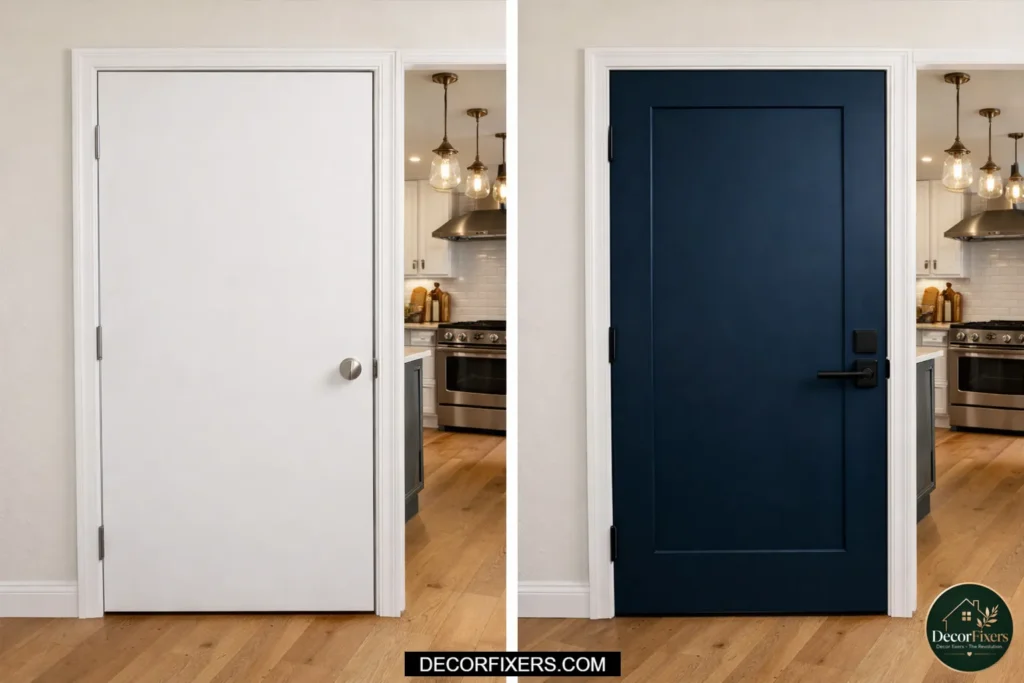
If your kitchen has a door, entry from a hallway, laundry room, or dining room, paint it a contrasting color or replace it with a glass-panel door. It’s outside the kitchen, but it changes what the kitchen feels like from every adjacent room.
Cost range: $30 in paint or $80–$200 for a replacement door.
READ MORE: 27 Kitchen Counter Styling Ideas for Everyday Elegance
The Renter-Specific Problem
Look, if you’re renting, most “kitchen makeover” content was written for homeowners. The advice isn’t wrong; it just doesn’t apply to you. No tile work. No cabinet painting without permission. No lighting swaps without asking.
Here’s a renter-legal shortlist from the 20 above:
- Peel-and-stick backsplash (removable)
- Cabinet hardware swap (keep originals in a bag to reinstall)
- Under-cabinet plug-in LED strips (no hardwiring)
- Countertop decor + negative space
- Rugs, plants, dish towels, open shelving on freestanding units
Or maybe I should say it this way: the goal isn’t to renovate. It’s to make the kitchen look considered. That takes editing more than it takes adding.
Renter-friendly kitchen decor focuses on removable, non-damaging upgrades. The most effective include peel-and-stick backsplash tile (brands like Spoonflower and Tempaper ship custom patterns), plug-in under-cabinet LED strips, cabinet hardware swaps with original pulls kept in storage, and countertop styling with intentional negative space. Together, these changes cost under $200 and require no landlord approval in most leases.
How to Prioritize These Upgrades (The Right Order)
To upgrade a kitchen systematically, follow these steps:
- Identify the two surfaces that bother you most (usually backsplash or countertop)
- Swap all cabinet hardware to one consistent finish
- Clear and restyle the countertop using the negative-space rule
- Add one lighting layer (under-cabinet or pendant)
- Add one living element, a plant, fresh herbs, or a ceramic container
This is the order because each step makes the next step look better. New hardware looks sharp against a clean counter. A clean counter makes the backsplash more visible. A better backsplash makes the lighting worth noticing. Skip ahead, and nothing lands.
What These Ideas Won’t Fix
This guide works for kitchens that are cosmetically tired but functionally intact, meaning the layout works, the cabinets are structurally sound, and the appliances function. It won’t solve a kitchen where the layout is genuinely broken (galley too narrow to open two cabinet doors simultaneously), appliances are failing, or the cabinetry is water-damaged.
For those cases, you’re looking at a real renovation conversation. The Houzz data is worth revisiting there: the median spend on a major kitchen remodel is now $60,000, up from $55,000 the previous year. That’s the realistic cost floor for a true gut-and-rebuild.
Conclusion:
Upgrading your kitchen doesn’t require a full renovation or a massive budget; it requires smart, focused decisions. The most effective kitchen decor ideas target high-impact areas like cabinet hardware, lighting, backsplash, and external styling, where small changes create the biggest visual transformation.
Instead of adding more decor, the real improvement comes from editing: simplifying countertops, unifying finishes, and creating visual consistency across the space. These low-cost upgrades refresh the kitchen suddenly and make it feel more modern, organized, and intentional.
Whether you’re a renter or homeowner, applying even a few of these kitchen decor ideas can dramatically improve both function and aesthetics without structural work. The key is arrangement; start with the most visible elements, maintain consistency in design choices, and avoid mixing too many styles or finishes.
In short, a well-designed kitchen isn’t defined by expensive renovations but by thoughtful, cohesive decor choices that make the space feel complete.
FAQs:
Q: What’s the best cheap way to update a kitchen without renovating?
Swap cabinet hardware to one consistent finish, add peel-and-stick backsplash tile, and install plug-in under-cabinet lighting. Together, these three changes cost under $200 and create the biggest visual shift.
Q: How do I make my kitchen look more expensive on a budget?
Clear the countertop of 3 intentional items, replace the faucet, and add a statement pendant light. Negative space and one quality fixture outperform 10 cheap accessories every time.
Q: Should I paint my kitchen cabinets or just replace the hardware?
Start with hardware. It’s reversible, costs $30–$120, and takes two hours. If hardware alone doesn’t satisfy you after a week, then move to cabinet paint. Painting before hardware often means repainting around new hardware later.
Q: Why does my kitchen still look bad after decorating it?
Mixed metal finishes, too many small items on counters, and inconsistent color are the most common causes. The fix isn’t more decor; it’s editing what’s already there and committing to one finish and one color palette.
Q: When should I hire a designer for kitchen decor instead of DIYing it?
When you’ve made 3+ independent changes that still don’t feel cohesive, or when you’re spending over $2,000 and don’t have a clear vision. A single 1-hour consultation with a designer (typically $150–$300) often prevents $800 in wrong purchases.
“Kitchen decor ideas to upgrade your space work best when you start with the highest-visibility elements—hardware, backsplash, and lighting—and treat editing as seriously as adding. The kitchen doesn’t need more stuff. It needs a point of view.”

Creator of DecorFixers, sharing practical home and interior ideas focused on real-life usability, simple design improvements, and budget-friendly solutions.
3 thoughts on “20 Kitchen Decor Ideas to Upgrade Your Space: That Actually Work”