

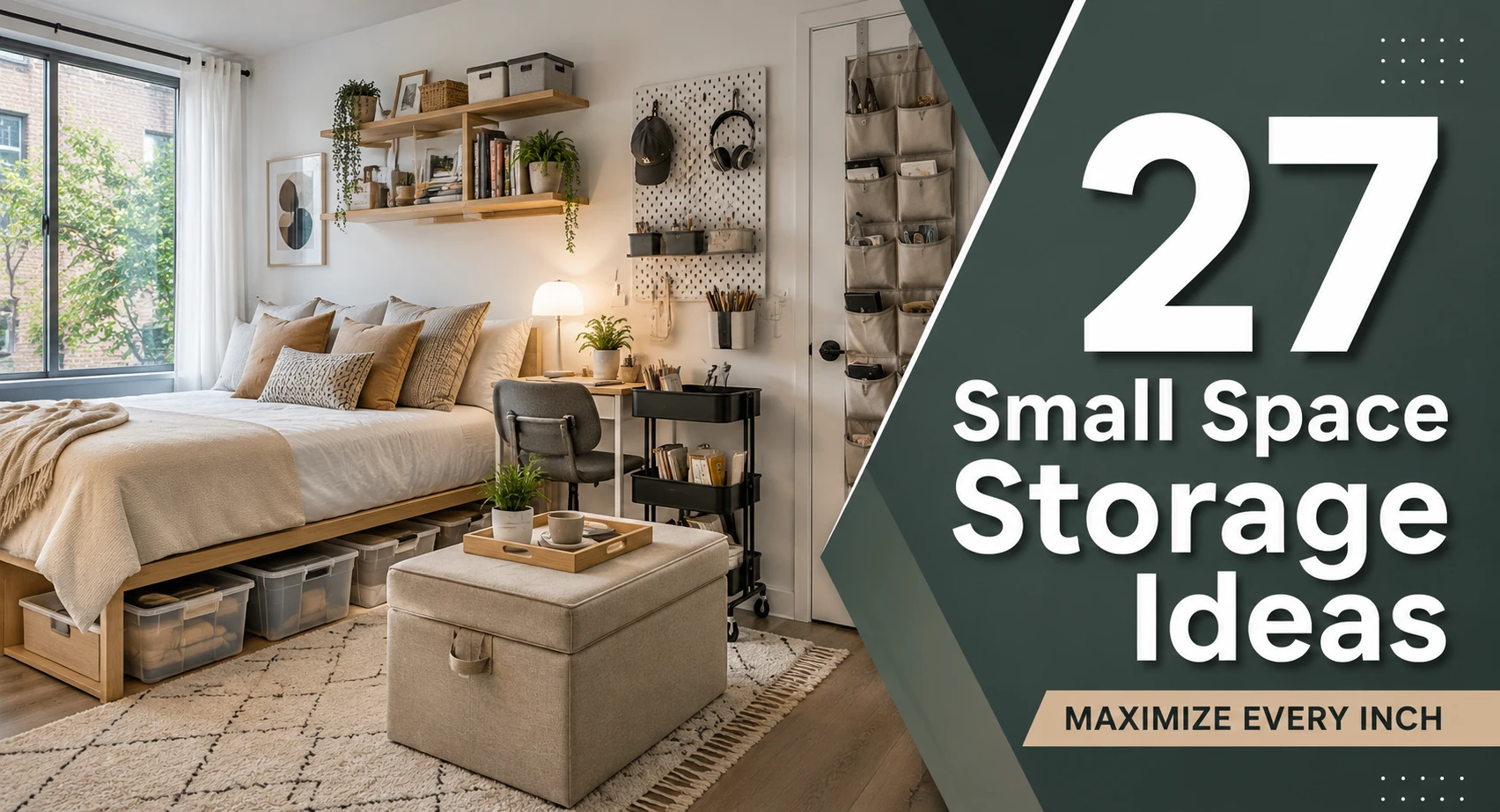
I moved into a 580-square-foot apartment three years ago. I had a couch, a full wardrobe, kitchen gear I’d collected over a decade, and exactly zero clue where any of it was going to go. The first week, I stacked things on the floor. The second week, I bought a bunch of bins that somehow made everything look worse. By week three, I was lying on my bed surrounded by organized chaos, Googling “small space storage ideas” at midnight as my life depended on it.
Sound familiar? You’re not alone, and the problem isn’t you; it’s the space.
This guide is different. Every idea here is renter-tested, no-drill approved (or clearly labeled when minor installation is needed), and broken down room by room so you know exactly where to start.
What Are Small Space Storage Ideas?
Small space storage ideas are practical methods for organizing and storing belongings in compact apartments, studios, or rooms without expanding floor space. They focus on vertical space, multi-use furniture, and hidden or modular storage systems that require no permanent installation.
Small Bedroom Storage Ideas That Free Up Floor Space
The bedroom is usually where clutter wins. You don’t have closet space, the floor is buried, and every “solution” you’ve tried seems to eat up what little open space you have left. Here’s what actually changes that.
1. Use Under-Bed Storage Bins with Lids
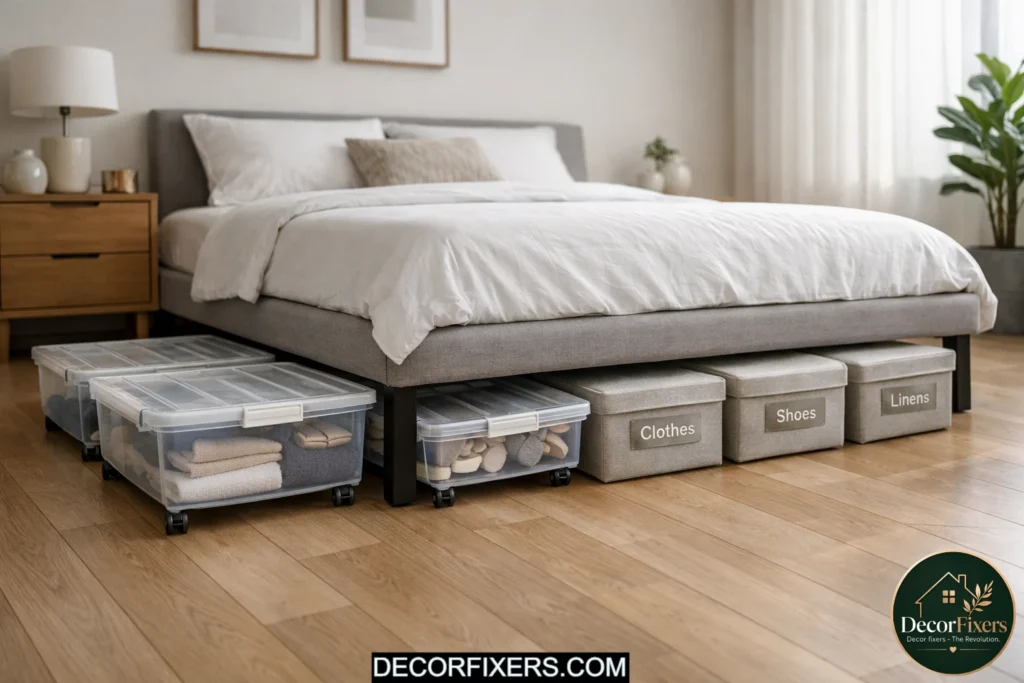
Under-bed space is the most underused storage zone in most apartments. A standard bed frame sits 7–13 inches off the ground, enough for flat rolling bins, vacuum bags for seasonal clothing, or shallow drawers. Use lidded bins to keep dust out.
Quick note: measure your bed clearance before buying. Some platform beds sit only 4–5 inches off the floor, which limits your options to vacuum-seal bags only. Rolling bins with handles work best when clearance is 10 inches or more.
2. Swap Your Bed for One With Built-In Drawers
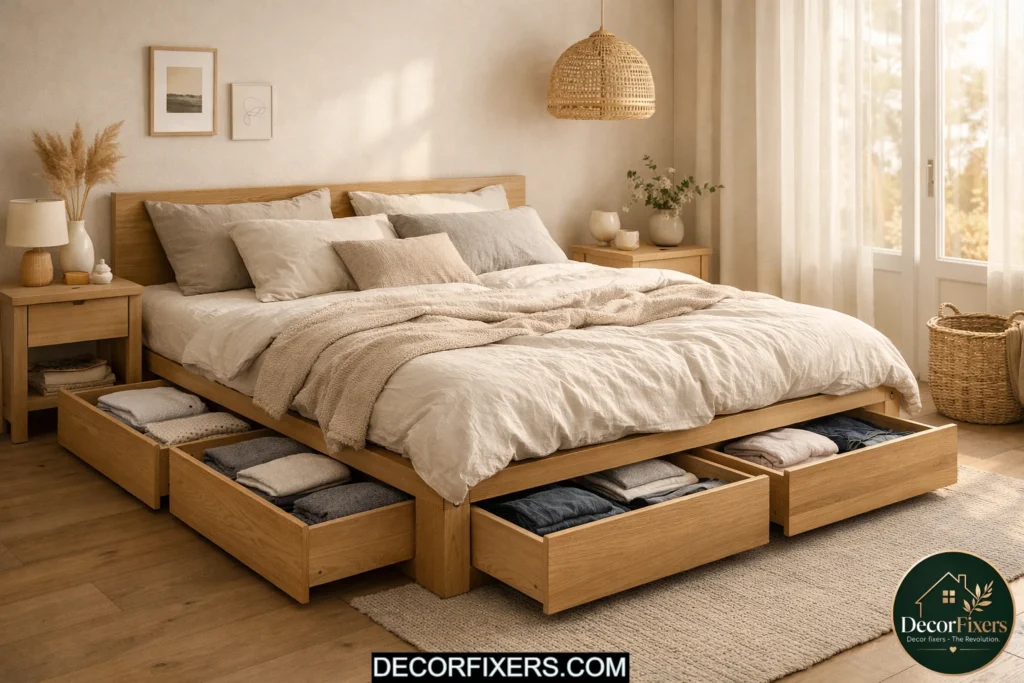
If you’re due for a new bed anyway, this is the single highest-ROI upgrade for bedroom storage. Storage beds, like the IKEA BRIMNES or similar platform styles, include two to four deep drawers beneath the mattress, adding dozens of liters of hidden storage without using a single extra inch of floor space.
They don’t require drilling, they look clean, and you’d never know the storage was there. The upfront cost is higher than a basic frame, but it eliminates the need for a separate dresser, which alone frees up significant floor space.
3. Mount a Floating Shelf Headboard
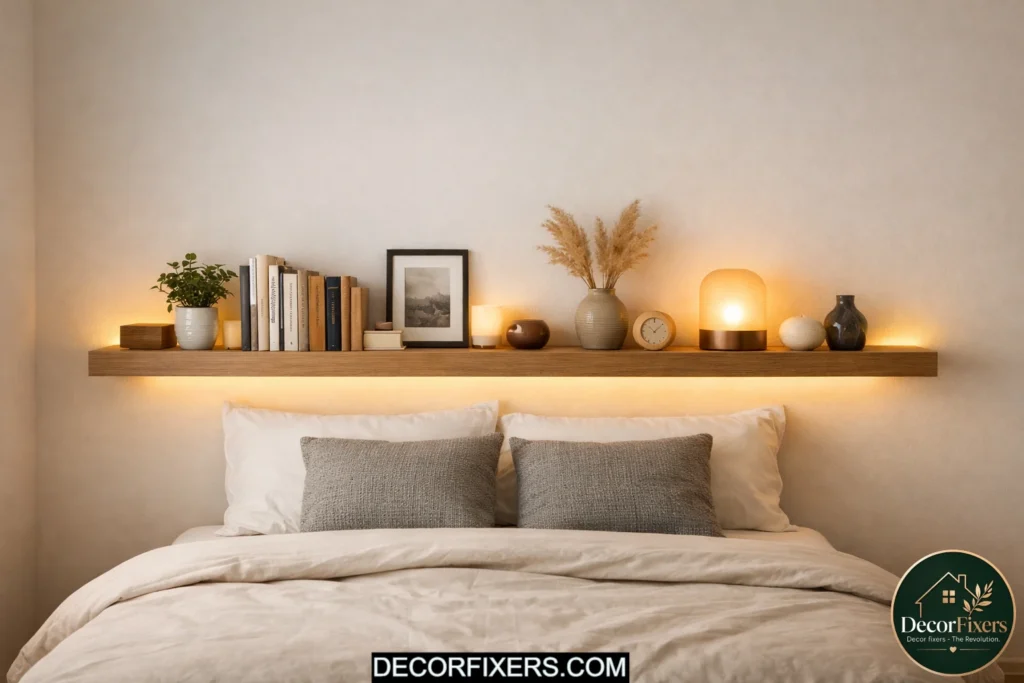
The wall above your bed is completely ignored in most small bedrooms. A simple floating shelf, or a set of two staggered shelves, acts as a bedside table, book storage, and decor display all at once. It replaces a nightstand you’d otherwise have to squeeze in.
For renters, 3M Command Large Picture Hanging Strips hold up to 16 lbs per pair, which is more than enough for a lightweight shelf. Remove them cleanly when you move out.
4. Use an Over-the-Door Organizer on Your Bedroom Door
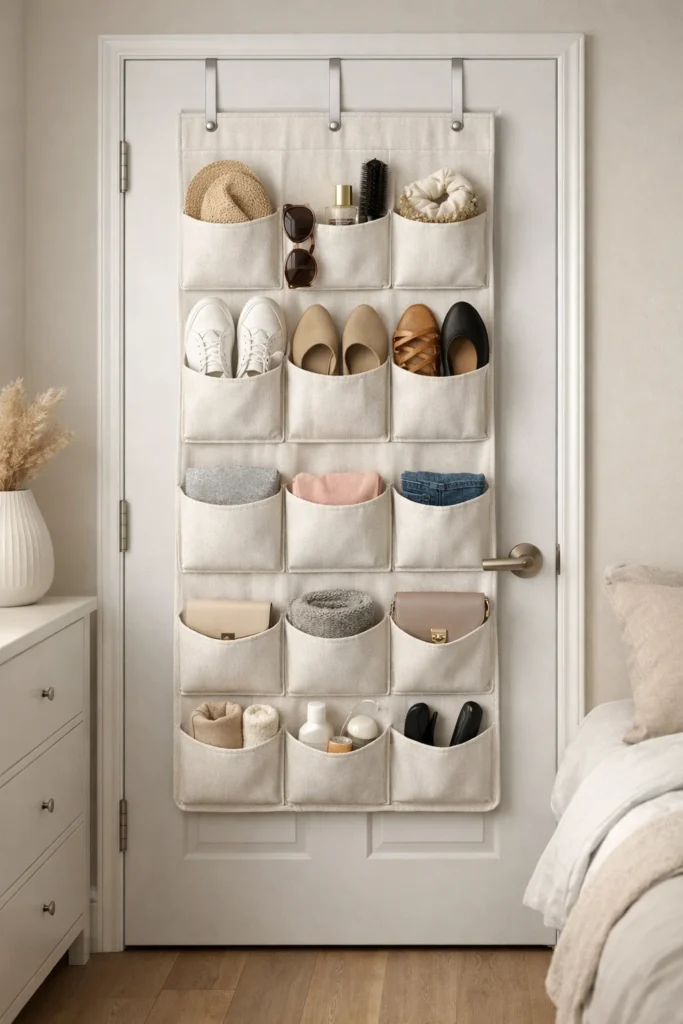
Every interior door gives you roughly six feet of vertical storage that requires zero wall contact and zero tools. An over-the-door organizer can hold shoes, accessories, scarves, books, and anything that’s currently sitting in a pile somewhere.
The mistake most people make: stuffing it with random items. Pick one category per organizer. Shoes only. Bags only. Jewelry only. When it becomes a catch-all, it becomes invisible clutter, just vertical instead of horizontal.
5. Add a Pegboard Above Your Desk or Dresser
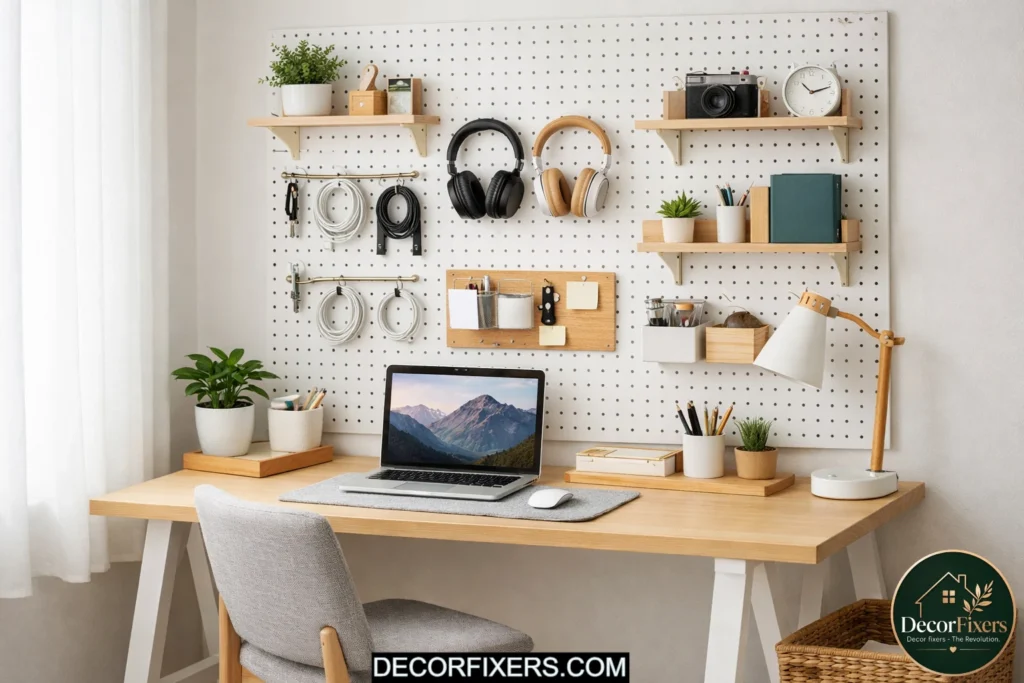
Pegboards aren’t just for garages. A wall-mounted pegboard above a small desk lets you hang headphones, cables, notebooks, scissors, and small bins, all off the surface and at eye level. IKEA SKADIS is the most popular version, and it requires only two screws into studs or drywall anchors.
If you can’t drill at all, leaning pegboards are available that sit behind furniture. Less sturdy, but workable for lighter items.
6. Use Slim Furniture, Not Less Furniture
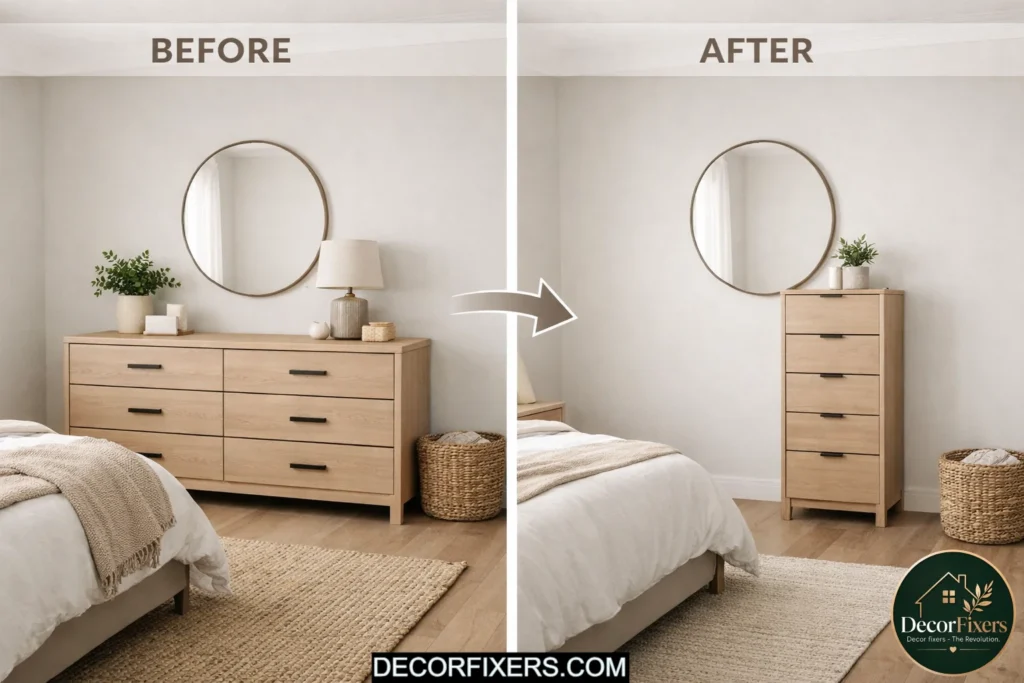
Here’s an opinion that might be controversial: I don’t think you should get rid of furniture to solve a storage problem. I think you should replace bulky furniture with slimmer versions of the same piece.
A standard 6-drawer dresser is 30–36 inches wide. A slim 5-drawer version runs 20–24 inches. That 10-inch difference lets you fit it in a space that previously had nothing. Same storage capacity. Much smaller footprint. Always prioritize depth and width over height when working in tight rooms.
7. Hang a Canvas Wardrobe for Overflow Clothing
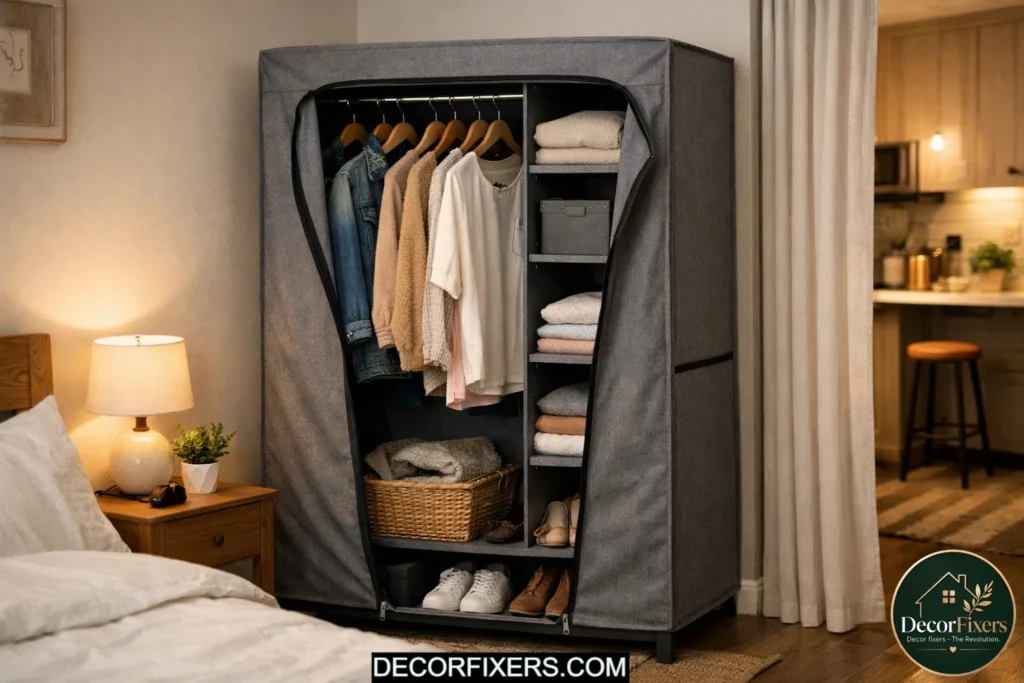
When closet space runs out, and it will, a freestanding fabric wardrobe adds a full hanging rod and shelf without any tools or wall damage. They come in widths from 24 to 55 inches and cost $30–$80.
They’re not pretty, but they work. Add a curtain rod in front if you want to hide it. Some renters use them behind a room divider to create a makeshift walk-in effect in a studio.
If you are struggling with limited wardrobe space, these freestanding solutions work even better when paired with smart systems from Home Storage and Organization. Combining hidden clothing storage with better room-wide organization helps small apartments feel significantly less crowded without adding bulky furniture.
Small Kitchen Storage Ideas for Apartments with Zero Counter Space
The kitchen is where small-space living gets genuinely painful. You’ve got appliances that have to live somewhere, pantry items that won’t fit, and a countertop that’s somehow always covered in things that don’t belong there.
The fix isn’t always more storage. Sometimes it’s just a smarter arrangement, using the vertical space inside cabinets, the backs of doors, and the sides of appliances that currently do nothing.
8. Stack Inside Cabinets with Shelf Risers
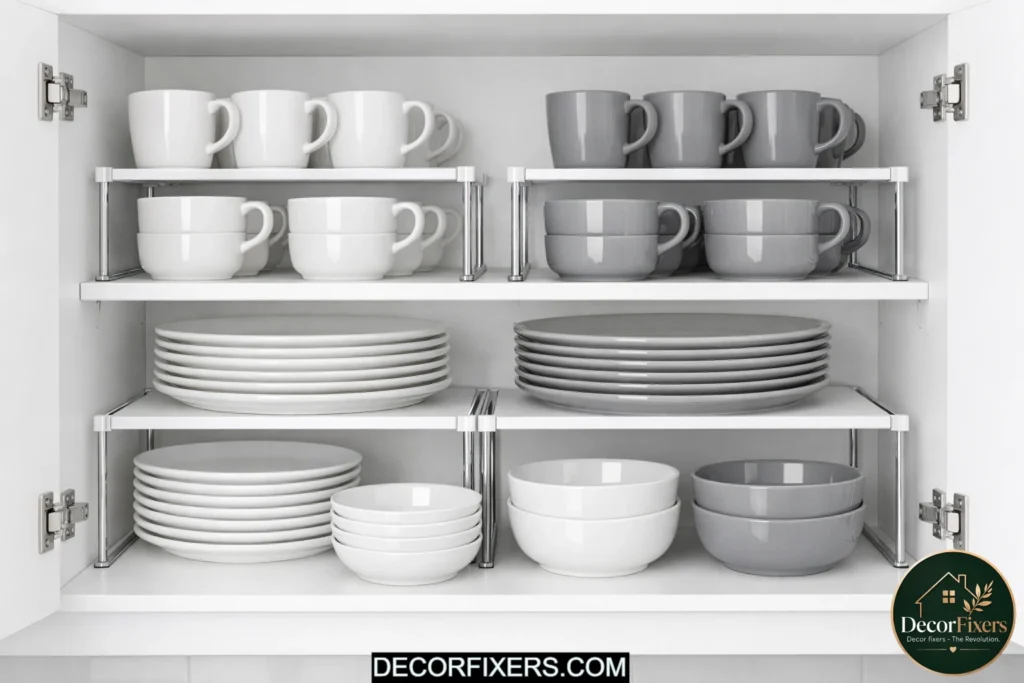
Most kitchen cabinets have 12–16 inches of vertical space between shelves, way more than one stack of plates needs. A simple shelf riser (a small raised platform that sits inside the cabinet) creates a second level, effectively doubling storage capacity without adding a single cabinet.
Bamboo or coated wire risers run $12–$25. Use them for plates, mugs, canned goods, or spices. This is one change where I’ve seen conflicting recommendations; some organizers say to buy adjustable risers, others say fixed ones are more stable. My read: go adjustable if your items vary in height, fixed if you’re storing uniform items like mugs or cans.
9. Put a Magnetic Knife Strip on the Side of Your Fridge
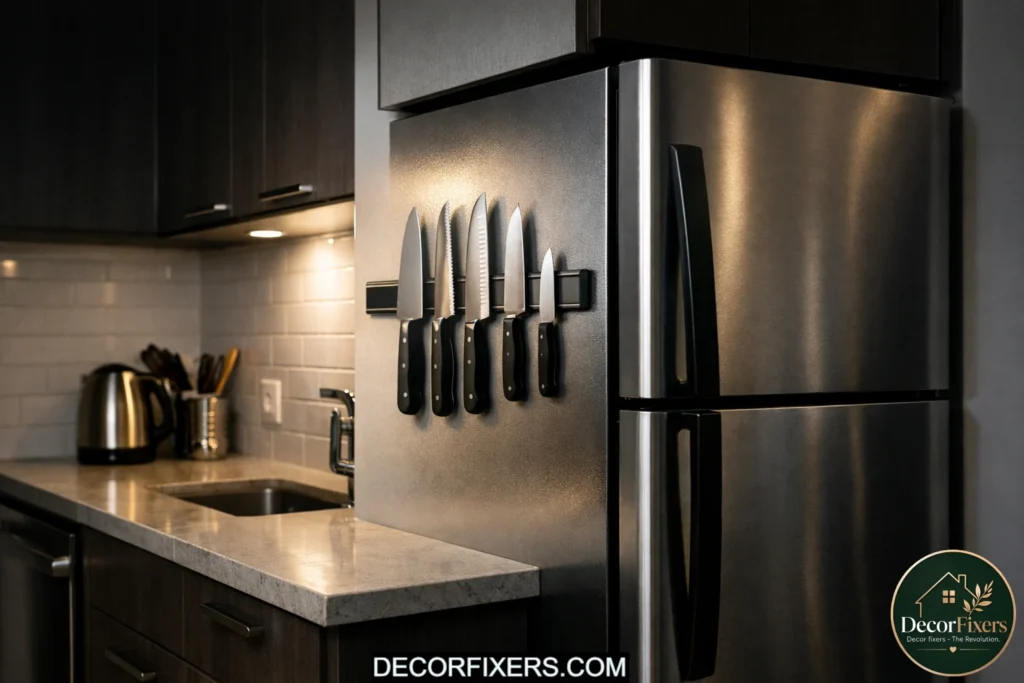
Knife blocks take up serious counter real estate. A magnetic knife strip mounted on the side of your refrigerator, the flat metal surface you’re completely ignoring right now, frees that counter space instantly.
Strong, rare-earth magnetic strips with adhesive backing require no drilling and hold 8–10 knives with ease. They also look cleaner than a block. Move-out is as simple as peeling the adhesive.
10. Use the Back of Cabinet Doors for Spices and Lids
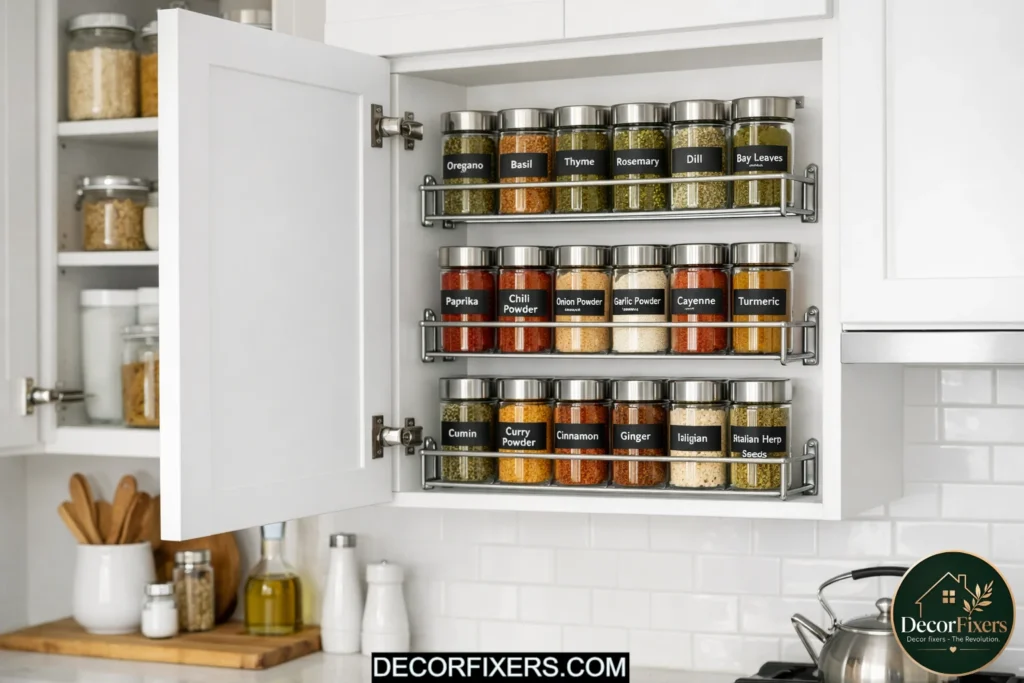
Cabinet doors are blank walls you open every single day. An over-door spice rack or a mounted lid organizer turns dead space into one of the most accessible storage spots in the kitchen; everything’s visible and within reach the second you open the door.
Adhesive-mounted versions require no screws. Look for ones with clear pockets so you can see what’s inside without opening anything. The Container Store’s door-mounted spice systems are the gold standard if budget allows; IKEA’s VARIERA shelf insert is a cheaper entry point.
11. Roll In an IKEA RÅSKOG Cart
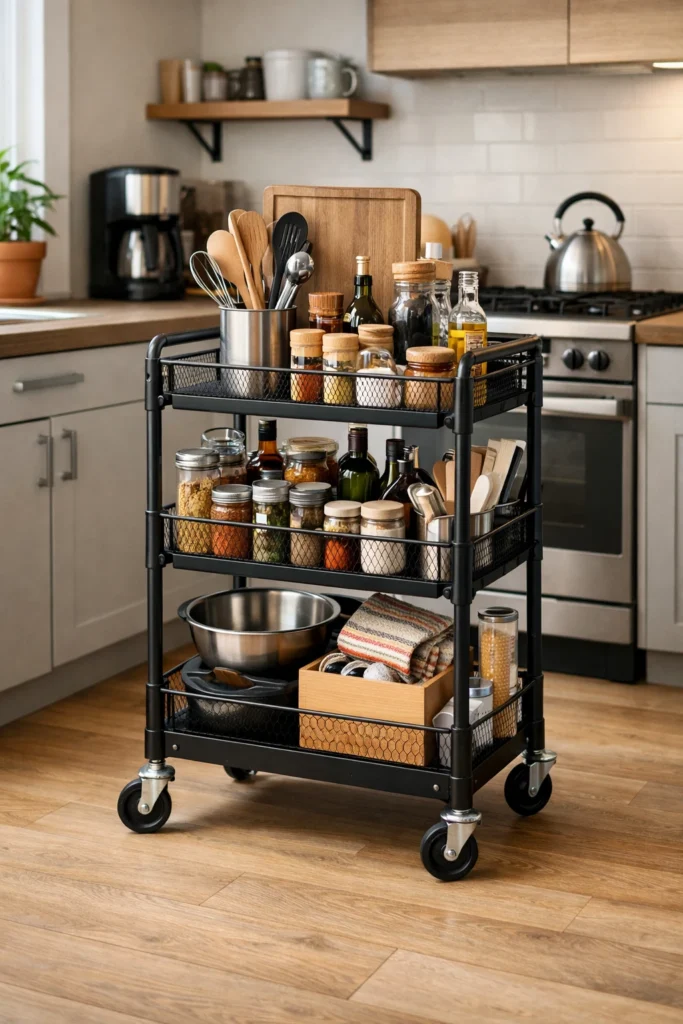
The IKEA RÅSKOG cart, a three-tiered rolling steel cart, has become a cult object in small apartment living for very good reasons. It gives you three dedicated shelves on wheels, moves from kitchen to bathroom to wherever it’s needed, and costs under $40.
Use the top tier for daily-use items, the middle for prep tools, and the bottom for cleaning supplies. When not in use, roll it next to the fridge or into a corner. It takes up less than 14 inches of floor depth and holds a surprising amount.
12. Hang Pots and Pans From a Ceiling Rack or Wall Rail
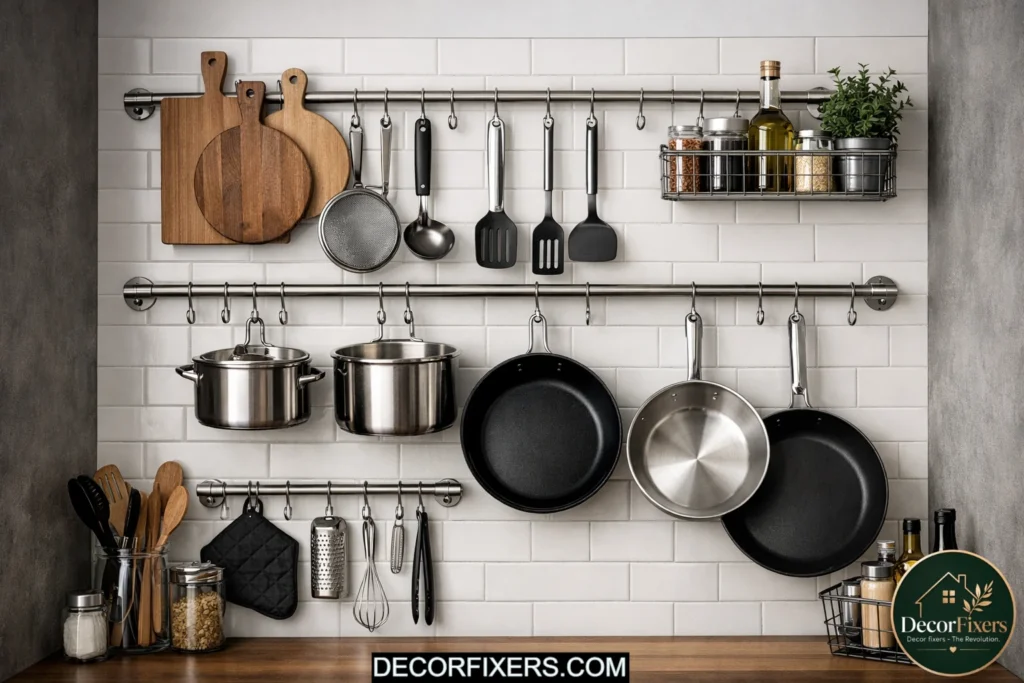
Pots and pans are the most space-inefficient items in any kitchen because they don’t stack cleanly. A ceiling-mounted pot rack or a simple wall-mounted rail with S-hooks moves them entirely out of cabinet space and onto walls or ceiling, where there’s usually plenty of room.
Ceiling racks require drilling into a joist, so they’re better for homeowners or tenants with permission. For renters: a tension-mounted kitchen rail between two walls, like a tension curtain rod with hooks, can hold lighter pans with no tools at all.
13. Use a Tiered Fruit Basket Stand Instead of a Bowl
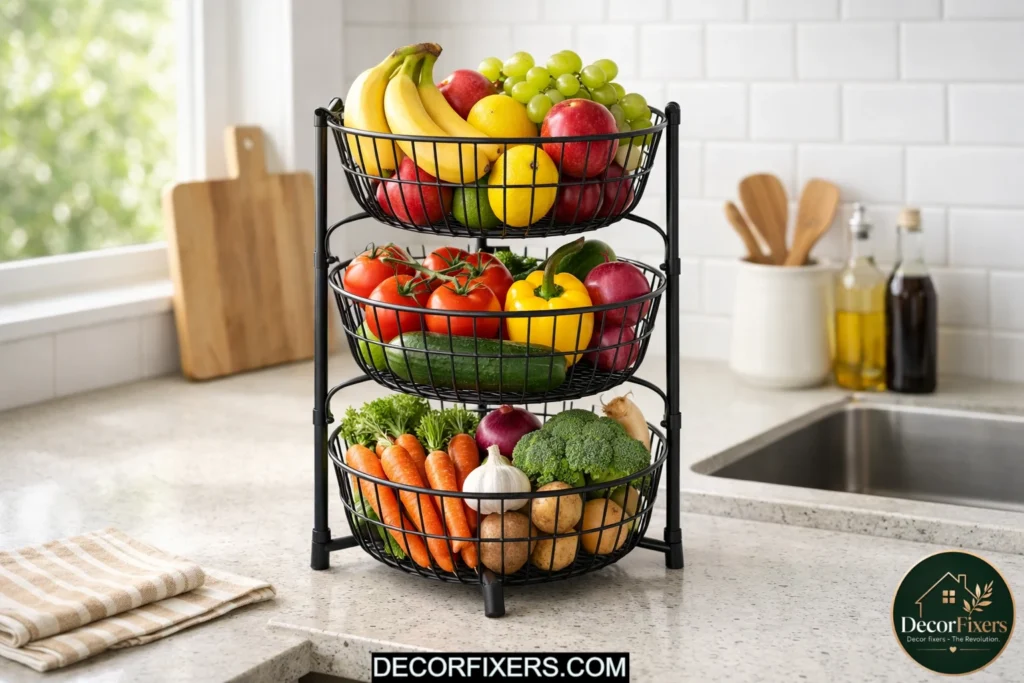
A single fruit bowl on the counter holds six apples. A three-tier wire stand holds 3x that amount and takes up the same counter footprint; the tiers stack vertically. Use the bottom for potatoes or onions, the middle for bananas, top for lemons or limes.
It’s a small swap that clears cabinet space and keeps produce visible, which actually reduces food waste. Bonus: it also works as a mini pantry for packets, snacks, and small dry goods.
14. Install a Tension Rod Under the Sink
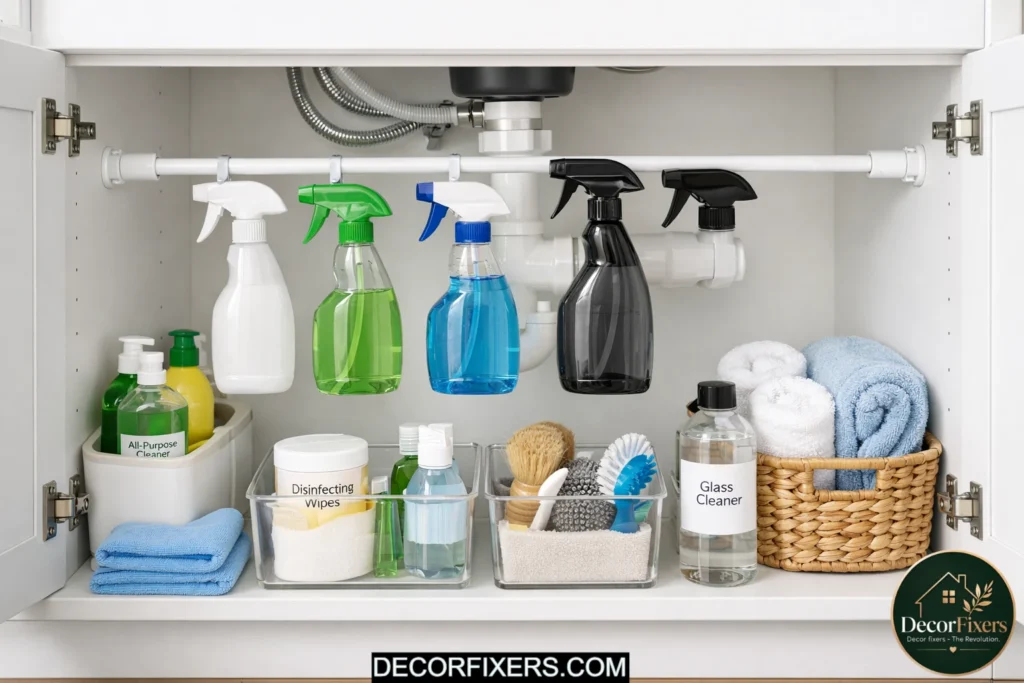
The cabinet under the sink is the most chaotic space in most kitchens. A simple tension rod stretched across the interior, no drilling, creates a second level where you can hang spray bottles by their trigger handles, freeing the floor of the cabinet for larger items.
This takes about 90 seconds to set up and costs $5. It’s the highest-value-per-dollar storage fix in this entire article, and it works equally well in bathroom sink cabinets.
No-Drill Bathroom Storage Ideas for Tiny Apartment Bathrooms
Apartment bathrooms are famously terrible for storage. One shallow cabinet, one vanity, and maybe a towel bar. That’s it. If you’re lucky, you have a linen closet nearby; most renters don’t.
The goal here is to use the three things you always have: the back of the door, the wall above the toilet, and the sink cabinet floor. All three are currently doing nothing in most small bathrooms.
15. Add an Over-the-Toilet Storage Unit
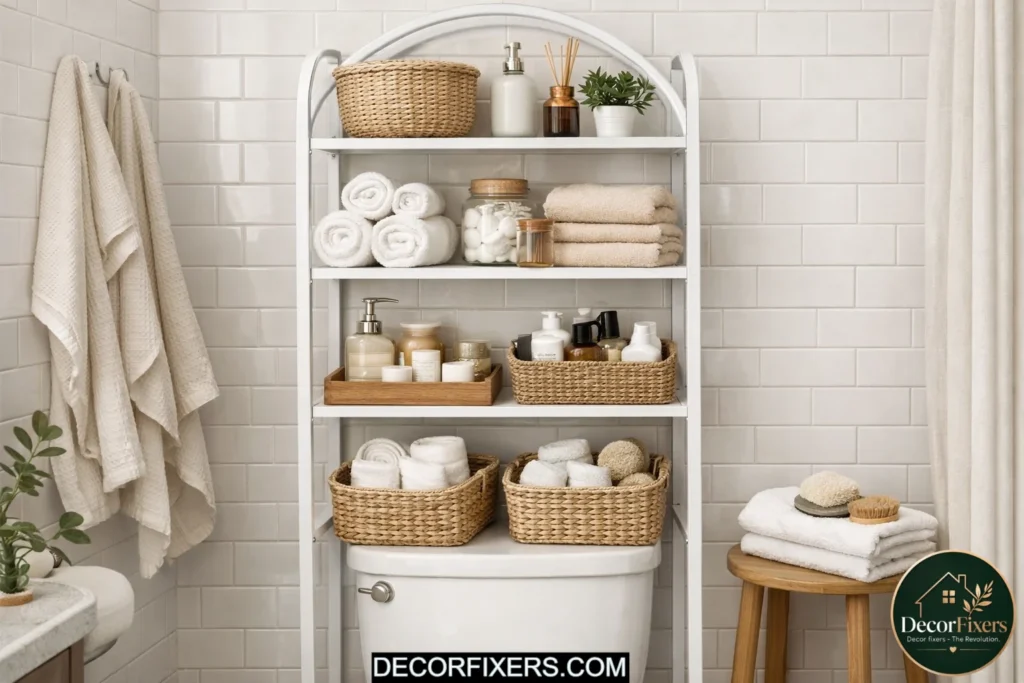
The wall above the toilet is a complete storage dead zone in most small bathrooms, and it’s one of the easiest spots to fix. A freestanding over-toilet rack (also called a bathroom spacesaver) sits on either side of the toilet base and rises 60–70 inches up the wall, providing two to three shelves with zero drilling required.
Use the shelves for extra toilet paper, towels, skincare, and cleaning supplies. Look for units with doors or baskets on lower shelves to keep clutter out of sight. This alone can add the equivalent of a linen closet shelf to a bathroom that has none.
16. Hang a Shower Caddy That Doesn’t Use Suction Cups
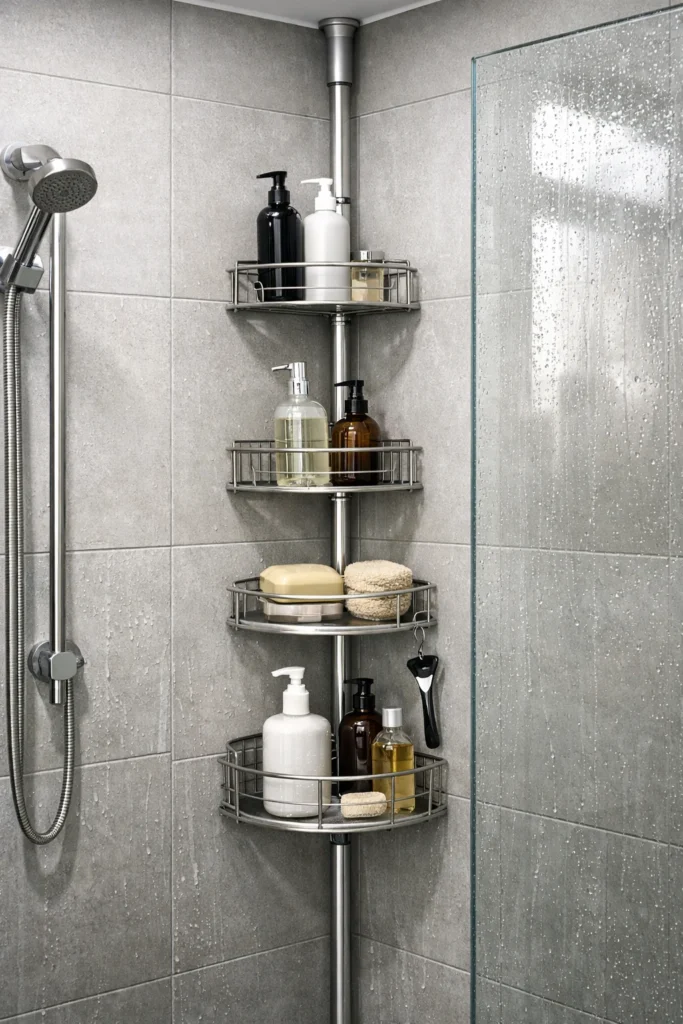
Suction cup caddies fall off wet tile at 3 AM. Everyone who’s ever used one knows this. The fix: tension pole shower caddies that extend floor-to-ceiling using spring tension, no suction, no adhesive, no drilling.
These hold significantly more than a hanging caddy, can be stacked with multiple baskets, and work in showers or bathtub corners. They also won’t damage tile grout on removal, critical for renters.
17. Use Adhesive Wall Hooks for Towels and Robes
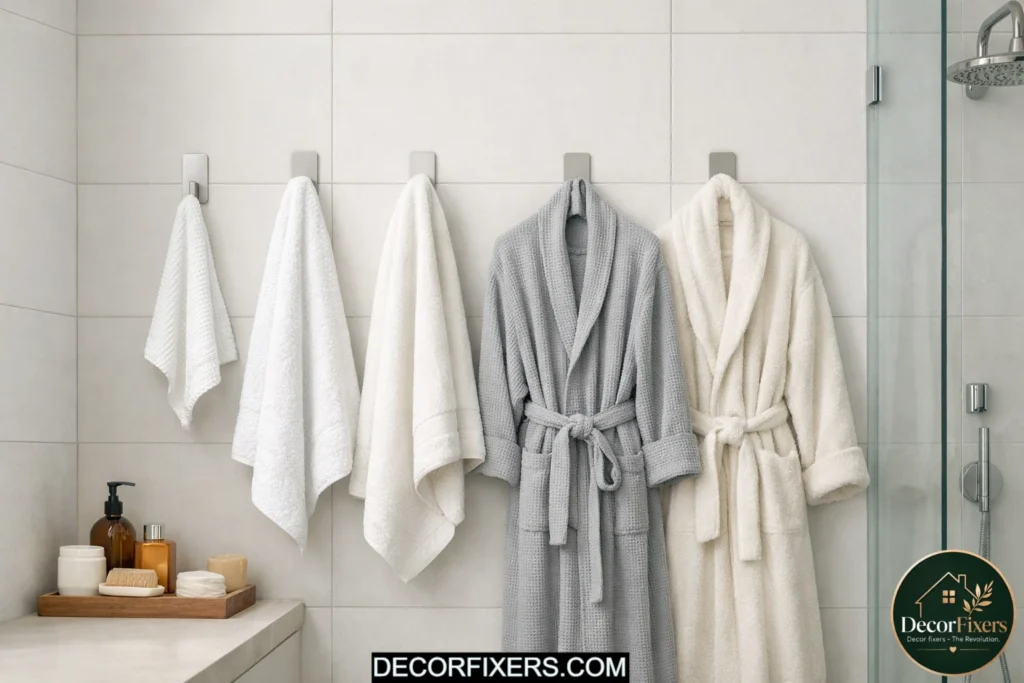
3M Command Hooks in a bathroom are underrated. A set of large Command hooks on the back of the bathroom door or on the wall beside the shower gives you dedicated spots for towels, robes, and gym bags that would otherwise pile up somewhere.
They hold up to 7.5 lbs each, remove cleanly from most surfaces, and cost about $7 for a two-pack. Place them 12 inches apart so items don’t overlap. The key is assigning one hook per person; shared hook clusters become unusable within a week.
18. Add a Vanity Tray to Organize the Counter
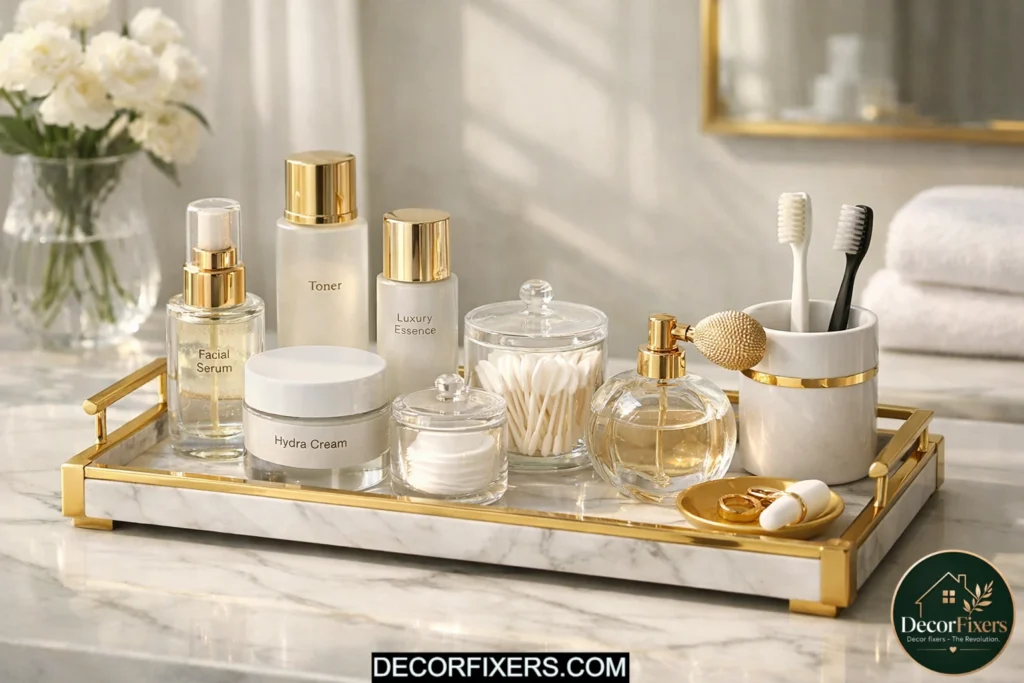
A countertop vanity tray sounds like a décor purchase, but it’s actually a storage system. By grouping daily-use items (moisturizer, toothbrush, soap, deodorant) into one contained zone, it stops the counter from becoming a sprawl of random items that slowly spread across every inch of surface.
It also makes cleaning easier: lift the tray, wipe underneath, and put it back. When a bathroom counter stays visually contained, the whole room feels less chaotic, even when it’s the same size.
19. Put a Suction-Cup Shelf in the Shower Corner
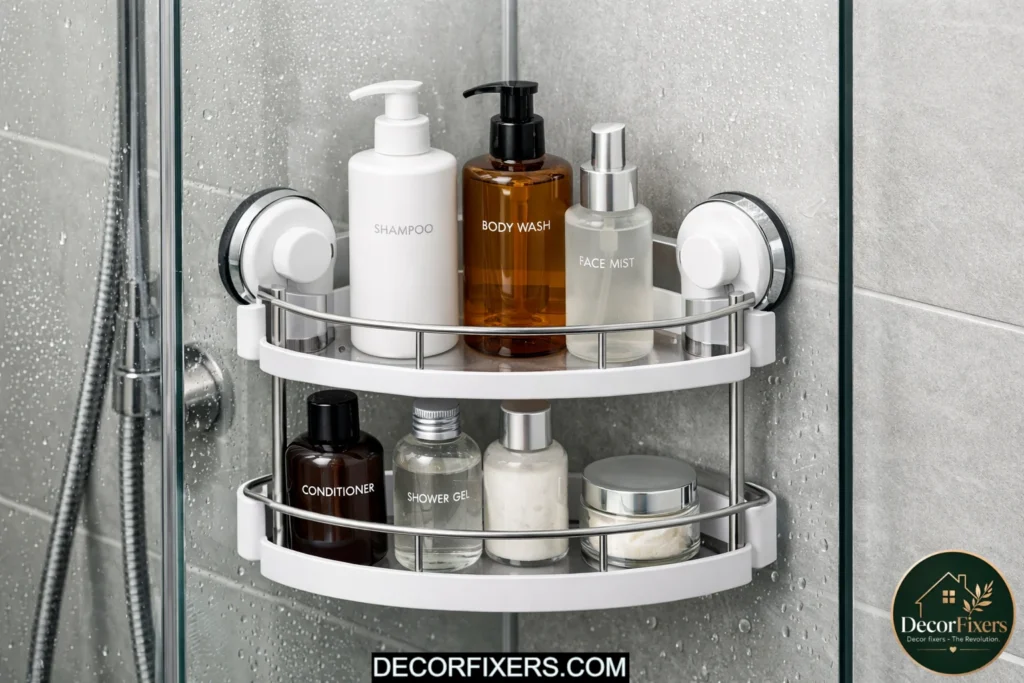
For renters who want a permanent-feeling solution without drilling into tile: heavy-duty suction cup corner shelves with locking levers hold far better than old-style suction cups. Brands like Taili manufacture corner shelves rated up to 22 lbs that maintain suction in wet environments.
The trick is surface prep, clean with rubbing alcohol before applying, press firmly, and lock the lever. These work on glass, ceramic tile, and acrylic shower walls. No grout damage, no adhesive residue.
Living Room Storage Ideas That Don’t Look Like Storage
Living rooms in small apartments carry a lot of weight; they’re your lounge, your workspace, sometimes your dining room, and often your only room with any floor space. Visible storage containers and clunky shelving units make already-tight spaces feel like a warehouse.
The best living room storage looks like furniture.
20. Replace Your Coffee Table With a Storage Ottoman
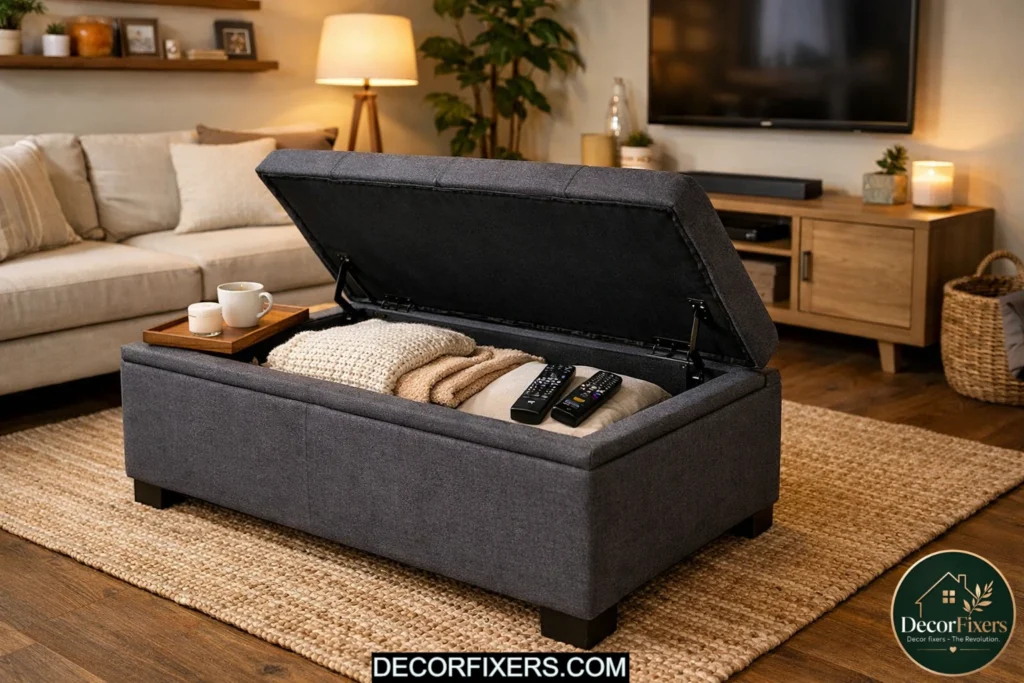
A coffee table with a solid surface gives you exactly one use: a surface. A storage ottoman gives you two: a surface and hidden interior storage for blankets, remotes, chargers, books, and anything else that ends up on the floor.
Look for ottomans with lift-top lids rather than hinged lids; they’re easier to open and hold their shape better. Square versions in the 18–24 inch range are the sweet spot for both usability and storage volume. Many also double as extra seating.
21. Use an IKEA KALLAX as a Room Divider and Storage Unit
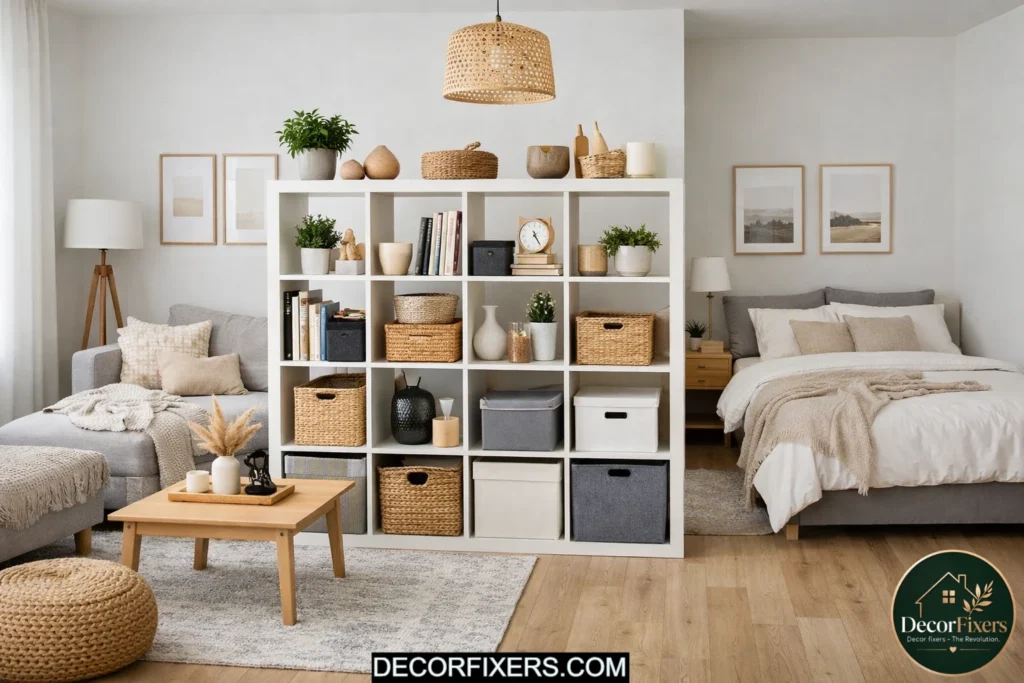
In a studio apartment, the IKEA KALLAX shelf is the closest thing to a magic trick. Positioned in the middle of a room, it divides a studio into two distinct zones, a sleeping area and a living area, while providing 8 or 16 cube compartments of storage on both sides.
Or maybe I should say it this way: it creates a room where there wasn’t one. Add fabric cube inserts to hide miscellaneous items, and the side facing your main space looks like intentional décor. The side facing your bedroom becomes hidden storage. No drilling. No wall damage. One piece of furniture does four jobs.
The KALLAX becomes even more effective when combined with compartment systems and pull-out sections inspired by Drawer Closet Organizer Ideas. Using divided inserts and categorized storage cubes keeps studio apartments visually cleaner and easier to maintain long-term.
22. Mount Floating Shelves Above Your Sofa
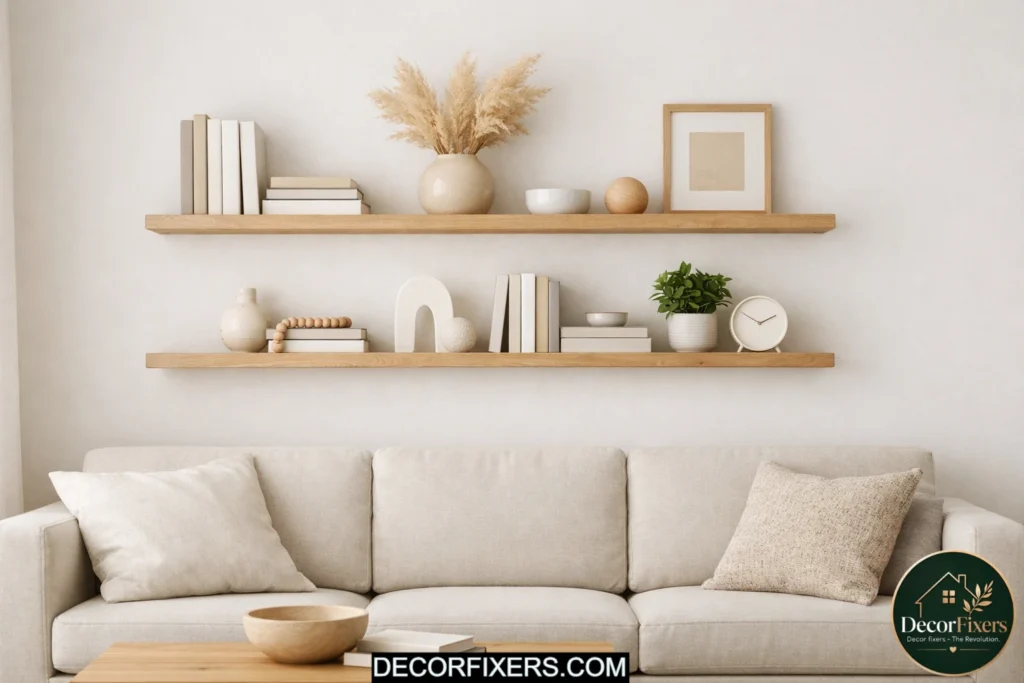
The wall above a sofa is typically 3–4 feet of completely blank real estate. A row of floating shelves, or staggered shelves at two different heights, adds display and storage space right where you spend most of your time.
For renters using 3M Command strips: keep individual shelf loads under 7–8 lbs. For renters with permission to drill: a single screw into a stud holds 20–50 lbs, depending on the anchor. Drywall anchors (no stud required) hold 25–50 lbs for heavier displays.
23. Use a TV Console With Enclosed Storage
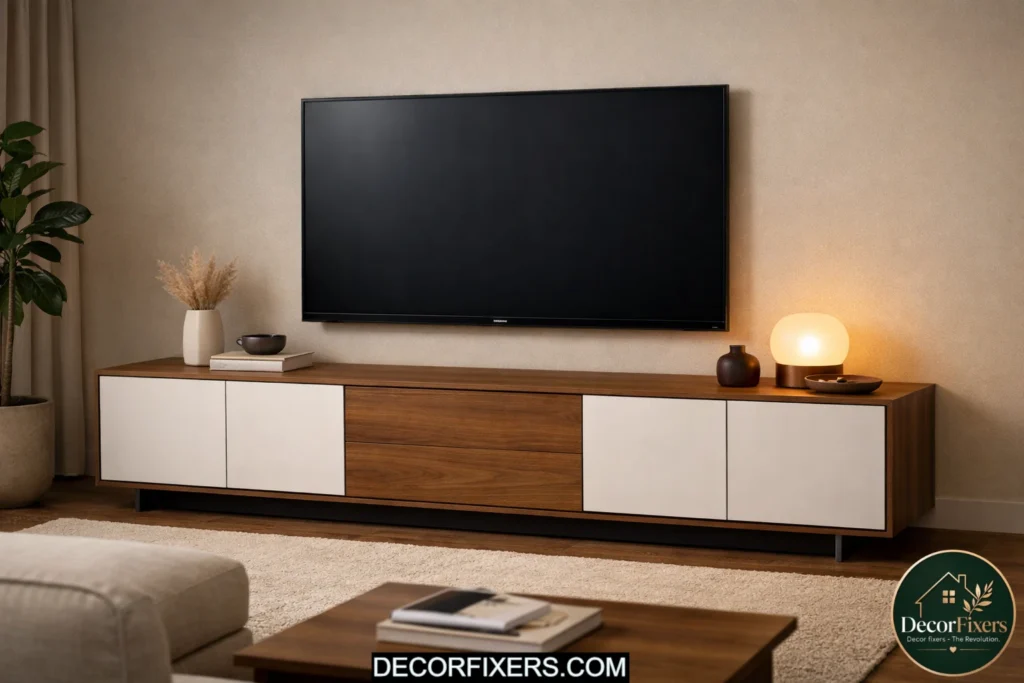
Open media consoles look good in showrooms and collect clutter in real apartments. A TV console with enclosed cabinet doors hides the cable box, routers, gaming equipment, and all the miscellaneous tech that lives below a screen, out of sight, within reach.
Look for consoles with at least one shelf behind closed doors and one open slot for the cable box (which needs ventilation). Units in the 47–55 inch range work for most small living rooms without overwhelming the space.
24. Add Ladder Shelves in Dead Corners
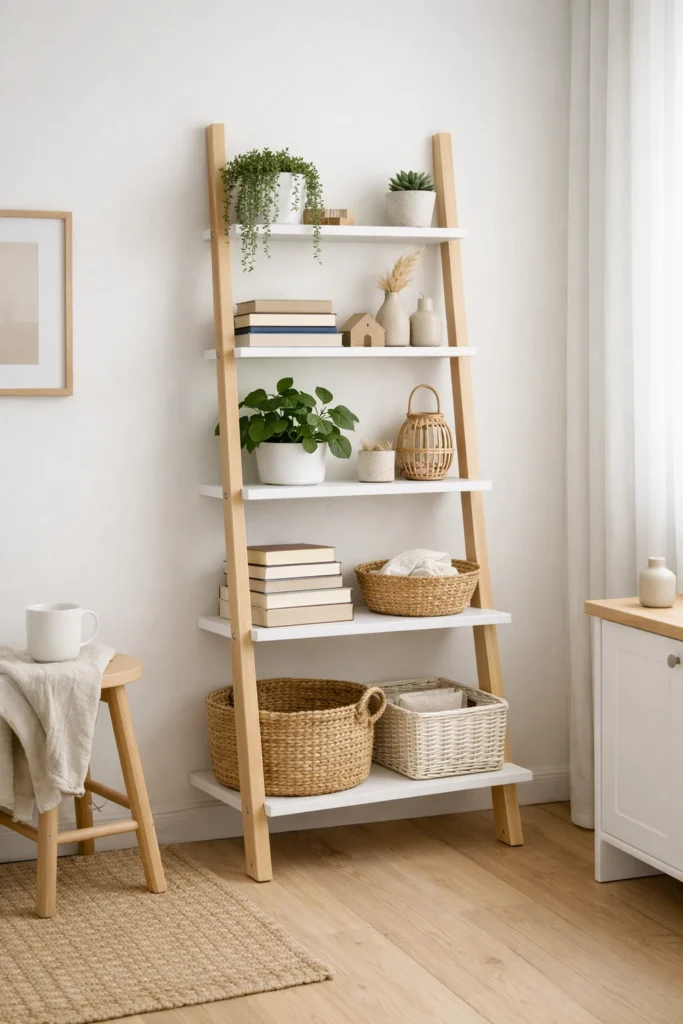
A leaning ladder shelf, the kind that leans against a wall at a slight angle and has 3–5 horizontal rungs, fills an awkward corner with functional storage and takes up roughly a 12-by-12-inch floor footprint at the base. No drilling. No damage.
Use the rungs for books, plants, baskets of folded throws, and decorative objects. The visual openness of a ladder shelf means it adds storage without making a small room feel boxed in, unlike a solid bookcase, which can feel oppressive in tight quarters.
25. Hang a Wall-Mounted Key and Mail Organizer by the Door
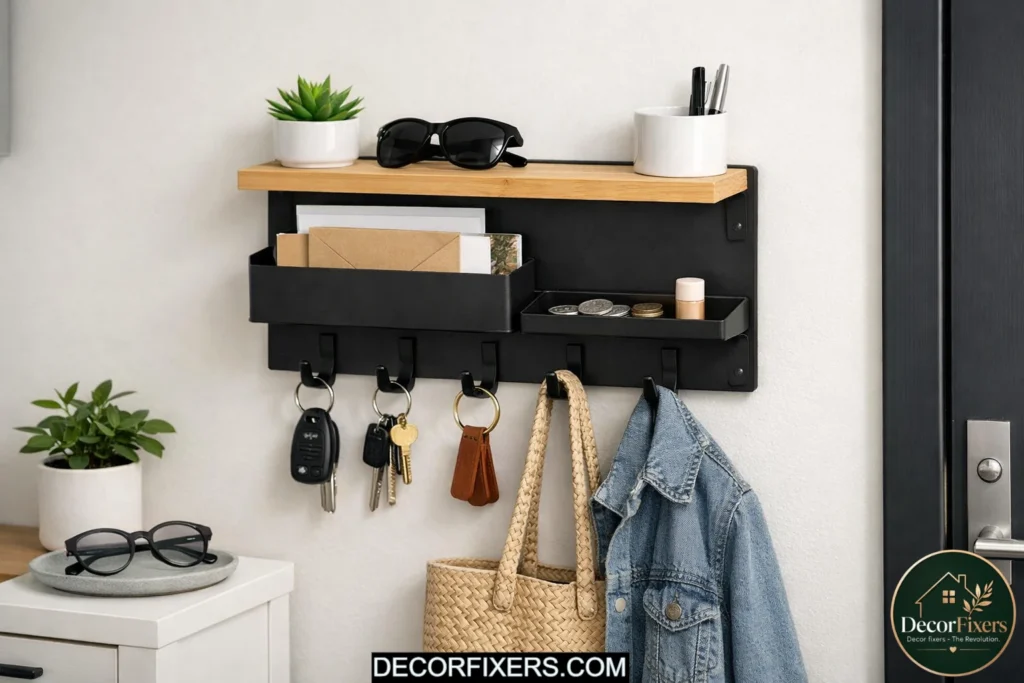
The entryway, even when it’s just a patch of floor by the front door, is where daily chaos starts. Keys on the counter. Mail on the floor. Bags on whatever surface is nearest. A wall-mounted organizer with hooks, a small shelf, and a mail slot handles all three in one spot.
Command-strip mounted versions require no drilling and handle a combined load of 5–7 lbs easily. This is a 10-minute setup that eliminates the daily hunt for keys and the slow drift of mail across your counter.
Small Closet Storage Ideas That Double Your Space
Most apartment closets are set up for the 1970s: one rod, one shelf, dead space above and below. With a few additions, the same closet space can hold twice as much.
26. Double Your Hanging Space With a Closet Rod Extender
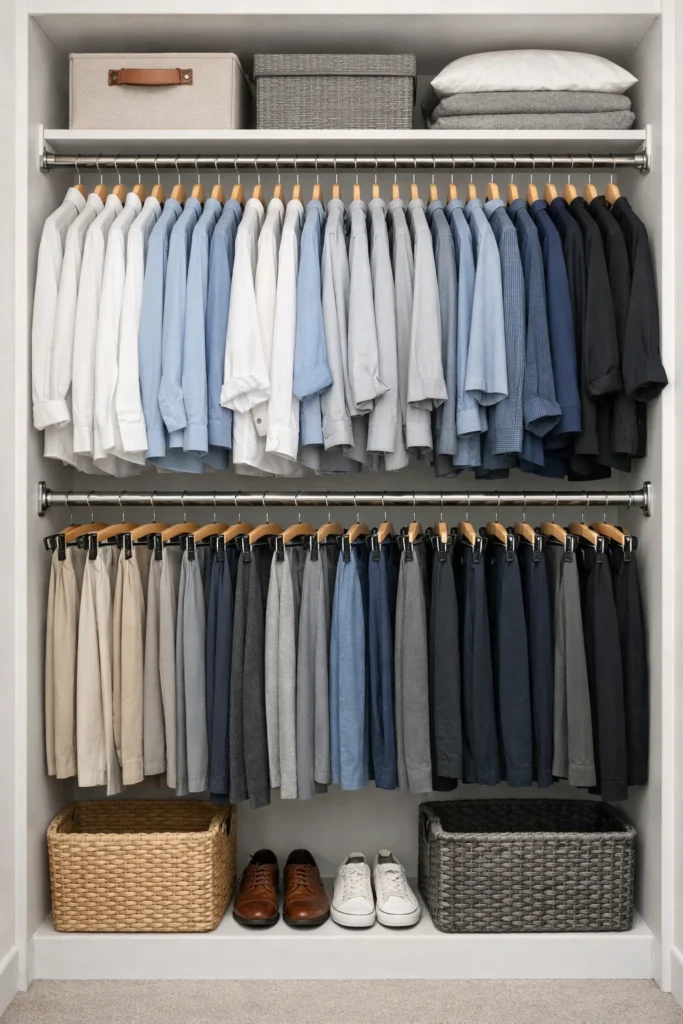
A closet rod extender, a secondary rod that hangs below your existing rod, doubles your hanging capacity in minutes with zero installation. Hang tops and jackets on the upper rod, pants and skirts on the lower. This single change frees up enough space for an additional shelf unit to sit below everything.
They come in adjustable lengths to fit any rod width and cost $12–$20. Look: if your closet has more than 20 inches of space between the rod and the floor, you’re leaving hanging space on the table. Add the extender. It takes about 60 seconds.
If your apartment closet still feels underutilized after adding a second hanging rod, you can maximise vertical space further with layouts inspired by DIY Closet Shelves and Rods Ideas. Simple shelf-and-rod combinations often double usable storage without requiring a full custom closet renovation.
27. Add a Hanging Shelf Organizer to Your Closet Rod
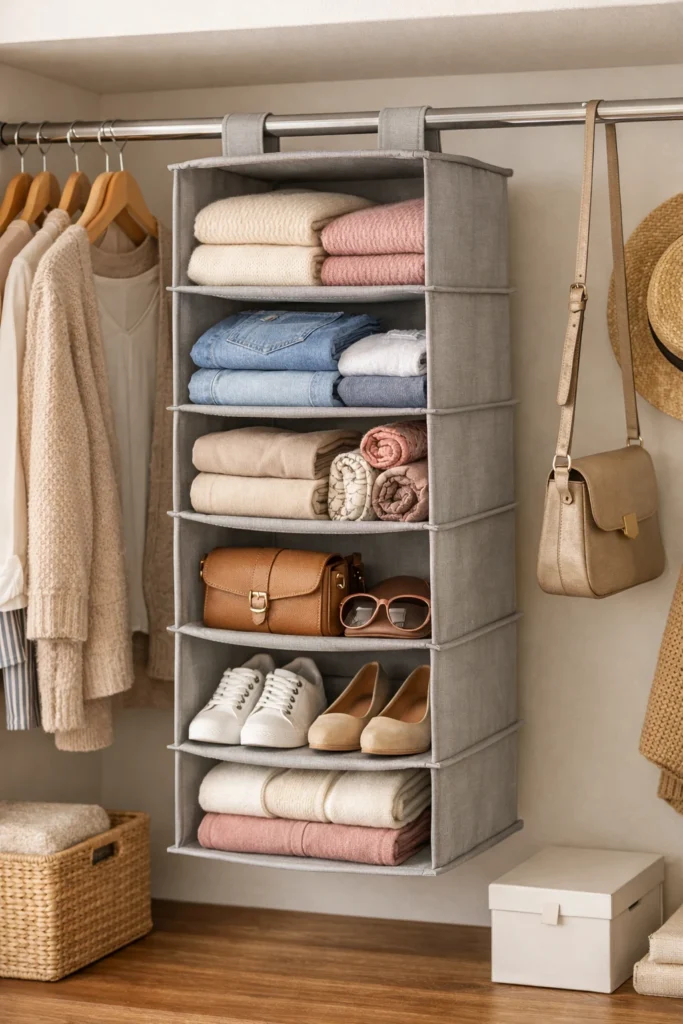
A hanging fabric shelf organizer clips onto the existing closet rod and adds 4–6 shelves that fold down vertically within the closet. Use them for folded sweaters, bags, accessories, or shoes, items that don’t hang well but still need a dedicated spot.
They’re especially useful in narrow closets where adding a freestanding unit isn’t possible. The fabric versions compress flat when not in full use, and the good ones hold 30–40 lbs per shelf. No tools, no assembly, no wall contact.
Quick Comparison:
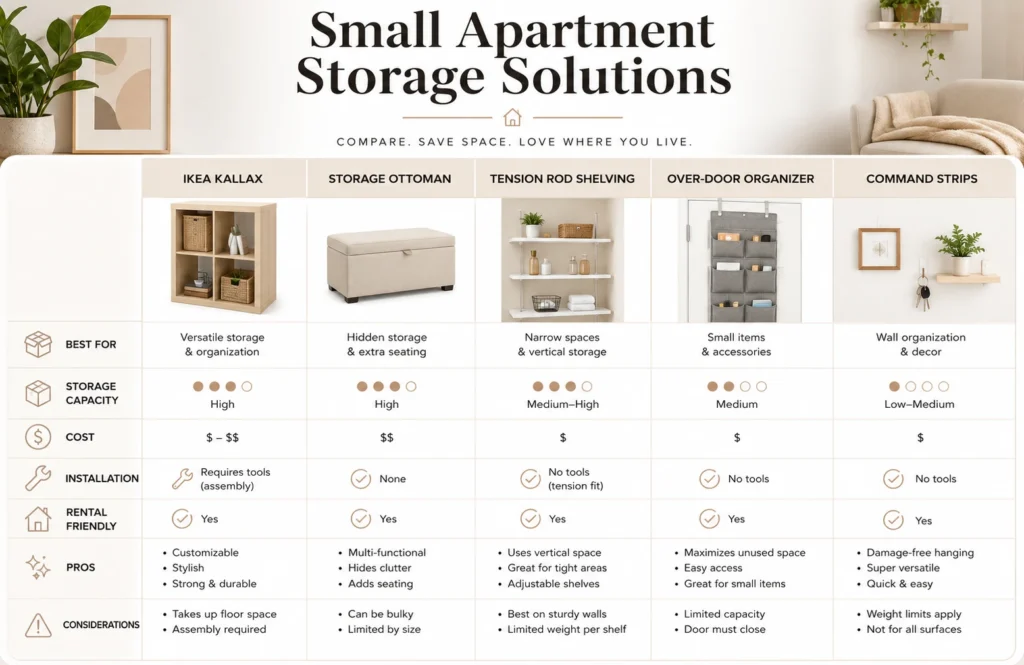
Use this table to match the right solution to your specific situation. No single option works for every space; pick what fits your room, your budget, and your lease restrictions.
| Option | Best For | Key Benefit | Limitation |
| IKEA KALLAX | Renters needing freestanding shelving | Modular, zero wall damage | Heavy, hard to move alone |
| 3M Command Strips | Lightweight no-drill wall items | Damage-free removal | Weight limit ~7.5 lbs per strip |
| Over-door organizer | Bathroom/pantry quick fix | Zero installation needed | Door clearance required |
| Tension rod shelving | Corners & under-sink areas | No tools, fully adjustable | Weight capacity limited |
| Storage ottoman | Living room dual-purpose | Hidden storage + seating | Takes up floor footprint |
How to Start Organizing a Small Space (Step-by-Step)
- Measure every room’s vertical height, floor area, and closet dimensions before buying anything.
- Identify your top 3 pain points. Clutter usually has 2-3 main sources, not 10.
- Start with one room. Fix it completely before moving to the next.
- Choose no-drill solutions first; add permanent fixtures only if needed.
- Assign every item a permanent home; chaos returns when things don’t have one.
No-drill vs. Permanent Installation: No-drill options (Command strips, tension rods, over-door organizers) are better for renters because they leave no damage and can be repositioned easily. Permanent installation (floating shelves with screws, wall-mounted racks) holds more weight and is more reliable; choose it when you have permission and a long-term stay.
CONCLUSION:
I won’t pretend there’s a magic fix for a 500-square-foot apartment. The storage problem is real, and it takes a few deliberate changes, not just one clever bin, to actually feel like your space works.
But here’s what I’ve learned from doing this myself and watching what actually works long-term: the solutions that stick are always the boring-sounding ones. The tension rod under the sink. The closet rod extender. The ottoman that replaced a coffee table. None of it is glamorous. All of it works.
Start with one room. Pick the idea that solves your biggest frustration. Set it up this week, not ‘someday.’ You’ll be surprised how much calmer a space feels when one area of it actually works the way it should.
This guide covers apartment and rental-specific storage. It does not address garage storage systems, attic conversions, or structural renovations; those require separate planning and contractor guidance.
FAQs:
Q: What’s the best storage solution for a tiny apartment with no closet?
A: A freestanding wardrobe combined with under-bed bins handles clothing. An IKEA KALLAX unit with cube inserts handles everything else. These two pieces alone solve the majority of no-closet storage problems without touching a wall.
Q: How do I add storage without drilling holes in my rental?
A: Use 3M Command strips for lightweight wall items, over-door organizers for doors, tension rods inside cabinets, and freestanding shelves like the IKEA KALLAX on the floor. None of these requires drilling, and all remove cleanly when you move out.
Q: Should I declutter before buying storage solutions?
A: Yes, always. Buying storage for items you don’t need just moves the clutter into a container. Declutter first, measure what remains, then buy storage that fits the actual volume. Most people overestimate how much storage they need once they’ve decluttered.
Q: Why does my small apartment always feel cluttered even after I organize?
A: Usually, because items don’t have permanent homes. If something gets put ‘somewhere’ instead of ‘its place,’ clutter rebuilds within days. Every item needs a designated spot. Once that’s in place, maintaining organization takes less than 10 minutes a day.
Q: When should I use vertical storage instead of floor storage?
A: Always prioritize vertical when the floor space is under 400 square feet. Wall-mounted shelves, tall bookcases, over-door organizers, and ceiling-hung racks use the 7–9 feet of vertical space most small apartments completely ignore.

Creator of DecorFixers, sharing practical home and interior ideas focused on real-life usability, simple design improvements, and budget-friendly solutions.
1 thought on “27 Small Space Storage Ideas That Actually Work (Room by Room)”