

You open the Kitchen cabinet. A plastic lid falls out. Then a cutting board. You catch one, miss the other, and suddenly you’re standing in your kitchen at 7 a.m., already running late, already frustrated. Sound familiar?
I’ve been there, and I spent months trying to fix it with random dollar-store bins that didn’t fit, viral Pinterest hacks that required a full renovation budget, and those color-coded systems that lasted exactly one week before collapsing back into chaos.
Here’s the thing: the problem usually isn’t the amount of cabinet space you have. It’s how that space is being used, or more accurately, how it isn’t. Most cabinets are half-wasted because the wrong organizers are sitting in the wrong spots.
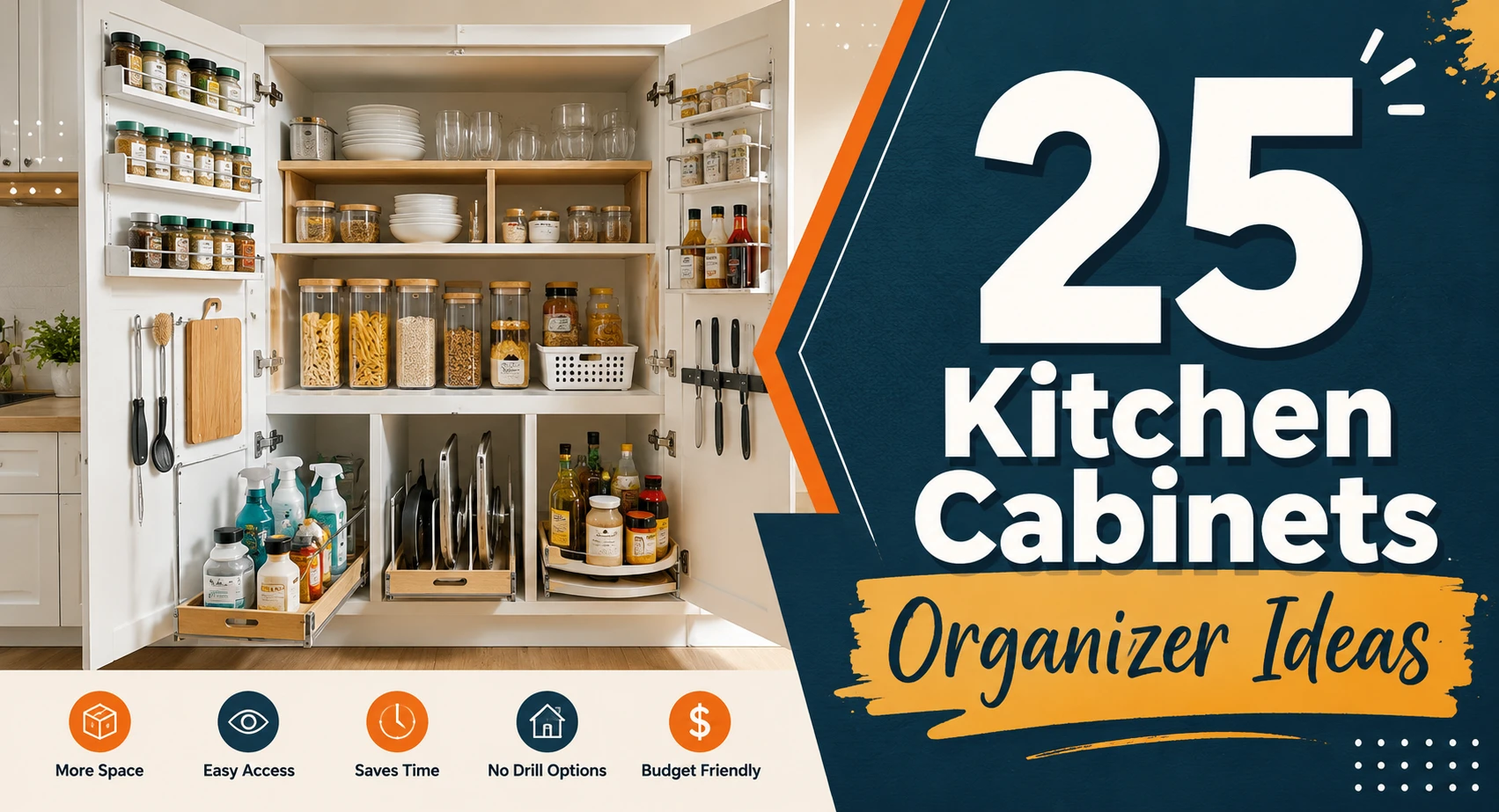
This guide covers 25 specific kitchen cabinet organizer ideas organized by cabinet type, upper, lower, corner, and door, with product names, real use cases, and options for renters who can’t drill a single screw. Whether you’re working with a tight apartment kitchen or a full home setup, at least a dozen of these will work for your space.
Note: This guide covers Kitchen cabinet-specific storage solutions for existing kitchens. It does not address full cabinet replacement or built-in renovation projects.
| Quick Definition: What Are Kitchen Cabinet Organizers? Kitchen cabinet organizer ideas refer to tools, systems, and products used to maximize storage efficiency inside existing cabinetry. They include shelf risers, pull-out drawers, door racks, lazy Susans, and dividers, each designed to reduce clutter and make items easier to access without rebuilding or replacing cabinets. |
1. Stackable Shelf Risers
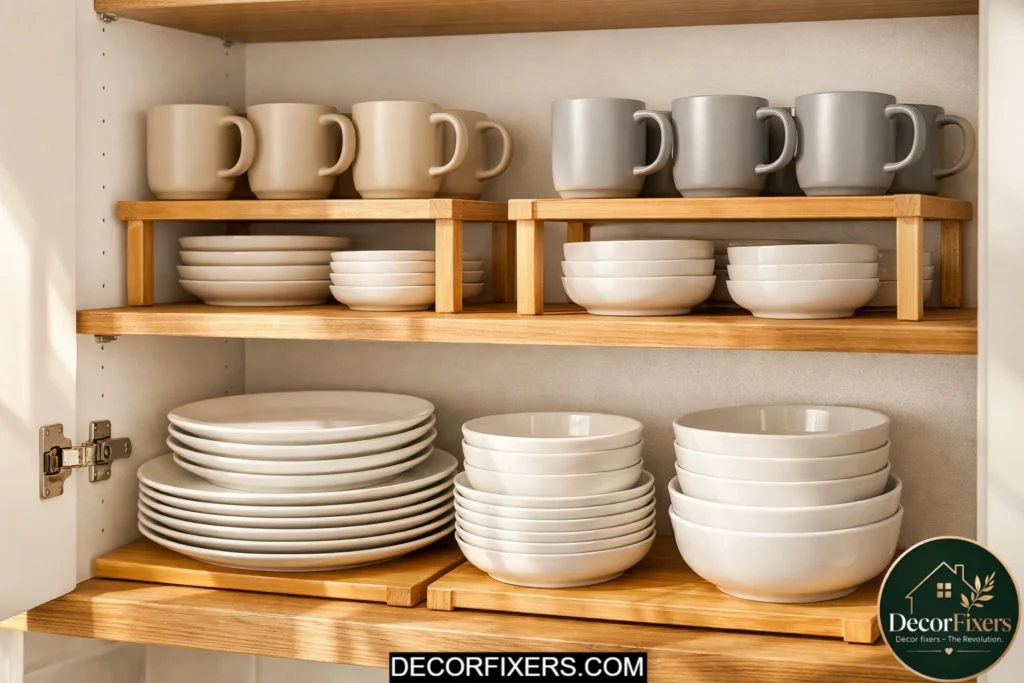
What it does: Creates a second tier inside any upper cabinet, letting you store items on two levels instead of one.
Plates in front, mugs behind, but on a raised shelf so you can see both. Bamboo risers from brands like mDesign look clean and hold up to 25 lbs. This is the single most impactful $15 you’ll spend on kitchen organization.
2. Cabinet Door Spice Rack (Over-Door Mount)
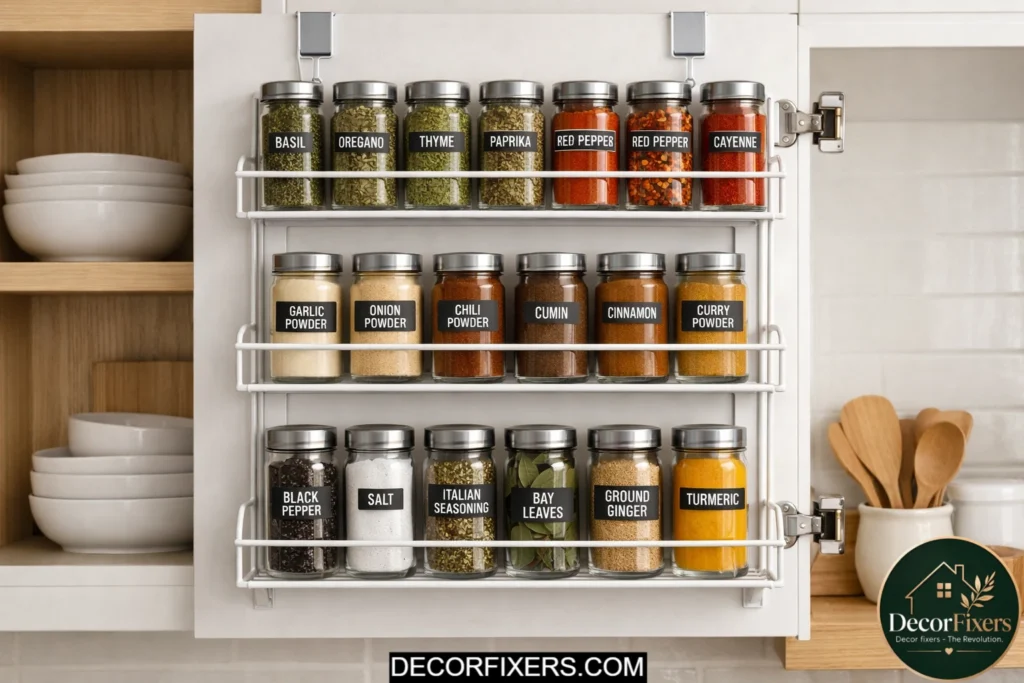
The inside of your upper cabinet door is pure wasted real estate. An over-door spice rack from iDesign attaches with adjustable hooks, no drilling needed, and holds 12–20 spice jars at eye level.
Look, if you’re in a rental and terrified of losing your deposit, this is your move. Zero wall damage, full spice organization, done.
3. Pull-Down Cabinet Shelf
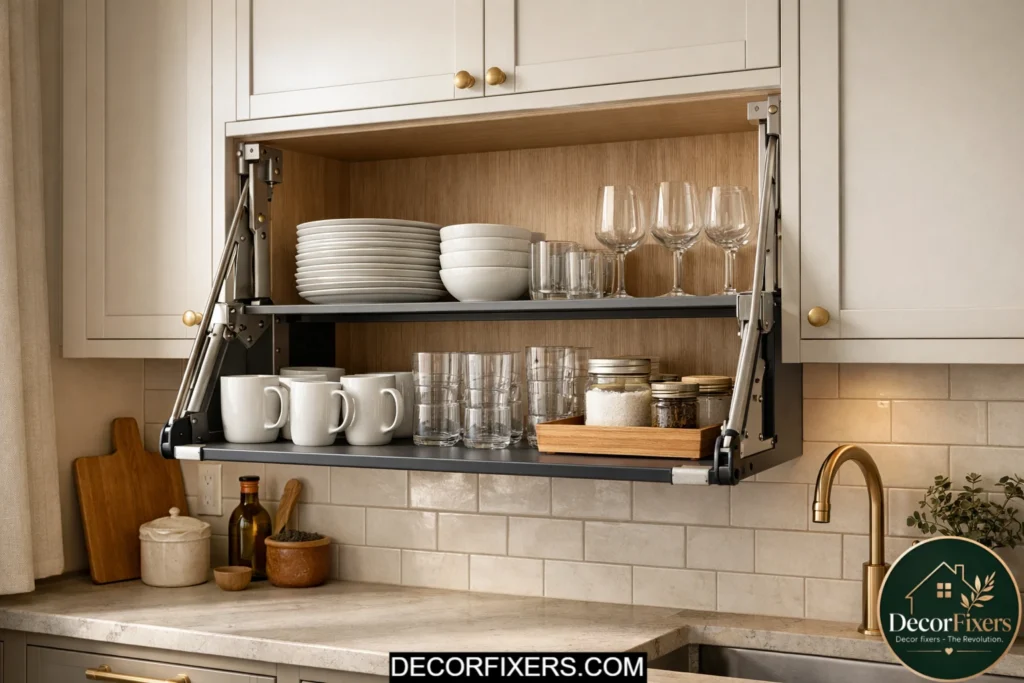
Specifically useful for upper cabinets where the bottom shelf sits too high to reach comfortably. A pull-down shelf mechanism (Knape & Vogt makes a solid one around $85) swings your items down to counter height.
This one’s controversial; some organizers argue it’s too expensive for most kitchens. That’s valid for newer builds with standard-height ceilings. But in older homes with tall upper cabinets? It’s genuinely transformative.
4. Stackable Can Organizers
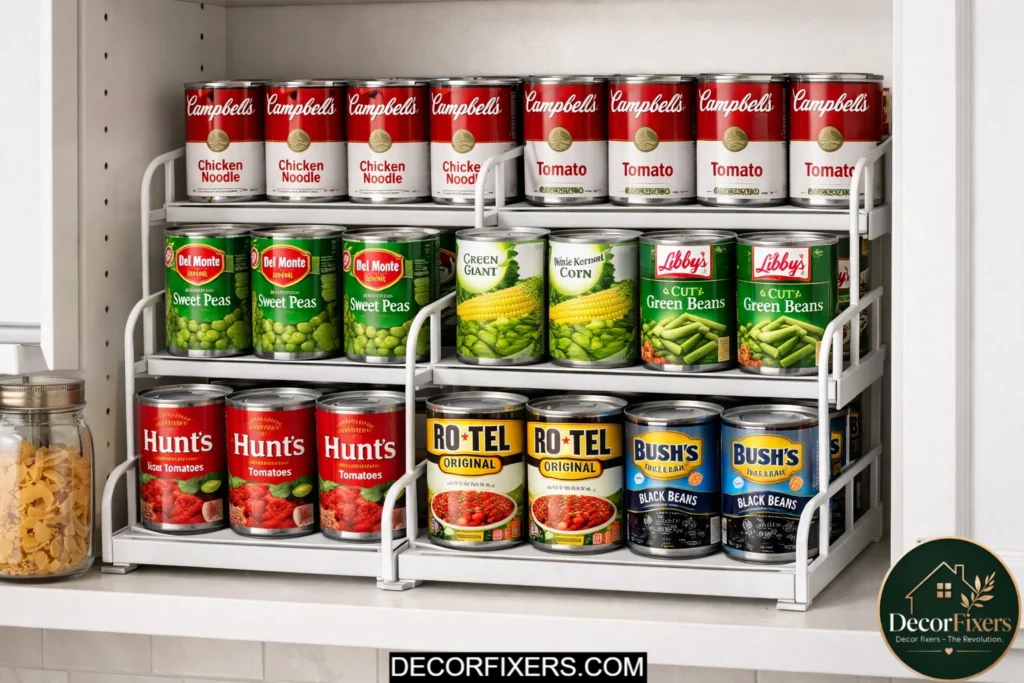
Canned goods roll to the back. You forget they exist. You buy duplicates. This cycle costs real money over time.
A tiered can rack keeps labels facing forward on a slight downward angle so the front can roll away when you grab it, pulling the next one forward automatically. Under $20 on Amazon; fits most upper shelf depths.
5. Clear Acrylic Shelf Dividers for Plates
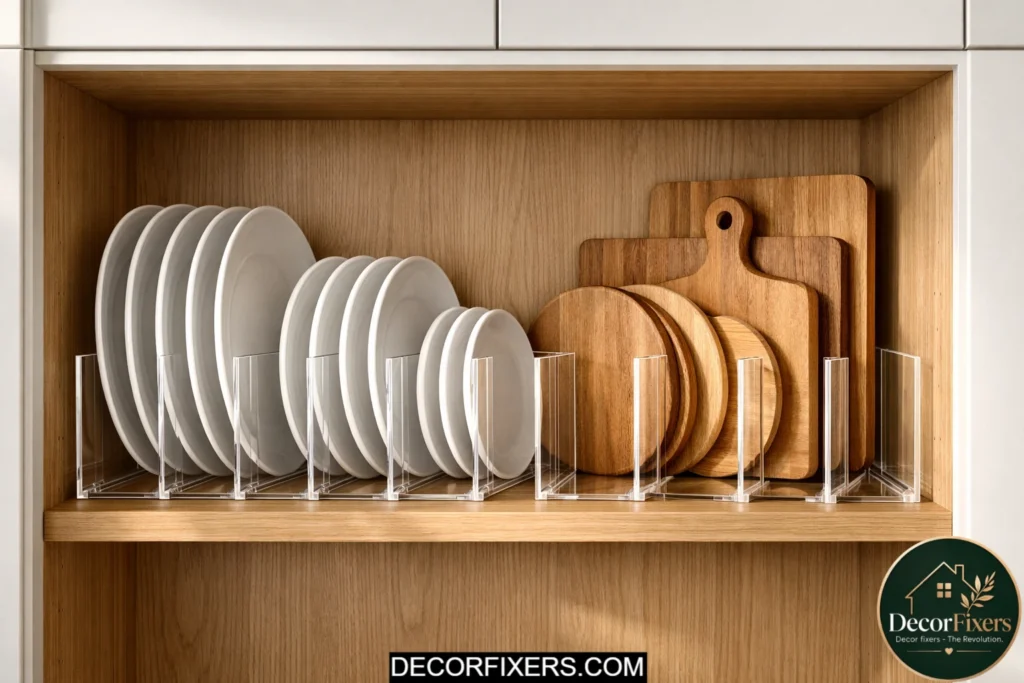
Plates and cutting boards love to topple sideways when you remove one from the middle of a stack. Acrylic shelf dividers slide over the shelf edge and create individual sections, keeping each stack upright and stable.
They work in both upper and lower cabinets. No installation, fully adjustable, and invisible enough that the cabinet still looks clean.
Why Most Kitchen Cabinets Stay Cluttered
The core issue is dead space. Standard cabinets waste up to 50% of their vertical space because shelves are fixed and items stack instead of being organized. According to a 2024 survey by Talker Research, reported by Yahoo Lifestyle, homeowners consistently rate the kitchen as the hardest room to keep organized, and Americans lose an estimated 2.5 days per year just searching for misplaced items. Most of that happens in cabinets.
The fix isn’t a full remodel. It’s knowing which organizer solves which cabinet problem, and that’s exactly what this guide breaks down.
Lower base cabinets are where pots, pans, and Tupperware go to die. The depth works against you; you end up on your knees, fishing for the right lid while dinner burns. These ideas fix exactly that.
6. Pull-Out Cabinet Drawers (Slide-Out Shelves)
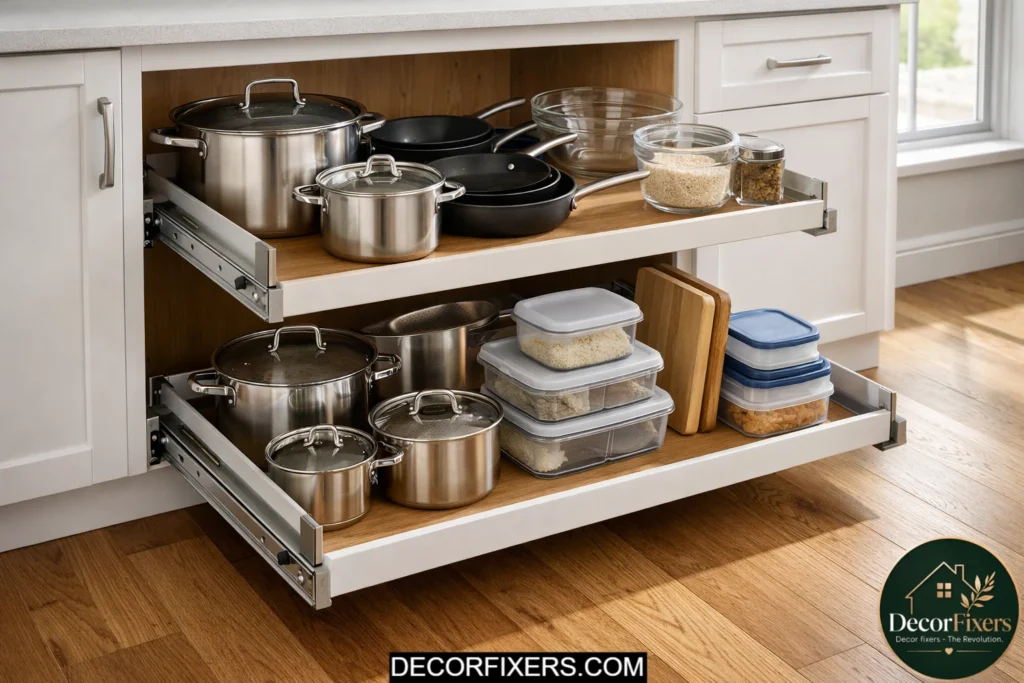
This is the single most-requested upgrade among professional organizers. A pull-out shelf converts a deep base cabinet into something that works like a drawer; everything slides forward to you, no crouching required.
Rev-A-Shelf makes the most trusted version at various price points (see their blind corner options at Home Depot). Renter-friendly versions use tension mounts instead of screws, available on Amazon for $25–$45.
which explains a structured transformation workflow, it naturally complements broader Kitchen Decor Ideas, since organizational systems directly influence the overall visual harmony, tone, and decorative balance of kitchen interiors.
7. Lazy Susan Turntable for Base Cabinets
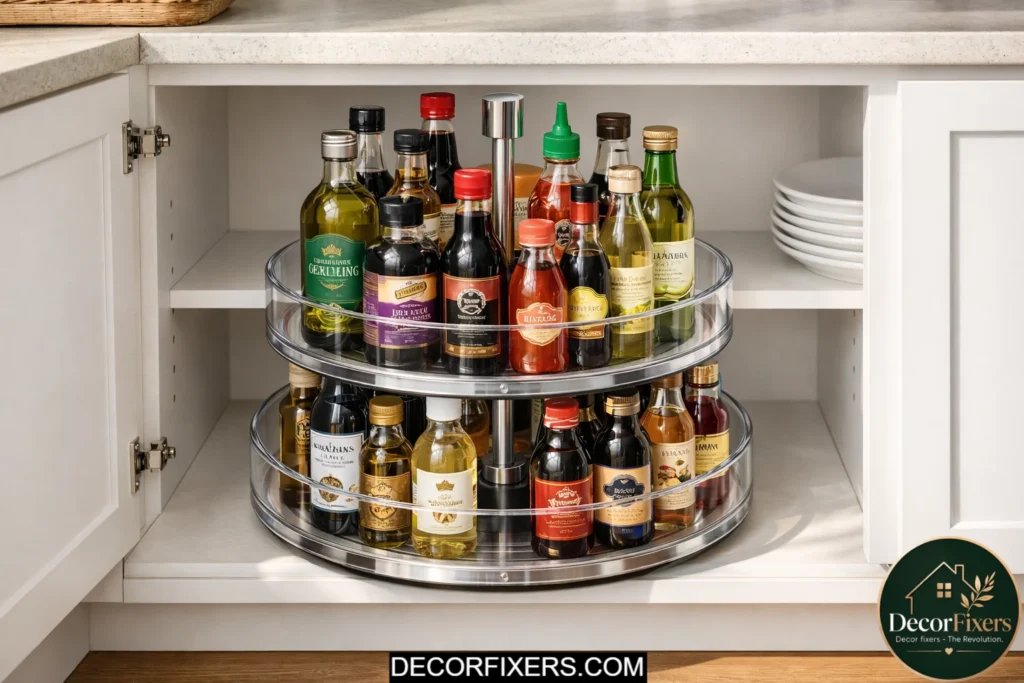
The lazy Susan gets mocked as a grandma solution, but professional organizers keep recommending it because it works. In a lower cabinet, a large two-tier turntable keeps oils, vinegars, and sauces fully visible and reachable with one spin.
iDesign’s clear turntable with a raised lip is the version Marlena Masitto of Philly Neat Freaks specifically endorses; it prevents bottles from flying off and is easy to wipe clean.
8. Pot Lid Organizer Rack
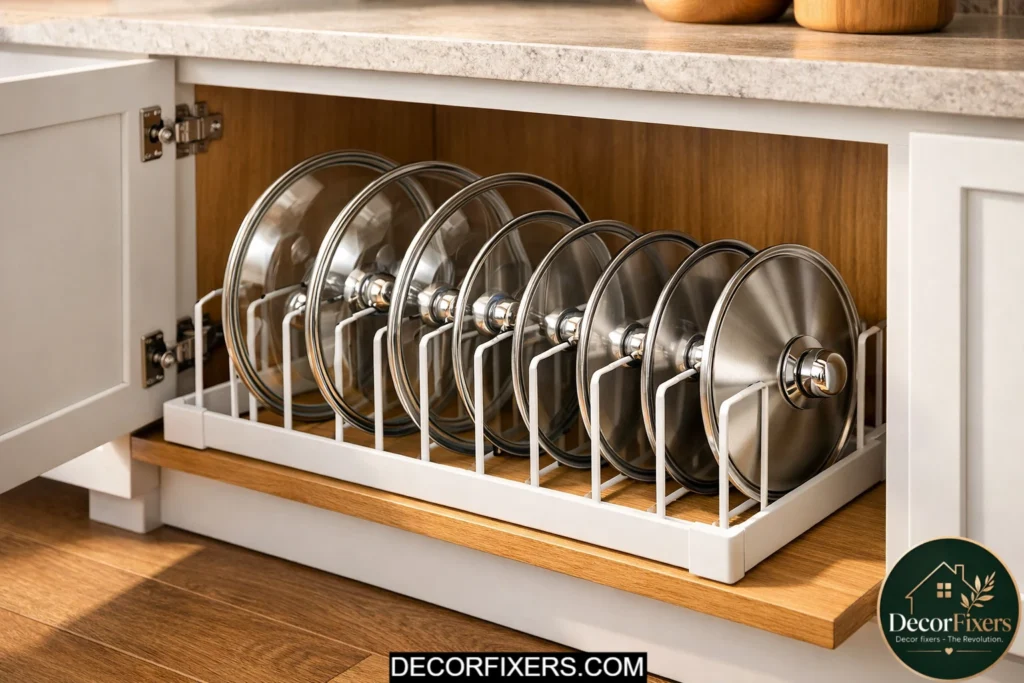
Lids are the enemy. They nest badly, they fall, they make that terrible clattering sound at midnight when you’re trying to get a glass of water without waking anyone.
A vertical lid organizer, either freestanding inside a lower cabinet or mounted on the inside door, stores each lid in its own slot. Stores 8–12 lids in the space one lid takes, lying flat.
9. Tension Rod Vertical Dividers
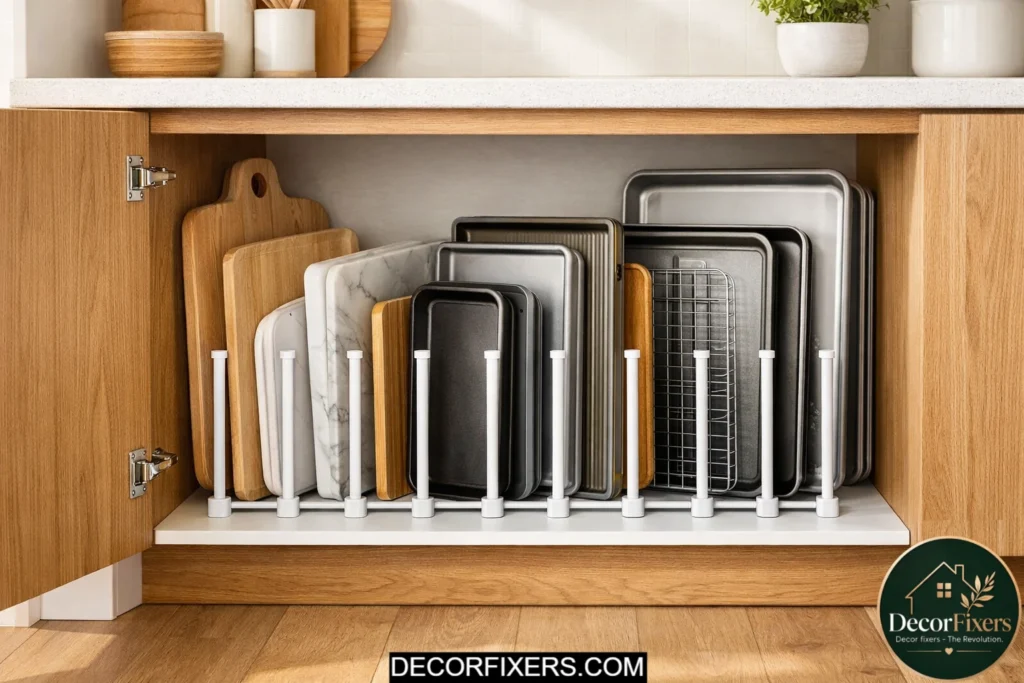
This is the most underrated $3 kitchen hack in existence. Install two vertical tension rods inside a lower cabinet, and suddenly you have individual slots for cutting boards, baking sheets, and sheet pans, all standing upright, all immediately pullable, nothing toppling onto anything else.
Tension rods meant for curtains work perfectly. Extend to fit the cabinet width, push them in, done. No tools, no damage, perfect for renters.
which presents a fully integrated storage and lifestyle layout, you can naturally align it with broader interior planning principles found in Modern Kitchen Design Trends, especially where functionality meets minimalist aesthetics in contemporary homes.
10. Under-Sink Pull-Out Organizer
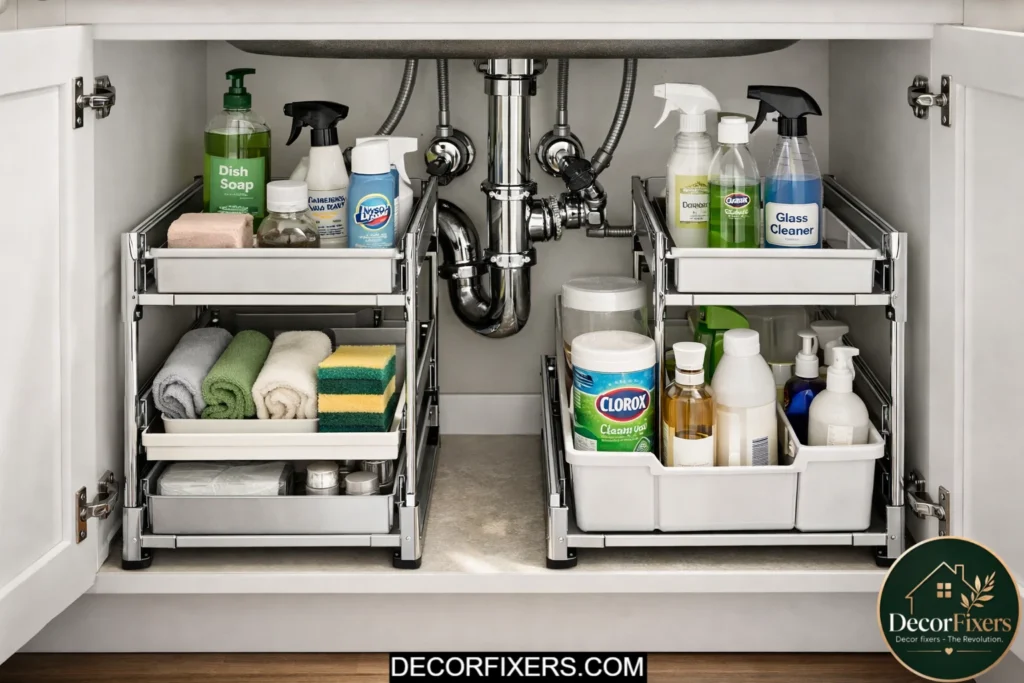
The under-sink cabinet is its own organizational nightmare; plumbing pipes carve out awkward dead zones on both sides. Standard flat shelves waste all of it.
An adjustable under-sink organizer (Dracelo and SimpleHouseware both make good versions under $40) works around the pipes with sliding tiers and expandable width. Store cleaning supplies, dish soap, and sponges in actual zones instead of a pile.
What Actually Works: The Cabinet-Type Approach
Most articles list organizer ideas without telling you where to use them. That’s why the ideas never stick. Upper cabinets need vertical solutions. Lower base cabinets need pull-out access. Corner cabinets need rotation. Cabinet doors are almost always wasted space. Once you match the tool to the cabinet type, the system holds.
Quick Comparison: Best Organizer by Cabinet Type
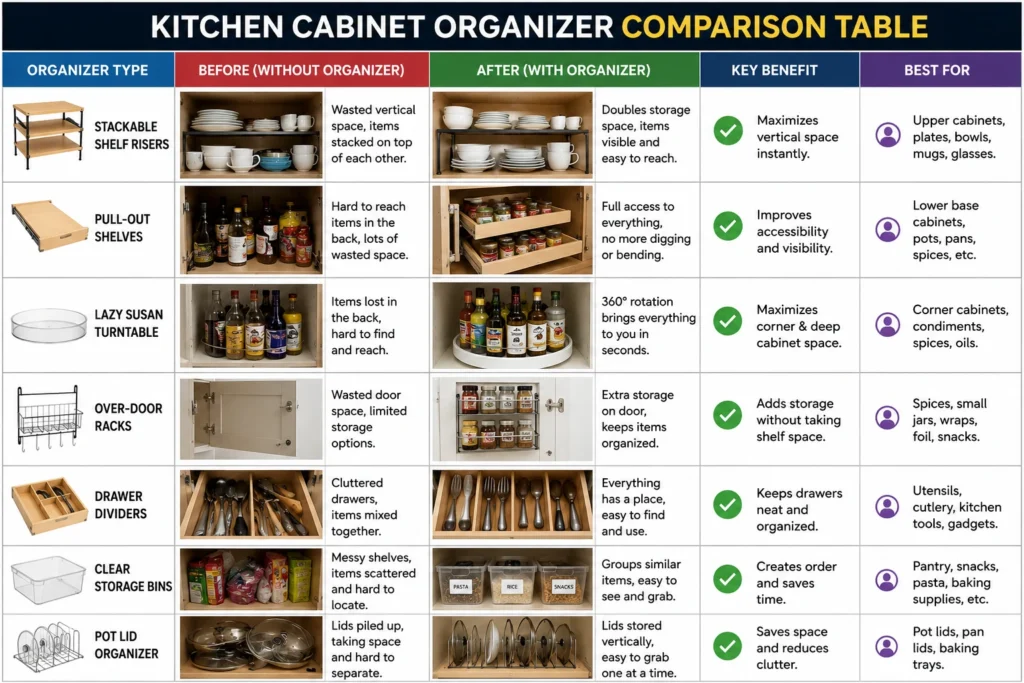
| Organizer Type | Best For | Key Benefit | Limitation |
| Lazy Susan / Turntable | Corner & deep cabinets | 360° visibility, no digging | Bulky items may not spin freely |
| Pull-Out Shelf (Rev-A-Shelf) | Lower base cabinets | Full drawer access, no bending | Requires installation |
| Stackable Shelf Riser | Upper cabinets | Doubles vertical space instantly | Height limits with tall items |
| Over-Door Rack (iDesign) | Cabinet doors | Adds storage with zero drilling (adhesive) | Weight limit ~5 lbs |
| Drawer Dividers (OXO) | Utensil & cutlery drawers | Custom-fit, expandable sizing | Not ideal for deep items |
Corner cabinets are where ambition meets geometry and loses. The reach is awkward, the depth is disorienting, and most of what you put back there you will not see again for six months. These ideas are specifically designed for that space.
11. Lazy Susan for Corner Cabinets
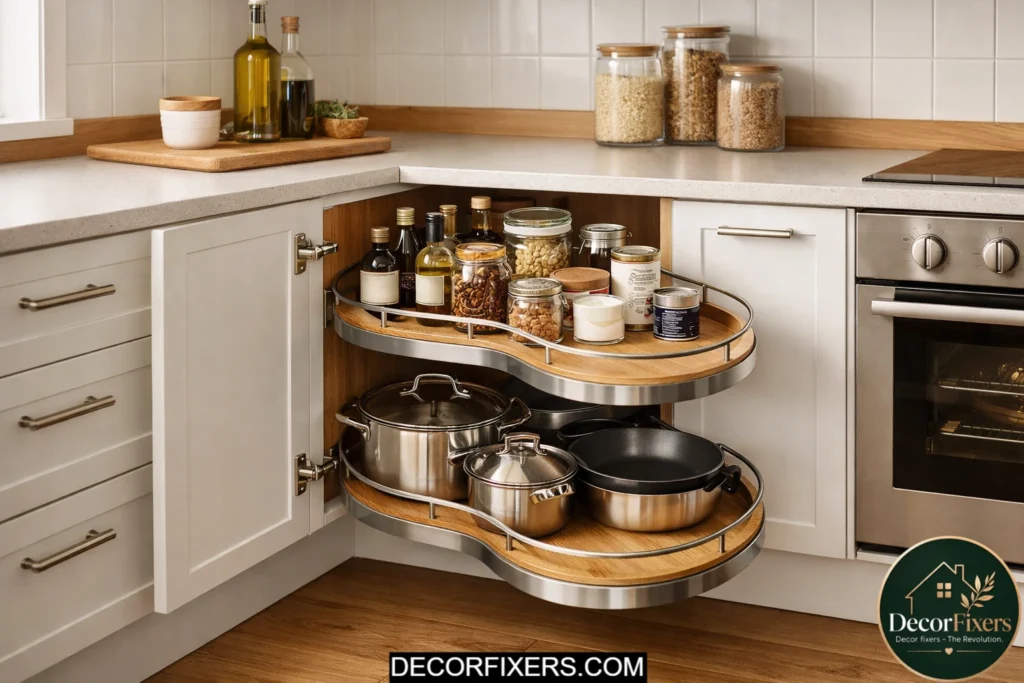
A kidney-shaped or D-shaped lazy Susan is built specifically for blind corner cabinets. It rotates outward as the cabinet door opens, bringing the back of the cabinet directly to you.
Rev-A-Shelf’s pull-out blind corner organizer is the gold standard here; it’s not cheap ($120–$200), but it completely solves the corner cabinet problem. For budget options, a simple full-circle turntable mounted on the existing shelf cuts costs to under $30.
12. Magic Corner Pull-Out System
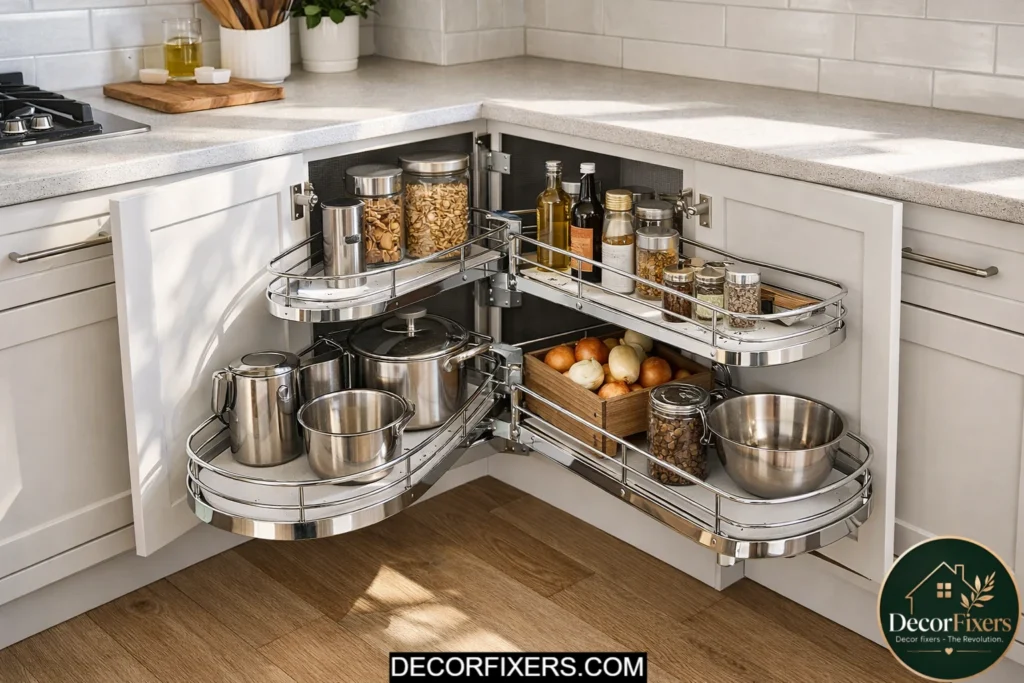
A step up from the lazy Susan, a magic corner system uses two linked shelves on a pivot arm, one shelf hides behind the cabinet face, the other pulls forward when you open the door, bringing both shelves into reach simultaneously.
More of a cabinet renovation item than a quick-swap organizer, but worth knowing if you’re mid-remodel or in a home where that corner cabinet is used daily.
13. Corner Drawer Organizer Bins
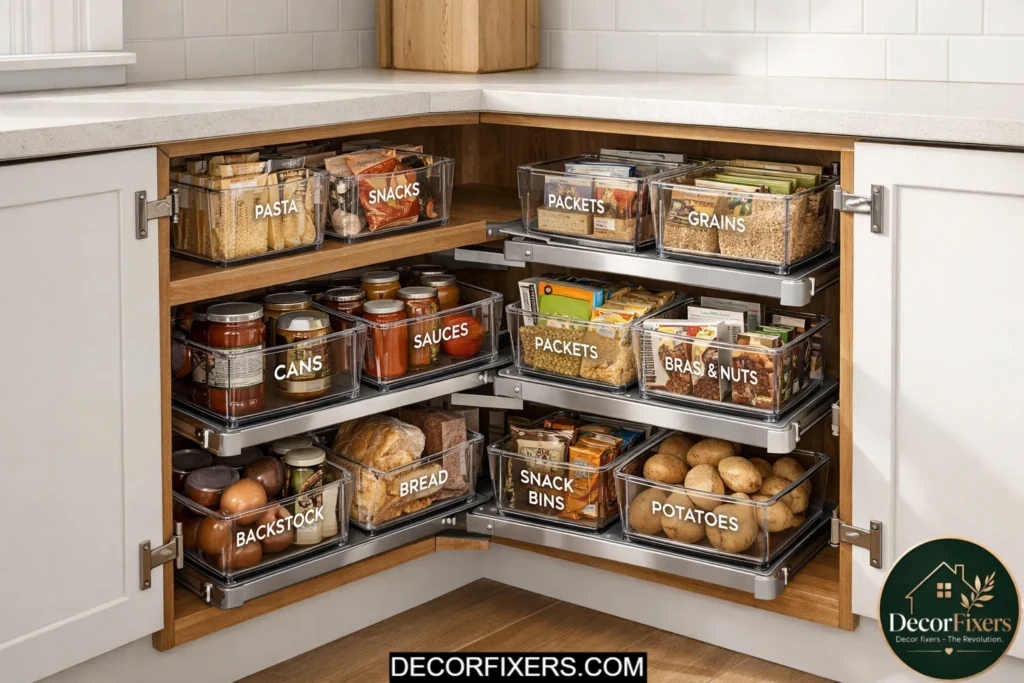
If a full lazy Susan isn’t in your budget right now, the low-cost play is simple: measure the accessible front third of your corner cabinet and fit it with clear stackable bins. Everything at the front is organized; the back becomes long-term storage for rarely used items.
Label the bins. This sounds obvious. Most people skip it, and the system collapses within a month.
Cabinet Door Organizer Ideas, The Storage Zone Everyone Ignores
Every cabinet door is a missed opportunity. The inside face is flat, sturdy, and completely ignored in most kitchens. These ideas turn dead door space into the most accessible storage in your cabinet.
14. Adhesive Door-Mount Organizer Bins
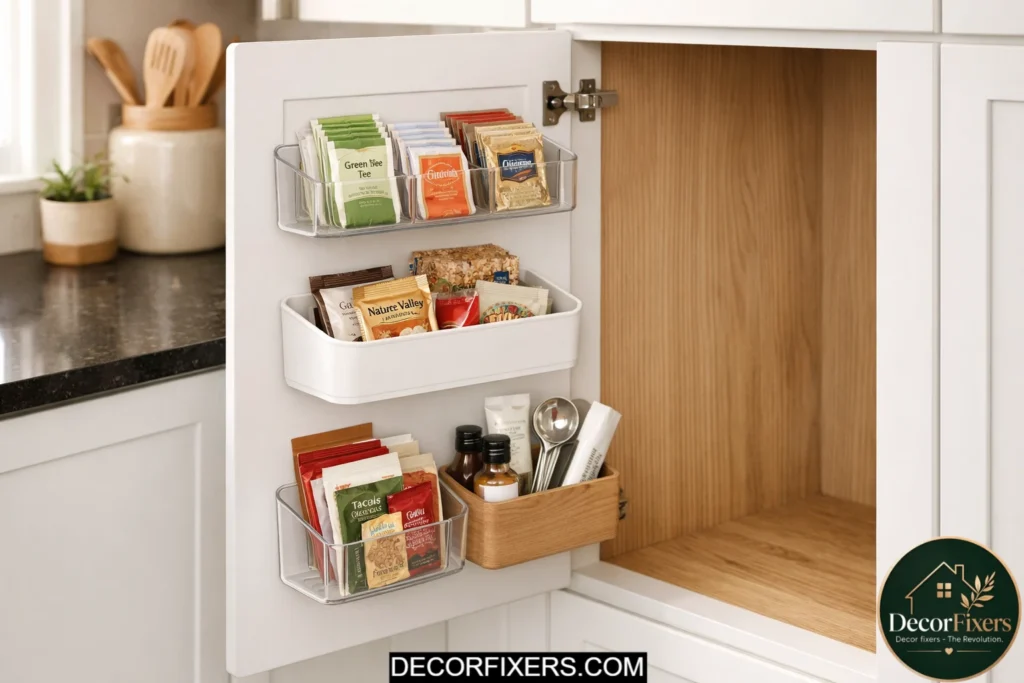
For renters: Command strip-compatible door organizers hold up to 7.5 lbs per pair and leave zero damage on removal. Use them on upper cabinet doors for spice packets, tea bags, foil boxes, or small snack items.
Or maybe I should say it this way: think of your cabinet door as a narrow pantry shelf. Once you start treating it like that, you find storage in places you completely overlooked.
15. Mounted Foil and Wrap Organizer
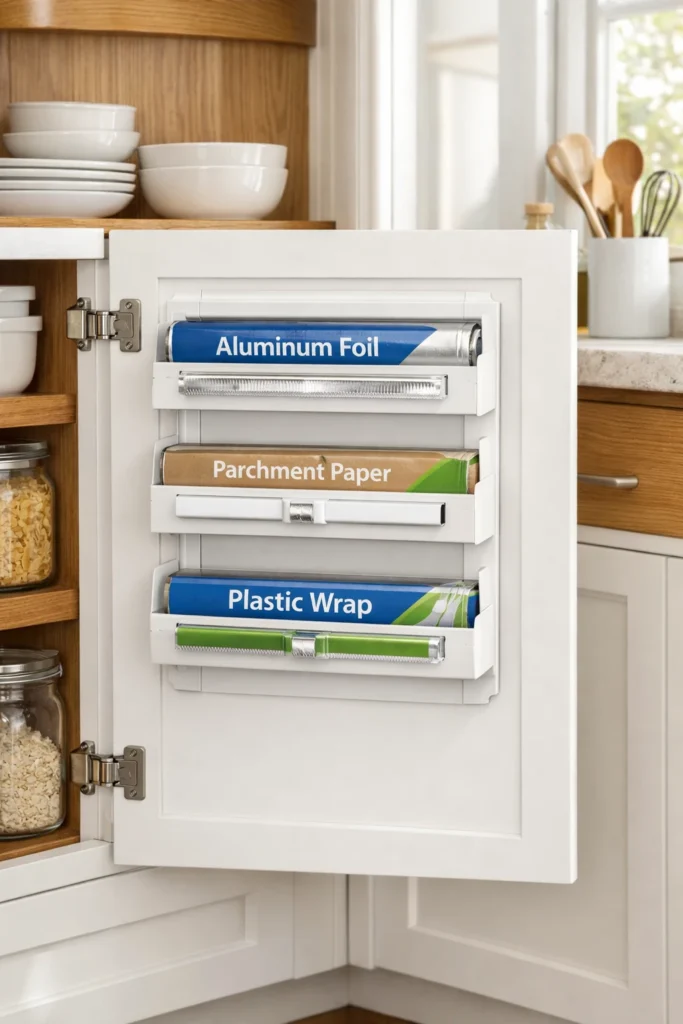
Plastic wrap. Parchment paper. Aluminum foil. These long, awkward boxes are cabinet nightmares because they roll, they tear, and they never stay where you put them.
A mounted wrap organizer with individual slots and a built-in cutter holds all three boxes vertically on a cabinet door, freeing up an entire shelf for something else. Strong Command strips or screw-mount versions both work, depending on your setup.
16. Magnetic Knife Strip (Inside Upper Cabinet Door)
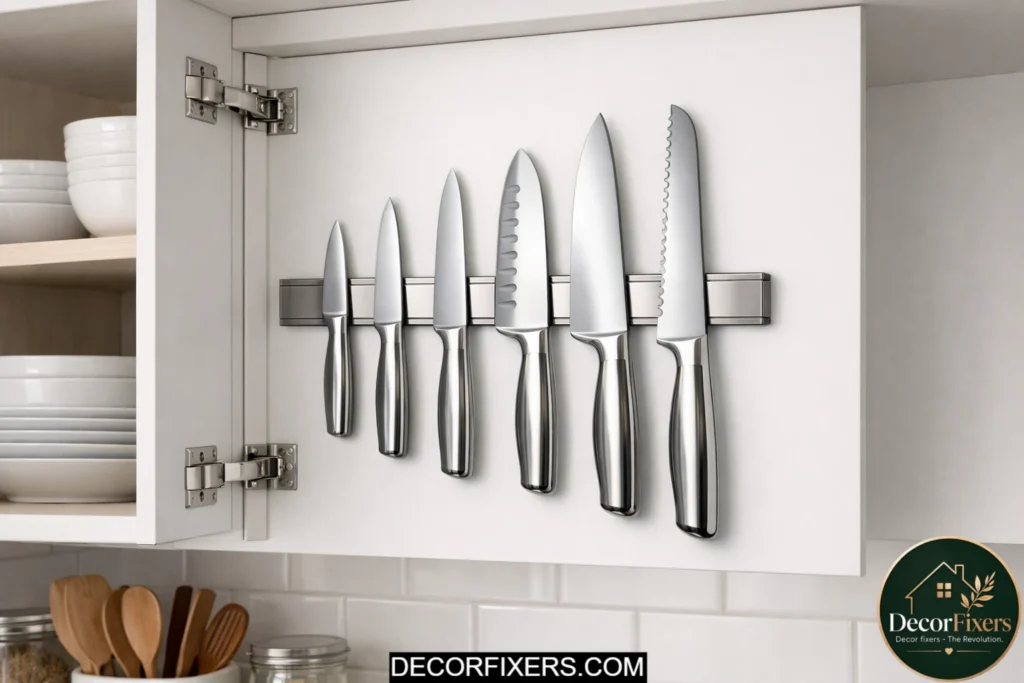
This one surprises people. A magnetic knife strip mounted on the inside of a wide upper cabinet door keeps knives off the counter, out of a drawer, and still immediately accessible.
Safe, space-efficient, and a lot cleaner than a countertop knife block. Make sure the door is wide enough to open fully without the knives hitting the frame. Measure before you mount.
Pantry Cabinet and Deep Cabinet Organizer Ideas
Deep pantry cabinets and tall pantry-style storage require their own approach. The temptation is to stack everything high and wide, but this creates the ‘avalanche cabinet’ that dumps things on you the second you open the door.
17. Clear Stackable Bins with Labels
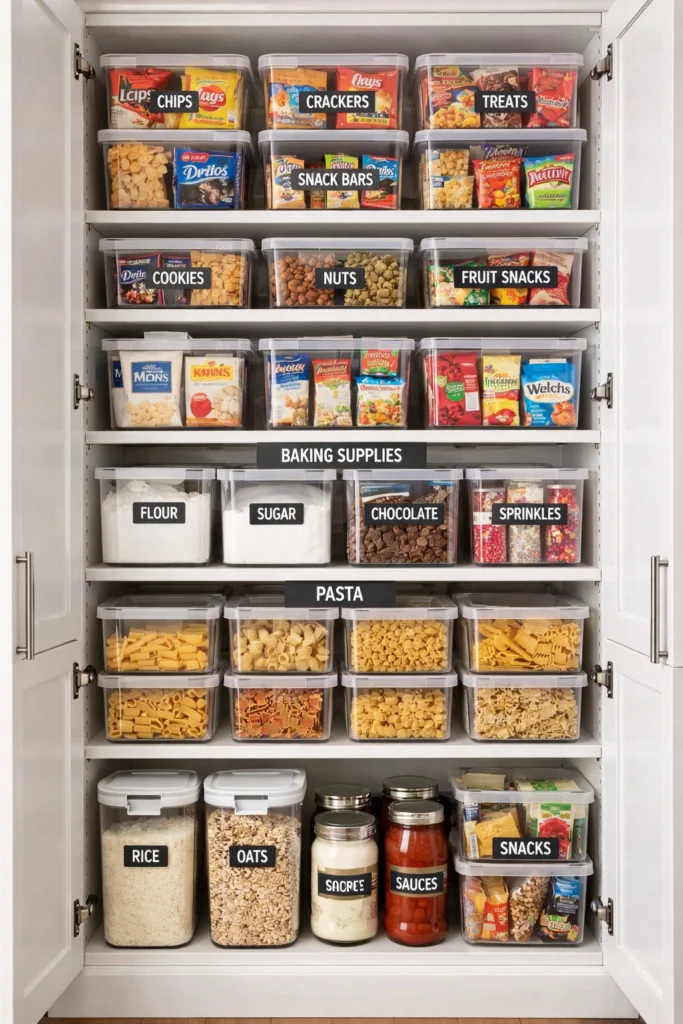
The single most effective pantry organization system, full stop, is clear bins with labels. Group similar items: baking, pasta, snacks, canned goods. Pull out the bin, grab what you need, and return the bin.
OXO Good Grips makes the most durable version with easy-grip sides. Cheaper alternatives from Ikea’s VARIERA line and Amazon Basics work well for lighter items. The labels matter as much as the bins; a label maker or even a marker on masking tape is enough.
where modular and freestanding systems are showcased, this section naturally connects with Kitchen Counter Styling Ideas, as the arrangement around open surfaces and portable units often defines how counters are visually styled and practically used in modern kitchens.
18. Expandable Tiered Spice Organizer
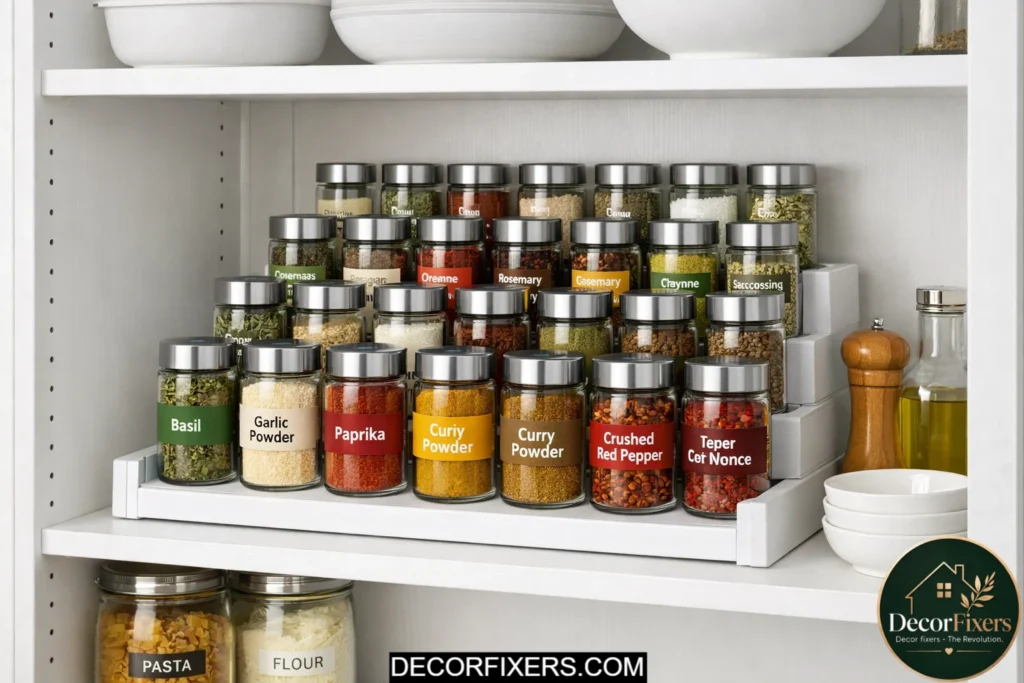
Spice drawer organizers are the #1 requested kitchen insert according to a 2025 survey of 1,000 U.S. homeowners by Eagle Woodworking, ranking above even cutlery inserts.
If you can’t do a drawer insert, an expandable tiered spice rack inside a pantry or upper cabinet is the next best option. Two or three tiers bring every jar to eye level. No more pushing bottles aside to find the cumin.
19. Over-Door Full Pantry Organizer
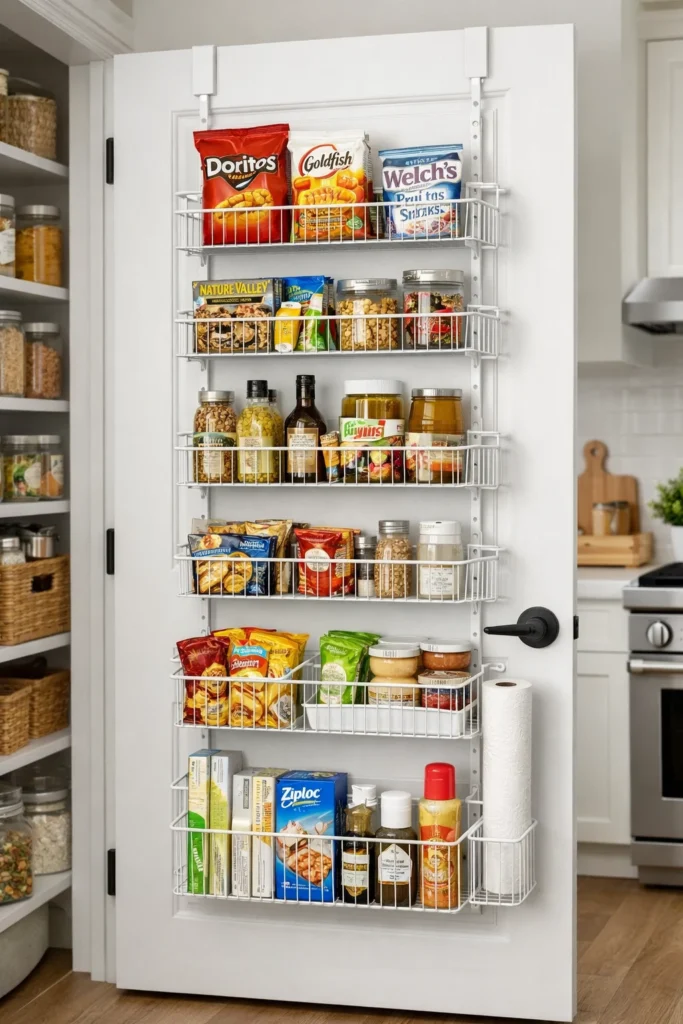
A full over-door organizer, the kind with multiple wire pockets and hooks, turns the pantry door itself into a snack wall. They hang without drilling on doors up to 1.5 inches thick.
Store snack bags, small jars, single-serve items, and kitchen gadgets you reach for daily. Frees up two to three full shelves inside the pantry
20. Bakeware Vertical Divider Rack
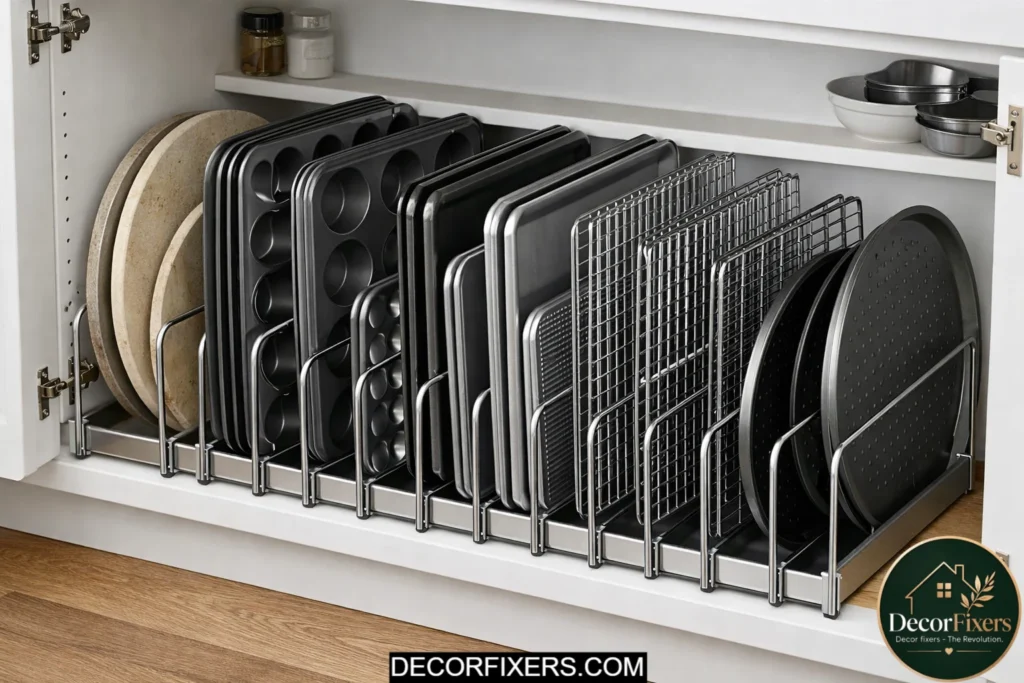
Baking sheets, muffin tins, cooling racks, pizza stones, all horizontal-storage nightmares. They scratch each other, they’re heavy to lift off a stack, and finding the right one means moving everything.
A vertical bakeware divider rack (freestanding, no installation required) stores every piece upright like books on a shelf. Grab the one you want by the edge without disturbing anything else. Under $20, fits most lower cabinet depths.
21. Expandable Bamboo Drawer Dividers
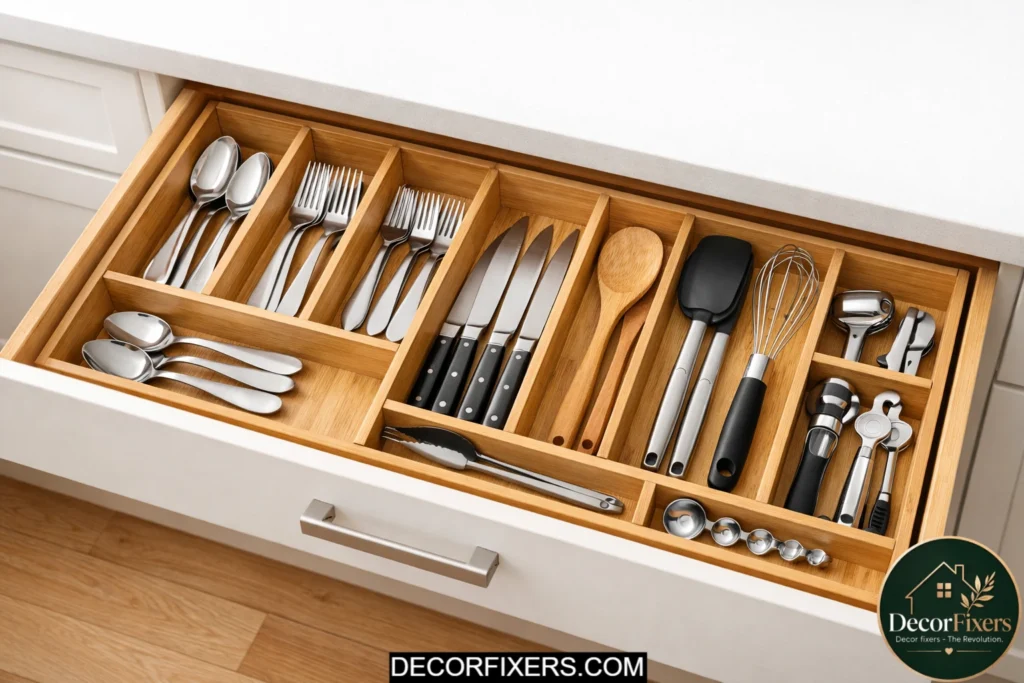
OXO’s expandable bamboo drawer organizer is the one professional organizers keep citing for a reason: it fits almost any drawer width (expands from 12 to 21 inches), separates utensils cleanly, and looks good enough that you won’t feel embarrassed if a guest opens the drawer.
Unlike cheap plastic dividers that slide around, bamboo stays put with its own weight. It’s not permanently installed; renters can take it with them when they move.
22. Deep Drawer Pot and Pan Organizer
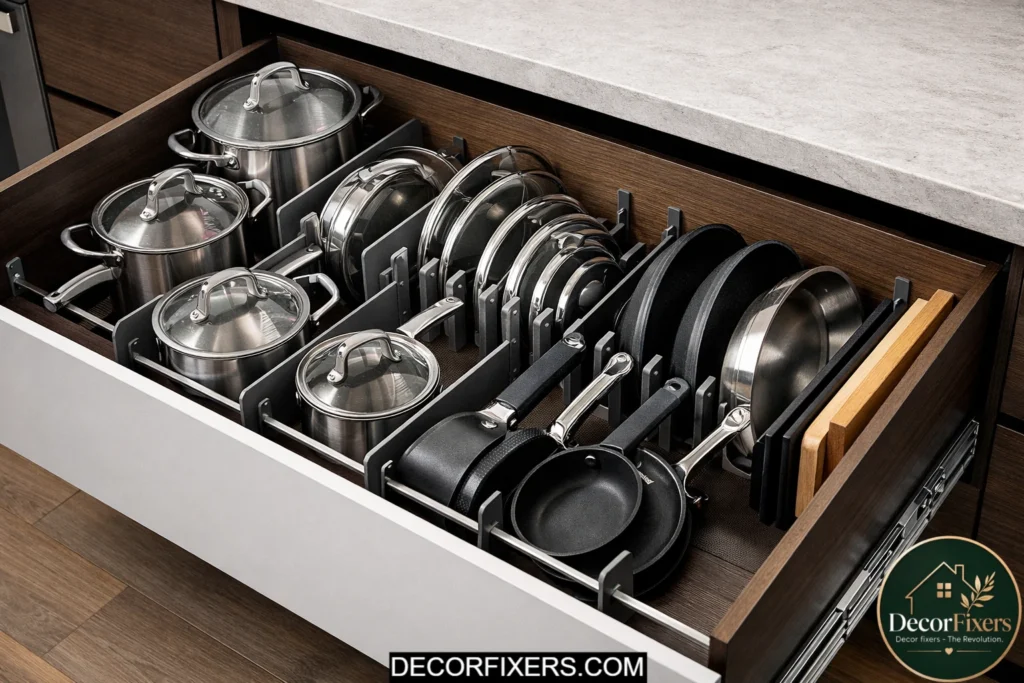
Deep kitchen drawers are supposed to be for pots and pans, but without internal structure, everything nests badly or doesn’t fit at all.
Adjustable deep-drawer organizers (Yamazaki Home and SimpleHouseware both make solid versions) use tall dividers that keep each pot and lid in a designated zone. No more lifting the whole stack to reach the saucepan at the bottom.
23. Cutlery Tray, Sized Right
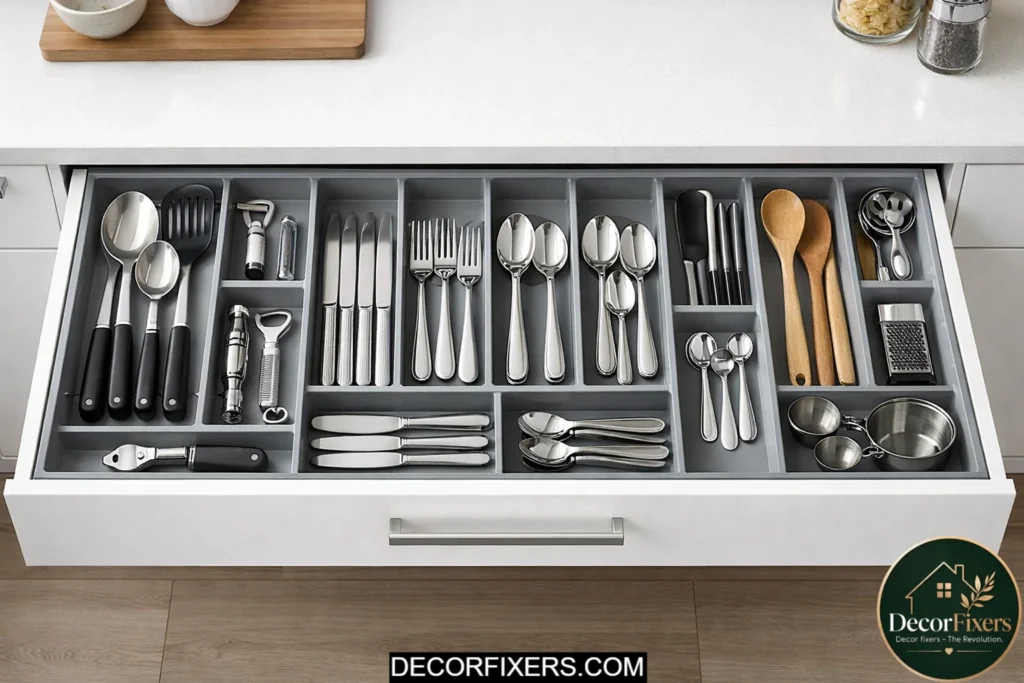
Here’s the overlooked detail: most people buy a cutlery tray that’s too small for their drawer and then spend years frustrated that the tray slides around. Measure your drawer before buying.
For wide drawers, two side-by-side smaller trays often work better than one large one. OXO’s adjustable tray expands to fit, the only version worth buying if you’re not sure of your measurements.
24. Command Strip and Tension-Mount Only System
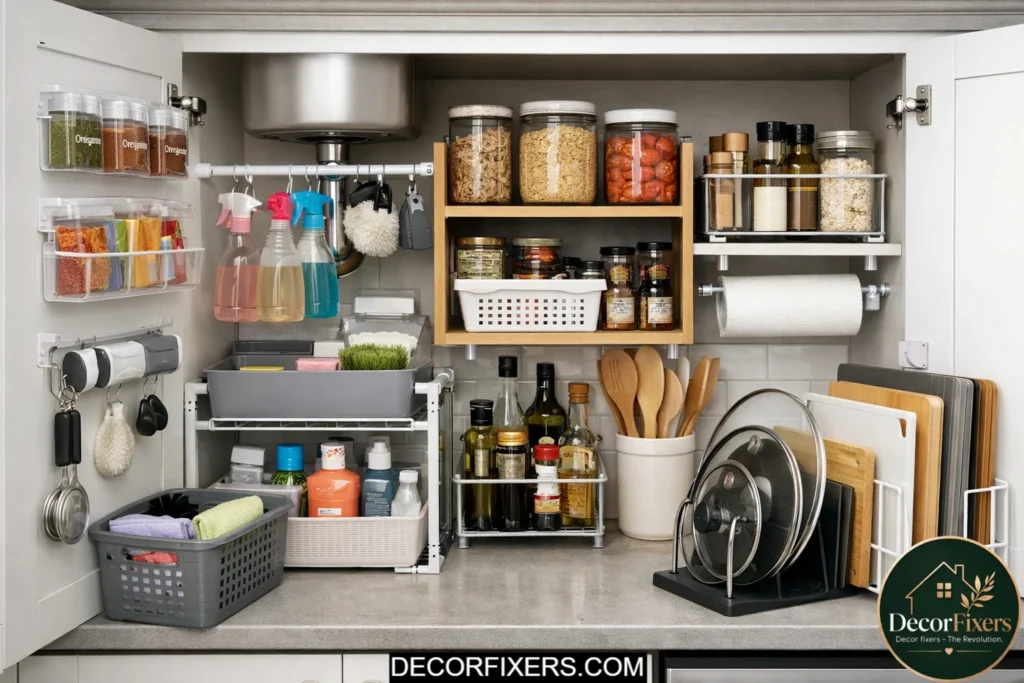
The renter’s full toolkit: Command strips for door-mount bins, tension rods for vertical dividers, tension-mount pull-out shelves for lower cabinets, and freestanding shelf risers for uppers. None requires a single screw.
I’ve seen conflicting data on the weight limits of Command strips; some manufacturer specs say 7.5 lbs per pair, while real-world tests show inconsistency on inside-cabinet surfaces. My read: stick to light items (spices, snack packets, small jars) on adhesive mounts, and use tension or freestanding systems for anything heavier.
25. Freestanding Cabinet Insert System (Take-It-With-You)
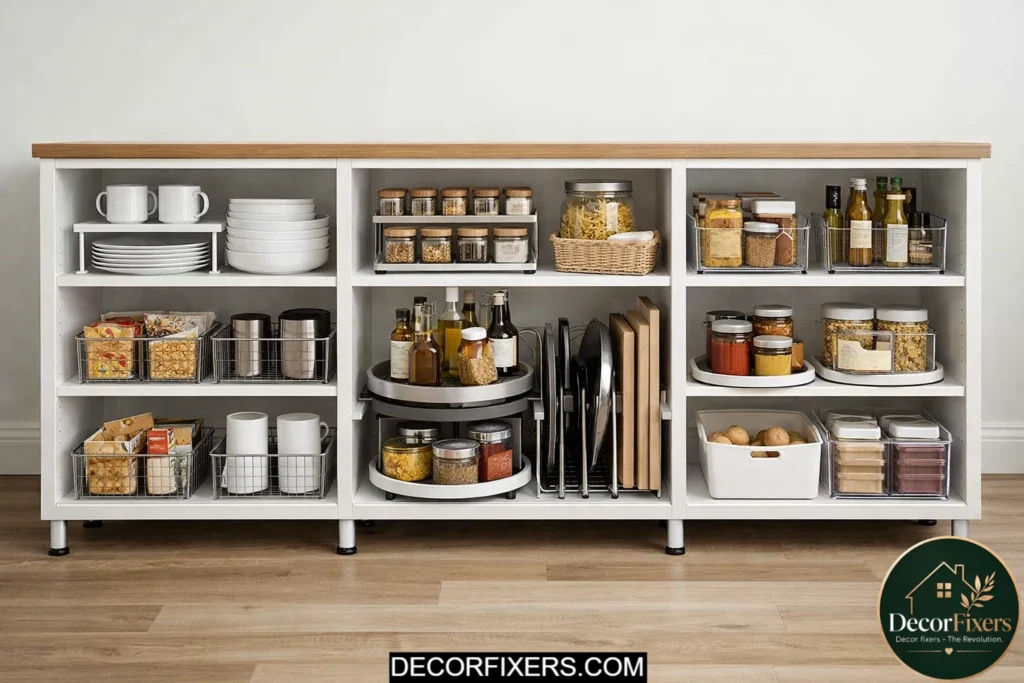
The most complete renter solution: a fully freestanding internal cabinet system with shelf risers, turntables, vertical dividers, and door bins, everything chosen to be portable, requiring no installation, and packable when you move.
iDesign’s Cabinet Collection is specifically designed as a cohesive no-drill system. Buying matching pieces keeps the aesthetic consistent and makes the whole setup feel intentional rather than pieced together.
| Quick How-To: Organize Kitchen Cabinets in 5 Steps 1. Empty one cabinet completely and wipe it down. 2. Sort items by frequency of use: daily, weekly, rarely. 3. Assign zones by cabinet type (upper = dishes/glasses, lower = pots/pans, door = spices/wraps). 4. Match the correct organizer to the cabinet type using this guide. 5. Return only daily and weekly items, store rarely used items elsewhere, or donate. |
CONCLUSION:
If you’re staring at this list wondering where to begin, here’s my honest take: don’t try to organize every cabinet in one weekend. You’ll burn out, buy things that don’t fit, and give up.
Start with one problem cabinet, the one that genuinely makes you groan every time you open it. Measure it. Pick one idea from this guide that solves the exact problem it has. Install it. Live with it for a week before moving to the next one.
The kitchens that stay organized aren’t the ones that had a perfect organizing session; they’re the ones where someone slowly built a system that matched how they actually live. That’s achievable. You don’t need a renovation. You need the right organizer in the right cabinet.
This site, decoefixers.com, exists exactly for this kind of practical, real-world home fix. If you found this useful, the articles on pantry organization and small kitchen storage are worth reading next.
FAQs:
| Q: What’s the best kitchen cabinet organizer for small kitchens? A: Stackable shelf risers and over-door racks give the most return in small kitchens. They double your usable space without requiring any new furniture or cabinet work. |
| Q: How do I organize kitchen cabinets without drilling? A: Use tension rod dividers, adhesive door-mount bins (Command strips), freestanding shelf risers, and turntables. Every organizer in the renter section of this guide installs without a single screw. |
| Q: Should I use pull-out shelves or a lazy Susan for a corner cabinet? A: A lazy Susan is lower cost and easier to install. A pull-out shelf system accesses more of the cabinet. If the corner cabinet holds daily items, the pull-out is worth the investment. |
| Q: Why does my kitchen always get disorganized again after I tidy it? A: Usually, because the organizer doesn’t match how you actually cook. A beautiful system built around categories you don’t naturally follow collapses fast. Build around your habits, not an idealized version of them. |
| Q: When should I use clear bins vs. opaque ones in cabinets? A: Use clear bins inside closed cabinets so you can see contents at a glance. Opaque bins work fine on open shelves where the container itself is part of the display aesthetic. |

Creator of DecorFixers, sharing practical home and interior ideas focused on real-life usability, simple design improvements, and budget-friendly solutions.