

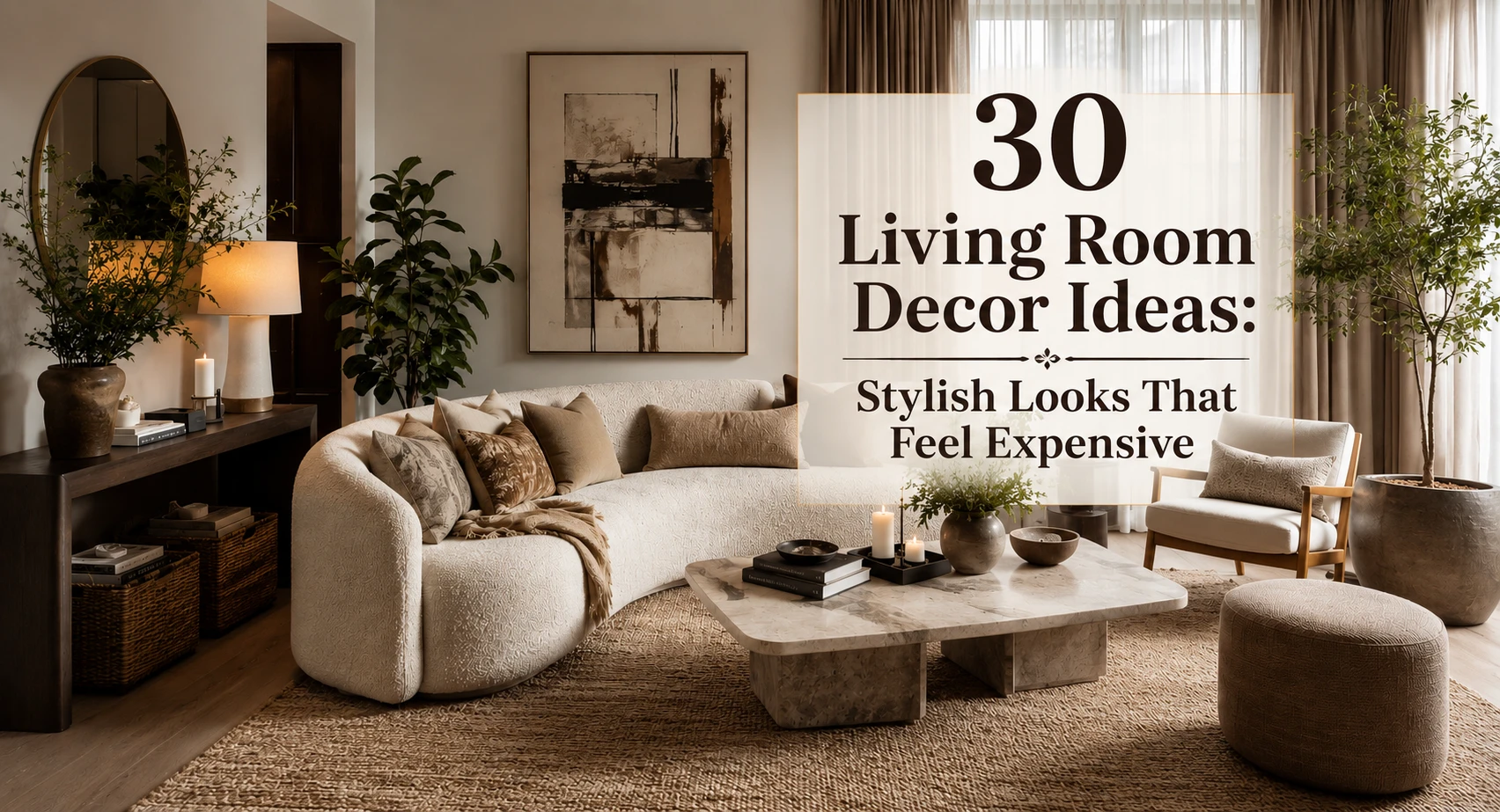
This guide is best for renters and homeowners looking to refresh their small living room on a realistic budget. It does NOT cover full structural renovations or custom-built millwork.
I’ll be honest with you. I used to scroll through Pinterest for hours, saving ideas I’d never actually use because every room looked like it cost $30,000 to achieve. The sofas were bespoke. The rugs were imported. The lighting was custom. It felt unreachable.
Then I started paying attention to what actually made those rooms look the way they did. Turns out, it wasn’t the price tag. It was the decisions on where to place things, what to keep, and what to cut. That shift changed everything for me.
This article gives you 30 real living room decor ideas that look genuinely luxurious. Every idea has a price range attached.
| What Are Living Room Decor Ideas? Living room decor ideas are practical and aesthetic strategies used to style, arrange, and personalize your living space. They cover furniture placement, color selection, lighting, textiles, and accent pieces, all working together to make a room feel cohesive, comfortable, and intentional. The goal is a space that reflects your style without requiring a designer or a large budget. |
1. Create a Scent Identity With Candles and Diffusers
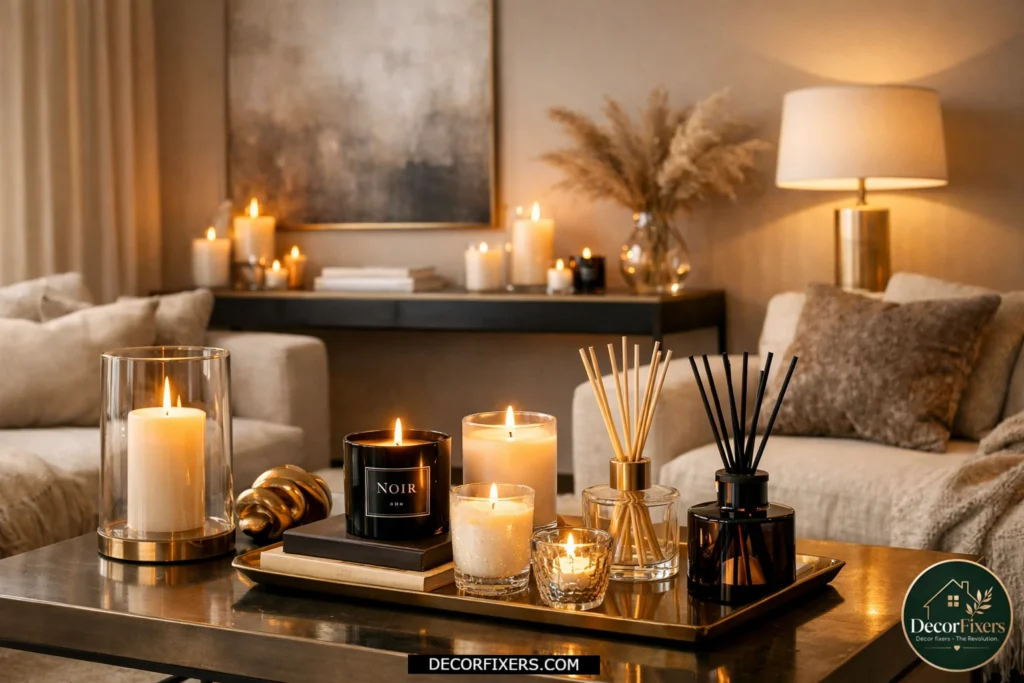
Luxury is sensory, not just visual. The rooms that feel the most elevated almost always smell intentional. A signature scent, warm amber, cedar, fresh linen, sandalwood, creates a subconscious association that makes people feel immediately comfortable and at ease.
A quality soy candle in a ceramic vessel runs $25–$55. A reed diffuser: $20–$45. Place one on the coffee table and one near the entryway. When someone walks into your living room, and the first thing they notice is a beautiful smell, they’ve already decided it’s a well-designed space, before they’ve looked at a single thing.
2. Use the 60-30-10 Color Rule to Stop Guessing
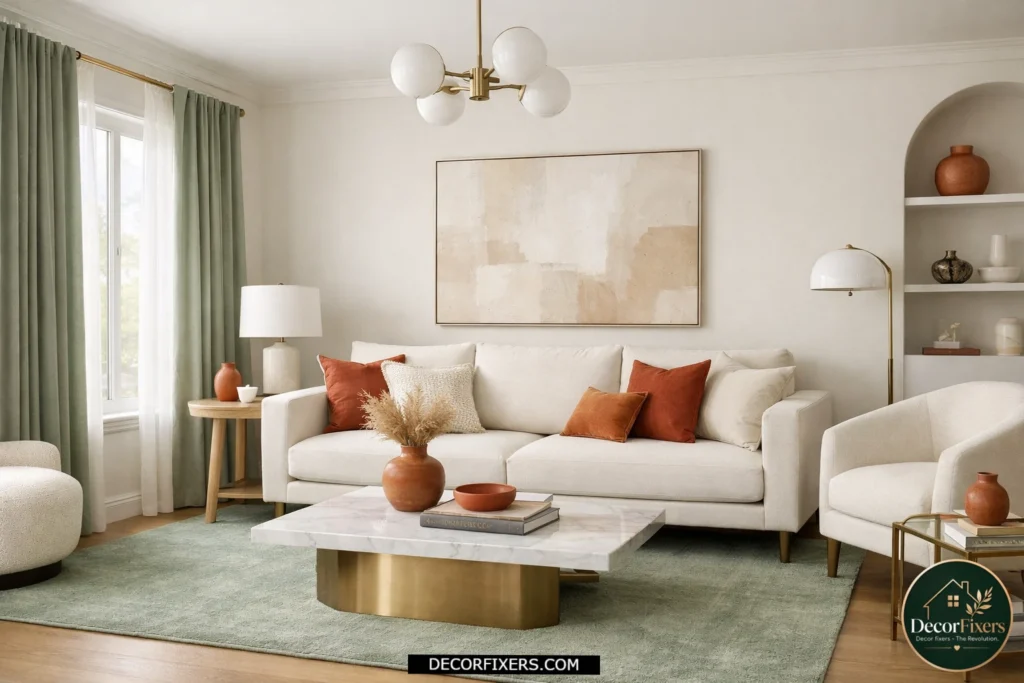
Here’s the thing: most rooms that look “off” aren’t missing pieces. They’re missing a color system. The 60-30-10 rule is how interior designers have structured palettes for decades, 60% dominant color (walls, large furniture), 30% secondary (curtains, rugs, smaller chairs), 10% accent (pillows, vases, art).
Pick earthy greens, warm taupes, or warm whites as your dominant tone right now; those are the 2025–2026 palette leaders. Your accent color can be a deep terracotta or rich navy. Budget for new throw pillows and a vase: $60–$120. That’s it. The impact is disproportionate to the cost.
3. Layer Three Types of Lighting, Not Just One
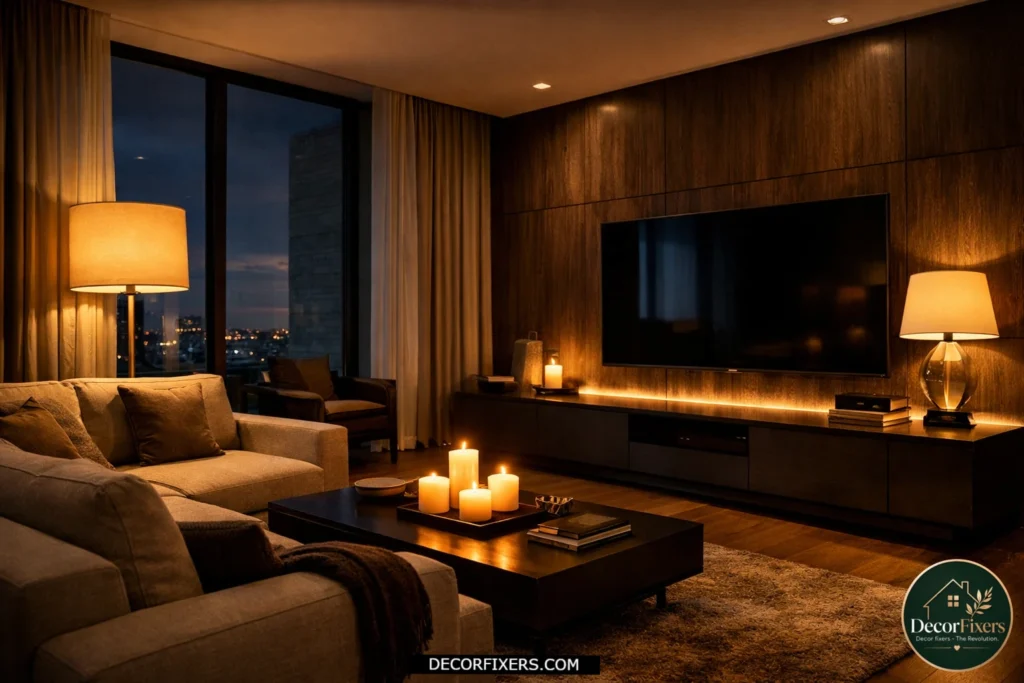
Single overhead lighting is the enemy of a luxurious room. Designers always work with three layers: ambient (general), task (functional), and accent (decorative). A floor lamp beside the sofa. A table lamp on a console. Candles or LED strip lights behind a TV unit. That combination creates warmth at every height.
A decent floor lamp runs $80–$200. A pair of table lamps from HomeGoods or TJ Maxx runs $40–$90 together. LED strips for the back of a TV console? $15–$30. The full lighting upgrade costs under $320 and makes the room feel completely different after dark, which is when you actually live in it.
Quick Comparison: Best Living Room Decor Ideas at a Glance
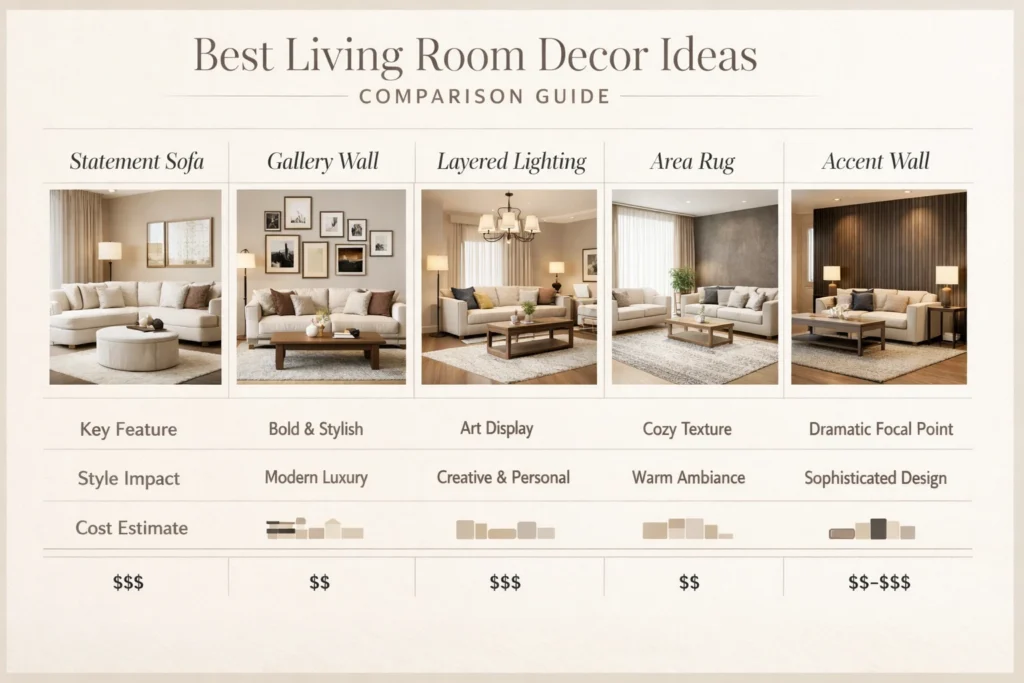
| Idea | Best For | Approx. Cost | Luxury Feel |
| Boucle Sofa | Focal point upgrade | $800–$1,500 | ★★★★★ |
| Gallery Wall | Blank walls | $80–$250 | ★★★★☆ |
| Layered Lighting | Ambience & mood | $150–$600 | ★★★★★ |
| Statement Rug | Anchoring layout | $200–$700 | ★★★★★ |
| Accent Wall | Instant drama | $40–$180 | ★★★★☆ |
4. Invest in One Large Area Rug, Not Two Small Ones
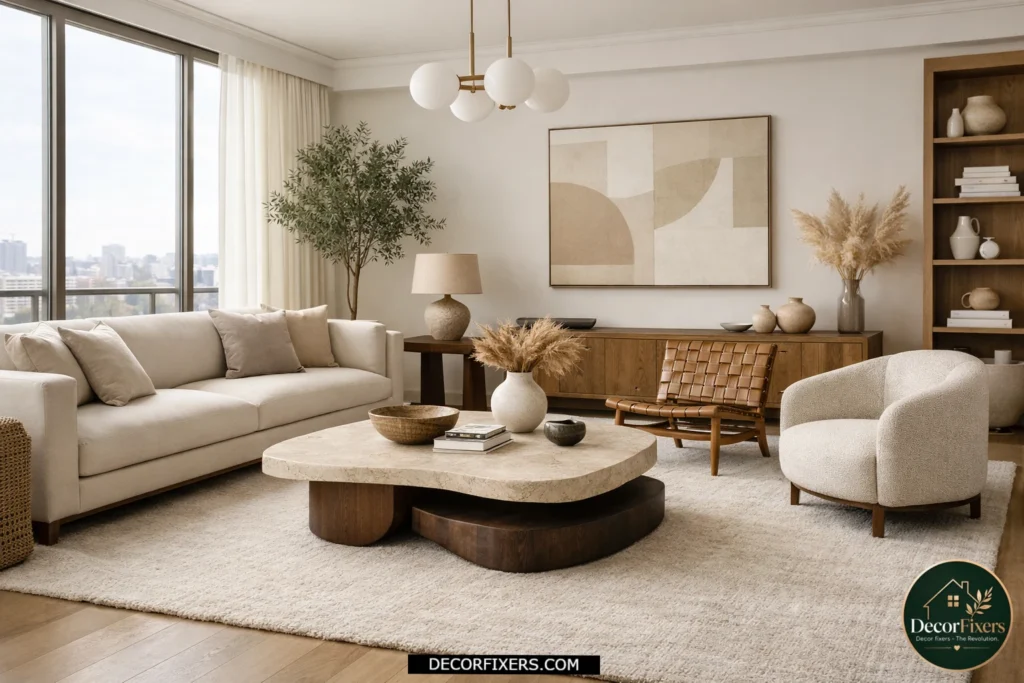
I’ve seen this mistake in almost every room that feels “almost right” but not quite. Two small rugs where one large one should be. A rug that’s too small makes furniture look like it’s floating. The front legs of your sofa and chairs should always rest on the rug, never off it.
For a standard living room, you’ll want at minimum an 8’×10′ rug, ideally a 9’×12′. A quality jute, wool-blend, or low-pile area rug in this size costs $200–$700. Yes, it feels like a lot. But a properly sized rug visually doubles the room’s intentionality. It’s one of those upgrades that makes people say “this room just feels expensive” without knowing why.
5. Build a Gallery Wall That Actually Looks Curated
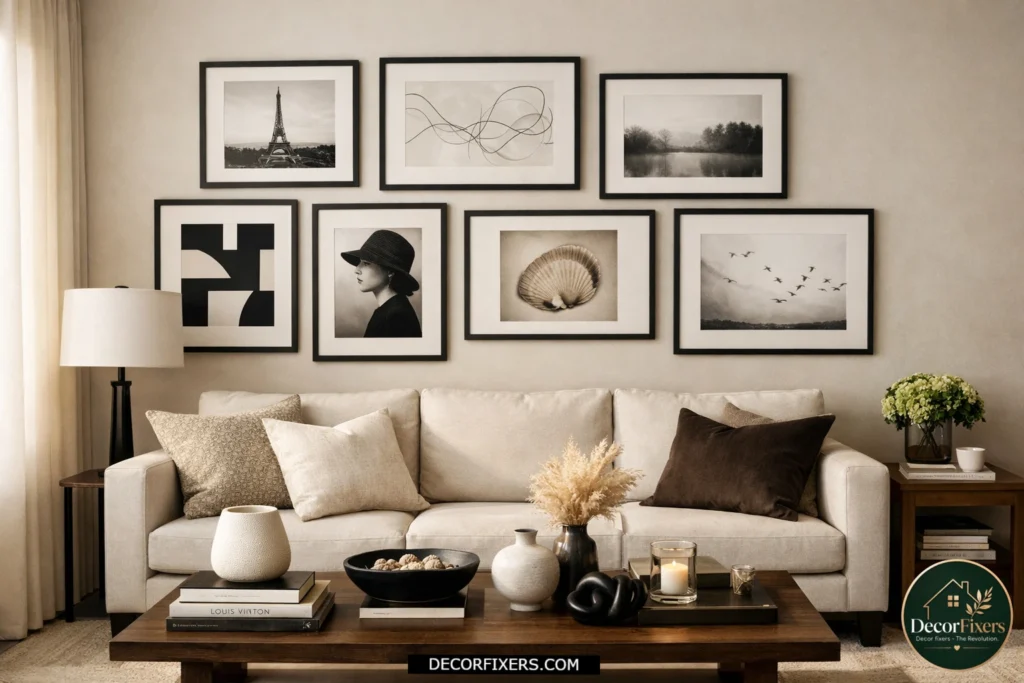
Gallery walls fail when they’re random. They succeed when there’s a unifying element, same frame color, same mat color, same general tone across all art. Pick black frames in mixed sizes, all with a white or cream mat. Source prints from Etsy, Desenio, or even free public domain art printed at a local print shop.
A full gallery wall, 8 to 12 frames of varying sizes, can cost $80–$250 done this way. Lay everything out on the floor first. Photograph it. Then hang it exactly as arranged. That one trick saves you from eighteen holes in the wall and a room that never quite looks right.
6. Swap Your Curtains for Floor-to-Ceiling Panels
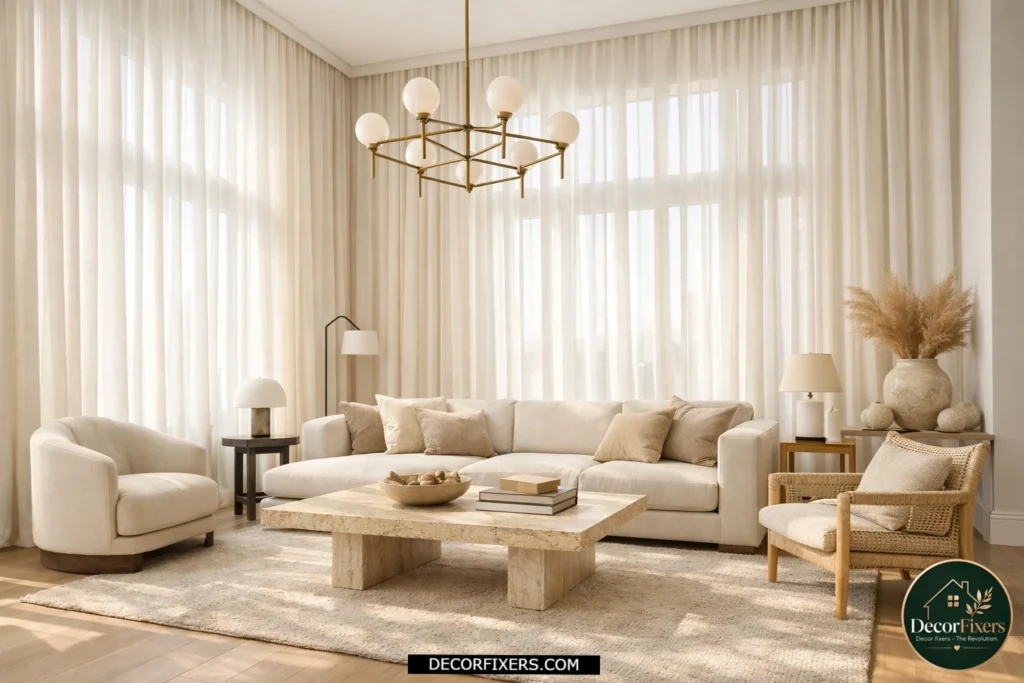
Short curtains make ceilings feel low. Always. Floor-to-ceiling linen or velvet panels, even on small windows, make any room feel taller and more expensive instantly. Hang the rod 4–6 inches above the window frame, as close to the ceiling as possible. Let the panels slightly puddle on the floor.
A pair of linen curtain panels in warm white or dusty sage runs $60–$180 from IKEA (the MAJGULL and TIBAST lines are excellent). This is one of the highest-ROI changes you can make in a living room. It costs less than a dinner for two and visually transforms the room.
7. Use Mirrors Strategically to Add Depth and Light
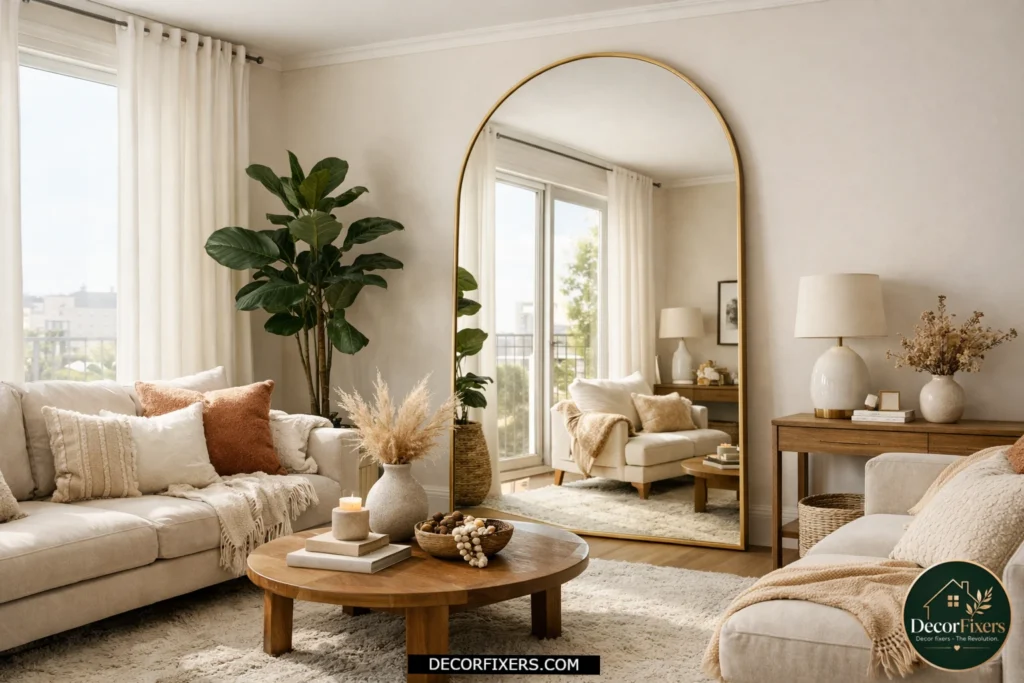
Mirrors are the oldest trick in interior design, and they still work. A large arched mirror or a leaning full-length mirror placed opposite a window bounces natural light and makes the space feel significantly bigger. It also adds a sculptural element without requiring actual art.
A quality arched mirror from Wayfair or HomeGoods runs $120–$350. Lean it against the wall rather than hanging for an effortless, editorial look. Or, go bold: a cluster of three small round mirrors in mixed metals at different heights creates a gallery-style installation for under $90.
8. Introduce Texture Through Throw Blankets and Pillows
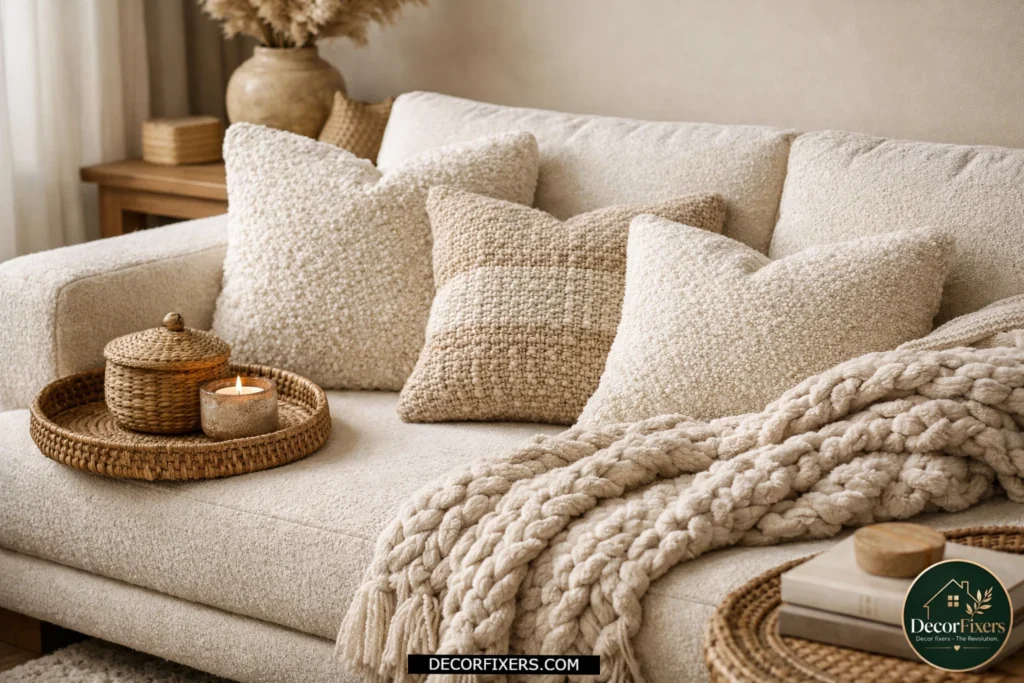
Texture is what separates a room that looks designed from one that looks furnished. The difference is layering materials, something woven, something boucle, something smooth, something with fringe. You don’t need to re-buy everything. Three new throw pillows and one cozy blanket can completely change the feeling of a sofa.
Aim for odd numbers, three or five pillows, never four or six. Mix sizes: two 24″ square, one 18″ lumbar. A chunky knit blanket draped over one armrest costs $35–$80 and photographs beautifully. This is the simplest, most affordable upgrade in this entire list.
9. Add Indoor Plants for Life, Color, and Air Quality
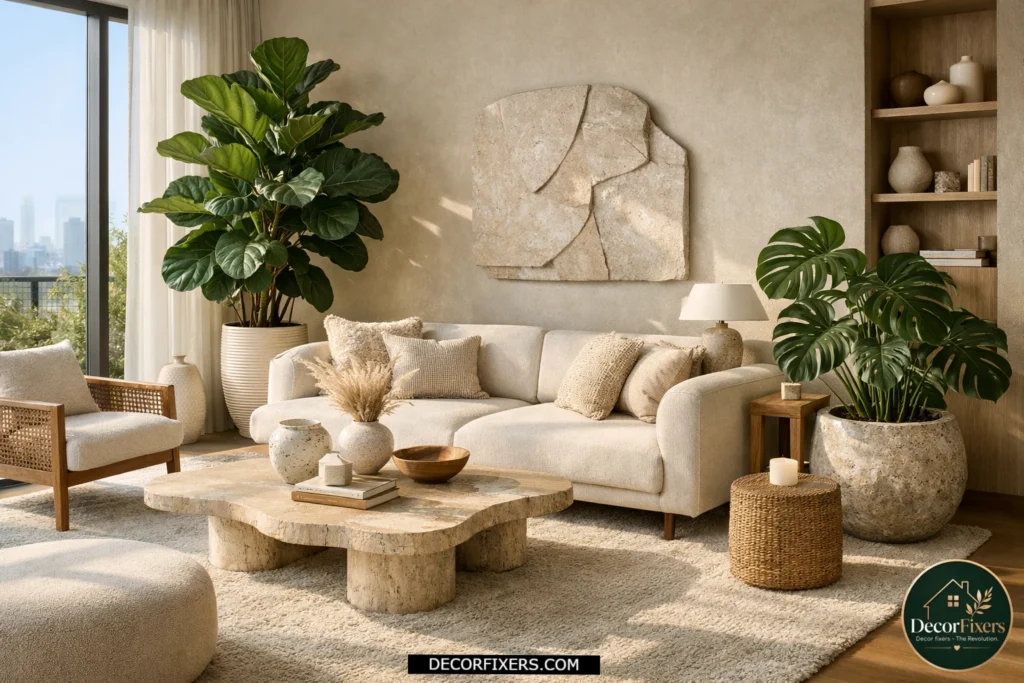
Biophilic design, the practice of bringing nature indoors, was one of the defining interior trends of 2025, and it’s not going anywhere. Plants add color, organic shape, and movement to a room. A fiddle-leaf fig, a monstera, or a large bird of paradise in the corner becomes a living sculpture.
A large statement plant in a quality ceramic pot costs $80–$200. Add a trailing pothos on a bookshelf for $12. Neither requires expert care. Both make a room feel cared for, which is exactly the vibe you want. Quick note: if you can’t keep plants alive, high-quality artificial greenery from Afloral or IKEA looks genuinely convincing and costs about the same.
10. Style a Coffee Table Like a Designer Would
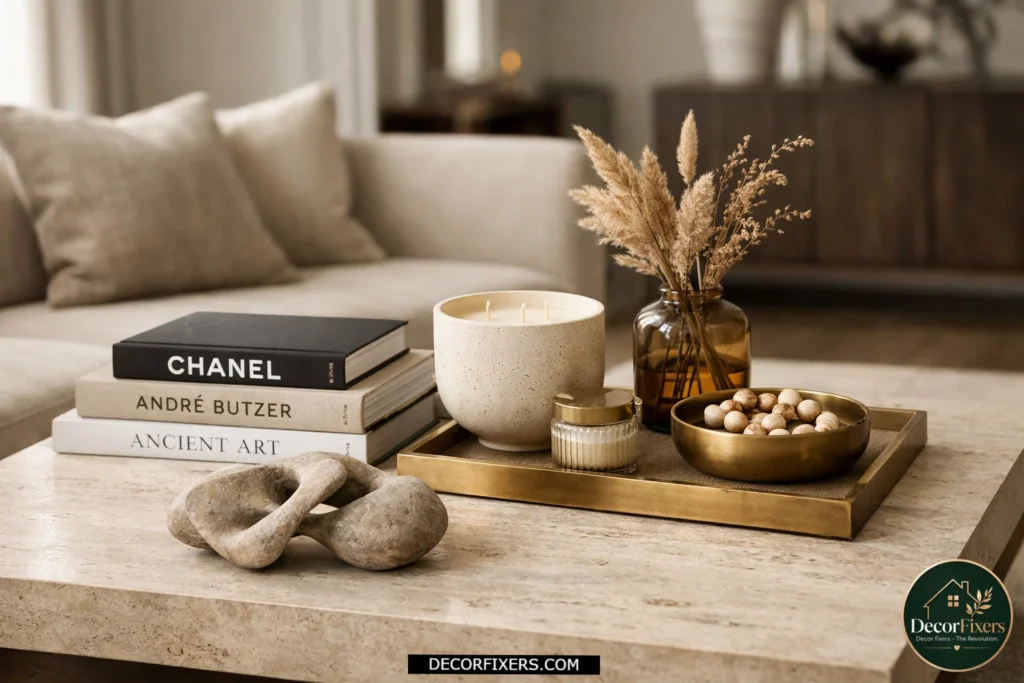
An unstyled coffee table looks like furniture. A styled one looks like a decision. The classic formula: one stack of 2–3 books, one tray, one organic object (stone, driftwood, dried grass), one candle. That’s it. The tray corrals the items and creates visual order. The organic piece gives soul. The books signal personality.
A decorative tray runs $20–$60. A quality candle in a vessel costs $25–$50. Thrift stores are the best source for books; look for large-format art or photography books with beautiful spines. Total coffee table styling budget: $80–$180. Outcome: it stops being furniture and starts being decor.
| What are the best living room decor ideas on a budget? The most impactful budget living room decor ideas include swapping to floor-to-ceiling curtains, layering three types of lighting, using one large area rug instead of two small ones, and adding texture through mixed throw pillows. According to Mordor Intelligence (2025), living rooms represent 30.37% of all U.S. home decor spending, meaning this is a category where even small improvements have outsized perceived value. |
11. Create a Cozy Reading Nook Within the Living Room
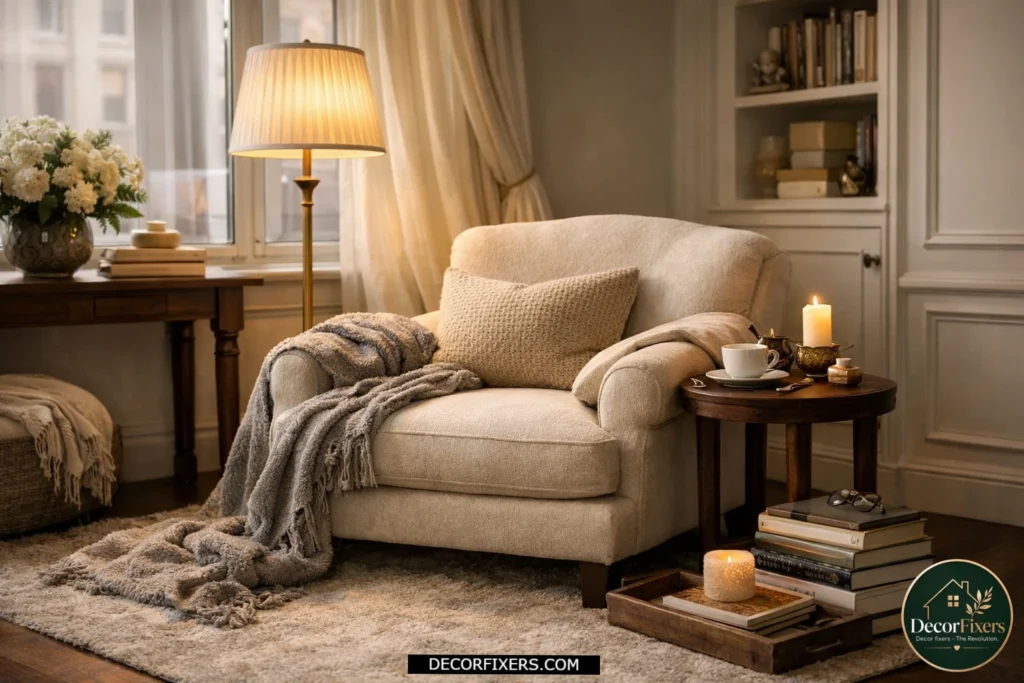
You don’t need a separate room for a reading nook. A single armchair, a small side table, a floor lamp, and a small bookshelf arranged in one corner create a distinct zone within the living room. It gives the room purposeful depth, a visual moment that makes the whole space feel larger, not smaller.
A quality accent chair runs $250–$600. A basic side table: $40–$100. A floor lamp: $80–$200. That corner becomes the most photographed spot in the room, and the most used. Anyone who visits will gravitate toward it. That’s the mark of a well-designed space.
12. Paint an Accent Wall in a Rich, Saturated Color
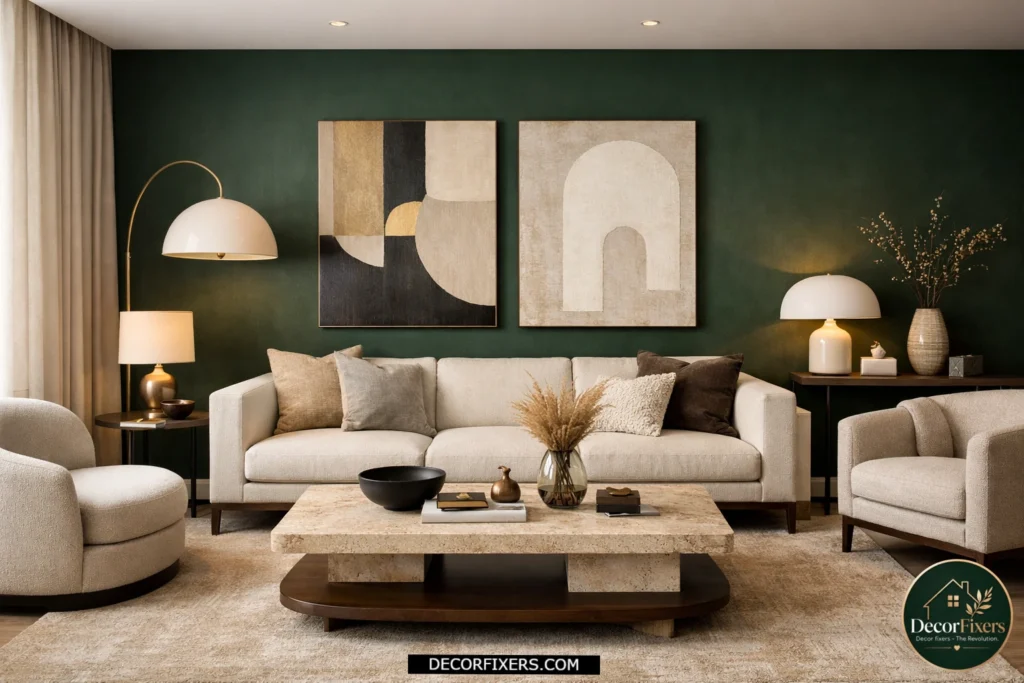
An accent wall done right, not a random feature wall, but one that the furniture is deliberately arranged toward, creates drama without chaos. Deep forest green, warm terracotta, oxblood, or moody navy all perform beautifully in living rooms. The key is that all other walls stay neutral.
A quart of premium paint (Benjamin Moore, Sherwin-Williams) costs $40–$60. A gallon covers the wall and costs $60–$90. Add painter’s tape and a roller kit: $20–$30. Total cost: under $120. The transformation is staggering relative to what you spend.
13. Install Open Shelving or a Stylish Bookcase
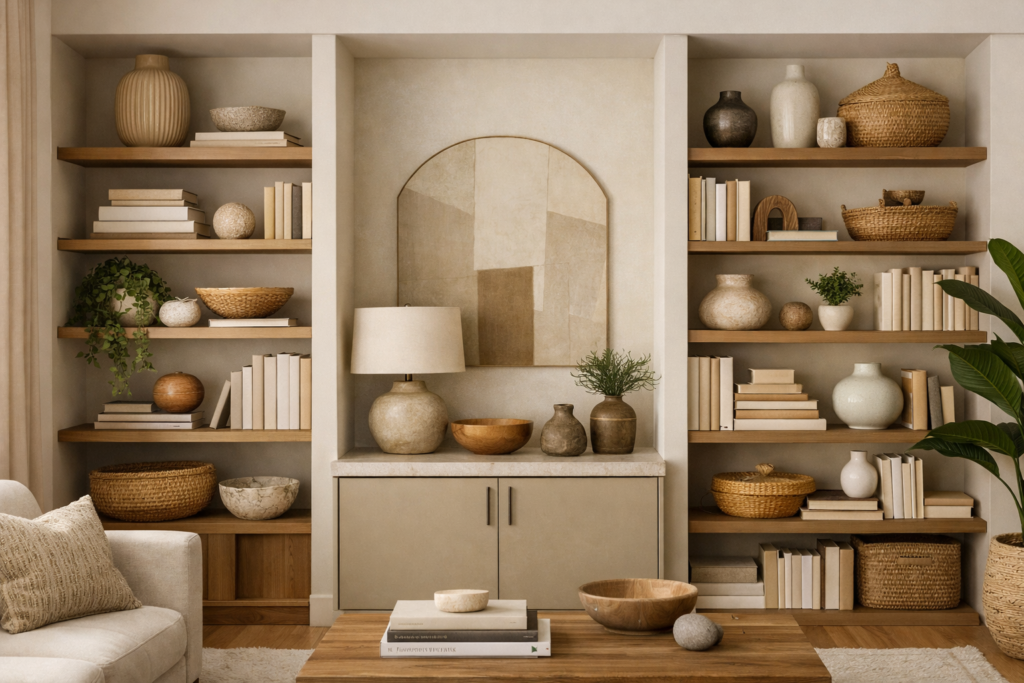
Shelving isn’t storage, it’s an opportunity for a curated display. A BILLY bookcase from IKEA ($79–$149) styled with books, plants, objects, and one or two framed photos is indistinguishable from built-in shelving in photographs. The trick is not to fill every inch. Leave breathing room. Edit ruthlessly.
Style shelves in thirds: one third books (spines facing out, a few turned cover-facing), one third objects (vases, sculptures, baskets), one third open. That balance is the difference between a shelf that looks intentional and one that looks like a moving day that never ended.
14. Use Wallpaper or Peel-and-Stick Panels on One Wall
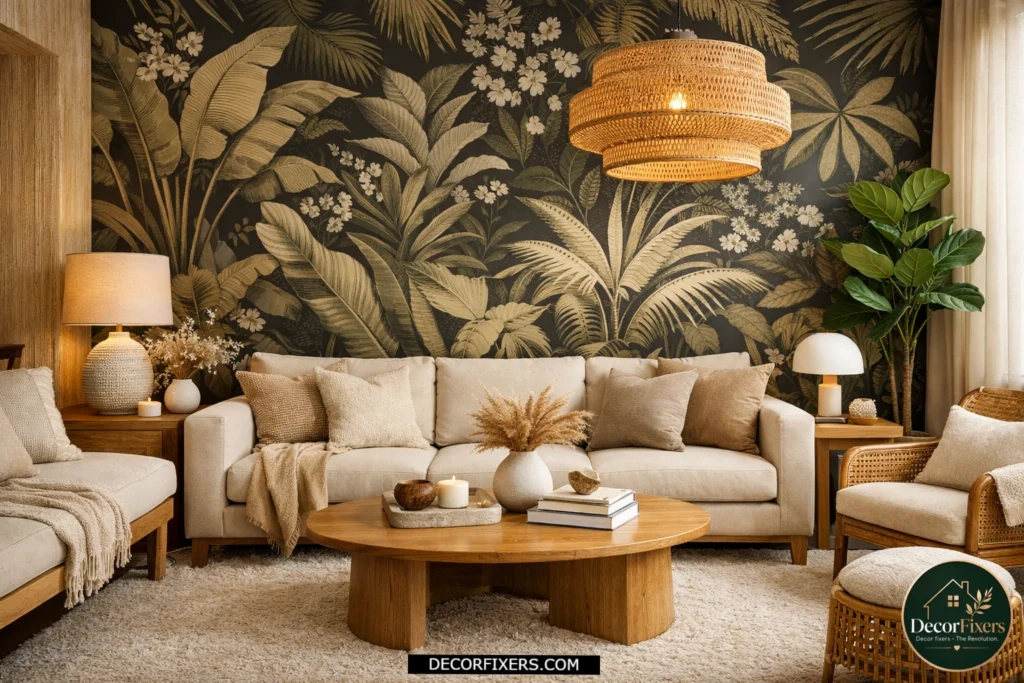
Wallpaper had a moment, and that moment hasn’t ended. A single wallpapered wall (especially behind a sofa or TV console) adds visual richness that paint simply can’t match. Botanical prints, geometric textures, and grasscloth-effect wallpapers all translate luxuriously in person.
Peel-and-stick options have genuinely improved. Brands like Spoonflower, Tempaper, and Chasing Paper offer designs that look like traditional wallpaper, peel off cleanly, and cost $100–$300 for a single accent wall. Perfect for renters. Perfect for commitment-phobes. And honestly, perfect for anyone who wants maximum impact with minimum risk.
15. Upgrade Your TV Console or Media Unit
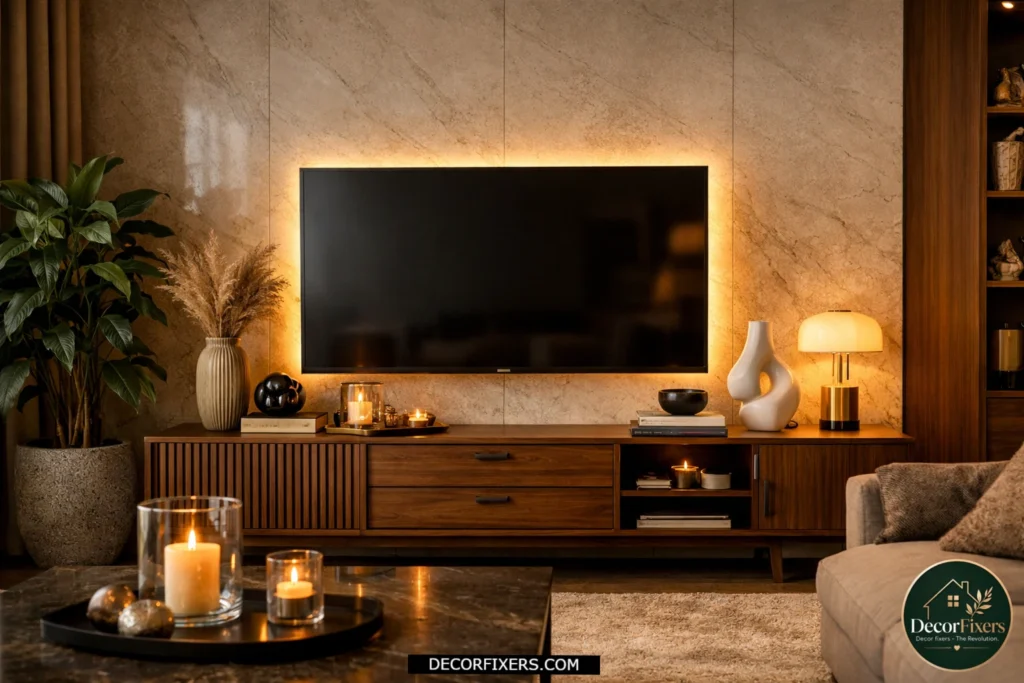
Most TV consoles look like placeholder furniture, something bought at the last minute to hold a screen. Swapping it for a low-profile mid-century console, a rattan credenza, or a floating wall unit turns the TV wall from awkward to architectural.
A quality mid-century media console runs $350–$800 from Article, Castlery, or West Elm. Style the top: a small plant, a vase, a candle, and a decorative object. Add LED strip lighting behind the TV for $15–$30; it reduces eye strain and makes the entire wall look like a design decision, not an afterthought.
| How do I make my living room look more luxurious without spending a lot? Luxury in a living room is almost always about layering and intention, not price. According to interior design analysis by Decorilla (2025), the most luxurious-feeling rooms share three traits: a consistent color palette, mixed textures at multiple heights, and layered lighting. You can achieve all three for under $500 by adding a floor lamp, two new throw pillows, and a large-format mirror. |
16. Hang Art at the Right Height, Not Too High
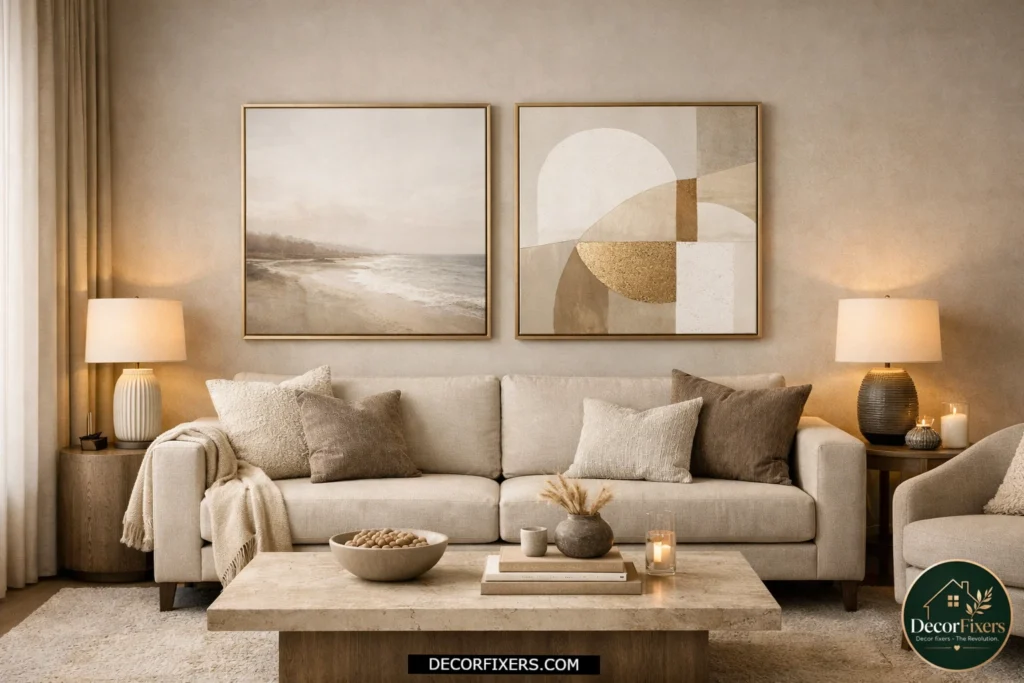
This is one of those mistakes that’s everywhere once you know to look for it. Art hung at eye level means the center of the piece sits 57–60 inches from the floor, which is museum standard. Most people hang art far too high. The result is a room that feels disconnected, like the walls are floating away from the furniture.
When hanging art above a sofa, the bottom of the frame should sit 6–8 inches above the sofa back, not a foot or more above it. This creates a visual connection between the furniture and the wall. If you follow one rule in this entire article, follow this one. It costs nothing and fixes rooms instantly.
17. Bring In Natural Materials: Rattan, Jute, and Linen
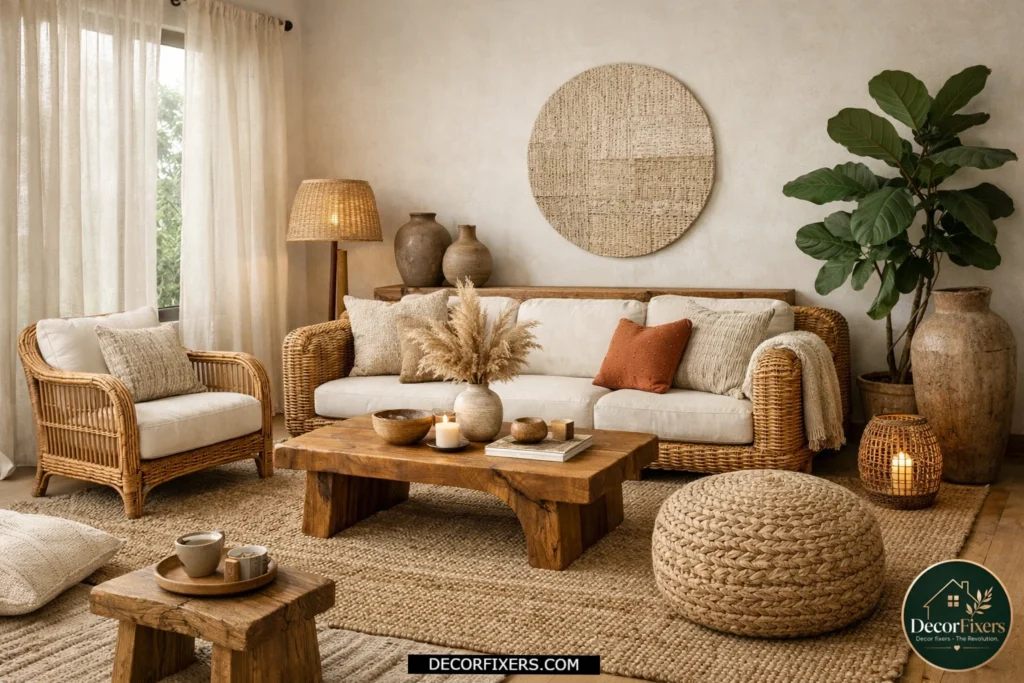
Organic materials, rattan baskets, jute rugs, linen curtains, woven poufs, add warmth and texture that no synthetic product can fully replicate. They also photograph beautifully, which matters if you’re documenting your space. The 2025–2026 design aesthetic is built on exactly this: natural, layered, tactile.
A rattan side table or plant basket: $30–$80. A jute or seagrass rug runner for a narrow zone: $60–$180. A woven pouf that doubles as extra seating: $70–$150. These pieces work in any style, minimal, bohemian, Scandinavian, or coastal. They’re the connective tissue between everything else in the room.
18. Add a Statement Light Fixture to Replace the Basic Ceiling Light
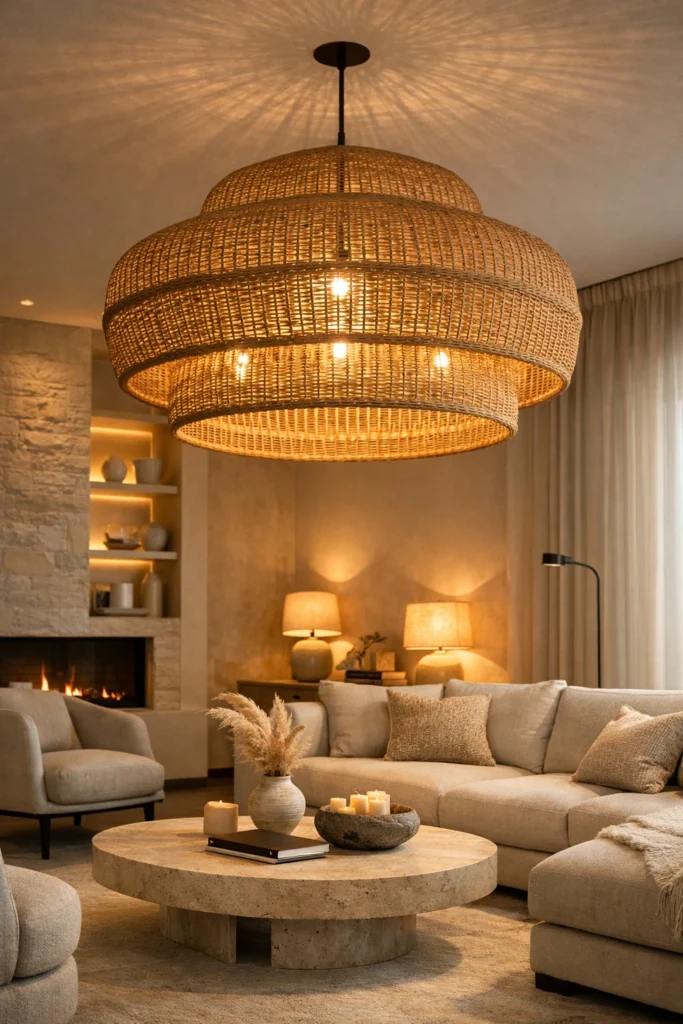
The builder-grade ceiling light is the easiest thing to replace and the most consistently overlooked upgrade. A rattan pendant, a brass chandelier, a drum shade, or a geometric cage light in the center of the room changes the entire character of the ceiling, which is the fifth wall most people forget entirely.
A good pendant or semi-flush ceiling fixture costs $120–$400. Swapping a light fixture is a straightforward DIY task: turn off the breaker, unscrew four bolts, and connect three wires. Done in 30 minutes. The visual upgrade is immediate and permanent, and guests will notice it within seconds of walking in.
19. Use a Console Table Behind the Sofa as a Room Divider
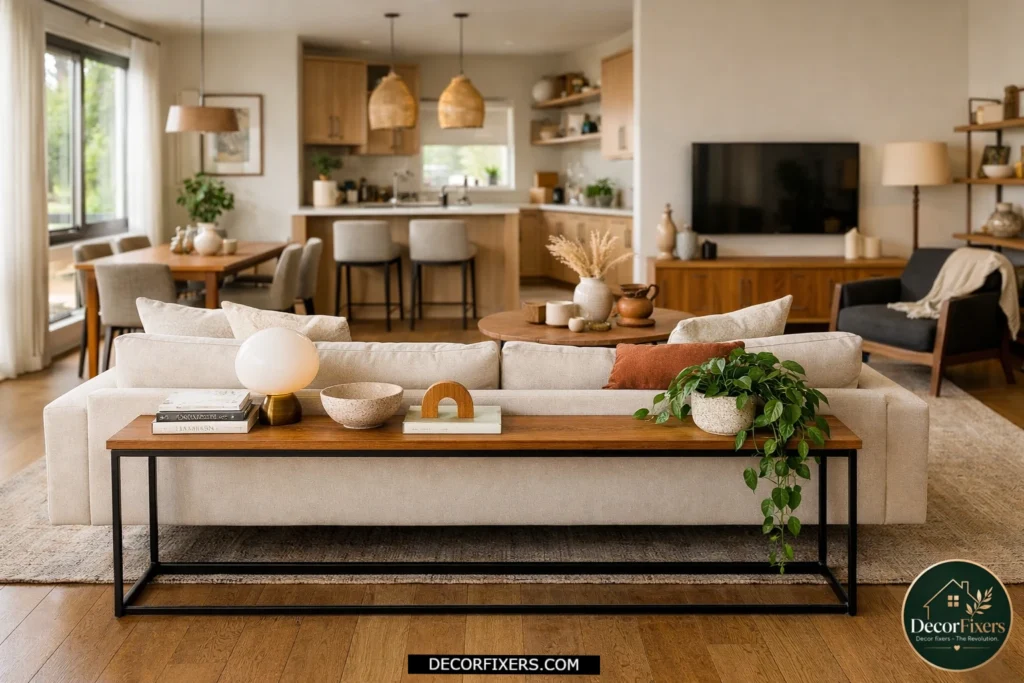
If your sofa floats in the middle of the room (common in open-plan apartments), a console table placed directly behind it defines the seating zone without walls. Style it with a lamp, a row of books, and a small trailing plant. It creates a layer of depth that makes the room feel like it was planned rather than arranged.
Console tables run $150–$450 at most furniture retailers. Look for slim profiles, 12–14 inches deep, so they don’t crowd the sofa. A table at the same height as the sofa back (around 30–32 inches) gives a seamless built-in effect. It’s one of those ideas that looks obvious in retrospect but transforms the room immediately.
20. Declutter First, Then Decorate
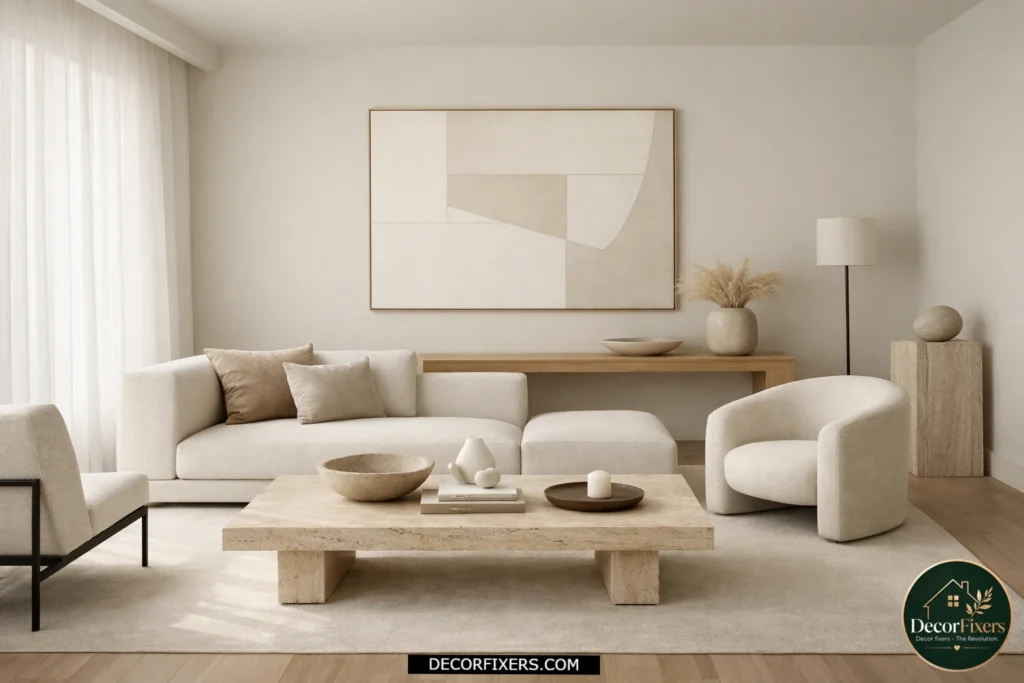
Or maybe I should say it this way: decoration amplifies what’s already there. Clutter + decoration = expensive clutter. Clean space + decoration = luxury. The most transformative thing you can do before spending a single dollar is remove everything that doesn’t serve a purpose or bring genuine visual pleasure.
Take every item off every surface. Put back only what earns its place. Most rooms need roughly 40% less than they currently have. Breathing room IS luxury. It’s not something money buys; it’s something editing creates. This step costs nothing and is the foundation on which every other idea on this list is built.
| What is the best color for a small living room? Warm whites, soft greiges (gray-beige blends), and pale sage green are the best colors for small living rooms in 2025–2026. These tones reflect light and make the walls feel farther apart. According to design principles backed by the 60-30-10 rule, keeping 60% of the palette in one light-dominant tone creates the perception of space, even in rooms under 200 square feet. |
21. Float Your Furniture, Pull It Away From the Walls
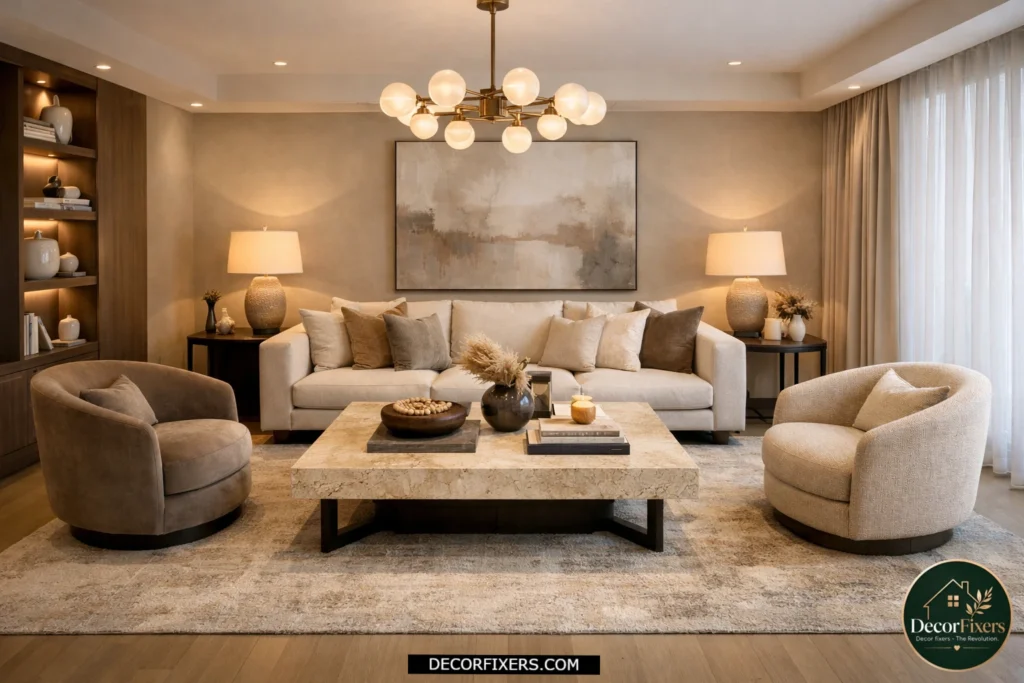
Pushing all furniture against the walls is the single most common living room mistake. It makes the room feel like a waiting room, not a home. Pull everything 6–18 inches away from the walls and arrange it around a central point, usually the coffee table or rug. This creates a conversational grouping that feels warm and inviting.
This idea costs exactly $0. It requires only courage and about twenty minutes of rearranging. I’ve seen it transform rooms more dramatically than a new sofa. If you’re starting from scratch or just moved in, this should be the first design decision you make, before you buy anything at all.
22. Add a Fireplace Effect with a Faux or Electric Insert
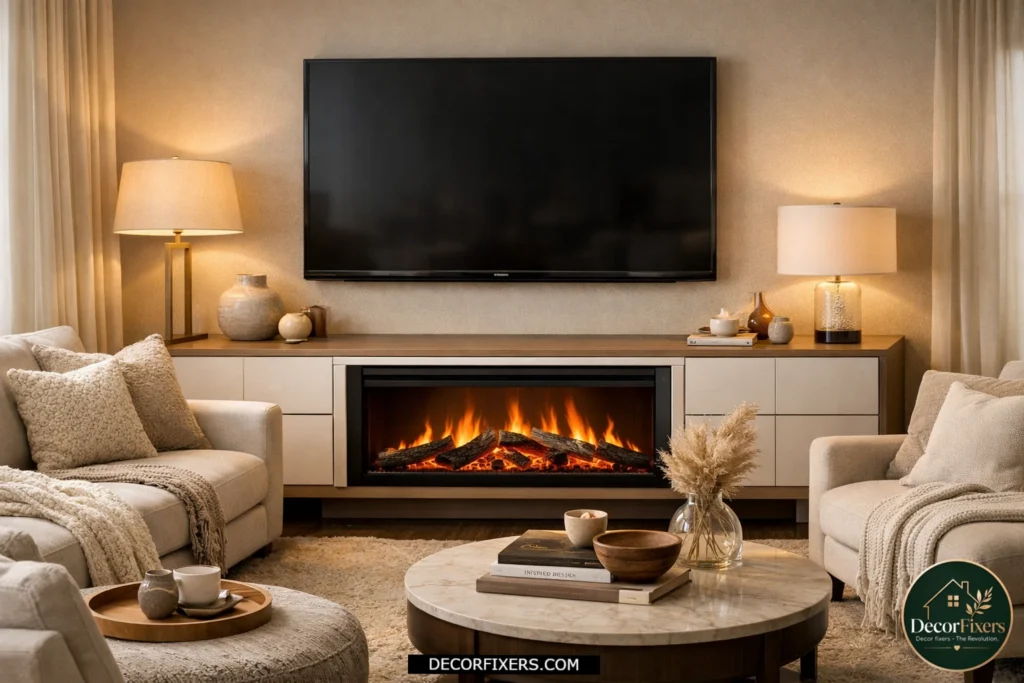
You don’t need a real fireplace to get the warmth, glow, and focal point that a fireplace creates. Electric fireplace inserts have become remarkably realistic, with flame effects, adjustable heat, remote control, and realistic ember beds. A freestanding electric fireplace in a media console format anchors the room exactly the way a real one does.
A quality electric fireplace unit runs $300–$900. Brands like Dimplex and ClassicFlame make models that genuinely look real from across a room. Even candles in a non-working fireplace opening create the same psychological warmth. The point is: the idea of fire makes rooms feel safe and luxurious, whether the flames are real or not.
23. Style Windowsills as Mini Display Zones
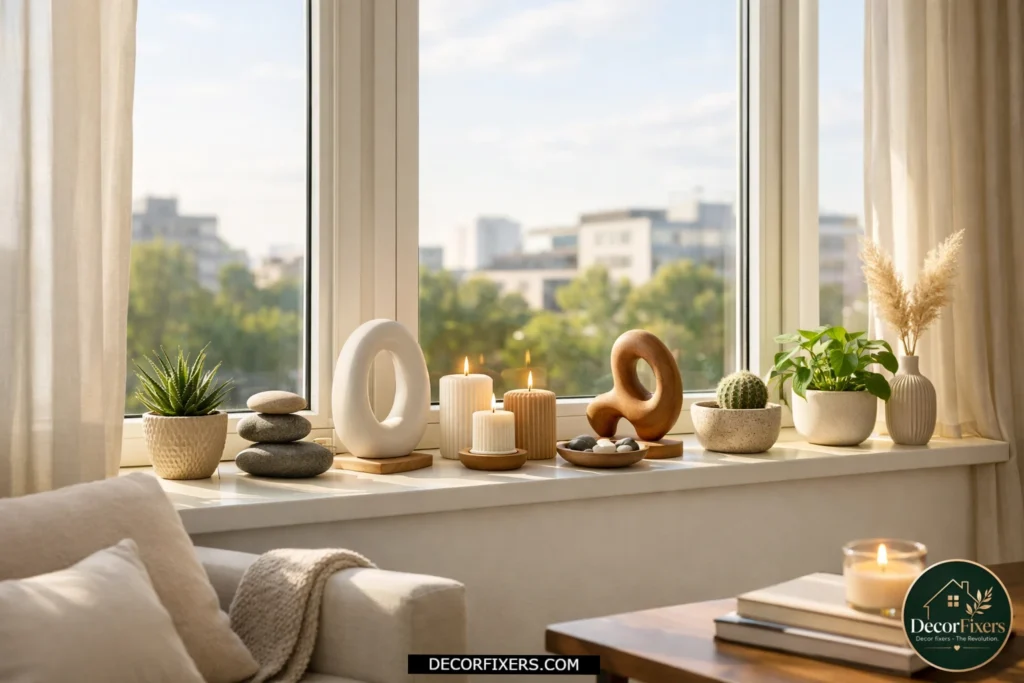
Windowsills are underused almost everywhere. A cluster of small plants, a few smooth stones, a single candle, and one sculptural object on a windowsill creates a layered vignette that catches natural light beautifully. It draws the eye toward the window, toward light and the outside world, which always makes a room feel more alive.
Total cost: $20–$60 if you’re starting from scratch. Less if you already own plants or candles. The key is to keep it edited, three to five objects maximum. More than that, it looks like a collection instead of a composition. There’s a difference, and it’s immediately visible.
| Peel-and-Stick Wallpaper vs. Traditional Wallpaper Peel-and-stick wallpaper is better suited for renters and commitment-averse decorators because it removes cleanly without wall damage and costs $100–$300 for a single accent wall. Traditional wallpaper works better in owned homes for permanent, high-fidelity finishes. The key difference is installation: peel-and-stick is a one-person DIY; traditional requires paste, time, and often a professional. |
24. Incorporate a Vintage or Thrifted Statement Piece
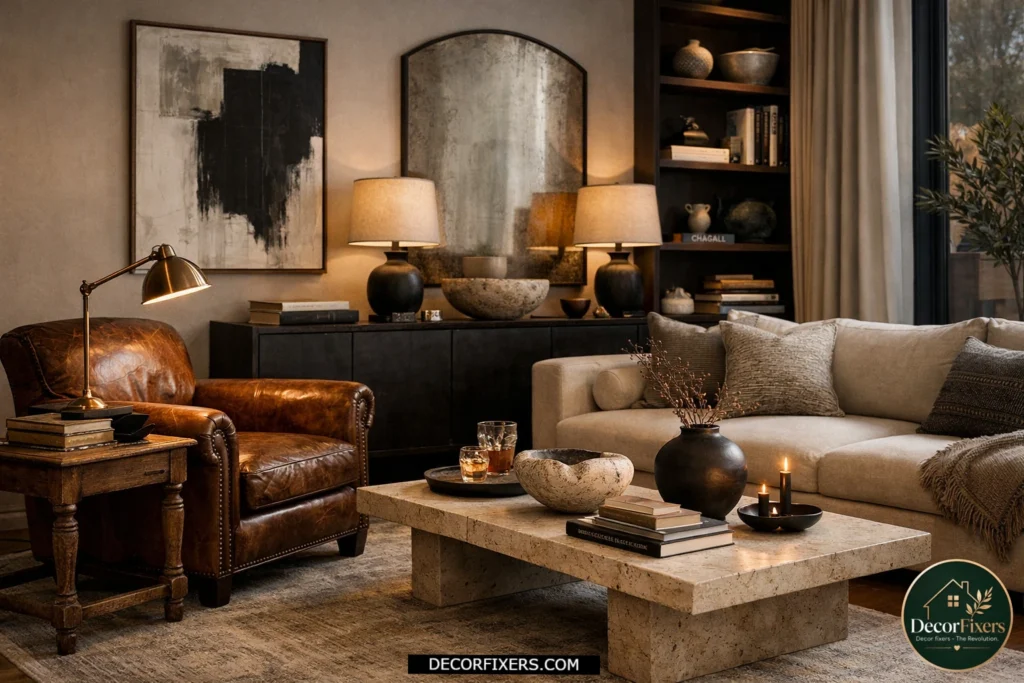
Every room that feels genuinely personal has at least one piece that didn’t come from a big-box retailer. A vintage armchair. A mid-century floor lamp. An antique side table. A ceramic vase with a handmade quality. These pieces can’t be replicated at scale, which is exactly why they make a room feel rare.
Facebook Marketplace, Chairish, eBay, and local estate sales regularly yield spectacular finds for $40–$300. A vintage piece that would cost $2,000 from a boutique retailer often sells for $80 at a local thrift store. You just have to look. And when you find the right piece, it becomes the thing guests ask about every single time.
25. Use a Tray or Basket System to Control Clutter
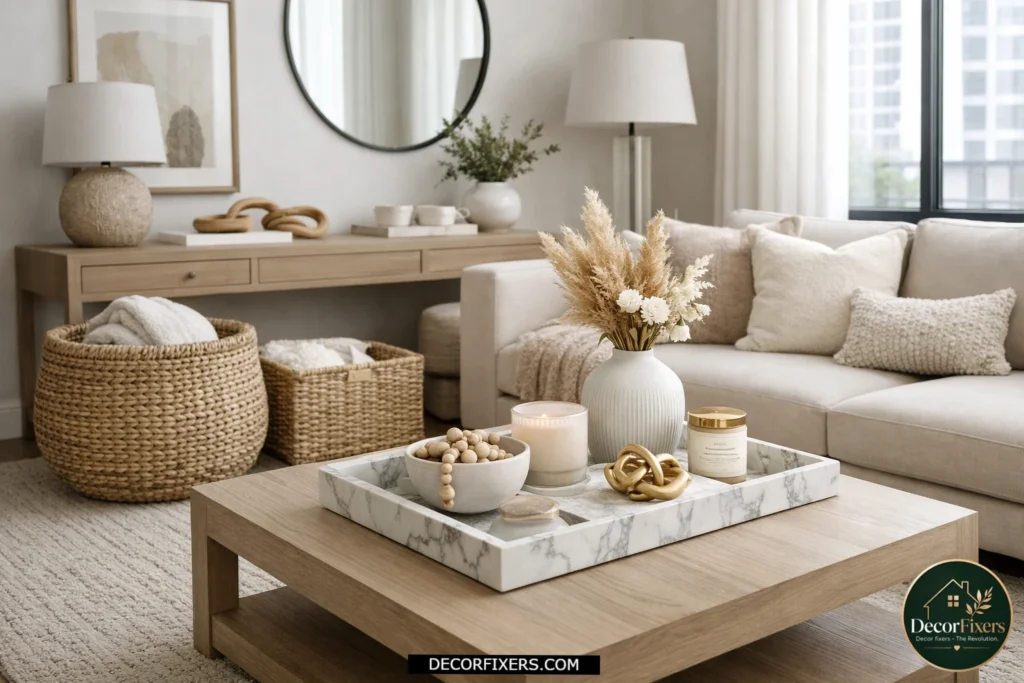
The most stylish living rooms have a solution for the stuff that inevitably accumulates: remotes, chargers, blankets, and magazines. That solution is containment: decorative trays, woven baskets, and lidded boxes that corral clutter without hiding it in a drawer, never to be found again.
A set of two quality woven baskets runs $30–$80. A marble or wood tray for the coffee table: $25–$60. When everything has a dedicated container, a room stays styled with almost no effort. The trick isn’t to own less, it’s to make storage part of the design.
26. Layer Two Rugs for Depth and Bohemian Richness
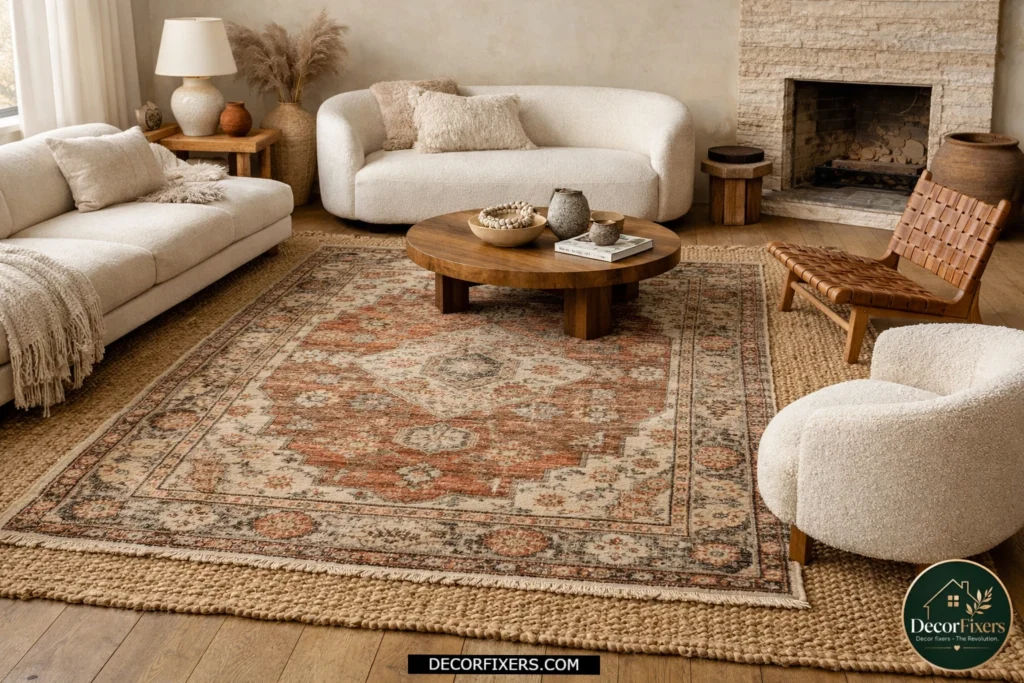
Rug layering, placing a smaller, patterned rug on top of a larger neutral one, is one of those designer moves that photographs impossibly well. A sisal or natural-fiber base rug topped with a smaller Turkish kilim, a cowhide, or a vintage-look printed rug adds depth and pattern interest without overwhelming the space.
The base rug can be a budget-friendly jute ($100–$200). The layered rug on top: $60–$200 vintage or similar. Together, they cost less than a single premium rug but create more visual interest. It also lets you rotate the top rug seasonally, a different rug, a completely different room mood.
27. Anchor the Room with a Statement Sofa
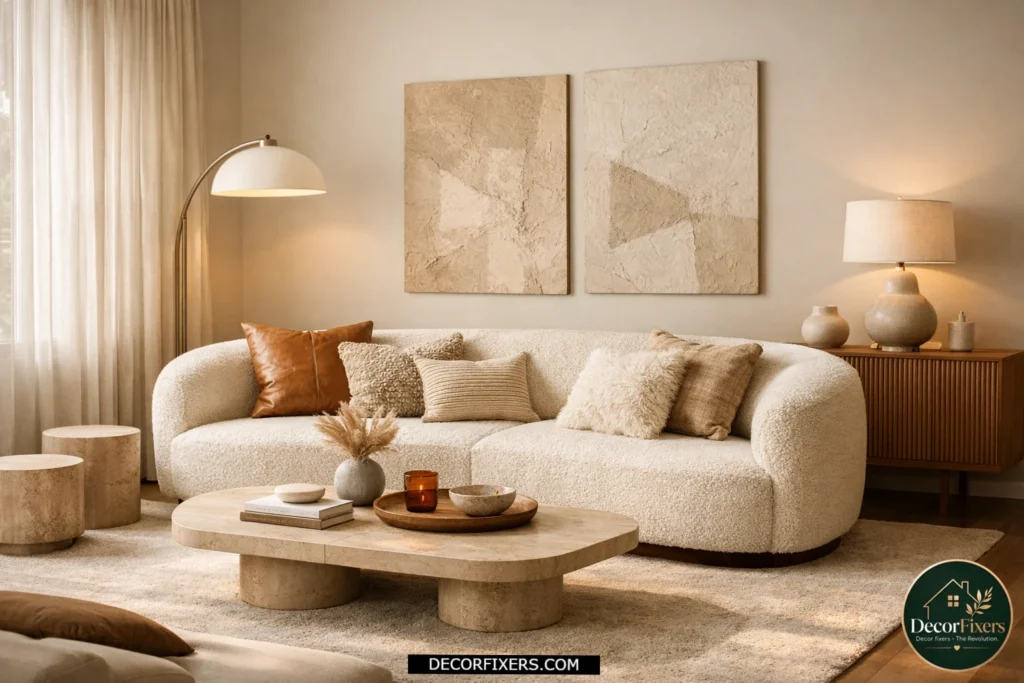
The sofa is the first thing every eye goes to. Every single time. A boucle or velvet sofa in a warm neutral, think ivory, dusty blush, or caramel, immediately signals “this room was thought about.” You don’t need to spend a fortune, but this is the one piece I’d say to invest in.
IKEA’s ÄPPLARYD or a mid-range Wayfair boucle sectional can do the job well. Expect to spend $800–$1,500. Pair it with mixed throw pillows, two in a solid, one in a texture, and one with a subtle pattern. That combination alone makes any sofa look styled, not bought.
28. Paint or Update Your Trim, Baseboards, and Doors
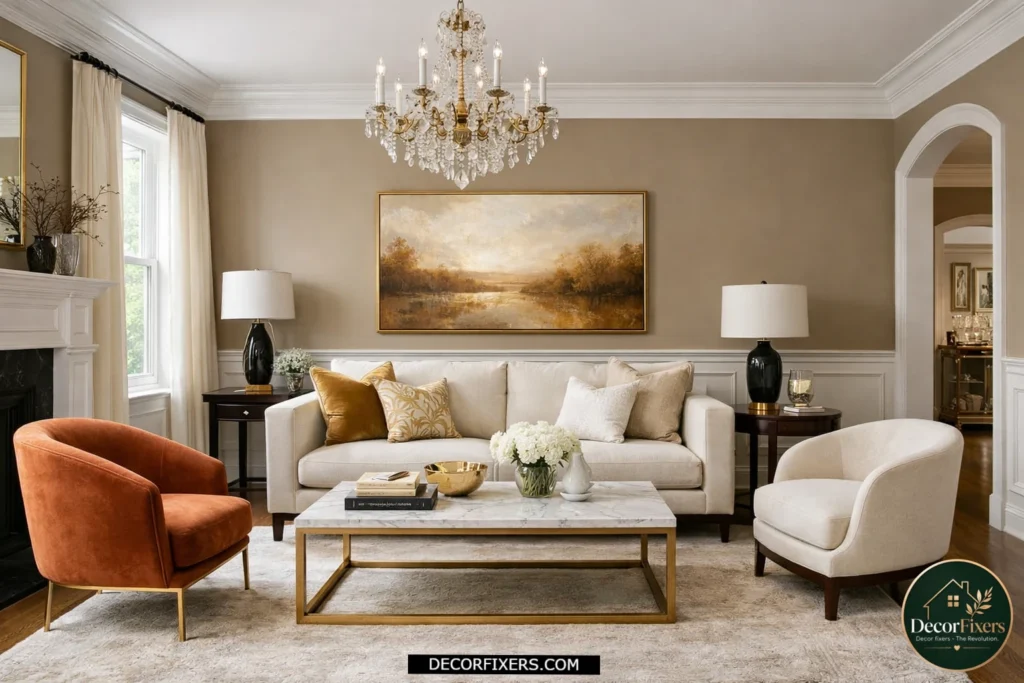
Nothing looks more polished, or more often overlooked, than crisp, freshly painted white trim against a colored wall. It’s the detail that separates rooms that look finished from rooms that look in progress. If your baseboards are dingy, scuffed, or yellowed, a coat of semi-gloss white makes the entire room read as newer and cleaner.
A quart of semi-gloss trim paint costs $18–$35. The job takes an afternoon and a steady hand. Paint your window frames, baseboards, and door frames at the same time. The compound effect of all three being the same bright, crisp white gives the room an architectural quality it didn’t have before, for under $60.
29. Visualize Before You Buy Using AI Room Planning Tools
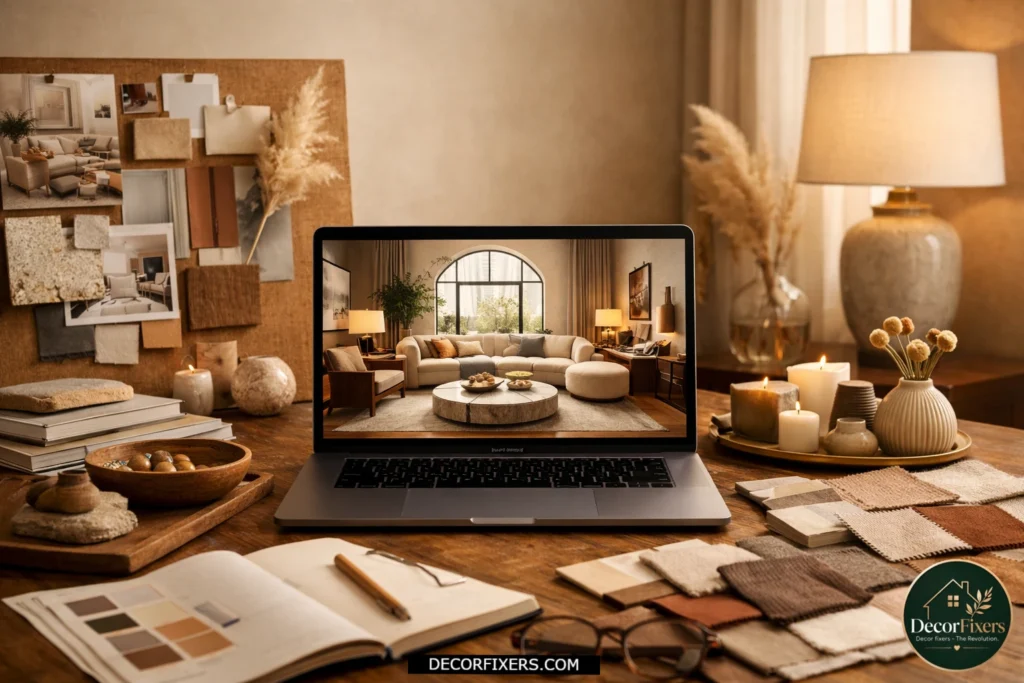
One of the smartest things you can do before spending anything is to see your room before it changes. Wayfair’s Muse, launched in early 2025, generates photorealistic room scenes from text prompts and lets you shop directly from the visualization. It’s free and remarkably accurate.
This matters because 42% of online shoppers report feeling overwhelmed by decor choices, according to a Grand View Research consumer survey. Visualization tools cut decision paralysis dramatically. You can test that sofa color, rug size, or gallery wall arrangement digitally before a single item ships. That’s not laziness, that’s smart design.
30. Take It Slow, Buy One Great Thing at a Time
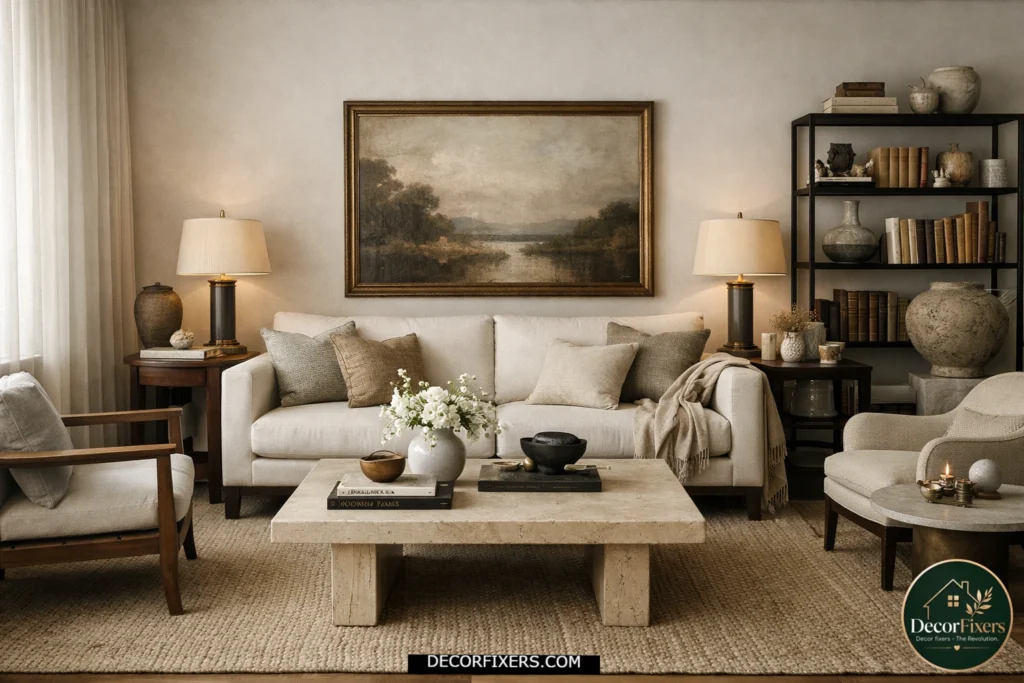
Look, if you’re trying to do everything at once, you’ll end up with a room that feels rushed and incoherent. The best-looking living rooms are rarely designed in a weekend. They evolve. One great piece leads to the next decision. A rug suggests a color palette. A palette suggests curtains. Curtains suggest what art would work.
This approach also keeps you under budget. If you spend $800 on a sofa, wait. Let it sit. See what the room tells you it needs next. Rooms that develop organically over months look curated because they were curated, just slowly. That patience is itself a design skill.
| How to Start Decorating a Living Room from Scratch? To decorate a living room on a budget, follow these steps: 1. Declutter, remove everything that doesn’t belong. 2. Define your color palette using the 60-30-10 rule. 3. Invest in the sofa, it’s the room’s anchor piece. 4. Add a properly sized area rug (front legs of furniture always on the rug). 5. Layer three types of lighting: ambient, task, and accent. 6. Style surfaces in odd numbers with mixed textures and heights. 7. Add organic elements: a plant, a natural material, or a vintage piece. |
CONCLUSION;
I’ve pulled together a lot of decor advice over the years, some of it worked, some of it didn’t. The ideas on this list aren’t theories. They’re the things that actually moved the needle in real rooms, without designer budgets or magazine-level styling crews.
What changed my own living room the most? Honestly, pulling the furniture away from the walls, sizing up the rug, and adding a floor lamp. Three changes. Under $400 total. The room went from feeling like a furnished apartment to feeling like a home someone actually cared about.
That’s what this is really about. Not trends. Not price tags. Care.
Start with one idea. The right one for where your room is right now. Then let the next idea reveal itself.
FAQs:
Q: What’s the best living room decor idea that costs under $100?
A: Floor-to-ceiling curtains. A pair of linen panels from IKEA hangs for under $60, and the visual effect, taller ceilings, softer light, is immediate and dramatic.
Q: How do I make a small living room look bigger?
A: Use light wall colors, mirrors opposite windows, furniture with exposed legs, and one properly sized rug.
Q: Should I match all my furniture in the living room?
A: No. Matching sets make rooms feel like showrooms. Mix wood tones, textures, and leg styles; keep one color palette consistent to hold it all together.
Q: Why does my living room look so empty even with furniture in it?
A: It’s almost always a texture problem. Add throw pillows, a blanket, a plant, and styled surfaces. Empty rooms have furniture. Full rooms have layers.
Q: When should I hire an interior designer instead of DIYing?
A: If you’re buying significant furniture (over $5,000 total), doing structural changes, or you’ve tried twice and the room still doesn’t work. For budget refreshes under $2,500, a confident DIY approach almost always delivers better results than you’d expect.

Creator of DecorFixers, sharing practical home and interior ideas focused on real-life usability, simple design improvements, and budget-friendly solutions.