


The first apartment I ever styled for a client had a dining area the size of a generous closet. She’d already bought a six-seater table, still in the box, shoved against a wall, and was eating cereal on her couch every morning. That table never left the box. It went straight back to the store.
I’ve seen this exact story play out in dozens of apartments since then. Someone gets excited, orders something that looks stunning in a showroom photo, and then stands in their actual 60-square-foot dining zone, realizing that math doesn’t lie.
This guide exists so that doesn’t happen to you. Whether you’re working with a 9×10 nook squeezed between the kitchen and the living room, or a studio where the dining area is basically the same as the living area, these Tiny Dining Room Ideas below are real, specific, and tested in actual apartments…
This guide covers apartments and rentals under 800 sq ft. It does NOT address freestanding homes with formal dining rooms or layouts that allow renovation.
Tiny dining room ideas for apartments refer to space-conscious design strategies, furniture choices, layout approaches, lighting, and visual tricks that create a functional, comfortable eating area inside limited square footage, typically between 40 and 100 square feet.
1. Measure Before You Buy Anything. Here’s the Rule Most People Skip
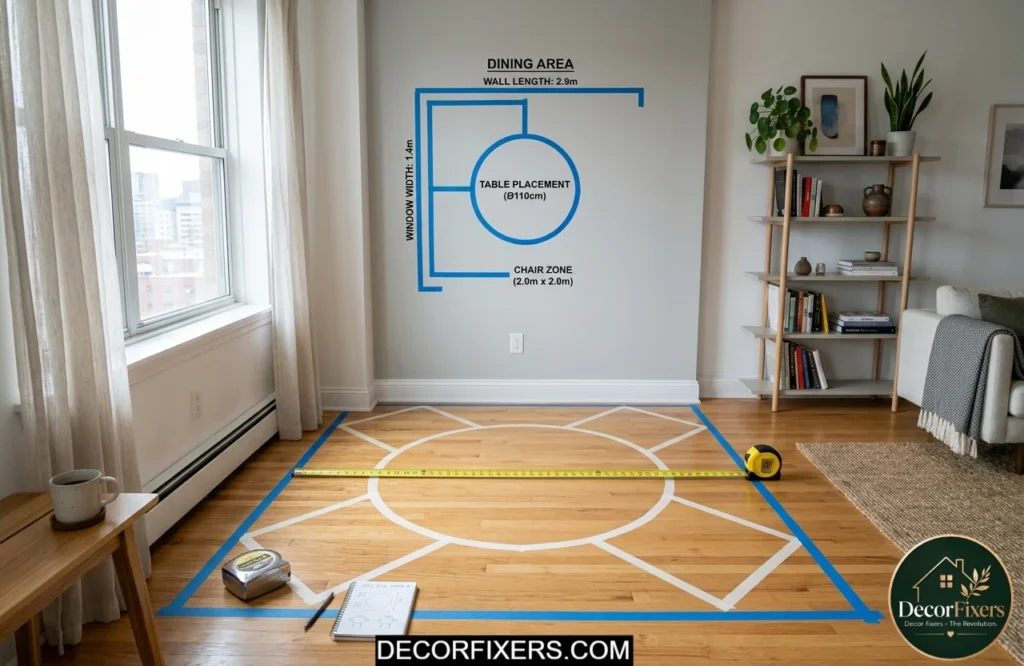
Every failed apartment dining setup I’ve ever seen had one thing in common: no one measured first. The furniture wasn’t wrong. The placement was.
The golden rule is 36 inches of clearance around every side of your dining table from which a chair can pull out. That’s the minimum, not the comfortable amount, the minimum. If you’re trying to choose the right layout or table size, especially in tight layouts, understanding how a Dining Table in Small Space actually fits in real-world apartments is critical before buying anything.
To figure out your real usable area, measure the room, then subtract the traffic paths. A clear walkway through any room should be at least 24 inches wide. Mark those corridors off on paper first, and whatever’s left is your actual dining footprint. It’s usually smaller than you think, and that’s fine, because everything below is designed for exactly that.
How to Measure Your Dining Space Before Buying Furniture
Step 1: Measure the total room dimensions and sketch them on paper.
Step 2: Mark all traffic paths with at least 24 inches of clearance.
Step 3: Subtract those corridors from your total area. What remains is your usable dining footprint.
Step 4: Confirm your chosen table fits with 36 inches of pull-out clearance on all chair sides.
Step 5: Test the layout with cardboard or tape on the floor before ordering anything.
2. Use a Round Table, It’s Not Just an Aesthetic Choice
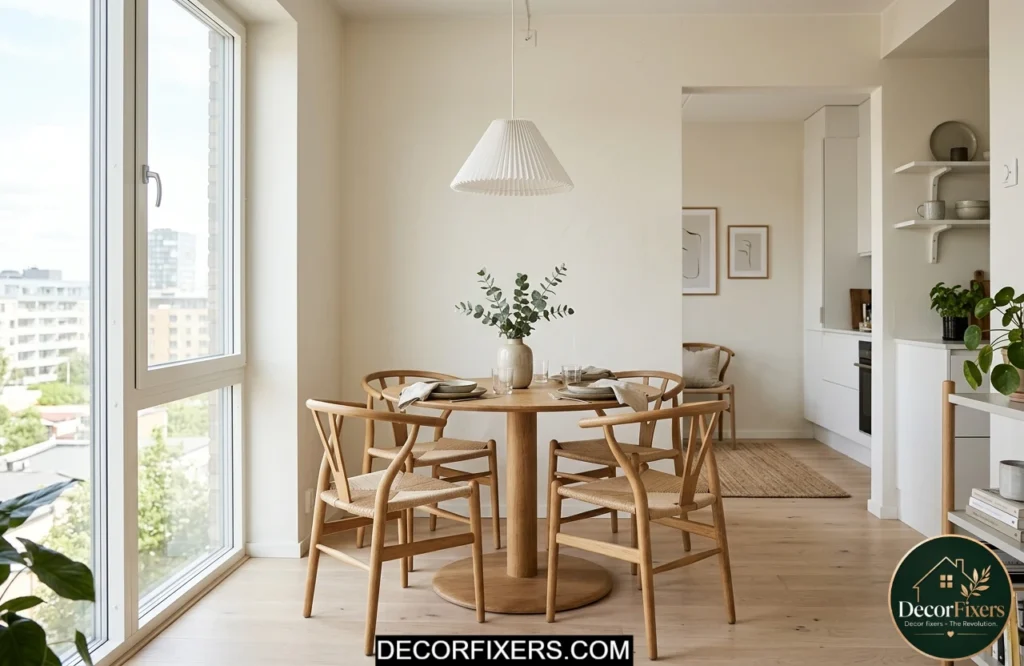
Round tables aren’t popular in small apartments just because they look good. They’re popular because they’re genuinely more space-efficient than rectangles at the same seating capacity. A 36-inch round table seats four people. A rectangular table that seats four is typically 48×30 inches, which takes up more floor space and creates hard, dead corners.
No corner means chairs can slide in from any angle, traffic flows around the table naturally, and the room feels less blocked. If you’re in an open-plan apartment where the dining area bleeds into the living room, a round table also reads as softer and less dividing; it won’t visually cut the room in half.
3. Try a Drop-Leaf or Gateleg Table, The Real Secret Weapon
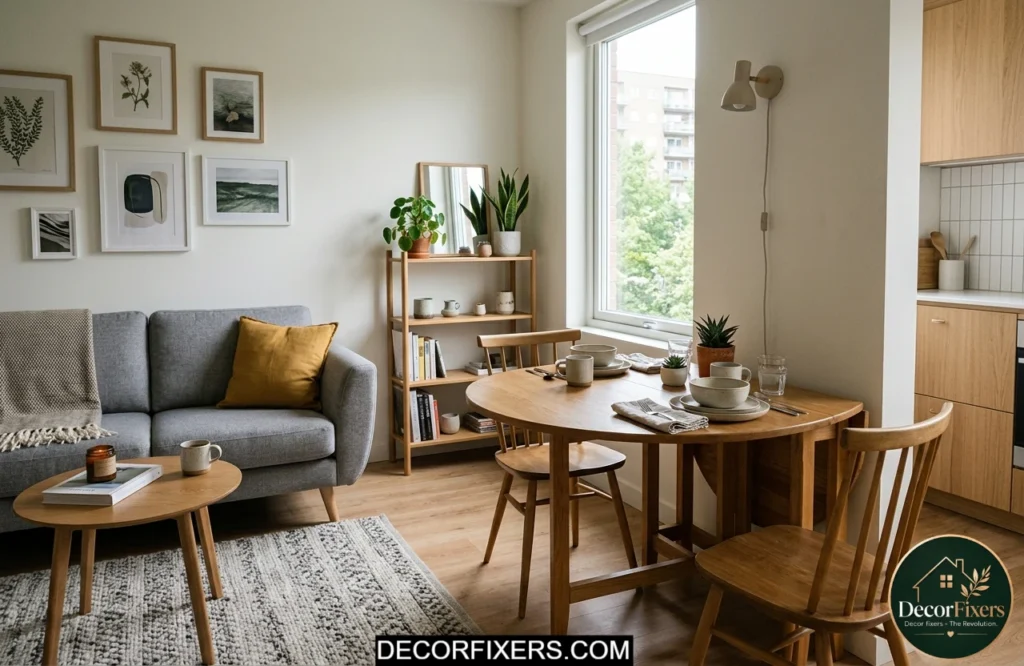
Look, if you’re living solo or with one other person, here’s what actually works: the IKEA NORDEN Gateleg Table. It folds down to just 10.5 inches wide and opens to seat four when needed. It’s been around for decades because nothing else in that price range does what it does.
When the leaves are folded down, it functions as a console, a sideboard, even a narrow kitchen surface. Swing out the legs and raise both leaves when guests come over, and you’ve got a full dining table. I’ve seen it work in apartments where people swore they had no space for a table at all.
Drop-leaf tables work on the same principle. One or both ends fold down flat when not in use, reducing the footprint by more than half. They’re not stylish in the way that marble-top bistro tables are stylish, but they’re quietly brilliant.
4. Mount a Fold-Out Table on the Wall, and Reclaim the Floor
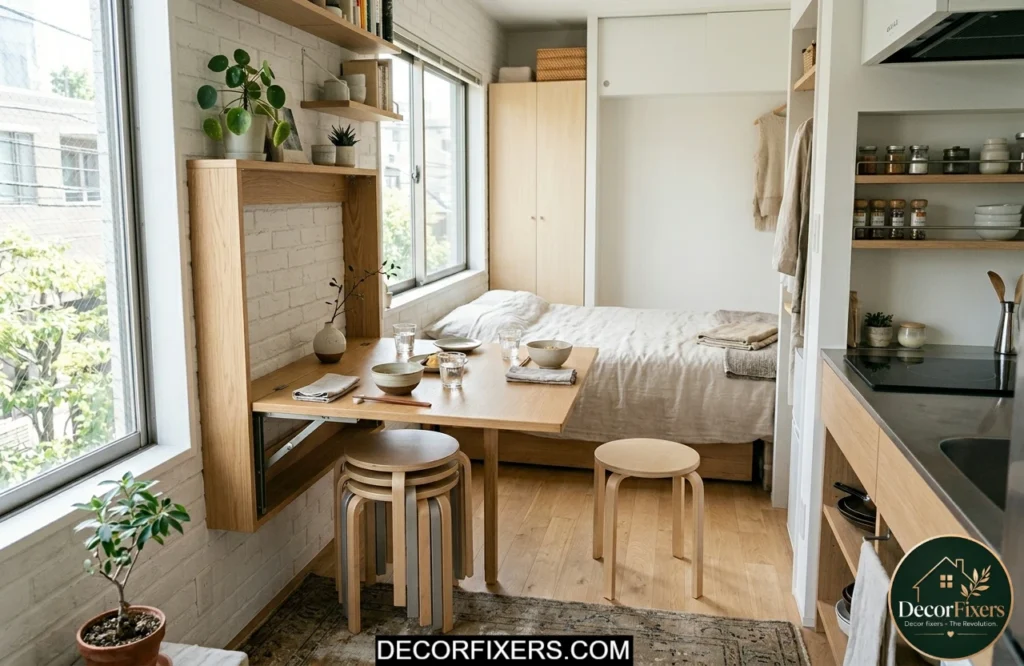
Wall-mounted fold-out tables are the most radical space-saving option on this list. When folded up, they take zero floor space. Zero. The entire dining area literally disappears into the wall. For apartments under 500 square feet, especially studios, this is worth serious consideration.
The catch is installation. You need a solid wall stud to mount it properly, and the weight capacity is lower than that of a freestanding table. Most wall-mounted dining tables max out around 150–200 lbs, which is fine for everyday meals and laptop work, but not ideal if you’re placing heavy serving dishes on them.
Pair a fold-out wall table with stackable stools (not chairs) that tuck underneath, and the whole setup occupies about 6 inches of wall space when not in use. That’s not a dining room, that’s a magic trick.
5. Build a Corner Dining Nook, the Most Underused Space in Any Apartment
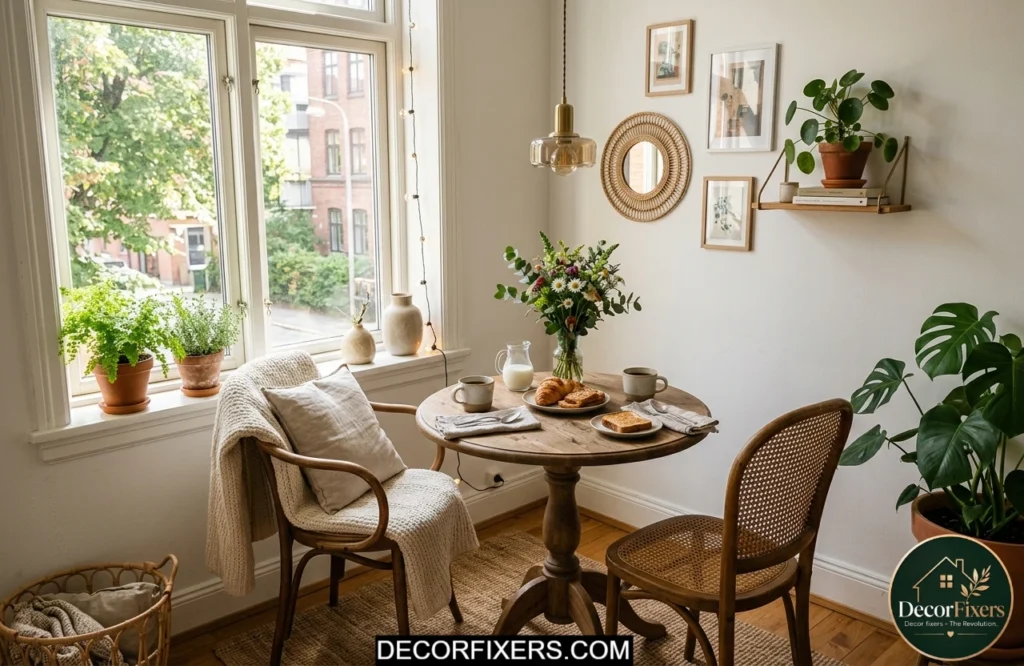
Corners are the dead zones of most apartments. People put plants there, or nothing at all. But a corner is actually the ideal location for a dining nook because it uses two walls to define the space without consuming the center of the room.
A small bistro-style table in a corner, flanked by two chairs angled toward it, creates a distinct dining area that feels intentional even in an open-plan layout. If the corner has a window, even better, natural light makes the spot feel like a destination rather than an afterthought.
The key is keeping everything compact. A 24×24-inch square table or a 28-inch round table works best in a corner. Go any bigger, and you’ll block the natural flow out of the corner, which defeats the purpose entirely.
6. Replace Two Chairs with a Bench, You’ll Gain Seats and Save Space
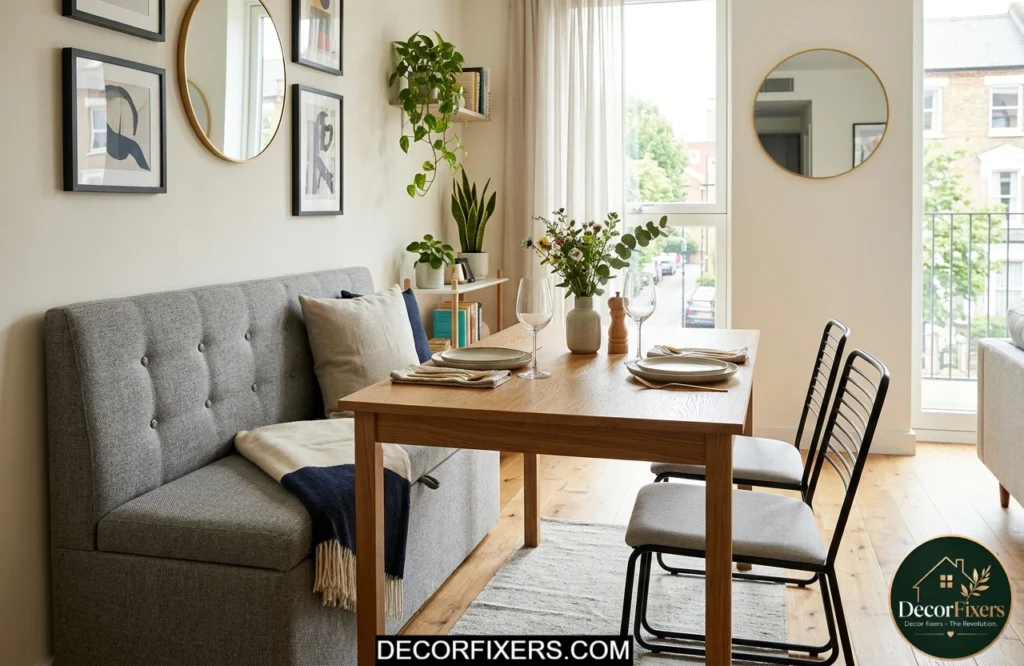
Chairs eat space. Not just the space they occupy when you’re sitting, they eat space behind them when pulled out, space beside them when turned, and visual space just by existing. A bench tucked along one wall solves three of those four problems at once.
With a bench on one side of the table and one or two lightweight chairs on the other, you can seat more people in the same footprint. The bench stays flush with the wall when not in use, no clearance needed behind it. Swap the chairs for something stackable or foldable, and the whole setup becomes dramatically more flexible.
Bonus: benches can double as storage if you choose the right style. An upholstered bench with a hinged lid gives you a place to eat and a place to store table linens, extra cushions, or anything else that’s cluttering the apartment.
7. Go with Bar Height, Taller Tables Open Up the Floor Visually
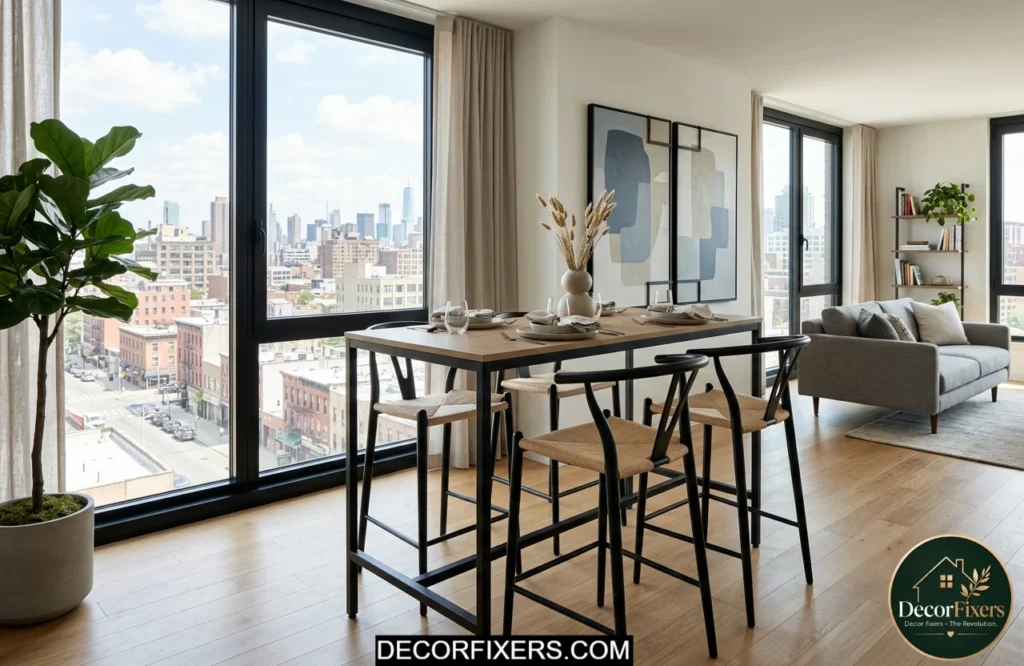
Counter-height and bar-height tables (ranging from 34 to 42 inches tall) are an underused option for tiny apartment dining rooms. Because the stools or chairs tuck fully underneath, the floor beneath the table is visible, and visible floor space makes a room feel bigger than it is.
Counter stools tuck in, they’re easy to remove, and they work double duty as extra seating anywhere in the apartment. A 36-inch round counter-height table with three slim stools is one of the cleanest setups you can put in a small space.
The one real trade-off: bar seating is less comfortable for long meals or working from home. If you use your dining table as a desk, stick with standard height.
Quick Comparison: Which Table Type Is Right for Your Apartment?
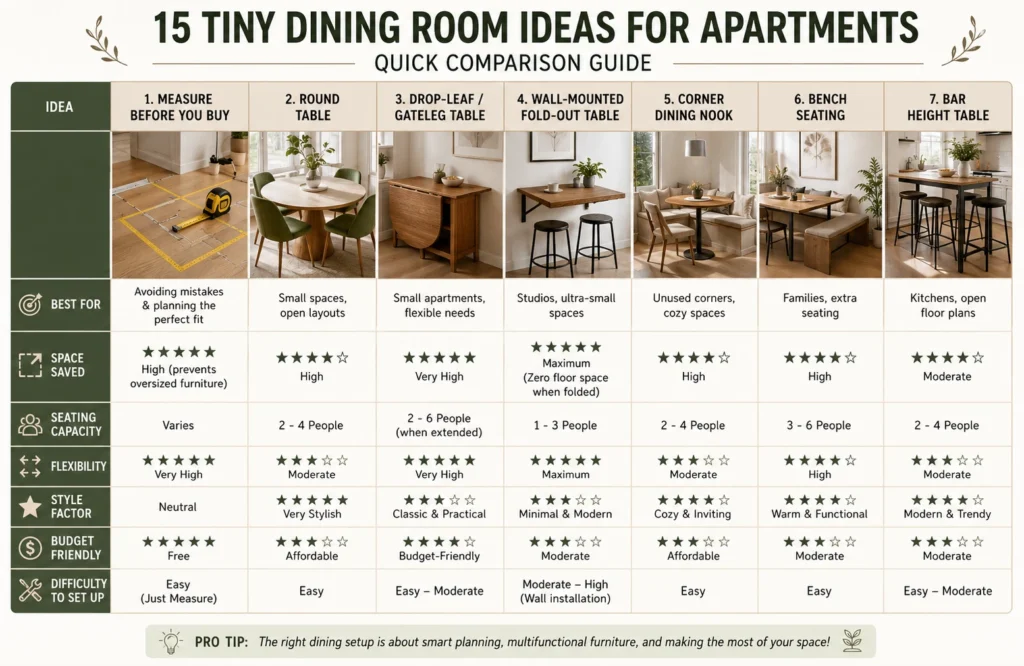
Use this table to match your space and habits to the right dining setup.
| Option | Best For | Key Benefit | Limitation |
| Drop-Leaf / Gateleg Table | Solo renters & couples in studios | Folds flat, takes zero floor space when unused | Limited seating capacity when leaves are down |
| Round Pedestal Table | Open-plan apartments, 2–4 people | No corners = better flow; seats more per sq ft | Can’t push against a wall efficiently |
| Wall-mounted Fold-out Table | Micro apartments under 500 sq ft | Disappears completely when folded up | Weight limit: needs a solid wall stud |
| Extendable Rectangular Table | Couples who occasionally host guests | Grows with your needs; versatile daily use | A heavier extension mechanism needs clearance |
| Banquette / Corner Bench | Corner spaces; renters who want storage | Built-in storage below; seat more guests | Fixed layout; not renter-friendly without DIY |
8. Use a Rug to Define the Dining Zone, Even When There’s No Actual Room
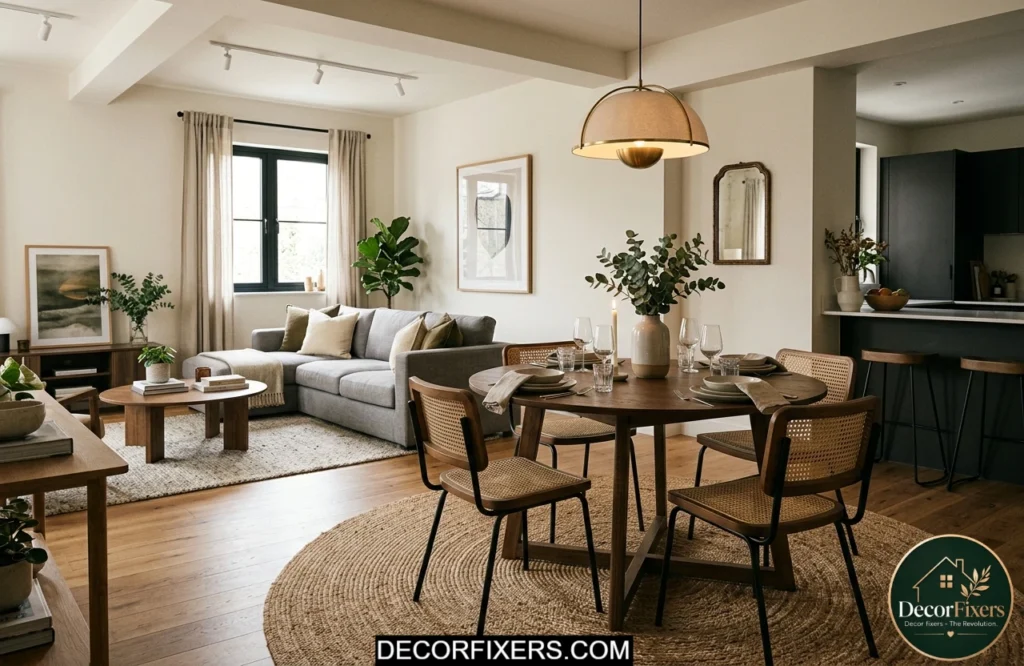
In open-plan apartments where the dining area is technically part of the living room, a rug is the most affordable space-definer you can buy. Place it under just the table and chairs, not extending into the living zone, and the dining area suddenly becomes a room within a room.
Size matters here. The rug should extend at least 24 inches beyond the table on every side so chairs remain on it when pulled out. Most people buy rugs too small for their dining areas. A 5×7 rug is typically the minimum for a two-person setup; a 6×8 or 8×10 if you want it to look proportional.
Stick to flat-weave or low-pile rugs under dining tables. High-pile makes chairs hard to move and shows food spills immediately. A natural fiber like jute or a flat cotton weave cleans easily and holds its shape.
9. Hang a Pendant Light Over the Table, It’s the Cheapest Way to Make It Feel Real
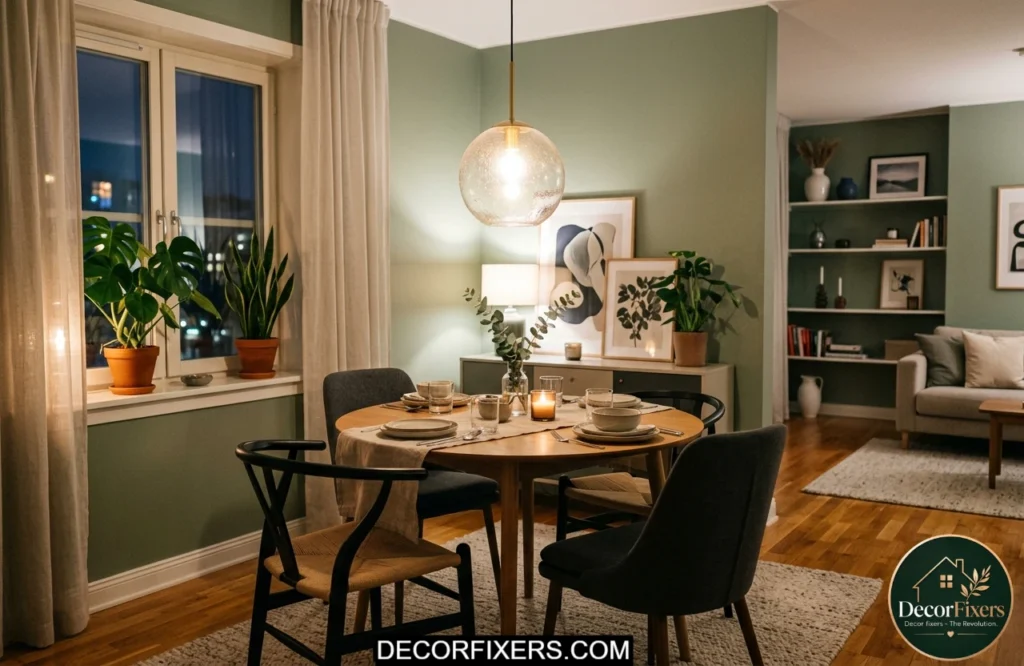
Here’s the thing: most tiny apartment dining setups look improvised because they lack a focal point. A pendant light hung directly over the dining table changes that instantly. It signals to anyone who walks in, and to you every day, that this is intentionally a dining area, not just a table that happens to be there.
This is one of the most consistently skipped steps in small apartment design, and it’s why so many setups feel temporary even after months of living there. A pendant doesn’t have to be expensive. A $40 rattan pendant from any home store will do the job. What matters is the placement: hang it so the bottom of the shade sits 30–34 inches above the tabletop. Once lighting is set, the next step is refining the atmosphere using layered styling from Dining Room Decor Ideas that help small spaces feel intentional rather than improvised.
For renters who can’t hardwire a light, plug-in pendant lights exist; they hang the same way and plug into a standard outlet. This one change will make your dining area look more intentional than almost anything else on this list.
10. Combine the Dining Table and Work Desk, One Surface, Two Jobs
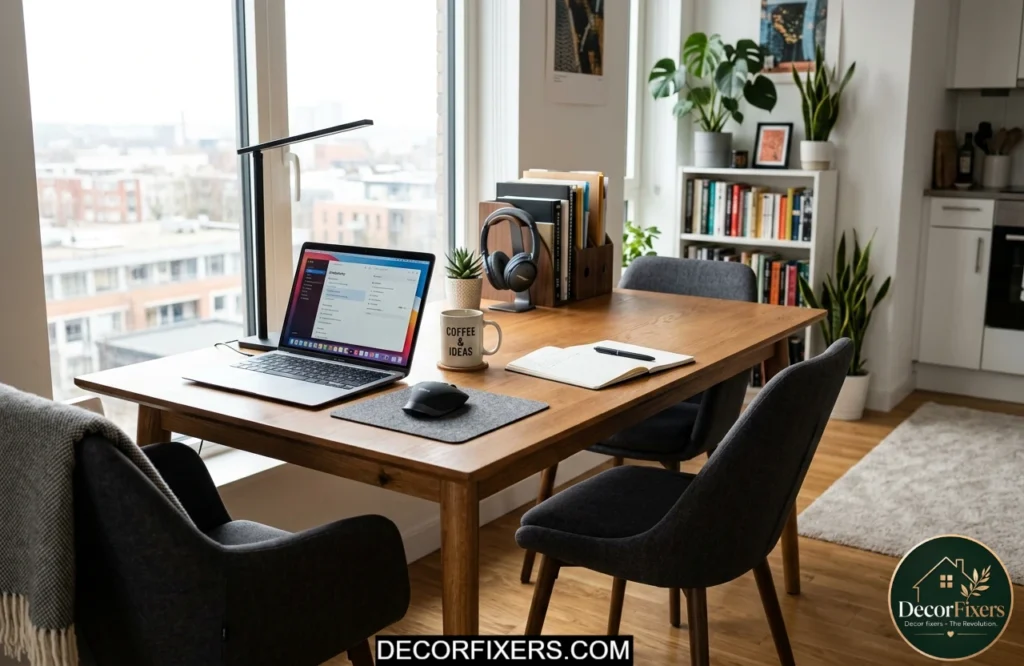
If you work from home and live in a small apartment, you almost certainly can’t afford separate surfaces for dining and working. Trying to maintain both is how apartments end up feeling cluttered and chaotic.
The fix isn’t a compromise, it’s a deliberate choice. Pick one table that does both well. Prioritize a surface between 48 and 60 inches wide (enough for a laptop, monitor, and still leave room for a plate). Keep the work setup minimal: a laptop stand and a compact monitor rather than a full desktop rig. At meal times, the work gear goes away, literally, not just to the corner of the same table.
This works best when paired with a small storage unit nearby (a rolling cart, a small sideboard, or even a shelf) so work materials have somewhere to go during meals. The zone has to transform, not just double.
11. Use Mirrors to Make the Dining Area Feel Twice as Wide
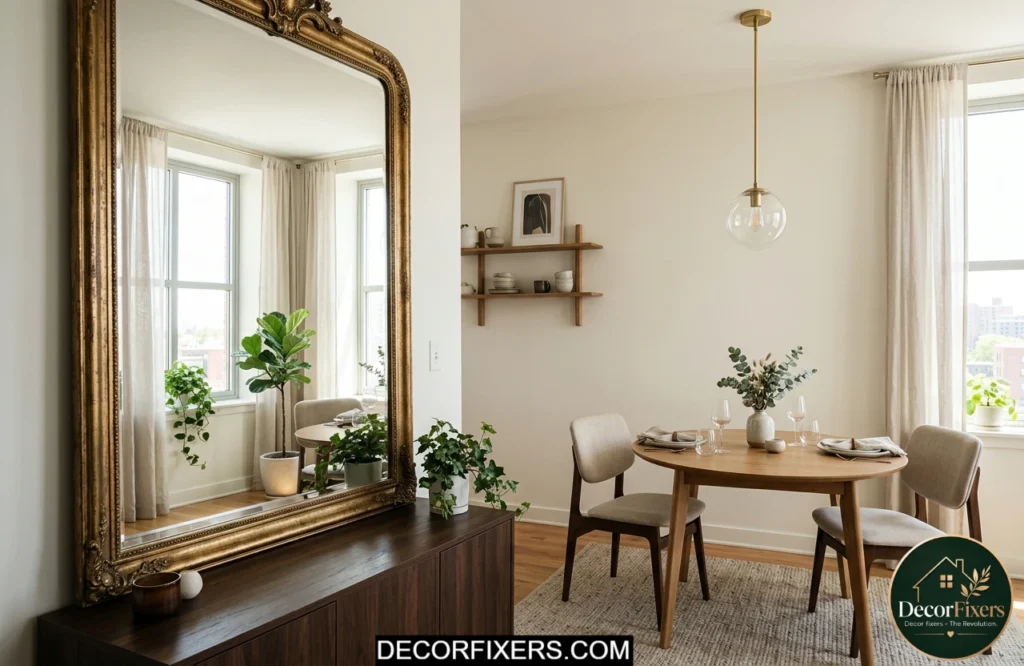
I’ve seen conflicting advice on this; some designers say mirrors in dining areas feel dated, others say they’re essential for small spaces. My read is this: a large mirror on the wall adjacent to the dining table works brilliantly, while a mirror directly facing you at the table feels strange. Angle matters.
A floor-to-ceiling mirror or a large framed mirror on the wall beside the table visually doubles the perceived width of the dining area. It bounces light, reduces the feeling of enclosure, and makes the space feel active rather than cramped.
Keep the mirror simple; ornate frames compete with everything around them in a small space. A flat black or thin brass frame works with almost any style.
12. Try Ghost Chairs or Transparent Furniture, Visual Weight Is Real
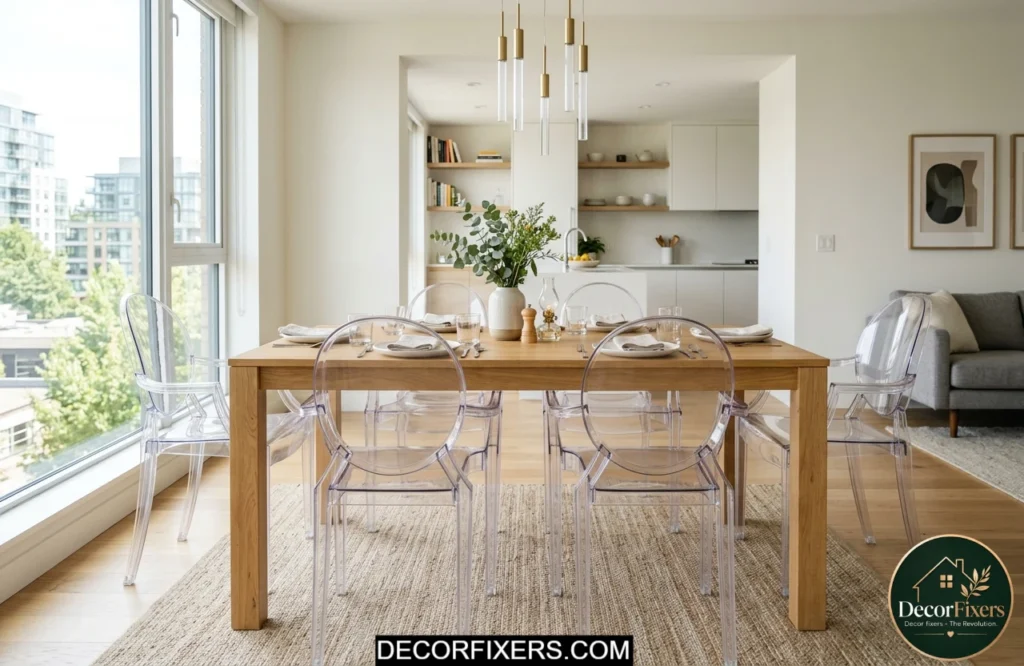
Physical size and visual weight are two different things. A solid wooden chair takes up the same floor space as a transparent acrylic chair, but the acrylic chair almost disappears against the floor and wall behind it, making the room feel more open.
Ghost chairs (the Kartell Louis Ghost style, or budget versions from CB2 and similar brands) are particularly effective in tiny dining rooms because they provide seating without visual mass. The table itself can be more substantial if the chairs are transparent; that contrast actually looks deliberate rather than sparse.
Or maybe I should say it this way: the goal isn’t to make the furniture invisible, it’s to make the room feel like it breathes. Mixing one solid anchor piece (like a wood table) with lighter, visually airy chairs hits that balance.
13. Push the Table Against the Wall for Every Day, Pull It Out for Guests
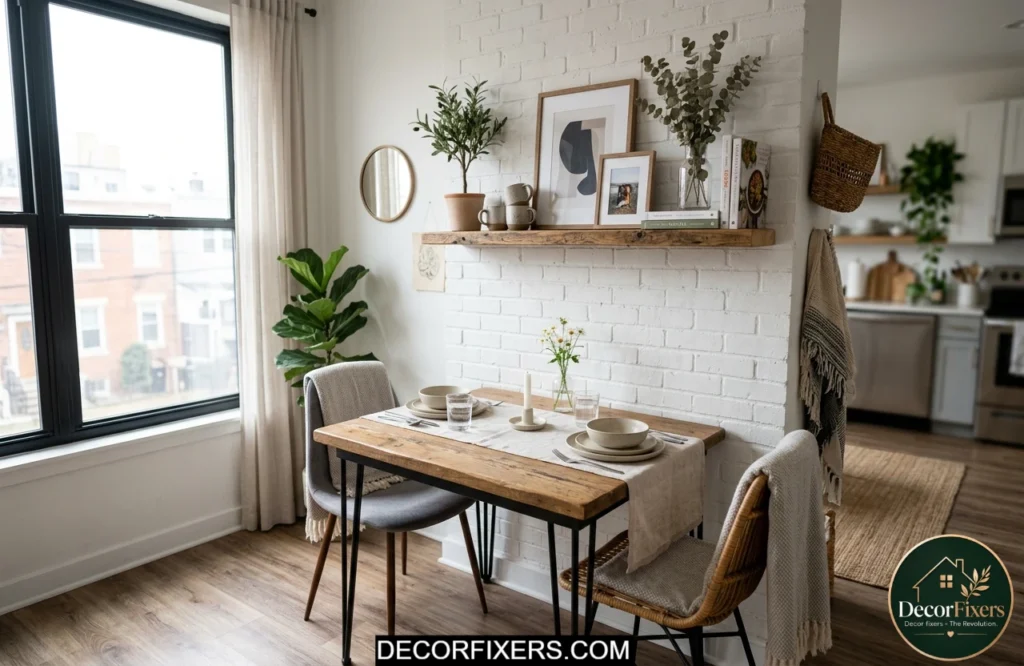
Most apartments don’t need a free-floating dining table most of the time. They need one when guests are over. The rest of the time, the table against the wall functions as a surface, a console, a spot for keys and mail, and takes up half the floor space.
This works best with a rectangular table that has a finished back edge (so it looks intentional against the wall) or with a wall-mounted shelf above it to reinforce the idea that this is a deliberate zone, not furniture that’s just been parked there.
When guests arrive, pull the table out, add chairs from elsewhere in the apartment, and the dining space expands. This is one of the most practical and most underused strategies for small apartment dining areas.
14. Use Vertical Space, Shelving Above the Table Adds Storage and Style
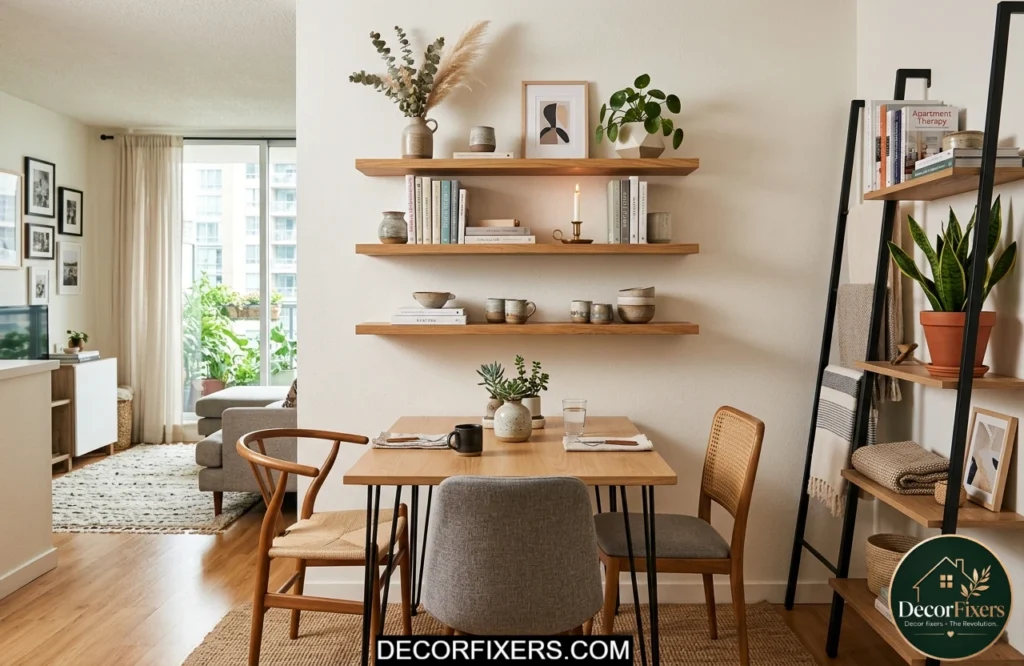
When floor space is maxed out, go up. Floating shelves or a wall-mounted shelving system above the dining table don’t just add storage; they visually anchor the dining zone and make it feel like a designed space rather than an empty corner with a table in it.
Keep the lowest shelf at least 18 inches above the tabletop (more if people stand up frequently, you don’t want anyone knocking their head). Use the shelves for things that are also decorative: ceramics, plants, a few books, and candles. Purely functional storage (cleaning supplies, paperwork) belongs elsewhere.
This approach works especially well with the corner nook setup from Idea 5. Two walls of shelving above a corner table create something that feels genuinely built-in, even in a rental.
15. Invest in One Statement Piece, and Keep Everything Else Simple
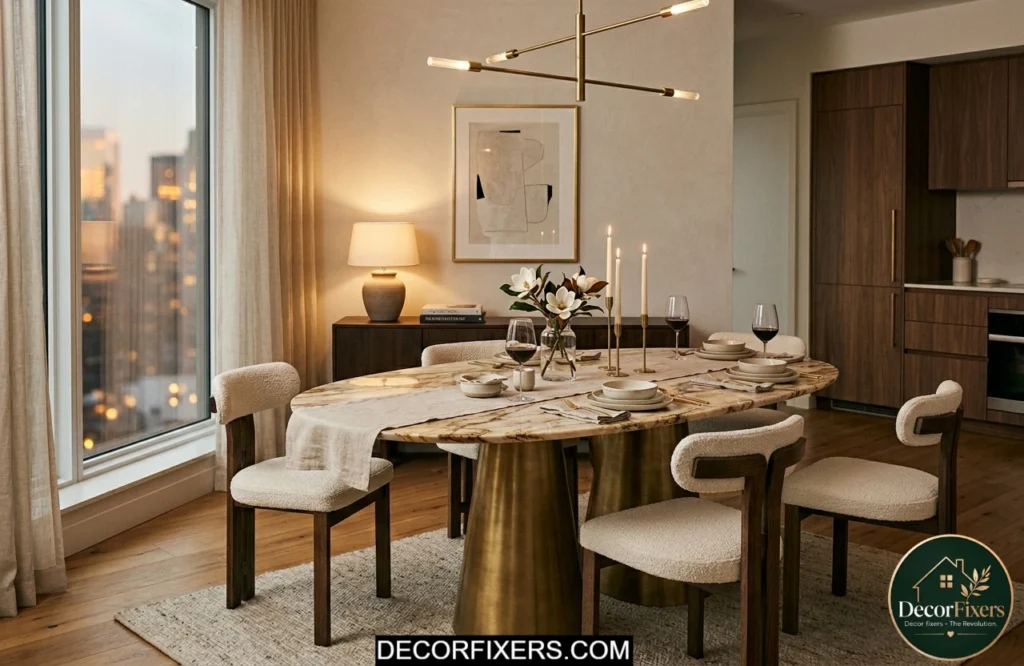
This is the idea most people resist, and the one that most consistently transforms a small dining area. When the space is tiny, clutter reads louder than in a large room. Every extra object is competing for attention in a much smaller frame.
Pick one thing to be the statement: a beautiful table, a bold pendant light, a ceramic vase, or a distinctive chair. Then let everything else recede. Simple chairs. Neutral walls. One small plant, not six. The contrast between the one interesting thing and the deliberately restrained surroundings is what makes the space feel curated rather than cluttered.
The CB2 Babylon Marble Table is a good example; it’s small-footprint by design (seats two), built in marble, and looks intentionally architectural in a way that elevates the entire room around it. Expensive, yes. But one great piece lasts longer and looks better than four mediocre ones.
CONCLUSION:
Anyway, here’s what I keep coming back to after all the apartments, all the bad table purchases, and all the dining areas that finally worked: small doesn’t mean worse. It means more intentional.
The renters I’ve worked with who ended up with dining spaces they actually loved didn’t have more room than anyone else. They had one good table at the right scale, a pendant light over it, and enough restraint to stop adding things once the setup worked. That’s it.
Start with measurement. Pick one table type from the comparison above that matches your actual habits, not your aspirational ones. Add light above it. Put a rug under it if it’s floating in an open-plan space. Then stop.
The dining area you actually use every day will always beat the one that looks better in theory.
FAQs:
Q: What’s the best dining table for a studio apartment?
A: A round drop-leaf or gateleg table like the IKEA NORDEN is the most practical choice. It folds to near-flat when not in use and opens to seat four, without taking permanent floor space.
Q: How do I create a dining area in an open-plan apartment?
A: Use a rug to define the zone, hang a pendant light above the table, and choose furniture that’s visually distinct from the living area setup. The rug is the cheapest and fastest way to make the separation feel real.
Q: Should I use round or rectangular tables in a tiny dining room?
A: Round tables for tight spaces, no dead corners, better traffic flow, and more seats per square foot. Rectangular tables only make sense when you need to push the table flush against a wall daily.
Q: Why does my small dining area always look cluttered?
A: Almost always because the furniture is oversized for the space, or because there are too many competing objects at once. Scale down the table, eliminate two pieces of decor, and clear the tabletop entirely when not eating.
Q: When should I use a wall-mounted fold-out dining table?
A: When you’re in a studio or micro apartment under 500 sq ft, and the floor space genuinely cannot accommodate a freestanding table. It requires a solid wall stud and some installation effort, but the result is a dining surface that vanishes completely when not needed.

Creator of DecorFixers, sharing practical home and interior ideas focused on real-life usability, simple design improvements, and budget-friendly solutions.
1 thought on “15 Tiny Dining Room Ideas for Apartments: Real Fixes That Work”