

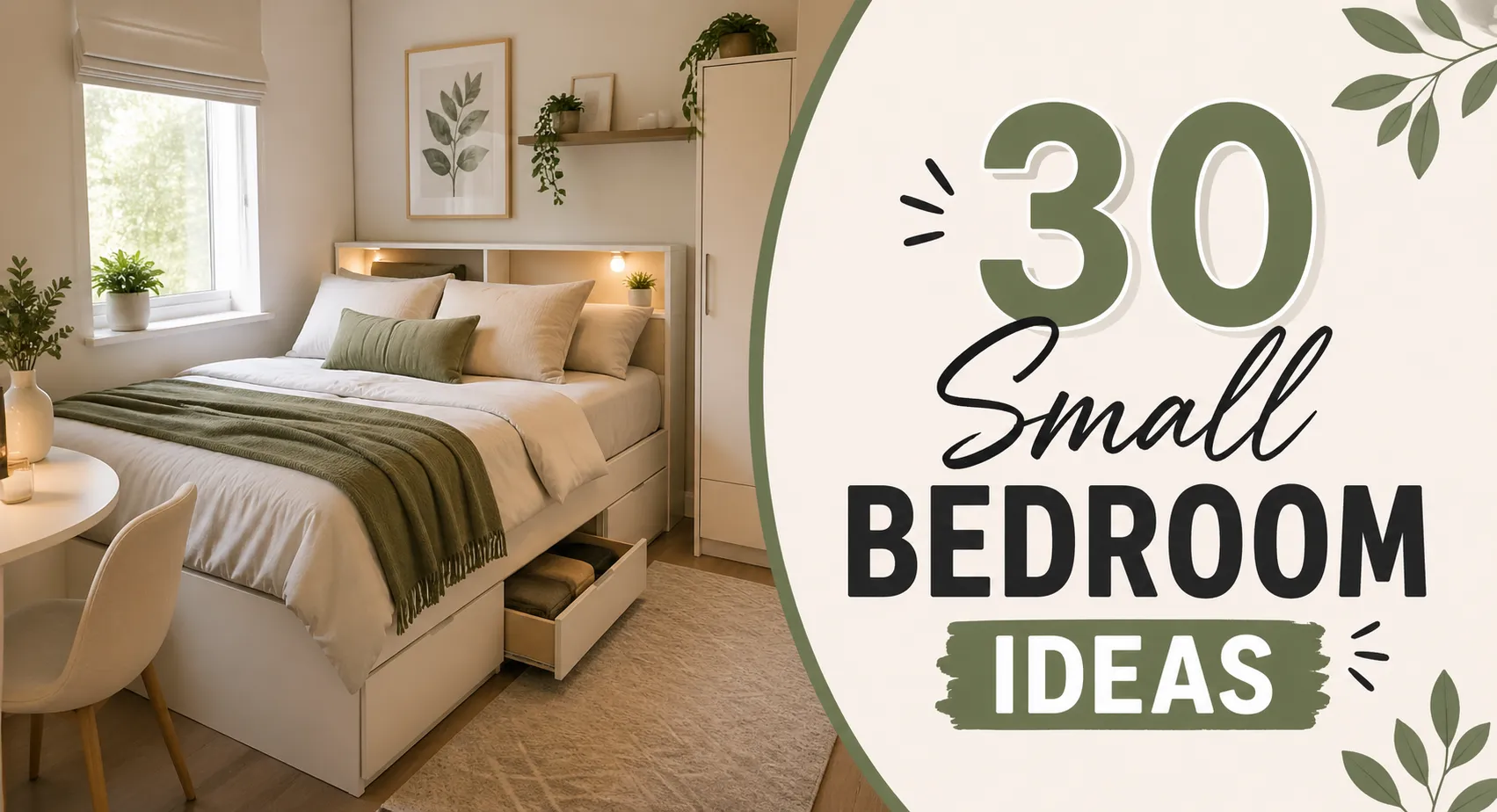
You’ve rearranged the furniture twice. Bought throw pillows. Maybe even strung up fairy lights along the headboard. And the room still feels like a storage unit where someone accidentally placed a bed.
Here’s what’s happening: most small bedroom content is written for people with a design budget and a contractor on speed dial. The results look stunning in photos. They do nothing for a 10×12 room in a rented apartment with one north-facing window.
This guide is different. Every idea below works in a really small bedroom; on a real budget, with or without a landlord’s permission.
Why Your Small Bedroom Feels Worse Than It Looks on Paper
Small bedrooms feel more cramped than their dimensions suggest for three specific reasons: too much furniture competing for floor space, lighting that flattens rather than sculpts the room, and no clear visual anchor pulling the eye in one direction. Remove any one of those three, and the room already reads differently.
Most people assume the answer is buying less furniture. The data says otherwise; the real fix is choosing different furniture and placing it differently. A bed pushed flush against the wall frees 18–24 inches of walkable floor. That single change is often enough to make the space feel like a different room.
1. Tuck the Bed into a Corner
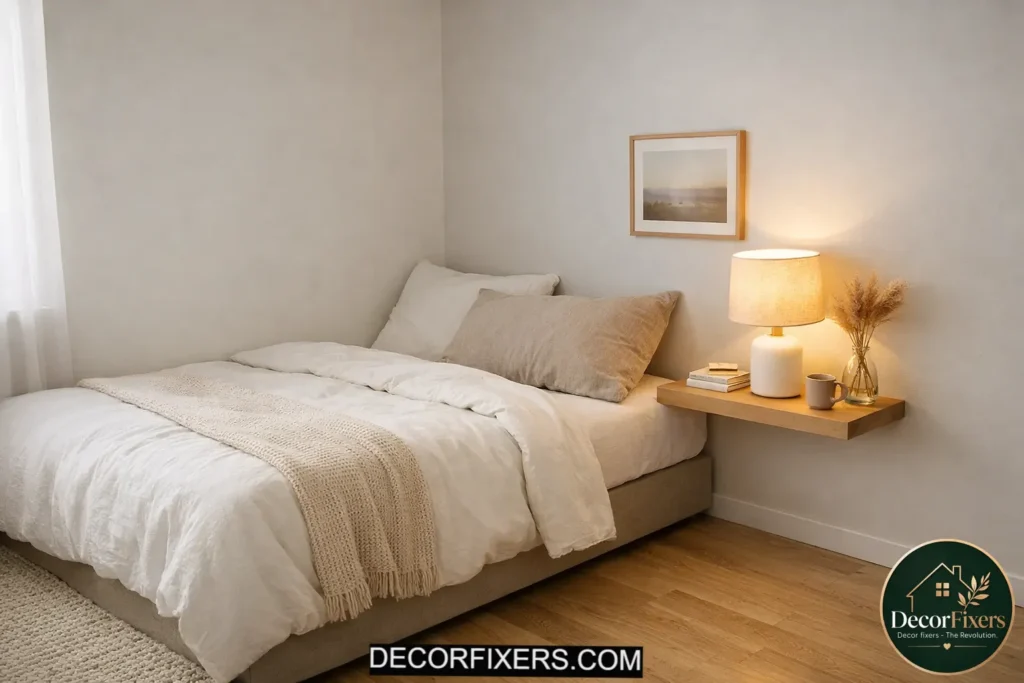
The most impactful layout changes in a small bedroom cost nothing. Corner-tucking the bed opens the primary walkway, makes the floor read as continuous, and immediately reduces the visual crowding that makes small rooms feel impossible. One wall of the bed is now “storage”; add a fabric headboard pocket or a small wall-mounted shelf instead of a nightstand.
2. Invest in a Storage Bed
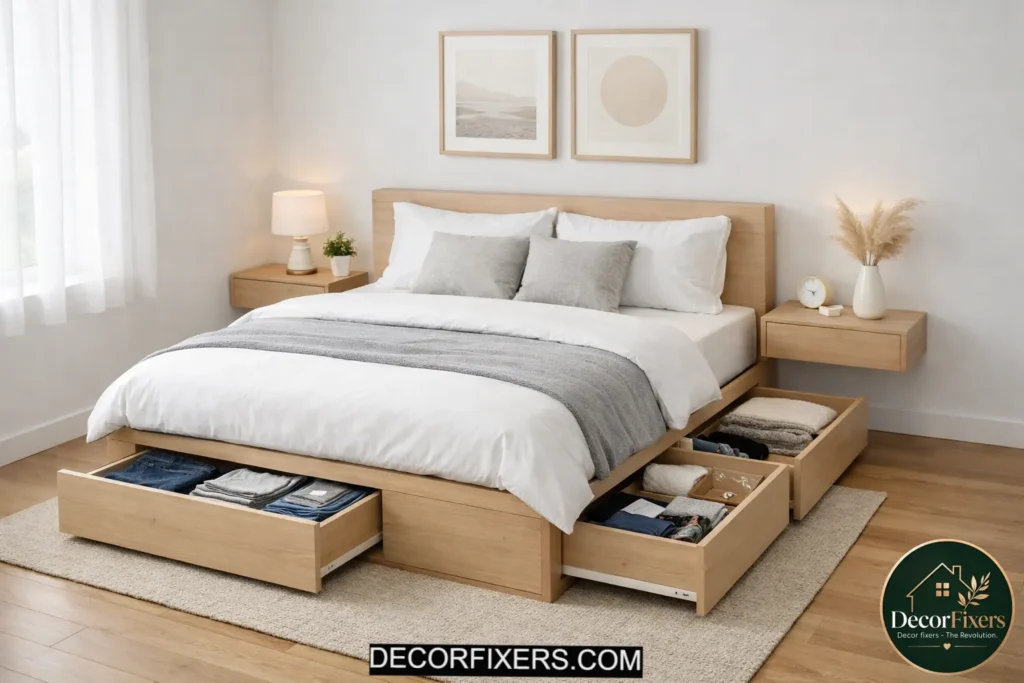
This is the single highest-ROI purchase in a small bedroom. The IKEA MALM bed frame with under-bed drawers eliminates the need for a separate dresser in most cases, freeing 6–10 sq ft of floor space instantly. Users who’ve switched to storage beds consistently report it as the single biggest visual improvement they made, not any paint or decor choice.
The dresser is the enemy of a small bedroom. Not the bed.
3. Choose Low-Profile, Leggy Furniture
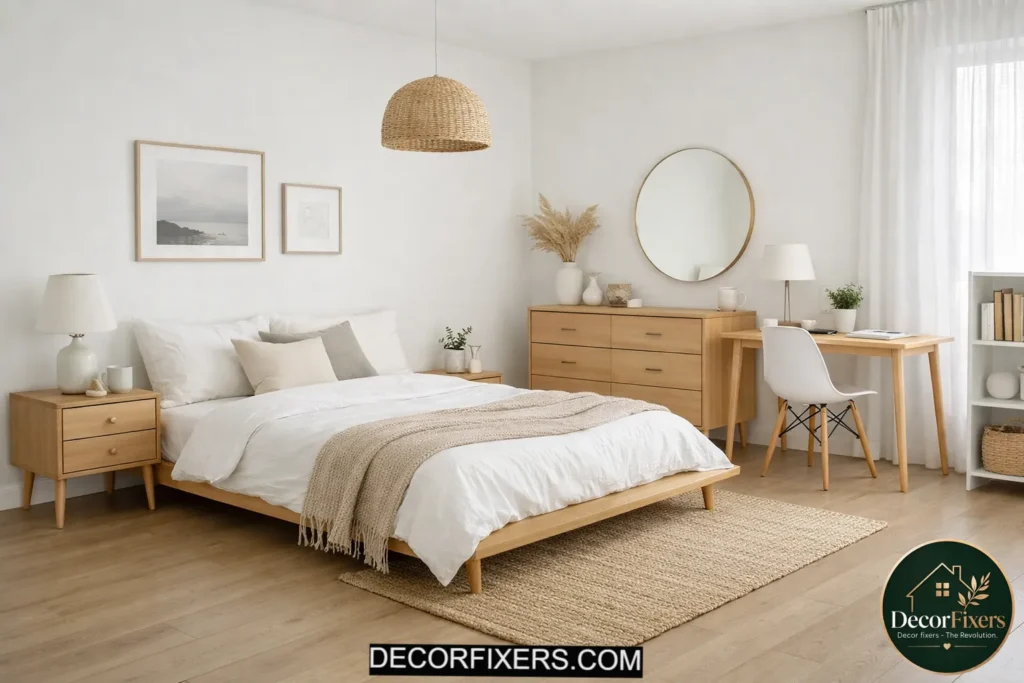
Furniture that sits close to the floor, like a low platform bed or a squat upholstered ottoman, makes ceiling height appear greater than it is. Furniture with visible legs; a nightstand with tapered legs rather than a solid base; lets the eye see underneath, creating the optical impression of more floor space. Both effects stack.
What are small bedroom ideas? Small bedroom ideas are design, storage, and layout plans that maximize the function and space of bedrooms under 150 square feet. They combine visual techniques like mirrors and vertical storage, smart furniture choices, and lighting adjustments to make compact rooms feel intentional, larger, and more personal; no renovation required.
4. Replace Standard Doors with Sliding or Barn Doors
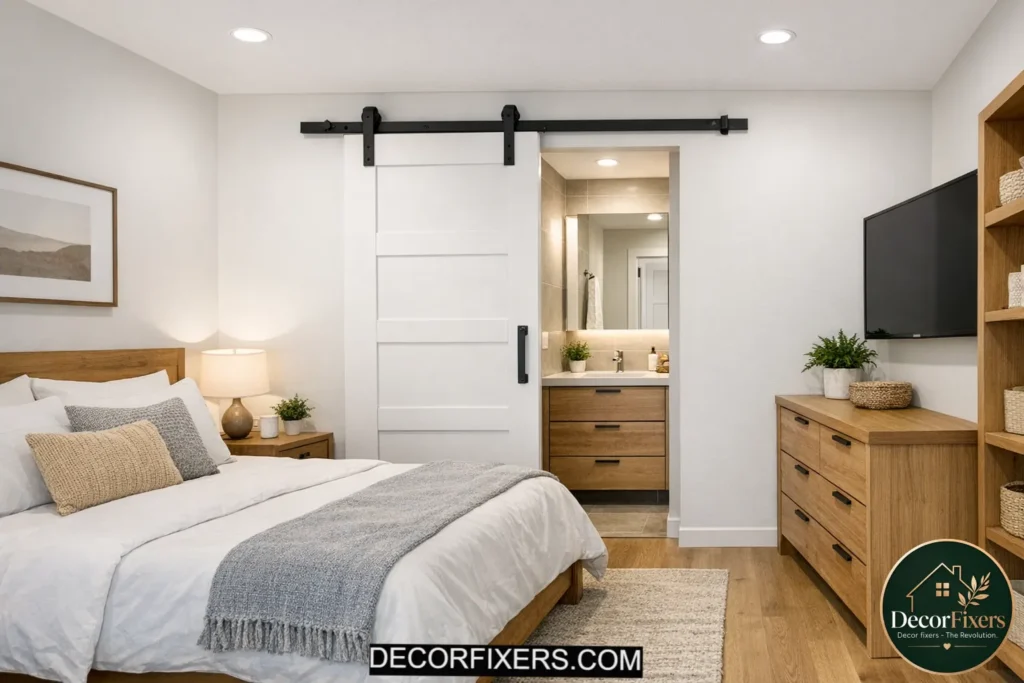
A standard door swing consumes 9–14 sq ft of dead floor space. A sliding barn door or pocket door eliminates that zone. This is a higher-effort change; not renter-friendly unless a landlord agrees, but for rooms where a door swing blocks a closet or dresser, it’s genuinely transformative. The visual impact is immediate.
5. Use a Floating Desk, not a Freestanding One
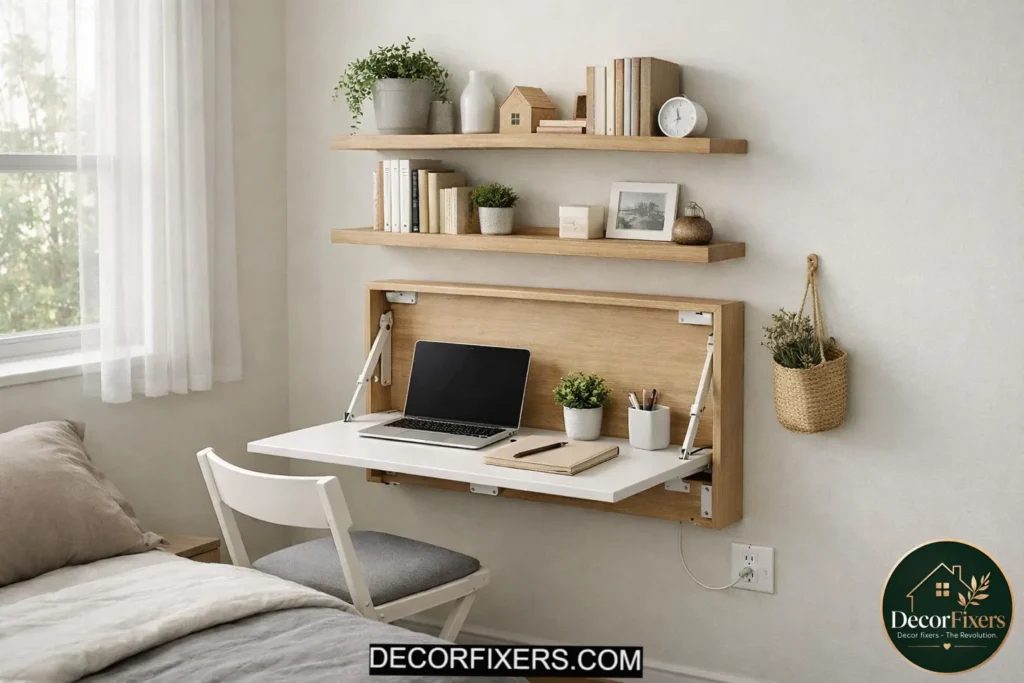
A wall-mounted floating desk removes four legs from the visual equation and keeps the floor continuous and open. Most fold flat against the wall when not in use; critical in bedrooms doubling as home offices. Pair it with floating shelves above to create a full compact workspace in under 24 inches of wall depth.
6. Try a Headboard with Built-In Storage
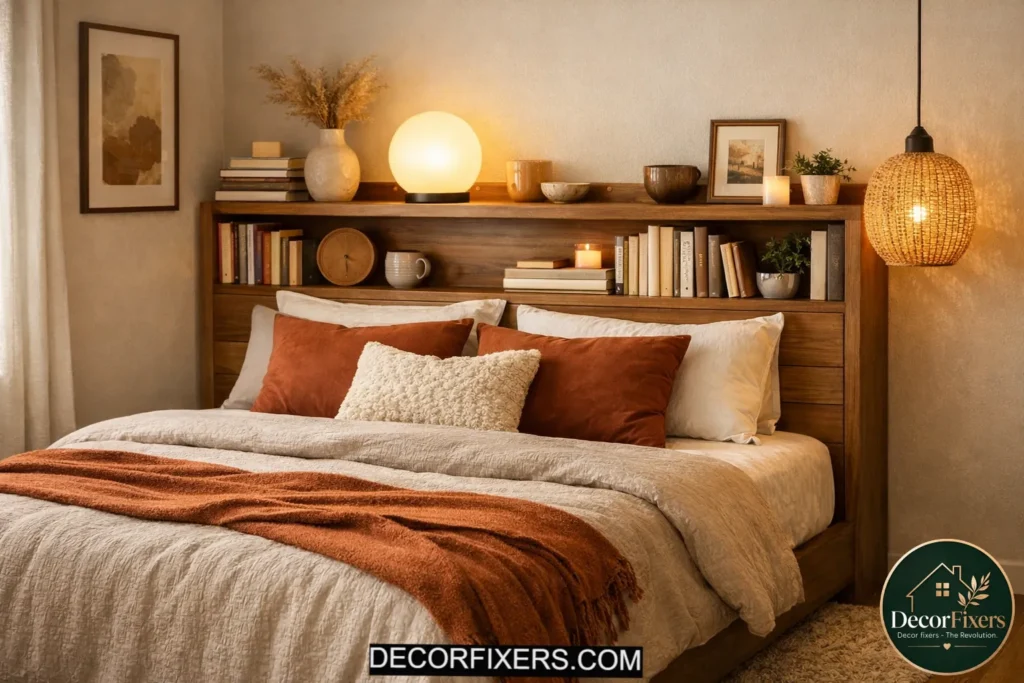
A headboard with shelves or cubbies replaces a nightstand entirely, keeping items off the floor and the floor plan clear. Several mid-range options exist for $80–$200. This works especially well in corner-tucked bed configurations where a standard nightstand won’t fit.
7. Ditch the Dresser; Or Swap It for a Wardrobe
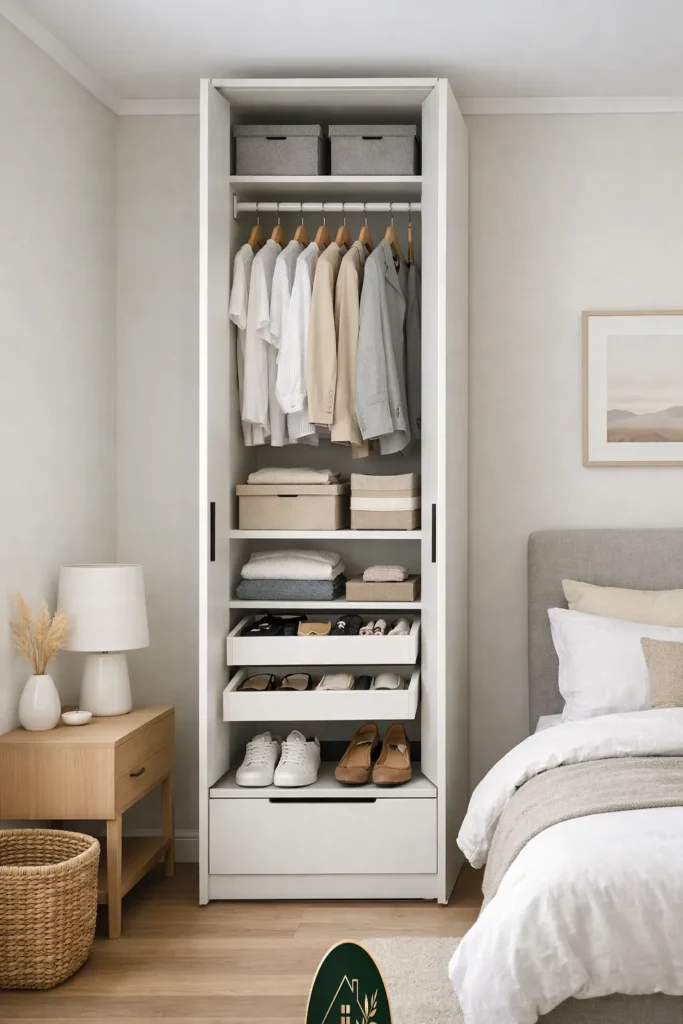
If a storage bed handles clothing, the dresser becomes redundant. Remove it. If you still need clothing storage beyond the bed, consider a tall, narrow wardrobe; the IKEA PLATSA modular system is configurable to near-ceiling height and available in widths as narrow as 60cm, fitting into spots a standard dresser never could.
The Bed Placement Problem Nobody Talks About
Most bedroom guides show a bed perfectly centered on the longest wall, flanked by matching nightstands. That layout works in a 14×16 room. In a narrow 10×12? It chokes the space.
The corner tuck, pushing the bed flush into a corner, is the most effective and underused layout move for rooms under 130 sq ft. You give up one nightstand. You gain a walkable room with visible floor space on three sides. For most people in small bedrooms, that’s the right trade.
Look, if you’re working with a room under 100 sq ft, here’s what actually works: bed in the corner, one floating shelf or wall-mounted nightstand on the open side, and nothing else sitting on the floor except a rug.
8. Think Vertical; All the Way to the Ceiling
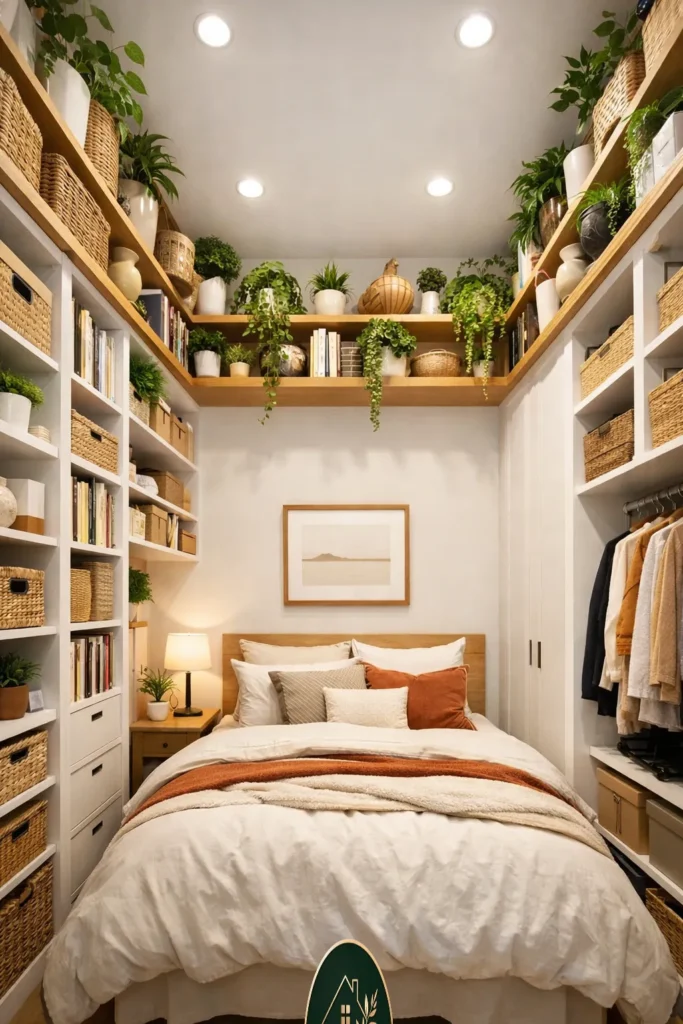
Floor space is a scarce resource. Wall space above five feet is almost always completely wasted. Tall, narrow shelving units, wall-mounted shelves near the ceiling line, or built-in units that reach the full ceiling height draw the eye upward and signal that the room has more dimension than a glance suggests.
To maximize vertical storage in a small bedroom:
- Install floating shelves within 6–8 inches of the ceiling on your longest open wall
- Use the shelf at arm’s reach for functional items: books, chargers, water
- Style the top shelves with plants or decorative objects to anchor the upward gaze
- Keep lower shelves visually light; avoid heavy dark objects at eye level
9. Use Under-Bed Storage Strategically
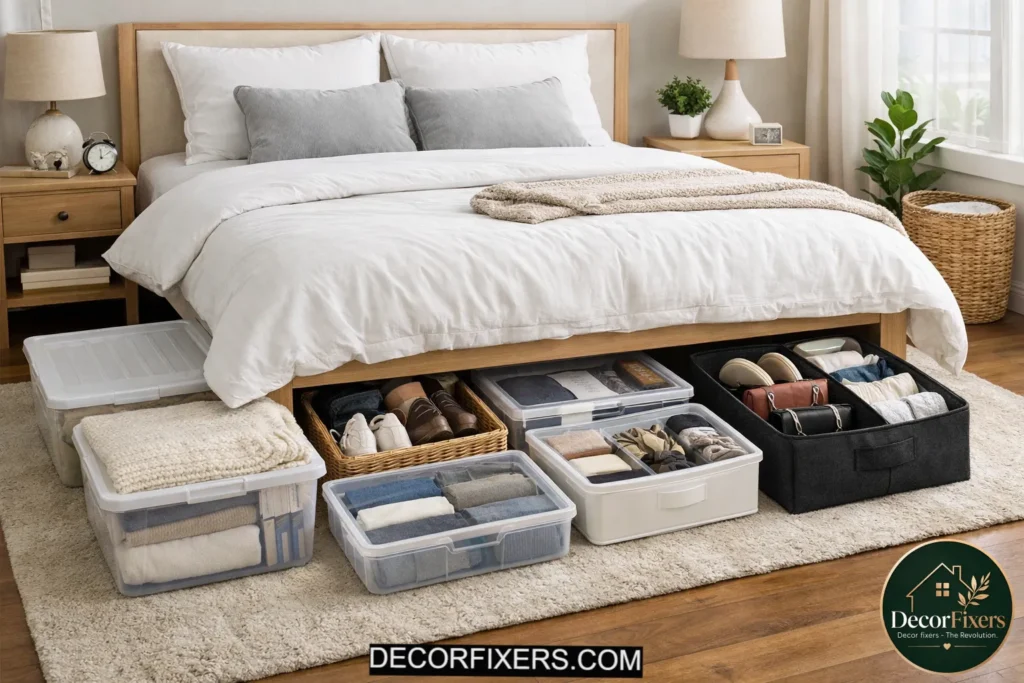
The floor under a standard bed frame is 7–14 inches of usable real estate, which most people leave empty. Low-profile rolling bins, vacuum-seal bags for off-season clothing, and labeled shallow boxes turn this zone into what amounts to half a closet. The key is keeping it systematic; random under-bed storage creates the same visual clutter as leaving things on the floor.
10. Add Floating Shelves Above the Bed
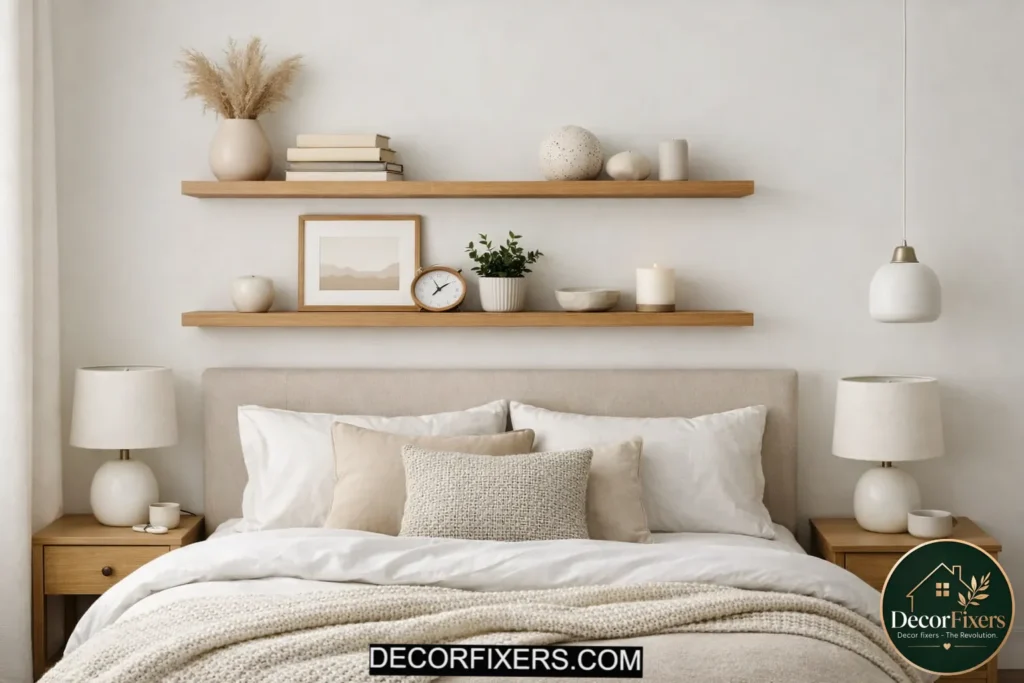
The wall above the headboard is prime real estate. Floating shelves here; one or two, depending on ceiling height; add storage without touching the floor plan and create a built-in, designed look even in a rental. Amazon Basics floating shelves with Command Strip-compatible mounting options are a practical starting point for lighter loads.
11. Use the Back of Every Door
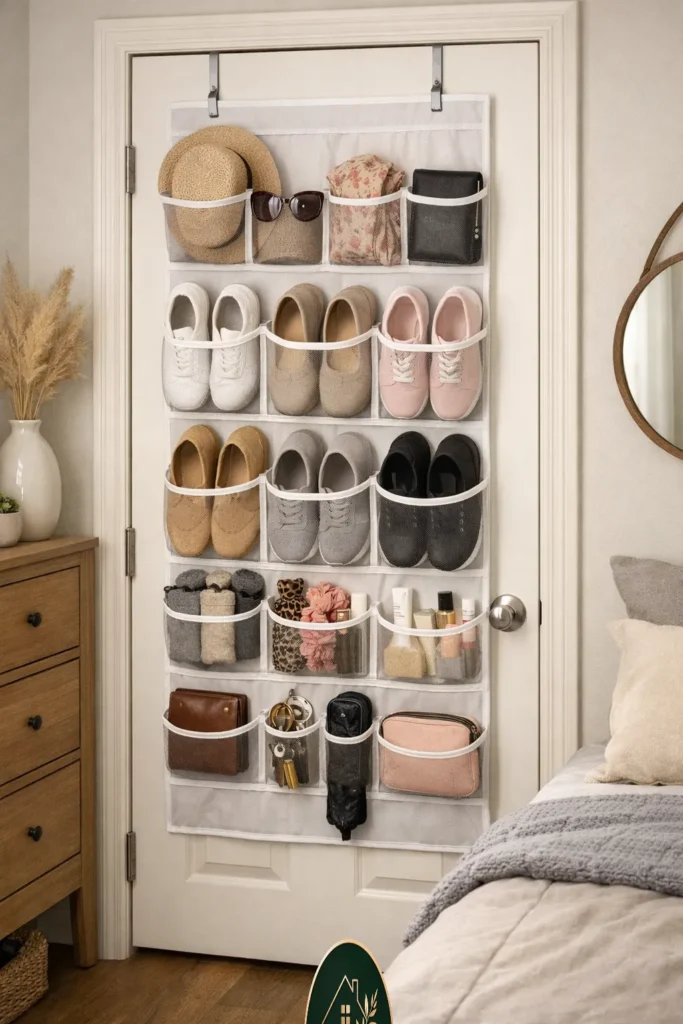
The back of a bedroom door, a closet door, or a bathroom door adjacent to the bedroom is usable storage. Over-door organizers work for shoes, accessories, small items, and even books. This is genuinely zero-footprint storage; it adds nothing to the visual floor clutter.
12. Install a Pegboard Panel
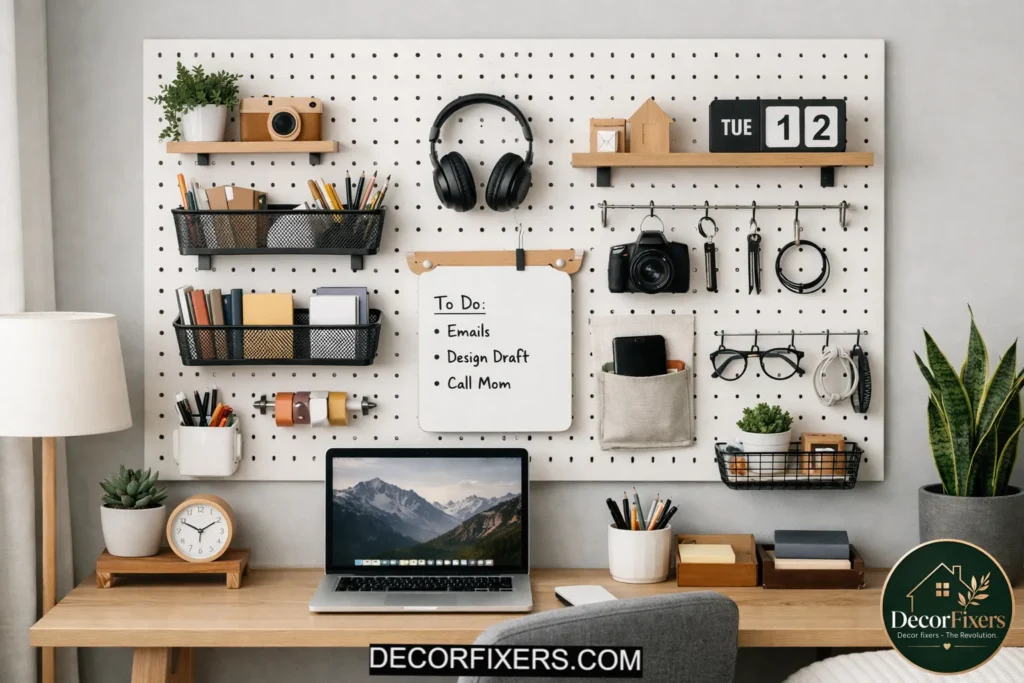
A pegboard panel above a desk or in a closet corner is among the most versatile small-space storage solutions available. Hooks, small baskets, shelves, and cable organizers all attach and rearrange without tools. It works for jewelry, accessories, stationery, or tech cables, and looks intentional when properly styled with matching hooks.
13. Use Storage Ottomans at the Foot of the Bed
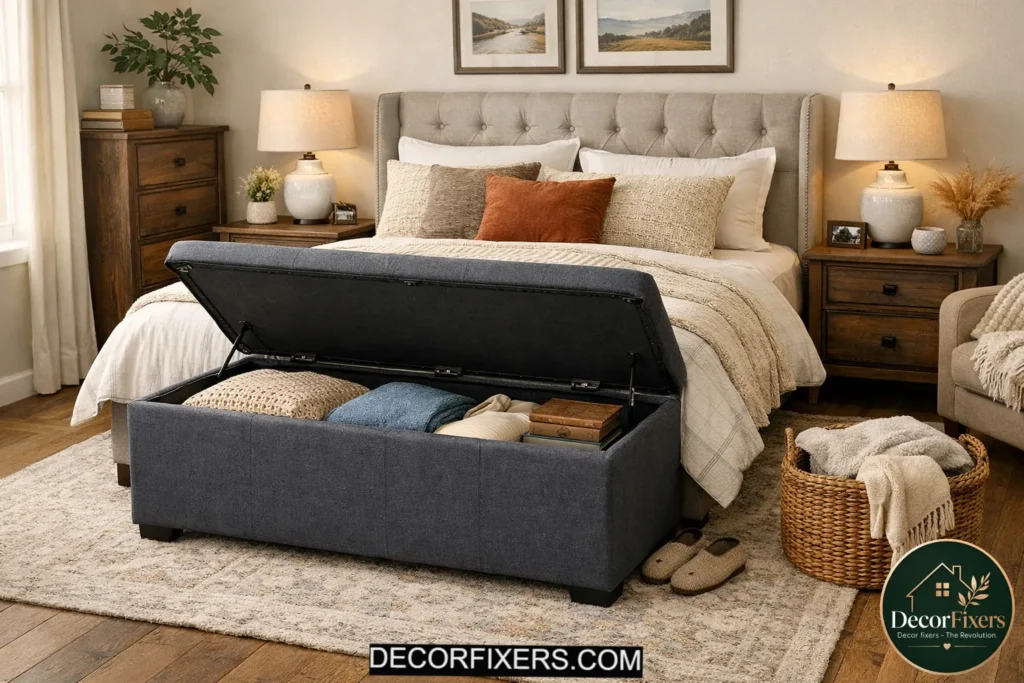
A storage ottoman at the foot of the bed serves three functions: seating, a surface, and hidden storage. In a small bedroom, that’s two pieces of furniture have been replaced by one. Options start around $45 and scale up. Choose a cube shape rather than a tufted round to maximize usable storage volume inside.
14. Hang Curtain Rods Inside Closets to Double Hanging Space
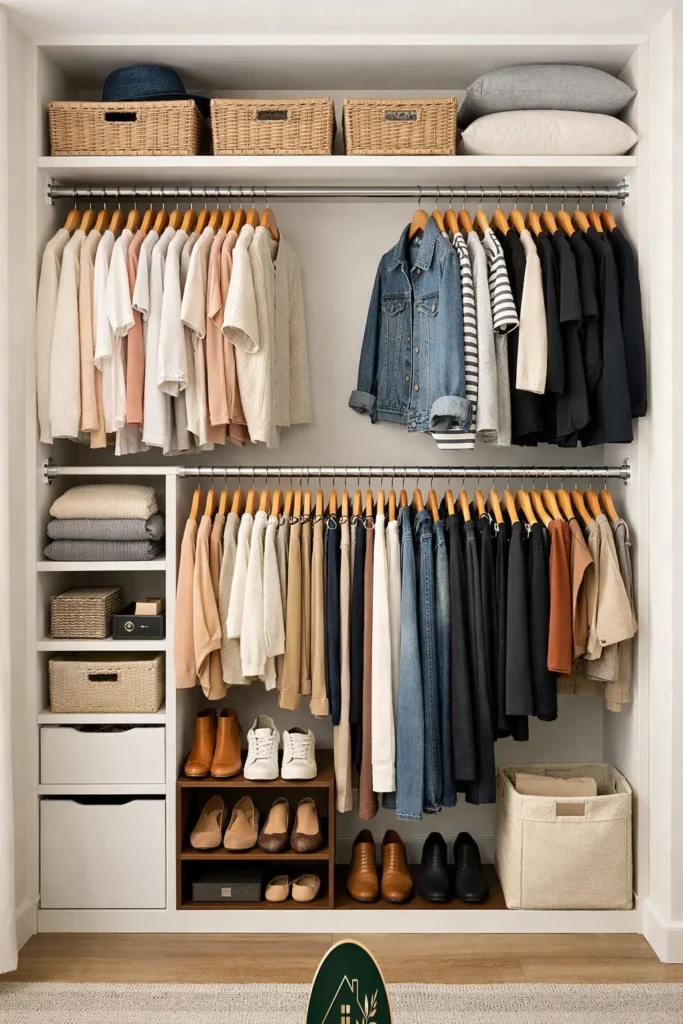
In closets without built-in double-hang rods, a second tension rod at the lower level roughly doubles the usable hanging space for shorter items: jackets, shirts, folded trousers. This is a $15 fix that most people simply never think to do.
15. Place a Large Leaning Mirror Opposite the Window
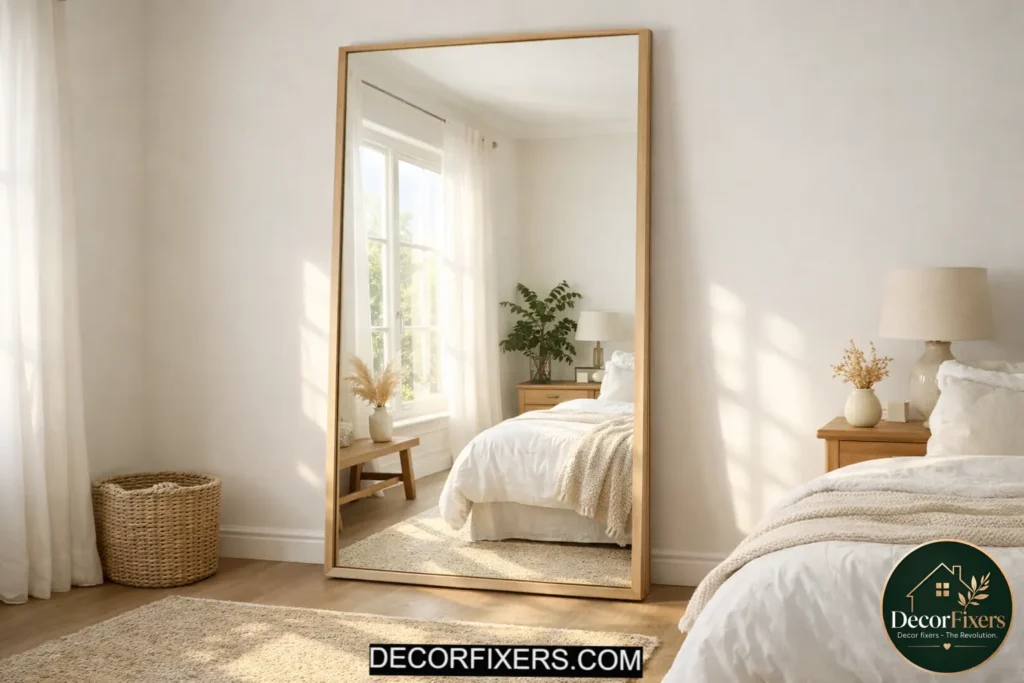
A large mirror, at least 48 inches tall, placed opposite or adjacent to the primary window reflects daylight across the room and creates the optical impression of doubled depth. Leaning mirrors require no wall attachment. They’re renter-safe, repositionable, and widely available for $40–$90.
Or maybe I should say it this way: a leaning mirror is the single most budget-effective space-expanding tool in a small bedroom. Nothing else at that price point does as much visual work.
16. Choose Light, Monochromatic Colors
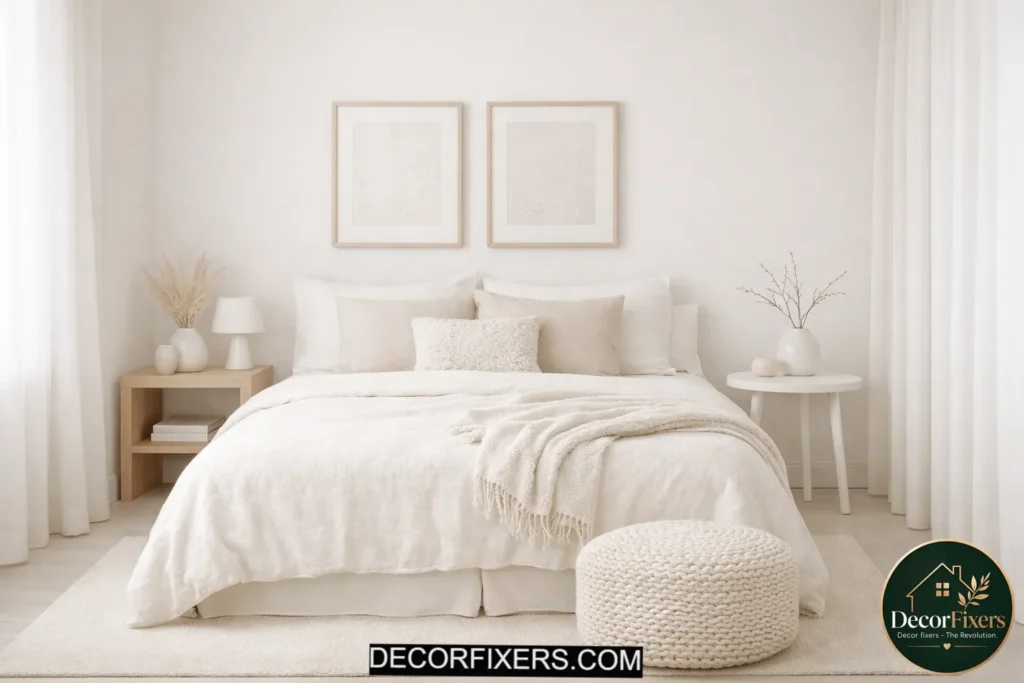
Darker walls absorb light. Lighter walls return it. In a room under 130 sq ft, the difference between a warm off-white and a medium grey on the walls is measurable in how large the room feels at different times of day.
I’ve seen conflicting data on dark accent walls in small rooms; some interior design sources say a dark headboard wall creates depth, others say it closes the room in. My read: a dark accent wall works in rooms with consistent natural light on multiple walls. For north-facing rooms with one small window, a light monochromatic palette is the safer and more reliable choice.
Quick Comparison:
| Option | Best For | Key Benefit | Limitation |
| Corner tuck | Rooms under 120 sq ft | Maximizes open floor space | Loses one nightstand access |
| Centered on the wall | Rooms 130–160 sq ft | Classic look, even access | Eats floor space on both sides |
| Loft/platform bed | Rooms with 9ft+ ceilings | Creates a usable zone beneath | Requires ceiling height |
| Murphy/wall bed | Studio apartments | Frees the entire room when folded | Higher upfront cost, installation |
| Bed under the window | Long, narrow floor plans | Opens main wall for storage | Requires blackout blinds for light |
17. Hang Curtains at Ceiling Height, Not Window Height
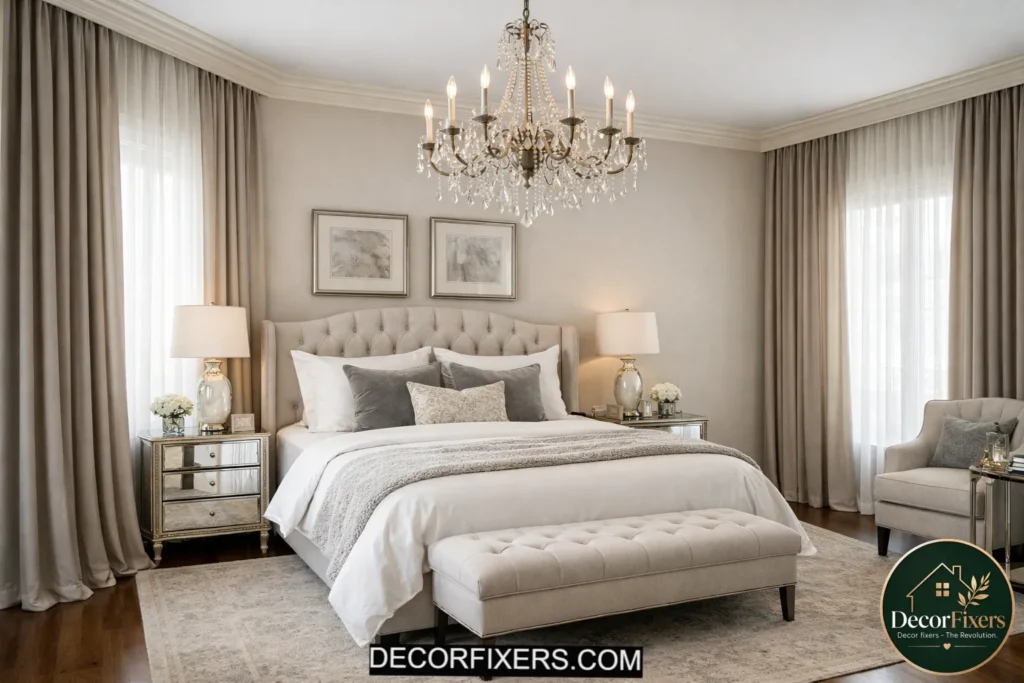
This is a $30–$60 fix with an outsized visual impact. Mounting curtain rods 4–6 inches below the ceiling line, and letting curtains fall to the floor, makes the room’s walls read as taller, and the window appear larger than it is. This works especially well on short windows that would otherwise make a room feel truncated.
18. Use Mirrors Strategically, Not Decoratively
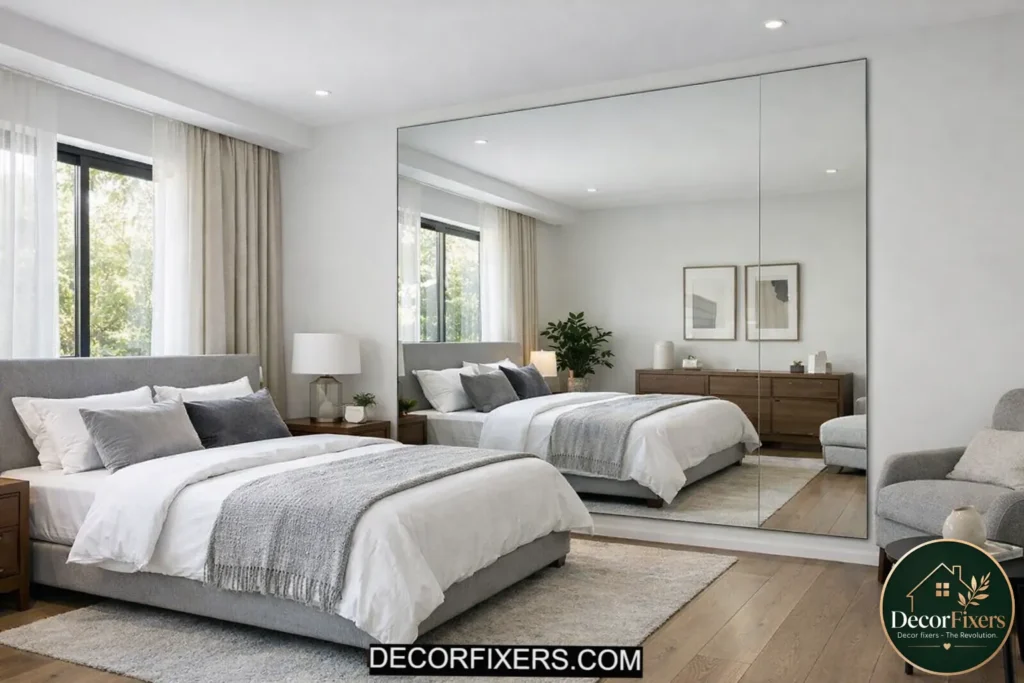
A single large mirror does more than several small mirrors. Position matters more than quantity. A full-length mirror on the back of a door, a leaning mirror opposite the window, or a large framed mirror above a dresser each serves a specific optical function: reflecting light, creating depth, or making an axis of the room read as longer. Clustering small mirrors on a wall is primarily decorative and rarely improves the sense of space.
19. Remove Items from the Floor
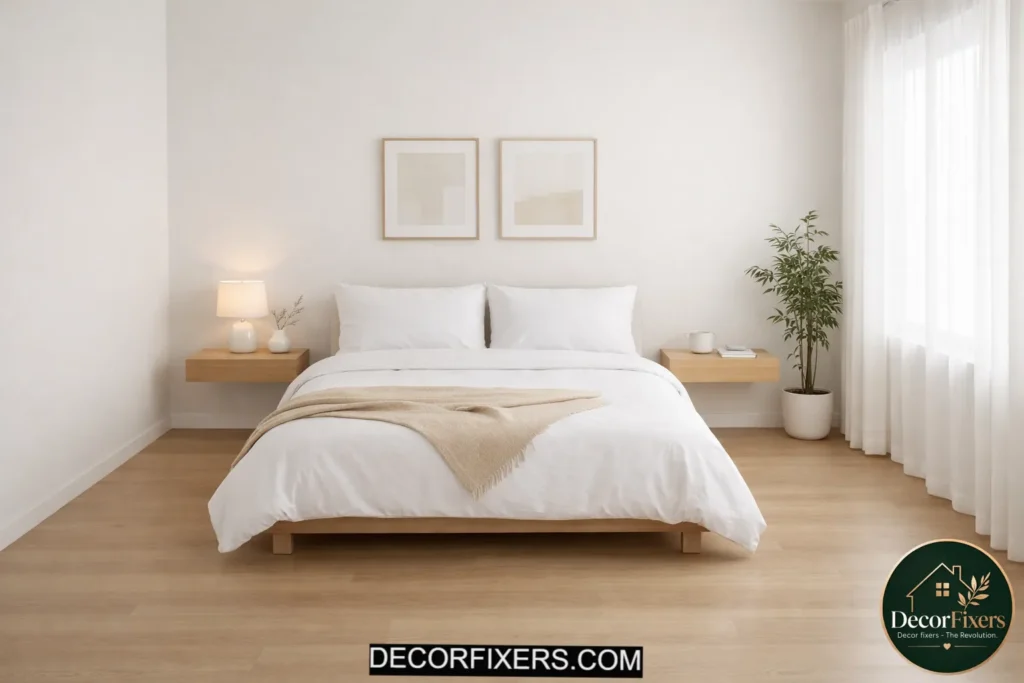
Every item on the floor makes the room smaller. Not metaphorically; visually, psychologically, and in terms of navigable path width. Laundry baskets, decorative items that could be shelved, shoe piles, bags on the ground: all of these compress the perceived size of the room. Visible floor reads as space. It’s that direct.
20. Try Peel-and-Stick Wallpaper on One Wall
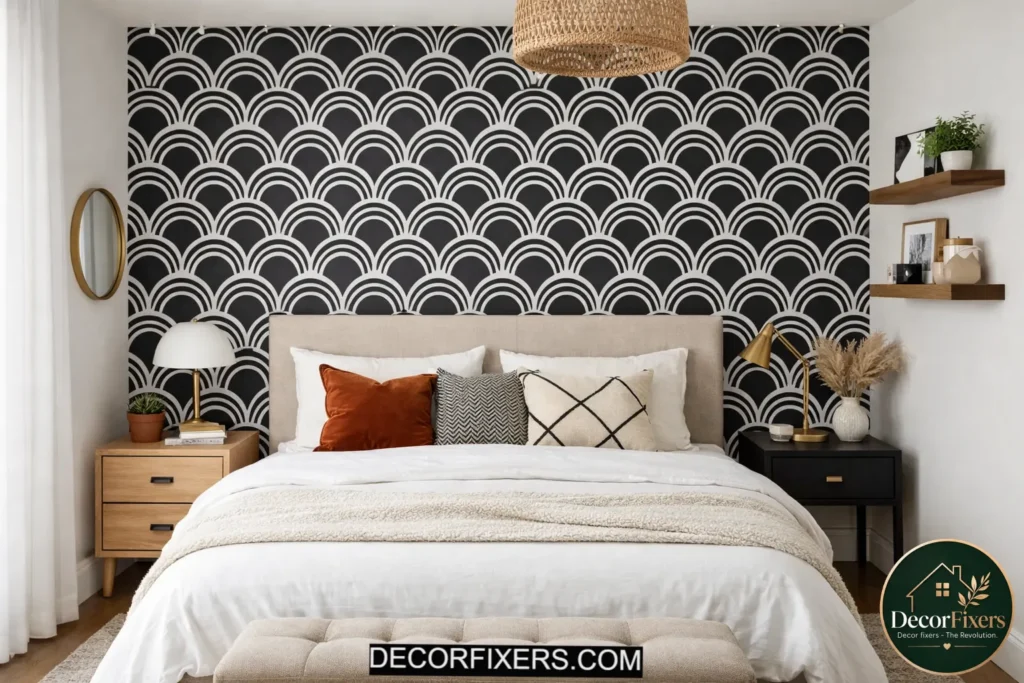
A textured or patterned accent wall, especially behind the headboard, creates a clear focal point that draws attention away from the room’s dimensions. Peel-and-stick panels are renter-friendly, go up in an afternoon, and remove cleanly. Full-wall coverage for a standard bedroom runs $30–$80. Choose a large-scale pattern over a small, busy one; small patterns in small rooms create visual noise.
21. Replace Cool White Bulbs with Warm White
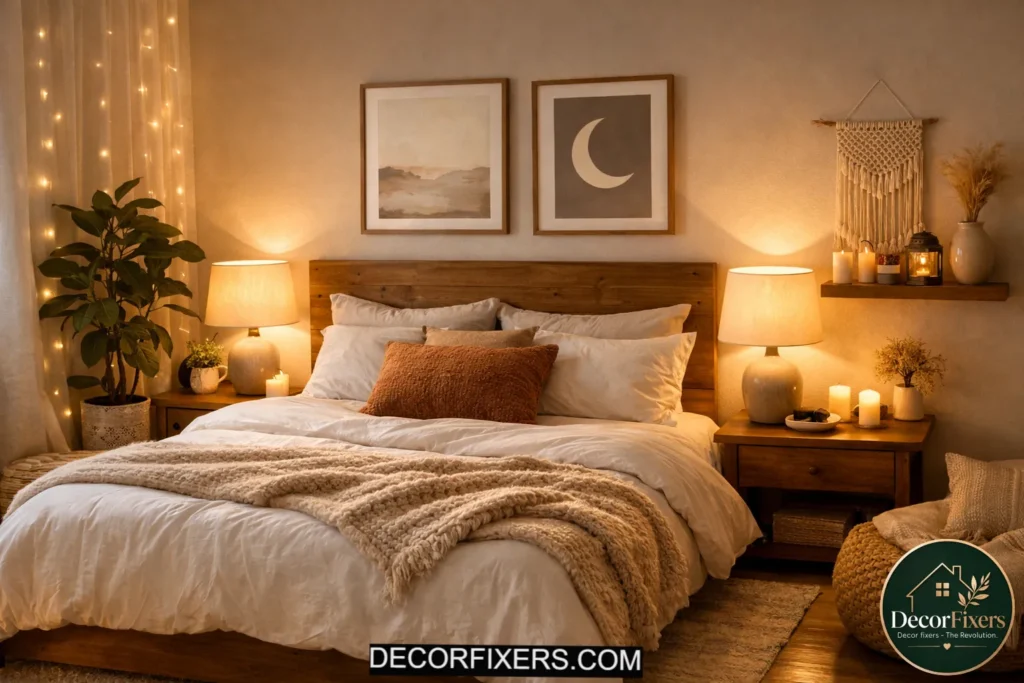
This costs $8 and takes 60 seconds. Replace any bulb above 4000K with a 2700–3000K warm white equivalent. Cool light makes small rooms feel clinical and flat. Warm light makes them feel intentional and inhabitable. The room doesn’t get bigger; it stops looking like a waiting area.
22. Layer Lighting Across Three Heights
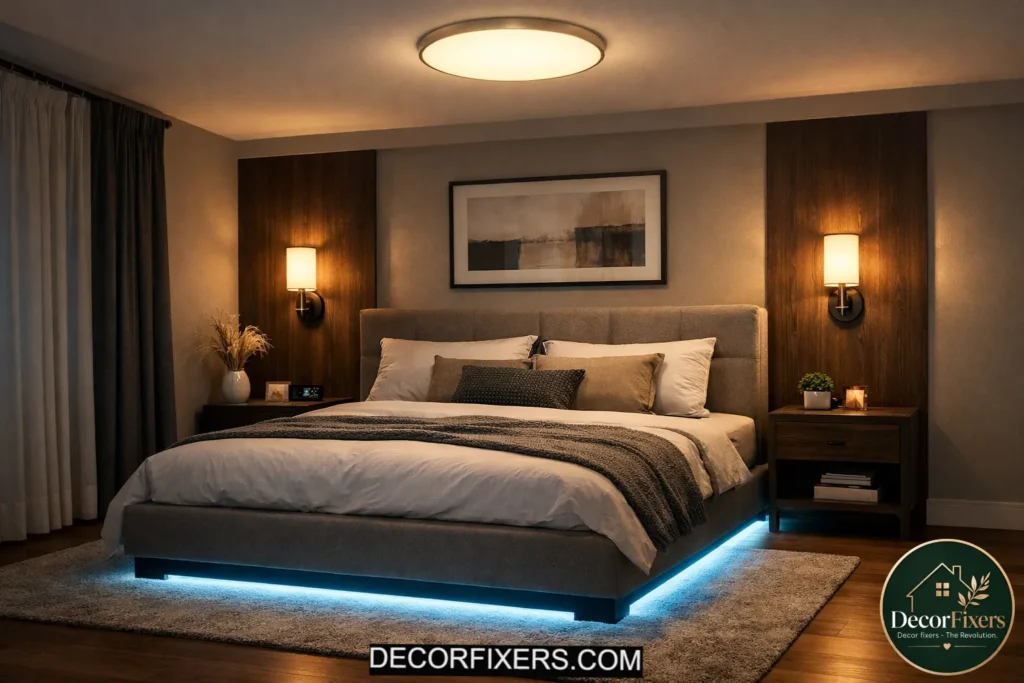
Overhead lighting alone creates flat, shadowless illumination that removes the visual depth from a room. The fix: one overhead source (with a dimmer if possible), one mid-height source (a plug-in wall sconce or table lamp), and one low accent (LED strip under the bed frame or a small lamp on a low shelf). Philips Hue smart bulbs allow full dimming and color temperature control from a phone; useful for creating different moods in the same small space throughout the day.
23. Add a Statement Pendant Light
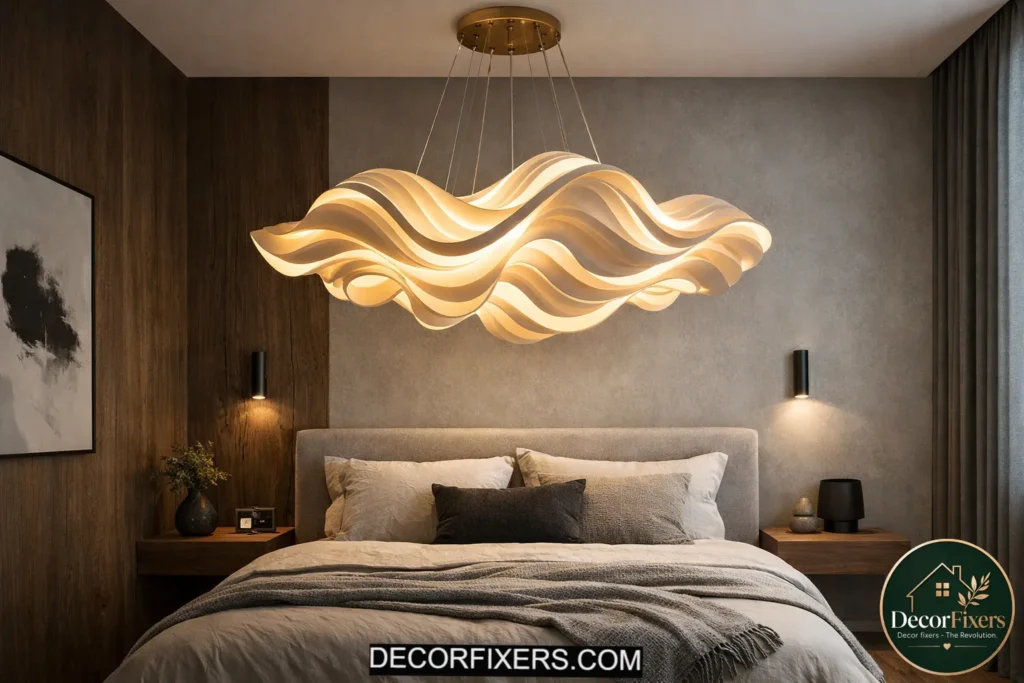
A distinctive pendant light or a sculptural ceiling fixture does two things: it draws the eye upward (making the room read taller) and serves as the room’s primary focal point. This is especially effective in rooms without strong natural light, where the fixture becomes the defining design element. Options start around $35 from Amazon and scale to $200+.
[IMAGE: Small bedroom with simple sculptural pendant light above the bed; showing ceiling-draw effect and focal point function]
24. Use LED Strip Lights Under the Bed Frame
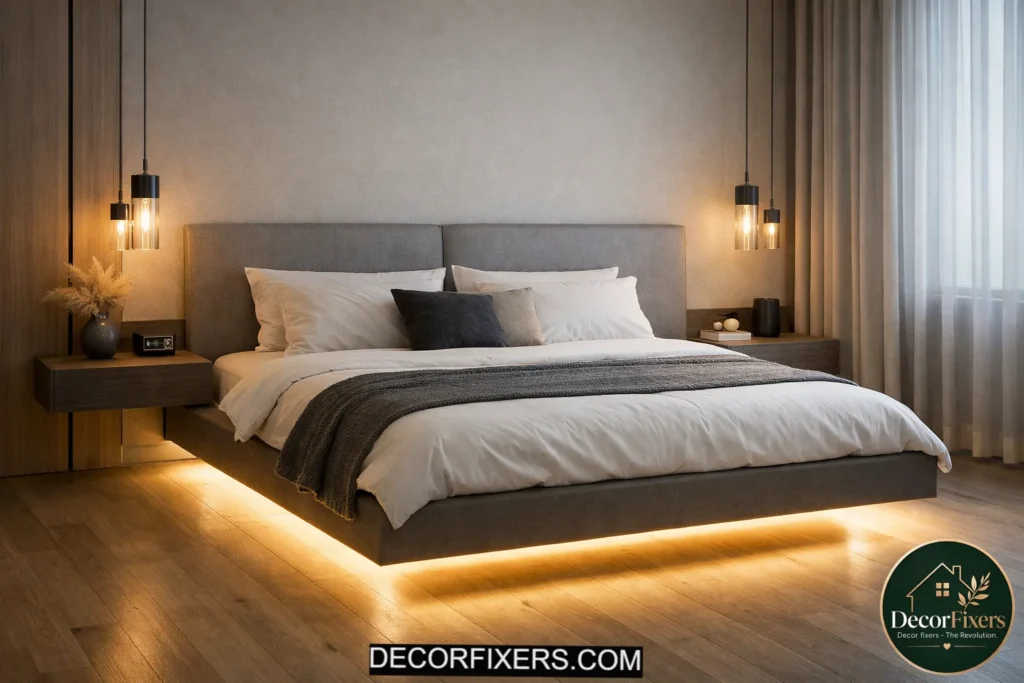
LED strips mounted under the bed frame cast a soft ambient glow that makes the bed appear to float slightly above the floor; a visual trick that increases the perceived floor space around the bed. Warm white strips work better than color-changing RGB versions for this application. Cost: $15–$25.
25. Choose One Bold Focal Point
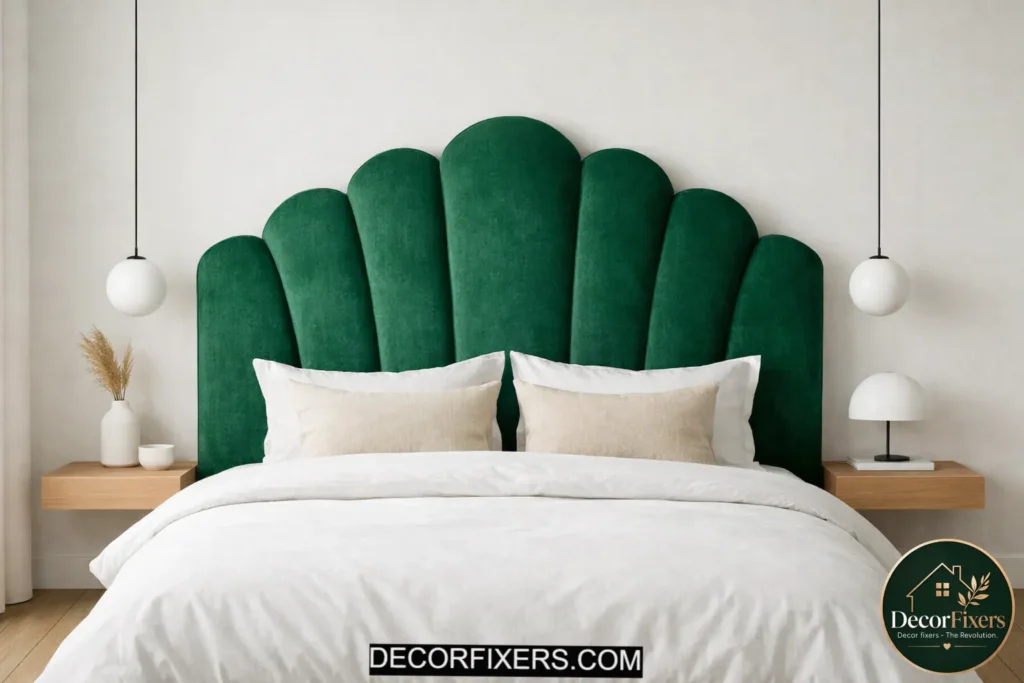
A small room without a visual anchor looks random. The eye bounces between competing elements and registers clutter. Give it somewhere to land: a bold upholstered headboard, one large piece of wall art centered above the bed, or a distinctive pendant light. One strong focal point organizes the entire room. Everything else becomes supporting detail.
Some experts argue that maximalist layering adds personality to small rooms. That’s valid for someone with a strong aesthetic point of view and the discipline to edit ruthlessly. But for most people, especially those redesigning on their own for the first time, one clear focal point is more reliable than a curated maximalist display.
26. Use a Rug Larger Than You Think You Need
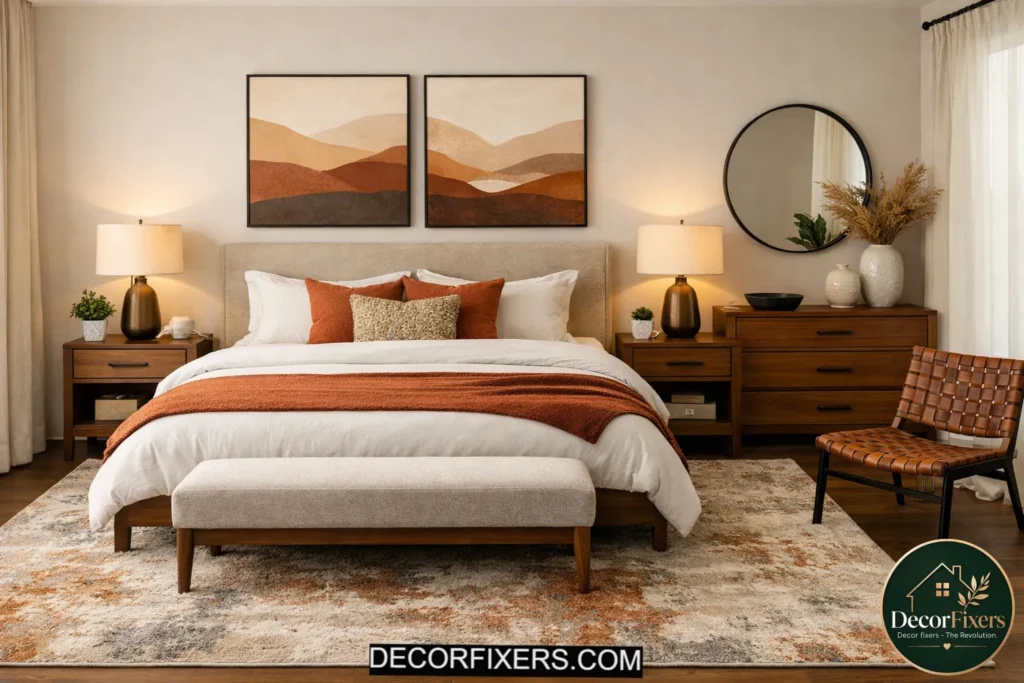
The instinct in a small bedroom is a small rug. Wrong. A rug too small cuts the room into disconnected zones. A rug large enough to extend 18 inches beyond both sides of the bed anchors the space and makes the layout read as intentional. In a 10×12 room, a 6×9 rug placed under the bed usually performs correctly.
27. Add Plants; One or Two, not a Collection
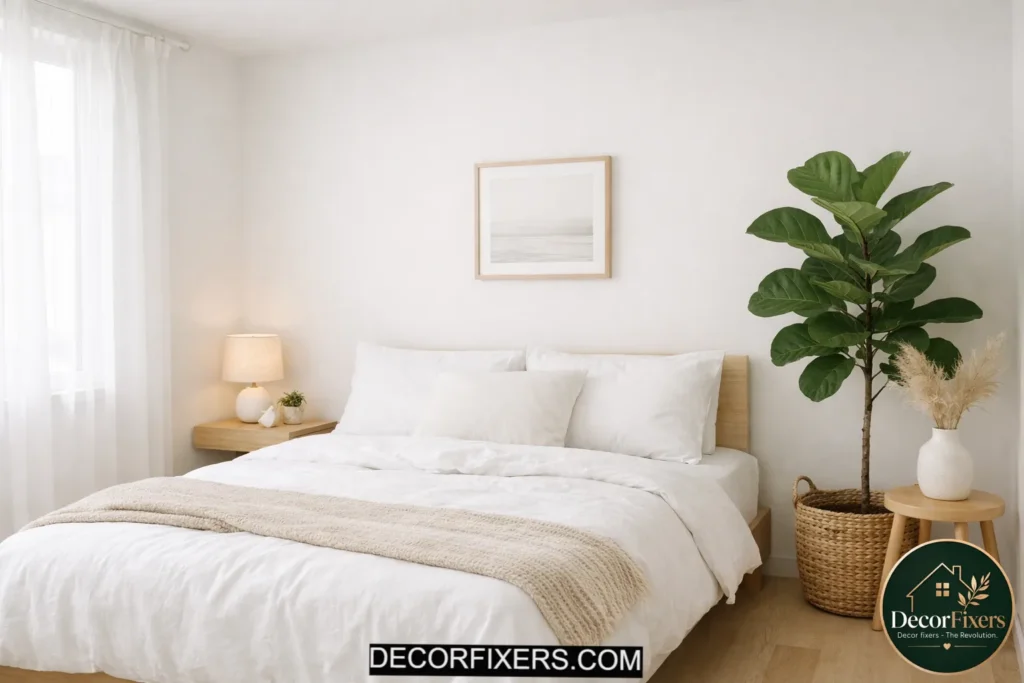
A single plant on a nightstand or a shelf, a pothos, snake plant, or small monstera, adds an organic, living element that counterbalances the hard geometry of a small room. Two plants, placed thoughtfully, work. A collection of seven on every available surface adds visual clutter that a small room can’t absorb. Edit.
28. Hang Art in Vertical Orientation
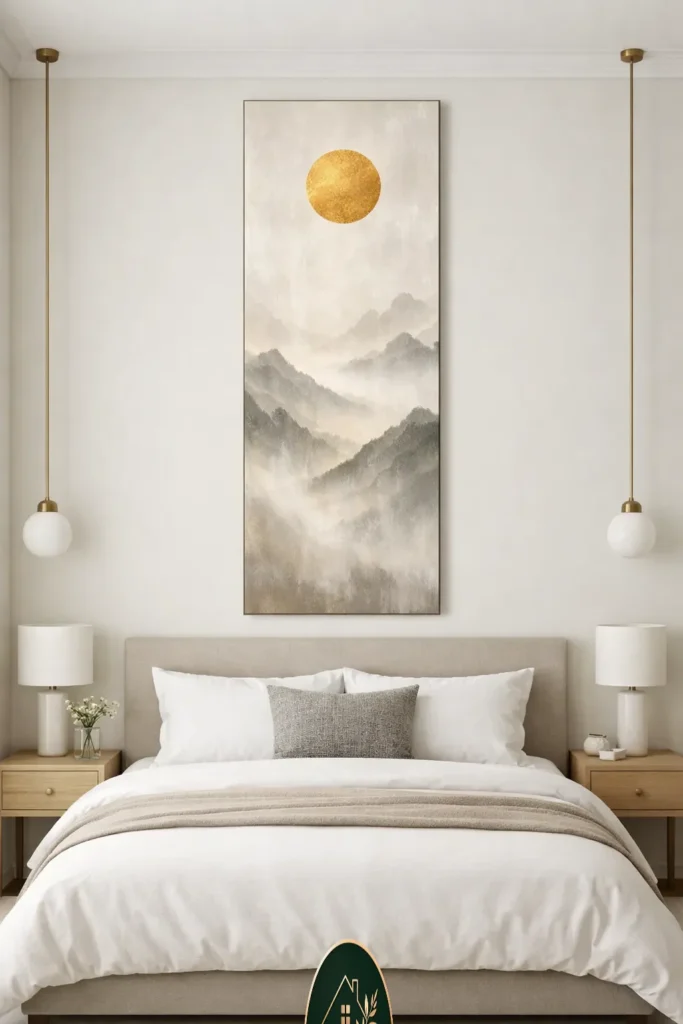
Vertical art draws the eye upward and makes walls read as taller. A single large vertical piece above the bed; framed poster, canvas, or print; outperforms a horizontal gallery wall in low-ceiling rooms. If you prefer a gallery wall, align the frames in a vertical column rather than a horizontal row.
29. Coordinate Bedding with the Wall Color
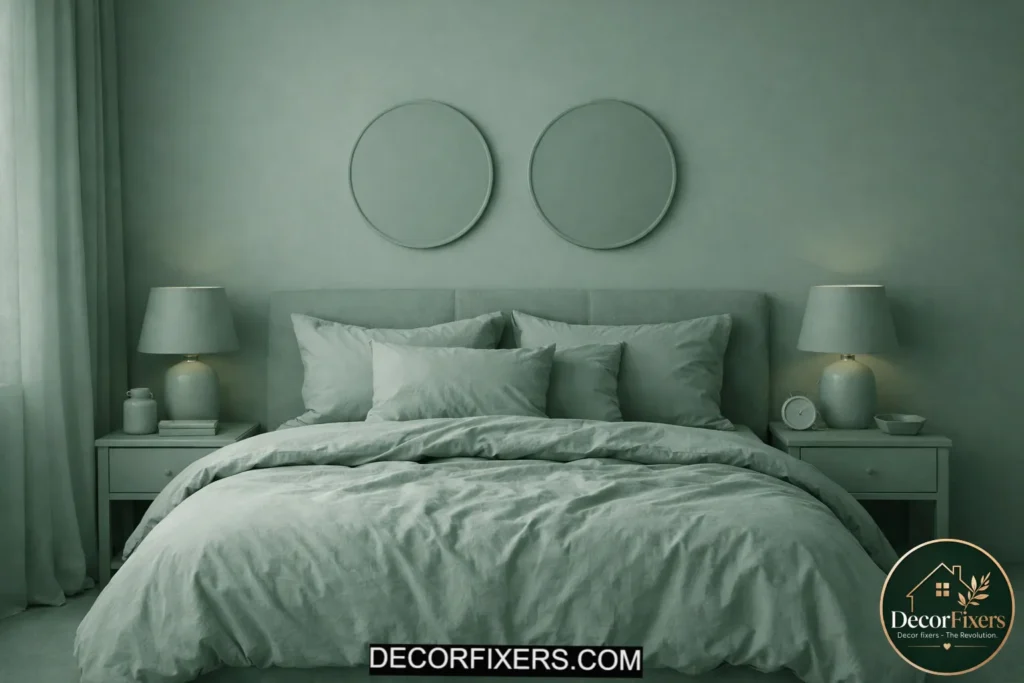
Monochromatic bedding, shades of the same color as the walls, reduces the visual interruption the bed creates in a small room. The bed stops being a dominant piece of furniture and starts reading as part of a continuous surface. This is a subtler effect than most guides credit.
30. Keep the Floor Clear at All Times; Not Just When Company’s Coming
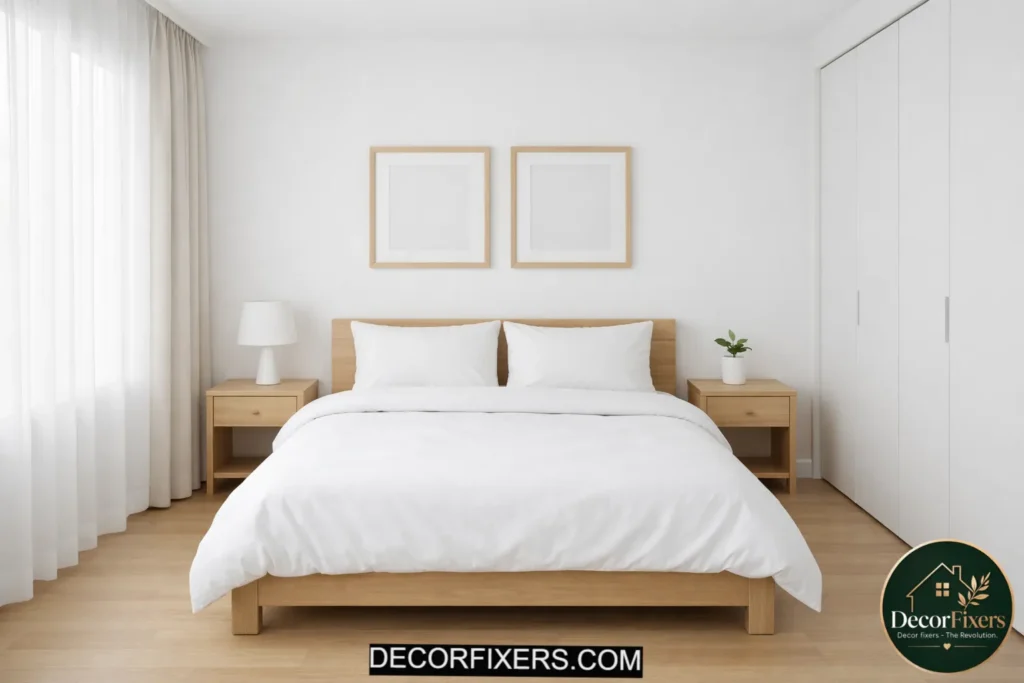
Here’s the thing: the difference between a small bedroom that feels livable and one that feels like a closet is usually floor visibility, not furniture choice or paint color. Adopt one rule: nothing on the floor that has a designated storage home, and the room will maintain its improved appearance without constant maintenance. That’s the real goal: a room that works without effort.
Quick Comparison: Renter-Friendly vs. Renovation-Level Changes
| Change | Renter Safe? | Cost Range | Impact Level |
| Leaning mirror (large) | ✅ Yes | $40–$90 | High |
| Warm white bulb swap | ✅ Yes | $8–$20 | Medium-High |
| Peel-and-stick wallpaper | ✅ Yes | $30–$80 | High |
| Storage bed (IKEA MALM) | ✅ Yes | $300–$500 | Very High |
| Floating shelves (Command) | ✅ Yes | $20–$60 | Medium |
| Sliding/barn door | ❌ No | $200–$800+ | High |
| Built-in shelving to the ceiling | ❌ No | $500–$2,000+ | Very High |
CONCLUSION:
A small bedroom doesn’t need more square footage to feel better; it needs better decisions. The difference between a small, frustrating space and one that feels calm, functional, and styled comes down to how you use what’s already there. When you arrange floor visibility, rethink bed placement, and choose furniture that works harder in less space, the entire room shifts, visually and practically.
Most of these changes aren’t expensive, and many don’t need permanent alterations. A storage bed can replace a bulky dresser. A mirror can double the sense of light. Curtains hung higher can reshape the size of the room. None of these is dramatic on its own, but together, they create a bedroom that feels intentional rather than improvised.
If there’s one takeaway, it’s this: small spaces reward clarity. One focal point instead of many. Vertical storage instead of floor clutter. Smart lighting instead of flat illumination. When every section has a purpose, even the smallest bedroom can feel open, personal, and complete.
You don’t need a bigger room. You just need a smarter one.
FAQs:
Q: What’s the best way to make a small bedroom look bigger?
A: Place a large leaning mirror opposite the window, hang curtains near the ceiling, and corner-tuck the bed to open floor space. Light wall colors and warm lighting reinforce every visual trick.
Q: How do I make a small bedroom stylish on a budget?
A: Three changes with the best return: a storage bed to replace the dresser, peel-and-stick wallpaper on one accent wall, and warm-white bulb swaps throughout. Total cost under $150 if you start with the bulbs and wallpaper.
Q: Should I use dark or light colors in a small bedroom?
A: Light colors outperform dark ones in most small bedrooms, especially with limited natural light. A dark accent wall can add depth in well-lit rooms, but risks making north-facing rooms feel enclosed by afternoon.
Q: Why does my small bedroom feel cluttered even when it’s clean?
A: Usually, it’s floor visibility; too many items resting on the floor, even if they’re organized. The eye reads floor-level items as clutter regardless of tidiness. Move storage vertically and the room will look cleaner immediately.
Q: When should I consider a Murphy bed or a loft bed for a small bedroom?
A: Murphy bed makes sense when the bedroom doubles as a daytime living or working space. A loft bed is worth it when the ceiling height exceeds 9 feet, and you need a functional zone: desk, seating, storage, and underneath.

Creator of DecorFixers, sharing practical home and interior ideas focused on real-life usability, simple design improvements, and budget-friendly solutions.
9 thoughts on “30 Small Bedroom Ideas: Transform Your Space with Style”