

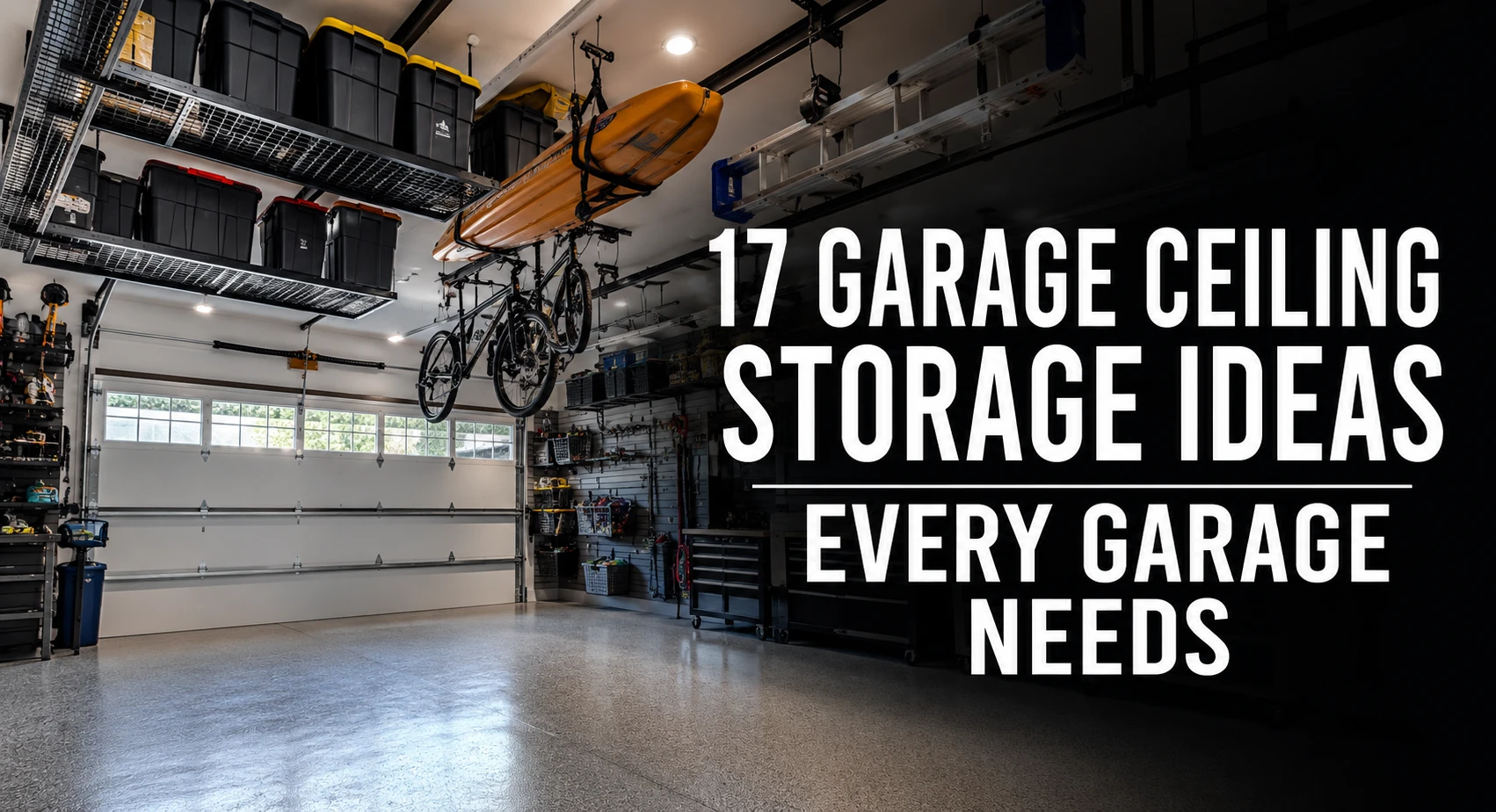
One Saturday, I finally looked up. The ceiling was just sitting there, empty, doing nothing. That’s when garage ceiling storage stopped being a Pinterest board for me and became an actual weekend project.
Garage ceiling storage refers to any rack, platform, hook, or hoist system anchored to ceiling joists that holds items overhead instead of on the floor. It works because most garages leave 70 to 80 percent of their total volume — everything above eye level — completely unused. This concept is part of broader Home Storage and Organization strategies focused on maximizing unused vertical space.
Quick note: this list covers seventeen real options, from steel racks to renter-friendly hooks. I’ll flag which ones need a drill and which don’t, especially useful for solving Small Space Storage challenges where every square foot matters.
1. Ceiling-Mounted Overhead Storage Racks
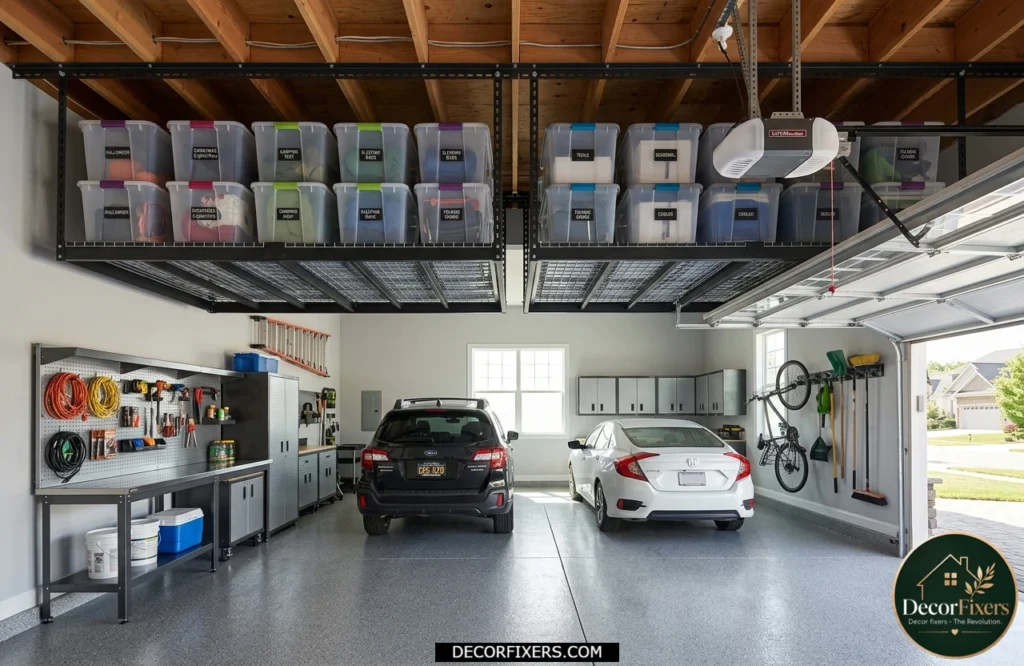
Overhead racks are where most people start, and for good reason. Brands like FLEXIMOUNTS and NewAge Products bolt straight into ceiling joists and typically hold 250 to 600 pounds once installed correctly.
I’ve seen conflicting numbers on weight limits — some brands advertise 600 pounds, while honest installers cap it closer to 400 once joist age comes into play. My read: trust the lower number if your garage is older than twenty years.
To install an overhead rack safely, follow these steps:
1. Locate ceiling joists with a stud finder. 2. Mark bracket spacing using the kit’s template. 3. Pre-drill pilot holes into the joists. 4. Bolt brackets with lag screws, never drywall anchors. 5. Test the rack with a light weight first.
Tools you’ll want on hand:
- Stud finder or joist locator
- Cordless drill with a lag screw bit
- A second person to help lift the frame into place
What is the best garage ceiling storage option for heavy items? Steel overhead racks anchored to ceiling joists handle heavy, rarely-used gear like holiday totes best. They distribute weight across multiple structural points instead of relying on a single bracket, which is the part most buyers overlook entirely.
How much weight can a garage ceiling actually hold? A single joist typically supports 50 to 100 pounds when the mounting hardware spans at least two joists rather than the drywall between them. Spreading the load across multiple anchor points matters more than the bracket’s finish.
2. Adjustable-Height Steel Platforms
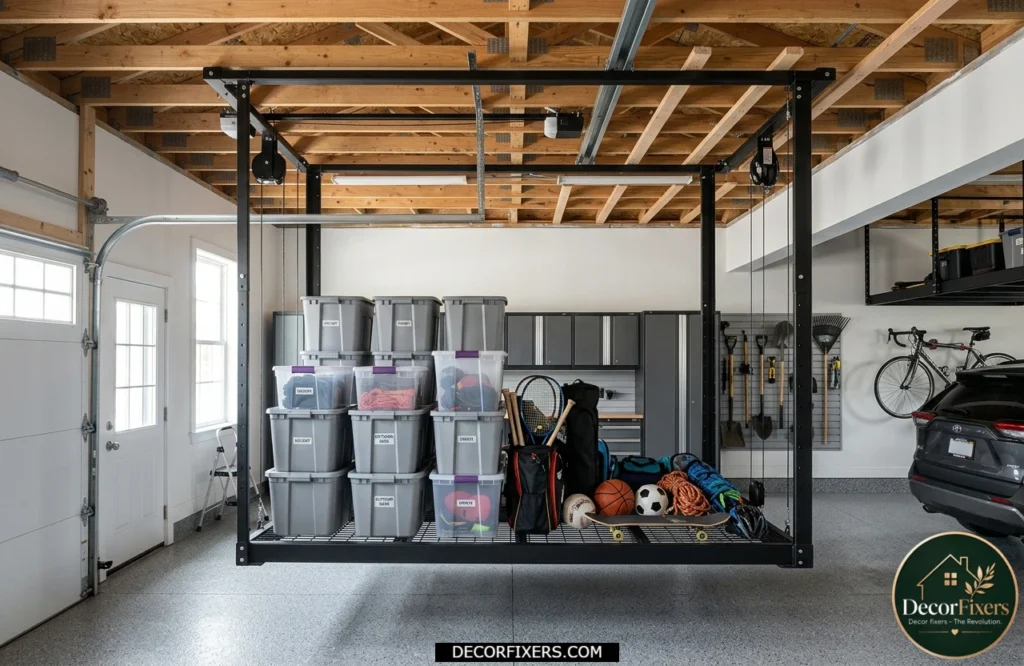
Gladiator’s GearLoft platforms, and similar adjustable-height systems, let you raise or lower the storage plane to match your ceiling. That matters most in garages with 8-foot clearance.
Most people assume taller ceilings always mean more storage room — the data says otherwise. A platform set too high just becomes hard to load without a step ladder every single time.
3. Pulley-Operated Hoist Systems
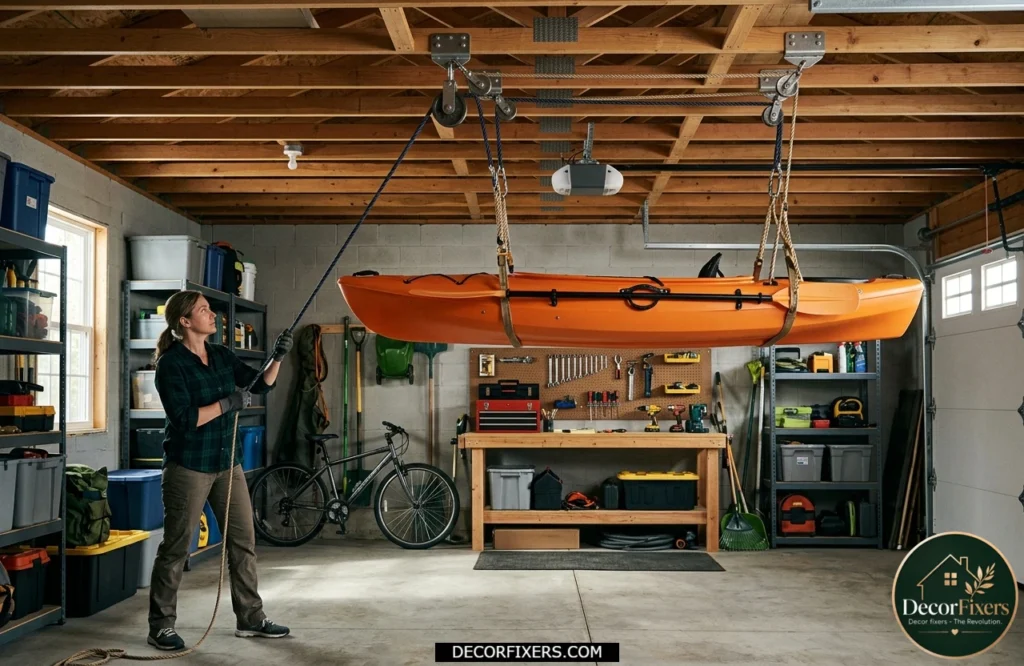
A pulley hoist, like the Racor PHL-1R, lets you lift and lower heavy items using a rope-and-pulley mechanism instead of muscling them onto a high shelf.
I’d say it’s not that hard to install, it’s just tedious — you’re mounting four ceiling brackets and running rope through a series of pulleys, which takes most people about an hour.
Some experts argue that fixed platforms beat pulley systems because there’s nothing mechanical that can fail. That’s a fair point for heavy totes you rarely touch. But if you’re hauling a kayak down every weekend, a hoist saves your back, and the platform doesn’t.
4. Motorized Ceiling Lifts

Motorized lifts use an electric winch to raise and lower platforms, which removes the manual cranking entirely.
Here’s the thing: motorized lifts are overkill for most homes. They cost three to four times more than a manual hoist for the same lift height, and the motor is one more part that can eventually fail.
Or maybe I should say it this way — motorized lifts make sense if you’re lifting something over 80 pounds solo, like a loaded kayak rig. Below that weight, a hand crank does the job just fine.
5. Slatwall-to-Ceiling Hybrid Shelving
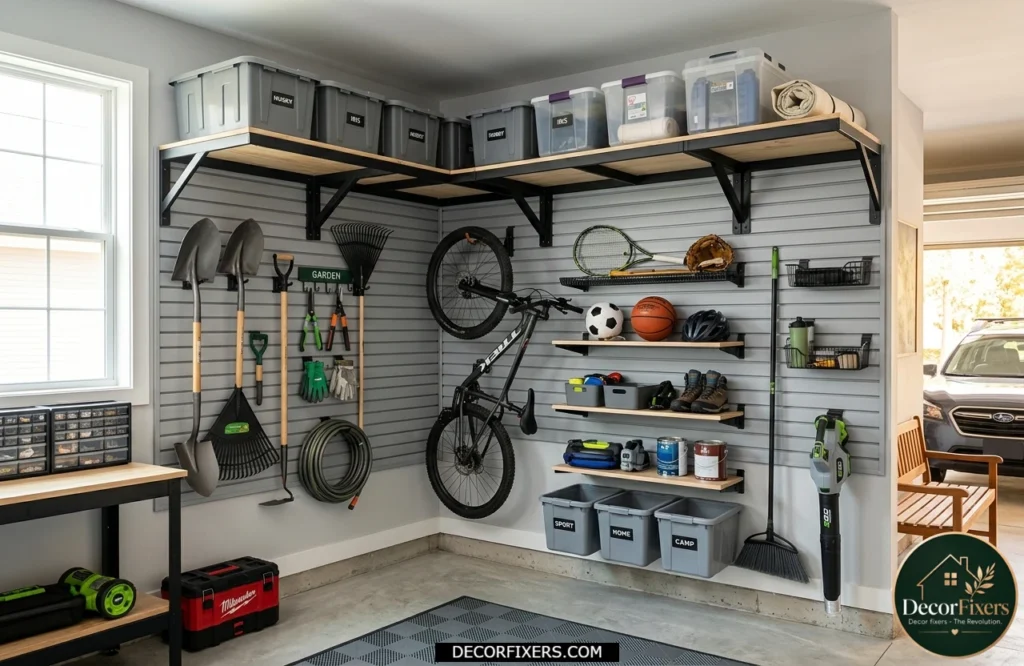
This setup connects a wall-mounted slatwall panel to a ceiling bracket, creating an angled shelf that uses the corner space where a wall meets the roofline.
It works especially well in garages with sloped or vaulted sections, where flat overhead racks don’t sit cleanly against the joists. You get usable storage out of a corner that most racks simply can’t reach.
6. DIY Plywood Ceiling Platform
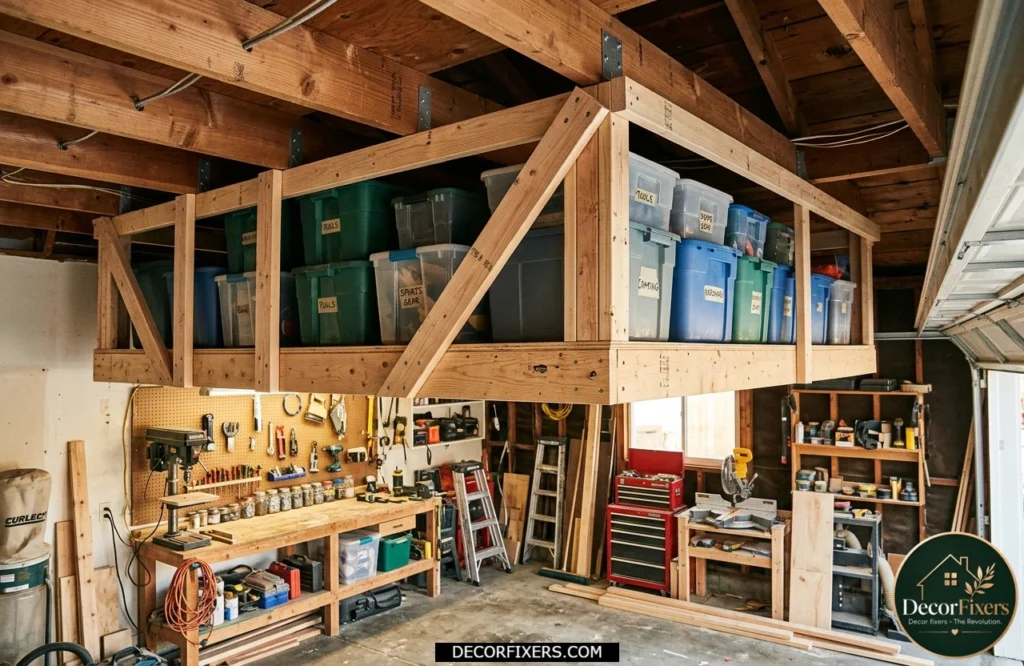
Building your own platform from 3/4-inch plywood and 2×4 framing costs a fraction of a packaged rack kit, assuming you already own basic tools.
Steel racks vs DIY plywood platforms: Steel is better suited for heavy, irregular loads because of adjustable brackets and tested weight ratings. Plywood works better on a tight budget. The key difference is that steel needs no carpentry skill, while plywood needs none of the material cost.
7. Wire Mesh Overhead Baskets
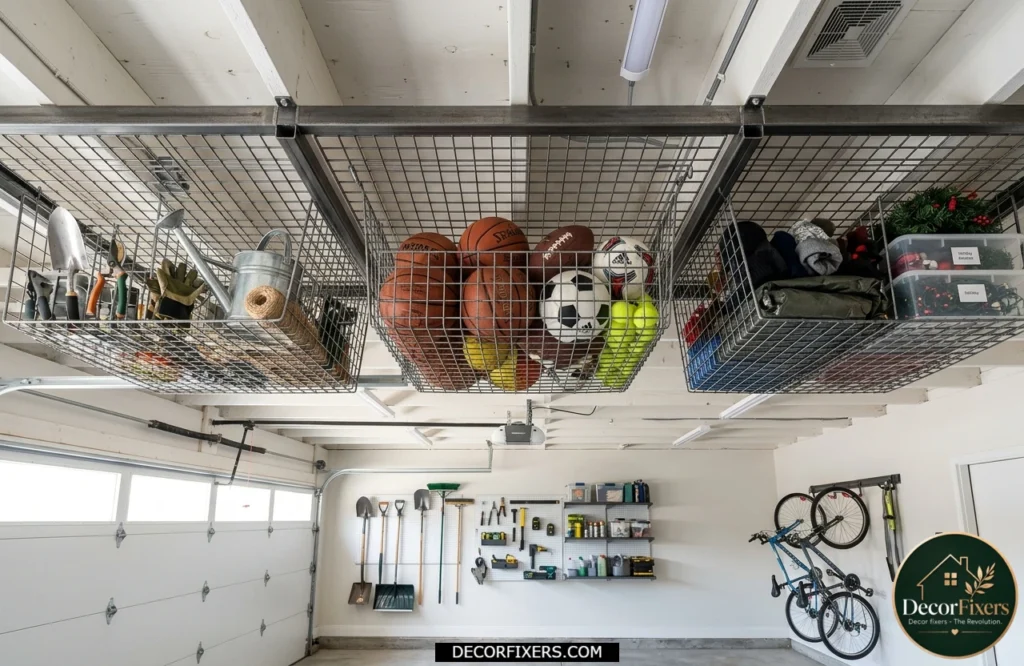
Wire baskets suspended from joists work well for small, loose items — cables, sports gear, gardening supplies — that would otherwise rattle around loose in a bin.
What most guides skip is ventilation. Wire mesh lets air circulate, which matters for anything slightly damp, like pool noodles or wet-weather gear, far more than a sealed plastic tote does.
8. Track-Mounted Sliding Storage Rails
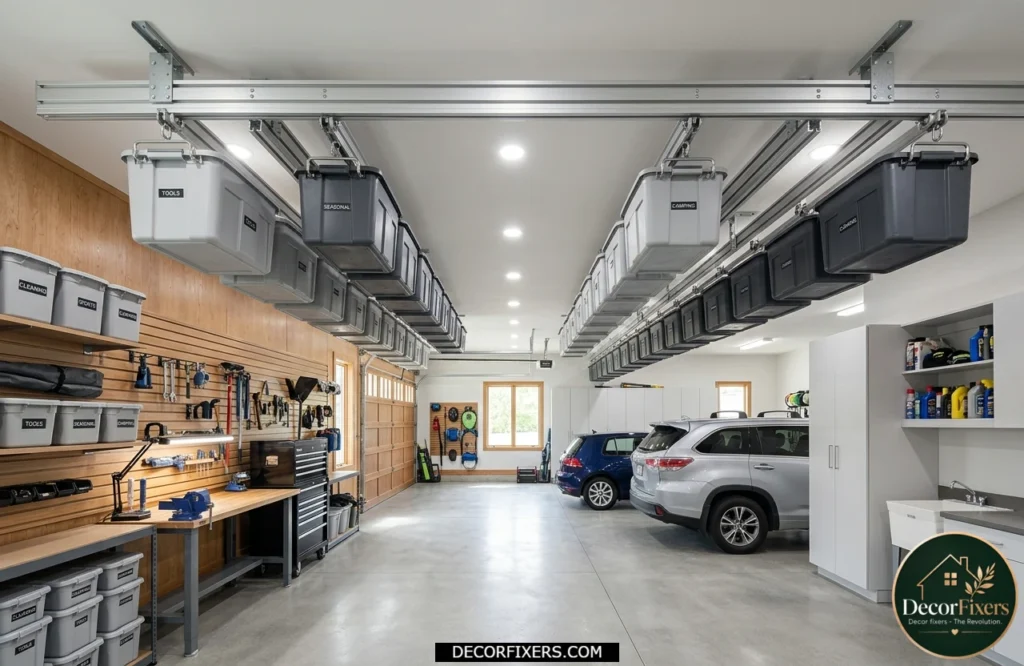
Sliding rail systems mount to the ceiling and let storage bins glide along a track, so you can reach items at the back without climbing or stretching.
This idea suits long, narrow garages best, since the rail runs the length of the space instead of clustering everything into one overhead spot near the door.
9. Ceiling Hooks for Ladders and Long Tools
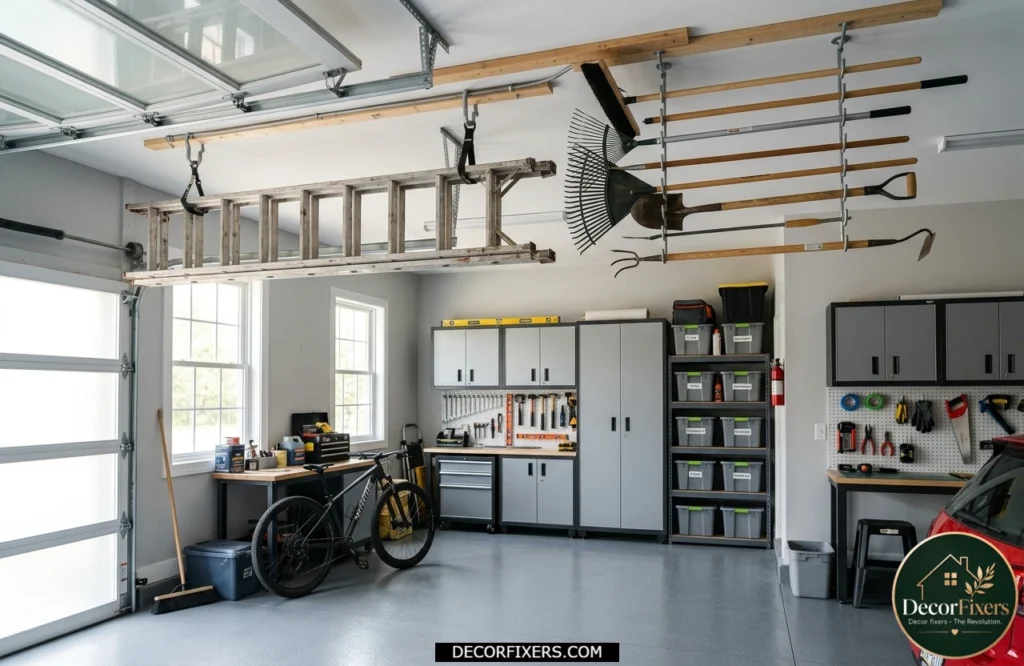
Simple ceiling hooks, spaced to match a ladder’s width, hold extension ladders flat against the joists, with a bungee cord added for extra security.
A common mistake here is using one hook instead of two spaced brackets. A single point of contact lets the ladder twist sideways and eventually slip free.
10. Renter-Friendly Command Hook Systems
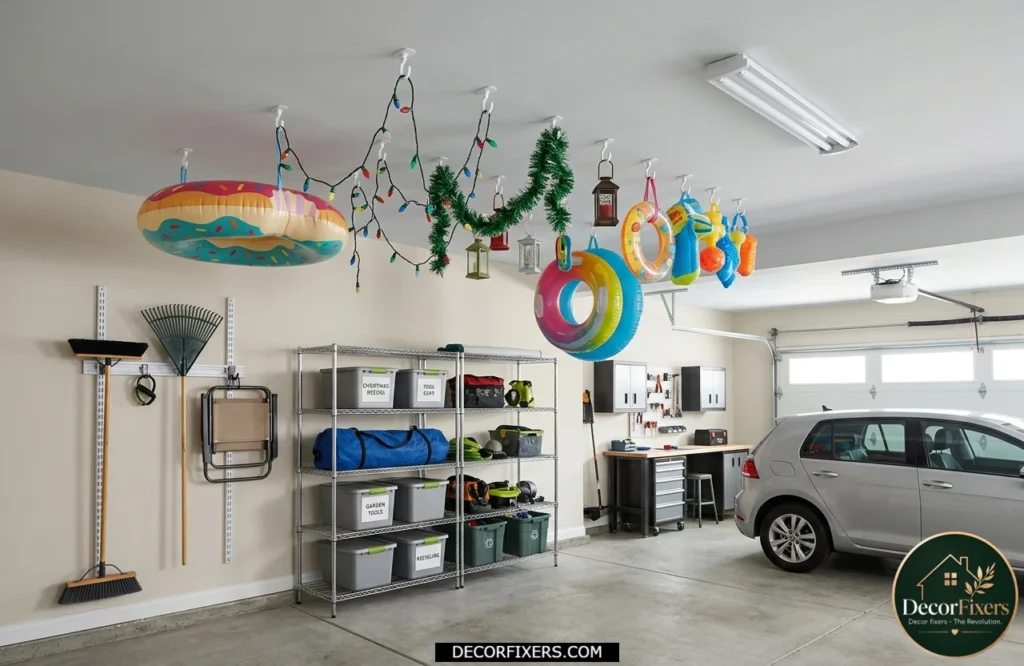
Look — if you’re renting and can’t drill into joists, this is the section for you. Heavy-duty Command hooks, rated for several pounds each, can hold lightweight items like pool floats or seasonal wreaths.
They won’t hold a kayak, and they’re not meant to. Stick to items under five pounds per hook, and remove them slowly to avoid ceiling paint damage at move-out.
11. Rotating Overhead Carousel for Seasonal Bins
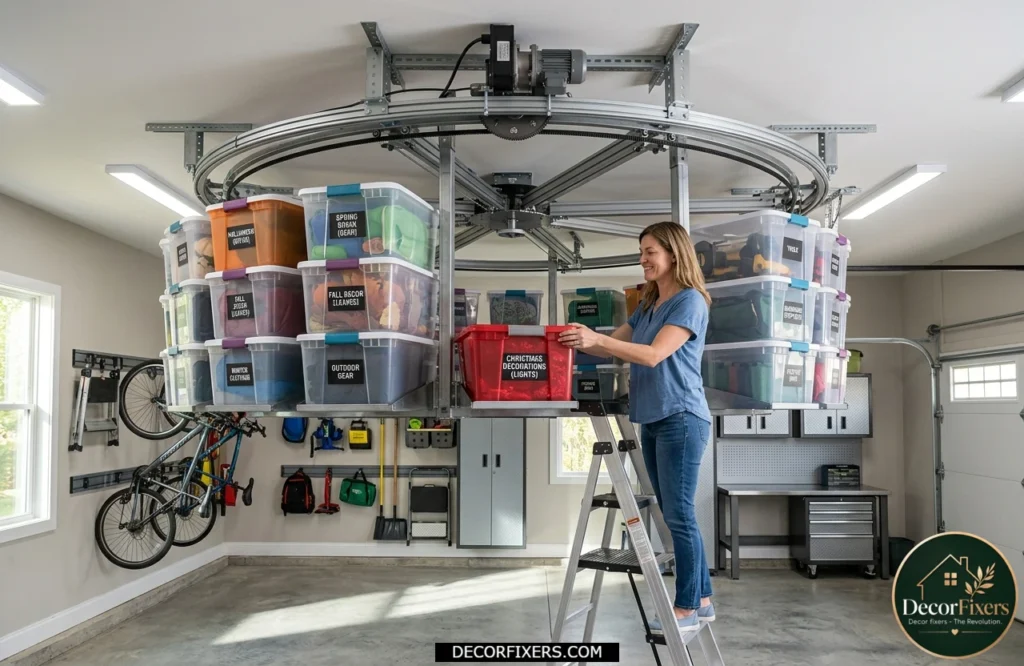
A motorized or manual carousel rotates a row of mounted bins, so you spin the one you need into reach instead of unloading the whole rack to find it.
This idea works best for households juggling multiple seasonal rotations — holiday decor, camping gear, summer versus winter sports equipment — inside one shared garage.
12. Kayak and SUP Ceiling Hoists
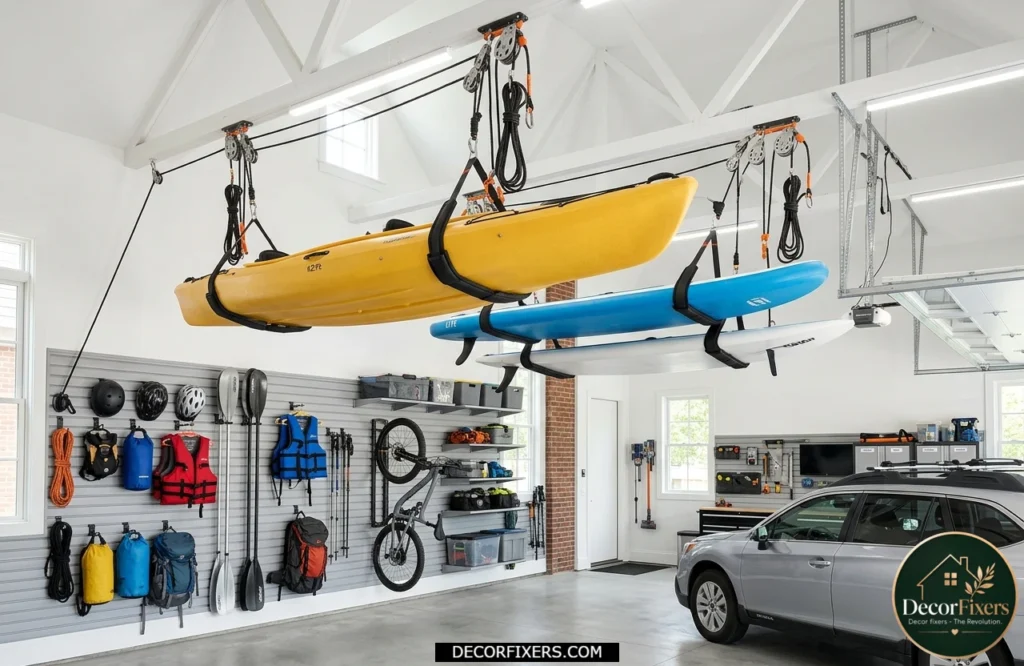
Dedicated kayak and SUP hoists use padded straps and a pulley system designed specifically for long, awkward shapes that won’t sit flat on a standard rack.
StoreYourBoard and similar brands build these with adjustable straps so the hull doesn’t develop pressure dents from hanging in one spot for months at a time.
13. Bike-Specific Pulley Lifts
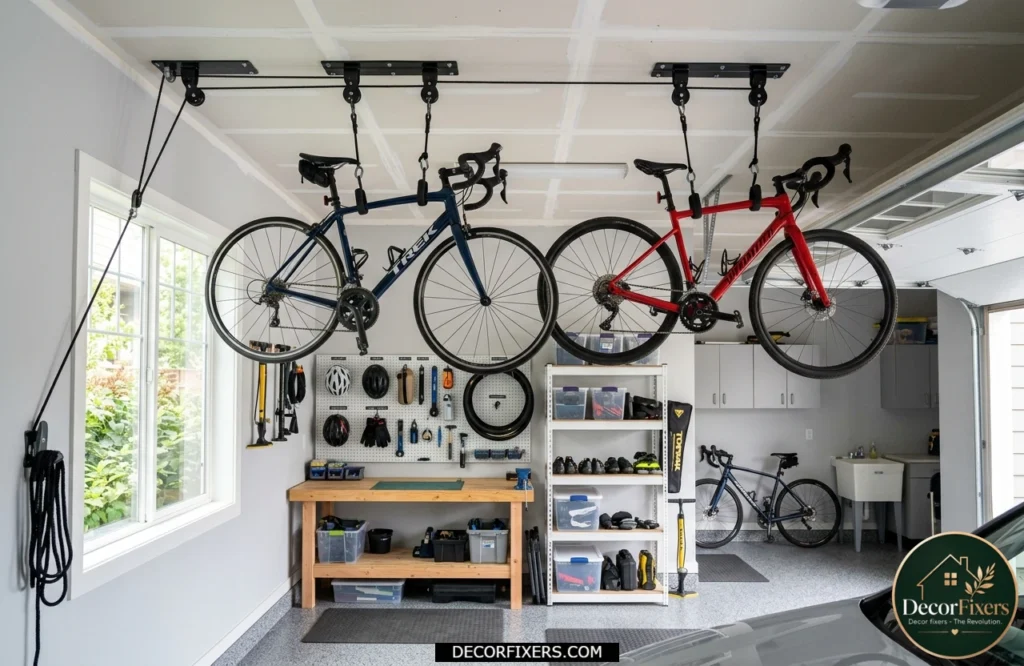
Bike pulley lifts a bicycle by its frame or front wheel, freeing floor space that a kickstand or wall hook would otherwise occupy.
For two or more bikes, slightly stagger the mounting heights so the handlebars and pedals don’t collide when both bikes hang at once near the same wall.
14. Suspended Wire Shelving Between Joists
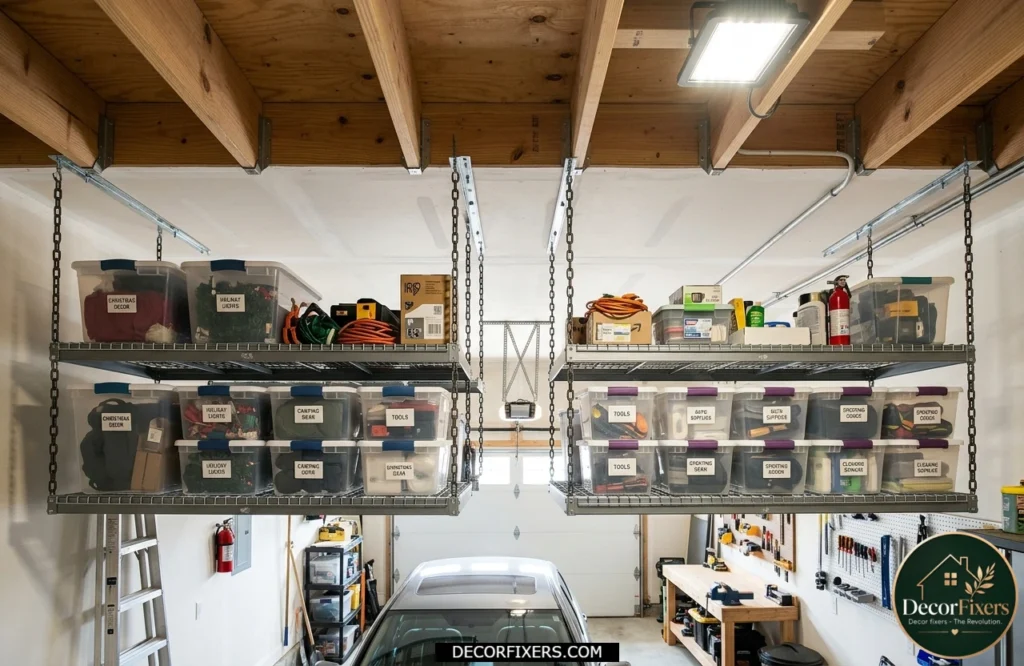
Standard wire shelving units, normally floor-standing, can be flipped over and suspended between joists using chain links or heavy-duty eye hooks.
It’s a budget workaround rather than a purpose-built system. Check the shelving’s rated weight first; it won’t necessarily hold the same load hanging as it does standing on the floor.
15. Corner Ceiling Storage for Awkward Angles
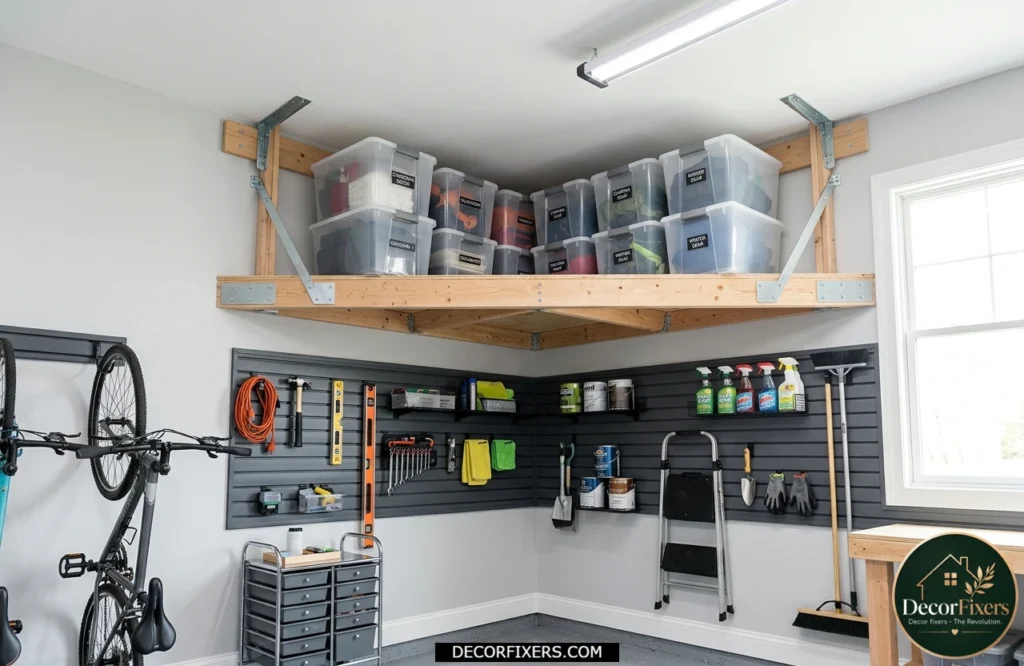
Corner brackets and triangular platforms make use of the dead space where two walls meet the ceiling, an area most racks ignore entirely.
This idea suits small garages especially well, where every square foot of unused corner space adds up fast across the whole room.
16. Garage Door Track Clearance Zone Storage
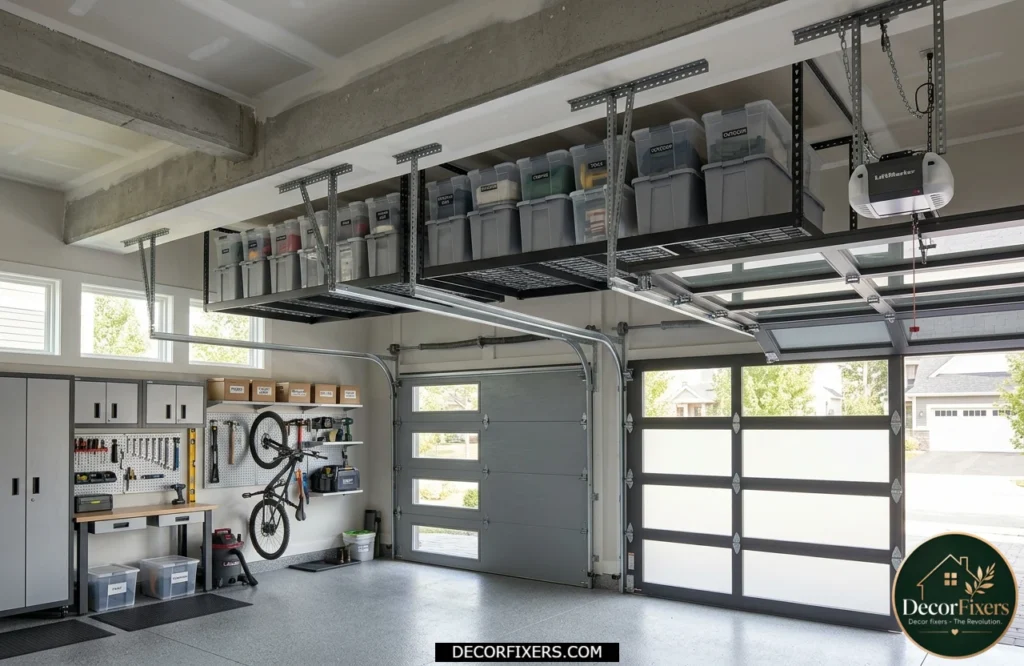
The strip of ceiling just behind the garage door track is usually wasted space, since the door’s travel path blocks taller storage from fitting there.
Low-profile shelves or flat bins under four inches thick fit in this zone without interfering with the door’s rollers, springs, or opener arm.
17. Combination Loft + Rack Systems for Maximum Capacity

For garages with 10 to 15 feet of ceiling height, a double-layer rack system stacks two storage planes, multiplying capacity without adding any floor footprint.
This setup costs more upfront and usually needs two people to install safely. Still, it’s the highest-capacity option on this entire list, by a wide margin.
Quick Comparison: Garage Ceiling Storage Options at a Glance
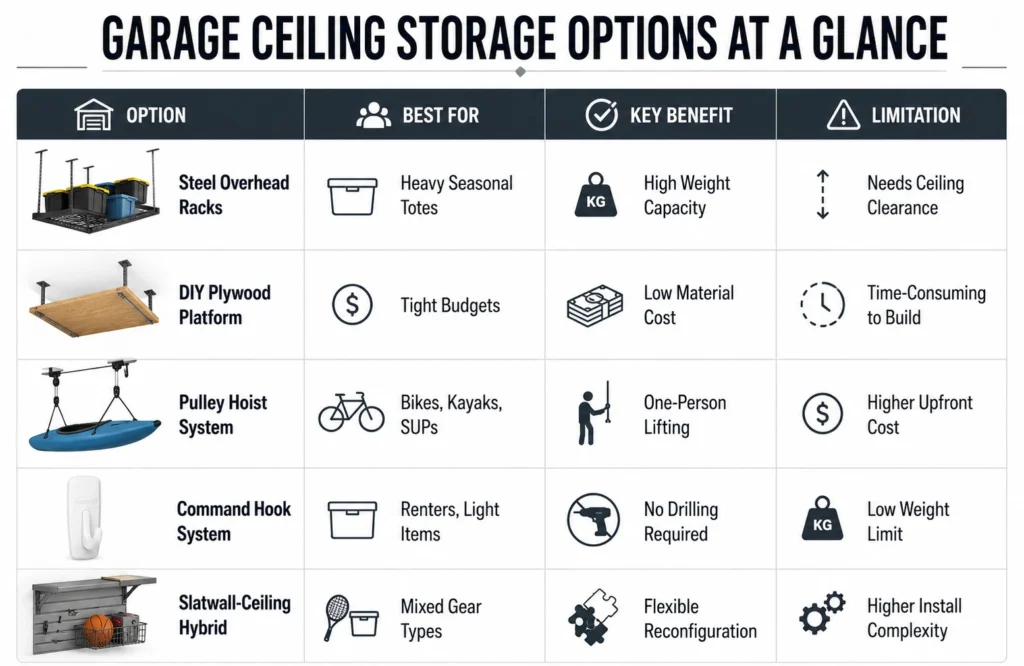
Here’s a side-by-side look at how the main categories stack up against each other.
| Option | Best For | Key Benefit | Limitation |
| Steel Overhead Racks | Heavy seasonal totes | High weight capacity | Needs ceiling clearance |
| DIY Plywood Platform | Tight budgets | Low material cost | Time-consuming to build |
| Pulley Hoist System | Bikes, kayaks, SUPs | One-person lifting | Higher upfront cost |
| Command Hook System | Renters, light items | No drilling required | Low weight limit |
| Slatwall-Ceiling Hybrid | Mixed gear types | Flexible reconfiguration | Higher install complexity |
This guide covers joist-anchored systems built for typical residential garages. It does not address commercial racking or vaulted, trussed rooflines — those need an engineer’s sign-off, not a weekend project.
CONCLUSION:
My garage still isn’t a showroom. But the floor’s clear enough now that I park without doing a three-point turn around a ladder.
I went with a steel rack over the workbench and Command hooks by the door for the stuff I grab weekly. That combo’s worked for two years now — no sagging, no drama, no surprises.
Pick the idea that matches what you actually own, not what looks best in a photo, and you’ll actually use it.
FAQs:
Q: What’s the best garage ceiling storage for a small garage?
A: Slim slide-in platforms or slatwall-ceiling hybrids work best since they hug the roofline without blocking the garage door track.
Q: How do I know if my garage ceiling can hold an overhead rack?
A: Check for exposed joists at 16 or 24-inch spacing, then anchor brackets into at least two joists, never just drywall.
Q: Should I hire someone to install garage ceiling storage?
A: DIY works fine for light racks under four feet, but motorized lifts or heavy steel platforms are safer with a licensed installer.
Q: Why does my garage ceiling sag near a storage rack?
A: It usually means the rack was anchored into drywall instead of joists, or the load exceeds the joist’s rated capacity.
Q: When should I choose a pulley hoist over a fixed rack?
A: Choose a hoist when you need to lower items often, like bikes or kayaks, since fixed racks require a ladder every time.

Creator of DecorFixers, sharing practical home and interior ideas focused on real-life usability, simple design improvements, and budget-friendly solutions.