

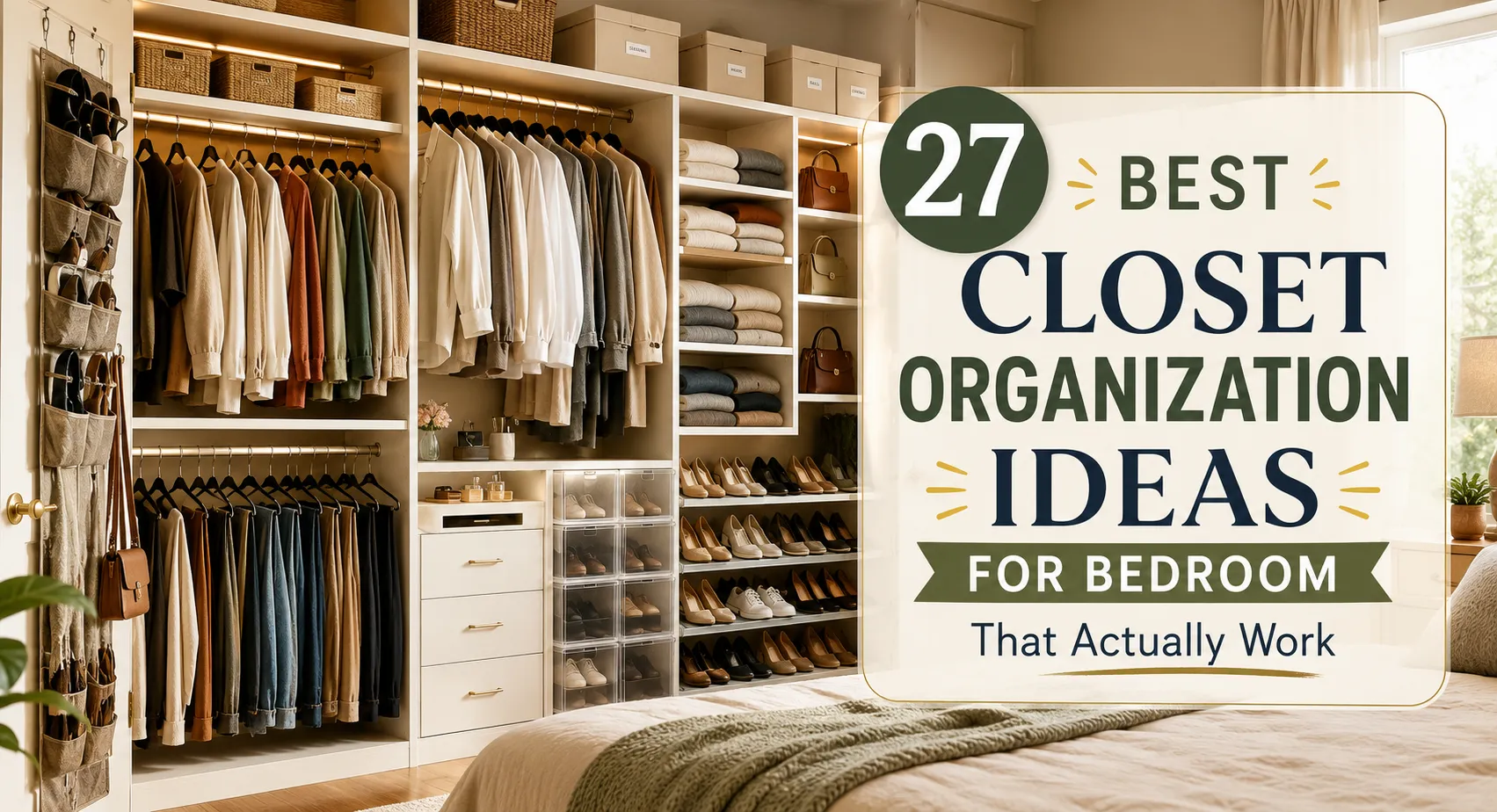
I stood in front of my bedroom closet one Saturday morning, coffee in hand, ten minutes before I needed to leave, and I still couldn’t find my black blazer. It was in there. I knew it was. Somewhere behind a pile of clothes I haven’t touched since 2022, next to a box I keep meaning to deal with, buried under a scarf I forgot I owned.
This article is about fixing the system. Not with a $3,000 custom built-in you need a contractor for, and not with a weekend-long overhaul that burns you out before you even finish. These are 27 closet organization ideas for bedroom spaces that you can actually implement, some in under an hour, some over a weekend, some for under $20.
Before diving in: this guide works best for standard reach-in and walk-in bedroom closets. It does NOT cover garage storage or linen closets; those are a whole different beast.
What Are Closet Organization Ideas for the bedroom?
Closet organization ideas for the bedroom are practical methods, from adding a second hanging rod to installing full modular systems, that help you store and access your clothes, shoes, and accessories efficiently. The goal is to design your closet layout around your actual wardrobe, not the other way around.
1. Add a Second Hanging Rod to Double Your Hanging Space
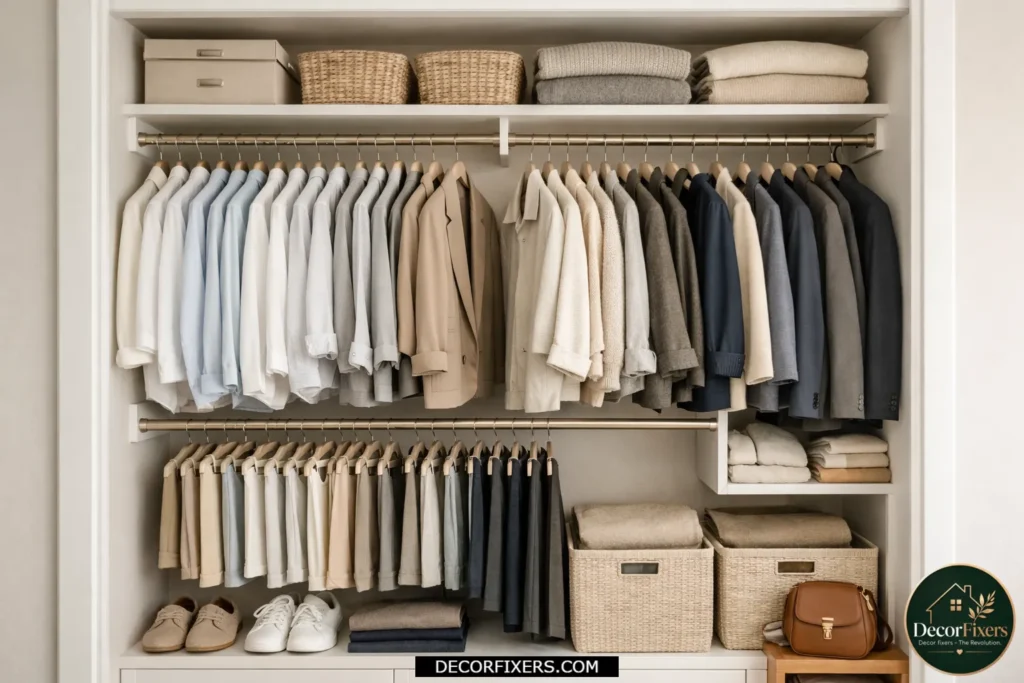
The single most impactful change you can make to any reach-in closet costs around $15. Most standard closets waste the bottom half of their hanging space; shirts and jackets rarely hang more than 40 inches, which leaves empty air underneath.
Buy a hang-on double rod (available at Target, Amazon, or IKEA) and clip it to your existing rod. You’ve just doubled your hanging capacity without drilling a single hole. This is especially effective for short garments: shirts, blazers, folded trousers, and children’s clothes.
2. Switch to Slim Velvet Hangers Immediately
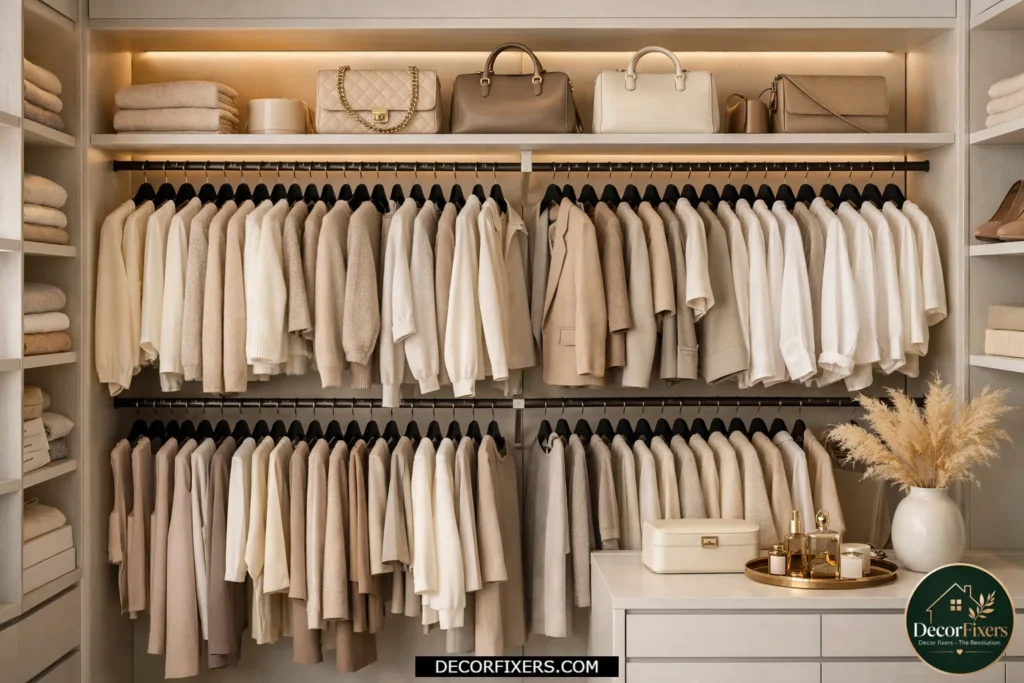
Huge plastic hangers take up roughly 3x the horizontal space of slim velvet ones. A standard reach-in closet can hold about 40 plastic hangers. Switch to velvet, and that number jumps to 80–100.
They’re non-slip (so your silk blouses actually stay put), and they keep garments from developing those annoying shoulder bumps. A pack of 50 runs about $12–$15, and the difference is immediate.
3. Use the Floor Space Under Short Clothes Strategically
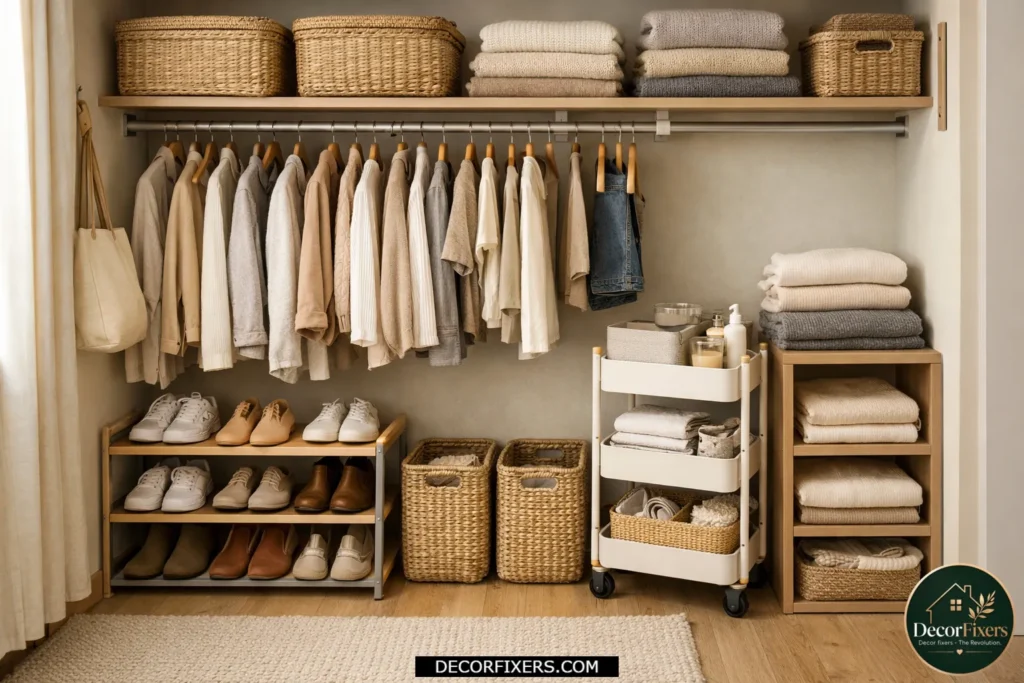
That dead zone beneath your hanging shirts? It’s prime real estate. If you’ve added a second rod, the lower section works for folded trousers. If not, slide a portable shoe shelf or small rolling cart underneath.
Don’t buy a random shoe rack first; measure the height from the floor to your shortest hanging garment. That number determines what actually fits. This is the mistake most people make.
4. Install a ClosetMaid Wire Shelf System for an Affordable Overhaul
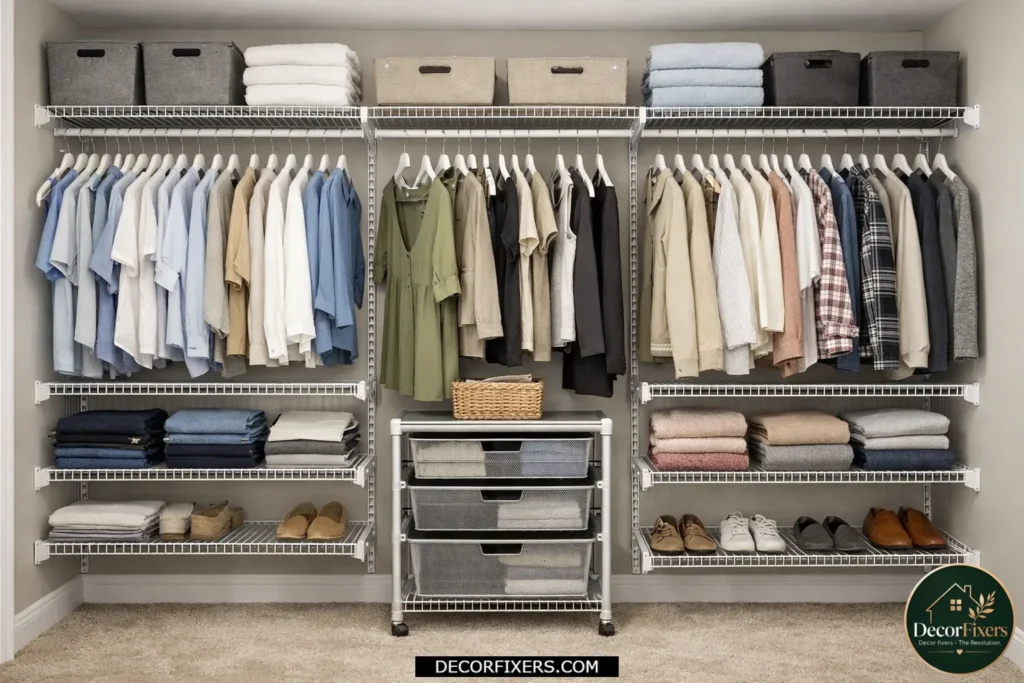
The ventilated wire prevents moisture buildup, a real issue in small closets, and you can configure shelves, rods, and baskets exactly where you need them. It’s the middle ground between a basic rod-and-shelf setup and a full custom system.
Before You Buy Anything: Figure Out Your Wardrobe Type First
Here’s the thing: most people skip this step, and it’s the entire reason their closet revamp fails within two months. What works for someone with mostly hanging clothes is completely wrong for someone with mostly folded items.
Take five minutes. Count how much of your wardrobe is:
(a) hanging clothes like dresses, jackets, blazers;
(b) folded items like jeans, sweaters, t-shirts, or
(c) shoes and accessories.
Whichever category is the biggest is where your closet layout needs to place space. Or maybe I should say it this way: your closet should be built around your habits, not Pinterest’s behaviors.
5. Use the IKEA PAX System for a Near-Custom Walk-In at a Fraction of the Cost
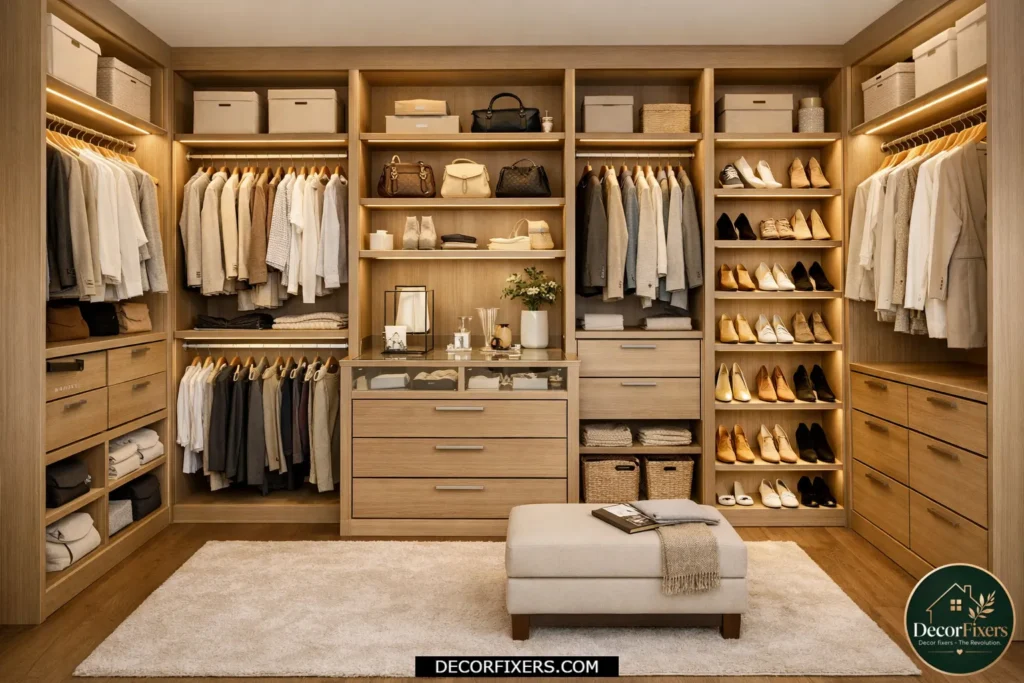
If you have a walk-in or a wider reach-in closet and you’re ready to invest properly, the IKEA PAX wardrobe system is the closest thing to a custom closet without the custom price tag. Frames start at around $150, and you mix and match interior components, drawers, pull-out shelves, shoe racks, and hanging rods.
The key is measuring precisely before ordering. IKEA offers a free PAX planner tool online. One important note: PAX works best in closets with flat, square walls. Older homes with irregular walls may need shimming.
6. Try The Container Store Elfa System if You Need Maximum Flexibility
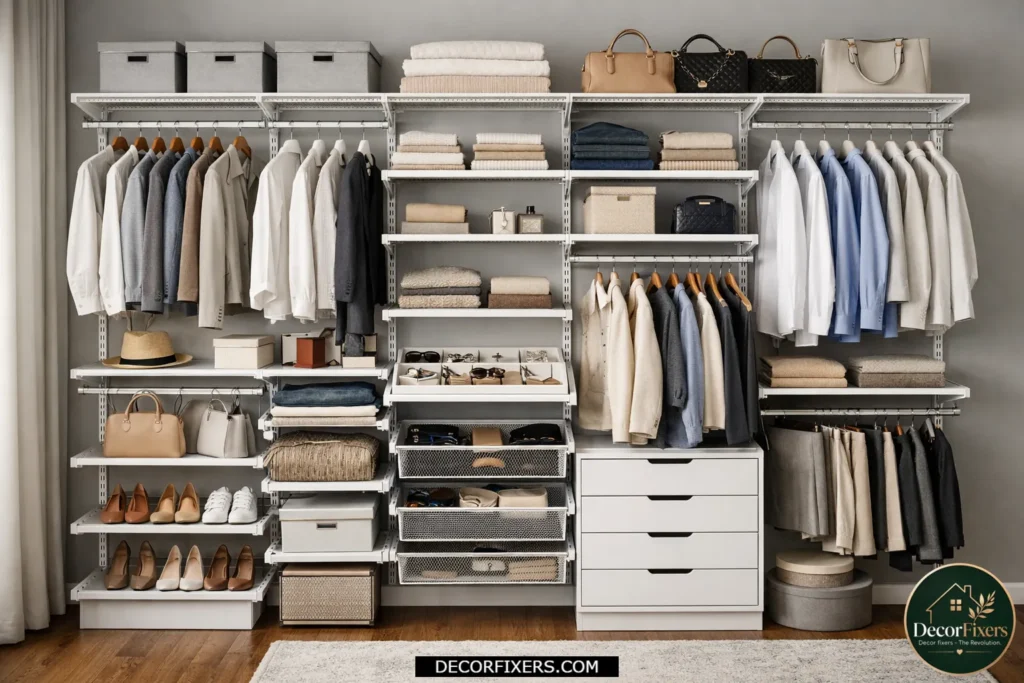
The Elfa system from The Container Store works differently from IKEA PAX. Instead of freestanding frames, Elfa mounts a top track to the wall, then hangs vertical standards from it, and all components clip onto those standards.
This means you can slide shelves left or right, change heights, and reconfigure entirely without new hardware. It costs more than ClosetMaid or IKEA (entry kits start around $300), but it’s the best long-term solution for someone whose storage needs change often. Elfa goes on sale about twice a year, typically 30% off, worth waiting for.
7. Maximize Vertical Space With Stacked Shelf Units
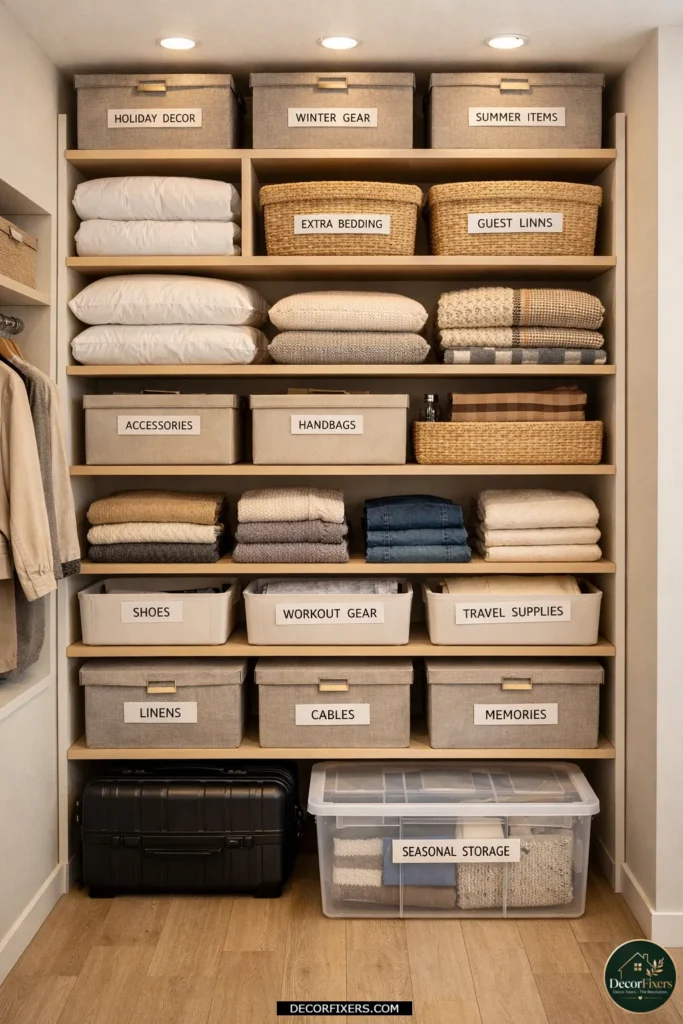
Most closet shelves leave several feet of dead space above them. Stack a second set of shelves on top, either modular cubes or adjustable risers. Use the upper zone for items you access rarely: seasonal clothing, luggage, extra bedding.
Label everything up there. Seriously. If you don’t label it, you’ll forget what’s in those bins and end up buying duplicates. A label maker costs $20 and saves you from this exact problem.
8. Go Vertical With an Over-the-Door Organizer
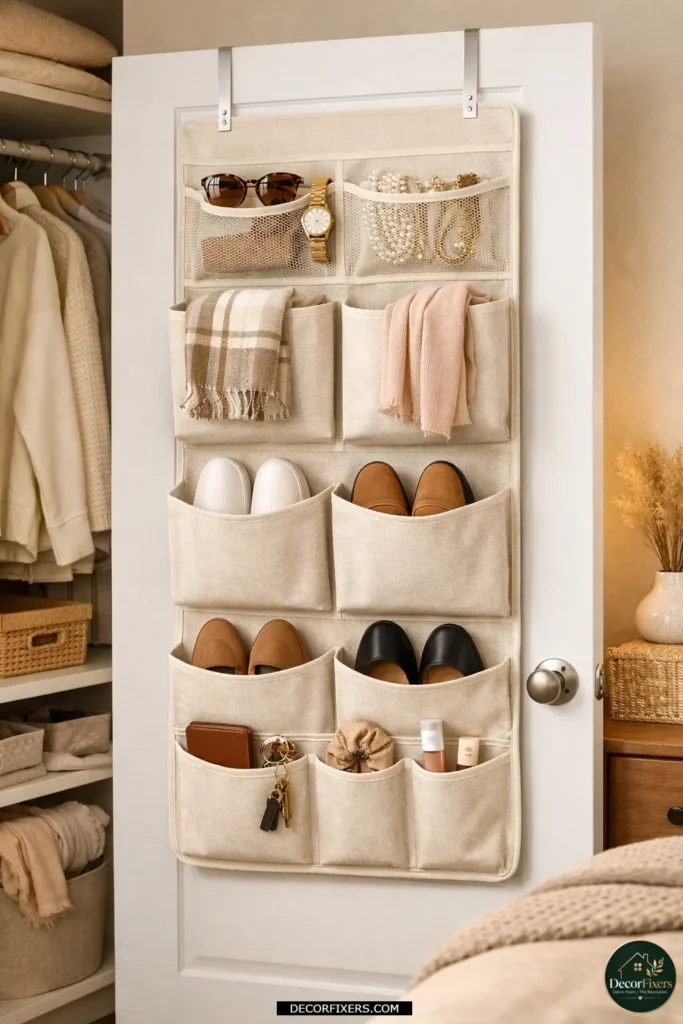
The back of your closet door is one of the most wasted surfaces in any bedroom. A quality over-the-door organizer adds instant storage for shoes, accessories, small folded items, or even cleaning supplies without taking up floor space.
Look for organizers with clear pockets so you can see what’s inside without digging. Avoid cheap wire versions; they tend to wobble and scratch the door. A fabric over-door unit with rigid backing holds its shape and stays quiet.
9. Organize Shoes With a Tiered Slanted Rack
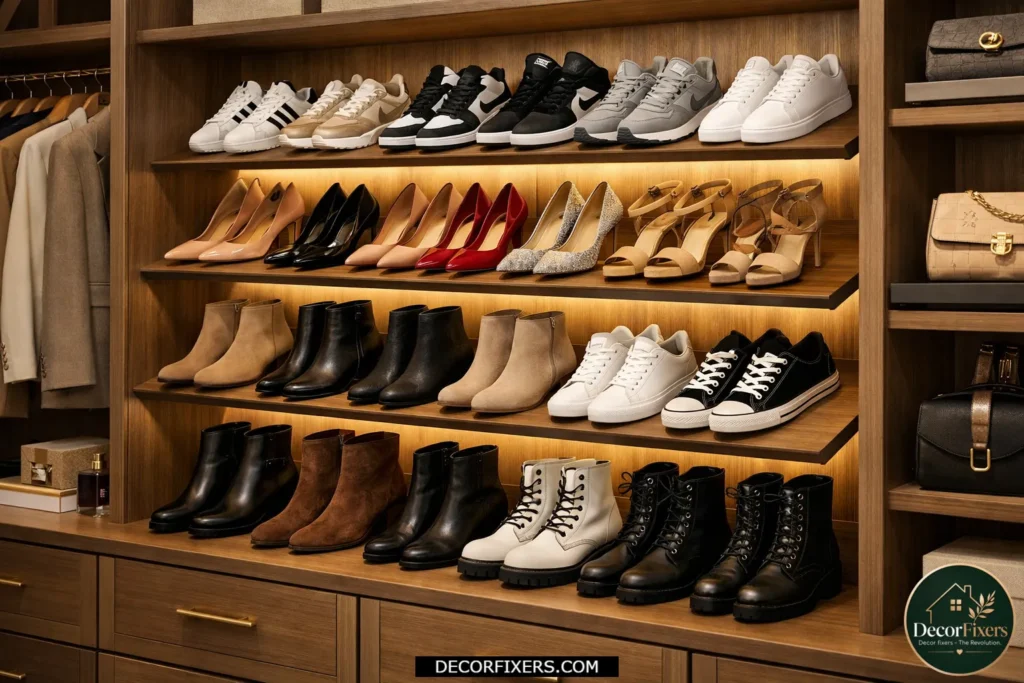
Shoes piled on a closet floor are both the fastest way to create chaos and the easiest to fix. A tiered slanted shoe rack, the kind where shoes sit at an angle, and you can see every pair at a glance, takes 10 minutes to assemble and typically holds 12–16 pairs in the same footprint as a pile.
For boots, use boot shapers or stuff them with rolled magazines to keep them upright without a dedicated boot shelf. This sounds small, but boots flopped over sideways take up three times the space.
10. Use Clear Stackable Shoe Boxes for Your Good Shoes
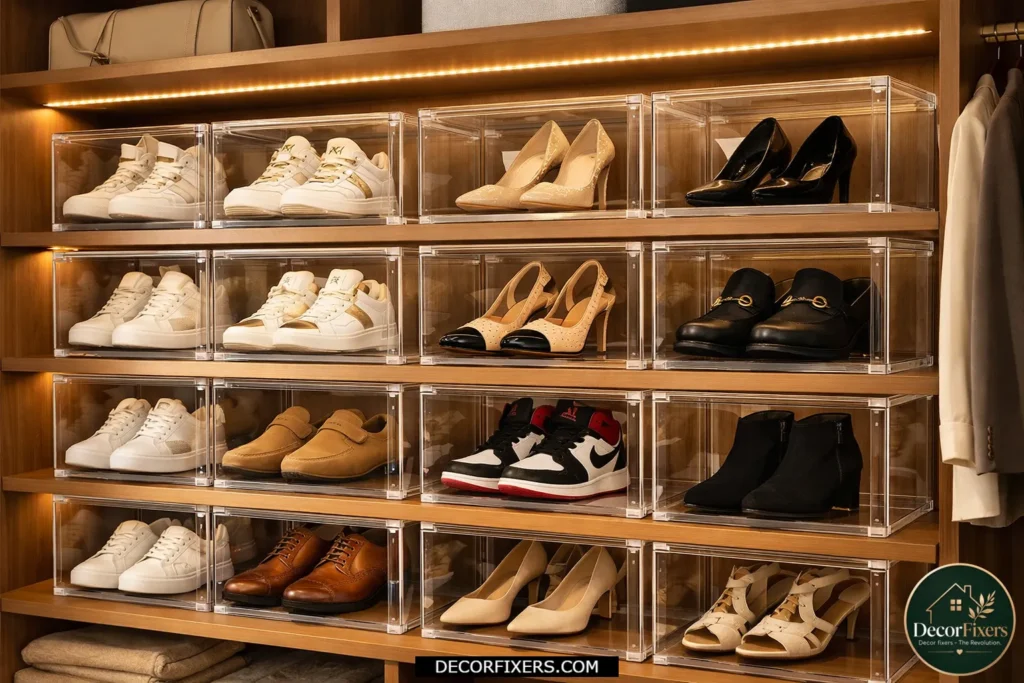
For shoes you want to protect, dress shoes, heels you rarely wear, special occasion pieces, clear stackable shoe boxes are the move. You see exactly what’s inside without opening anything; they stack neatly, and they protect from dust.
These boxes are also useful for non-shoe items: they’re the perfect size for storing folded scarves, small handbags, or workout accessories. Don’t limit your thinking to what the label says.
11. Hang Purses on S-Hooks or a Dedicated Bag Rail

Handbags stacked on a shelf get crushed, misshapen, and are impossible to find quickly. Hang them instead. S-hooks on your closet rod keep bags visible, accessible, and maintain their structure, especially important for structured leather bags.
If you have many bags, a wall-mounted purse rail (essentially a row of hooks) keeps everything organized by size or frequency of use. Hang daily bags at eye level. Occasional-use bags go higher.
12. Add Shelf Dividers to Keep Folded Stacks From Toppling
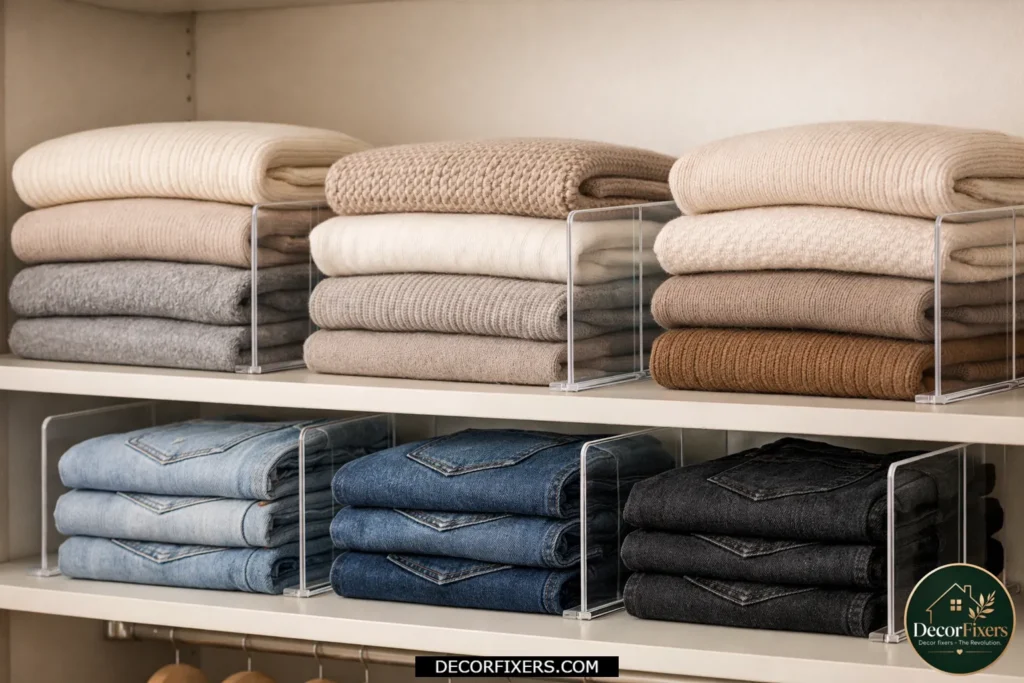
You’ve folded your sweaters perfectly, and two days later, the whole stack has fallen sideways, and you’re back to chaos. Shelf dividers are the fix. They clip onto any standard shelf and create individual slots that keep stacks upright.
They’re also useful for organizing purses standing upright on a shelf, separating folded jeans by color, or keeping a row of handbags from sliding into each other.
13. Install LED Strip Lights or a Battery-Powered Closet Light
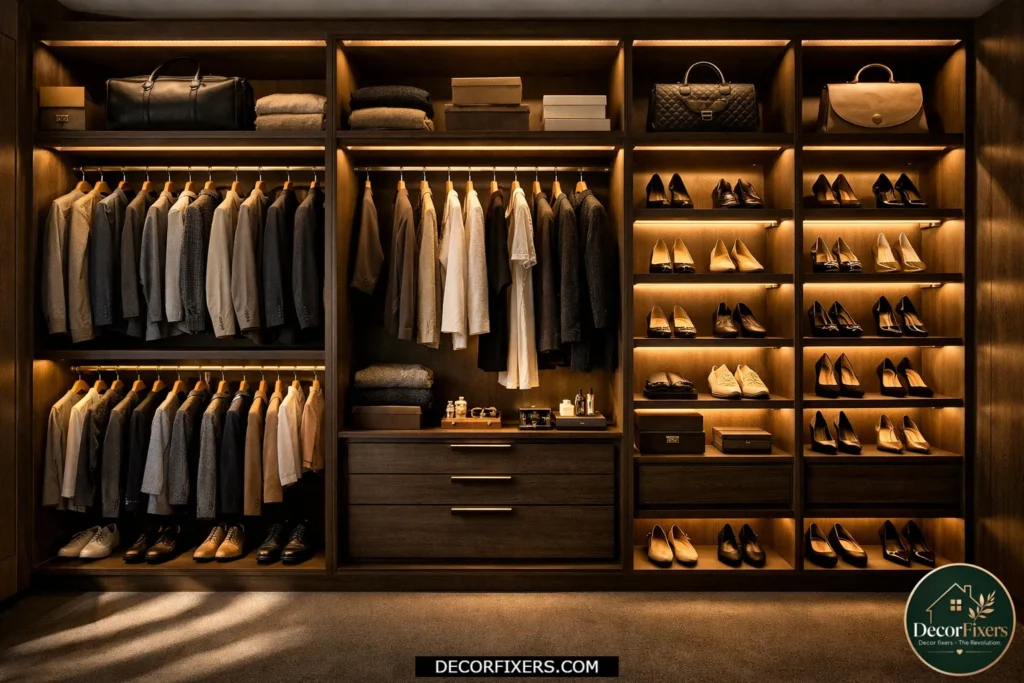
A dark closet is a disorganized closet, even if everything is technically in its place. If you can’t see what you have, you’ll pull multiple items out to find the one you need, and then half of them won’t make it back neatly.
Motion-activated LED strip lights are $15–$25 on Amazon and don’t require any wiring. Stick them under a shelf so they illuminate the hanging section. You’ll be genuinely surprised by how much easier it is to get dressed when you can see everything clearly.
14. Color-Code Your Hanging Clothes
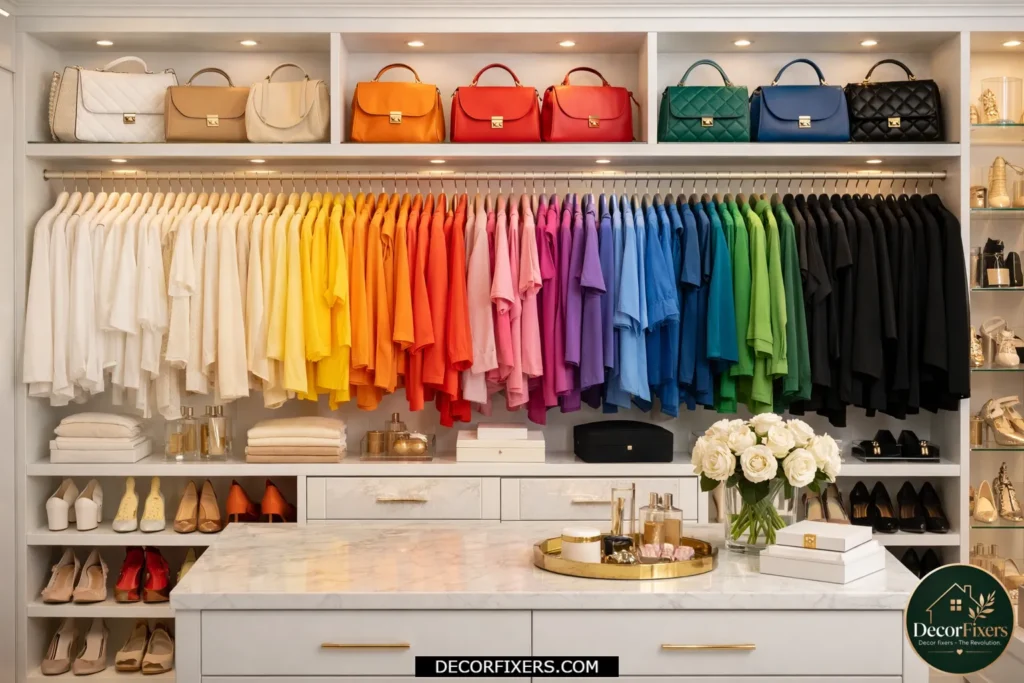
This one gets dismissed as just aesthetic, but it’s actually functional. When clothes are arranged by color, you register your wardrobe faster. You stop asking yourself Do I have a white shirt?’ because you can see the white section at a glance.
The arrangement that works best for most people: white → cream → yellow → orange → red → pink → purple → blue → green → brown → gray → black. Arrange within each color by garment type: tanks, tees, long-sleeves, blouses.
15. Sort by Garment Type AND Length for the Most Space-Efficient Layout
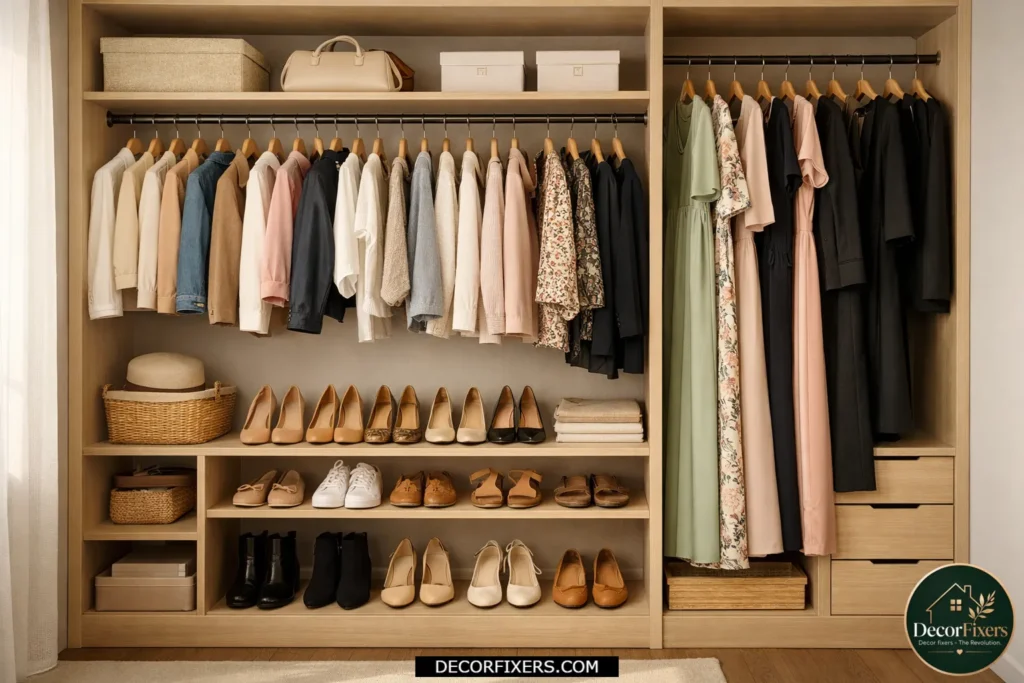
Hanging everything the same height creates wasted space underneath shorter items. Instead, group short garments (shirts, jackets, folded pants) together on one side and long garments (dresses, trousers hung full-length, coats) on the other.
This creates a natural ‘double hang zone’ under the short clothes section, prime real estate for a shoe rack, a rolling drawer unit, or a small set of shelves.
16. Vacuum Storage Bags for Seasonal Clothing
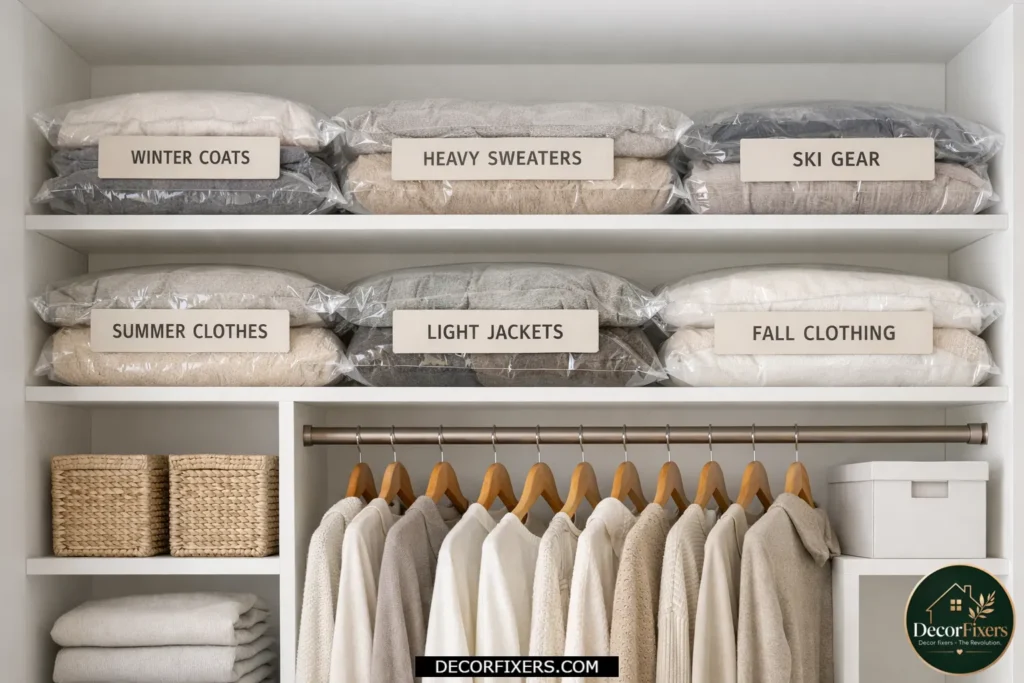
Bulky winter items, down jackets, thick sweaters, and extra blankets are the biggest space thieves in any bedroom closet. Vacuum storage bags compress these items to about 20% of their original volume.
Store compressed bags on the highest shelf or under the bed. Label the outside of each bag (use a luggage tag or tape) before sealing, trust me, you won’t remember what’s inside six months later. Rotating these seasonally takes about 20 minutes twice a year and frees up enormous closet space.
17. Create a ‘Daily Grab Zone’ at Eye and Hand Level
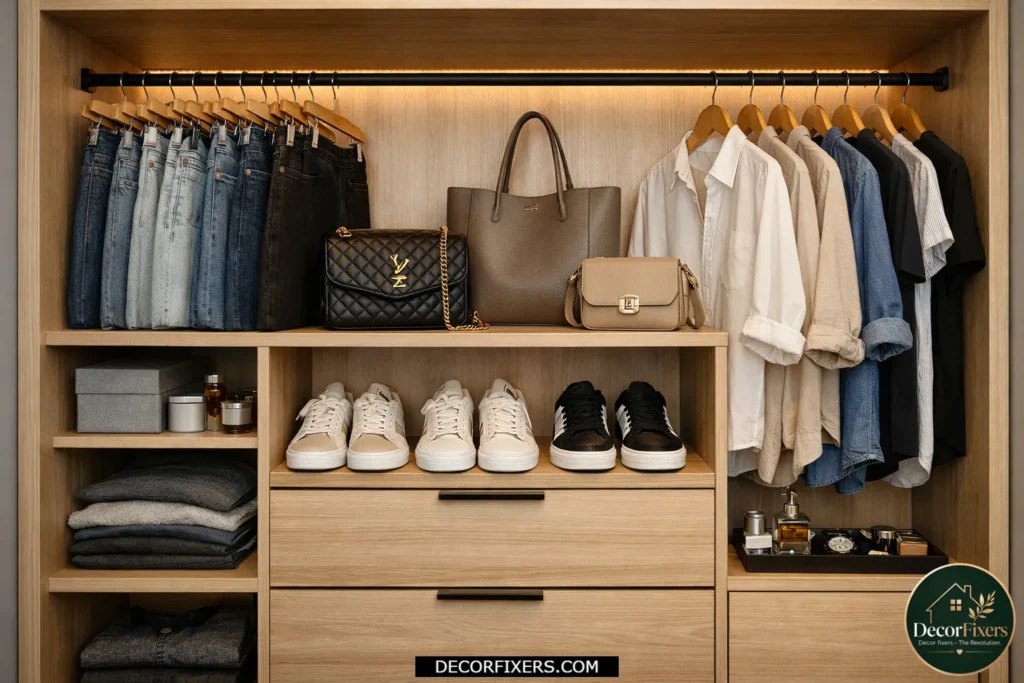
Think about what you reach for every single day: your most-worn jeans, your go-to tops, your everyday shoes. These items should be the easiest to access, between shoulder and hip height, right in front of you.
Everything else gets organized around this zone. Rarely worn items go up high or in the back. This sounds obvious, but most people organize by category or aesthetics and end up accomplishing past 40 items to get to the 5 they actually use.
18. Hang a Scarf or Belt Organizer on One Hanger
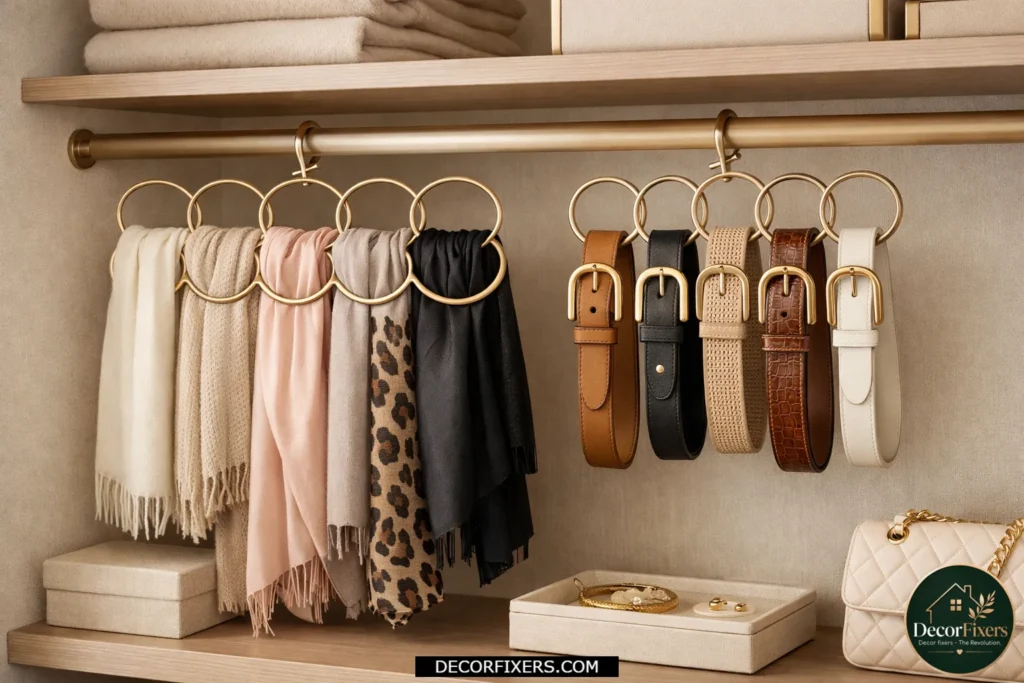
Scarves and belts are tiny, but they create disproportionate chaos when loose. A dedicated multi-loop hanger organizer holds 12–20 scarves or belts on a single hanger footprint, taking up almost no space while keeping everything visible and tangle-free.
For ties, the same logic applies: a rotating tie rack mounted to the wall or inside the door keeps them wrinkle-free and easy to select.
19. Add Drawer Units Inside a Walk-In for Folded Items
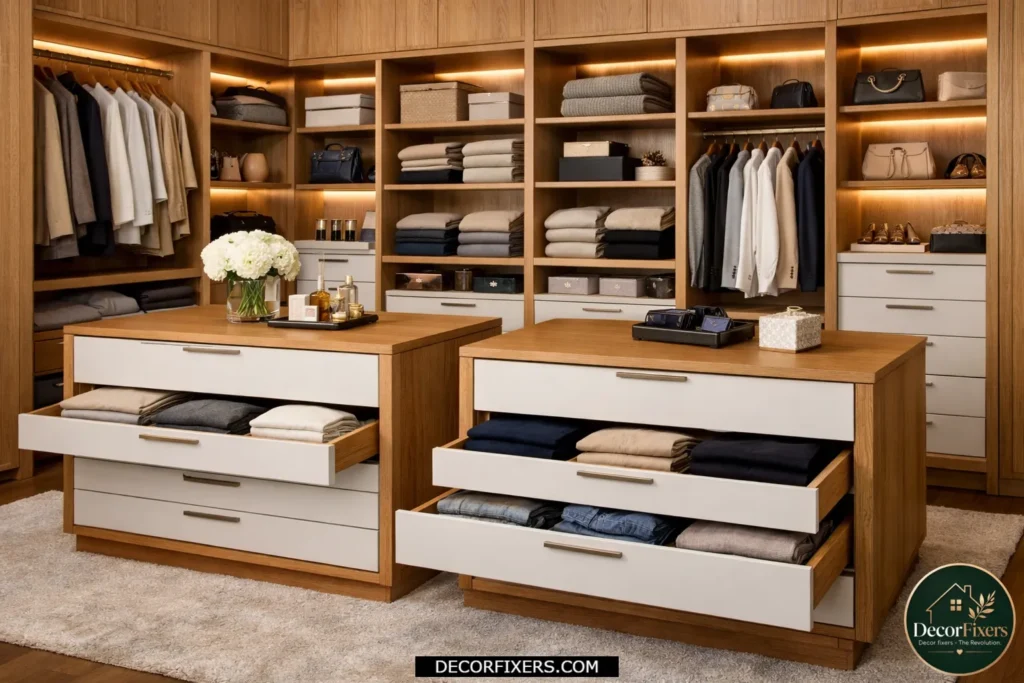
If you have a walk-in closet and currently fold clothes in a dresser in your bedroom, consider moving a compact drawer unit inside the closet. This frees up significant bedroom floor space and consolidates your whole getting-dressed routine to one spot.
IKEA’s ALEX or MALM drawers fit inside most standard walk-in closets. Use the bedroom space you free up for a reading chair, extra nightstand, or simply breathing room.
20. Label Every Bin, Basket, and Box
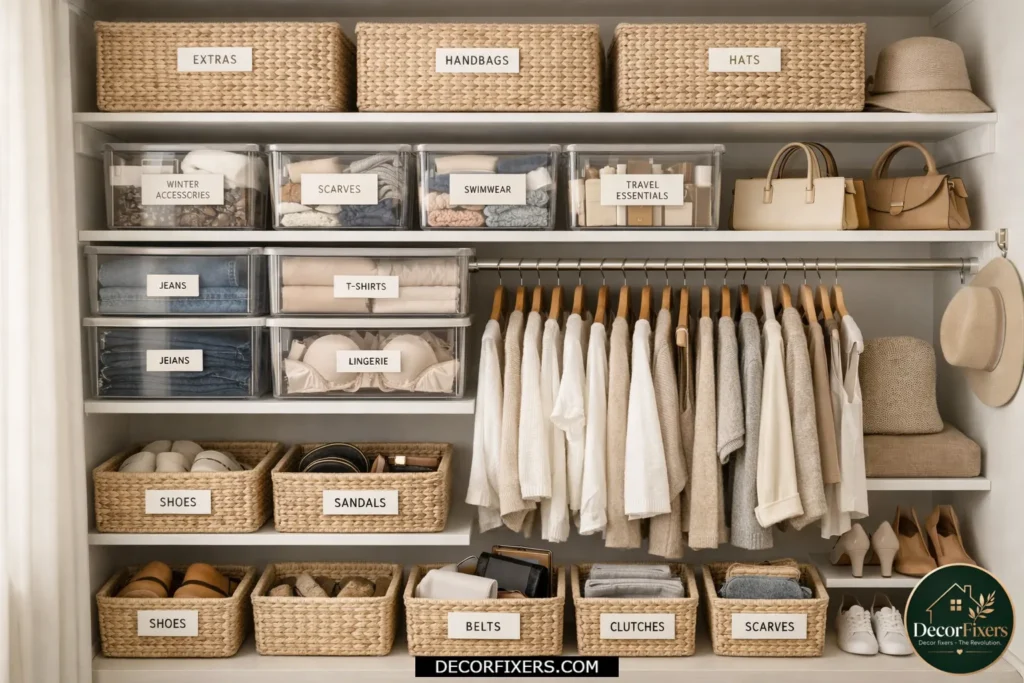
Unlabeled storage is just delayed clutter. You put things ‘away,’ but you don’t know where away is, and neither does anyone else in the house. Within two weeks, everything migrates back to piles because it’s faster.
Label makers ($18–$25) make this satisfying and permanent. For baskets and fabric bins, clip-on labels work perfectly. For clear bins, a dry-erase marker on the inside lid means you can update labels as contents change. Simple and genuinely effective.
21. Use a Hanging Fabric Shelving Unit for a Renter-Friendly Upgrade
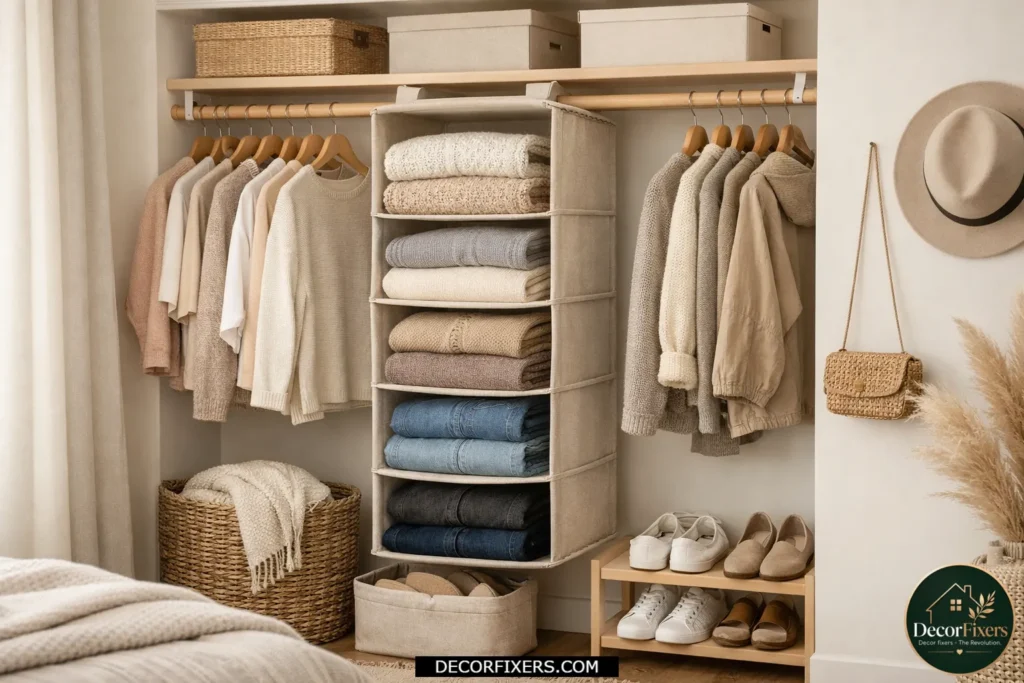
If you’re renting and can’t mount anything to the walls, hanging fabric shelf organizers clip directly onto your existing closet rod, then add 4–6 shelves of folded storage. They’re removable, cost under $30, and transform a rod-and-shelf closet into something far more functional.
These work especially well for sweaters, jeans, and workout clothes that you’d otherwise stack on a single shelf. Different colors of organizers can help visually separate two people’s sections in a shared closet.
22. Mount Floating Shelves Above the Closet Rod for Extra Storage
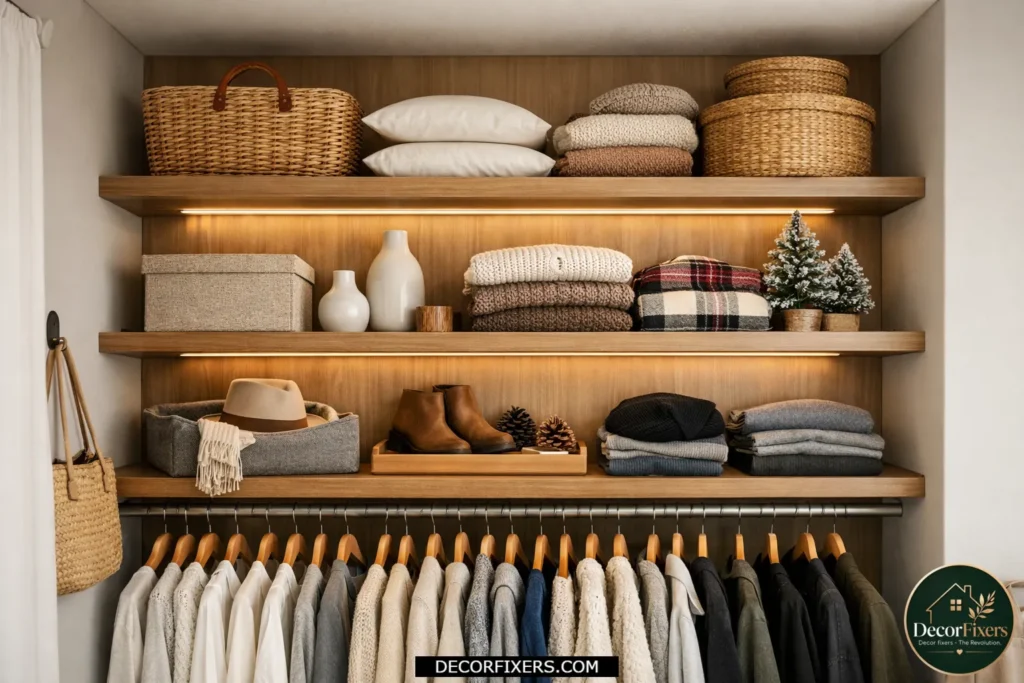
If you have a few inches of space between your closet rod and the ceiling, a single floating shelf can add meaningful storage for folded items, bins, or shoe boxes. It requires two wall anchors and a drill, a 15-minute project.
Use this zone for true seasonal storage: the kind of things you only touch twice a year. Holiday items, formal accessories, backup bedding. Keep a small step stool nearby so this shelf is actually accessible, not just aspirational.
23. Install Pull-Out Drawers or Baskets on Shelves
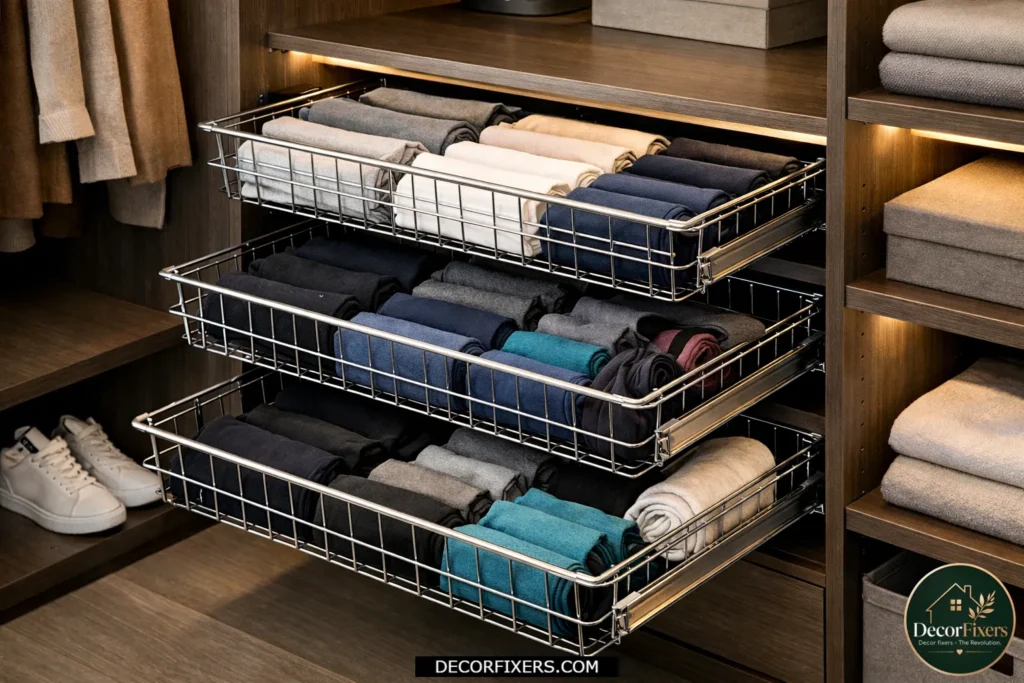
Fixed shelves in a reach-in closet have one fatal flaw: you can’t see what’s in the back. Pull-out basket drawers solve this. They slide forward on rails so you can see and reach items at the back without removing everything in front.
These are especially useful for folded t-shirts, gym clothes, and underwear, items that tend to get shoved to the back and forgotten. ClosetMaid and IKEA both offer pull-out solutions that fit standard shelf depths.
24. Declutter Using the ‘One Year Test’, Not the Marie Kondo Test
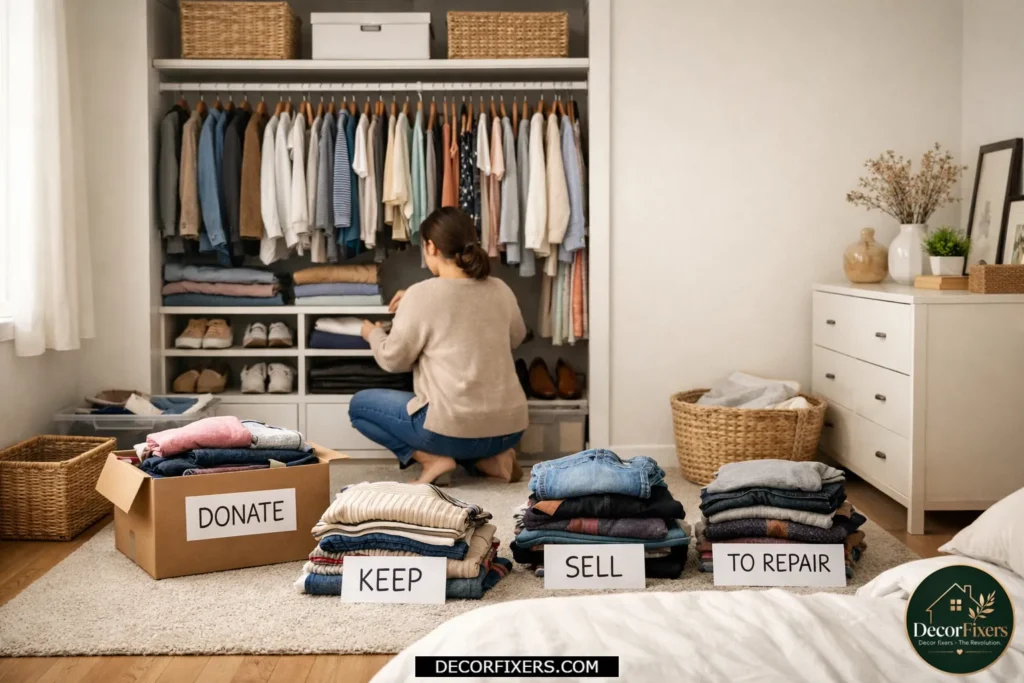
I’ve seen conflicting data on this: some organizing experts swear by the ‘does it spark joy?’ method, others cite studies showing emotional attachment makes people keep far too much. My read is this: the most practical test is simpler: have you worn it or used it in the past 12 months? If not, it goes.
The exception is truly occasion-specific items (formal wear, ski gear) that you use seasonally. For everything else, 12 months is enough of a window. Decluttering before organizing is non-negotiable. You cannot organize excess.
25. Add a Full-Length Mirror to the Inside of the Closet Door
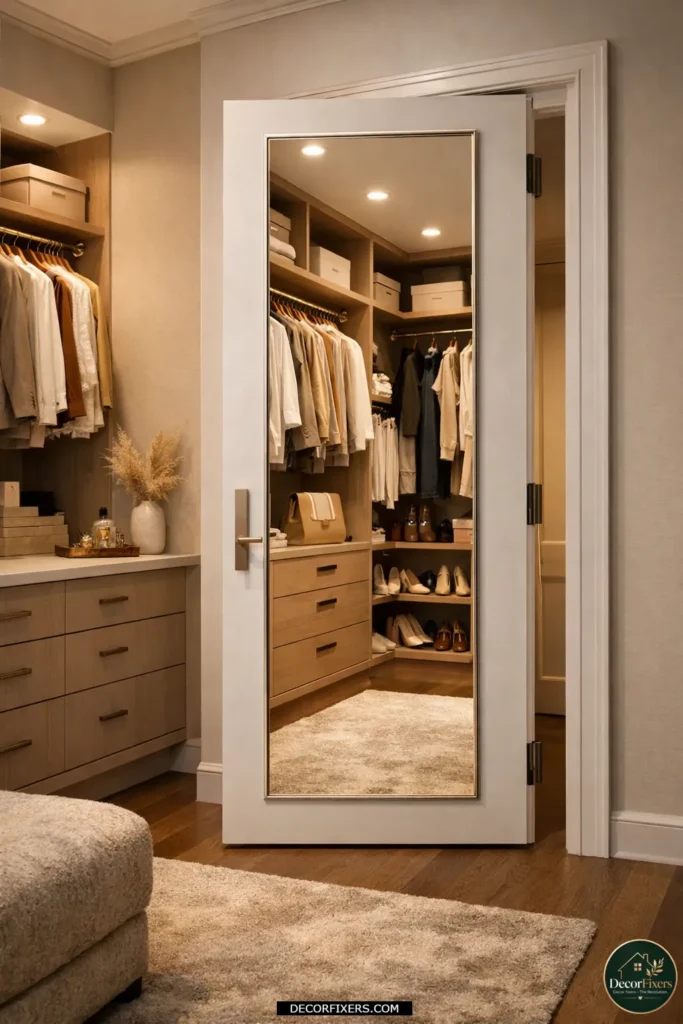
Look, if you’re getting dressed inside or in front of your closet anyway, having a mirror mounted on the inside of the door means you’re not having to go to another room to check your outfit. This sounds like a lifestyle tip, not an organization tip.
But it is an organizational tip. When you can check your outfit right there, you make decisions faster, you put back what you don’t choose, and you leave fewer ‘outfit rejects’ piled on your bed. A cheap door-mount mirror runs $25–$40 and installs in minutes.
26. Store Jewelry Vertically with a Hanging Organizer or Wall Hooks
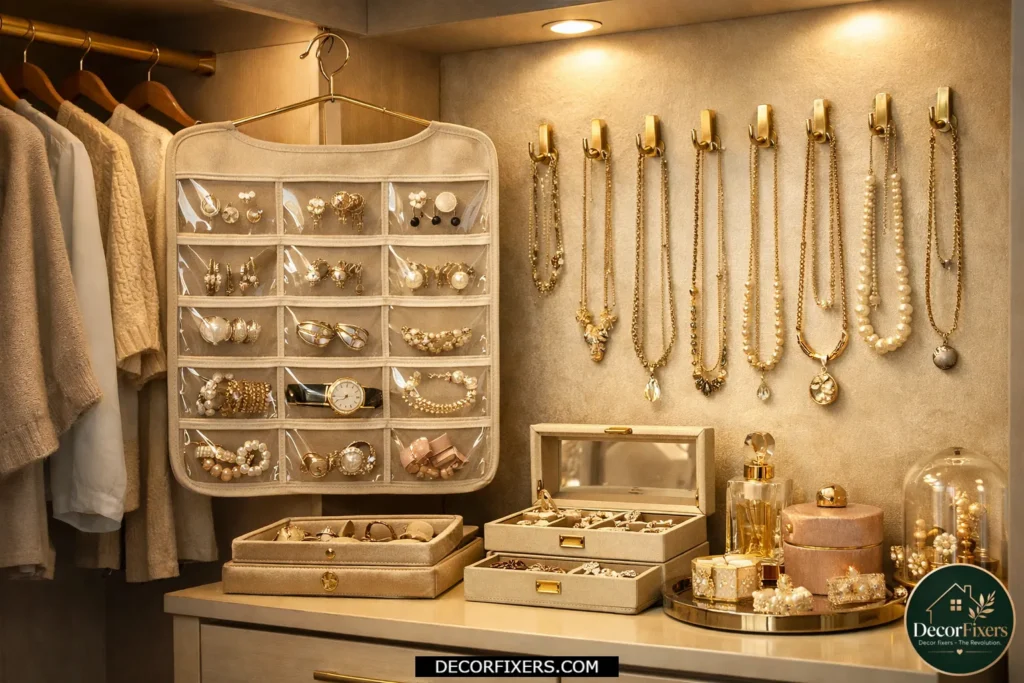
Jewelry in a pile or tangled in a drawer is jewelry you won’t wear. Hanging jewelry organizers, the kind with clear pockets for earrings and rings and hooks for necklaces, mount on the back of a closet door or on the wall inside the closet.
This makes your accessories visible in the same instant you’re choosing an outfit, which means you’ll actually wear more of what you own. A proper jewelry organizer transforms ‘I forgot I had this’ into an outfit-completing routine.
27. Do a 10-Minute Weekly Reset, One Small Habit That Holds Everything Together
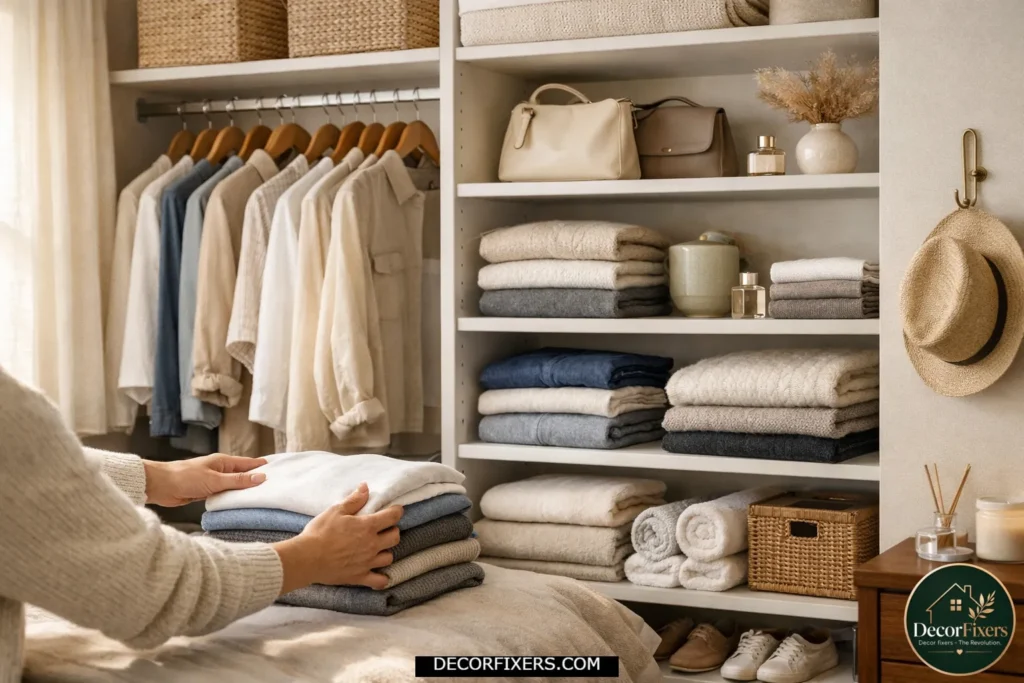
Every single organizational system falls apart over time without a maintenance habit. The Sunday reset, or whatever 10-minute window fits your week, is what keeps all 26 ideas above working.
Put things back where they belong. Return anything that migrated out of the closet back to its zone. Straighten stacks. Empty the ‘limbo chair.’ This isn’t deep cleaning, it’s 10 minutes of putting things back in their designated spots. That’s all it takes to maintain a system you’ve built.
If your storage struggles go beyond the closet, these 25 Small Kitchen Organization Ideas: Space-Saving Solutions can help you maximize every inch of your home with clever space-saving tricks, smart vertical storage, and practical organization systems that actually make daily routines easier.
Quick Comparison:
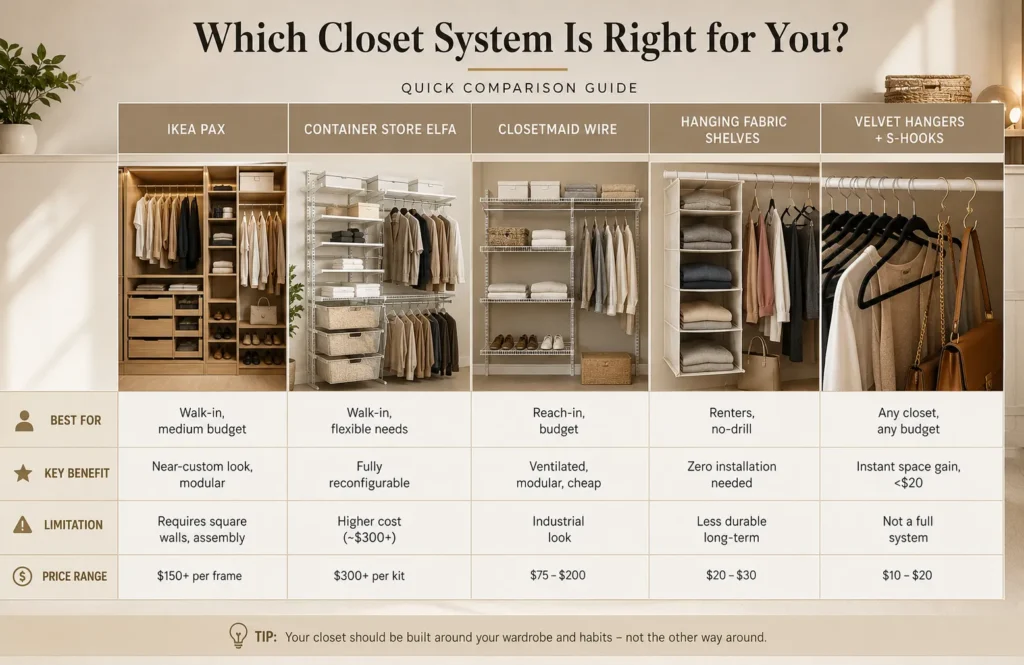
| System / Solution | Best For | Key Benefit | Limitation |
| IKEA PAX | Walk-in, medium budget | Near-custom look, modular | Requires square walls, assembly |
| Container Store Elfa | Walk-in, flexible needs | Fully reconfigurable | Higher cost (~$300+) |
| ClosetMaid Wire | Reach-in, budget | Ventilated, modular, cheap | Industrial look |
| Hanging Fabric Shelves | Renters, no-drill | Zero installation needed | Less durable long-term |
| Velvet Hangers + S-hooks | Any closet, any budget | Instant space gain, <$20 | Not a full system |
How to Organize a Bedroom Closet: Quick Steps
- Declutter first, remove anything unworn in 12+ months.
- Identify your wardrobe type: mostly hanging, folded, or shoes?
- Group short garments together to create a double-hang zone below.
- Add shelving or modular units based on your wardrobe type.
- Assign a specific zone to every category: shoes, bags, and seasonal.
- Label all bins and baskets.
- Do a 10-minute weekly reset to maintain the system.
CONCLUSION:
I went back to that bedroom closet, the one where I couldn’t find my blazer, and I started with just three things: slim velvet hangers, a second rod, and an over-the-door shoe organizer. Total cost: $47. Two hours on a Saturday morning.
It’s not a Pinterest closet. There’s no custom millwork or matching acrylic bins. But I can find every item I own in under 30 seconds. I haven’t gone digging for the black blazer since.
That’s what a good organization system actually does. It doesn’t make your closet look impressive. It makes your mornings easier.
Start with one idea from this list. The second rod. The velvet hangers. The label maker. You don’t need to do all 27 at once. Build the system one piece at a time, and do the 10-minute weekly reset to hold it together.
If your bedroom itself needs a declutter, along with the closet,
FAQs:
Q: What’s the best way to organize a small bedroom closet?
A: Add a second hanging rod for short clothes, use slim velvet hangers, and place a hanging shelf organizer on the rod for folded items. Use the back of the door for shoes or accessories. Prioritize vertical space over floor space.
Q: How do I organize a closet with no shelves?
A: Hanging fabric shelf organizers attach to your existing rod and add 4–6 shelves without mounting anything. Pair with an over-door organizer and S-hooks for a complete no-drill system, ideal for renters.
Q: Should I use bins or drawers in my closet?
A: Bins work well for items you access infrequently (seasonal gear, accessories). Drawers are better for daily-use folded items like t-shirts and underwear. Use both: bins on high shelves, drawers at mid-height.
Q: Why does my closet get messy again so fast?
A: Because every item doesn’t have a specific ‘home.’ When things don’t have a designated spot, they land wherever is easiest. Fix this by assigning a zone to every category and doing a 10-minute weekly reset.
Q: When should I invest in a closet system vs. DIY solutions?
A: DIY hacks (second rod, velvet hangers, over-door organizers) work great for most standard reach-in closets. Invest in a system like IKEA PAX or Elfa when you have a walk-in closet, a larger wardrobe, or you’ve outgrown what individual solutions can fix.

Creator of DecorFixers, sharing practical home and interior ideas focused on real-life usability, simple design improvements, and budget-friendly solutions.