

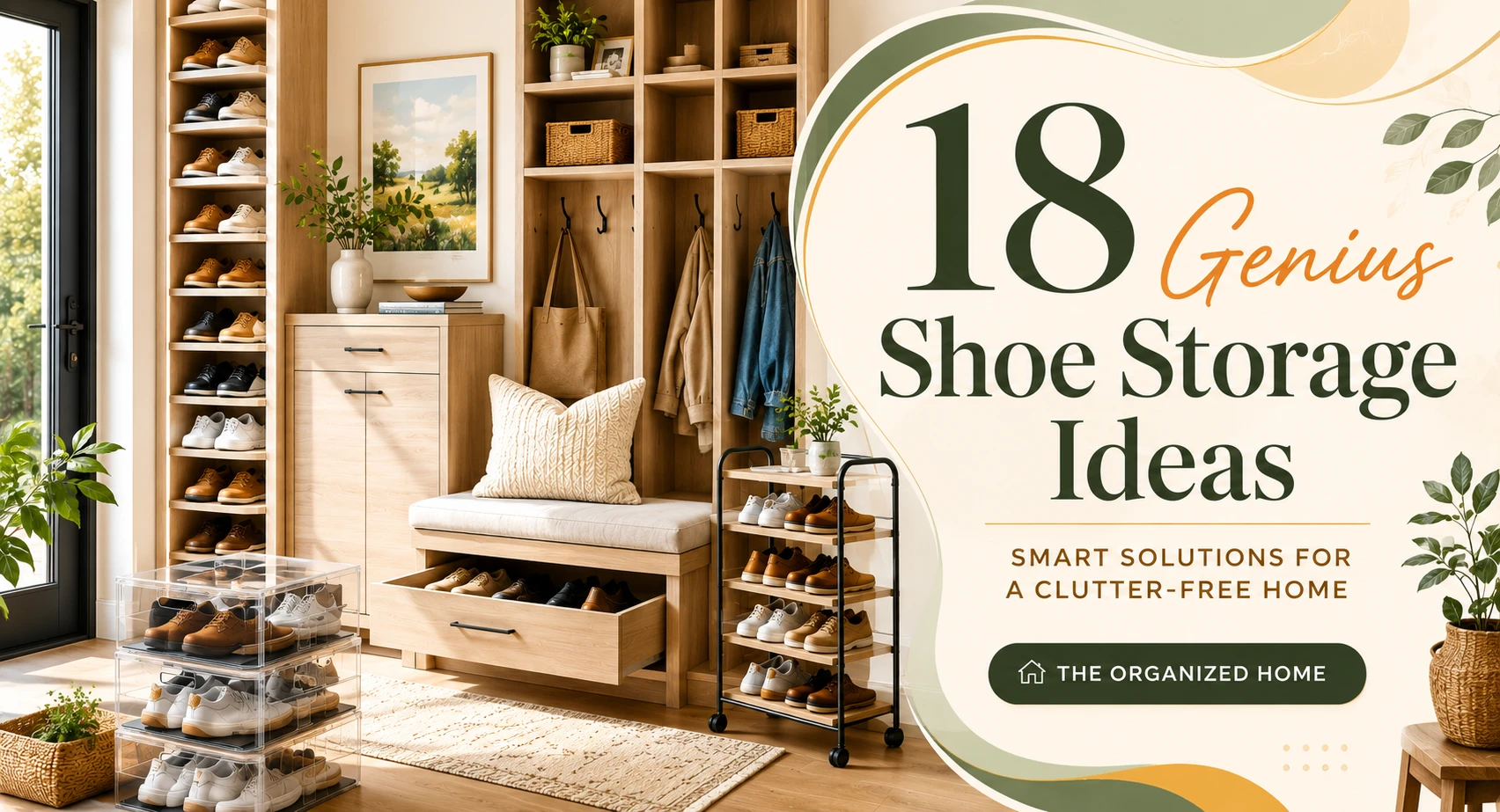
You open the closet door, and shoes avalanche onto the floor. Or maybe it’s the front entryway, sneakers in a pile, a single rogue sandal nobody claims, and a path to the kitchen that’s really an obstacle course. Either way, you’re here because you’re done with it.
Shoe storage ideas, systems, furniture, and small-space hacks used to keep footwear organized, visible, and off the floor. The right approach depends less on how many shoes you own and more on the shape of the space you’re working with.
Here’s the thing: most shoe storage advice online assumes you have a walk-in closet and an unlimited budget. This guide doesn’t. It’s built for renters, small apartments, families juggling four sets of school shoes, and anyone whose “entryway” is really just a strip of wall by the door.
| The fastest fix for shoe clutter is vertical storage. Stacking shoes upward instead of spreading them across the floor, using tiered racks, over-the-door organizers, or stacking inserts like IKEA’s MURVEL, can roughly double the pairs you fit in the same footprint, without buying new furniture. |
Shoe Storage Ideas for Small Closets
If your closet is shallow, narrow, or already crammed with clothes, the fix isn’t more floor space; it’s better use of vertical inches and the closet door itself.
1. Stack shoes vertically instead of side by side
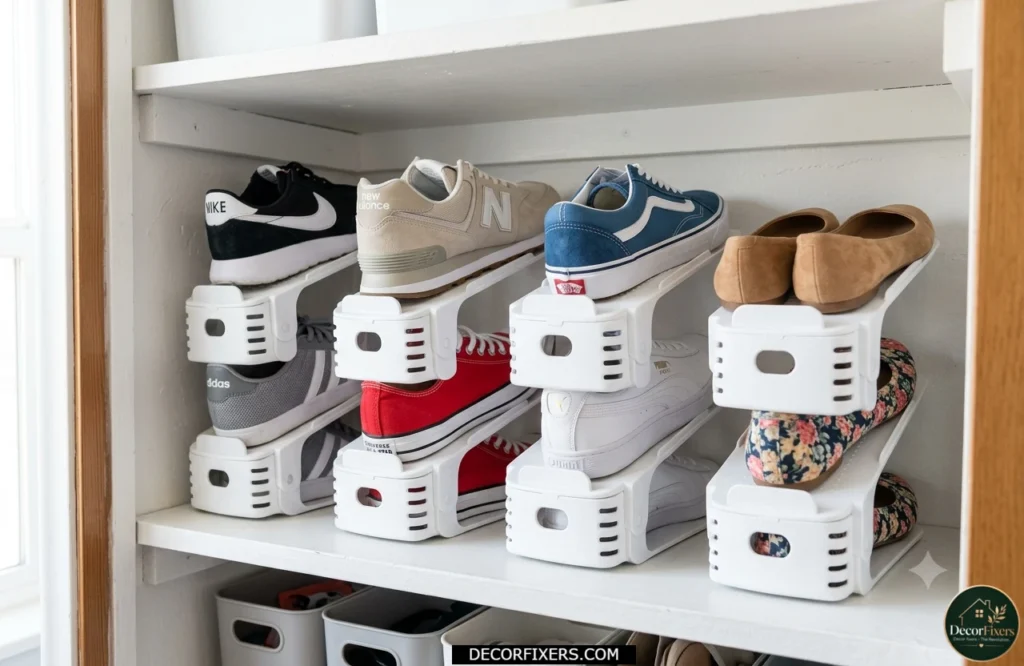
To double your shelf capacity without adding a single shelf, follow these steps:
1. Add a stacking insert (like IKEA’s MURVEL) to an existing shelf.
2. Place one shoe flat and one stacked above it.
3. Repeat across the shelf width.
This little insert has been selling fast for a reason. Rather than lining shoes up side by side, it stacks one shoe on top of the other on the same shelf, which is exactly the kind of “why didn’t I think of that” fix that actually works in real closets, not just in photos.
2. Use slanted or angled shelving for visibility
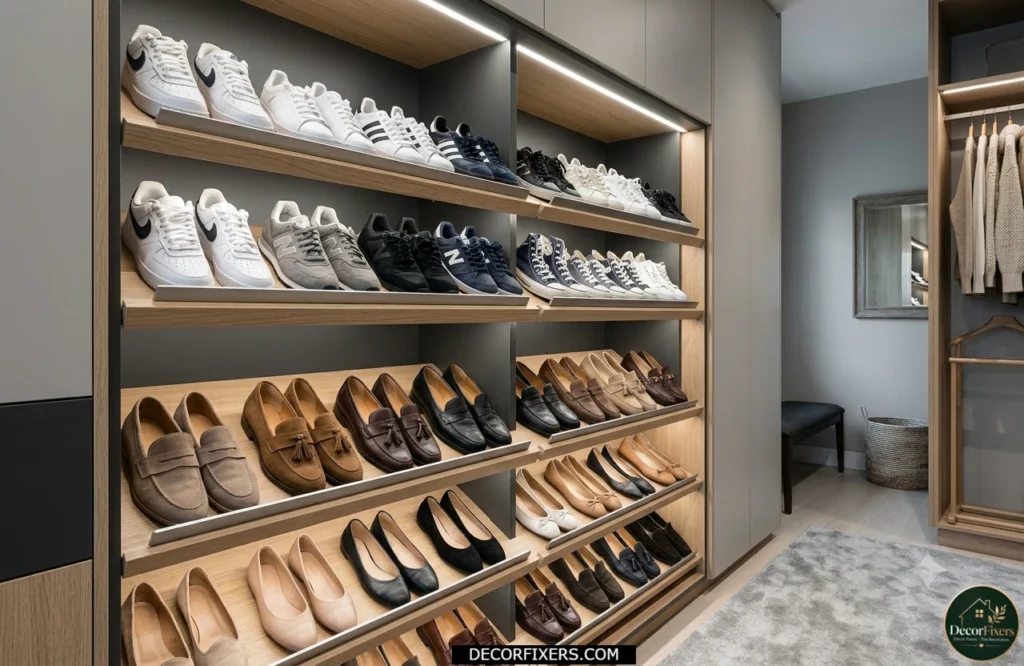
Angled shelves tilt shoes forward so you can see the whole pair at a glance, with a small lip or metal fence to stop them sliding off. This works especially well for flats, loafers, and low-top sneakers, anything without a tall heel that would tip the angle too far forward.
3. Add a corner shelf unit
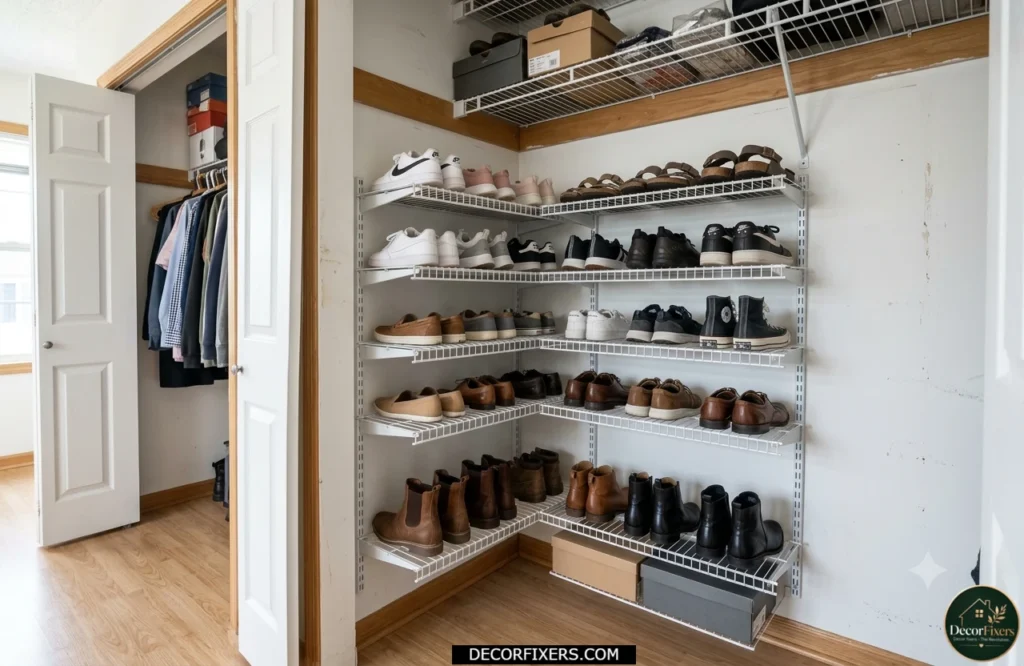
Every closet has a dead corner. A small corner shoe storage shelf, even a stack of two or three cheap wire shelves wedged into that gap, turns wasted space into 4 to 6 extra pairs of storage. It’s not glamorous. It works.
How Many Shoes You’re Really Storing (And Why That Number Surprises People)
Before picking a system, it helps to know what you’re up against. According to a 2023 survey of 1,000 Americans by KURU Footwear, the average person currently owns 12 pairs of shoes and buys roughly four new pairs every year. That number matters because most basic shoe storage racks sold at big-box stores are built to hold 6 to 8 pairs.
Most people assume a single rack will solve the problem. The data says otherwise: a household of four, each with 10+ pairs, needs a system built for 40+ pairs, not a $20 rack meant for one person’s closet.
4. Hang an over-the-door organizer
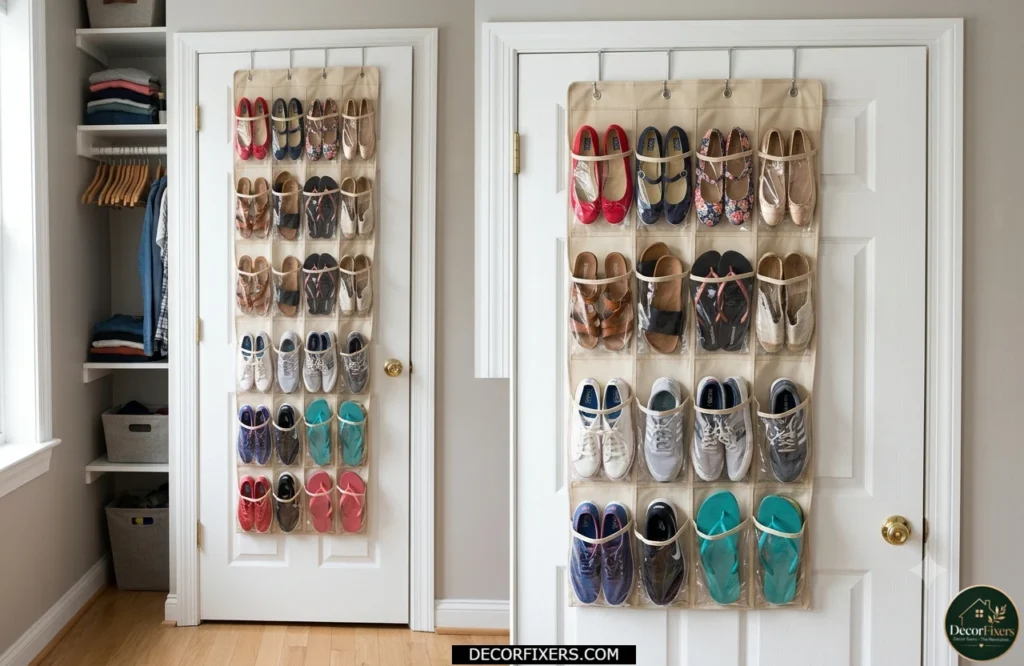
Over-the-door organizers hang on the closet door itself, using zero floor space. A 24-pocket version can hold a dozen pairs of flats, sandals, or kids’ shoes. The tradeoff: they sag a little with heavy boots, so save this spot for lighter shoes.
5. Try tension rod shelving (no drilling required)
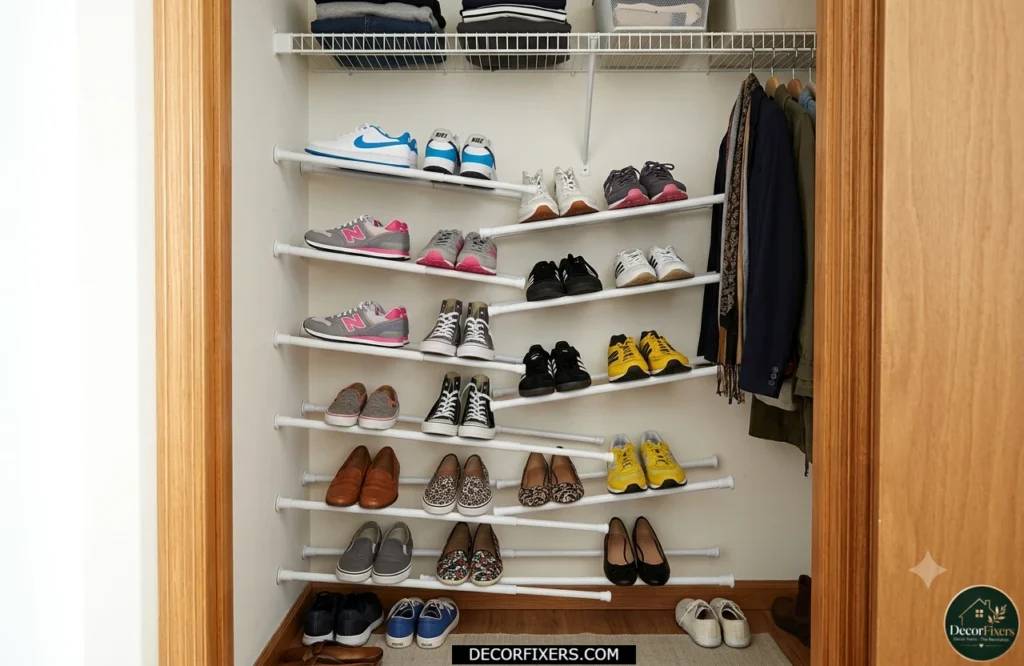
Two tension rods, staggered with the back rod slightly higher than the front, create an instant shelf for a row of shoes, no screws, no landlord phone call. Multi-packs like the Kimwason tension rods cost under $20 and adjust to fit almost any closet width.
Quick note: tension rods aren’t rated for heavy boots or weighted clogs. Stick to sneakers, flats, and sandals here.
Entryway Shoe Storage Ideas That Don’t Look Like Storage
An entryway has to do double duty; it’s the first thing guests see and the place where shoes actually get dropped. The goal here is storage that disappears into the décor.
6. A bench with hidden storage underneath
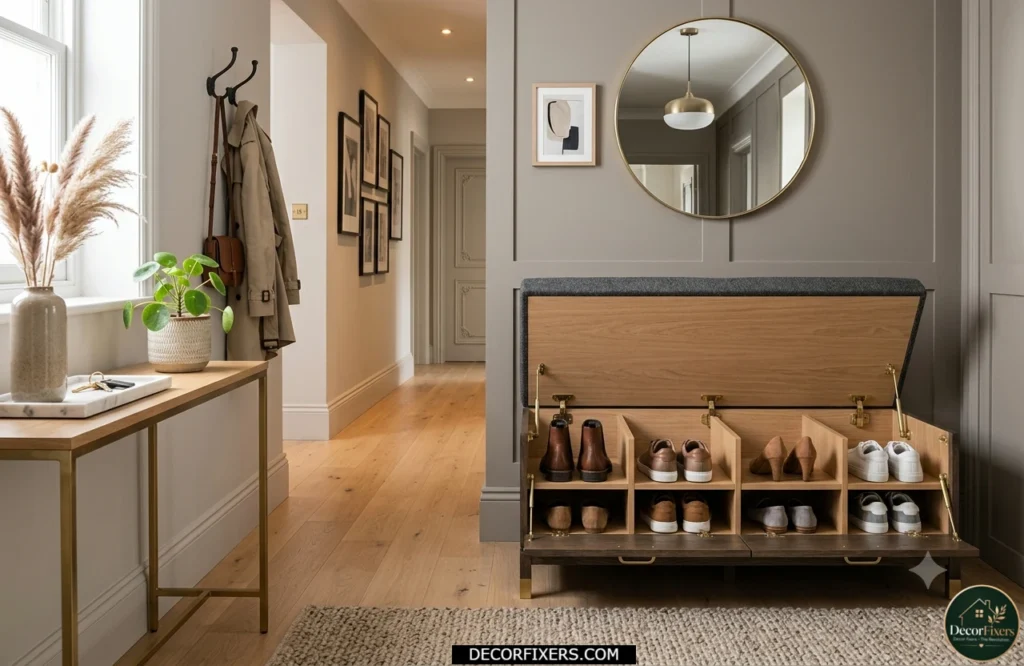
A flip-top entryway bench gives you somewhere to sit while you put on your shoes, and the seat lifts to reveal storage for nine or more pairs underneath. It’s one of the few solutions that solves two problems, seating and storage, in one footprint.
7. A slim shoe cabinet against the wall
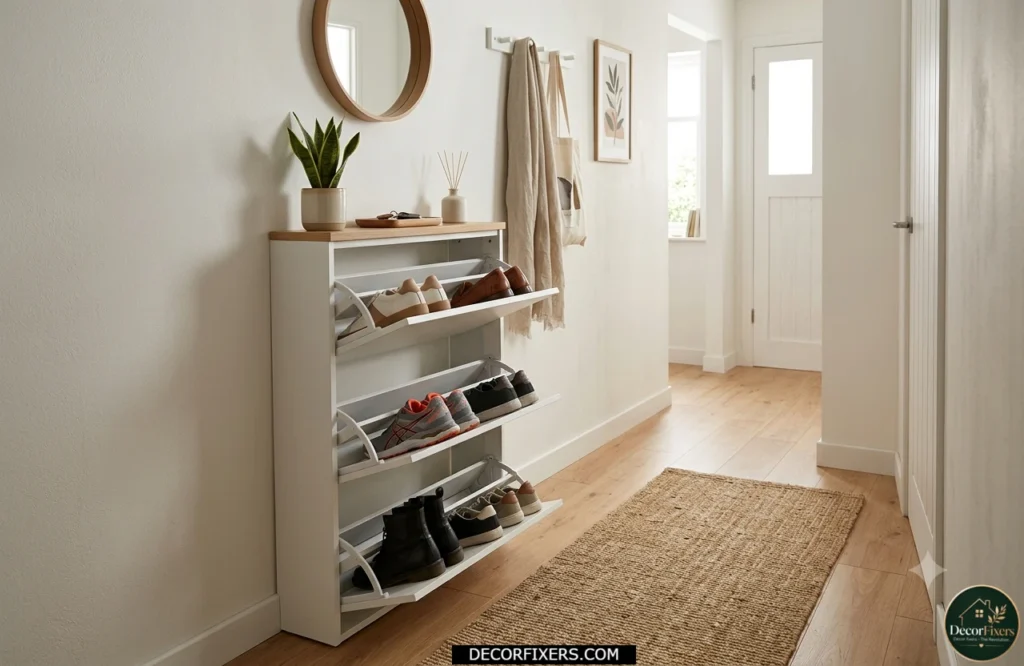
A shoe storage cabinet that’s less than 10 inches deep can sit nearly flush against a narrow hallway wall without blocking the walkway. Drop-front styles, where the door folds down to reveal the shoes, are especially good for tight entryways since they don’t need swing clearance like a hinged door does.
8. A decorative basket for the “shoes I wear constantly” pile
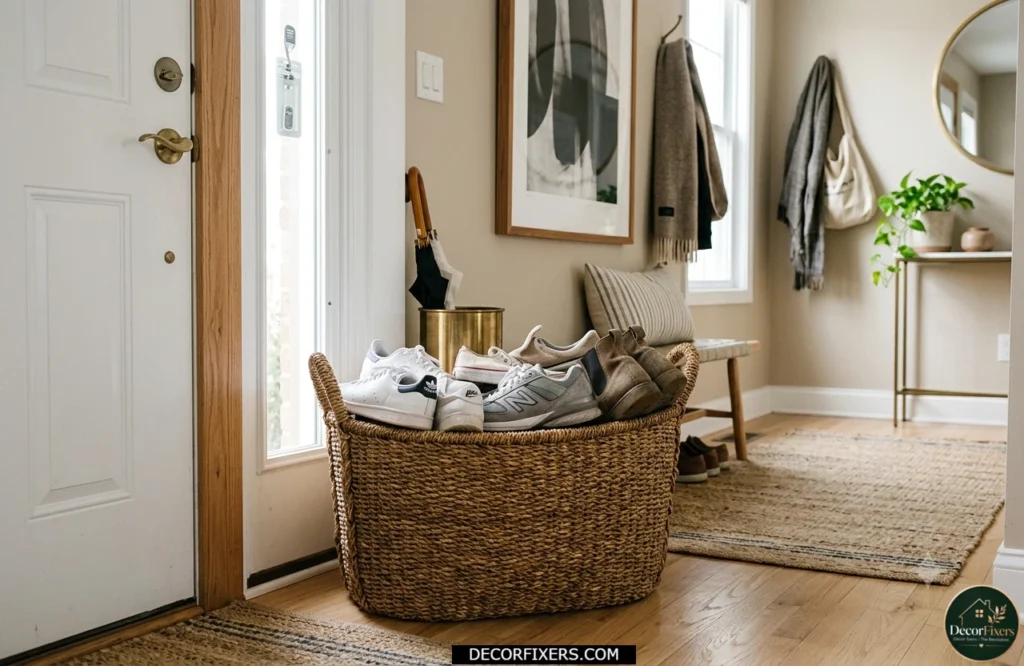
Not every pair needs a slot. A single large woven basket by the door catches daily-driver shoes, the ones in such constant rotation that putting them “away” properly is unrealistic anyway. This is the low-effort option, and it’s a genuinely good one.
9. Console table with baskets underneath
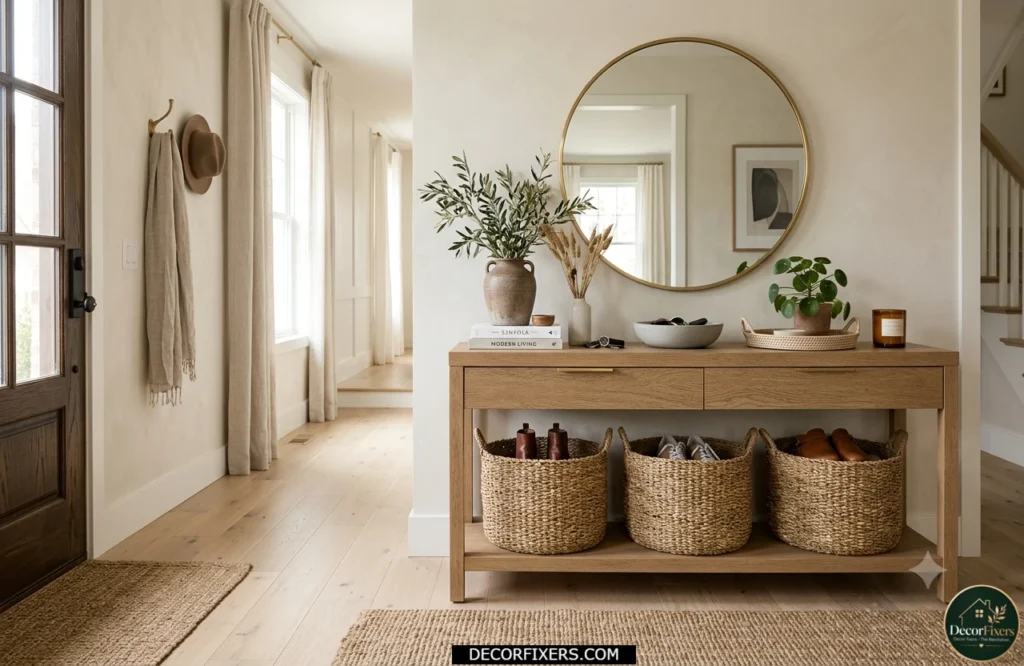
If you already have a console table in the entryway, slide two or three baskets underneath it instead of leaving that space empty. It reads as styled furniture, not a storage hack, which matters if your entryway is also your first impression for guests.
10. A coat closet door organizer
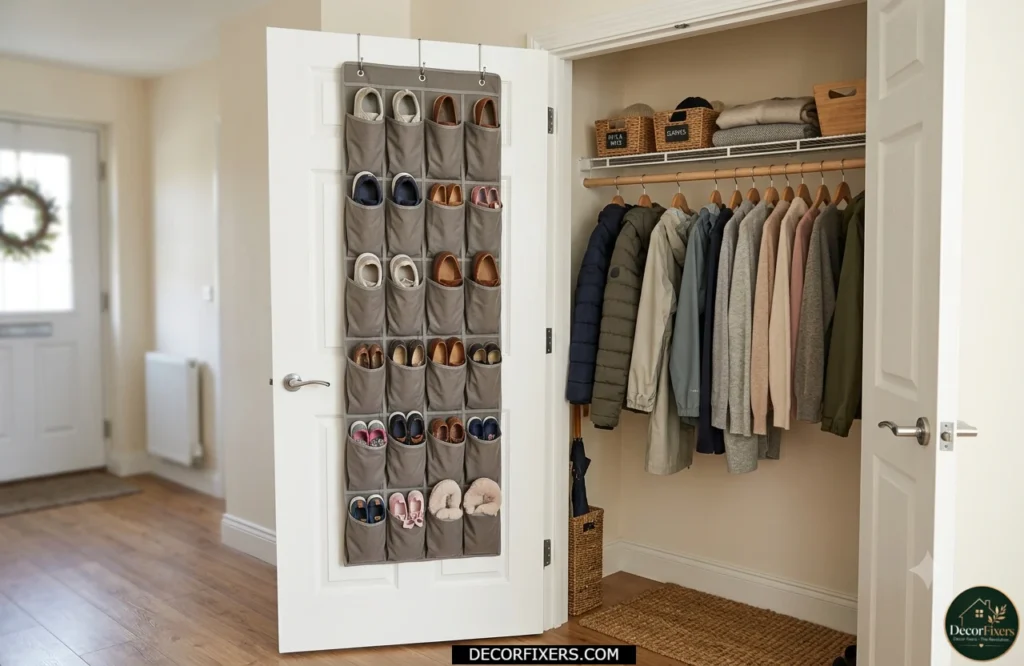
If there’s a coat closet near the door, add a hanging shoe storage organizer to the back of that door instead of using closet floor space. It keeps shoes entirely out of the main entryway’s sightline while staying within arm’s reach.
Quick Comparison: Which Shoe Storage Idea Fits Your Space?
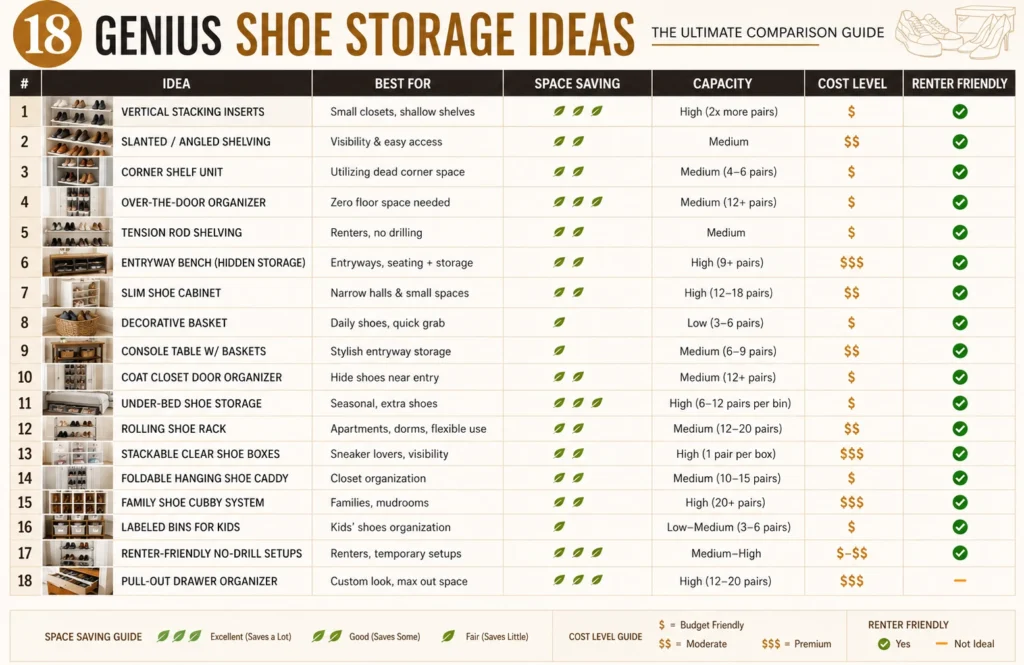
| Option | Best For | Key Benefit | Limitation |
| Vertical stacking insert | Small closets with shallow shelves | Doubles capacity, no new furniture | Limited to flats and low sneakers |
| Entryway bench with storage | Front doors with daily-shoe chaos | Seating + storage in one piece | Needs a floor footprint to place |
| Tension rod shelving | Renters who can’t drill | Free install, fully adjustable | Not rated for heavy boots |
| Over-the-door organizer | Apartments with no closet room | Zero floor space used | Sags slightly with bulky shoes |
Shoe Storage Ideas for Apartments With No Closet
Some apartments simply weren’t built with a coat closet, let alone a shoe storage closet. These ideas work flat against a wall or tucked under furniture.
11. Under-bed storage for off-season shoes
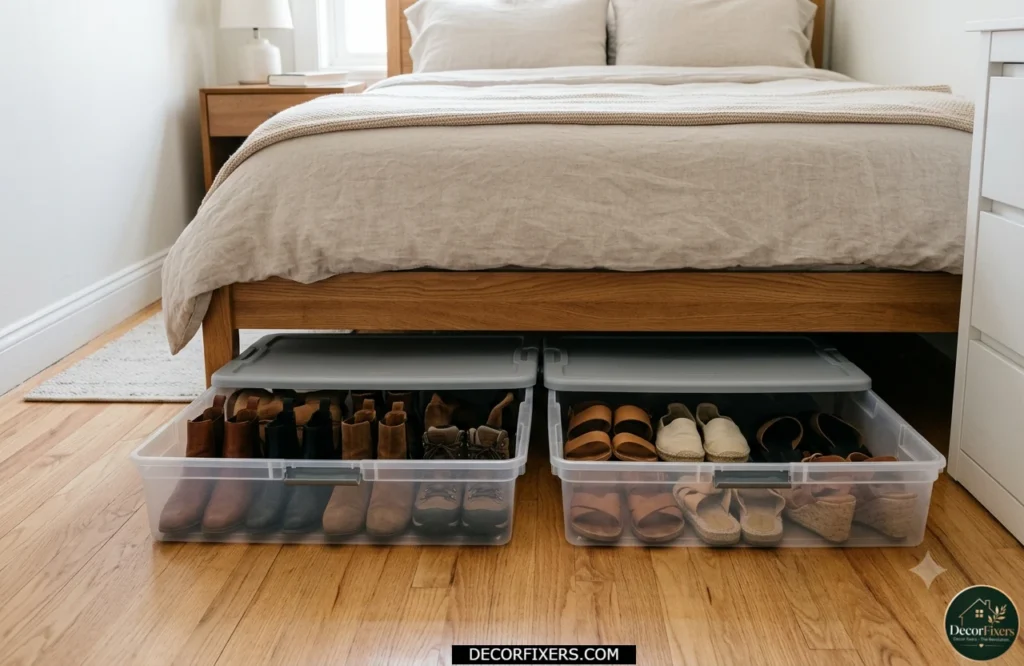
Flat, low-profile bins designed for shoe storage to slide under a bed frame are ideal for boots, sandals, and anything you’re not wearing this season. Lay boots horizontally rather than standing them up; it protects the shape and uses the space more efficiently.
12. A rolling shoe rack you can tuck anywhere
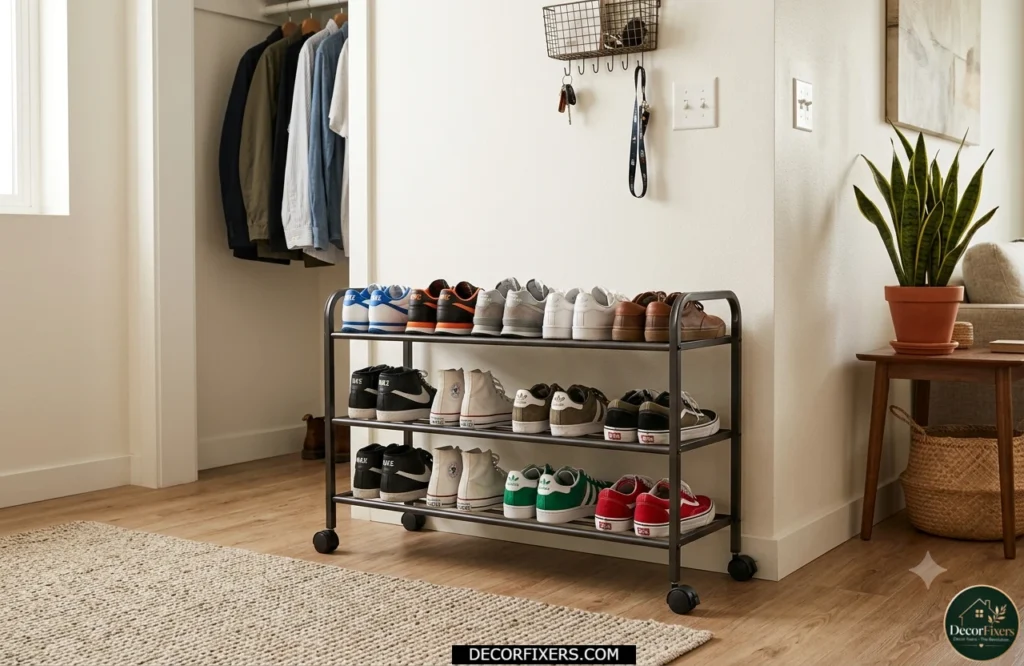
A compact rolling rack for shoe storage can live in a corner during the day and roll under a desk or table when you need the floor space back. It’s a favorite for dorm rooms and studio apartments for exactly that reason: it’s furniture that moves out of the way.
13. Stackable clear shoe boxes
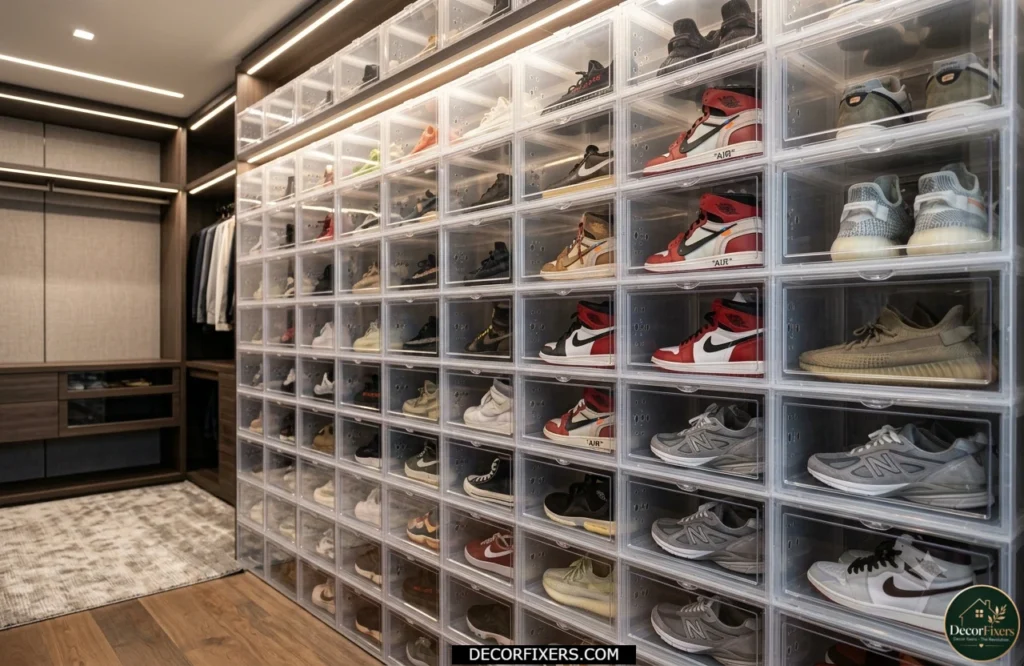
Clear, stackable boxes for show storage with ventilation holes let you see what’s inside without opening every box, which matters when you’re trying to grab one specific pair out of a stack of twelve. They snap together, so the stack won’t topple, and they stack against any wall, even one with no shelving at all.
14. A foldable hanging shoe caddy
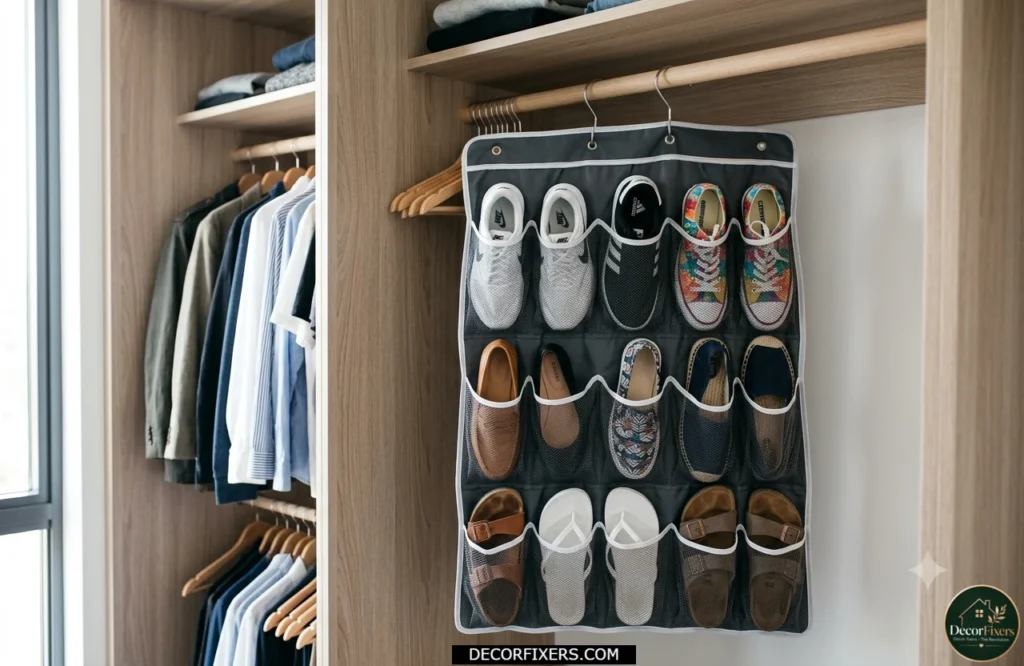
Foldable caddies that hold 16 to 24 pairs hang flat against a wall or slide into the bottom of a closet for shoe storage you do have, and fold down to almost nothing when not in use. Good for slimmer styles, ballet flats, sandals, sneakers, less good for boots.
Family Shoe Storage: A Zone System That Actually Works
Here’s the thing about family shoe storage: most guides treat it like a scaled-up version of single-person storage. It isn’t. The real fix isn’t more storage. It’s assigned storage.
To set up a zone system for your household, follow these steps: 1. Assign one shelf, bin, or cubby row per family member. 2. Put the tallest household member’s shoes on the bottom for easy bending-free access. 3. Give kids a low, open bin; closed doors slow them down, and the shoes end up on the floor anyway.
15. Cubby storage with one column per person
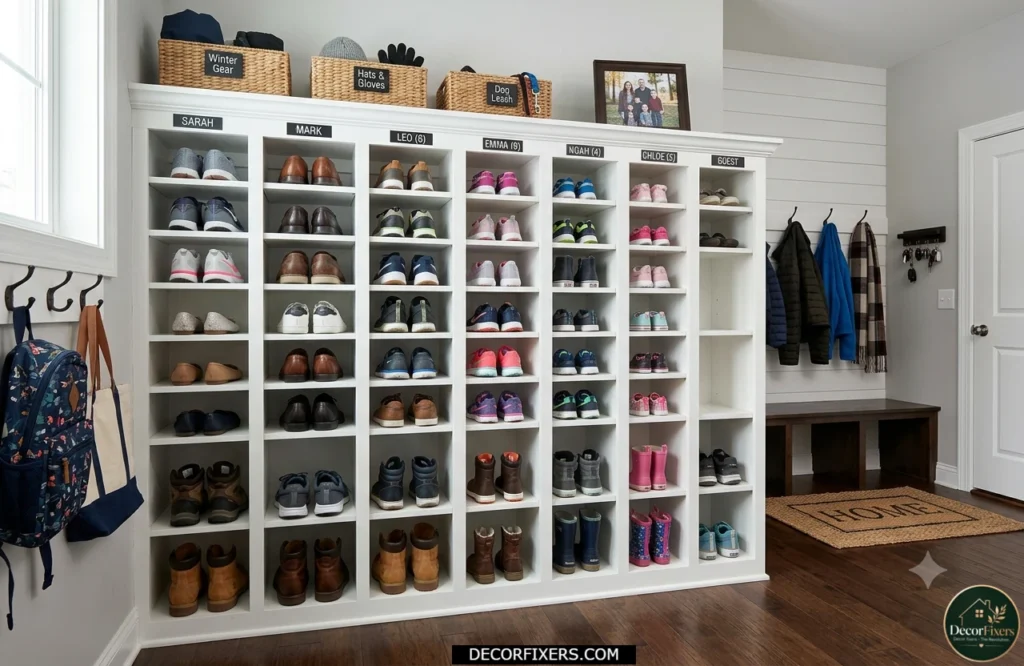
A cubbyhole unit for shoe storage with one column assigned to each family member turns “where are my shoes” into a non-issue. Morning routines move faster when nobody’s digging through a shared pile to find a matching pair.
16. A labeled bin system for kids’ shoes
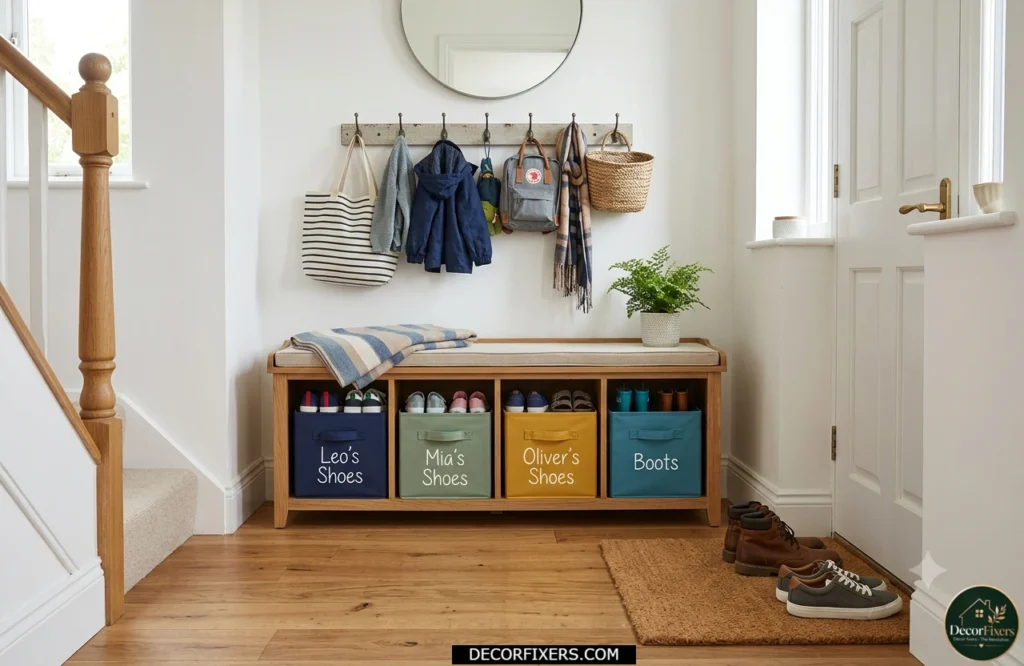
Kids won’t put their shoes back on if it requires effort. A low, open bin for shoe storage, even unlabeled, at kid height, gets used. Labeled bins (by name, not by shoe type) work even better once they’re old enough to read.
17. Renter-friendly systems with zero drilling
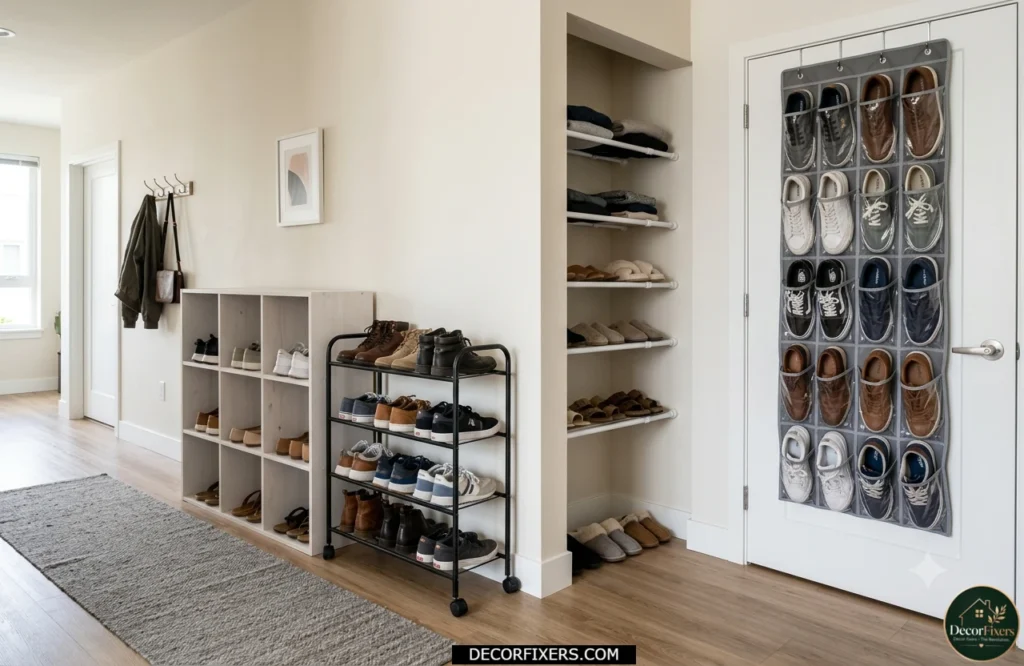
This is the section most shoe storage articles skip entirely. If you’re renting, you need solutions that survive a move-out inspection. Tension rod shelving, freestanding cubbies, over-the-door organizers, and rolling racks all qualify; nothing here touches a wall or a door frame permanently.
For a broader renter-friendly setup beyond just shoes, our Home Storage and Organization guide covers the same no-damage approach for closets, kitchens, and bedrooms.
18. A pull-out drawer insert for closet floors
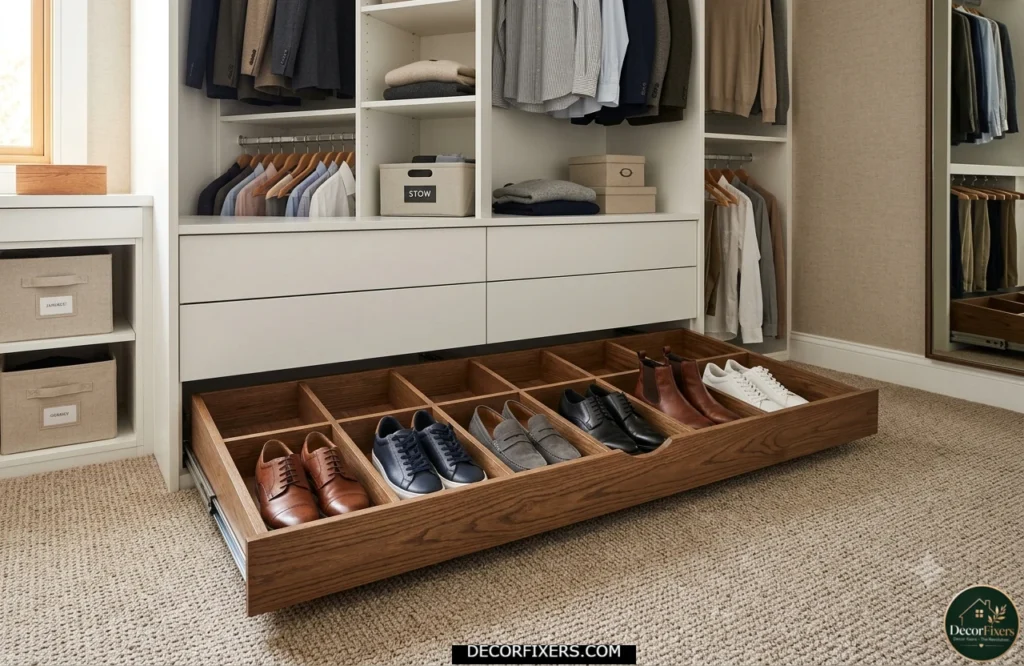
If you do have a small closet and want a drawer-style system without a full renovation, a freestanding pull-out drawer organizer sits on the closet floor and slides out like a dresser drawer. It’s a near-permanent fix that still travels with you when you move. Our Drawer Closet Organizer guide breaks down which drawer styles fit which closet depths.
One Thing Most Guides Get Wrong About Vertical Storage
Some organizers argue you should always maximize vertical space, stack everything as high as it’ll go. That’s solid advice for off-season storage you rarely touch.
But if you’re dealing with daily-driver shoes, the ones you grab half-asleep on a Monday morning, top-loaded vertical stacks slow you down. I’ve seen conflicting advice on this: some professional organizers swear by stacking everything, full stop. My read is that it depends entirely on access frequency, not just space efficiency.
Keep your most-worn five or six pairs at eye level or lower, even if that means a slightly less space-efficient layout. Save the true vertical stacking for boots, off-season pairs, and the shoes you forgot you owned.
CONCLUSION:
None of these ideas requires a renovation budget or a weekend with a power drill. Most cost under $30 and take less than an hour to set up.
If I had to pick one place to start, grab a stacking insert for your busiest shelf, or, if you’re not working with a closet at all, a rolling rack you can tuck out of sight. Small change. Noticeably calmer entryway by the end of the week.
This guide covers small closets, entryways, no-closet apartments, family households, and renter-friendly setups. It does not cover full custom closet builds; for that kind of project, our Closet Shelving Organization guide walks through planning built-in systems from scratch.
FAQs:
Q: What’s the best shoe storage idea for a small apartment?
A: Vertical solutions win here; over-the-door organizers, rolling racks, and stacking inserts all add storage without using floor space you don’t have.
Q: How do I store shoes without a closet?
A: Use under-bed bins for shoe storage, a freestanding rolling rack, or stackable clear boxes against any open wall. None of these requires a closet at all.
Q: Should I store shoes in their original boxes?
A: Only for shoes you rarely wear. Original boxes block visibility, so daily shoes are better in open cubbies or on a visible shelf.
Q: Why does my shoe rack always fill up so fast?
A: Most racks are sized for 6 to 8 pairs, while the average person now owns around 12. The rack isn’t broken, it’s just undersized for how many shoes people actually keep.
Q: When should I switch to vertical shoe storage?
A: As soon as floor-based racks stop fitting your collection. That’s usually the first sign you need stacking inserts or a taller cubby system instead of a wider one.

Creator of DecorFixers, sharing practical home and interior ideas focused on real-life usability, simple design improvements, and budget-friendly solutions.