


I’ve been staring at my bedroom window for three weeks.
Not in a poetic, lost-in-thought kind of way. I mean, I literally had a curtain rod up, two panels shoved into a bag from the store, and zero confidence about what would actually look good once hung. I’d scrolled every Pinterest board, clicked through dozens of Amazon listings, and still, nothing clicked. The problem wasn’t a lack of options. It was a lack of a framework.
Whether you’re in a 90-square-foot city studio or a sprawling master suite, whether your ceiling is 8 feet or 12, whether you rent or own, the 15 bedroom curtain styles below give you a real answer. Not just a gallery of pretty rooms. An actual decision map. By the end, you’ll know exactly which style fits your space, how to hang it, and what to avoid.
What Are Bedroom Curtain Styles?
Curtain styles ideas for bedroom refer to the different combinations of fabric type, pleat style, hanging method, and light-control function used to dress bedroom windows. The right style balances privacy, light management, and decor aesthetic for a restful, finished space.
1. Classic Blackout Curtains, The Non-Negotiable for Real Sleep
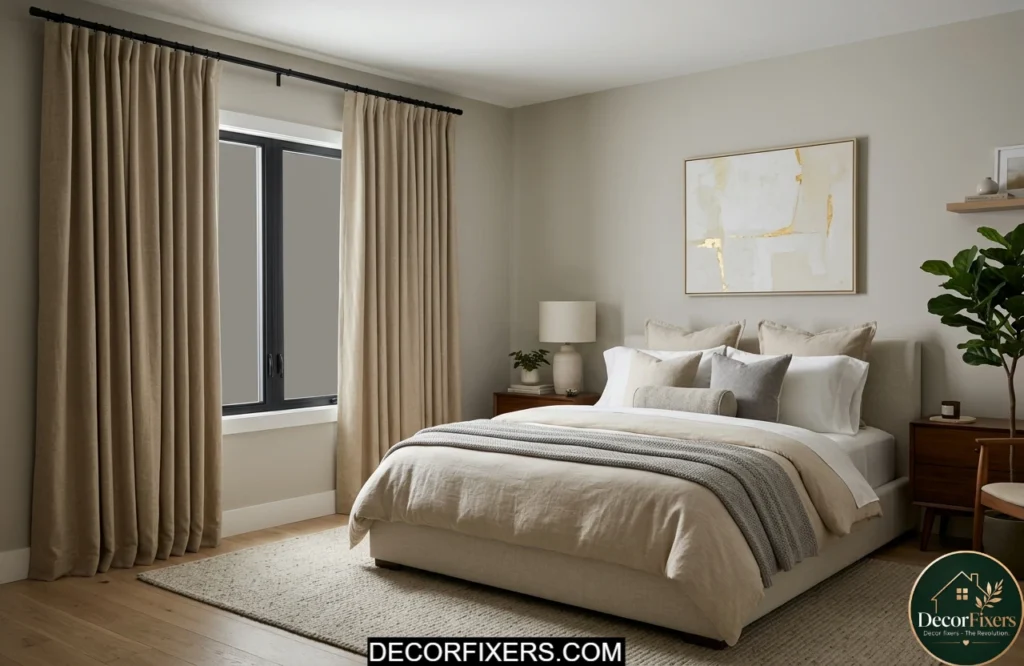
Let me be direct: if you wake up with sunlight creeping across your face at 5:47 AM, no amount of aesthetic refinement matters. Blackout curtains solve a biological problem first. They reduce ambient light by up to 99%, which research in sleep science links directly to improved melatonin production and deeper sleep cycles.
The IKEA MAJGULL blackout curtains ($30–$45 per pair) have earned near-cult status among renters and first-time decorators for a reason. They block light effectively, come in neutral tones that work across most decor styles, and don’t require professional installation. Pair them with a simple matte black rod, and you’ve got a look that reads intentional, not budget.
Style tip: Mount the rod 4–6 inches above the window frame and extend it 6 inches wider on each side. This makes windows look larger and ensures zero light gaps at the edges, the mistake most people make when blackout curtains still let light bleed through.
2. Linen Drapes, The Texture That Makes Any Bedroom Look Expensive
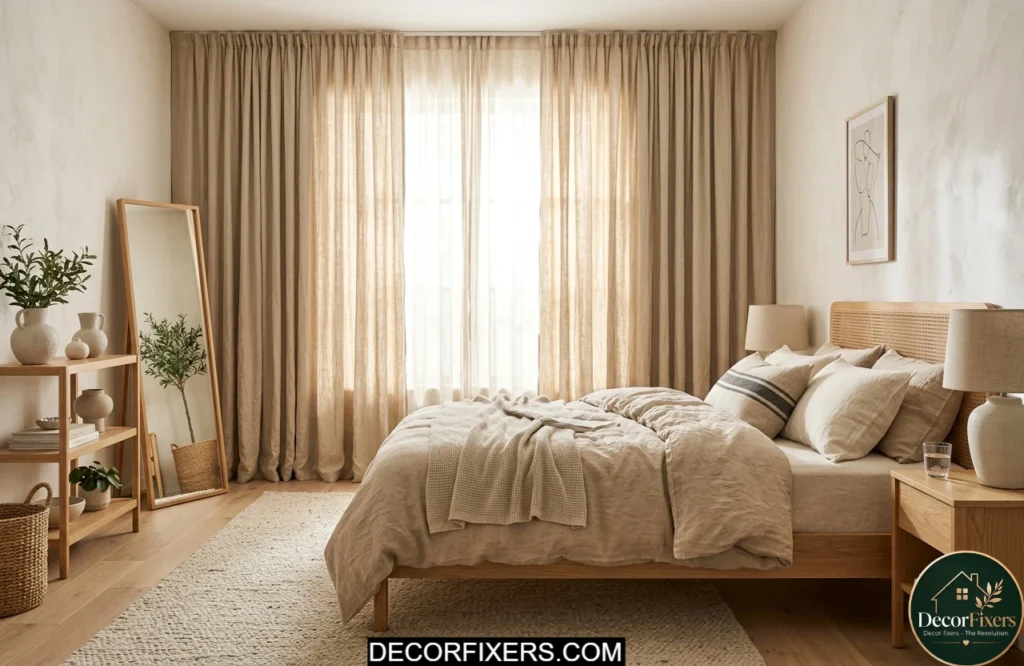
Linen is having a long moment, and it’s not going anywhere. The reason interior designers keep reaching for it, whether it’s the West Elm linen drape line or budget alternatives at Target, is that natural linen has an inherent texture that reads as elevated without trying. It’s the fabric equivalent of perfectly undone hair.
Linen drapes work best in bedrooms that get soft, indirect light. They filter rather than block, which creates that warm, diffused morning glow that makes a room feel like a boutique hotel. For a more complete bedroom curtain design idea, pair floor-length linen panels with a simple wooden rod in honey oak or matte black.
If you appreciate the relaxed elegance that linen drapes bring to a sleeping space, you may also enjoy exploring our guide on Transform Your Bedroom with Style, where we share practical design ideas for creating a more polished, cohesive, and inviting bedroom environment.
3. Sheer Layered with Blackout, The Two-Panel Method Every Designer Uses
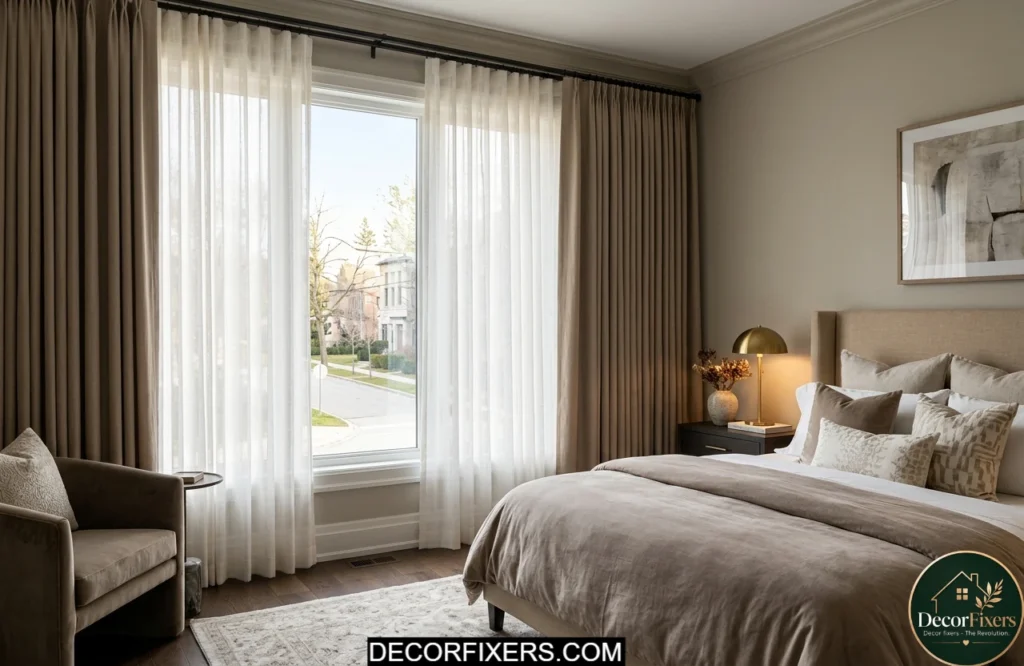
If you’ve ever stayed in a well-designed hotel room and wondered how the curtains could be both breezy and completely dark on demand, this is it. The layered sheer-and-blackout system is the professional answer to the eternal bedroom dilemma: privacy vs. natural light.
The setup is simple. A sheer panel sits closest to the glass, voile, cotton gauze, or semi-transparent linen, and filters light beautifully during the day. A blackout panel hangs behind on the same track or a separate rod, pulled closed at night. You get full control without sacrificing either function.
Best curtains for bedroom layering: Use a double curtain rod (most cost under $35 online) so both panels operate independently. West Elm’s linen sheers, combined with their blackout liner panels, are a widely praised combination that keeps the aesthetic cohesive across both layers.
4. Floor-to-Ceiling Velvet Panels, For the Master Bedroom That Commands Attention
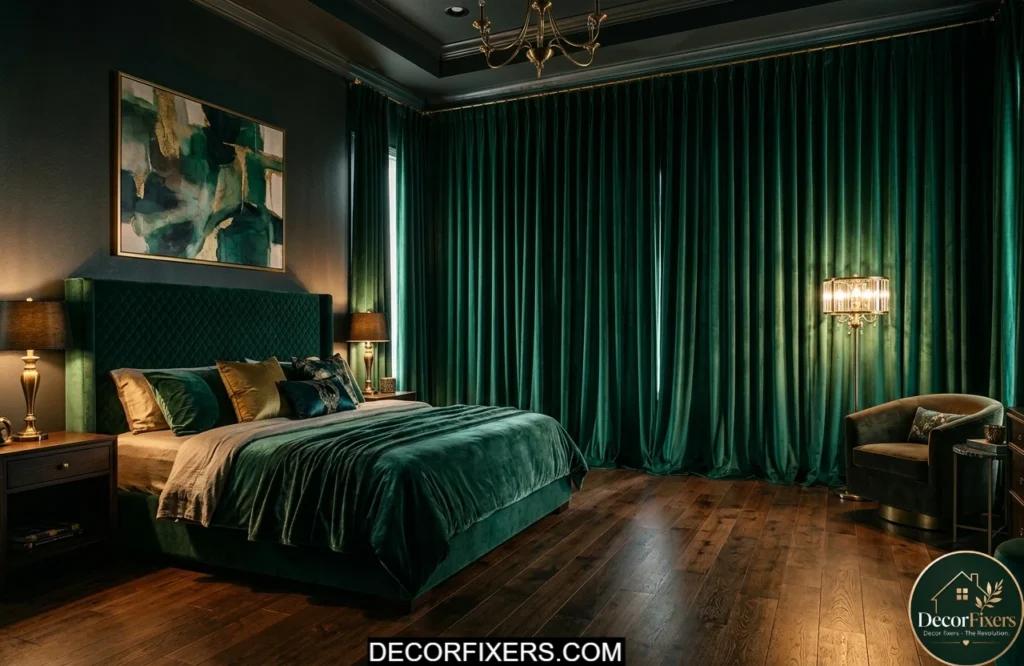
Velvet isn’t for everyone. It’s dramatic, textural, and unapologetically luxe, which is exactly why it works so well in master bedrooms where the goal is a space that feels like an intentional retreat rather than a default room. Floor-to-ceiling velvet panels in deep jewel tones, navy, forest green, plum, or burgundy, anchor a room visually and add acoustic softness that’s genuinely noticeable in high-ceilinged spaces.
This is one master bedroom curtain idea where going longer pays off. Velvet panels should pool slightly on the floor (1–2 inches) to maximize that enveloping, cocoon-like effect. If the fabric is too stiff to pool cleanly, a light steaming fixes it in under ten minutes.
Some experts argue that velvet reads as too formal for a relaxed bedroom. That’s valid for a breezy coastal aesthetic. But if your room leans toward rich, layered, or moody decor, velvet is unmatched for the visual weight it provides.
Velvet panels create a luxurious atmosphere that works particularly well in sophisticated bedrooms. For more elevated design inspiration, take a look at our Cozy Luxe Retreat Upgrades guide, which features thoughtful improvements that make a bedroom feel warmer, richer, and more comfortable without sacrificing style.
5. Rod Pocket Curtains, The Effortless Romantic Look
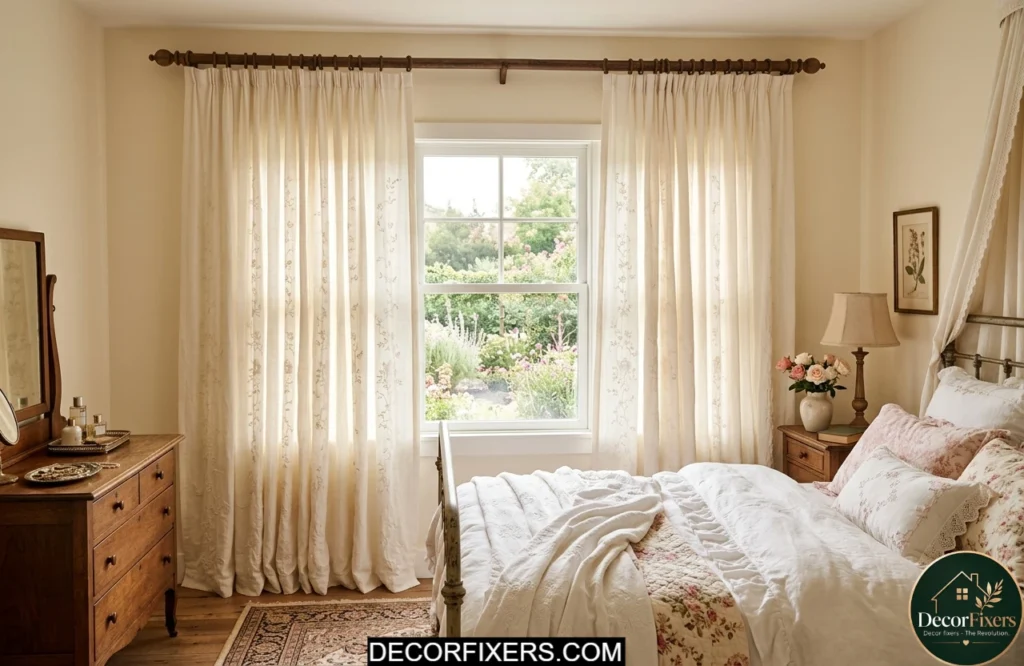
Rod pocket curtains are exactly what they sound like: the rod threads directly through a sewn pocket at the top of the panel. No rings, no hooks, no hardware beyond the rod itself. The result is a softly gathered, slightly ruffled top that works beautifully in traditionally styled or romantically inclined bedrooms.
The tradeoff is that rod pocket panels don’t slide as easily as grommet or ripple fold styles. They’re a ‘set it and leave it’ curtain, more decorative statement than functional daily shade. Light fabrics like voile, cotton, or embroidered muslin are the best match; heavy fabrics can warp the rod over time.
How to Choose a Bedroom Curtain Style in 4 Steps
1. Measure your window width and ceiling height; this decides fabric weight and drop length.
2. Identify your light need: full blackout, filtered natural light, or layered flexibility.
3. Match your room’s dominant aesthetic: boho, minimalist, glam, Scandinavian, traditional.
4. Pick a hanging method that suits your situation: rod pocket, grommet, ripple fold, or no-drill tension rod for renters.
6. Grommet Top Curtains, Clean, Modern, and Easy to Hang
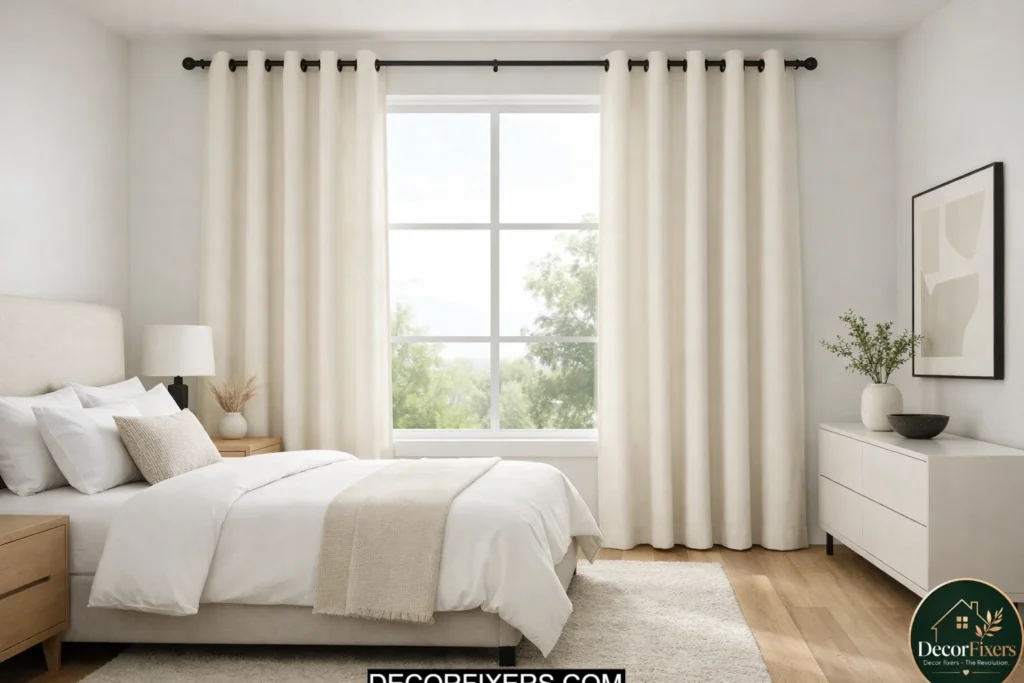
Grommet curtains have metal rings sewn directly into the top of the panel, which slide onto the curtain rod. It’s the most popular bedroom window curtain style in the mid-market for good reason: they look clean and structured, hang consistently, and are genuinely easy to move back and forth, which matters if you’re opening and closing your curtains multiple times a day.
In 2025, grommet hardware has expanded well beyond silver and gold. Matte black grommets on a neutral linen or cream panel are one of the most commonly recommended combinations for modern and minimalist bedrooms. Brushed brass grommets on warm ivory panels suit transitional or warm-contemporary rooms.
Grommet panels are available at nearly every price point, from $18 IKEA panels to $200+ custom options, making them one of the most accessible bedroom curtain design ideas regardless of budget.
7. Pinch Pleat Drapes, The Traditional Standard That Still Earns Its Place

Pinch pleat curtains are gathered at the top using sewn pinches, typically double or triple fold, that create structured, even pleats across the panel. They’re the classic. They’ve been in bedrooms since the mid-20th century and remain a go-to for traditional, transitional, and formal bedroom aesthetics.
The structured pleats give pinch pleat drapes a tailored, upscale quality that rod pocket or grommet styles don’t replicate. They’re especially effective in rooms where you want the curtains to be a decorative focal point rather than a background element, think formal master bedrooms or guest rooms where presentation matters.
Or maybe I should say it this way: if grommet curtains are casual Friday, pinch pleats are a well-cut blazer. Different occasions, different signals, both valid, neither interchangeable.
8. Ripple Fold Curtains, The Minimalist’s Curtain
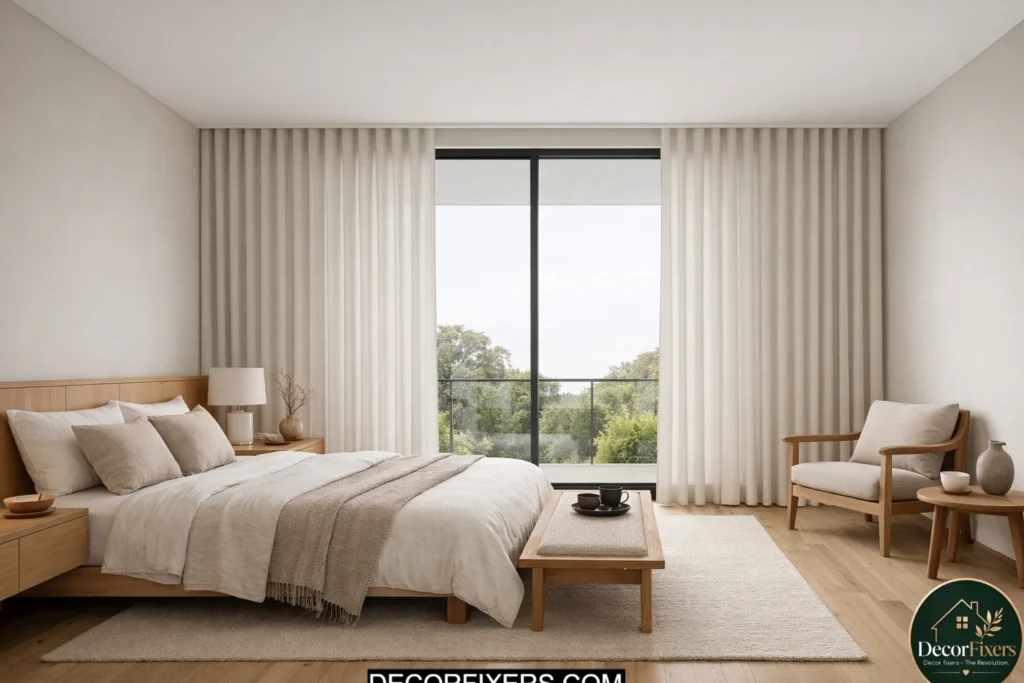
Ripple fold curtains hang from a specialized track and create a uniform, wave-like fold across the full width of the panel. There are no irregular gathers, no hardware showing, no visual noise. Just a clean, consistent ripple from rod to floor.
This is the curtain style that interior designers use when they want window treatments to visually recede, to cover the window cleanly without drawing attention away from other design elements. Ripple fold panels work in linen, velvet, blackout fabrics, and sheers. The installation cost is higher (specialized tracks, often custom-sized), but the result in a contemporary or Japandi-style bedroom is genuinely unmatched.
Best for: Floor-to-ceiling windows, minimalist bedrooms, spaces where the curtain should look architectural rather than decorative.
9. Tab Top Curtains, Casual, Relaxed, and Boho-Ready

Tab top curtains have fabric loops sewn at the top that slip directly over the curtain rod, no rings or pockets. The loops are visible, and that’s the style. It’s intentionally casual. The rod shows between the tabs, which creates an informal, relaxed look that’s popular in boho, coastal, and cottage-style bedrooms.
Tab tops work best with lightweight fabrics: cotton, linen, muslin, and washed canvas. Heavy fabrics make the tabs sag and pull unevenly. They’re not the most practical option for rooms where you need to open and close curtains frequently, since the tabs can bind on the rod, but for a bedroom window that mostly stays dressed, they’re low-maintenance and visually warm.
Tab top curtains pair beautifully with natural textures, layered textiles, and relaxed interiors. If you are drawn to this aesthetic, our Boho Bedroom guide offers additional inspiration for creating a comfortable, personality-filled space with organic materials and effortless charm.
If you’re building a boho bedroom from scratch, tab-top linen or cotton panels in natural undyed tones are a foundational piece that works with macrame, rattan, and layered textiles.
10. Roman Shades, When You Need Privacy Without Fabric Drama
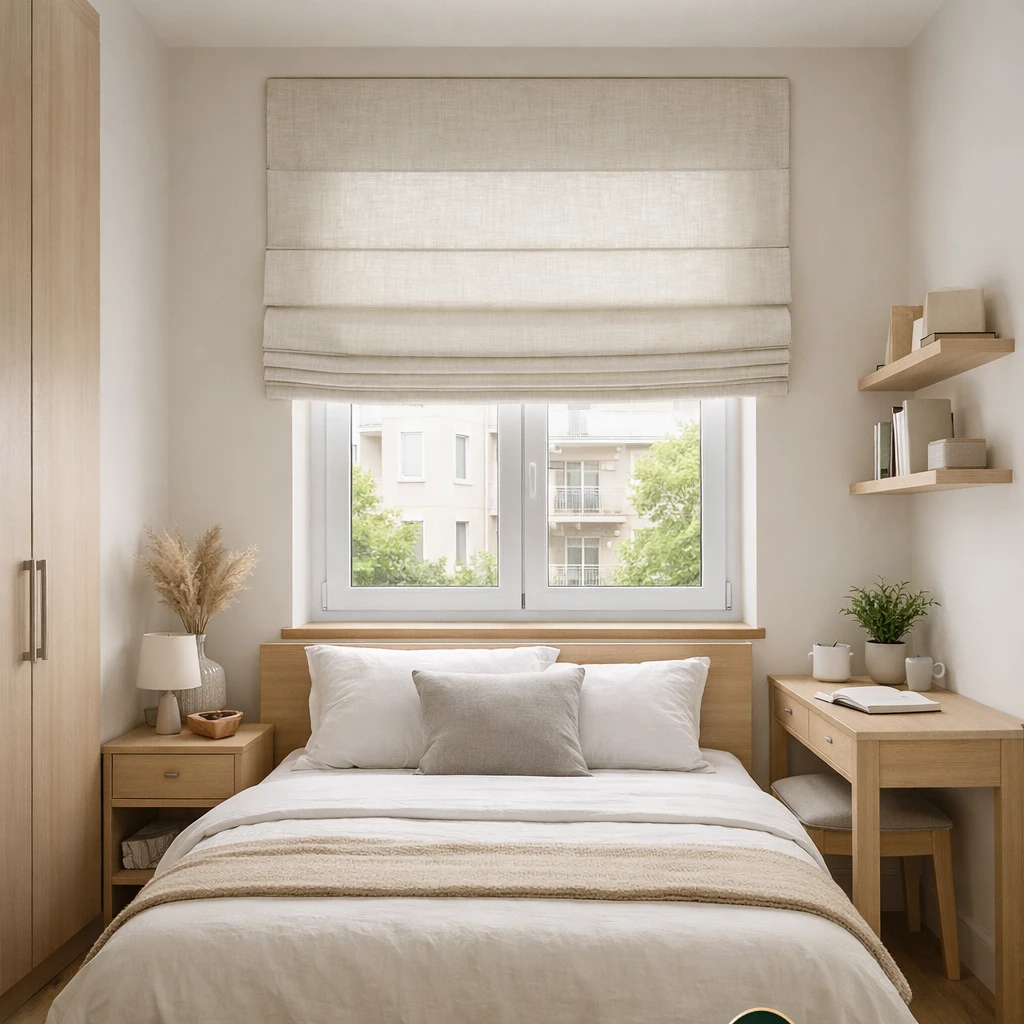
Roman shades are flat fabric panels that fold upward in horizontal sections when raised. They’re compact, structured, and sit within or just above the window frame, making them the best bedroom window curtain style for small bedrooms where floor-length panels would visually overwhelm the space.
In bedrooms under 120 square feet, Roman shades do what curtains can’t: they cover the window cleanly without eating into the perceived floor area. Paired with blackout lining (most Roman shades can be ordered this way), they block light just as effectively as full-length panels, in a fraction of the visual footprint.
I’ve seen conflicting data on this; some sources suggest Roman shades look too ‘office’ in a bedroom context. My read is that it depends entirely on the fabric. A woven linen Roman shade reads as soft and residential. A stiff polyester one reads as commercial. Fabric choice matters more than the style itself here.
11. Motorized Curtains, The Smart Bedroom Upgrade for Light-Control Obsessives

Hunter Douglas motorized roller systems and similar smart curtain tracks have moved from luxury novelty to a practical tool for anyone serious about sleep optimization. With a voice command or scheduled timer, blackout panels close automatically at sunset and open at your preferred wake time, which aligns with chronobiology research showing that light exposure timing directly affects sleep quality and morning alertness.
The cost has dropped significantly since 2022. Basic motorized curtain tracks now start around $80–$120 for a standard window, versus $500+ for integrated Hunter Douglas systems. For bedrooms with awkward window placement, above the headboard, high transom windows, or corner configurations where reaching a cord is genuinely difficult, motorized is no longer a luxury. It’s a practical solution.
Works with: Amazon Alexa, Google Home, Apple HomeKit (varies by brand). Most systems retrofit onto existing grommet or ripple fold panels.
12. Ceiling-Mounted Curtain Tracks, The Visual Trick That Makes Any Bedroom Feel Taller
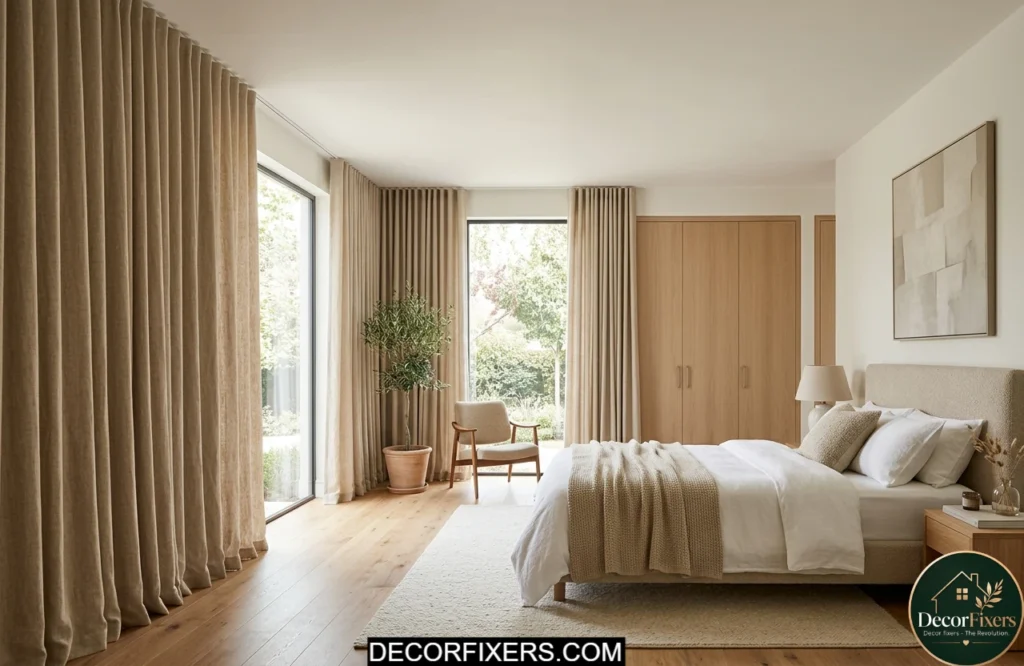
Standard curtain rods sit 4–6 inches above the window frame. Ceiling-mounted tracks sit at the ceiling, and the visual effect of floor-to-ceiling fabric dropping from maximum height makes even an 8-foot ceiling read as taller. It’s one of those design moves that looks expensive but is often cheaper to execute than a custom curtain rod setup.
This is the technique behind that ‘this bedroom looks bigger than it is’ feeling in well-photographed interiors. The curtain panel hides the gap between the window top and the ceiling, which our eyes interpret as height rather than a void. IKEA’s VIDGA track system (around $30) is the most widely used accessible option for this approach.
Look, if you’re in a room with low ceilings and you’ve tried everything else, ceiling-mounted tracks with floor-length panels are what actually work. This one move changes a room’s proportions more visibly than almost any other single change.
13. Curtain-as-Closet Divider, The Renter Trick That Doubles as Decor
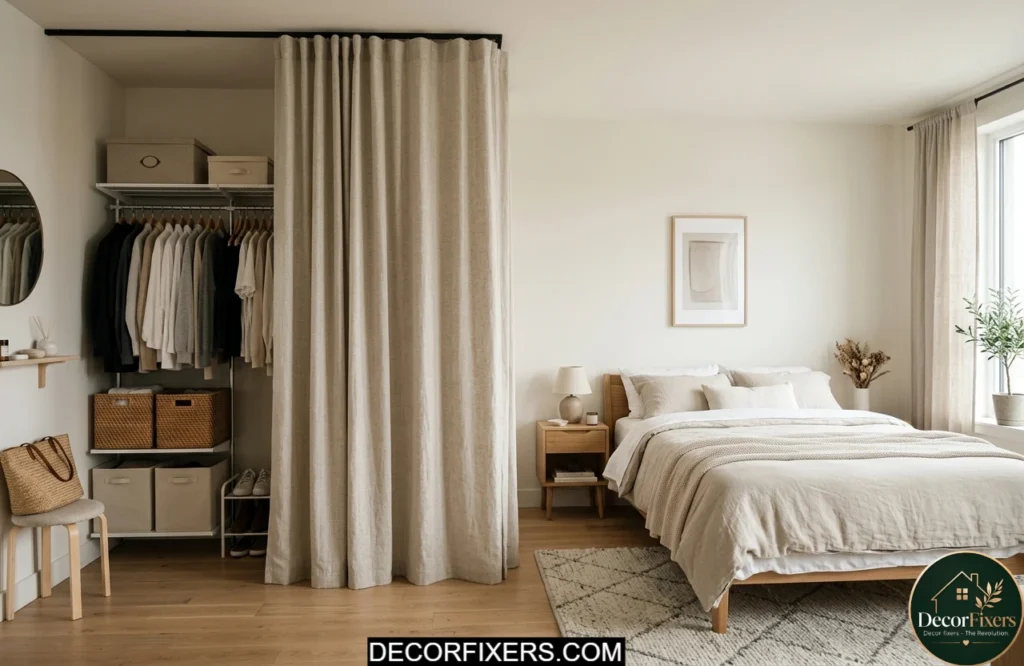
One of the most underused bedroom curtain design ideas isn’t a window treatment at all. A floor-length curtain panel hung from a ceiling track or tension rod can replace or conceal a closet door, section off a dressing area, or create a soft room divider in a studio apartment without any permanent installation.
For renters, this is a genuinely useful solution. No screws, no wall damage, no deposit lost. A tension rod in a doorframe opening, or a ceiling adhesive track (rated for light loads), supports a single curtain panel that conceals what’s behind it, clothes, storage, or a desk, without committing to a door. Choose a fabric that matches or complements your bedding for a cohesive pull.
Best fabrics for divider curtains: Medium-weight linen, cotton velvet, or a woven texture that hangs with enough body to stay in place but flows naturally when pushed aside.
14. Patterned and Printed Curtains, How to Make Them Work Without Overwhelming the Room
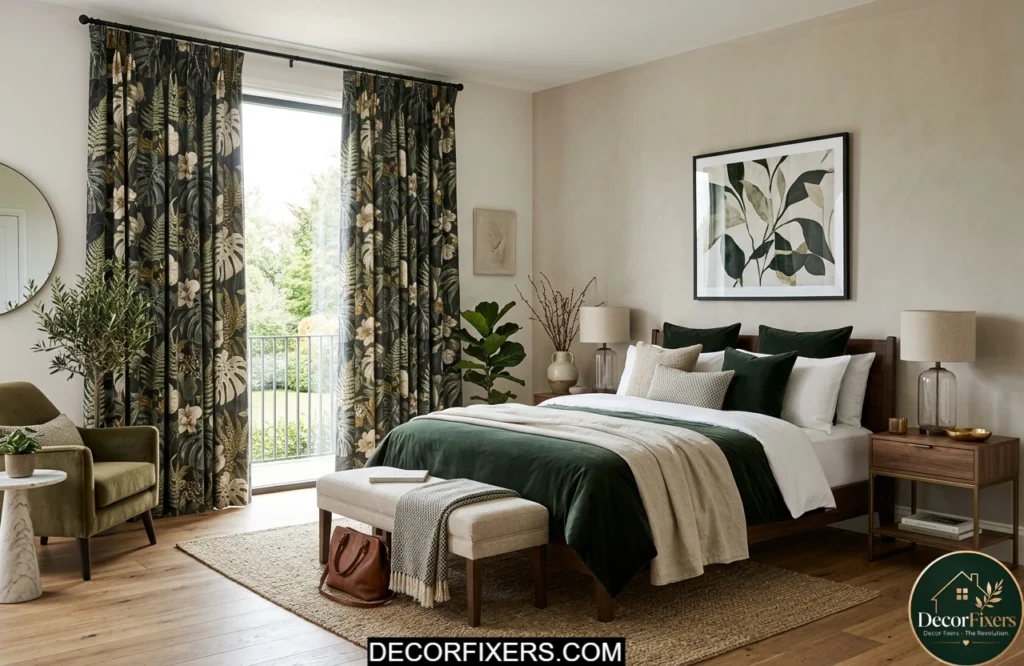
Most guides tell you to pick neutral curtains and let the room breathe. That’s safe advice, not always right advice. Patterned curtains, botanical prints, geometric weaves, abstract designs, or traditional ikat can anchor a bedroom’s entire aesthetic when chosen carefully. The 2025 trend of ‘pattern drenching’ (repeating a print across curtains, bedding, and cushions) is a legitimate design move, not a mistake.
The rule that actually matters: when using patterned curtains, keep the rest of the room largely solid. One pattern per room reads as intentional. Two or more compete. A pair of bold botanical-print panels works beautifully when the bedding is a complementary solid, and the walls are neutral.
What most guides skip: scale matters as much as pattern type. A large-scale print reads as dramatic and editorial in a master suite. The same pattern scaled down reads as busy and crowded in a small bedroom. Match the scale of the pattern to the scale of the room.
15. No-Drill Curtains for Renters, The Solutions That Actually Hold
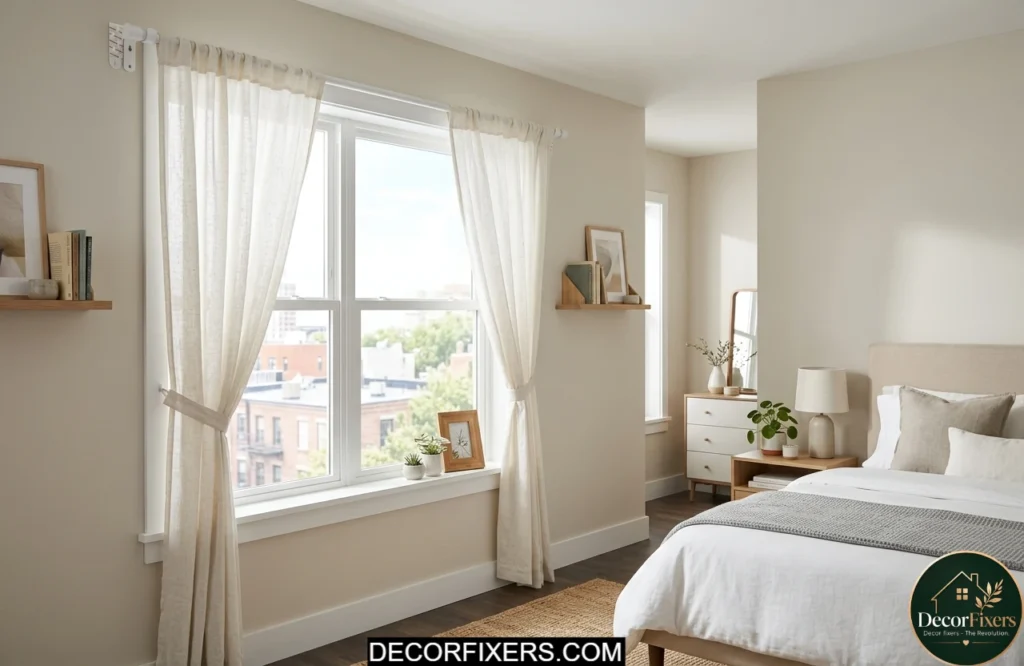
Here’s where most guides leave renters stranded: they show beautiful curtain setups and then describe installation that would cost you your entire security deposit. The renter-friendly curtain market has genuinely improved, and the solutions below work, not just as stopgaps, but as real window treatments.
Tension rods: Fit inside the window frame with zero wall contact. Best for lightweight fabrics (sheers, cotton, light linen). Cost: $8–$25, depending on width and load rating.
Adhesive curtain rod brackets: Peel-and-stick systems rated for up to 20–30 lbs when properly applied to smooth surfaces. Brands like Command and JHCJHC offer models that hold standard rods. Best for medium-weight panels.
Tap-in brackets (Kwik-Hang): These press into wood window trim with minimal pin-holes and support heavier fabrics, including blackout panels. The marks left are tiny and typically paintable, far smaller than drill holes.
Ceiling adhesive tracks: For curtain-as-divider uses, adhesive ceiling tracks hold lightweight panels without screws. Not recommended for heavy velvet.
What type of curtain is best for a bedroom?
The best bedroom curtain depends on how much light you need to block and what your room’s aesthetic calls for. According to ResearchAndMarkets (2025), the global curtains and window blinds market was valued at USD 24.9 billion in 2024, with the residential segment holding a 73.9% share, driven overwhelmingly by homeowners prioritizing blackout and thermal functionality in bedrooms. For most sleepers, a lined or blackout curtain in a mid-weight fabric like polyester-linen blend offers the best combination of light control, insulation, and visual warmth.
Purely sheer curtains look beautiful but won’t give you the darkness most people need for quality sleep, especially in urban apartments with street lighting or early-morning sun exposure.
Quick Comparison: Which Bedroom Curtain Style Is Right for You?
Use this table to match your room’s needs to the right bedroom curtain style at a glance.
Blackout curtains are better suited for light-sensitive sleepers, night-shift workers, or bedrooms with east-facing windows, because they block up to 99% of incoming light.
Linen drapes work better when you want natural diffused light and a relaxed, textured aesthetic. The key difference is function: blackout prioritizes sleep; linen prioritizes ambiance.
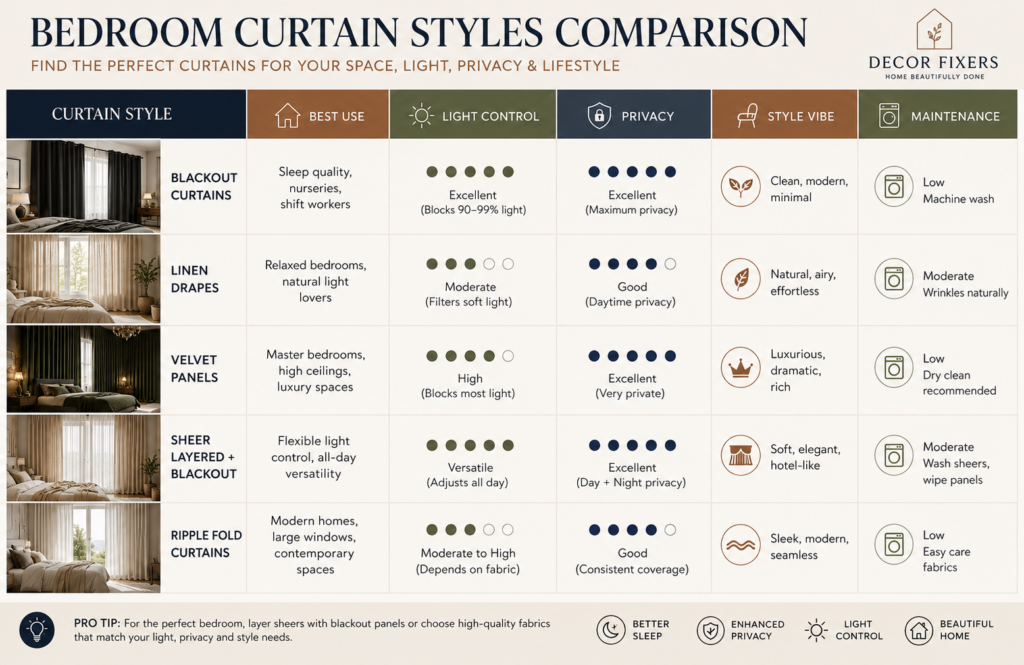
| Style | Best For | Key Benefit | Limitation |
| Blackout Curtains | Light-sensitive sleepers, night-shift workers | Total darkness, energy saving | Can feel heavy in small rooms |
| Linen Drapes | Boho, Scandinavian, airy bedrooms | Breathable, softly diffuses light | Minimal privacy on their own |
| Velvet Panels | Master suite, glam or moody decor | Insulates sound and temperature | Requires steam cleaning |
| Sheer + Blackout Layers | Anyone wanting full flexibility | Light control from morning to night | Needs two rod sets or dual track |
| Ripple Fold | Minimalist, modern, tall windows | Sleek uniform pleats, easy glide | Custom sizing is often required |
CONCLUSION:
After all the scrolling, I went with ceiling-mounted linen panels in warm oat, layered over blackout rollers that sit inside the frame. One rod to pull the linen aside during the day, one roller to close for sleeping. It cost less than $80 total. And it’s the first time my bedroom felt finished.
The honest takeaway from all 15 of these styles: the curtain that works is the one that solves your actual problem, light control, small room proportion, renter constraints, or aesthetic alignment with the room you’re building. Aesthetics without function is just decoration. Function without aesthetics is just coverage.
Know your room. Know your light. Pick one style and commit.
That’s it. That’s the whole framework.
FAQs:
Q: What’s the best curtain style for a small bedroom?
A: Roman shades or ceiling-mounted floor-length panels. Roman shades keep the window area compact. Ceiling-mounted panels create the illusion of height. Both avoid the visual weight of heavy drapes in tight spaces.
Q: How do I hang curtains in a rented apartment without drilling?
A: Use tension rods inside the frame for light fabrics, or adhesive rod brackets (rated 20–30 lbs.) for heavier panels. Tap-in brackets for wood-trim windows are a strong third option; they leave only tiny pin holes.
Q: Should bedroom curtains touch the floor?
A: Yes, for most styles. Floor-length panels, either just grazing the floor or pooling slightly, make a room feel more finished and proportioned. Curtains that hover above the floor typically look unintentional unless it’s a Roman shade or inside-mount style.
Q: What’s the most popular bedroom curtain color in 2026?
A: Warm neutrals dominate, oat, cream, warm taupe, and greige. Deep tones like forest green, navy, and charcoal are strong second choices for moody or dramatic master suites.
Q: When should I use motorized curtains in a bedroom?
A: When your windows are difficult to reach, when you’re building a smart home setup, or when you want light to cue your sleep and wake cycle automatically. Budget entry-level motorized tracks now start around $80–$120 per window.

Creator of DecorFixers, sharing practical home and interior ideas focused on real-life usability, simple design improvements, and budget-friendly solutions.
1 thought on “15 Curtain Styles Ideas for Bedroom: Every Room Size and Style”