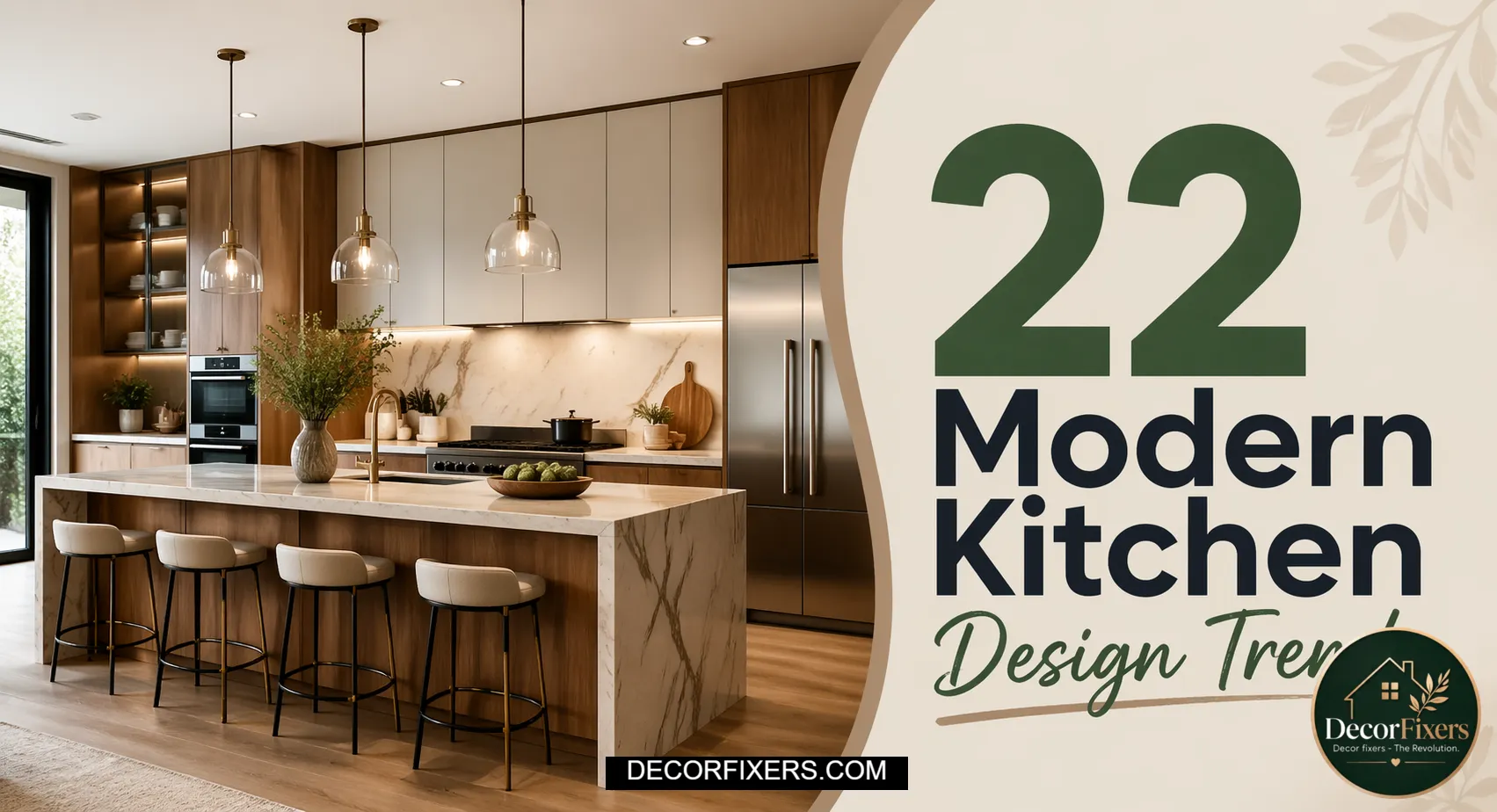
Modern kitchen design trends refer to the current shifts in materials, layouts, color palettes, appliance choices, and functionality that define how kitchens are being renovated and styled in a given period. In 2026, those shifts are moving decisively away from cold minimalism and toward kitchens that feel warm, functional, and built for real life, not Instagram.
What’s Actually Driving These Trends? (The Real Answer)
According to the 2026 U.S. Houzz Kitchen Trends Study, which surveyed nearly 1,800 homeowners, the biggest driver of kitchen renovations isn’t aesthetics. It’s a frustration with poor functionality in aging homes. With housing inventory tight and homeowners staying put longer, people are finally fixing the kitchens they’ve been tolerating for a decade.
Here’s the thing: context matters for which trends actually stick. Trends rooted in function, better storage, smarter layouts, and durable materials outlast trends rooted purely in aesthetics. That’s your filter for everything in this list.
The 2026 Kitchen Trends Report from the National Kitchen & Bath Association (NKBA), based on 634 industry professionals, including designers, manufacturers, and architects, confirms the same direction: kitchens in 2026 are becoming “more intelligent, personalized, and health-conscious.”
Wood Cabinets Have Overtaken White
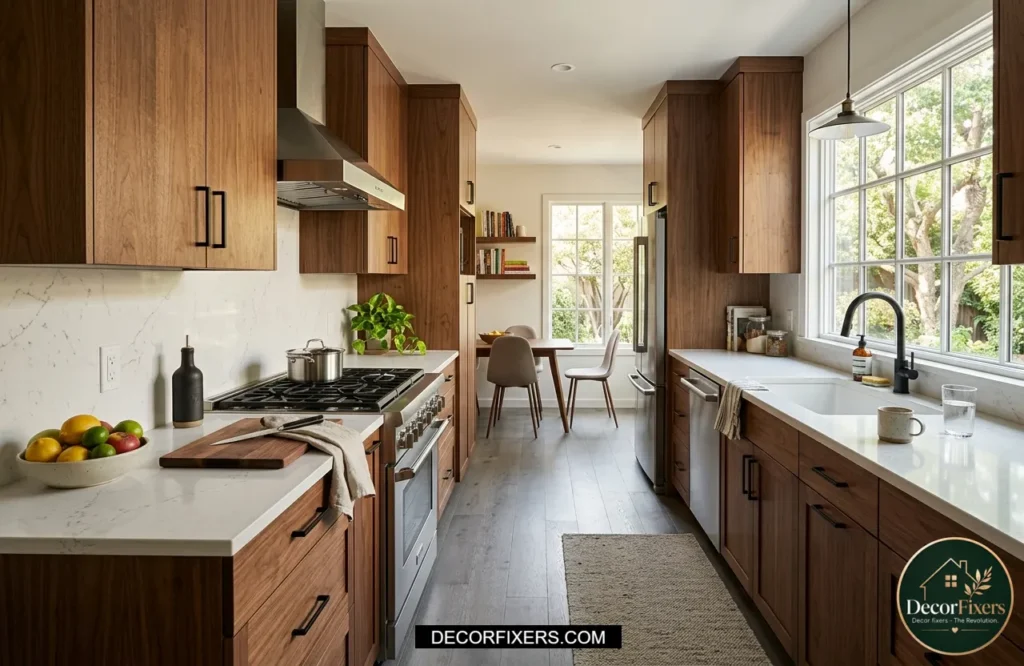
This is the single biggest shift of 2026. For the first time in years, wood has beaten white as the most popular cabinet choice. According to the Houzz 2026 study, 29% of renovating homeowners chose wood cabinets, up 6 percentage points year over year, while white dropped to 28% after a 5-point decline.
Medium wood tones lead (15%), followed by light wood (11%). Dark wood sits at 3%, still niche, but gaining ground in bold, moody kitchens.
How to apply this:
- Cosmetic refresh: Replace cabinet doors only using IKEA’s SEKTION system with wood-look fronts, far cheaper than full cabinet replacement
- Mid-range remodel: Go two-tone: wood lowers, white or off-white uppers for balance
- Full renovation: Commit to medium walnut or white oak, paired with a contrasting dark island.
Two-Tone Cabinets Are Now the Default, Not the Exception
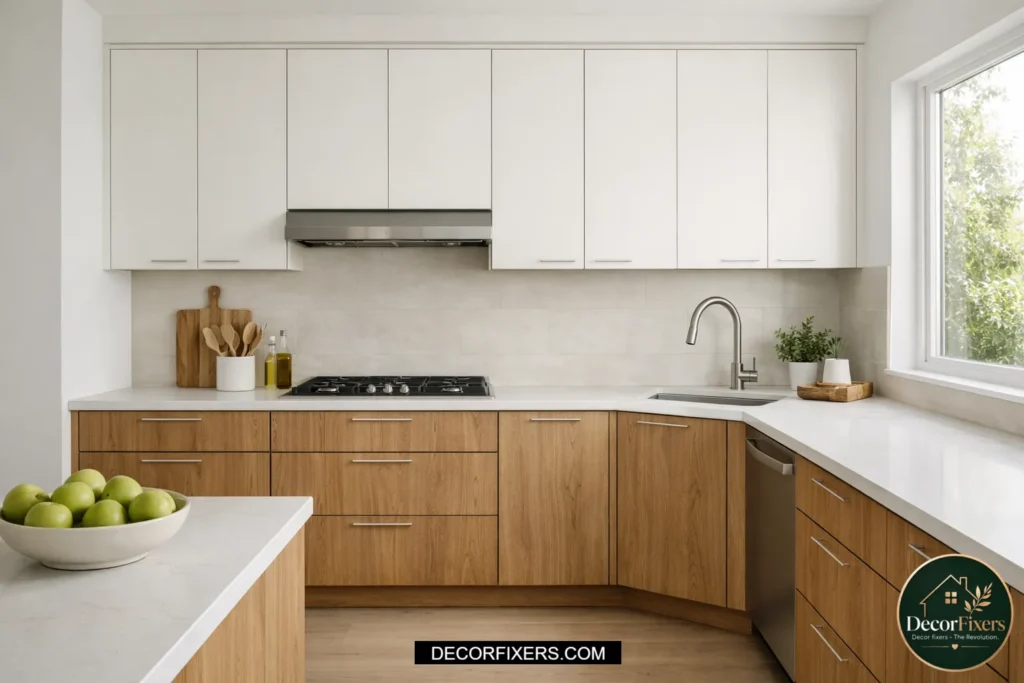
It’s not just that people want color. They want contrast. The two-tone kitchen, one shade for uppers, another for lowers, has crossed from “design-forward choice” to standard practice.
White or off-white still dominates upper cabinets. But lowers? Homeowners are reaching for wood tones, deep blues, and forest greens.
Quick note: Don’t confuse “two-tone” with “mismatched.” The key is intentional contrast, not random pairing. A warm wood lower with a cool gray upper will fight. A warm wood lower with an off-white or cream upper harmonizes.
The Kitchen Island Is Becoming a Statement Piece
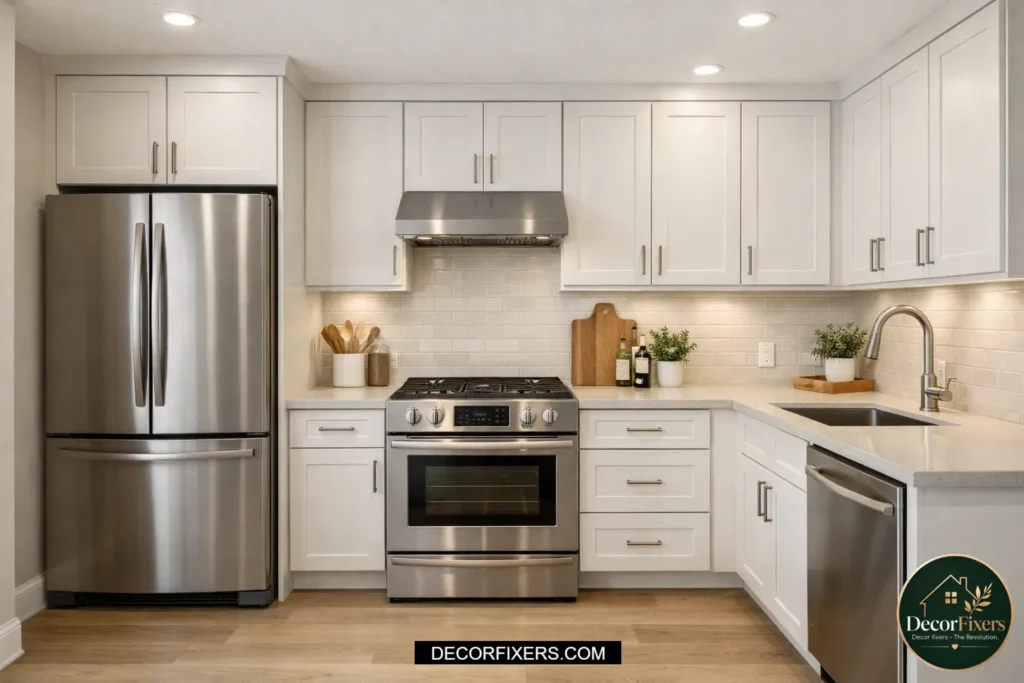
Islands have outgrown their role as extra counter space. In 2026, they’re the focal point. Designer Cara Woodhouse of Cara Woodhouse Interiors describes the shift: designers are “experimenting with curved forms, waterfall edges, fluted stone, and dramatic natural materials like onyx or marble with bold veining.”
About half of the renovated islands exceed seven feet in length. More than half of homeowners are also integrating appliances, dishwashers, prep sinks, and microwaves directly into the island.
How to apply this:
- Add a waterfall edge to an existing island with a new countertop slab
- Install a prep sink to turn your island into a true workstation
- Choose a countertop color that contrasts with your perimeter counters. Wood has become the most popular island top choice specifically because of this contrast effect
Induction Cooking Is Replacing Gas
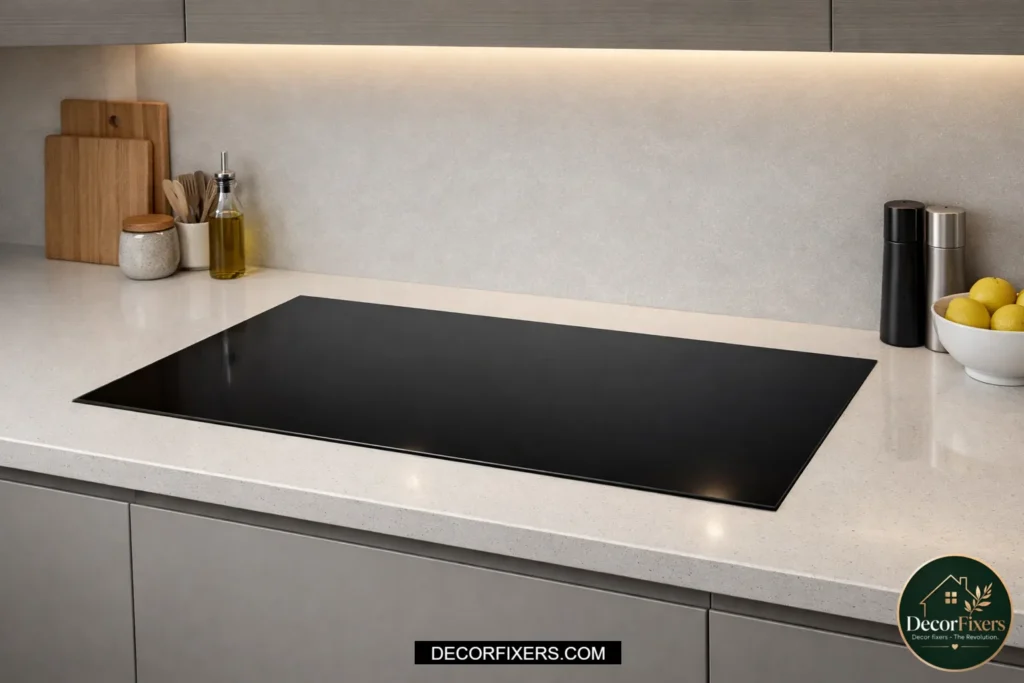
Induction is no longer a premium choice. It’s becoming the default. Jay Jeffers, founder of Jay Jeffers Inc., puts it plainly: “Induction ranges are replacing gas and dual-fuel setups as the main cooking workhorse.”
The practical upside: induction can now be integrated flush into the countertop, essentially disappearing when not in use. The result is a cleaner, quieter kitchen.
I’ve seen conflicting data on this one; some industry reports show gas still dominant in certain U.S. regions; others show induction adoption accelerating sharply in coastal markets and new builds. My read: if you’re already replacing a range, induction is the smarter long-term bet for both safety and resale.
Slab Backsplashes Are Taking Over from Tile
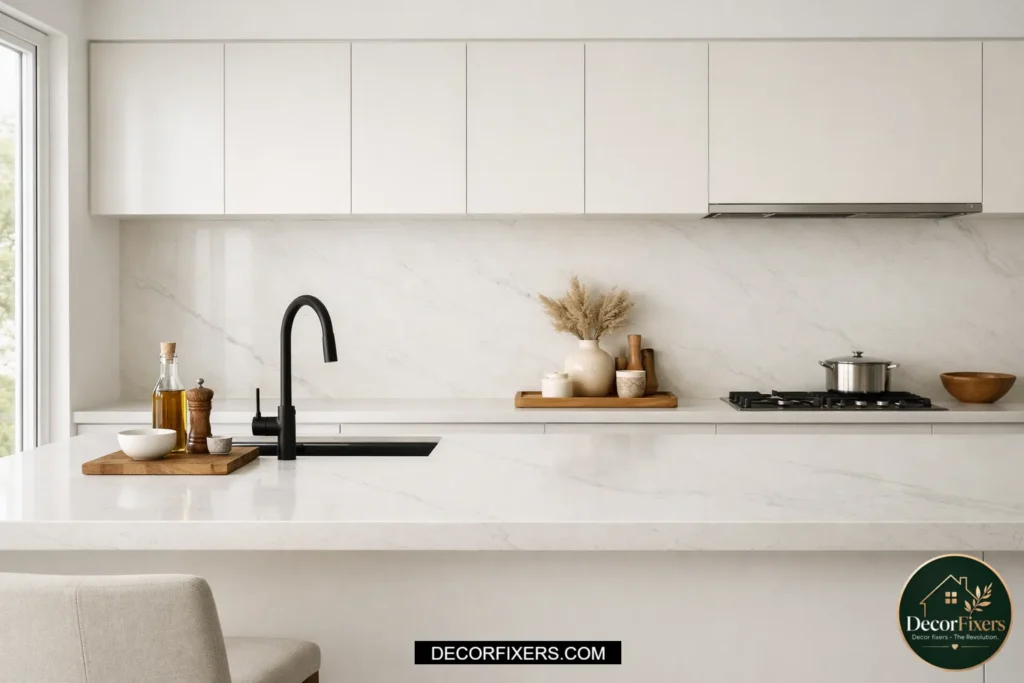
Tile isn’t going anywhere; rectangular tiles remain the most common backsplash choice. But slab backsplashes, particularly in engineered quartz, are gaining popularity fast.
Silestone by Cosentino is one of the brands leading this space, offering full-height slab backsplash solutions that match or complement countertop surfaces. The appeal: fewer grout lines, easier maintenance, and a dramatic, unbroken surface that photographs beautifully.
Comparison:
| Option | Best For | Key Benefit | Limitation |
| Subway tile | Budget refreshes | Timeless, affordable | Grout maintenance |
| Decorative tile | Accent / focal areas | Personality and pattern | Can date quickly |
| Quartz slab | Full remodels | Seamless, low maintenance | Higher upfront cost |
| Natural stone slab | Luxury builds | Unique veining, premium feel | Pricey, requires sealing |
Neutrals Still Rule, But Greens and Blues Are Close Behind
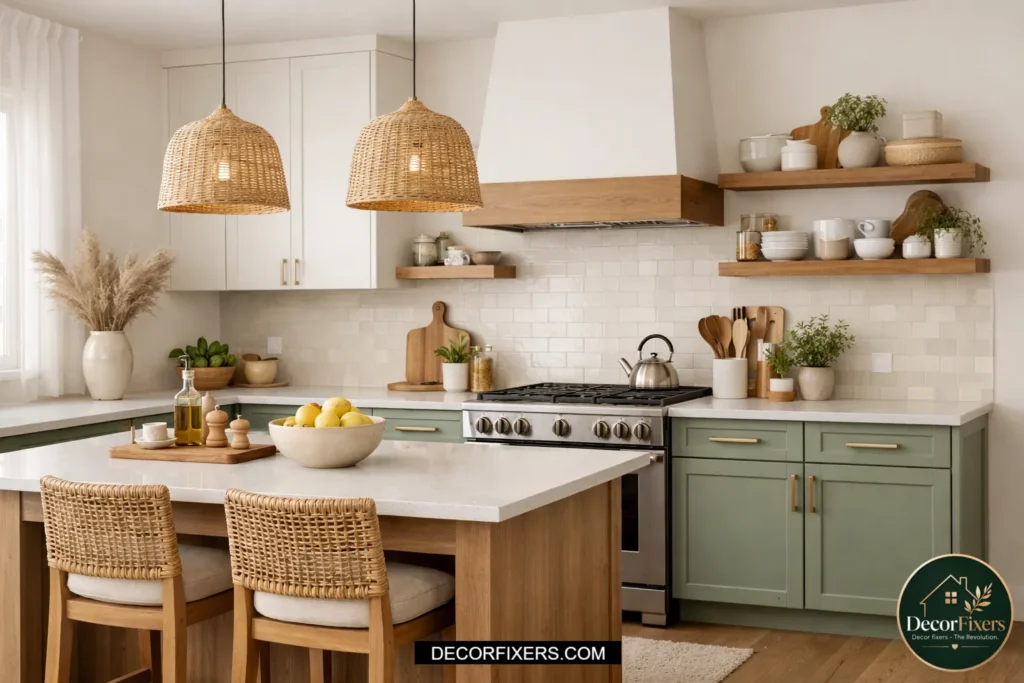
NKBA’s 2026 report shows 96% of respondents identified neutrals as the most popular colors, whites, creams, and greiges. But that’s not the whole story. Greens ranked at 86% and blues at 78%, showing that accent and cabinet colors are diversifying even as wall and countertop surfaces stay neutral.
Sage green lower cabinets. Deep teal islands. Forest green pantry walls. These aren’t fringe anymore.
Kitchen Lighting Is Finally Getting Serious
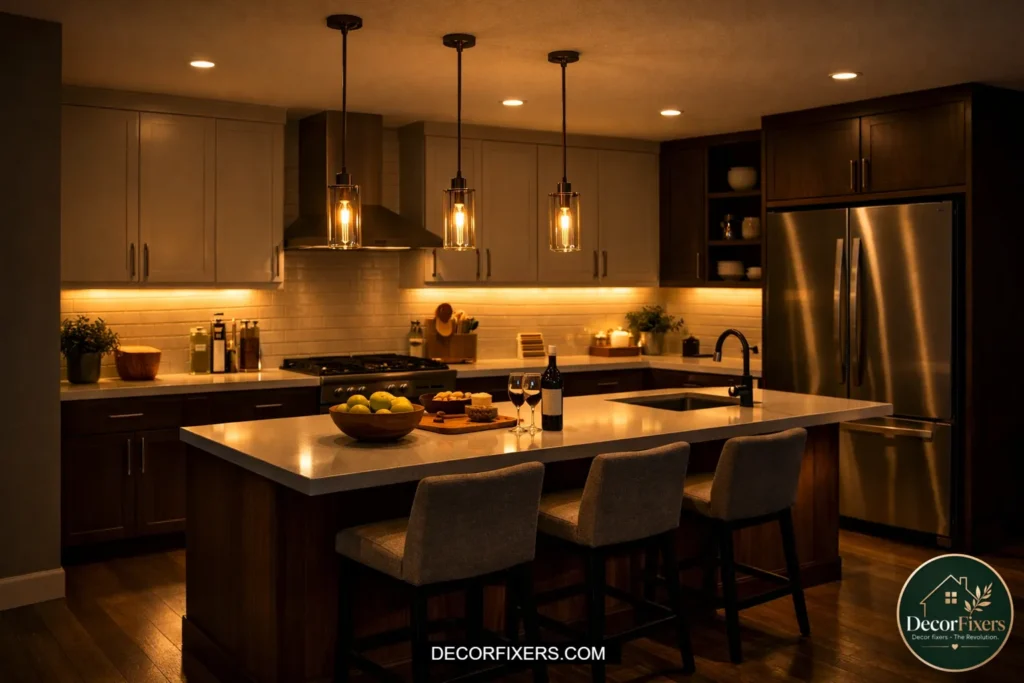
The three priorities homeowners ranked in the NKBA study: natural lighting (95%), quality ambient lighting (93%), and task lighting for work zones (92%).
Under-cabinet lighting ranked as the most-adopted lighting upgrade (82%). Pendant lights came in third at 63%.
How to apply this without rewiring:
- McGor 10-inch rechargeable motion-sensor lights install under cabinets with no electrical work
- Dimmer switches (like the Bestten 2-pack) on existing overhead lights cost under $25 and transform the evening ambiance
- A pair of sculptural pendants over the island changes the feel of the whole kitchen without touching anything else
Smart Appliances, But for Function, Not Flash
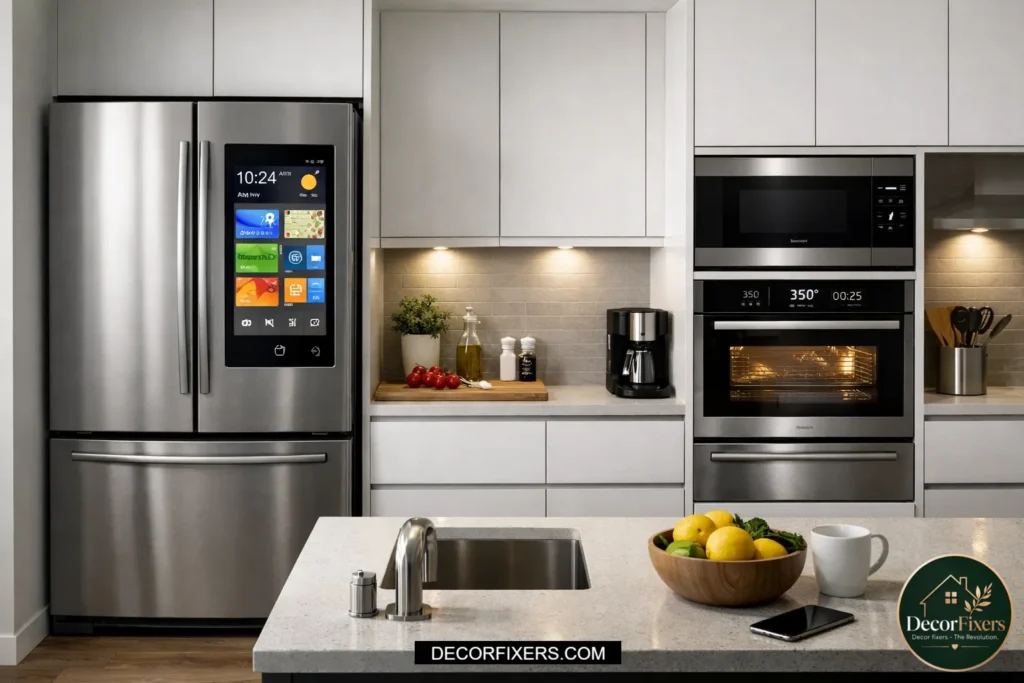
Look, if you’re tempted to buy a smart fridge for the novelty, here’s what actually works: homeowners in 2026 are choosing connected appliances for specific functional benefits, not gadgetry.
The most desired features: adjustable temperature zones, water filter alerts, remote monitoring, and precise oven controls. The Samsung Bespoke refrigerator exemplifies this trend; customizable panel colors make it visually flexible, while smart features focus on practical daily use.
WiFi-enabled lighting and mobile-app-controlled ventilation are also gaining traction, per the NKBA report.
Closed-Off Prep Zones Are Making a Comeback
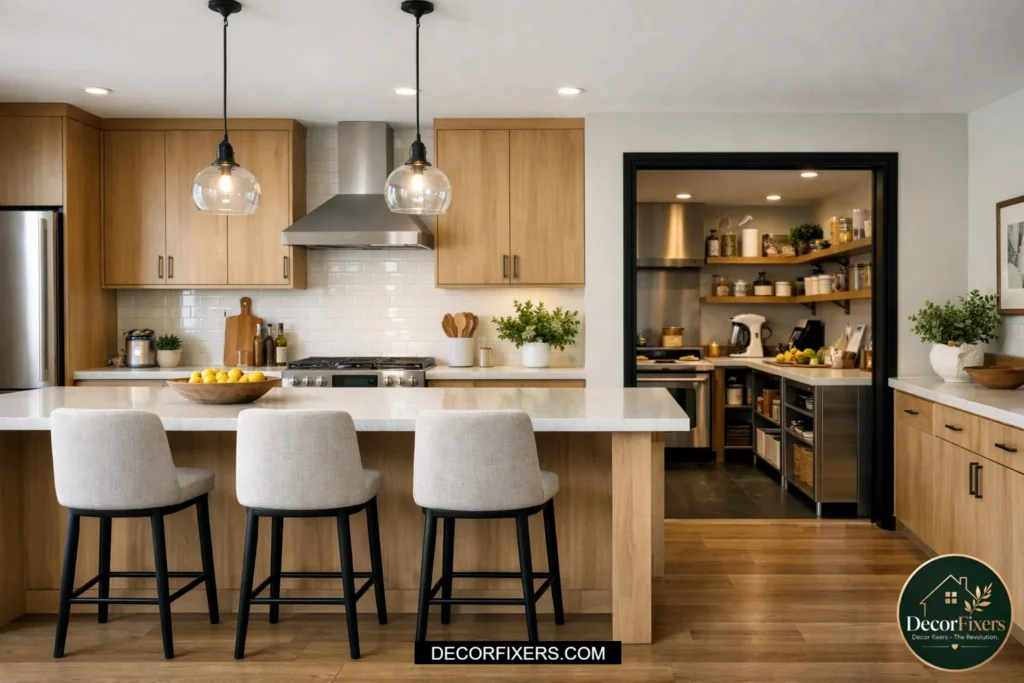
Open-concept kitchens are losing some of their dominance. Designer Craig Gritzen sees it clearly: “Another trend gaining momentum is the shift away from fully open-concept kitchens toward purposeful zoned living with functional areas.”
The “back kitchen”, a secondary prep space hidden from the main entertaining area, is showing up in higher-end renovations. Think: scullery revival.
This is the trend most competitors haven’t covered. It’s not about closing the kitchen off entirely; it’s about giving the mess somewhere to hide.
Aging-in-Place Features Are Mainstream, Not Niche
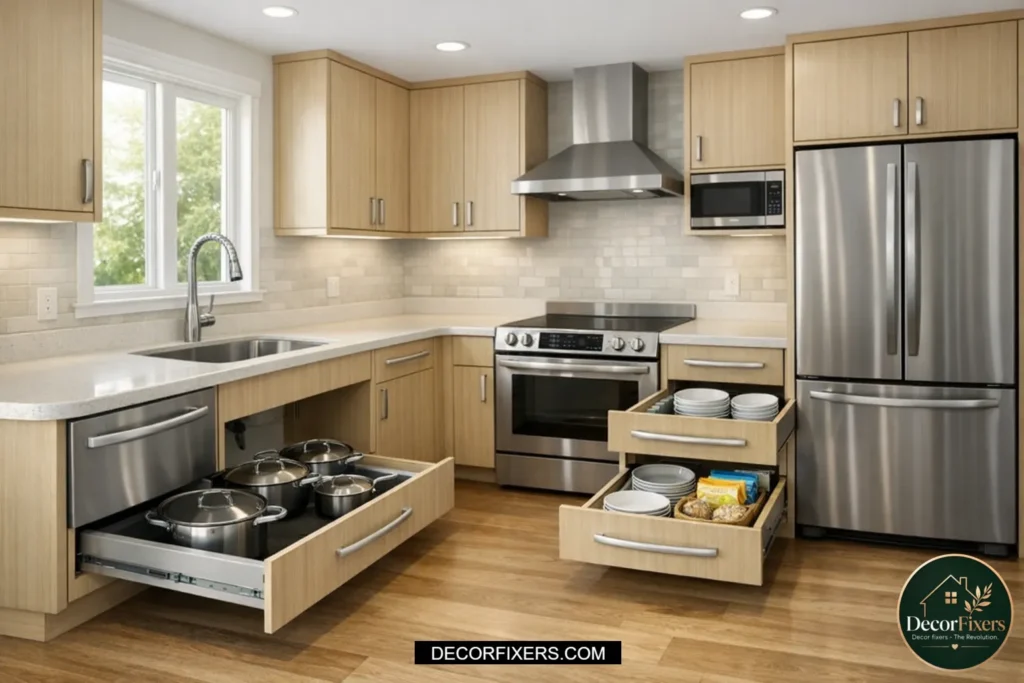
More than half of renovating homeowners are planning kitchens that can adapt to future needs. Features gaining traction: pull-out cabinets, wider drawer pulls, rounded countertop corners, and non-slip flooring.
The Houzz study notes: 31% of homeowners addressed aging household members in their 2026 renovations, up 5 percentage points year over year. Almost all (90%) added specific accessibility and safety features.
Or maybe I should say it this way: this isn’t a trend for “older” homeowners. It’s a smart universal design. Rounded corners protect kids. Pull-out shelves help everyone. Wide pulls are simply easier.
Wood Flooring Dominates Kitchen Floors
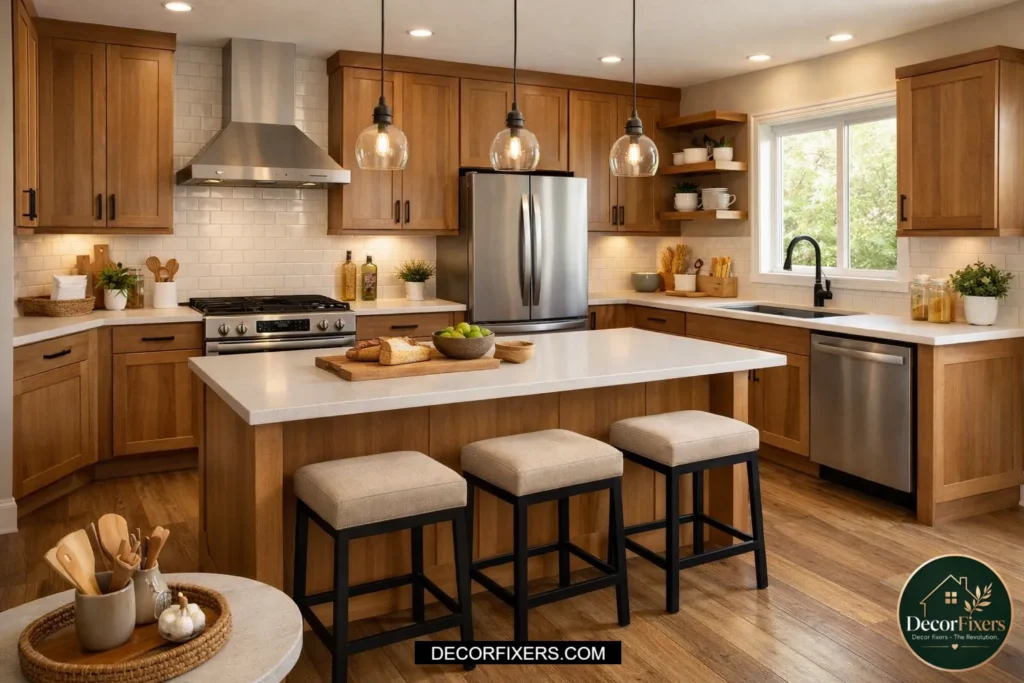
White and off-white lead for walls. Wood dominates for floors. The consistency of the wood-tone trend across surfaces, cabinets, islands, and floors is deliberate: it creates warmth and visual cohesion without requiring pattern or color complexity.
Luxury vinyl plank (LVP) in wood looks has become the practical choice for kitchens, durable, water-resistant, and convincing at a distance.
Kitchen Islands Are Growing, And Getting Busier
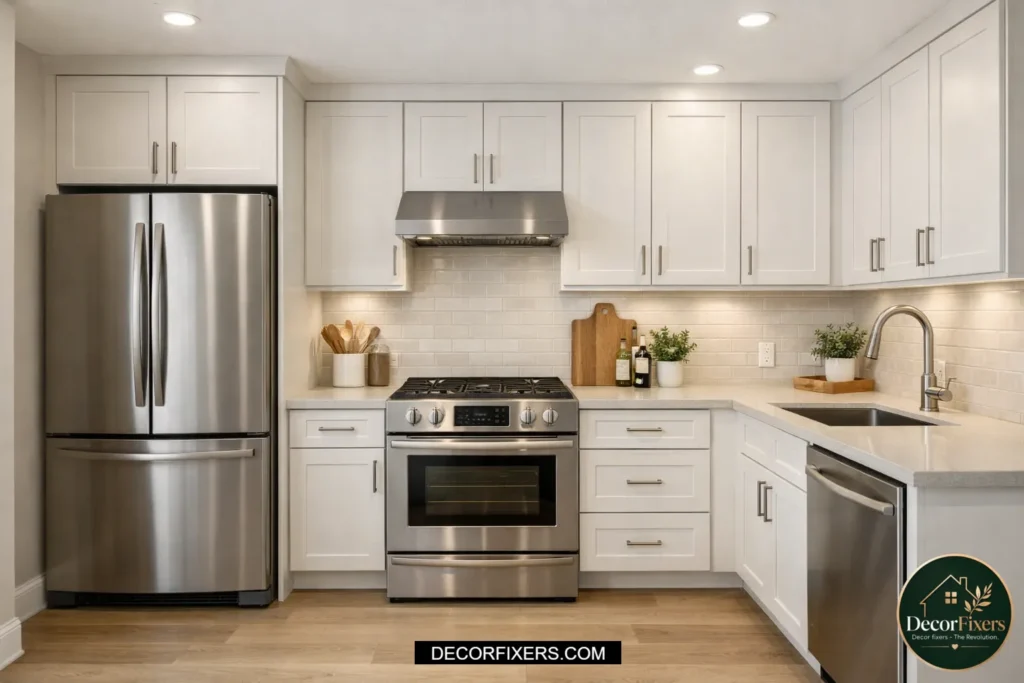
Rectangular islands outpace L-shaped by a wide margin. About half exceed 7 feet. The shift isn’t just size, it’s function density. Seating, storage, prep sinks, induction cooktops, hidden charging stations, and built-in wine fridges are all appearing in a single island footprint.
Sustainability Features Are Now Baseline Expectations
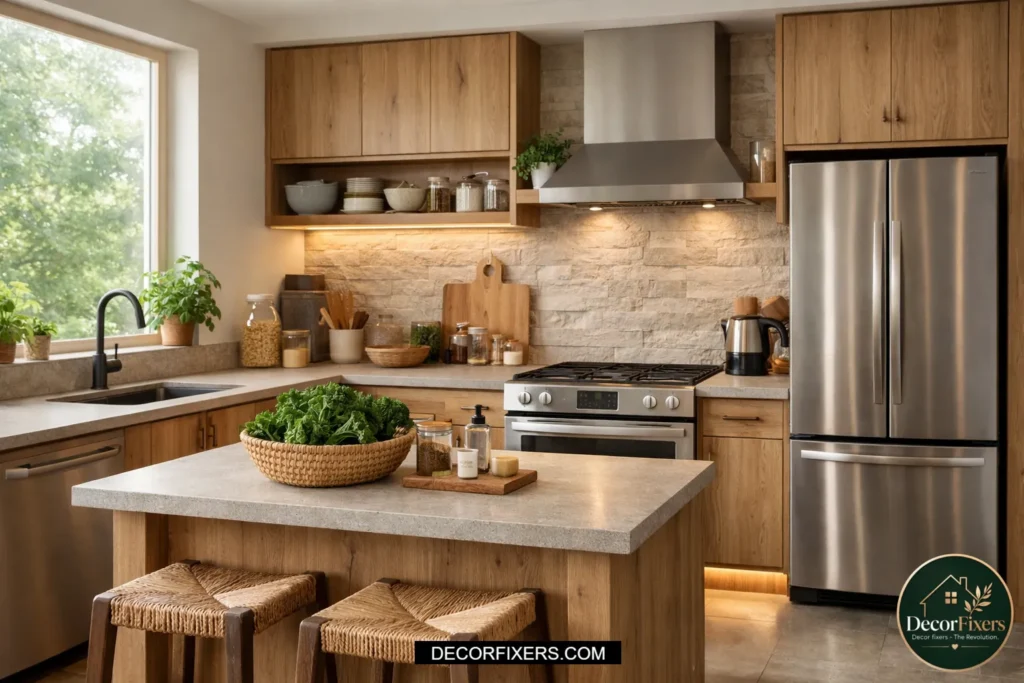
LED lighting, energy-efficient appliances, and “timeless design” rank as the top three sustainable choices homeowners are incorporating, per the Houzz 2026 study.
Bamboo cabinet doors, recycled countertop materials, and low-VOC paints have moved from “eco-conscious choice” to standard spec at many mid-range renovation levels.
Some experts argue that sustainable kitchen upgrades cost significantly more upfront. That’s valid for some premium options like recycled glass countertops. But if you’re staying in the house 10+ years, energy-efficient appliances typically pay back within 5–7 years through utility savings.
Heritage and Nostalgia Details Blending with Modern Lines
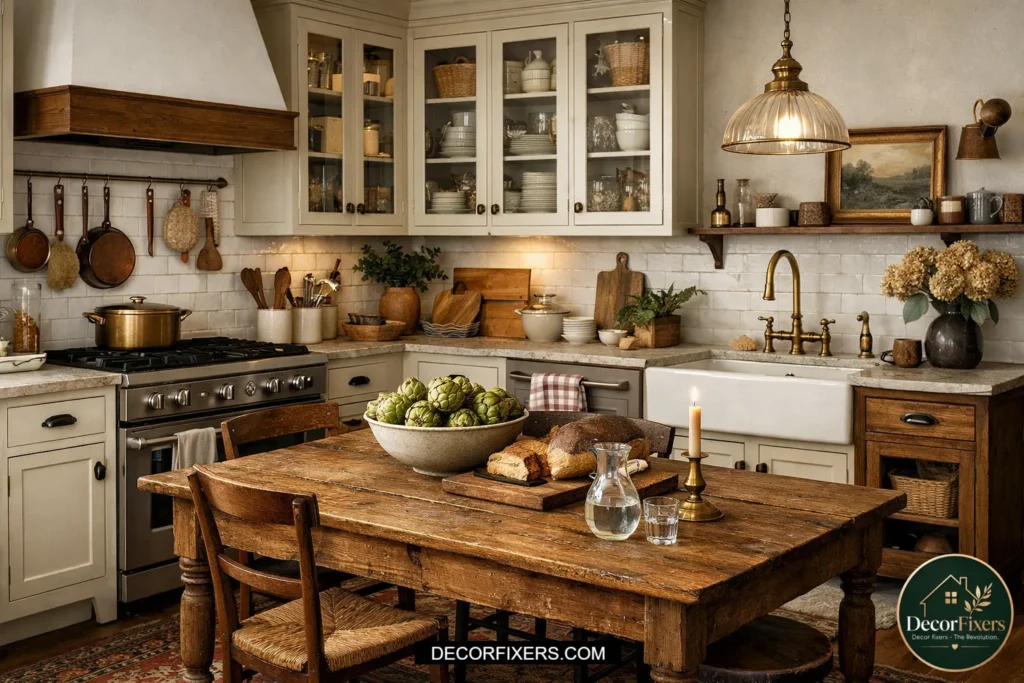
Teri Simone, head of design at Nieu Cabinet Doors, describes a strong “old meets new” trend: “a resurgence of heritage pieces being blended into the modern kitchen, as homeowners move away from the ultra-streamlined, built-in look.”
Glass-front hutches for displaying dishes. Vintage farmhouse tables as kitchen worktables. Freestanding storage furniture. Chunky, solid hardware in mixed metal tones.
It’s warm. It’s personal. It’s the opposite of the sterile showroom kitchen.
Countertop Upgrades Are Universal
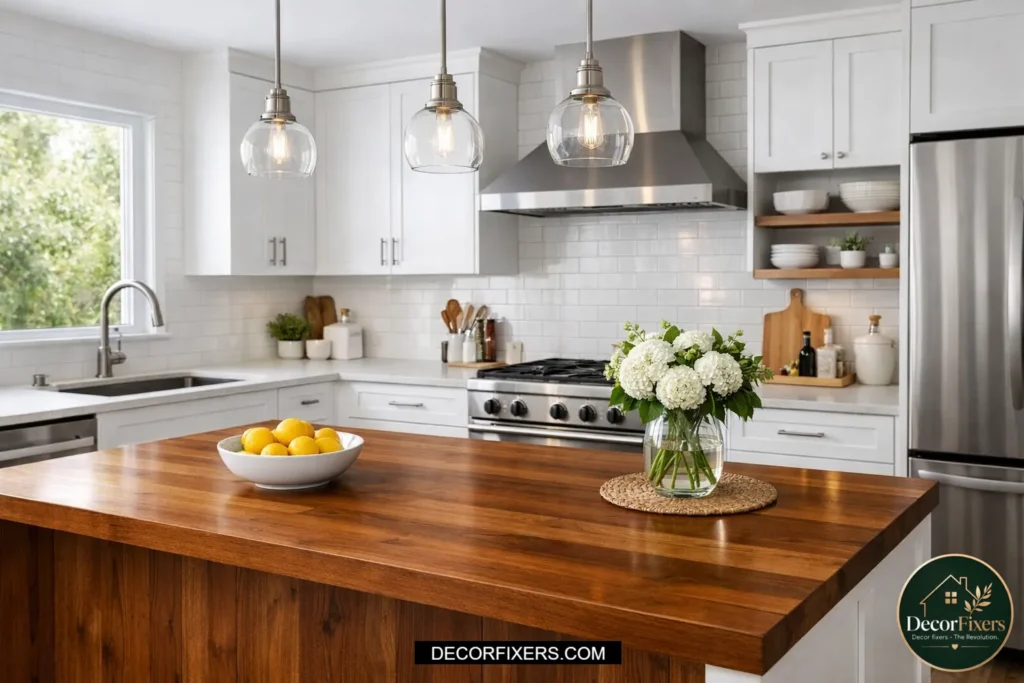
91% of renovating homeowners say they upgraded their countertops. Quartz and engineered stone dominate at mid-range. Wood, particularly for island tops, is the statement choice. White and off-white remain the most common countertop colors, but island countertops now routinely contrast with perimeter surfaces.
Beverage Stations and Built-In Pantries Are Standard Add-Ons
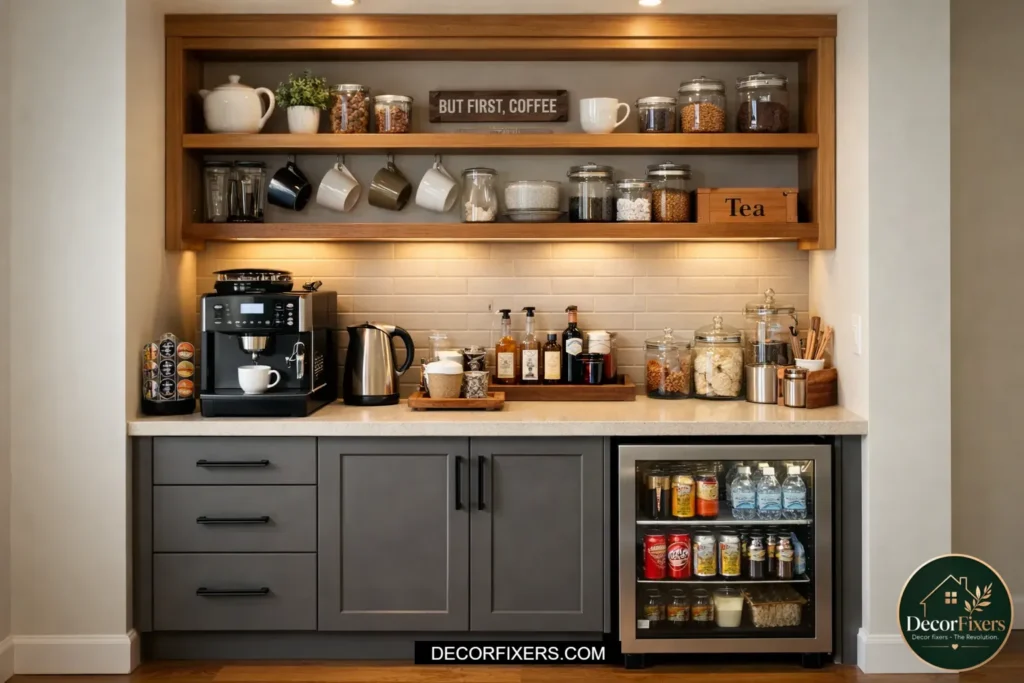
Over three-quarters of homeowners added built-in features during their 2026 remodels: pantry cabinets, beverage stations, wine fridges, and banquettes (upholstered bench seating built into corners or walls).
The beverage station, a dedicated zone for coffee, tea, or bar-style drink prep, is the most accessible of these. It can be retrofitted into an existing kitchen with a dedicated countertop zone, open shelving, and a small fridge.
L-Shaped Layouts Still Lead, But U-Shaped Is Gaining
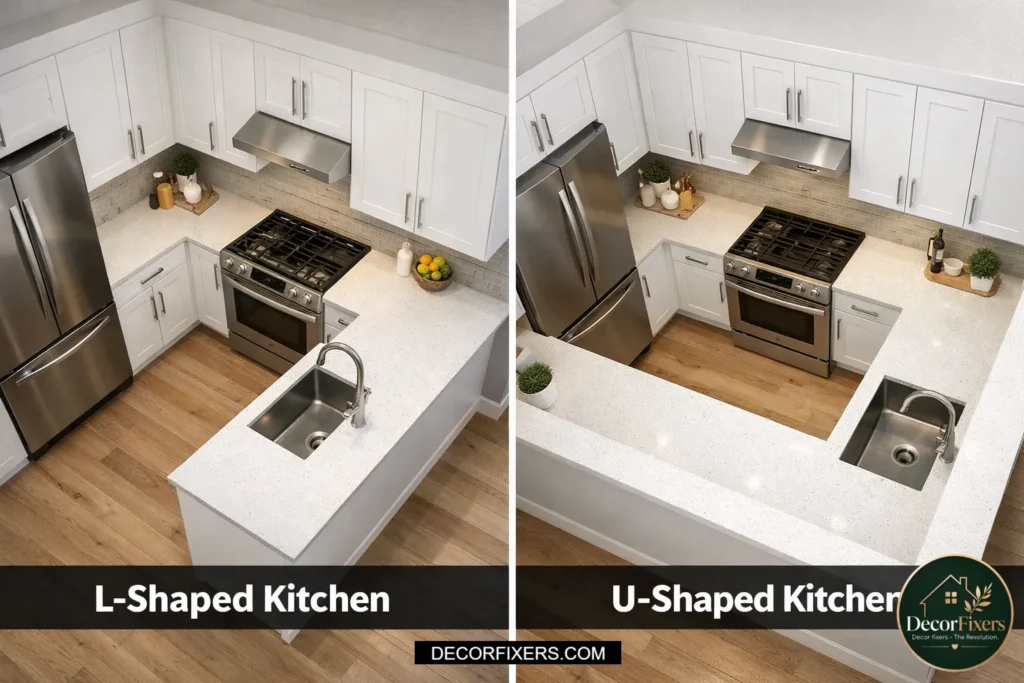
Among homeowners who changed their kitchen layout, L-shaped leads at 35%, U-shaped follows at 31%, and galley at 14%. The key data point is that 68% of kitchens end up the same size after renovation, and homeowners are reconfiguring within the existing footprint, not expanding it.
Smarter, not bigger.
Appliance Integration Into Islands
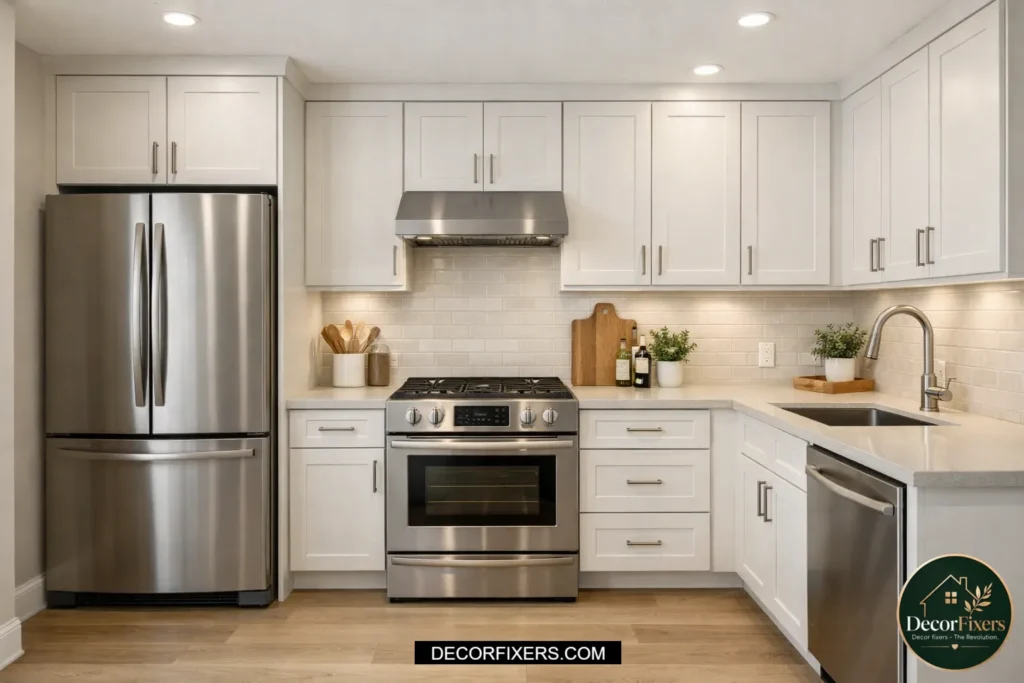
Dishwashers and microwaves are moving into islands. More than half of homeowners with renovated islands have integrated at least one appliance. This transforms the island from a prep surface into a complete workstation, reducing traffic around the main appliance wall.
Stainless Steel Appliances Aren’t Going Anywhere
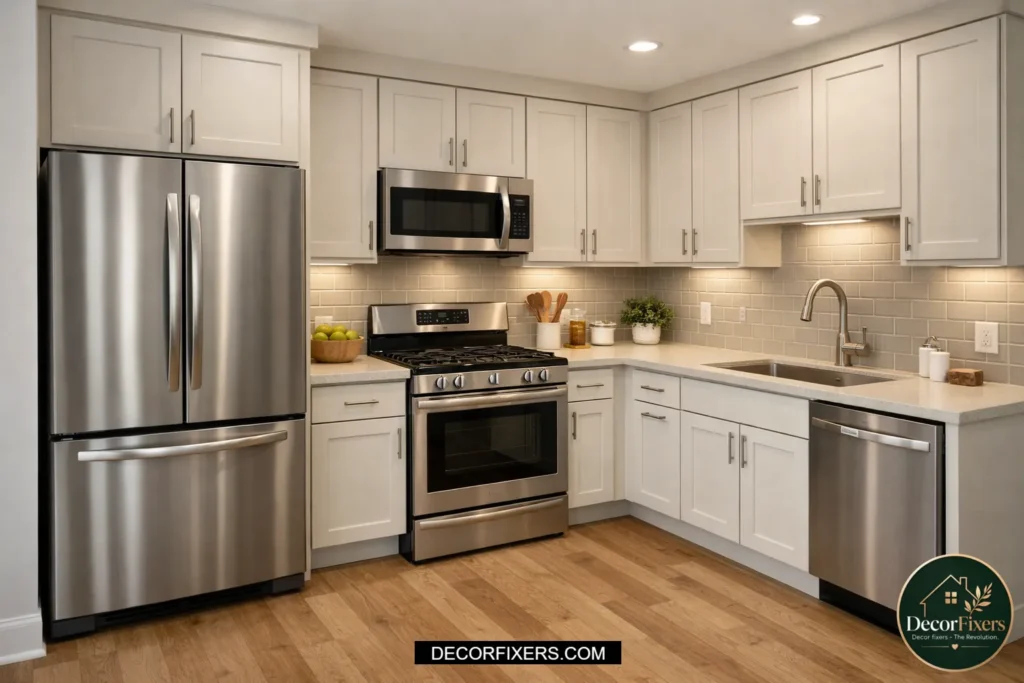
Despite all the color and personalization trends, stainless steel remains the dominant appliance finish by a wide margin. Fewer than 6% of renovating homeowners chose white, black, or black stainless steel. Stainless reads as timeless; it doesn’t date the kitchen the way trendy finishes can.
Decorative Backsplash Tiles Staying Niche
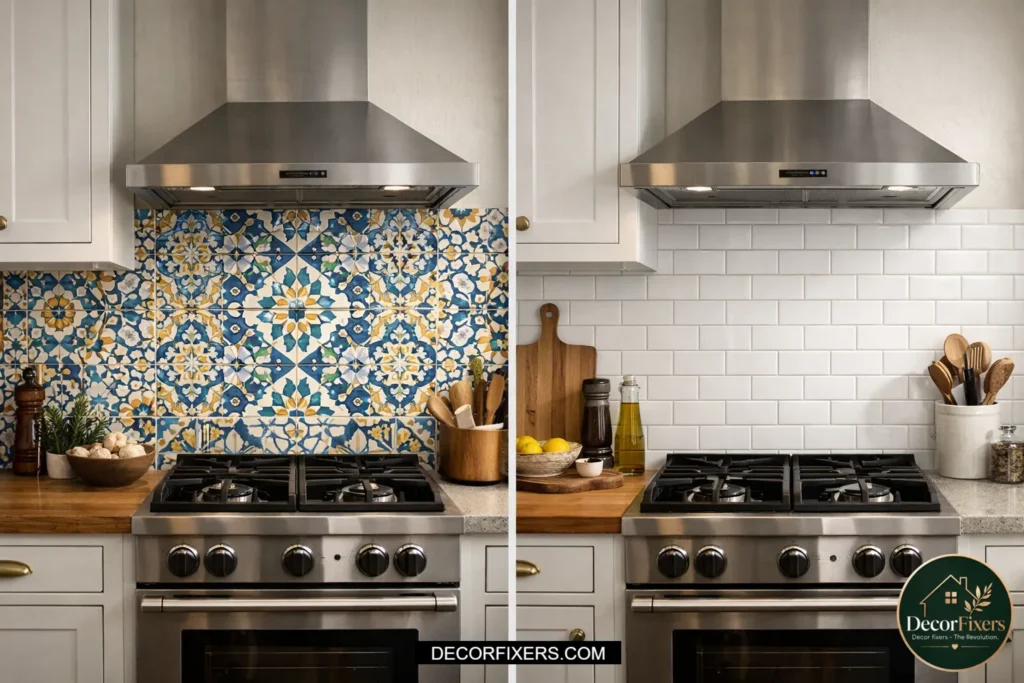
Decorative and patterned tiles remain a niche choice despite their social media presence. Most homeowners still choose rectangular white or off-white tiles for the backsplash, safe, timeless, and easy to sell around. Decorative styles appear primarily as accent strips or focal points behind a range.
Cooktop and Wall Oven Upgrades Are the Most Common Appliance Moves
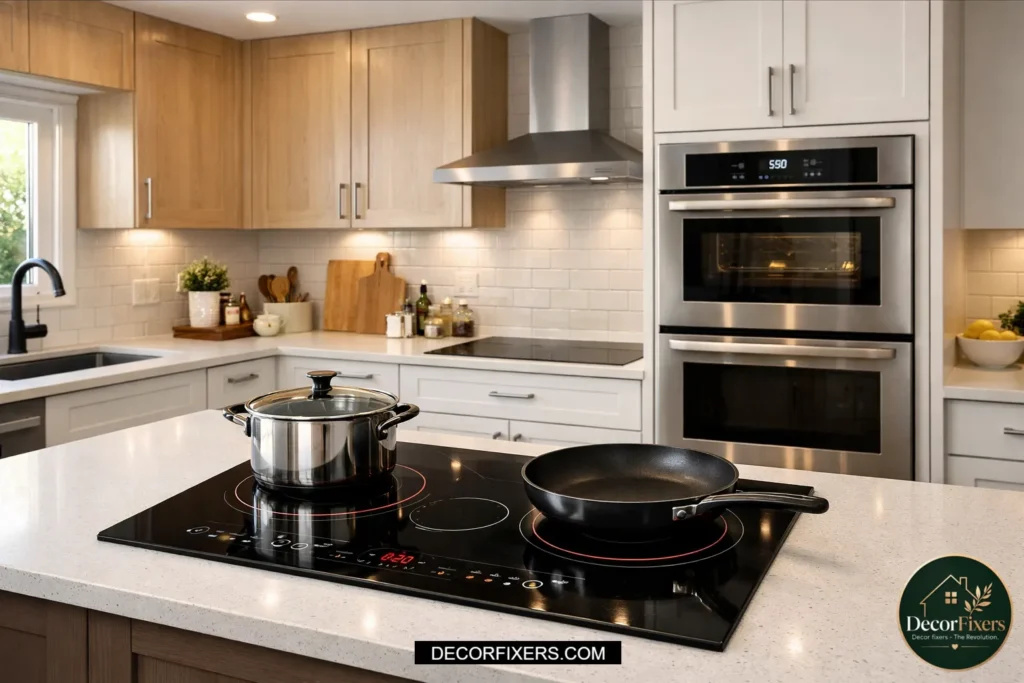
40% of renovating homeowners added or updated cooktops. 29% updated wall ovens. Smaller shares upgraded refrigerators (19%), beverage fridges (18%), and wine fridges (13%).
The takeaway: cooking-focused upgrades have the broadest appeal and the clearest functional payoff.
Timeless Design Intentionality Is the Meta-Trend
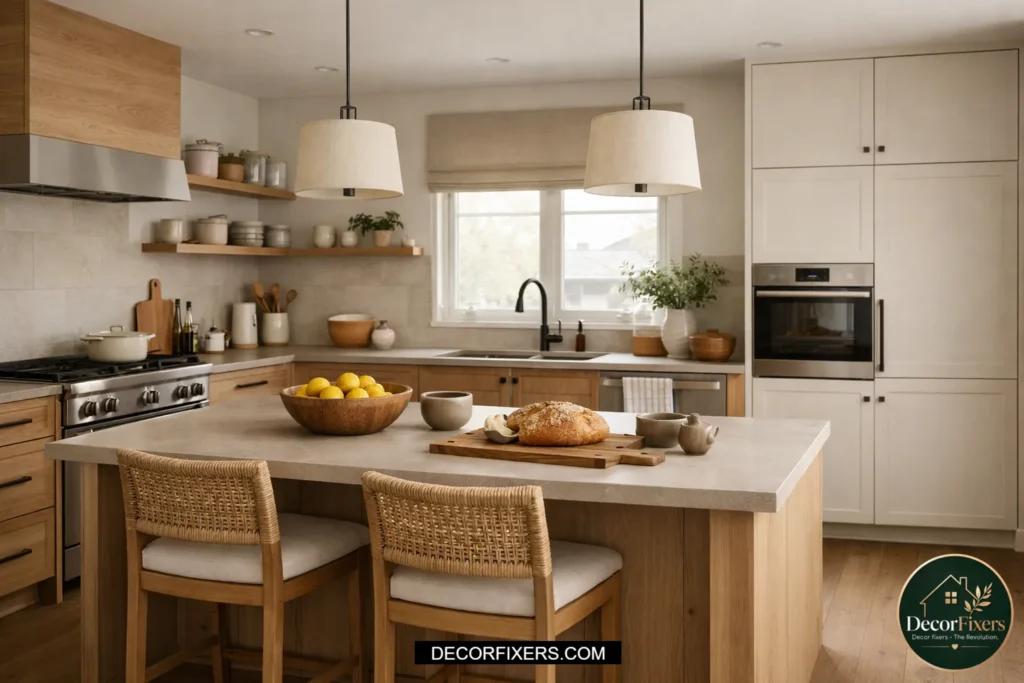
Most guides skip this. The biggest shift in 2026 isn’t any single material or color; it’s the underlying philosophy. Homeowners are explicitly choosing elements for longevity, not novelty. The NKBA report flags “timeless design” as one of the top three sustainable choices homeowners are making, right alongside LED bulbs and energy-efficient appliances.
What this means practically:
If a trend looks like it’ll feel dated in 3 years, it probably will. If it’s rooted in quality materials, functional improvement, or neutral-but-warm aesthetics, it’s likely safe.
Quick Reference: Trend Tier by Budget
| Trend | Budget Tier | Approx. Cost Range |
| Under-cabinet LED lighting | Cosmetic ($) | $25–$150 |
| Dimmer switches | Cosmetic ($) | $20–$60 |
| Hardware swap (pulls/knobs) | Cosmetic ($) | $50–$300 |
| Cabinet door replacement (IKEA SEKTION) | Mid ($$$) | $500–$2,000 |
| Two-tone paint on existing cabinets | Mid ($$$) | $300–$800 |
| Quartz slab backsplash | Mid-High ($$$$) | $1,500–$4,000 |
| Island countertop replacement | Mid-High ($$$$) | $1,000–$5,000 |
| Induction range upgrade | Full ($$$$+) | $1,000–$3,500 |
| Full cabinet replacement | Full ($$$$+) | $8,000–$25,000+ |
ALSO RAED: 32 Warm Bedroom Ideas That Create a Genuinely Relaxing Atmosphere
Conclusion:
Modern kitchen design in 2026 isn’t about chasing aesthetics; it’s about correcting years of functional compromises. The data from Houzz and NKBA make one thing clear: homeowners are prioritizing usability, comfort, and long-term value over short-lived visual trends.
Wood tones replacing white cabinets, two-tone layouts becoming standard, and islands turning into full workstations all point to the same shift: kitchens are no longer showpieces. They are high-performance living spaces built for daily use.
If there is one mistake to avoid, it’s designing a kitchen around social media trends instead of real behavior. What lasts is not what looks “new,” but what works under pressure: storage that makes sense, lighting that adapts, materials that age well, and layouts that reduce friction in everyday cooking.
The smartest approach is simple: invest in changes that improve function first, then layer style on top. That’s what separates a kitchen that feels outdated in two years from one that stays relevant for a decade.
In short, 2026 kitchen design is not about reinvention; it’s about refinement. And the kitchens that win are the ones designed for real life, not staged perfection.
FAQs:
Q: What’s the biggest kitchen design trend in 2026?
A: Wood cabinets have overtaken white as the most popular choice for the first time in years. According to Houzz’s 2026 study, 29% of homeowners chose wood, up 6 points from the year before.
Q: How do I make my kitchen look modern without a full remodel?
A: Swap hardware, add under-cabinet lighting, and repaint or replace cabinet doors in a two-tone scheme. These three changes deliver the highest visible impact for under $1,000.
Q: Should I choose quartz or granite for a 2026 kitchen?
A: Quartz is the practical favorite, low maintenance, consistent patterning, and it works for both countertops and slab backsplashes. Granite suits those who want natural variation and don’t mind periodic sealing.
Q: Why are open-concept kitchens going out of style?
A: They’re not disappearing, but “back kitchen” or zoned prep areas are gaining ground for practical reasons: cooking mess stays contained while the main space stays presentable for guests.
Q: When should I use induction instead of gas?
A: If you’re already replacing a range and you have young children, seniors in the home, or want a sleeker countertop profile, induction is the 2026 default for good reason. The surface doesn’t get hot; only the cookware does.

Welcome to DecroFixers! I’m Mujahid Ali
10 thoughts on “22 Modern Kitchen Design Trends 2026: What’s In, What’s Out, and How to Actually Apply Them”