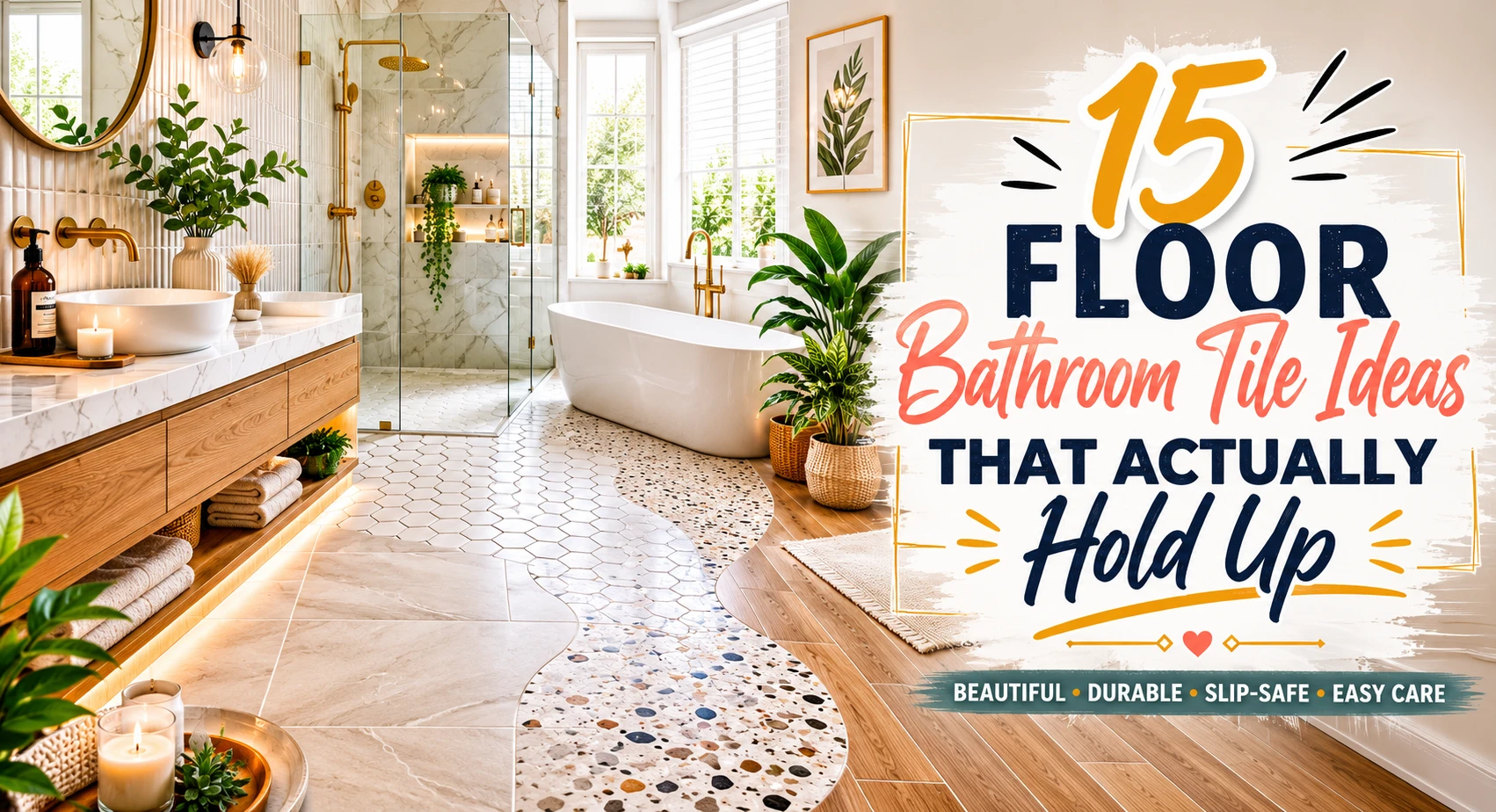
I redid my own bathroom floor twice, and while researching upgrades like Bathroom Vanity Ideas, I quickly realized how often design choices are made for appearance rather than daily function.
The first time, I picked a tile because it looked stunning in a showroom photo under perfect lighting. Within four months, the grout had gone gray, and the floor turned into a small skating rink every time someone showered.
The second time, I did it right. That’s really why I’m writing this.
If you’re sitting on fifty browser tabs of floor bathroom tile ideas right now, I get it. Pinterest makes everything look flawless under studio lighting. Real bathrooms have steam, wet feet, and the occasional toddler sprinting across the floor. So, here’s a list that accounts for that: fifteen ideas, what each one is genuinely good and bad at, and how to tell if it actually fits your space before you order a single box.
What Are Floor Bathroom Tile Ideas, exactly?
Floor bathroom tile ideas refer to the design styles, materials, patterns, and layouts used to cover a bathroom floor, such as porcelain, ceramic, mosaic, or natural stone, arranged in formats like herringbone, hexagon, or large-format slabs. The right idea balances look with water resistance and slip safety.
To pick the right floor tile for your bathroom, follow these steps:
- Measure your bathroom’s size and natural light.
- Check the tile’s PEI rating for floor durability.
- Confirm a wet DCOF of 0.42 or higher.
- Match grout color to your maintenance tolerance.
- Order a sample and test it barefoot, wet.
1. Large-Format Porcelain Slabs
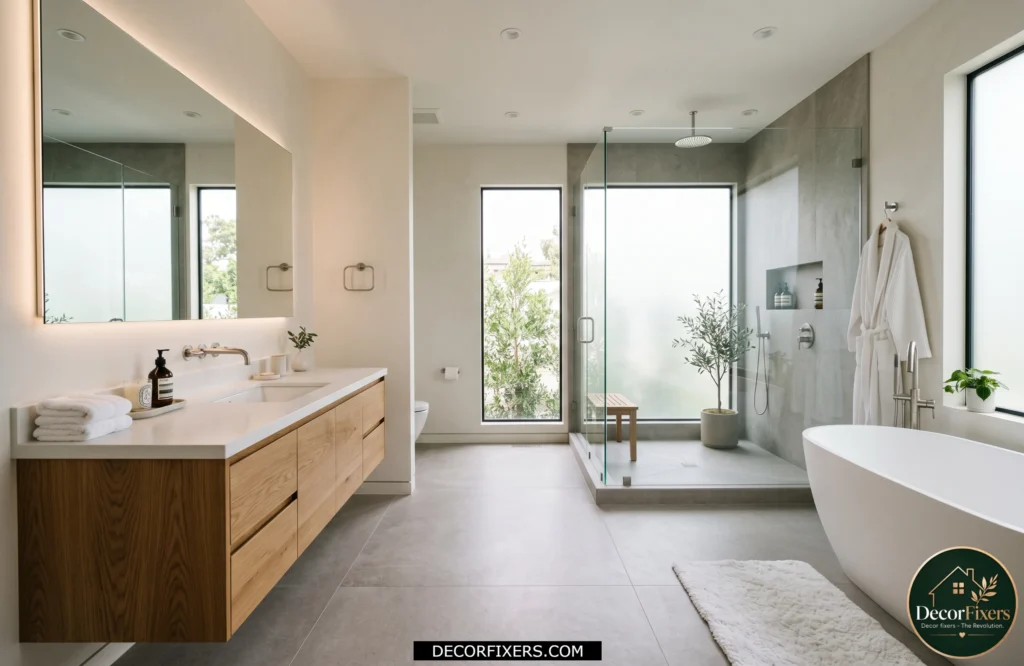
Large-format porcelain, think 24×48 inches or bigger, has become the default pick for modern bathrooms. Fewer grout lines mean less scrubbing and a floor that reads as one continuous surface, even in a tight footprint.
Go matte, not polished, and confirm a DCOF rating before installing near a shower.
Best for: open or mid-size bathrooms wanting a sleek, spa-like floor with minimal upkeep.
2. Matte Stone-Look Porcelain (Marble, Travertine, Calacatta Looks)
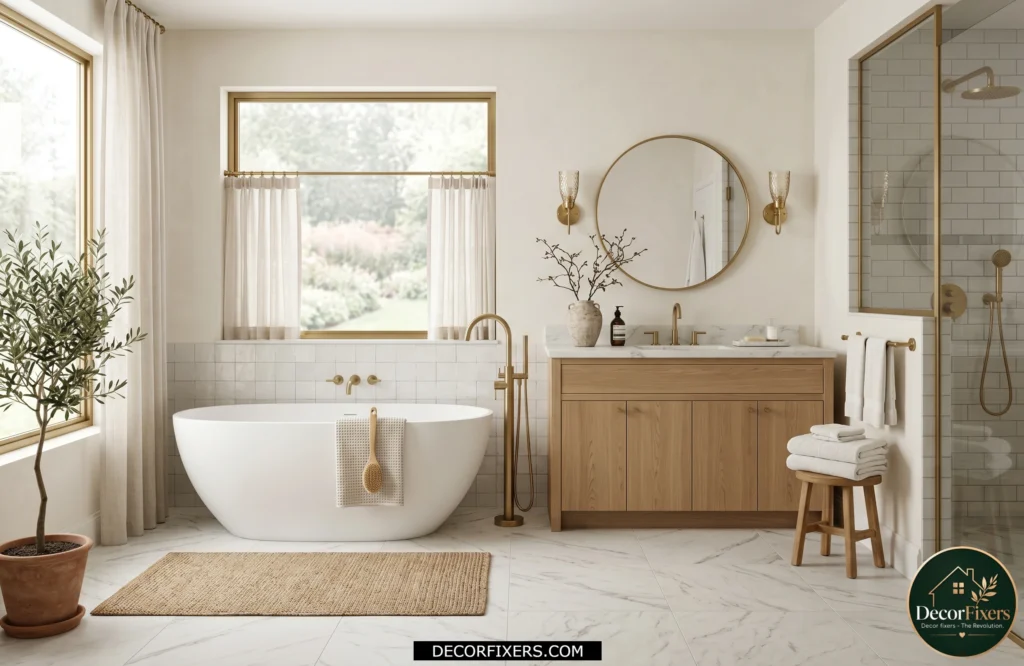
Real marble looks incredible until water gets into its pores and stains it. Stone-look porcelain solves that problem outright, with the same veining, none of the sealing headaches every six to twelve months.
A textured, matte finish on these tiles gives genuinely good grip underfoot.
Best for: anyone who wants a luxury look without committing to natural stone maintenance.
3. Classic Hexagon Tile
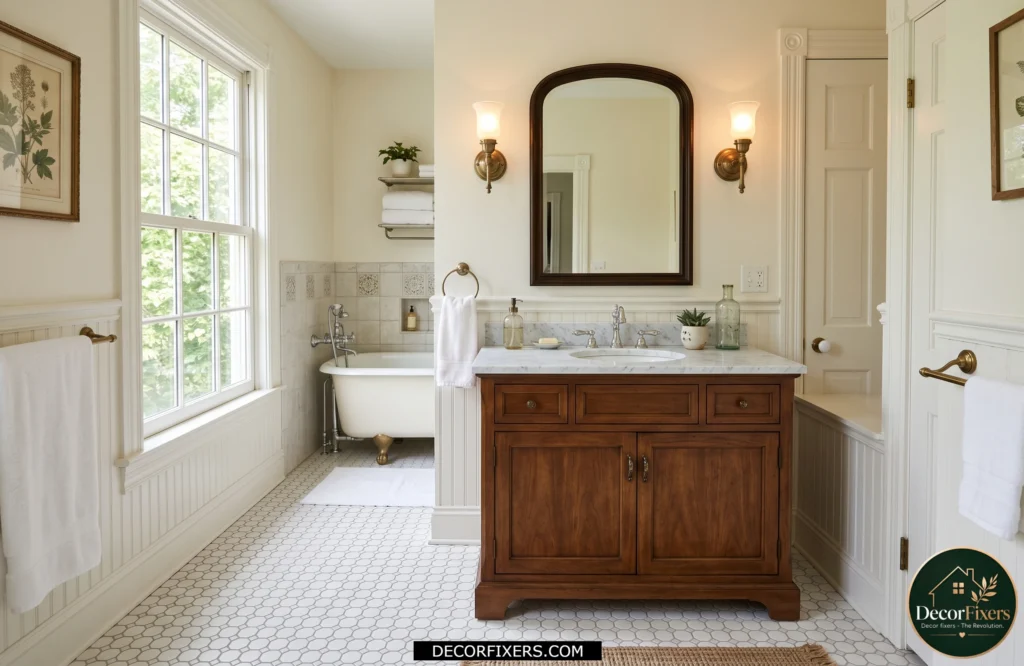
Hexagon floor tile has stuck around for a reason. It reads as classic and current at the same time, depending mostly on size, color, and grout choice.
Small hex, around 1 to 2 inches, suits vintage-style baths; larger hex feels more contemporary. Best for: powder rooms and secondary bathrooms where pattern can take center stage.
4. Herringbone Pattern Floor Tile
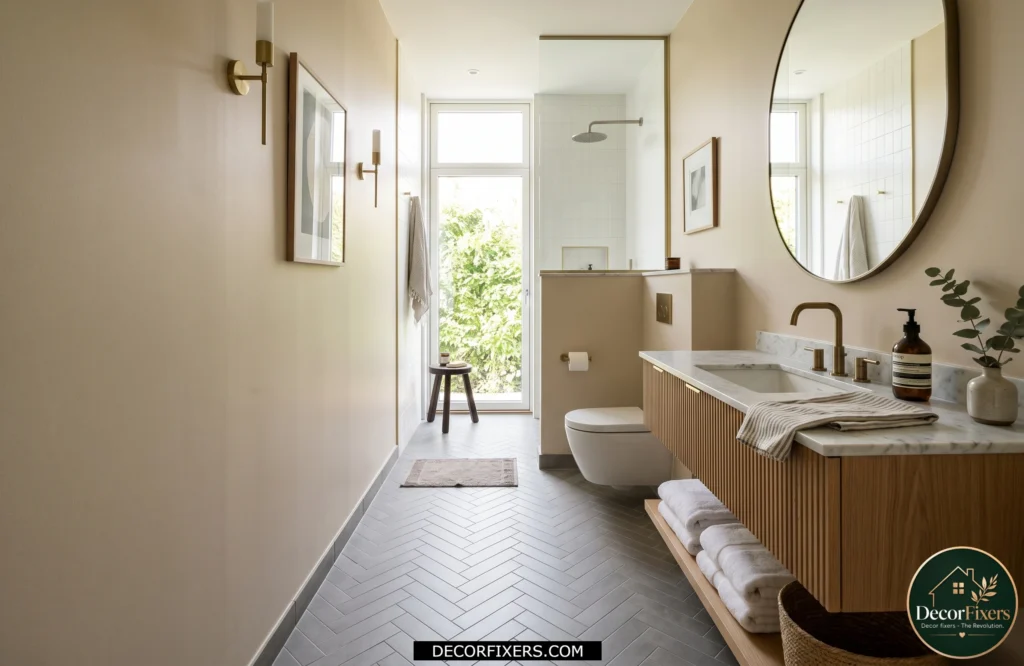
Herringbone turns a plain rectangular tile into a genuinely dynamic floor just by changing the layout, with no extra material cost, just a slightly more skilled installer.
It also visually elongates narrow bathrooms, which is useful in a lot of older homes.
Best for: narrow or galley-style bathrooms that need to feel longer than they are.
5. Penny Round Mosaic
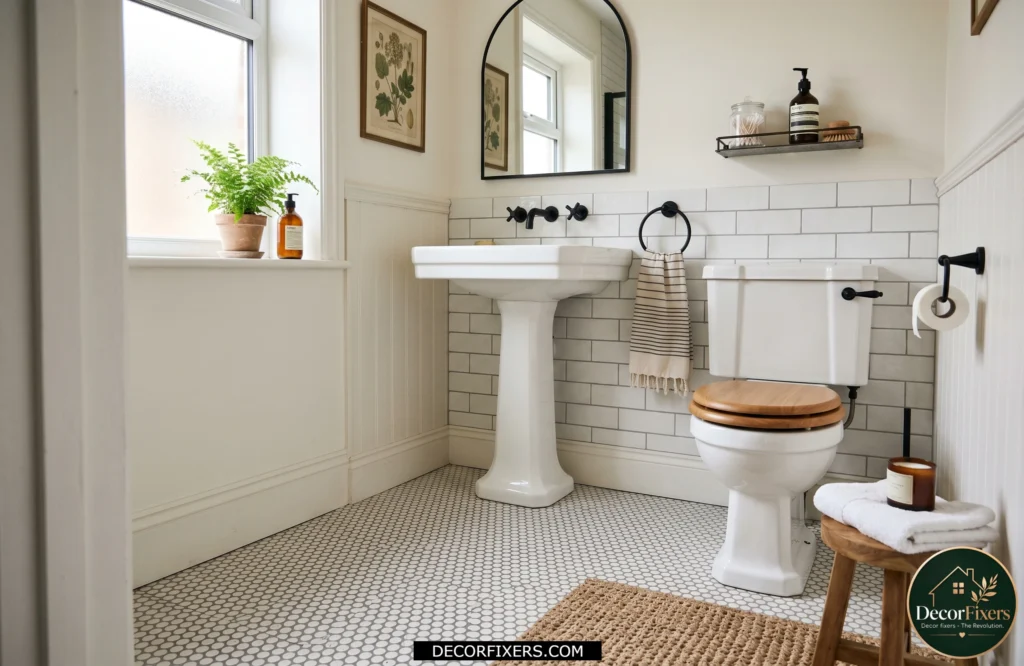
Penny rounds bring serious retro charm, and the sheer number of grout lines does something practical too: it adds traction exactly where bare feet need it most.
They’re labor-intensive to install, so budget a little extra for the installer’s time.
Best for: small bathrooms or shower floors where safety matters as much as style.
6. Wood-Look Porcelain Planks
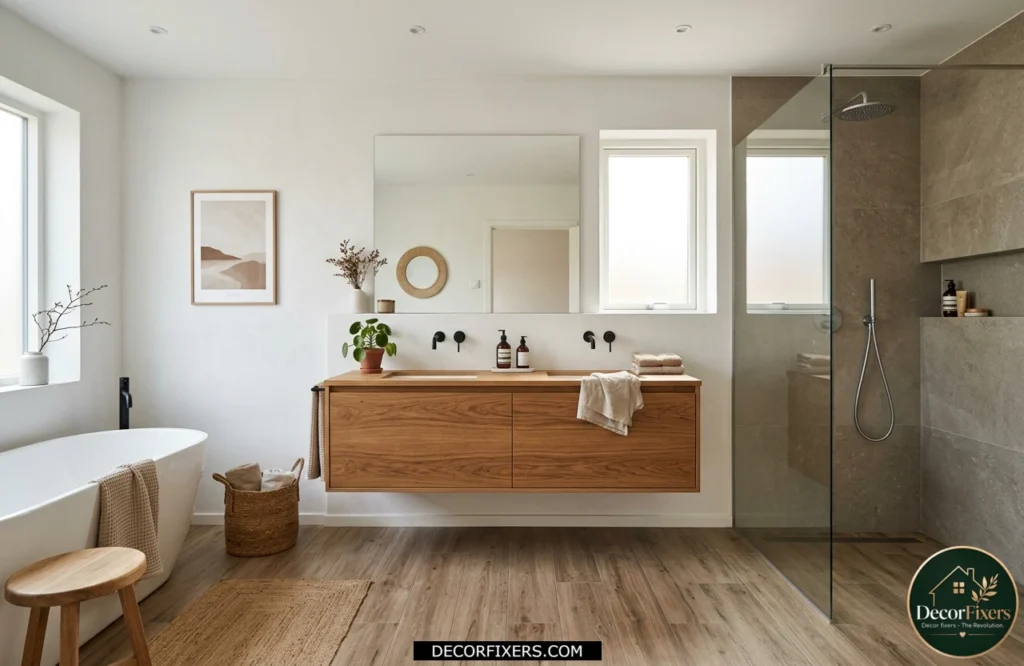
Real hardwood and bathrooms don’t mix, but wood-look porcelain plank tile gives you the warmth without the warping, cupping, or water damage hardwood eventually suffers.
Choose a rectified edge and an R10 or R11 textured finish for safer footing.
Best for: homeowners chasing a spa or Scandinavian look in a wet room.
7. Checkerboard Black-and-White Tile
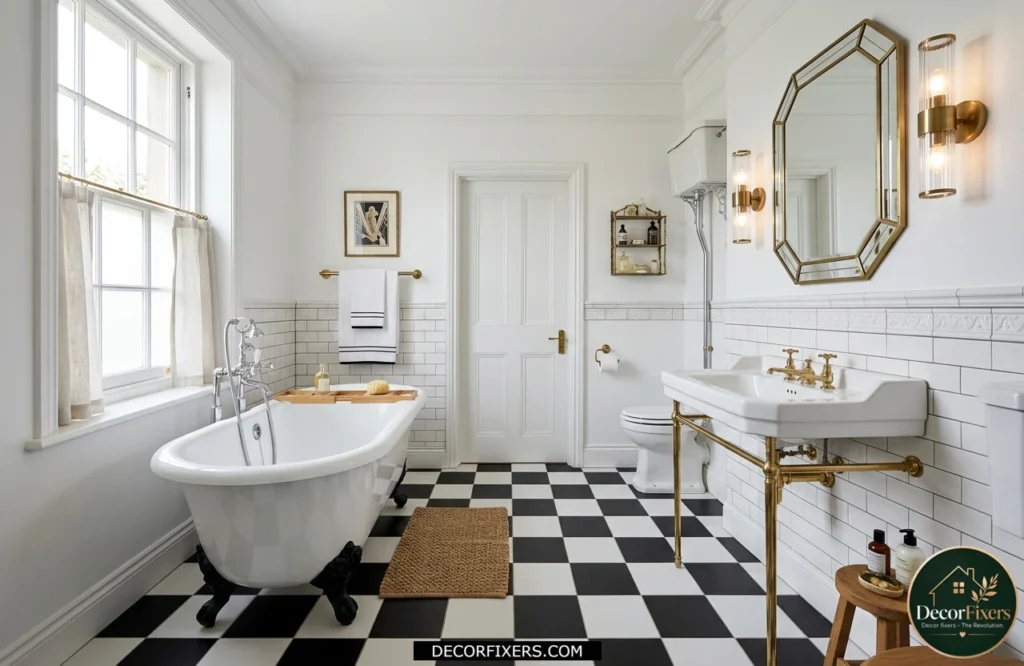
Checkerboard floors are having a real moment again in 2026, and I’ll admit I never stopped liking them. They’re bold without trying too hard.
Keep the rest of the room simple, because this floor wants to be the statement.
Best for: vintage-inspired or art deco bathroom designs with white fixtures.
8. Zellige-Style Handmade Tile
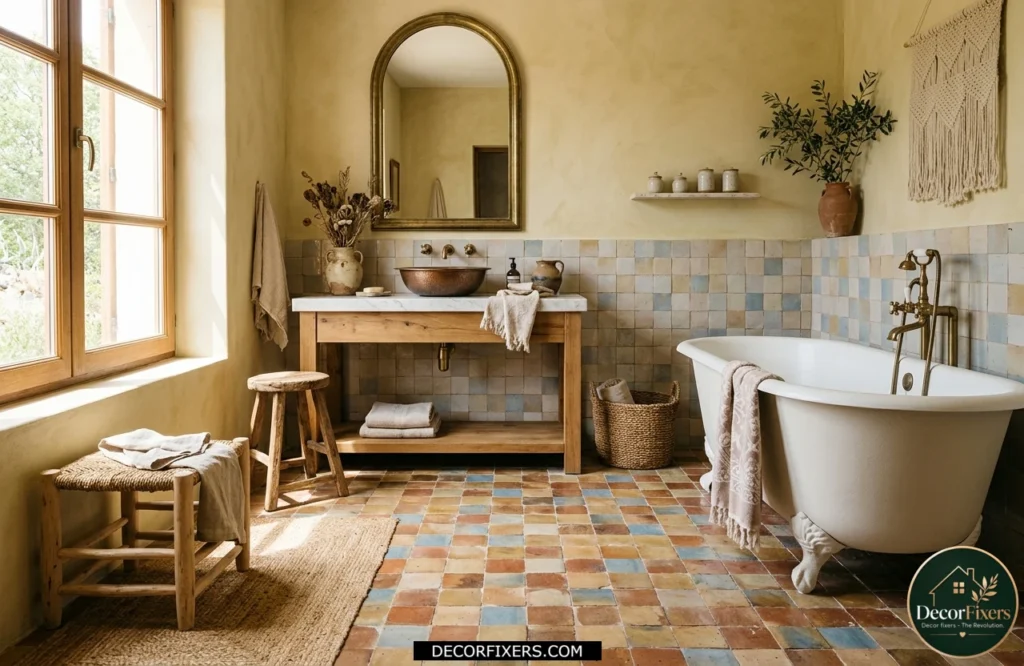
Zellige tile brings an irregular, hand-glazed texture that machine-made porcelain can’t quite fake. Every single tile genuinely looks a little different from the next.
It needs sealing and isn’t the most forgiving choice for floors prone to standing water.
Best for: powder rooms or low-traffic baths where character matters more than practicality.
9. Terrazzo-Look Porcelain
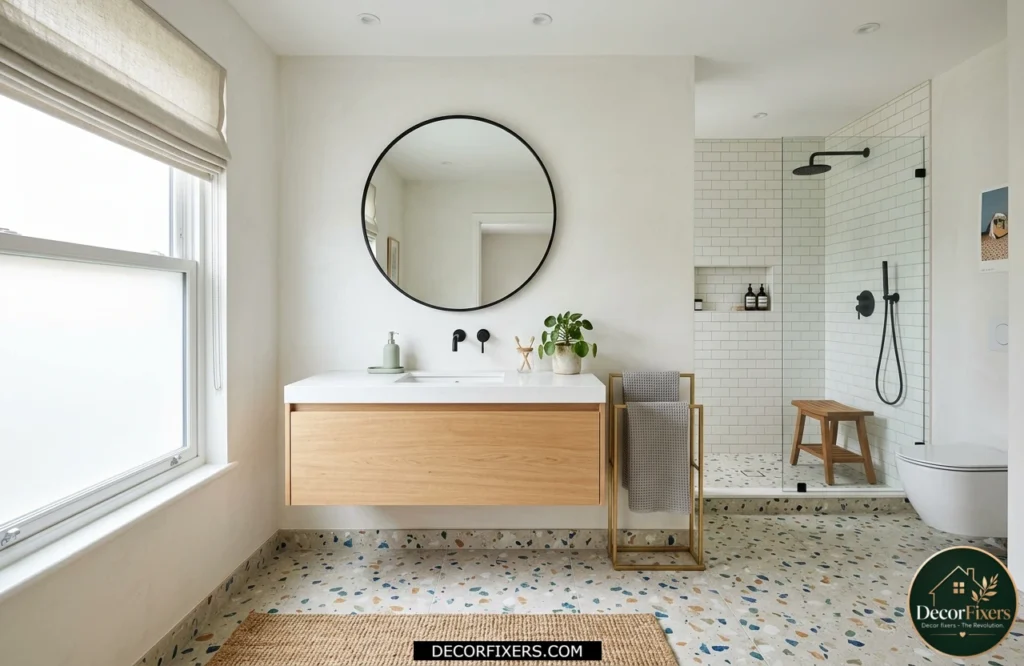
Terrazzo went from 1970s school hallway to design-magazine darling, and the porcelain version gives you that speckled look without the cost of poured terrazzo.
It hides water spots better than a plain solid color does, which is a quiet but real win.
Best for: playful, colorful bathrooms that still need an easy-clean floor.
10. Textured 3D and Fluted Floor Tile
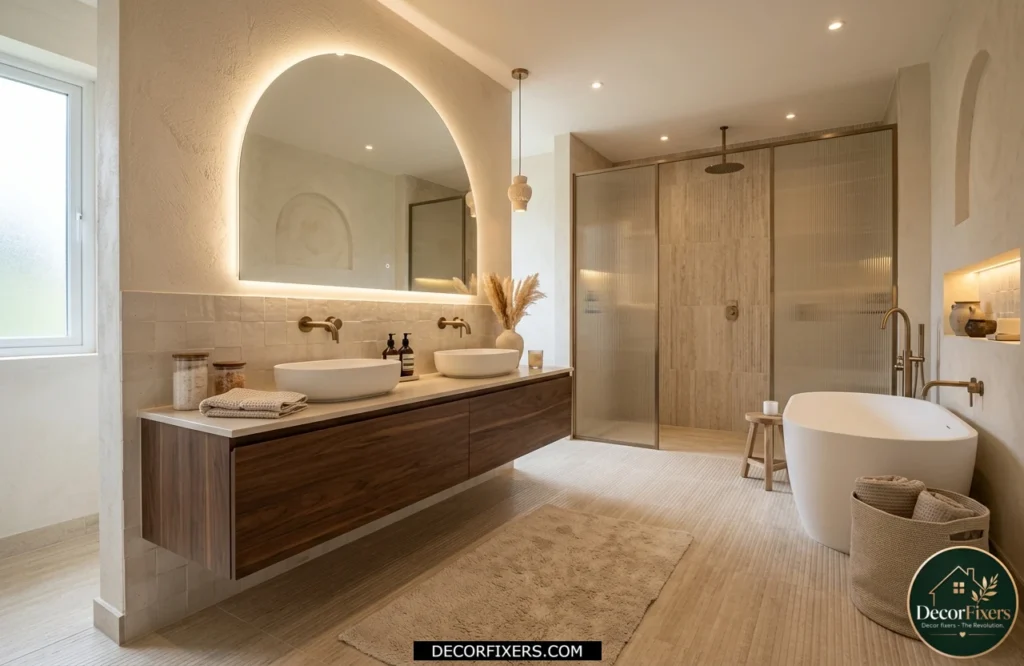
Most fluted and ridged tile shows up on walls, but a subtler textured floor tile is starting to appear in 2026 bathrooms for both grip and visual depth.
Keep the texture shallow on floors so it doesn’t trap soap scum over time.
Best for: bathrooms that want tactile interest without going fully patterned.
11. Small Mosaic Tile for Tight or Curved Spaces
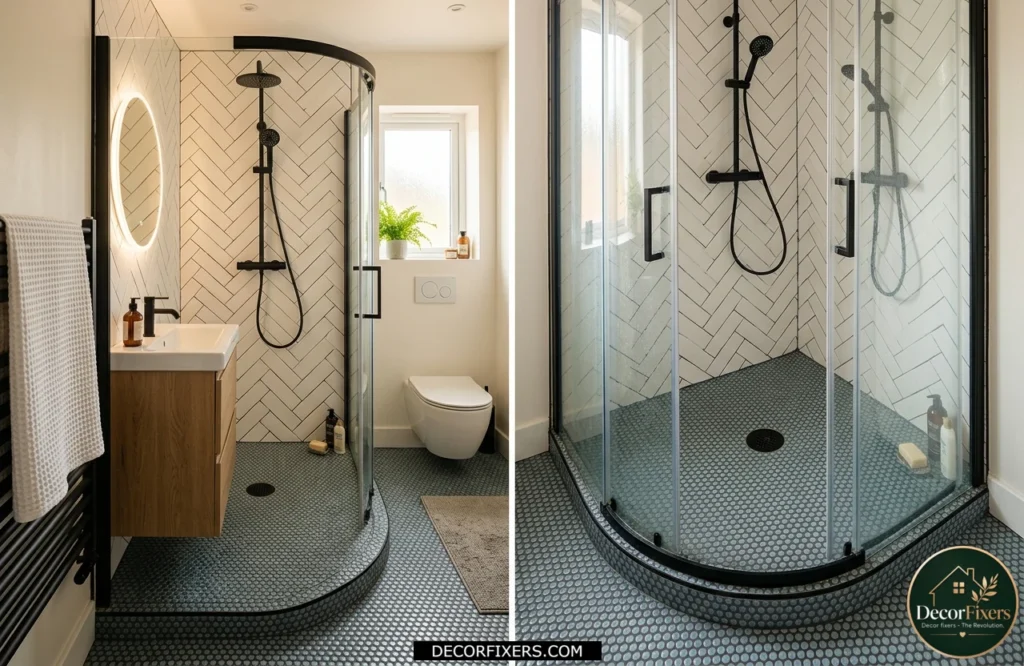
Tiny mosaic tile, whether glass, porcelain, or stone, is still the easiest way to tile around a curved shower pan or an oddly narrow footprint.
More grout lines mean more grip, which matters most exactly where the floor slopes toward a drain.
Best for: shower floors and oddly shaped bathrooms that standard tile can’t cover.
12. Vintage Encaustic-Pattern Tile
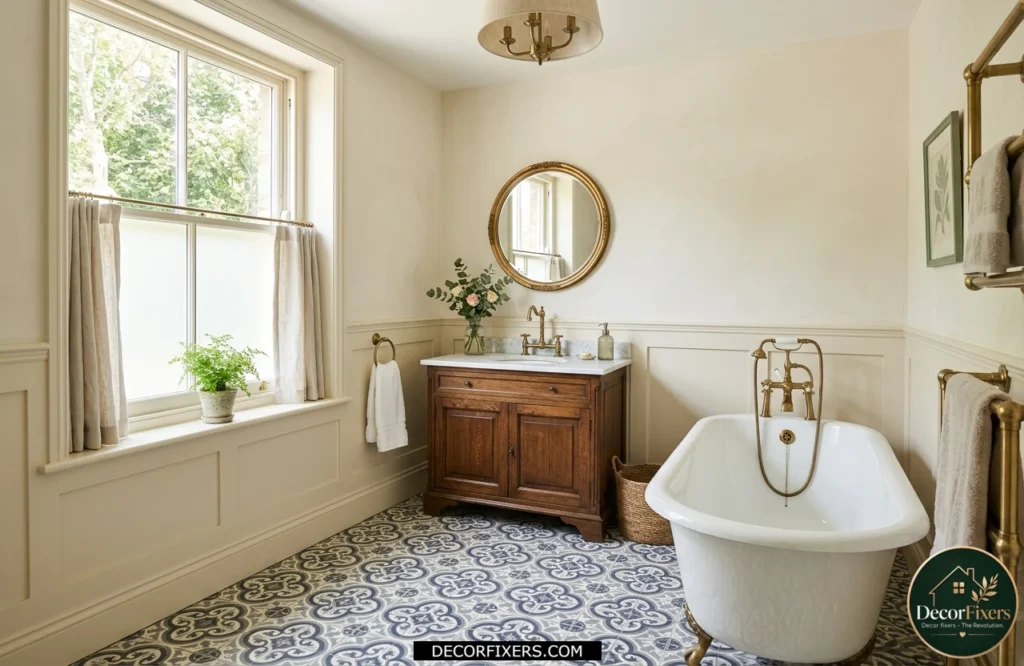
Encaustic-style tile, the kind with a pattern inlaid right into the surface rather than printed on top, adds personality that a plain decal-style tile never quite matches.
It works best as a floor feature in a bathroom with otherwise quiet, neutral walls.
Best for: powder rooms or guest baths that can handle a bolder personality.
13. Warm Earth-Tone Tile (Terracotta, Clay, Sage)
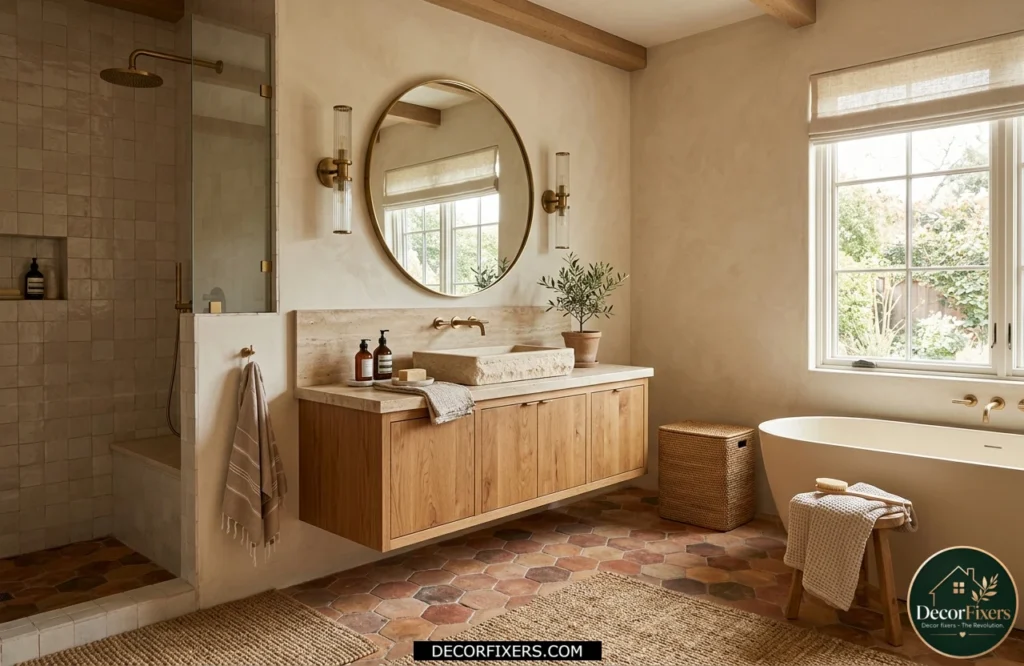
Cool gray bathrooms are fading, and warm earth tones, like terracotta, clay, and muted sage, are taking over 2026 floor tile palettes instead.
These tones pair naturally with wood vanities and brass fixtures for a softer, lived-in feel.
Best for: anyone tired of the all-gray, all-white bathroom look.
14. Continuous Floor-to-Shower “Drenched” Tile
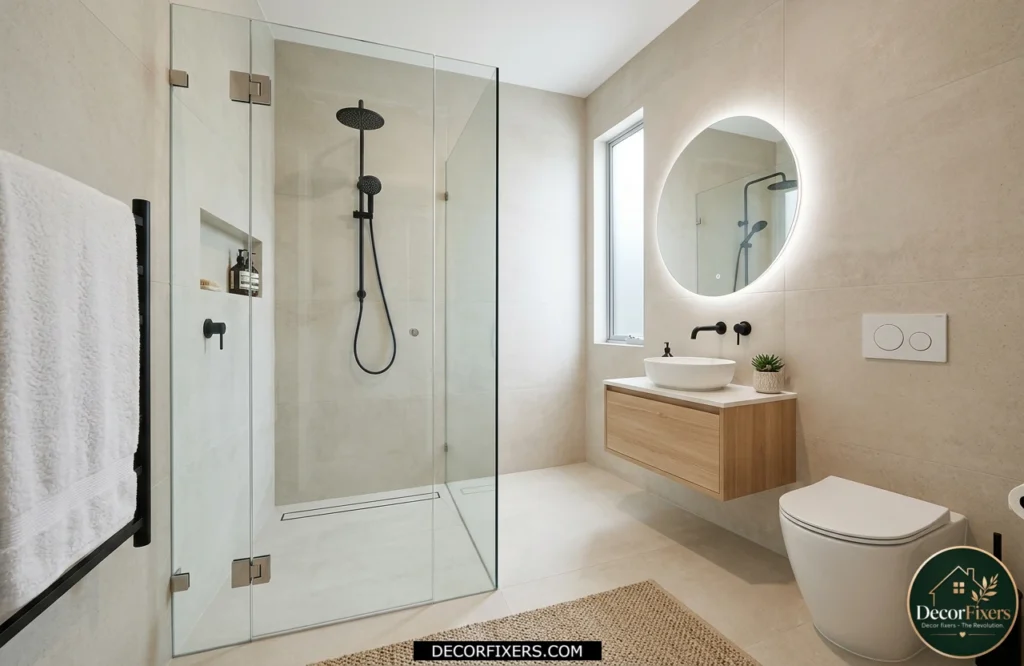
Running the same tile from the floor up the shower wall, sometimes called tile drenching, removes visual breaks and makes a small bathroom feel noticeably bigger.
It also simplifies waterproofing, since there’s just one continuous material to seal properly.
Best for: small or oddly shaped bathrooms that need to feel more spacious.
15. Budget-Friendly Ceramic in a Brick-Lay Pattern
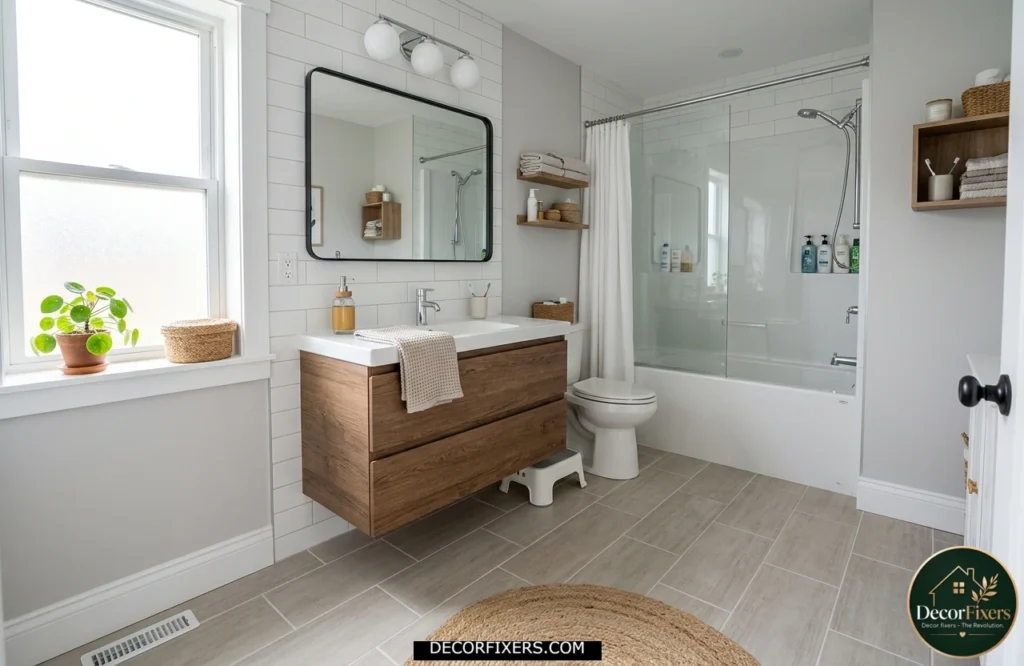
Not every bathroom needs a fifteen-dollar-per-square-foot tile. Ceramic tile laid in a simple offset brick pattern still looks intentional, not cheap, when the grout is sharp. It typically runs $3 to $8 per square foot installed, well below porcelain or natural stone.
Best for: rental bathrooms, guest baths, or anyone working with a tight budget.
This option is also a practical starting point for homeowners exploring Cheap Bathroom Remodel Ideas, where cost control matters as much as visual improvement.
Quick Comparison: Floor Tile Materials at a Glance
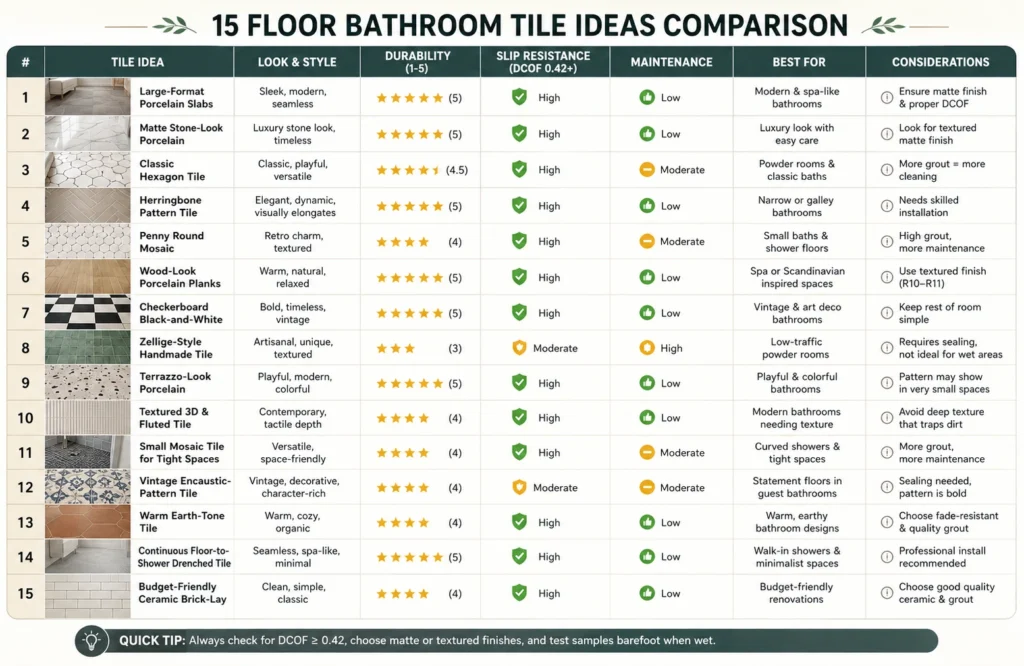
Porcelain vs ceramic floor tile: porcelain suits high-moisture, high-traffic bathrooms because of its low water absorption. Ceramic works better when budget matters more than density. The key difference is porcelain’s tighter, less porous body, which holds up longer underfoot and resists staining better over time.
Which bathroom floor tile lasts longest is a common question, and porcelain usually wins. Industry water-absorption standards put porcelain under 0.5% moisture absorption compared to ceramic’s higher range, which means fewer hairline cracks and less staining over a decade of daily showers, splashes, and cleaning.
| Option | Best For | Key Benefit | Limitation |
| Porcelain | High-moisture, high-traffic bathrooms | Very low water absorption, dense and durable | Pricier than ceramic; needs a flat substrate |
| Ceramic | Budget remodels, low-traffic baths | Affordable, huge style and color range | More porous; less ideal for heavy daily use |
| Natural stone | Luxury, spa-style bathrooms | Unique veining, genuinely premium feel | Needs sealing every 6-12 months |
| Glass/mosaic | Shower floors, curved or tiny spaces | Extra grout lines add real traction | More grout to clean; higher install labor |
| Terrazzo-look porcelain | Playful, colorful family bathrooms | Hides water spots, easy to maintain | A bold pattern can clash with busy decor |
Look, if you’re renovating on a deadline and can’t sample five different tiles, here’s what actually works: go matte porcelain, large-format, neutral grout. It’s not an exciting answer. It’s just the safest default for almost any bathroom.
Not every idea here will suit your bathroom. That’s fine.
I didn’t know what DCOF meant either until my second remodel, and I’m honestly not sure most showroom staff do. I’ll say it plainly: glossy tile on a bathroom floor is rarely worth it, even though it photographs better, because the slip risk outweighs the extra shine for most households.
I’ve seen conflicting advice on whether textured tile is harder to clean. Some installers say yes; others say the difference is negligible once the grout is sealed properly. My read, after living with both: it depends more on grout width than texture itself.
Most people assume a bigger bathroom needs bigger tile. The data, and most installers I’ve talked to, say otherwise: Large-format tile actually does more for a small bathroom’s sense of space than it does for a large one.
What most guides skip is that slip rating matters more than material category. A “safe” material like ceramic can still be dangerous in a glossy finish, and a “risky” material like natural stone can be perfectly safe, honed and sealed correctly.
Some designers argue you should always match floor and wall tile for a seamless look. That’s valid for small, low-light bathrooms. But if you have a larger space with decent natural light, contrasting floor and wall tile can add real depth instead of flattening the room.
Or maybe I should say it this way: matching is the safe choice, contrasting is the interesting one. Pick based on how much risk your design budget can handle.
This guide covers design styles and material basics for floor bathroom tile ideas, not full installation costs or how to vet a contractor. That’s a separate decision, and an important one.
CONCLUSION:
My second bathroom floor has held up for three years now. No cracked grout, no slip scares, nothing dramatic, which, honestly, is the whole point of getting this right.
The tile that looks best in your bathroom is the one you stop thinking about once it’s down. Pick for your light, your foot traffic, and your real patience for upkeep first. The style part, it turns out, is the easy half.
FAQs:
Q: What’s the best floor tile for a small bathroom?
A: Large-format matte porcelain in a light, neutral tone, paired with tight grout lines, generally makes small bathrooms feel bigger.
Q: How do I know if a tile is non-slip?
A: Ask for its wet DCOF rating. A value of 0.42 or higher under ANSI A137.1 is the standard baseline for floors walked on wet.
Q: Should I match my floor tile to my wall tile?
A: Not always. Matching works best in small or dim bathrooms, while contrasting tile can add depth in larger, well-lit spaces.
Q: Why does porcelain cost more than ceramic?
A: Porcelain is denser and fired at higher temperatures, which gives it lower water absorption and better long-term durability than ceramic.
Q: When should I avoid glossy floor tile?
A: Avoid it anywhere water regularly hits the floor, including showers, tub surrounds, and bathrooms used daily by kids or older adults.
Creator of DecorFixers, sharing practical home and interior ideas focused on real-life usability, simple design improvements, and budget-friendly solutions.