
I redid my own bathroom eighteen months ago, and the tile decision nearly broke me. Not because the options were ugly, but the opposite problem. Every tile I pinned looked perfect in someone else’s 120-square-foot spa bathroom and completely wrong in my 35-square-foot box of a guest bath. I’d already burned two weekends scrolling Pinterest boards that contradicted each other and three “tile trends” articles that were just the same Tile Shop photos with different captions.
So, here’s what this guide does differently. Fifteen tile ideas, yes, but every single one is tagged with the bathroom size it actually fits, the price range you’ll really pay installed, and whether it’s a weekend DIY job or a “call a tile setter” job. No idea, here is just pretty. Each one earned its spot because it solves a specific problem real bathrooms have.
| Bathroom tile ideas, defined Bathroom tile ideas refer to the design choices , material, pattern, color, and layout , used to cover bathroom walls, floors, and showers in a way that is both decorative and water-resistant. The right idea depends heavily on room size, moisture exposure, and budget. |
Quick note: I’m going to group these by where they work best, not just by how they look. That’s the part most lists skip.
1. Large-Format Porcelain Tile for Small Bathroom Floors
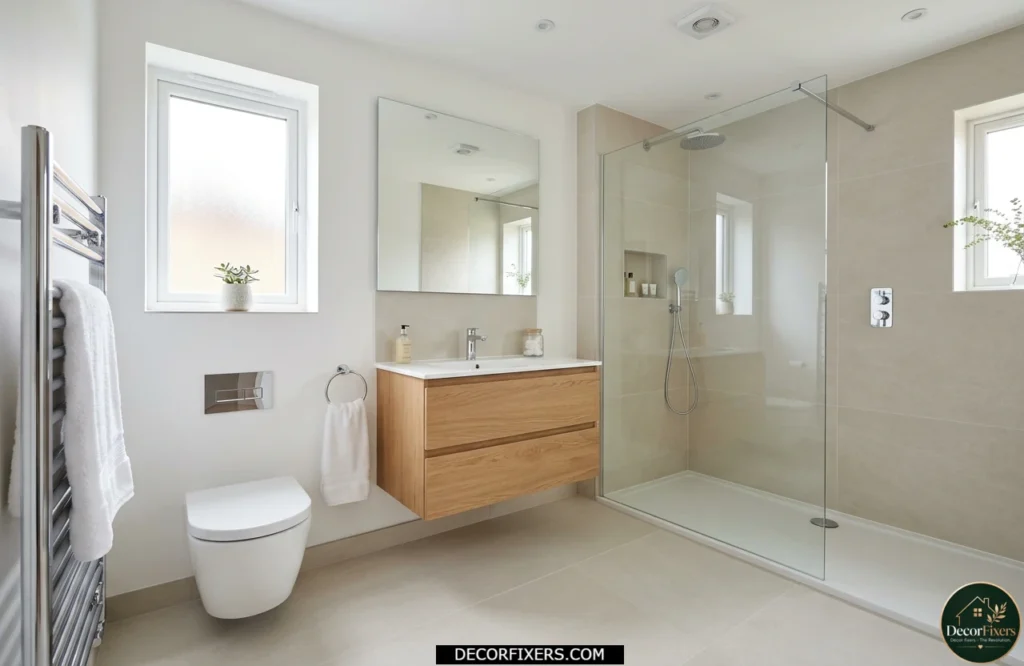
Large-format porcelain is the single best small bathroom tile idea on this list, and it’s not close. Fewer grout lines mean fewer visual breaks, which tricks the eye into reading the floor as one continuous surface.
Expect to pay $8 to $25 per square foot for the material alone. Installed cost climbs fast because large tiles need a dead-flat subfloor; budget $10 to $15 per square foot just for labor on a small bathroom, since setters can’t rush this part.
2. Vertical Subway Tile Stacks to Raise a Low Ceiling
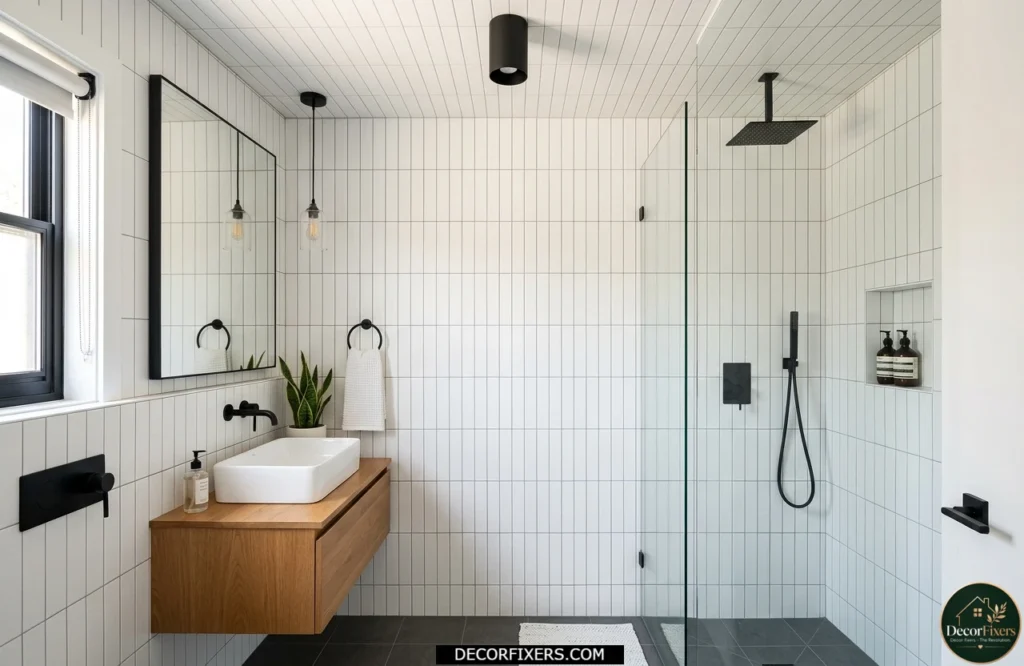
Stacking subway tile vertically instead of in the usual brick-lay pattern pulls the eye upward. It’s a cheap trick. It works almost every time.
If you are planning a complete renovation rather than simply updating the tile, it helps to think about how flooring choices interact with the rest of the space. Large-format porcelain can visually expand a small room, but its impact becomes even stronger when paired with a cohesive layout, modern fixtures, and efficient storage.
Homeowners looking for a full transformation should explore our Bathroom Remodel guide, which covers planning considerations, budgeting strategies, layout improvements, and design decisions that can help maximise both daily comfort and long-term property value. Combining the right tile with a thoughtful renovation plan often creates a more balanced and visually appealing bathroom than focusing on surface finishes alone.
This is one of the most budget-friendly bathroom tile ideas around. Standard ceramic subway tile runs $1 to $3 per square foot, and most DIYers with patience can tackle a shower surround in a weekend. Just keep your grout lines tight and consistent, or the vertical effect falls apart visually.
3. Zellie Accent Wall Behind a Compact Vanity
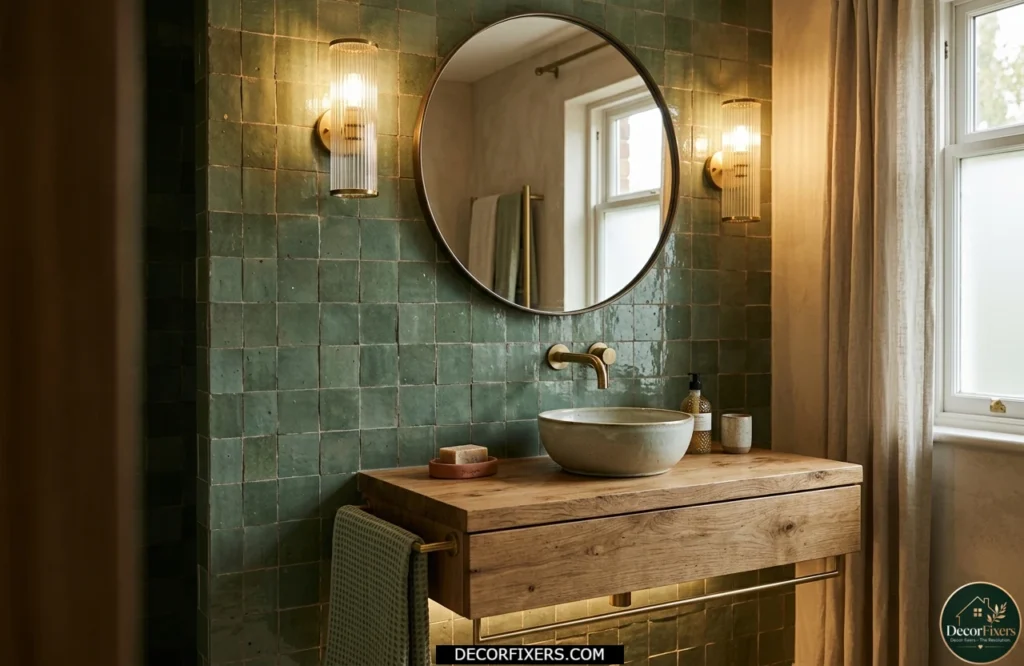
Zellie tile is hand-glazed in Morocco, and no two pieces match exactly. That irregularity is the entire point; it adds warmth that flat, machine-made tile simply cannot fake.
The Tile Shop’s Zellie collections run roughly $15 to $30 per square foot, which sounds steep until you realize a vanity backsplash only needs a few square feet. Use it as a small accent rather than a full wall in a tight bathroom, since the irregular surface can feel busy at full scale.
4. Two-Tone Tile with a Contrast Border for Visual Zoning
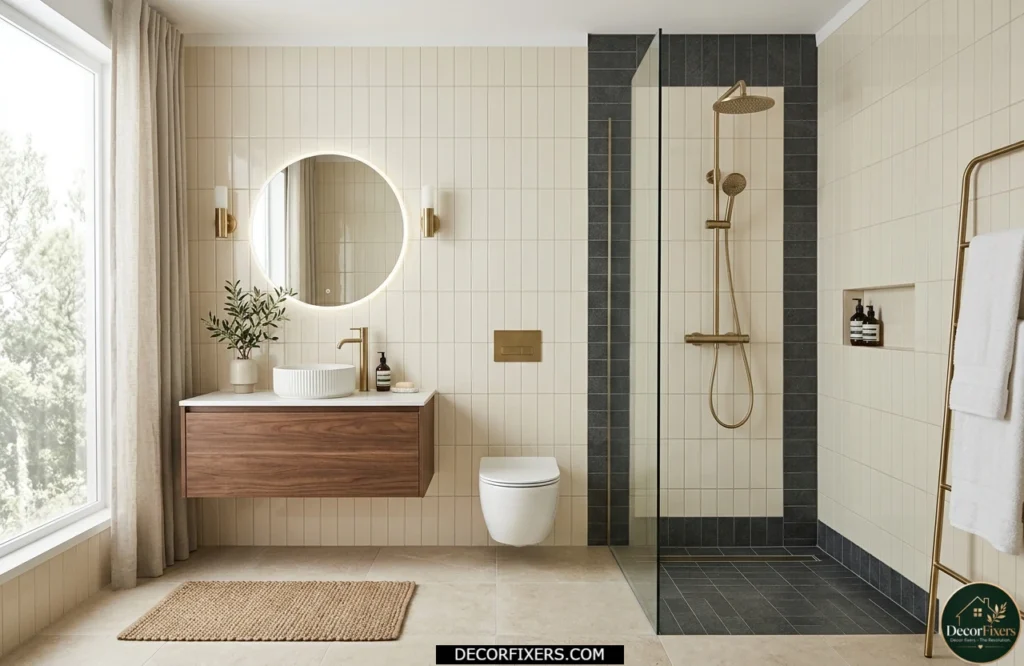
Pairing a calm field tile with a bolder inset is a designer trick for making one small room feel like it has distinct “zones,” even without walls.
Practically, this means tiling the shower floor or a tub surround border in a contrasting color or finish from the rest of the room. Material cost barely changes; you’re using less of the expensive tile and more of the cheap one, but the visual payoff is large.
What are the best bathroom tile ideas for 2026?
The strongest bathroom tile ideas for 2026 combine large-format porcelain on the floor with a textured or Zellie accent in the shower. According to The Tile Shop’s 2026 inspiration report, large-format tile up to 48 inches reduces grout lines and makes small bathrooms feel noticeably bigger. Pairing it with one bold accent, not the whole room, keeps the look current without dating fast.
5. Fluted Three-Dimensional Tile for Shower Accent Walls
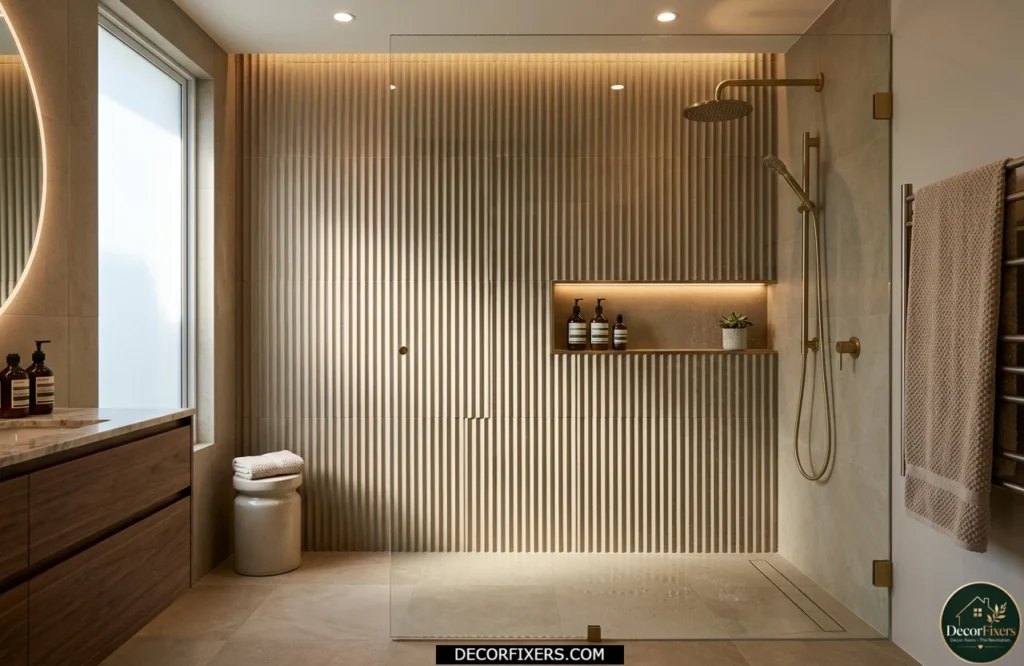
Fluted tile has raised ridges that catch light differently depending on where you stand. It’s having a real moment heading into 2026, and it photographs beautifully, but more importantly, it feels genuinely different to the touch, which matters in a room you use with wet hands every day.
Here’s the thing: fluted tile is not a beginner DIY project. The raised texture makes cutting and aligning tricky, especially around plumbing fixtures, so this is squarely in “hire a tile setter” territory. Expect $12 to $28 per square foot in material plus a 15 to 25% over flat tile for the extra cutting time.
6. Floor-to-Ceiling Tile Drenching for a Spa Feel
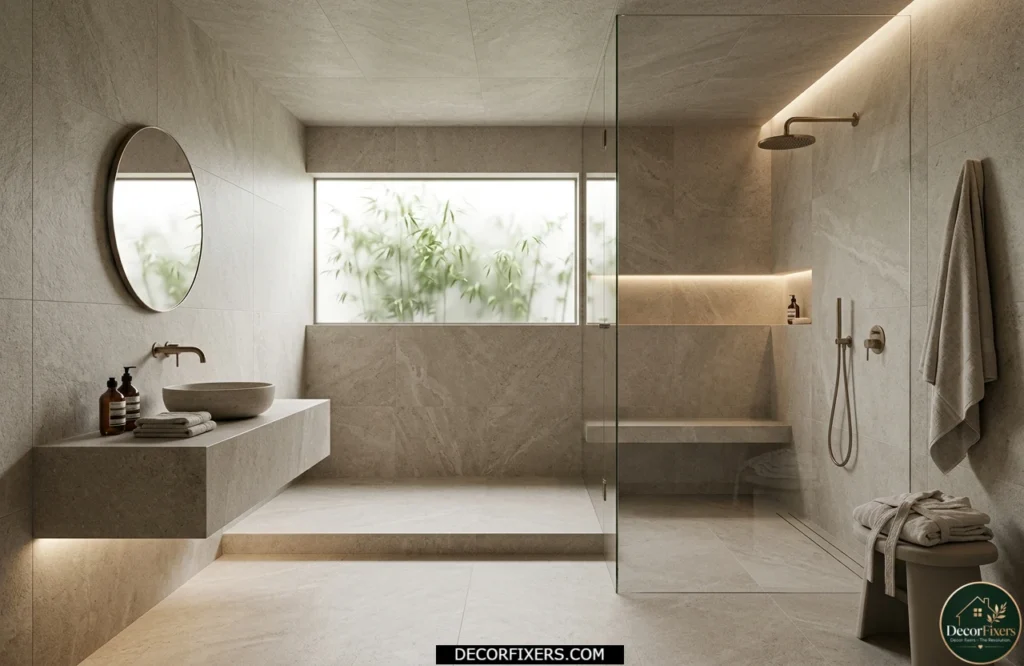
Tile drenching means running one material from the shower floor up the walls and across the ceiling without a break. Clé Tile and other designer brands have pushed this hard for 2026, and it does deliver; the seamless look genuinely reads as more luxurious.
It is also the most expensive idea on this list by square footage, simply because you’re tiling more surface area than a typical shower-only job. A waterproofing system like a membrane is non-negotiable here; drenched ceilings trap moisture differently than walls, and skipping the membrane is how mold problems start two years later.
7. Built-In Niche with Mosaic Tile Detailing
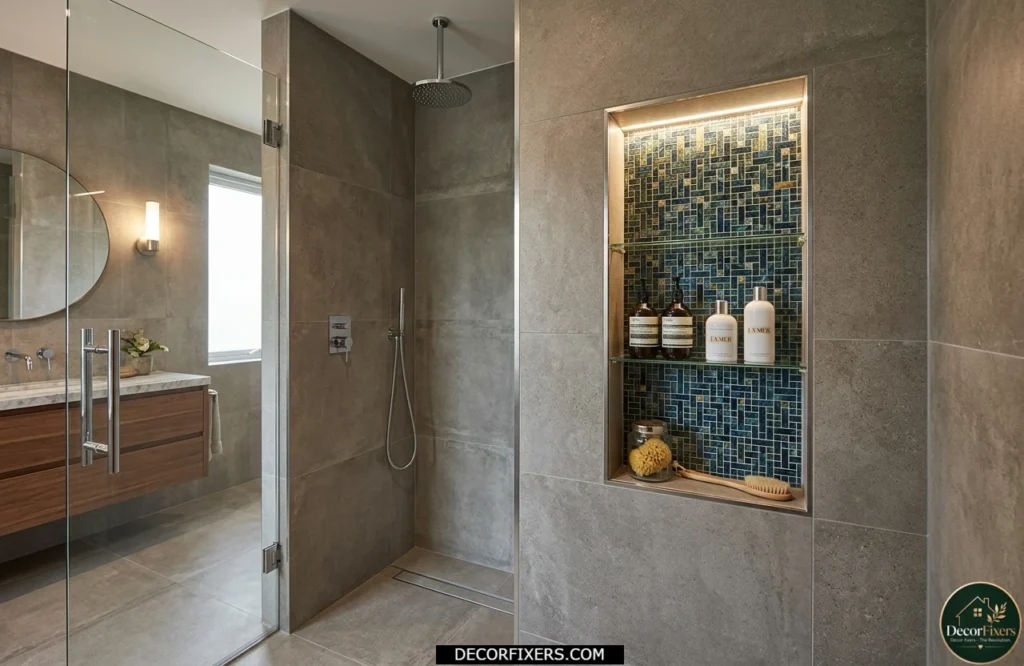
A recessed shower niche for shampoo bottles isn’t just storage anymore; it’s become a design feature in its own right, often finished with a contrasting mosaic that turns it into a focal point rather than an afterthought.
Adding a niche during a shower remodel costs $200 to $500, which is genuinely one of the better dollar-for-dollar upgrades you can make. I’d push back gently on the idea that this is purely cosmetic; buyers and inspectors increasingly expect a niche, and a shower without one can read as unfinished, even when nothing is actually wrong with it.
A shower niche may seem like a small upgrade, yet practical details often have the greatest effect on how a bathroom functions every day. Storage, organisation, and convenience can significantly improve the overall user experience, particularly in family bathrooms or shared spaces.
Once your tile selection is complete, it is worth evaluating the finishing elements that support daily routines. Our Bathroom Accessories guide explores storage solutions, organisers, dispensers, towel options, and decorative additions that complement modern tile designs while helping the room feel more polished and functional. Thoughtfully selected accessories can elevate even a modest bathroom without requiring a major renovation budget.
8. Curved or Scalloped Tile Edges for a Softer Shower Line
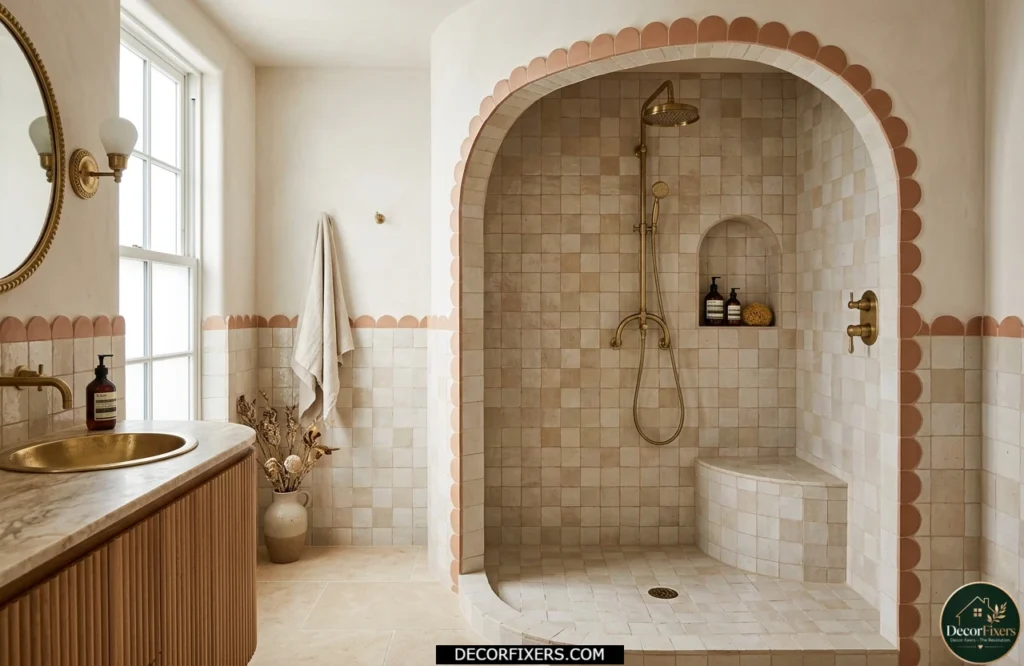
Sharp 90-degree tile transitions can feel cold in a small wet room. Curved bullnose or scalloped edge tiles soften that line, particularly where a shower curb meets the floor.
This is a refinement, not a full redesign; you’re typically only replacing trim and edge pieces, which keeps the cost modest at $300 to $800 for a standard shower. It pairs especially well with the Zellie idea above, since both styles share that handmade, slightly imperfect character.
9. Earth-Toned Tile in Terracotta, Clay, and Muted Green
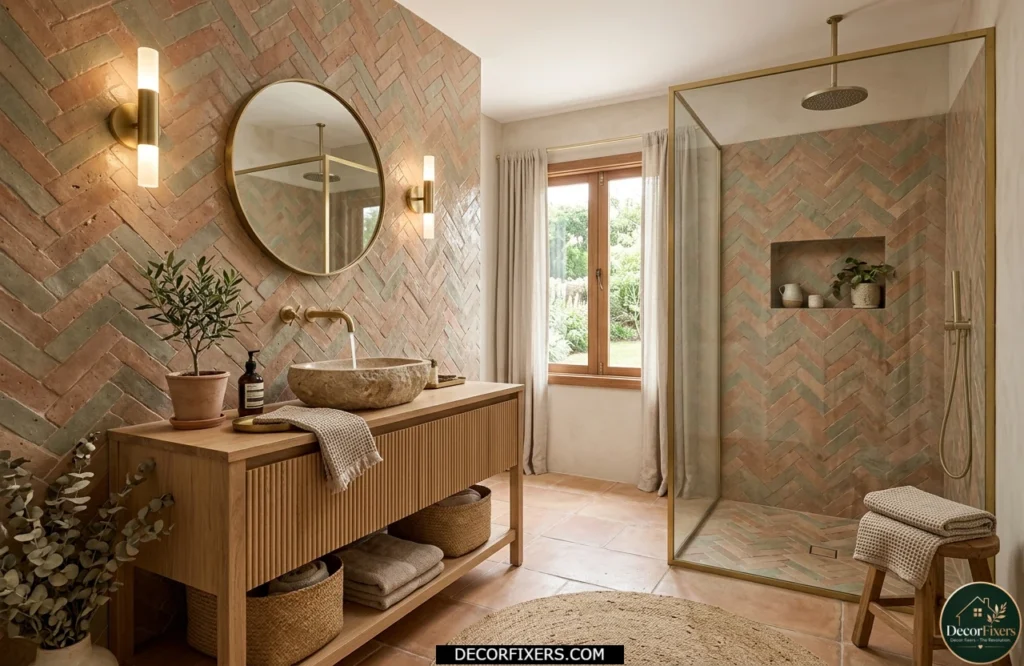
Cool grey bathrooms are losing ground to warmer, earth-inspired palettes. Soft terracotta, clay, and muted sage green are the colors in 2026 design coverage, and they pair naturally with brushed brass or matte black fixtures.
10. Saturated Color Drenching in a Single Bold Hue
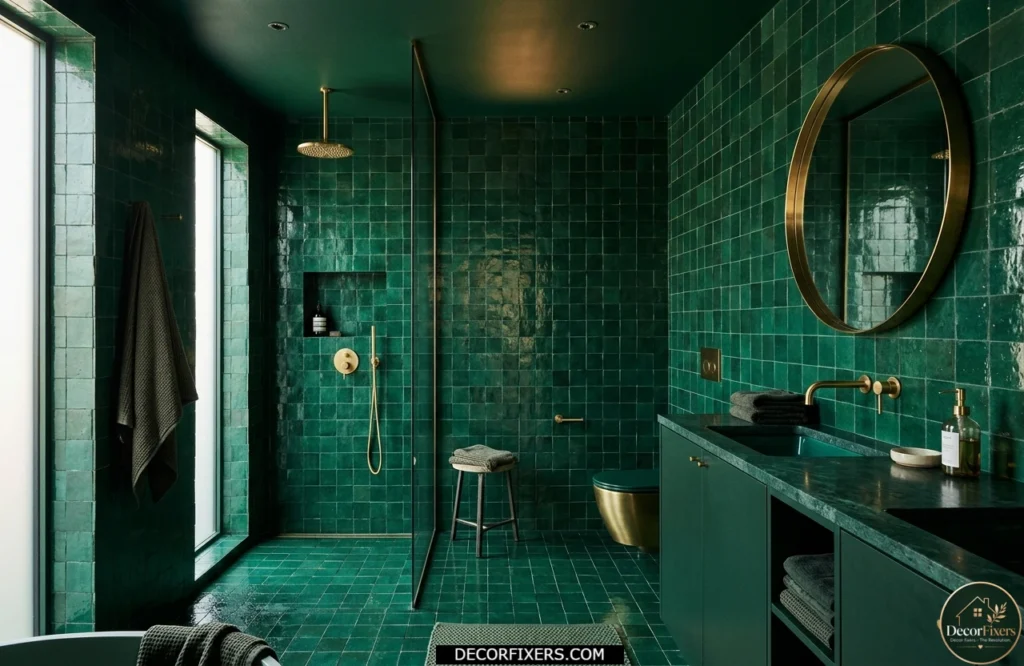
Color drenching takes the same “one material, head to toe” idea from tile drenching and applies it to a single saturated color instead of a single material. Think a deep emerald or garnet bathroom where the tile, not the paint, carries the whole color story.
Fireclay Tile’s design team has been particularly vocal about this trend, describing the shift toward richer, more saturated colors like deep greens and warm ochres as a way to add genuine personality back into bathroom design. This works best when you let the tile be the only loud element in the room, keep the vanity, mirror, and hardware understated so the color doesn’t compete with itself.
11. Modern Checkerboard in Non-Traditional Colors
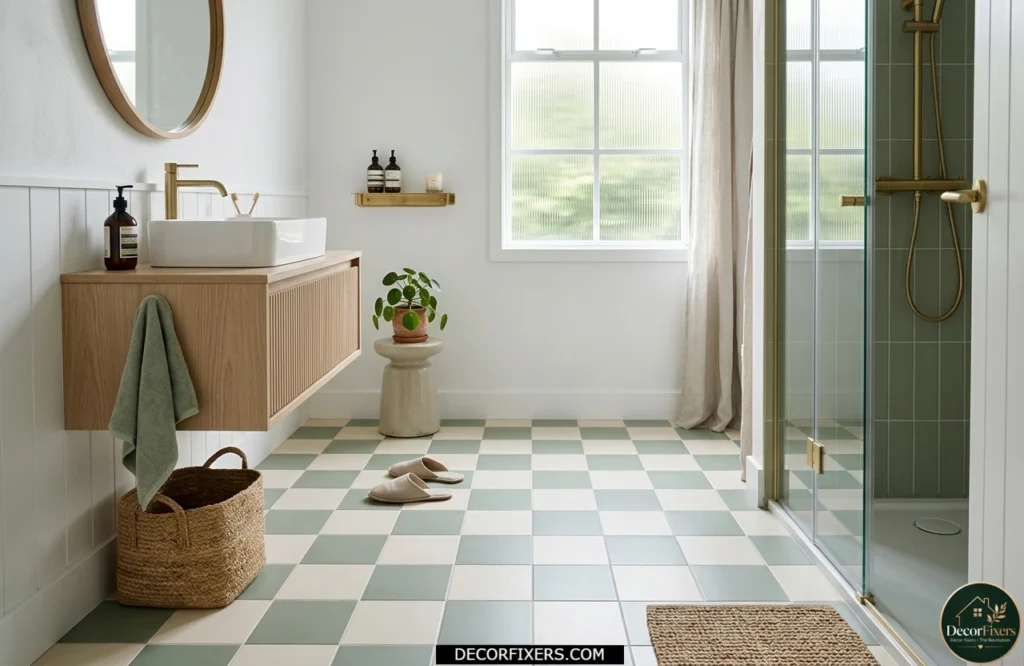
Checkerboard tile is not new. What’s new for 2026 is the color palette; instead of stark black and white, designers are running checkerboards in two close, muted tones, like sage and cream, for a softer, less retro effect.
Floor checkerboards work in almost any size bathroom since the pattern reads as flooring, not as a bold statement. Ceramic checkerboard tile typically runs $2 to $6 per square foot, making this one of the more affordable patterned ideas here.
12. Patterned Cement-Look Tile as a Floor Feature
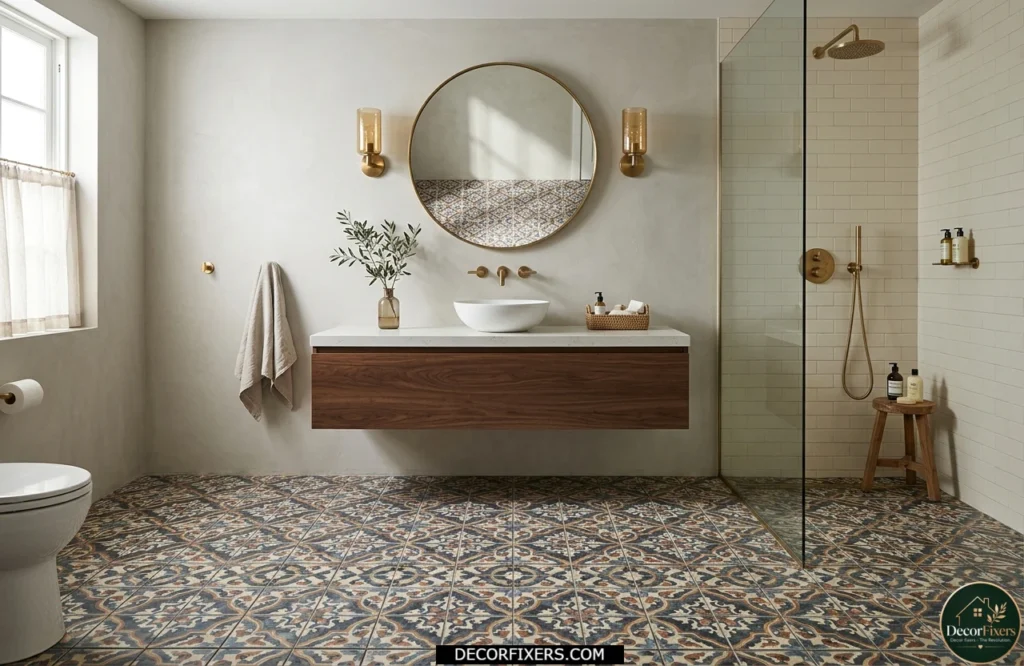
Vintage-inspired patterned tile, think Spanish or Moroccan-style cement tile, is making a real comeback for 2026 floors specifically, according to Deco Rilla’s design survey of its in-house designers.
A little goes a long way here. Most designers use it on the floor, keeping walls plain, since a patterned floor plus patterned walls in a small bathroom tends to feel chaotic rather than intentional.
13. Budget-Friendly Ceramic Tile That Still Looks Designer
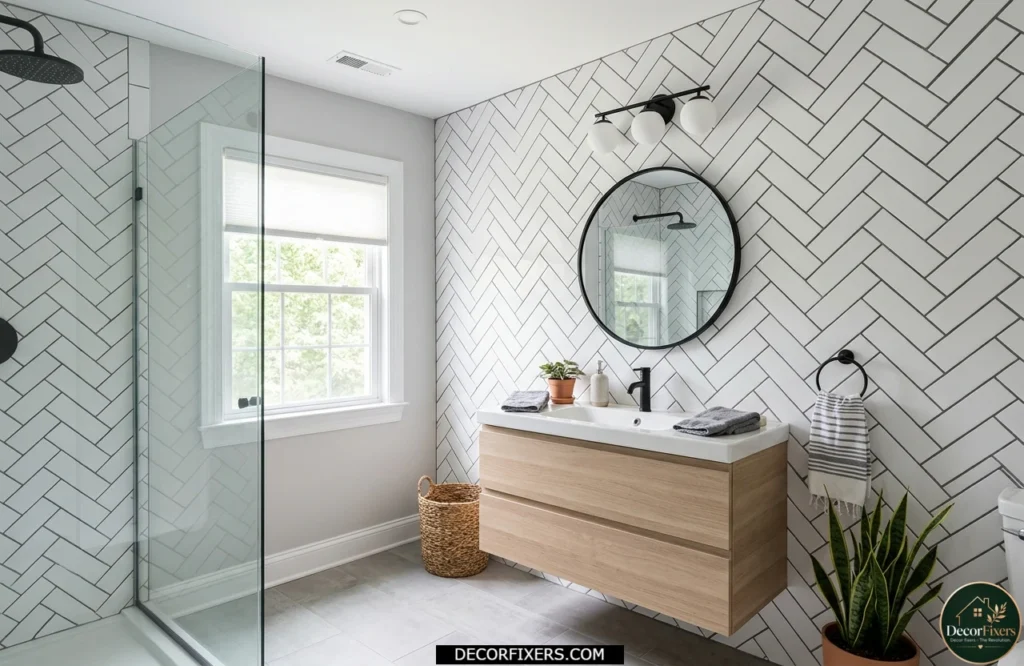
Not every bathroom needs porcelain or natural stone, and honestly, most don’t. Ceramic tile at $1 to $3 per square foot can look completely custom if you spend your budget on the layout and pattern of the material.
I’ve seen conflicting advice on this; some designers insist porcelain is always worth the upgrade, while others say ceramic is fine for walls and low-traffic areas. My read: ceramic on shower walls is genuinely fine since walls take less abuse than floors. Porcelain earns its premium on the floor, where durability actually gets tested daily.
14. Wood-Look Porcelain for a Warm Floor Without the Maintenance Risk
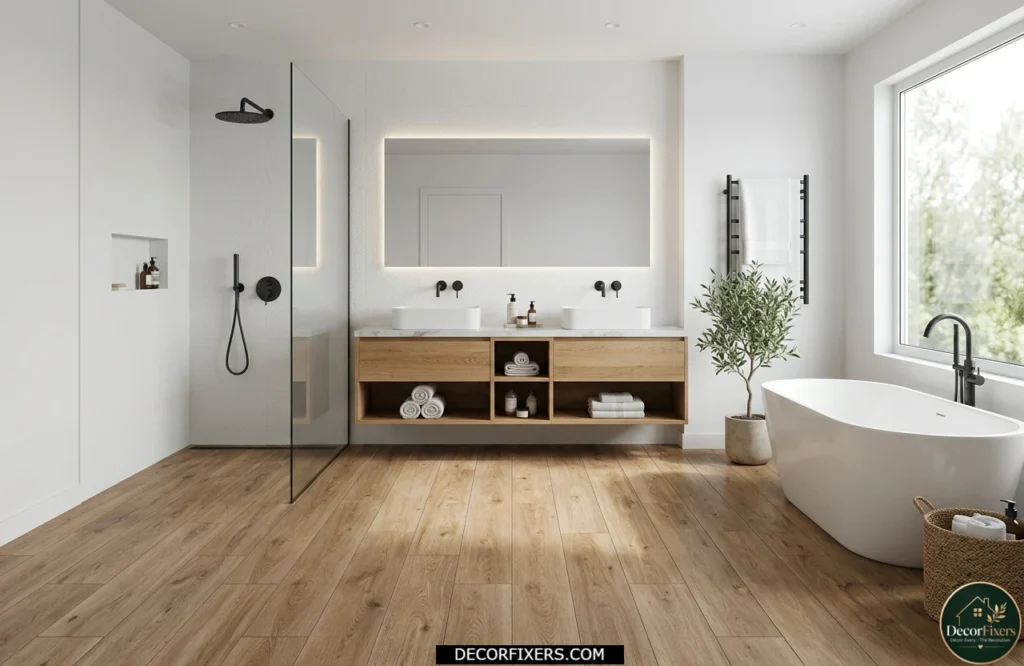
Real hardwood doesn’t belong in a bathroom; moisture warps it, no matter how well it’s sealed. Wood-look porcelain solves that by replicating grain and color variation through printing technology that’s become remarkably convincing.
Most people assume wood-look tile is a compromise. The data on actual homeowner satisfaction says otherwise; it consistently ranks the highest-satisfaction flooring choices in bathroom remodels, mainly because it delivers the warmth people want without the maintenance anxiety real wood brings.
15. Large Walk-In Shower Tile Sized for Resale Value
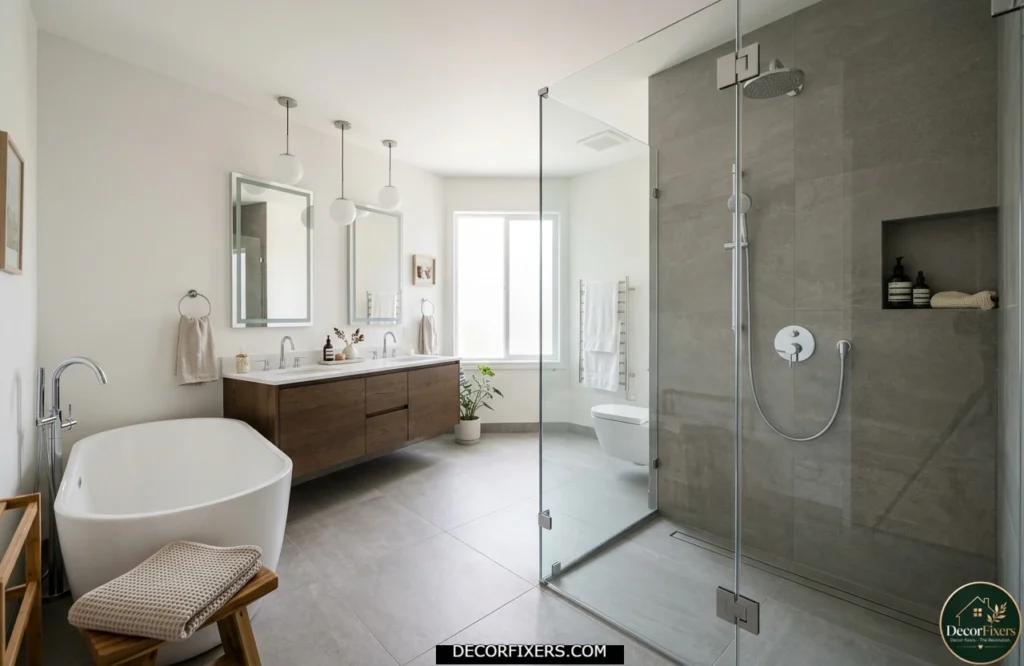
Here’s a counter-intuitive one: bigger isn’t always the smarter shower choice if you’re tiling with resale in mind. A 3-by-3-foot tiled shower uses roughly 40% less tile and labor than a 5-by-3-foot walk-in, and a well-finished, smaller shower with a frameless glass door often returns more per dollar spent than an oversized one.
Look, if you’re renovating to sell within a couple of years, this is the idea. If you’re staying in the home for the long haul and love the look of a spacious walk-in, the lifestyle value can outweigh the resale math.
While flooring, wall tile, and shower layouts usually receive the most attention, mirrors play a surprisingly important role in how spacious and luxurious a bathroom feels. This becomes especially important in compact bathrooms where reflective surfaces can increase perceived light and openness.
If you are working with limited square footage, consider pairing your chosen tile design with a statement mirror that enhances both function and style. Our Glamorous Small Bathroom Mirror guide showcases mirror ideas specifically designed for smaller bathrooms, helping homeowners create a brighter and more sophisticated appearance without increasing the room’s physical footprint. The right mirror can often amplify the visual impact of premium tile choices and complete the overall design story.
Quick Comparison: Which Bathroom Tile Idea Fits Your Project
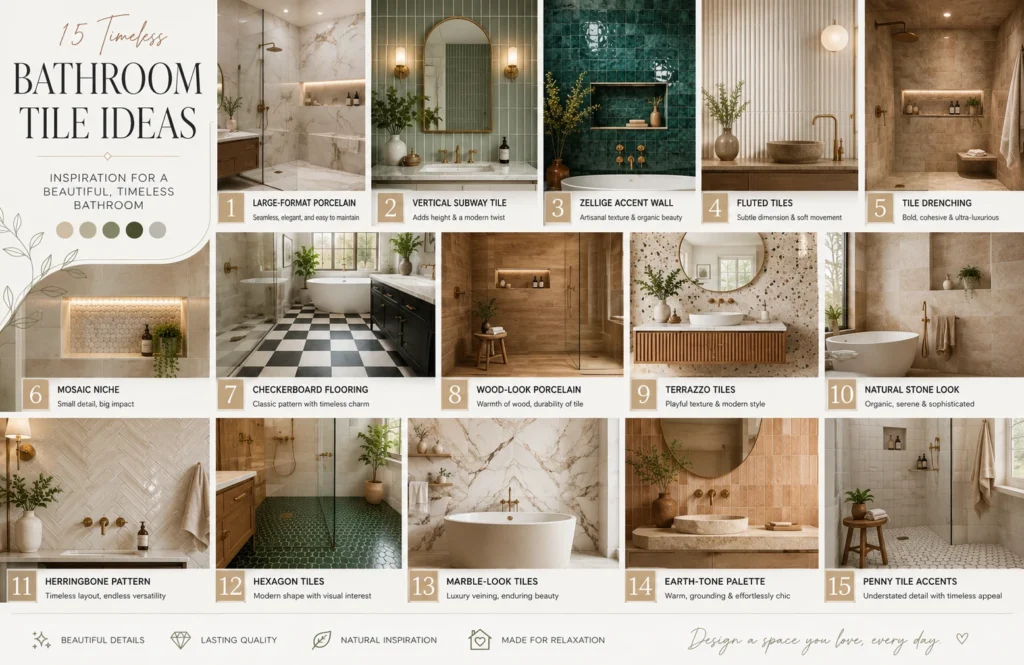
Use this table to narrow things down fast before you start reading reviews or requesting quotes.
| Tile Idea | Best For | Key Benefit | Limitation |
| Large-format porcelain | Small bathrooms, floors | Fewer grout lines, larger feel | Needs a dead-flat subfloor |
| Vertical subway | Low ceilings, tight budgets | Cheap, DIY-friendly | Grout lines must stay precise |
| Zellie accent | Vanity backsplash, accent walls | Handmade warmth, texture | Pricey at full-wall scale |
| Fluted 3D tile | Shower accent walls | Striking light play | Pro install only, cutting is hard |
| Tile drenching | Spa-style full showers | Seamless luxury look | Highest material + labor cost |
Ceramic vs porcelain for bathroom floors: Ceramic is better suited for walls and low-moisture areas because it’s cheaper and easier to cut. Porcelain works better for floors and showers, since it’s denser and more water-resistant. The key difference is porosity, not appearance; they can look nearly identical on the surface.
A Word on Grout, Because Nobody Talks About This Enough
Whatever tile idea you pick, grout is the part that actually determines how the bathroom looks in year three. Professional tile and grout cleaning costs roughly $285 to $676 per project according to Angi’s 2026 pricing data, and most homes need this done every 12 to 18 months. Specifically, the shower has more moisture exposure than any other room.
| What this guide covers , and what it doesn’t This guide covers tile material, pattern, color, and layout decisions for walls, floors, and showers, plus realistic cost ranges. It does not cover plumbing relocation, structural waterproofing specifications, or full contractor hiring , those deserve their own dedicated guides, and getting them wrong matters more than any tile choice. |
CONCLUSION:
If you’d asked me eighteen months ago which of these fifteen ideas I’d actually pick, I’d have said the Zellie accent wall, no question. I went with large-format porcelain on the floor and a small fluted accent in the shower instead, and I still think that was the right call for a 35-square-foot bathroom.
The Zellie would’ve looked gorgeous in photos. It would’ve also made my already-small bathroom feel busier every single day I used it. That’s the trade-off nobody puts in the glossy trend round-ups, the tile that wins on Pinterest isn’t always the tile that wins at 7 a.m. on a Tuesday when you’re brushing your teeth.
Pick the idea that matches your actual square footage and your actual budget, not the one with the most saves on Pinterest. That’s the whole guide, really.
FAQs:
Q: What’s the best tile for a small bathroom?
A: Large-format porcelain, generally 24 inches or larger, is the best choice because it minimizes grout lines and makes the floor read as one continuous surface, which visually expands the room.
Q: How do I know if I should DIY my bathroom tile or hire a pro?
A: Flat tile, like subway or ceramic, in simple layouts, is DIY-friendly for patient beginners. Fluted, large-format, or full showers require a professional due to precision and waterproofing requirements.
Q: Should I match my floor and shower tile?
A: Not necessarily. Two-tone combinations with a contrasting accent often look more intentional than matching everything, especially in small bathrooms where continuous material can feel flat.
Q: Why does my grout keep staining, no matter how often I clean it?
A: Unsealed grout is porous and reabsorbs moisture and soap residue almost immediately after cleaning. Sealing it every 1 to 3 years, not just cleaning it, is what actually prevents long-term staining.
Q: When should I choose ceramic over porcelain tile?
A: Choose ceramic for shower walls and low-traffic vertical surfaces where cost matters more than density. Choose porcelain for floors and shower bases, where moisture resistance and durability are required.
Creator of DecorFixers, sharing practical home and interior ideas focused on real-life usability, simple design improvements, and budget-friendly solutions.
1 thought on “15 Bathroom Tile Ideas for Every Budget and Bathroom Size: Trends, Layouts, and Real Cost Breakdown”