

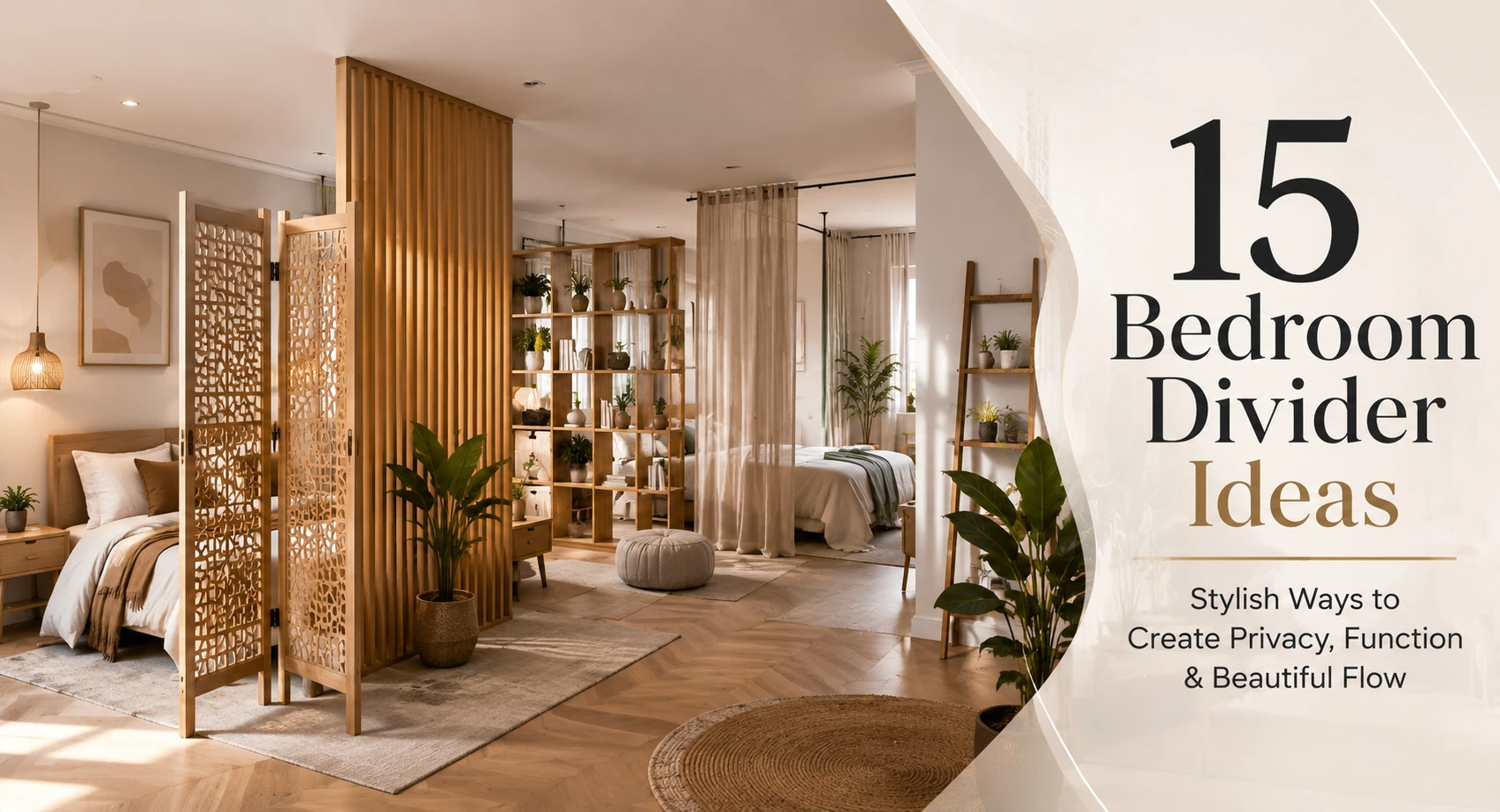
I moved into a 650-square-foot apartment and thought I’d figured it all out. Bed in the corner, desk by the window, a curtain I bought on sale draped across a tension rod. Three weeks later, that curtain was on the floor, the rod had snapped, and my 9 a.m. video calls had a direct view of my unmade bed.
That moment is what most people who search for bedroom divider ideas are actually living. Not a design emergency. A focus and sanity emergency. Here’s the thing: the problem isn’t the lack of a wall. It’s the lack of a visual boundary that tells your brain, “This part of the room means rest.” And you don’t need to drill a single hole or call your landlord to fix it.
| What Are Bedroom Divider Ideas? Bedroom divider ideas refer to non-permanent methods of visually or physically separating zones within a bedroom, or between a bedroom and an adjacent living, working, or dressing area. They range from freestanding screens and bookshelves to curtain rods, plant walls, and slat panels, all designed to create boundaries without structural changes. |
This guide covers 15 divider solutions that work for renters, studio dwellers, and owners of small bedrooms.
1. Folding Screen Divider, The Classic That Still Wins
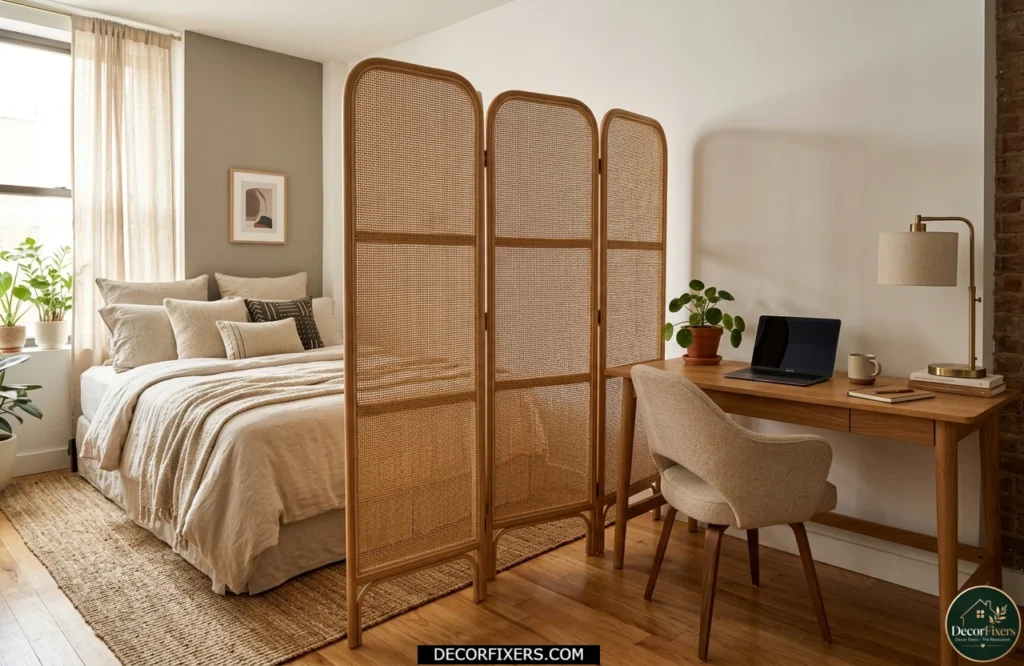
The folding screen is the most flexible bedroom divider idea on this list, and I mean that literally. You can reposition it in under a minute, fold it flat when you have guests, and style it so it looks intentional rather than temporary.
A 4-panel rattan or wood-slat screen placed at the foot of your bed or between your sleeping and work zones creates an immediate sense of separation. Look at options from Versare; their portable screens come in heights up to 6 feet and handle regular repositioning without warping. For a more decorative option, IKEA’s wood folding screens start under $80.
Users who’ve gone the folding screen route often report that the first instinct is to buy something too short. Go for a minimum of 5.5 feet to actually block sightlines from a seated desk position.
2. Bookshelf Partition, Divide the Room and Double Your Storage
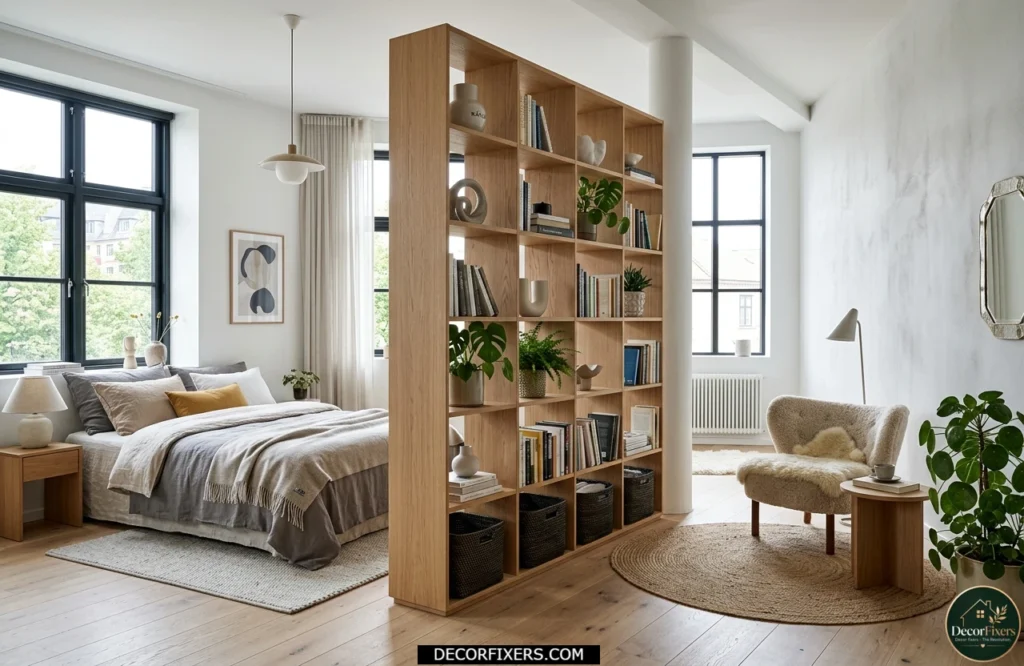
This is the one I’d recommend first to anyone with even a small book collection. A tall bookcase placed perpendicular to the wall, not pushed against it, becomes a room within a room. The IKEA KALLAX series is the go-to for this: modular, affordable, and sturdy enough to hold weight on both sides.
You get a functional divider that organizes your belongings, shows off your personality on both faces, and doesn’t require any wall contact. Style one side with plants and décor, keep the other side for books or storage boxes.
Quick note: Leave the top shelf open rather than packing it floor-to-ceiling. It keeps the space feeling breathable and avoids the visual weight that makes small rooms feel smaller.
3. Ceiling-Mounted Curtain Track, The Renter’s Best Friend
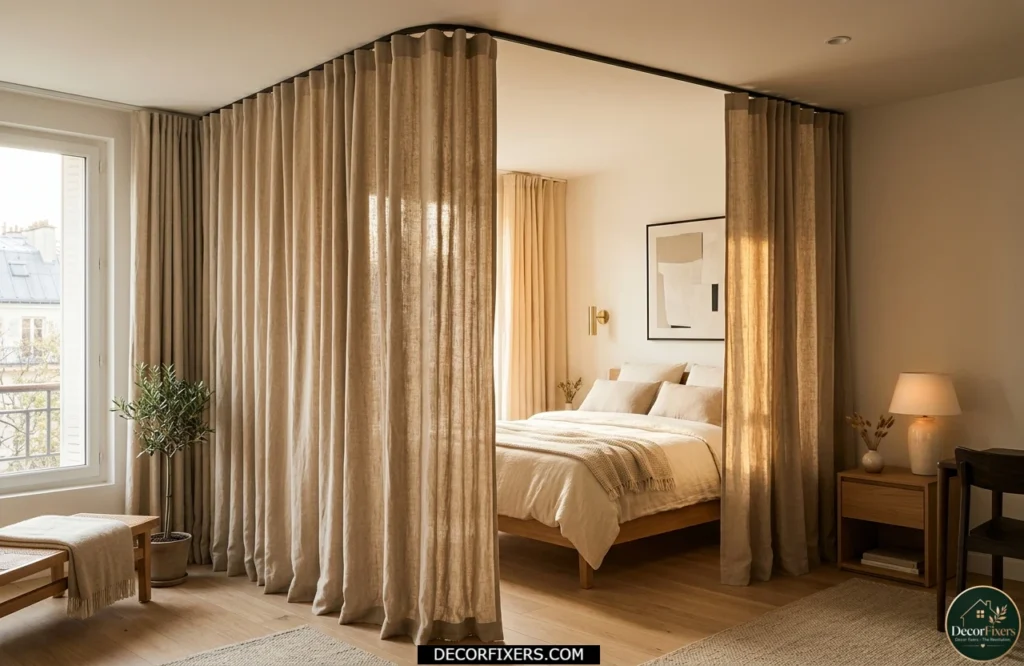
Look, if you’ve been hanging curtains on tension rods and they keep failing, here’s what actually works: a ceiling-mounted track system. Companies like KVARTAL from IKEA offer ceiling-track curtain systems that install with just a few screws into a ceiling joist, landlord-approved in most cases, and completely removable.
Heavy linen, velvet, or blackout fabric can section off an entire zone of your bedroom with visual impact that looks designed rather than improvised. Floor-to-ceiling curtains read as architectural, not rental-grade.
Or maybe I should say it this way: this is the upgrade version of the curtain idea, the one that doesn’t fall down at 2 a.m.
4. Tall Indoor Plants as a Natural Green Divider
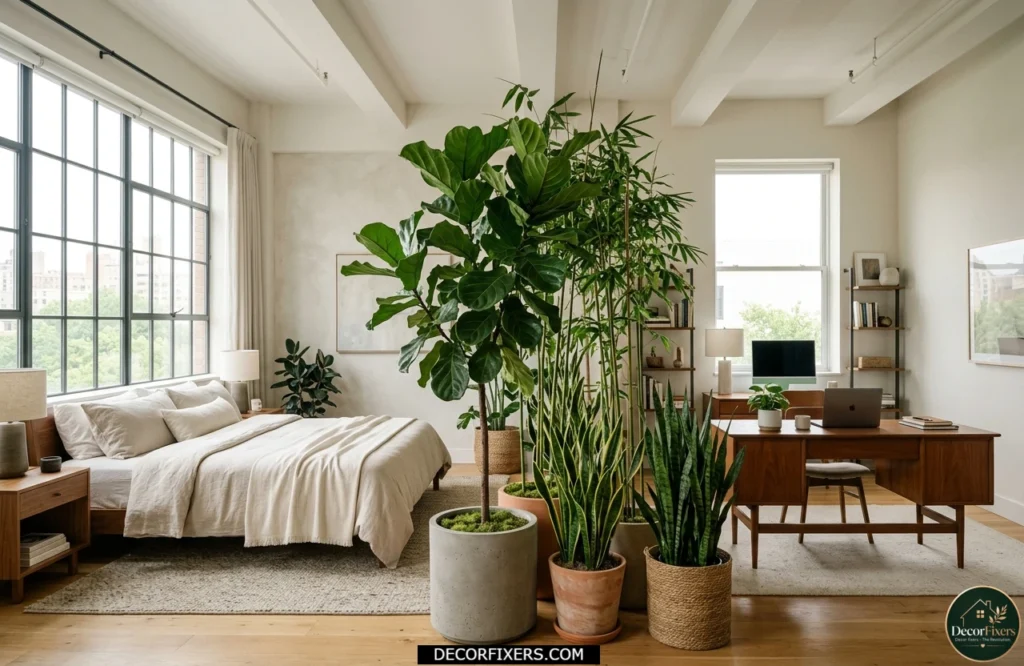
A row of tall plants, think fiddle leaf figs, bamboo stalks, or snake plants in floor pots, creates a soft, organic boundary that light passes through without making your bedroom feel caged. It’s one of the most visually gentle bedroom partition ideas available.
Arrange three to five plants of varying heights in a loose line across the width of the zone you want to separate. The imperfect spacing looks intentional. Mix in trailing plants at lower heights to fill gaps without blocking airflow.
The honest trade-off here: plants need light and care. If your bedroom gets limited natural light, substitute with high-quality artificial stems in statement pots. The visual effect holds.
5. Macramé Hanging Divider, Texture Without Visual Weight
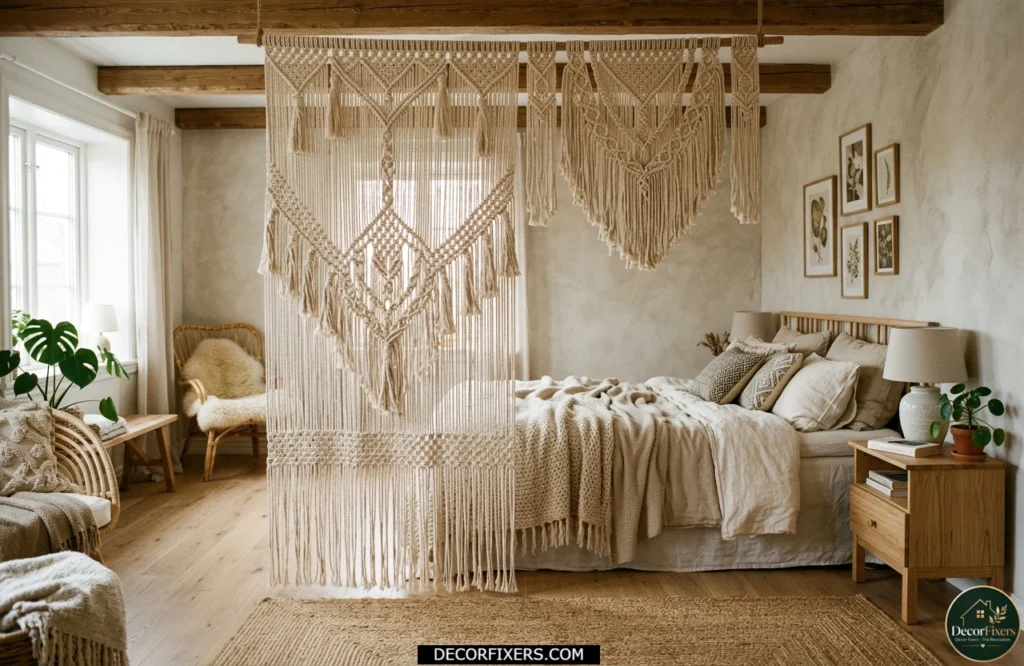
A large macramé wall hanging suspended from a ceiling-mounted dowel or a tension rod at height acts as a semi-transparent bedroom privacy idea that adds warmth and texture. It’s especially strong in bohemian or Scandinavian-inspired spaces.
The transparency is actually a feature. Light passes through, making it far better suited to small bedrooms than a solid panel. You get the psychological separation without visually cutting the room in half.
If you want to go deeper into styling this kind of space, check out our guide on creating a Bohemian Bedroom. It covers exactly how texture-layering works in rooms that need both warmth and personality.
6. Wooden Slat Panels, The Architectural Look Without the Contractor
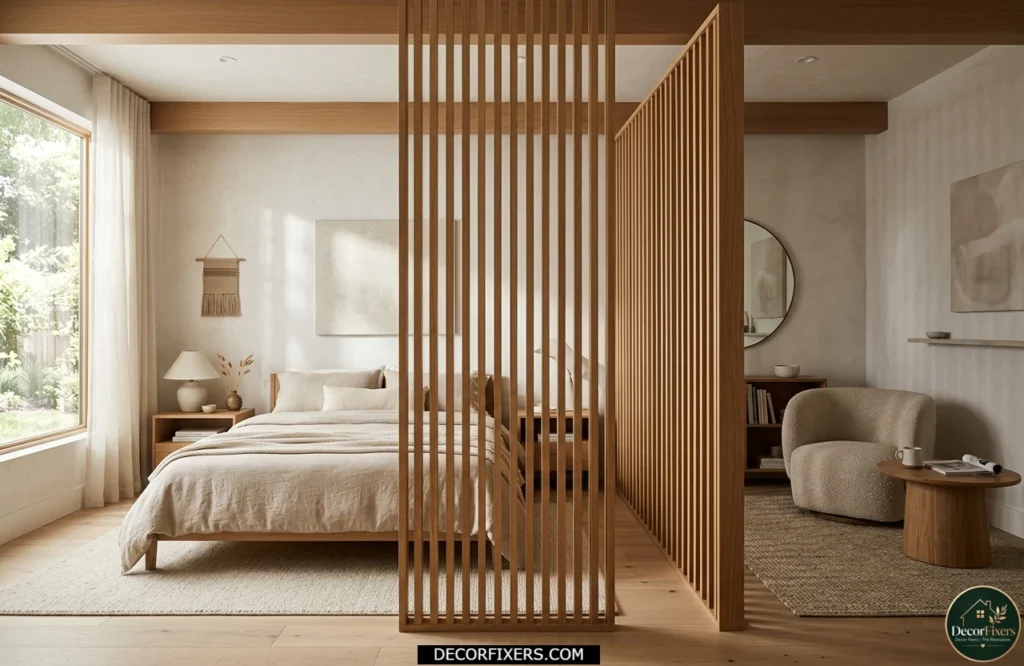
Slat panels have moved from Instagram to living rooms to bedrooms fast, and for good reason. Freestanding slatted wood or MDF panels, like those from Primo Panels, give any bedroom a high-end, architectural look that reads as a design decision rather than a workaround.
The open slat design allows light to filter through while still creating a clear visual zone boundary. Available in natural wood tones, white, and charcoal, they fit modern, Japandi, and transitional bedroom styles equally well.
Prices range from around $120 for DIY MDF kits to $400+ for solid wood versions. For most bedrooms, the mid-range options hold up just fine.
Quick Comparison, Bedroom Divider Ideas at a Glance
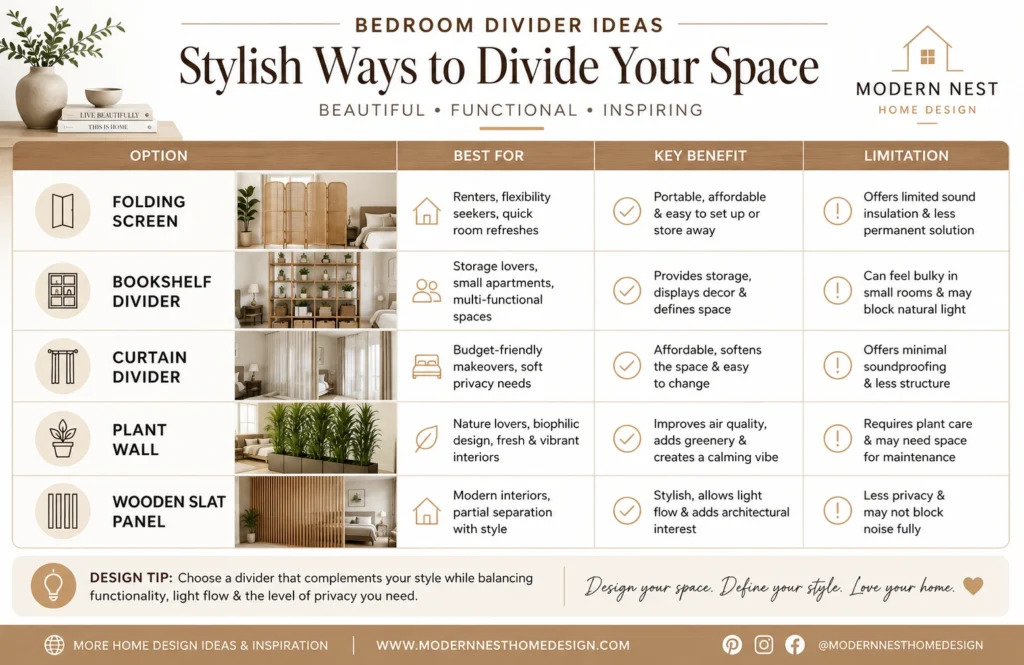
| Option | Best For | Key Benefit | Limitation |
| Folding Screen | Renters, studio zones | Portable, no drilling | Less sturdy in high-traffic areas |
| Bookshelf Divider | Storage + separation | Functional & stylish | Heavy, hard to reposition |
| Curtain Divider | Budget-conscious | Cheapest option | Looks casual if done poorly |
| Plant Wall | Natural, airy look | Improves air quality | Needs light and maintenance |
| Slat Panel | Modern/minimal style | Sleek, architectural look | Pricier than basic screens |
7. Wardrobe as a Structural Divider, Function Meets Form
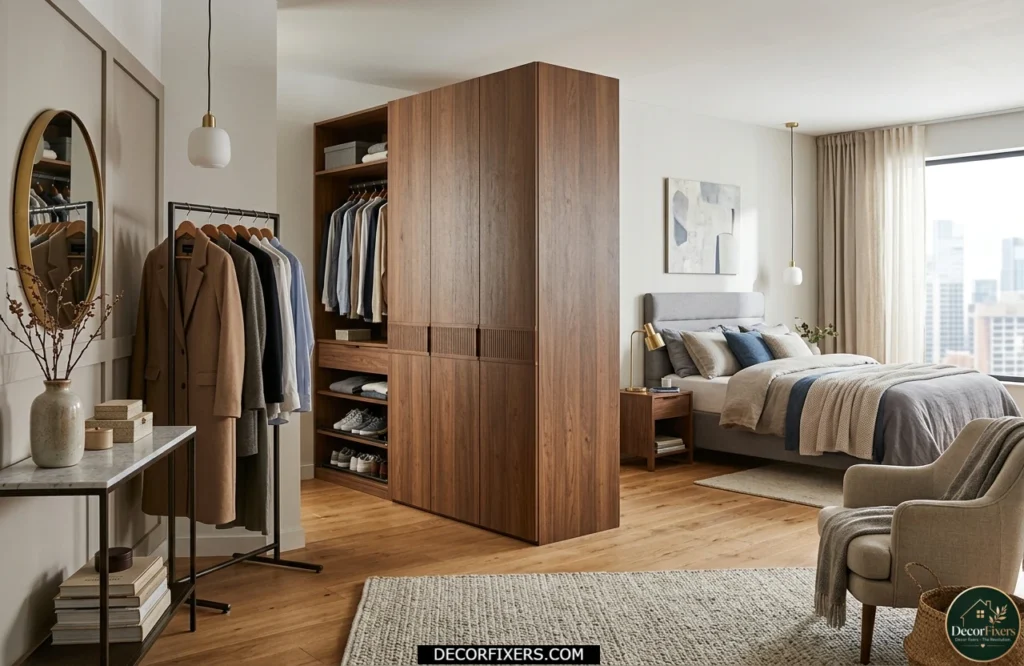
A freestanding wardrobe placed with its back facing the room creates an instant wall with a practical purpose. The side facing your sleeping area becomes a background; the other side becomes your dressing zone. Two areas. Zero new furniture purchases if you already own a wardrobe.
This is one of the most underrated open-plan bedroom divider strategies for people who have both a wardrobe and a layout problem at the same time. It solves both in one move.
For wardrobe styling ideas that also double as bedroom transformation strategies, read our in-depth article on Bedroom Wardrobe ideas, including how to position a wardrobe to reshape a room’s entire feel.
8. Pegboard Panel Divider, The DIY Option That Actually Looks Good
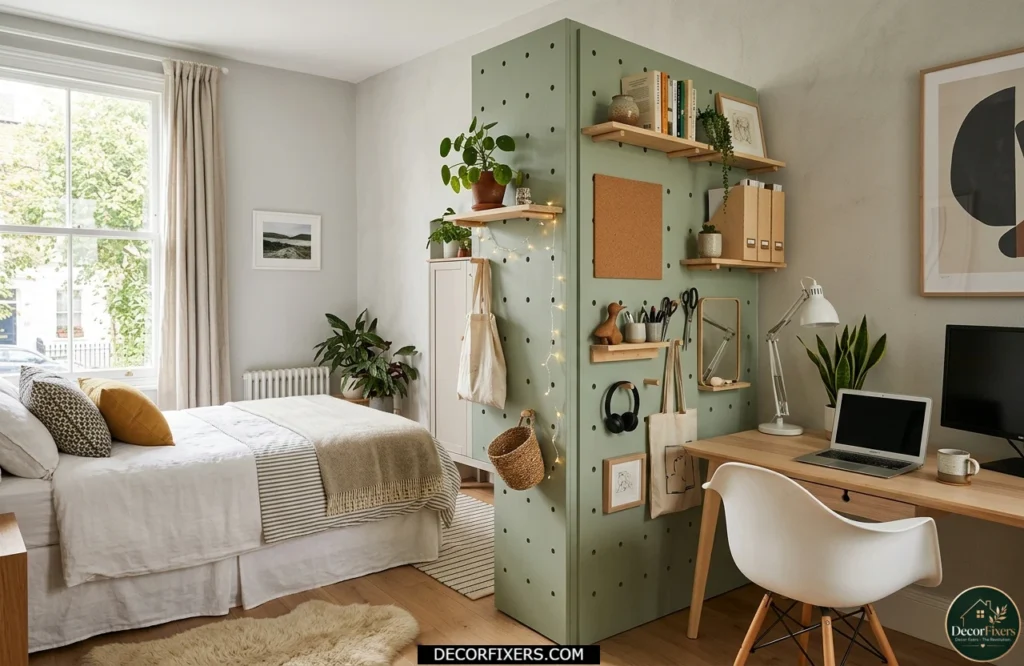
A large pegboard panel in a frame is one of the most underrated DIY bedroom divider ideas. Stand it on a weighted base, attach hooks, shelves, and organizers, and you’ve got a divider that actively works, holding your bags, headphones, desk accessories, or bedroom supplies, while visually separating zones.
Pegboards come in wood, painted MDF, and perforated metal. A floor-to-5-foot height is enough for visual zoning without making the room feel chopped up.
Folding Screen vs. Bookshelf Divider
Folding screens are ideal for renters because they’re portable, affordable, and require no drilling. Bookshelf dividers are better when you need both separation and storage and don’t plan to move them often. The main difference is flexibility: screens are temporary, while bookshelves are more permanent. As for pegboards, their style depends entirely on how they’re designed and accessorized.
9. Half-Wall with Open Shelving, Permanent-Looking Without the Permanence
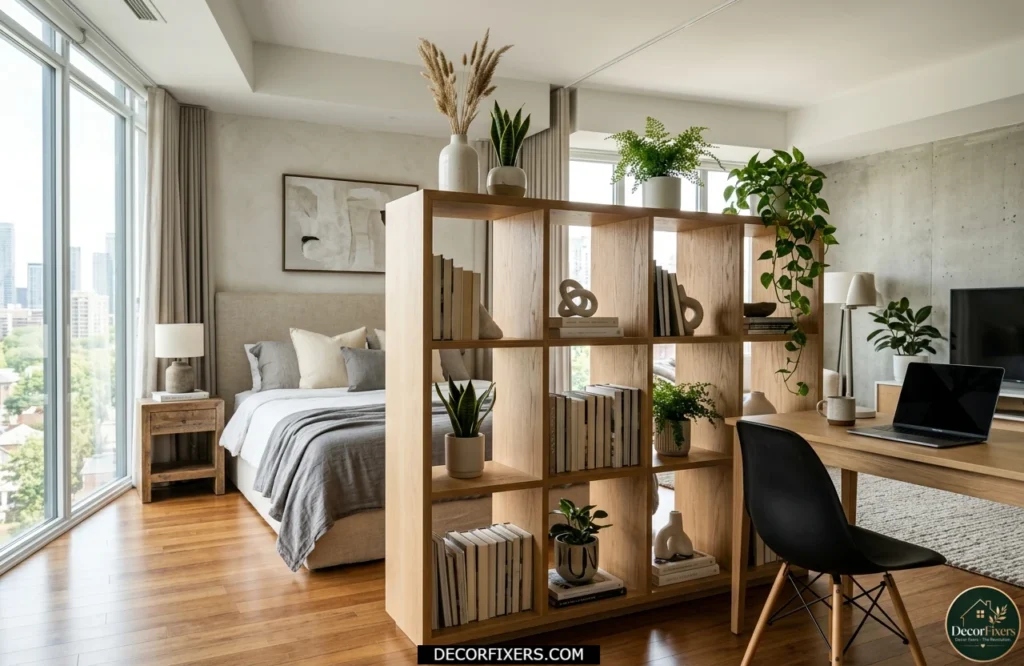
A partial room divider made from stackable cube shelves, like two KALLAX units side by side at hip height, creates a low, open divider that defines zones while keeping the ceiling line open. The result reads as a half-wall from both sides.
This works especially well between a bedroom and a sitting area, or at the foot of a bed to separate the sleeping zone from a desk or dressing table. The open top keeps the space breathing.
Style the top with a row of trailing plants, candles, and a small framed print. It reads as a designed ledge rather than a storage unit.
10. Sheer Fabric Canopy, Zone Your Bed Without a Single Wall
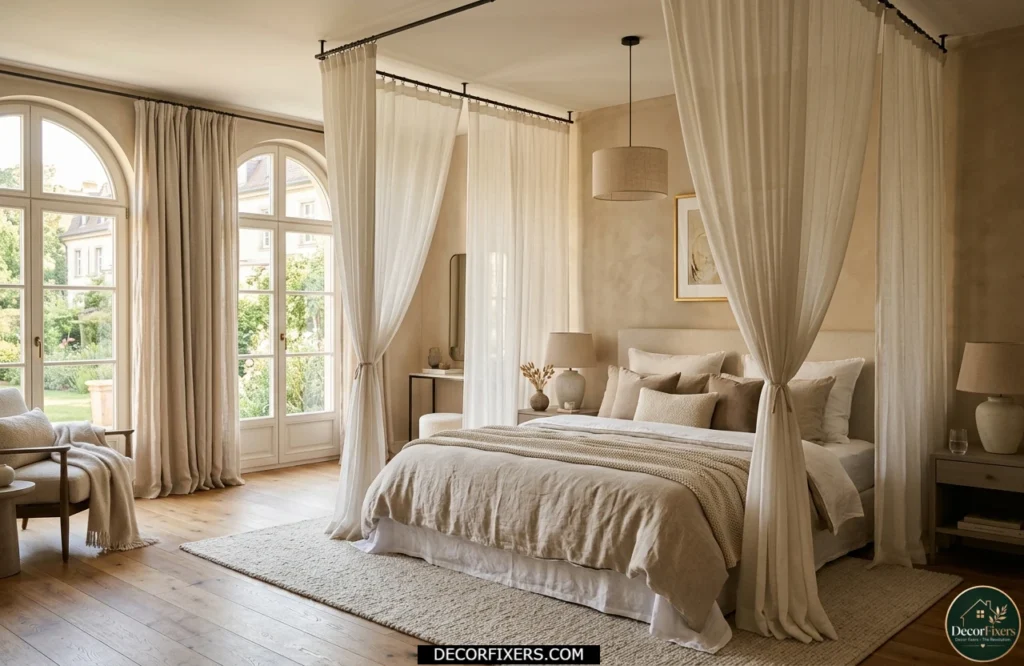
A bed canopy made from sheer fabric or linen panels hung from a ceiling-mounted hoop or beam creates a cocoon effect that visually separates your bed from the rest of the room, without any physical divider at all.
It’s one of the few bedroom partition ideas that makes the room feel more luxurious, not more divided. The bed becomes its own destination.
If the rest of your room needs a full reset to match the mood this canopy creates, our guide on how to transform bedroom spaces cover the full room approach, lighting, layout, and everything in between.
11. Freestanding Chalkboard or Whiteboard Panel, Practical for Work-From-Home Bedrooms
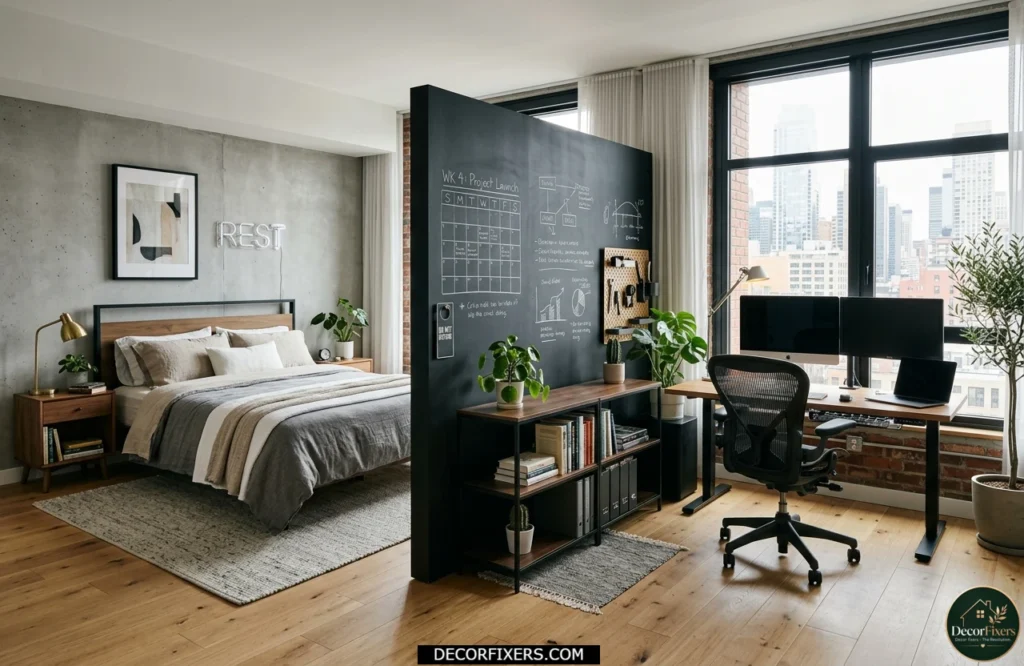
For people whose bedroom is also their home office, a large freestanding chalkboard or dry-erase whiteboard panel solves two problems at once: it becomes a functional work surface AND a visual boundary between your work zone and your rest zone.
Chalkboard panels in matte black frames work in modern, industrial, and even boho spaces. The back side can be painted or papered to create a more decorative surface facing the bed.
Some experts argue the bedroom should be kept completely tech- and work-free. That’s valid advice if you live in a two-bedroom apartment. But if you’re in a studio, that advice doesn’t apply, which is exactly why dividers like this exist.
12. Tension Rod + Woven Grass Panels, The Overlooked Budget Pick
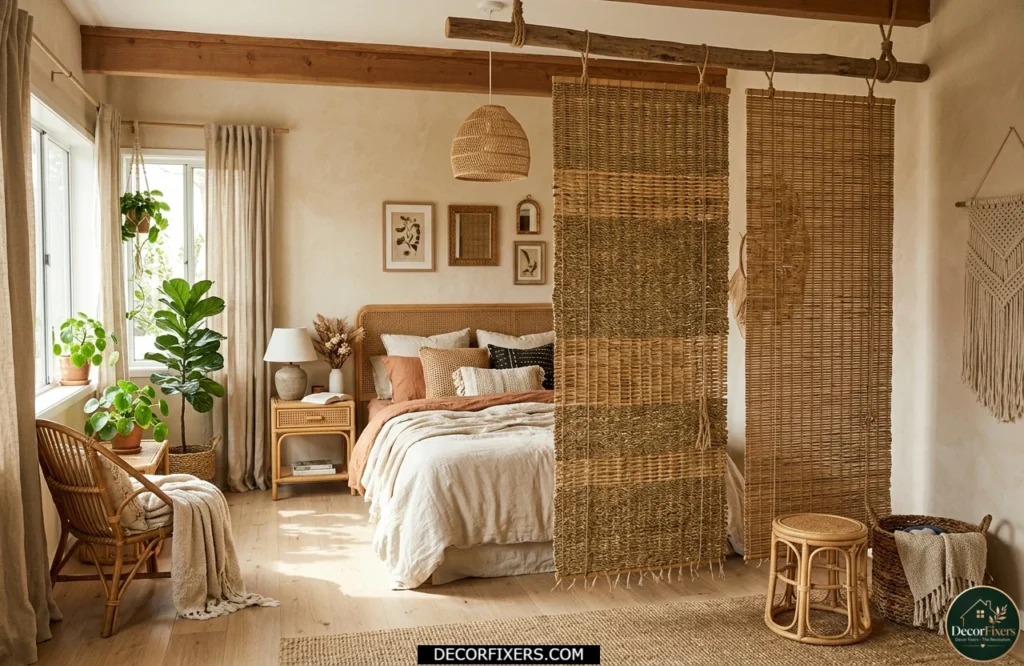
Here’s a bedroom divider idea that most lists skip: woven bamboo or grass roll-up panels hung from a ceiling-mounted tension or curtain rod. They’re inexpensive ($20–$60), lightweight, easy to cut to any width, and create a warm, natural room boundary.
They work especially well in bedrooms with warm wood tones, rattan furniture, or any kind of boho or coastal styling. The texture reads as intentional décor rather than a privacy screen.
Available at most home improvement stores, they’re one of the few truly low-commitment bedroom divider options that you won’t regret buying.
13. Repurposed Ladder Shelf, Vertical and Light-Footed
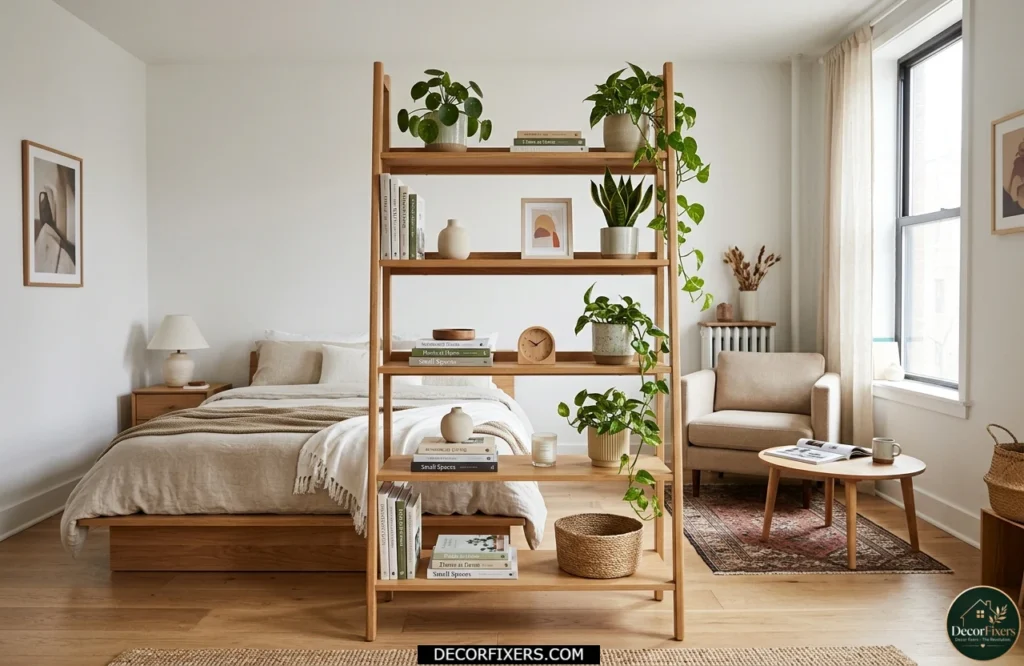
A tall ladder shelf set at an angle to a wall, or used freestanding at the edge of a zone, creates a visual boundary without closing off the room. Leaning ladder shelves carry almost no visual weight, making them ideal for compact rooms where every square foot matters.
Stack books, plants, and decorative objects asymmetrically across the rungs. The varying density of objects controls how much you see through the shelf from different angles.
How to Choose the Right Bedroom Divider Idea
To pick the best bedroom divider for your space:
1. Identify the two zones you need to separate (e.g., sleep vs. work).
2. Decide if you need a full visual block, semi-transparency, or just a zone marker.
3. Check whether you can drill into walls or ceiling (renter vs. owner).
4. Set your budget: curtain track ($30–$80), folding screen ($60–$200), slat panel ($120–$400+).
5. Choose a material that matches your existing décor, wood, fabric, or greenery. At heights of 5–6 feet, a ladder shelf reaches just above seated eye level, enough to function as a zone marker without blocking standing sightlines entirely.
14. Acoustic Panel Divider, Privacy for the Ears as Well as the Eyes
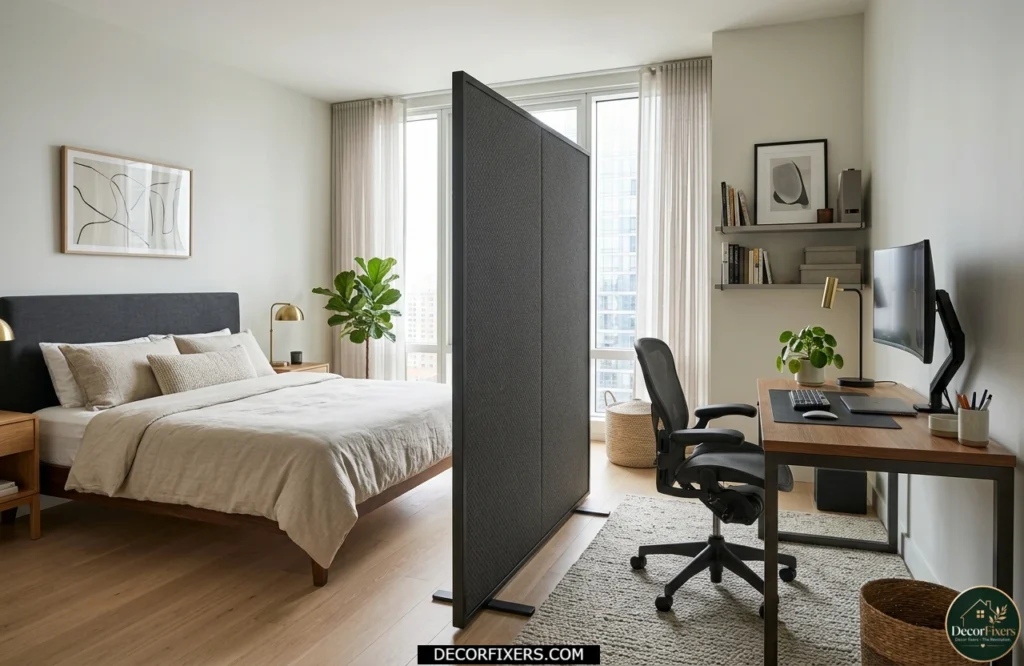
This one is for anyone sharing a bedroom in a thin-walled apartment. Acoustic fabric panels, the kind used in home recording studios, can be mounted on a freestanding frame to create a divider that absorbs sound as well as defines space.
They’re available in neutral and dark tones that fit most modern bedroom palettes. Placed between a bed and a home office zone, they reduce the mental bleed between work noise and rest time, a problem no folding screen addresses.
Prices start around $80 for a standard 4×2 panel frame. Not the cheapest option here, but it’s the only one that addresses both the visual and auditory problem simultaneously.
15. Gallery Wall as a Zone Marker, The No-Divider Divider
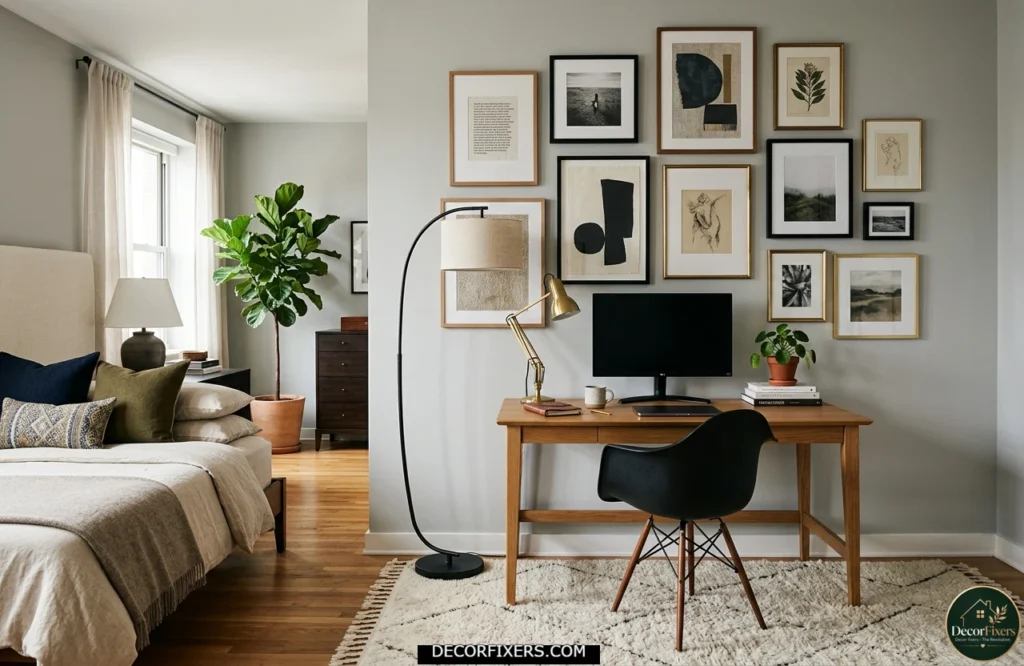
Sometimes the most effective bedroom privacy idea isn’t a physical object at all. A curated gallery wall, placed on the wall behind a desk or chair rather than behind the bed, creates a visual anchor that your eye reads as ‘this zone is different.’
When combined with a distinct rug under the desk zone and a directional floor lamp, a gallery wall creates a fully defined work or sitting area without a single freestanding piece. It’s the most minimal, most renter-safe option on this list.
The rug is key. A defined floor area below and a defined wall behind create a zone boundary from two directions, enough for your brain to accept the separation even in a single open room.
CONCLUSION:
After trying four different setups in my own apartment, including that ill-fated tension rod moment, the thing I’ve learned is this: the right bedroom divider idea isn’t about the object. It’s about what changes in your head when you can’t see your inbox from your pillow.
Every one of the 15 ideas above works. The difference is your room size, your lease terms, your budget, and, honestly, your tolerance for maintenance. Plants need watering. Curtains need steaming. Bookshelves need styling.
Start with the one that solves the most immediate problem, usually the view from your bed, and adjust from there. Your room won’t be perfect on the first try. Neither was mine.
But you’ll sleep better. And that’s the whole point.
FAQs:
Q: What’s the best bedroom divider idea for a studio apartment?
A: A ceiling-mounted curtain track with heavy linen panels is the most effective option for studios, it separates the bed zone completely, looks designed, and is removable without wall damage. A bookshelf divider is the best choice if you also need storage.
Q: How do I divide my bedroom without building a wall?
A: Use a freestanding bookshelf, folding screen, ceiling-hung curtain, or a row of tall plants. These create visual zone boundaries without permanent structures. A bold area rug under each zone reinforces the separation further.
Q: Should I use a room divider in a small bedroom?
A: Yes, but choose a light-footed option. Sheer fabric canopies, ladder shelves, or low cube-shelf half-walls add zone definition without visually reducing square footage. Avoid heavy, solid dividers in rooms under 150 square feet.
Q: Why does my bedroom divider curtain keep falling down?
A: Tension rods fail because they rely on wall pressure alone. Switch to a ceiling-mounted track system. IKEA KVARTAL is the most accessible option for a solution that’s stable, adjustable, and doesn’t require tension to stay up.
Q: When should I use a slat panel instead of a curtain divider?
A: Use a slat panel when you want a more architectural, permanent-looking divider with a modern or Japandi aesthetic. Curtain dividers are better for bedrooms where you want soft, warm, or adjustable room separation.

Creator of DecorFixers, sharing practical home and interior ideas focused on real-life usability, simple design improvements, and budget-friendly solutions.