

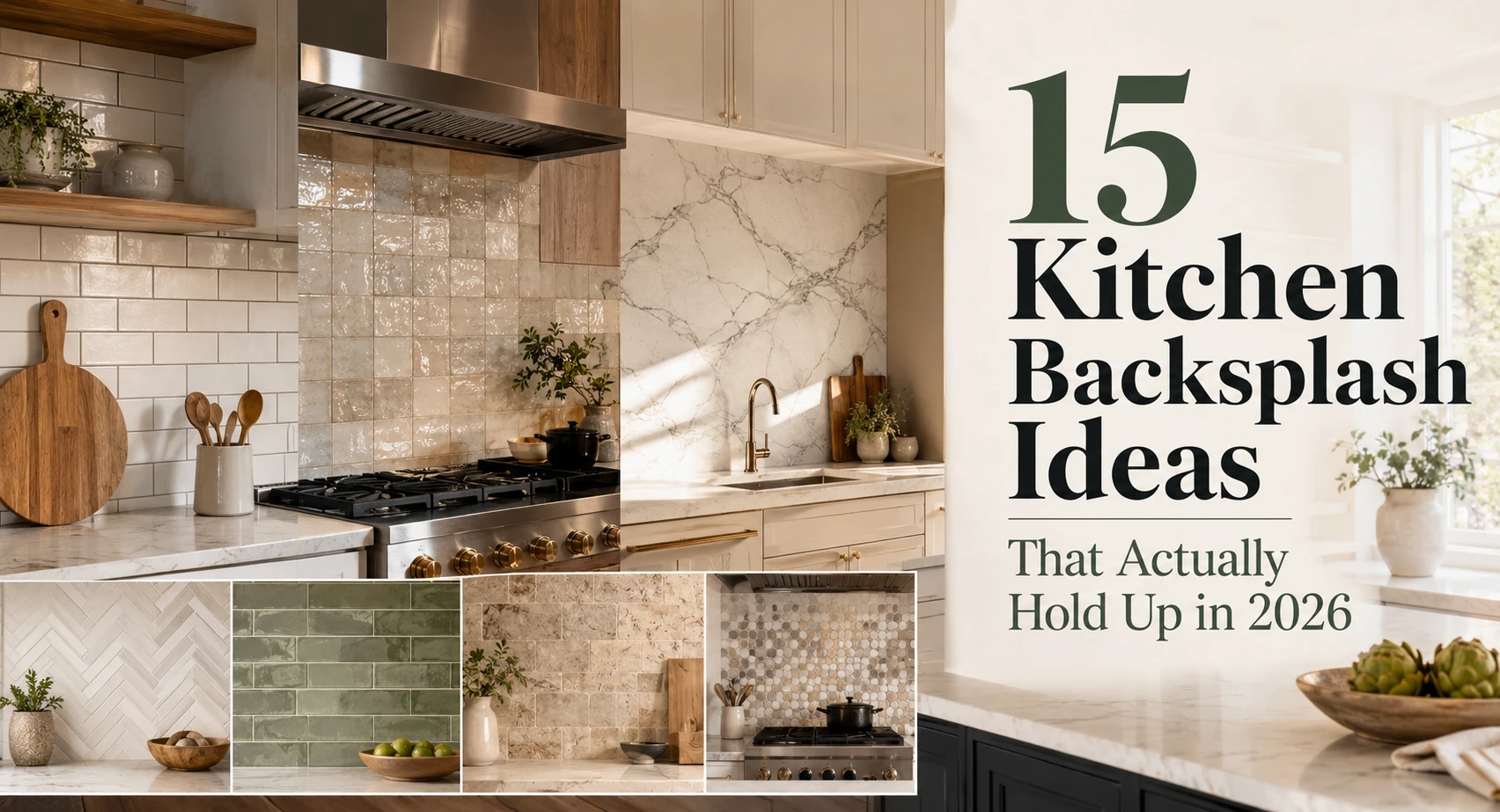
I redid my own kitchen backsplash twice before I got it right, and both times I picked the tile before I’d thought about the grout, the cabinets, or how much wiping down I’d actually be doing every night. If you’re standing in your kitchen right now with your phone out, trying to picture what belongs above your counters, I completely get it.
A kitchen backsplash is the protective wall covering installed between the countertops and upper cabinets, usually behind the stove and sink. It shields the wall from grease, water, and food splatter, and it doubles as one of the most visible design features in the entire room. Pick the wrong material and the whole room feels off, even with perfect cabinets and counters. Pick the right one, and everything pulls together.
Here’s what I’m covering: 15 backsplash ideas real homeowners and designers are actually using right now, what each one costs, and which kitchens they fit best. No filler. No recycled stock photos with zero context.
How to Pick the Right Kitchen Backsplash for Your Kitchen:
To choose the right backsplash, follow these steps:
- Match the finish to your cabinet color and tone.
- Check water and heat exposure near the stove.
- Set a realistic per-square-foot budget first.
- Pick a tile pattern that suits the tile size.
- Confirm the grout color before you order tile.
1. Classic White Subway Tile
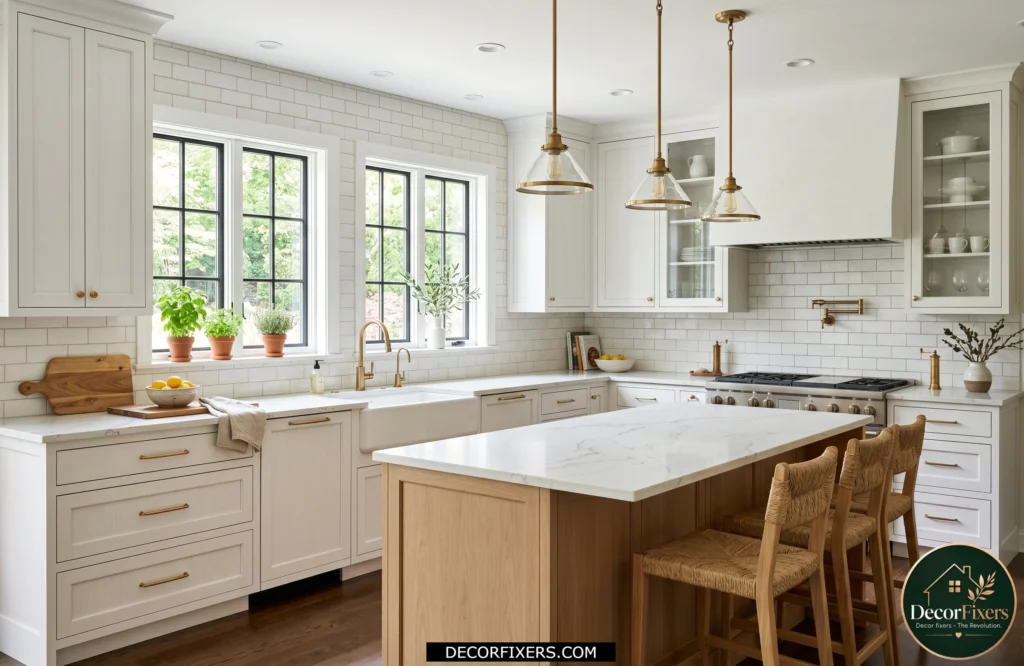
White subway tile is still the most requested kitchen backsplash style for one simple reason: it works with almost any cabinet color. It’s also the cheapest tile to replace if you change your mind later.
The trick in 2026 is the grout. A soft gray or warm beige grout keeps a white subway wall from looking flat or like a hospital tile job.
2. Zellige Tile for Texture and Warmth
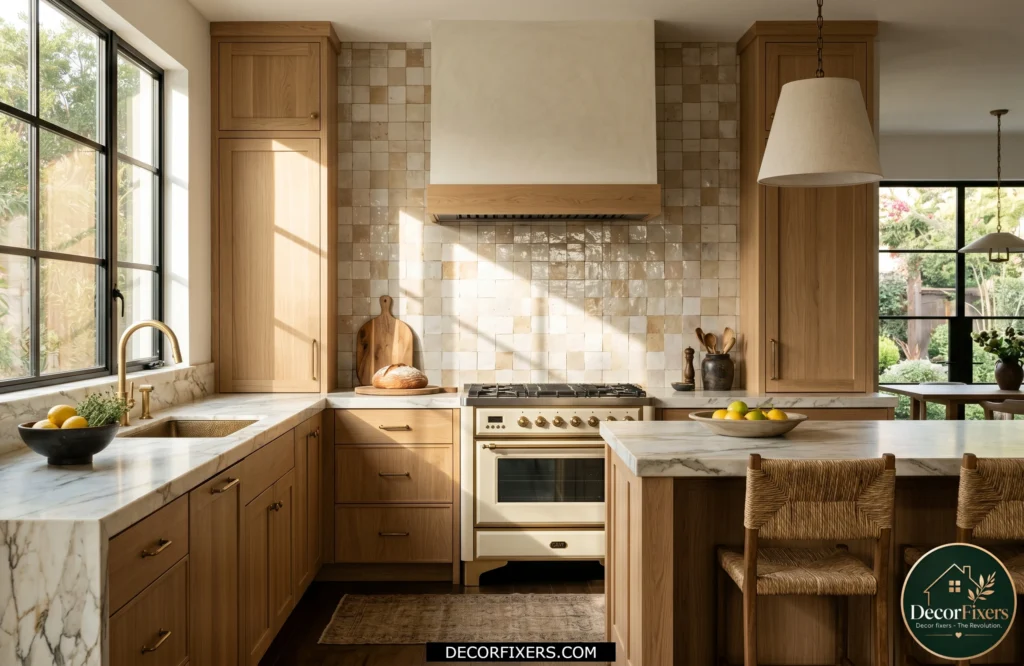
Zellige is a handmade Moroccan tile with a slightly uneven glaze, and it’s one of the few materials that actually looks better with imperfections. Every piece reflects light a little differently.
It costs more than standard ceramic per square foot. If you’re updating multiple surfaces at once, reviewing different Kitchen Countertop Ideas alongside your backsplash selection can help create a more cohesive and balanced kitchen design.
For kitchens with plain white cabinets and quiet countertops, that extra cost buys a one-of-a-kind look that mass-produced tile can’t fake.
3. Full Slab Quartz for a Seamless Look
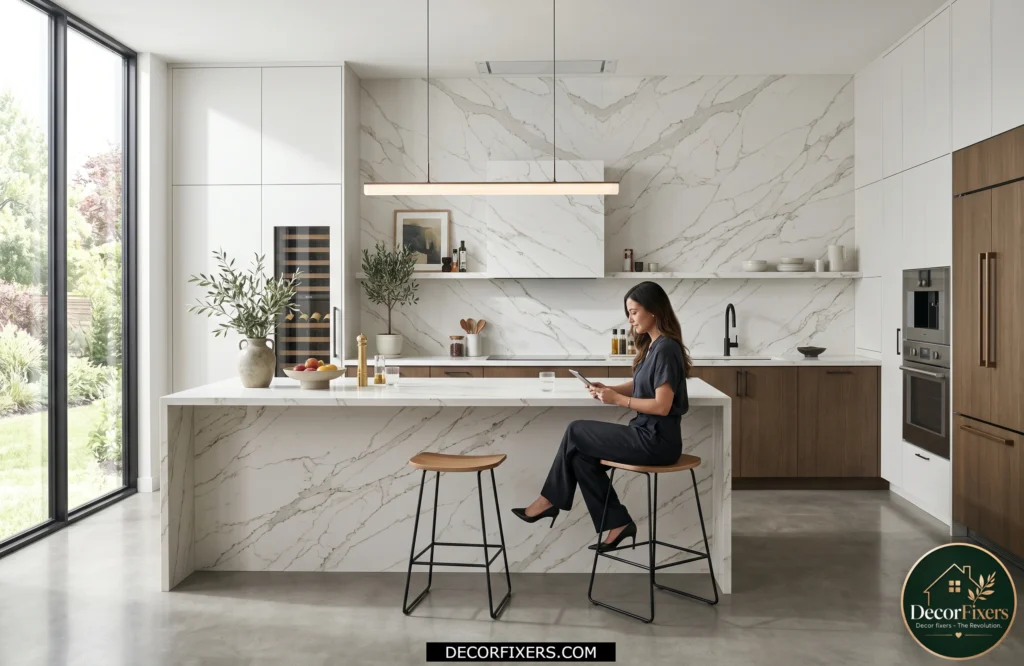
A slab backsplash carries the same quartz or stone from the counter straight up the wall, so the eye reads one continuous surface with no seams. There’s no grout to scrub, ever.
It’s a premium option, and it needs a professional installer to cut and set it cleanly. Kitchens with bold veining patterns get the most visual payoff from this style.
4. Herringbone Pattern Tile
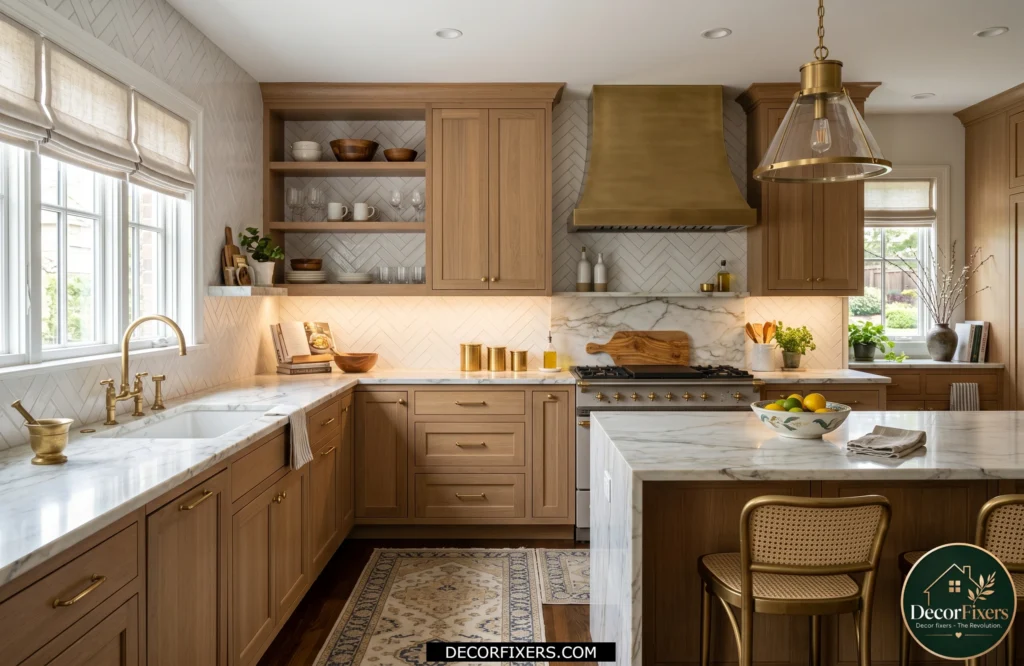
Herringbone takes an ordinary rectangular tile and lays it at an angle, which adds movement without changing your material budget at all. It reads as custom even when the tile itself is affordable.
Here’s the thing: pattern install takes longer than a straight layout, so labor costs run higher even though the tile price stays the same.
5. Marble Subway Tile for White Cabinets
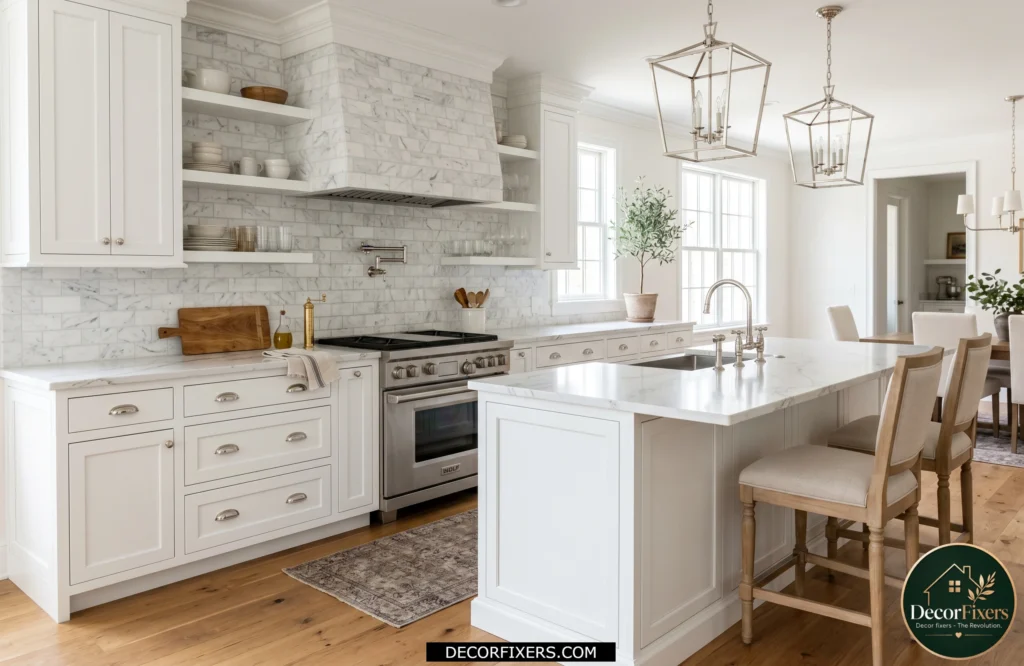
Marble subway tile keeps the familiar brick shape of regular subway tile but swaps in natural stone veining for extra depth. It’s a popular choice for white or warm-white cabinetry.
Marble is porous, so it needs sealing once or twice a year near the stove. Skip this option if you want a low-maintenance backsplash and don’t want that upkeep.
6. Peel-and-Stick Backsplash for Renters and DIYers
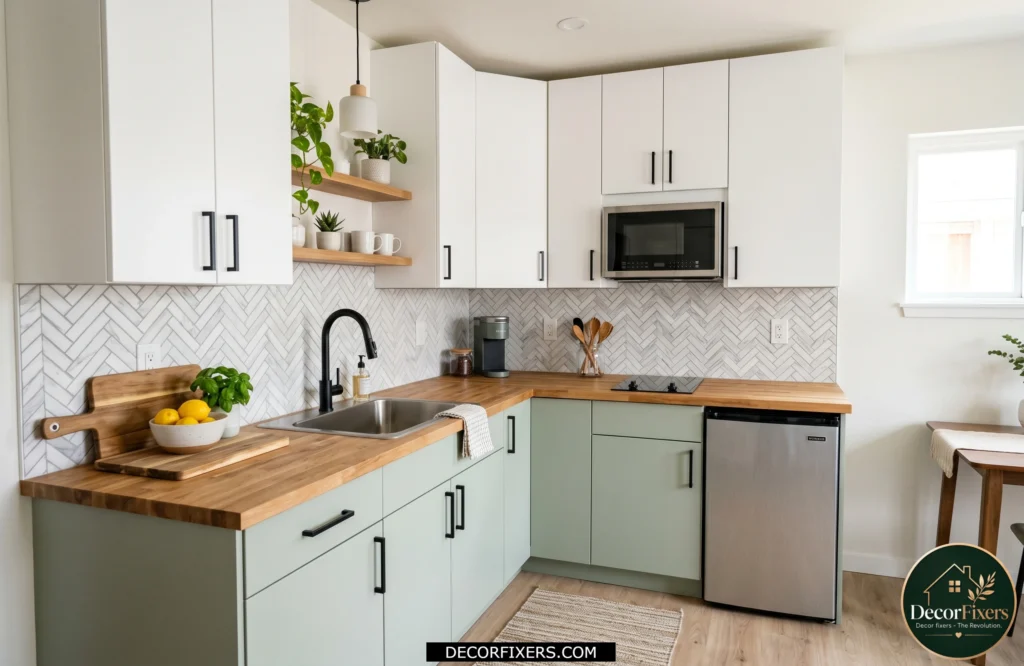
Peel-and-stick tile lets you add a finished wall covering in an afternoon with no demolition and no grout mess. Brands like Smart Tiles make this realistic for a weekend project.
It’s fully reversible, which makes it ideal for renters. It’s also less heat- and impact-resistant, so keep it away from direct stovetop splatter where possible.
7. Bold Color Tile
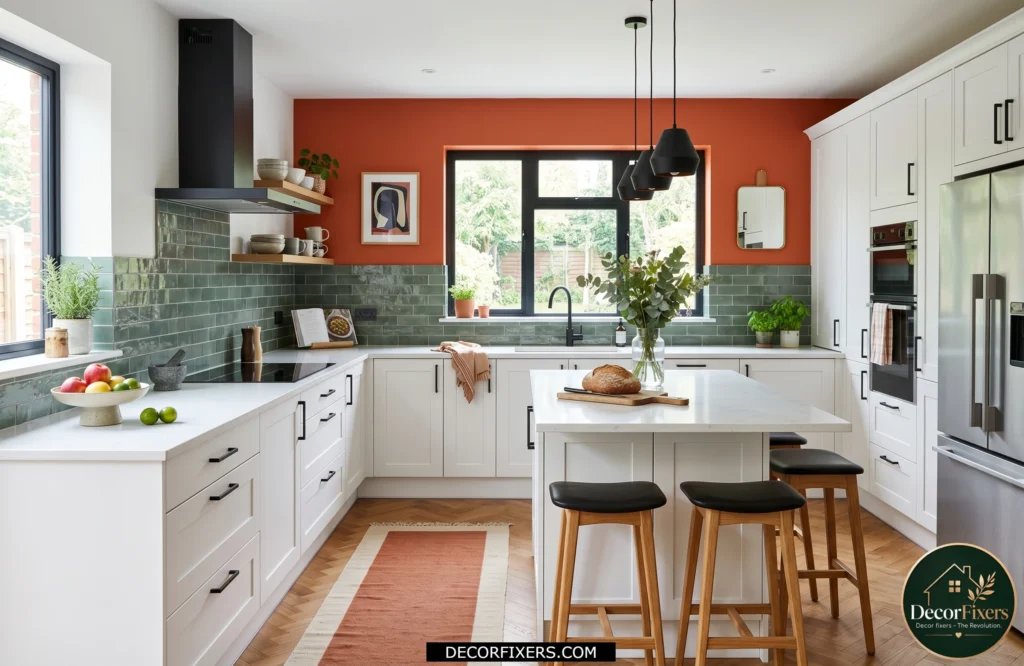
Sage green, terracotta, and deep blue tile are showing up more in 2026 kitchens, paired with brass or black hardware for contrast. A bold backsplash works as the single statement in an otherwise neutral room.
I’ll say this even though some designers will push back: an all-white kitchen, with zero color anywhere, reads flatter in photos than the trend pieces admit.
8. Glass Tile Behind the Cooktop
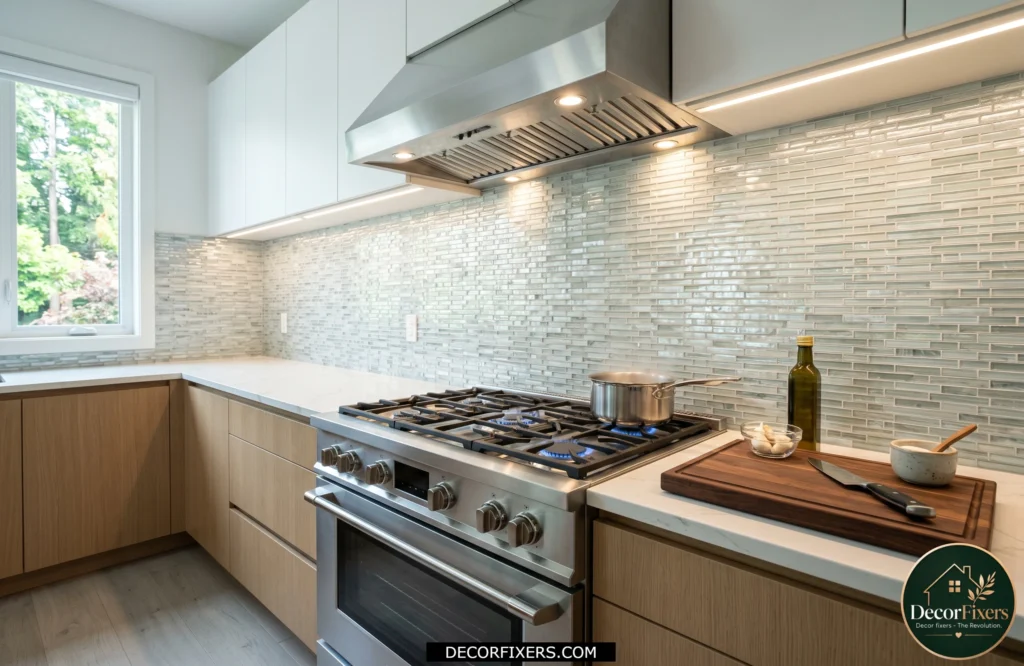
Glass tile reflects light and wipes clean almost instantly, which makes it a smart, splash-resistant choice directly behind the range. It also brightens darker kitchens noticeably.
It shows water spots more than matte tile does. Wipe it down right after cooking instead of letting grease sit, and it’ll stay looking new for years.
9. Vertical Stacked Tile
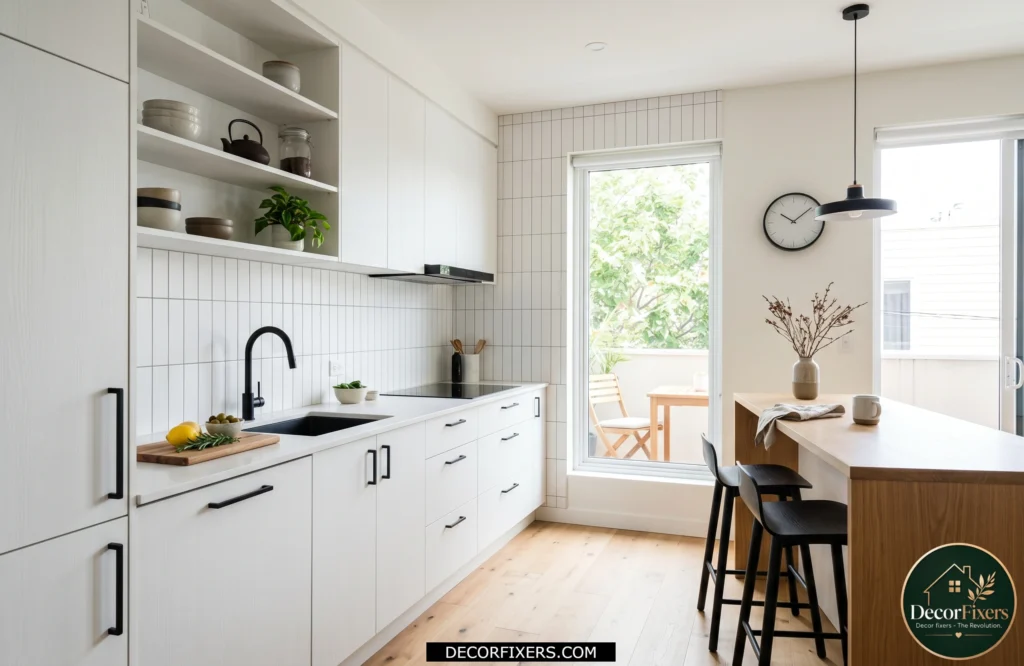
Instead of the usual brick offset, vertical stacking lines tile up in straight columns for a cleaner, more modern look. It’s a small shift that changes the whole feel of subway tile.
It works especially well in narrow kitchens, since the vertical lines pull the eye upward and make low ceilings feel a bit taller than they are. This clean, understated look is also a natural fit for a Scandinavian Kitchen Design, where simplicity, functionality, and visual openness are key priorities.
10. Mosaic Tile
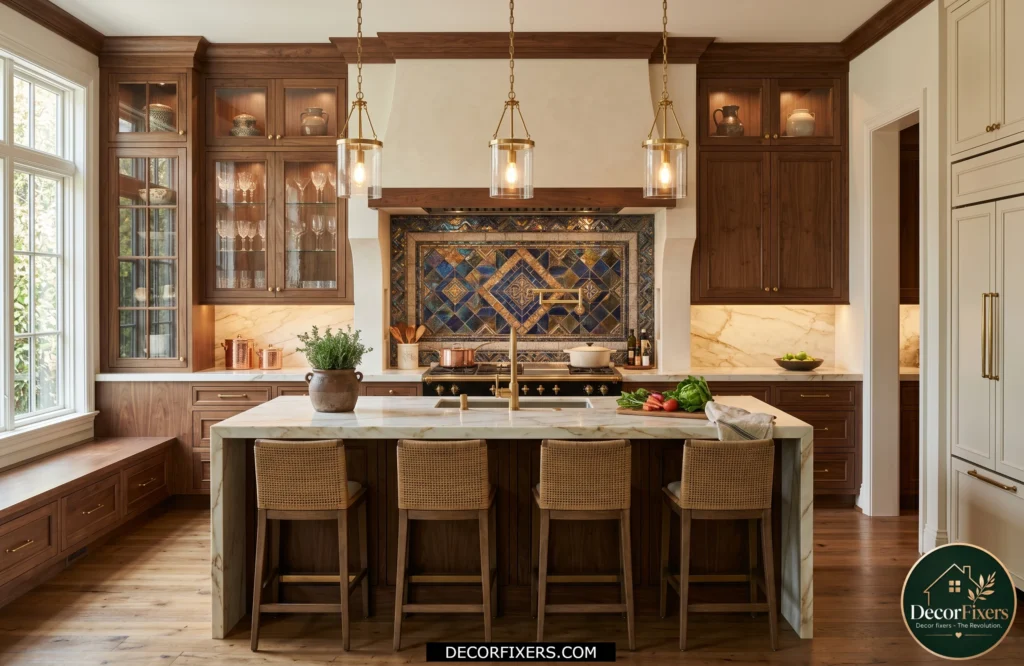
Mosaic tile mixes small pieces of glass, stone, or ceramic into one sheet, giving a wall texture and color variation that a single large tile can’t deliver. It’s a strong pick for a focal accent area.
Grout lines multiply with mosaic tile, so cleaning takes longer. Reserve it for a smaller section, like behind the range, rather than the full wall.
11. Stainless Steel Panels
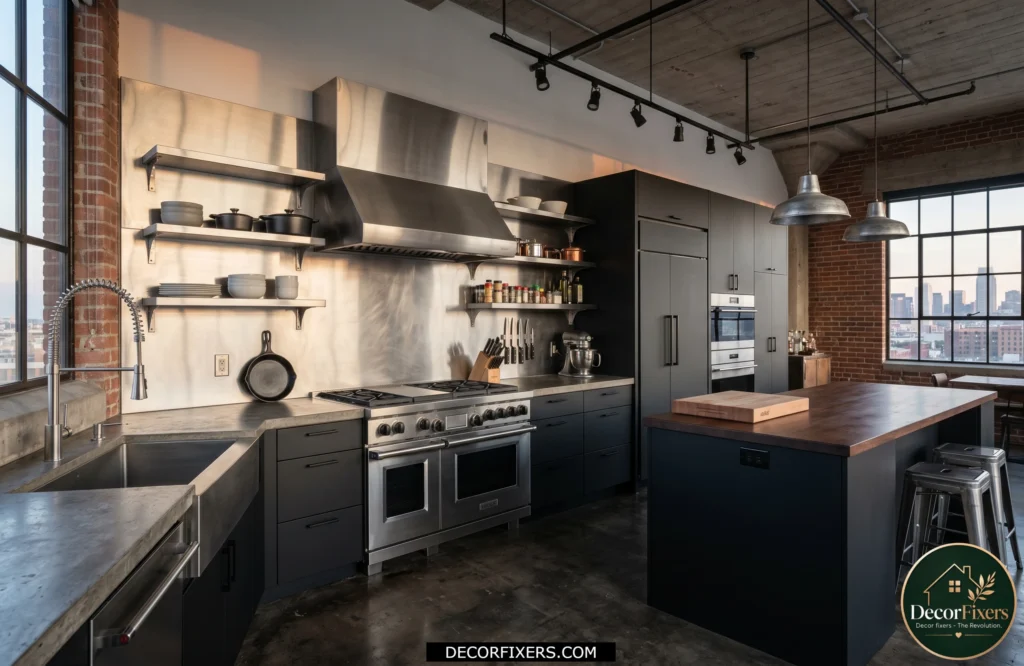
Stainless steel panels give a backsplash an industrial, restaurant-style finish that resists heat and stains better than almost any tile option. It’s a natural fit behind a range or cooktop.
Fingerprints and water spots show up fast on steel. A brushed finish hides smudges far better than a polished, mirror-like surface does.
12. Natural Stone or Travertine
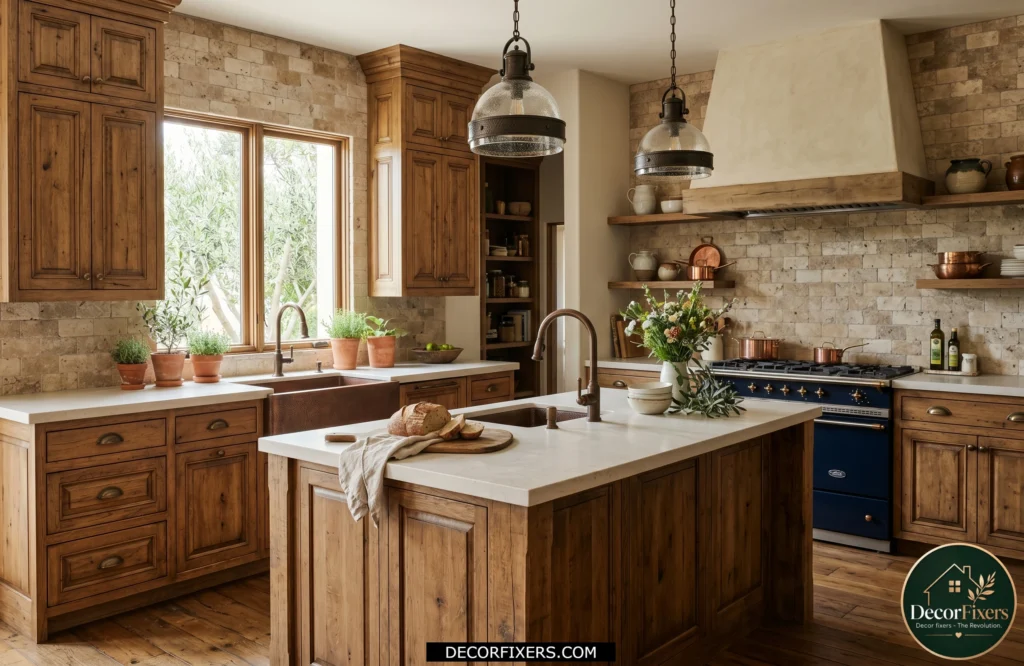
Travertine and other natural stone bring an earthy, rustic texture to a wall, especially paired with wood cabinets and warm metal fixtures. No two pieces look exactly alike.
It needs more upkeep than porcelain or ceramic. Reseal natural stone once a year, and expect some patina to develop over time, which many homeowners actually want.
13. Picket Tile
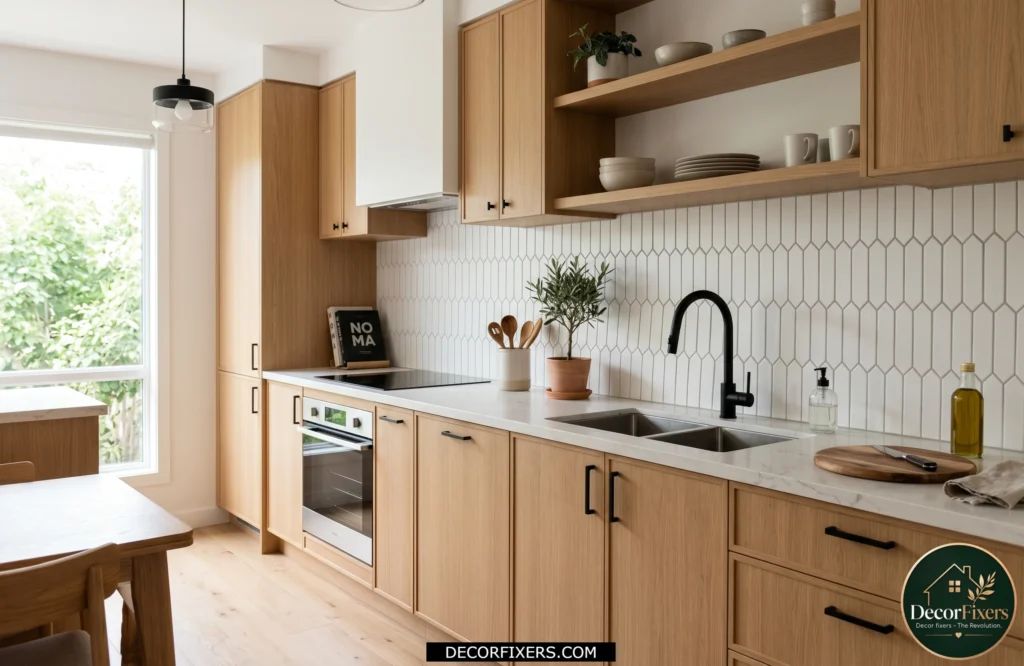
Picket tile is a pointed, fence-post-shaped tile that updates the classic subway look into something more current for 2026 kitchens. It’s a modern, low-cost twist on a familiar shape.
It pairs naturally with simple white or wood cabinetry. Keep the rest of the kitchen quiet so the picket shape stays the visual focus.
14. Full-Height Tile to the Ceiling
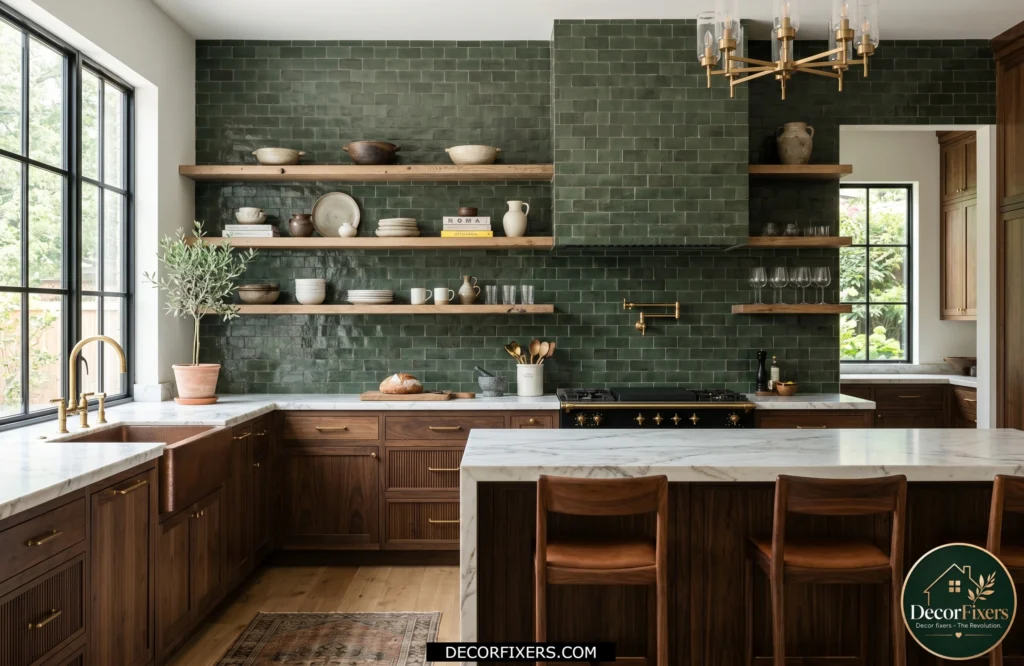
Extending tile from the counter all the way to the upper cabinets, or to the ceiling on an open wall, makes a small kitchen feel taller and far more custom. It’s one of the moves competitor roundups mention but rarely explain.
This works best when there are no upper cabinets on that wall, or when you’ve chosen a statement tile worth showing off in full.
15. Wood-Look Porcelain Tile
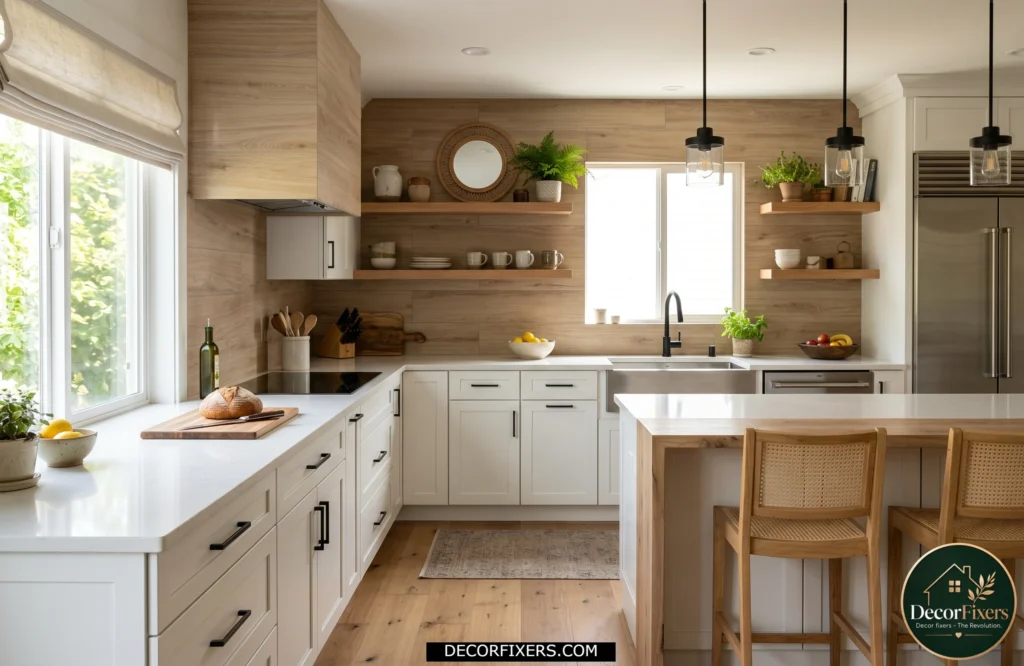
Wood-look porcelain tile gives a wall the warmth of wood grain without the moisture risk real wood carries near a sink or stove. It’s durable enough for daily kitchen use.
It pairs especially well with white or matte cabinetry, where the wood tone adds contrast without competing with stone countertops or busy hardware finishes. Once the backsplash is finished, incorporating a few thoughtful Kitchen Counter Styling Ideas can help reinforce the warm, inviting character of the space without creating visual clutter.
Quick Comparison: Popular Backsplash Materials
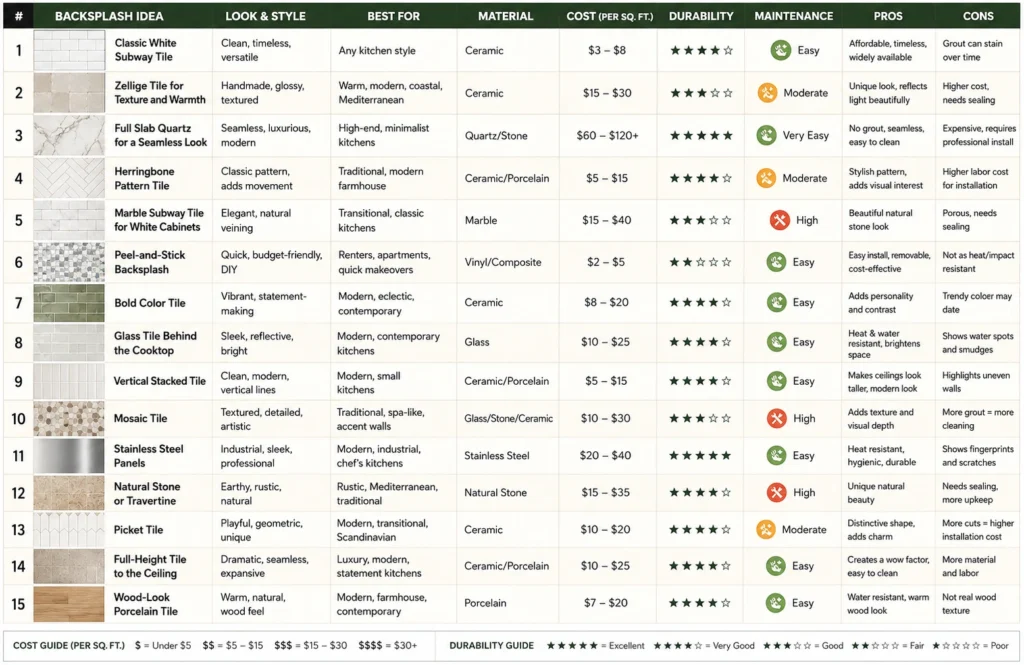
Subway tile works better for tight budgets and DIY installs because it’s cheap and forgiving to cut. Slab quartz suits kitchens that want a seamless, low-grout look and a bigger budget. The real difference comes down to grout lines versus one continuous surface.
| Option | Best For | Key Benefit | Limitation |
| Subway Tile | Tight budgets, DIY installs | Cheap and easy to install | Grout lines need regular cleaning |
| Zellige Tile | Warm, textured kitchens | Handmade look, unique tone shifts | Higher cost, uneven surface |
| Slab Quartz | Seamless modern kitchens | Almost no visible grout | Expensive, needs a pro installer |
| Peel-and-Stick | Renters, quick refreshes | No demo, fully reversible | Less durable near the stove |
| Natural Stone | Traditional, luxury kitchens | Unique veining, ages well | Needs sealing and upkeep |
How Much Does a Kitchen Backsplash Cost to Install?
How much does a kitchen backsplash cost to install? According to Angi’s 2026 cost data, professional installation runs $480 to $1,500 on average, or roughly $15 to $40 per square foot, based on a standard 35-square-foot kitchen wall.
Most people assume a bolder design always costs more. The data says otherwise — some of the priciest jobs are plain subway tile installed in complicated patterns that simply take longer to lay.
Ceramic and ceramic-look tile sit at the low end. Marble, slab quartz, and handmade zellige sit at the high end, mostly because of the labor and precision each one demands.
Common Backsplash Mistakes to Avoid
Homeowners who skip ordering a sample tile often end up replacing a brand-new backsplash within a year, because the color reads completely differently under their actual kitchen lighting than it did online.
Some experts argue that matching your countertop material exactly always looks high-end. That’s true for slab quartz kitchens with simple, quiet cabinetry. But if your cabinets already carry detail or color, an exact match can make the whole room feel busy instead of cohesive.
I’ve seen conflicting advice on this point. Some designers swear by matching tone exactly; others say it flattens the room entirely. My read, after going through it myself: match the tone, not the pattern, and let one surface lead.
Look, if you’re working with a tight renovation budget, here’s what actually works: subway tile or peel-and-stick, full stop. Save the marble and zellige splurge for a smaller accent section instead of the whole wall.
CONCLUSION:
My honest take, after going through this twice myself: don’t pick the tile first. Pick your cabinet and counter finish, then come back to this list and choose the backsplash that complements both, not the other way around.
The one that looked perfect on my phone screen looked completely different once it was three feet from my actual stove. Or maybe I should say it this way: photos lie a little, and lighting changes everything.
Whatever you land on, get a real sample piece and hold it against your wall before you order a single box. It’s a five-minute step that saves a very expensive mistake.
FAQs:
Q: What’s the best kitchen backsplash for white cabinets?
A: Light marble, classic subway tile, or soft sage and blue tile all work well with white cabinets, since they add contrast without competing with the cabinetry itself.
Q: How do I clean a kitchen backsplash?
A: Wipe tile and grout weekly with warm water and mild dish soap, and reseal natural stone backsplashes about once a year to prevent staining.
Q: Should I match my backsplash to my countertop?
A: Not exactly. Matching the tone or finish usually works better than matching the pattern, since identical materials side by side can flatten the design.
Q: Why does my grout keep staining?
A: Unsealed grout absorbs grease and water over time. Reseal grout every 12 to 18 months, especially behind the stove, to stop discoloration.
Q: When should I extend tile to the ceiling?
A: Extend it when you’ve picked a statement tile, there are no upper cabinets on that wall, or you want the kitchen to feel taller.

Creator of DecorFixers, sharing practical home and interior ideas focused on real-life usability, simple design improvements, and budget-friendly solutions.