


I used to think a beautiful dining table was about finding the perfect object. I’d browse online for hours, buy something stunning, and then, the moment I sat down with guests, I’d realize I couldn’t see half the faces across the Dining table. The centerpiece was gorgeous. The dinner conversation? Awkward.
Here’s the thing: a great dining table centerpiece isn’t about spending more. It’s about knowing the three rules, the right height, the right scale for your table size, and the right swap strategy for seasons, and then picking from ideas that actually match how you live.
The 20 ideas below are organized for exactly that. Whether you’re styling a modern dining room, working with a tiny dining room, or just need fresh dining room decor ideas that don’t require a floristry degree, there’s something here that’ll work for your table, your budget, and your life.
1. The Styled Tray, The Most Functional Centerpiece Formula
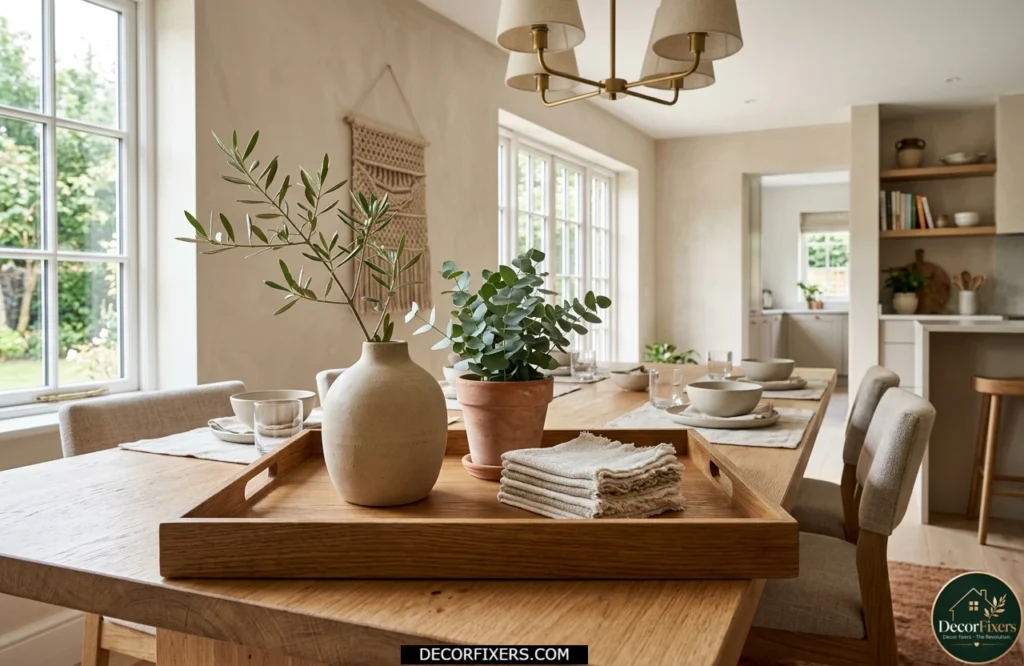
A wooden, marble, or rattan tray with three to five items corralled inside it is the single most practical centerpiece formula I’ve seen work across every design style. It’s easy to pick up and move, it keeps things from scattering, and it gives the Dining table a finished look even when the individual items are simple.
Start with a tray that’s roughly one-third the length of your Dining table. Add one tall element (a candle or small vase), one medium element (a small plant or decorative object), and one low element (a coaster stack, a small dish, or a folded linen). That’s the whole formula. Users who’ve tried this approach often report it’s the one centerpiece that actually stays on the table daily, because it’s fast to move and just as fast to reset.
2. Fresh Flowers in a Low Vase, Done the Right Way
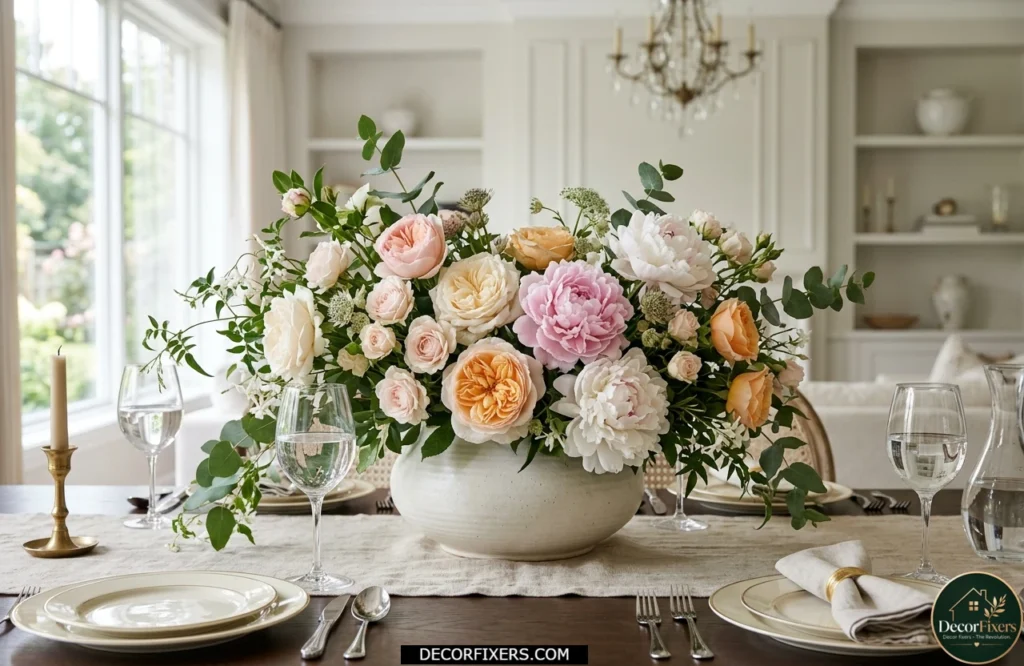
Fresh flowers get a bad reputation because people buy them in tall, dramatic arrangements that block sightlines and die in four days. The fix is simple: choose a wide, low vase, think under 10 inches tall, and use stems that naturally bloom outward rather than upward. Garden roses, ranunculus, and peonies are ideal. Tulips and sunflowers, unless cut very short, tend to outgrow the Dining table.
Swap the water every two days and trim the stems at an angle. That single habit extends the life of a fresh arrangement by three to four days. For a week-long display, add a single crushed aspirin to the water; it slows bacterial growth and genuinely works, despite how strange it sounds.
3. Candle Cluster on a Mirrored or Marble Tray
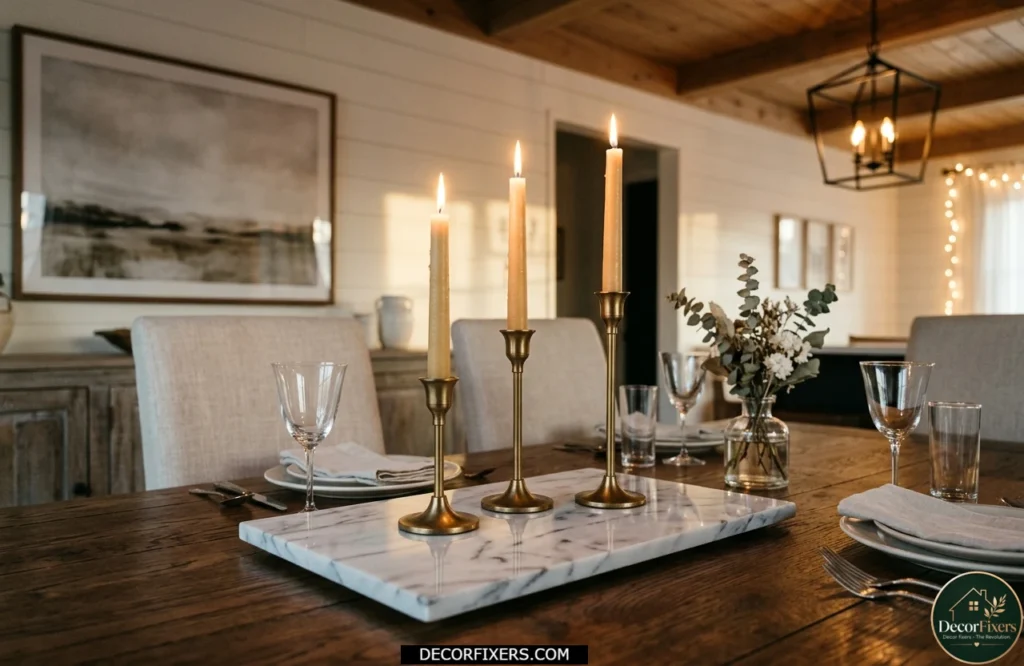
This is the go-to for weeknight dinners that feel a little more intentional without any effort. Group three candlesticks of varying heights, always odd numbers, on a reflective tray. The mirror or marble surface doubles the candlelight and makes even a Tuesday dinner feel considered. Use unscented candles during meals; scented wax competes with food aromas and is a genuine sensory problem, not just a preference.
Brass, matte black, and aged pewter candlestick finishes are all having a strong moment in 2025 interiors. CB2’s collection of sculptural brass holders, specifically the Teramo and Nico lines, is worth mentioning here. They photograph beautifully and hold standard taper candles without adapters.
4. A Bowl of Seasonal Fruit, The Centerpiece That Earns Its Keep
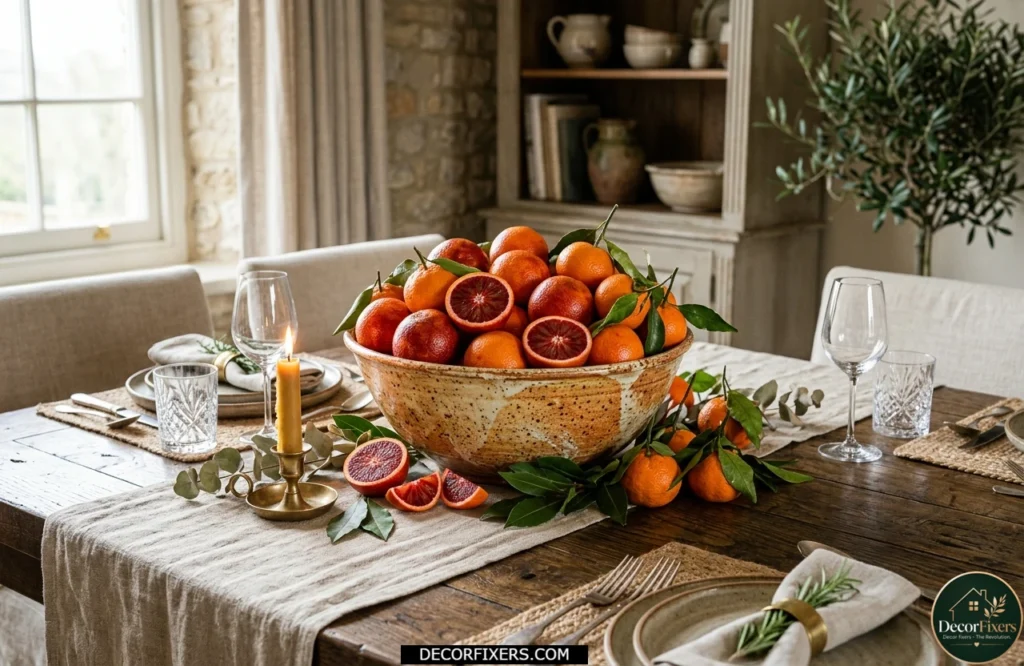
This one is underrated. A large bowl of fruit isn’t a placeholder until you find something better; it’s a legitimately good everyday dining table centerpiece idea. The key is vessel choice and editing. A single variety of fruit in a beautiful bowl reads as intentional and styled. A bowl of mixed random fruit reads as a grocery overflow.
In winter, try blood oranges or clementines in a textured ceramic bowl. In summer, use green apples or figs. In the fall, small gourds are mixed with pomegranates. The bowl itself matters as much as the fruit; a high-sided walnut bowl, a pedestal fruit stand, or a wide shallow tray all give structure that elevates the whole arrangement.
5. The Single Statement Vase, Minimalism Done Right
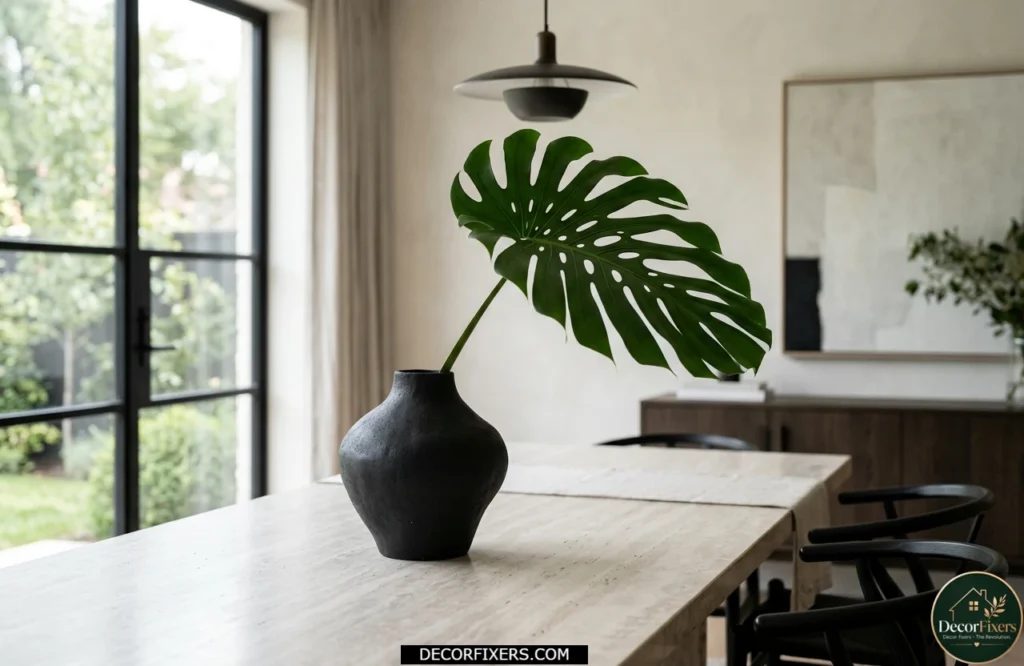
One sculptural vase. One stem. That’s it. This works especially well in modern or contemporary dining rooms where visual clutter is the enemy. Choose a vase with an interesting silhouette, an asymmetric hand-thrown ceramic, a matte black geometric piece, or a glass form with visible texture. The stem inside should be dramatic: a monstera leaf, a large amaryllis, or a single dried pampas frond.
If you enjoy clean, uncluttered styling, you may also find inspiration in our Modern Dining Room guide, where minimalist furniture, balanced color palettes, and thoughtful decor choices work together to create a sophisticated dining space.
6. Faux Botanicals, When Quality Is Everything
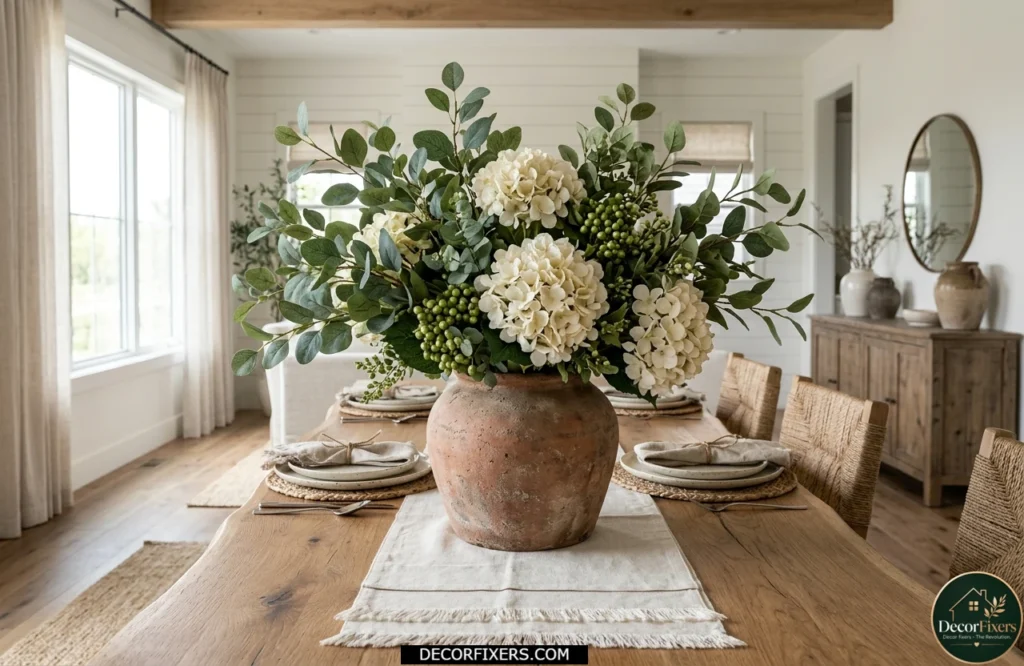
There’s a version of faux florals that looks genuinely beautiful, and a version that looks like a prop dining table at a budget hotel. The difference is entirely in the quality of the material and the density of the arrangement. IKEA’s SMYCKA collection is the honest budget entry point; the eucalyptus, cotton branch, and hydrangea stems look realistic at normal viewing distances and cost a fraction of fresh alternatives.
The trick with faux botanicals is to mix them with real texture: a real terracotta pot, a real linen runner, a real wooden tray. The contrast makes the faux elements look intentional rather than artificial. Dust them monthly. Store them in a cool, dry spot between seasonal rotations, and they’ll last for years.
7. Succulents and Air Plants, Long-Lasting Living Decor
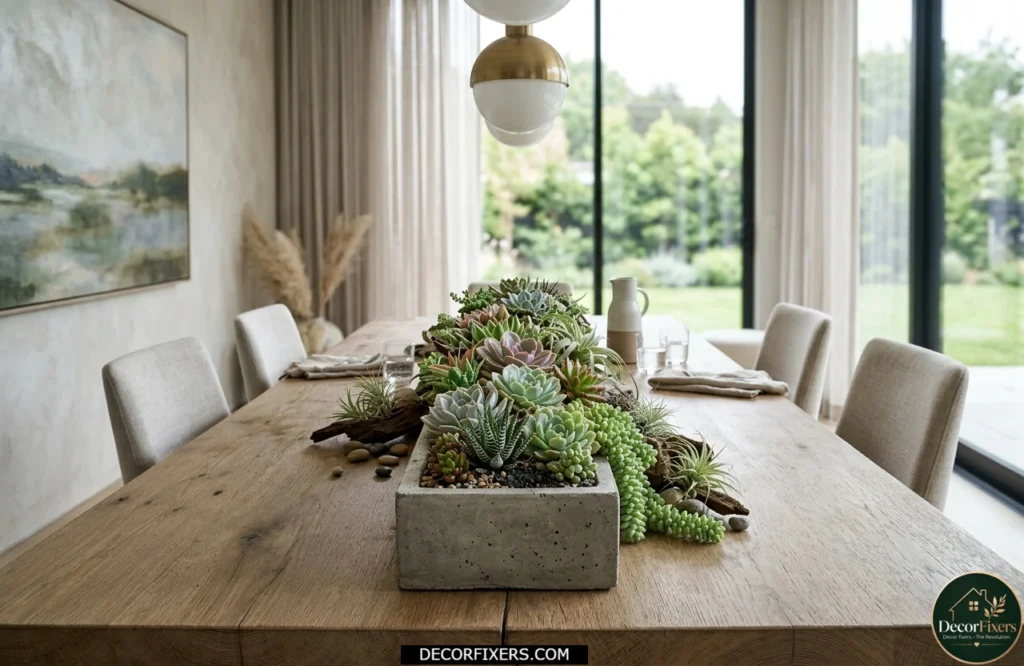
For anyone who has killed fresh flowers more times than they’d like to admit, succulents are the answer. They need watering once every one to two weeks and genuinely improve the longer they sit. A shallow concrete trough or a long wooden box planted with three to five varieties, Echeveria, Sedum, and Haworthia work well together, creates a textured, modern centerpiece that lasts months.
Air plants (Tillandsia) are even more dramatic. They need no soil, just a twice-weekly mist, and they can be displayed in glass terrariums, on cork rounds, or wired into sculptural shapes. Terrain by Anthropologie offers one of the better curated selections of air plant setups if you want a ready-made arrangement rather than building your own.
8. Dried and Preserved Botanicals, The Low-Maintenance Statement Piece
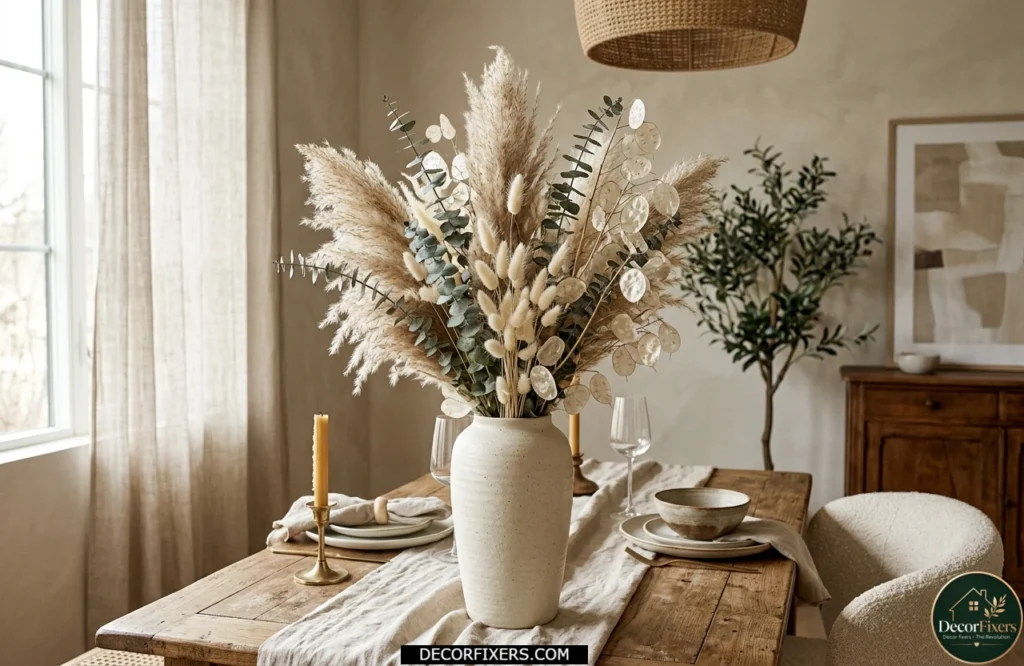
Dried botanicals are having a genuine design moment, and not without reason. Pampas grass, dried lunaria (money plant), bunny tails, and preserved eucalyptus all hold their shape and color for 12 to 18 months with zero maintenance. They photograph beautifully, work in warm-toned and neutral interiors, and need only occasional dusting.
The arrangement works best in a tall, narrow vase for a dramatic vertical look, or cut short and placed in a wide shallow bowl for a more relaxed, organic feel. Be aware that pampas grass sheds slightly; place it away from upholstered chairs if shedding is a concern. A simple eucalyptus bundle tied with natural twine and laid flat on a dining table runner is also a legitimate, and cost-free, centerpiece.
9. Herbs in Terracotta Pots, Beautiful and Functional
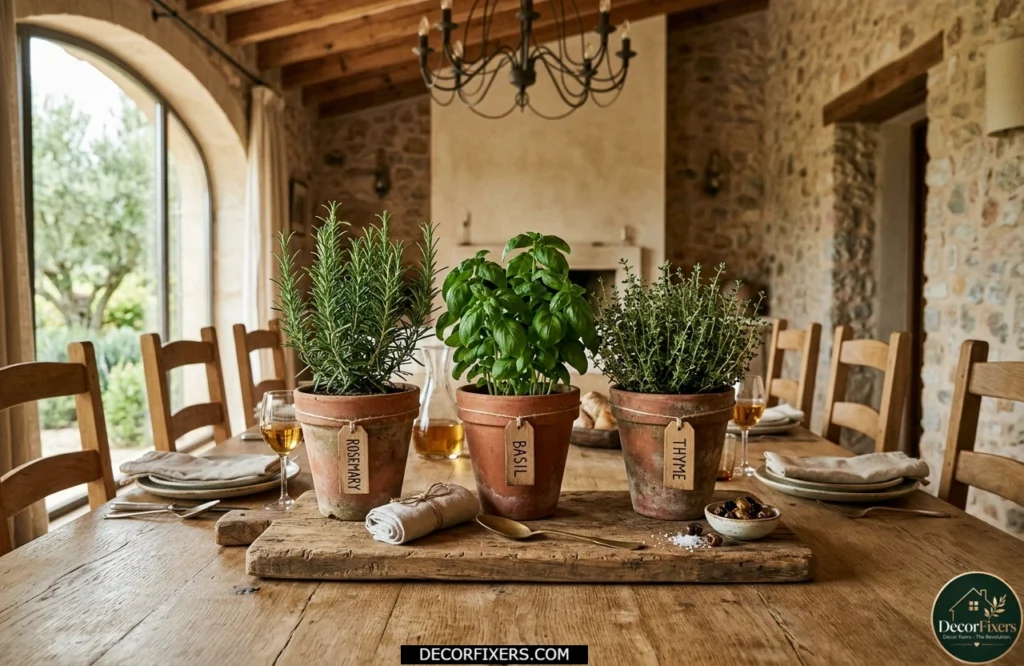
A row of three small terracotta pots planted with rosemary, basil, and thyme is one of the most underused dining table centerpiece ideas for families. It looks intentional, it smells wonderful, and you can actually use what’s growing in your cooking. Group them on a wooden board or low tray for a cohesive look. Keep them near a window when not on the table so they stay healthy.
This works especially well in farmhouse, Mediterranean, and casual dining room aesthetics. It bridges the gap between decor and function in a way that even guests who aren’t interior design enthusiasts will immediately understand and respond to. It signals that this is a dining table where real life happens, which is exactly the energy a family dining room should have.
Quick Comparison: Which Centerpiece Type Is Right for You?
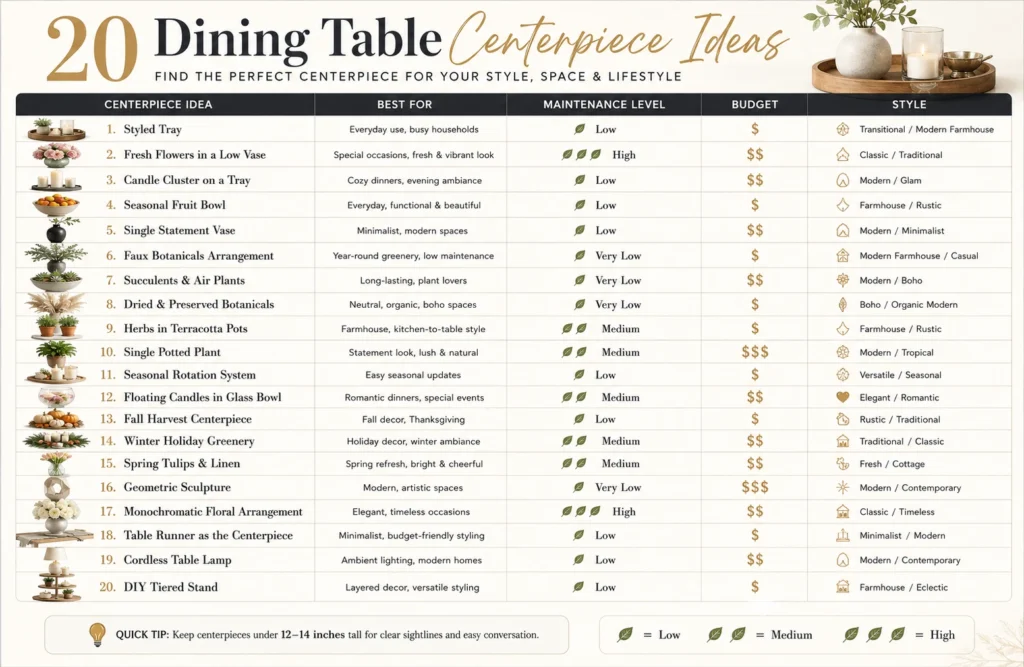
Use this table to match your lifestyle to the right centerpiece approach before committing to any of the 20 ideas below.
| Centerpiece Type | Best For | Key Benefit | Limitation |
| Fresh flower arrangement | Special occasions & dinner parties | High visual impact, natural scent | Wilts in 5–7 days, needs water changes |
| Faux botanicals (e.g., IKEA SMYCKA) | Every day display, low-maintenance homes | Zero upkeep, reusable year-round | Looks artificial if the quality is poor |
| Candle cluster on a tray | Intimate dinners, modern farmhouse style | Instant warmth and ambiance | Flame risk; unscented preferred for meals |
| Sculptural vase / ceramic object | Minimalist or modern dining rooms | Timeless; never needs replacing | No seasonal flexibility |
| Seasonal fruit bowl | Families, everyday functional use | Doubles as food storage, zero cost | Needs refreshing every few days |
10. A Single Potted Plant, The Bold, Low-Effort Move
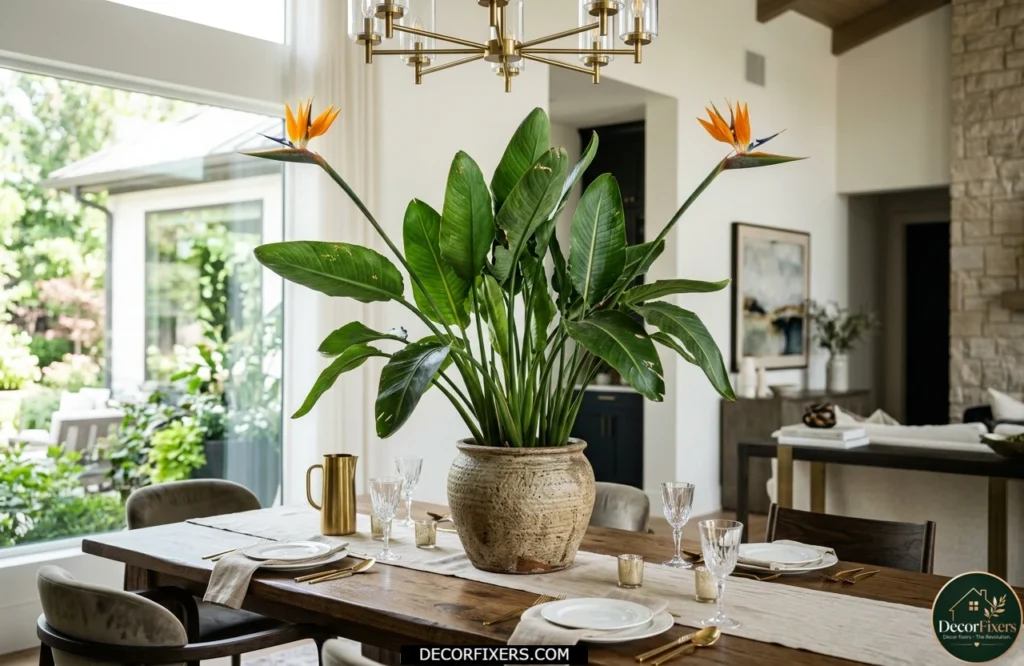
One large potted plant, placed directly at the dining table’s center, is a move that surprises people with how effective it is. A fiddle-leaf fig, a trailing pathos in a hanging pot, or a bird of paradise in a textured planter all read as intentional rather than improvised. The key is scale: the plant should feel substantial enough to anchor the table without blocking it.
For round dining tables under 48 inches, choose a plant that grows upward rather than outward. A slim snake plant or a single monstera stem works better than a wide-spreading pathos. For long rectangular dining tables, a series of three small plants in matching pots creates an especially striking runner effect.
For homeowners working with limited square footage, these greenery-based centrepieces pair especially well with the smart layout strategies featured in our Tiny Dining Room article, which focuses on making compact spaces feel larger and more inviting.
11. The Seasonal Rotation System, One Base, Four Looks
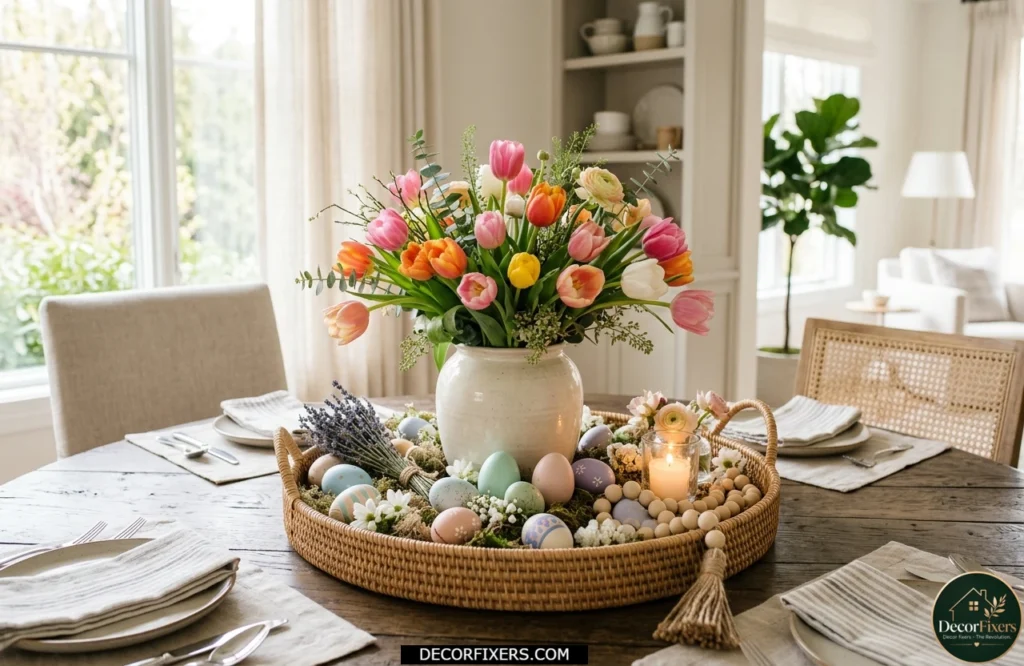
Instead of overhauling your centerpiece four times a year, build one permanent base and rotate the elements. A large white ceramic bowl, a woven rattan tray, or a simple wooden board stays on the dining table year-round. What goes into or onto it changes with the season. Spring gets tulips and small nests. Summer gets citrus fruit and linen. Fall gets mini gourds and dried leaves. Winter gets pinecones, greenery, and a small pillar candle.
This system costs less money long-term, takes about ten minutes to execute each season, and means your dining table never looks neglected. Users who’ve adopted this approach often report that the seasonal rotation itself becomes something they look forward to, a small ritual that marks the changing of the year in a tangible, visual way.
12. Floating Candles in a Low Glass Bowl, Instant Romance
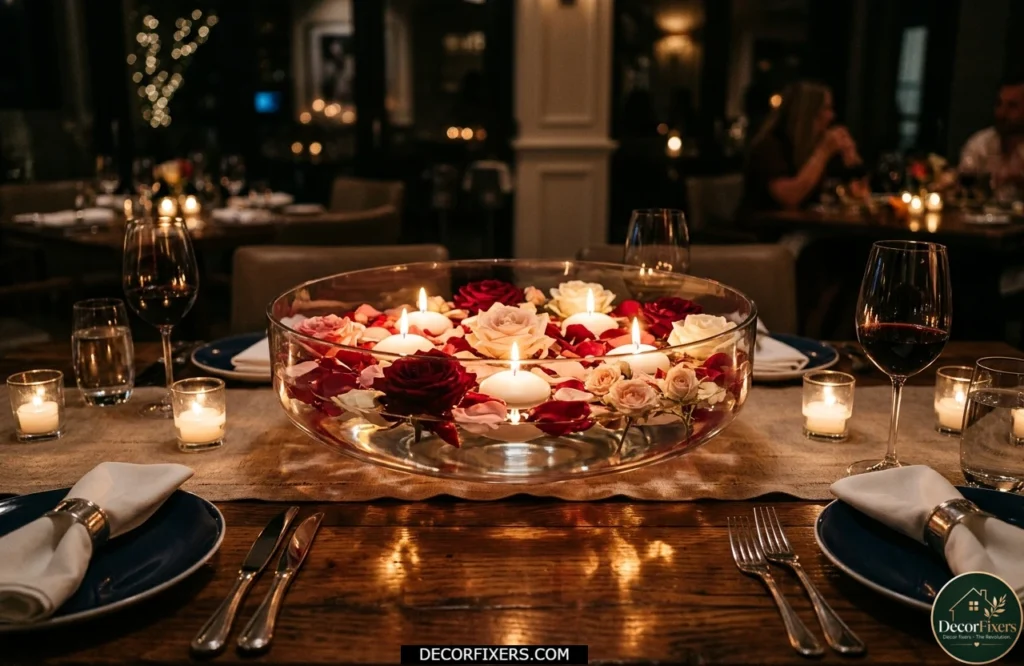
Fill a wide, low glass bowl with water, add three floating candles, and scatter a handful of flower petals or a few floating flower heads. This takes under five minutes and looks like something a florist charged $80 for. The water catches and amplifies the candlelight in a way that solid candle holders simply can’t replicate.
This works especially well for dinner parties and special occasions when you want a dramatic effect without permanent investment. The floating candle setup is the most requested centerpiece idea among homeowners hosting their first adult dinner party, according to interior styling communities across Reddit and Houzz. Keep the water level full and replace petals before they brown.
13. Fall Harvest Centerpiece, Gourds, Candles, and Dried Leaves
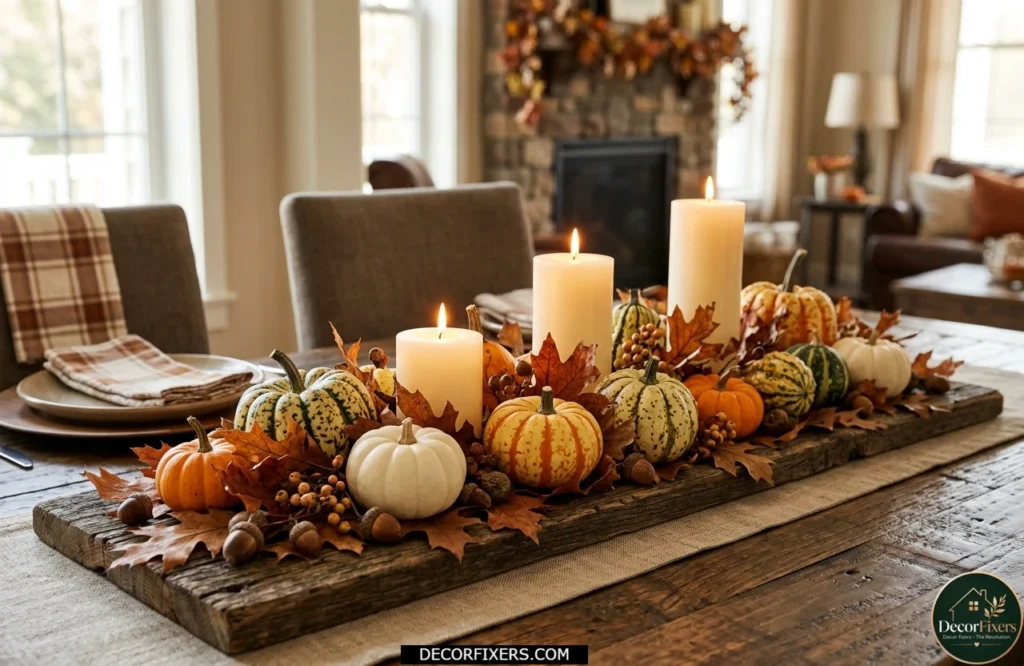
Autumn is when dining table centerpieces get the most attention and the most opportunity. A grouping of small decorative gourds and pumpkins in varying sizes, clustered around two or three pillar candles on a wooden board, is one of the easiest and most photogenic fall setups. Mix white, orange, and green gourds for visual depth rather than sticking to a single color.
Layer in a few dried oak leaves, a handful of acorns, or sprigs of bittersweet branches for added texture. The whole arrangement can be assembled in under 15 minutes from a single trip to a farmers’ market. When you’re finished with it in November, many of the elements can be composted, which makes this one of the most sustainable seasonal centerpiece options.
14. Winter Holiday Centerpiece, Greenery, Candles, and Metallic
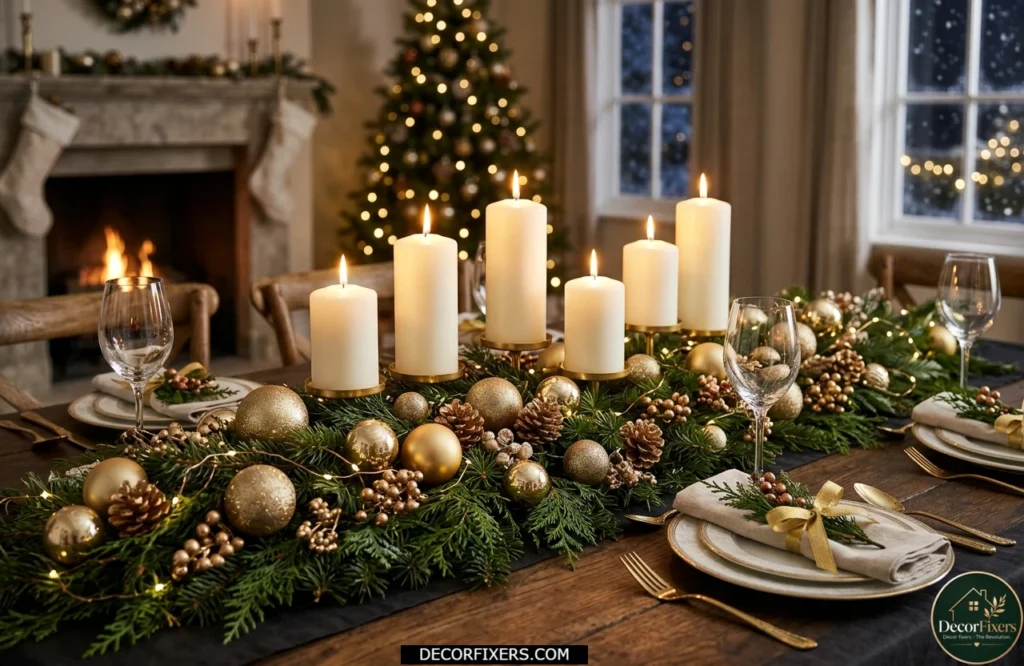
A winter centerpiece doesn’t have to mean a Christmas theme. A long, low arrangement of fresh evergreen sprigs, pine, cedar, or eucalyptus, laid flat on a runner and accented with white pillar candles and a few gold or silver ornament balls, works for the entire November-through-January stretch, regardless of the specific holiday.
Fresh greenery lasts two to three weeks indoors without water when kept away from direct heat sources. For a longer-lasting alternative, Terrain by Anthropologie’s preserved garland and wreath collection offers pre-made greenery that holds its shape and color for months. Add small battery-operated fairy lights woven through the arrangement for evening gatherings; the effect is genuinely warm and welcoming without the fire risk of open candle flames.
15. Spring Table, Fresh Tulips, Pastel Ceramics, and Bright Linen
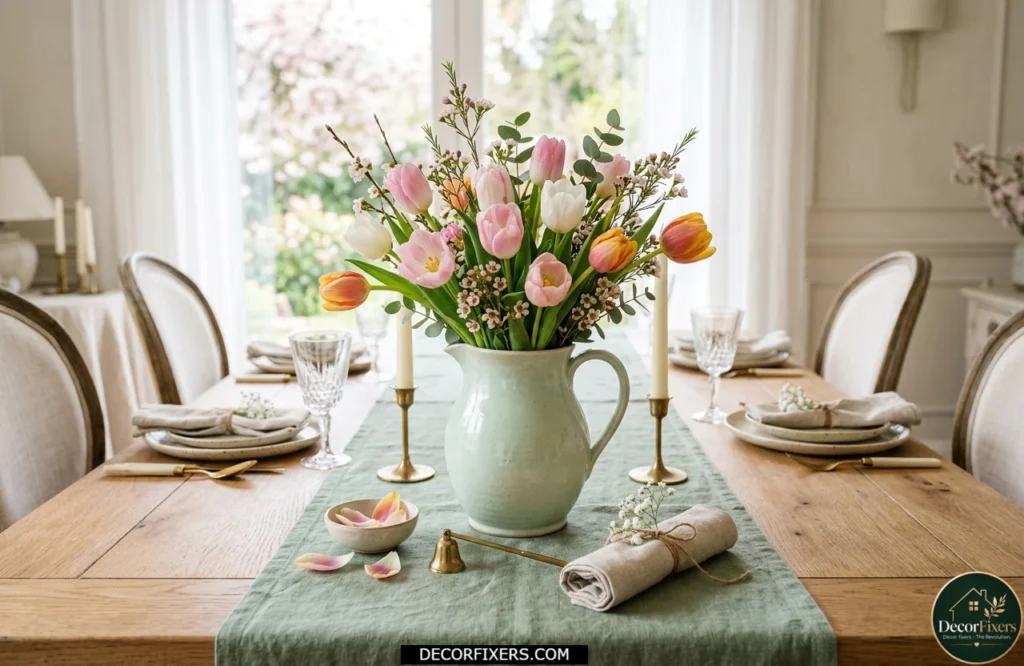
After months of dark, heavy winter decor, a spring centerpiece should feel like a breath of actual fresh air. Keep it light: a handful of tulips or daffodils in a simple ceramic pitcher, a light linen dining table runner in sage, blush, or pale yellow, and nothing heavy on the table at all. Restraint is the point.
Spring is the one season where a slightly taller arrangement is acceptable; tulips at 14–16 inches look graceful and intentional rather than obstructive, because the stems are slim and don’t create a visual wall. Switch out the flowers weekly as they turn. The pitcher stays. The linen stays. Only the blooms change, and the whole refresh costs under $10 from any market.
16. Geometric Sculpture or Decorative Object, The Conversation Starter
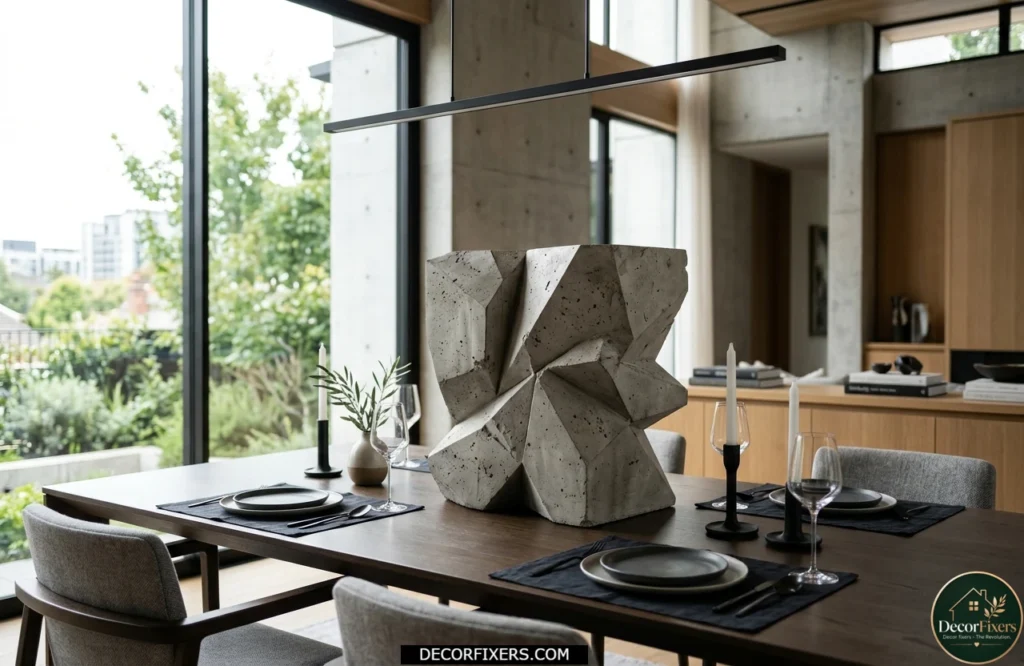
A well-chosen sculptural object says more about your design sensibility than any floral arrangement. Think a hand-cast concrete geometric form, an abstract resin sculpture, or a set of stacked stone spheres. This type of centerpiece never needs replacing, works across every season, and tells guests immediately that the person who lives here has a point of view.
The practical challenge is getting the scale right. A sculpture that’s too small reads as an afterthought on a large dining table. Err on the side of larger; a piece that feels slightly oversized for the dining table is almost always better than one that feels lost in the space. If you want visual interest without a single object, a cluster of three ceramics in varying shapes and a unified color palette achieves the same effect.
17. Monochromatic Floral Arrangement, The Designer’s Trick
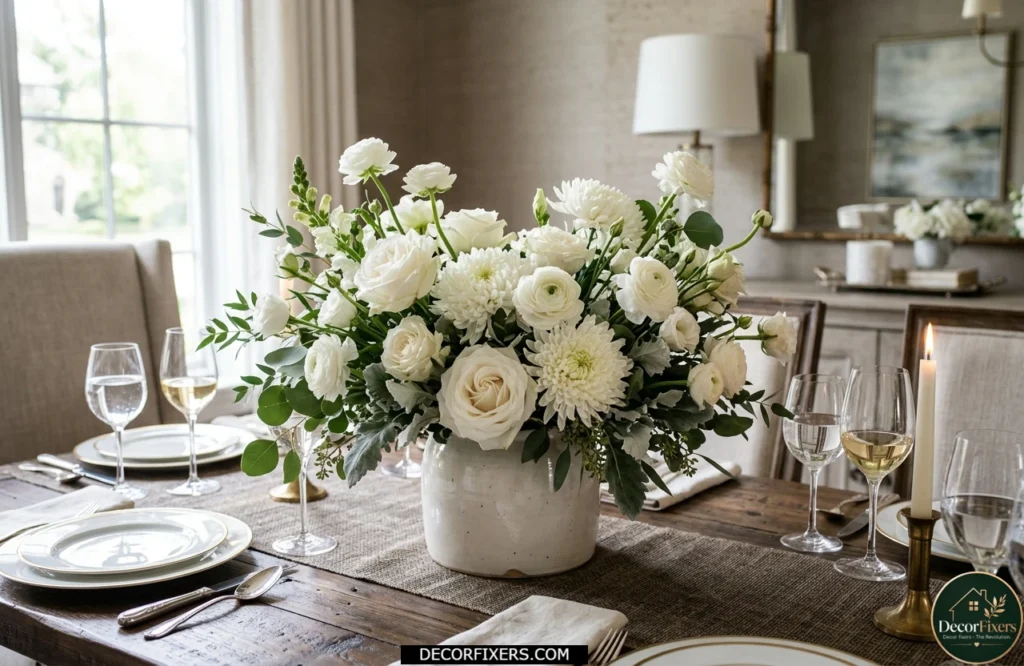
Most people instinctively reach for mixed-color flower arrangements. Professional floral designers often do the opposite: one color family, multiple flower varieties, different textures. An all-white arrangement of ranunculus, garden roses, and spray chrysanthemums looks dramatically more expensive than a rainbow mix of the same flowers at the same price point.
The same principle applies to bold tones. An all-burgundy arrangement of dahlias, amaranthus, and spray roses creates a moody, luxurious focal point that photographs beautifully and holds visual coherence when viewed from multiple angles. Pick the color that complements your room’s dominant tone, not the color you like most in isolation.
18. Table Runner as the Centerpiece, The Underrated Move
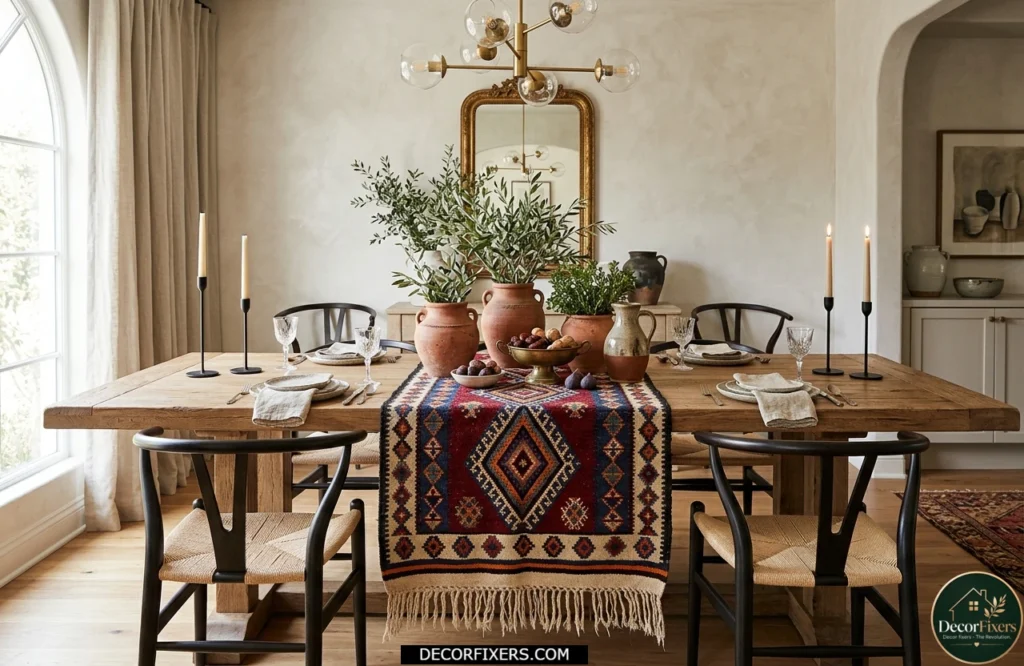
A statement table runner can function as the centerpiece itself, particularly on a long rectangular dining table where a single object struggles to anchor the full length. A hand-woven Moroccan runner, a bold printed linen, or a wide macrame runner placed down the center of the dining table, with just a single candle or small vase at each end, creates a cohesive, pulled-together look with minimal styling.
A statement runner can complement a wide range of decorating styles. For more inspiration on creating a cohesive and welcoming space, explore our collection of Dining Room Decor Ideas, featuring practical styling tips for every design aesthetic.
Some experts argue that a dining table runner is a supporting element, not a centerpiece. That’s valid for tables where a dominant focal object is desired.
19. Cordless Table Lamp, The Unexpected Focal Point
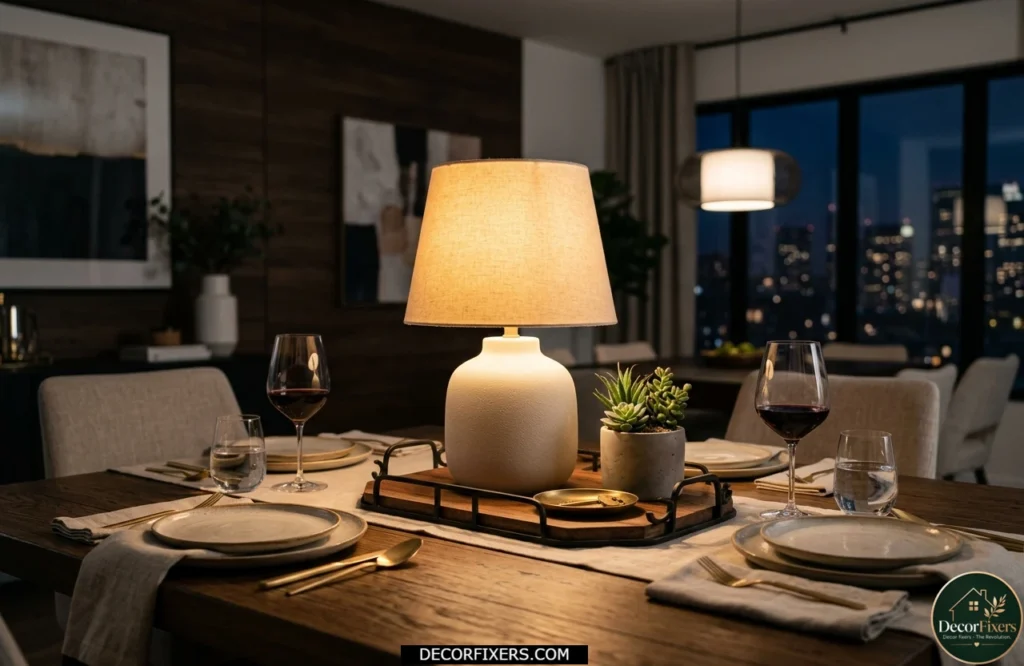
This is the idea that surprises people most, and then makes complete sense. A cordless rechargeable table lamp placed at the center of the dining table creates instant atmosphere during evening meals without the fire risk of candles or the cord management nightmare of a plugged-in lamp. It pulls the eye upward, adds warm light exactly where it’s needed, and doubles as a functional lighting element.
This works particularly well in open-plan living areas where the dining table needs to hold its own visually, even when competing with adjacent rooms. A compact lamp in a tactile material, such as rattan, ceramic, or stone, works better than a glass or metallic one, which can look more like a decorative object than a centered focal point. Pair it with a single small plant or a low tray beside it for balance.
20. The DIY Tiered Stand, Maximum Impact, Minimal Cost
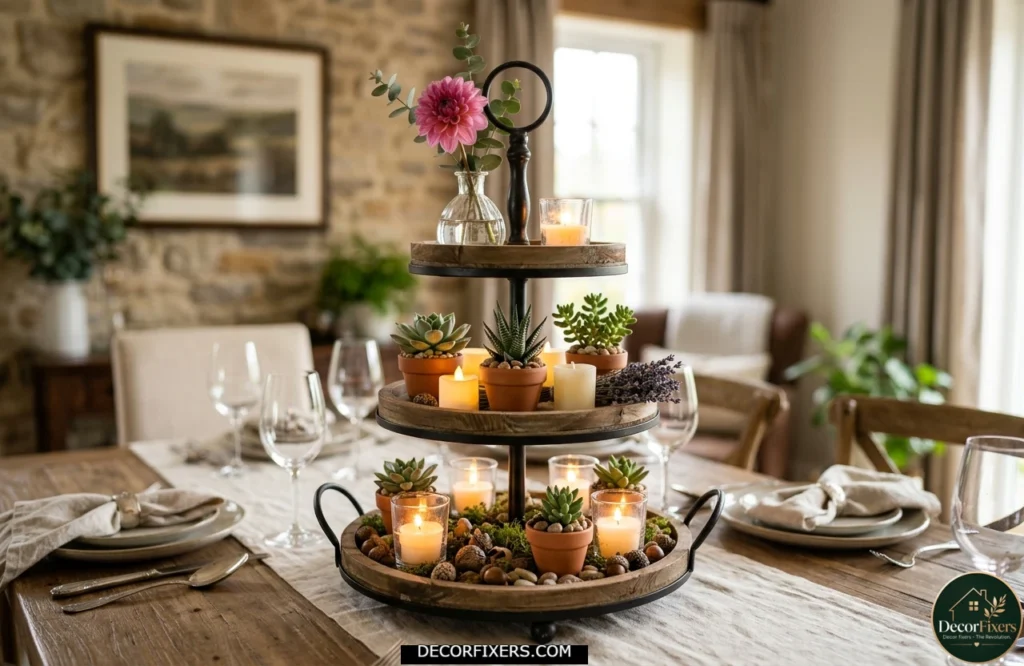
A tiered serving stand, the kind typically used for afternoon tea, repurposed as a centerpiece holder, is one of the cleverest dining table centerpiece ideas that almost nobody does. Fill the tiers with a mix of seasonal elements: small candles on the bottom, tiny potted succulents on the middle tier, and a single bud vase with a fresh stem on top.
The height creates visual interest without blocking sightlines because the open frame of the stand is transparent rather than solid. It’s easy to swap elements between tiers for different seasons or occasions. And because tiered stands are genuinely multipurpose, there’s no storage guilt; it earns its kitchen cabinet space whether you’re using it for decor or desserts. This is the kind of creative re-use that makes a dining room feel personally styled rather than catalog-copied.
Conclusion:
I’ve been styling dining tables, mine and other people’s, long enough to have made almost every mistake on this list. The tall centerpiece became a conversation barrier. The fresh flowers died on a Wednesday because I forgot to change the water. The fruit bowl that looked elegant for two days became genuinely unappealing.
What actually stuck in the long term was the tray system. One tray, three items, seasonal swaps. That’s it. My dining table looks finished year-round because I stopped trying to find the perfect permanent centerpiece and started building a simple, flexible framework instead.
The 20 ideas above aren’t ranked by quality; they’re all genuinely good options for different situations. What determines which one is right for you is your table size, your household’s daily life, your design style, and how often you want to think about it. A home with young children needs a different answer than a minimalist apartment with weekend dinner guests.
If you’re starting from zero, my honest suggestion is this: start with idea 1 (the tray) or idea 3 (the candle cluster). Master the scale and height rules first. Then add personality. That sequence works every single time.
FAQs:
Q: What is the best centerpiece for an everyday dining table?
A: A styled tray with a candle, a small plant, and one decorative object. It’s easy to move, looks polished in under two minutes, and works across every design style. This is the single most practical approach for tables that see daily real-life use.
Q: How tall should a dining table centerpiece be?
A: Keep your centerpiece under 12–14 inches tall, or choose something very tall and very narrow, like a single taper candle. Avoid wide, dense arrangements. Anything between 15 and 22 inches tall creates a visual wall that forces guests to lean sideways to maintain conversation.
Q: Are real or faux flowers better for dining table centerpieces?
A: Both work, but for different situations. Real flowers suit special occasions and seasonal updates. Faux botanicals, especially high-quality options like IKEA’s SMYCKA line, are better for everyday display and low-maintenance households. The key with faux is quality: poor-quality faux flowers look worse than no centerpiece at all.
Q: Why does my dining table centerpiece look awkward?
A: Usually, it’s a scale issue. The piece is either too small for the table (reads as an afterthought) or too large (crowds the space). The second most common problem is height; anything over 14 inches on a standard dining table immediately creates problems during actual seated meals. Start with sizing before choosing style.
Q: How often should I change my dining table centerpiece?
A: At a minimum, four times a year with the seasons. For seasonal swappers, March, June, September, and November are natural change points. If you use the base-and-elements system described earlier, a seasonal refresh takes under 15 minutes and costs very little, since you’re only swapping the accents rather than the entire arrangement.

Creator of DecorFixers, sharing practical home and interior ideas focused on real-life usability, simple design improvements, and budget-friendly solutions.