

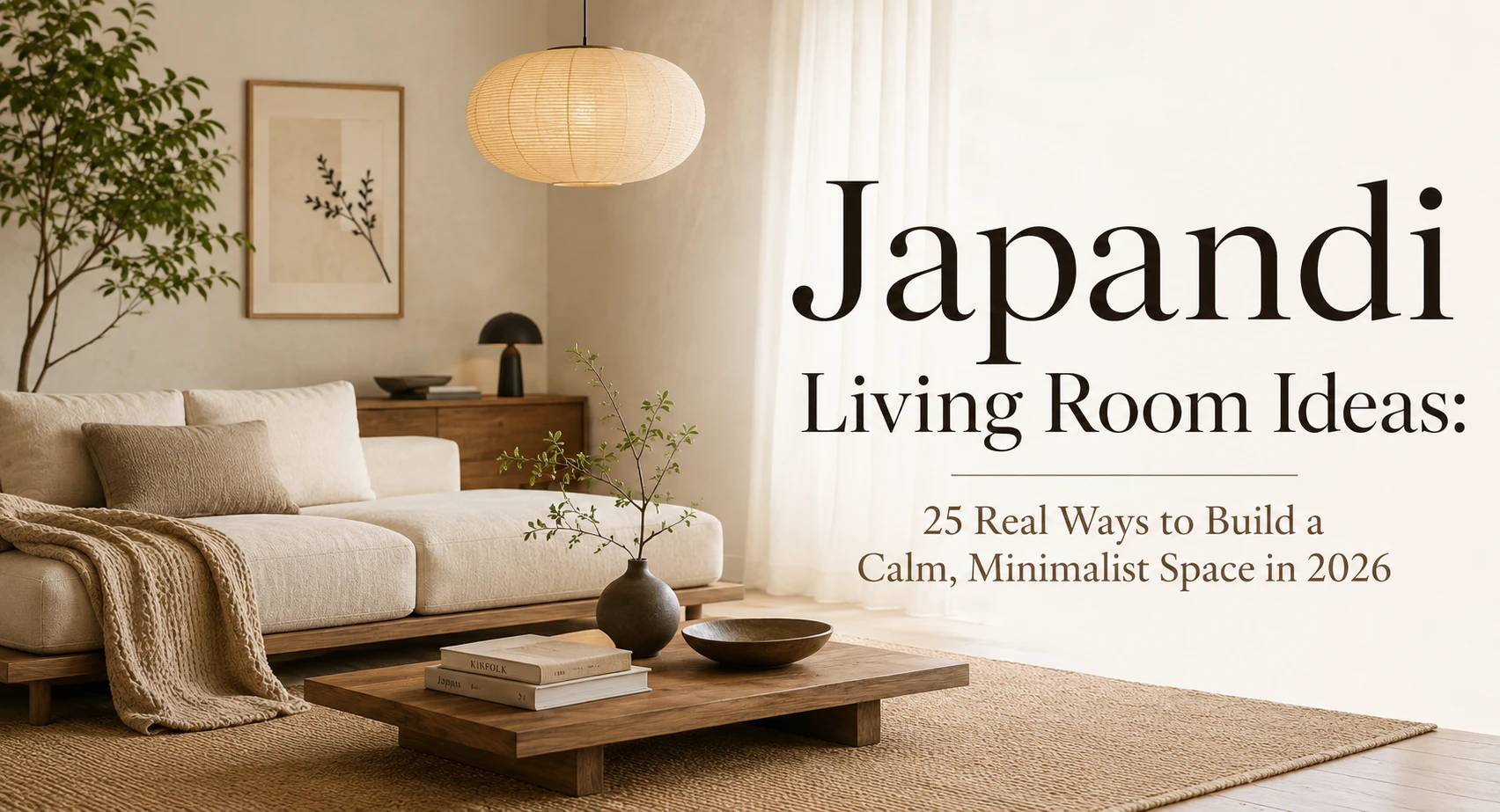
| What Is a Japandi Living Room? A Japandi living room blends Japanese minimalism with Scandinavian functionality to create a calm, clutter-free space. It uses natural materials, a muted earthy palette, and low-profile furniture where every piece earns its place, never filler, never decorative noise. |
I’ll be honest, the first time I stumbled onto a Japandi living room on Pinterest, I thought it was one of those editorial spaces that only exist in design magazines. You know the ones. Perfect light. Perfect stillness. A single fiddle-leaf fig that somehow looks intentional rather than abandoned.
But here’s the thing: I kept going back to those images. Not because they were flashy, they weren’t. But looking at them felt like exhaling.
That’s the real pull of Japandi. It’s not a trend you buy your way into. It’s a feeling you design toward.
This guide gives you 25 specific, doable Japandi living room ideas, from paint names to furniture picks to the one mistake everyone makes with houseplants. No fluff. No aspirational nonsense you can’t actually afford.
1. Start with a Warm Neutral Base, Not Cold White
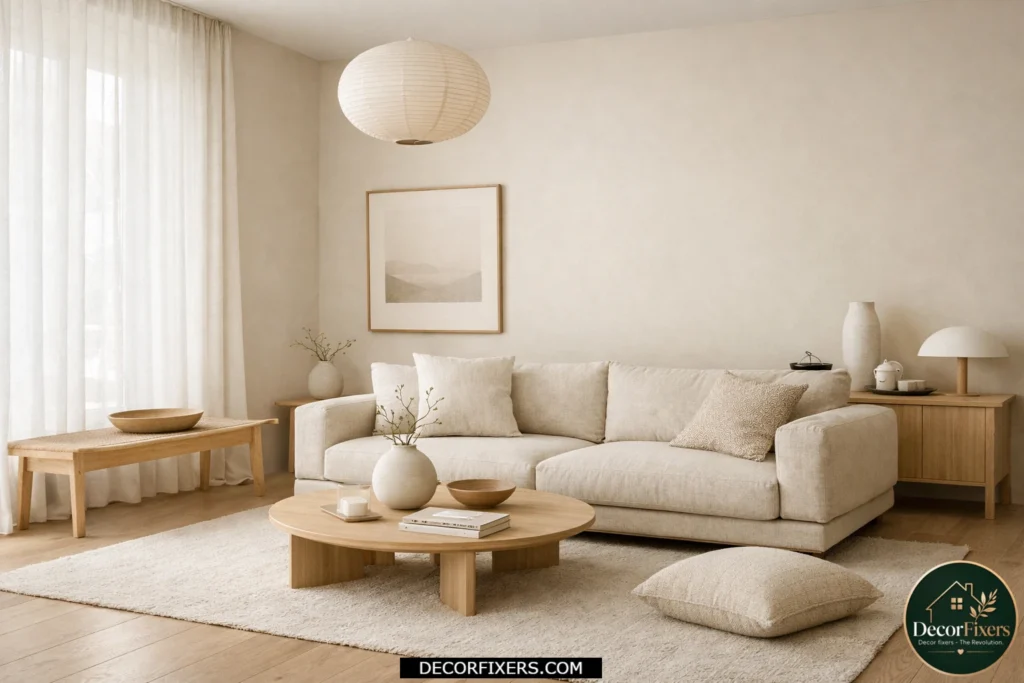
Most people assume Japandi means white walls. Wrong. Pure white reads sterile and cold, the opposite of what this style is going for.
The correct move is a warm off-white or greige with a slight yellow or beige undertone. Benjamin Moore’s “White Dove” (OC-17) and Sherwin-Williams “Accessible Beige” (SW 7036) are both designer favorites that sit perfectly within the Japandi palette without tipping into farmhouse territory.
2. Choose Low-Profile Furniture to Open Up the Floor
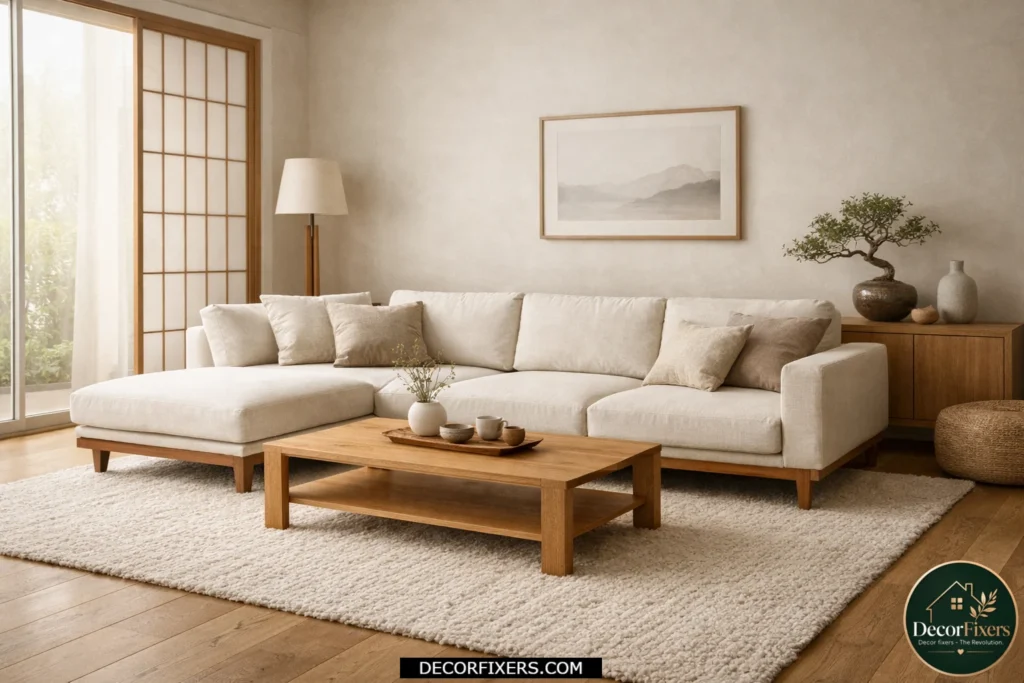
Low-slung furniture is one of the most defining moves in a Japandi living room. It isn’t just aesthetic, it’s spatial psychology.
When your sofa seat height sits at around 15–16 inches instead of the standard 18–19 inches, the room immediately feels taller and more open. IKEA’s SÖDERHAMN sofa is the budget entry point. For a mid-range option, BoConcept’s Carlton sofa nails the silhouette with clean arms and a natural fabric option. The goal isn’t floor seating in the Japanese tradition; it’s the visual language of it.
3. Layer Linen, Wool, and Rattan, Never Polyester
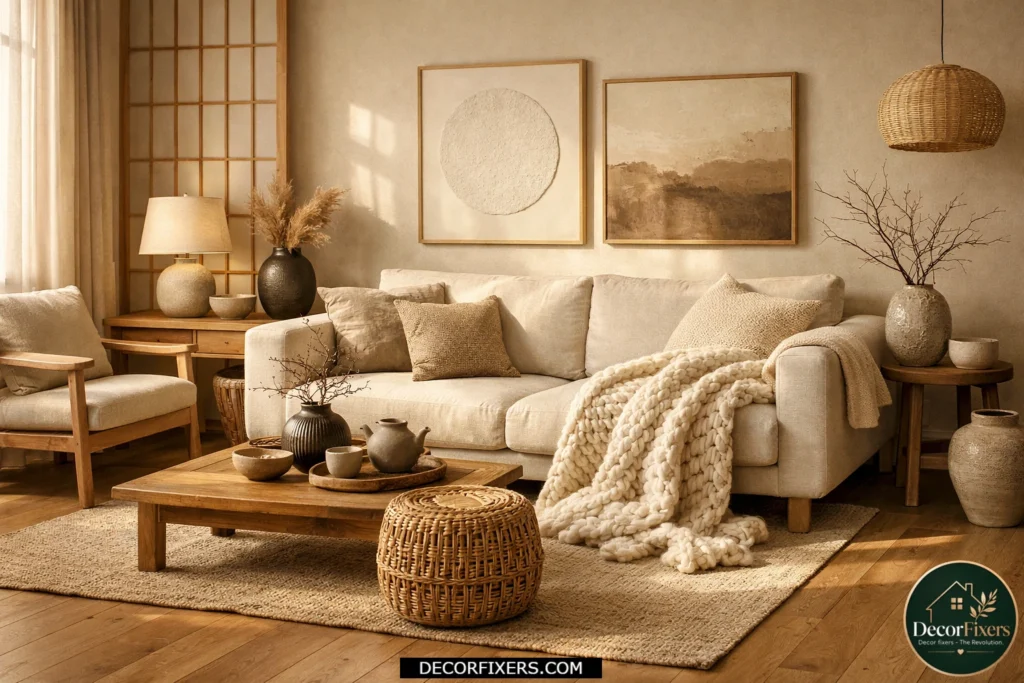
Texture is how Japandi avoids feeling cold. The trick is in the material hierarchy: rough, medium, soft.
A rattan side table (rough) next to a linen sofa (medium) topped with a chunky wool throw (soft), that layering creates visual depth without a single pattern in sight. Muji’s linen cushion covers and their wool-blend throws are exactly the kind of pieces that photograph well and feel better in real life. Avoid polyester blends; they catch light wrong and break the calm that the style depends on.
4. Use the 60-30-10 Color Rule, Japandi Edition
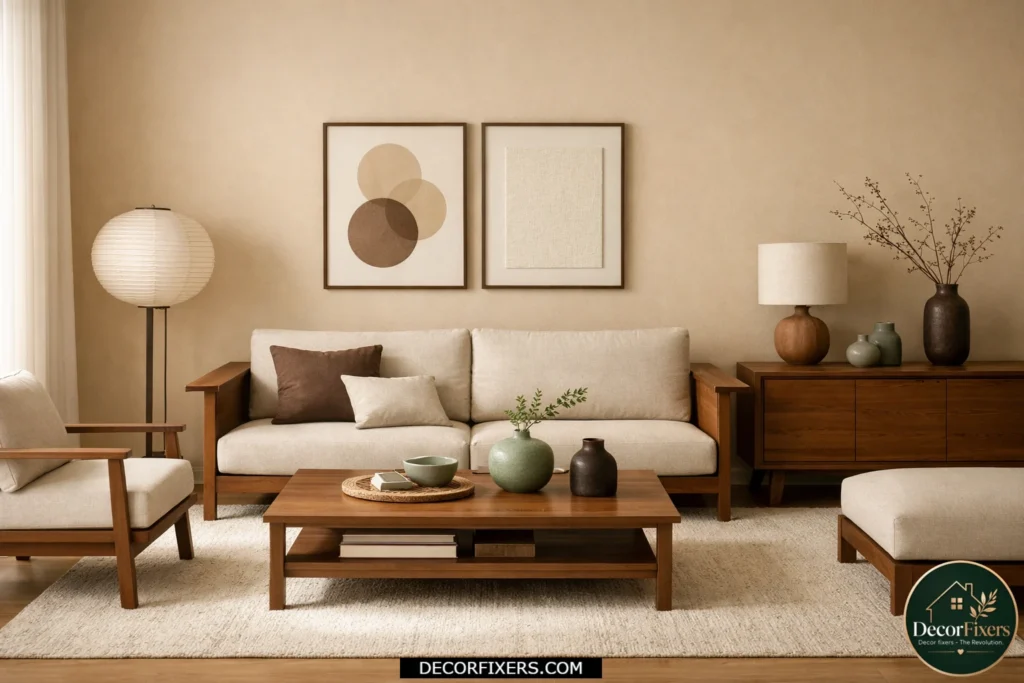
Here’s the thing: Japandi has a color rule most articles completely skip over.
60% of the room is your base neutral (wall color, flooring, large sofa). 30% is your secondary tone, warm walnut wood, linen, or a charcoal rug. 10% is your accent, a muted sage green vase, a terracotta cushion, or an ink-black pendant lamp. Stay within muted tones. No jewel colors. No high-saturation anything. The 2025–2026 update to this rule? That 10% accent is now leaning toward Pantone’s Mocha Mousse, a deep, warm brown that grounds the space without fighting the neutrals.
5. Pick One Statement Wood Piece and Build Around It
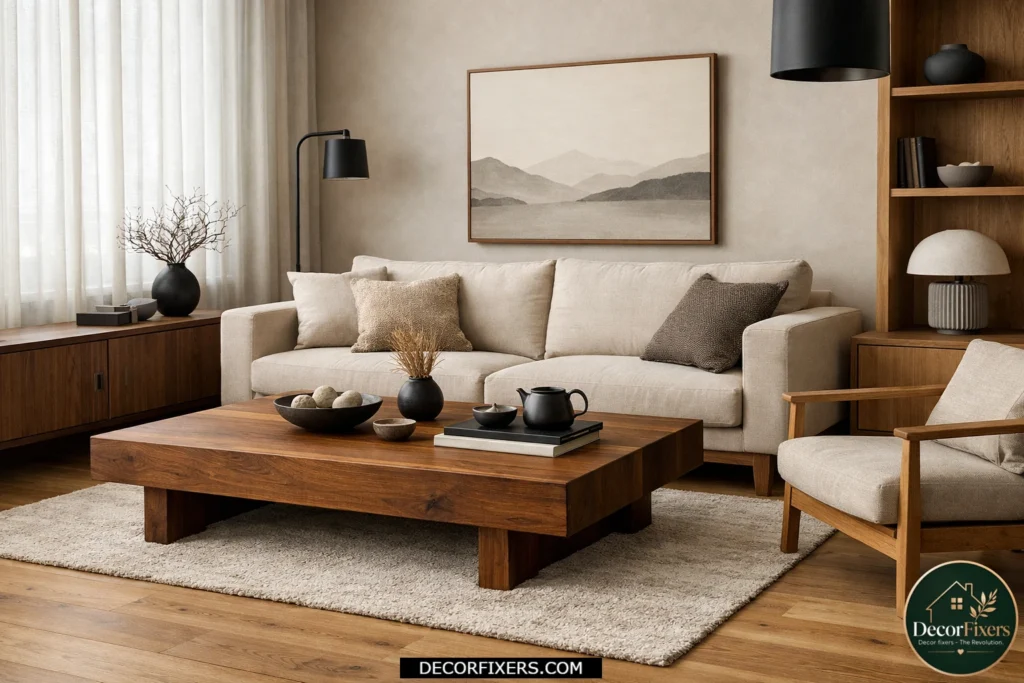
Japandi loves wood, but it doesn’t love a wood free-for-all.
Pick one anchor piece: a white oak coffee table, a walnut media console, or a solid ash bookshelf. That piece sets the wood tone for the whole room. Everything else should either match it or contrast it intentionally. Pale Scandinavian oak paired with a darker Japanese walnut reads sophisticated. Three different wood stains fighting each other reads like a showroom clearance sale.
6. Swap Overhead Lighting for Layered Warm Light Sources
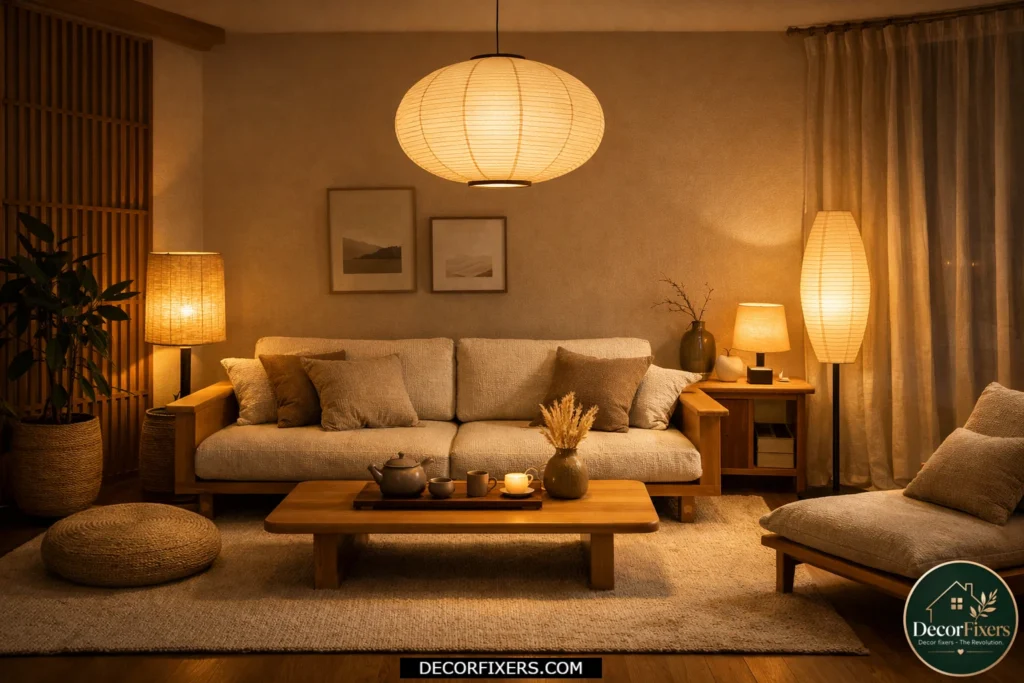
Overhead lighting is the enemy of atmosphere. Most living rooms are over-lit from above and under-lit at eye level.
A Japandi living room uses at least three light sources below ceiling height: a floor lamp, a table lamp, and either a paper pendant or a small task light. Warm bulbs, 2700K to 3000K, are non-negotiable. The Noguchi Akari paper lamp has become something of a Japandi icon for good reason: it diffuses light softly, and its washi paper construction is entirely on-brand. Budget version? IKEA’s KNAPPA pendant gets you 80% of the look at a fraction of the price.
7. Use Sheer Curtains to Maximize Natural Light
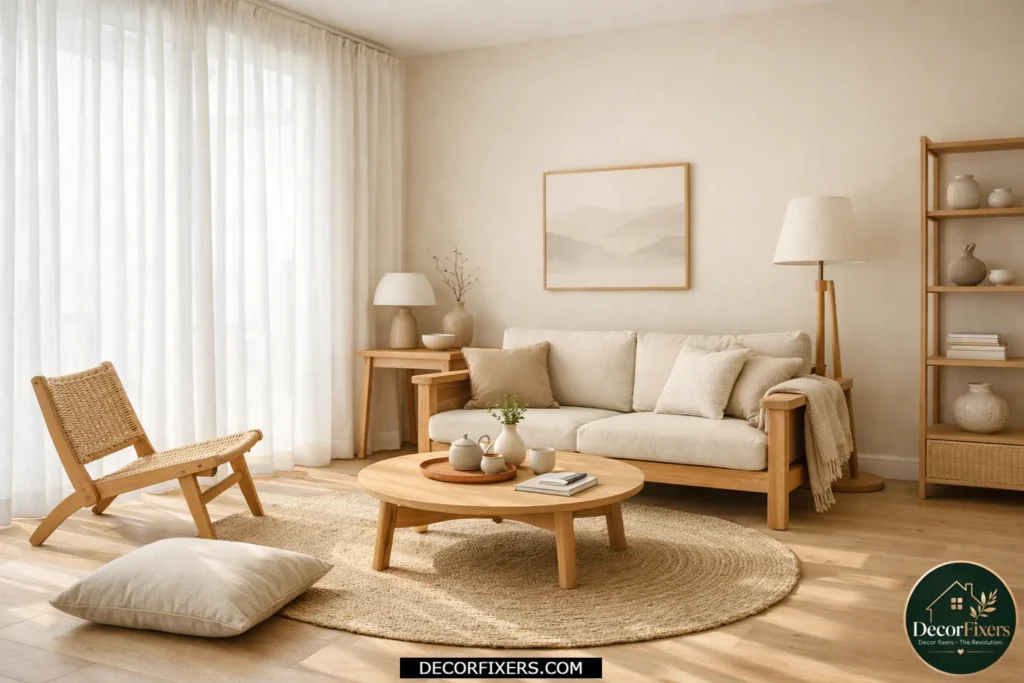
Natural light isn’t just nice to have in a Japandi space; it’s structural.
Heavy drapes close a room off. Japandi interiors use sheer linen or cotton curtains that let light pass through but still soften the window. Floor-to-ceiling length is key, even in rooms with short windows. Hanging the rod 4–6 inches above the window frame and letting the fabric pool slightly on the floor creates the illusion of height. Stick to undyed natural linen or a very pale warm white.
8. Embrace Negative Space, Deliberately Leave Areas Empty
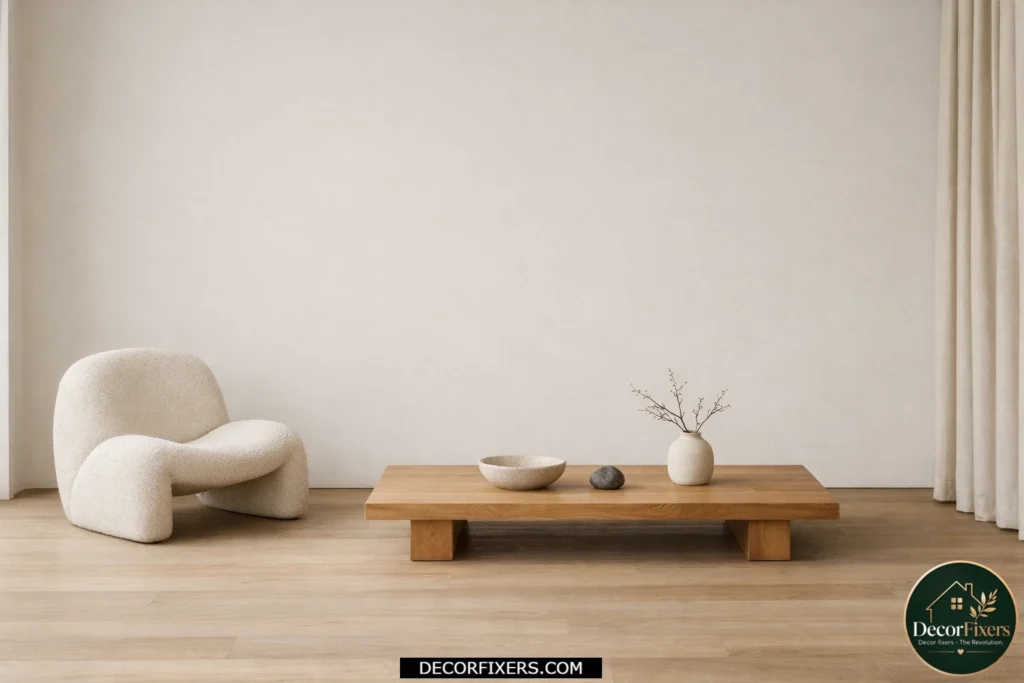
This is the hardest idea for most people to actually execute.
The Japanese concept of “ma”, the beauty of negative space, is central to Japandi design. It means resisting the urge to fill every corner, every surface, every wall. In practice: leave one wall completely bare. Leave a corner with only a single plant. Let your coffee table hold one book and one object, not seven. Negative space isn’t emptiness. It’s breathing room, and it’s what makes the pieces you do have look intentional rather than incidental.
9. Add One or Two Intentional Houseplants, Not a Jungle
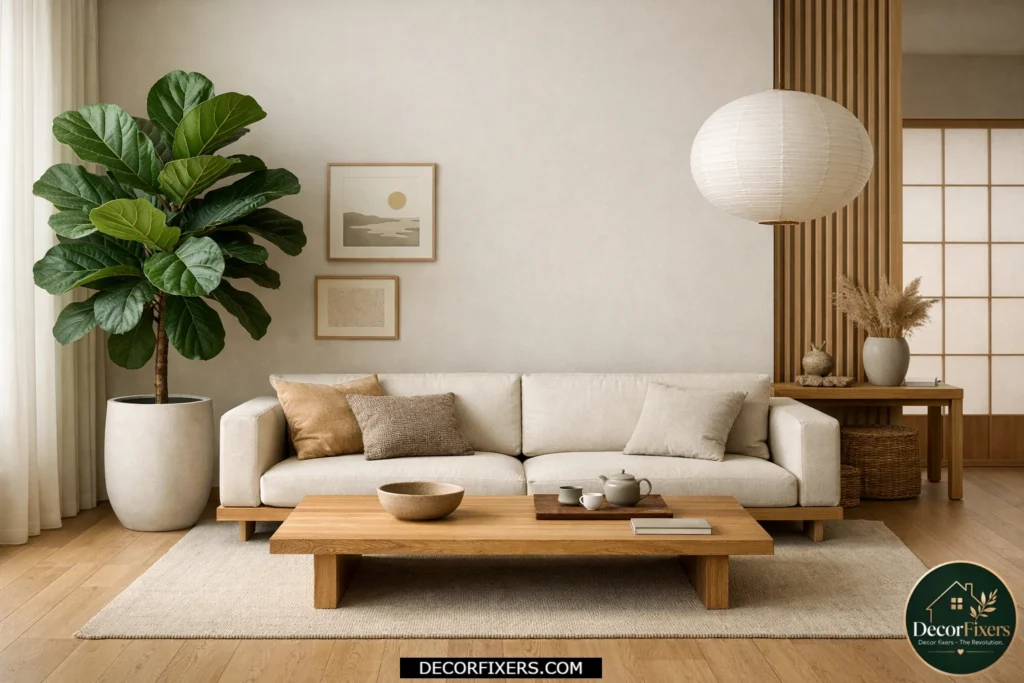
Quick note: Japandi is not maximalist biophilia. You’re not recreating a rainforest.
The rule is two or three well-chosen plants placed where they read as part of the composition, not collected to fill dead space. A fiddle-leaf fig in a tall matte ceramic pot, or a snake plant in a low rattan planter, or a bonsai on a wooden shelf, any of these works. What doesn’t work: seventeen succulents in mismatched terracotta pots and a climbing pothos going absolutely feral across the bookshelf.
10. Choose Matte Finishes Over Glossy Surfaces
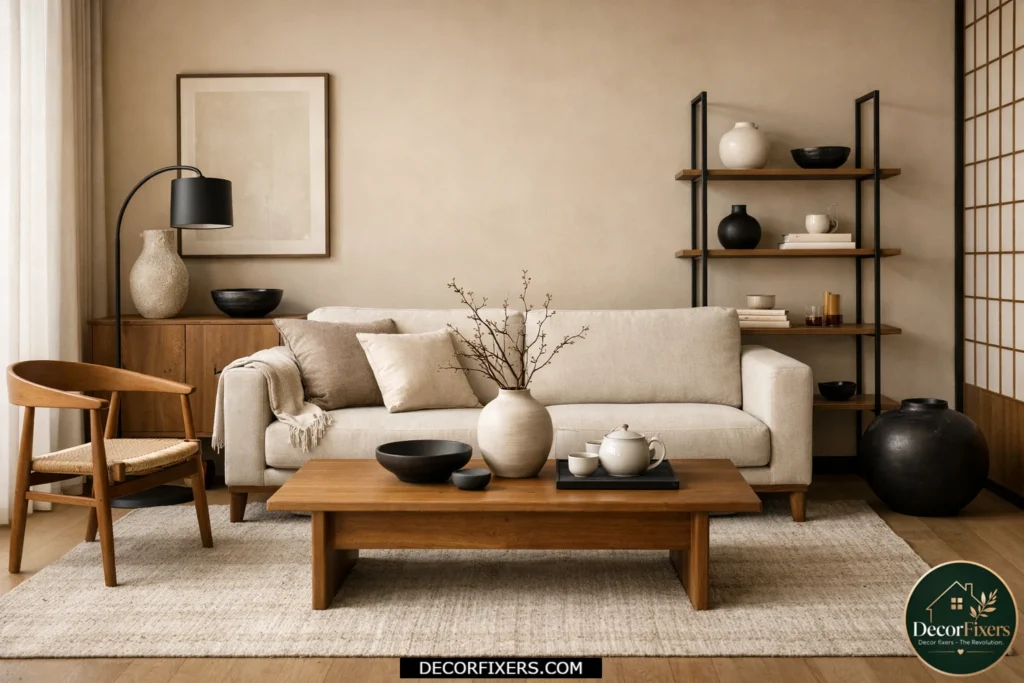
Gloss = noise. Matt = calm.
This is one of those rules that sounds minor until you violate it. A high-gloss coffee table in an otherwise Japandi room catches light, creates reflections, and pulls the eye in a way that disrupts the whole mood. Matte ceramics, satin-finished wood, flat-painted walls, brushed metal hardware, these are the finishes that disappear into the composition the way good supporting actors do. You notice them only when they’re missing.
| How To: Transition Your Current Living Room to Japandi in 5 Steps Clear every surface, remove anything that doesn’t serve a visual or functional purpose. Swap existing lightbulbs to 2700K warm LED bulbs throughout the room. Replace one synthetic textile (polyester cushion, nylon rug) with a natural alternative. Pick a single wood-toned anchor piece and remove conflicting wood tones around it. Leave one wall or corner intentionally bare for at least two weeks before deciding to fill it. |
11. Use a Jute or Wool Rug to Anchor the Seating Area
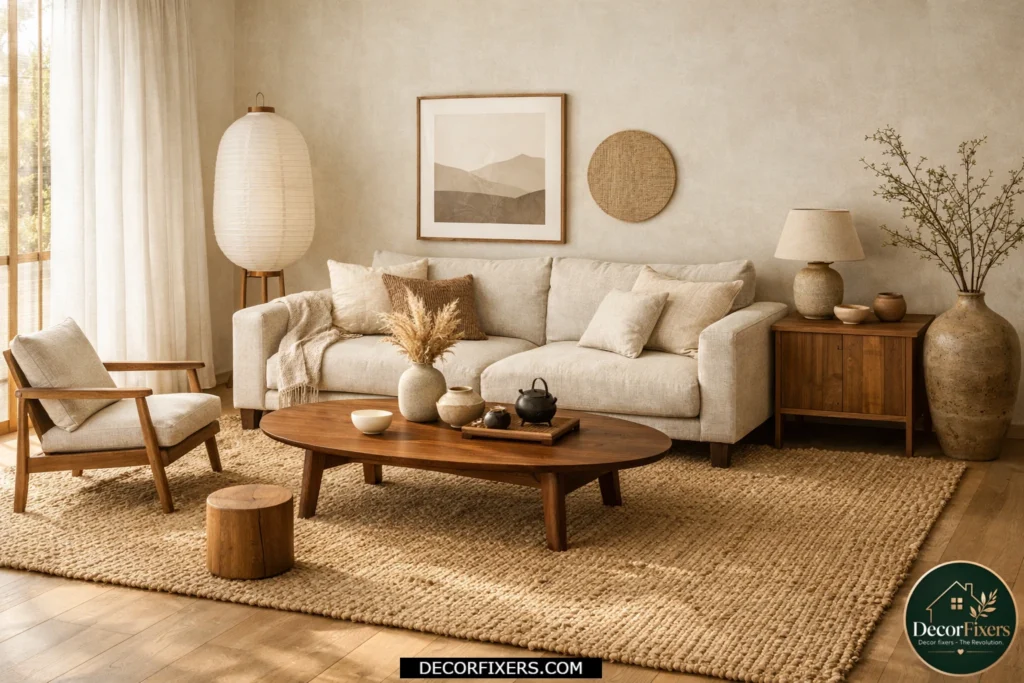
Rugs do two things in a Japandi room: they define zones, and they add the tactile warmth that wood floors alone can’t provide.
Go for a flatweave jute rug or a hand-tufted wool rug in a natural tone, undyed, oatmeal, or a very pale gray-green. Size matters more than most people think. The rug should be large enough that the front legs of every sofa and chair sit on it. A rug that only the coffee table lives on looks like an afterthought.
12. Add Wabi-Sabi Through Handmade Ceramics
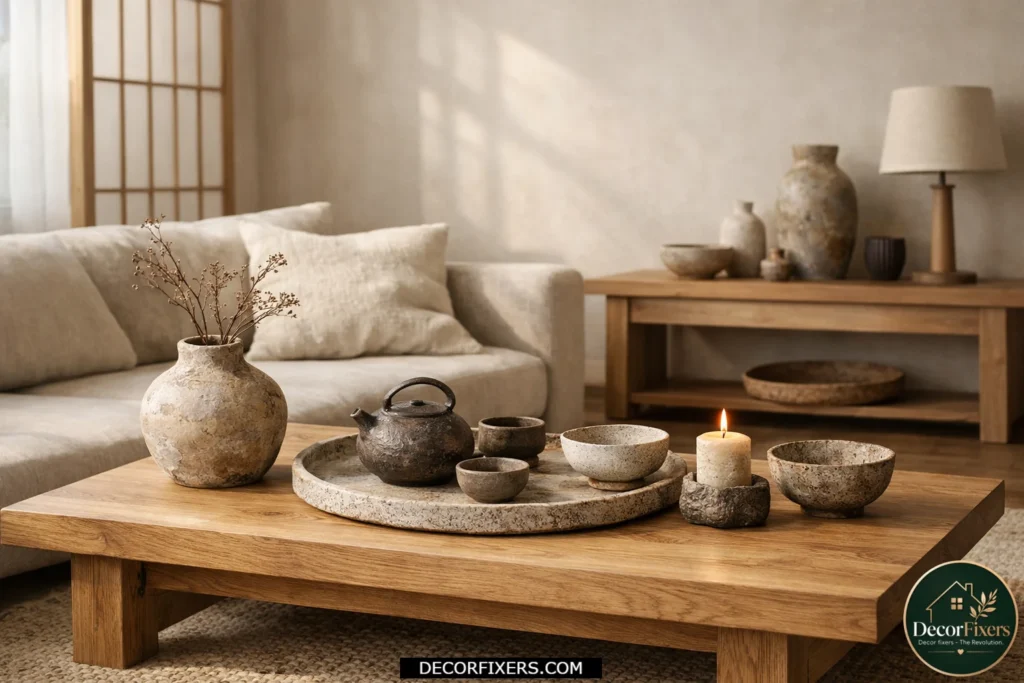
Wabi-sabi, the Japanese aesthetic of imperfect, impermanent beauty, is the soul of Japandi that most rooms miss entirely.
The easiest way to introduce it is through handmade ceramics: a thrown clay vase with an uneven rim, a ceramic tray with a slightly irregular surface, a coffee mug with a slightly visible thumbprint from the potter. These imperfections aren’t flaws; they’re proof of human craft in a world of machine-made sameness. One or two pieces are enough. Stack them, and it starts to read as a collection rather than a philosophy.
13. Go for Built-In Storage to Eliminate Visual Clutter
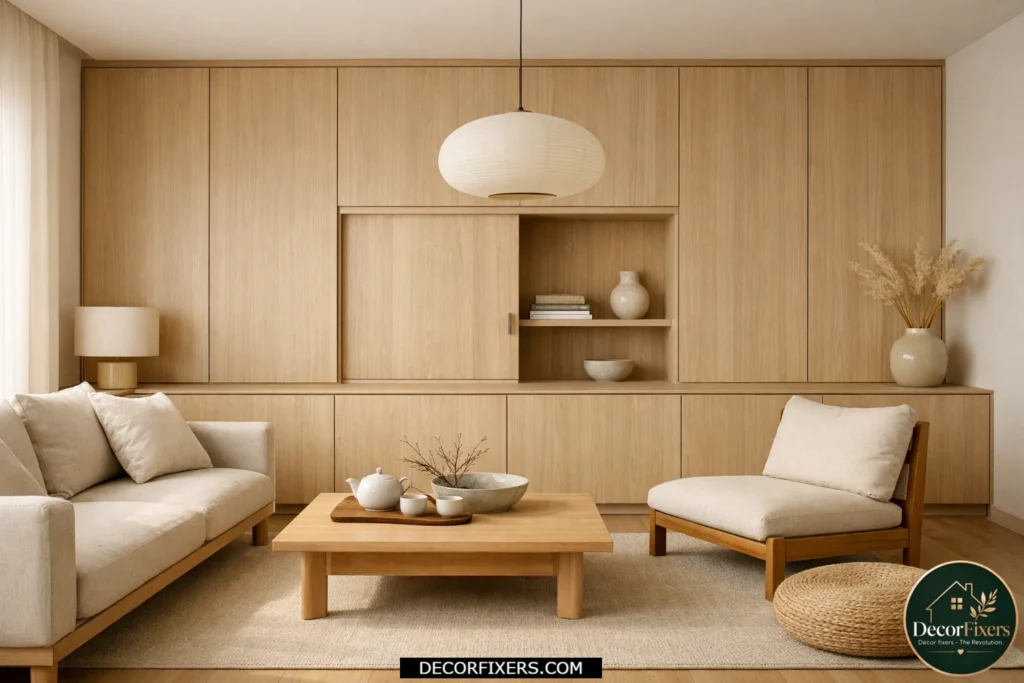
Clutter is the single fastest way to destroy the Japandi mood, and most living rooms don’t have enough hidden storage to prevent it.
IKEA’s KALLAX shelving unit is the Japandi workhorse when used correctly. Pair it with door inserts to hide the visual noise of everyday items, remotes, cables, kids’ toys, the seventeen things that have no permanent home. Wall-mounted shelving in pale wood keeps the floor clear and uses vertical space the way Japanese interior design has always preferred. The goal is surfaces you can actually see.
14. Hang One Large Art Piece Instead of a Gallery Wall
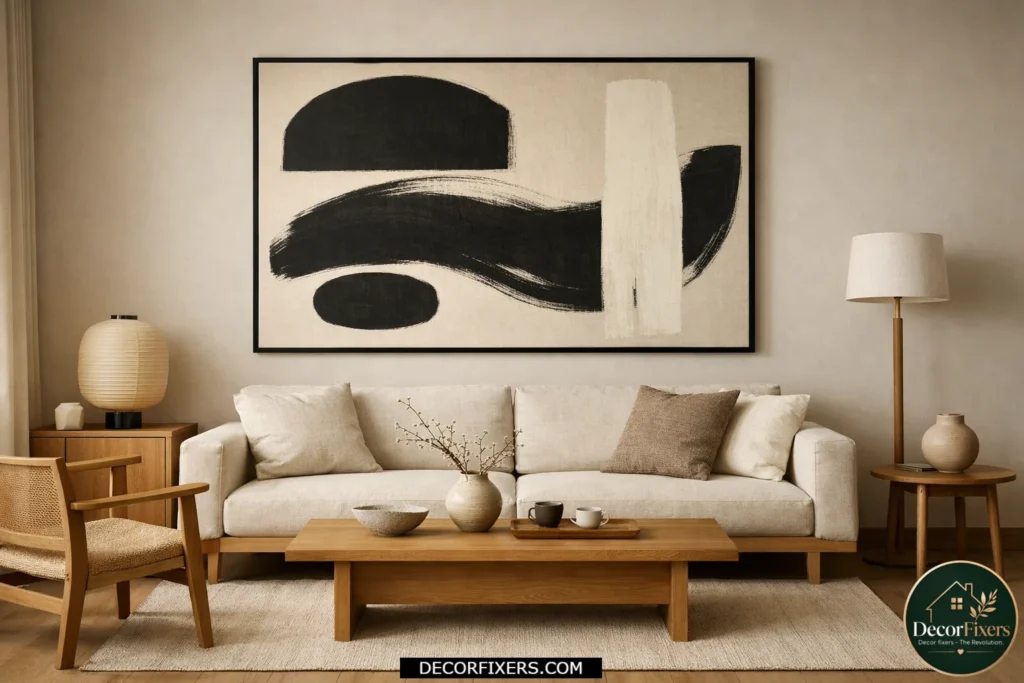
Gallery walls are the opposite of Japandi. They’re maximalist by design, requiring your eye to move across many points of focus simultaneously.
One large piece, ideally abstract, landscape, or ink-based, hung at proper eye height (center at 57 inches from the floor) creates a focal point without visual chaos. Think: a single large-format botanical print in a simple black or natural wood frame, or a piece of Japanese calligraphy in a muted frame. Leave significant wall space around it. The space around the art is part of the art.
15. Try a Mocha Mousse or Walnut Accent to Update Your Palette
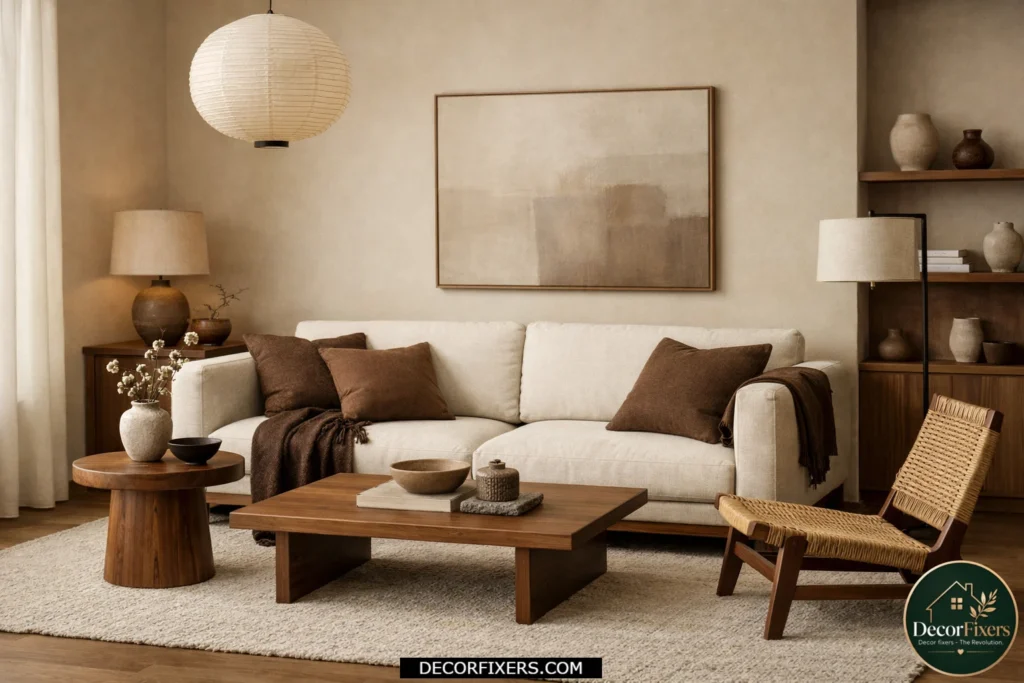
Or maybe I should say it this way: the Japandi palette of 2019 is not the Japandi palette of 2026.
The original Japandi look was almost exclusively pale, white oak, off-white linen, and pale gray. Beautiful, but it started to feel sterile. The 2025–2026 evolution, partly driven by Pantone’s Color of the Year, Mocha Mousse, brings in deeper, warmer browns. A walnut side table where you’d have had a birch one. A chocolate-toned throw where you’d have had an oatmeal one. It’s the same Japandi philosophy with more soul in it.
16. Use Bamboo or Rattan Furniture for Natural Texture on a Budget
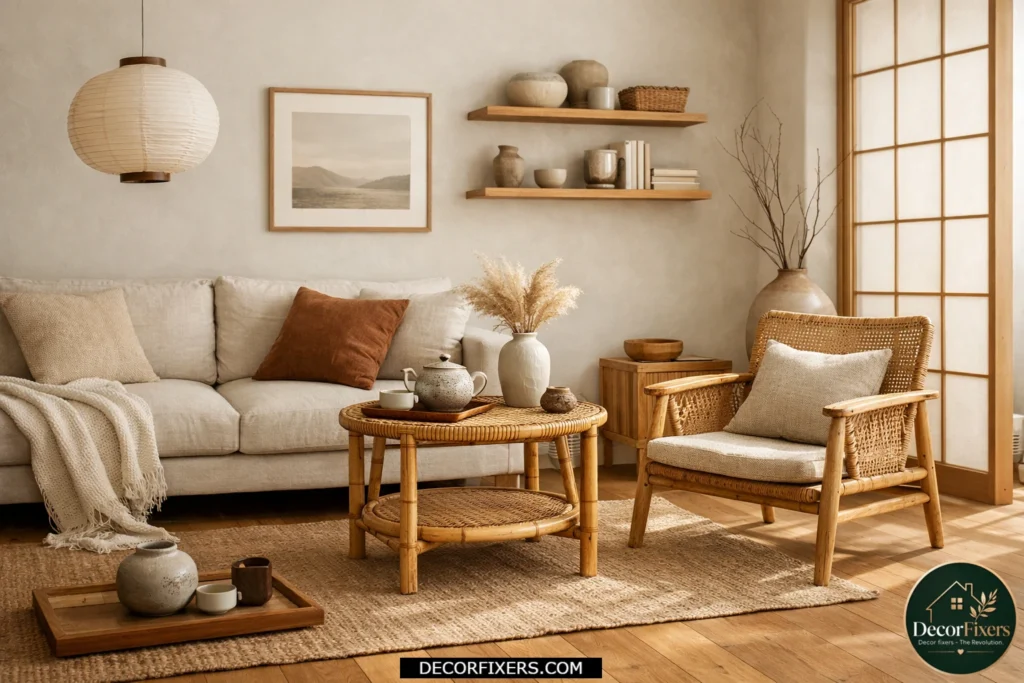
Solid wood is the Japandi ideal, but solid wood is also expensive. Rattan and bamboo are the budget-friendly path to the same visual outcome.
A rattan accent chair, a bamboo side table, or a woven storage basket reads as natural and handcrafted even at the low end of the price range. The key is restraint; one or two pieces integrate naturally, but five start to look like a beach bar. Pair with heavier, more permanent wood pieces so the lighter materials don’t make the whole room feel temporary.
17. Keep Your Coffee Table Styled With Three Objects Maximum
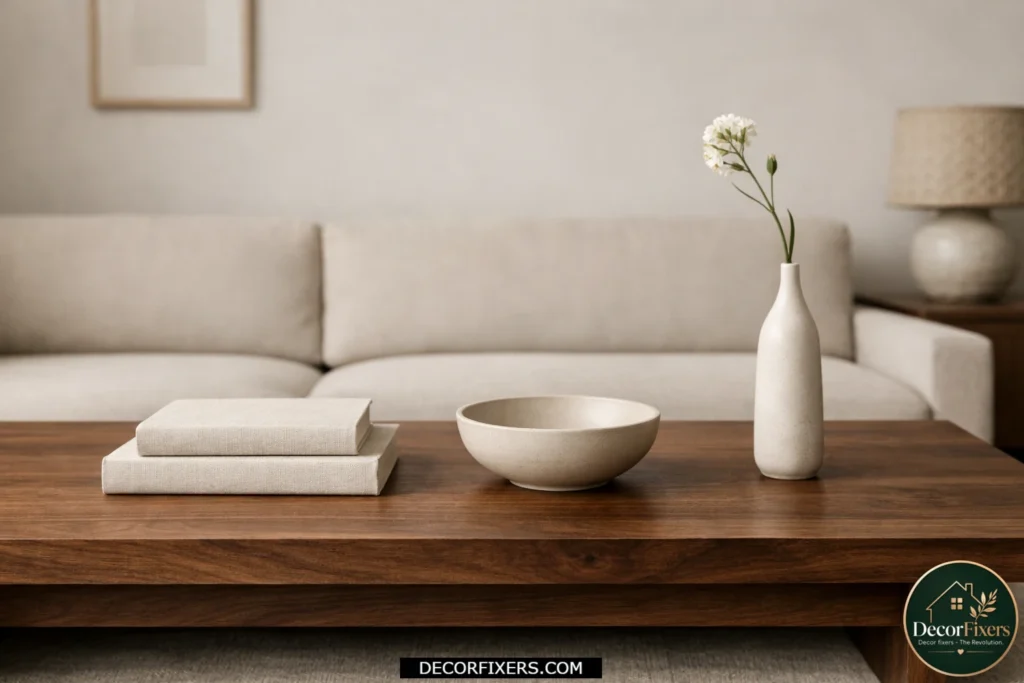
Coffee table styling is where Japandi rooms either succeed or collapse.
The rule: maximum three objects, each from a different height and material category. An example that actually works: a stack of two linen-covered books (flat, mid-height), a matte ceramic bowl holding a single smooth stone or dried botanicals (low, textural), and a small bud vase with one or two stems (tall, organic). That’s it. Nothing else. The restraint is the style, not a limitation of it.
18. Introduce Sliding Panels or Shoji Screens to Define Zones
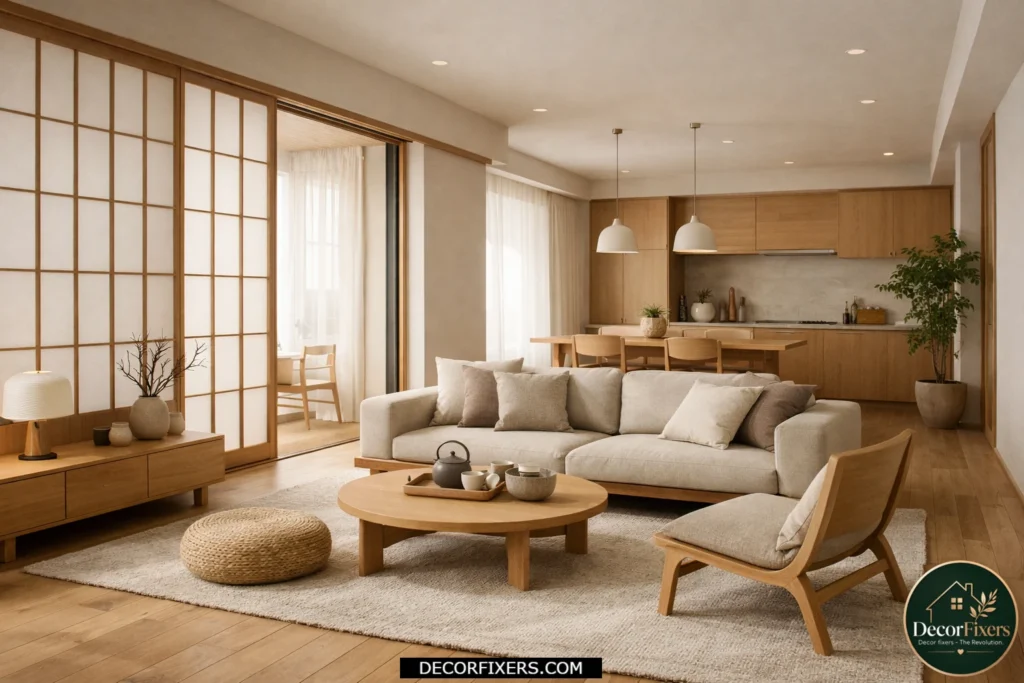
Open-plan living rooms often lack the sense of enclosure that makes a space feel settled rather than exposed.
Shoji-inspired sliding panels, available now from IKEA’s KVARTAL track system with fabric panels, solve this beautifully. They divide a living room from a dining area or home office corner without building walls, they filter light softly, and they’re exactly the kind of functional-beautiful element that Japandi was designed around. Even a fixed shoji screen as a room accent near a reading nook adds a layer of Japanese design language without being heavy-handed.
19. Choose a Low-Leg Sofa in a Natural Fabric
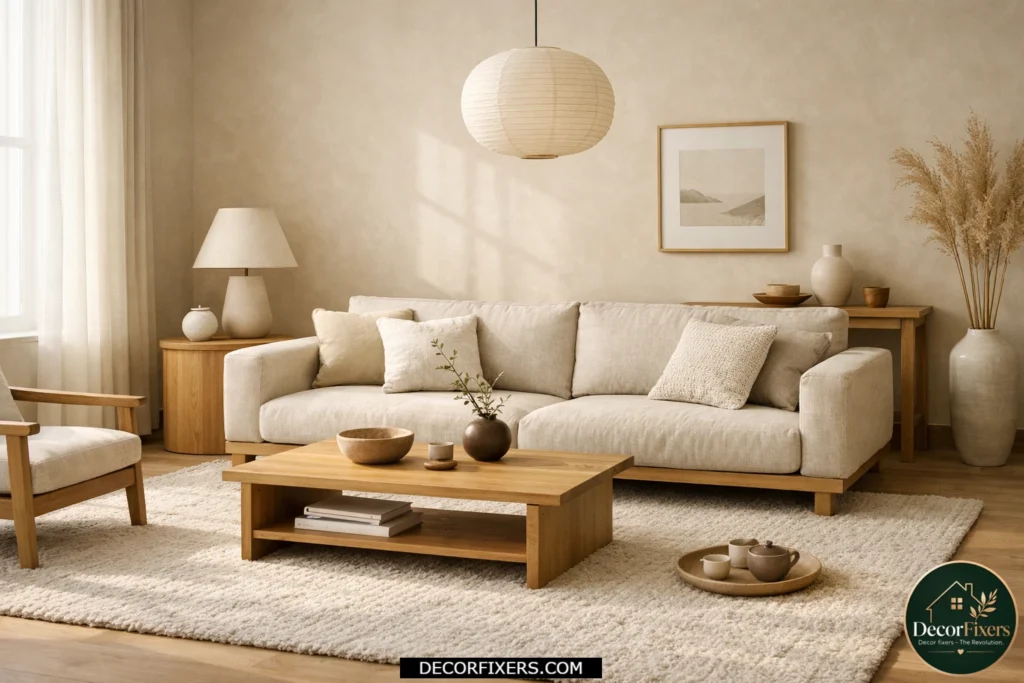
The sofa is the biggest visual decision in any living room. Getting it wrong costs you everything.
For a Japandi living room, look for a sofa with short, visible wood legs (natural or dark-stained), a simple track arm or pillow arm (no rolled arms, no tufting, no nailheads), and upholstery in a natural fabric. Linen and bouclé are both excellent. Avoid leather, it reads too urban, too polished. The IKEA RÅVAROR sofa in natural color is one of the most accessible Japandi-aligned pieces currently available. Pair it with a washable linen slipcover in oatmeal, and it’s genuinely hard to distinguish from a piece costing four times as much.
20. Use Wood Slat Walls or Paneling as a Feature Accent
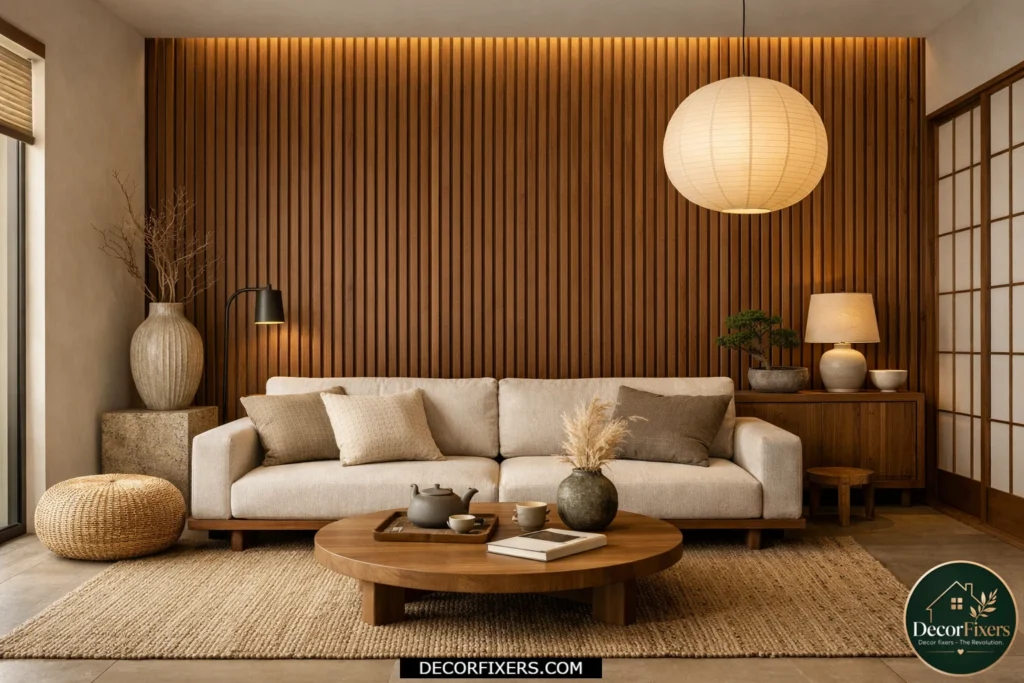
This one divide opinions, so let me give you mine directly.
Some experts argue that wood slat accent walls lean more Scandi than Japandi. That’s valid for very pale birch slats in an otherwise cold white room. But if you’re using a warm walnut-toned slat panel on a single feature wall in a room anchored with warm neutrals and natural textiles, it works. It adds the kind of architectural depth and warmth that an empty wall can’t. Just one wall. Floor-to-ceiling. Let it breathe.
21. Add a Black Accent to Ground the Space
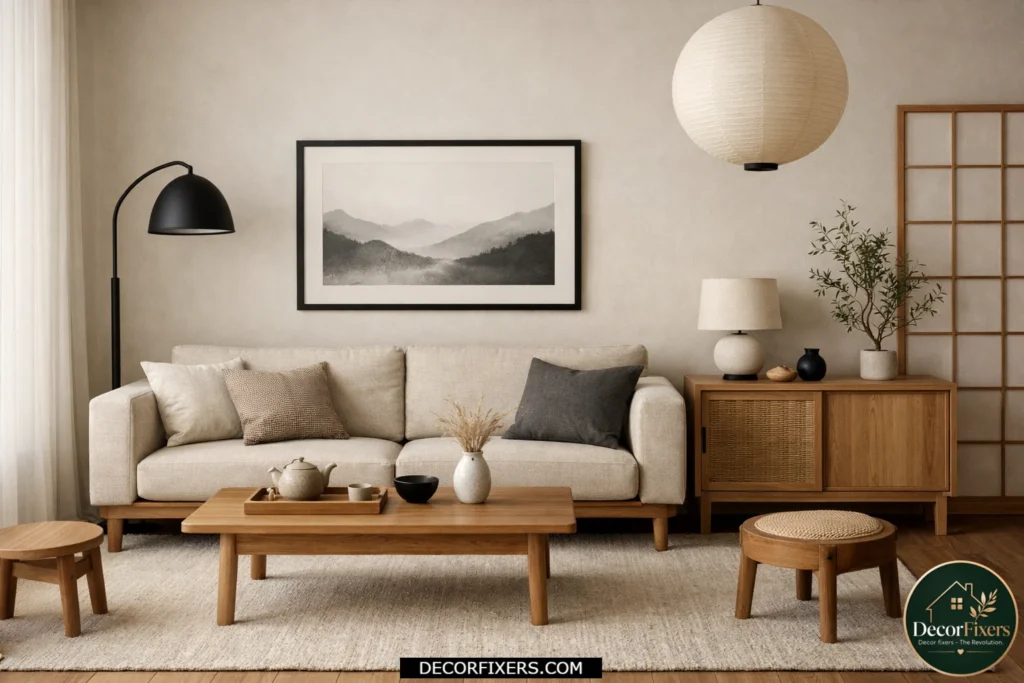
Japandi without any black can feel a little unanchored. Floaty. Like the room hasn’t committed to itself.
One or two intentional black elements, a matte black lamp, a thin black picture frame, and a black iron candle holder, act as visual anchors that give the neutrals something to push against. The contrast also stops the room from reading as exclusively beige, which is the main failure mode of badly executed Japandi. Black should be minimal, think punctuation, not prose.
22. Keep Your Bookshelf Curated, Not Collected
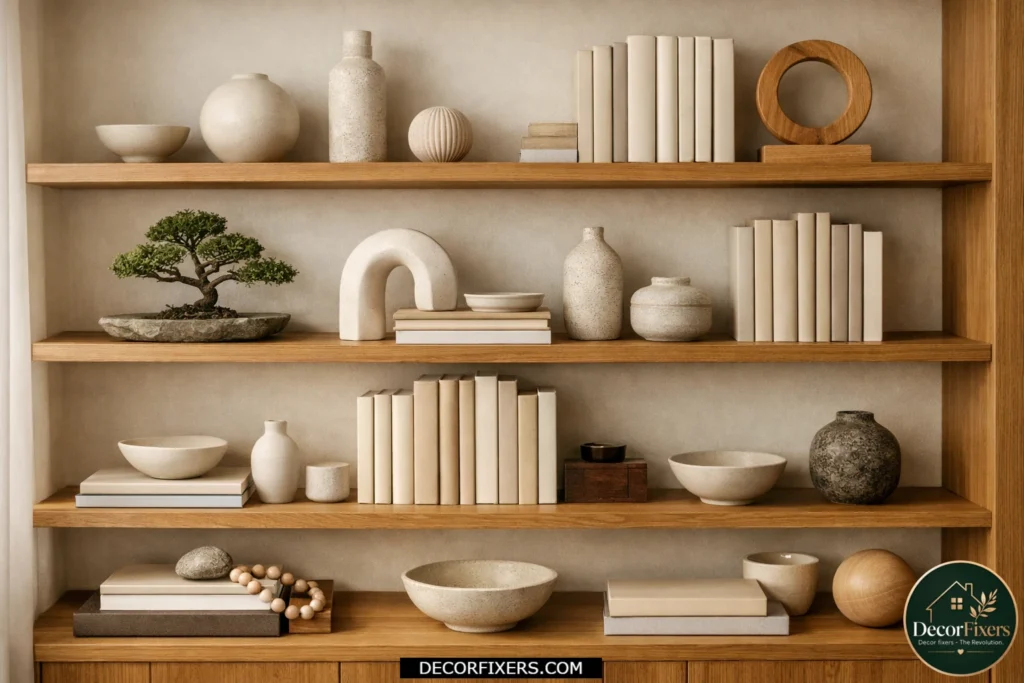
I’ve seen conflicting takes on this; some sources say bookshelves are too cluttered for Japandi, others say they add life. My read is: it depends entirely on how you style them.
A Japandi bookshelf isn’t crammed. It’s curated. Books grouped by color or height, spine-out. A few turned spine-in to break the visual rhythm. One ceramic object. One small plant. Breathing space between groupings. If every shelf is full, it reads as a library. If it’s thoughtfully edited, it reads as a life, which is the whole point of Japandi.
23. Use Dried Botanicals Instead of (or Alongside) Fresh Flowers
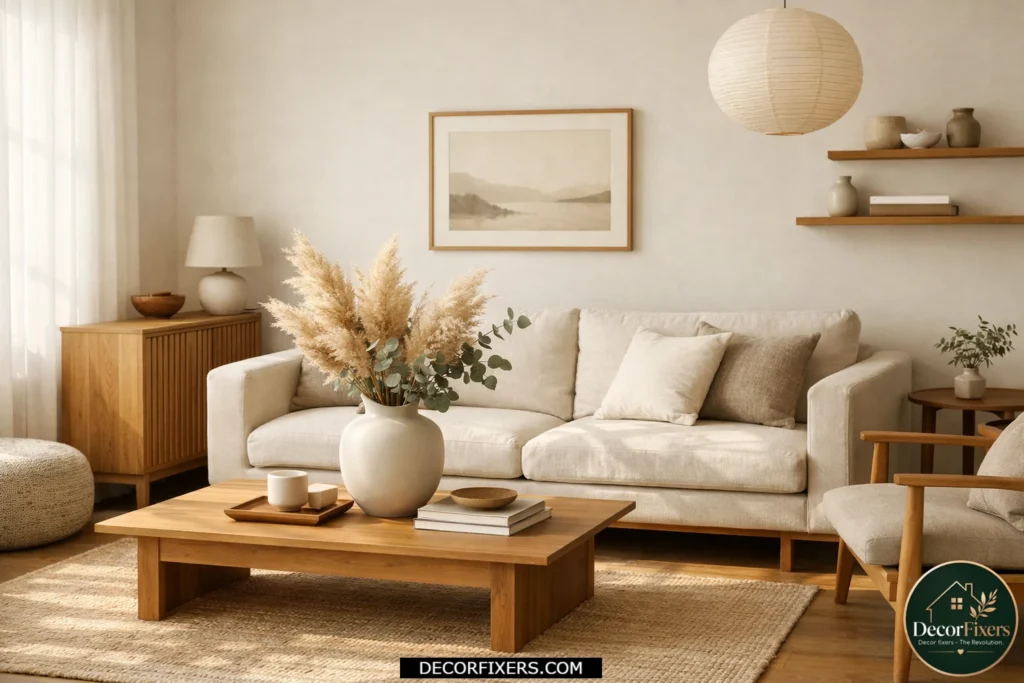
Fresh flowers are beautiful, but they demand maintenance and die. Japandi’s relationship with impermanence, wabi-sabi, makes dried botanicals a perfect fit.
Dried pampas grass, dried lavender bundles, dried seed pods, or branches of dried eucalyptus in a tall ceramic vase bring organic form and texture into the room without requiring care. They also age visually in a way that reads as intentional rather than neglected, which is exactly the wabi-sabi quality Japandi celebrates. Replace them once a season to keep them looking deliberate.
24. Declutter First, Then Decorate
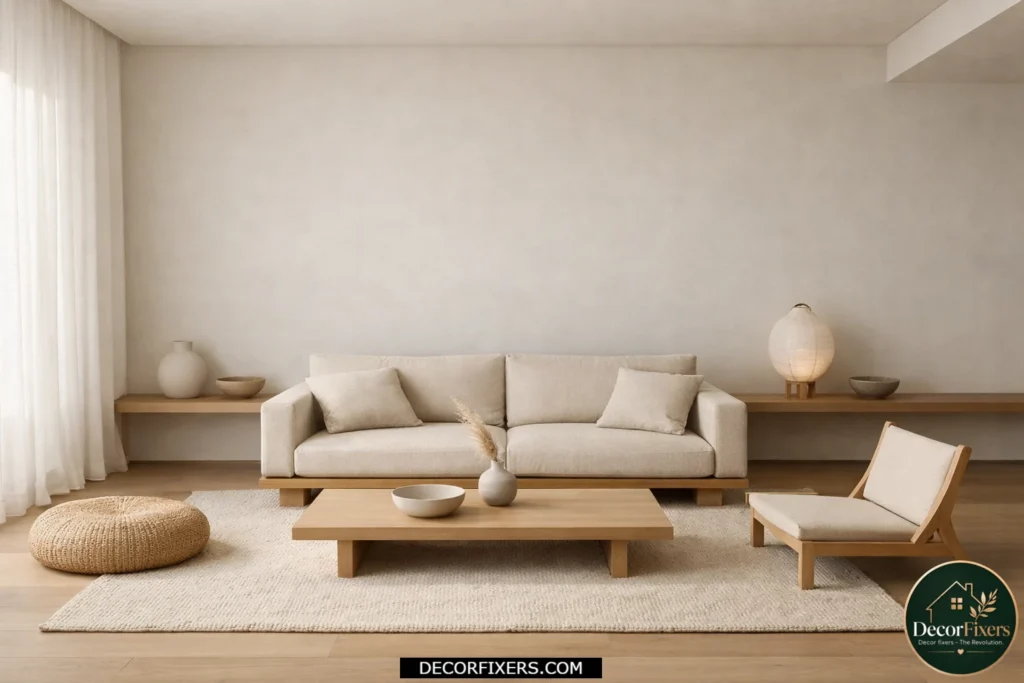
This is the step most people skip because it isn’t satisfying in the way buying things is satisfying.
But Japandi is not a decorating style you layer on top of existing clutter. It’s a reduction process. Before a single new piece enters the room, everything that doesn’t belong must leave. Look, if you’re sitting in a room full of things you keep but never touch, here’s what actually works: give yourself two boxes, one to donate, one to store in another room for 30 days. If you don’t miss those stored items, you don’t need them. Start there. The Japandi living room you want already exists underneath the accumulation.
25. Invest in One Really Good Blanket and Let It Live on the Sofa
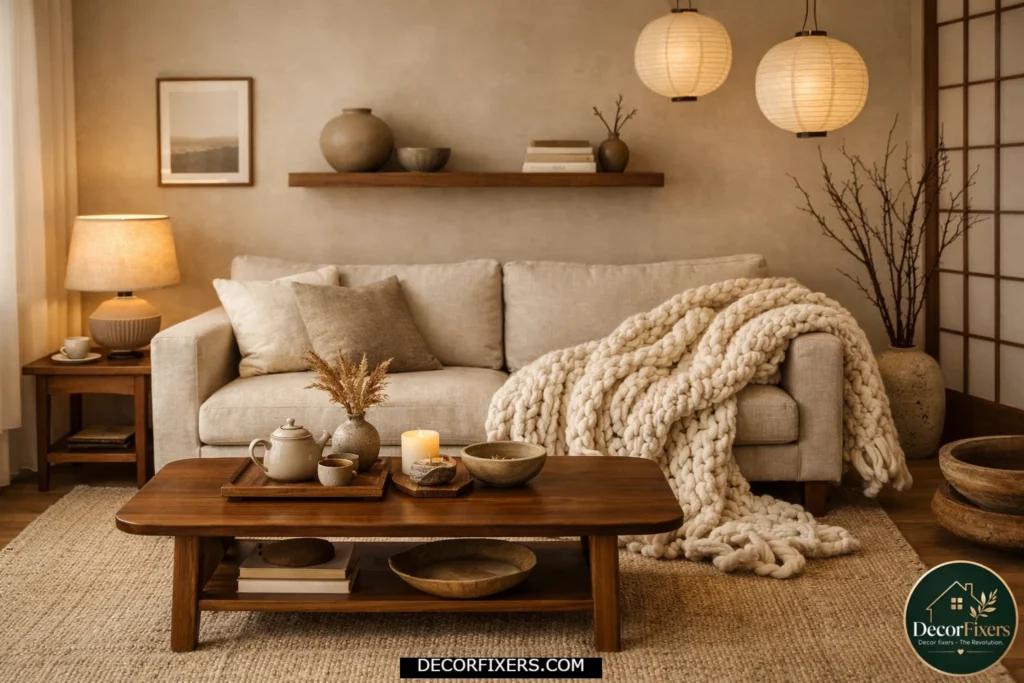
This is the softest idea in this list, literally and figuratively.
A Japandi living room needs one element of genuine, tactile comfort that signals the space is lived in, not staged. A chunky-knit or waffle-weave wool blanket draped deliberately, not thrown, over one arm of the sofa does exactly this. It brings warmth, texture, and the human quality that pure minimalism sometimes loses. Muji’s wool blankets and the Faribault Woolen Mill throws in natural tones are both excellent options. Buy one. Keep it on the sofa. Let it be the thing that stops the room from feeling like a hotel lobby.
Quick Comparison: Japandi Living Room Furniture Options
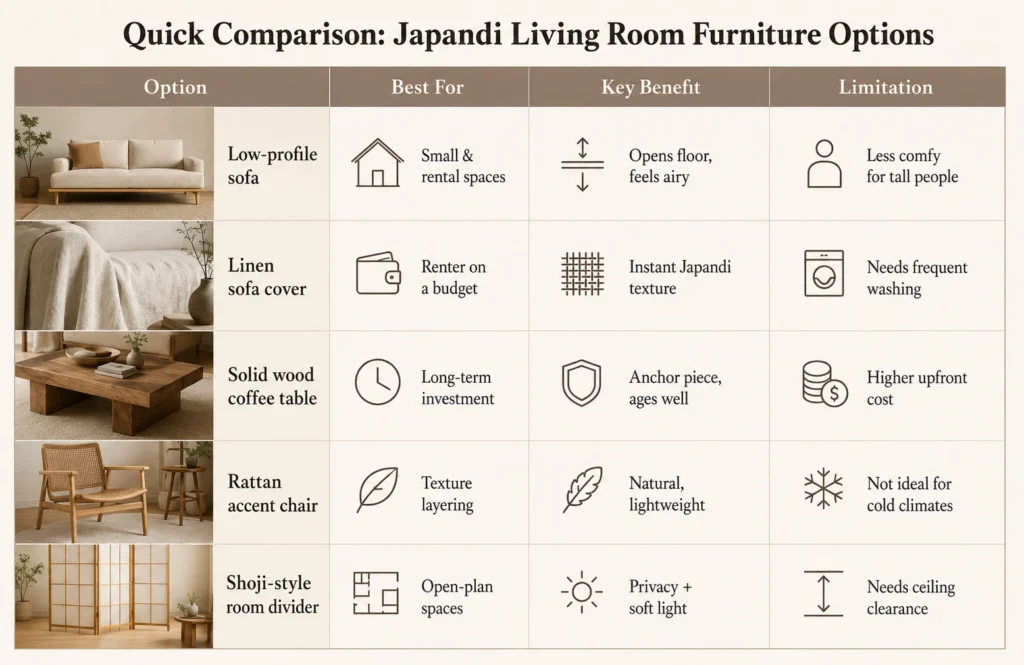
| Option | Best For | Key Benefit | Limitation |
| Low-profile sofa | Small & rental spaces | Opens floor, feels airy | Less comfy for tall people |
| Linen sofa cover | Renter on a budget | Instant Japandi texture | Needs frequent washing |
| Solid wood coffee table | Long-term investment | Anchor piece, ages well | Higher upfront cost |
| Rattan accent chair | Texture layering | Natural, lightweight | Not ideal for cold climates |
| Shoji-style room divider | Open-plan spaces | Privacy + soft light | Needs ceiling clearance |
CONCLUSION:
After thinking through all 25 of these Japandi living room ideas, the pattern that keeps coming up isn’t about any specific sofa or paint color. It’s about the decision to stop adding and start editing.
The rooms that genuinely embody Japandi don’t feel designed. They feel resolved. Like someone made a series of quiet, confident choices and then stopped, which is genuinely harder than it sounds in a world that keeps offering you more things to buy.
Start with one idea from this list. The declutter step if you’re ready to be honest about what the room actually needs. The warm bulb swap if you want something immediate. The three-object coffee table rule if you want to feel the shift tonight.
One idea. One week. See what changes.
The rest will follow.
FAQs:
| Q: What’s the best color for a Japandi living room? A: Warm off-whites, greige, oatmeal, and soft taupe work best. Benjamin Moore White Dove (OC-17) and Sherwin-Williams Accessible Beige (SW 7036) are two specific paint choices designers consistently recommend for Japandi spaces. |
| Q: How do I make my living room look Japandi on a budget? A: Start with three free changes: declutter every surface, replace your bulbs with 2700K warm LEDs, and remove one synthetic textile. Then add one natural-material piece, a jute rug or linen cushion covers, to shift the feel significantly without large spending. |
| Q: Should I use plants in a Japandi living room? A: Yes, but sparingly. Two or three well-chosen plants in matte ceramic or rattan pots. Position them as compositional elements, not as space-fillers. A single large-leaf plant reads better than ten small ones. |
| Q: Why does my Japandi living room look cold and sterile? A: You’re probably missing warm undertones in your base color, texture variety in your textiles, or layered lighting. Swap to a warm-toned off-white paint, add a wool or linen throw, and replace your overhead light with two or three lower, warmer light sources. |
| Q: When should I use black in a Japandi living room? A: Use black sparingly as an anchor, one or two matte-finish elements like a lamp, picture frame, or small iron accessory. Black stops the neutrals from reading as flat and gives the eye a place to land. More than two or three black pieces tip the room toward industrial. |

Creator of DecorFixers, sharing practical home and interior ideas focused on real-life usability, simple design improvements, and budget-friendly solutions.
2 thoughts on “25 Japandi Living Room Ideas: Calm & Minimalist Design Tips”