

I’ve rearranged my dining room walls three times in two years. The first attempt looked like a sad hotel hallway, one framed print, slightly crooked, hanging above a buffet that had no idea why it was there. The second attempt was a Pinterest-fueled gallery wall that took a weekend, cost more than I planned, and still felt… off. It wasn’t until I understood the actual rules, sizing, scale, and weight, that things finally clicked.
Here’s what I’ve learned from obsessing over this topic and pulling apart dozens of rooms that work: most bare dining room walls aren’t a decor problem. They’re a decision problem. Too many options, no framework, no starting point.
This guide fixes that. Below are 25 dining room wall decor ideas organized by style, size, and approach, with honest notes on what each idea costs, what it works best for, and what most guides skip entirely.
| What Is Dining Room Wall Decor? Dining room wall decor refers to any decorative element, art, mirrors, shelving, wallpaper, or sculptural pieces, applied to dining room walls to create visual balance, a focal point, or atmosphere. It works alongside furniture and lighting to define the room’s personality. |
1. Go Oversized with a Single Canvas
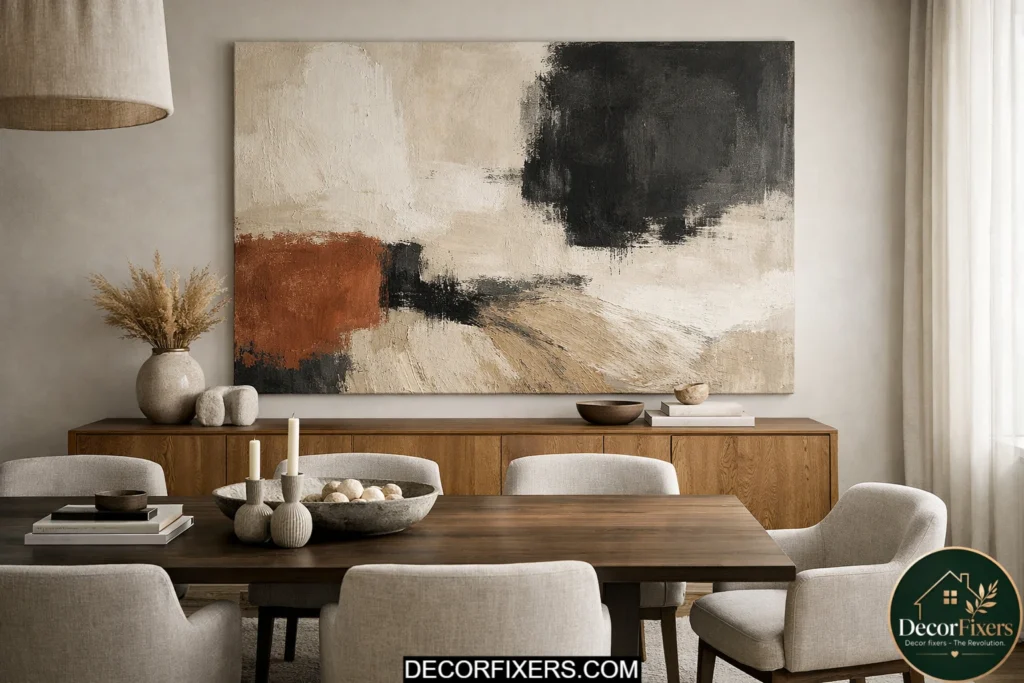
Most people hang art that’s too small. Way too small. A single canvas that fills the upper two-thirds of a wall reads as intentional and designer-approved, while three small prints clustered together just look like indecision.
For a dining room, a canvas in the 36″ x 48″ to 48″ x 60″ range is where most walls start to breathe.
2. Build a Gallery Wall Around Your Table
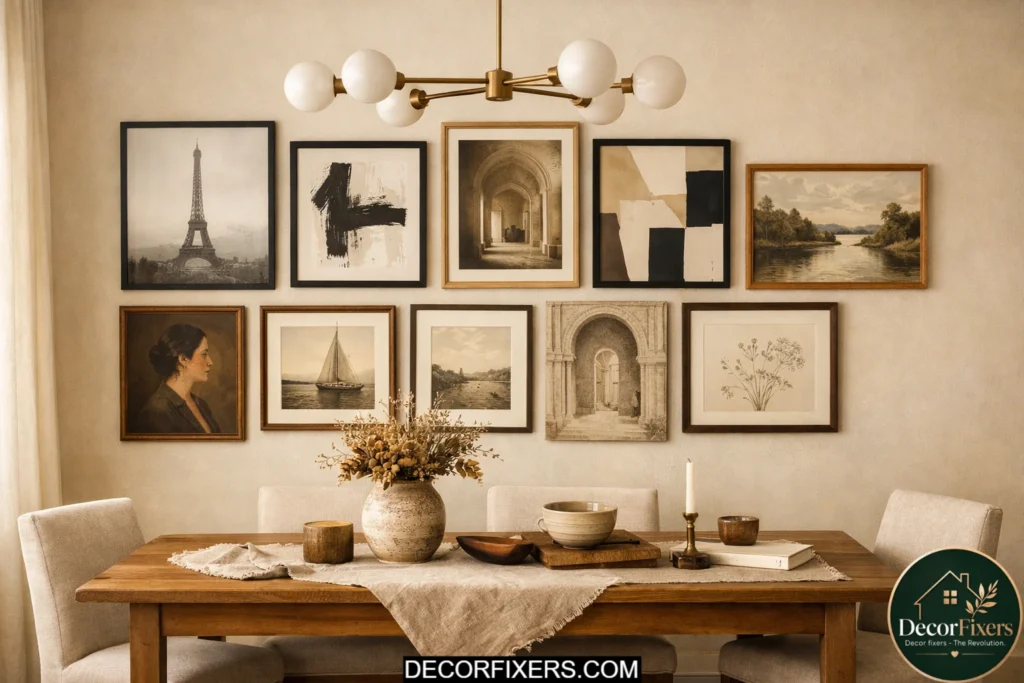
A gallery wall done right feels lived-in and personal. Done wrong, it’s a chaotic patchwork that fights with everything else in the room. The trick: lay it out on the floor first, keep 2–3 inches between frames, and anchor the whole arrangement to one central piece that’s slightly larger than the rest.
For renters, especially, this is one of the most flexible dining room wall decor ideas because it grows and changes with you.
How big should wall art be in a dining room?
This is the question almost no inspirational article actually answers. A general rule: the artwork should span roughly 2/3 the width of your dining table if it’s hanging above a buffet or sideboard. If it’s a standalone wall without furniture beneath it, aim for art that fills at least 50-60% of the wall’s width. Undersized art is the single most common mistake in dining room decorating, and it’s exactly what makes a room feel unfinished.
3. Hang a Statement Mirror to Double the Light
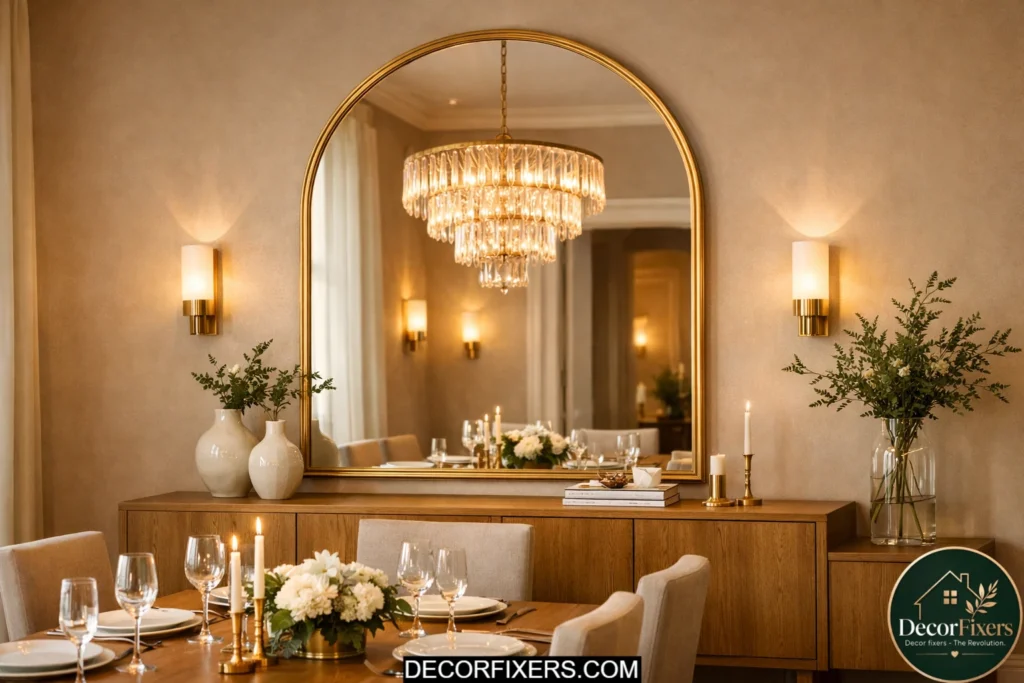
A large mirror on a dining room wall isn’t just decorative; it’s a practical design. It reflects the chandelier, makes the room feel deeper, and adds light where there isn’t any. The shape matters: a round or arched mirror softens a boxy room, while a rectangular one adds height.
Quick note: position it so it reflects the table or the best part of the room, not the kitchen or a blank wall. The reflection is part of the design.
4. Try an Accent Wall with Wallpaper
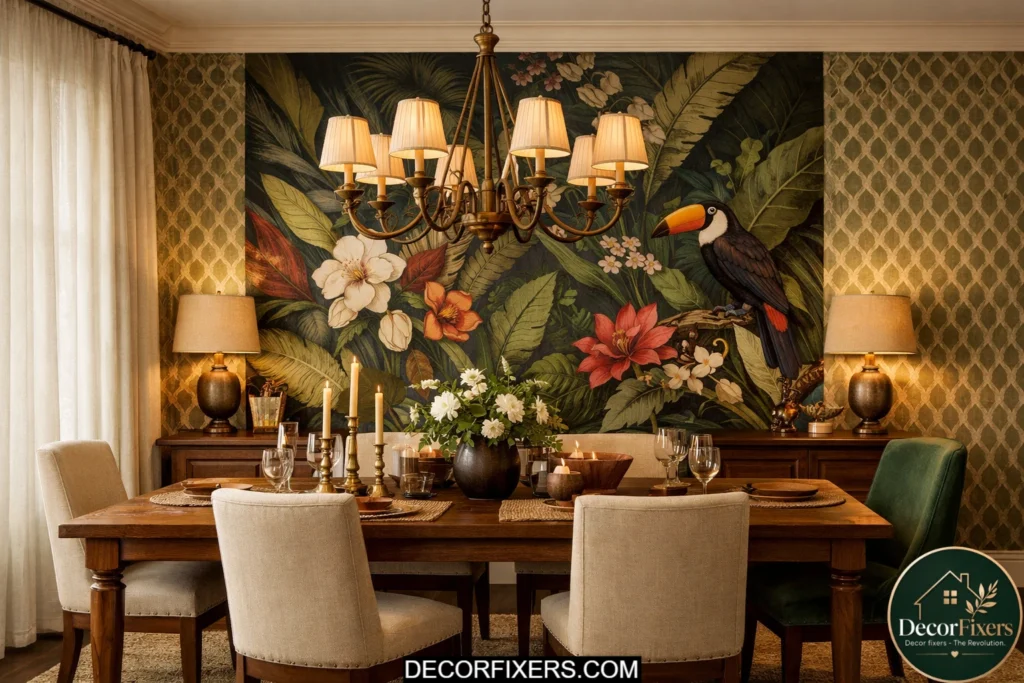
Wallpaper is back, and not in a grandma-floral way. Geometric, botanical, and textured grasscloth patterns are dominating dining rooms right now because they do in one move what paint, art, and shelving take three steps to accomplish.
If you’re renting, peel-and-stick wallpaper has genuinely improved. It’s removable, repositionable, and available in high-quality patterns. The one wall behind the head of the table is usually the perfect candidate; it’s what people see when they walk in.
Quick Comparison:
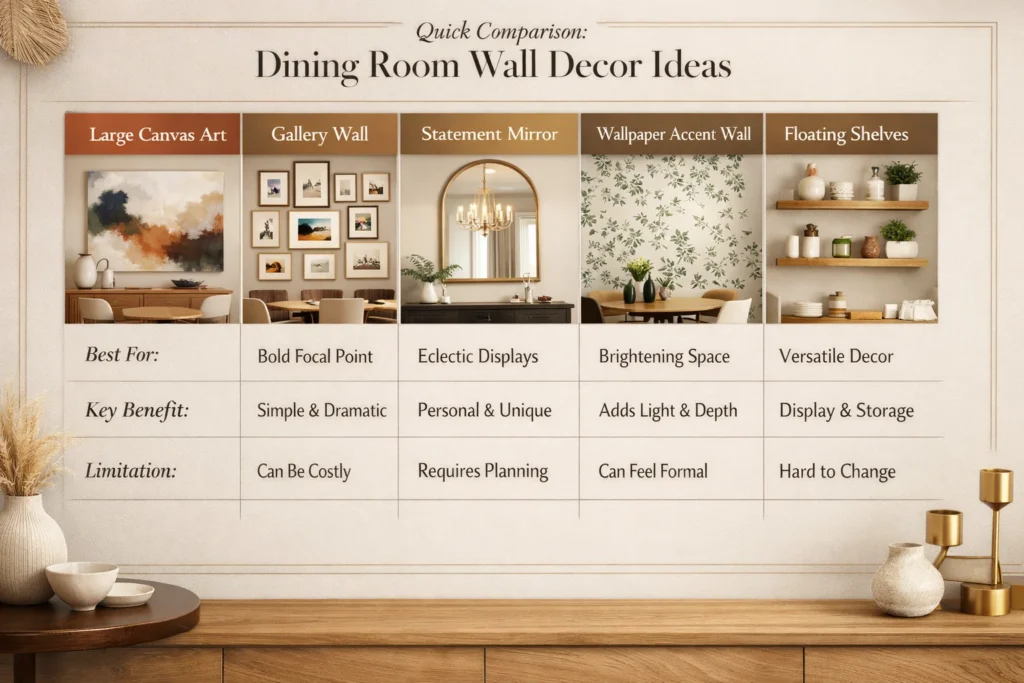
| Option | Best For | Key Benefit | Limitation |
| Large Canvas Art | Open walls, modern rooms | Instant focal point, low effort | Can feel generic if not personalized |
| Gallery Wall | Renters, personal style | Flexible, evolves over time | Sizing mistakes look messy |
| Statement Mirror | Small or dark rooms | Reflects light, adds depth | The wrong frame kills the effect |
| Wallpaper Accent Wall | Personality-driven spaces | Texture + color in one move | Hard to remove; not renter-friendly |
| Floating Shelves | Functional decorators | Changes seasonally, 3D decor | Requires styling discipline |
5. Install Floating Shelves for Living Decor
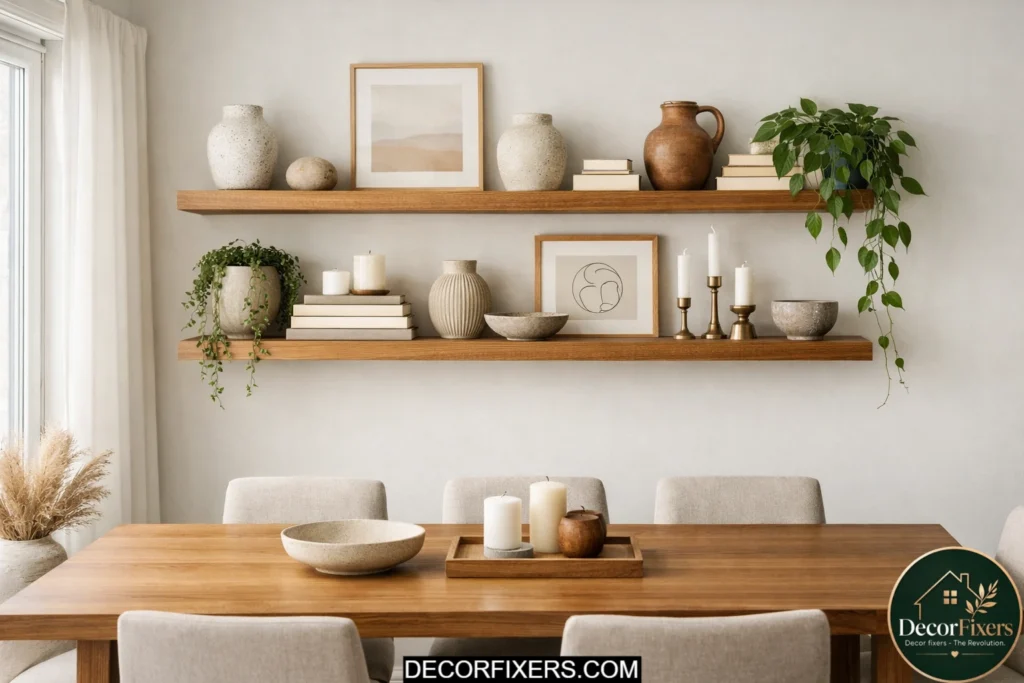
Floating shelves let you style a wall in three dimensions. Pottery, small plants, candles, cookbooks, framed photos, it all has a home, and you can rearrange it seasonally without touching a nail. For a dining room, two or three staggered shelves work better than one long run.
The key is restraint. A styled shelf looks curated. An overstuffed shelf looks like a storage problem. Leave breathing room between objects; negative space is decoration too.
6. Use Dark, Moody Paint as Your Decor
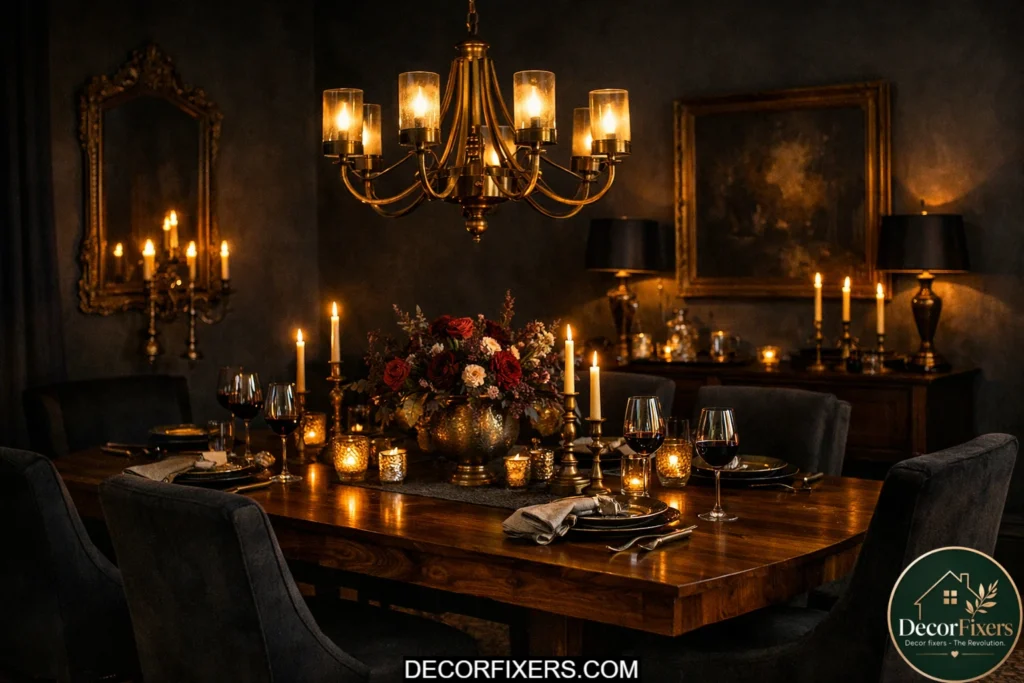
Paint itself is decor. A deep navy, forest green, or charcoal wall doesn’t need art on top of it; the color is the statement. Some experts argue this approach makes rooms feel small. That’s valid for rooms under 100 square feet. But if you’re dealing with a medium-to-large dining room, dark walls create an intimate, atmospheric effect that no art print can match.
Pair dark walls with warm lighting, not cool fluorescents, and the room transforms completely at dinner time.
7. Frame Botanical Prints for a Classic Look
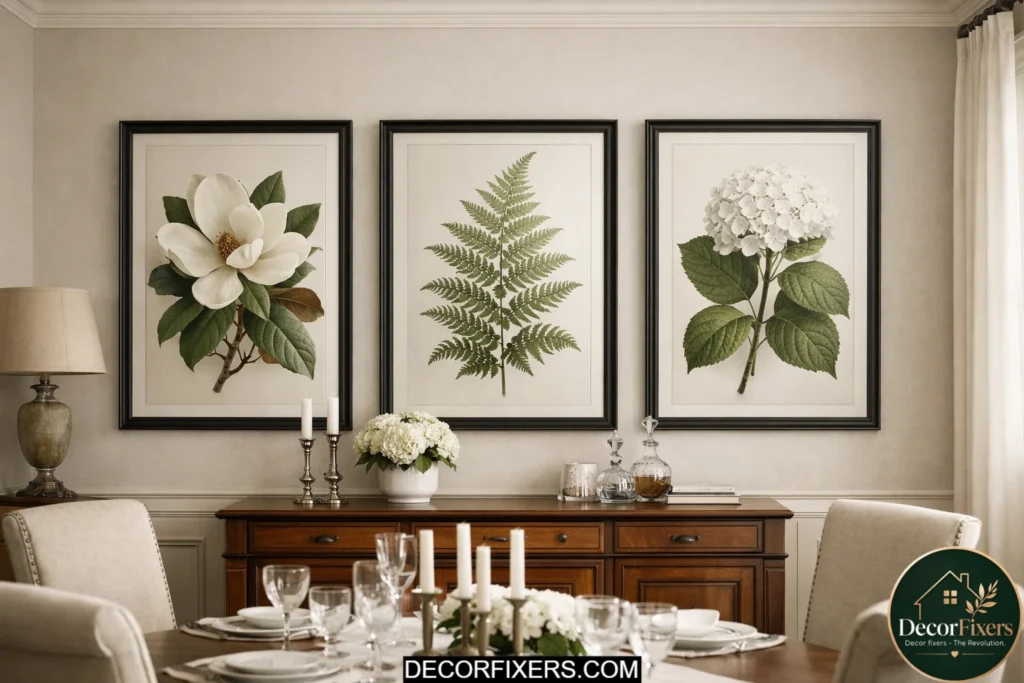
Botanical prints have been a dining room staple for centuries. There’s a reason: they’re calm, they work with nearly every furniture style, and they give walls something to say without shouting.
The upgrade move in 2025 is to go bigger than expected, a 24″ x 30″ botanical feels completely different from a 5″ x 7″ one, and to use consistent frames. Three botanicals in identical black frames, evenly spaced, read as intentional design rather than an afterthought.
8. Hang a Tapestry for Texture and Warmth
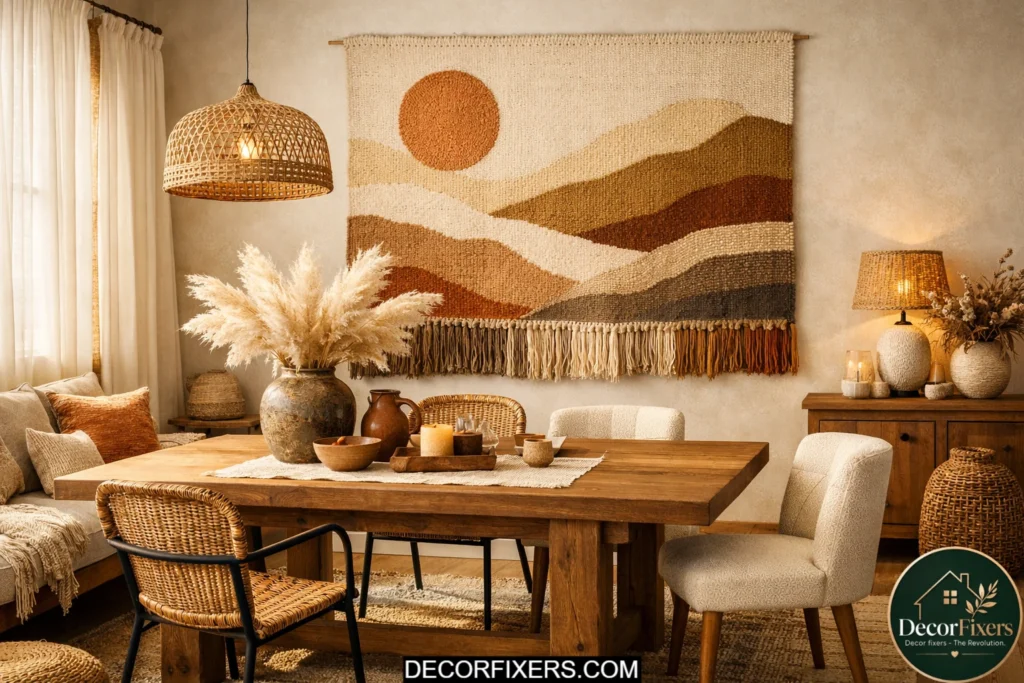
A woven tapestry adds something paint and canvas art can’t: actual physical texture. It absorbs sound too, which makes dining rooms feel warmer and less echoey. This is especially useful in rooms with hard floors and high ceilings.
Look for natural fiber tapestries, cotton, wool, and jute, in neutral or earthy tones. Avoid anything with a dated Renaissance-print aesthetic unless that’s genuinely your vibe.
9. Create a Plate Wall for Character
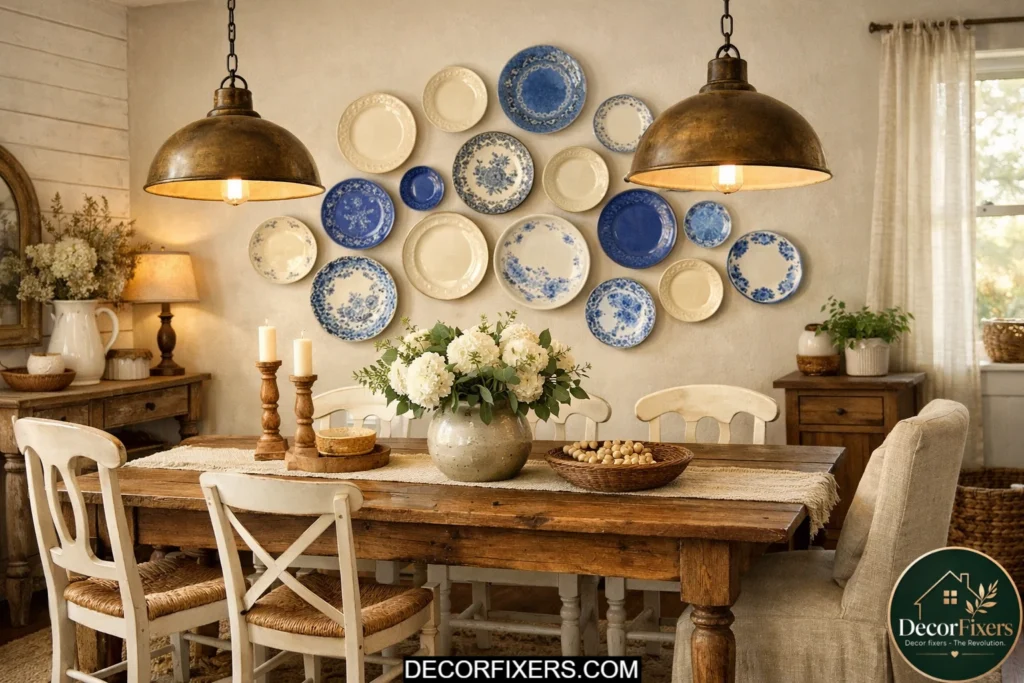
A curated plate wall sounds dated. It isn’t, when it’s done with intention. The difference is curation: 8–12 plates in a cohesive color palette (not just random heirlooms), arranged in an organic cluster rather than a grid, hung at varying depths with plate hangers.
This is particularly effective in farmhouse, cottagecore, or maximalist dining rooms. It’s personal, it’s affordable, and every plate can tell a story when guests ask about it.
10. Mount a Large World Map or Vintage Print
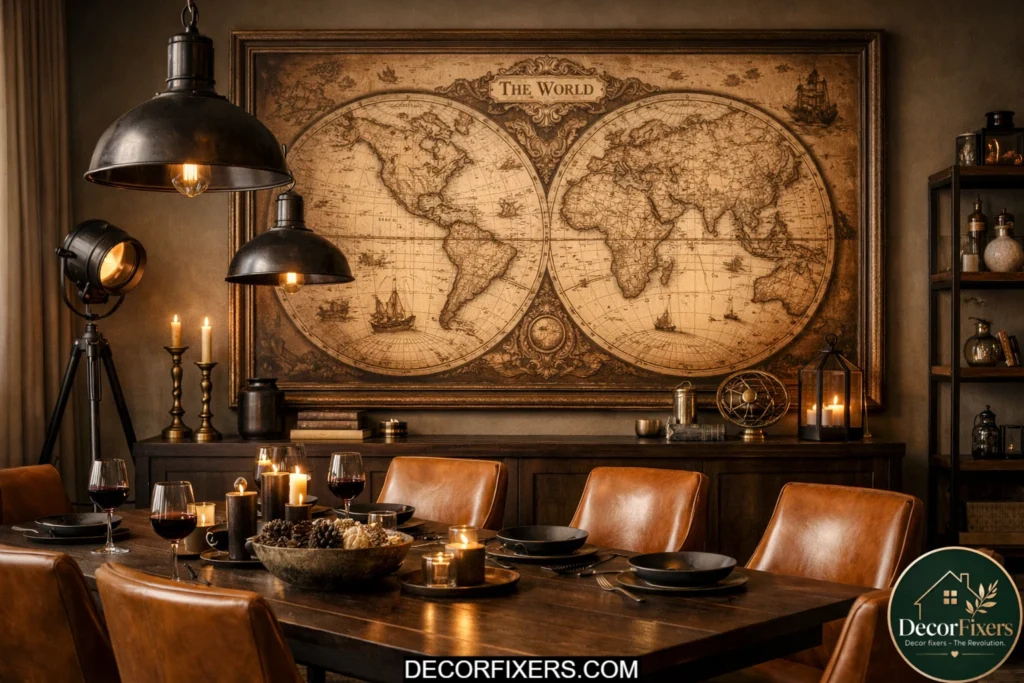
Large vintage or illustrated maps work in dining rooms because they invite conversation. Where have you been? Where are you going? An oversized map, 40″ wide or larger, fills a wall with meaning and personality without requiring anyone to know anything about art.
Look for antique-style maps with warm sepia or ochre coloring. Avoid cheap poster versions. A properly mounted or canvas print reads completely differently from a paper poster rolled into a tube.
11. Use Wainscoting or Board-and-Batten Paneling
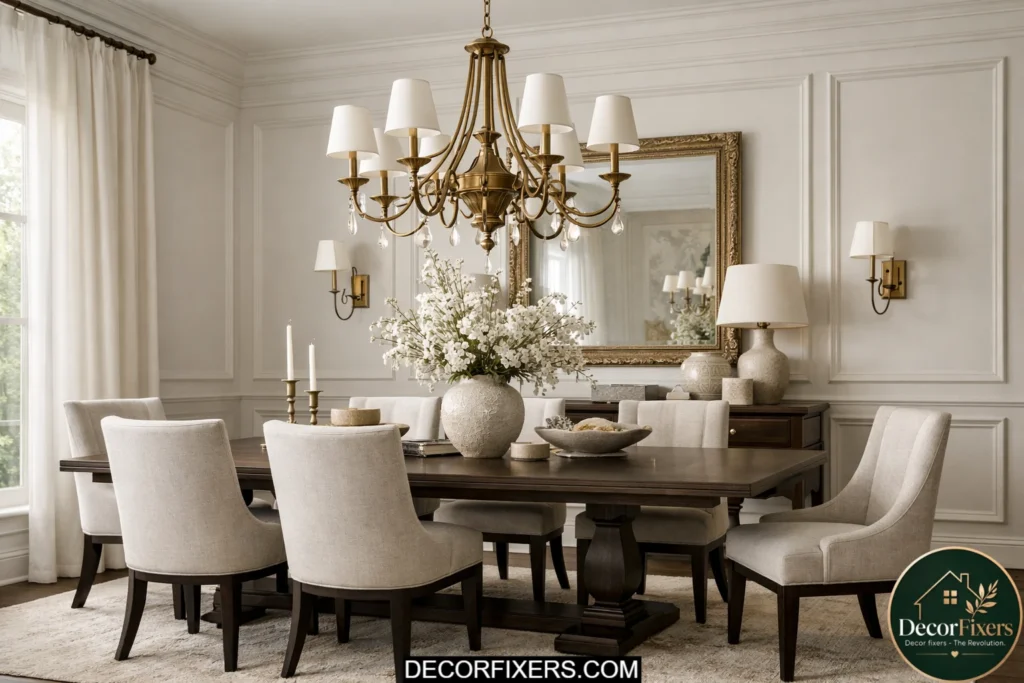
Architectural wall treatments are underrated as decor. Wainscoting, wood paneling on the lower half of the wall, adds texture, dimension, and the kind of richness that furniture alone can’t create.
Or maybe I should say it this way: it’s the difference between a decorated room and a designed room. Board-and-batten costs more upfront, but changes the room’s entire baseline; everything else you put in it looks better afterward.
12. Try a Mural or Oversized Illustrated Wallpaper
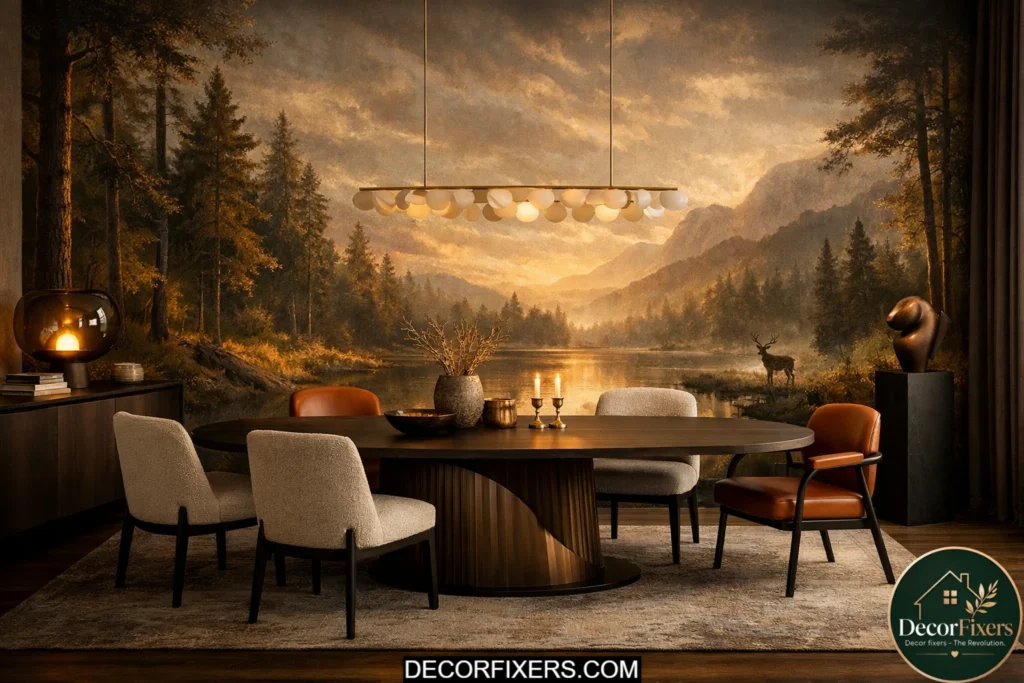
Full-wall murals have come a long way. You can now get custom printed panels, pre-pasted mural wallpaper, or even hand-painted murals for a one-of-a-kind effect. A landscape mural, a forest, a mountain range, a city skyline, turns the dining room wall into a view, which is a powerful trick in rooms without windows on that side.
This works best for rooms with one clear accent wall and no busy competition from shelving or furniture on the same wall.
13. Layer Sconces With Artwork for a Lit Gallery Feel
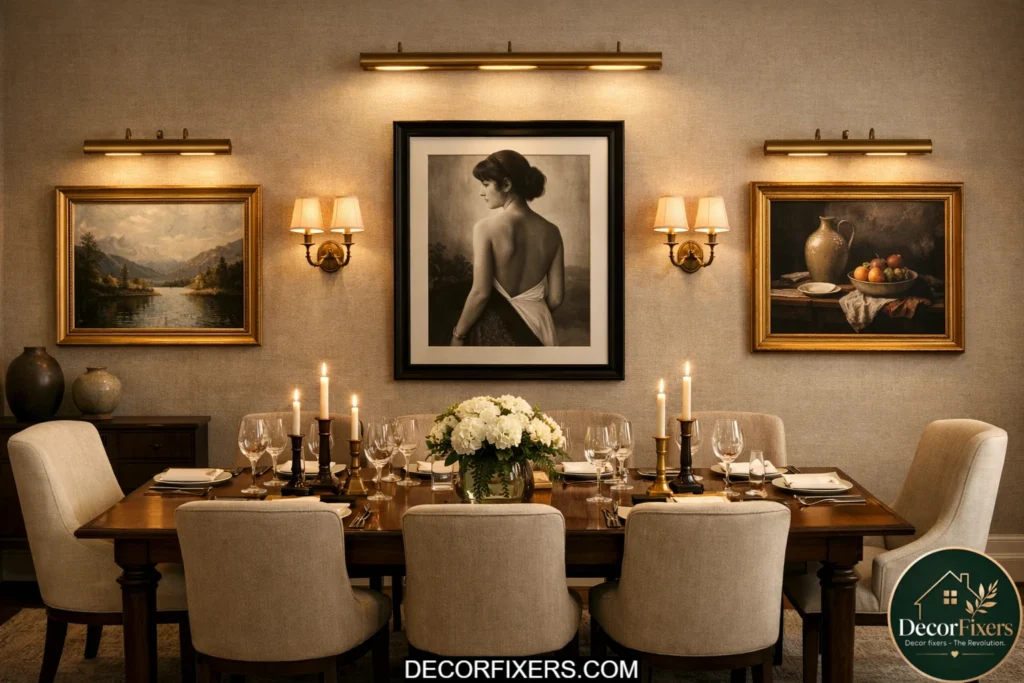
Here’s the thing: art without good lighting is underperforming art. Wall sconces placed on either side of a framed piece, or a picture light mounted above it, change how the color, texture, and depth read entirely.
This is what most guides skip. They show you beautiful art in rooms that are clearly professionally lit, and then you hang the same print at home, and it looks flat and dull. The art isn’t the problem. The light is. A pair of plug-in sconces can fix this without any electrical work.
14. Hang Mirrors in a Cluster, Not Just One
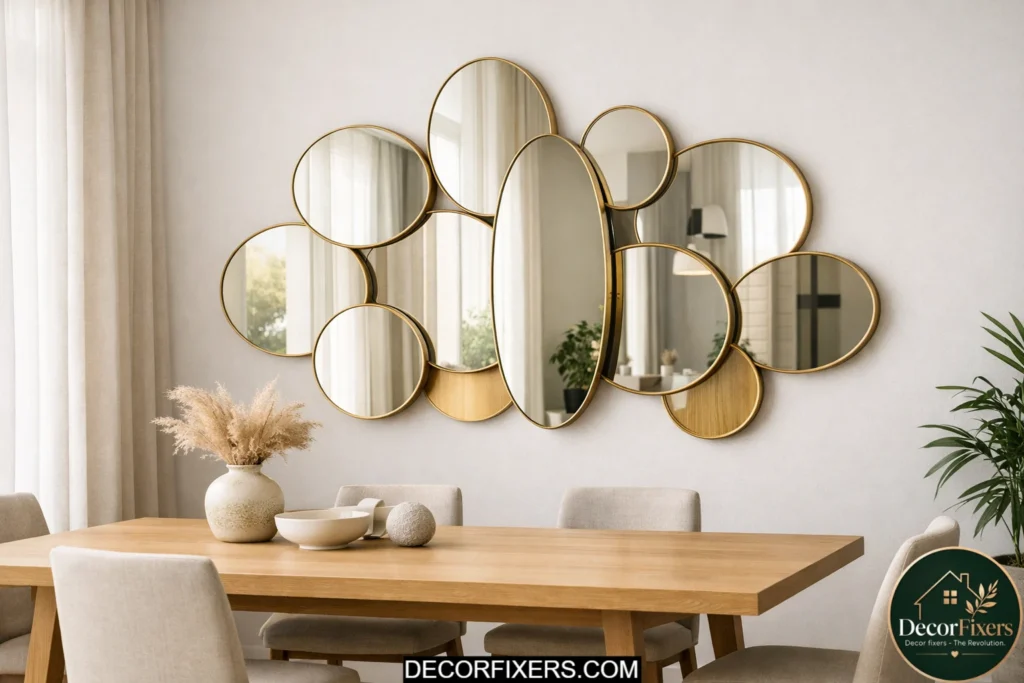
A single mirror is nice. A cluster of three to five mirrors in varied shapes and sizes, but with a cohesive frame finish, is a statement. Round, oval, arch, and rectangular mirrors together create an organic arrangement that feels more collected and intentional than a standard gallery wall.
This is particularly effective in small dining rooms where you want to maximize the light-reflecting benefit of mirrors while also filling a wall visually. All in brass, all in black, or all in wood, pick one finish and let the shapes do the talking.
15. Display a Collection, Books, Ceramics, or Objects
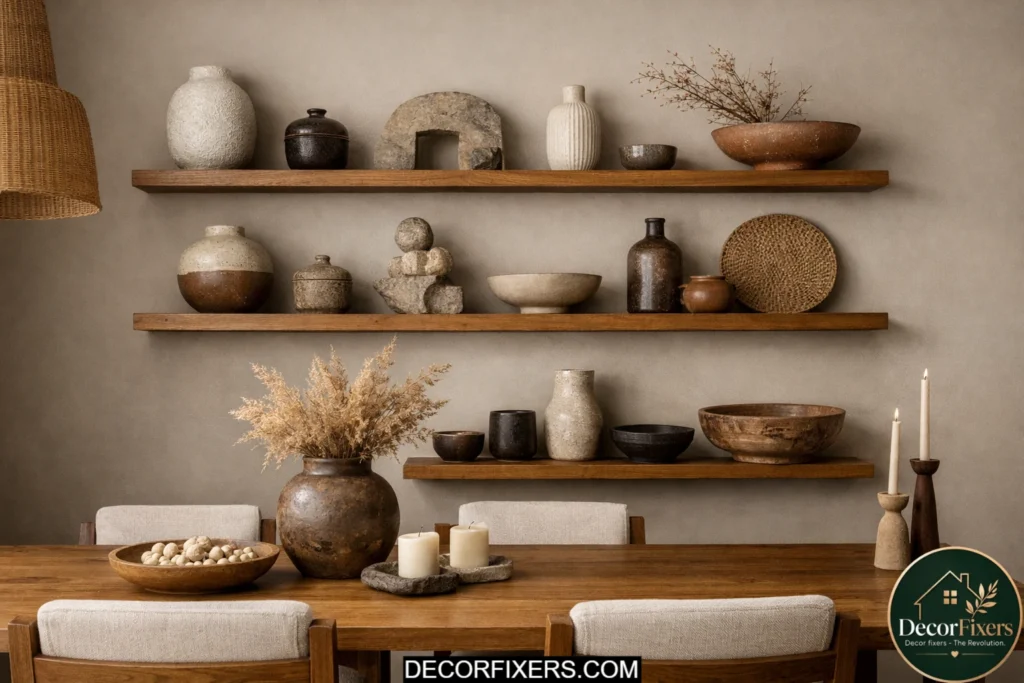
A dining room wall doesn’t have to hold art. It can hold a collection. Stacked antique books on a ledge, a row of ceramic vessels on a shelf, a curated set of vintage kitchen tools mounted to a rail, collections make walls personal in a way that purchased art sometimes can’t.
The rule: everything in the collection should share at least one common thread, color, material, era, or origin. A collection without a connection is just clutter on the wall.
16. Frame Your Kids’ Art (Seriously)
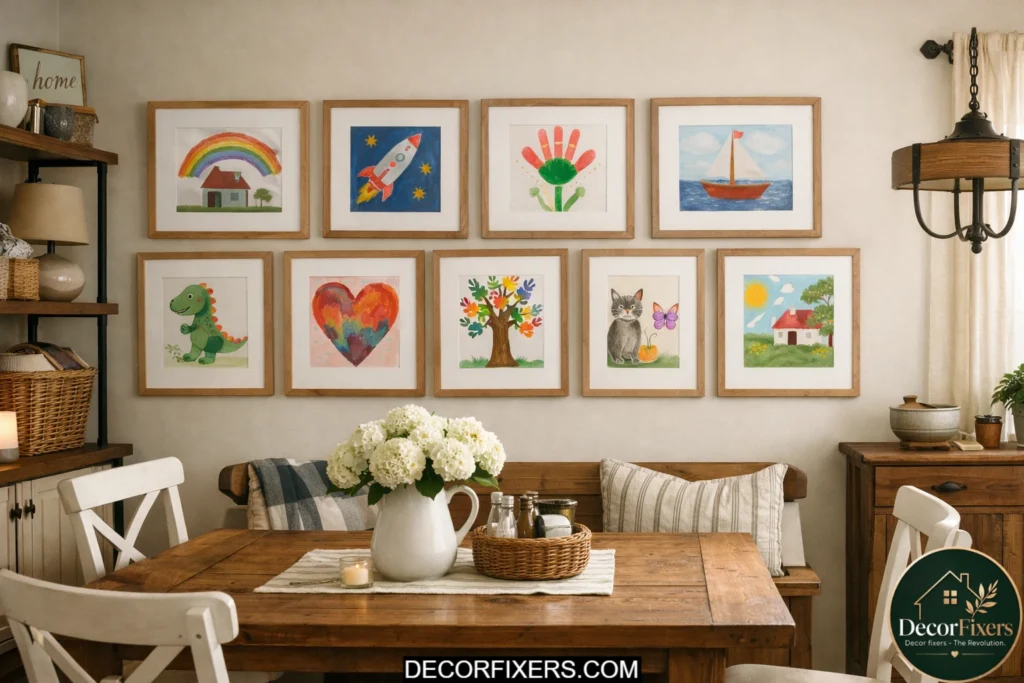
I’ve seen this done badly, a refrigerator drawing stuffed into a $3 frame, and I’ve seen it done brilliantly. The difference is in presentation. Large frames, matted properly, with your child’s artwork centered and dated on the back? That’s a dining room wall that guests actually talk about.
Rotate them seasonally. Frame them as a cohesive set. It’s personal, it’s free, and it gives the dining room a warmth that no purchased print can replicate. If your kids are grown, old photographs work the same way.
17. Go Vertical with Tall, Narrow Art in Small Rooms
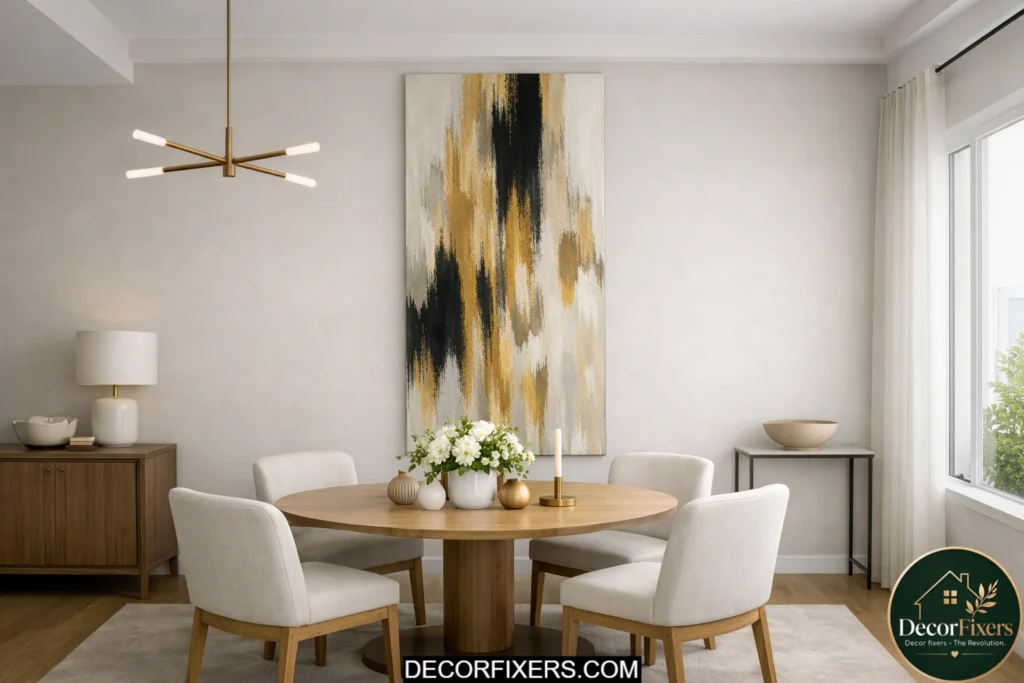
Small dining rooms have a specific wall challenge: they can’t handle wide horizontal arrangements. The answer is vertical scale.
Look, if you’re in a small dining room with 9-foot ceilings and one short wall to work with, here’s what actually works: a tall vertical canvas or two narrow prints stacked above each other draw the eye upward and make the ceiling feel higher. For a full guide on making a compact space feel expensive, check out our piece on 28 Tiny Dining Room Ideas for Small Spaces That Feel Expensive, which goes deeper on spatial tricks that work at every budget.
18. Use Peel-and-Stick Panels for Texture Without Commitment
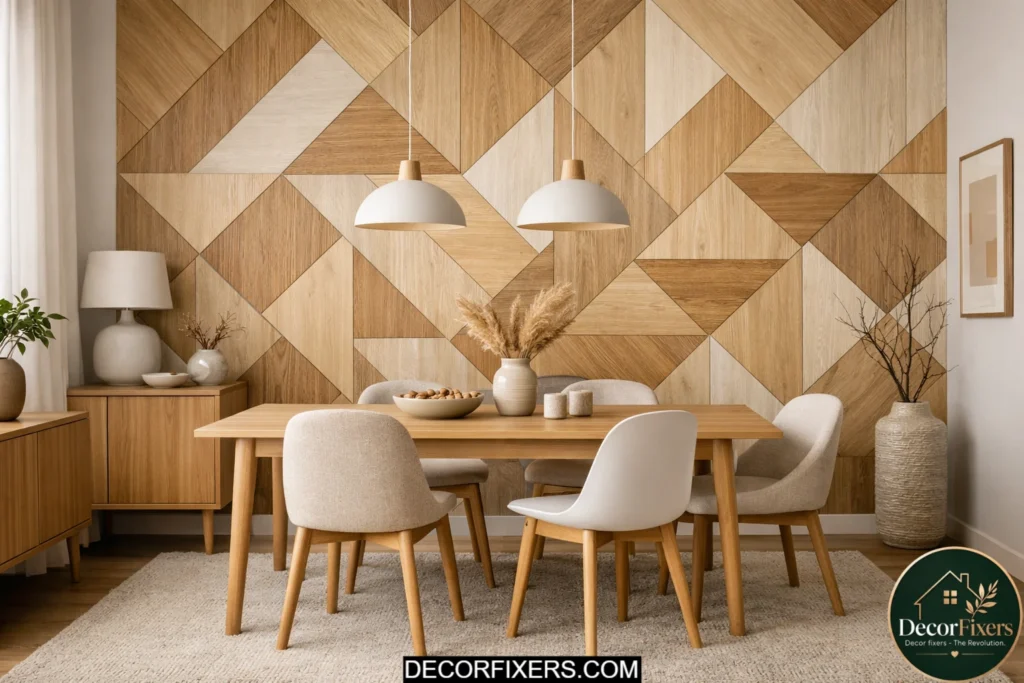
3D wall panels, PVC, wood veneer, or felt, add textural depth to a dining room wall without permanent installation. They peel off easily, and they ship flat. A geometric wood panel grid behind the head of the table adds visual warmth and a design-forward look for under $150 in most cases.
This is one of the better dining room wall decor ideas for renters who want something more interesting than a plain gallery wall but aren’t allowed to paint.
19. Hang Curtains on a Wall (Yes, Really)
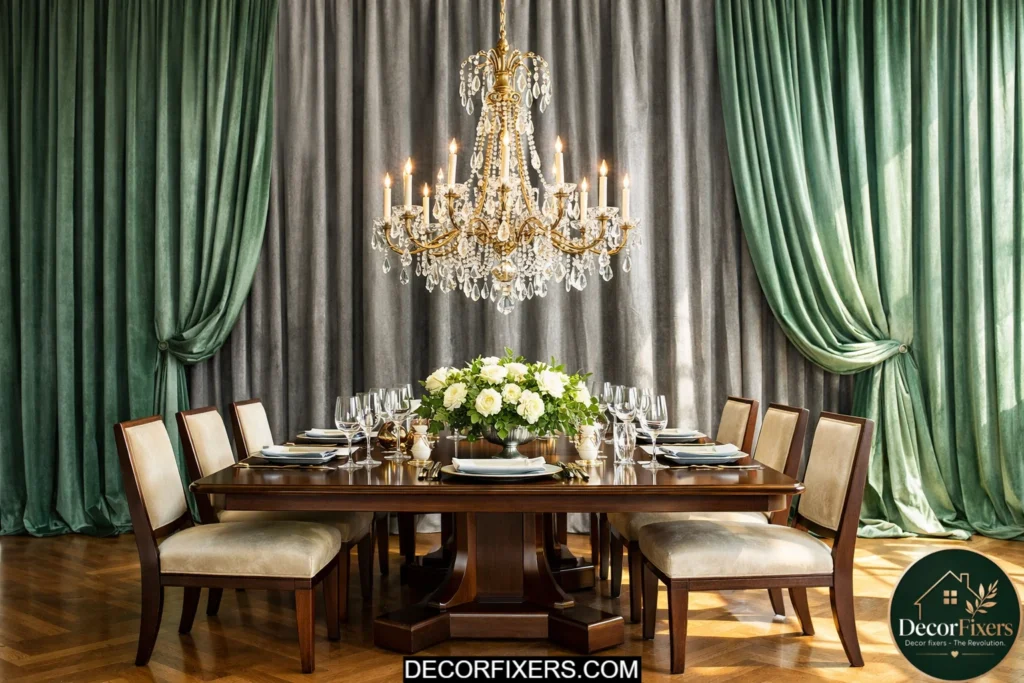
Floor-to-ceiling curtain panels hung on a dining room wall, not a window, add softness, height, and luxurious texture to any room. It’s a designer trick that fools the eye into thinking the room is taller and more formal than it is.
Choose linen, velvet, or cotton in a color that either matches the wall (for a tonal, quiet effect) or contrasts with it (for drama). Hang the rod close to the ceiling, not near the top of the imaginary window height. The drop is what creates the illusion of grandeur.
20. Mount a Chalkboard or Magnetic Board for Function + Style
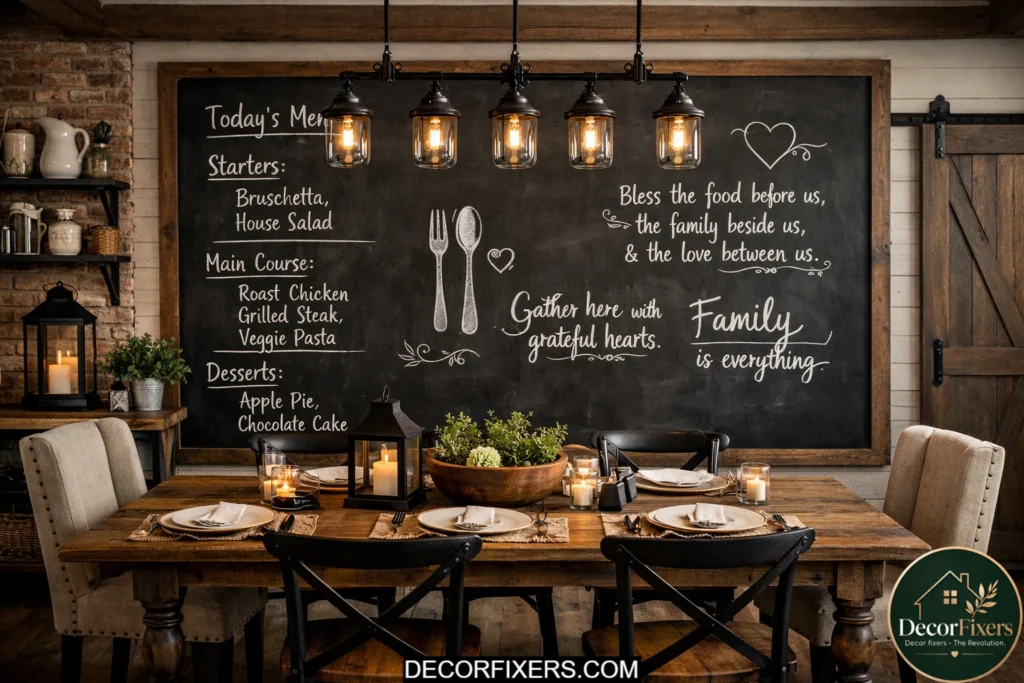
A large chalkboard wall or panel turns the dining room into a family communication hub without sacrificing style. Write the week’s menu, a quote, a birthday message; it changes with life. In a farmhouse or industrial dining room, a chalkboard panel framed in dark wood looks completely intentional.
This one polarizes people. Some design purists roll their eyes at functional decor in a dining room. But in a family home with kids, a chalkboard wall gets used every single day, and that makes it more valuable than any canvas print.
21. Create a Symmetrical Two-Piece Art Arrangement
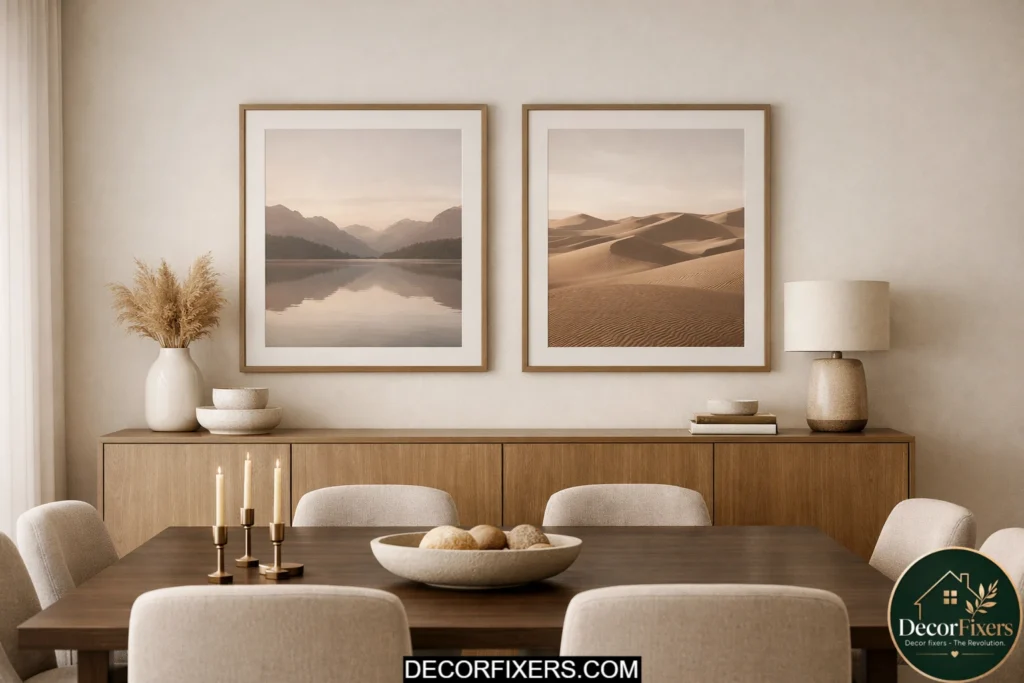
Two matching or intentionally paired artworks, same size, same frame, hung at the same height with a deliberate gap between them, is one of the cleanest dining room wall decor ideas available. It’s simple, balanced, and scales beautifully above a sideboard or buffet.
The pair doesn’t have to be identical. Two botanical prints, two landscapes, two abstract pieces in the same color family, complementary works better than matching in most cases.
22. Frame an Architectural Drawing or Blueprint
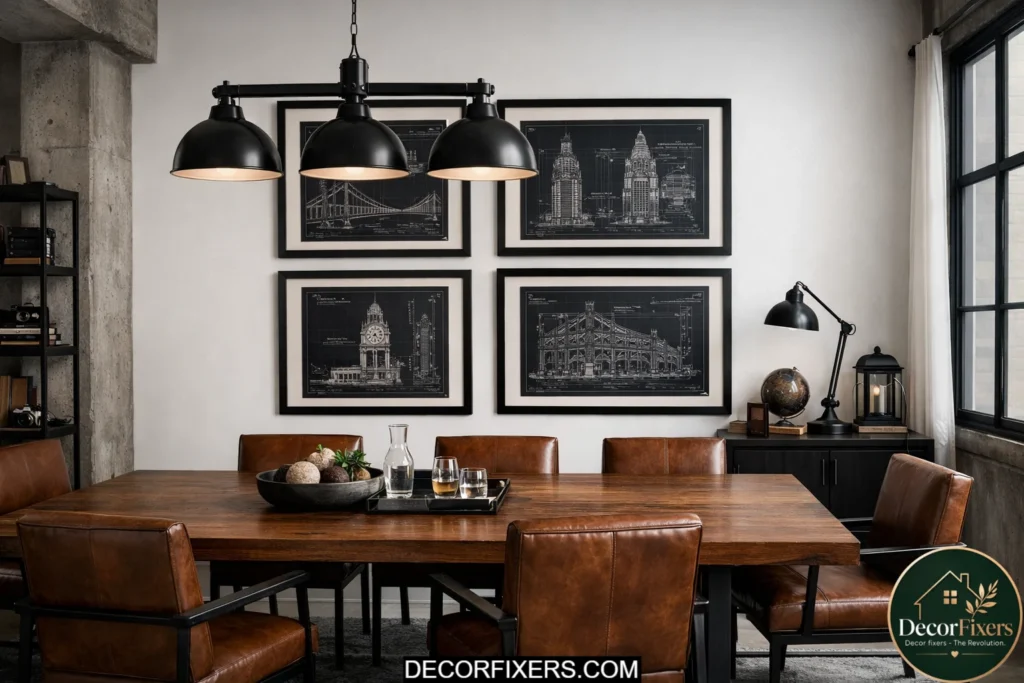
Framed architectural drawings, a building blueprint, a vintage floor plan, and an engineering schematic are sophisticated, conversation-starting, and surprisingly affordable. They work especially well in modern, industrial, or minimalist dining rooms where decorative art might feel too soft.
Look for vintage originals at estate sales, or buy high-quality reproductions of famous structures. Framed in simple black and matted in white, they look architectural themselves.
23. Add Indoor Plants as Vertical Wall Decor
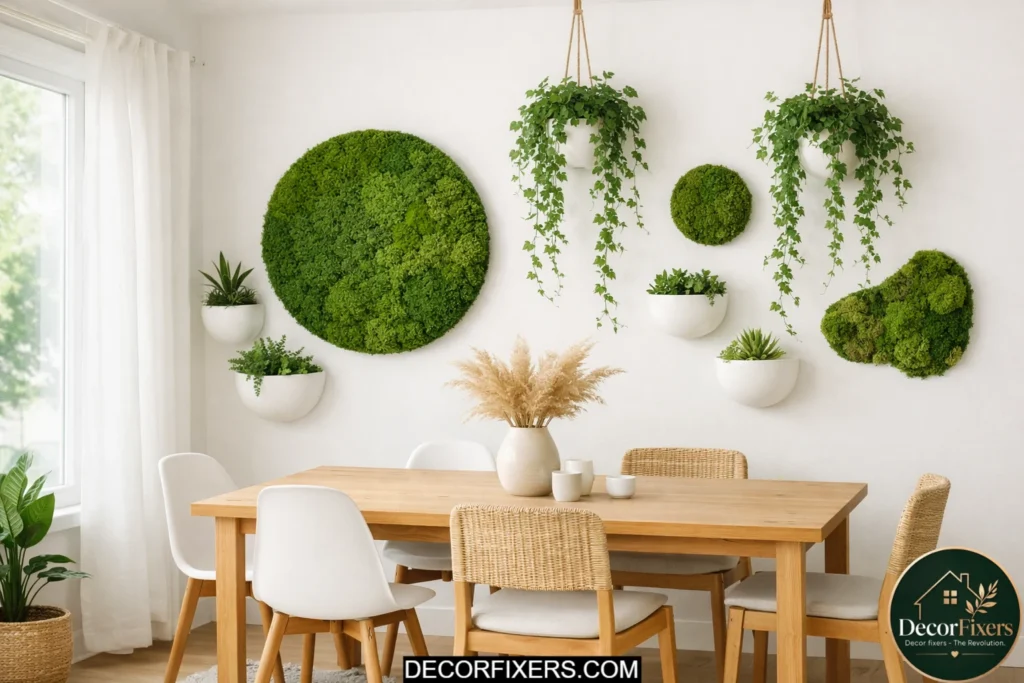
Living walls, mounted planters, and hanging pots turn a blank dining room wall into something organic and breathing. It’s wall decor that changes over time. A simple row of pothos or trailing ivy in white ceramic wall-mounted pots creates a vertical garden effect without any major installation.
This works particularly well in dining rooms with decent indirect light. It won’t work behind a north-facing wall with no windows nearby. Be honest about your light conditions before investing in plants that won’t survive.
24. Try Limewash or Venetian Plaster as a Feature Wall
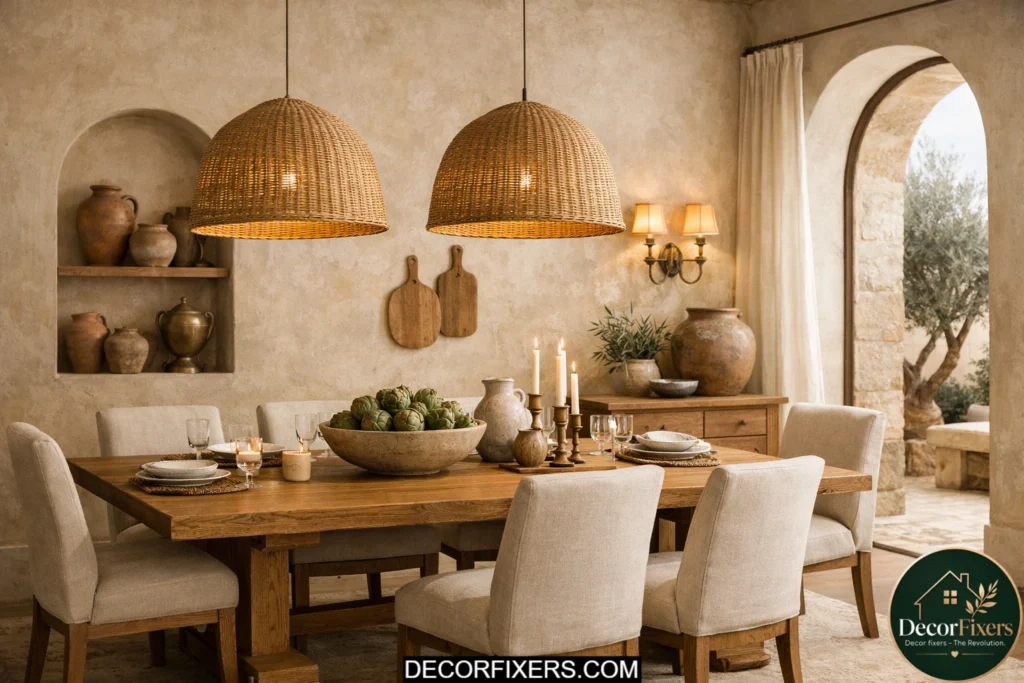
Limewash paint, a technique where pigment is applied in thin, irregular washes to create a mottled, ancient-looking finish, is one of the most discussed dining room trends right now. It’s subtle. It’s textured. It’s completely different from flat or eggshell paint.
I’ve seen conflicting data on this; some sources say it’s peaking in popularity, others say it’s already being replaced by micro-cement plaster finishes. My read is: limewash has longevity because it reads timeless rather than trendy. It doesn’t photograph as obviously as other trend finishes, which means it doesn’t date as fast either.
25. Mix Every Idea Above, But Lead With One Hero Piece
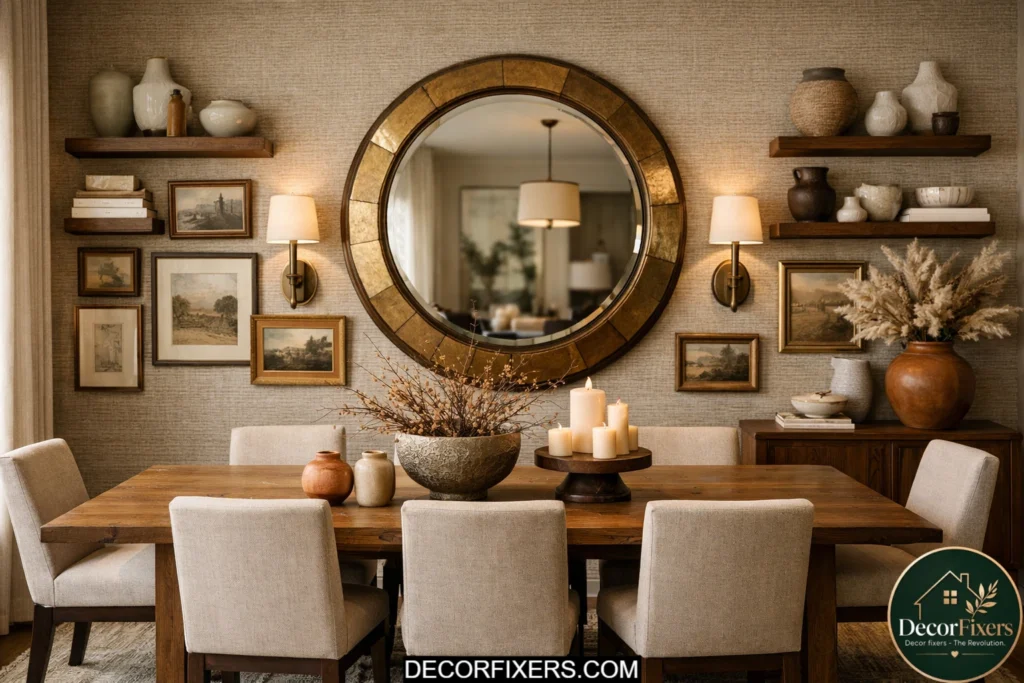
The best dining rooms don’t follow one rule. They layer. A gallery wall with a statement mirror anchoring one side. Sconces light a single large canvas. Shelves holding ceramics below a wallpaper accent.
But every successful layered wall starts with one hero piece that establishes the scale, tone, and direction. For open-concept dining spaces connected to the living room, this is especially important; both spaces need to feel related. If you’re dealing with that layout, our roundup of 40 Modern Dining Room Ideas for Small Spaces That Actually Work has a full section on how to connect adjacent spaces without making the decor feel repetitive.
| How To Choose the Right Dining Room Wall Decor in 5 Steps 1. Measure your wall width and note the table width below it. 2. Identify the room’s dominant style (modern, farmhouse, eclectic, traditional). 3. Decide between a focal point (one large piece) or a layered arrangement (gallery wall or shelf display). 4. Choose your scale: art or mirrors should fill 50–66% of the wall or furniture width below. 5. Hang at eye level, the center of the artwork should sit 57–60 inches from the floor. |
CONCLUSION:
Dining rooms are strange spaces. People walk past them all day, eat in them twice, and then wonder why they don’t feel special. The walls are usually the last thing anyone thinks about, and the first thing guests notice.
What changed how I think about this: realizing that a blank wall isn’t neutral. It’s a choice. And usually not a great one. Every idea in this list costs differently, installs differently, and works for different room sizes, but all of them are better than leaving the wall bare and hoping no one looks at it.
Start with the wall that faces the door. Fix that one first. Everything else follows naturally from there.
FAQs:
Q: What’s the best wall decor for a small dining room?
A: A single oversized mirror or one large vertical canvas. Both make the room feel bigger without adding visual clutter. Avoid small prints in small rooms; they make the space feel more cramped, not cozier.
Q: How do I hang a gallery wall without it looking messy?
A: Lay the arrangement on the floor first. Use one anchoring piece that’s larger than the rest. Keep consistent spacing, 2 to 3 inches between frames. Choose two to three frame styles maximum, not ten different ones.
Q: Should dining room wall art match the furniture?
A: Not exactly, but it should relate. Pull one color from the art that appears somewhere in the furniture, rug, or textiles. That connection is what makes a room feel designed rather than assembled.
Q: Why does my dining room still look bare even with art on the walls?
A: Usually a scale problem. The art is too small for the wall or hung too high. Try centering your artwork 57–60 inches from the floor and ensure the piece fills at least half the wall width above the furniture beneath it.
Q: When should I use wallpaper instead of art in a dining room?
A: When you want texture, pattern, and color all in one move, especially in a room that feels plain or beige. Wallpaper on one accent wall is faster and more impactful than building a gallery wall from scratch.

Creator of DecorFixers, sharing practical home and interior ideas focused on real-life usability, simple design improvements, and budget-friendly solutions.