

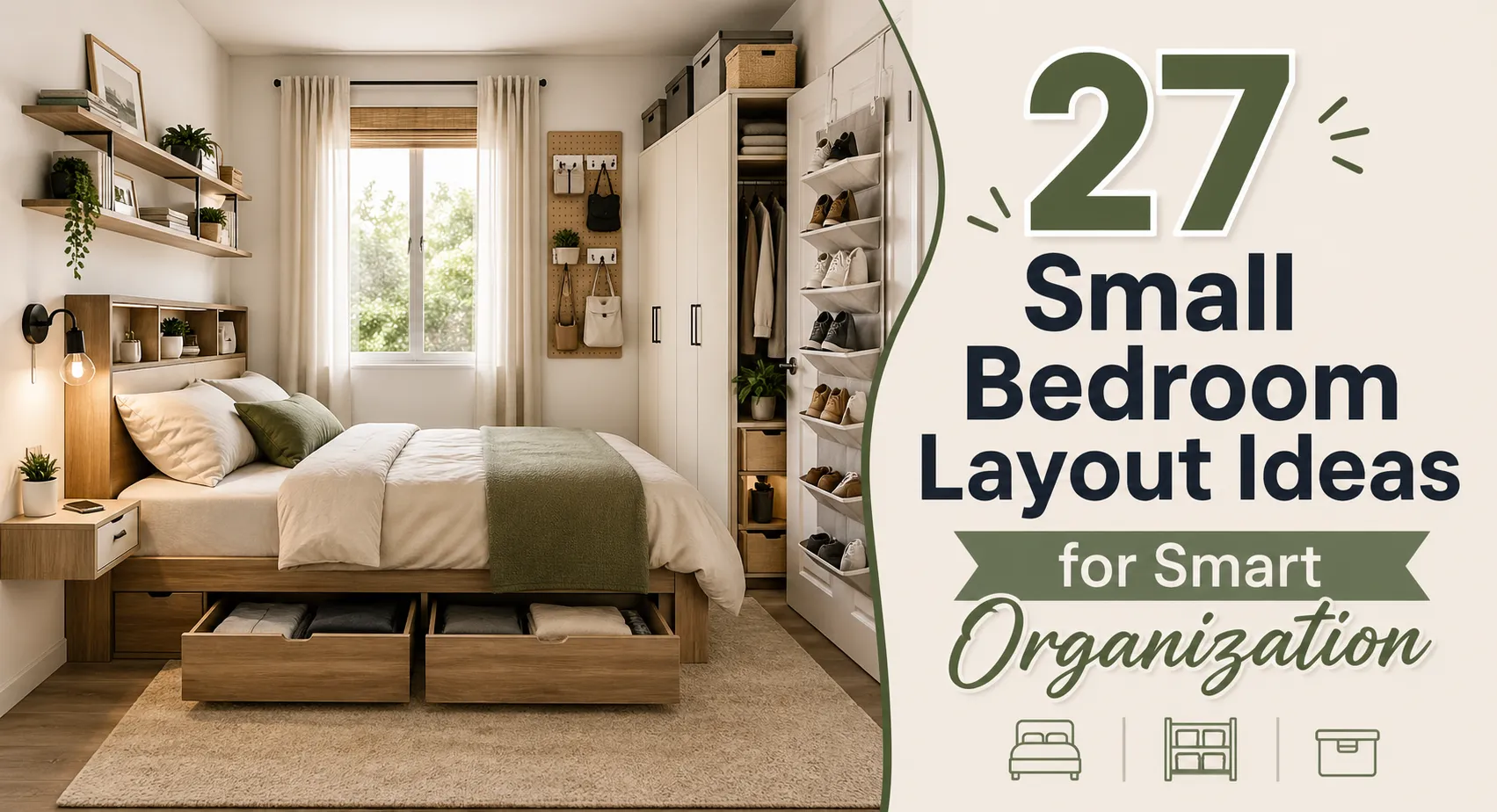
Small bedroom layout ideas for smart organization are strategic decisions about furniture placement, storage zones, and traffic flow that turn a cramped room into a functional, clutter-free space. Unlike general tidying advice, layout-first thinking treats the room’s square footage as a fixed resource and decides how to spend it before a single bin is bought.
Research finding: The most common reason small bedrooms stay disorganized is that furniture placement was never deliberately planned. At 100–120 sq. ft., the bed’s position is the single most important layout decision a renter can make
The Layout-First Rule: Before You Touch a Single Bin
Most people organize backwards. They buy storage bins, fold things neatly, rearrange the dresser, and still feel like the room’s a mess two weeks later.
Here’s the thing: the mess isn’t a habit problem. It’s a spatial logic problem.
The bedroom layout, specifically where the bed sits, determines where everything else can go. Get that wrong, and no amount of organizing products will fix it.
The sequence that works:
- Fix bed placement first; it controls 60–70% of usable wall space
- Assign storage zones based on remaining walls and floor area
- Plan traffic flow; keep at least 24 inches of clear walkway
1. Place the Bed Against the Longest Wall
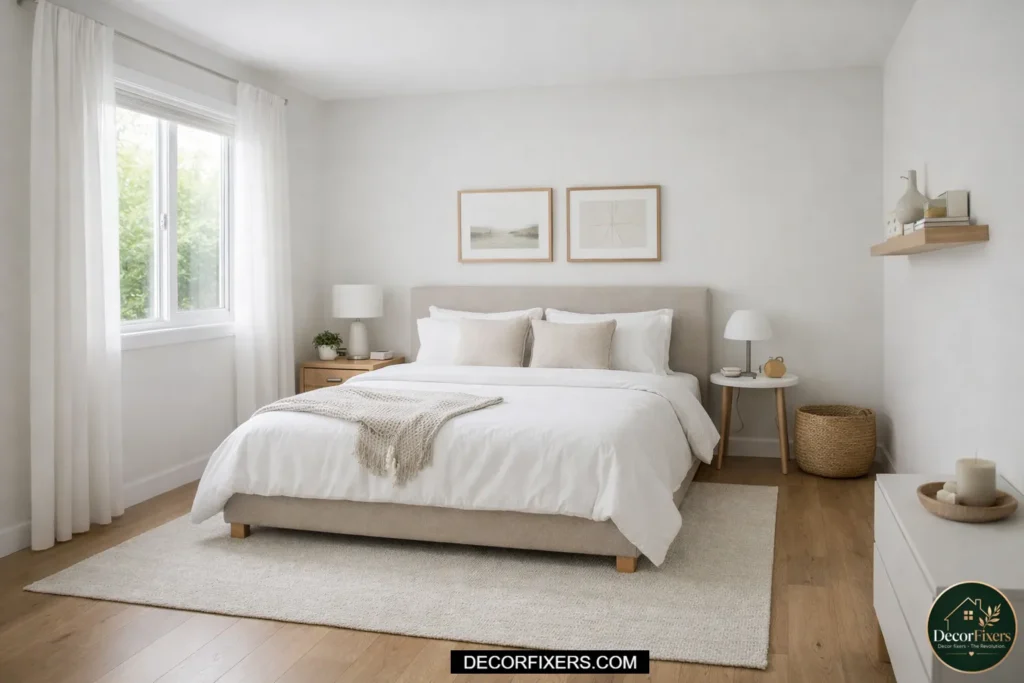
This is the foundational rule. In any room under 12 feet wide, the headboard goes against the longest uninterrupted wall. It opens the center floor, frees up two side walls for storage, and creates a clear traffic lane from the door to the closet.
Don’t place the bed in the center of the room. That’s a design choice that works in large rooms; in small ones, it just blocks everything.
2. Try Corner Bed Placement for Ultra-Small Rooms
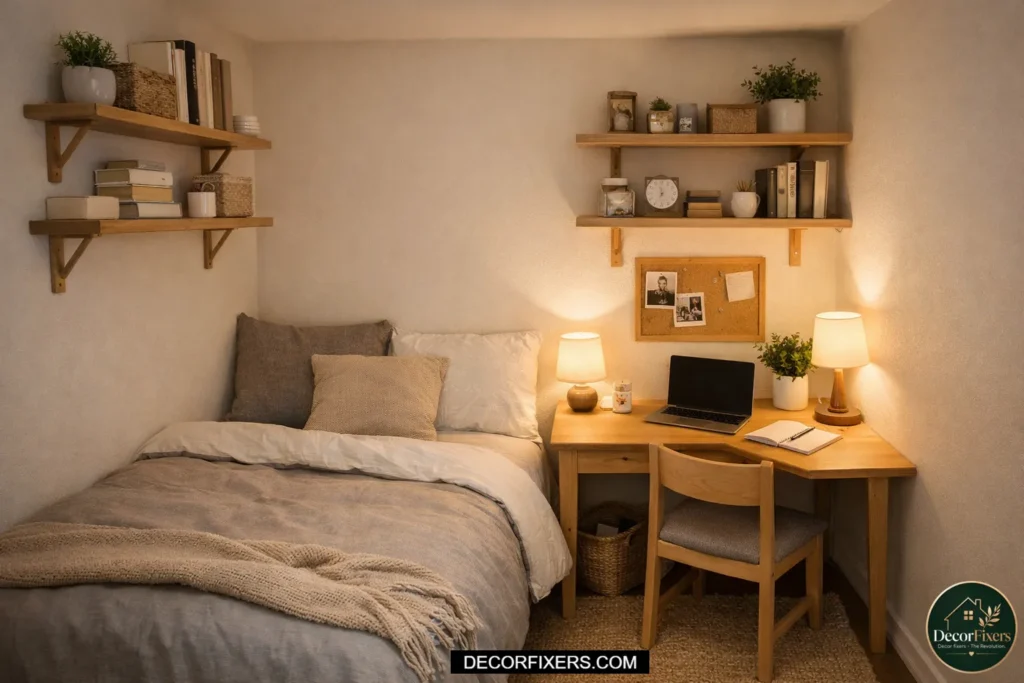
In rooms 10×10 feet or smaller, placing the bed in the corner (headboard touching two walls) is often the smartest move. You lose one-sided access, but you gain two full walls free for shelving, wardrobes, or a floating desk.
Look, if you’re in a room where the door, closet, and window are all crammed onto the same wall, corner placement is frequently your only configuration that doesn’t block traffic flow entirely.
Some designers push back on corner beds, arguing they’re hard to make and awkward for couples. That’s valid for shared rooms. But for a single person in a city apartment, corner placement frees more usable space than almost any other single decision.
3. Use a Storage Bed Frame as Your Primary Dresser
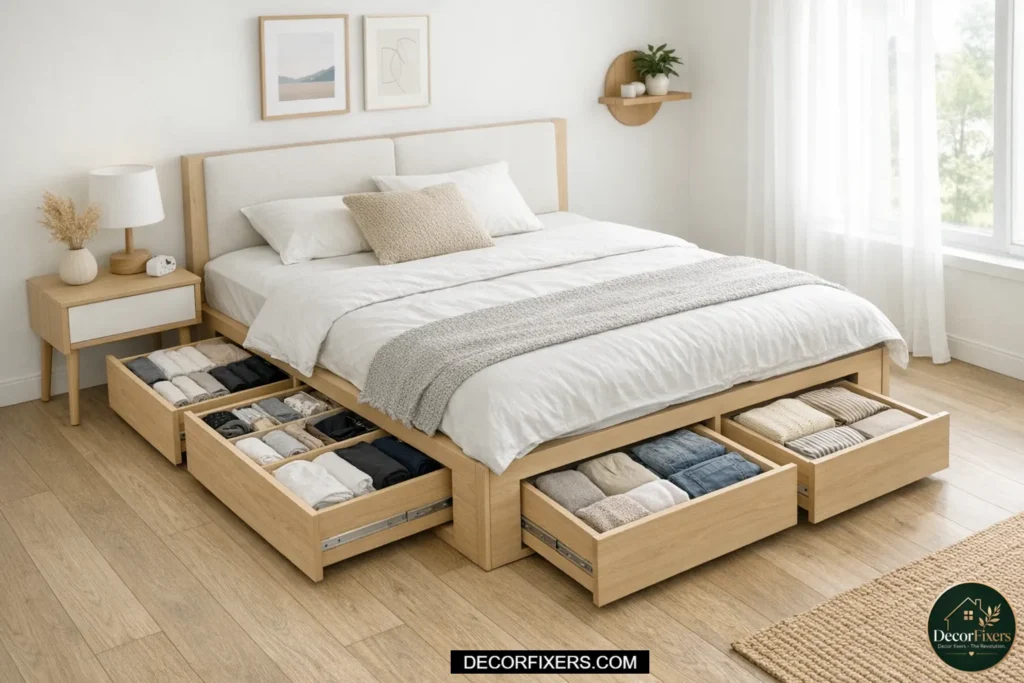
The IKEA HEMNES bed frame with drawers or the IKEA MALM bed frame with built-in pull-out drawers can hold a full category of clothing: T-shirts, jeans, and workout gear, without a single extra piece of furniture. In rooms under 10×10, this single swap can remove the dresser entirely.
That freed wall space is now available for something that actually serves the room’s layout.
4. Mount Floating Nightstands Instead of Table Ones
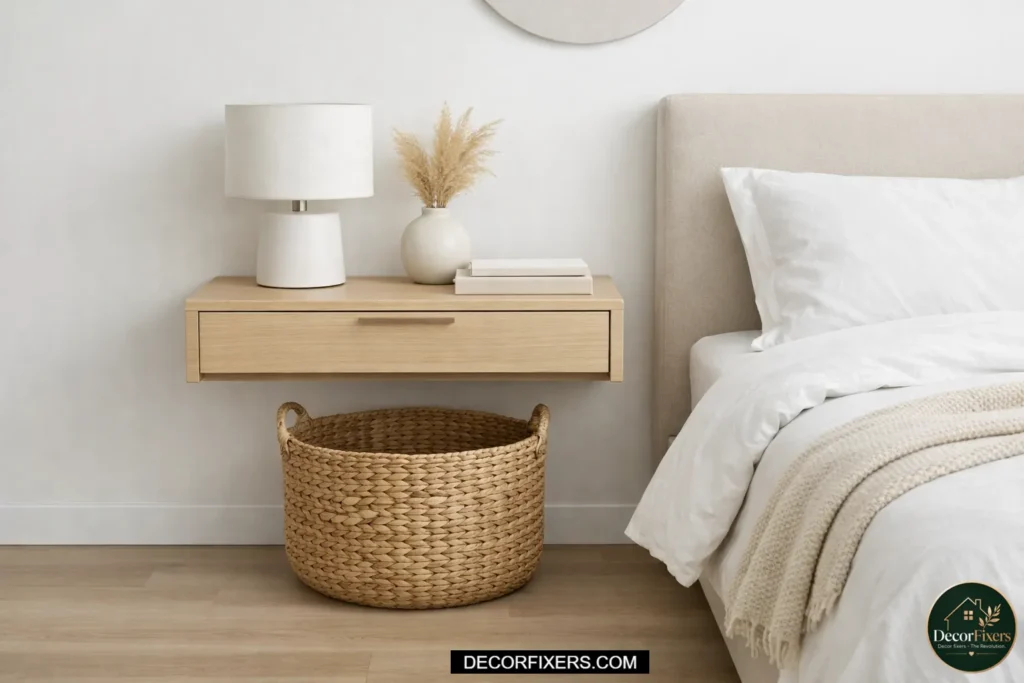
Traditional nightstands sit on the floor and take up 2–3 square feet of prime bedroom real estate. A wall-mounted floating shelf at the right height does the same job and adds zero floor footprint.
The floor beneath a floating nightstand can hold a basket, a book stack, or simply stay clear, which gives the room room to breathe.
5. Add Open Shelving Above the Headboard
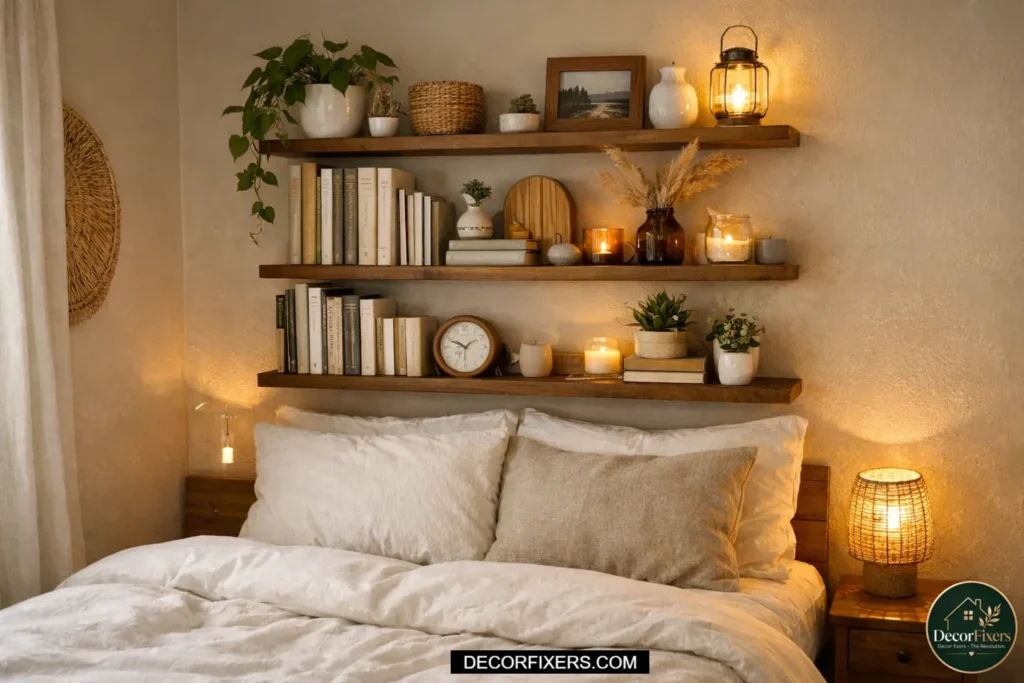
The wall above the headboard is almost universally ignored. Two floating shelves installed at 60–72 inches from the floor can hold books, baskets, folded items, or small plants; none of it touches the floor, none of it blocks movement.
This is vertical storage in its humblest form. No tools beyond a drill and a level.
6. Replace a Wide Dresser with a Tall Wardrobe
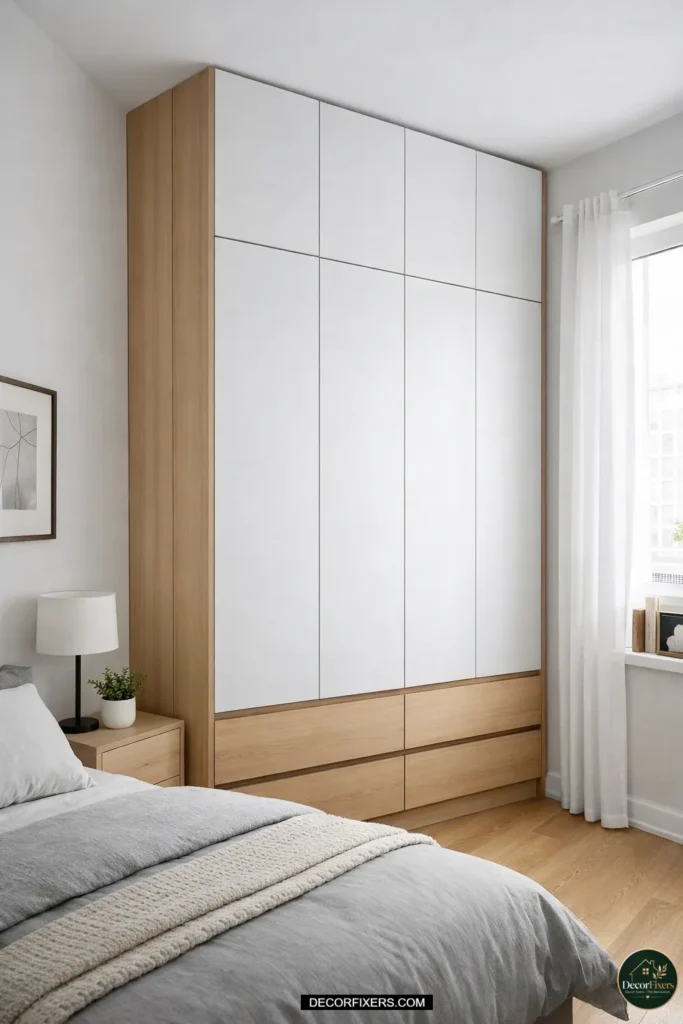
Counterintuitive but effective: a standard 6-drawer dresser stands about 48–54 inches tall. An IKEA PAX wardrobe reaches 93 inches; same or smaller footprint, nearly double the storage volume.
Most people instinctively reach for a dresser because it looks less imposing. But in a small bedroom, horizontal spread is the enemy. Vertical height is free space that hasn’t been used yet.
7. Use the Space Above the Wardrobe
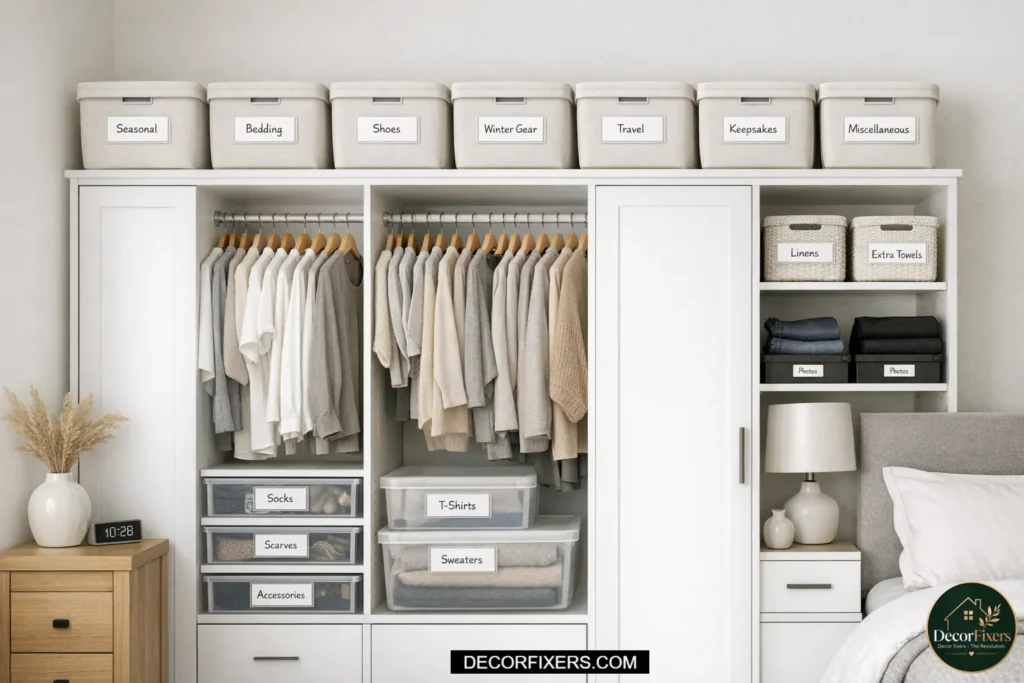
If your wardrobe or armoire doesn’t reach the ceiling, you’re leaving storage space unused. Add a row of labeled bins or baskets on top: seasonal items, luggage, extra bedding. They’re out of daily sight and completely off the floor.
Use uniform-sized bins so the top of the wardrobe doesn’t become a visual clutter zone itself.
8. Install a Full-Length Over-Door Organizer on Every Door
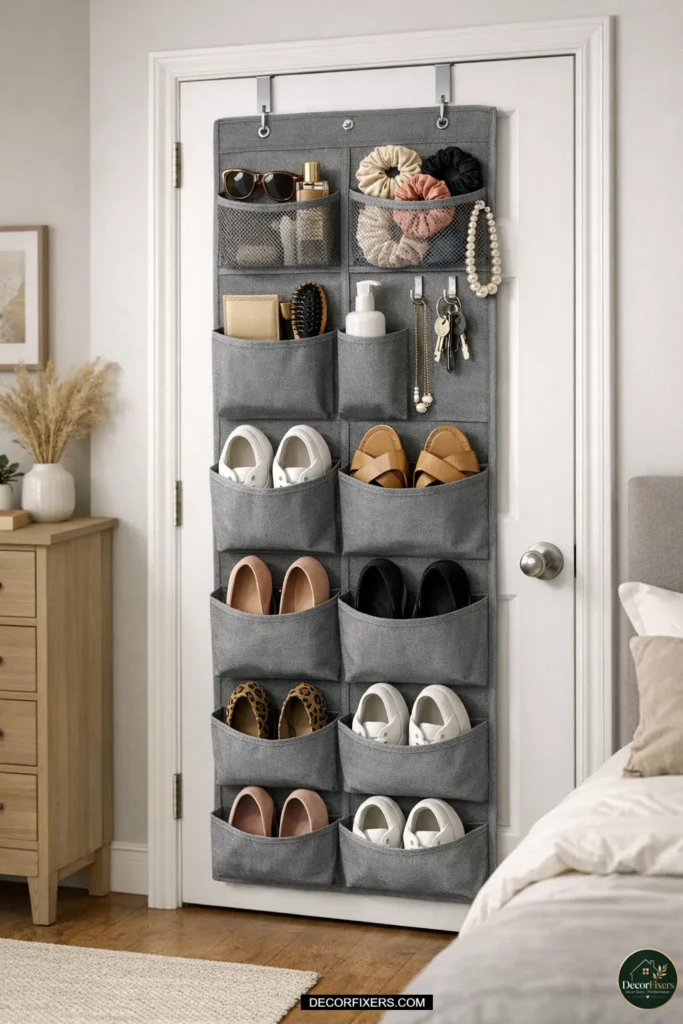
The Container Store’s elfa over-door rack system can hold shoes, accessories, chargers, or folded items; completely off the floor, invisible when the door is open.
Bedroom door, closet door, bathroom door, if it’s adjacent. All of them.
9. Add Under-Bed Rolling Bins Organized by Category
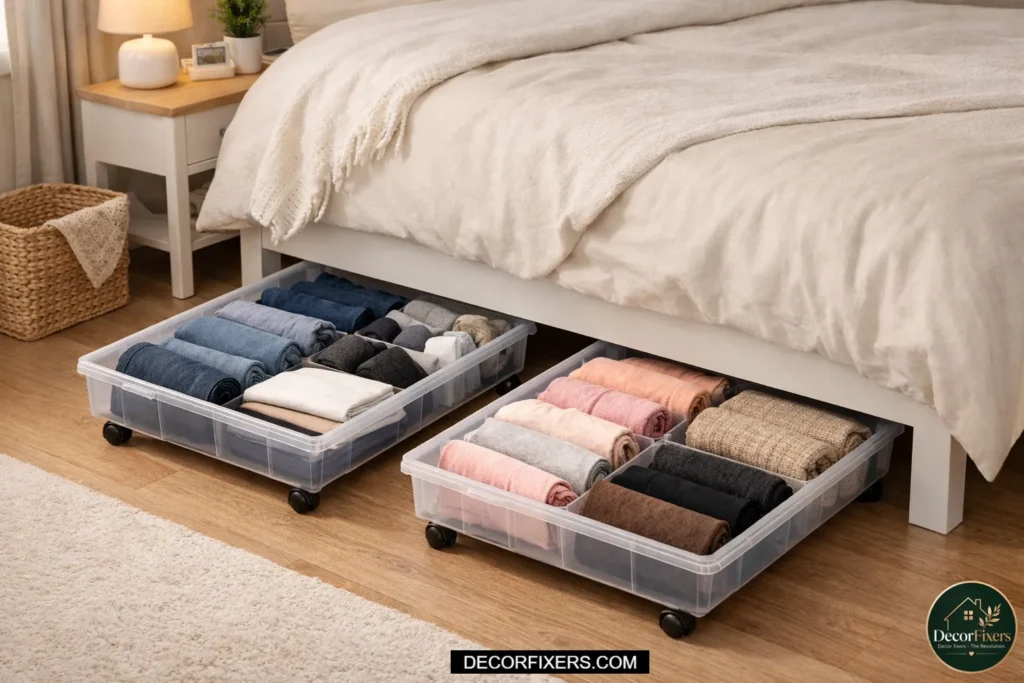
The average under-bed clearance is 7–13 inches. Rolling flat bins fit easily and can absorb an entire category of belongings; seasonal clothes, extra bedding, shoe boxes, freeing the closet for things you actually access daily.
To optimize under-bed storage, follow these steps:
- Measure clearance height before buying any container
- Choose flat rolling bins that slide completely under the frame
- Assign ONE category per bin; never mix
- Label each bin facing outward so nothing has to be pulled out to identify it
- Put most-used items near the front, least-used toward the back
10. Use Bed Risers to Increase Under-Bed Clearance
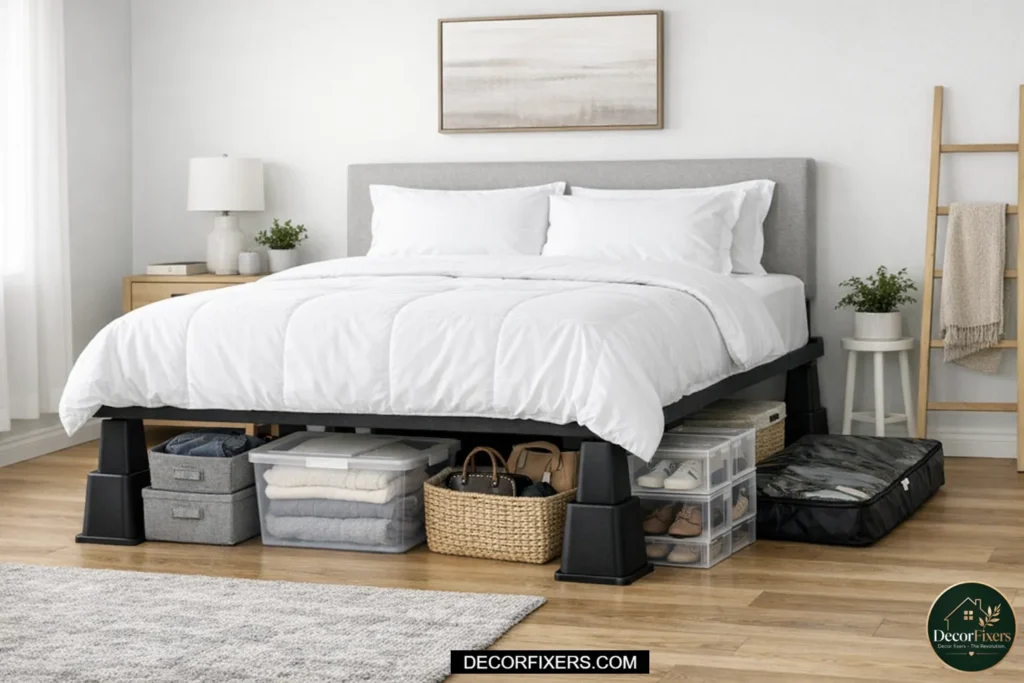
If your current frame sits too low for standard bins, bed risers lift the frame 3–8 inches. That’s the difference between no usable under-bed space and room for a full wardrobe of off-season clothes.
The cost is usually under $30. The storage gain can replace an entire secondary dresser.
11. Mount a Fold-Down Wall Desk to Eliminate Desk Footprint
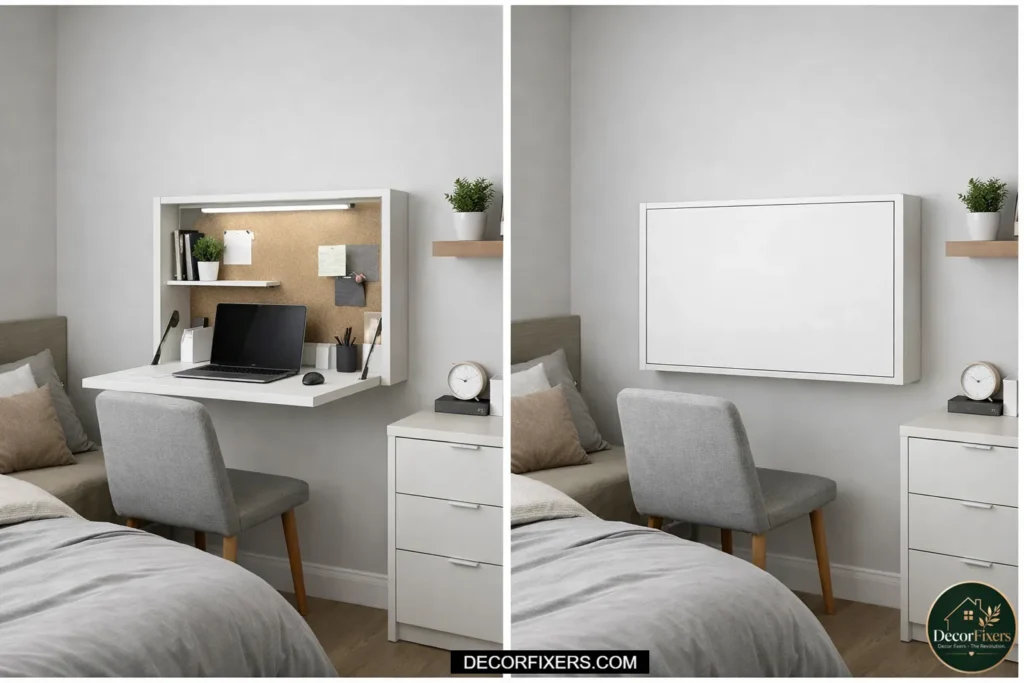
A traditional desk in a small bedroom takes 10–15 square feet of floor space. A wall-mounted fold-down desk takes zero floor space when closed and becomes a full work surface when open.
In a 10×10 room that needs both a sleeping space and a workspace, this is often the only solution that doesn’t make the room feel like an overcrowded furniture showroom.
12. Use a Bed With Built-In Shelving in the Headboard
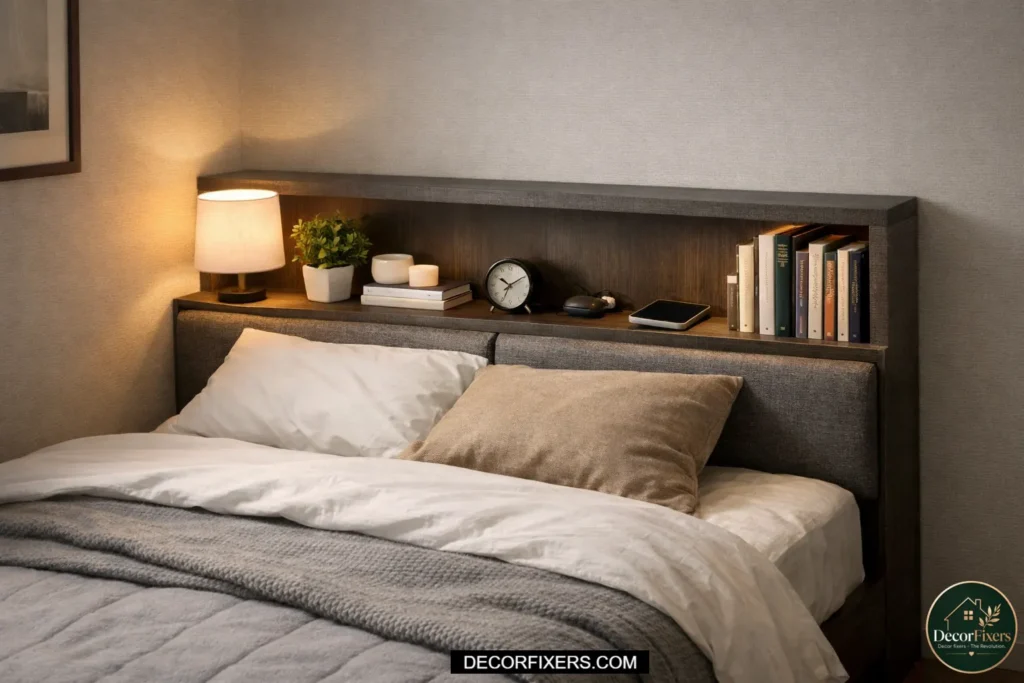
Some bed frames include shelving built directly into the headboard; space for a lamp, phone, book, and charger without needing a nightstand at all. This is particularly useful in rooms under 10 feet wide, where nightstands on both sides push furniture too close together.
Or maybe I should say it this way: a headboard with storage doesn’t just replace the nightstand; it eliminates the decision about where to put one entirely.
13. Add a Pegboard or Slotted Wall Panel for Accessories
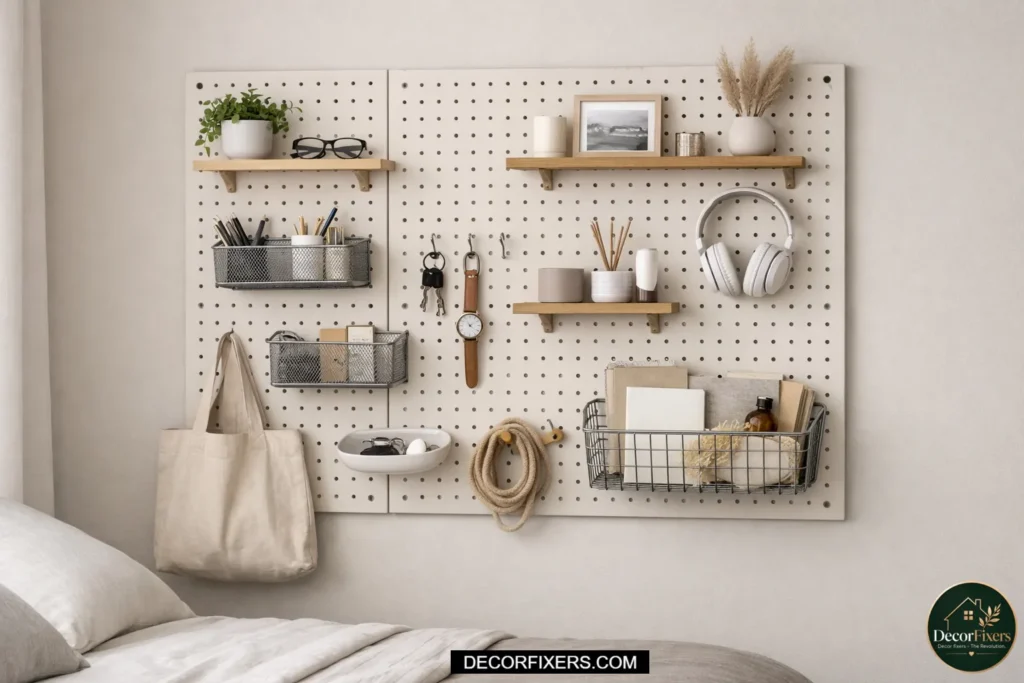
A pegboard panel (45×60 cm minimum) mounted on an empty wall section organizes everything from jewelry to bags to small containers. It keeps items off the dresser surface, visible and accessible, without adding a single piece of furniture.
IKEA’s SKÅDIS pegboard system is the most flexible in this category and includes hooks, bins, and shelf attachments.
14. Enforce One “Active Surface” Rule Per Zone
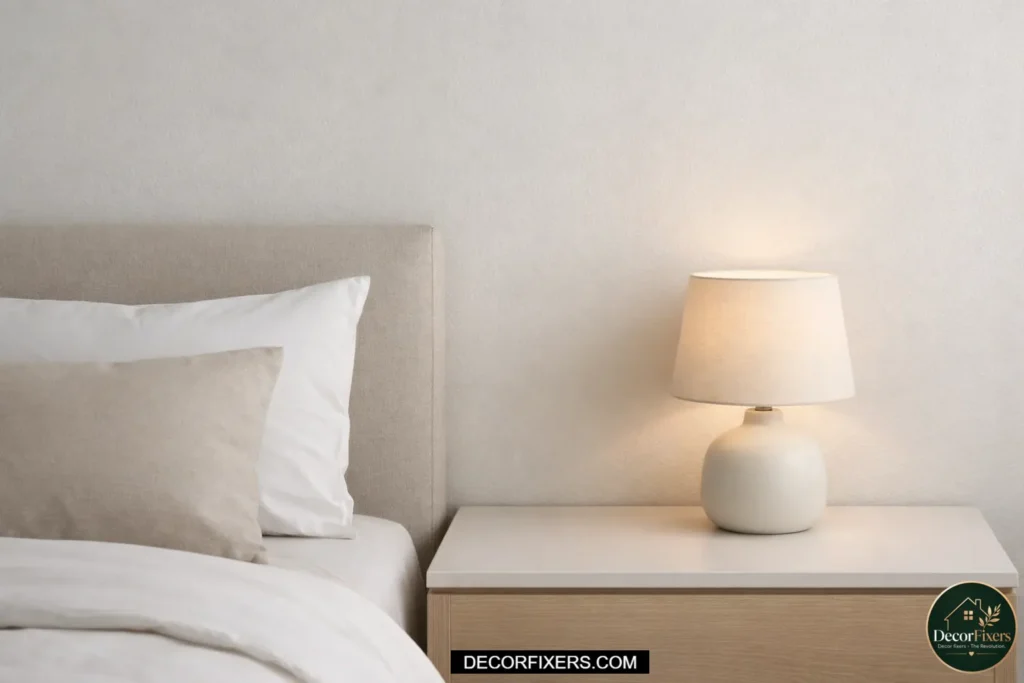
Clutter doesn’t appear randomly. It collects on surfaces because there’s no rule against it. The fix: each functional zone in the room gets exactly one surface, and that surface holds exactly one “active” item; a lamp, a phone charger, or a book currently being read.
Everything else goes in a drawer, shelf, or bin. No exceptions.
15. Build a System Inside the Closet; Not Just a Rail
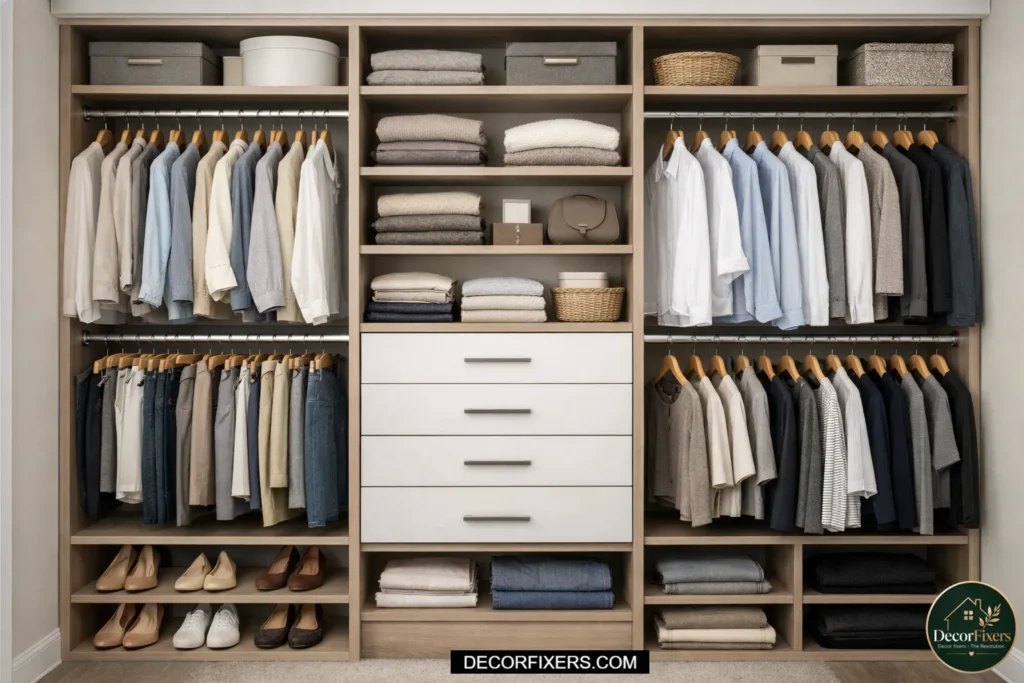
Most wardrobes ship with a single hanging rail and one shelf. That configuration wastes about 70% of the internal volume. Adding a second hanging rail for shorter items, a shelf divider for folded clothes, and a small drawer insert for accessories can double the closet’s effective storage without any construction.
The Container Store’s elfa closet system works inside most PAX wardrobes with minor modification.
16. Use a Clear Acrylic Nightstand for Visual Breathing Room
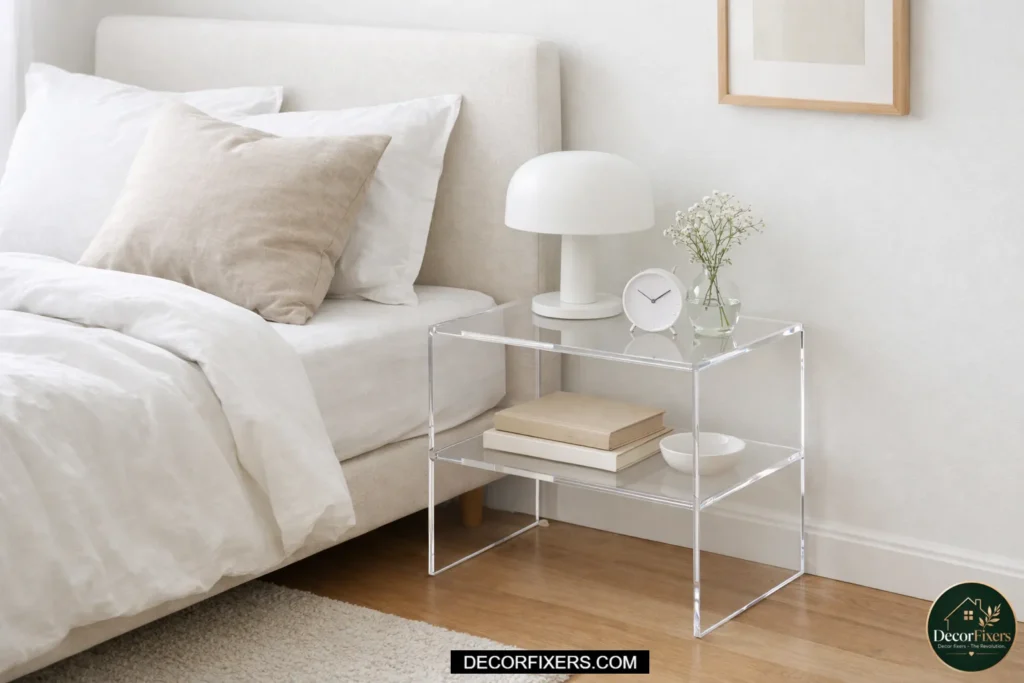
In rooms where furniture is unavoidable, transparent furniture reduces visual clutter without reducing physical presence. A clear acrylic nightstand takes the same floor space as a wood one, but the eye reads it as space.
This isn’t a storage idea. It’s a perception idea. And in a small bedroom, how the room feels matters as much as what it physically holds.
17. Standardize Storage Bins to Unify the Visual Field
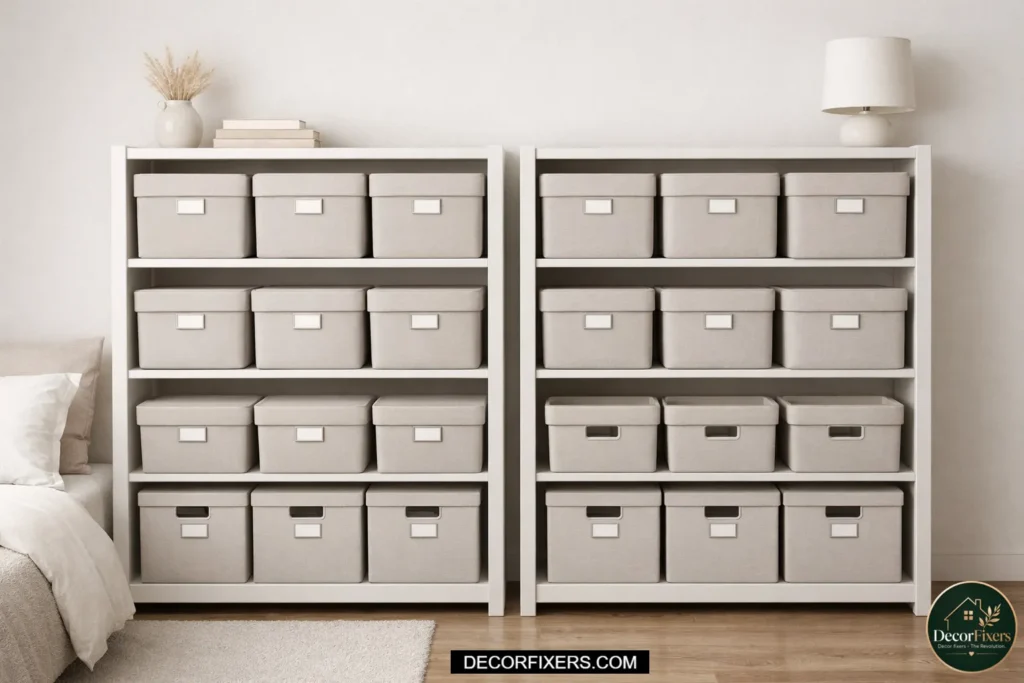
Mismatched containers make a room look chaotic, even when everything technically has a home. Standardizing bin size and color, even with inexpensive options like IKEA’s DRONA boxes, creates visual calm without a single square foot of extra storage.
Uniform bins on a shelf read as “organized system.” Random assorted containers read as “stuff that got put somewhere.”
18. Designate a Three-Foot Get-Ready Zone
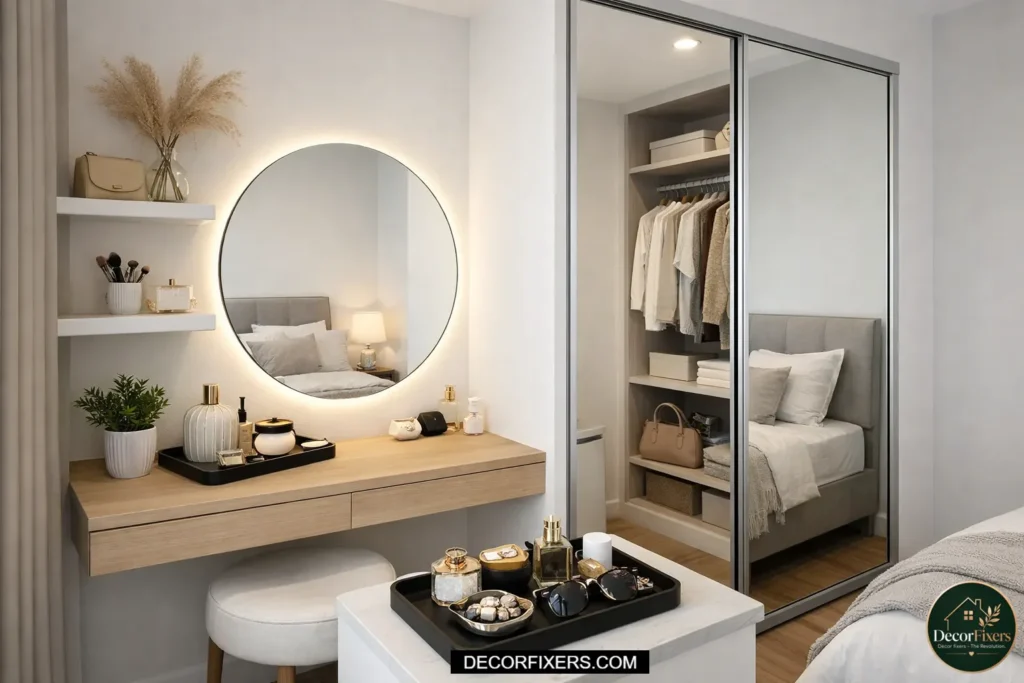
Designating a 3-foot section of wall as the “get-ready zone”, wardrobe, mirror, and a small tray for daily-use items, creates a functional routine anchor in the room. Everything needed to get dressed lives there. Nothing else does.
This zone logic is what separates a bedroom that feels managed from one that functions as a holding area.
19. Use a Slim Rolling Cart Between the Bed and the Wall
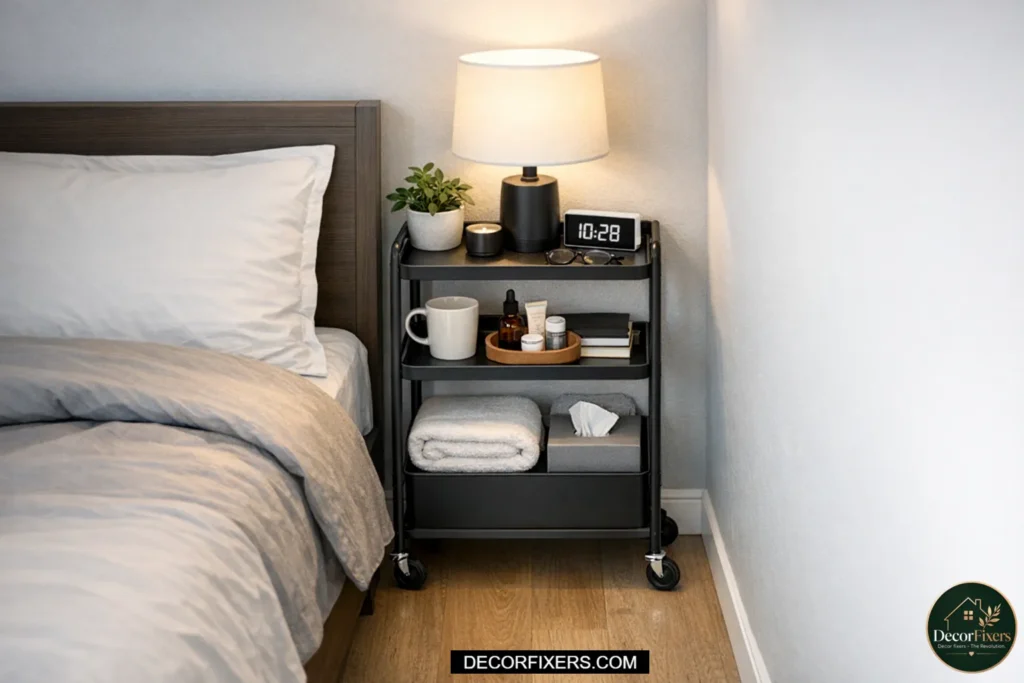
A narrow rolling cart, the kind originally marketed for bathrooms, fits in gaps as small as 6 inches between the bed and the wall. It holds a lamp, book, phone charger, and water bottle; everything a nightstand would, in a fraction of the width.
One cart, many gaps. A practical solution for rooms where standard furniture simply doesn’t fit the space between the bed and an adjacent wall.
20. Hang Curtains at Ceiling Height, Not Window Height
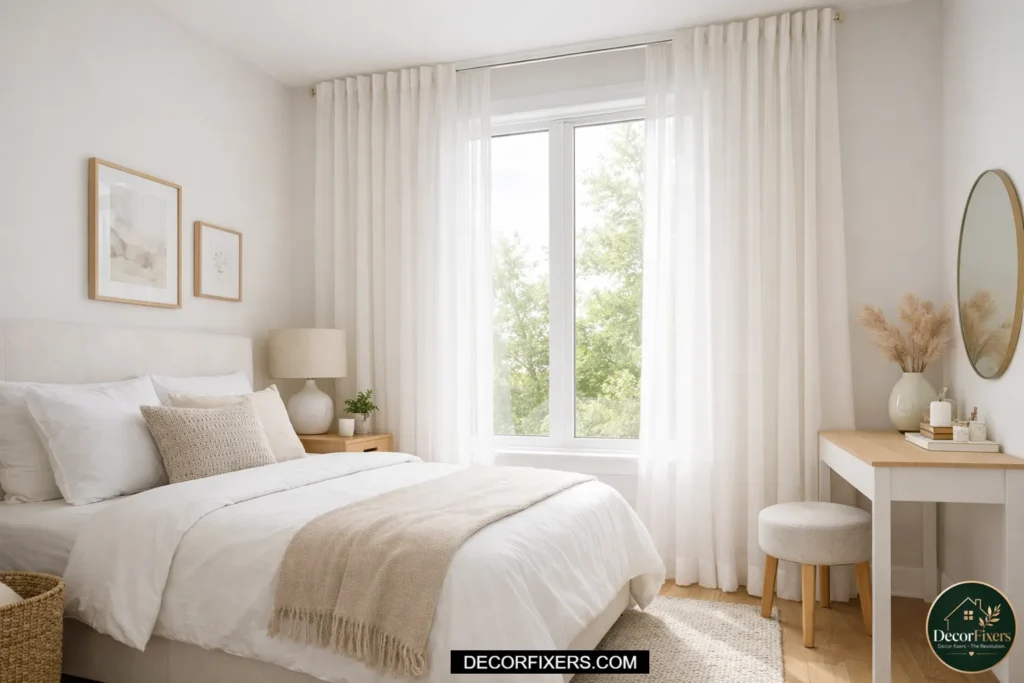
Curtains hung at ceiling height draw the eye upward and make the wall feel taller. Wider curtains that extend beyond the window frame make the window look more generous, without touching the furniture layout at all.
Design insight: Emily Henderson consistently recommends placing curtain rods at ceiling height in small rooms. The effect is optical; the eye reads the full wall height as usable space, making the room feel larger without changing a single piece of furniture.
21. Mount a Full-Length Mirror on the Back of the Door
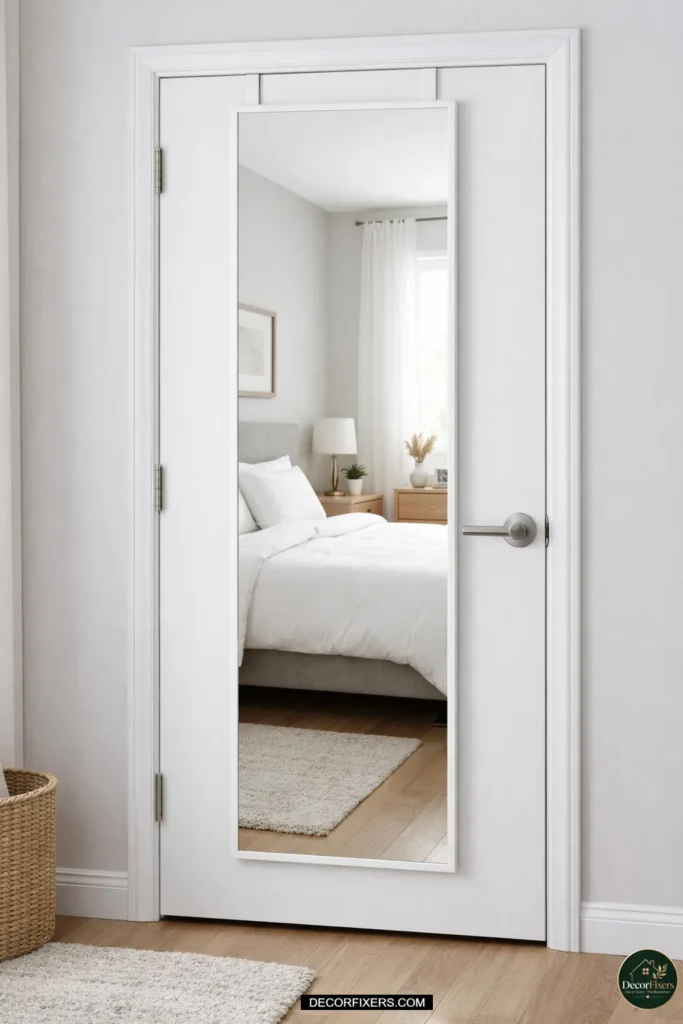
A full-length mirror mounted on the bedroom or closet door replaces a free-standing mirror (zero floor footprint) and visually doubles the apparent depth of the room when placed opposite a window.
One object. Two functions. That’s the rule for every piece in a small bedroom.
22. Use Light Wall Colors to Expand the Visual Field
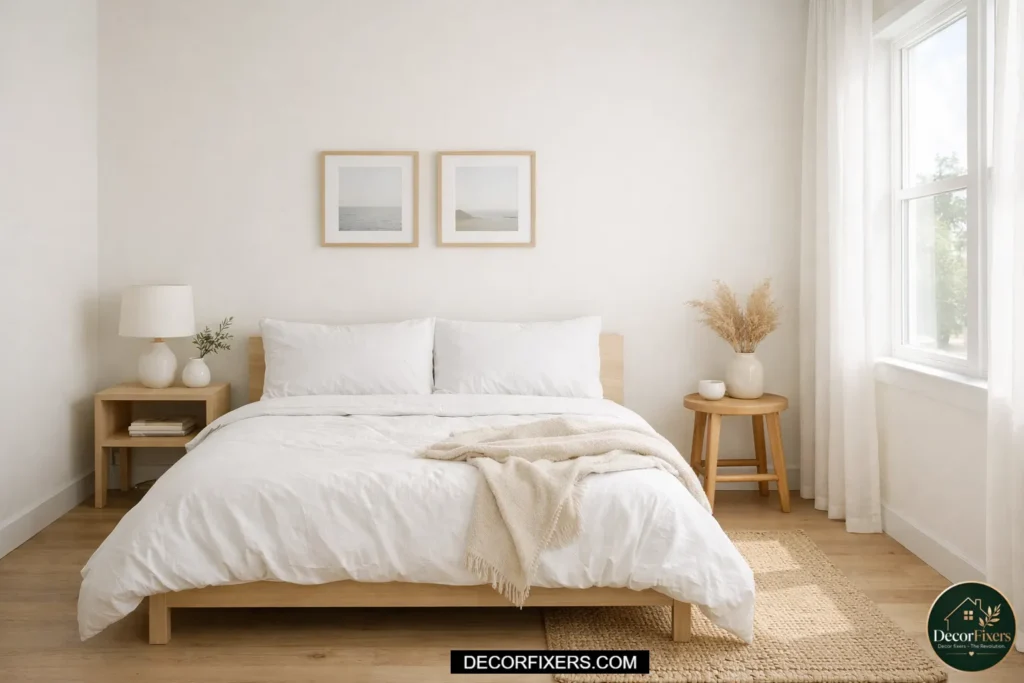
Dark and moody walls look stunning in large rooms. In a 10×10 bedroom, they compress the visual field. Light walls; warm whites, soft greiges, pale sage; reflect light and make the room read as larger than it measures.
This isn’t about sacrificing personality. It’s about understanding that in a small room, wall color is part of the spatial strategy, not just an aesthetic preference.
23. Label Everything in the Closet
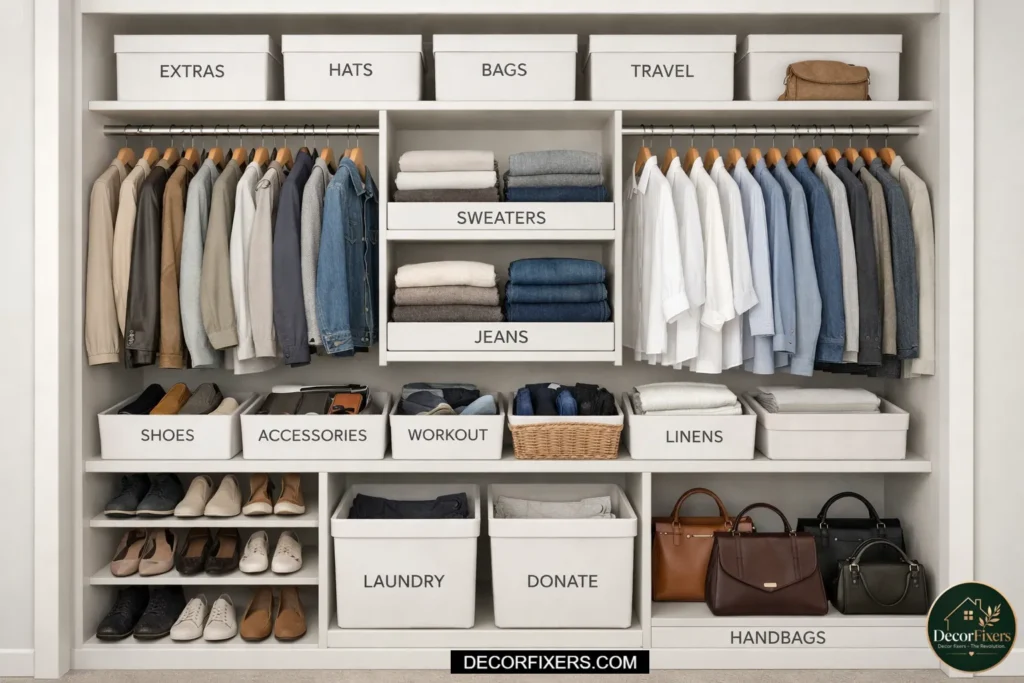
Labels are the least glamorous organizational tool and one of the most effective. When every bin, basket, and shelf section is labeled, anyone in the household, including you at 11 pm, knows exactly where things go without thinking about it.
The label removes the decision. The decision is where most organizational systems break down.
24. Create a Seasonal Clothing Rotation System
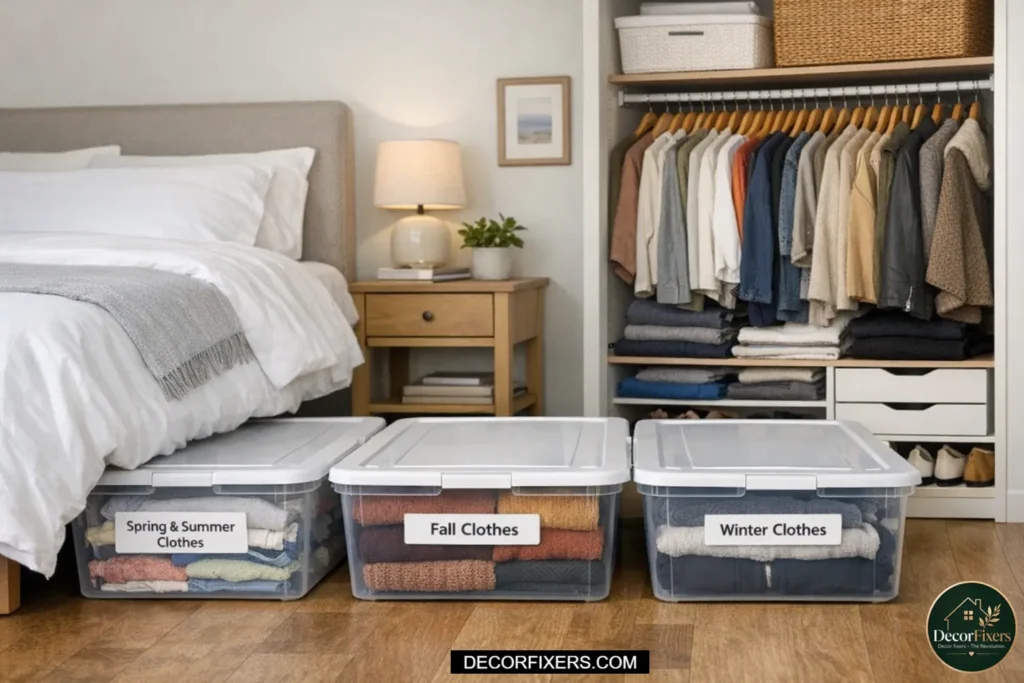
Keeping all four seasons’ clothing in a small closet at once is a permanent space trap. A two-season rotation; current season in the closet, off-season in labeled under-bed bins; cuts closet density roughly in half and makes everything that remains far easier to access.
Most people resist this because the swap feels like extra work. In practice, it takes about 30 minutes twice a year. The daily benefit of a half-full closet is genuinely worth the effort.
Organization insight: A seasonal clothing rotation requires zero additional furniture. Moving off-season clothing into labeled under-bed storage drops closet density by 40–50%, making daily-use items dramatically easier to find. This single habit can eliminate the need for a secondary dresser in rooms under 120 sq. ft.
25. Use a KALLAX Unit as a Room Divider
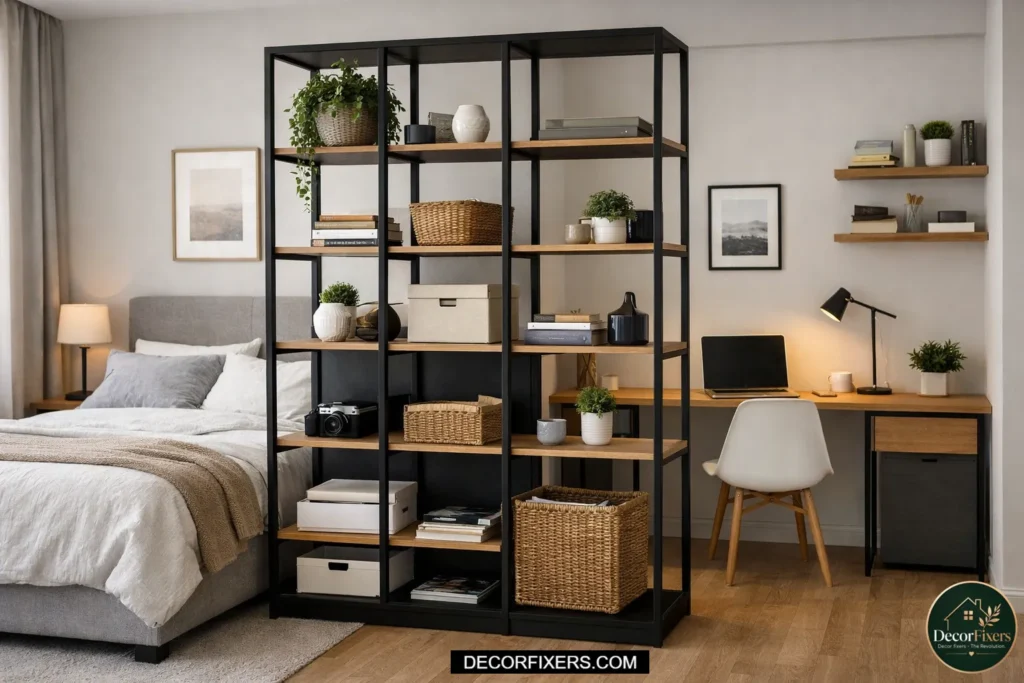
In studio-adjacent bedrooms or rooms that serve double duty (sleep and office), an IKEA KALLAX unit placed perpendicular to the wall divides the space visually without a permanent wall. One side faces the sleep zone, one side faces the work zone. Both sides provide storage.
KALLAX units used as dividers must be wall-anchored or ceiling-anchored for safety. Don’t skip that step.
26. Consolidate Charging Cables Into a Single Drawer Station
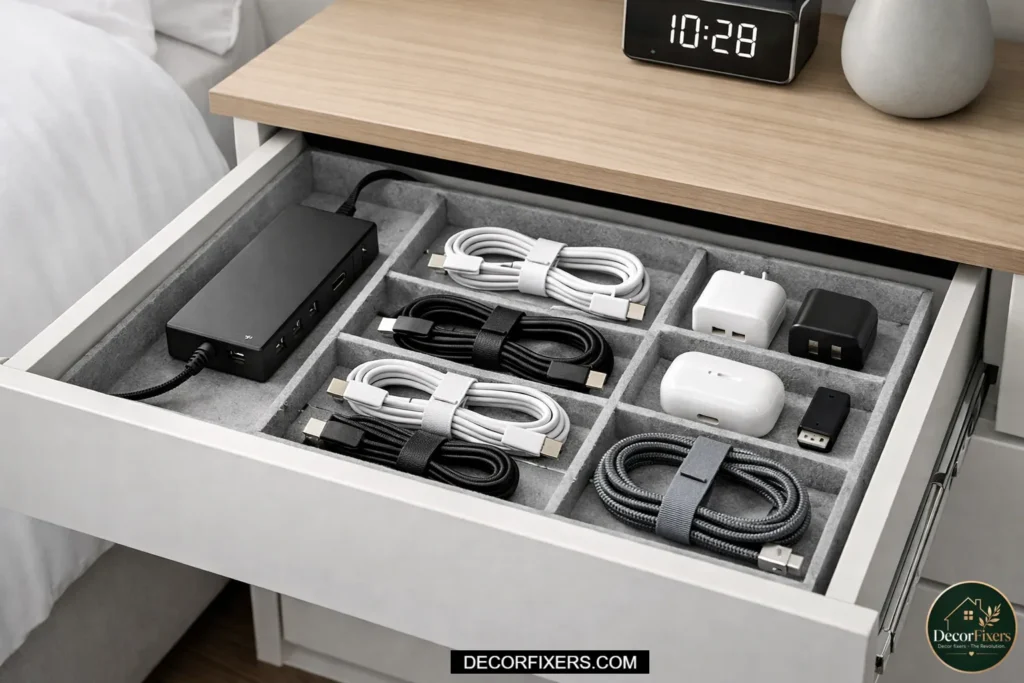
Charging cables draped across nightstands and floors are constant visual noise. A drawer organizer with a USB hub keeps all cables in one drawer, devices on the surface while charging, and cords completely out of sight the rest of the time.
Small detail. Surprisingly large impact on how the room looks and feels at 7 am when you’re half awake and looking for your phone.
27. Do a Monthly 15-Minute Reset Walk-Through
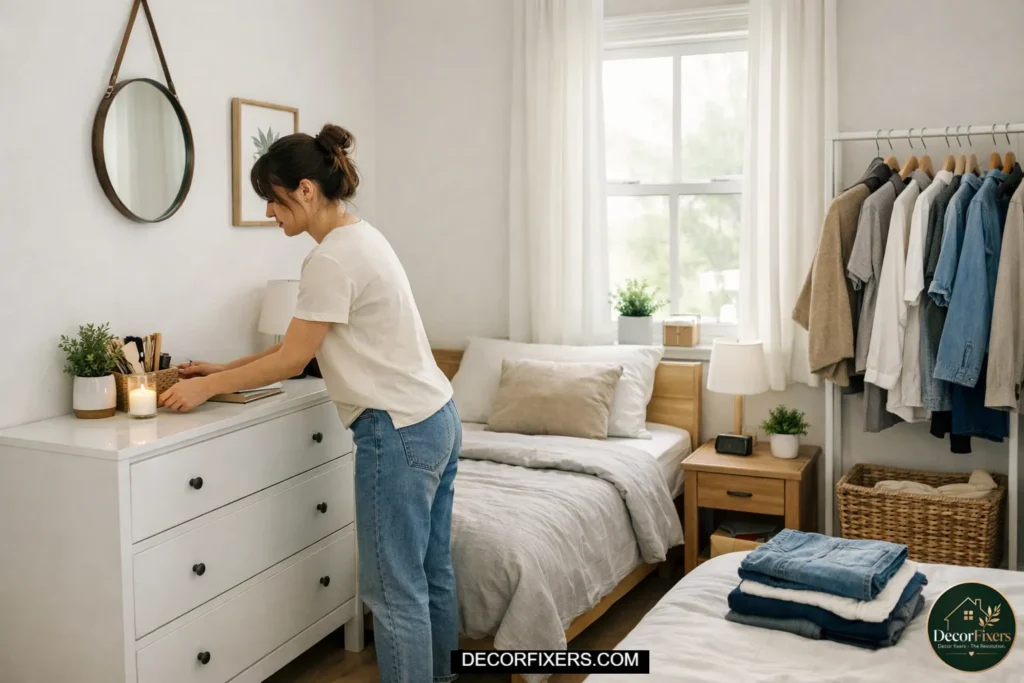
The final idea isn’t a furniture arrangement or a storage product. It’s the maintenance habit that makes all 26 ideas above stay functional over time.
Once a month, walk through the bedroom with one question: Is anything living somewhere temporarily? Clothes on the chair, random items on the floor, things on the nightstand that don’t belong there. A 15-minute walk-through and reset prevents the slow drift back to chaos that makes people feel like organization just “doesn’t work for them.”
It does work. The system just needs a monthly recalibration to stay honest.
MUST READ: 32 Warm Bedroom Ideas That Create a Genuinely Relaxing Atmosphere
Quick Comparison: Best Storage Solutions by Room Size
| Storage Solution | Best Room Size | Key Benefit | Limitation |
| IKEA HEMNES bed + drawers | 8×10 to 10×10 | Replaces the dresser entirely | Heavy, harder to move |
| IKEA PAX wardrobe (93″) | Any room with an empty wall | Floor-to-ceiling storage volume | Needs 93″ ceiling clearance |
| IKEA KALLAX + DRONA boxes | 10×12+ / dual-purpose | Modular, uniform visual system | Must be wall-anchored |
| Container Store elfa door rack | Any room with a door | Zero floor footprint, instant install | Weight limit per hook |
| IKEA MALM bed with drawers | 10×10 rooms | Slim profile, built-in storage | Drawers on one side only |
Conclusion:
If there’s one thing I’ve learned from working with small spaces, it’s this: organization isn’t about buying more storage, it’s about making smarter spatial decisions. And in a bedroom, everything starts with the bed. Once I get that placement right, the rest of the room almost organizes itself.
What most people overlook is how quickly a room can shift from cluttered to calm when every item has a defined place, and every surface has a purpose. I’ve seen even the smallest bedrooms feel twice as functional just by using vertical space, reducing floor furniture, and creating clear zones.
You don’t need to implement all 27 ideas at once. I usually recommend starting with one or two high-impact changes, like switching to a storage bed or clearing the floor with floating pieces. From there, each small improvement builds on the last, and suddenly the room feels intentional instead of overwhelming.
The real goal isn’t perfection. It’s creating a system that continues to work for you weeks and months from now. That’s why I always come back to simple habits, like a quick monthly reset, because even the best-designed space needs a little maintenance to stay that way.
At the end of the day, a well-organized bedroom isn’t just about aesthetics. It affects how you start your morning, how easily you move through your day, and how restful your space actually feels at night. And once you experience that shift, you’ll realize it was never about having more space; it was about using the space you already have better.
FAQs:
Q: What’s the best way to arrange furniture in a small bedroom?
A: Place the bed against the longest wall first. Then assign storage to the remaining walls using vertical shelving or a tall wardrobe. Keep the center floor completely clear for walkability.
Q: How do I organize a bedroom when there’s no space?
A: Go vertical with shelving above 60 inches, use under-bed rolling bins for seasonal items, and add over-door organizers on every door. Eliminate wide furniture that doesn’t reach ceiling height.
Q: Should I put my bed in the corner to save space?
A: In rooms under 10×10 feet, yes; corner placement frees two full walls for storage. In larger rooms, a wall-centered bed usually works better for traffic flow and ease of making the bed.
Q: Why does my room still feel messy even after I organize it?
A: Because the layout wasn’t addressed first. If furniture placement blocks traffic or creates overlapping storage zones, organizing products won’t fix the feeling of disorder.
Q: When should I use a storage bed vs. a regular bed frame?
A: Use a storage bed (IKEA MALM or HEMNES with drawers) when your room is under 120 sq. ft., and you lack closet or wardrobe space. It replaces a standalone dresser and frees an entire wall.

Creator of DecorFixers, sharing practical home and interior ideas focused on real-life usability, simple design improvements, and budget-friendly solutions.
3 thoughts on “27 Small Bedroom Layout Ideas for Smart Organization”