


Your bedroom should be the one room in your home that actually feels like rest. Not aspirational. Rest. Yet for most people, it’s just where the laundry piles live and the phone charges. This guide cuts through the aesthetic overload and gives you 28 specific, sequenced ideas, grounded in both design principles and sleep science, to turn your bedroom into a real sanctuary.
This guide covers rooms of any size in rented or owned spaces with a small-to-mid-range budget. It does not address full basic renovation, modified furniture hiring, or commercial interior design projects.
What is a cozy bedroom aesthetic for a serene retreat?
A cozy bedroom aesthetic for a serene retreat is a deliberate combination of warm lighting, layered natural textiles, calming earthy or muted tones, and intentional decluttering that makes a bedroom feel like a restorative escape, not just a place to sleep. The goal is a space that lowers cortisol and signals rest to both the body and the brain.
1. Ditch the Overhead Light Entirely (or Dim It to Near-Off)
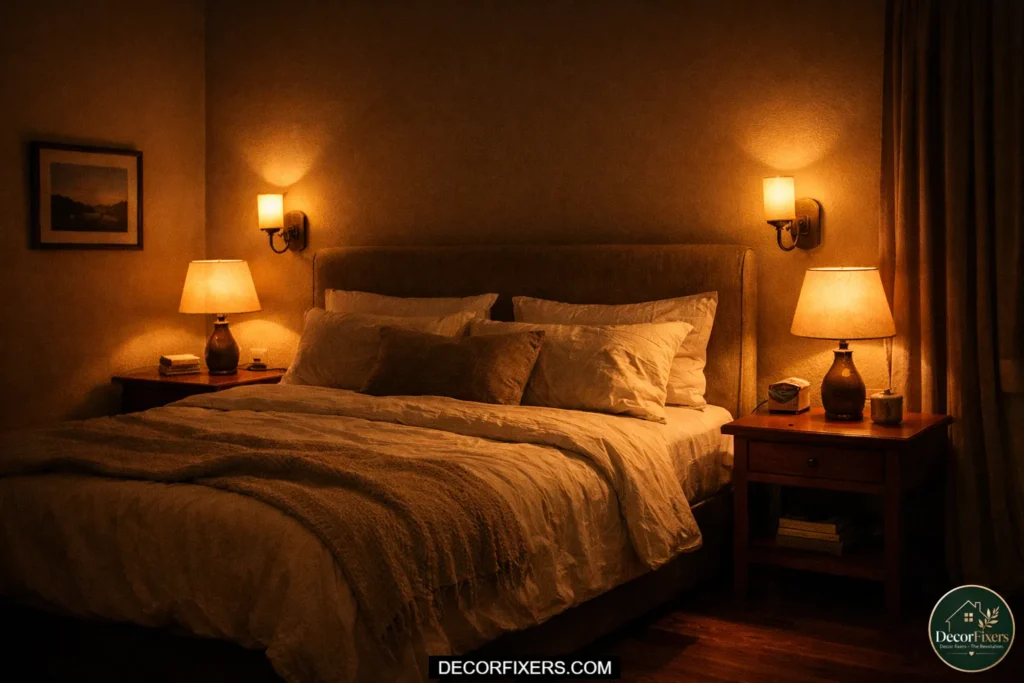
Harsh ceiling fixtures are the single biggest saboteur of bedroom serenity. They’re designed for offices. Replace or supplement with table lamps, sconces, and floor lamps positioned at eye level or below. It’s a genuinely small change that shifts the entire mood of a room.
Quick note: you don’t have to rewire anything. A plug-in wall sconce on either side of the bed costs under £40 and takes 10 minutes to install.
2. Try the Loftie Lamp for a True Sleep Environment
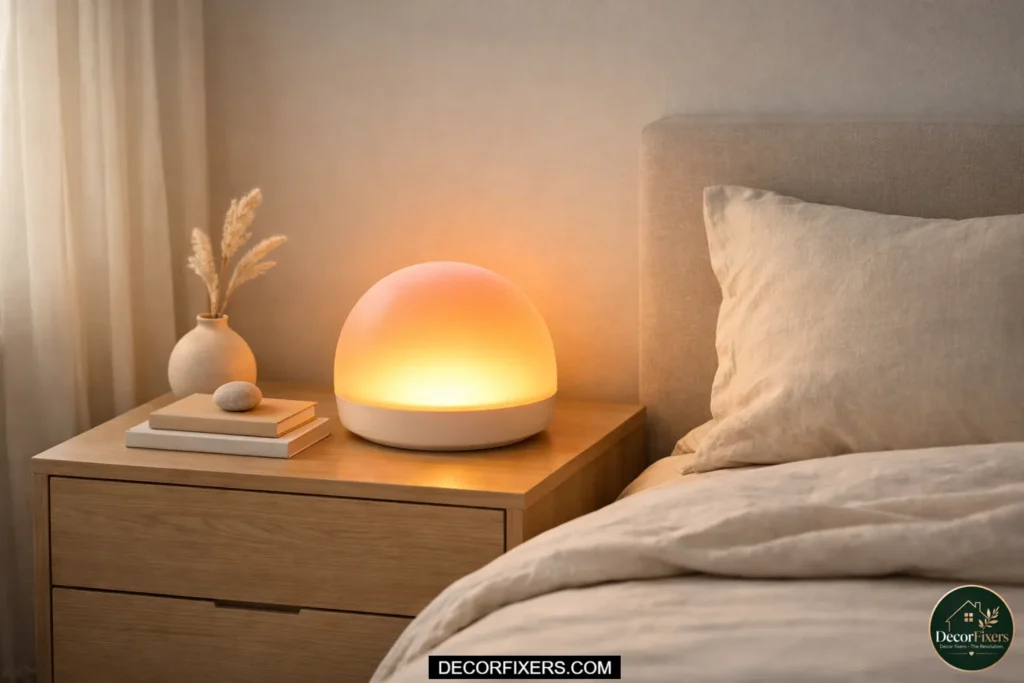
The Loftie Lamp (~$150) is a screen-free, dimmable bedside light built specifically for sleep-supportive environments. It has a sunrise-and-sunset simulation mode, warm amber light settings, and no blue-spectrum emission after dark. For people serious about their bedroom being a wellness space rather than a Pinterest project, it’s worth the investment.
3. Edison Bulbs and Warm LED Filaments
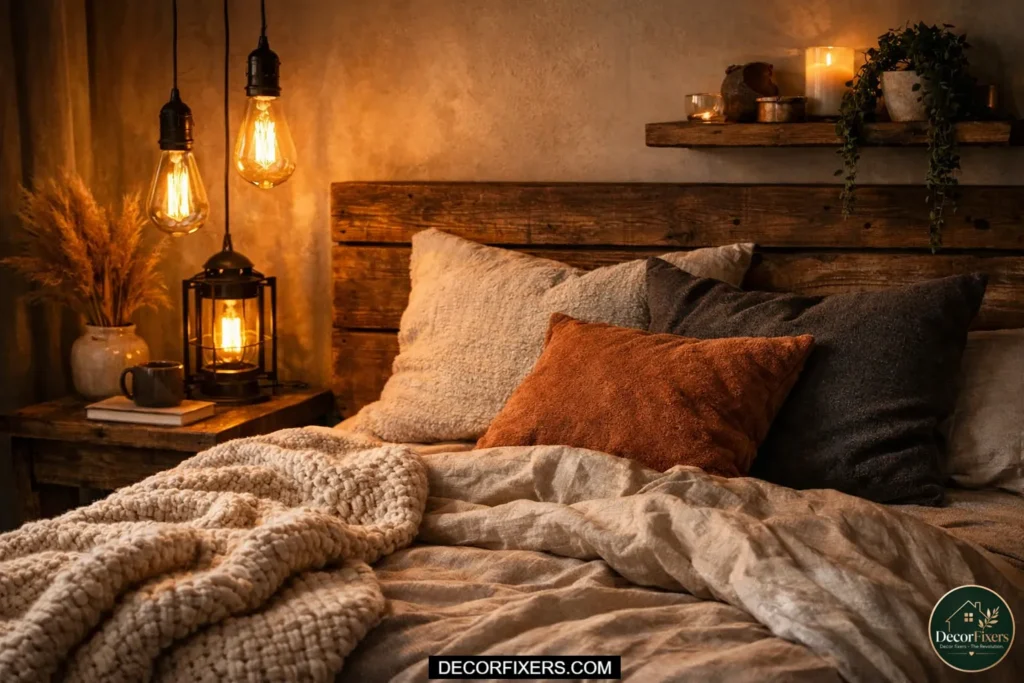
If budget is a constraint, any standard lamp fitted with a 2,700K warm white LED bulb, sold at every hardware shop, achieves 70% of the effect at under £5. The filament-style Edison variants add a visible warmth that feels handsome and intentional.
4. Under-Bed LED Strip Lights
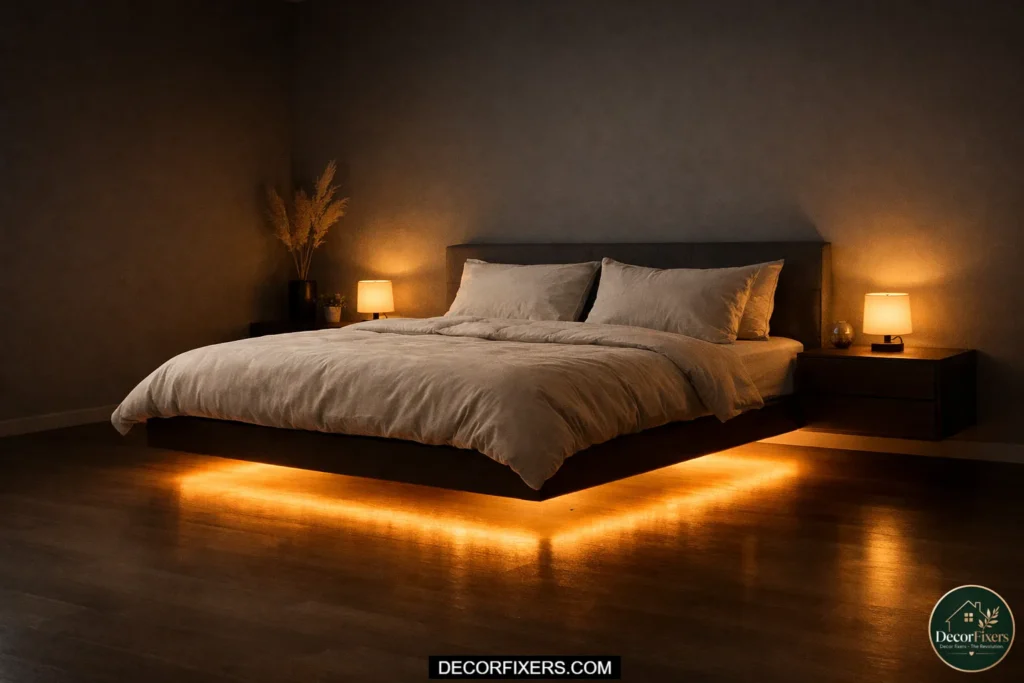
Placed underneath the bed frame (facing the floor, not the ceiling), a warm amber LED strip creates a floating effect and a very low, indirect light source that doesn’t spike cortisol before sleep. The keyword there is ‘warm amber’; cool white or RGB rainbow modes defeat the purpose entirely.
Quick Comparison: Bedroom Lighting Options
| Option | Best For | Key Benefit | Limitation |
| Warm Edison Bulbs | Nightstand & reading nooks | Mimics sunset, aids melatonin | Too dim as sole light source |
| Loftie Lamp | Whole-room ambient light | Screen-free, dimmable, sleep-scheduled | Higher price point (~$150) |
| LED Strip Lights | Under-bed or shelf accent | Budget-friendly, colour-tunable | Looks cheap if poorly placed |
| Himalayan Salt Lamp | Small cozy corners | Warm amber glow, tactile charm | Minimal actual light output |
Textile and Texture Ideas That Make a Room Feel Safe
Texture is the secret language of cozy design. Flat, single-material rooms feel hollow, no matter how expensive the furniture. Layering varied materials, rough and smooth, matte and soft, is what creates that ‘I could stay in this room all weekend’ feeling that has nothing to do with price.
5. Start With a Chunky Knit Throw

Drape it asymmetrically across the foot of the bed. Not folded. Not squared. Asymmetry reads as lived-in and human. A chunky-knit throw in cream, oatmeal, or dusty sage is the single easiest transformation for under £30.
6. Double Up Your Pillow Textures
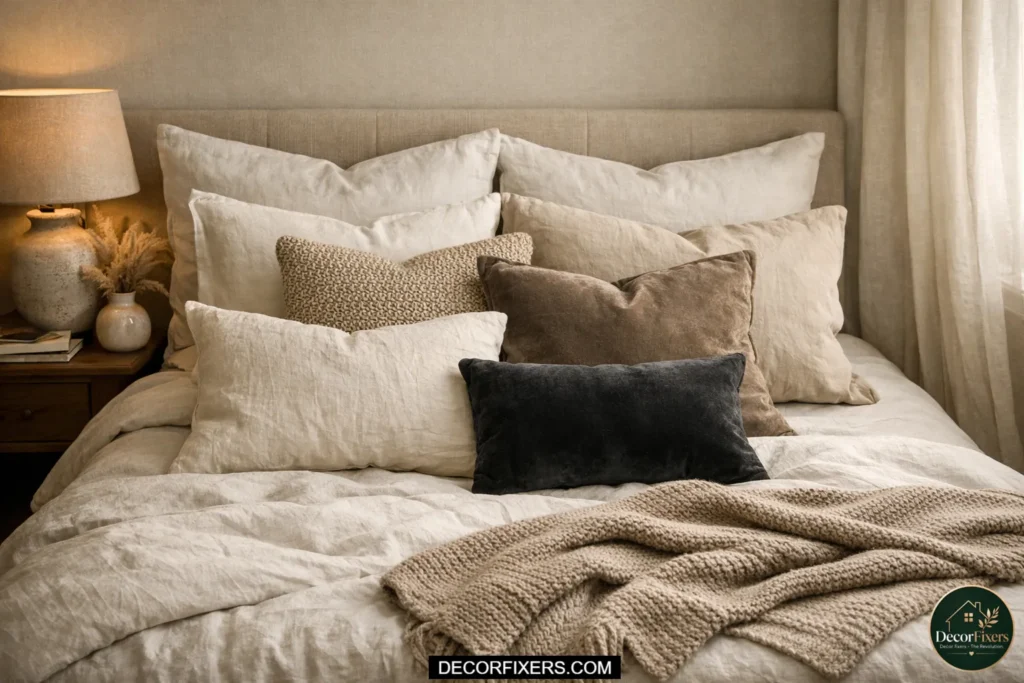
Pair a smooth cotton cover with a linen or velvet one. You don’t need matching sets; you need contrast. Two textures of pillow at the front of the bed add visual depth that a flat, uniform set never will.
7. Add a Rug; Even on Carpet
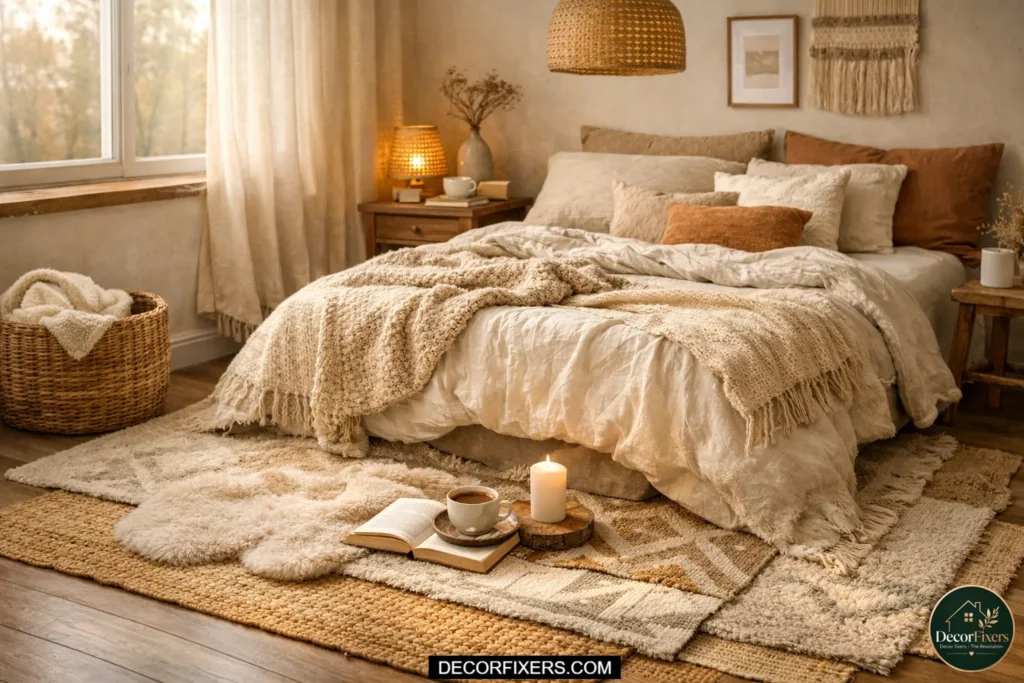
I’ve seen conflicting advice on this; some interior designers say never layer rugs; others (particularly in Scandinavian and hygge-focused design) say the layered rug is the definitive cozy move. My read is this: in a bedroom, specifically, a smaller layered rug directly beside the bed wins. Your feet hit something soft and warm when you wake up, before they touch the floor. That matters more than visual puritanism.
8. Linen Bedding Over Cotton Sateen
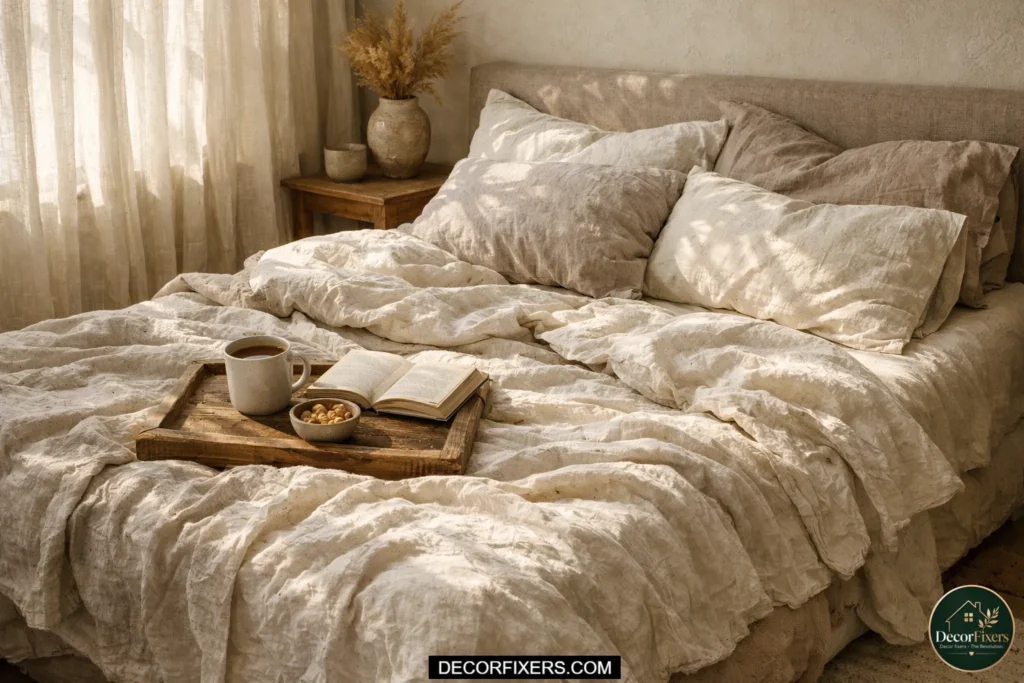
Linen wrinkles. That’s the point. The lived-in, slightly rumpled look of linen bedding reads as genuinely comfortable, not aspirationally sterile. Casper makes a well-regarded linen duvet cover, and their bedding range is designed specifically around temperature regulation for sleep quality, not just aesthetics.
9. One Velvet Accent Piece
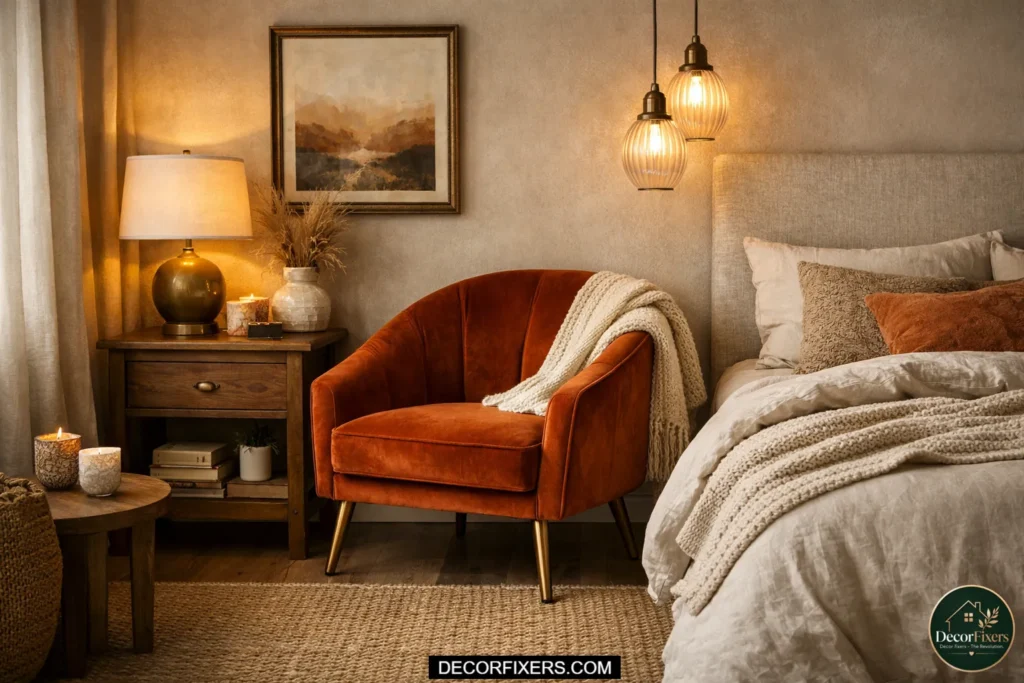
A velvet accent chair, ottoman, or cushion introduces a touch of richness without tipping into maximalism. Deep forest green, rust, or dusty rose velvet against neutral linen is one of those combinations that photographs beautifully and feels even better in person.
10. Faux Fur Throw for Winter Months

Swapping your regular throw for a faux-fur version in cooler months is the easiest seasonal update in home decor. Cost: under £25 at most high-street stores. Visual impact: instant uplift.
Colour, Wall Treatment, and Aesthetic Direction
Choosing a bedroom colour is where most people freeze. The options feel overwhelming. Here’s the honest shortcut: pick one of three proven calming palettes and don’t deviate.
Earthy neutrals vs cool blues vs warm greens for bedrooms:
Earthy neutrals (warm white, taupe, terracotta accents) are better suited for most bedrooms because they work with any lighting condition and feel naturally warm without colour temperature sensitivity.
Cool blues work best in rooms with abundant natural daylight and south-facing windows. The key difference: blue reads as cold in low-light northern rooms; earthy tones do not.
11. Warm White or Off-White Walls with a Warm Undertone
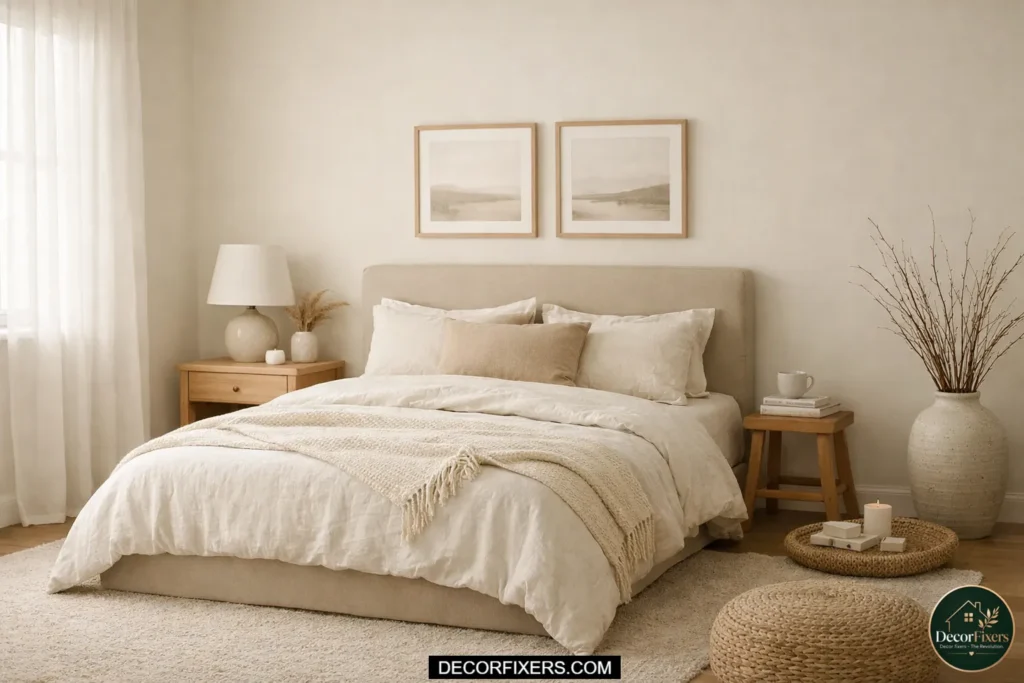
Brilliant white reads clinical. Warm white (any paint with a yellow or pink undertone; look for ‘chalk’, ‘linen’, or ‘parchment’ in the colour name) reads cozy. Farrow & Ball ‘All White’ and Dulux ‘Natural Hessian’ are two often-recommended options, though any paint brand’s warm white equivalent achieves the same effect.
12. A Single Accent Wall in Deep Sage or Slate
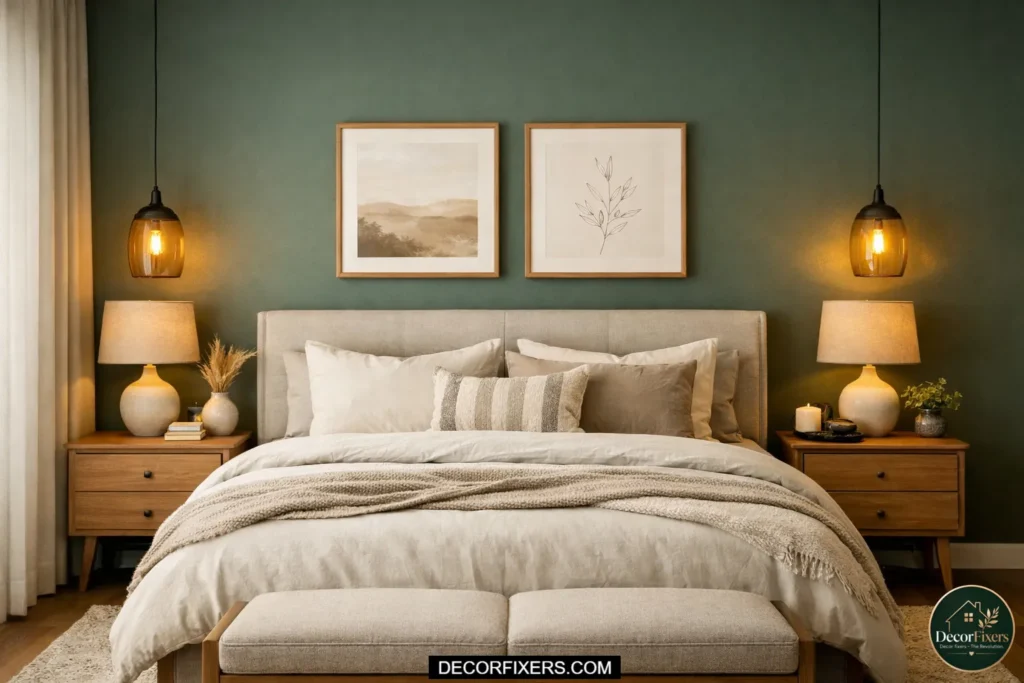
You don’t need to repaint a whole room. One wall in a deep, muted green (sage, eucalyptus, pine) or a warm slate grey creates a focal point behind the bed that anchors the room and adds depth without commitment. This is the single most impactful single-wall colour move in bedroom design right now.
13. Textured Wallpaper on the Headboard Wall
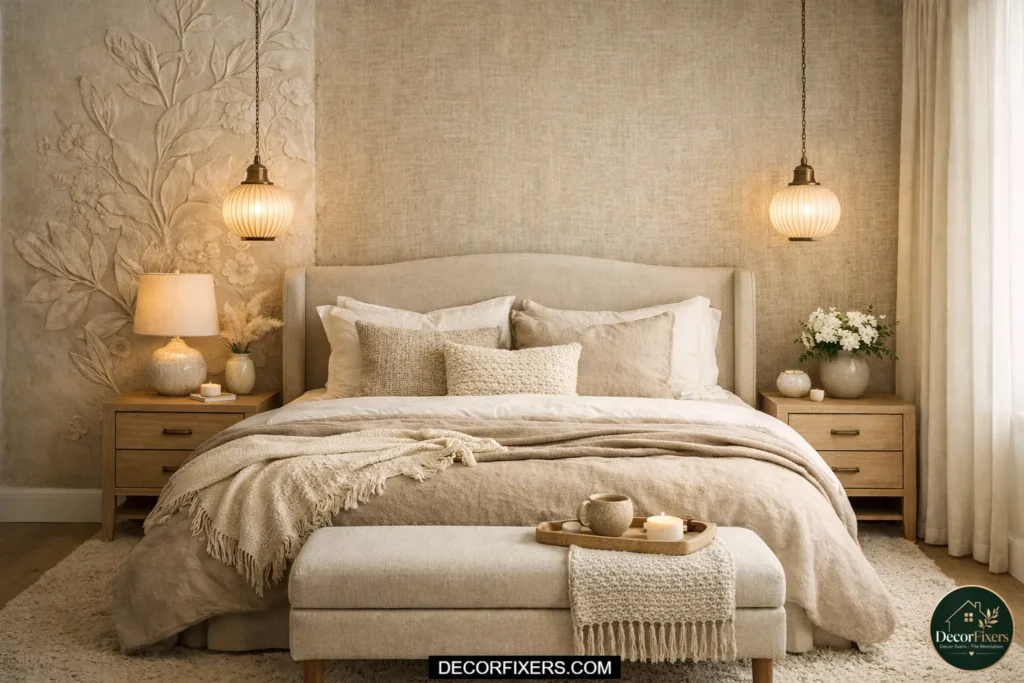
Grasscloth, linen-look, or embossed botanical wallpapers add warmth and tactile interest to a bedroom without any furniture purchase. A single accent wall of textured wallpaper, even peel-and-stick, can transform a flat, rental-grade room into something that feels considered.
14. Earthy Terracotta Accents
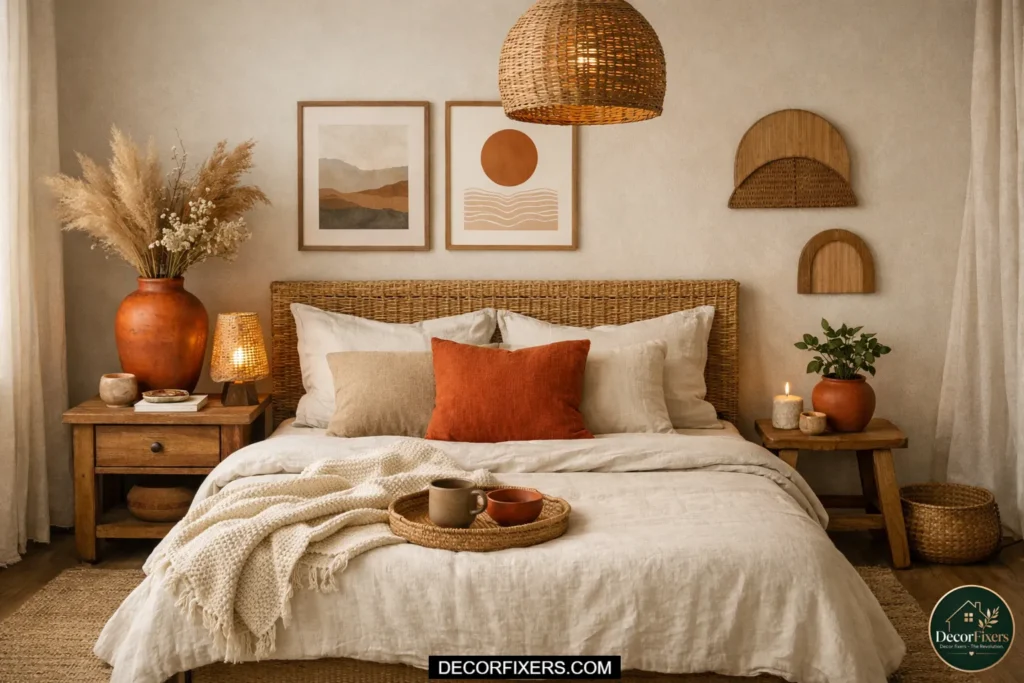
Terracotta is the one accent colour that works across virtually every neutral palette: warm white, greige, sage green, dusty blue. It brings warmth and earthiness without the risk of clashing. Use it in small doses: a ceramic vase, a candle holder, a single cushion.
Furniture, Layout, and Storage Ideas for a Clutter-Free Retreat
No amount of beautiful textiles will make a chaotic room feel serene. Clutter is the enemy of calm, not because it’s ugly, but because the brain reads visual disorder as unfinished tasks. The goal isn’t minimalism; it’s intentional placement.
15. Raise Your Bed Height
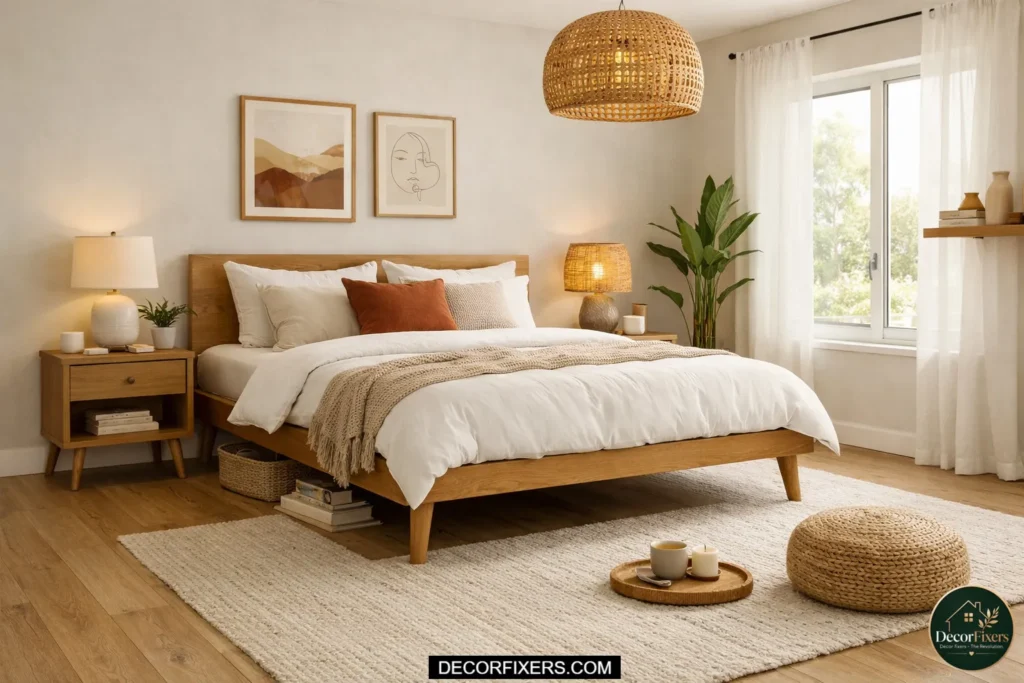
A higher bed, achieved via risers, a new base, or a frame with legs, creates more visual floor space and room to breathe. Low platform beds feel snug but can make small rooms feel compressed. Raising the bed frame by even 3–4 inches changes the room’s proportions noticeably.
16. IKEA KALLAX + RÅSKOG as Cozy Storage Solutions
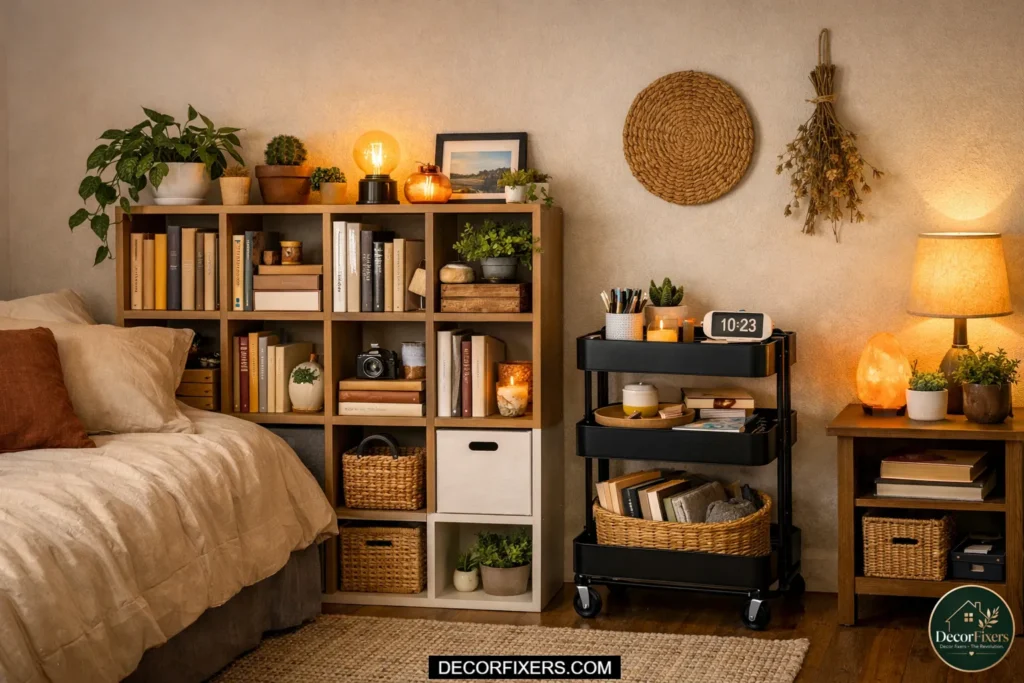
The IKEA KALLAX unit used as a low bedside alternative, two cubes high, two wide, creates a platform for lamps, books, and plants while keeping the visual weight low and horizontal. The RÅSKOG trolley beside a reading chair or vanity adds cozy functionality without requiring any installation or drilling. Both are budget staples for a reason: they’re flexible, neutral, and genuinely useful.
17. Clear the Nightstand Down to Three Items
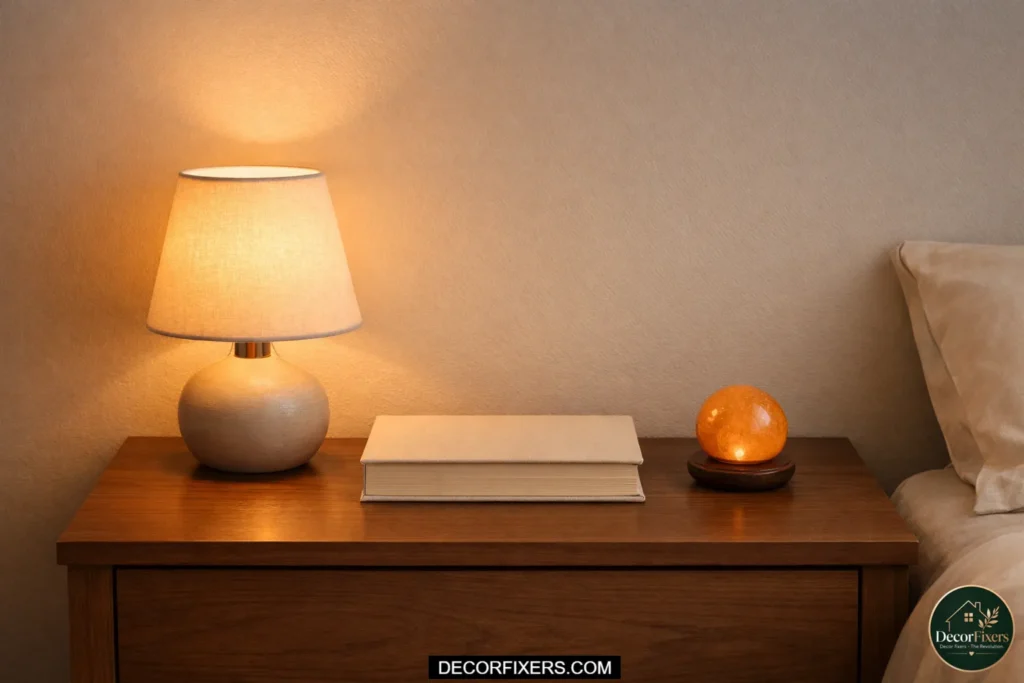
Lamp. Book. One small personal object (a candle, a plant, a piece of jewellery). That’s it. The nightstand is where visual noise most sabotages bedroom serenity. Three objects maximum, always.
18. A Reading Nook If You Have Any Corner Space
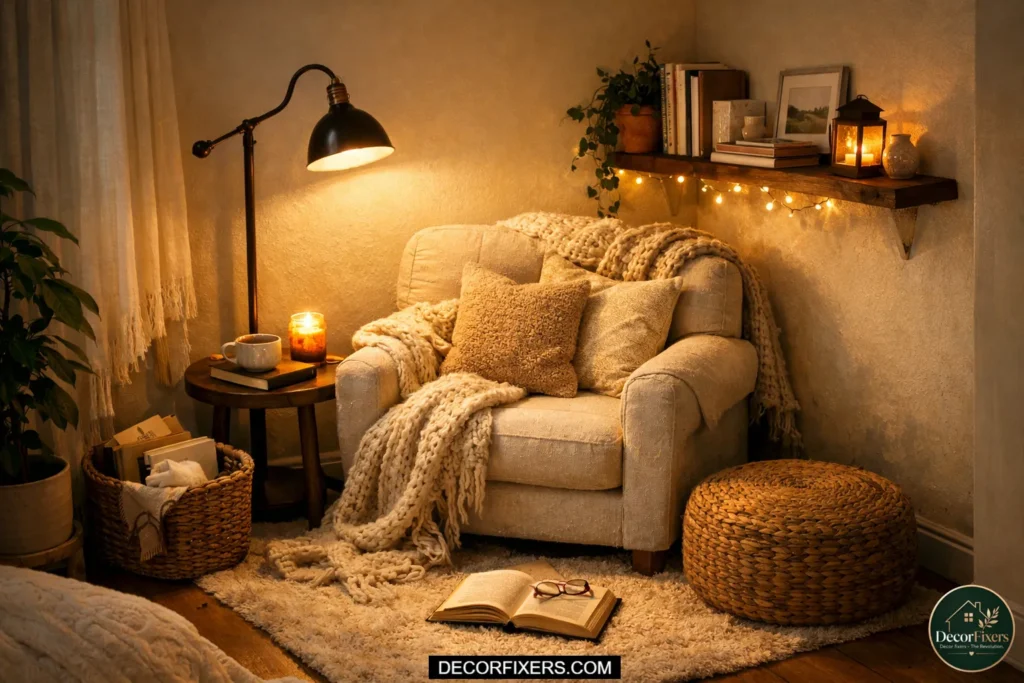
Even a 60x60cm corner can become a reading nook: an armchair or floor cushion, a floor lamp, a small side table, a throw. The psychological benefit of having a defined ‘rest zone’ separate from the bed is significant; it reinforces the bed as a place purely for sleep (and intimacy), which sleep hygiene research consistently supports.
Where to Start: The 3-Layer Framework
Before picking curtains or wall colours, build your room in three layers; in this order. Skipping the sequence is why most attempts end up looking random.
How to create a cozy bedroom aesthetic for a serene retreat:
1. Set your light first; replace harsh overheads with warm-toned lamps (2,700K–3,000K).
2. Layer your textiles; add a chunky throw, two pillow textures, and a soft rug underfoot.
3. Clear one surface completely; nightstand or dresser. Space reads as intentional calm.
4. Introduce one organic element: a plant, a ceramic vase, or a woven basket.
5. Add a scent anchor: a soy candle or linen spray used only in this room.
Each layer builds on the previous one. Jumping to wall colour before you’ve sorted your lighting is like choosing a picture frame before the painting exists.
19. Floating Shelves Instead of Bulky Furniture
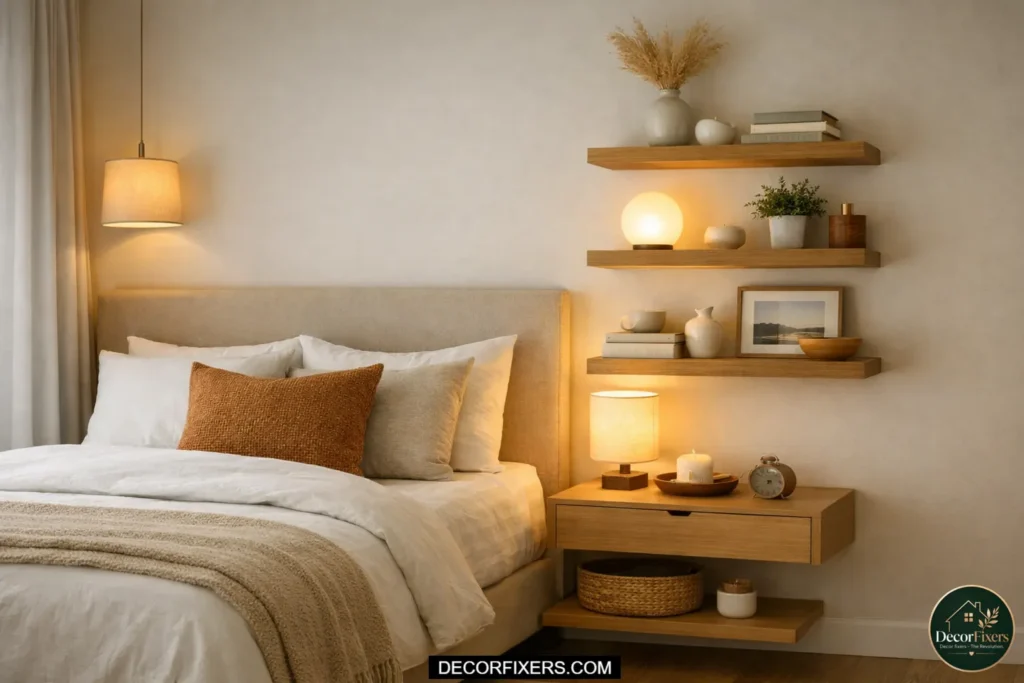
Two narrow floating shelves on either side of the bed, installed at lamp height; replace bedside tables without consuming floor space. This works especially well in small rented rooms where every square foot matters.
20. Under-Bed Storage Done Right
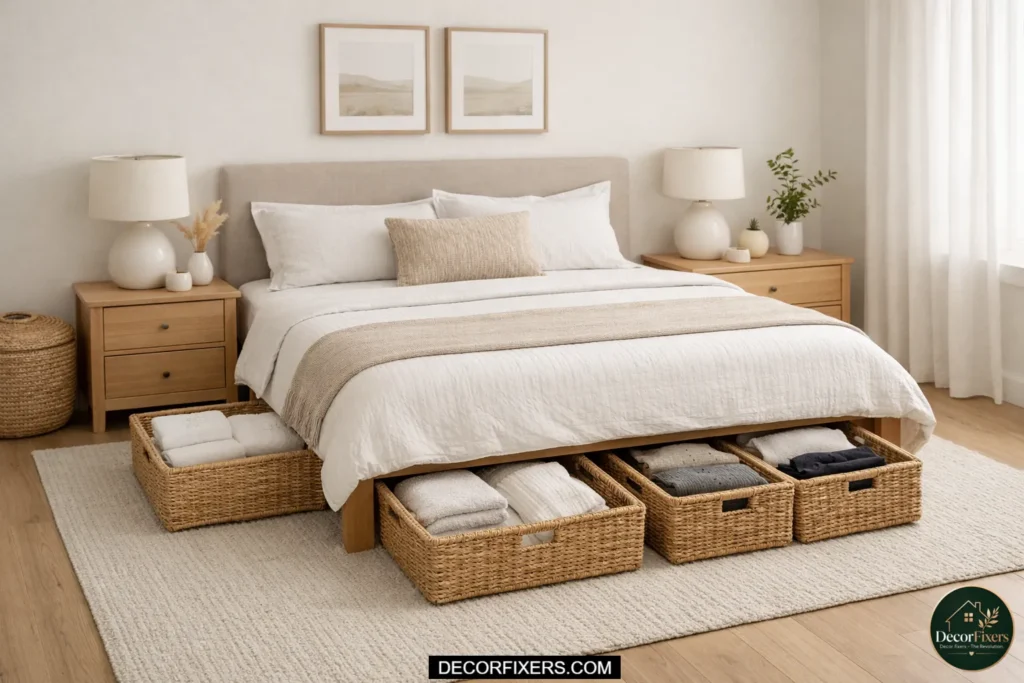
Under-bed storage is either invisible and calming or visible and chaotic; there’s no middle ground. Use matching woven baskets or flat boxes with lids, stored completely out of sight. Mismatched, open storage under a bed contributes to the visual clutter that makes a room feel unfinished.
Plants, Scent, and Organic Elements
Biophilic design, incorporating natural elements into indoor spaces, consistently shows up in both interior design research and wellness literature as one of the highest-impact ways to create a calming room. You don’t need a living wall. You need one honest, living thing.
21. The Best Low-Maintenance Bedroom Plants
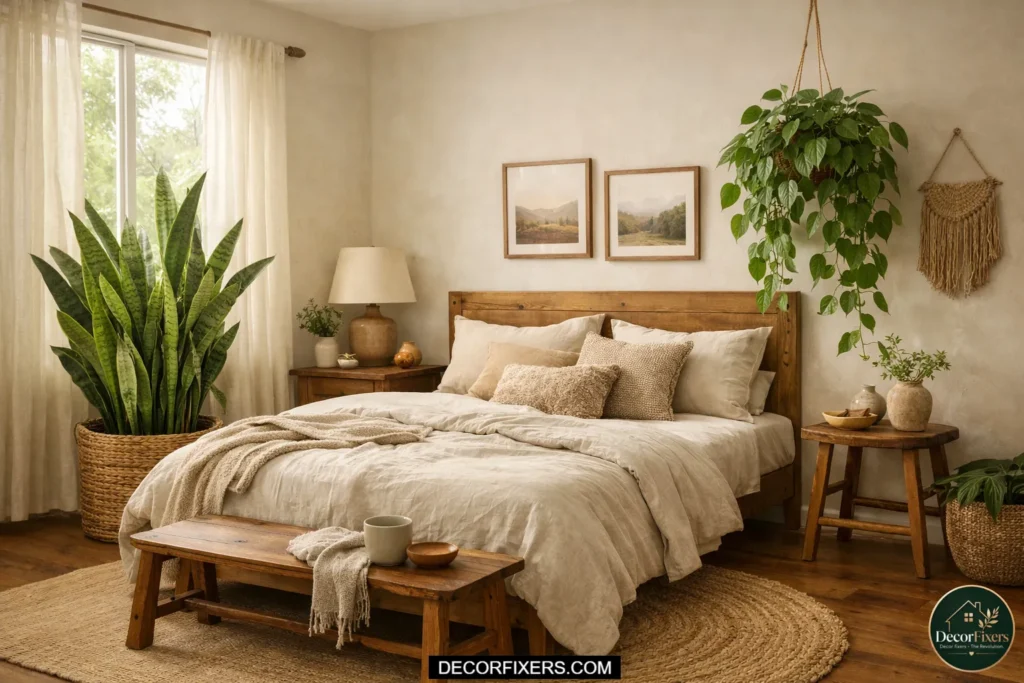
Snake plants (Sansevieria) and pothos are the standard recommendation, and they earn it: both tolerate low light, infrequent watering, and room temperatures in the 15°C–24°C range that suits most bedrooms. A single statement plant, a large fiddle-leaf fig, or a trailing pothos shelf makes more visual impact than several small ones scattered around.
22. A Soy Candle as Your Bedroom’s Scent Signature
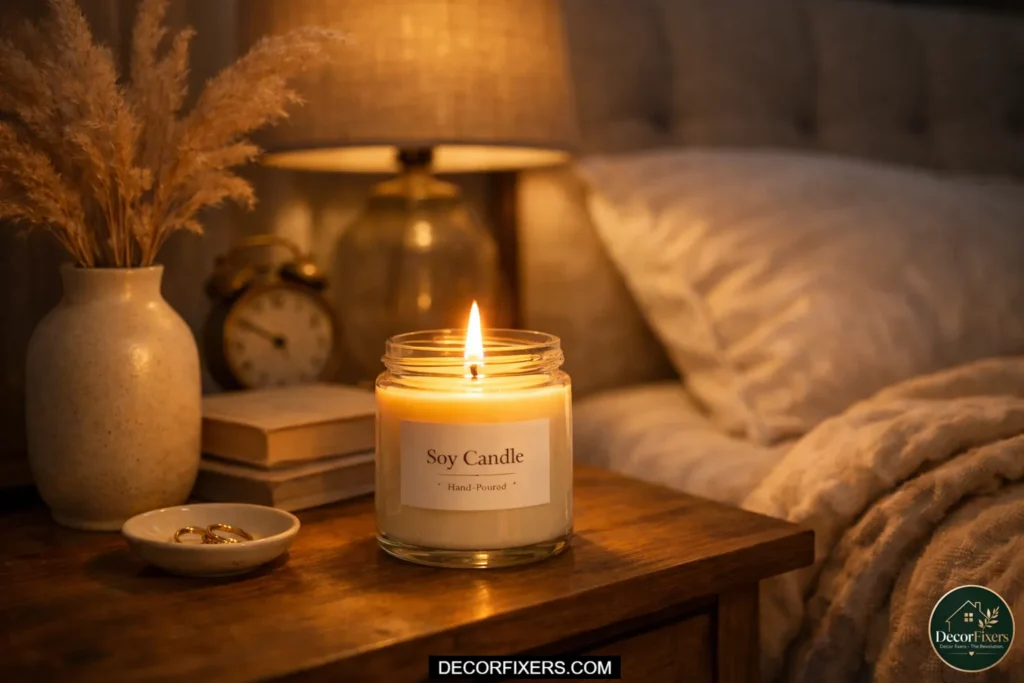
Scent is the fastest-acting sense for triggering emotional states. A candle with a woody, warm, or botanically earthy fragrance (cedarwood, sandalwood, fig, or white tea) used only in your bedroom creates a powerful associative response; your brain begins to link that scent with rest. Or maybe I should say it this way: the scent doesn’t have to be expensive; it has to be consistent and exclusive to this space.
23. Dried Botanicals and Pampas Grass
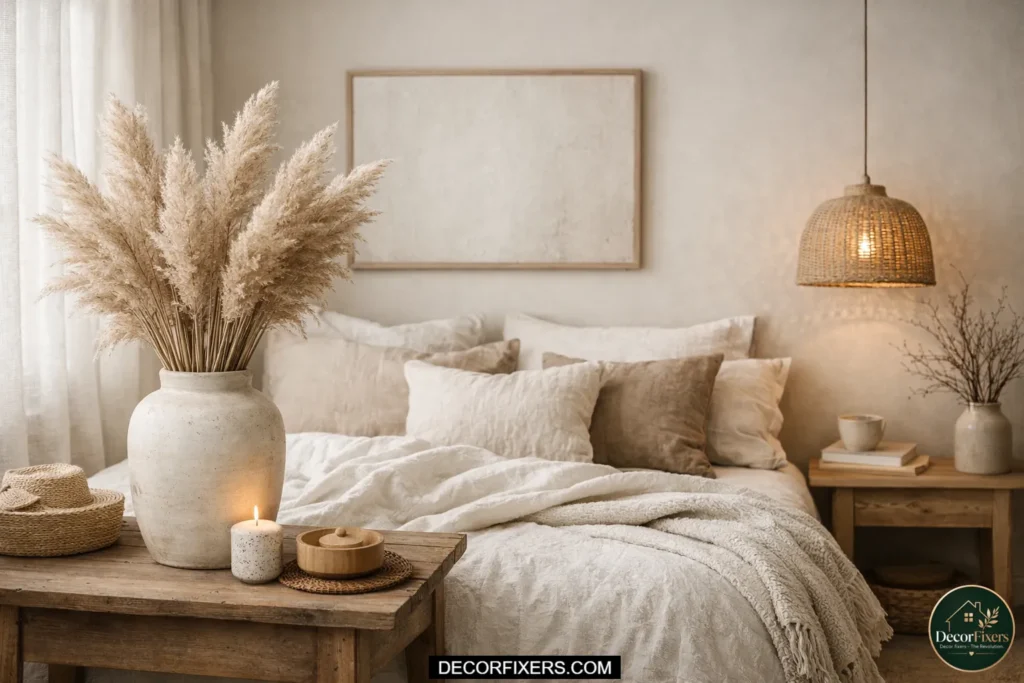
Dried botanicals require zero maintenance and last for years. A small vase of dried lavender, eucalyptus stems, or pampas grass adds organic texture and subtle natural scent without any watering schedule. They work in virtually every aesthetic: Scandi, boho, quiet luxury, cottagecore.
24. A Wooden Tray or Woven Basket as a Corral
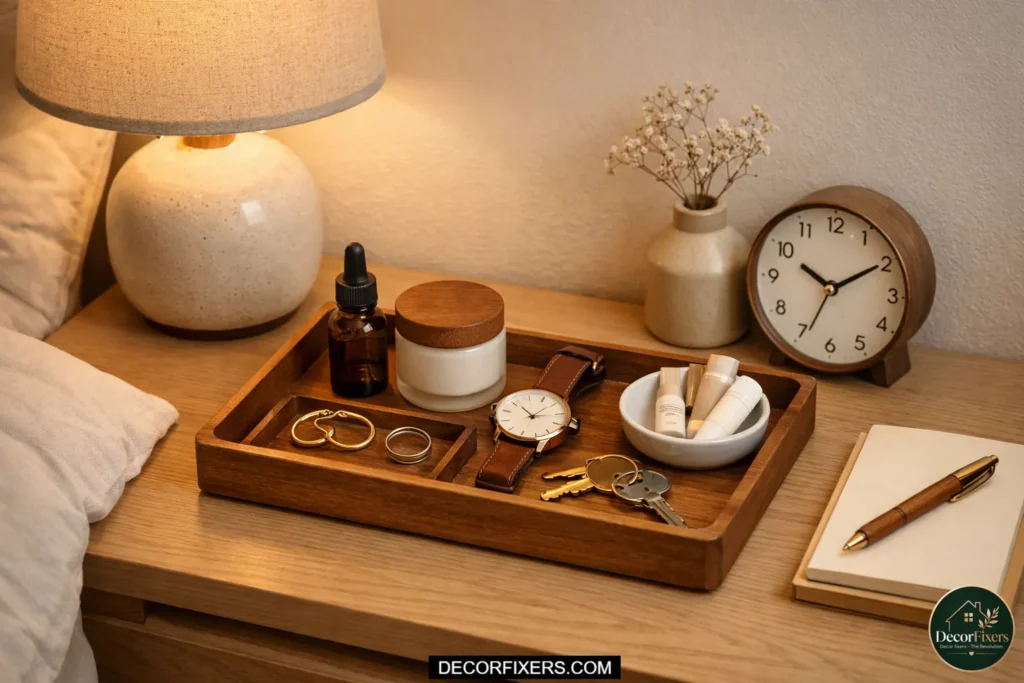
Every bedside surface benefits from one containing object: a small wooden tray, a rattan basket, or a ceramic dish. It groups loose items (lip balm, earplugs, jewellery) into one intentional cluster instead of scattered objects that read as a mess.
25. One Large Piece of Art Rather Than a Gallery Wall
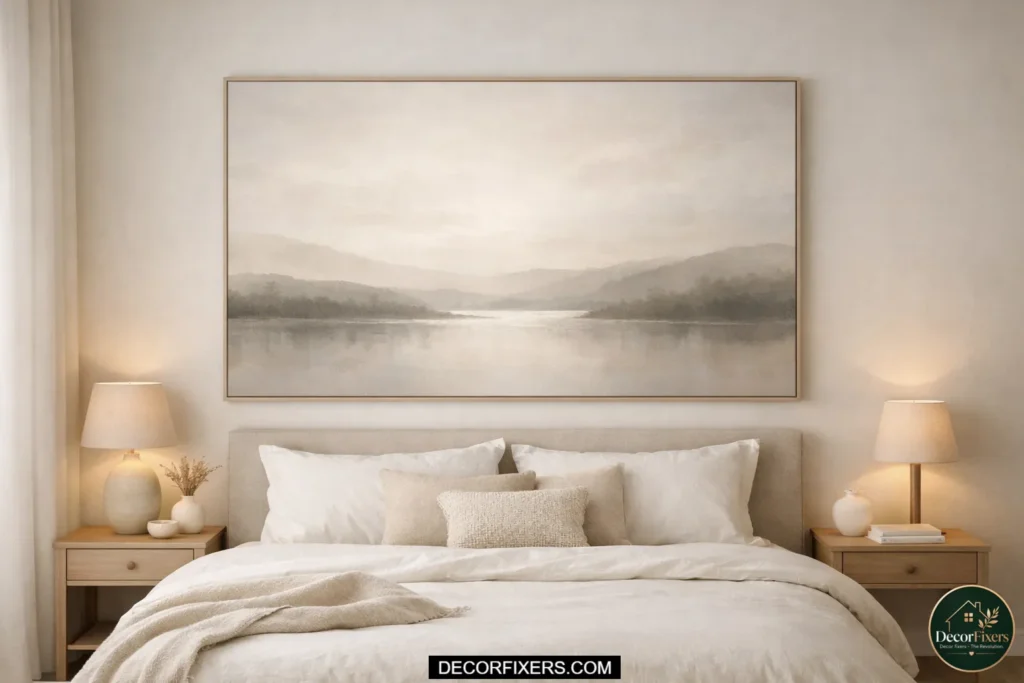
Gallery walls look great in studios. In bedrooms, they can feel restless; too many visual points for the brain to land on when you’re trying to switch off. One large, calming artwork (abstract, botanical, or landscape) above the dresser or opposite the bed creates a visual anchor. Calm subject matter. Earthy or muted tones.
MUST READ: Boho Bedroom Ideas: 26 Relaxed Chic Designs with Real Styling Logic
26. A Floor Mirror for Light and Space
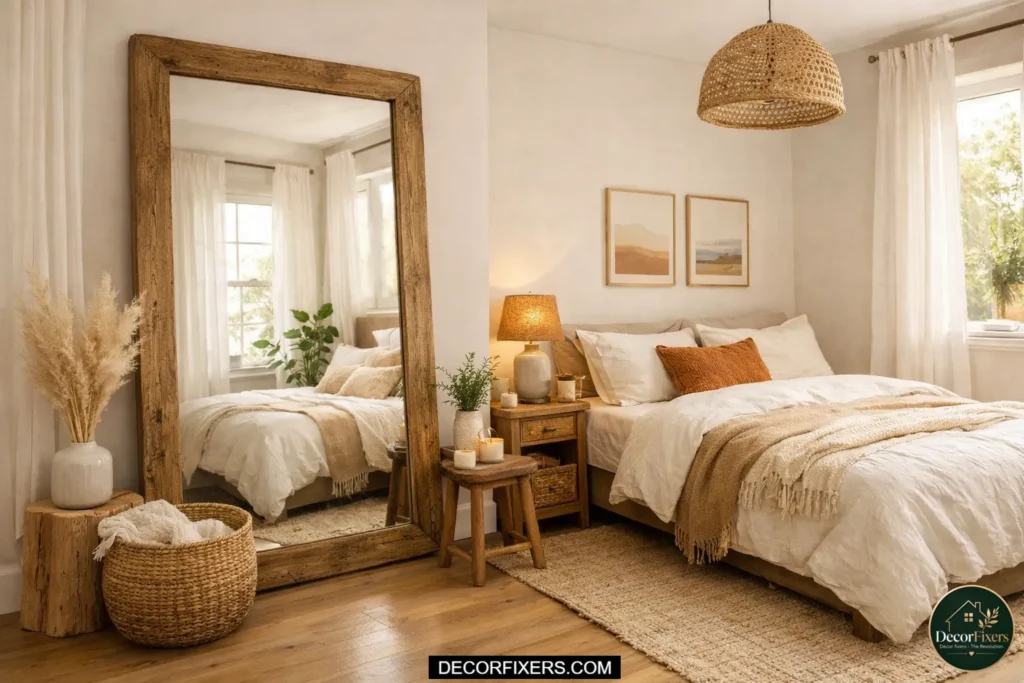
A large floor-length mirror propped against the wall (not hung; propped) doubles the sense of light and space in a room without any installation. In darker bedrooms, it’s transformative. Lean it at a slight angle facing a window for maximum light reflection.
27. Curtains That Actually Touch the Floor
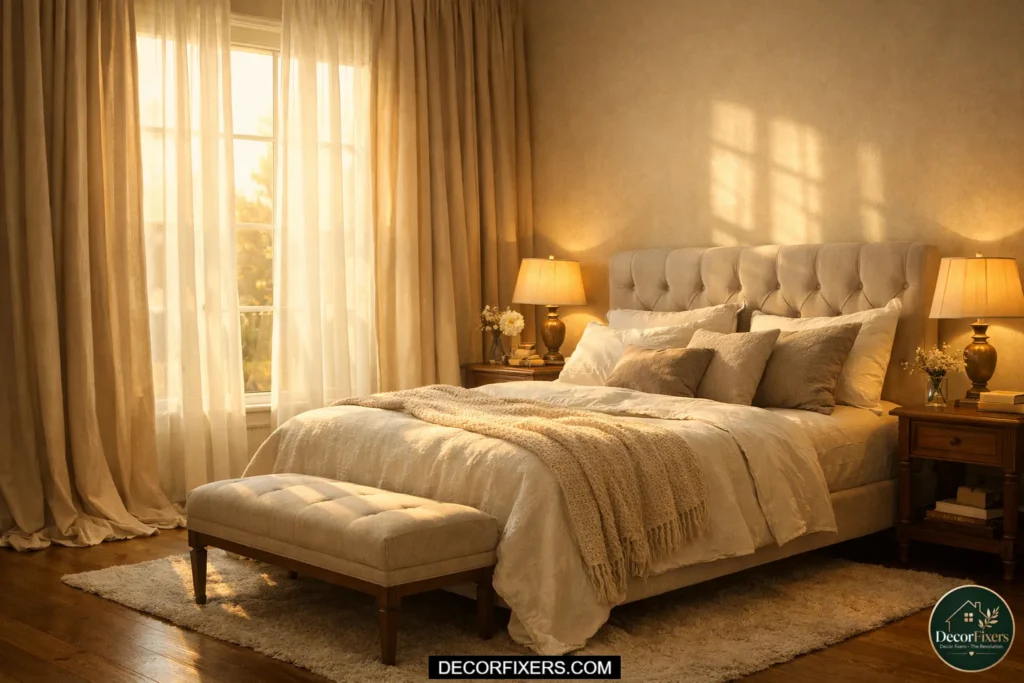
Standard curtains hang 2cm above the floor. Curtains that pool or just graze the floor look richer, more intentional, and more hotel-like. This costs nothing if you’re replacing curtains anyway; simply order them 10–15cm longer than your window drop measurement.
28. The Made Bed as the Daily Reset
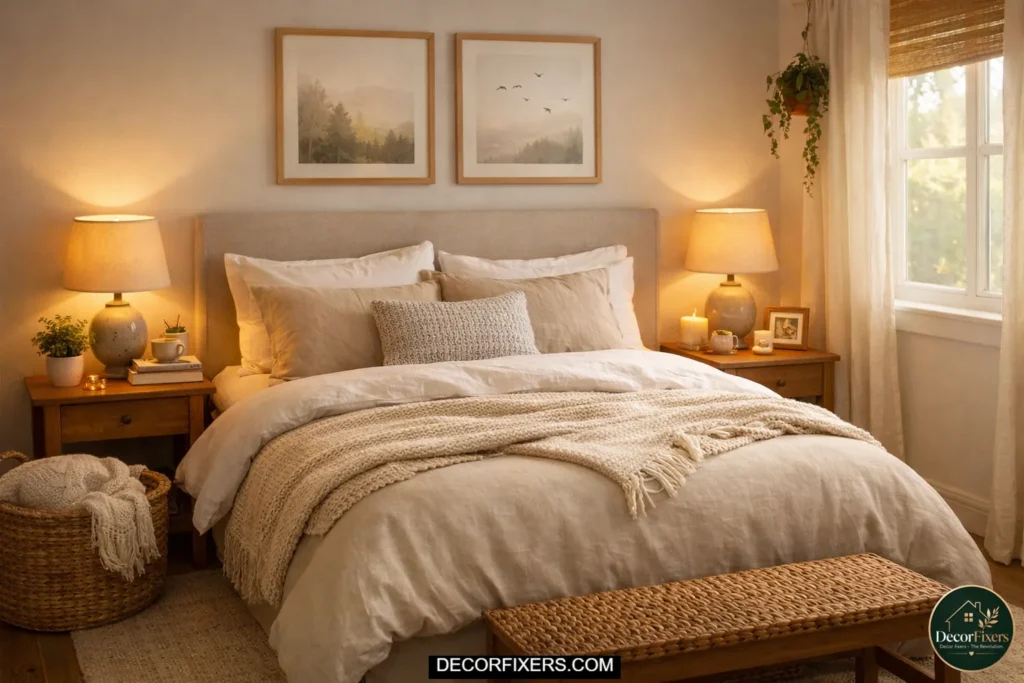
This one’s almost too simple to include, but the National Sleep Foundation’s bedroom research confirms it: people who make their beds daily are significantly more likely to report good sleep quality than those who don’t. The visual reset of a made bed, even imperfectly, signals that the room is a sanctuary, not a crash pad. It takes 90 seconds and changes how you feel walking back in.
Conclusion:
At the end of the day, what I’ve learned from both design principles and real-world experience is this: a cozy bedroom isn’t about excellence; it’s about how the space makes you feel the moment you walk in. I don’t approach bedroom design as decoration any longer; I treat it as a tool for better sleep, lower stress, and a more grounded daily routine.
If there’s one thing I want you to take from this guide, it’s that small, intentional changes make the biggest impression. When I adjust lighting, layer textures, and remove visual noise, I’m not just improving how a room looks, I’m actively shaping how my mind and body respond to it. That change is powerful.
You don’t need to implement all 28 ideas at once. I recommend starting with light, then textiles, then clearing one surface. From there, build slowly. Every addition should feel like it belongs, not like it’s trying too hard.
To me, a serene bedroom isn’t styled for Instagram, it’s designed for real life. It’s the place where I can disconnect, reset, and actually rest without distraction. And when your bedroom starts doing that for you, everything else, your mood, your energy, even your sleep, begins to improve naturally.
Take your time with it. Build it layer by layer. And most importantly, create a space that feels like yours, not just one that looks good on the surface.
FAQs:
Q: What’s the best colour for a cozy, serene bedroom?
Warm whites, soft sage greens, and earthy taupes are the most consistently effective. Avoid cool white or bright white; they read as clinical in artificial light, which is what you’ll have at bedtime.
Q: How do I make a small bedroom feel cozy without cluttering it?
Use floating shelves instead of bedside tables, keep one clear surface per zone, and use mirrors to amplify light. Cozy comes from texture and warmth, not quantity of objects.
Q: Should I use blackout curtains in a serene bedroom?
Yes, if light intrudes after dark or before your natural wake time. Blackout curtains directly support sleep quality by eliminating light pollution, but choose a fabric and colour that feels warm and soft, not flat and institutional.
Q: Why does my bedroom feel uncomfortable even though it’s tidy?
Tidiness and serenity aren’t the same thing. A tidy but cold, harshly lit, texturally flat room still registers as uncomfortable. Add warmth first: a lamp, a throw, one plant.
Q: When should I invest in new bedding versus other bedroom changes?
Bedding is the highest-touch, highest-sensation element in the room. If your current bedding is uncomfortable, scratchy, or too hot, fix that before anything visual. A Casper linen duvet and two quality pillow covers will improve sleep more than new curtains or wall art.

Creator of DecorFixers, sharing practical home and interior ideas focused on real-life usability, simple design improvements, and budget-friendly solutions.
3 thoughts on “28 Cozy Bedroom Aesthetic Ideas for a Serene Retreat”