


I’ll be honest with you: walnut kitchens look spectacular on Instagram. But I’ve watched homeowners spend weeks pinning beautiful walnut cabinet photos, then freeze completely when a designer says, “The grain might feel too heavy for your layout.” That one comment sends them back to white oak, and a year later, half of them regret it.
Here’s what those inspiration posts don’t show you: the pairing logic. The reason a walnut kitchen looks effortless in one photo and dated in another isn’t the wood itself; it’s what the designer paired it with. The countertop undertone. The hardware finish. The ceiling height. Get one of those wrong, and even the most beautiful wood reads wrong in your specific space.
This article walks through 15 real walnut kitchen ideas with the exact pairing logic explained for each one. You’ll know why something works, not just that it does. That’s the difference between pinning something and actually executing it.
1. Light Walnut Cabinets With White Quartz Countertops
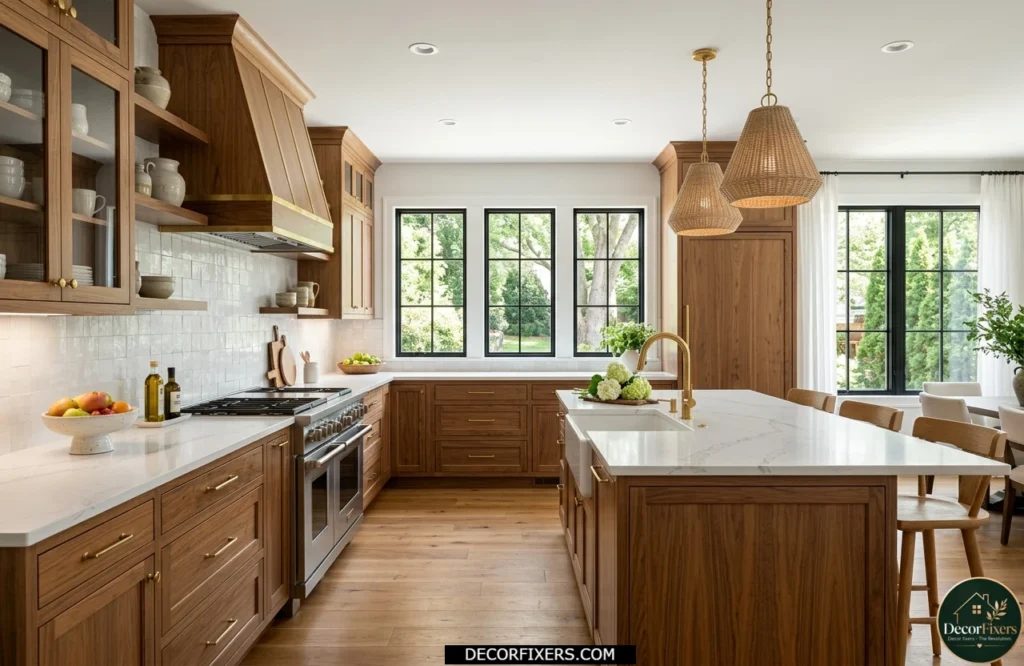
This is the most requested walnut kitchen combination in 2026, and for good reason. Light walnut’s honey-amber tones sit naturally against bright white quartz, creating contrast without tension. The grain stays visible, the space feels alive, and the overall palette works in kitchens of almost any size.
Pair with brushed brass hardware and a white subway tile or Zellie backsplash. Avoid polished chrome here; the cool metal tone clashes with walnut’s warmth. Fabuwood Cabinetry offers semi-custom light walnut door profiles that arrive pre-assembled, which reduces installation time significantly if you’re working with a contractor on a set budget.
2. Dark Walnut Flat-Front Cabinets With Calcutta Marble
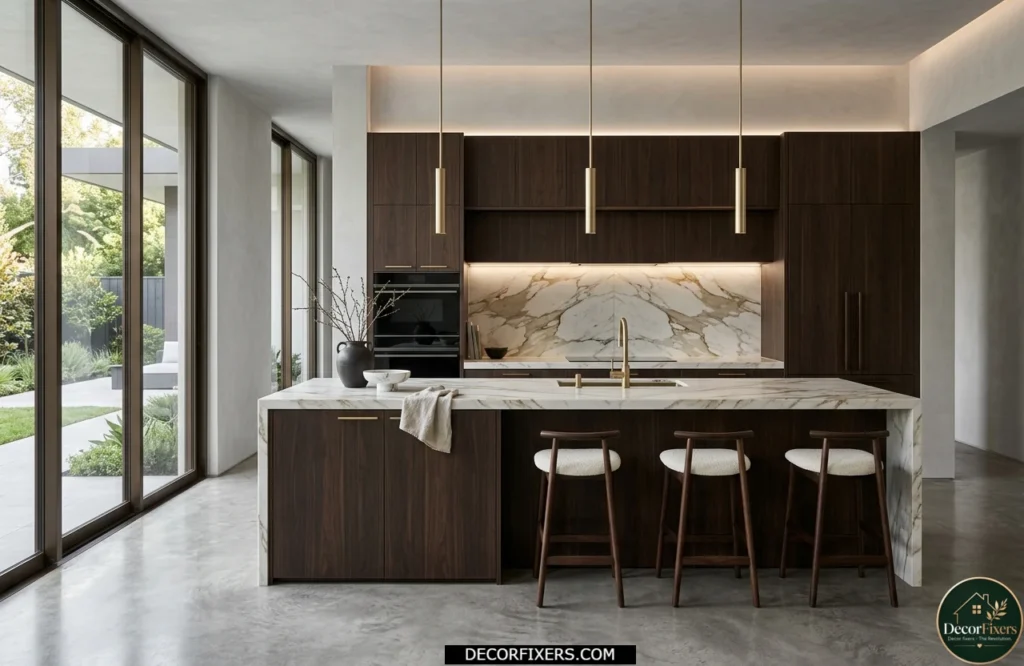
Dark walnut flat-front cabinets with a Calcutta marble countertop are the combination designers keep coming back to for high-end projects. The deep chocolate tones of the wood sit beneath the white-and-gold veining of the marble, and the result reads unmistakably luxurious.
The key is keeping everything else restrained. Use integrated appliances, hidden hardware, or thin pulls in brushed gold. One visual anchor is all this pairing needs.
3. Walnut Lower Cabinets With Painted Sage Green Uppers
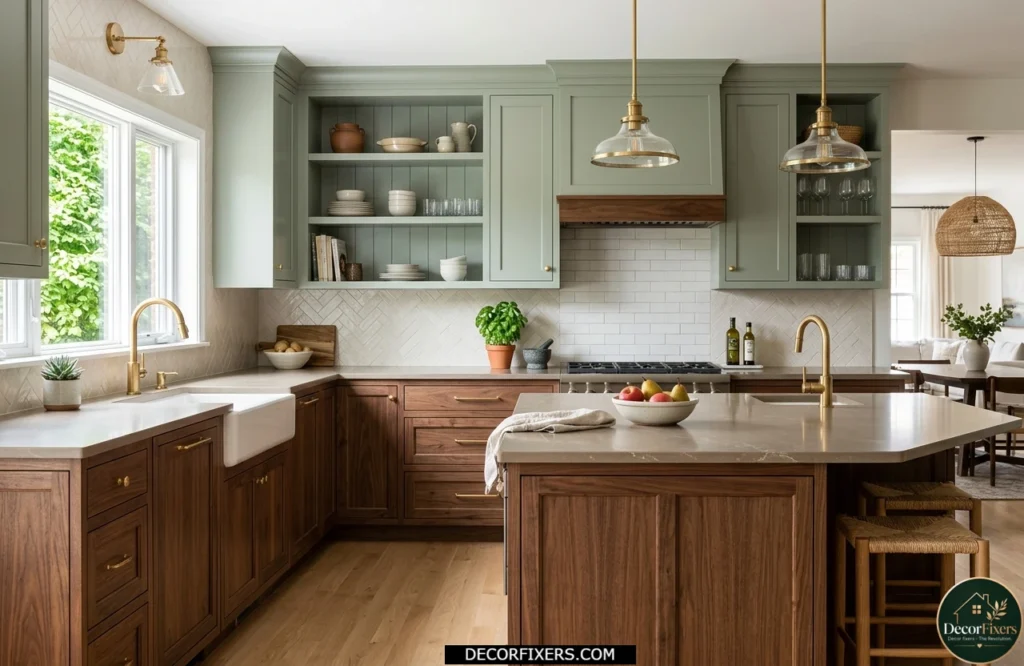
Two-tone kitchens have settled into a genuinely enduring design choice, not a trend. Walnut kitchen below, sage green above, is one of the most cohesive combinations available right now because both tones share a warm, earthy undertone. The walnut grounds the room; the sage lifts it.
This works especially well in open-plan layouts where you want the kitchen to feel connected to adjacent living or dining spaces. For the countertop, choose a warm greige or cream quartz; avoid bright white, which creates a harsh interruption between the two cabinet tones.
4. Walnut Island as a Focal Point in a White Kitchen
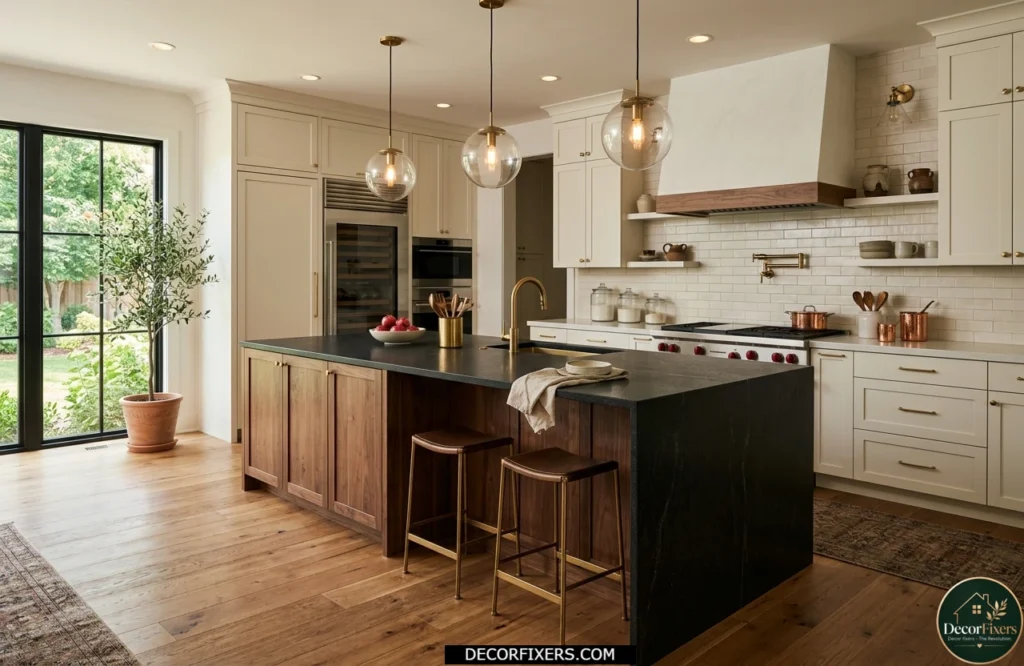
Look, if you love the walnut kitchen look but aren’t ready to commit to full walnut cabinetry, here’s what actually works: a walnut-faced island in an otherwise white or off-white kitchen. It gives you the warmth of the wood without the risk of it feeling ‘too dark.’
The island becomes the natural visual anchor, the way a statement piece of furniture anchors a living room. Pair the island top with a butcher block or a contrasting dark stone; honed black granite works particularly well, and keep the perimeter cabinetry in a soft cream or warm white. The combination reads sophisticated without demanding a complete commitment to the material.
5. Full Walnut Kitchen With Brass Hardware and Terrazzo Floors
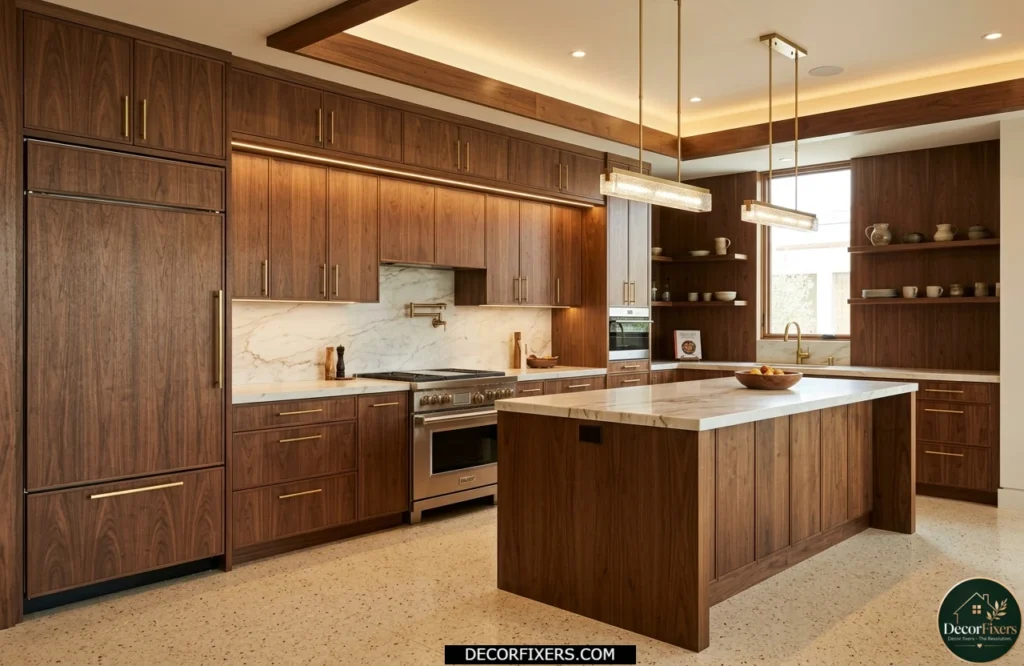
Full walnut kitchens, where both upper and lower cabinetry are walnut-faced, read more like furniture than built-ins. The effect is warm, enveloping, and architectural. It’s the kitchen that makes guests stop at the doorway.
Terrazzo floors in a warm cream or beige colorway connect the natural warmth of the wood to the ground plane, preventing the space from feeling top-heavy.
Add brushed brass pulls and pendant lighting in an aged brass or unlacquered finish. Flat-panel walnut doors with integrated handles or minimal hardware keep the material, not the joinery, as the hero of the space.
6. Walnut Shaker Cabinets With Black Soapstone Countertops
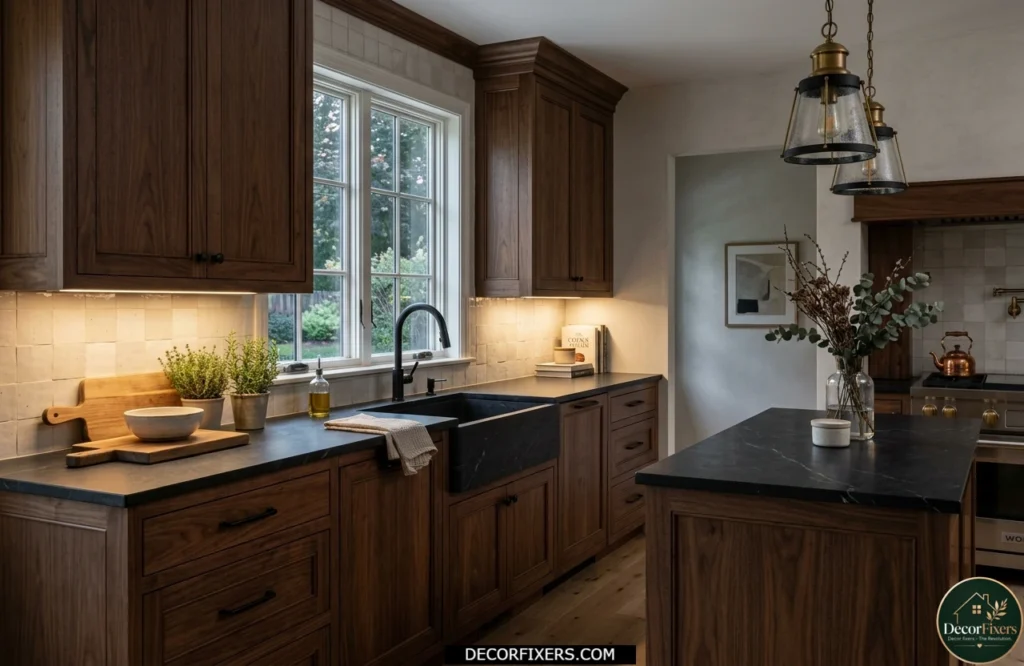
This pairing is bolder than it looks on screen. Walnut shaker cabinets, with their classic profile softening the wood’s richness, work with black soapstone countertops to create a kitchen that feels deliberately curated rather than aggressively dramatic.
Soapstone has a matte, almost velvety finish that prevents the dark countertop from overpowering the wood grain. The result is a kitchen with a quiet confidence to it. Use matte black fixtures throughout for hardware, faucet, and range hood; it ties the design together without introducing unnecessary contrast.
7. Walnut Cabinets With Warm Greige Walls and Linen Backsplash Tile
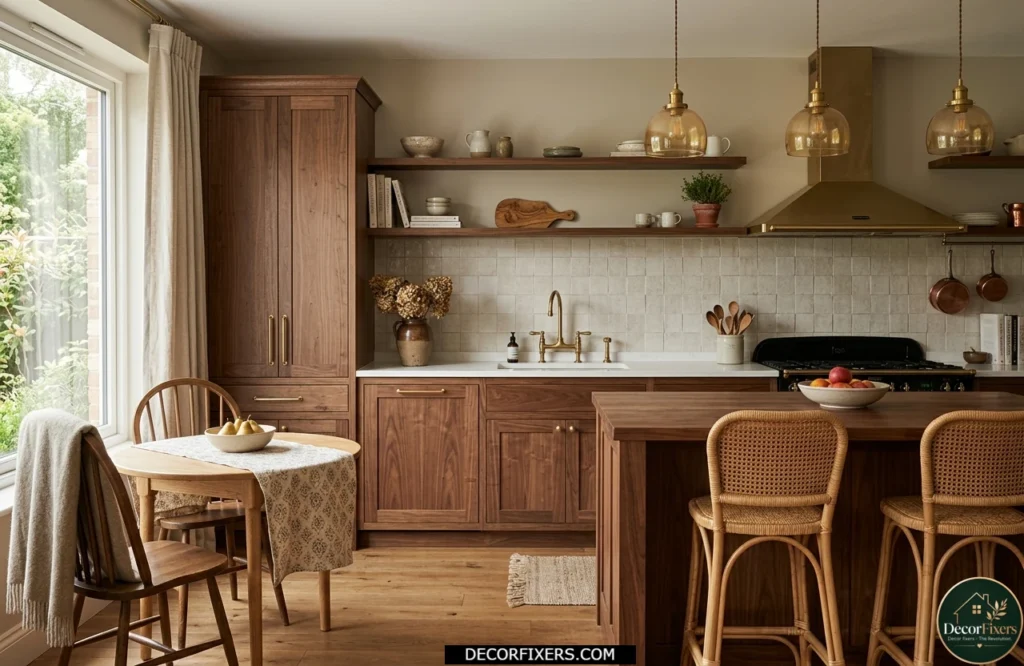
Greige, that blend of gray and beige, is walnut’s natural habitat on the walls. It shares just enough warmth to feel cohesive while providing enough neutral distance to let the wood grain do the talking.
Linen-tone ceramic tiles or handmade textured tiles in the backsplash add dimension without color conflict. This combination performs exceptionally well in kitchens with warm-toned artificial lighting, where the whole room glows like a single material study. Keep hardware in satin nickel or warm brushed gold.
8. Walnut Cabinets in a Small Kitchen, The Low-Light Strategy
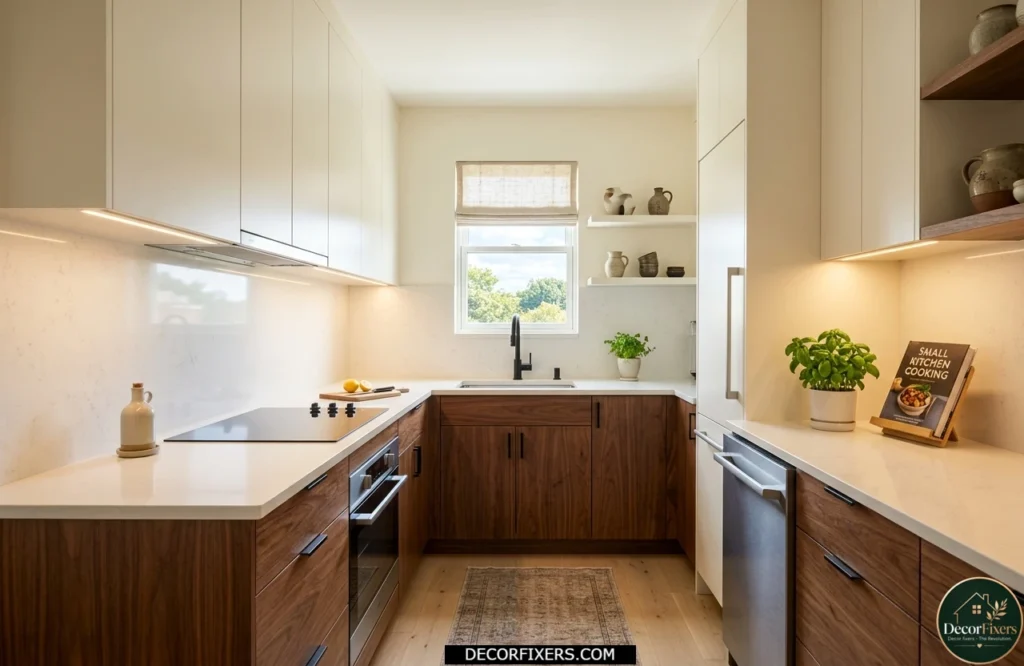
This is the question I see homeowners ask most, and the one most articles avoid answering.
Walnut in a small or low-light kitchen is absolutely possible, but the strategy is different. Use walnut on the lower cabinets only. Keep the upper cabinetry in a light cream or soft white.
This preserves the visual lightness at eye level while the wood grounds the base of the room. Add under-cabinet LED strips with a warm 2700K color temperature; they bounce light off the countertop and prevent the wood from closing the space.
9. Dark Walnut Cabinets With Matte Black Hardware and Integrated Appliances
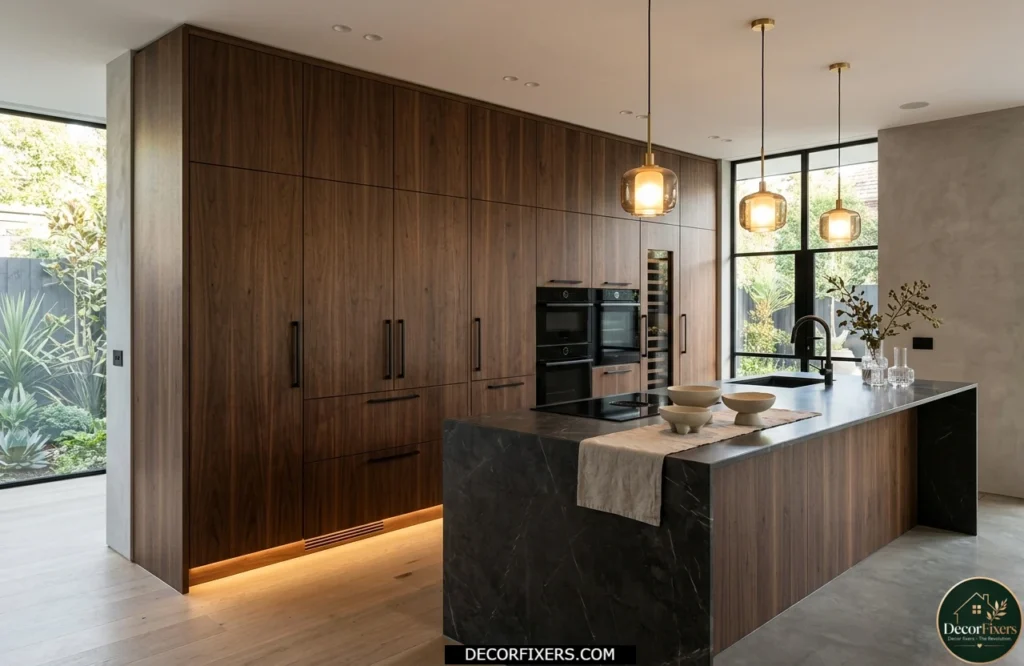
This is the editorial kitchen. Dark walnut cabinets paired with matte black hardware and fully integrated, panel-ready appliances produce a kitchen that reads less like a cooking space and more like a designed room.
The refrigerator disappears. The dishwasher disappears. What remains is the grain of the wood, moving across the entire wall.
This approach requires proper lighting planning. Recessed downlights alone will flatten the space. Add a warm, low-hung pendant over the island or peninsula, and consider toe-kick lighting at floor level to lift the visual weight of the cabinetry. Without these layers, dark walnut with matte black risks feeling like a cave rather than a statement.
Why Walnut Works in Kitchens, and When It Does Not
Most people assume walnut is a ‘dark wood.’ That’s not quite right. Or maybe I should say it this way, walnut isn’t dark the way ebony or wenge are dark. It’s a medium-to-warm brown with golden and chocolate undertones that shift depending on your light source. Morning light pulls the amber out. Evening pendants can deepen the whole room by two shades.
Quick Comparison, Walnut Kitchen Pairing Options
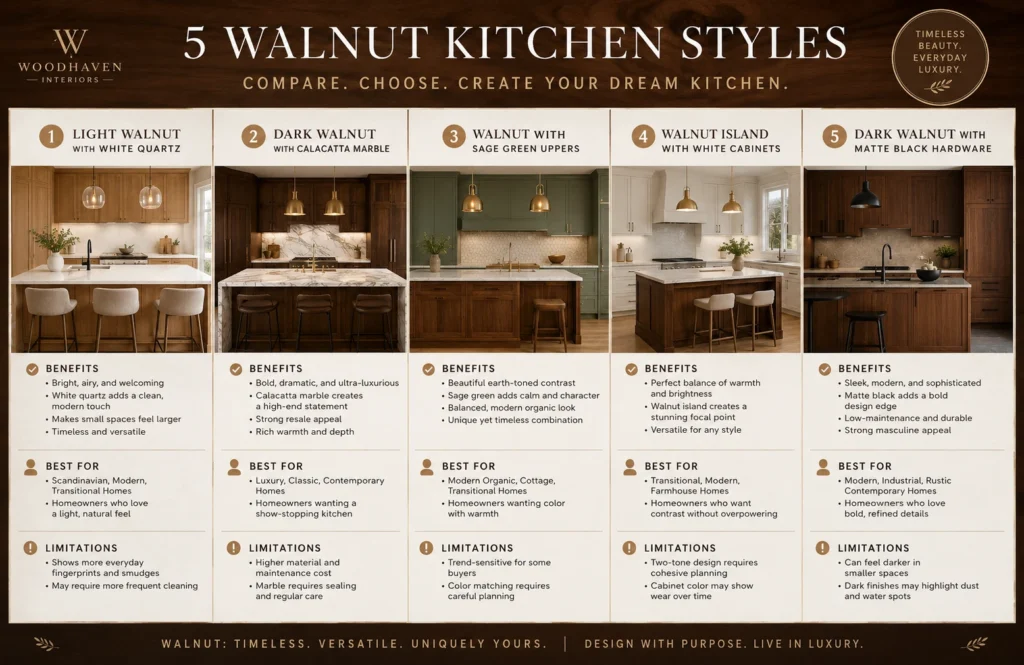
| Option | Best For | Key Benefit | Limitation |
| Light Walnut + White Quartz | Small / low-light kitchens | Bright, airy contrast; grain still shows | Less dramatic; needs warm lighting to pop |
| Dark Walnut + Calcutta Marble | Open-plan, high-ceiling spaces | Luxury feel; veining draws the eye | Expensive; can feel heavy in small rooms |
| Walnut + Sage Green Uppers | Mid-budget two-tone remodels | Color without clutter; walnut stays warm | Needs careful undertone matching |
| Walnut Island + White Perimeter | Homeowners testing the look | Low-risk focal point; easy to change | An island alone won’t transform the whole kitchen |
| Black Walnut + Matte Black Hardware | Contemporary/minimalist lofts | Dramatic, cohesive, editorial look | Unforgiving in dim spaces; needs strong lighting |
10. Walnut Open Shelving With Painted Cabinet Bases
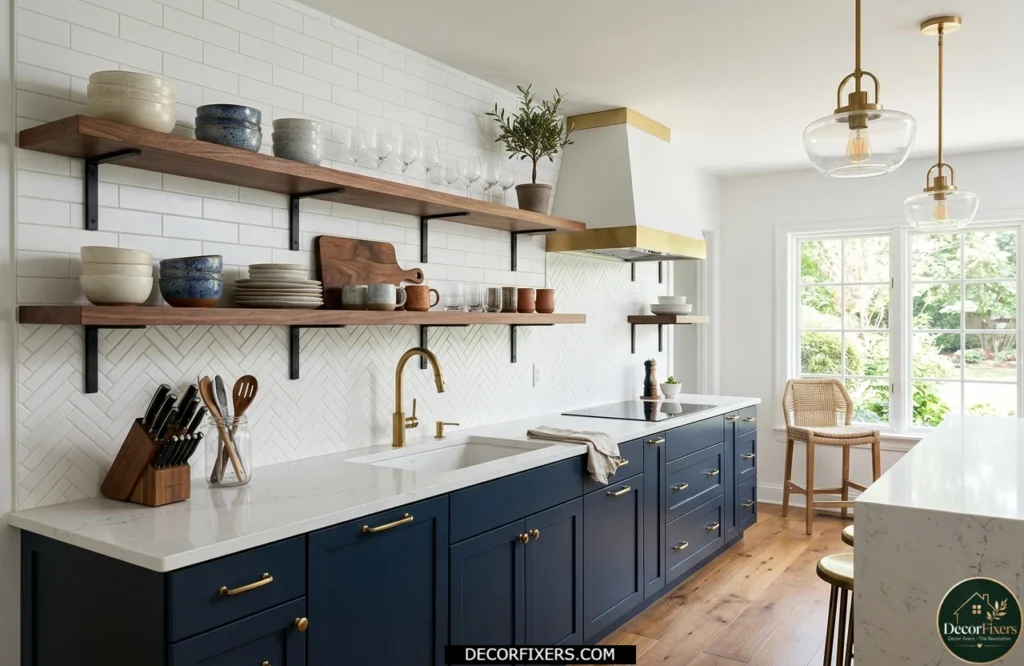
Open shelving in walnut is a way to introduce the material without committing to full cabinetry, and it works in nearly any style. Floating walnut shelves above painted lower cabinets add warmth, texture, and a distinctly hand-built character that full kitchen suites can lack.
The most successful versions of this approach pair walnut shelves with a lower cabinet in deep navy, forest green, or charcoal. The contrast between the dark painted base and the natural wood shelf reads deliberate and design-forward. Keep shelf brackets minimal; black steel rod brackets in a thin profile are the standard choice.
11. Walnut Cabinets With Quartzite Countertops, The Natural Stone Approach
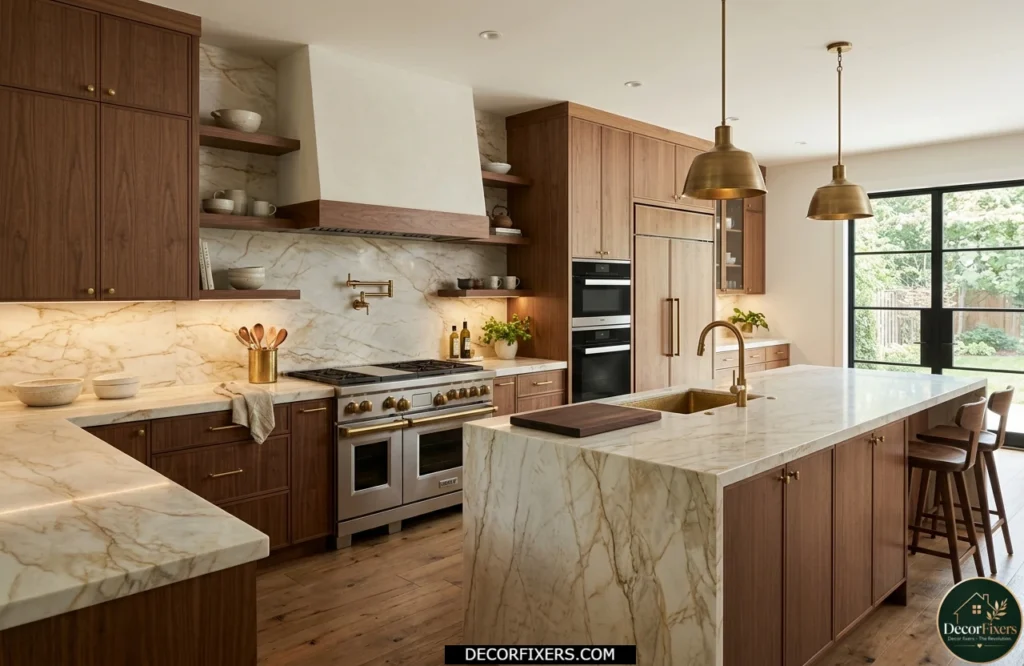
Natural quartzite is the countertop choice gaining the fastest traction in high-end walnut kitchen builds right now. Unlike marble, quartzite is harder and more resistant to etching, making it genuinely practical for a kitchen that gets used. The organic veining, which runs gold, ivory, and taupe depending on the slab, aligns naturally with walnut’s warm undertones.
Taj Mahal quartzite (a soft ivory-gold stone) is the specification designers reach for first when pairing with medium or dark walnut. It adds luxury without the color conflict that can occur with cooler stones. This is one combination where the splurge on natural stone rather than engineered quartz is noticeable; the depth and variation of the slab changes everything.
12. Mid-Century Modern Walnut Kitchen With Teak Accents
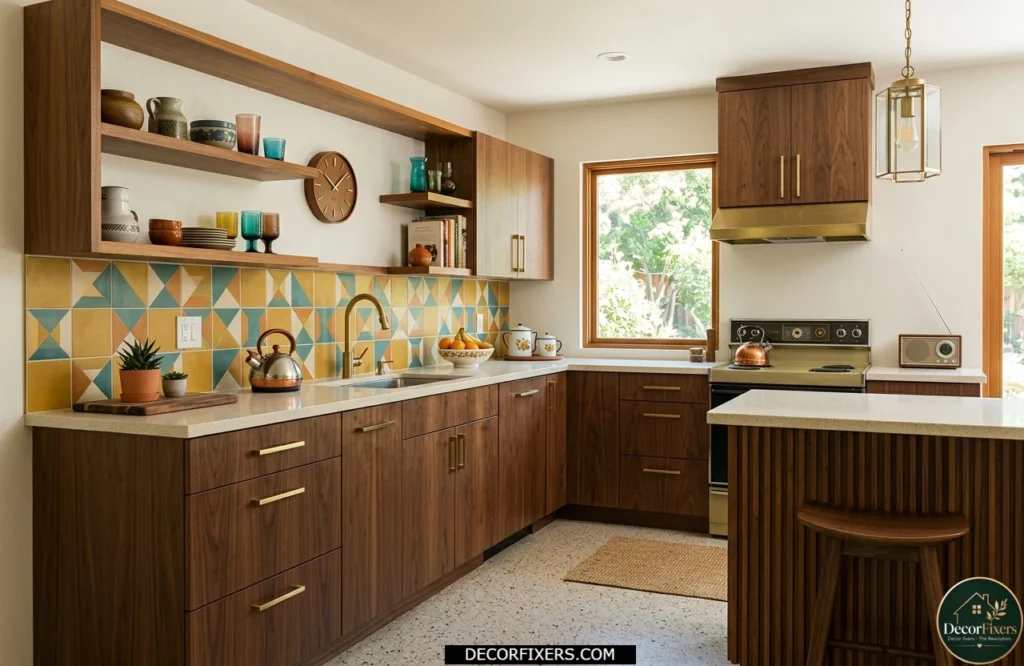
Walnut was the defining material of mid-century modern interiors, and it translates beautifully into a contemporary kitchen when the references are executed with restraint. Think flat-front cabinet doors in a natural oiled walnut finish, tapered hardware in brushed gold or antique brass, and a warm-toned tile backsplash in a geometric format.
Teak cutting boards, a teak or bamboo kitchen trolley, or a teak range hood surround can extend the wood story without adding visual clutter. The palette stays tight: walnut, brass, warm white or cream, and a geometric backsplash tile. Avoid introducing too many additional materials; the integrity of this style depends on material discipline.
13. Walnut Kitchen With Fluted Cabinet Fronts and Textured Surfaces
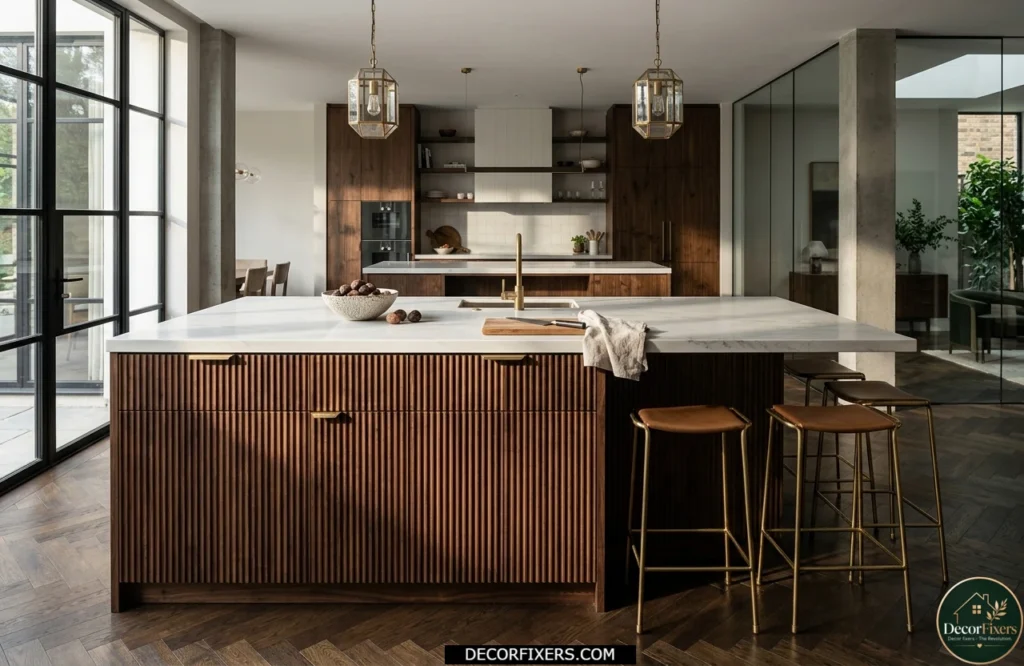
Fluted or reeded cabinet fronts in walnut are one of the strongest micro-trends embedded within the broader walnut wave of 2026. The vertical grooves of a fluted profile catch light differently across the day, essentially making the cabinet face an ever-changing material study.
Pair fluted walnut cabinet fronts with a smooth, book-matched quartz or quartzite countertop; the contrast between the textured wood and the smooth stone surface creates a genuinely sophisticated material dialogue.
This approach works particularly well on an island, where the fluting becomes a focal point visible from multiple angles in an open-plan space. For inspiration on how texture and material play work across contemporary open layouts, our Kitchen Design Trends guide covers the shift toward sensory-rich surfaces in depth.
14. Walnut Kitchen Paired With Deep Olive Green Accents
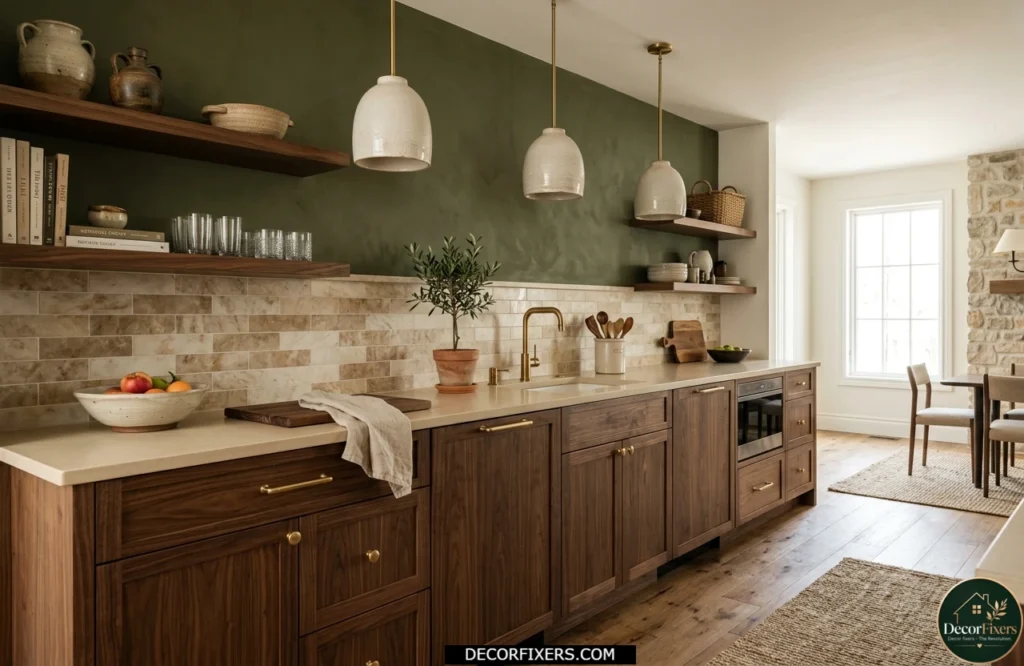
Olive green and walnut share the same earthy, nature-derived warmth; they were practically made to coexist. This combination has been appearing in design press consistently since 2024 and shows no sign of slowing. It reads grounded, organic, and genuinely non-trend-dependent.
The olive can come in as a painted accent wall behind open shelving, as a painted upper cabinet color contrasting with walnut lowers, or even as glazed ceramic pendant shades over the island. Keep the countertop in a warm cream or natural limestone-look surface. Matte brass hardware pulls the two tones together without introducing a third color into the mix.
15. Walnut Kitchen in an Open-Plan Space, Connecting Kitchen to Dining
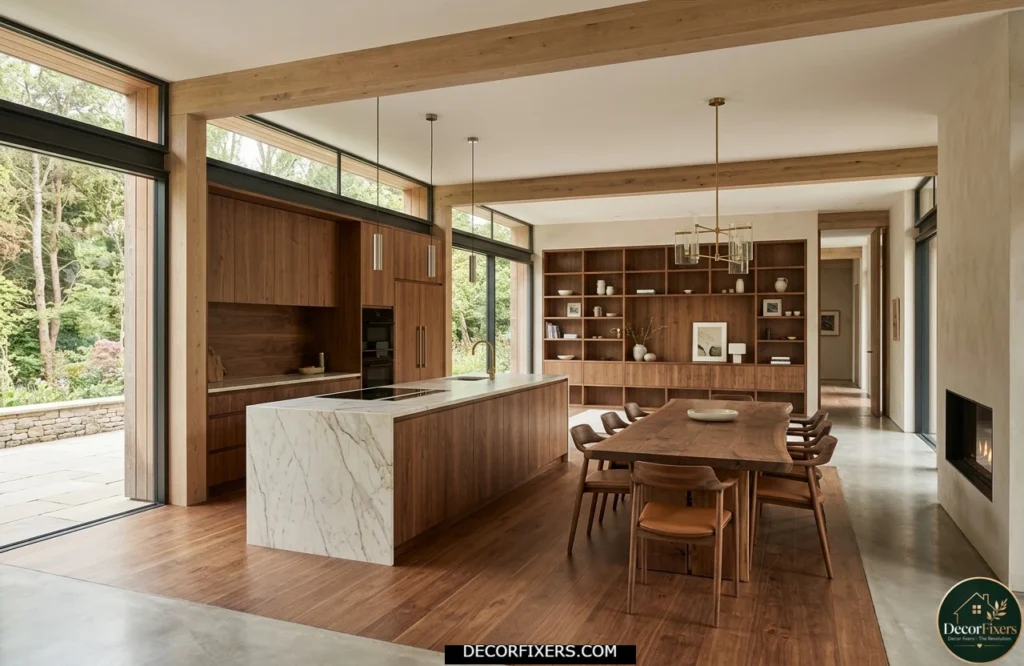
The most underutilized advantage of a walnut kitchen is its ability to visually extend into adjacent rooms. Walnut functions like furniture; it doesn’t read as ‘kitchen’ the way white cabinetry does. In an open-plan layout, walnut cabinetry naturally flows into dining and living spaces, creating a warm material continuity that painted kitchens rarely achieve.
To reinforce this connection, extend walnut details into the dining zone: a walnut dining table, walnut-trimmed shelving in the adjacent living area, or a walnut credenza beneath a TV. The kitchen stops being a separate functional box and becomes part of a cohesive interior. If you’re designing the dining zone alongside the kitchen, our article on Minimalist Kitchen explores how restraint in material choice creates this kind of seamless spatial flow.
How to design a walnut kitchen?
To design a walnut kitchen, follow these steps:
1. Identify your walnut tone: light, medium, or dark, based on natural light levels in your kitchen. 2. Choose a countertop with a warm undertone, cream quartz, greige stone, or natural quartzite.
3. Select hardware in brushed brass (warm) or matte black (contemporary); avoid polished chrome.
4. Plan your lighting: add under-cabinet LEDs and a warm-tone pendant to prevent the wood from reading flat.
5. Decide on full walnut cabinetry or an island-only approach based on your room’s size and light levels.
Here’s the thing: I’ve seen identical walnut cabinet styles look completely different in two kitchens, and the only variable was the hardware and the light. These two factors are wildly underestimated.
Brass vs. Matte Black Hardware with Walnut
Brass hardware with walnut is better suited for transitional, farmhouse, or mid-century kitchens because it amplifies the wood’s warm golden undertones. Matte black works better when the overall design is contemporary or minimalist, and you want visual contrast. The key difference is that brass unifies the warm palette while matte black creates deliberate contrast.
CONCLUSION:
The homeowners I see get this right aren’t the ones with the biggest budgets. They’re the ones who understand the pairing logic before they walk into a showroom. They know their countertop undertone. They’ve decided between brass and matte black. They’ve looked at their kitchen at 7 PM with the current lighting and understood what warm LED strips would do to that space.
Walnut is unforgiving of lazy decisions and extraordinarily rewarding when paired with thought. The 15 ideas in this article aren’t meant to be prescriptive; they’re meant to give you the vocabulary to make your own decision confidently.
One last thing: take a real walnut door sample home before you commit. Hold it against your flooring. Check it at noon and at 8 PM. Walnut in your specific kitchen is the only data point that matters.
FAQs:
Q: What’s the best countertop for walnut kitchen cabinets?
A: White or cream quartz is the most versatile choice. It provides clean contrast without a color clash. For a more luxurious look, Taj Mahal quartzite or Calcutta marble (or a quartz alternative like Caesarstone Calcutta Nuvo) are the specifications designers use most often.
Q: How do I prevent a walnut kitchen from feeling too dark?
A: Use walnut on the lower cabinets only, keep uppers in cream or white, add warm 2700K under-cabinet LEDs, and choose a light-toned countertop. These four adjustments prevent the wood from absorbing all the light in the room.
Q: Should I use walnut in a small kitchen?
A: Yes, with the right strategy. A walnut island in a white kitchen, or walnut lowers paired with painted white uppers, introduces warmth without visual weight. Avoid full walnut on all four walls in a small room with limited natural light.
Q: Why does the walnut look different in my house than it does in design photos?
A: Light source. Design photos are shot with controlled warm lighting at 2700–3000K. If your kitchen has cool daylight bulbs (4000K+), walnut will look flat and gray-brown. Swap your bulbs before concluding the wood.
Q: When should I choose walnut over white oak for kitchen cabinets?
A: Choose walnut when you want warmth, depth, and a high-grain visual; it suits transitional and contemporary spaces equally. Choose white oak when you prefer a lighter, more linear grain that reads Scandinavian or modern farmhouse. Walnut makes a bolder statement; oak is more neutral.

Creator of DecorFixers, sharing practical home and interior ideas focused on real-life usability, simple design improvements, and budget-friendly solutions.