

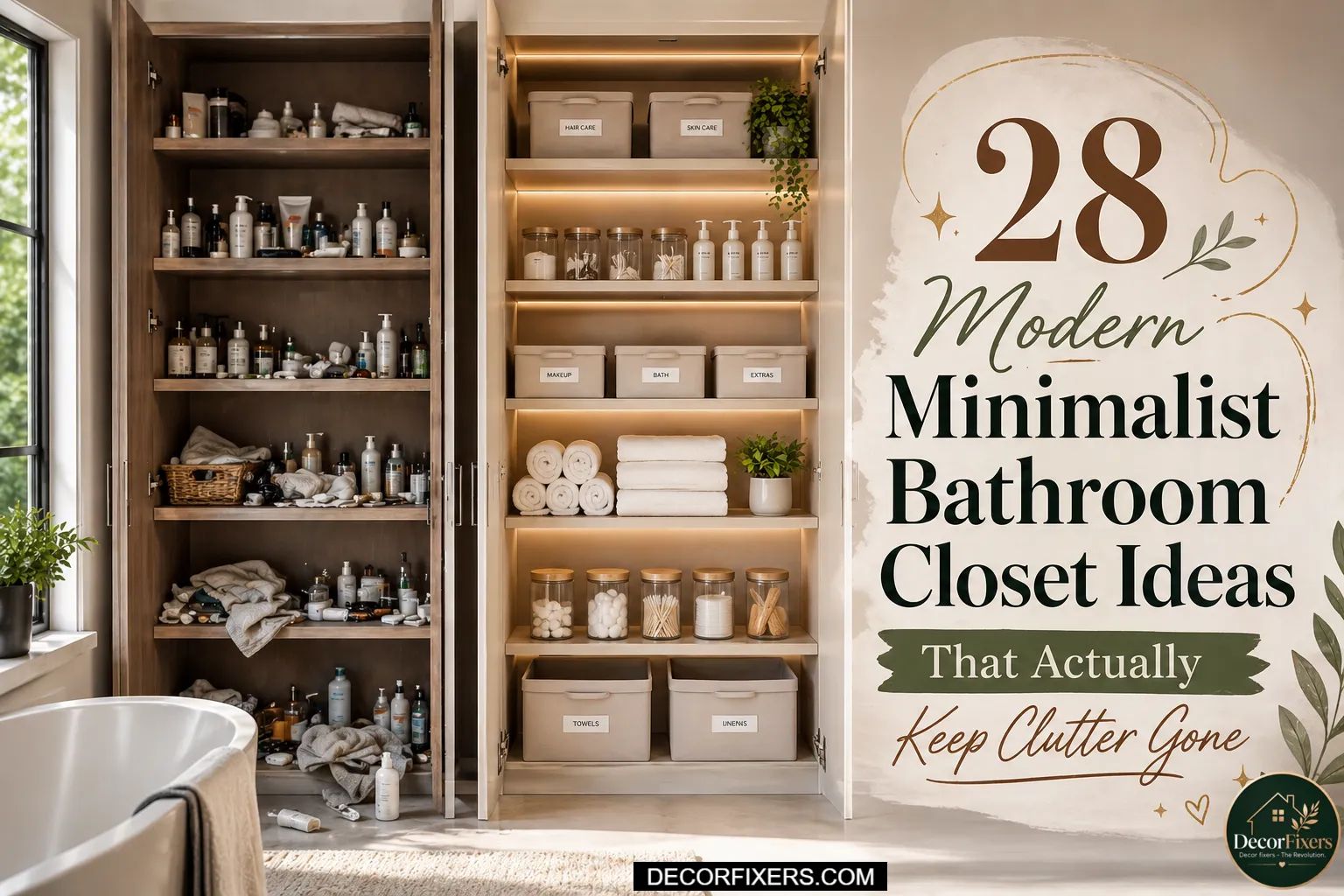
Here’s a question nobody asks out loud: if your bathroom closet fell open in front of a guest right now, would you cringe?
I asked myself that same thing one random Tuesday morning when three bottles toppled out the second I reached for my face wash. That was the moment I realized random bins and ‘I’ll deal with it later’ thinking were never going to cut it.
The good news? You don’t need to rip out shelves, spend a fortune, or hire an organizer. What you need is a simple system, and the 28 ideas below are exactly that. They’re real, they’re doable, and they’re built around the minimalist principle that less visible clutter means less daily stress.
Quick Definition: Modern minimalist bathroom closet organization refers to a storage approach that prioritizes only what you actually use, uses matching or neutral containers, and creates visual calm through intentional zones and clear categories, not just tidying up.
What Does Minimalist Bathroom Closet Organization Actually Mean?
Minimalist bathroom closet organization means keeping only what you use regularly, grouping items by function, and using a container system that looks and feels intentional, not just stuffed. It’s not about having less stuff for the sake of it. It’s about making what you do keep easy to find, easy to put back, and easy to see.
According to Global Growth Insights (2025), 47% of urban households are now actively investing in multi-functional and modular storage solutions, and closet-focused solutions make up 38% of that demand. That tells us we’re not alone in this frustration. Real people in real homes are trying to solve exactly this problem.
Why Your Old Organization’s Attempts Didn’t Stick
Let me be honest about something most organization articles skip: buying bins doesn’t create organization. I’ve seen people buy 12 matching baskets, fill them randomly, and end up with the same chaos inside pretty containers. The real problem isn’t storage products; it’s the absence of a zone-based system before you buy anything.
1: The One-Shelf Rule for Daily Essentials
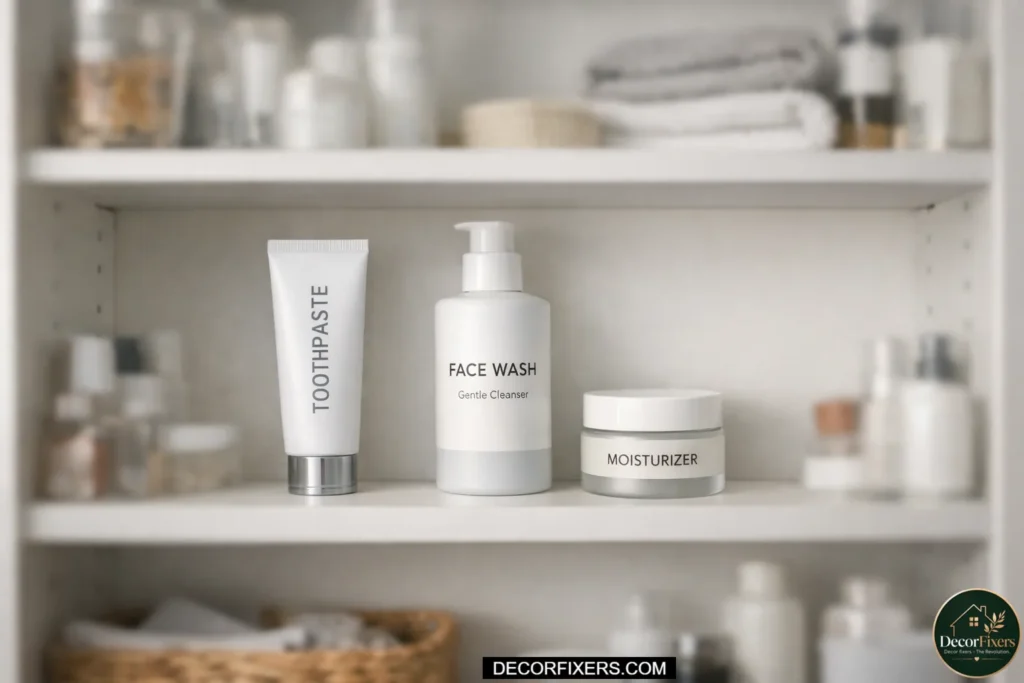
Give your most-used products, face wash, toothpaste, moisturizer, deodorant, their own dedicated shelf at eye level. Nothing else lives there. I call this the ‘grab without thinking’ shelf. When I set mine up, I stopped digging every single morning. It sounds simple because it is. The rule: if you use it daily, it earns prime real estate. Everything else moves back or down.
2: Clear Stackable Bins for Counter-Level Closet Shelves
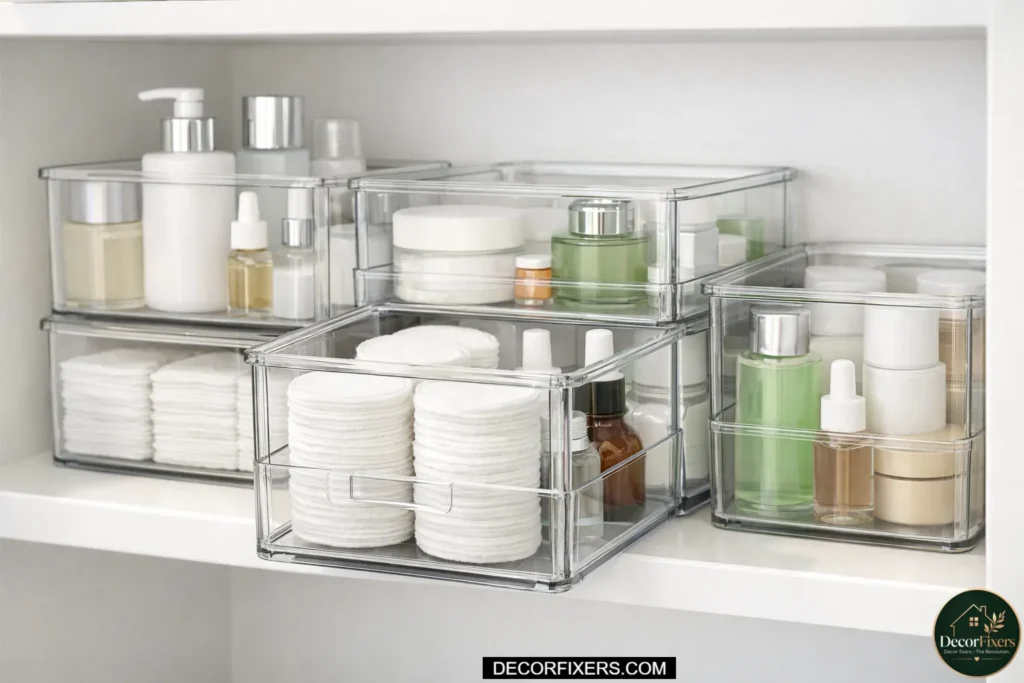
iDesign Linus clear bins are one of the most practical Amazon finds in this category. They’re stackable, see-through, and come in sizes that actually fit standard bathroom shelves. We use the tall ones for cotton pads and the shallow ones for skincare samples. Because they’re clear, you always know when you’re running low, so you’re not buying duplicates of something you already have hidden in the back.
3: Decant Your Most-Used Products into Uniform Containers
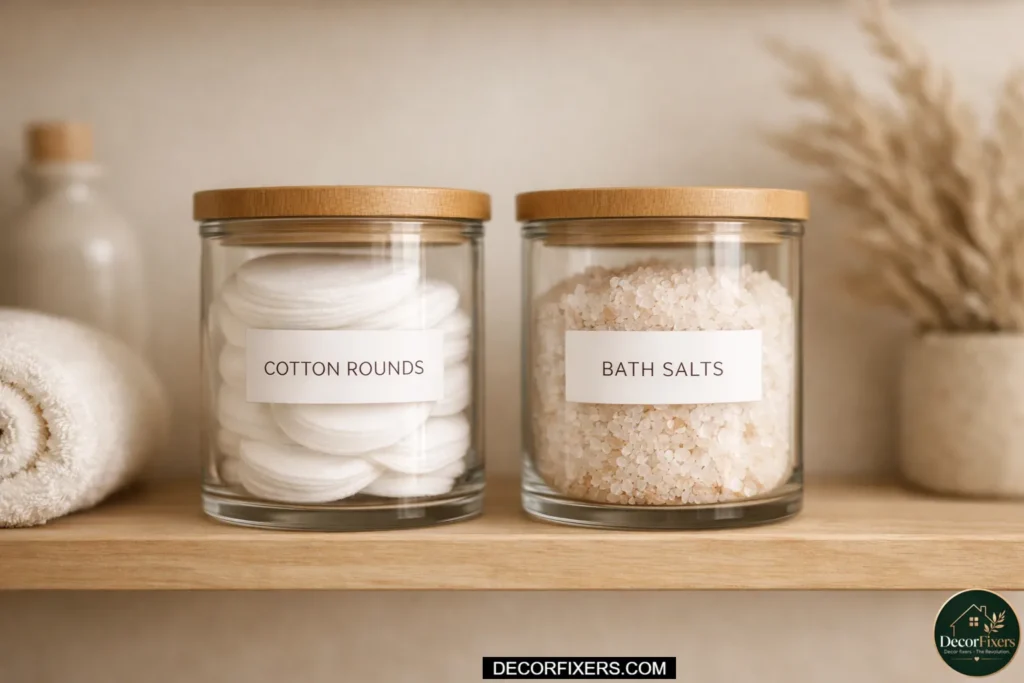
This is the one idea that gets pushback, but hear me out: decanting your cotton rounds, Q-tips, and bath salts into matching glass or acrylic jars immediately makes your closet look intentional rather than random. You don’t need 30 jars. Three or four uniform containers on one shelf changes the entire visual feel. IKEA’s RAJTAN jars and the simple human steel-framed options both work beautifully and last for years.
4: Install a Slim Door-Mounted Organizer for the Closet Door
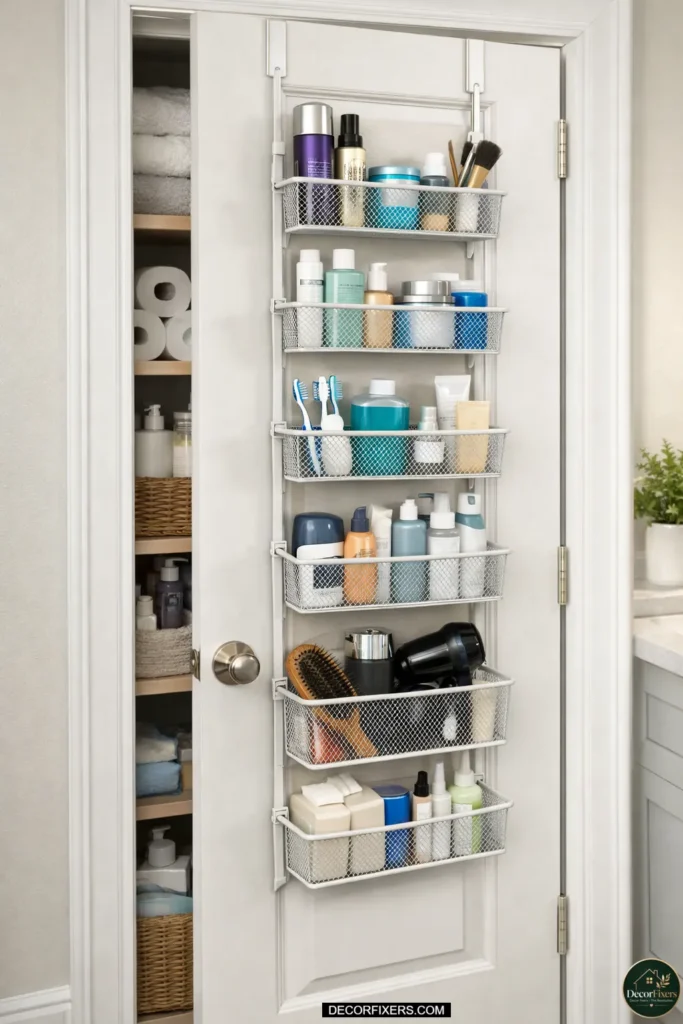
This is one of the biggest missed opportunities in bathroom closets. The inside of the closet door is prime, untapped real estate. A slim over-door rack, specifically one with adjustable pockets, can hold your daily essentials without adding a single inch to your floor footprint. Look for ones with ventilated pockets so products don’t get musty. This is especially useful for renters who can’t drill into walls.
5: Use a Rotating Lazy Susan for Deep Shelves
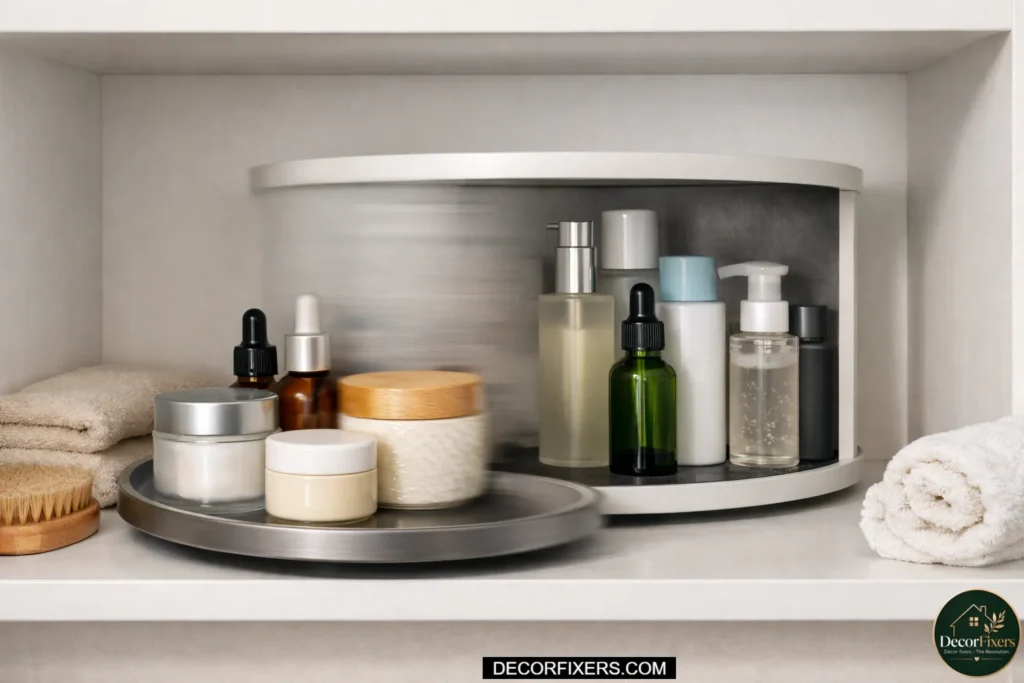
Deep shelves are a nightmare. You push things to the back and forget them for six months. A lazy Susan, even a cheap turntable from IKEA, solves this completely. Spin it to reach what’s in the back without knocking everything over. I use one for my skincare extras, and it honestly changed how I interact with that shelf. Everything’s visible. Everything’s accessible. More archaeological digging.
6: Label Every Bin and Basket, Even If It Feels Obvious
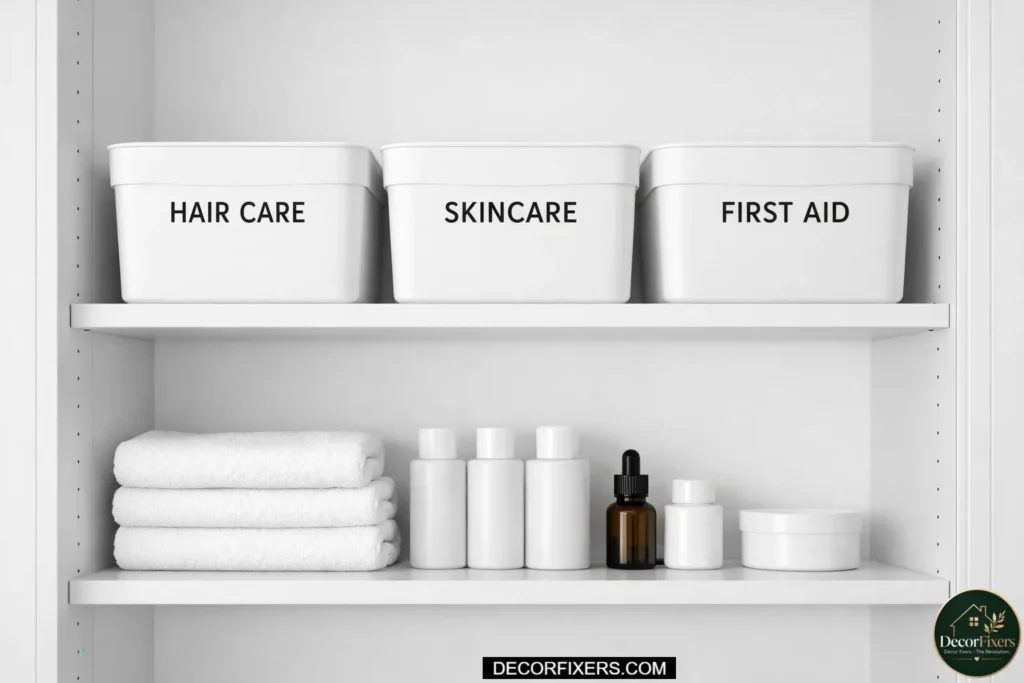
Labels feel unnecessary until you’ve lived without them for a week and watched your closet slowly drift back to chaos. Here’s the thing: labels aren’t for you in the moment; they’re for you on a tired Thursday night when you’re putting stuff away fast. Labeling forces every item to have an assigned home. We use a simple label maker (the DYMO Labeler is under $30) with white tape for a clean, minimalist look.
7: Bamboo Drawer Dividers for the Vanity Cabinet
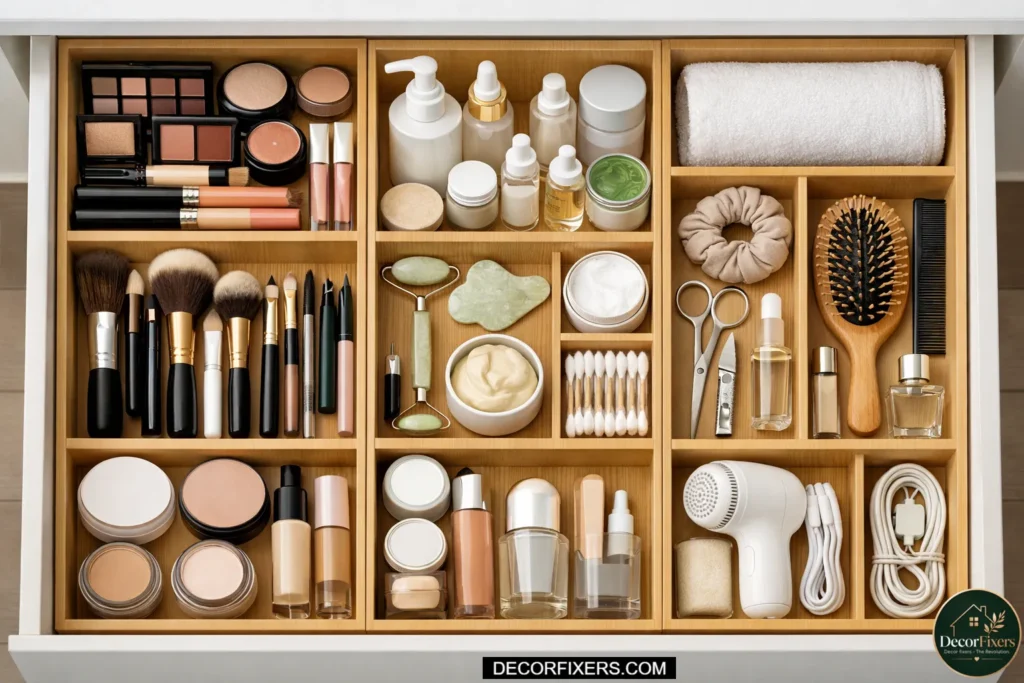
If your bathroom closet includes a vanity with drawers, bamboo drawer dividers are the single best upgrade you can make. They’re adjustable, they’re eco-friendly, and they make every drawer look intentional. Separate your makeup from your skincare from your hair tools. Each category gets its own lane. Bamboo is also naturally moisture-resistant, which matters in a bathroom environment more than people realize.
8: Group Products by Category in Separate Labeled Baskets
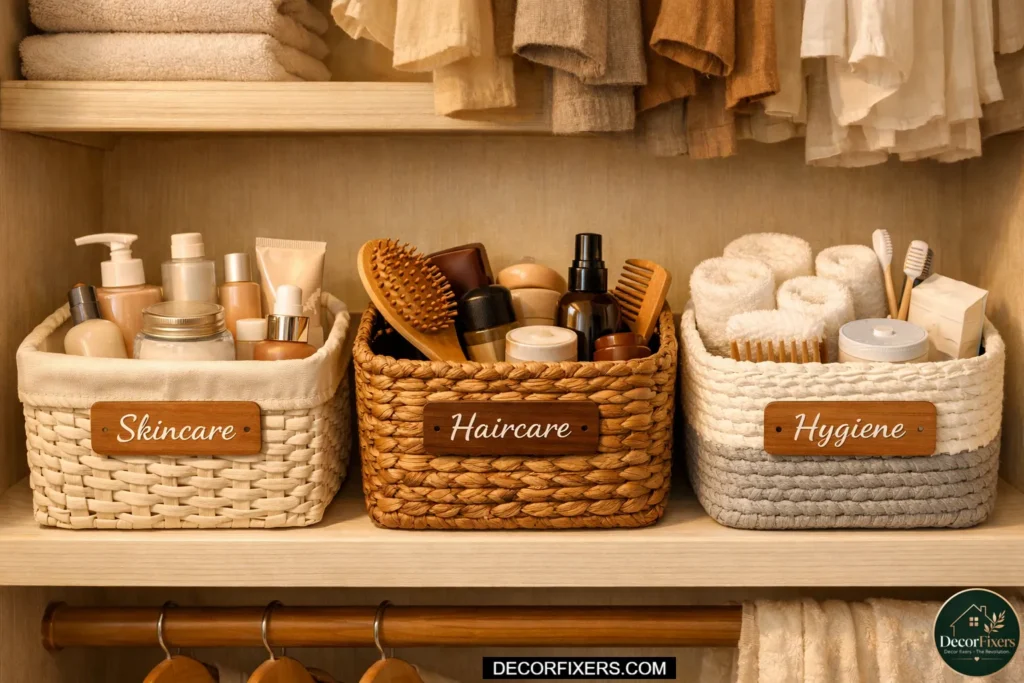
This is the baseline of any minimalist closet system. Each category, hair care, skin care, first aid, feminine hygiene, gets its own basket or bin. When categories don’t blur into each other, you can grab what you need without touching what you don’t. Woven baskets add warmth. Wire bins let you see inside. Pick one material and stick with it for visual consistency across the whole closet.
9: Use the Under-Shelf Space With Hanging Bins
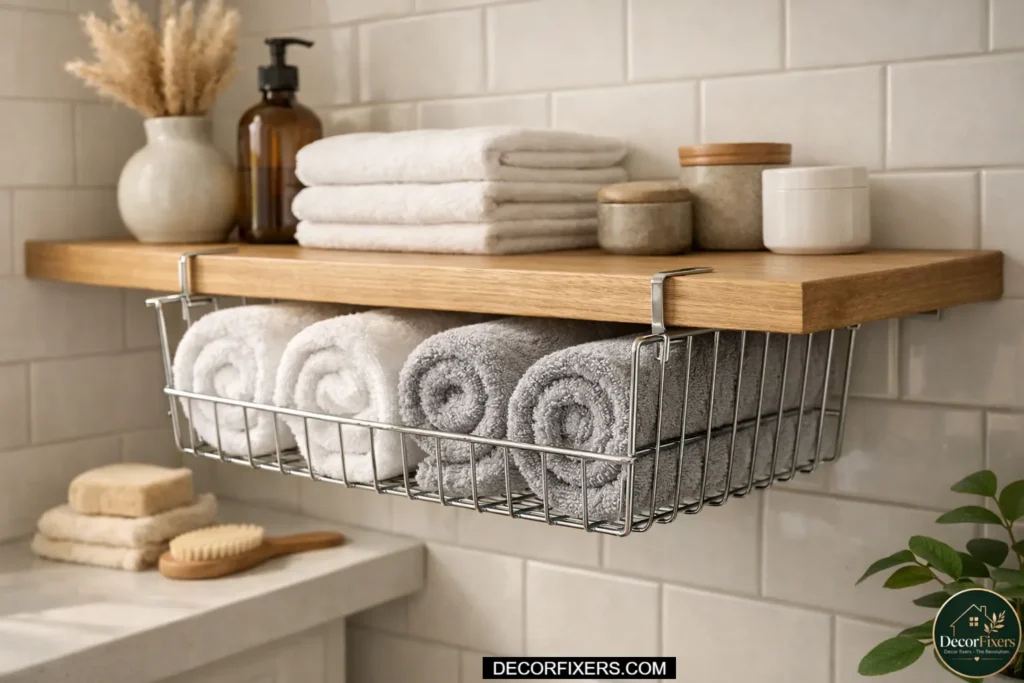
The space under each shelf, between the shelf and the items below it, is usually completely wasted. Hanging wire bins that clip onto the shelf above use that gap perfectly. They’re great for holding hand towels, rolled washcloths, or smaller product categories that don’t need a full shelf. You’re essentially adding storage without adding furniture. This works in almost any closet configuration.
10: Add a Small Tension Rod Under the Sink for Spray Bottles
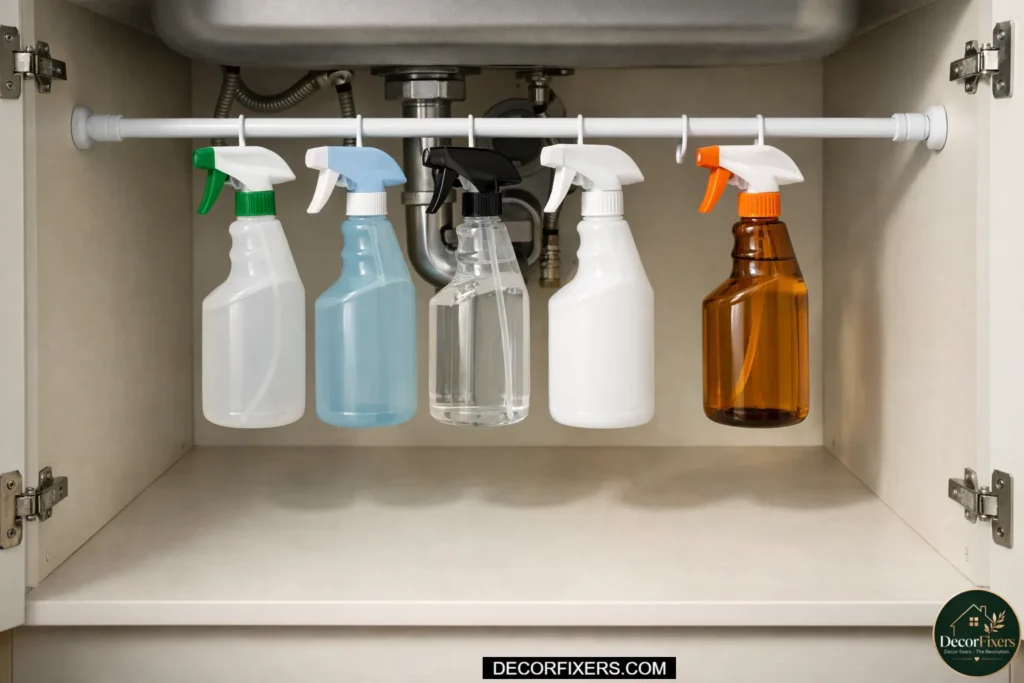
This one costs almost nothing, and it’s genuinely clever. A tension rod placed horizontally under your bathroom sink lets you hang spray bottle handles right over the rod, keeping them off the cabinet floor. The floor stays clear. Bottles stay accessible. It takes five minutes to set up and you’ll wonder why you didn’t do it sooner. This is one of those renter-friendly hacks that requires zero tools and zero damage.
11: Stack Towels Vertically Instead of Flat
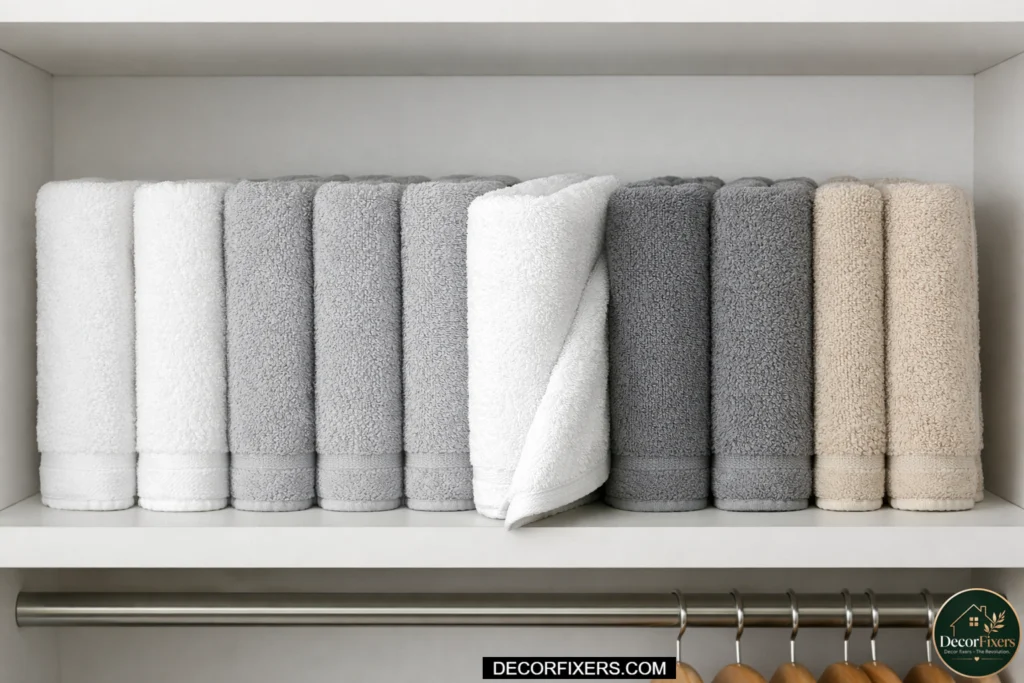
Folding towels flat and stacking them vertically, like files in a drawer, rather than in horizontal piles, is a Marie Kondo technique that actually works. You can see every towel at once; they don’t avalanche when you pull one out, and the stack stays neat without effort. For your bathroom closet’s towel shelf, this alone can free up significantly space and make the shelf look much cleaner and more intentional.
12: Use Matching Storage Boxes for Extra Toilet Paper and Supplies
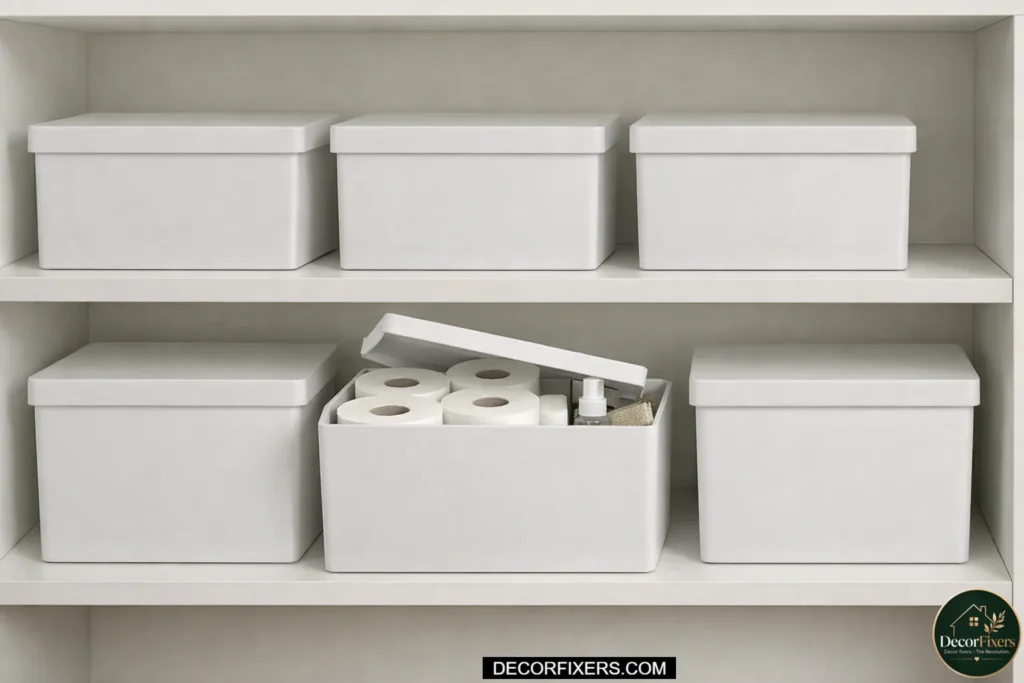
Loose toilet paper rolls stacked on a shelf look messy no matter how neatly you try to arrange them. A simple closed storage box, even a plain white one from IKEA’s TJENA line, immediately makes that shelf look clean and calm. The same goes for backup soap, razors, and other surplus supplies. Matching boxes make excess stock invisible without hiding it somewhere you’ll forget it exists.
13: Use the Top Shelf Only for Low-Frequency Items
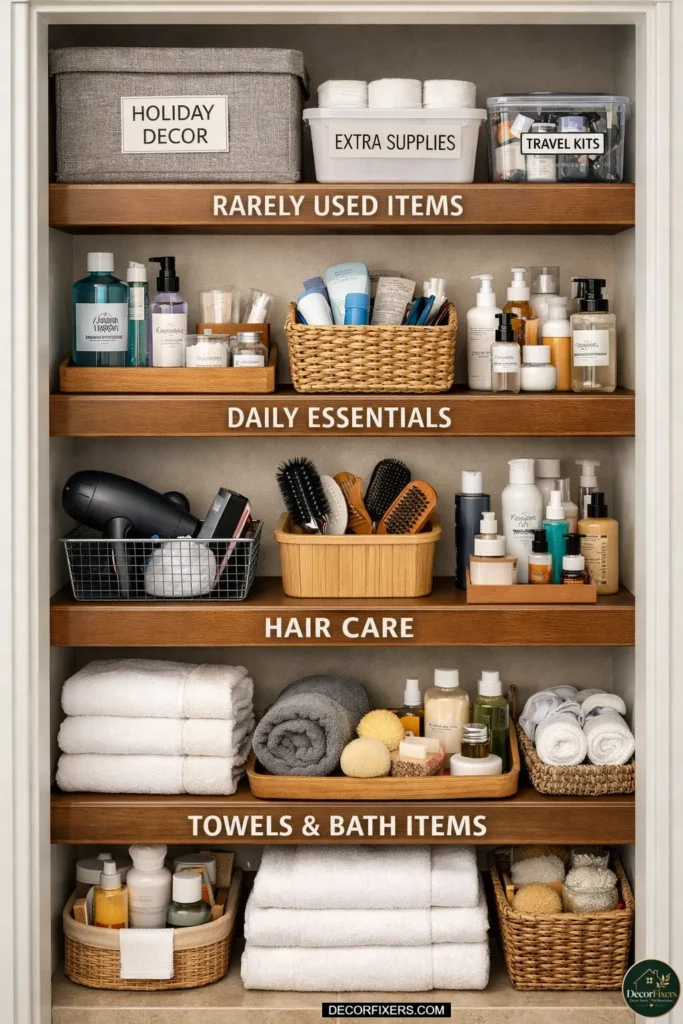
The top shelf of your bathroom closet should be reserved for things you reach for once a month or less, travel toiletry bags, backup products, first aid supplies, and hot tool accessories. Anything you grab daily should never live up there. Assign the top shelf its role deliberately, label it, and don’t let daily-use products migrate up there over time. This single rule prevents the closet from collapsing back into chaos.
14: Store Backup Products in Labeled Matching Bins, Not Loose
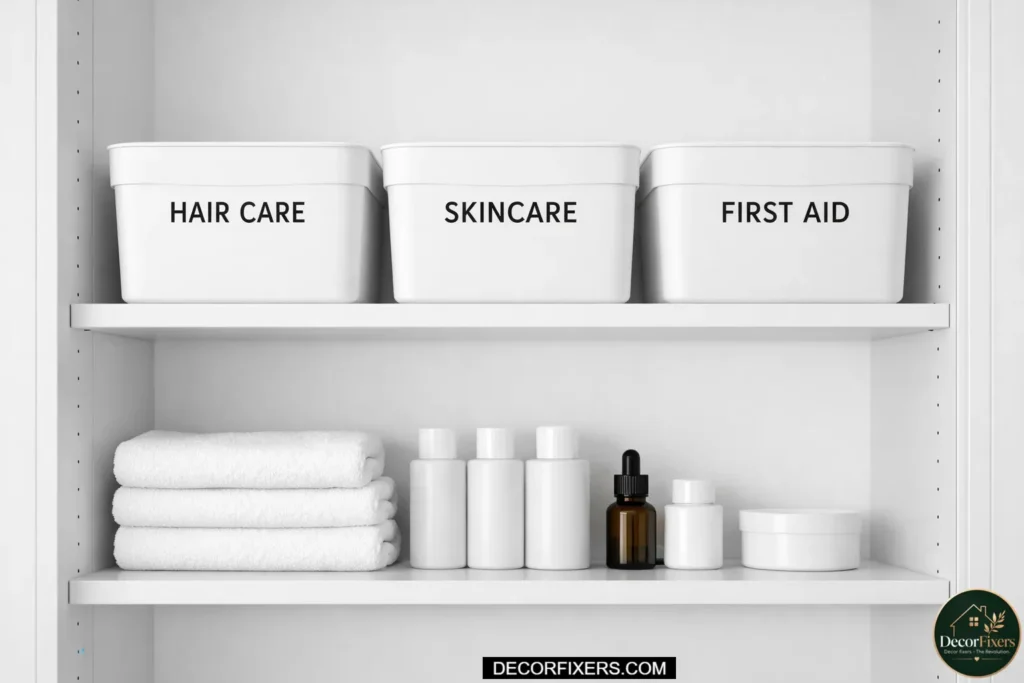
The top shelf becomes a dumping ground when backups live there without containers. We use simple white canvas bins with labels for things like ‘extra shampoo,’ ‘travel size,’ and ‘first aid.’ The bins keep the shelf looking uniform even when the items inside are mismatched. It’s one of those behind-the-scenes organization moves that makes everything else look effortless.
15: Use Vacuum Storage Bags for Bulky Bathroom Textiles
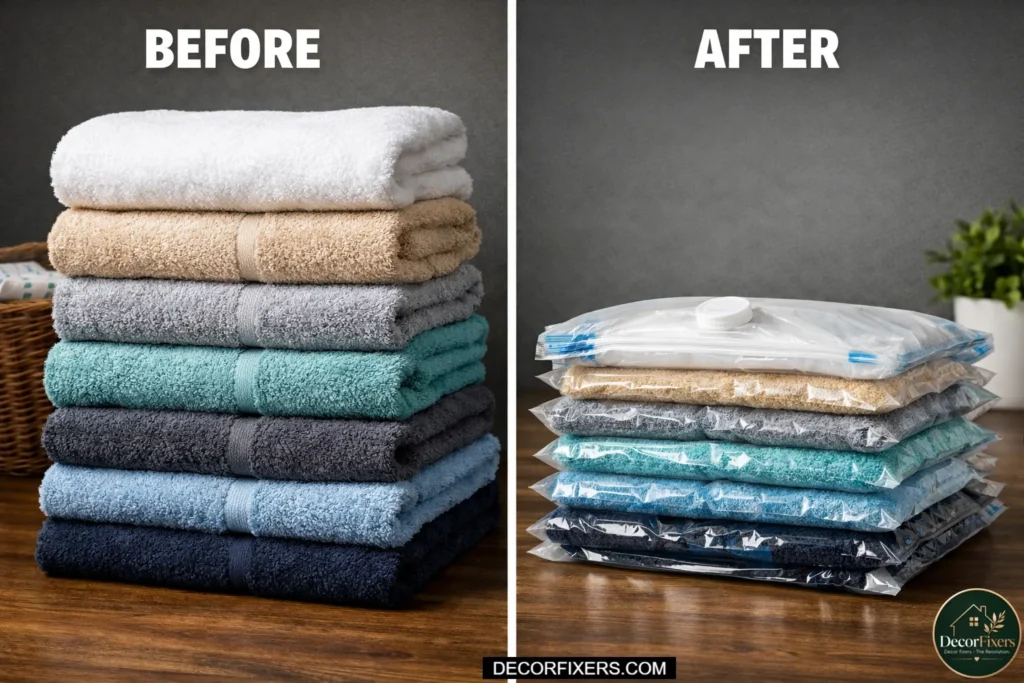
Guest towels, extra bath mats, and seasonal bathroom textiles take up a huge amount of closet space when stored in their original folded form. Vacuum compression bags shrink them down dramatically. One large shelf can suddenly hold twice as many towels. Or maybe I should say it this way: you’re not reducing what you own, you’re just collapsing the air out of it. These bags are completely reusable and cost less than $15 for a set.
16: Set Up a Minimalist ‘One In, One Out’ Rule
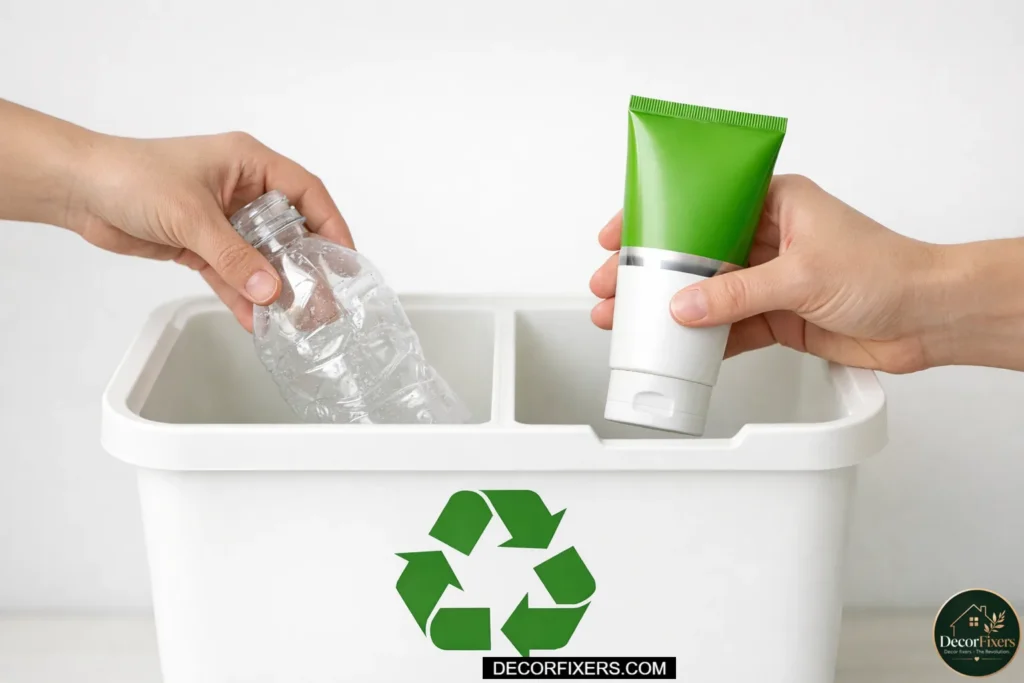
Every time a new product enters your bathroom closet, one old or empty one leaves. This rule sounds strict, but it’s the only system that prevents slow accumulation over time. People often have 4 half-empty face washes and 3 different shampoos, not because they’re disorganized, but because nothing ever leaves. The ‘one in, one out’ rule builds the discipline that no bin system can replace on its own.
17: Do a Monthly 5-Minute Closet Reset
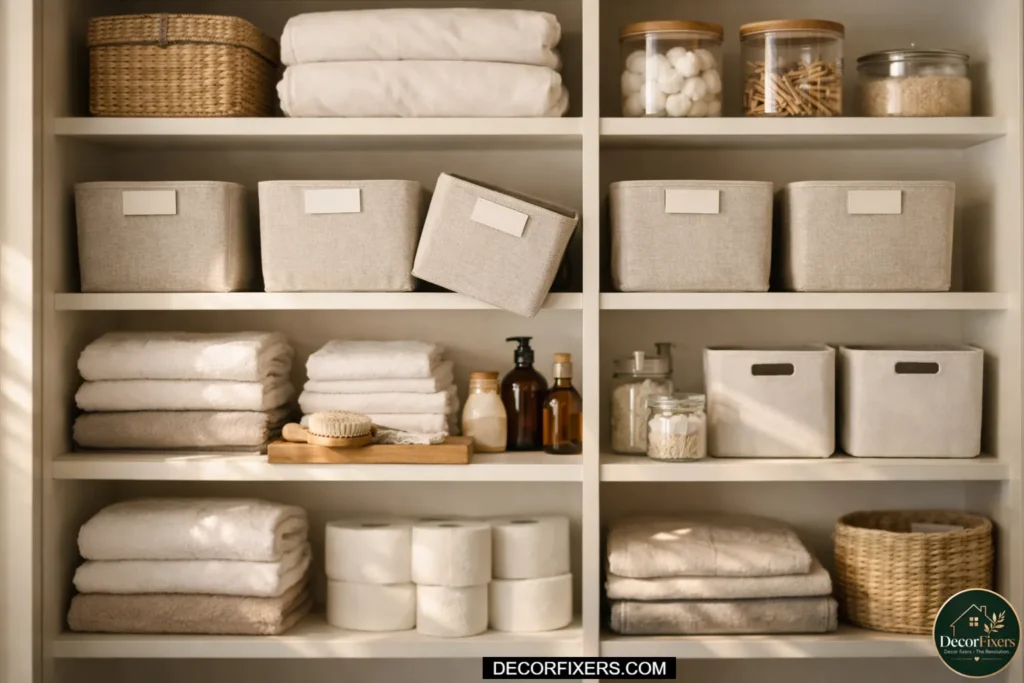
A full reorganization every few months is exhausting, and that’s why most people abandon their systems. Instead, schedule a 5-minute reset at the start of each month. Pull out anything that doesn’t belong. Toss expired products. Straighten the bins. That’s it. I’ve found that 5 minutes monthly prevents the 3-hour overhaul that happens when you ignore it for a year. Consistent small resets beat big annual overhauls every time.
18: Create a ‘Waiting to Leave’ Zone on the Bottom Shelf
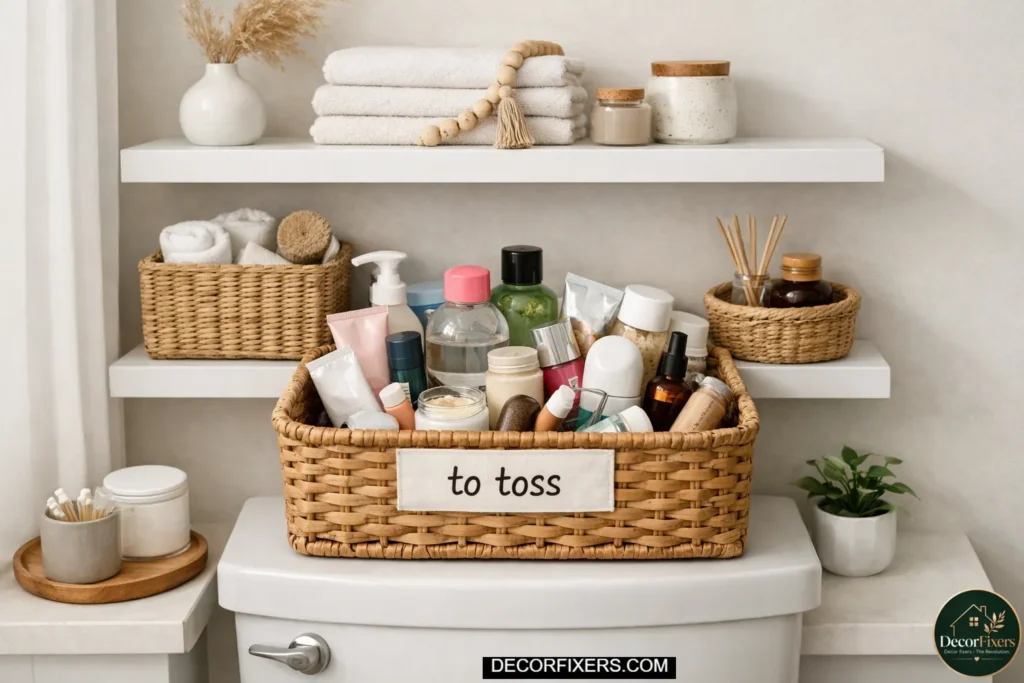
Products you’ve decided to stop using but haven’t tossed yet, almost-empty bottles, discontinued favorites, gifts you won’t use, tend to linger in closets for months. Give them a designated bottom-shelf ‘exit zone’ basket. Once the basket is full, everything in it goes. This removes the decision fatigue of figuring out whether something belongs or not every time you look at it.
19: Use Floating Shelves Above the Toilet for Overflow Storage
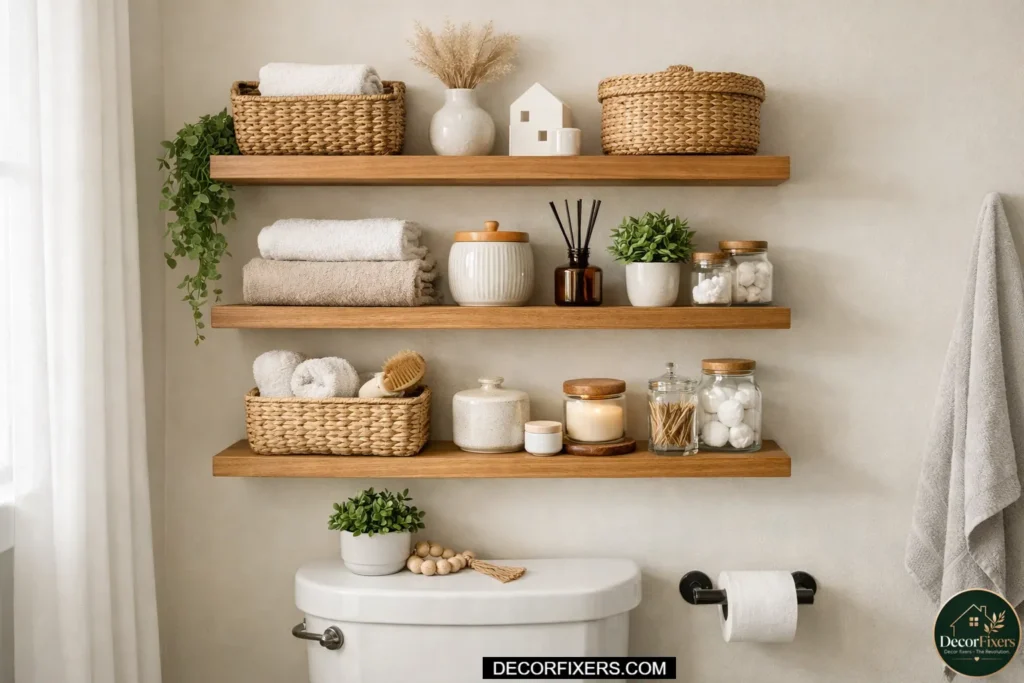
If your bathroom closet is truly tiny, floating shelves above the toilet create completely new storage real estate without taking floor space. Keep them at a comfortable height, use matching baskets on each shelf, and limit each shelf to one category. This wall space is almost always unused in standard bathroom layouts. Three small floating shelves can hold as much as a dedicated closet shelf, and they look intentional when styled simply.
20: Try the IKEA PAX System for a Custom Built-In Look
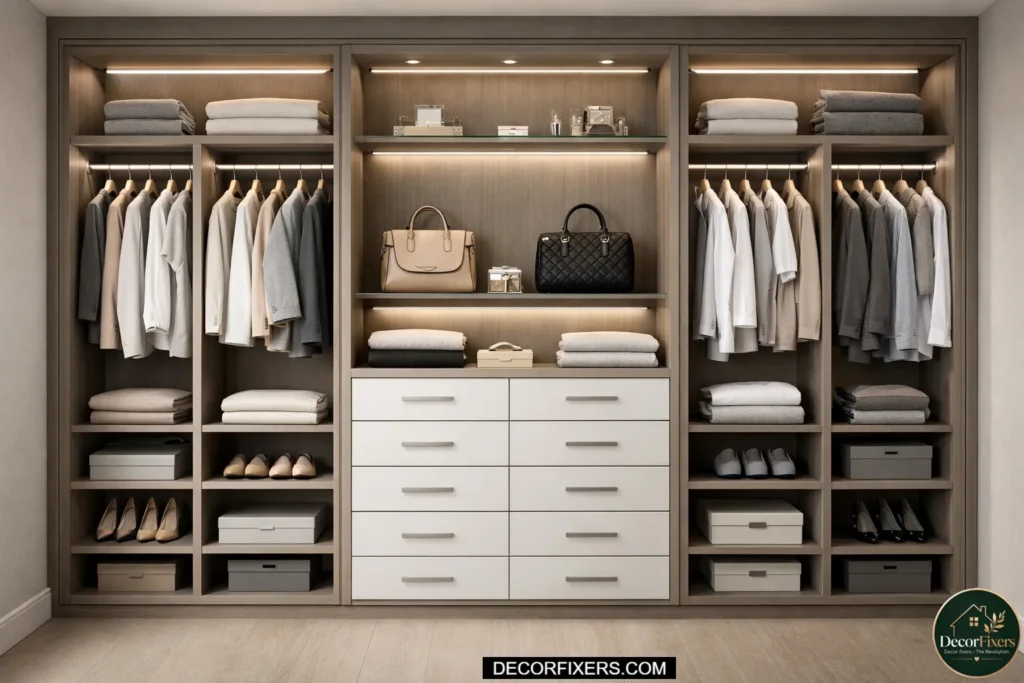
The IKEA PAX wardrobe system, especially paired with KOMPLEMENT interior accessories, is one of the most underrated options for bathroom closet organization. You can configure it to your exact closet dimensions, add shelves, drawers, and pull-out trays, and the whole thing looks like a custom-built-in at a fraction of the price. For a bathroom linen closet, the internal shelf dividers are particularly useful for keeping folded items separated.
21: Add a Slim Rolling Cart for Flexible Storage
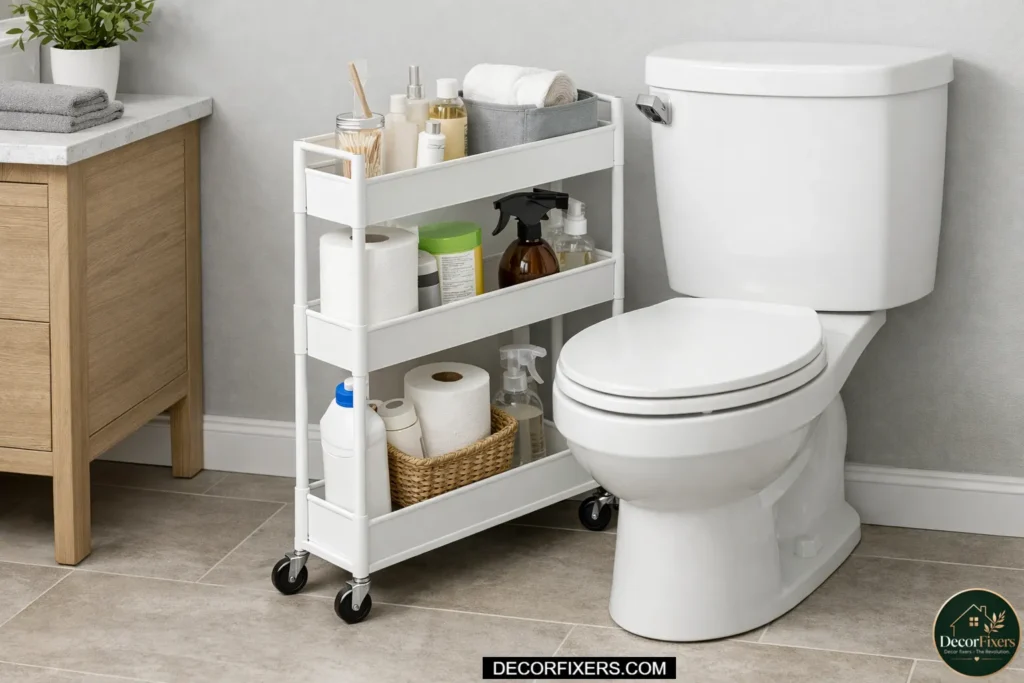
A slim rolling cart, the RÅSKOG from IKEA is a popular option, fits between the toilet and the wall, between shelves, or inside a wide closet. It’s especially useful in apartments where the bathroom has no built-in closet at all. Each tier holds a different category. Roll it out when you need it, tuck it back in when you don’t. It’s the most flexible, renter-friendly storage solution in this entire list.
22: Use a Mirror Cabinet to Combine Storage and Function
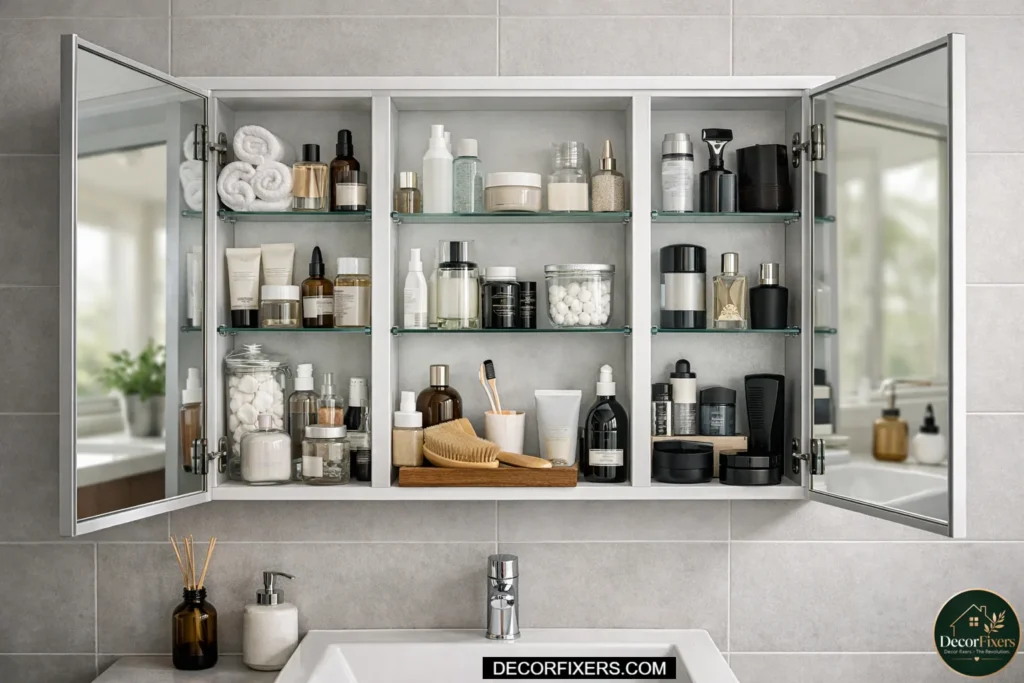
A mirror medicine cabinet above the sink does double duty; it’s a mirror you need anyway, and it adds hidden storage for daily essentials. This keeps your main closet reserved for less-frequent items. For small bathrooms especially, moving daily face care and toothbrushing supplies into a mirror cabinet keeps the main closet genuinely clutter-free. The Container Store and IKEA both offer clean, modern options at reasonable prices.
23: Adhesive Command Strips for Wall Hooks and Small Shelves
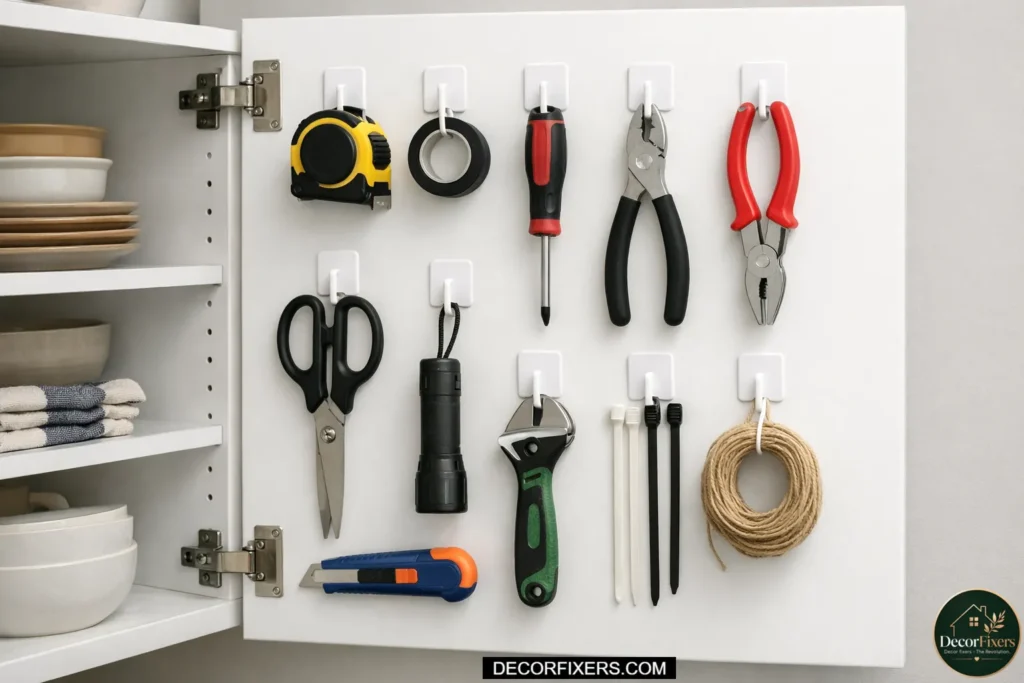
For renters who can’t put holes in walls, 3M Command strips are the go-to solution. They hold hooks, small shelves, and organizer rails securely without permanent damage. Use them inside cabinet doors for extra hooks, on the wall next to the mirror for a small shelf, or inside the bathroom closet frame for an over-door rack that won’t scratch. They remove cleanly when you move, which matters more than most renters remember when they’re decorating.
24: Freestanding Bathroom Storage Units That Need No Installation
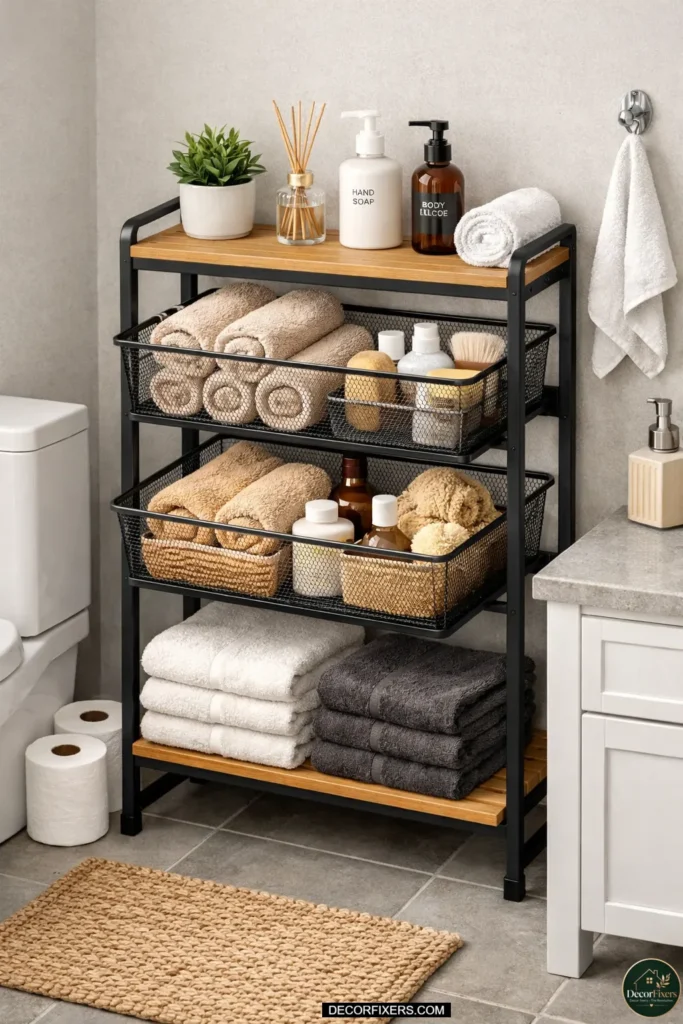
Freestanding storage towers, étagères over the toilet, and ladder shelves all add significant storage capacity without any installation. They work especially well in bathrooms where the closet is too small or doesn’t exist. Look for ones with adjustable shelves so you can customize them to your product heights. A well-placed freestanding unit can replace the function of a built-in closet in most small apartments.
25: Tension Rod Curtains to Create a ‘Hidden Closet’ Under a Vanity
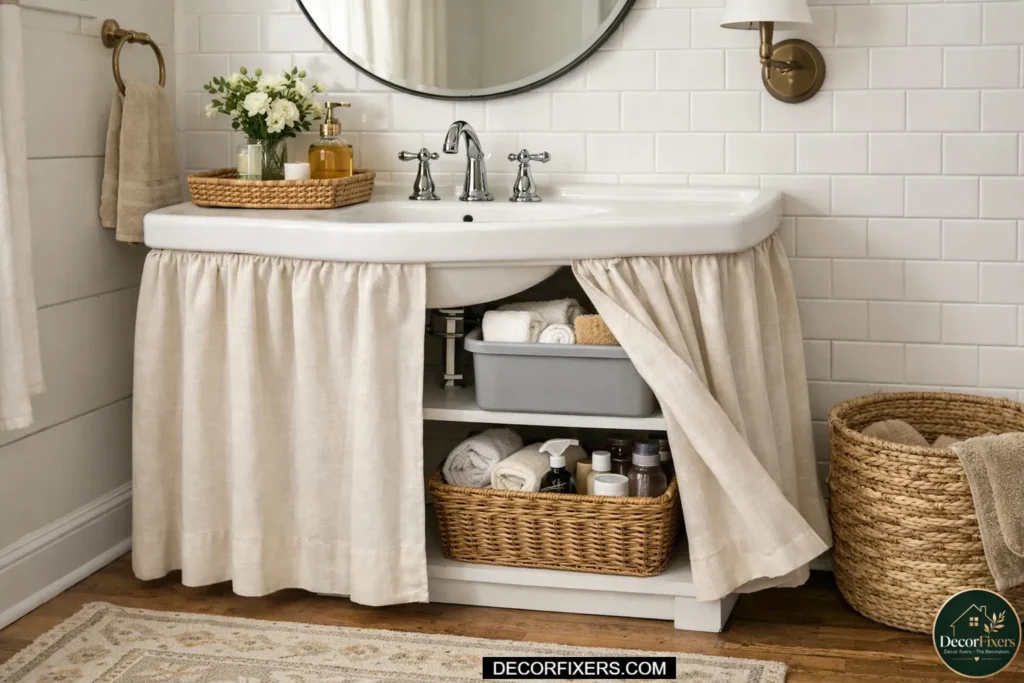
If your bathroom has a pedestal sink with no cabinet underneath, a simple tension rod and fabric panel creates instant hidden storage. Hang the rod, add a piece of fabric that reaches the floor, and use the space behind it for a rolling cart, bins, or a small shelving unit. It’s inexpensive, completely removable, and adds a surprising amount of functional storage in a space that otherwise has none.
26: Stick to a Two-Tone Color Palette for All Containers
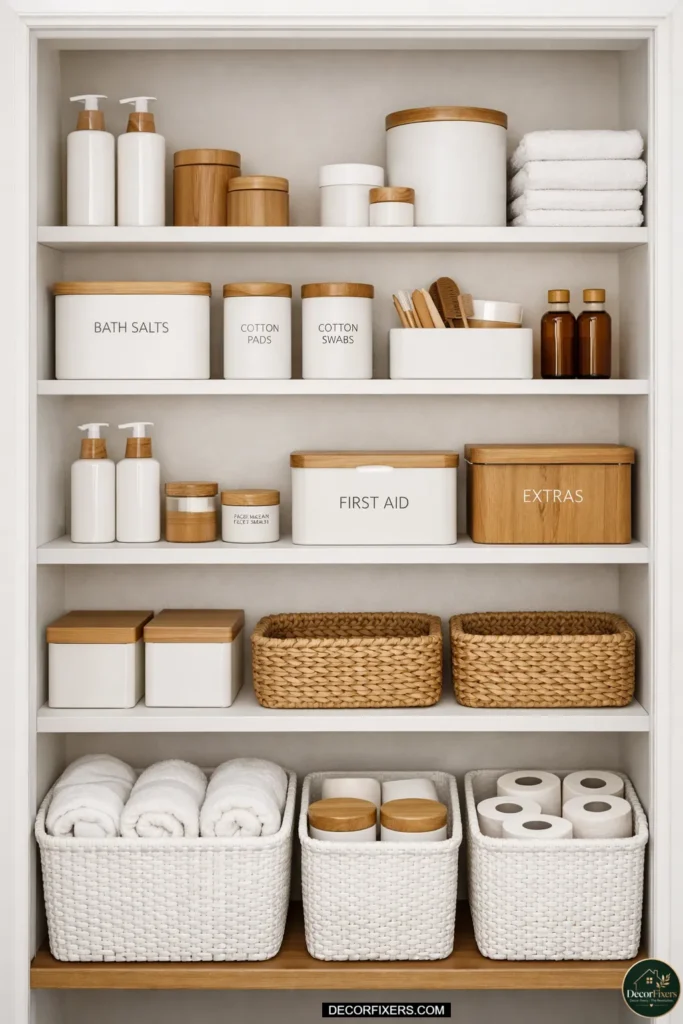
Visual calm in a bathroom closet comes from color consistency more than anything else. Pick two neutrals, white and natural wood, or white and black, or sage green and white, and buy all your bins, baskets, and trays in only those two tones. Mixed colors, even in matching containers, create visual noise that makes an organized closet feel chaotic. Two tones are the rule. It’s strict, and it works every time.
27: Add a Single Tray on the Most-Used Shelf as a Visual Anchor
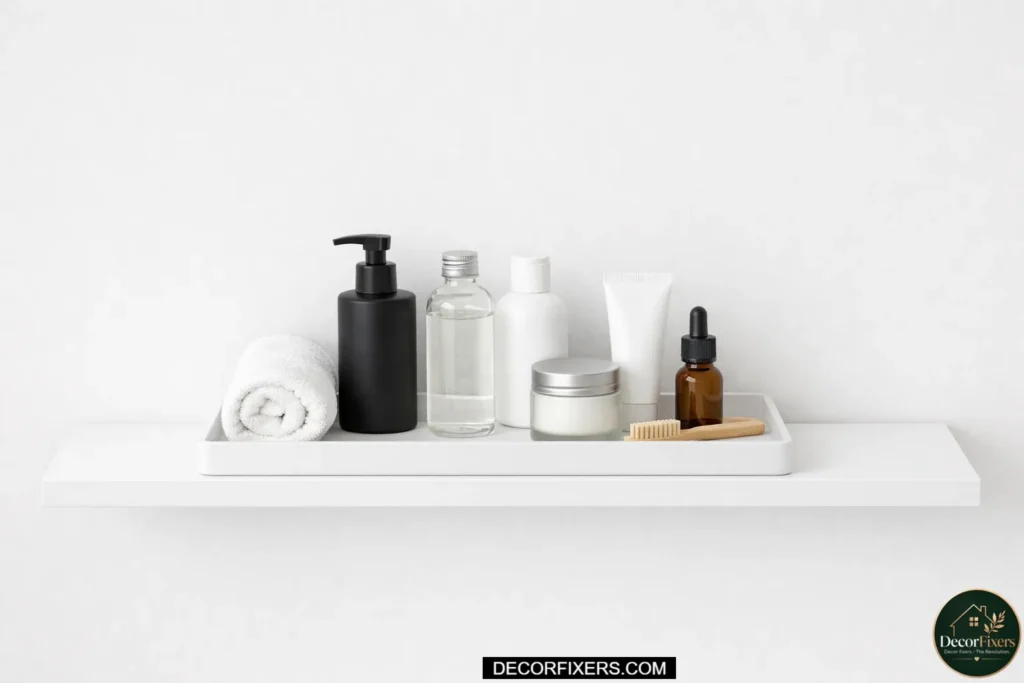
A tray on your main shelf creates a boundary, it defines the space and signals ‘this is where these items live.’ Products placed on a tray look arranged rather than placed randomly, even when you’re in a rush. White marble trays, matte black trays, and natural wooden trays all work well in a minimalist bathroom closet. The tray itself costs almost nothing. The difference it makes is disproportionate to its price.
28: Add a Small Eucalyptus Bundle or Single Candle on the Top Shelf
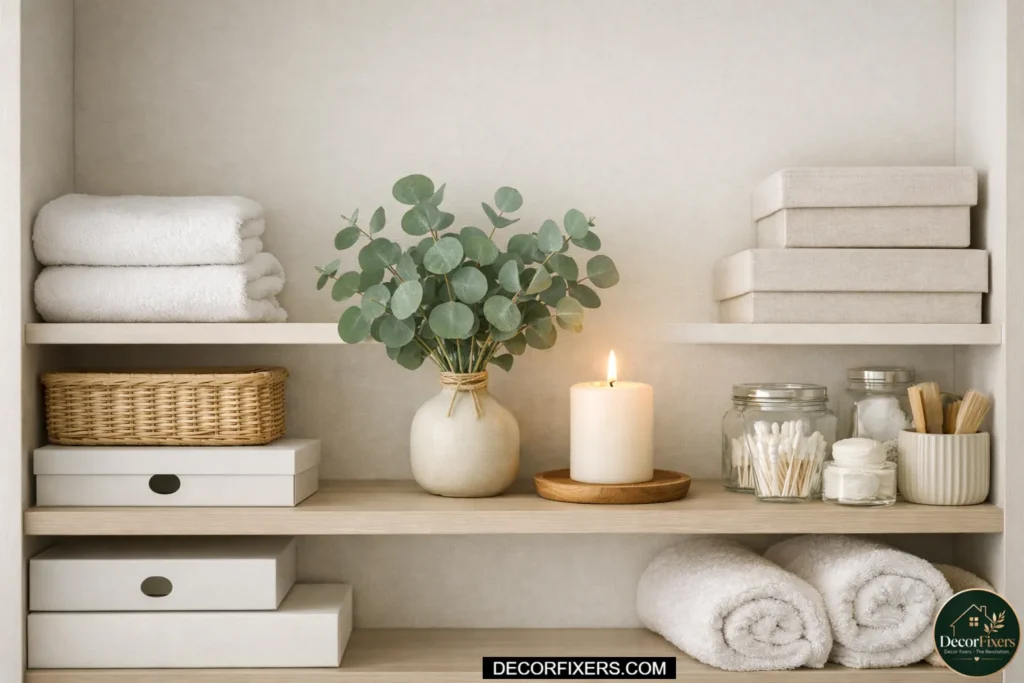
Look, if you’re going to spend time making your bathroom closet beautiful, give yourself one small reward for maintaining it. A dried eucalyptus bundle, a small candle, or a single plant cutting on the top shelf turns your closet from a storage unit into something that feels intentional and calm. It’s not decoration for decoration’s sake. It’s a psychological signal to yourself that this space is worth maintaining.
Quick Comparison:
Here’s a side-by-side look at the top system options based on real use cases:
| Option | Best For | Key Benefit | Limitation |
| IKEA PAX + KOMPLEMENT | Budget-conscious renters & owners | Modular, affordable, widely available | Requires measuring; some assembly |
| Container Store Elfa | Homeowners wanting a custom fit | Tool-free, fully adjustable shelving | Higher price point |
| iDesign Linus Bins | Quick wins on existing shelves | Clear, stackable, Amazon-accessible | Not a full system; shelves not included |
| Floating Wall Shelves | Renters with bare walls | No closet needed; adds vertical space | Requires drilling or a strong adhesive |
How to Set Up a Minimalist Bathroom Closet System From Scratch
To set up a minimalist bathroom closet, follow these 5 steps:
- Step 1: Empty the closet completely and group everything by category on the floor.
- Step 2: Throw out expired products and anything you haven’t used in 3 months.
- Step 3: Assign shelves by frequency, daily items at eye level, rarely used items up top.
- Step 4: Measure shelves and buy matching bins or baskets that actually fit your dimensions.
- Step 5: Label everything, do a 5-minute reset monthly, and follow the ‘one in, one out’ rule.
One Thing Most Bathroom Organization Guides Get Wrong
Most people assume more storage equals more organization. The data says otherwise. Having more bins and baskets without a zone system just gives your clutter more places to hide. I’ve seen conflicting advice on this; some organizers say buy the system first, others say declutter before spending anything. My read is this: spend 20 minutes sorting by frequency of use before you buy a single product. That sorting session is the real work. The bins are just the finishing touch.
Some experts argue that a fully matching container system is unnecessary and that using what you already have is more sustainable. That’s valid for households on a tight budget. But if you’re dealing with a closet that’s already tried the ‘whatever fits’ approach and failed, investing in a cohesive system pays back in daily time saved and mental clarity, which has its own value.
HELPFUL FOR TINNY BATHROOM: Small Bathroom Decor Ideas: 25 Ways to Make Tiny Spaces Look Bigger
Conclusion:
Here’s what I want you to take away from all 28 of these ideas: organization is not a one-time event. It’s a system you build once and maintain in small, regular doses. The people who have beautiful, calm bathroom closets aren’t more disciplined than you; they just have a structure that works with human nature instead of against it.
The most important thing I’ve learned from thinking deeply about this topic is that the zone-based approach, daily, weekly, rarely used, is the foundation on which everything else rests. Get that right first. Then add the right containers. Then label them. Then commit to the monthly 5-minute reset. In that order.
For renters worried about permanent changes: you have more options than you think. Command strips, tension rods, over-door organizers, and freestanding units mean you can build a genuinely functional minimalist closet system in any apartment without leaving a mark on the walls.
For homeowners with more flexibility, the IKEA PAX system and The Container Store’s Elfa shelving are genuinely worth the investment if you want the closet to feel like a built-in. They’re modular, they last, and they adapt as your storage needs change over the years.
And for everyone who’s tried organization before and watched it fall apart within a week: it wasn’t a willpower problem. It was a system problem. The right system, zoned, labeled, and maintained with just a few minutes a month, doesn’t require willpower because it doesn’t rely on it.
Your bathroom closet is a space you open every single day. Make it something that sets the tone for the morning instead of something that adds friction to it. Pick two or three ideas from this list that fit your space and your budget, start there, and build the rest out slowly. A calm closet is closer than you think.
FAQs:
Q: What’s the best way to organize a small bathroom closet with limited shelves?
A: Use vertical space aggressively, add a door organizer, use under-shelf hanging bins, and stack items vertically. Assign each shelf one category only. A slim rolling cart beside the closet can double your effective storage immediately.
Q: How do I keep my bathroom closet organized long-term?
A: Do a 5-minute reset at the start of each month. Follow a ‘one in, one out’ rule for new products. Keep an ‘exit zone’ basket for products you’ve stopped using, and clear it when it’s full. Consistency beats perfection every time.
Q: Should I buy IKEA storage or The Container Store for bathroom closets?
A: IKEA is better for renters and budget-conscious shoppers, especially the PAX system for linen closets and TJENA boxes for backups. The Container Store’s Elfa works better if you want a fully customized, tool-free installation with long-term flexibility. Both are genuinely good. It comes down to budget and how permanent you want the setup to feel.
Q: Why does my bathroom closet always get messy again after I organize it?
A: Because there’s no system, only tidying. When items don’t have assigned homes, specific shelves, or bins for specific categories, they drift. Add labels. Assign every item a permanent location. The closet will stay organized because the structure enforces it, not your willpower.
Q: When should I do a full bathroom closet declutter?
A: Twice a year, once in January and once before summer. Check expiration dates on all products, remove anything you haven’t used since the last declutter, and reassess your zone assignments if your routine has changed. Monthly 5-minute resets handle the day-to-day; the semi-annual session handles the big reset.
reset.

Creator of DecorFixers, sharing practical home and interior ideas focused on real-life usability, simple design improvements, and budget-friendly solutions.
4 thoughts on “28 Modern Minimalist Bathroom Closet Organization Ideas”