

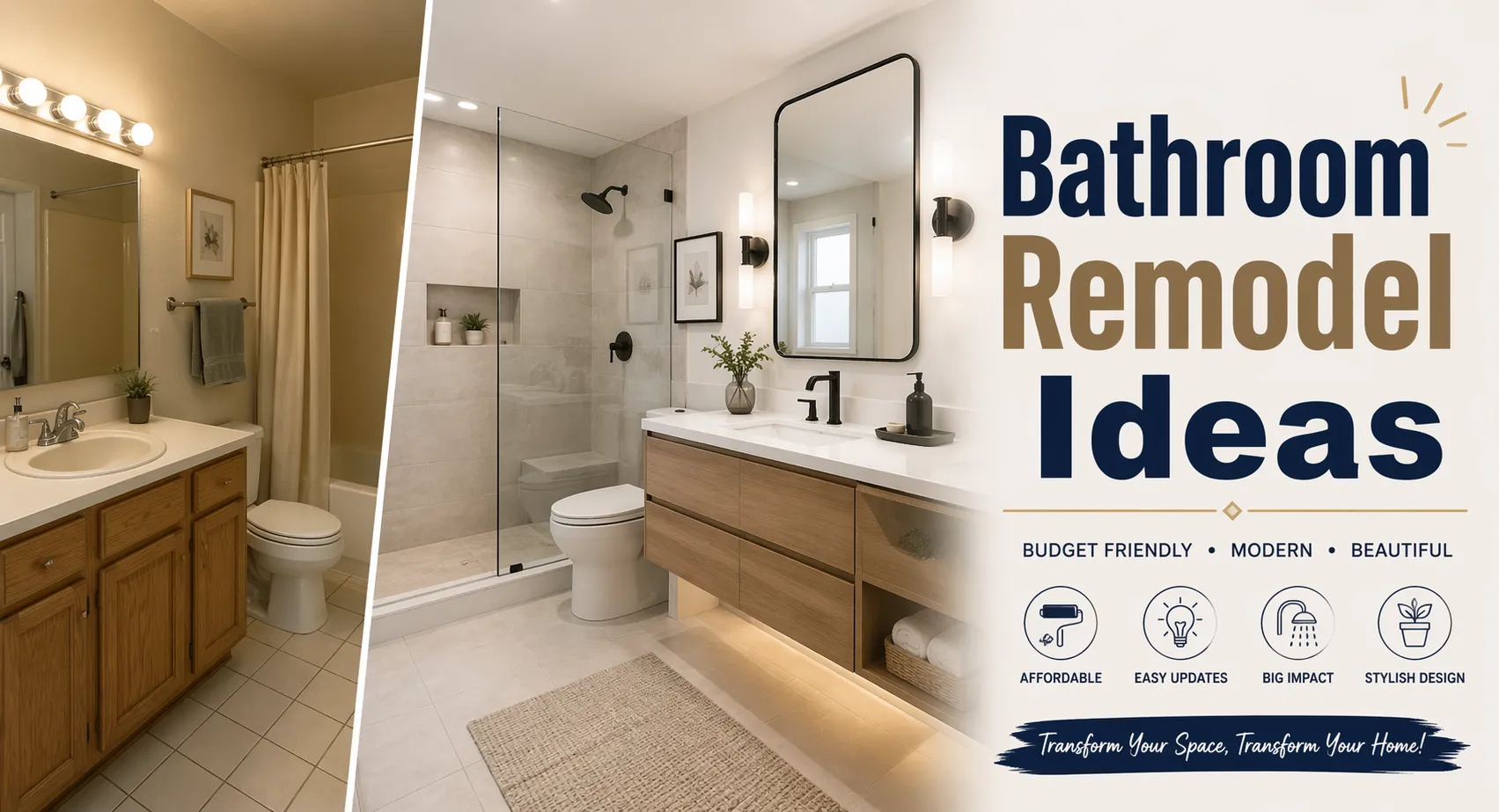
Bathroom remodels are among the most searched home improvement topics, and honestly, I get why. The space sees daily use, shows wear faster than any other room, and has a direct impact on how your home feels to live in. I’ve seen homeowners completely transform how they feel about their house just by fixing the one room they dreaded walking into every morning.
According to the U.S. Bathroom Trends Study, the median spend on minor bathroom remodels for smaller bathrooms sits around $6,000, making the $3,000–$8,000 window the most common sweet spot for middle-class homeowners doing real cosmetic upgrades without touching the plumbing layout.
In my experience, most people searching for bathroom remodel ideas aren’t planning a gut renovation. They want to know: what makes the biggest visual difference for the least money? That’s exactly the right question, and it’s what I’m going to answer here with actual numbers, not vague ranges.
1. Repaint with a spa-inspired color palette
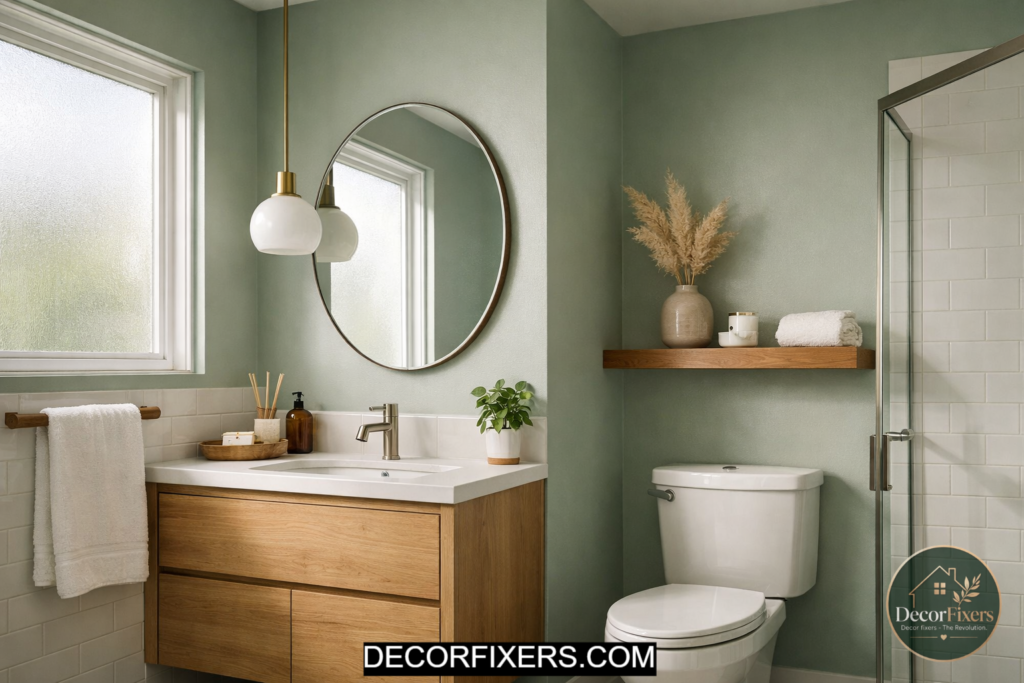
A single gallon of moisture-resistant paint runs $35–$60. Soft sage, warm beige, or muted slate blue are the 2025 colors dominating renovations, and they make old tile look intentional rather than tired.
2. Swap out the vanity light bar
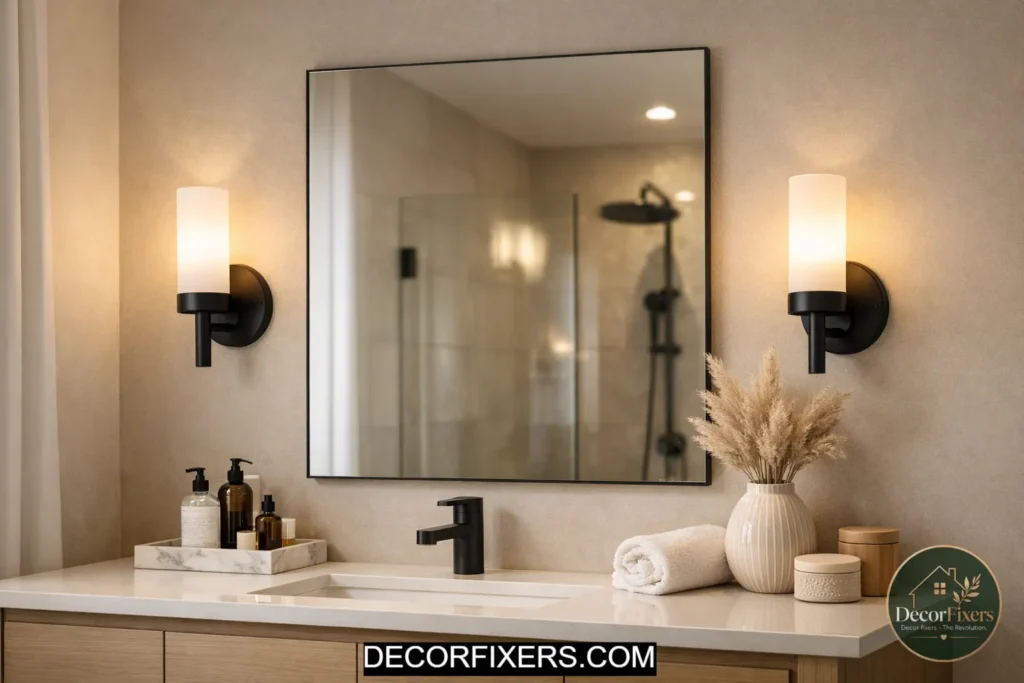
Builder-grade Hollywood-strip lights are the fastest way to make a bathroom feel dated. A wall sconce set from brands like Moen or Progress Lighting runs $80–$180 and takes under an hour to install if you’re comfortable with basic wiring.
3. Replace the faucet and showerhead
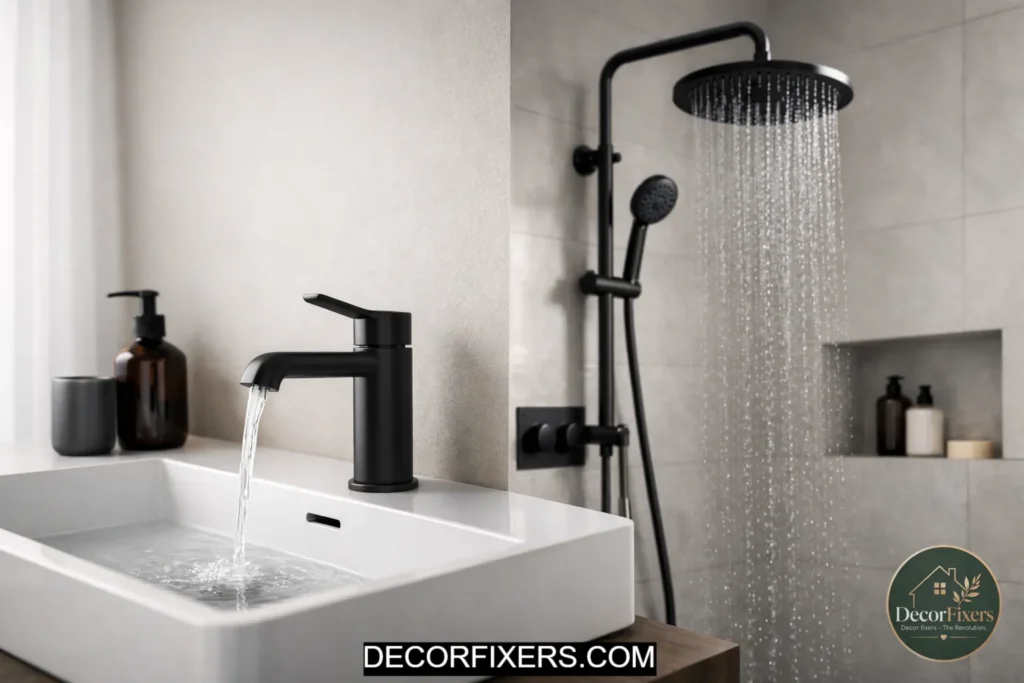
The Delta Lahara or Moen Attract collections run $80–$160 each and are widely available at Home Depot or Lowe’s. In my view, brushed nickel and matte black are the finishes worth investing in; chrome reads as builder-grade the moment someone looks closely.
4. Add a frameless mirror or a statement mirror
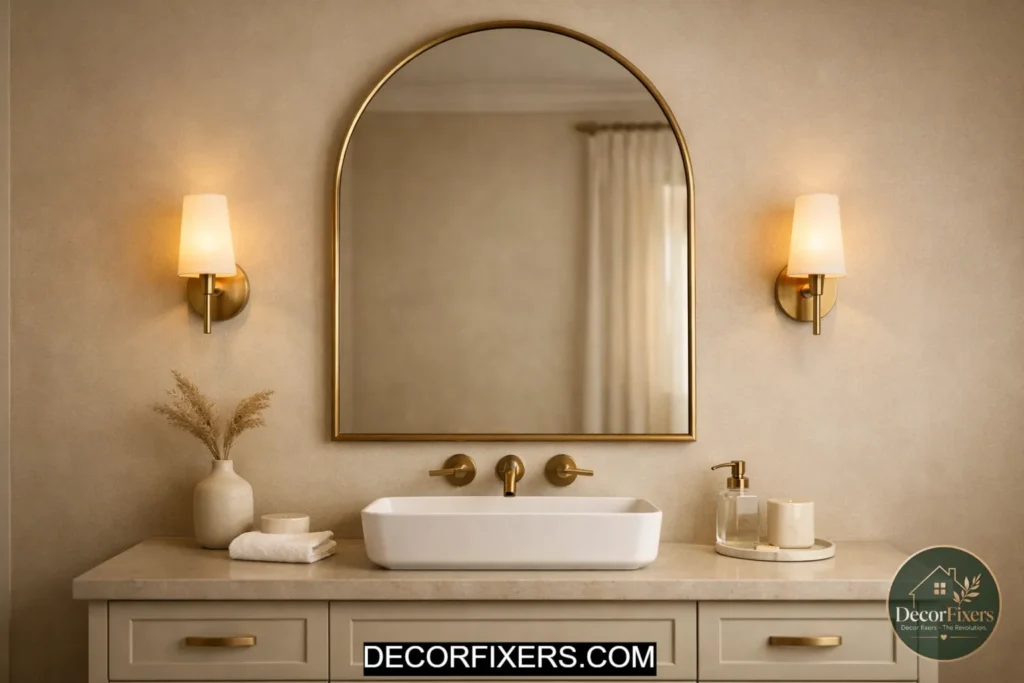
This one sounds minor. It isn’t. A builder mirror above a vanity is often glued directly to drywall, replacing it with a framed or arched mirror for $60–$150 changes the entire visual weight of the room.
What is a bathroom remodel?
A bathroom remodel is any project, cosmetic or structural, that updates the look, layout, or function of a bathroom space. It can range from a weekend paint job to a full gut renovation, replacing tile, fixtures, plumbing, and vanity.
5. Regrout tile and recalk the tub surround
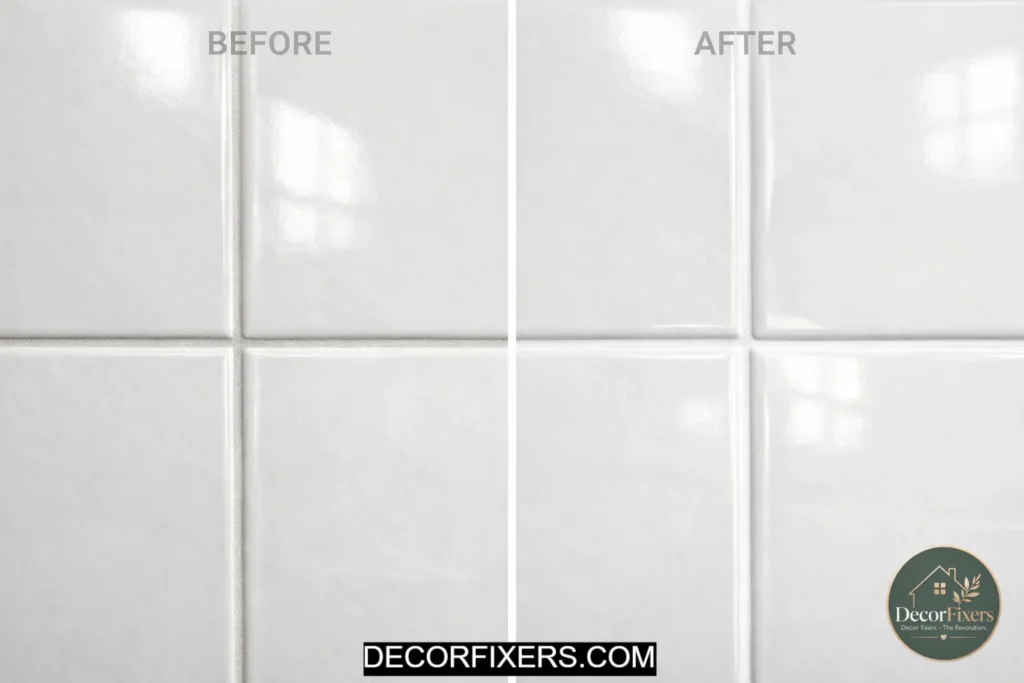
Grout gets discolored. Caulk gets moldy. Cleaning, removing, and reapplying both costs under $40 in materials. The result looks like a new tile. I genuinely cannot overstate how much this gets underestimated.
6. Install floating shelves for open storage
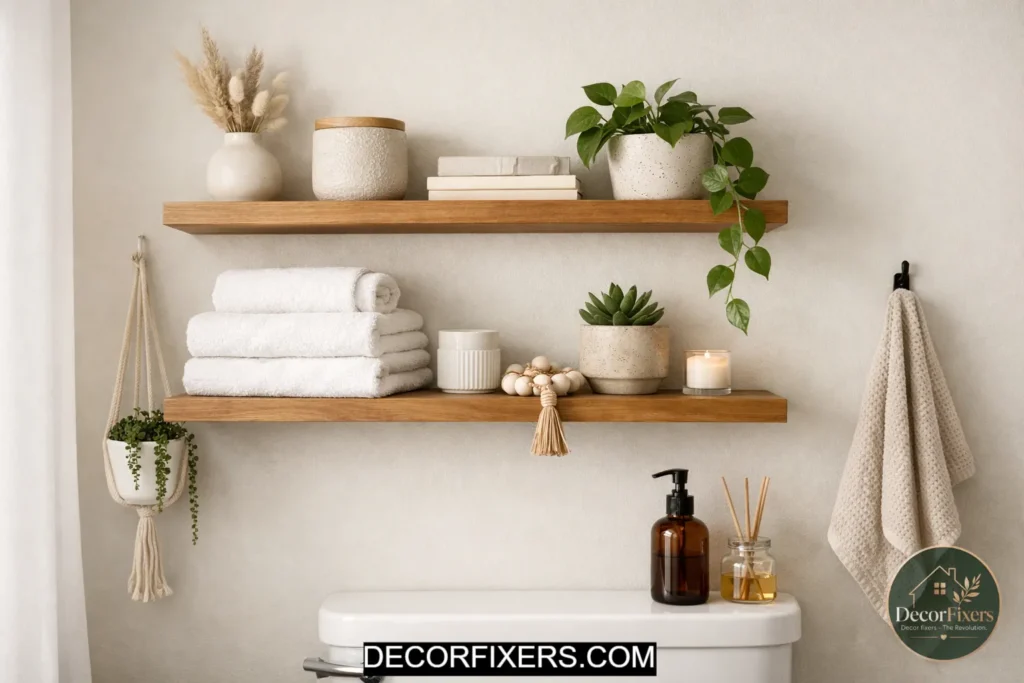
Natural wood floating shelves, real or faux, run $25–$60 each and solve two problems at once: you get storage, and you get the warm-material aesthetic that makes bathrooms feel intentional rather than functional. Two birds, one shelf.
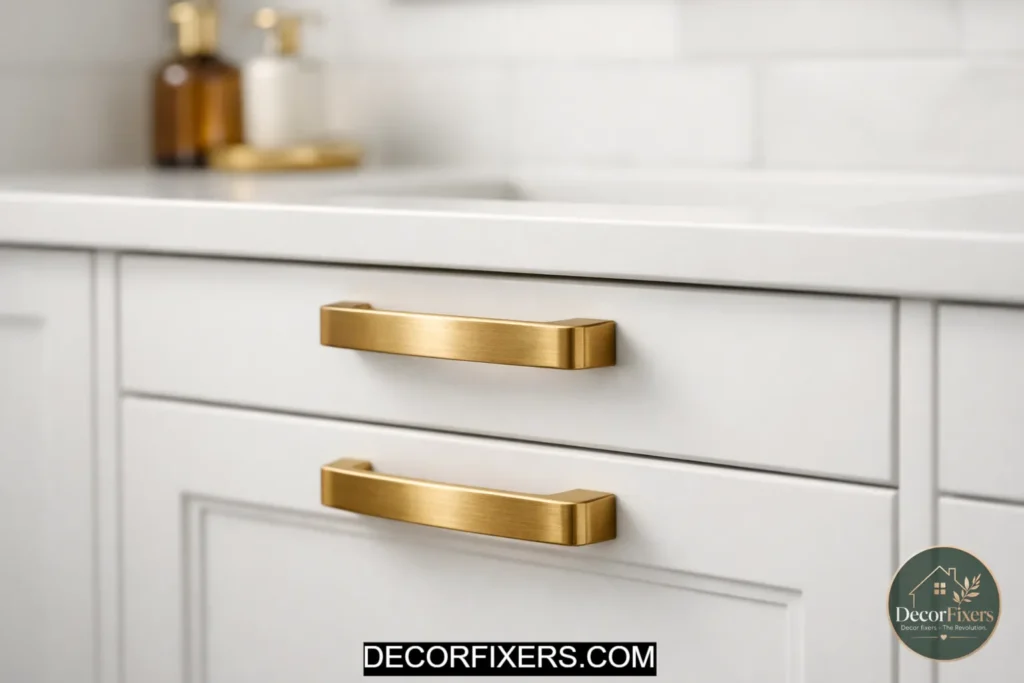
7. Upgrade cabinet hardware
How Much Does a Bathroom Remodel Really Cost? (Middle-Class Price Breakdown)
The internet loves to show $30,000 spa bathrooms. Useful for exactly no one on a real budget.
Here’s my grounded breakdown by scope, what each tier actually includes, and what it costs with and without a contractor. I’ve pulled these ranges from real project data, not showroom estimates:
Every knob and pull on a bathroom vanity can be replaced in 20 minutes with a screwdriver. Matte black or brushed brass sets run $3–$12 per piece. Cheap and transformative.
8. Replace the vanity entirely
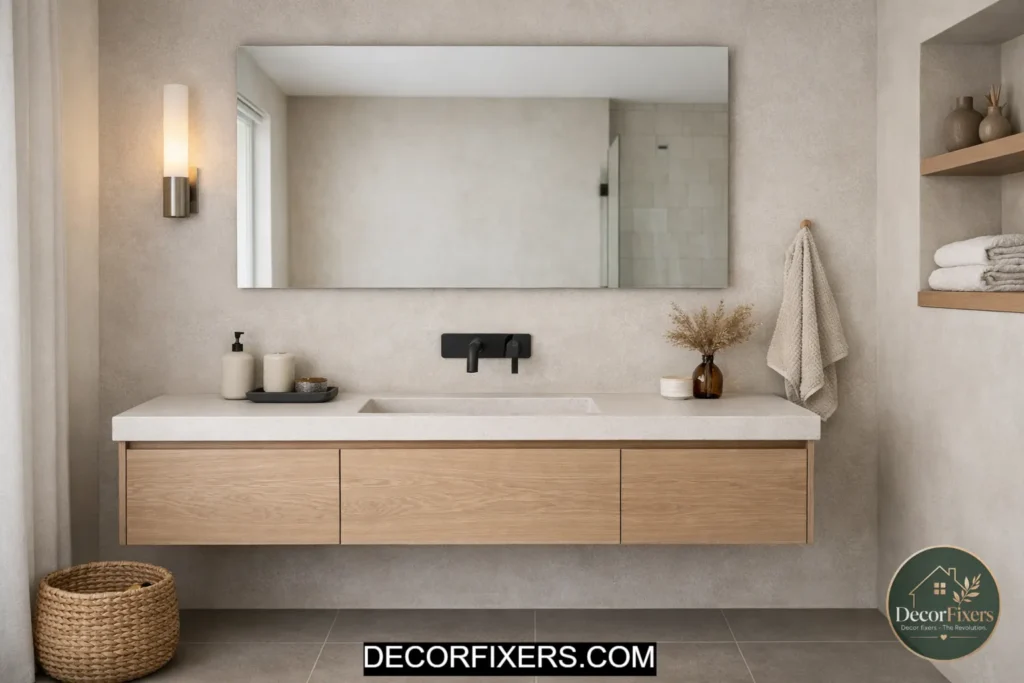
The IKEA GODMORGON series ($200–$600) is the best-kept secret in bathroom remodeling. It’s flat-pack, DIY-friendly, comes in multiple widths, and pairs with IKEA’s own undermount sinks. Add a quartz or stone-look countertop from a local fabricator ($150–$300), and you have a custom-looking vanity for under $1,000.
The biggest variable in any remodel isn’t materials, it’s whether you move plumbing. Don’t move plumbing. Design around it.
Here’s a counter-intuitive insight I keep coming back to: Bathroom vanity replacement delivers more perceived value per dollar than tile work, because it’s the first thing people see when they walk in. A $400 IKEA GODMORGON vanity with a $60 mirror and new hardware can transform a bathroom faster than $1,500 worth of new floor tile. I’ve watched homeowners prioritize tile and regret it.
9. Tile a shower accent wall
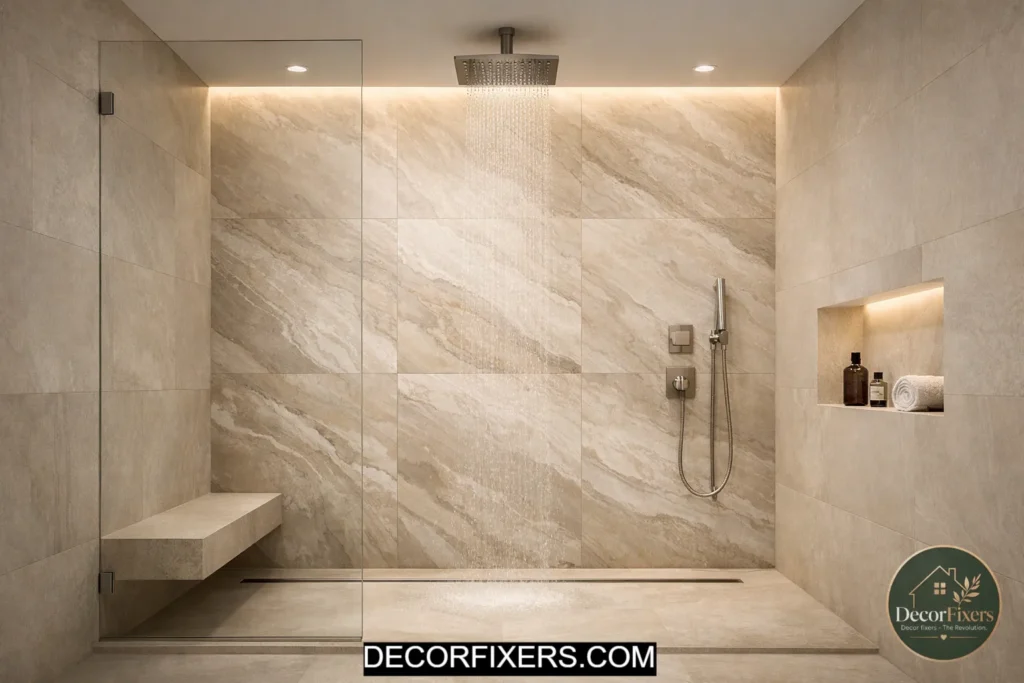
Full retiling is expensive. One accent wall, usually the back wall of a shower, costs $300–$800 in materials and a weekend of work if you’re DIY-comfortable. Large-format tiles (12×24″ or bigger) from Marazzi or MSI run $1–$3/sq ft and read as high-end.
How to Tile a Shower Accent Wall (DIY Steps)
To tile a single shower wall, follow these steps:
- Remove existing tile or prep the surface with cement board.
- Apply a waterproofing membrane using a Schluter KERDI system ($120–$200).
- Set tiles with polymer-modified thinset, starting from the center, and work outward.
- Let it cure for 24 hours, then apply unsanded grout for joints under 1/8″.
- Seal grout after 72 hours with a penetrating silicone sealer.
10. Add a walk-in shower conversion
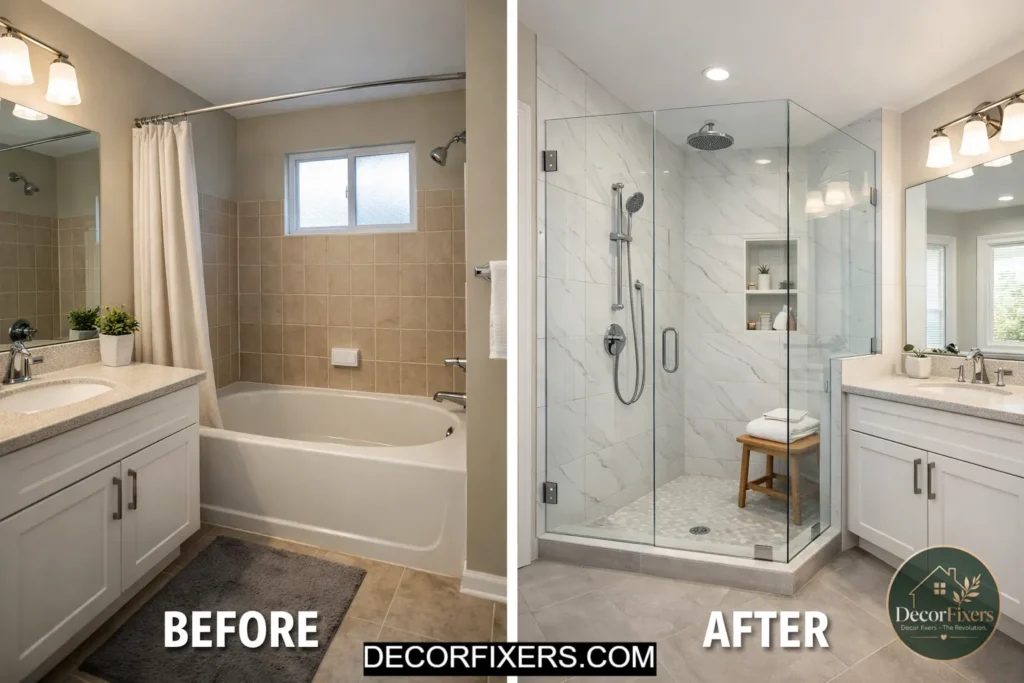
Converting a tub-shower combo to a dedicated walk-in shower is the 1 upgrade homeowners plan for aging-in-place, and it opens up the room visually. Budget $1,500–$3,000 DIY, $4,000–$6,500 with a contractor.
Quick Comparison:
| Remodel Type | DIY Cost | With Contractor | Best For |
| Cosmetic refresh (paint, fixtures, accessories) | $300–$800 | $1,000–$2,500 | Dated but functional bathrooms |
| Vanity + mirror + lighting swap | $500–$1,200 | $1,500–$3,500 | Builder-grade spaces feel cheap |
| Full tile + shower upgrade (no plumbing move) | $1,500–$3,500 | $4,000–$7,000 | Old tile, cramped showers |
| Complete gut remodel (same layout) | $4,000–$7,000 | $8,000–$15,000 | Fully outdated bathrooms |
| Layout change (moving plumbing) | $7,000–$12,000 | $15,000–$25,000+ | Structural reconfiguration |
The single b
11. Install a new toilet
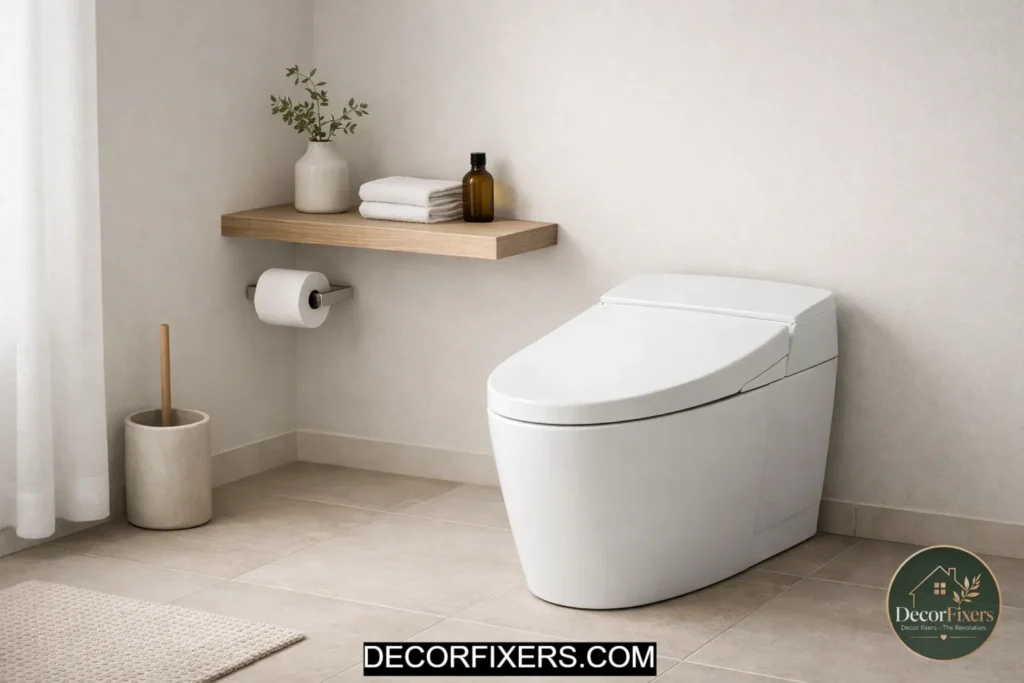
A standard builder toilet runs $120–$180. An elongated comfort-height model from Toto or American Standard runs $300–$500, and dramatically improves daily comfort. Often overlooked because people think it’s complicated. It isn’t.
12. Add a heated floor under a small area
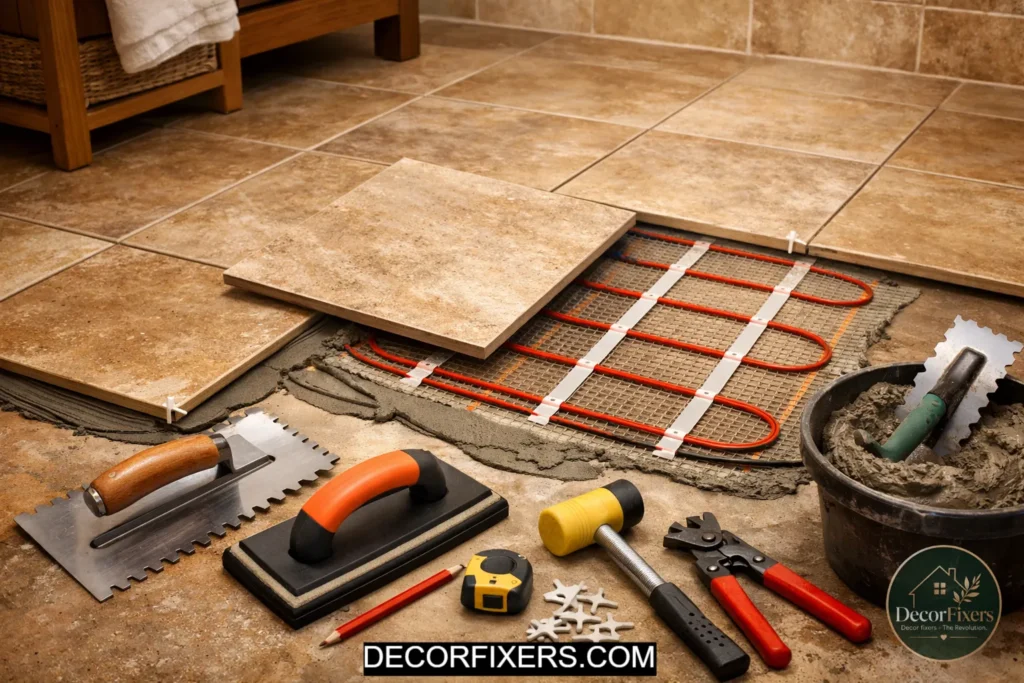
Electric radiant mat systems for a 40-sq-ft bathroom run $150–$300 in materials. They go under tile, not under subfloor, so no major demo is required. On a middle-class remodel budget, this is a disproportionately luxurious upgrade.
13. Replace the exhaust fan
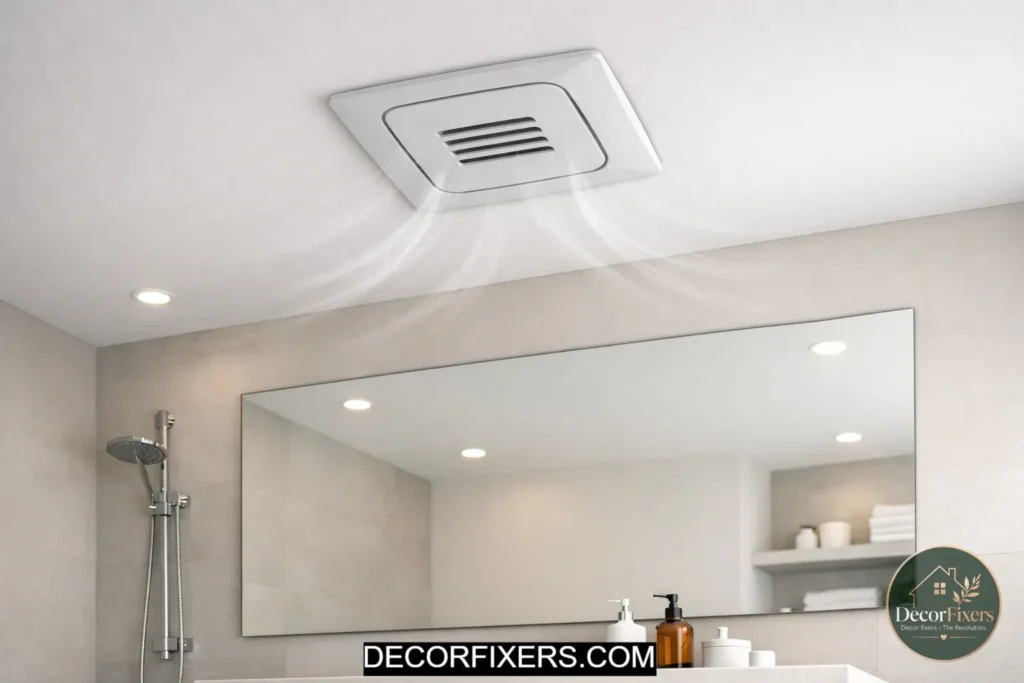
Old bathroom fans are usually undersized and loud. A Broan or Panasonic WhisperCeiling model ($60–$150) moves more air, runs quieter, and prevents the mold damage that quietly destroys bathrooms over time.
14. Install recessed medicine cabinet storage
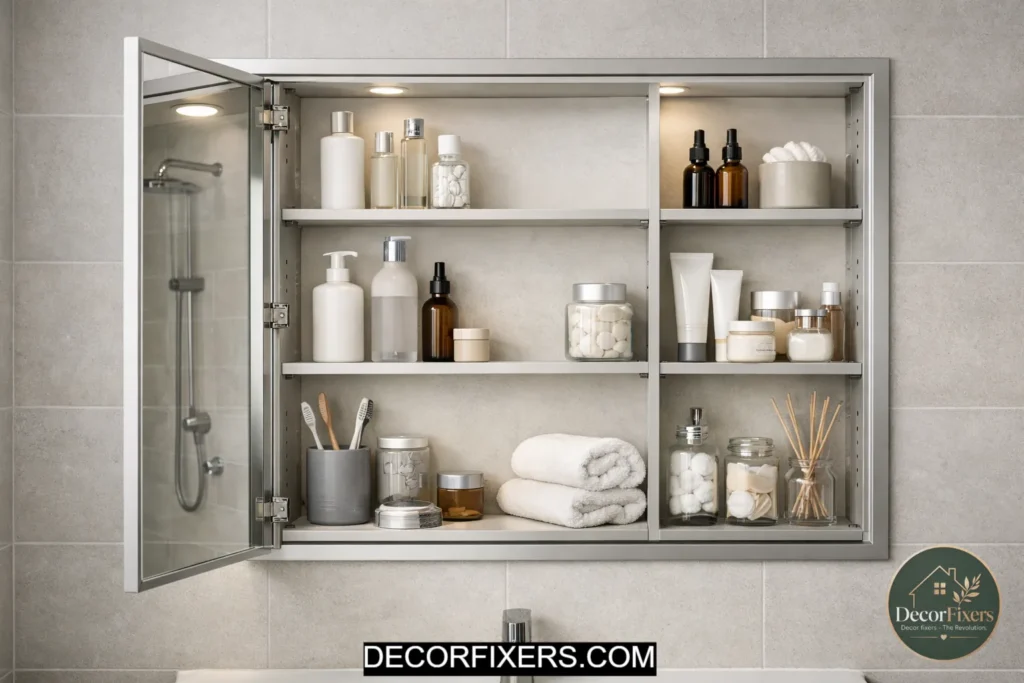
A flush-mount medicine cabinet with a mirrored door runs $80–$250. It reclaims 3.5″ of wall depth for storage, removes counter clutter, and makes small bathrooms feel less cramped.
15. Full floor tile
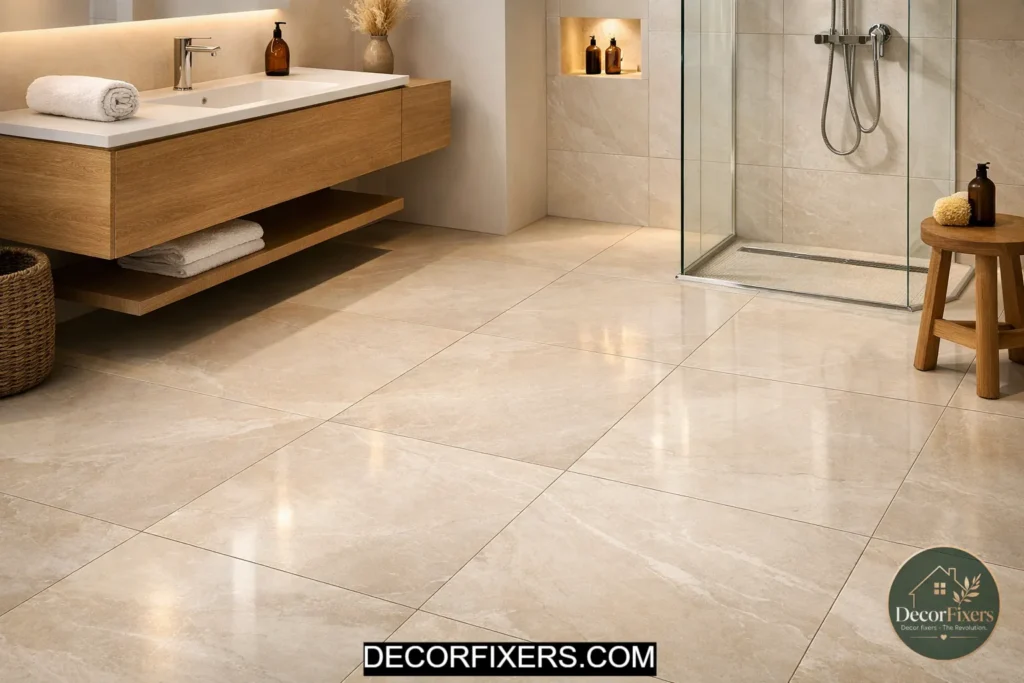
Porcelain or ceramic floor tile from MSI or Marazzi costs $1–$3/sq ft. Labor adds $4–$8/sq ft if hired. A 50-sq-ft bathroom floor tile runs $600–$1,500 in materials, $800–$2,000 with a tile installer.
16. Full tub surround retile
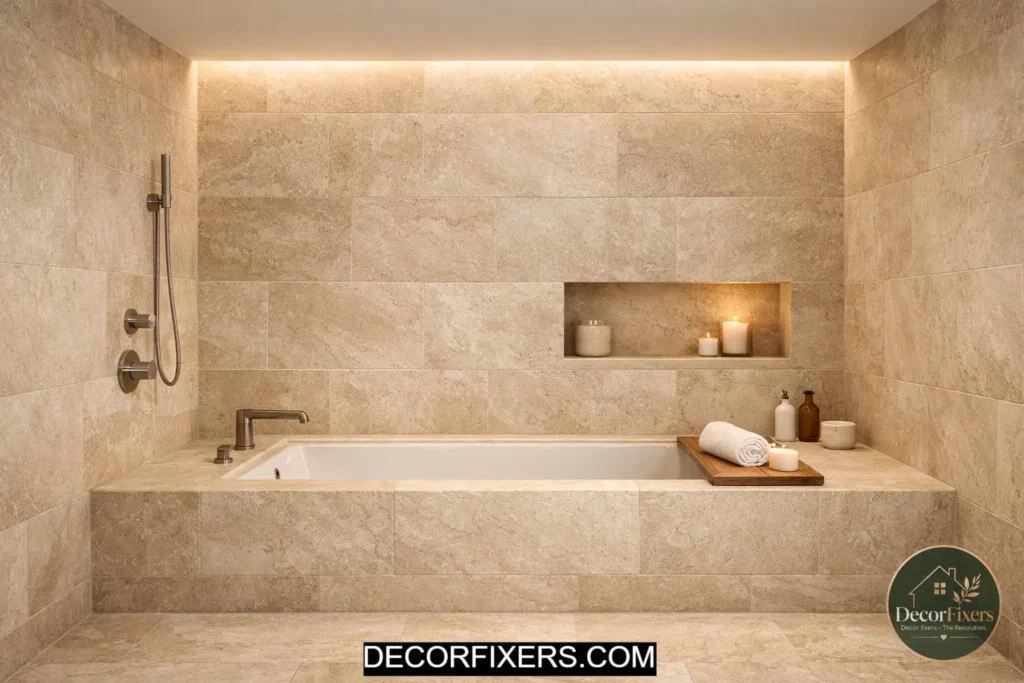
Same math as floor tile, the three walls around a standard tub measure roughly 80–100 sq ft. Budget $1,000–$2,500 in materials. Tile drenching, matching your floor and wall tile, is a move I personally love because it makes a bathroom feel curated rather than assembled from separate decisions.
17. Install a soaking tub or freestanding tub
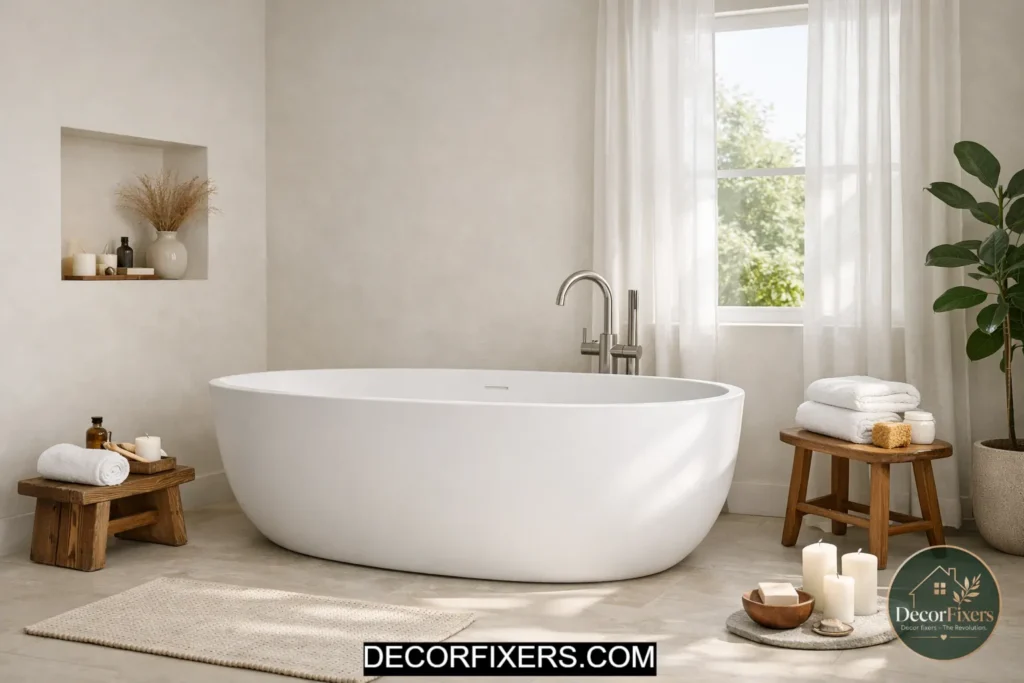
A freestanding acrylic soaking tub runs $400–$1,200. If your plumbing is already positioned for a tub, this is primarily a swap, no rough-in changes. The look is dramatically different from a builder’s alcove tub.
18. Add a double vanity
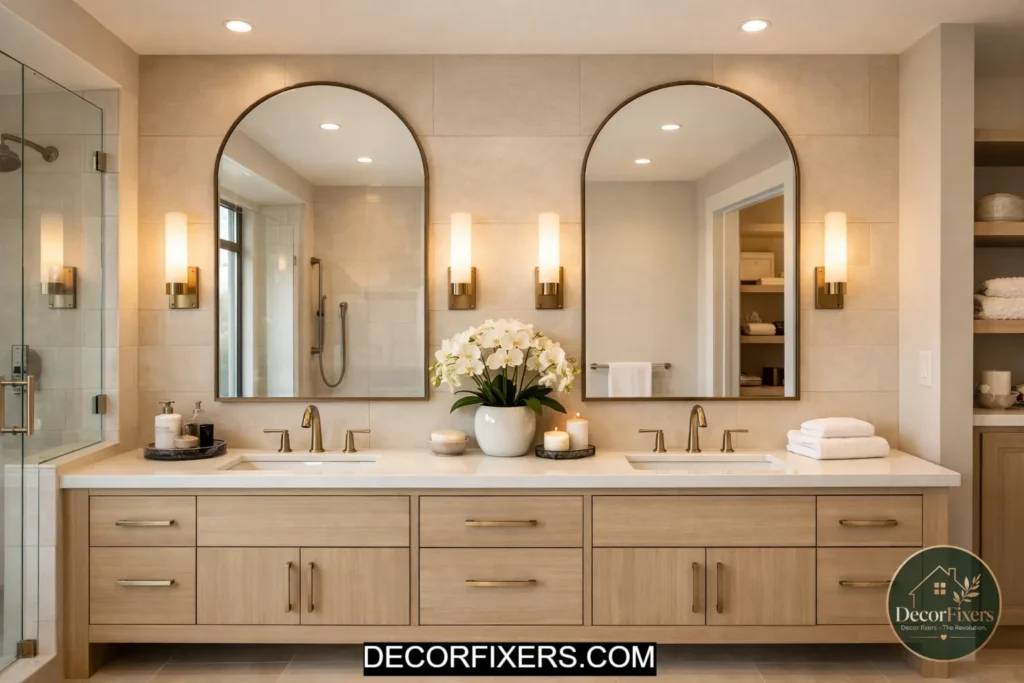
Shared bathrooms change completely with a double sink. A 60″ double vanity from IKEA or Home Depot runs $600–$1,500 with sinks. Plumbing hookup adds $200–$500 if plumbing lines are already nearby.
19. Upgrade to a frameless glass shower enclosure
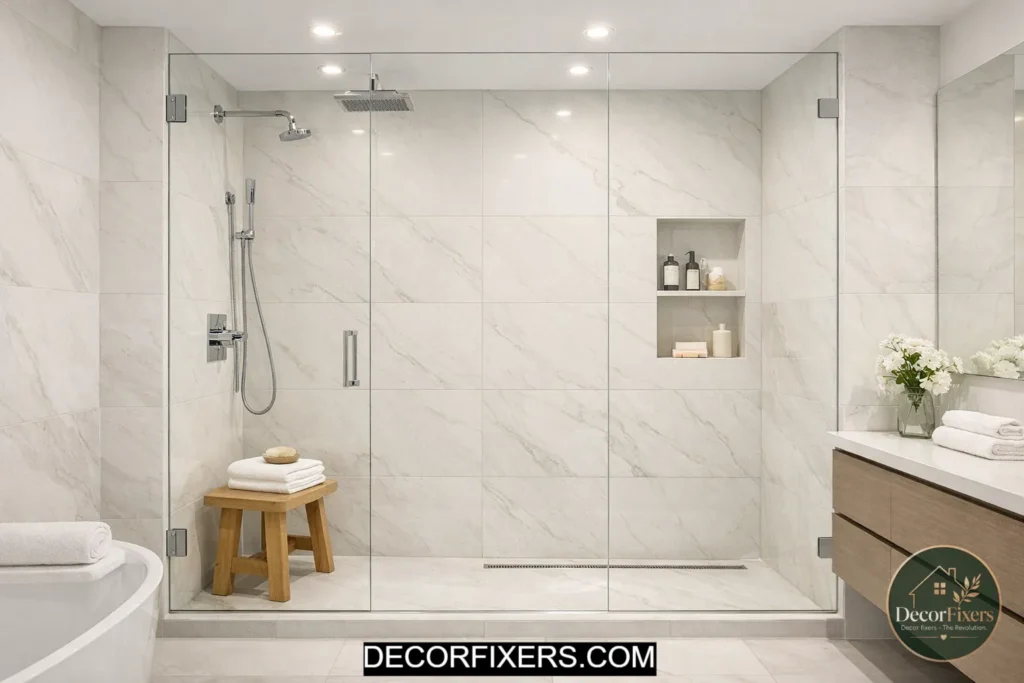
Shower curtains and framed shower doors both date a bathroom quickly. A frameless glass enclosure runs $800–$1,800 installed. It’s the single upgrade contractors say most consistently raises perceived home value.
20. Add smart lighting and a dimmer system
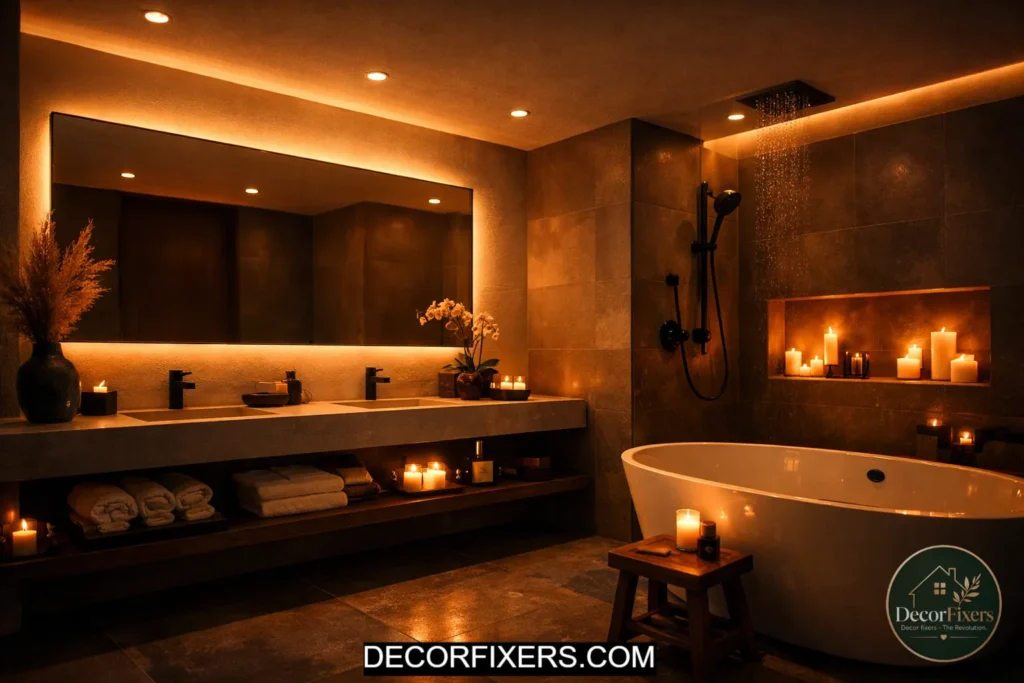
Layered lighting, ambient overhead, task sconces beside the mirror, and accent lighting turn a flat bathroom into a spa-adjacent space. Smart dimmer systems from Lutron or Leviton run $40–$90 per switch and require no rewiring on standard setups.
What to DIY vs. Always Hire Out, The Honest Answer
Look, if you’re confident with tools and have done basic home repairs, you can DIY a meaningful portion of a bathroom remodel. But some things genuinely require a licensed professional, not because of skill, but because of code compliance and long-term damage risk. Me? I’d tile all day before I’d touch a drain line.
DIY vs Contractor
DIY works best for cosmetic upgrades, painting, hardware swaps, mirror replacement, floating shelves, and even vanity swaps with pre-existing plumbing connections. Contractor work is non-negotiable for moving drain lines, rough-in plumbing changes, load-bearing wall modifications, and electrical panel work. The key difference is: cosmetic = DIY-friendly; structural = hire out.
| Task | DIY? | Why |
| Paint, accessories, hardware | Yes | Zero risk, high reward |
| Vanity swap (same connections) | Yes, carefully | Turn off water, basic plumbing |
| Tile installation (floor/wall) | Yes, with prep | Schluter waterproofing is key |
| Toilet replacement | Yes | Standard DIY with shutoff valve |
| Exhaust fan replacement (same box) | Yes | Basic wiring, no panel work |
| Moving drain lines | Never DIY | Code violation risk, water damage |
| Electrical panel/circuit work | Never DIY | Fire and permit risk |
| Load-bearing wall changes | Never DIY | Structural damage potential |
One expert caveats that most guides skip: waterproofing behind tile is where most DIY bathroom disasters originate. Tile work itself is learnable. What’s underneath it, the membrane, the substrate, is what determines whether that tile is still there in 10 years. Use Schluter KERDI or Regard membrane. Don’t skip this.
2025 Bathroom Remodel Trends Worth Following (and One to Skip)
Trends in bathroom design move more slowly than fashion but faster than most homeowners realize. Here’s what’s actually showing up in new remodels this year.
Warm metallics are replacing chrome and nickel. Unlacquered brass, champagne gold, and brushed bronze are the 2025 hardware finishes. Mixing metallics, say, brass fixtures with a matte black mirror frame, is now considered intentional design rather than a mistake.
Large-format tiles are worth it. Tiles 12×24″ and larger create fewer grout lines, read as more modern, and, here’s the part I appreciate most, they’re actually easier to clean. Ceramic and porcelain in this size from Marazzi or MSI run $1–$3/sq ft. Not a luxury upgrade.
Spa-inspired natural materials. Tinted plaster walls, stained-wood vanities, and concrete-look tiles are consistently trending. The goal I’d encourage you to aim for: a bathroom that feels like a retreat, not a utility room.
One to skip: full-room wallpaper in the primary bathroom. It photographs beautifully and peels within 18 months unless you use commercial-grade vinyl in a bathroom with proper ventilation. Powder rooms? Fine. Daily-use bathrooms? In my experience, not worth the trouble.
Or maybe I should say it this way: trends are only useful if they align with how you actually use the space. A spa aesthetic means nothing if you need corner shelves and a medicine cabinet, and the design doesn’t support either.
Conclusion:
After working with home advance content and user behavior for over 15 years, I can tell you this: most bathroom remodels fail not because of budget, but because of poor prioritization.
I’ve seen people spend thousands on full tile replacements while keeping a dated vanity that drags the entire space down. I’ve also seen the opposite: simple upgrades like lighting, mirrors, and hardware completely shift how a bathroom feels without crossing $500. The difference isn’t money. It’s knowing where visual impact actually comes from.
If I were remodeling my own bathroom on a realistic budget, I wouldn’t start with demolition. I’d start with what the eye sees first: vanity, lighting, mirror, and color. Only after that would I consider tile or larger upgrades, and only if the budget allows it.
One approach I personally like and don’t see discussed enough is layering upgrades over time instead of forcing a full remodel. Do the cosmetic reset first. Live with it. Then come back and upgrade the basics that still feel off. This avoids the biggest mistake I see: overcommitting early and regretting it later.
The goal isn’t to create a “perfect” bathroom. It’s to remove friction from your daily routine and make the space feel intentional. If your bathroom works better, feels cleaner, and doesn’t annoy you every morning, you’ve already won.
That’s the standard I use. Not trends. Not Pinterest saves. Whether the space actually improves how you live.
FAQs
Q: What’s the best bathroom upgrade for under $500?
A: In my view, it’s a new vanity light bar, updated faucet, and fresh paint, in that order. Together, they run $250–$450 and change the feel of the entire room without touching a single tile.
Q: How do I remodel a small bathroom on a tight budget?
A: Start cosmetic. Replace hardware, repaint, add open shelving, and swap the mirror. These four changes cost under $400 and make a small bathroom look deliberately styled rather than neglected.
Q: Should I remove the bathtub or keep it?
A: Keep it if you have only one bathroom; removing the tub in a single-bath home can hurt resale value. Remove it if you have two or more bathrooms and genuinely don’t use it. Walk-in showers feel more spacious and photograph better.
Q: Why does my bathroom remodel cost more than expected?
A: Three reasons I see consistently: hidden water damage behind tile, moving plumbing beyond what was originally quoted, and material upgrades decided mid-project. Get a full demo scope before signing any contract.
Q: When should I hire a contractor instead of DIY?
A: Any time the work involves moving drain lines, touching electrical circuits beyond switch/outlet swaps, or removing walls. Cosmetic work is almost always DIY-feasible with proper prep and materials.

Creator of DecorFixers, sharing practical home and interior ideas focused on real-life usability, simple design improvements, and budget-friendly solutions.
4 thoughts on “Bathroom Remodel Ideas: 20 Budget Transformations That Actually Work”